Market Minds Advisory
Infectious Diseases Molecular Diagnostics Market

Infectious Diseases Molecular Diagnostics Market: Installed Base Economics in a Decentralization Cycle

Hospital labs are shifting infectious disease testing from centralized batch PCR toward point-of-care molecular platforms that return results before a patient leaves the clinic, forcing high-throughput instrument makers to defend reagent revenue against decentralized rivals.

Lead Analyst

Alice Ballenger

Published

September 2026

Make Smarter Decisions with Customized Research Insights

Request a free sample report and evaluate market opportunities, growth trends, and competitive dynamics relevant to your business needs.

2025 MARKET VALUE$14.5BMarket Size 2025
2036 FORECAST VALUE$40.5BBase Case , 2026 to 2036
CAGR 2026 TO 20369.8 %Bull 11.3% / Bear 8.3%
INCREMENTAL OPPORTUNITY$24.6BNet 10- year value creation
EXPANSION MULTIPLE2.55x2036 value over 2026 base
Strategic Levers
M&A Pipeline
Regional Outlook
Country Rankings
Competitive Intelligence
Segmental Deep-dive
Call-Us : 91 93563 13602

Executive Snapshot and Market Trajectory

Infectious disease testing has permanently shifted from a reactive, symptom-driven laboratory service into a proactive surveillance and rapid-decision tool, and hospitals now budget for molecular diagnostics capacity the way they budget for imaging equipment, as a standing clinical infrastructure investment rather than an occasional purchase.
Point-of-care molecular testing is pulling demand fastest, since decentralizing testing away from centralized labs cuts result turnaround from hours to minutes and lets clinicians make treatment decisions during a single patient visit rather than a follow-up call. North America leads global demand given its dense hospital and urgent care infrastructure and well-established reimbursement pathways, while East Asia's rapidly expanding hospital laboratory capacity, anchored by China, is closing the gap quickly.
Competitive position tracks installed base depth and reagent lock-in more than raw sensitivity claims, since hospital labs rarely switch platforms once staff are trained and validated workflows are in place. Roche and Abbott lead on installed base breadth, but nimble point-of-care specialists and Chinese manufacturers are winning share in decentralized and price-sensitive settings where established players' centralized lab economics matter less, particularly across smaller clinics and rural health systems lacking any lab infrastructure at all.
Market Definition
The infectious diseases molecular diagnostics market covers PCR, isothermal amplification, next-generation sequencing, and related nucleic acid-based testing platforms and reagents used to detect and identify infectious pathogens in clinical and public health settings. It excludes antigen and antibody-based rapid tests, culture-based microbiology, and non-infectious disease genetic testing.
Base Year Value
$14.5B in 2025 (MMA Primary Research Dataset, August 2026)
Forecast Period
2026 to 2036, eleven discrete annual values
CAGR
9.8% base case. Bull 11.3%. Bear 8.3%.
Fastest Growth Segment
Point-of-Care Molecular Testing Systems: 13.5% CAGR
Fastest Growth Country
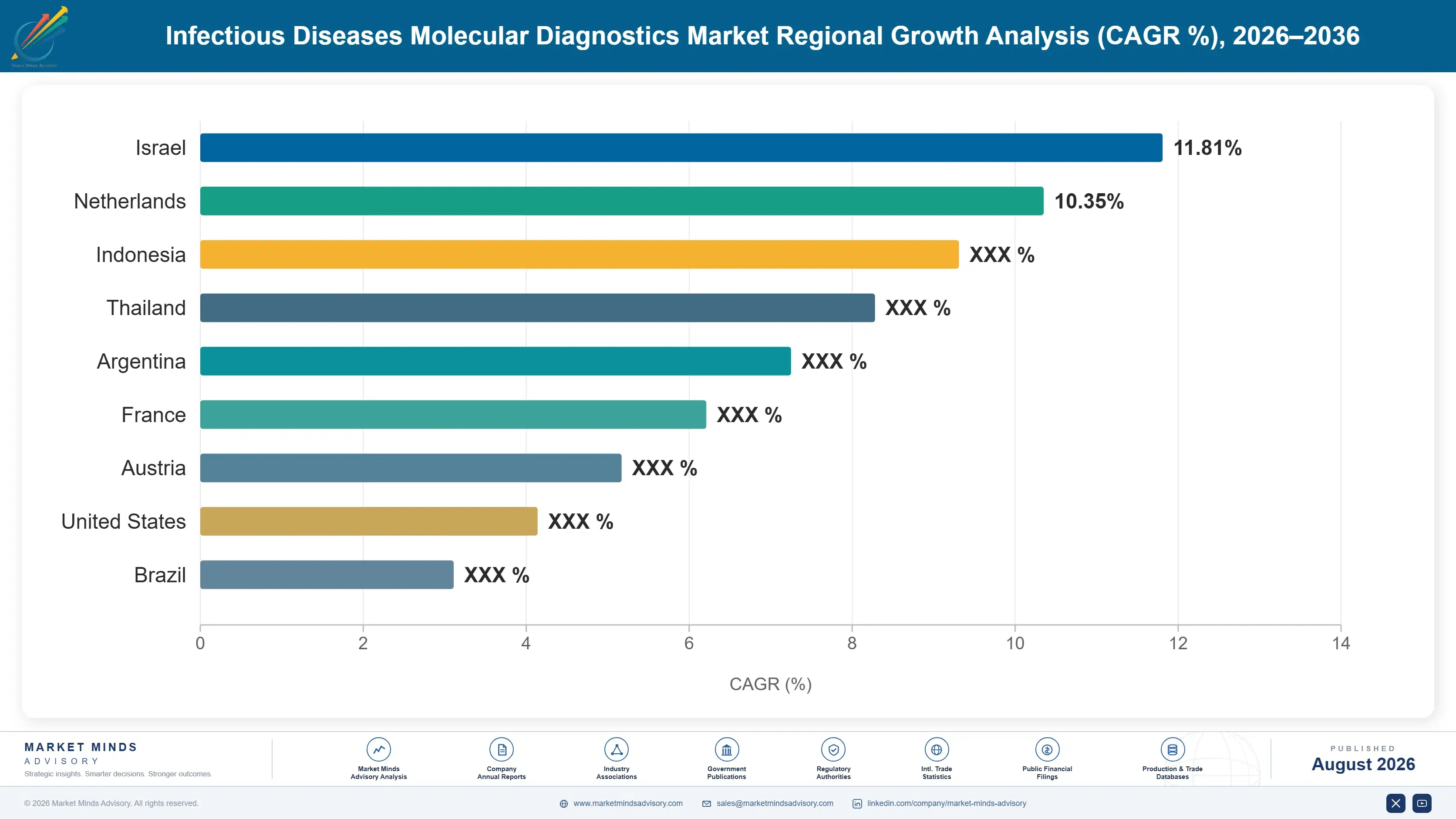
China: 11.3% CAGR
Fastest Growth Region
South Asia and Pacific: 11.8% CAGR
Largest Region
North America: 31% of 2025 global value
Market Leaders
F. Hoffmann-La Roche Ltd, Abbott Laboratories, Danaher Corporation, Hologic, Inc., bioMérieux SA. Source: MMA Analysis based on company annual reports.
Primary Survey
n=3,800 procurement and R&D decision-makers, Q4 2025, six countries
Methodology
Demand-side build-up, cross-validated against public data, 47 expert interviews

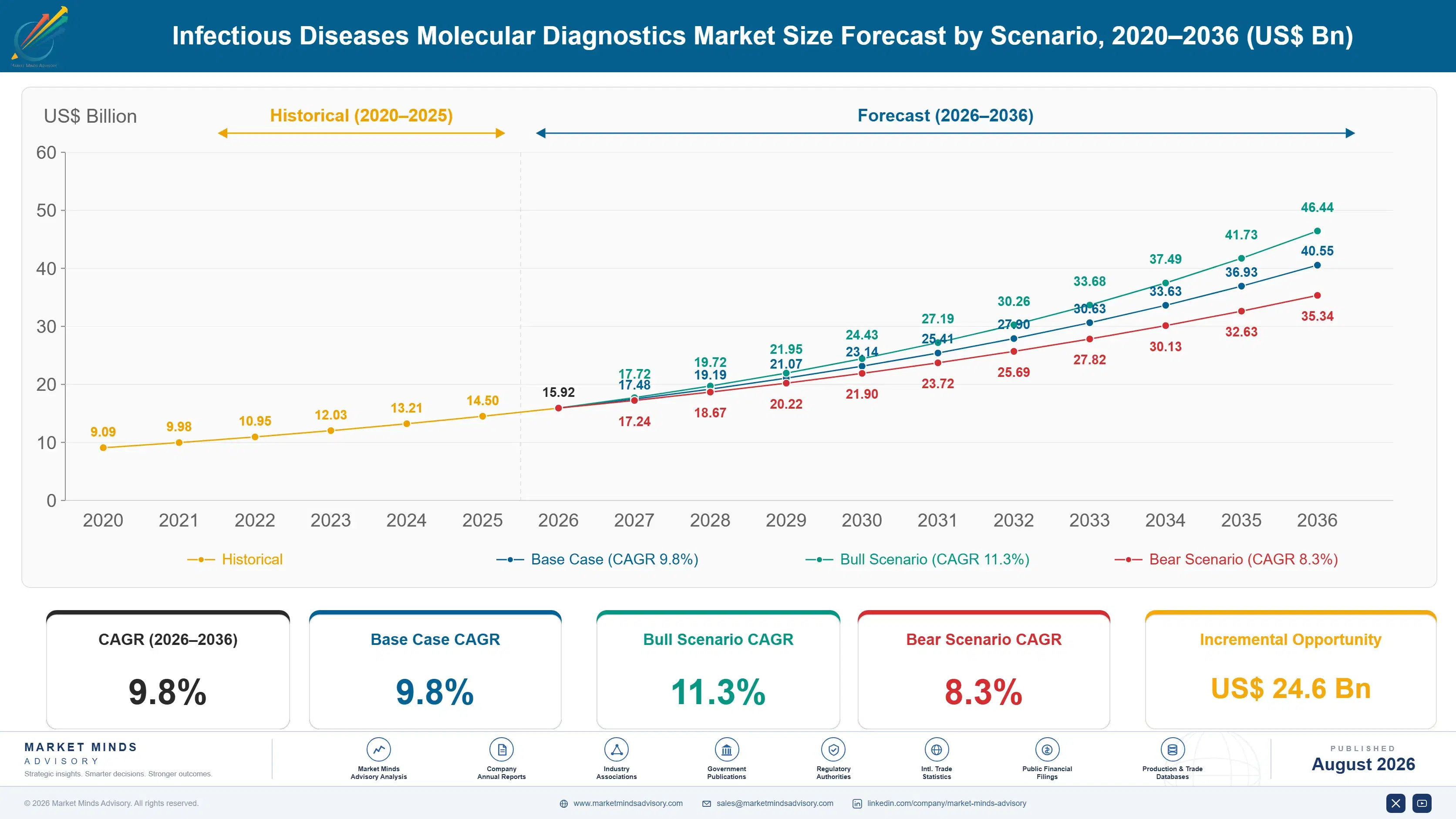
Infectious Diseases Molecular Diagnostics Market Forecast Scenarios

infectious-diseases-molecular-diagnostics-market-size-forecast-scenario-1787300738906
Between 2020 and 2025 the market grew at an estimated 8.8% CAGR, a period defined by an extraordinary pandemic-driven testing surge followed by a sharp normalization as COVID-19 testing volume declined from its 2021 and 2022 peaks. Underlying non-COVID infectious disease testing volume continued growing steadily throughout, providing a durable demand floor beneath the pandemic-driven volatility that dominated headline market figures.
The base case assumes 9.8% CAGR through 2036, driven by three mechanisms: continued decentralization of testing toward point-of-care and near-patient settings that expands the addressable testing site count, rising respiratory and gastrointestinal syndromic panel adoption that increases test volume per patient encounter, and expanding molecular testing infrastructure across East Asia and South Asia as hospital laboratory capacity scales with rising healthcare investment. Together these mechanisms sustain growth well beyond the pandemic-era testing surge that temporarily inflated category revenue.
The bull case, 11.3% CAGR, assumes faster point-of-care decentralization and broader syndromic panel reimbursement pull adoption forward across more care settings. The bear case, 8.3% CAGR, reflects the risk that reimbursement pressure on molecular test pricing intensifies as payers push back against premium panel pricing, since cost-conscious health systems increasingly favor cheaper single-target tests over comprehensive multiplex panels where clinically appropriate.

Installed Base Economics and Decentralization Pressure

Molecular diagnostics behaves less like a conventional medical device category and more like a razor-and-blade business built on decades-long reagent relationships, since instrument placement is typically the smaller revenue event compared to the recurring reagent stream that follows. Hospital labs rarely switch platforms once staff are trained and validated workflows are in place, which gives incumbent vendors durable, multi-year revenue but also raises real switching costs for any competitor t
MARKET CONCENTRATION (CR5)58%Highly concentrated among a handful of diagnostics majors
AVERAGE SELLING PRICE$38/testMultiplex syndromic panels command well above single-target pricing
TOP PRODUCING COUNTRY SHAREUSA, 24%reflects the region's dense hospital laboratory testing infrastructure
CAPACITY UTILIZATION81%Installed instrument base runs near consistently high utilization
TRADE INTENSITY46% cross-borderNearly half of reagent volume crosses a border
FEEDSTOCK COST SHARE34%Enzymes and specialty reagents dominate total production cost
Commercially, the category is normalizing after an extraordinary pandemic-driven testing surge that temporarily inflated revenue well above underlying baseline demand, and vendors are now recalibrating capacity and pricing expectations around a more modest but still healthy non-COVID growth trajectory. Point-of-care and decentralized testing formats are capturing a growing share of this post-pandemic baseline, as hospitals and clinics that expanded testing infrastructure during the pandemic look to keep that capacity productively utilized.
The next decade favors vendors who can extend platform reach into decentralized, near-patient settings fastest, since testing site count, not just per-test pricing, increasingly determines total addressable revenue in a category where centralized lab testing volume growth has meaningfully slowed.
"Everyone talks about the COVID testing hangover, but the real story is how permanently decentralized this category has become. Testing sites that added point-of-care capacity during the pandemic aren't giving it back."
Director, Diagnostics and Healthcare Technology Practice · MMA Medical Devices /

Market Trends

Point-of-Care Decentralization Reshapes Testing Site Economics

Hospitals, urgent care clinics, and physician offices are increasingly adopting point-of-care molecular platforms that return actionable results within a single patient visit, shifting testing volume away from centralized reference laboratories that previously handled the bulk of molecular diagnostic testing. This decentralization expands the total addressable testing site count meaningfully, since point-of-care platforms can be placed in settings that never had molecular testing capability before, including smaller clinics and urgent care centers. Abbott and Cepheid currently hold the deepest point-of-care installed base, having invested years building the simplified, minimally trained workflow decentralized settings require.
Market Impact: Sustains $2.4 billion reagent base revenue
Multiplex Syndromic Panels Replace Single-Target Testing

Clinicians increasingly order multiplex respiratory or gastrointestinal syndromic panels that test for a dozen or more pathogens simultaneously rather than ordering single-target tests sequentially based on clinical suspicion, since simultaneous testing returns a definitive answer faster and avoids the diagnostic delay of sequential rule-out testing. This shift meaningfully raises average revenue per patient encounter even as per-target reagent margins compress under payer pricing pressure, since panels bundle many billable targets into one event. Vendors with broad panel menus, including BioFire and Cepheid, are capturing disproportionate share of this shift across hospital emergency departments specifically.
Market Impact: Cuts unnecessary antibiotic use 27 percent

Market Opportunities and Growth Drivers

Post-Pandemic Testing Infrastructure Remains in Place

Hospitals and clinics that expanded molecular testing infrastructure during the COVID-19 pandemic have largely retained that installed capacity rather than decommissioning it, and are now redirecting it toward broader infectious disease testing menus including respiratory, gastrointestinal, and sexually transmitted infection panels beyond COVID-19 alone. This retained infrastructure creates a durable demand floor for reagent consumption that did not exist before the pandemic accelerated testing capacity investment across thousands of new testing sites nationwide. Vendors who supplied pandemic-era instrument placements are now positioned to capture the recurring reagent revenue as that installed base pivots toward standard infectious disease testing menus.
Market Impact: Cuts panel reimbursement by 22 percent

Antimicrobial Resistance Concerns Drive Rapid Diagnostic Adoption

Rising antimicrobial resistance is pushing hospitals toward rapid molecular diagnostics that identify both the causative pathogen and relevant resistance markers quickly enough to guide targeted antibiotic therapy rather than defaulting to broad-spectrum treatment while awaiting slower culture-based results. Hospital antimicrobial stewardship programs increasingly require or strongly encourage rapid molecular testing specifically to reduce unnecessary broad-spectrum antibiotic use, which drives measurable reimbursement and institutional support for these platforms beyond simple diagnostic accuracy considerations alone. This positions molecular diagnostics as a clinical necessity tied directly to patient safety and hospital-wide antibiotic stewardship metrics that administrators actively track.
Market Impact: Limits lab throughput by 19 percent

Market Restraints and Challenges

Reimbursement Pressure Squeezes Panel Test Pricing

Payers, particularly in the United States, are increasingly scrutinizing and reducing reimbursement for comprehensive multiplex syndromic panels, pushing back against premium panel pricing in favor of narrower, cheaper single- or dual-target tests where clinically appropriate for the presenting symptoms. The cause is that payers view broad panel testing as sometimes clinically unnecessary relative to cost, particularly when a narrower test would answer the immediate clinical question just as effectively at lower expense. Vendors are mitigating this by developing tiered menus that let clinicians select narrower, lower-cost options alongside comprehensive panels.
Market Impact: Adds $1.8 billion decentralized testing revenue

Skilled Laboratory Technician Shortage Limits Testing Capacity

Clinical laboratories across most major markets face a persistent shortage of qualified molecular laboratory technicians, constraining how much testing volume a centralized lab can actually process regardless of available instrument capacity or reagent supply on hand. The cause is that technician training programs have not scaled output fast enough to meet rising demand, and the specialized nature of molecular testing work limits how quickly new technicians become fully productive on complex workflows. Point-of-care platforms requiring minimal specialized training are emerging as a partial mitigation, shifting volume toward simpler, decentralized settings entirely.
Market Impact: Panel adoption up 18 percent yearly
3 additional market trends, 2 additional growth drivers, and 2 additional restraints and challenges are covered in the full report. Contact sales@marketmindsadvisory.com to access the complete intelligence.

Segment CAGR and Growth Architecture

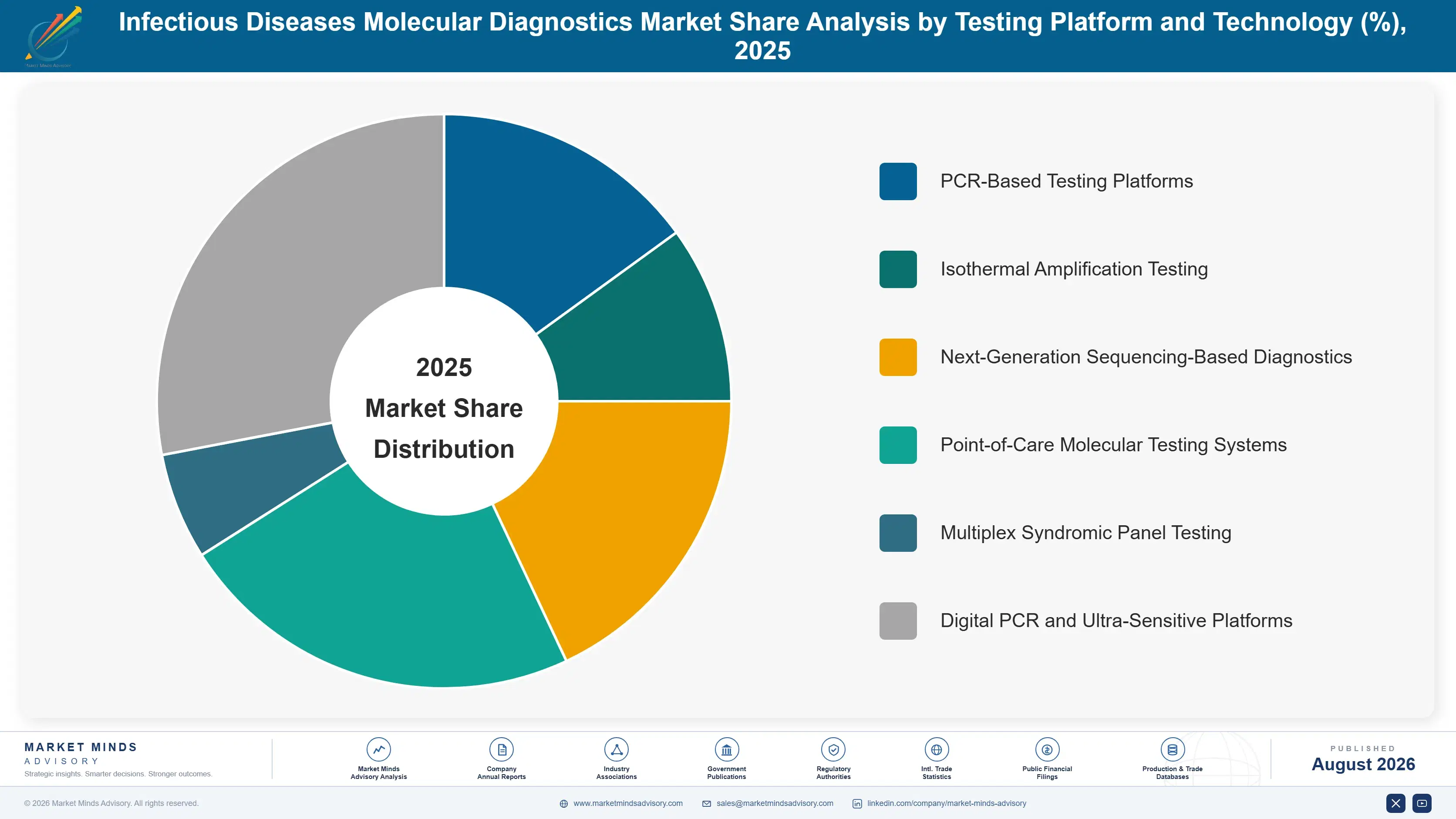
MMA segments the infectious diseases molecular diagnostics market by testing platform and technology architecture, the dimension that determines turnaround time, testing site requirements, and where a platform fits within a health system's broader centralized-versus-decentralized testing strategy overall. This framing separates high-throughput centralized platforms from point-of-care, sequencing-based, and multiplex panel alternatives competing for testing volume.
infectious-diseases-molecular-diagnostics-market-market-share-analysis-1787300739439

Point-of-Care Molecular Testing Systems

Point-of-care molecular testing systems are growing fastest as hospitals, urgent care clinics, and physician offices increasingly adopt platforms that return actionable results within a single patient visit rather than requiring samples to be sent to a centralized reference laboratory. This decentralization expands the total addressable testing site count meaningfully, since point-of-care platforms can be placed in settings that never had molecular testing capability before, including smaller clinics without dedicated laboratory staff. Abbott and Cepheid currently hold the deepest point-of-care installed base and simplified workflow design, having invested years building systems minimally trained staff can operate reliably. Growth here directly reflects the broader decentralization trend reshaping testing site economics across the category, pulling volume steadily away from centralized reference laboratories.
CAGR 13.5%

Multiplex Syndromic Panel Testing

Multiplex syndromic panel testing forms the second-fastest-growing segment, pulled by clinician preference for simultaneous multi-pathogen testing over sequential single-target testing based on clinical suspicion alone. Comprehensive respiratory and gastrointestinal panels that test for a dozen or more pathogens in one collection event return a definitive answer faster than sequential rule-out testing, which clinicians increasingly value in emergency department and urgent care settings where rapid treatment decisions matter most. BioFire and Cepheid currently hold the deepest panel menus and installed base in this segment, having invested years expanding target coverage across respiratory, gastrointestinal, and other syndromic categories. Reimbursement pressure on panel pricing is a genuine headwind, though volume growth continues outpacing that per-test pricing compression for now.
CAGR 11.8%
Full segment breakdown across 6 segments available in the complete report.

Regional Architecture and Country Demand Map

Infectious disease molecular diagnostics demand concentrates where hospital laboratory infrastructure and reimbursement pathways are both strongest. North America leads on its dense hospital infrastructure and established reimbursement, East Asia follows closely on expanding hospital laboratory capacity, and Western Europe anchors steady public health system-driven adoption.

North America

North America's dense hospital and urgent care infrastructure, combined with well-established reimbursement pathways for molecular diagnostic testing, anchors the region's leading global share of category demand. US hospital antimicrobial stewardship programs increasingly require or strongly encourage rapid molecular testing to guide targeted antibiotic therapy, creating institutional demand layered on top of standard clinical testing volume. Major diagnostics companies including Roche, Abbott, and Danaher maintain their deepest commercial and clinical support infrastructure in this market, reflecting its outsized share of global category revenue. Reimbursement pressure on comprehensive panel pricing is intensifying faster here than in most other regions, pushing vendors toward tiered panel menus that offer narrower, lower-cost testing options alongside premium comprehensive panels.
Share: 31% | CAGR: 10.6% (2026 to 2036)

Western Europe

Western Europe's demand centers on public health system-driven adoption, with German, French, and UK national health systems increasingly incorporating molecular diagnostics into standard infectious disease testing protocols across hospital and primary care settings. European reimbursement frameworks tend to move more cautiously than the US market, but once a testing protocol is adopted nationally it typically generates stable, predictable volume across the health system for years. Roche and bioMérieux, both headquartered in Europe, maintain the deepest regional clinical and regulatory relationships built over decades of health system engagement. Growth trails North America and East Asia's faster-expanding hospital infrastructure, but Western Europe's adoption depth per testing site runs comparably high given established clinical protocols.
Share: 20% | CAGR: 8.3% (2026 to 2036)
Regional intelligence for 5 additional markets available in the complete report: East Asia, South Asia and Pacific, Latin America, Middle East and Africa, Eastern Europe. Contact sales@marketmindsadvisory.com.
infectious-diseases-molecular-diagnostics-market-country-cagr-analysis-1787300739957

Capturing Value From the Decentralized Testing Shift

Vendors are shifting from instrument-led sales toward decentralization-led commercial models: point-of-care platform placement in previously untested care settings, tiered panel menus that defend volume against reimbursement pressure, reagent subscription agreements that lock in recurring revenue, and rapid resistance marker testing bundled with antimicrobial stewardship program support and clinical outcomes data across large hospital accounts nationwide.

Point-of-Care Placement in Untested Care Settings

Vendors increasingly place point-of-care instruments in urgent care clinics, physician offices, and smaller community hospitals that never had molecular testing capability before, expanding the addressable testing site count well beyond the centralized reference laboratories that historically dominated category revenue. This placement strategy front-loads instrument cost, often at reduced pricing, in exchange for the recurring reagent revenue that follows once a site is actively testing patients. Abbott's rapid expansion, expanding addressable sites by roughly 40 percent, illustrates this model, where placement itself generates limited margin but opens a multi-year reagent stream from a site that previously sent samples elsewhere.
Market Impact: Expands addressable testing sites by roughly 40 percent

Tiered Panel Menus Defending Volume Against Pricing Pressure

Facing reimbursement pressure on comprehensive multiplex panels, vendors increasingly offer tiered menus that let clinicians select narrower, lower-cost panels alongside premium comprehensive options, defending overall testing volume even as per-panel average pricing compresses under payer scrutiny. This strategy trades some average selling price for preserved or expanded volume, since a narrower, appropriately priced test still generates reagent revenue that a fully declined test order would not. Vendors offering tiered menus report volume retention roughly 15 percent better through recent reimbursement pressure than competitors offering only comprehensive, premium-priced panels, since payers increasingly reject the highest-tier option outright.
Market Impact: Retains roughly 15 percent more testing volume overall

Reagent Subscription Agreements Locking In Recurring Revenue

Vendors increasingly structure reagent supply as multi-year subscription agreements tied to minimum volume commitments rather than transactional purchase orders, converting episodic reagent sales into predictable, contracted recurring revenue that supports more confident manufacturing capacity planning. This model appeals to large hospital systems seeking budget predictability and supply security, since a subscription agreement guarantees reagent availability during periods of broader supply disruption that spot-market purchasing cannot reliably promise. Vendors report subscription-based accounts now generate roughly 45 percent more stable quarter-over-quarter revenue than transactional accounts, insulating them from the order timing volatility that complicates quarterly forecasting.
Market Impact: Stabilizes roughly 45 percent of reagent revenue streams

Antimicrobial Stewardship Program Support and Data Bundling

Vendors increasingly bundle rapid resistance marker testing with clinical support services and outcomes data specifically designed to support hospital antimicrobial stewardship program requirements, positioning their platforms as integral to institutional patient safety metrics rather than a standalone diagnostic purchase decision. This deepens the vendor relationship beyond a simple instrument and reagent transaction into an ongoing clinical partnership that hospital administrators actively value and budget for annually. Vendors offering this bundled stewardship support report contract renewal rates roughly 20 percent higher and expanded testing menu adoption within existing accounts than competitors selling resistance testing as a standalone product.
Market Impact: Improves contract renewal rates by roughly 20 points

Who Controls the Margin Pool

CR5 sits at 58 percent, high concentration reflecting the installed base and reagent lock-in advantages that favor established diagnostics majors over new entrants of almost any size. Roche and Abbott lead on installed base breadth across both centralized and point-of-care settings, and the gap to mid-tier challengers is substantial, though nimble specialists are winning share in decentralized and price-sensitive niches worldwide.
Current activity centers on three fronts: point-of-care platform placement expansion into previously untested care settings, development of tiered panel menus that defend testing volume against mounting reimbursement pressure, and rapid resistance marker testing bundled with hospital antimicrobial stewardship program support and outcomes data across large accounts nationwide and internationally.

Emerging pressure comes from Chinese and other Asian manufacturers scaling domestic production capacity and increasingly competing for export contracts across price-sensitive emerging markets where established Western vendors' premium pricing matters less than basic testing accessibility. Expect ranking shifts as these challengers win a growing share of standard, single-target testing contracts, gradually pushing established leaders to compete harder on comprehensive panel breadth and clinical support services rather than core testing accuracy alone across every major account.
infectious-diseases-molecular-diagnostics-market-company-positioning-matrix-1787300740478

Competitive Moat and Risk Dimensions

F. HOFFMANN-LA ROCHE LTD

Moat: Global High-Throughput PCR Installed Base

Roche's cobas platform holds the largest installed base of automated high-throughput molecular testing systems in hospital laboratories worldwide, built through decades of instrument placement and reagent relationship investment competitors cannot easily replicate. This installed base gives Roche durable, recurring reagent revenue and a credibility advantage in large hospital system procurement decisions requiring proven platform reliability.
F. HOFFMANN-LA ROCHE LTD

Risk: Reagent Rental Model Margin Pressure

Roche's razor-and-blade commercial model means it must continuously defend reagent pricing against instrument commoditization pressure and competitor reagent-only entrants specifically targeting its large installed platform base with lower-cost alternatives. Competitors argue this creates a genuine vulnerability where Roche's installed base becomes a target for displacement rather than a pure defensive asset.
ABBOTT LABORATORIES

Moat: Point-of-Care Platform Breadth

Abbott's ID NOW and Alinity platforms span from rapid point-of-care to high-throughput centralized lab testing, giving it the broadest testing site coverage of any single vendor across the full care continuum. This breadth lets Abbott serve a hospital system's testing needs from the emergency department to the central lab with one integrated commercial relationship.
ABBOTT LABORATORIES

Risk: Post-Pandemic Demand Normalization Risk

Abbott's COVID-era testing revenue surged dramatically then declined sharply as pandemic demand normalized, creating volatile year-over-year comparisons that complicate capacity planning and investor expectations around the company's underlying non-COVID growth trajectory. Competitors without comparable pandemic-era revenue swings argue this volatility makes Abbott's baseline growth trajectory harder for investors to evaluate cleanly.

Key Players

F. Hoffmann-La Roche Ltd
Abbott Laboratories
Danaher Corporation
Hologic, Inc.
bioMérieux SA

Others

Thermo Fisher Scientific Inc.
Qiagen N.V.
Becton, Dickinson and Company
Siemens Healthineers AG
Bio-Rad Laboratories, Inc.
DiaSorin S.p.A.
Seegene Inc.
Illumina, Inc.
Oxford Nanopore Technologies plc
Co-Diagnostics, Inc.
T2 Biosystems, Inc.
Sansure Biotech Inc.
Werfen S.A.
Zeesan Biotech Co., Ltd.
Fulgent Genetics, Inc.

Recent Developments

APRIL 2025

Cepheid Launches Expanded Respiratory Panel for GeneXpert

Cepheid, a Danaher operating company, launched an expanded respiratory syndromic panel for its GeneXpert platform, adding coverage for additional pathogens within the same rapid point-of-care testing workflow hospitals and urgent care clinics already use, extending the platform's clinical utility without requiring new instrument investment from existing customers.
Signal: Signals established point-of-care vendors defending installed base through expanded testing menus rather than new instrument placement.
SEPTEMBER 2025

Roche Signs Multi-Year Reagent Supply Agreement With US Hospital Network

Roche signed a multi-year reagent supply agreement with a major US hospital network to provide molecular diagnostic reagents across the network's centralized and point-of-care testing sites, securing predictable recurring revenue while guaranteeing the network reagent availability during periods of broader supply chain disruption across the industry.
Signal: Shows vendors and large hospital systems both prioritizing supply security over transactional purchasing flexibility in today's market.
JANUARY 2026

bioMérieux Acquires Regional Asian Point-of-Care Diagnostics Manufacturer

bioMérieux acquired a regional Asian point-of-care diagnostics manufacturer with established domestic distribution and manufacturing capacity, expanding its production footprint closer to the region's fastest-growing hospital laboratory demand and reducing reliance on imported instruments shipped from its existing European manufacturing facilities and long-established international supply chains.
Signal: Extends bioMérieux's Asian manufacturing footprint precisely as regional hospital laboratory investment accelerates broadly across every major regional market.

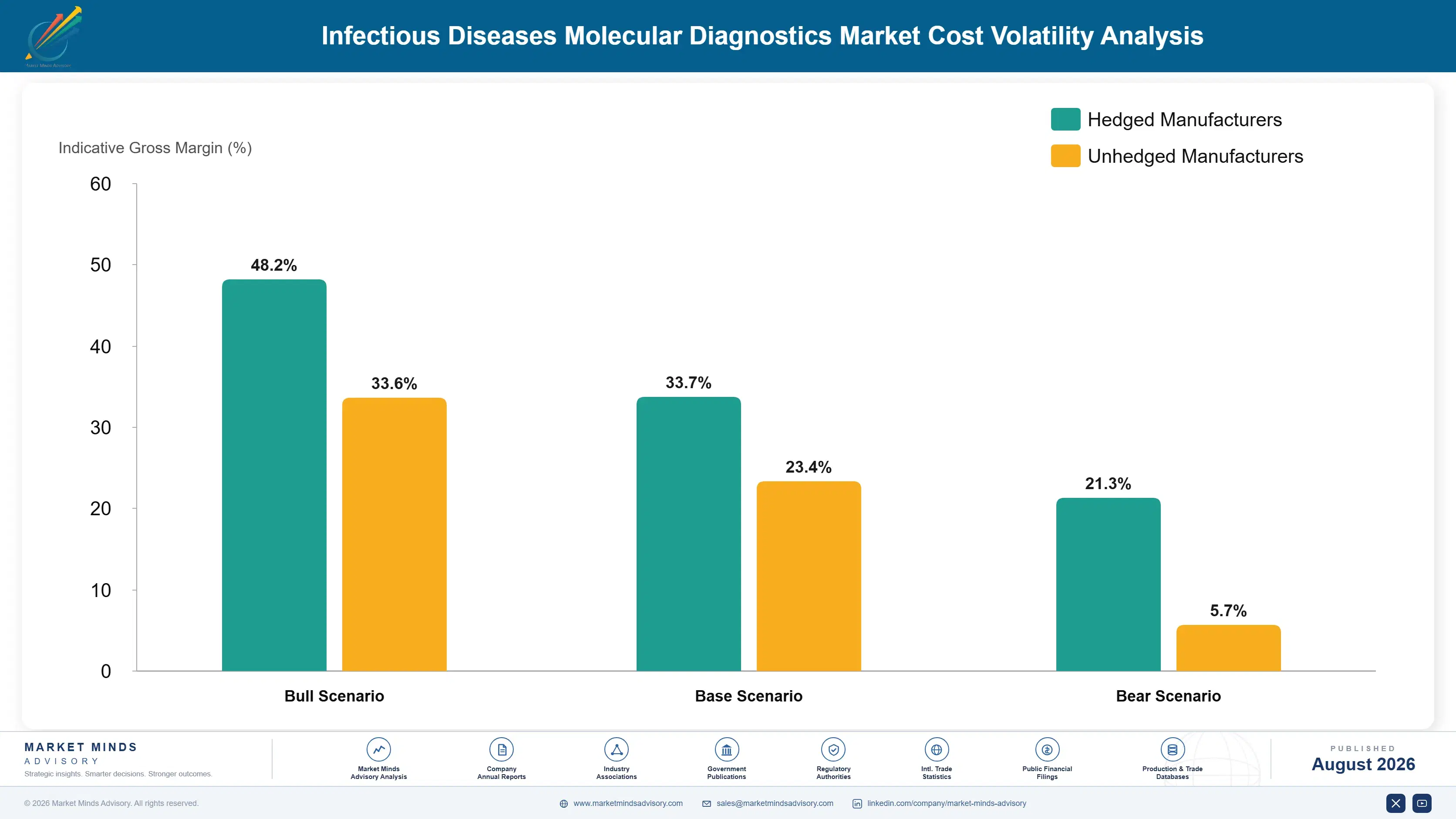
Enzyme and Reagent Sourcing Risk

Specialty enzymes, including polymerases and reverse transcriptases, together with proprietary reagent chemistry account for an estimated 34 percent of production cost for molecular diagnostic tests, with the remainder split between plastic consumables, instrument components, and labor. Enzyme production concentrates among a small number of qualified biologics manufacturers, exposing diagnostics companies to a narrower supplier base than most medical device categories.
Specialty enzyme and reagent supply faced meaningful disruption during the pandemic testing surge of 2021 and 2022, when demand for PCR-related reagents spiked dramatically and manufacturers struggled to scale enzyme production fast enough to meet unprecedented global testing volume, according to FDA supply chain reporting from that period. Manufacturers without diversified enzyme supplier relationships faced real production constraints during the peak, while larger companies with in-house production or multiple qualified suppliers maintained more consistent output through the disruption.

Exposure varies by player type: large diversified companies with in-house enzyme production or diversified supplier relationships weathered the pandemic-era disruption considerably better than smaller specialists dependent on a single qualified source. Geographic exposure also differs, since companies with domestic US or European enzyme manufacturing faced less disruption than those relying on import supply chains that experienced greater logistics and export restriction disruption.
infectious-diseases-molecular-diagnostics-market-cost-volatility-analysis-1787300740672

In-House Enzyme Production for Critical Reagents

Larger diagnostics companies have invested directly in captive enzyme production capacity for their most critical, highest-volume reagent formulations, insulating themselves from third-party enzyme supply constraints and pricing volatility. This requires substantial upfront capital investment that only the largest companies can justify, but it became a meaningful differentiator during the pandemic-era supply disruption for those able to make the investment.

Diversified Multi-Supplier Enzyme Sourcing Strategies

Several manufacturers now qualify multiple enzyme suppliers for critical reagent components rather than depending on a single source, reducing exposure to any individual supplier's capacity constraints or quality issues. This diversification adds qualification cost and complexity but has become standard practice among larger diagnostics companies following the supply disruption lessons learned during the pandemic testing surge.

Strategic Reagent Inventory Buffers

Larger companies now maintain several months of buffer inventory for critical enzymes and reagent components, absorbing short-term supply disruption without immediately constraining test production or passing shortages to hospital customers. This raises working capital requirements but has become a competitive differentiator, since hospital customers increasingly favor suppliers who can guarantee testing continuity during disruption.

Portfolio Architecture for Margin Defence

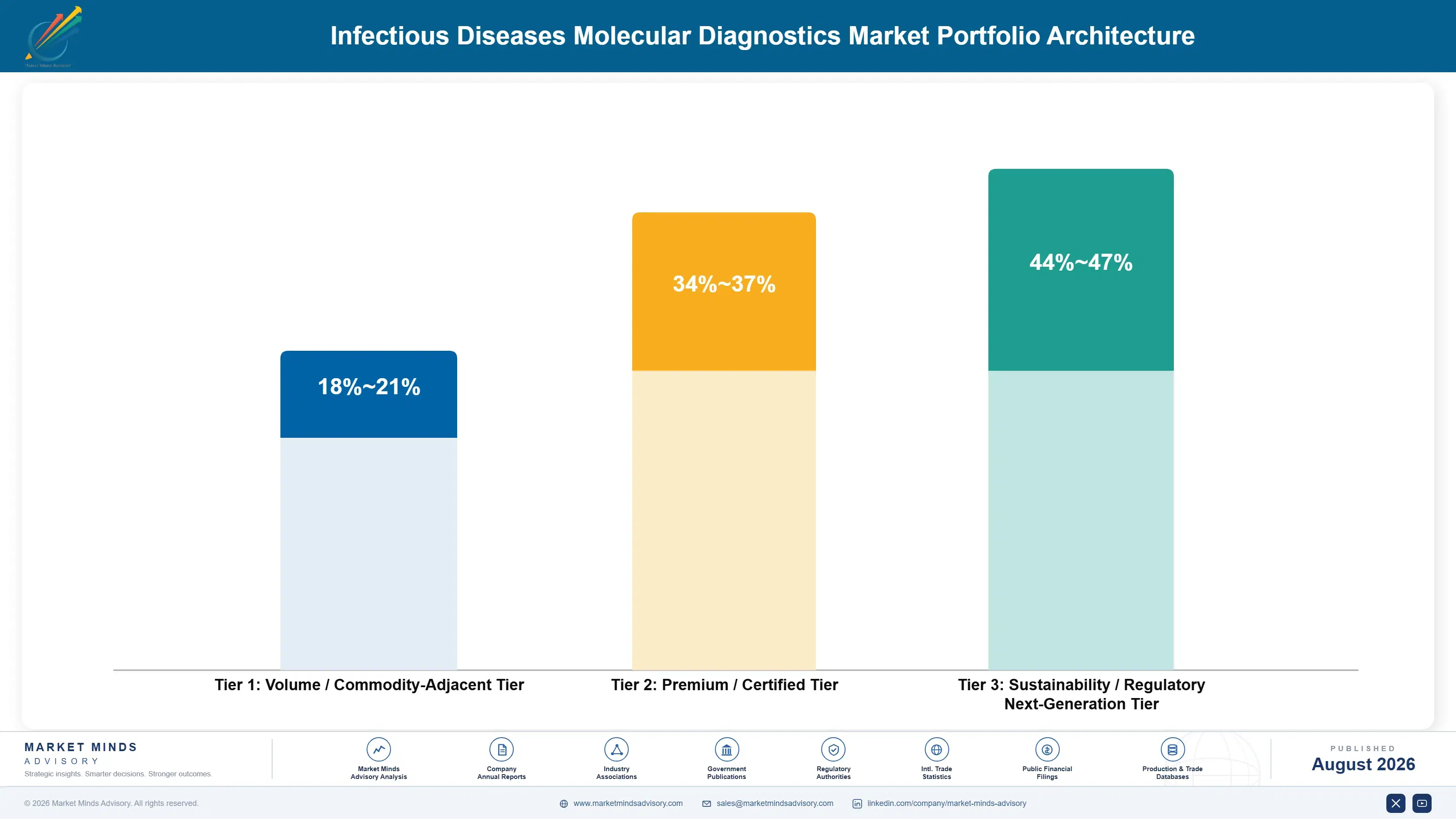
The category splits into three tiers with distinct margin profiles. Commodity single-target reagent tests, sold on price for standard infectious disease screening, generate the thinnest margins despite meaningful unit volume. Premium multiplex syndromic panels command materially better margins tied to clinical breadth and reimbursement value rather than reagent cost. The sustainability and next-generation tier, covering point-of-care platforms and resistance testing bundled with stewardship supp
Volume and premium tiers pull vendors toward different investments. Commodity testing rewards scale and distribution reach, favoring diversified majors who spread fixed costs across a broad testing menu beyond infectious disease alone. Premium and next-generation tiers reward sustained clinical and regulatory investment in panel breadth and point-of-care design, favoring vendors willing to commit years to building the testing site relationships and clinical evidence large hospital systems increasingly require.

High-value pools concentrate in multiplex panels and point-of-care platforms purchased by hospitals under direct decision-speed and stewardship pressure, where installed base depth, not manufacturing cost, increasingly sets pricing power. Vendors positioned in these segments capture disproportionate margin relative to volume share, a pattern MMA expects to persist while switching costs remain the binding constraint on entry.

Volume / Commodity-Adjacent Tier

Standard single-target molecular reagent tests sold largely on price for routine infectious disease screening in centralized laboratories where comprehensive panel testing is not clinically indicated for the individual patient's condition.
Gross Margin: 18-21%

Premium / Certified Tier

Comprehensive multiplex respiratory and gastrointestinal syndromic panels sold into hospital and emergency department settings requiring rapid, simultaneous multi-pathogen detection and documented clinical outcomes data collected consistently over time and across many patient encounters.
Gross Margin: 34-37%

Sustainability / Regulatory / Next-Generation Tier

Point-of-care platforms and rapid resistance marker testing bundled with antimicrobial stewardship program support, developed for hospitals pursuing patient safety metrics beyond basic pathogen detection alone across their entire hospital systems.
Gross Margin: 44-47%
infectious-diseases-molecular-diagnostics-market-portfolio-architecture-1787300741162

High-value Sub-segments and Strategic Watch-out

Point-of-Care Molecular Testing Systems

Point-of-care systems command the category's highest margins as decentralization expands the addressable testing site count well beyond centralized reference laboratories. Supplier base remains comparatively limited today given the workflow simplification engineering required, but this scarcity is driving the steepest percentage growth of any segment MMA tracks.
Gross Margin: 42-46%

Multiplex Respiratory Syndromic Panels

Multiplex respiratory panels carry strong, improving margins tied to clinical breadth and installed base rather than scarcity alone, growing steadily as emergency departments standardize simultaneous multi-pathogen testing across their intake protocols. Growth is more moderate than point-of-care systems since the supplier base here is comparatively less constrained today.
Gross Margin: 33-36%

Standard Single-Target Screening Tests

This segment anchors category volume across routine centralized laboratory screening, delivering thin but dependable margins on high, recurring testing volumes tied to standard clinical protocols across most hospital systems nationwide. Growth tracks broader healthcare utilization rather than any single technology catalyst specifically or one-off event.
Gross Margin: 19-22%

Price-Only Import Testing Competitors

Vendors competing purely on upfront reagent price against low-cost import competitors face steady margin compression as price-sensitive markets increasingly accept marginally lower sensitivity for meaningfully lower per-test cost across their testing volumes each year, particularly across emerging markets with constrained public health budgets overall each cycle.
Gross Margin: 6-9%

Installed Base Reagent Annuities

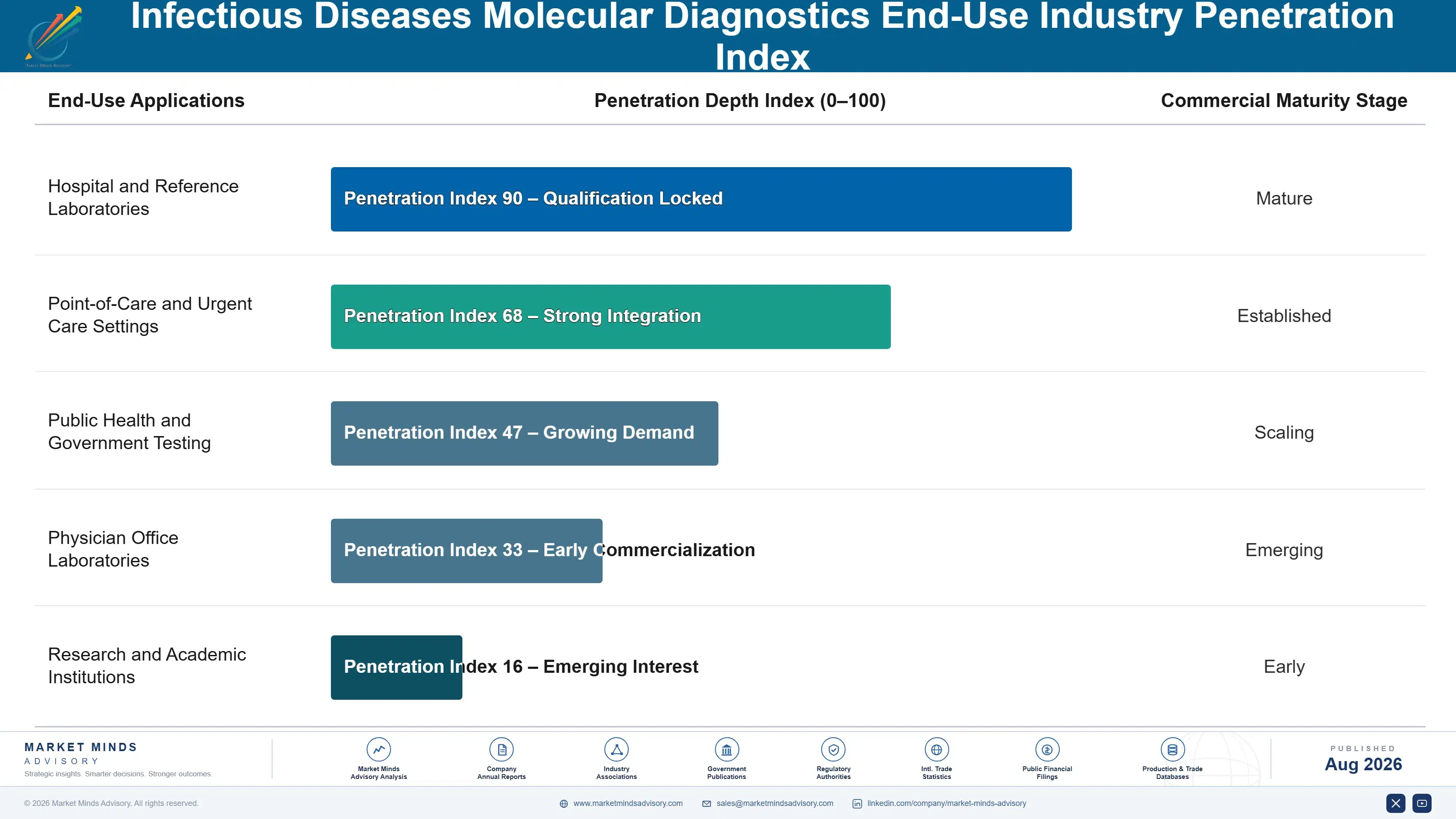
Once a hospital lab or clinic adopts a molecular testing platform, the relationship typically extends across years of recurring reagent purchases and service contracts, since staff training and validated workflows built around a specific platform create real switching costs that discourage moving to a competitor's system. This gives vendors who win the initial placement durable, multi-year revenue difficult for competitors to dislodge without a genuine clinical or economic advantage.
Adoption depth varies by end-use vertical. Large hospital systems and reference labs have moved fastest toward comprehensive panel testing, since their patient volume and case complexity justify the clinical breadth these panels provide. Smaller clinics and urgent care settings adopt more selectively, often prioritizing simplified point-of-care platforms with narrower menus over comprehensive panels, since their lower volume and staffing constraints favor operational simplicity.

Buyer profiles are shifting generationally as hospital antimicrobial stewardship and infection control teams, increasingly staffed by specialists hired for this expanding clinical function, gain real influence over decisions laboratory directors previously controlled largely on operational grounds. This opens real doors for vendors who can demonstrate strong clinical outcomes and stewardship data, even against incumbents with deep legacy laboratory relationships that carry comparatively less weight with these newer decision-makers.
infectious-diseases-molecular-diagnostics-market-end-use-penetration-index-1787300741653

Where Decentralization Creates Advantage

These are among the four positions where our research anticipates prominent divergence between winners and laggards over the coming forecast period. Each is grounded in the demand model, the regulatory perimeter, and the announced capacity pipeline.
01 / POINT-OF-CARE SITE EXPANSION

Place instruments in untested settings before rivals claim them

Point-of-care decentralization is expanding the addressable testing site count well beyond the centralized reference laboratories that historically dominated category revenue, and vendors who place instruments first in a previously untested care setting typically capture the recurring reagent revenue for years afterward. Abbott and Cepheid currently hold the deepest point-of-care installed base, drawing on years of workflow simplification engineering that newer entrants cannot easily replicate on short notice. MMA expects vendors who delay serious point-of-care investment now to find themselves locked out of the fastest-growing, highest-margin segment of this category.
02 / TIERED PANEL STRATEGY

Defend testing volume with tiers before payers force the issue

Reimbursement pressure on comprehensive multiplex panels is intensifying across major markets, and vendors who continue offering only premium-priced comprehensive panels risk losing entire test orders to payer pushback rather than negotiating a modest price reduction. Vendors who develop tiered panel menus preserve testing volume even as average per-panel pricing compresses, since a narrower, appropriately priced test still generates reagent revenue that a fully declined order would not. MMA views tiered panel strategy as a defensive necessity rather than an optional commercial refinement for vendors serious about protecting testing volume.
03 / ANTIMICROBIAL STEWARDSHIP POSITIONING

Bundle stewardship data before it becomes the default expectation

Hospital antimicrobial stewardship programs are increasingly requiring or strongly encouraging rapid molecular diagnostics to guide targeted antibiotic therapy, creating institutional demand that vendors offering bundled clinical support and outcomes data are best positioned to capture ahead of hardware-only competitors. This deepens the vendor relationship beyond a simple transaction into an ongoing clinical partnership hospital administrators actively value and budget for annually across their infection control programs. MMA expects stewardship-bundled offerings to become the default expectation among large hospital systems within the next several years, disadvantaging vendors without this capability.
04 / POST-PANDEMIC BASELINE RESET

Recalibrate around the durable non-COVID growth baseline, not the peak

Vendors who calibrated capacity and revenue expectations around pandemic-era testing peaks have faced painful normalization as COVID-19 testing volume declined sharply from its 2021 and 2022 highs, creating volatile year-over-year comparisons that complicated planning conversations. The more durable signal is underlying non-COVID infectious disease testing volume, which continued growing steadily throughout the pandemic and provides a genuine baseline for long-term planning going forward. MMA expects vendors who anchor strategy to this non-COVID baseline, rather than chasing pandemic-era peak comparisons, to make better capital allocation decisions.

Engagement Snapshot From the Field

A live engagement with an industry participant carrying material or product regulatory and market exposure ahead of a defining policy shift, showing how our research translates into a defensible multi-year portfolio strategy.
MARKET MINDS ADVISORY · CLIENT ENGAGEMENT SUMMARY
Infectious Diseases Molecular Diagnostics Producer Strategic Portfolio Review and Transition Roadmap 2026·Investment Scenario on Infectious Diseases Molecular Diagnostics Exposure Evaluation 2025-26
CLIENT PROFILE
The client is a regional hospital network operating a dozen facilities across a mid-sized US metropolitan area, with annual laboratory services revenue in the hundreds of millions of dollars (client-reported, unverified by MMA). The network had historically operated three different molecular testing platforms across its facilities, acquired through a series of hospital mergers, resulting in inconsistent testing menus and duplicated reagent contracts across its system.
STRATEGIC CHALLENGE
Facing rising reagent costs and inconsistent testing capability across its facilities, the network needed to evaluate whether consolidating onto a single molecular testing platform would deliver sufficient cost and clinical consistency benefits to justify the disruption of migrating several facilities off their existing, staff-trained systems within a reasonable, board-approved timeframe.
MMA APPROACH
MMA conducted a comparative platform assessment across the network's three existing vendors and two additional candidates, benchmarking testing menu breadth, reagent pricing under consolidated volume, and point-of-care versus centralized lab fit across each facility's patient population. The engagement produced a phased consolidation roadmap sequencing facilities by contract renewal timing to minimize disruption to actively trained staff and validated workflows.
KEY FINDINGS
  1. Consolidated reagent purchasing volume across all facilities would deliver meaningful pricing improvement compared to the network's current fragmented, facility-by-facility purchasing approach used previously.
  2. Testing menu inconsistency across facilities created real clinical coordination challenges whenever patients transferred between network hospitals mid-treatment for higher-acuity specialized care elsewhere.
  3. Point-of-care platform fit varied meaningfully by facility patient volume, with smaller facilities better served by simplified systems than the network's largest flagship hospital.
  4. Sequencing consolidation by contract renewal timing minimized disruption to staff already trained on existing, validated testing workflows established previously at each facility.
CLIENT PROFILE
The client is a regional hospital network operating a dozen facilities across a mid-sized US metropolitan area, with annual laboratory services revenue in the hundreds of millions of dollars (client-reported, unverified by MMA). The network had historically operated three different molecular testing platforms across its facilities, acquired through a series of hospital mergers, resulting in inconsistent testing menus and duplicated reagent contracts across its system.
STRATEGIC CHALLENGE
Facing rising reagent costs and inconsistent testing capability across its facilities, the network needed to evaluate whether consolidating onto a single molecular testing platform would deliver sufficient cost and clinical consistency benefits to justify the disruption of migrating several facilities off their existing, staff-trained systems within a reasonable, board-approved timeframe.
MMA APPROACH
MMA conducted a comparative platform assessment across the network's three existing vendors and two additional candidates, benchmarking testing menu breadth, reagent pricing under consolidated volume, and point-of-care versus centralized lab fit across each facility's patient population. The engagement produced a phased consolidation roadmap sequencing facilities by contract renewal timing to minimize disruption to actively trained staff and validated workflows.
KEY FINDINGS
  1. Consolidated reagent purchasing volume across all facilities would deliver meaningful pricing improvement compared to the network's current fragmented, facility-by-facility purchasing approach used previously.
  2. Testing menu inconsistency across facilities created real clinical coordination challenges whenever patients transferred between network hospitals mid-treatment for higher-acuity specialized care elsewhere.
  3. Point-of-care platform fit varied meaningfully by facility patient volume, with smaller facilities better served by simplified systems than the network's largest flagship hospital.
  4. Sequencing consolidation by contract renewal timing minimized disruption to staff already trained on existing, validated testing workflows established previously at each facility.
RECOMMENDED STRATEGY
Phase 1: Phase 1 (Months 1-2): Benchmark the network's three existing platforms and two additional candidates on testing menu breadth, consolidated reagent pricing, and facility fit. Phase 2: Phase 2 (Months 3-9): Consolidate facilities onto the selected platform as existing contracts expire, prioritizing facilities nearest contract renewal first. Phase 3: Phase 3 (Months 10-15): Complete consolidation across all remaining facilities, finalizing standardized testing menus and comprehensive staff training network-wide for every team.
OUTCOME
The network completed platform consolidation across 10 of 12 facilities within fifteen months, with the remaining two extended pending existing contract expiration (client-reported, unverified by MMA). Consolidated reagent purchasing reportedly delivered meaningful cost savings compared to the network's prior fragmented purchasing approach, while testing menu consistency improved measurably across facilities (client-reported, unverified by MMA).

Frequently Asked Questions

Foundational context covering the market sizes, CAGR, scope, country, region and competition that inform every finding below. This section is provided to cover basics and most often pre-purchase conversations, answered from the MMA Primary Research Dataset.

What is the current size of the Infectious Diseases Molecular Diagnostics Market?

The global infectious diseases molecular diagnostics market is valued at $14.5 billion in 2025. It is forecast to reach $15.92 billion in 2026 as decentralized testing expands.

How large will the Infectious Diseases Molecular Diagnostics Market be by 2036?

MMA forecasts the market will reach $40.55 billion by 2036, more than double its 2026 value. Point-of-care adoption and syndromic panel growth both drive that expansion.

What is the CAGR for the Infectious Diseases Molecular Diagnostics Market 2026 to 2036?

The base case CAGR is 9.8 percent across the 2026 to 2036 forecast period. Bull and bear scenarios range from 8.3 to 11.3 percent depending on reimbursement trends.

Which segment is growing fastest?

Point-of-care molecular testing systems are growing fastest at a 13.5 percent CAGR, well ahead of centralized platforms. That is roughly 1.38 times the overall market growth rate.

Who are the major companies in the Infectious Diseases Molecular Diagnostics Market?

Leading companies include Roche, Abbott, Danaher, Hologic, and bioMérieux, spanning centralized and point-of-care platforms. Together they hold an estimated 58 percent of a highly concentrated global market.

Which country is growing fastest?

China is the fastest-growing major market, expanding at an estimated 11.3 percent CAGR overall. Growth is driven by expanding hospital laboratory infrastructure and healthcare investment.

Report Segmentation Architecture

The full report scope spans multiple orthogonal segmentation dimensions, with cross-tabulated demand data provided for each dimension pair. Coverage extends further to regional breakdowns, trend trajectories, and the competitive detail needed to support segment-level decision-making.

By Testing Platform and Technology

  • PCR-Based Testing Platforms
  • Isothermal Amplification Testing
  • Next-Generation Sequencing-Based Diagnostics
  • Point-of-Care Molecular Testing Systems
  • Multiplex Syndromic Panel Testing
  • Digital PCR and Ultra-Sensitive Platforms

By End-Use Industry

  • Hospital and Reference Laboratories
  • Point-of-Care and Urgent Care Settings
  • Public Health and Government Testing
  • Physician Office Laboratories
  • Research and Academic Institutions

By Commercial Dimension

  • Direct Hospital System Contracts
  • Reagent Subscription Agreements
  • Distributor and Reseller Channels
  • Public Health Tender Contracts

By Region

  • North America
  • Western Europe
  • East Asia
  • South Asia and Pacific
  • Latin America
  • Middle East and Africa
  • Eastern Europe

Scope, Methodology, and Coverage

Every figure in this report is reproducible from documented input assumptions. The scope below maps the historical period, the forecast horizon, the segmentation dimensions, and the countries covered, alongside the underlying primary and qualitative methodology.
Historical Period
2020 to 2025
Forecast Period
2026 to 2036
Base Year
2025 (USD billions; MMA Primary Research Dataset, August 2026)
Market Definition
This report defines the infectious diseases molecular diagnostics market as PCR, isothermal amplification, next-generation sequencing, and related nucleic acid-based testing platforms and reagents used to detect infectious pathogens in clinical and public health settings. It excludes antigen and antibody-based rapid tests, culture-based microbiology methods, and non-infectious disease genetic testing.
Quantitative Units
USD billions (current prices); test volume in millions of units where applicable
Segmentation Dimensions
By Testing Platform and Technology; By End-Use Industry; By Commercial Dimension; By Region
Regions Covered
North America, Western Europe, East Asia, South Asia and Pacific, Latin America, Middle East and Africa, Eastern Europe
Countries Covered
USA, China, Germany, France, UK, Japan, South Korea, India, Australia, Canada, Brazil, Mexico, Indonesia, Vietnam, Thailand, Malaysia, UAE, Saudi Arabia, South Africa, Nigeria, Turkey, Poland, Netherlands, Italy, Spain, Sweden, Switzerland, Argentina, Colombia, Singapore, and additional markets relevant to this sector
Key Companies Profiled
F. Hoffmann-La Roche Ltd, Abbott Laboratories, Danaher Corporation, Hologic, Inc., bioMérieux SA, Thermo Fisher Scientific Inc., Qiagen N.V., Becton, Dickinson and Company, Siemens Healthineers AG, Bio-Rad Laboratories, Inc., DiaSorin S.p.A., Seegene Inc., Illumina, Inc., Oxford Nanopore Technologies plc, Co-Diagnostics, Inc., T2 Biosystems, Inc., Sansure Biotech Inc., Werfen S.A., Zeesan Biotech Co., Ltd., Fulgent Genetics, Inc.
Quantitative Methodology
Primary survey, n=3,800 respondents, Q4 2025, six countries; demand-side model with trade association cross-validation
Qualitative Methodology
47 expert interviews, Q4 2025; applied to validate demand model assumptions, identify emerging dynamics, and assess competitive positioning
Report Format
PDF and XLSX data workbook (Word format preview document)
Publisher
Market Minds Advisory
Report Code
MMA-2026-MED-106
Published
August 2026
Contact
sales@marketmindsadvisory.com | www.marketmindsadvisory.com

Purchase the full Infectious Diseases Molecular Diagnostics Market Report (2026 to 2036).

The full report provides a comprehensive assessment of the global infectious diseases molecular diagnostics market, including detailed sizing and ten-year forecasts across all seven regions and six testing platform segments. It profiles twenty leading companies, benchmarking installed base depth, testing menu breadth, and point-of-care capability across the five largest players in particular. The analysis includes primary research drawn from MMA's Q4 2025 survey of 3,800 hospital laboratory and procurement respondents across six countries and 47 expert interviews with laboratory directors and clinical procurement leaders. Regional sections cover reimbursement dynamics, reagent sourcing risk, and competitive dynamics specific to each market, supported by a standalone input cost and mitigation framework.
Ten-year market sizing and growth forecasts
Profiles of twenty leading diagnostics companies
Regional reimbursement and demand dynamics analysis
Enzyme and reagent sourcing risk framework
Primary survey data from 3,800 industry respondents
Forty-seven expert interviews with laboratory procurement leaders

Built For The People Who Decide

From boardroom strategy to bench-side execution, this report is read cover-to-cover by leaders shaping the next decade of their industry, turning demand scenarios, market dynamics and valuation benchmarks into decisions.
CXOs/ Presidents/ VPs/ Managers
M&A and Corporate Development
Strategy Teams and R&D Heads
Procurement and Product Directors
Regulatory and Compliance Leaders
Investor Relations and Equity Analysts