Market Minds Advisory
Industrial Pump Control Panels Market

Industrial Pump Control Panels Market: Energy Efficiency Mandate and Panel Integration Strategy

Water utilities and industrial plant operators are replacing decades-old across-the-line starter panels with variable frequency drive and IoT-enabled smart panels as energy efficiency mandates and aging infrastructure replacement cycles converge.

Lead Analyst

David Horsley

Published

September 2026

Make Smarter Decisions with Customized Research Insights

Request a free sample report and evaluate market opportunities, growth trends, and competitive dynamics relevant to your business needs.

2025 MARKET VALUE$4.8BMarket Size 2025
2036 FORECAST VALUE$9.9BBase Case , 2026 to 2036
CAGR 2026 TO 20366.9 %Bull 8.1% / Bear 5.6%
INCREMENTAL OPPORTUNITY$4.8BNet 10- year value creation
EXPANSION MULTIPLE1.94x2036 value over 2026 base
Strategic Levers
M&A Pipeline
Regional Outlook
Country Rankings
Competitive Intelligence
Segmental Deep-dive
Call-Us : 91 93563 13602

Executive Snapshot and Market Trajectory

Pump control panels have shifted from simple on-off switching hardware into networked, energy-optimizing control systems. Plant operators and water utilities increasingly specify variable frequency drive panels with remote monitoring capability, and that shift is being driven as much by electricity cost and regulatory pressure as by pump reliability concerns alone.
IoT-enabled smart monitoring panels are growing fastest, pulled by predictive maintenance adoption and utility demand for remote visibility across distributed pump station networks, expanding roughly 65% faster than the category average. East Asia retains the largest regional share, supported by China's dominant industrial manufacturing base, expanding water treatment infrastructure investment, and the deepest concentration of panel assembly and component manufacturing capacity globally.
Competitive intensity centers on integration capability and energy efficiency validation rather than raw panel count. Schneider Electric and ABB are racing regional panel builders to bundle drives, controllers, and monitoring software into single validated packages that reduce commissioning time for water utilities and industrial customers alike. Regulatory pressure, particularly expanding energy efficiency standards for motor-driven systems in the EU and United States, is pulling replacement demand forward faster than pump failure rates alone would explain.
Market Definition
The Industrial Pump Control Panels market covers factory-assembled electrical control panels, including variable frequency drive panels, soft starters, PLC-based controllers, and IoT-enabled monitoring panels, used to operate and protect pumps in industrial, municipal water and wastewater, and commercial applications. It excludes the pumps themselves and general-purpose motor control centers not configured specifically for pump control applications.
Base Year Value
$4.8B in 2025 (MMA Primary Research Dataset, August 2026)
Forecast Period
2026 to 2036, eleven discrete annual values
CAGR
6.9% base case. Bull 8.1%. Bear 5.6%.
Fastest Growth Segment
IoT-Enabled Smart Monitoring Panels: 11.4% CAGR
Fastest Growth Country
India: 9.8% CAGR
Fastest Growth Region
South Asia and Pacific: 9.0% CAGR
Largest Region
East Asia: 28% of 2025 global value
Market Leaders
Schneider Electric SE, ABB Ltd, Siemens AG, Rockwell Automation Inc., Eaton Corporation plc. Source: MMA Analysis based on company annual reports.
Primary Survey
n=3,800 procurement and R&D decision-makers, Q4 2025, six countries
Methodology
Demand-side build-up, cross-validated against public data, 47 expert interviews

Industrial Pump Control Panels Market Forecast Scenarios

industrial-pump-control-panels-market-size-forecast-scenario-1787301187000
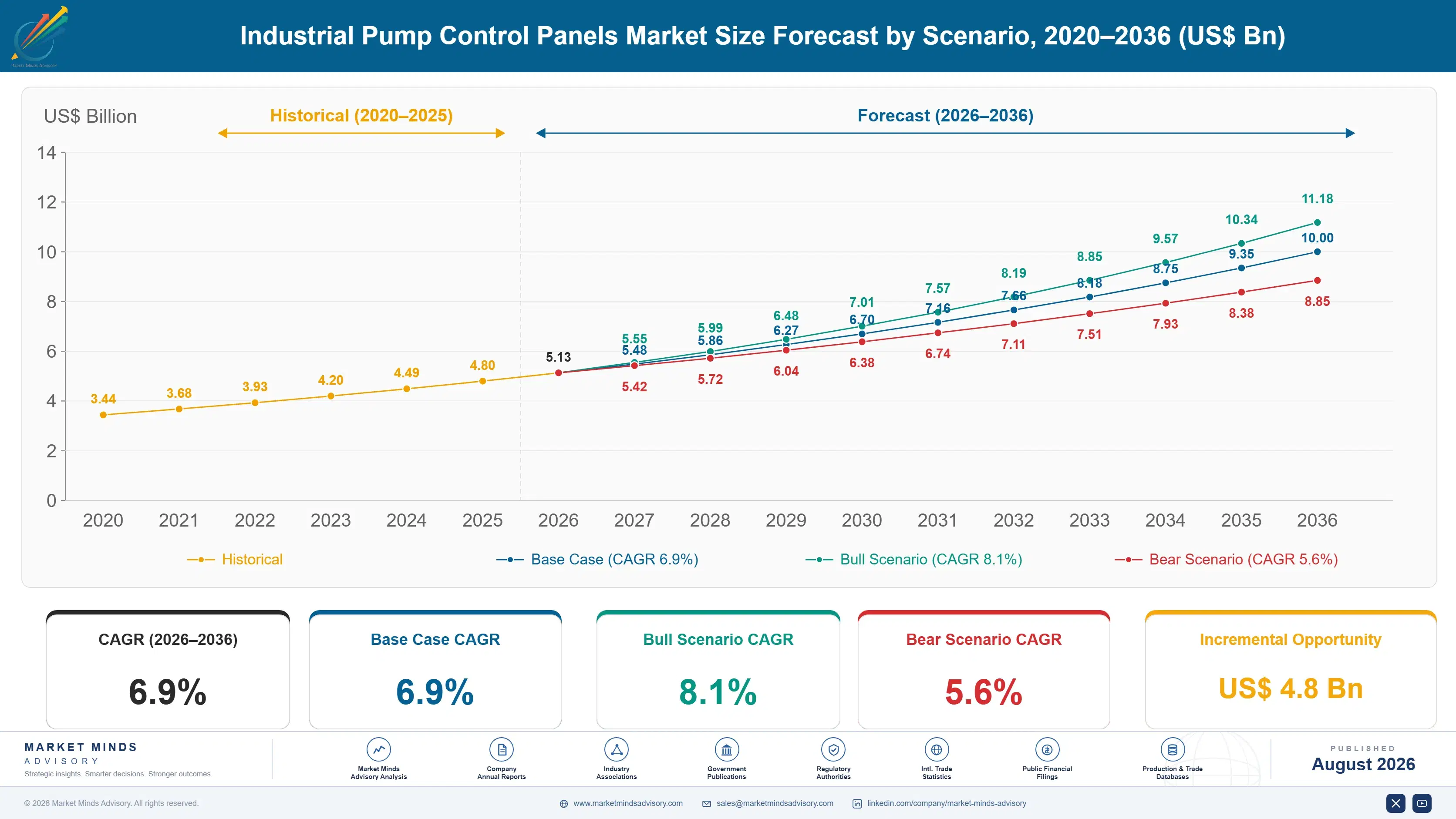
Pump control panel demand grew steadily through 2020 to 2025, slowed in 2020 as industrial capital spending paused during the pandemic, then accelerated as water infrastructure investment programs in the US and EU began funding aging system replacement. Variable frequency drive and smart monitoring panel adoption accelerated faster than the category as energy cost pressure and monitoring demand intensified, producing a historical CAGR of 6.1% that undersells the recent acceleration.
The base case assumes 6.9% annual growth through 2036, driven by three mechanisms. First, expanding energy efficiency standards for motor-driven systems in the EU and US are accelerating replacement of legacy starter panels with variable frequency drive configurations. Second, water utility infrastructure investment programs are funding pump station modernization that bundles panel replacement with broader system upgrades. Third, remote monitoring software adoption is pulling forward panel replacement cycles ahead of mechanical failure.
The bull case assumes faster water infrastructure funding disbursement and energy efficiency mandate enforcement pull growth toward 8.1%. The bear case centers on delayed infrastructure spending and continued reliance on legacy panel repair over replacement in cost-constrained municipal budgets, pulling growth down toward 5.6% if capital spending on water and industrial infrastructure disappoints relative to current funding commitments.

Energy Efficiency Mandate and Panel Integration Economics

Pump control panel selection has become an energy cost decision as much as a reliability one. Plant operators and utilities increasingly specify variable frequency drive and smart monitoring panels because electricity savings and remote diagnostics now directly affect operating budgets and maintenance staffing plans that facility managers track closely.
CR5 CONCENTRATION38%Reflects fragmented panel assembly and integration base globally
VFD PANEL PRICE PREMIUM35-50%Premium buyers pay over standard across-the-line starter panels
CHINA MANUFACTURING SHARE26%Share of global panel assembly capacity located there currently
VFD ENERGY SAVINGS20-35%Typical pump energy consumption reduction after VFD conversion
COMPONENT COST SHARE45-55%Portion of panel cost tied to drives and controllers
AVERAGE PANEL COMMISSIONING TIME3-6 weeksTypical lead time from order to operational installation
China generates roughly 26% of global panel assembly capacity, reflecting both its dominant industrial manufacturing base and its expanding water treatment infrastructure investment relative to other regions still building out comparable capacity. Panel builders price accordingly, charging meaningfully more for validated, pre-engineered VFD packages sold into North American and European markets than into cost-constrained regions still relying primarily on basic starter panels.
The next decade will reward panel builders that integrate drives, controllers, and monitoring software into single validated packages faster than those still assembling components independently for each project. Regulatory pressure, more than raw energy savings potential, will set the pace of VFD conversion in cost-constrained municipal budgets still running legacy starter panels. Expect panel commissioning time to keep shrinking as pre-engineered packages replace custom assembly, compressing integrator labor margins even as total category revenue expands steadily across nearly every major industrial and municipal market worldwide.
"Nobody replaces a working starter panel for fun. They replace it because the electricity bill finally got someone's attention, or because a utility inspector flagged the panel as end of life. Either way, the VFD upgrade pays for itself faster than most operators expect."
Director, Industrial Automation and Controls Practice · MMA Construction and Ind

Market Trends

IoT-Enabled Remote Monitoring Becomes Standard Specification

Water utilities and industrial plant operators increasingly specify remote monitoring capability as a standard requirement rather than an optional upgrade, since distributed pump station networks make in-person inspection impractical at the frequency predictive maintenance programs require. Panel builders are responding by embedding cellular and industrial IoT connectivity directly into standard panel configurations rather than offering it as an aftermarket add-on, reducing cost and installation complexity for utilities managing dozens or hundreds of remote pump stations. Early adopters report meaningfully reduced unplanned downtime and truck rolls, since operators can diagnose many fault conditions remotely before dispatching a technician.
Market Impact: Adds infrastructure-funded demand growth of 15-20%
Energy Efficiency Standards Accelerate VFD Panel Adoption

Expanding energy efficiency regulations for motor-driven systems, including updated US Department of Energy standards and the EU's Ecodesign framework, are pushing facility operators to replace across-the-line starter panels with variable frequency drive configurations that cut pump energy consumption by 20 to 35% depending on application. Compliance timelines vary by jurisdiction, but the direction is consistent across major markets, giving panel builders a reliable multi-year replacement demand signal independent of underlying pump failure rates. Utilities increasingly bundle VFD conversion with broader electrical upgrades to capture available energy efficiency incentive funding while contractors are already on site.
Market Impact: Cuts downtime 25-40% versus reactive maintenance

Market Opportunities and Growth Drivers

Water Infrastructure Investment Funds Pump Station Modernization

Government water infrastructure investment programs, including the US Bipartisan Infrastructure Law's water and wastewater funding and comparable EU cohesion fund allocations, are directing meaningful capital toward pump station modernization projects that bundle control panel replacement with broader system upgrades. Municipal utilities that previously deferred panel replacement due to budget constraints now have dedicated funding streams earmarked for infrastructure modernization, removing the capital barrier that historically slowed replacement cycles. Panel builders report that infrastructure-funded projects tend to specify higher-tier VFD and monitoring-equipped panels rather than basic units, since funding programs often favor advanced configurations.
Market Impact: Compresses panel margins 5-10%

Predictive Maintenance Adoption Pulls Forward Panel Replacement

Industrial operators and utilities adopting predictive maintenance programs increasingly use panel-level monitoring data to schedule proactive replacement before failure, shifting purchasing decisions from reactive emergency response toward planned capital budgeting cycles. This shift benefits panel builders directly, since planned replacement projects typically specify higher-tier monitoring-equipped panels rather than basic like-for-like replacement units common in emergency situations. Facility managers report that predictive maintenance programs reduce total pump system downtime meaningfully compared to run-to-failure strategies, creating a return on investment case that is accelerating monitoring-equipped panel adoption across both industrial and municipal customer segments alike.
Market Impact: Extends lead times 3-6 weeks longer

Market Restraints and Challenges

Component Cost Volatility Compresses Panel Margins

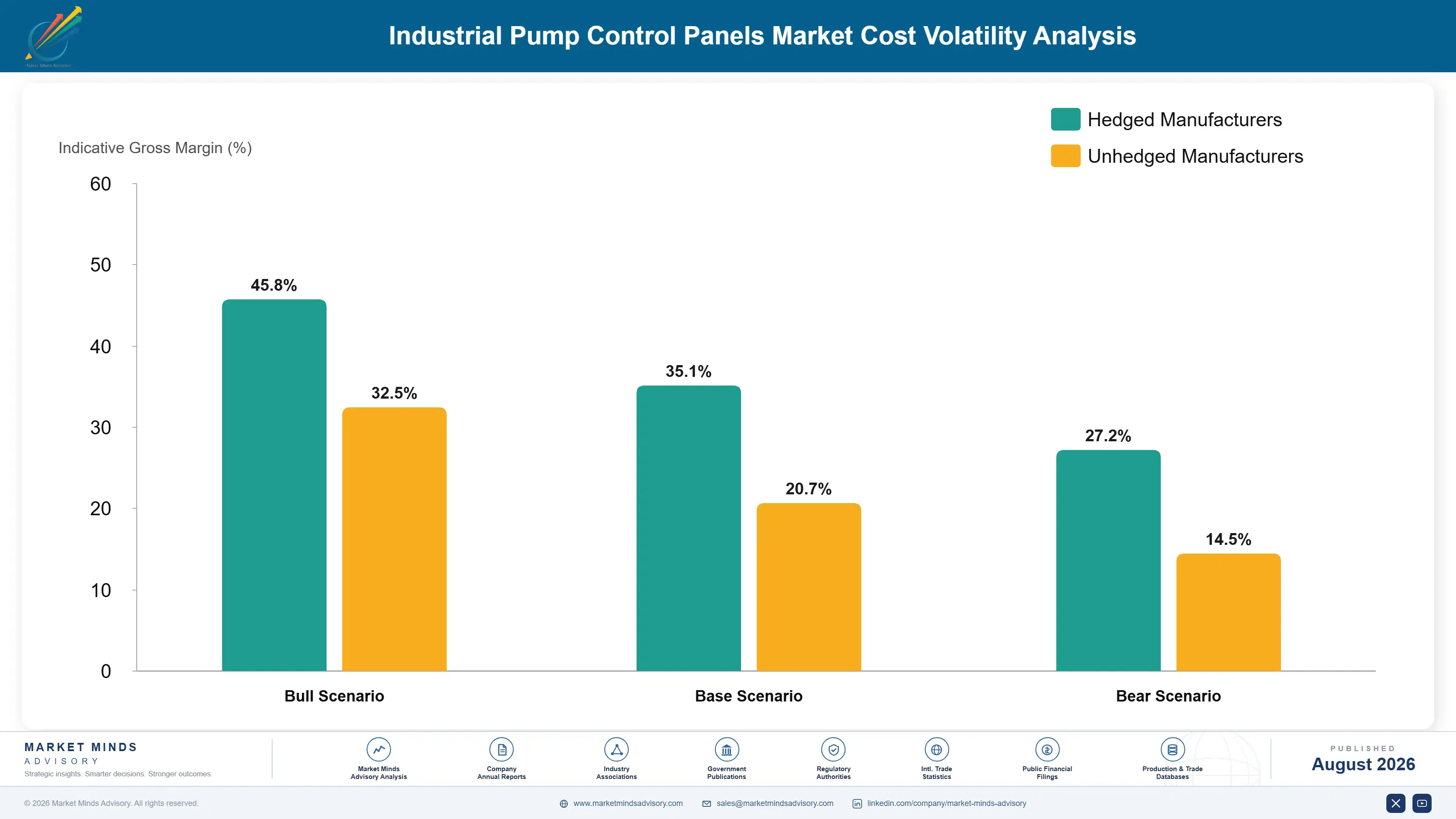
Drives, controllers, and other electronic components account for 45 to 55% of panel manufacturing cost, and semiconductor price volatility during 2021 and 2022 forced panel builders to absorb margin compression or pass through mid-project price increases that strained customer relationships. The root cause is that panel builders typically quote fixed project pricing months before component procurement and assembly actually occur, leaving them exposed to component price movement between quote and delivery in a way many shorter-lead-time equipment categories are not. Panel builders are responding by shortening quote validity periods and negotiating price escalation clauses into larger contracts.
Market Impact: Cuts unplanned downtime by 20-30%

Skilled Panel Assembly Labor Shortage Limits Capacity

Panel assembly requires skilled electricians and controls technicians capable of wiring, programming, and testing complex control systems, and labor shortages in this specific skill category have extended panel builder lead times meaningfully across North America and Europe. The root cause is that panel assembly skills take years to develop through apprenticeship and on-the-job training, and the workforce pipeline has not kept pace with retiring skilled workers or growing demand from infrastructure programs. Panel builders are responding by investing in modular pre-wired subassembly designs that reduce skilled labor hours per panel and by expanding apprenticeship partnerships.
Market Impact: Cuts pump energy consumption by 20-35%
3 additional market trends, 3 additional growth drivers, and 2 additional restraints and challenges are covered in the full report. Contact sales@marketmindsadvisory.com to access the complete intelligence.

Segment CAGR and Growth Architecture

This report segments the industrial pump control panels market by panel technology type across variable frequency drive panels, PLC-based controllers, soft starter panels, across-the-line starter panels, IoT-enabled smart monitoring panels, and hybrid multi-pump duplex and triplex panels. Technology type was chosen over application because purchasing and specification decisions follow control technology capability rather than the specific pumping application served.
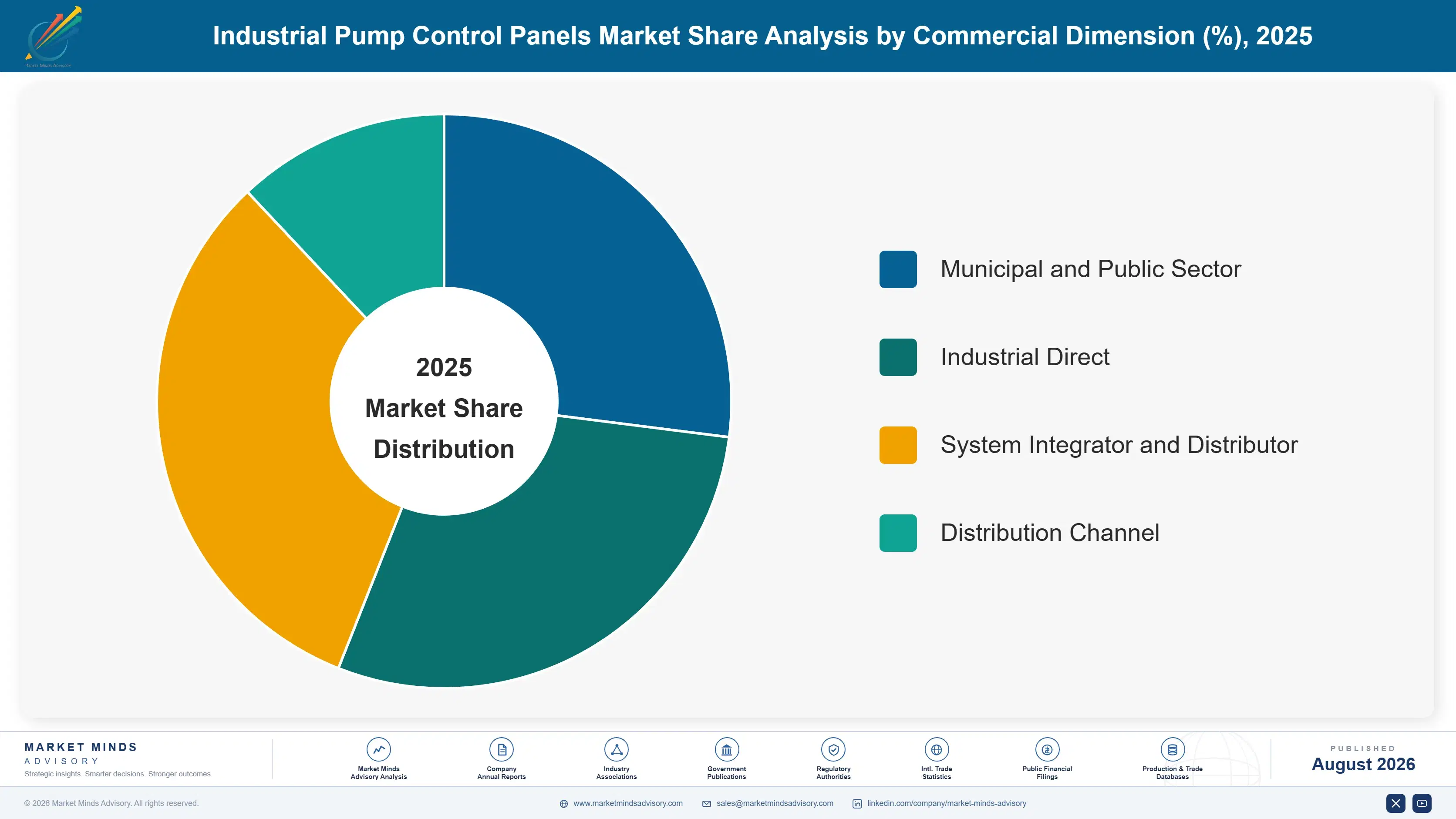
industrial-pump-control-panels-market-market-share-analysis-1787301187567

IoT-Enabled Smart Monitoring Panels

IoT-enabled smart monitoring panels are the fastest-growing category at 11.4% annually, roughly 65% faster than the market average. Distributed pump station networks are the primary demand driver, since utilities managing dozens or hundreds of remote sites need remote visibility that in-person inspection cannot practically provide at the frequency predictive maintenance programs require. Panel builders are increasingly embedding cellular and industrial IoT connectivity directly into standard configurations rather than offering it as an aftermarket add-on, reducing both cost and installation complexity for utility customers. Schneider Electric and ABB lead this category, with cloud-based monitoring platforms increasingly differentiating premium panels from basic monitoring-equipped configurations on data analytics capability and integration with existing utility SCADA systems.
CAGR 11.4%

Variable Frequency Drive Control Panels

Variable frequency drive control panels, the second-fastest category at 8.6% annually, benefit from expanding energy efficiency regulations that make VFD conversion increasingly mandatory rather than optional for many pump applications across major industrial markets. Energy savings of 20 to 35% compared to across-the-line starter operation give VFD panels a genuine return on investment case independent of any regulatory requirement, accelerating adoption even in jurisdictions without binding efficiency mandates yet in place. Water and wastewater utilities are converting legacy starter panels to VFD configurations specifically to reduce electricity costs that represent a meaningful share of total municipal utility operating budgets. Panel builders report VFD panels increasingly specified as the default configuration for new installations rather than a premium option.
CAGR 8.6%
Full segment breakdown across 6 segments available in the complete report.

Regional Architecture and Country Demand Map

East Asia retains the largest regional share on manufacturing scale and infrastructure investment, with South Asia and Pacific expanding fastest as water infrastructure investment accelerates. North America and Western Europe follow behind, while Latin America, the Middle East and Africa, and Eastern Europe remain earlier-stage markets.

North America

US water infrastructure investment under the Bipartisan Infrastructure Law is directing meaningful funding toward municipal pump station modernization, generating steady panel replacement demand independent of the broader industrial capital spending cycle. Industrial plant operators across oil and gas, chemical, and manufacturing sectors are converting legacy starter panels to VFD configurations to capture energy savings amid persistently elevated electricity costs in several regions. Canada's resource sector and municipal water infrastructure generate comparable demand dynamics to the US, though at smaller absolute scale given the smaller population and industrial base. Mexico's manufacturing sector, boosted by nearshoring investment, is generating growing industrial pump control panel demand tied to new facility construction, particularly in the automotive and electronics supply chains relocating there.
Share: 24% | CAGR: 6.5% (2026 to 2036)

Western Europe

Germany, France, and the UK are advancing energy efficiency-driven VFD conversion fastest within the region, supported by the EU's Ecodesign framework and generally higher electricity costs that strengthen the return on investment case for conversion. Germany's industrial automation manufacturing base gives it particular strength in higher-tier PLC-based and IoT-enabled panel categories specifically. The UK's water utility sector, operating under regulatory pressure to reduce both leakage and energy consumption, is a significant source of pump station modernization demand. Southern European markets including Spain and Italy are converting legacy panels somewhat more slowly, reflecting both later regulatory implementation and tighter municipal utility capital budgets across most of their public infrastructure programs today.
Share: 20% | CAGR: 5.3% (2026 to 2036)
Regional intelligence for 5 additional markets available in the complete report: East Asia, South Asia and Pacific, Latin America, Middle East and Africa, Eastern Europe. Contact sales@marketmindsadvisory.com.
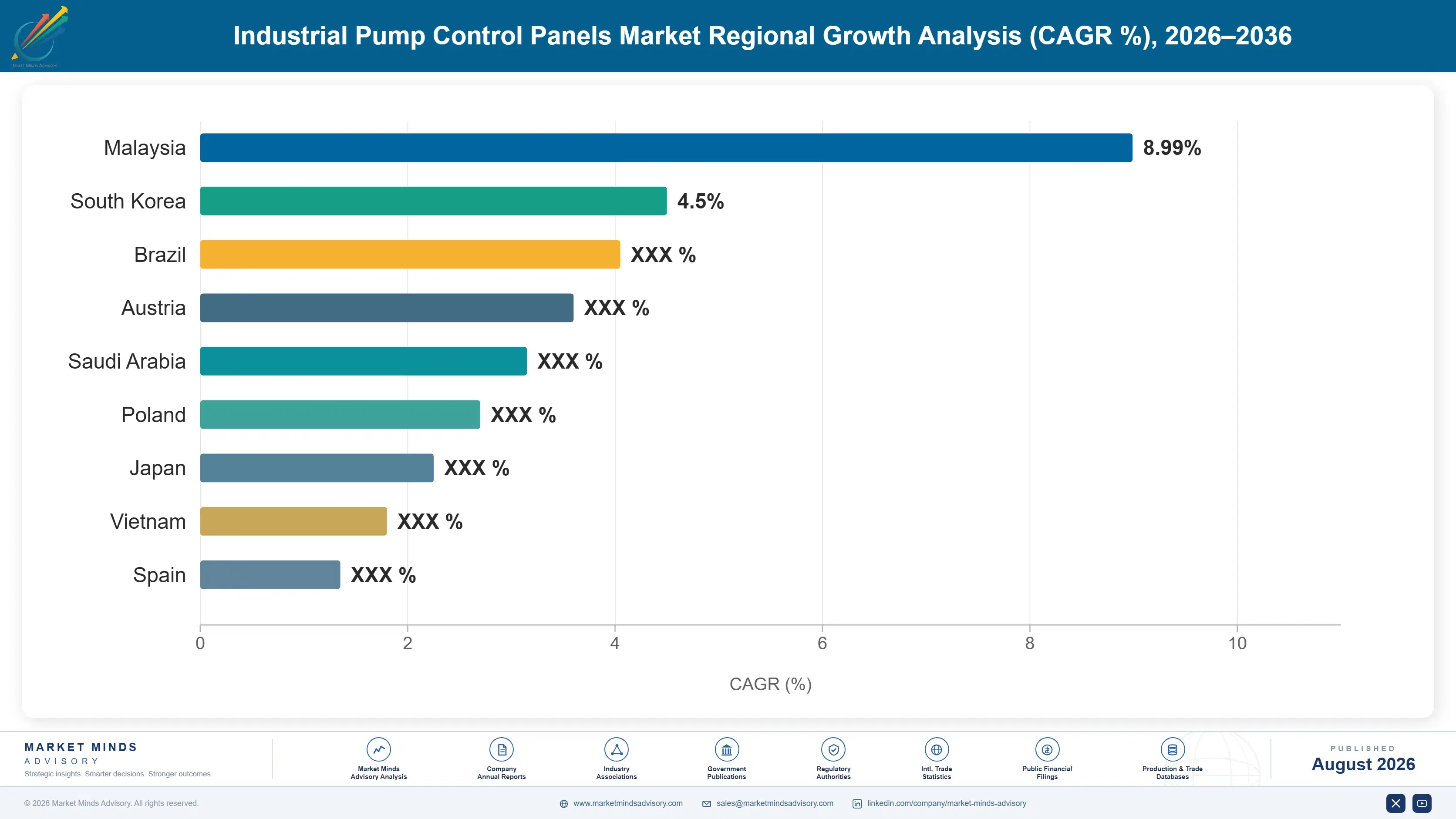
industrial-pump-control-panels-market-country-cagr-analysis-1787301188087

Where Pump Control Panel Margins Concentrate

Margin in this market increasingly sits in integrated packages, remote monitoring software, and service contracts rather than the base panel enclosure and wiring alone. Four levers explain most of the gap between panel builders still competing purely on unit price and those capturing recurring revenue across the full equipment lifecycle from installation through ongoing operation.

Bundling Drives, Controllers, and Monitoring Into Packages

Panel builders offering pre-engineered packages that bundle variable frequency drives, PLC controllers, and remote monitoring software into a single validated configuration command 35 to 50% price premiums over custom-assembled equivalents, since utilities and industrial customers increasingly value reduced commissioning time and integration risk over marginal component-level cost savings. This bundling also reduces the skilled labor hours panel builders need per project, since pre-engineered packages require less custom design and testing than assembling components independently for each installation. Panel builders without bundling capability increasingly lose specification to competitors offering validated packages, particularly on infrastructure-funded projects with compressed installation timelines.
Market Impact: Commands a 35-50% premium over custom assembly work

Monetizing Remote Monitoring Software Subscriptions Directly

Panel builders increasingly bundle cloud-based remote monitoring software subscriptions with panel hardware sales, charging utilities and industrial customers an ongoing per-panel or per-site fee for data analytics, alerting, and predictive maintenance capability layered on top of the physical panel sale. This subscription revenue carries margins closer to enterprise software than industrial equipment, and attachment rates are rising above 40% on new installations as customers increasingly view remote monitoring as standard rather than optional given how directly it affects unplanned downtime costs. Panel builders with the most capable monitoring platforms report meaningfully higher customer retention across their installed base.
Market Impact: Monitoring subscription attachment rates now exceed 40% overall

Expanding Service and Preventive Maintenance Contracts

Utilities and industrial customers increasingly purchase multi-year service and preventive maintenance contracts alongside panel installation, since maintaining control system reliability requires periodic inspection and component testing that many customers lack the in-house technical expertise to perform independently. These service contracts carry margins meaningfully above the equipment sale itself, and panel builders with dedicated field service organizations report renewal rates above 65% as customers increasingly value guaranteed response times for critical infrastructure. Panel builders without extensive service infrastructure are increasingly losing installed-base service revenue to independent controls service companies that specialize in multi-vendor panel maintenance and repair.
Market Impact: Service contract renewal rates now exceed 65% overall

Winning Infrastructure-Funded Project Specifications Early On

Panel builders that engage water utilities and municipalities early in infrastructure-funded project planning, before formal specifications are finalized, capture roughly 20% more specification share since early engagement lets them influence technical requirements toward their own product capabilities rather than competing purely on price against a fixed specification written by a competitor. This early engagement advantage compounds across funding cycles, since panel builders that win early projects build reference installations and utility relationships that support winning subsequent projects within the same funding program. Panel builders without dedicated business development resources lose specification share to competitors with more proactive utility relationships.
Market Impact: Captures a disproportionate 20%+ share of funded projects

Who Controls the Margin Pool

CR5 concentration sits at 38%, reflecting a fragmented panel assembly base globally. Schneider Electric and ABB lead on component technology depth and brand recognition, but the gap to regional panel builders and integrators remains meaningful, since panel assembly itself requires less capital intensity than component manufacturing, letting smaller specialists compete effectively on service and customization.
Competitive activity plays out on three fronts. Pre-engineered package bundling is the most visible, with nearly every major component supplier now offering validated drive-controller-monitoring configurations. Remote monitoring software is the second front, where Schneider Electric and ABB use their cloud platform investment to differentiate beyond hardware alone. Service and maintenance contract expansion is the third front, where panel builders compete with independent controls service companies for recurring installed-base revenue.

Pressure is building from two directions rankings have not caught up with. Chinese domestic panel builders are expanding beyond their home market into Southeast Asia, Africa, and Latin America, competing on price against established Western and Japanese suppliers in cost-sensitive infrastructure projects. Independent regional integrators are simultaneously winning share on service responsiveness and customization flexibility that large multinational component suppliers, organized around standardized global product lines, cannot always match at the local project level.
industrial-pump-control-panels-market-company-positioning-matrix-1787301188614

Competitive Moat and Risk Dimensions

SCHNEIDER ELECTRIC SE

Moat: Broadest Global Distribution Network

Schneider Electric's distribution and system integrator network, among the deepest in industrial automation, gives it project specification access and local support capability across more markets than most competitors can match, letting it win infrastructure-funded projects that require both global product consistency and genuine local service presence.
SCHNEIDER ELECTRIC SE

Risk: Component Supplier, Not Panel Specialist

Schneider Electric sells primarily through third-party panel builders and integrators rather than assembling most finished panels itself, meaning its revenue and margin capture from the panel assembly and integration layer specifically remains more limited than component-focused positioning alone would otherwise suggest to industry outside observers and analysts.
ABB LTD

Moat: Deep Industrial Automation Software Platform

ABB's Ability digital platform gives its panels a remote monitoring and analytics capability that smaller regional panel builders without comparable software investment cannot easily replicate, creating a genuine differentiation layer beyond the physical hardware that commands premium specification in infrastructure-funded projects across most major world regions.
ABB LTD

Risk: Slower Regional Service Responsiveness

ABB's global organizational structure sometimes delivers slower local service response than nimble regional integrators specifically focused on a single market, leaving it more exposed to losing service and maintenance contract renewals to competitors with deeper local presence and faster response commitments made directly to customers overall.

Players Tracked

Prominent Players

Schneider Electric SE
ABB Ltd
Siemens AG
Rockwell Automation Inc.
Eaton Corporation plc

Other Key Players

WEG S.A.
Franklin Electric Co. Inc.
Xylem Inc.
Grundfos Holding A/S
Mitsubishi Electric Corporation
Yaskawa Electric Corporation
Danfoss A/S
Hubbell Incorporated
Emerson Electric Co.
Control Concepts Inc.
Metron Farnier LLC
Master Control Systems Inc.
SJE Rhombus Inc.
Zoeller Pump Company
Weatherford Industrial Electric Inc.

Recent Developments

FEBRUARY 2025

Schneider Electric Expands Panel Assembly Capacity

Schneider Electric completed an organic capacity expansion at its panel assembly manufacturing facility to add dedicated variable frequency drive and IoT-enabled panel production lines, responding to rising demand from infrastructure-funded water utility projects and shorter delivery lead times requested across North American and European markets.
Signal: Signals Schneider Electric is committing manufacturing capital to pre-engineered panel packages rather than treating them as a niche offering.
JUNE 2025

ABB Acquires IoT Pump Monitoring Software Startup

ABB acquired a specialist IoT pump monitoring and predictive maintenance software startup to strengthen its Ability platform's analytics capability and reduce unplanned downtime for utility customers, adding software engineering talent it previously lacked in-house for rapid feature development and faster commercial deployment across its portfolio.
Signal: Indicates panel builders are increasingly building monitoring software capability through acquisition rather than internal development alone.
OCTOBER 2025

Eaton Signs Supply Agreement With Municipal Water Utility Consortium

Eaton signed a multi-year supply agreement with a consortium of municipal water utilities to provide pump control panels and remote monitoring support across their infrastructure modernization programs, replacing a prior fragmented procurement approach with a single qualified supplier relationship covering multiple utility service areas and future expansion phases.
Signal: Confirms that municipal utility consortiums are increasingly consolidating panel procurement toward fewer qualified suppliers across their regions.

Drive and Controller Component Exposure

Variable frequency drives, PLC controllers, and other electronic components account for 45 to 55% of pump control panel manufacturing cost, with enclosures, wiring, and mechanical hardware making up most of the remainder. Drive and controller components are sourced from a concentrated group of major automation suppliers, while enclosures and mechanical hardware draw on a broader, more fragmented industrial supply base.
Semiconductor and power electronics component prices rose more than 25% within three quarters during 2021 as broader chip supply chain disruption spilled into industrial drive and controller component availability, according to company annual report disclosures from major automation suppliers. That constraint forced several panel builders to extend delivery lead times and, in some cases, substitute alternative component models mid-project, an unusual compromise for equipment where component compatibility and certification typically require extensive advance validation.

Scale suppliers like Schneider Electric and ABB negotiate drive and controller supply contracts across their full global product portfolio, giving them better pricing than smaller regional panel builders buying components at lower volumes. Panel builders with long-standing component supplier relationships carry a durable cost and availability advantage over competitors relying on spot-market purchasing, reshaping which builders can credibly commit to infrastructure-funded project delivery timelines.
industrial-pump-control-panels-market-cost-volatility-analysis-1787301188809

Qualifying Multiple Component Suppliers

Panel builders are qualifying drive and controller suppliers across multiple manufacturers rather than relying on a single component brand, reducing exposure to any single supplier's capacity constraints or allocation decisions during shortages. This adds design and certification complexity but has measurably reduced delivery delays passed through to utility and industrial customers during recent semiconductor supply disruptions.

Locking Multi-Year Component Supply Agreements

Larger panel builders are negotiating multi-year fixed-price component supply agreements directly with automation suppliers, trading some upside if prices fall for protection against sudden spikes tied to broader semiconductor market volatility. Smaller panel builders without comparable purchasing volume typically cannot access these terms and remain more exposed to spot component pricing swings throughout the year.

Building Component Inventory Buffer Stock

Several panel builders are maintaining larger buffer inventory of critical drive and controller components rather than ordering strictly against confirmed project orders, trading working capital investment for delivery reliability during supply disruptions. Smaller panel builders without comparable working capital access typically cannot pursue this path and remain more exposed to component availability and pricing constraints.

Portfolio Architecture for Margin Defence

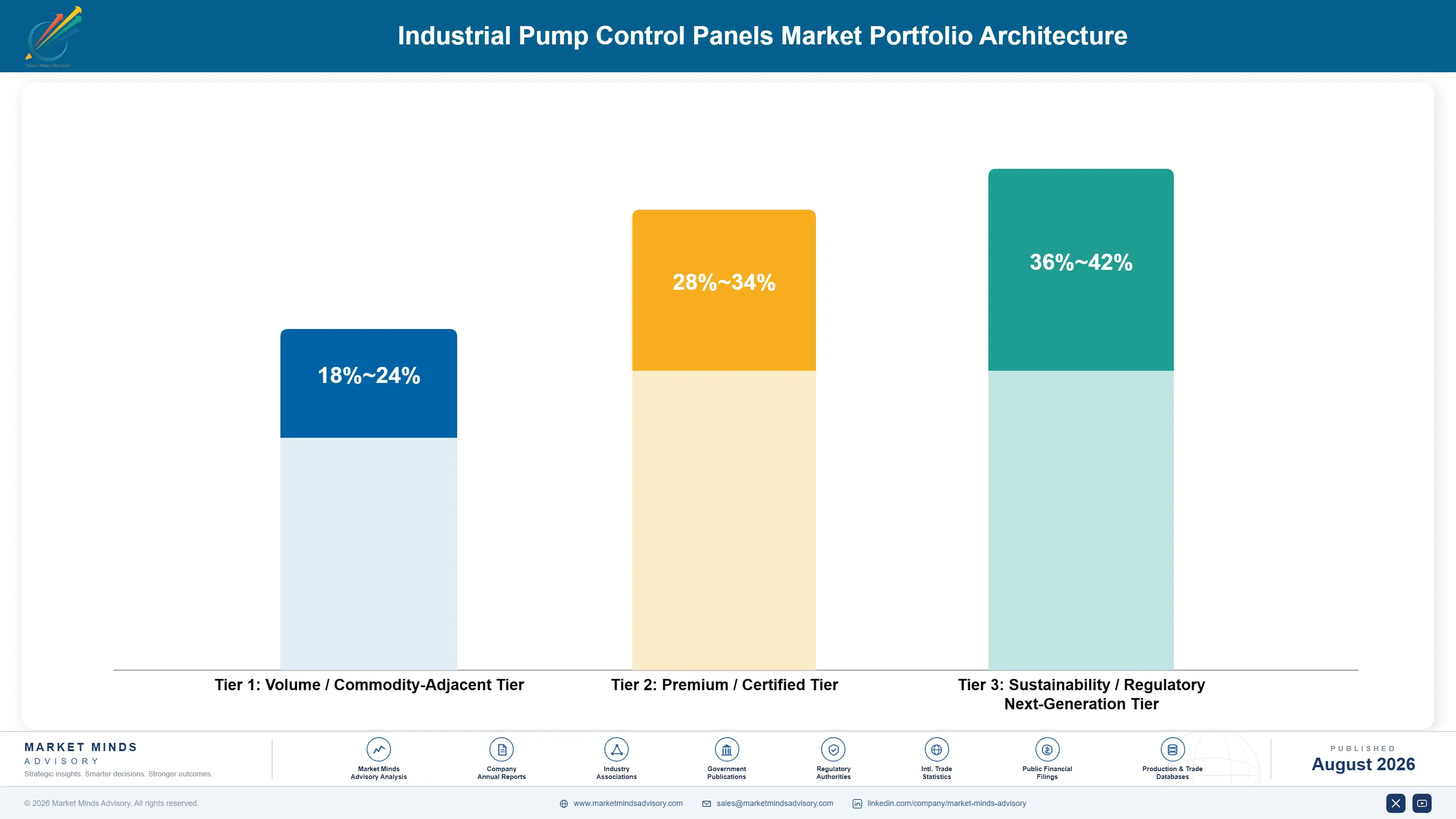
Portfolio economics split into three tiers. Volume commodity-adjacent panels, primarily across-the-line starter and basic soft starter configurations, run on thin margins driven by intense price competition among regional panel builders and increasingly capable component suppliers. Premium and certified panels, carrying VFD technology and validated pre-engineered configurations, command meaningfully better margins because customers pay for reduced commissioning time and energy savings performanc
The tension between volume and premium runs deep, since cost-constrained municipal buyers want the lowest acquisition cost per panel while infrastructure-funded and industrial customers increasingly demand the energy efficiency and monitoring capability that only premium-tier configurations deliver consistently. Schneider Electric and ABB manage this by maintaining separate basic and premium product lines, letting customers choose configuration based on their specific budget and funding source requirements.

High-value pools concentrate in IoT-enabled and VFD-equipped panels, where software capability and energy efficiency validation both support pricing power that ordinary commodity panel assembly cannot replicate. Capital is flowing fastest into monitoring software development and pre-engineered package standardization, as panel builders race to establish the integration capability that will define premium competitiveness through the next decade across every major regional market.

Volume / Commodity-Adjacent Tier

Across-the-line starter and basic soft starter panels without VFD or monitoring capability, priced primarily on unit cost and competing mainly on delivery speed and basic reliability across high-volume municipal and light industrial applications.
Gross Margin: 18-24%

Premium / Certified Tier

VFD panels bundled with validated energy efficiency performance data and service contracts that infrastructure-funded and industrial customers value for reduced commissioning time and predictable long-term operating cost savings across the equipment lifecycle.
Gross Margin: 28-34%

Sustainability / Regulatory / Next-Generation Tier

IoT-enabled smart monitoring panels addressing predictive maintenance requirements and expanding energy efficiency regulation, where software capability and early-mover advantage both support the strongest pricing power in the category currently available.
Gross Margin: 36-42%
industrial-pump-control-panels-market-portfolio-architecture-1787301189316

High-value Sub-segments and Strategic Watch-out

IoT-Enabled Smart Monitoring Panels

Expanding predictive maintenance adoption and utility demand for distributed pump station visibility make this segment both operationally necessary and commercially validated, commanding sustained pricing power even as competing monitoring platforms gradually close the software capability gap across the broader premium panel category over the next several years.
Gross Margin: 38-44%

Service and Preventive Maintenance Contracts

Recurring service and maintenance contract revenue is growing steadily as customers standardize on premium VFD and monitoring platforms requiring ongoing technical support, commanding a durable subscription-like revenue premium even though capital equipment volume growth trails the fastest technology segments by a considerable and steadily widening margin.
Gross Margin: 45-52%

Standard Across-the-Line Starter Panels

Conventional across-the-line starter panels remain the largest unit-volume segment by far, competing mainly on price and delivery speed rather than technology differentiation, with margins compressed by intense competition among regional panel builders and component suppliers expanding their export volume into new markets and territories each year.
Gross Margin: 16-22%

Legacy Non-VFD Municipal Panel Installations

Older municipal pump station panels without VFD or monitoring capability face rising replacement pressure as energy efficiency regulations tighten, and municipalities with heavy legacy panel exposure risk facing compliance costs faster than budget cycles can realistically accommodate replacement across their full service territory and customer base.
Gross Margin: 10-15%

How Pump Panel Demand Recurs

Pump control panel demand carries a genuine annuity quality through service contracts, monitoring software subscriptions, and component replacement layered on top of the initial capital equipment sale. Utilities and industrial operators require ongoing technical support to maintain control system reliability regardless of capital spending cycles, and service contract renewal rates above 65% give panel builders a recurring revenue stream that persists independent of new panel sales.
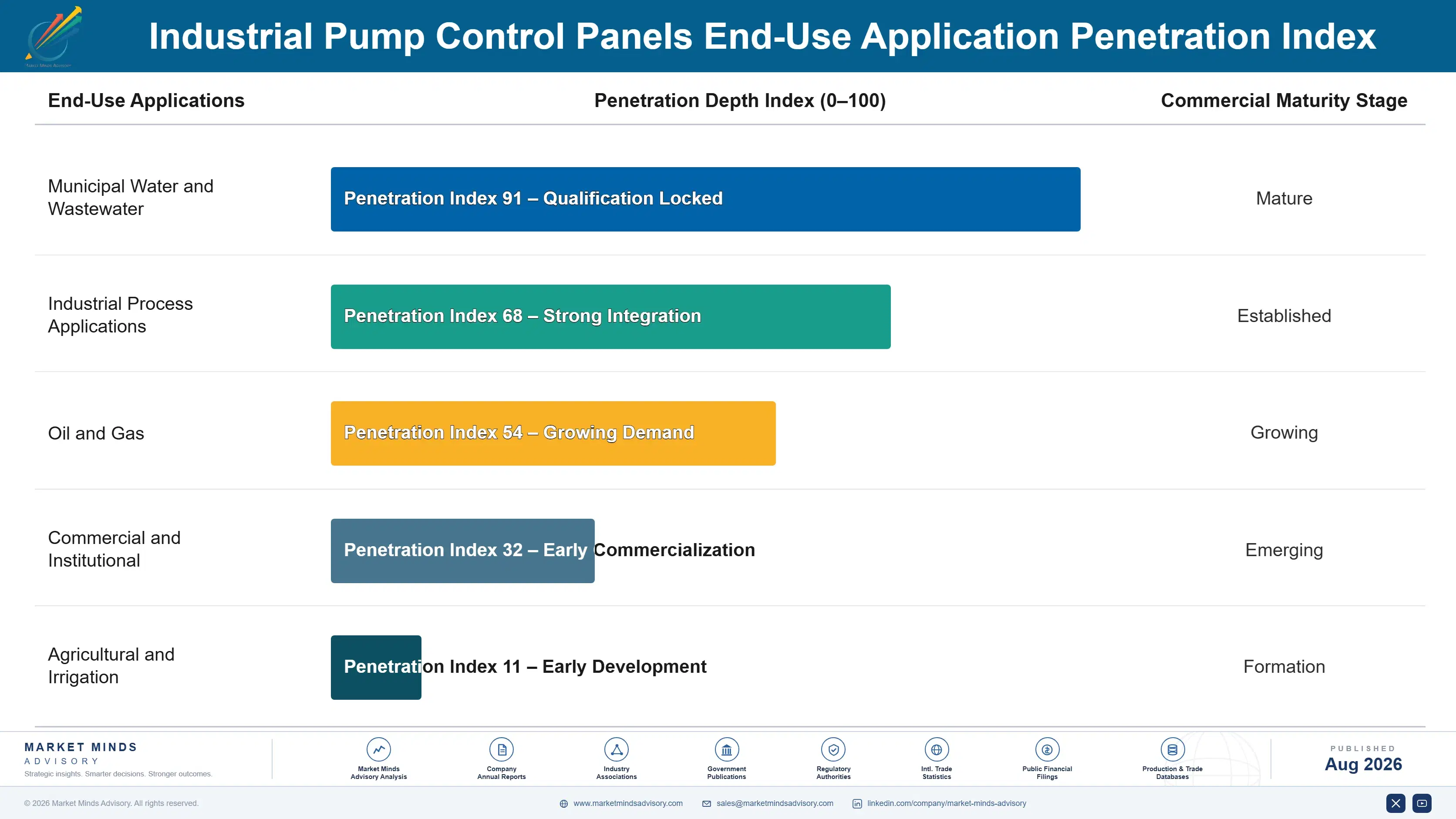
Adoption depth varies meaningfully by end-use segment. Municipal water and wastewater utilities show the deepest VFD and monitoring adoption, since infrastructure funding and energy cost pressure are both most mature there. Industrial process applications show growing but more varied adoption, tracking sector-specific capital investment cycles more closely. Agricultural and light commercial pump applications remain earlier-stage, since basic starter panel technique still dominates those lower-value, more price-sensitive applications.

A younger generation of facility engineers and utility operators, trained on data-driven predictive maintenance and remote monitoring dashboards rather than manual inspection routines, is accelerating demand for IoT-enabled panel platforms. That generational shift is reshaping which panel builders even get invited into utility and industrial capital equipment evaluation processes in the first place.
industrial-pump-control-panels-market-end-use-penetration-index-1787301189844

What Wins in Pump Control Panels

These are among the four positions where our research anticipates prominent divergence between winners and laggards over the coming forecast period. Each is grounded in the demand model, the regulatory perimeter, and the announced capacity pipeline.
01 / PACKAGE INTEGRATION STRATEGY

Bundle drives, controllers, and monitoring into validated packages

Panel builders that bundle drives, controllers, and monitoring software into validated pre-engineered packages capture premium pricing and reduced commissioning time advantages before competitors recognize bundling as a baseline market expectation rather than a differentiator. Waiting until bundled packages become standard means competing for infrastructure-funded project specifications against builders that already built reference installations and utility relationships around validated configurations. Early movers are also better positioned to win the recurring service and monitoring subscription revenue that follows the initial panel sale across the equipment's full operating life.
02 / INFRASTRUCTURE FUNDING ENGAGEMENT

Engage utilities early in infrastructure-funded project planning cycles

Panel builders that engage water utilities and municipalities early in infrastructure-funded project planning capture disproportionate specification share since early engagement lets them influence technical requirements before a competitor writes a fixed specification favoring their own products. Waiting until formal specifications are published means competing purely on price against requirements a competitor may have already shaped in their own favor. The window to establish these early relationships narrows as infrastructure funding programs mature and utilities develop established vendor relationships that become harder to displace over subsequent funding cycles.
03 / REMOTE MONITORING SOFTWARE INVESTMENT

Build proprietary monitoring software rather than relying on third parties

Panel builders that build proprietary remote monitoring software capture recurring subscription revenue that persists independent of new panel sales cycles, unlike those relying on third-party monitoring platforms that capture much of that margin instead. Schneider Electric's and ABB's monitoring subscription attachment rates above 40% demonstrate how sticky this revenue becomes once customers build maintenance workflows around a specific platform's dashboard and alerting configuration. The window for proprietary monitoring software to function as genuine differentiation narrows as third-party platforms become more capable and cheaper to integrate.
04 / SKILLED LABOR CAPACITY PLANNING

Invest in modular assembly to offset skilled labor shortages

Panel builders that invest in modular pre-wired subassembly designs reduce the skilled labor hours required per panel, protecting delivery timelines as the industry-wide shortage of qualified controls technicians continues constraining broader panel assembly capacity across the market. Panel builders that fail to address this labor constraint risk extending lead times further as infrastructure-funded demand accelerates faster than the skilled workforce can expand through traditional apprenticeship timelines alone. The window to build this modular assembly advantage narrows as competitors adopt similar design approaches across the broader industry.

Engagement Snapshot From the Field

A live engagement with an industry participant carrying material or product regulatory and market exposure ahead of a defining policy shift, showing how our research translates into a defensible multi-year portfolio strategy.
MARKET MINDS ADVISORY · CLIENT ENGAGEMENT SUMMARY
Industrial Pump Control Panels Producer Strategic Portfolio Review and Transition Roadmap 2026·Investment Scenario on Industrial Pump Control Panels Exposure Evaluation 2025-26
CLIENT PROFILE
The client is a regional water utility consortium operating 24 pump stations across a multi-county service area, serving more than 800,000 residential and commercial connections with an aging control panel installed base averaging 22 years old, and evaluating an infrastructure modernization capital budget exceeding US$45 million (client-reported, unverified by MMA). The consortium was evaluating panel replacement vendor selection and technology tier standardization.
STRATEGIC CHALLENGE
The client needed to determine which pump stations should receive priority replacement and which panel technology tier, basic VFD versus fully monitoring-equipped configurations, would generate sufficient operational value to justify the incremental capital cost across a geographically dispersed and operationally varied pump station network spanning multiple counties and overlapping regulatory jurisdictions.
MMA APPROACH
MMA conducted a station-by-station analysis correlating current panel condition, energy consumption, historical failure and downtime data, and remote accessibility against replacement technology tier options and available infrastructure funding criteria. The engagement combined primary interviews with the consortium's operations staff and comparative benchmarking against peer utility modernization programs already underway in comparable service areas.
KEY FINDINGS
  1. Roughly 40% of the client's pump stations, concentrated in the most remote and hardest-to-access locations, accounted for a disproportionate share of historical unplanned downtime and emergency truck rolls.
  2. Monitoring-equipped panel capability at the highest-downtime stations alone would generate enough operational savings to justify the incremental technology cost within approximately four years.
  3. Available infrastructure funding criteria favored monitoring-equipped and energy-efficient configurations specifically, meaningfully reducing the client's effective incremental cost for the premium technology tier.
  4. Peer benchmarking showed utilities that prioritized remote and high-downtime stations for early replacement achieved better overall program returns than those replacing panels strictly by installation age.
CLIENT PROFILE
The client is a regional water utility consortium operating 24 pump stations across a multi-county service area, serving more than 800,000 residential and commercial connections with an aging control panel installed base averaging 22 years old, and evaluating an infrastructure modernization capital budget exceeding US$45 million (client-reported, unverified by MMA). The consortium was evaluating panel replacement vendor selection and technology tier standardization.
STRATEGIC CHALLENGE
The client needed to determine which pump stations should receive priority replacement and which panel technology tier, basic VFD versus fully monitoring-equipped configurations, would generate sufficient operational value to justify the incremental capital cost across a geographically dispersed and operationally varied pump station network spanning multiple counties and overlapping regulatory jurisdictions.
MMA APPROACH
MMA conducted a station-by-station analysis correlating current panel condition, energy consumption, historical failure and downtime data, and remote accessibility against replacement technology tier options and available infrastructure funding criteria. The engagement combined primary interviews with the consortium's operations staff and comparative benchmarking against peer utility modernization programs already underway in comparable service areas.
KEY FINDINGS
  1. Roughly 40% of the client's pump stations, concentrated in the most remote and hardest-to-access locations, accounted for a disproportionate share of historical unplanned downtime and emergency truck rolls.
  2. Monitoring-equipped panel capability at the highest-downtime stations alone would generate enough operational savings to justify the incremental technology cost within approximately four years.
  3. Available infrastructure funding criteria favored monitoring-equipped and energy-efficient configurations specifically, meaningfully reducing the client's effective incremental cost for the premium technology tier.
  4. Peer benchmarking showed utilities that prioritized remote and high-downtime stations for early replacement achieved better overall program returns than those replacing panels strictly by installation age.
RECOMMENDED STRATEGY
Phase 1: Phase 1 (Months 1-4): Prioritize monitoring-equipped panel replacement at the highest-downtime and most remote pump stations identified through the operational analysis. Phase 2: Phase 2 (Months 5-16): Expand replacement to remaining pump stations, sequencing rollout by available infrastructure funding tranches and panel condition assessments. Phase 3: Phase 3 (Months 17-24): Evaluate program performance against downtime and energy savings assumptions, then finalize remaining station replacement timelines accordingly.
OUTCOME
The client's phased modernization program reduced unplanned downtime at the priority pump stations meaningfully within the first operating year, exceeding its internal base case projection (client-reported, unverified by MMA). Prioritizing remote and high-downtime stations rather than replacing by installation age alone improved overall program return on investment across the full 24-station network.

Frequently Asked Questions

Foundational context covering the market sizes, CAGR, scope, country, region and competition that inform every finding below. This section is provided to cover basics and most often pre-purchase conversations, answered from the MMA Primary Research Dataset.

What is the current size of the Industrial Pump Control Panels Market?

The market was valued at US$4.8 billion in 2025 and is projected to reach US$5.1 billion in 2026 as water infrastructure investment and energy efficiency mandates continue accelerating.

How large will the Industrial Pump Control Panels Market be by 2036?

MMA projects the market will reach US$9.9 billion by 2036, roughly 1.94 times its 2026 value, driven by infrastructure funding and continued VFD conversion adoption.

What is the CAGR for the Industrial Pump Control Panels Market 2026 to 2036?

The market is projected to grow at a 6.9% CAGR between 2026 and 2036, with a bull case of 8.1% and a bear case of 5.6%.

Which segment is growing fastest?

IoT-enabled smart monitoring panels are the fastest-growing segment at 11.4% annually, roughly 65% faster than the category average, driven by predictive maintenance and remote visibility demand.

Who are the major companies in the Industrial Pump Control Panels Market?

Leading suppliers include Schneider Electric, ABB, Siemens, Rockwell Automation, and Eaton, which together hold roughly a third of category revenue on a disclosed-revenue basis today.

Which country is growing fastest?

India leads country-level growth at an estimated 9.8% annually, supported by the Jal Jeevan Mission and broader national water infrastructure investment programs currently underway across the country.

Report Segmentation Architecture

The full report scope spans multiple orthogonal segmentation dimensions, with cross-tabulated demand data provided for each dimension pair. Coverage extends further to regional breakdowns, trend trajectories, and the competitive detail needed to support segment-level decision-making.

By Panel Technology Type

  • Variable Frequency Drive Panels
  • PLC-Based Controller Panels
  • Soft Starter Panels
  • Across-the-Line Starter Panels
  • IoT-Enabled Smart Monitoring Panels
  • Hybrid Multi-Pump Duplex and Triplex Panels

By End-Use Application

  • Municipal Water and Wastewater
  • Industrial Process Applications
  • Oil and Gas
  • Commercial and Institutional
  • Agricultural and Irrigation

By Commercial Dimension

  • Municipal and Public Sector
  • Industrial Direct
  • System Integrator and Distributor
  • Distribution Channel

By Region

  • North America
  • Western Europe
  • East Asia
  • South Asia and Pacific
  • Latin America
  • Middle East and Africa
  • Eastern Europe

Scope, Methodology, and Coverage

Every figure in this report is reproducible from documented input assumptions. The scope below maps the historical period, the forecast horizon, the segmentation dimensions, and the countries covered, alongside the underlying primary and qualitative methodology.
Historical Period
2020 to 2025
Forecast Period
2026 to 2036
Base Year
2025 (USD billions; MMA Primary Research Dataset, August 2026)
Market Definition
The Industrial Pump Control Panels market covers factory-assembled electrical control panels, including variable frequency drive panels, soft starters, PLC-based controllers, and IoT-enabled monitoring panels, used to operate and protect pumps in industrial, municipal water and wastewater, and commercial applications. It excludes the pumps themselves and general-purpose motor control centers not configured specifically for pump control applications.
Quantitative Units
USD billions (current prices); unit shipments in thousands where disclosed by segment
Segmentation Dimensions
By Panel Technology Type; By End-Use Application; By Commercial Dimension; By Region
Regions Covered
North America, Western Europe, East Asia, South Asia and Pacific, Latin America, Middle East and Africa, Eastern Europe
Countries Covered
USA, China, Germany, France, UK, Japan, South Korea, India, Australia, Canada, Brazil, Mexico, Indonesia, Vietnam, Thailand, Malaysia, UAE, Saudi Arabia, South Africa, Nigeria, Turkey, Poland, Netherlands, Italy, Spain, Sweden, Switzerland, Argentina, Colombia, Singapore, and additional markets relevant to this sector
Key Companies Profiled
Schneider Electric SE, ABB Ltd, Siemens AG, Rockwell Automation Inc., Eaton Corporation plc, WEG S.A., Franklin Electric Co. Inc., Xylem Inc., Grundfos Holding A/S, Mitsubishi Electric Corporation, Yaskawa Electric Corporation, Danfoss A/S, Hubbell Incorporated, Emerson Electric Co., Control Concepts Inc., Metron Farnier LLC, Master Control Systems Inc., SJE Rhombus Inc., Zoeller Pump Company, Weatherford Industrial Electric Inc.
Quantitative Methodology
Primary survey, n=3,800 respondents, Q4 2025, six countries; demand-side model with trade association cross-validation
Qualitative Methodology
47 expert interviews, Q4 2025; applied to validate demand model assumptions, identify emerging dynamics, and assess competitive positioning
Report Format
PDF and XLSX data workbook (Word format preview document)
Publisher
Market Minds Advisory
Report Code
MMA-2026-CON-120
Published
August 2026
Contact
sales@marketmindsadvisory.com | www.marketmindsadvisory.com

Purchase the full Industrial Pump Control Panels Market Report (2026 to 2036).

The full report delivers a complete quantitative and qualitative assessment of the industrial pump control panels market through 2036, including technology-type and country-level forecasts across all seven MMA-tracked regions. It profiles the twenty leading suppliers shaping competitive dynamics, with detailed moat and risk analysis for the top two players and a full development timeline of recent corporate activity. The report includes primary survey data from 3,800 respondents and 47 expert interviews conducted in Q4 2025, alongside a dedicated input cost and infrastructure funding analysis. Buyers receive segmentation, regional, and competitive datasets formatted for direct integration into internal strategic planning models.
Technology-type and regional forecasts through 2036 inclusive
Competitive profiles of twenty leading global suppliers
Primary survey data from 3,800 global respondents
Expert interview insights from 47 industry practitioners
Input cost and infrastructure funding risk analysis
Editable data tables for internal strategic modeling

Built For The People Who Decide

From boardroom strategy to bench-side execution, this report is read cover-to-cover by leaders shaping the next decade of their industry, turning demand scenarios, market dynamics and valuation benchmarks into decisions.
CXOs/ Presidents/ VPs/ Managers
M&A and Corporate Development
Strategy Teams and R&D Heads
Procurement and Product Directors
Regulatory and Compliance Leaders
Investor Relations and Equity Analysts