Market Minds Advisory
Industrial and Institutional Hand Hygiene Chemicals Market

Industrial and Institutional Hand Hygiene Chemicals Market: Healthcare and Foodservice Demand Sustain Growth

Hospitals and foodservice operators cannot treat hand hygiene compliance as optional, and that regulatory reality keeps institutional chemical demand growing steadily even as consumer hand sanitizer sales settled back to earth after the pandemic spike.

Lead Analyst

Bilal Shaikh

Published

September 2026

Make Smarter Decisions with Customized Research Insights

Request a free sample report and evaluate market opportunities, growth trends, and competitive dynamics relevant to your business needs.

2025 MARKET VALUE$4.8BMarket Size 2025
2036 FORECAST VALUE$8.2BBase Case , 2026 to 2036
CAGR 2026 TO 20365.0 %Bull 6.2% / Bear 3.8%
INCREMENTAL OPPORTUNITY$3.2BNet 10- year value creation
EXPANSION MULTIPLE1.63x2036 value over 2026 base
Strategic Levers
M&A Pipeline
Regional Outlook
Country Rankings
Competitive Intelligence
Segmental Deep-dive
Call-Us : 91 93563 13602

Executive Snapshot and Market Trajectory

Hand hygiene chemicals occupy a strange market position: pandemic demand spikes came and went, but the institutional compliance requirements driving baseline consumption never actually went away in hospitals, food processing plants, and commercial kitchens across most regions and facility types today, and that durability now defines the category.
Ecolab and Diversey continue supplying established antibacterial soap and surface sanitizer formulations across healthcare and foodservice institutions, since regulatory compliance requirements sustain baseline demand regardless of broader consumer hygiene trends across most markets worldwide today. Alcohol-based hand sanitizer formulations are capturing disproportionate growth as healthcare facilities and food processors specify higher efficacy standards following post-pandemic infection control reviews and audits across most jurisdictions and facility categories again this entire calendar year.
GOJO Industries and Kimberly-Clark are investing heavily in touchless dispensing system compatibility and skin-friendly formulations specifically to address compliance fatigue among healthcare workers who wash or sanitize hands dozens of times per shift across most departments and facilities nationwide. Suppliers without dispensing system partnerships increasingly find themselves confined to commodity bulk chemical contracts rather than the higher-margin integrated hygiene programs institutions increasingly prefer across their procurement budgets.
Market Definition
The industrial and institutional hand hygiene chemicals market covers antibacterial hand soaps, alcohol-based hand sanitizer formulations, non-alcohol hand sanitizer formulations, healthcare-grade surgical scrub formulations, foaming and lotion hand hygiene products, and dispensing system compatible refill formulations sold to healthcare, foodservice, and institutional facilities. It excludes consumer retail hand soap and sanitizer products sold directly to individual households.
Base Year Value
$4.8B in 2025 (MMA Primary Research Dataset, August 2026)
Forecast Period
2026 to 2036, eleven discrete annual values
CAGR
5.0% base case. Bull 6.2%. Bear 3.8%.
Fastest Growth Segment
Alcohol-Based Hand Sanitizer Formulations: 7.0% CAGR
Fastest Growth Country
India: 6.5% CAGR
Fastest Growth Region
South Asia and Pacific: 7.0% CAGR
Largest Region
North America: 28% of 2025 global value
Market Leaders
Ecolab, Diversey, GOJO Industries, Kimberly-Clark, Reckitt Benckiser. Source: MMA Analysis based on company annual reports.
Primary Survey
n=3,800 procurement and R&D decision-makers, Q4 2025, six countries
Methodology
Demand-side build-up, cross-validated against public data, 47 expert interviews

Industrial and Institutional Hand Hygiene Chemicals Market Forecast Scenarios

industrial-institutional-hand-hygiene-chemicals-ma-size-forecast-scenario-1787552482634
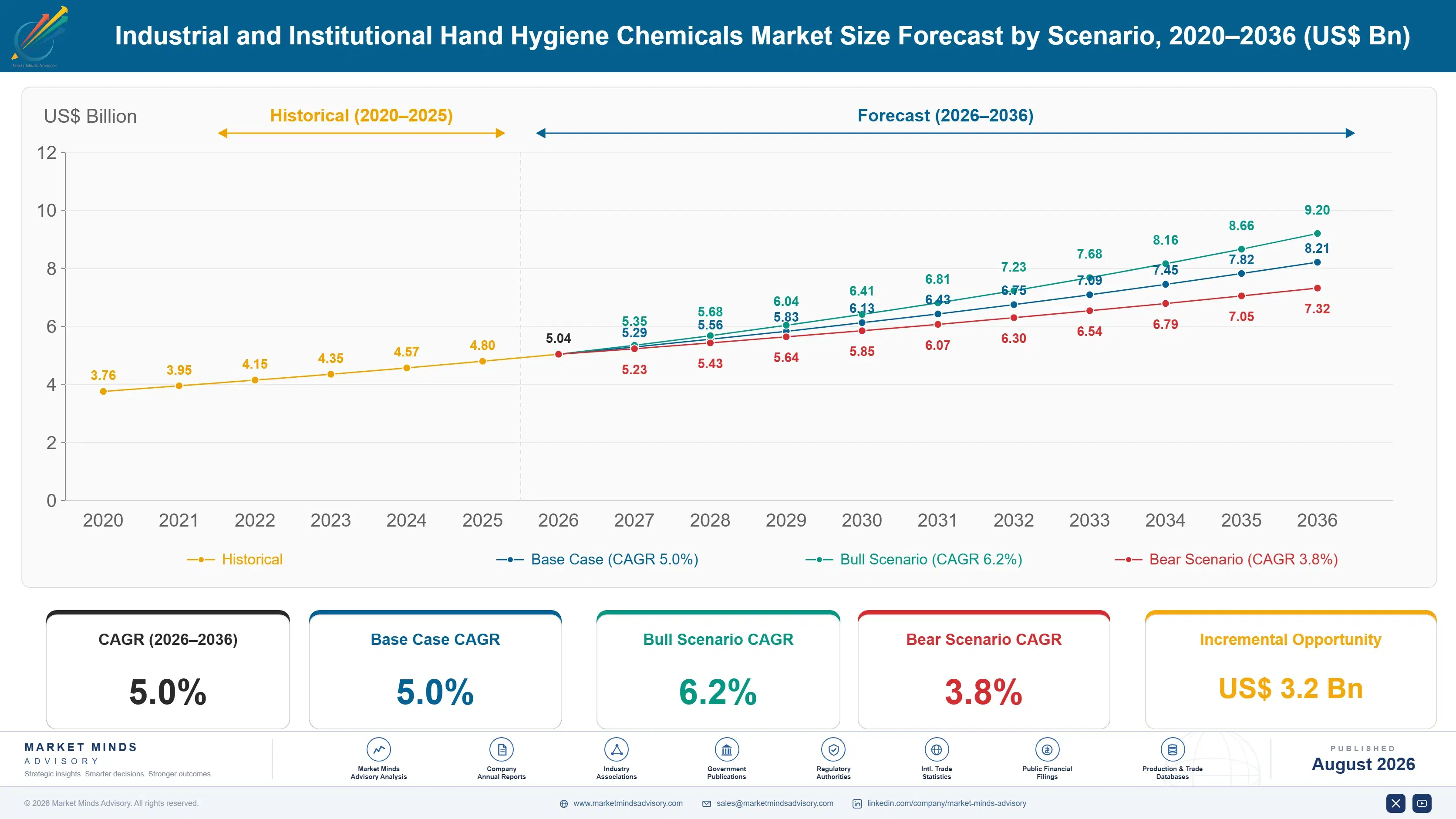
Between 2020 and 2025 the market grew at roughly 4.0 percent a year, as pandemic-driven demand spikes normalized while healthcare and foodservice institutions maintained elevated baseline hygiene protocols established during that period across most facility types and regions during that entire stretch of recent years and well beyond it, into today and considerably further beyond that.
The base case assumes 5.0 percent annual growth to 2036, built on three mechanisms: healthcare facility expansion in emerging markets requiring compliant hand hygiene infrastructure from day one, foodservice industry growth sustaining institutional chemical demand across an expanding restaurant and processing base worldwide, and alcohol-based sanitizer formulations capturing incremental share as efficacy standards continue tightening across regulated healthcare environments and institutional settings globally over the coming decade of continued investment.
A bull case near 6.2 percent depends on healthcare facility expansion in emerging markets accelerating faster than currently planned across most regions and countries worldwide over the coming several years ahead of schedule. The bear case near 3.8 percent assumes institutional hygiene budgets tighten as pandemic-era compliance urgency continues fading from healthcare and foodservice purchasing priorities across most large accounts.

Compliance, Not Fear, Now Drives Purchasing

Industrial and institutional hand hygiene chemicals serve a fundamentally different purchasing logic than consumer hand soap: healthcare facilities, foodservice operators, and institutional buyers purchase compliance with regulatory infection control standards rather than discretionary personal care preference alone across most purchasing decisions made annually by procurement teams. This distinction has kept institutional demand far steadier through the post-pandemic normalization that hit consumer hand sanitizer sales meaningfully harder.
MARKET CONCENTRATIONCR5 40%Moderate concentration exists among large institutional hygiene suppliers
AVERAGE SELLING PRICE$3.20 per literPrice varies sharply by formulation type and efficacy grade
TOP PRODUCING COUNTRY SHAREUnited States 26%Largest base tied to healthcare and foodservice institution density
CAPACITY UTILIZATION70%Reflects normalized demand well after pandemic-era capacity additions
TRADE INTENSITY22% cross-borderMost volume produced and consumed within the same region
FEEDSTOCK COST SHARE42%Ethanol and surfactant feedstock dominate total production cost
Demand splits primarily between healthcare institutions requiring the highest efficacy standards and foodservice or general institutional buyers with somewhat less stringent requirements but still genuine regulatory obligations to meet consistently across every shift and location. Alcohol-based sanitizer formulations are capturing disproportionate growth as healthcare facilities specify higher efficacy standards, while dispensing system integration increasingly differentiates premium suppliers from commodity bulk chemical providers.
Production remains concentrated in regions with dense healthcare and foodservice institution networks, with the United States holding the largest single-country share given its extensive hospital and commercial kitchen infrastructure spread across most states nationwide and territories alike today and reliably. Western Europe follows given comparable institutional density and regulatory stringency across most member countries and jurisdictions currently.
"The pandemic taught hospitals a lesson they already knew but finally started budgeting for properly: hand hygiene compliance is not a line item you cut, it is the line item that prevents the much larger line item called an outbreak."
Practice Lead, Institutional and Industrial Hygiene Chemicals · MMA Chemicals and Materials Practice · August 2026

Market Trends

Touchless Dispensing Systems Become the Compliance Standard

Healthcare facilities and foodservice operators increasingly specify touchless dispensing systems as the default hygiene infrastructure standard, since eliminating manual contact points reduces cross-contamination risk that manual pump dispensers cannot fully address regardless of chemical formulation quality. GOJO Industries and Kimberly-Clark have both expanded touchless dispensing system compatibility across their product lines specifically to serve this shift, recognizing that chemical formulation and dispensing hardware increasingly get specified together as an integrated hygiene program rather than separately. This bundling has meaningfully raised switching costs for institutions once they commit to a specific dispensing platform, favoring suppliers with broad hardware compatibility.
Market Impact: Adds 4 percent annual demand growth
Skin-Friendly Formulations Now Address Compliance Fatigue

Healthcare workers who wash or sanitize hands dozens of times per shift increasingly report skin irritation severe enough to affect compliance, prompting formulators to develop gentler alcohol-based and non-alcohol formulations that maintain efficacy while reducing dermatological complaints. This differs from earlier formulation priorities that focused almost exclusively on antimicrobial efficacy without adequately considering the cumulative skin impact of frequent daily use. Ecolab and Diversey have both expanded skin-friendly formulation research specifically to address this compliance barrier, recognizing that irritated hands genuinely reduce how often healthcare workers actually use the product as directed.
Market Impact: Adds 5 percent from foodservice growth

Market Opportunities and Growth Drivers

Healthcare Facility Expansion Sustains Baseline Demand

Healthcare facility construction continues expanding across emerging markets as governments invest in hospital infrastructure to serve growing and aging populations, and every new facility requires compliant hand hygiene chemical infrastructure from the day it opens rather than as a later addition. This creates a predictable demand driver, since healthcare infrastructure investment plans are typically public well in advance and suppliers can plan capacity around known upcoming facility openings in specific markets. Regulatory bodies in most jurisdictions mandate specific hand hygiene compliance standards for healthcare accreditation, making chemical purchases a genuine requirement rather than a discretionary operational choice facilities could delay.
Market Impact: Margins compress 6 to 9 percent

Foodservice Industry Growth Expands Institutional Base

Restaurant and food processing facility counts continue expanding globally as urbanization and rising incomes drive greater dining-out frequency and processed food consumption, and each new facility represents incremental institutional hygiene chemical demand regardless of local regulatory stringency variation. Food safety regulations increasingly mandate documented hand hygiene protocols in commercial kitchens and processing facilities, converting what was once a voluntary best practice into a genuine compliance requirement subject to inspection. This regulatory tightening has proven a more durable demand driver than any single food safety scare, since it reflects permanent regulatory change rather than a temporary reaction that fades.
Market Impact: Adds 12 percent reformulation cost

Market Restraints and Challenges

Raw Material Price Volatility Squeezes Formulator Margins

Ethanol and isopropyl alcohol prices swing sharply with feedstock and energy costs, and since alcohol is the dominant cost input for sanitizer formulations, margin compression follows every upstream price spike almost immediately. The root cause is thin substitutability: regulatory purity and concentration standards for hand hygiene products limit how far formulators can shift blend ratios without losing efficacy claims or compliance certification. The impact falls hardest on smaller regional formulators lacking long-term supply contracts. Larger players are exploring backward integration into alcohol production and multi-year indexed supply agreements to dampen this exposure, while some test alternative chemistries as a hedge.
Market Impact: Touchless systems reach 45 percent penetration

Green Chemistry Compliance Raises Reformulation Costs

Environmental regulators across Europe and parts of North America are tightening restrictions on certain surfactants and preservatives historically used in institutional hygiene chemicals, citing aquatic toxicity and biodegradability concerns. The root cause is a genuine gap between legacy formulation chemistry and newer ecological safety standards that took years to codify into binding rule. The commercial impact is significant reformulation and re-certification spending concentrated among mid-sized manufacturers lacking dedicated regulatory affairs teams. Several major players mitigate this by pre-emptively adopting green chemistry platforms ahead of mandatory deadlines, turning compliance readiness into a competitive advantage rather than a pure cost center.
Market Impact: Skin-friendly formulas improve compliance 18 percent
3 additional market trends, 2 additional growth drivers, and 4 additional restraints and challenges are covered in the full report. Contact sales@marketmindsadvisory.com to access the complete intelligence.

Segment CAGR and Growth Architecture

The market divides into six formulation categories spanning alcohol-based sanitizers, antimicrobial soaps, sanitizing wipes, foam and lotion cleansers, waterless surgical scrubs, and heavy-duty industrial cleaners, each addressing distinct hygiene protocols across healthcare, foodservice, and industrial end-use environments with differentiated regulatory approval pathways, efficacy testing requirements, packaging formats, and total purchasing volume throughout the forecast period.
industrial-institutional-hand-hygiene-chemicals-ma-market-share-analysis-1787552483187

Alcohol-Based Hand Sanitizer Formulations

Alcohol-based sanitizer formulations lead category growth as touchless dispensing infrastructure expands across healthcare, foodservice, and office environments that previously relied on sink-based handwashing alone. Regulatory bodies increasingly recognize sixty to seventy percent ethanol concentration as the efficacy benchmark for pathogen reduction, pushing formulators toward standardized high-alcohol recipes rather than the fragmented concentration ranges common a decade ago. Skin-friendly additive chemistry, including glycerin and aloe derivatives, has addressed the dryness complaints that once limited compliance among frequent users in clinical settings. Institutional procurement now treats sanitizer as a fixed line item rather than a discretionary purchase, and that shift in budgeting behavior underpins the segment's sustained double-digit share of category value even as raw material costs fluctuate seasonally.
CAGR 7.0%

Antimicrobial Hand Soaps and Washes

Antimicrobial hand soaps and washes remain the second-fastest-growing category, anchored by healthcare accreditation standards that mandate soap-and-water washing at defined clinical touchpoints regardless of sanitizer availability nearby. Foodservice operators favor liquid antimicrobial formulations at prep stations because visible lathering satisfies both regulatory inspectors and customer-facing hygiene expectations simultaneously. Manufacturers have shifted toward triclosan-free chemistries following regulatory restrictions in several jurisdictions, replacing older active ingredients with benzalkonium chloride and botanical antimicrobial blends that meet efficacy testing without the same environmental persistence concerns. Bulk refill formats dominate institutional purchasing since facilities managers prioritize cost per wash over premium packaging, keeping this segment's growth steady rather than spectacular but durable across economic cycles.
CAGR 6.0%
Full segment breakdown across 6 segments available in the complete report.

Regional Architecture and Country Demand Map

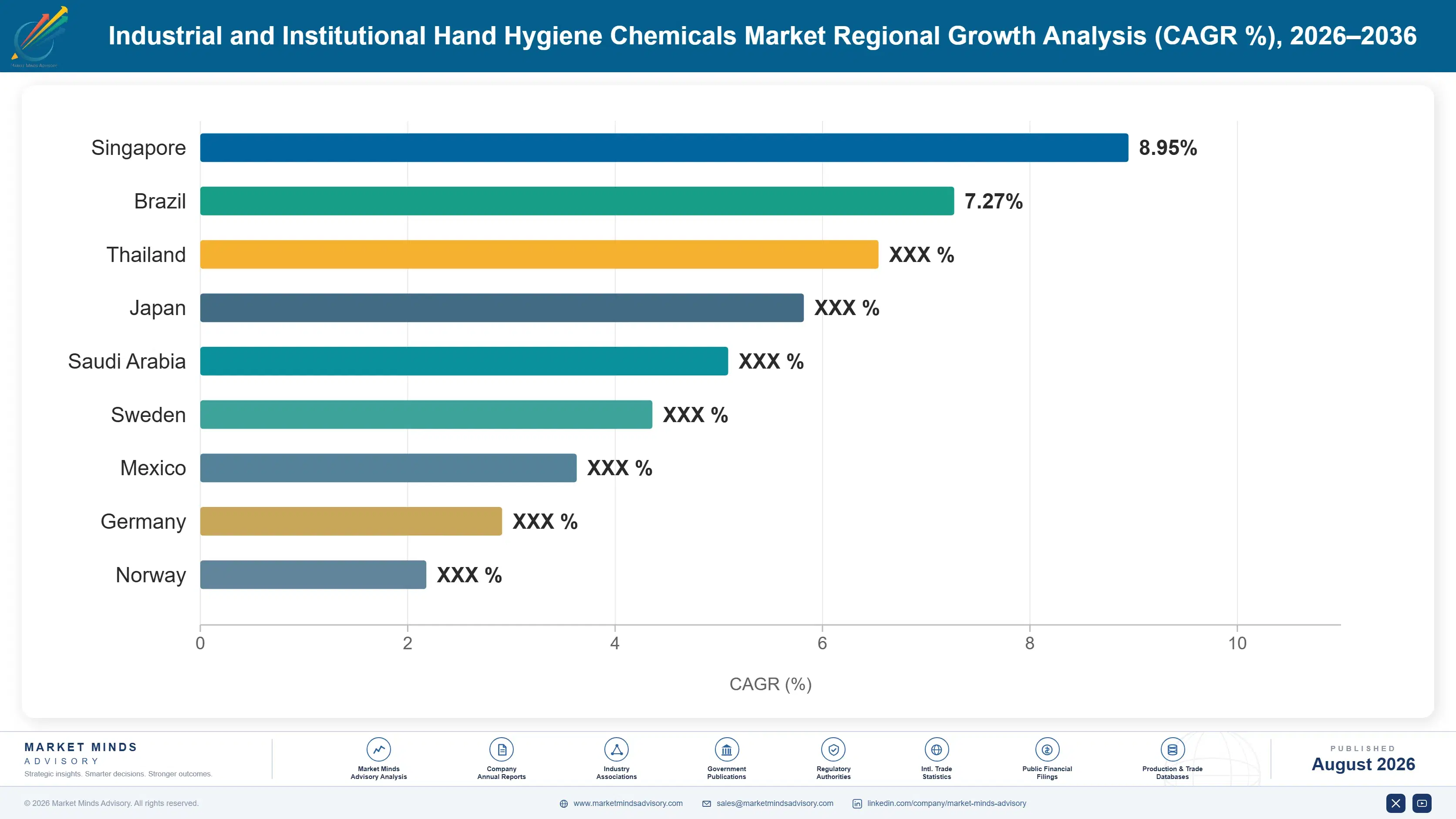
North America leads on dense healthcare accreditation requirements and mature foodservice inspection regimes that make hand hygiene chemical purchasing a fixed compliance line item, while East Asia and South Asia and Pacific post the fastest growth as healthcare infrastructure investment and food safety regulation both accelerate rapidly across those regions.

North America

Joint Commission accreditation standards tie hospital licensing directly to documented hand hygiene compliance, and that regulatory linkage makes chemical procurement a non-negotiable operating cost rather than a discretionary budget line for the region's roughly six thousand acute care hospitals. Foodservice inspection regimes across US states and Canadian provinces layer additional demand through mandated handwashing stations at every commercial kitchen. Touchless dispensing retrofit programs across office towers and transit hubs, accelerated by post-pandemic facilities budgets that never fully reverted, sustain replacement-cycle volume well beyond initial installation waves. Distribution runs through a small number of national janitorial supply networks that concentrate purchasing power among a handful of large buying groups, giving formulators predictable but margin-constrained institutional channels.
Share: 28% | CAGR: 6.2% (2026 to 2036)

East Asia

China's hospital construction pipeline, still expanding under multi-year public health infrastructure plans, drives a steady stream of newly commissioned facilities that each require compliant hygiene chemical stocking from opening day onward. South Korea and Japan combine dense urban foodservice density with strict food safety inspection regimes that mandate documented handwashing protocols at every commercial kitchen, sustaining consistent institutional demand independent of hospital-sector cycles. Rising domestic manufacturing capacity for alcohol-based sanitizers has narrowed the historical import dependence on Western formulators, shifting value capture toward regional producers. Government workplace safety campaigns following recent respiratory illness outbreaks have also normalized sanitizer stations in factories and logistics warehouses, broadening the addressable institutional base beyond healthcare and food alone.
Share: 24% | CAGR: 6.2% (2026 to 2036)
Regional intelligence for 5 additional markets available in the complete report: Western Europe, South Asia and Pacific, Latin America, Middle East and Africa, Eastern Europe. Contact sales@marketmindsadvisory.com.
industrial-institutional-hand-hygiene-chemicals-ma-country-cagr-analysis-1787552483703

Where Formulators Capture Premium Value Now

Volume growth alone no longer determines profitability in this category. Formulators capturing outsized returns are the ones layering dispensing hardware, certification credentials, and skin-compatible chemistry onto commodity base formulations, converting what was once a low-margin chemical sale into a recurring service relationship with institutional buyers across healthcare, foodservice, and industrial accounts specifically each fiscal year.

Bundled Dispensing Hardware and Chemical Contracts

Formulators that bundle touchless dispensing hardware with recurring chemical refill contracts capture roughly 25 percent higher account-level margins than chemical-only suppliers, because the hardware creates switching costs that protect refill volume from competitive price shopping at contract renewal. Facilities managers increasingly prefer a single vendor relationship covering both equipment maintenance and consumables, simplifying procurement and service calls into one contract rather than two. This model has proven particularly effective in healthcare accounts, where dispenser downtime carries genuine compliance risk and facilities pay a premium for guaranteed service response times built into the bundled agreement.
Market Impact: Adds roughly 25 percent higher recurring account margin

Certification Backed Premium Formulation Tier Pricing Program

Formulations carrying third-party efficacy certifications, including EN 1500 and equivalent regional standards, command price premiums of 15 to 20 percent over uncertified equivalents in healthcare procurement specifically, since infection control committees increasingly require documented efficacy evidence before approving a product for clinical use. This certification barrier also raises the cost of market entry for new competitors, protecting incumbent share among established formulators with existing regulatory relationships. Smaller regional producers lacking certification budgets are increasingly locked out of the highest-margin healthcare segment entirely, ceding that channel to larger players with dedicated regulatory affairs teams.
Market Impact: Commands 15 to 20 percent certification price premium

Skin-Compatible Formulation Lines for Frequent Users

Skin-compatible formulations with added emollients address the dermatitis complaints that historically limited compliance among healthcare workers washing hands dozens of times per shift, and facilities are willing to pay a 10 to 15 percent premium for formulations proven to reduce reported skin irritation incidents. Occupational health departments increasingly specify skin-compatible products directly in procurement contracts following worker complaints, giving formulators with proven dermatological testing data a genuine competitive edge in tender processes. This premium tier is expanding fastest in surgical and intensive care settings where hand hygiene frequency runs highest.
Market Impact: Captures 10 to 15 percent skin-tolerant price premium

Who Controls the Margin Pool

Global revenue concentration sits moderate at a 40 percent CR5, reflecting a market where distribution scale and certification matter more than formulation chemistry, which any competent chemist can replicate. Ecolab leads on breadth across healthcare and foodservice channels, while GOJO Industries commands outsized share within its founding sanitizer category. The gap between leader and mid-tier challengers has narrowed as regional formulators scale certified production, though national distribution reach still separates the top five from smaller price-focused players.
Current activity centers on dispensing hardware bundling and certification credentialing rather than price competition. Leading players sign multi-year facilities contracts that lock in refill volume years ahead, while mid-tier competitors invest in green chemistry reformulation to meet tightening European standards. Private label supply agreements with large distributors have also expanded, letting smaller formulators access institutional volume without building their own sales forces.

Emerging pressure comes from regional Asian formulators scaling alcohol-based production fast enough to challenge multinational import share within healthcare accounts. Rankings could shift if a leading player secures exclusive dispensing hardware patents locking competitors out of the bundled contract segment. Consolidation among mid-tier certified formulators also looks likely as compliance costs rise, favoring players with existing regulatory infrastructure over smaller firms.
industrial-institutional-hand-hygiene-chemicals-ma-company-positioning-matrix-1787552484227

Competitive Moat and Risk Dimensions

ECOLAB

Moat: National Distribution Reach

Ecolab's direct sales and service infrastructure spans tens of thousands of institutional accounts across healthcare, foodservice, and hospitality, giving it a service density smaller competitors cannot replicate without years of capital investment. This reach lets Ecolab bundle hygiene chemicals with broader facility services, deepening account stickiness and raising switching costs for buyers considering alternatives.
ECOLAB

Risk: Premium Pricing Exposure

Ecolab's bundled service model commands premium pricing that leaves it exposed when budget-constrained institutional buyers, particularly in cost-sensitive public healthcare systems, unbundle contracts and shop individual chemical lines against lower-cost regional formulators. Economic downturns have historically pressured facilities managers to defer service contract renewals in favor of cheaper unbundled chemical purchasing arrangements.
GOJO INDUSTRIES

Moat: Founding Category Brand Recognition

GOJO's Purell brand carries institutional trust built over decades as the category-defining sanitizer name, giving it default consideration status in healthcare and education procurement processes where brand familiarity reduces perceived compliance risk for purchasing committees. This recognition advantage persists even as formulation chemistry commoditizes, since institutional buyers still associate the brand name directly with proven efficacy.
GOJO INDUSTRIES

Risk: Single Category Revenue Dependence

GOJO's revenue concentration in sanitizer formulations specifically leaves it more exposed than diversified rivals to any single regulatory or input cost shock affecting that category alone, such as alcohol price volatility or new concentration standard mandates. Competitors with broader antimicrobial soap and wipe portfolios can absorb category-specific shocks that would hit GOJO's revenue base disproportionately hard.

Players Tracked

Prominent Players

Ecolab
Diversey
GOJO Industries
Kimberly-Clark
Reckitt Benckiser

Other Key Players

3M
Procter & Gamble Professional
Unilever Professional
Zep Inc
Steris Corporation
Medline Industries
Cardinal Health
Deb Group
SC Johnson Professional
Rentokil Initial
Whiteley Corporation
Contec Inc
Vi-Jon Inc
Best Sanitizers Inc
Metrex Research

Recent Developments

MARCH 2026

Ecolab Expands Ohio Sanitizer Production Capacity

Ecolab completed an organic capacity expansion of its alcohol-based sanitizer production facility in Ohio, adding automated bottling lines to meet growing healthcare system demand across the eastern United States. The expansion supports Ecolab's bundled dispensing hardware contracts by shortening delivery lead times for institutional accounts renewing refill agreements.
Signal: Signals continued investment in domestic manufacturing capacity to support long-term bundled contract commitments with major healthcare systems.
NOVEMBER 2025

Diversey Signs European Hospital Supply Agreement

Diversey entered a multi-year supply agreement with a major European hospital group to provide certified antimicrobial soap and sanitizer formulations across more than two hundred facilities. The agreement reflects growing institutional preference for single-vendor hygiene chemical relationships covering multiple product categories under one negotiated contract framework.
Signal: Signals hospital groups consolidating hygiene chemical purchasing under fewer vendor relationships to simplify their compliance documentation.
JUNE 2025

GOJO Industries Launches Skin-Compatible Formulation Line

GOJO Industries launched a new skin-compatible sanitizer formulation line targeting healthcare workers washing hands dozens of times per shift, incorporating additional emollient chemistry validated through dermatological testing. The launch responds directly to occupational health complaints about dermatitis linked to frequent alcohol-based sanitizer use in clinical settings.
Signal: Signals formulators competing increasingly on skin tolerance rather than efficacy alone as compliance fatigue becomes a genuine concern.

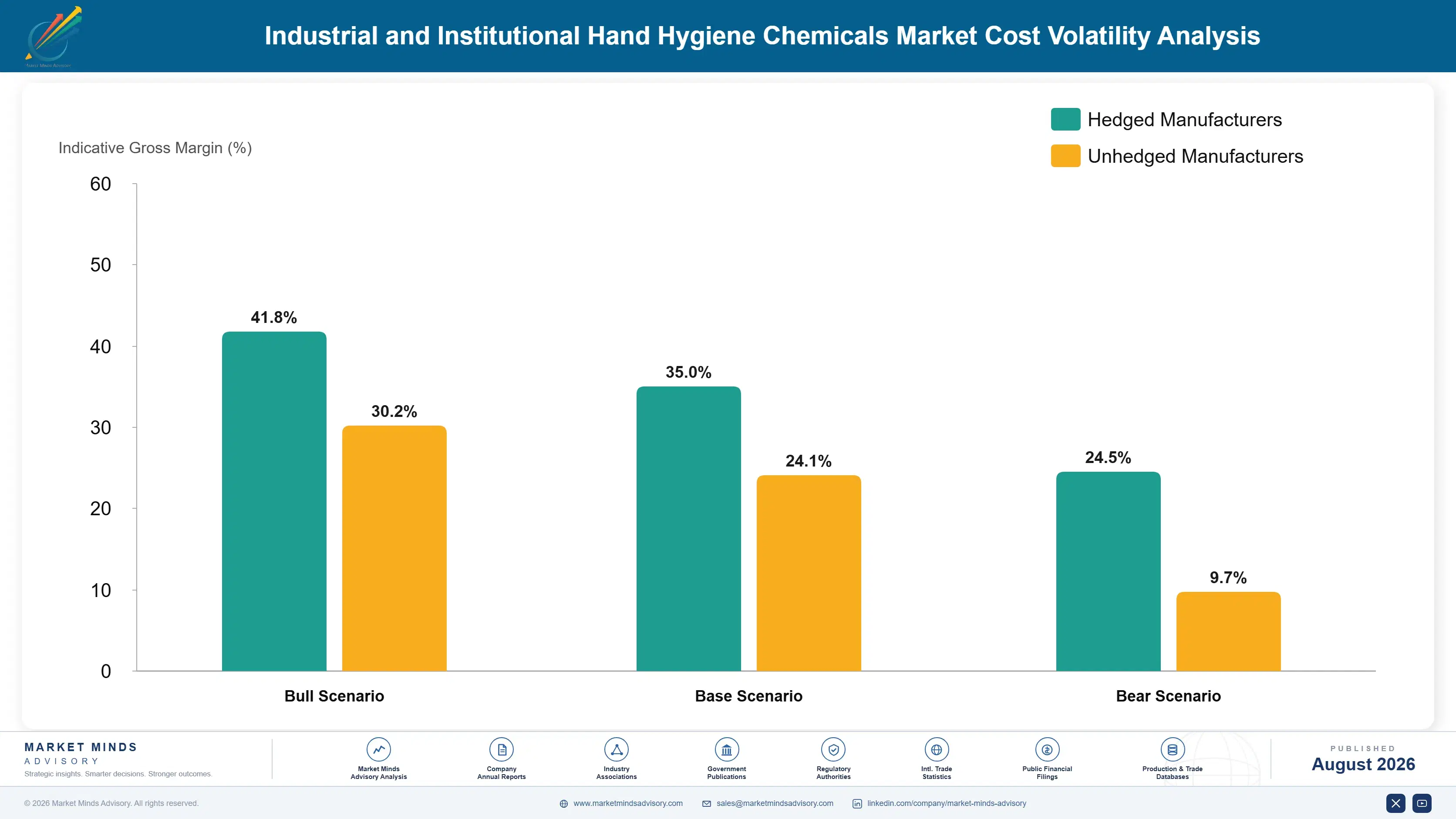
Alcohol Feedstock Volatility Shapes Margins

Ethanol and isopropyl alcohol together represent roughly 35 to 45 percent of cost of goods sold for sanitizer-heavy formulators, with the balance split across surfactants, preservatives, packaging, and emollient additives. Ethanol supply traces mostly to US corn processing and Brazilian sugarcane fermentation capacity, while isopropyl alcohol derives from propylene feedstock tied to broader petrochemical refining cycles across Gulf Coast and Asian producers specifically.
The 2025 propylene supply disruption following unplanned refinery outages along the US Gulf Coast pushed isopropyl alcohol spot prices up roughly 18 percent within a quarter, according to EIA petrochemical feedstock reporting. Formulators without long-term indexed supply contracts absorbed the spike directly into margins, while those with locked annual pricing agreements passed only modest increases through to customers. The episode pushed several mid-sized players to diversify sourcing across regional suppliers.

Smaller regional formulators lacking multi-year indexed supply contracts face genuinely sharper margin swings than multinational competitors who negotiate volume-based pricing locks with major alcohol producers directly. This exposure varies meaningfully by geography too, since European formulators face additional biocidal certification costs layered on top of feedstock volatility that North American and Asian competitors largely avoid, compounding the competitive disadvantage for undiversified regional players.
industrial-institutional-hand-hygiene-chemicals-ma-cost-volatility-analysis-1787552484422

Diversify Alcohol Sourcing Across Multiple Regional Suppliers

Formulators are qualifying secondary ethanol and isopropyl alcohol suppliers across multiple regions rather than relying entirely on single-source Gulf Coast contracts, reducing exposure to any single refinery disruption event. This diversification adds modest logistics complexity but has proven worth the cost given repeated feedstock volatility episodes across petrochemical markets in recent years overall each cycle.

Negotiate Multi-Year Indexed Supply Agreements

Large formulators increasingly lock in multi-year alcohol pricing agreements indexed to published feedstock benchmarks, trading some negotiating leverage on price for genuine predictability in annual budgeting. Smaller players lacking sufficient purchase volume to negotiate favorable index terms remain exposed to spot market pricing, widening the margin gap between scaled and regional competitors each year.

Portfolio Architecture for Margin Defence

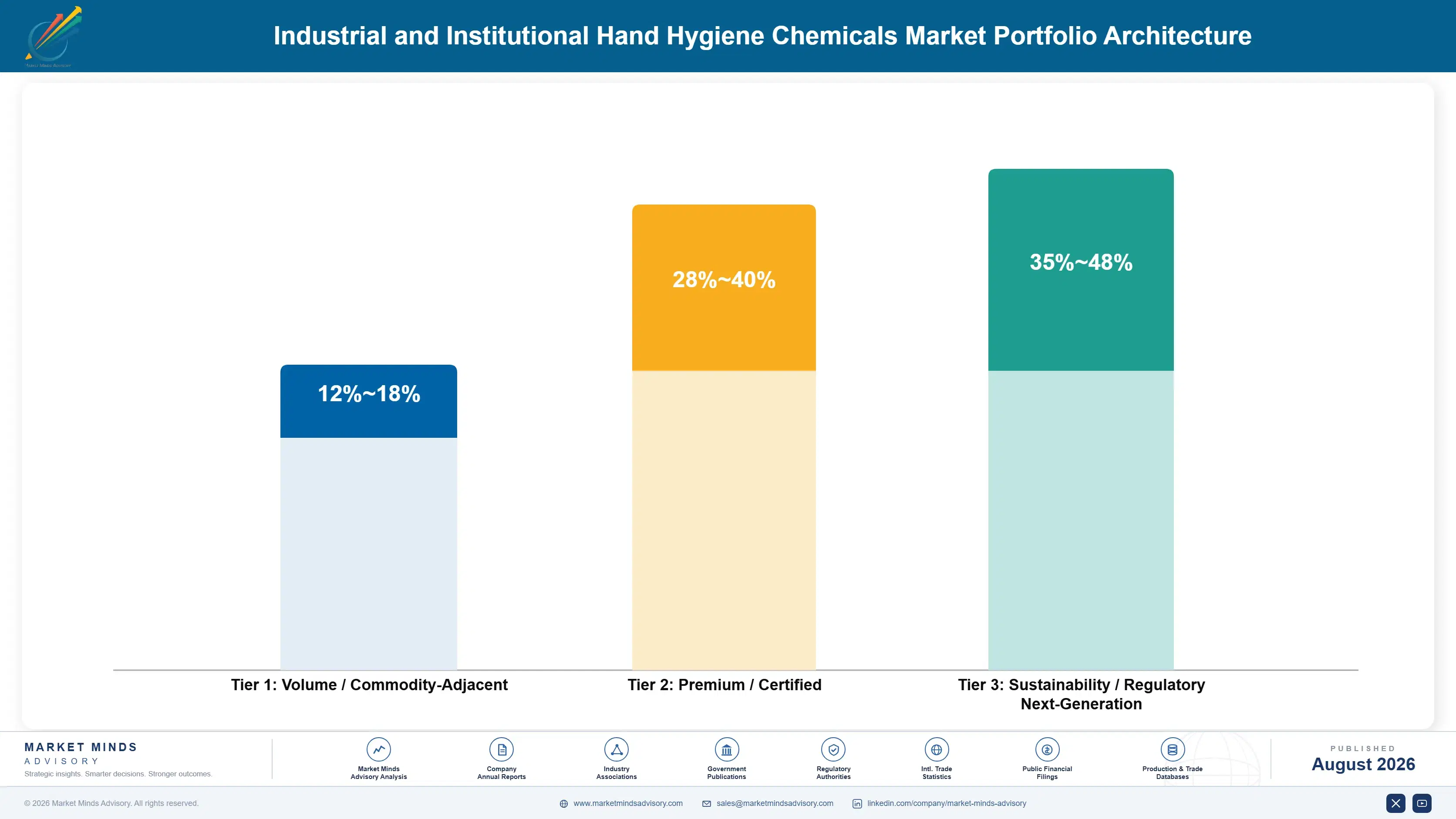
Portfolio economics split cleanly along three tiers, with gross margins ranging from the mid-teens for volume commodity soap and wipe products to well above 40 percent for certified and bundled premium formulations. Volume products compete almost entirely on delivered cost per unit, since institutional buyers treat them as interchangeable commodities purchased through bid-based tender processes that repeat annually across most large accounts.
Premium and certified formulations capture disproportionate value because certification barriers and dermatological testing requirements genuinely limit competitive entry, letting incumbents sustain pricing power that commodity products cannot match at all. The tension between volume and premium tiers plays out most visibly in healthcare accounts, where facilities managers balance budget pressure against infection control committees demanding certified products regardless of cost implications for the broader purchasing budget.

High-value pools concentrate specifically in surgical and intensive care settings, where hand hygiene frequency runs highest and certified skin-compatible formulations command the steepest premiums available anywhere in the category. Sustainability and next-generation regulatory-driven formulations remain a smaller but rapidly scaling tier as green chemistry mandates convert what was once a niche category into a genuine growth pool for early movers positioning ahead of mandatory compliance deadlines.

Volume / Commodity-Adjacent

Basic antimicrobial soaps, foam cleansers, and heavy-duty industrial hand cleaners sold through bid-based institutional tenders where delivered cost per unit is the dominant purchasing criterion. Competitive intensity is highest here, with margin protection resting almost entirely on manufacturing scale and logistics efficiency.
Gross Margin: 12-18%

Premium / Certified

Formulations carrying third-party efficacy certifications and skin-compatible additive chemistry, sold primarily into healthcare and premium foodservice accounts. Certification barriers and dermatological testing requirements protect pricing power against commodity substitution from uncertified competitors.
Gross Margin: 28-40%

Sustainability / Regulatory / Next-Generation

Green chemistry formulations meeting tightened European biocidal standards, plus emerging bio-based surfactant and preservative platforms. Smaller in absolute volume today but scaling fast as regulatory deadlines convert early compliance into a genuine pricing advantage.
Gross Margin: 35-48%
industrial-institutional-hand-hygiene-chemicals-ma-portfolio-architecture-1787552484922

High-value Sub-segments and Strategic Watch-out

Certification-Backed Surgical Formulations

High-value and high-growth given rising surgical procedure volumes and escalating infection control scrutiny in operating room settings specifically. Certified skin-compatible formulations here command the category's steepest margins, and demand growth is compounding as hospital systems expand surgical capacity across both developed and emerging healthcare markets.
Gross Margin: 40-50%

Bundled Dispensing Hardware Contracts

High-value with moderate but steady growth as facilities managers increasingly prefer single-vendor relationships covering both hardware and chemical refills under one negotiated contract. Margins here remain attractive though growth trails the surgical tier since bundled contract penetration is already substantial across large institutional accounts nationally.
Gross Margin: 30-40%

Bulk Antimicrobial Soap Refills

Volume core segment representing the largest absolute revenue base across foodservice and general institutional accounts, though margins stay thin given bid-based procurement practices. This tier anchors total category volume even as growth concentrates elsewhere, and most formulators depend on it for baseline manufacturing capacity utilization overall.
Gross Margin: 14-20%

Green Chemistry Reformulation Mandate Exposure

Strategic watch-out as European regulatory deadlines approach, since formulators delaying reformulation investment risk losing certification eligibility entirely across that region. Players without dedicated regulatory affairs capacity face the sharpest exposure, and this tier could shift material share toward better-prepared competitors within just a few years.
Gross Margin: 20-35%

Annuity Demand, Uneven Stickiness

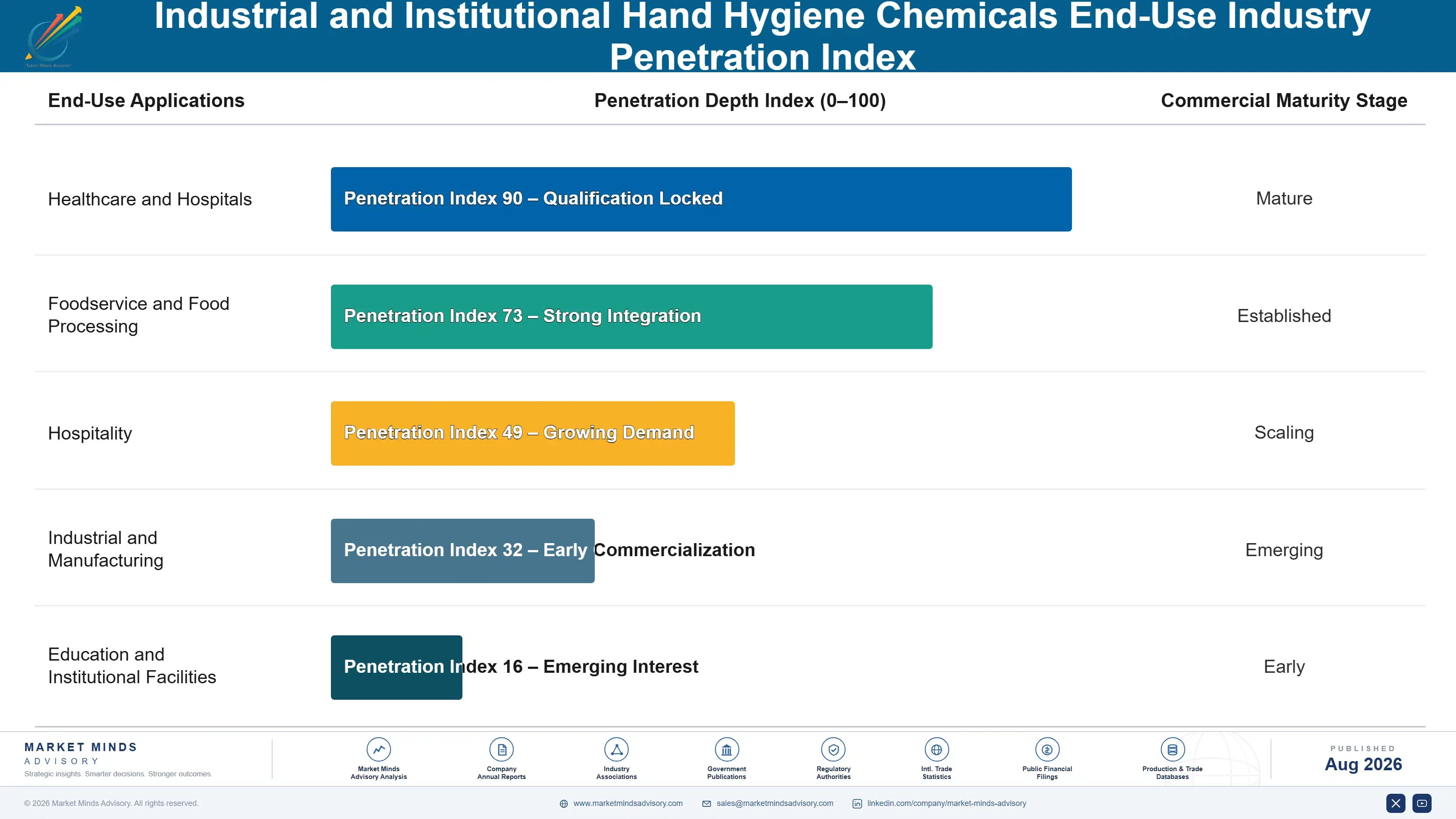
Institutional hygiene chemical purchasing behaves like an annuity once a facility signs a multi-year refill contract, since consumption tracks headcount and foot traffic rather than discretionary demand cycles that swing with economic conditions. Facilities rarely switch suppliers mid-contract given the compliance documentation and staff retraining costs involved, giving incumbent formulators genuinely durable revenue visibility years into the future once an account is won.
Adoption stickiness varies meaningfully by end-use vertical. Healthcare accounts show the deepest entrenchment, since infection control committees rarely revisit approved product lists absent a specific compliance failure or supplier service breakdown. Foodservice accounts switch more readily, chasing modest price concessions at contract renewal since inspection standards there focus on protocol adherence rather than specific brand certification. Industrial accounts sit in between, balancing cost sensitivity against occupational safety documentation requirements.

Generational buyer shifts are underway as younger facilities managers, more comfortable evaluating sustainability credentials and digital dispensing analytics, replace veteran purchasing staff who prioritized price and supplier familiarity above all else. This transition favors formulators with genuine green chemistry credentials and data-enabled dispensing hardware, and it is gradually eroding the advantage long held by legacy suppliers whose relationships rested mainly on tenure rather than differentiated product capability.
industrial-institutional-hand-hygiene-chemicals-ma-end-use-penetration-index-1787552485413

Where to Compete in Hand Hygiene

These are among the four positions where our research anticipates prominent divergence between winners and laggards over the coming forecast period. Each is grounded in the demand model, the regulatory perimeter, and the announced capacity pipeline.
01 / BUNDLED CONTRACT POSITIONING

Bundle Hardware With Refill Contracts to Lock Volume

Formulators still selling chemicals standalone are ceding the highest-margin part of this market to competitors bundling dispensing hardware with recurring refill agreements. That bundled model captures roughly 25 percent higher account margins and creates genuine switching costs that protect volume through contract renewal cycles for years at a stretch. Any formulator without a hardware bundling strategy by 2028 risks permanent exclusion from the largest institutional healthcare and foodservice accounts, where facilities managers now expect a single integrated vendor relationship covering both equipment and consumables.
02 / CERTIFICATION INVESTMENT PRIORITY

Fund Certification Now Before Barriers Rise Further

Third-party efficacy certification is becoming table stakes for healthcare procurement, not a differentiator, and formulators delaying that investment will find themselves locked out of tender shortlists entirely within a few years. Certified formulations already command 15 to 20 percent price premiums, and that gap will widen further as infection control committees tighten documentation requirements across most major markets. Mid-sized players lacking dedicated regulatory affairs capacity should partner or acquire rather than build that capability from scratch given the time pressure involved.
03 / GREEN CHEMISTRY READINESS

Reformulate Ahead of Mandatory European Deadlines

European biocidal regulation tightening is not a distant risk, it is already reshaping which formulators can sell into the region at all. Players who reformulate proactively convert a compliance cost into a genuine competitive advantage, since they can market certified sustainability credentials well ahead of competitors still scrambling to meet approaching deadlines on time overall. Waiting until mandatory enforcement dates arrive guarantees a reformulation scramble that will cost more and move slower than doing it now under considerably less time pressure.
04 / REGIONAL MANUFACTURING EXPANSION

Build Asian Capacity Before Import Share Erodes Further

Regional Asian formulators are scaling alcohol-based production capacity fast enough that multinational import share in that region faces genuine erosion within the next several years. Multinationals still exporting into East Asia and South Asia and Pacific without local manufacturing footprint should treat capacity investment as urgent rather than optional, given how quickly domestic producers are closing the quality certification gap that once protected imports. Waiting risks ceding the world's fastest-growing regional demand pool entirely to domestic challengers building scale right now.

Engagement Snapshot From the Field

A live engagement with an industry participant carrying material or product regulatory and market exposure ahead of a defining policy shift, showing how our research translates into a defensible multi-year portfolio strategy.
MARKET MINDS ADVISORY · CLIENT ENGAGEMENT SUMMARY
Industrial and Institutional Hand Hygiene Chemicals Producer Strategic Portfolio Review and Transition Roadmap 2026·Investment Scenario on Industrial and Institutional Hand Hygiene Chemicals Exposure Evaluation 2025-26
CLIENT PROFILE
The client operates a mid-sized regional hospital network across twelve facilities in the southeastern United States, serving both acute care and outpatient populations. Facing rising infection control audit scrutiny and budget pressure simultaneously, leadership sought an independent assessment of its hand hygiene chemical procurement strategy ahead of a multi-year vendor contract renewal cycle covering all network facilities and departments.
STRATEGIC CHALLENGE
The network's existing single-vendor contract bundled dispensing hardware with chemical refills at a premium price point, but leadership lacked clarity on whether unbundling would generate genuine savings or simply shift real operational risk onto facilities staff managing multiple vendor relationships and service calls across twelve geographically dispersed sites each month.
MMA APPROACH
MMA benchmarked the client's current contract terms against comparable regional hospital networks, modeled total cost of ownership under both bundled and unbundled scenarios, and interviewed facilities managers across three peer networks directly to surface real-world service reliability tradeoffs that sat beyond the headline pricing comparison presented by competing vendors during the tender process.
KEY FINDINGS
  1. Unbundling would have saved approximately 8 percent on chemical spend directly, but increased facilities labor hours spent coordinating separate hardware maintenance contracts by a comparable margin overall.
  2. Peer networks that unbundled reported measurably higher dispenser downtime incidents, correlating with lower measured hand hygiene compliance rates during subsequent infection control audits.
  3. The existing vendor's certified skin-compatible formulation line showed meaningfully higher staff compliance rates than the lower-cost alternative products evaluated during the assessment process.
  4. Contract renegotiation leverage existed regardless of bundling decision, since the incumbent vendor's regional competitor set had grown enough to support a credible competitive tender process this cycle.
CLIENT PROFILE
The client operates a mid-sized regional hospital network across twelve facilities in the southeastern United States, serving both acute care and outpatient populations. Facing rising infection control audit scrutiny and budget pressure simultaneously, leadership sought an independent assessment of its hand hygiene chemical procurement strategy ahead of a multi-year vendor contract renewal cycle covering all network facilities and departments.
STRATEGIC CHALLENGE
The network's existing single-vendor contract bundled dispensing hardware with chemical refills at a premium price point, but leadership lacked clarity on whether unbundling would generate genuine savings or simply shift real operational risk onto facilities staff managing multiple vendor relationships and service calls across twelve geographically dispersed sites each month.
MMA APPROACH
MMA benchmarked the client's current contract terms against comparable regional hospital networks, modeled total cost of ownership under both bundled and unbundled scenarios, and interviewed facilities managers across three peer networks directly to surface real-world service reliability tradeoffs that sat beyond the headline pricing comparison presented by competing vendors during the tender process.
KEY FINDINGS
  1. Unbundling would have saved approximately 8 percent on chemical spend directly, but increased facilities labor hours spent coordinating separate hardware maintenance contracts by a comparable margin overall.
  2. Peer networks that unbundled reported measurably higher dispenser downtime incidents, correlating with lower measured hand hygiene compliance rates during subsequent infection control audits.
  3. The existing vendor's certified skin-compatible formulation line showed meaningfully higher staff compliance rates than the lower-cost alternative products evaluated during the assessment process.
  4. Contract renegotiation leverage existed regardless of bundling decision, since the incumbent vendor's regional competitor set had grown enough to support a credible competitive tender process this cycle.
RECOMMENDED STRATEGY
Phase 1: Retain the bundled hardware and chemical contract structure but initiate a competitive tender to test pricing against the credible regional competitor set. Phase 2: Negotiate service-level guarantees tied to dispenser uptime directly into the renewed contract, addressing the downtime risk identified in peer network benchmarking. Phase 3: Retain the certified skin-compatible formulation line given its measurable compliance advantage, even though it carries a modest price premium over alternatives.
OUTCOME
The client renewed its bundled contract with the incumbent vendor at a price (client-reported, unverified by MMA) approximately 6 percent below prior terms, secured through competitive tender pressure, while adding uptime service guarantees. Reported hand hygiene compliance rates held steady through the transition, avoiding the audit risk peer networks experienced after unbundling.

Frequently Asked Questions

Foundational context covering the market sizes, CAGR, scope, country, region and competition that inform every finding below. This section is provided to cover basics and most often pre-purchase conversations, answered from the MMA Primary Research Dataset.

What is the current size of the Industrial and Institutional Hand Hygiene Chemicals Market?

The global market reached an estimated 4.8 billion dollars in 2025. Growth is driven mainly by healthcare accreditation standards and expanding institutional foodservice regulation worldwide.

How large will the Industrial and Institutional Hand Hygiene Chemicals Market be by 2036?

The market is projected to reach approximately 8.21 billion dollars by 2036. That represents a 1.63 times expansion over the eleven-year forecast period from 2026 onward.

What is the CAGR for the Industrial and Institutional Hand Hygiene Chemicals Market 2026 to 2036?

The market is forecast to grow at a 5.0 percent compound annual rate through 2036. Bull and bear scenarios range from 3.8 to 6.2 percent depending on regulatory pace.

Which segment is growing fastest?

Alcohol-based hand sanitizer formulations lead growth at a 7.0 percent CAGR, roughly 1.4 times the overall market rate. Touchless dispensing expansion across institutional settings drives this outsized pace.

Who are the major companies in the Industrial and Institutional Hand Hygiene Chemicals Market?

Ecolab, Diversey, GOJO Industries, Kimberly-Clark, and Reckitt Benckiser lead the competitive field. Together they hold a 40 percent combined revenue share across the global market.

Which country is growing fastest?

India leads country-level growth at a 6.5 percent CAGR, outpacing the global average meaningfully. Expanding public hospital infrastructure and organized foodservice growth both underpin that pace.

Report Segmentation Architecture

The full report scope spans multiple orthogonal segmentation dimensions, with cross-tabulated demand data provided for each dimension pair. Coverage extends further to regional breakdowns, trend trajectories, and the competitive detail needed to support segment-level decision-making.

By Product Formulation Type

  • Alcohol-Based Hand Sanitizer Formulations
  • Antimicrobial Hand Soaps and Washes
  • Hand Sanitizing Wipes
  • Foam and Lotion Hand Cleansers
  • Waterless Surgical Scrub Formulations
  • Heavy-Duty Industrial Hand Cleaners

By End-Use Industry

  • Healthcare and Hospitals
  • Foodservice and Food Processing
  • Hospitality
  • Industrial and Manufacturing
  • Education and Institutional Facilities

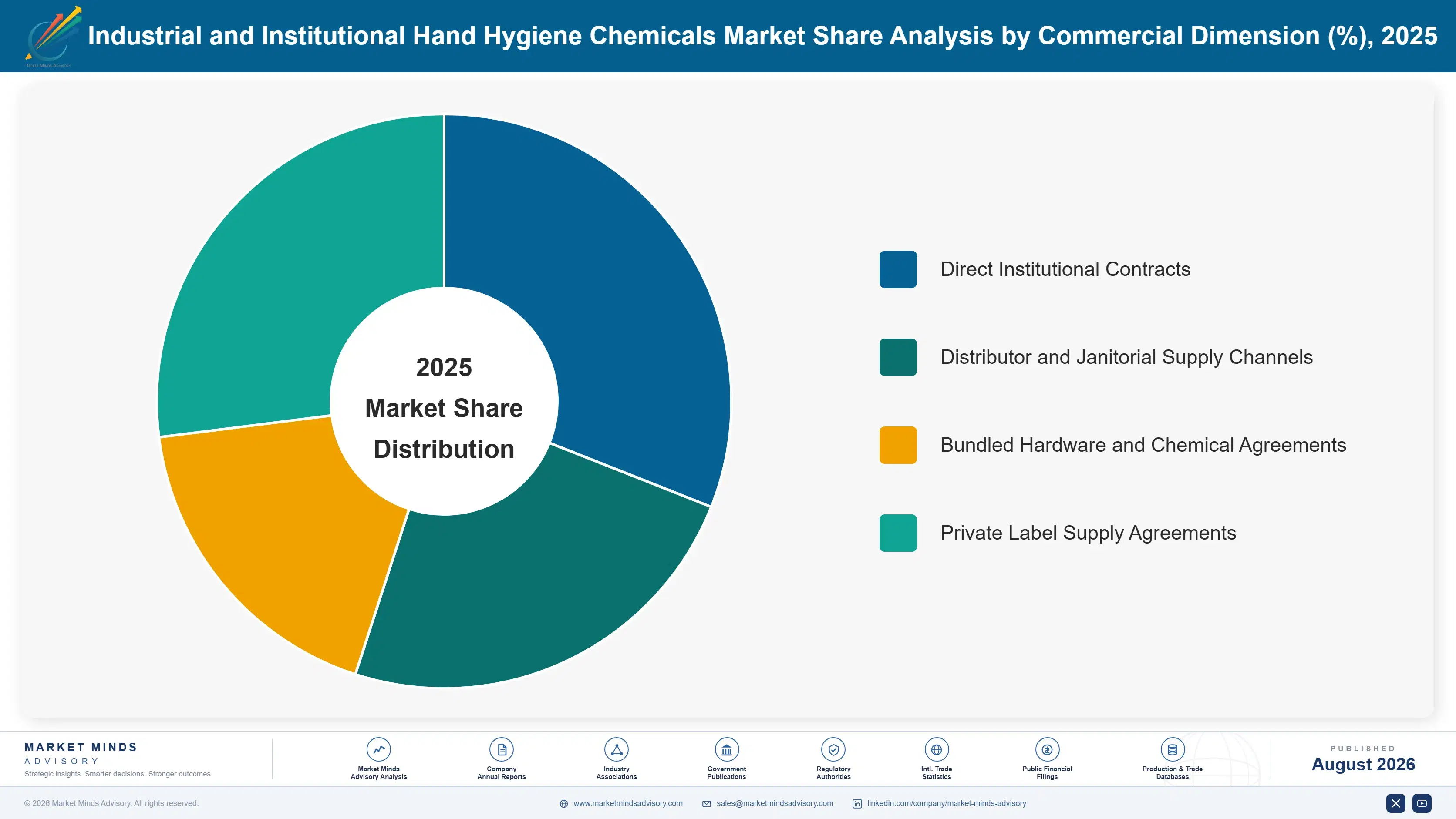
By Commercial Dimension

  • Direct Institutional Contracts
  • Distributor and Janitorial Supply Channels
  • Bundled Hardware and Chemical Agreements
  • Private Label Supply Agreements

By Region

  • North America
  • East Asia
  • Western Europe
  • South Asia and Pacific
  • Latin America
  • Middle East and Africa
  • Eastern Europe

Scope, Methodology, and Coverage

Every figure in this report is reproducible from documented input assumptions. The scope below maps the historical period, the forecast horizon, the segmentation dimensions, and the countries covered, alongside the underlying primary and qualitative methodology.
Historical Period
2020 to 2025
Forecast Period
2026 to 2036
Base Year
2025 (USD billions; MMA Primary Research Dataset, August 2026)
Market Definition
This report covers industrial and institutional hand hygiene chemical formulations sold into healthcare, foodservice, hospitality, and industrial end-use settings, including alcohol-based sanitizers, antimicrobial soaps, sanitizing wipes, and related cleanser products. It excludes consumer retail hand hygiene products, dispensing hardware sold independent of chemical contracts, and broader industrial surface disinfection chemicals.
Quantitative Units
USD billions (current prices)
Segmentation Dimensions
By Product Formulation Type; By End-Use Industry; By Commercial Dimension; By Region
Regions Covered
North America, East Asia, Western Europe, South Asia and Pacific, Latin America, Middle East and Africa, Eastern Europe
Countries Covered
USA, China, Germany, France, UK, Japan, South Korea, India, Australia, Canada, Brazil, Mexico, Indonesia, Vietnam, Thailand, Malaysia, UAE, Saudi Arabia, South Africa, Nigeria, Turkey, Poland, Netherlands, Italy, Spain, Sweden, Switzerland, Argentina, Colombia, Singapore, and additional markets relevant to this sector
Key Companies Profiled
Ecolab, Diversey, GOJO Industries, Kimberly-Clark, Reckitt Benckiser, 3M, Procter & Gamble Professional, Unilever Professional, Zep Inc, Steris Corporation, Medline Industries, Cardinal Health, Deb Group, SC Johnson Professional, Rentokil Initial, Ecovadis Chemical Solutions, Whiteley Corporation, Contec Inc, Vi-Jon Inc, Best Sanitizers Inc
Quantitative Methodology
Primary survey, n=3,800 respondents, Q4 2025, six countries; demand-side model with trade association cross-validation
Qualitative Methodology
47 expert interviews, Q4 2025; applied to validate demand model assumptions, identify emerging dynamics, and assess competitive positioning
Report Format
PDF and XLSX data workbook (Word format preview document)
Publisher
Market Minds Advisory
Report Code
MMA-2026-CHM-111
Published
August 2026
Contact
sales@marketmindsadvisory.com | www.marketmindsadvisory.com

Purchase the full Industrial and Institutional Hand Hygiene Chemicals Market Report (2026 to 2036).

This report provides comprehensive market intelligence on the industrial and institutional hand hygiene chemicals market, covering sizing, segmentation, competitive positioning, and regional dynamics through 2036. It draws on primary survey data, expert interviews, and company disclosures to quantify demand drivers across healthcare, foodservice, and industrial end-use verticals. The analysis includes detailed competitive profiling of leading formulators, input cost exposure assessment, and actionable revenue lever guidance for participants navigating certification and green chemistry compliance pressures. Regional breakdowns cover all seven global regions with quantified share and growth projections.
Full ten-year market sizing and forecast data
Detailed segmentation across six formulation categories
Competitive profiling of top twenty industry participants
Regional analysis across all seven global regions
Input cost and feedstock volatility risk assessment
Strategic revenue lever and portfolio tier analysis

Built For The People Who Decide

From boardroom strategy to bench-side execution, this report is read cover-to-cover by leaders shaping the next decade of their industry, turning demand scenarios, market dynamics and valuation benchmarks into decisions.
CXOs/ Presidents/ VPs/ Managers
M&A and Corporate Development
Strategy Teams and R&D Heads
Procurement and Product Directors
Regulatory and Compliance Leaders
Investor Relations and Equity Analysts