Market Minds Advisory
Industrial Exhaust System Market

Industrial Exhaust System Market: Industrial Exhaust System Market. Global Sizing, Segmentation, and Competitive Analysis to 2036

Battery and EV cell manufacturing expansion is pulling exhaust system specification toward fume extraction grades engineered for chemical sensitivity, outpacing the general ventilation equipment that long served conventional manufacturing plants.

Lead Analyst

Published

October 2026

Make Smarter Decisions with Customized Research Insights

Request a free sample report and evaluate market opportunities, growth trends, and competitive dynamics relevant to your business needs.

2025 MARKET VALUE$3.1BMarket Size 2025
2036 FORECAST VALUE$5.0BBase Case , 2026 to 2036
CAGR 2026 TO 20364.4 %Bull 5.6% / Bear 3.2%
INCREMENTAL OPPORTUNITY$1.7BNet 10- year value creation
EXPANSION MULTIPLE1.54x2036 value over 2026 base
Strategic Levers
M&A Pipeline
Regional Outlook
Country Rankings
Competitive Intelligence
Segmental Deep-dive
Call-Us : 91 93563 13602

Executive Snapshot and Market Trajectory.

Industrial exhaust system demand is shifting decisively toward fume extraction grades as battery and EV cell manufacturing facilities require chemical-resistant exhaust capacity that general ventilation equipment cannot satisfy reliably at the contaminant concentrations modern cell production generates across new gigafactory lines now opening in multiple countries worldwide.
General manufacturing and metals processing applications still drive the bulk of unit volume, but battery cell manufacturing exhaust systems are capturing disproportionate specification share as gigafactory capacity scales globally across new regions. China leads global growth through sustained battery and general manufacturing capacity additions, while Germany maintains the deepest engineering base behind decades of industrial exhaust and fume extraction system development and export activity.
The competitive base concentrates around a moderate cluster of integrated ventilation equipment makers, with CR5 reaching 35% as chemical resistance engineering and filtration integration determine which suppliers win large manufacturing facility contracts worldwide. Facility engineers increasingly demand verified chemical compatibility and airflow consistency data before specifying systems for new battery production lines, a bar smaller general ventilation makers have struggled to clear as consistently as established suppliers carrying deep chemical engineering expertise and certification history.
Market Definition
This market covers equipment that captures, filters, and expels contaminated air from industrial facilities, including fume hoods, ductwork, fans, and filtration components engineered for manufacturing and chemical processing environments. It excludes general HVAC exhaust fans and standalone air make-up units sold without integrated contaminant capture.
Base Year Value
$3.1B in 2025 (MMA Primary Research Dataset, October 2026)
Forecast Period
2026 to 2036, eleven discrete annual values
CAGR
4.4% base case. Bull 5.6%. Bear 3.2%.
Fastest Growth Segment
Fume Extraction Systems for Battery and EV Cell Manufacturing: 7.6% CAGR
Fastest Growth Country
China: 6.7% CAGR
Fastest Growth Region
South Asia and Pacific: 6.5% CAGR
Largest Region
East Asia: 29% of 2025 global value
Market Leaders
Camfil Air Pollution Control, CECO Environmental, Donaldson Torit, Nederman, Plymovent. Source: MMA Primary Research Dataset, July 2026.
Primary Survey
n=3,800 procurement and R&D decision-makers, Q4 2025, six countries
Methodology
Demand-side build-up, cross-validated against public data, 47 expert interviews

Industrial Exhaust System Market Forecast Scenarios

industrial-exhaust-systems-market-size-forecast-scenario-1791069412485
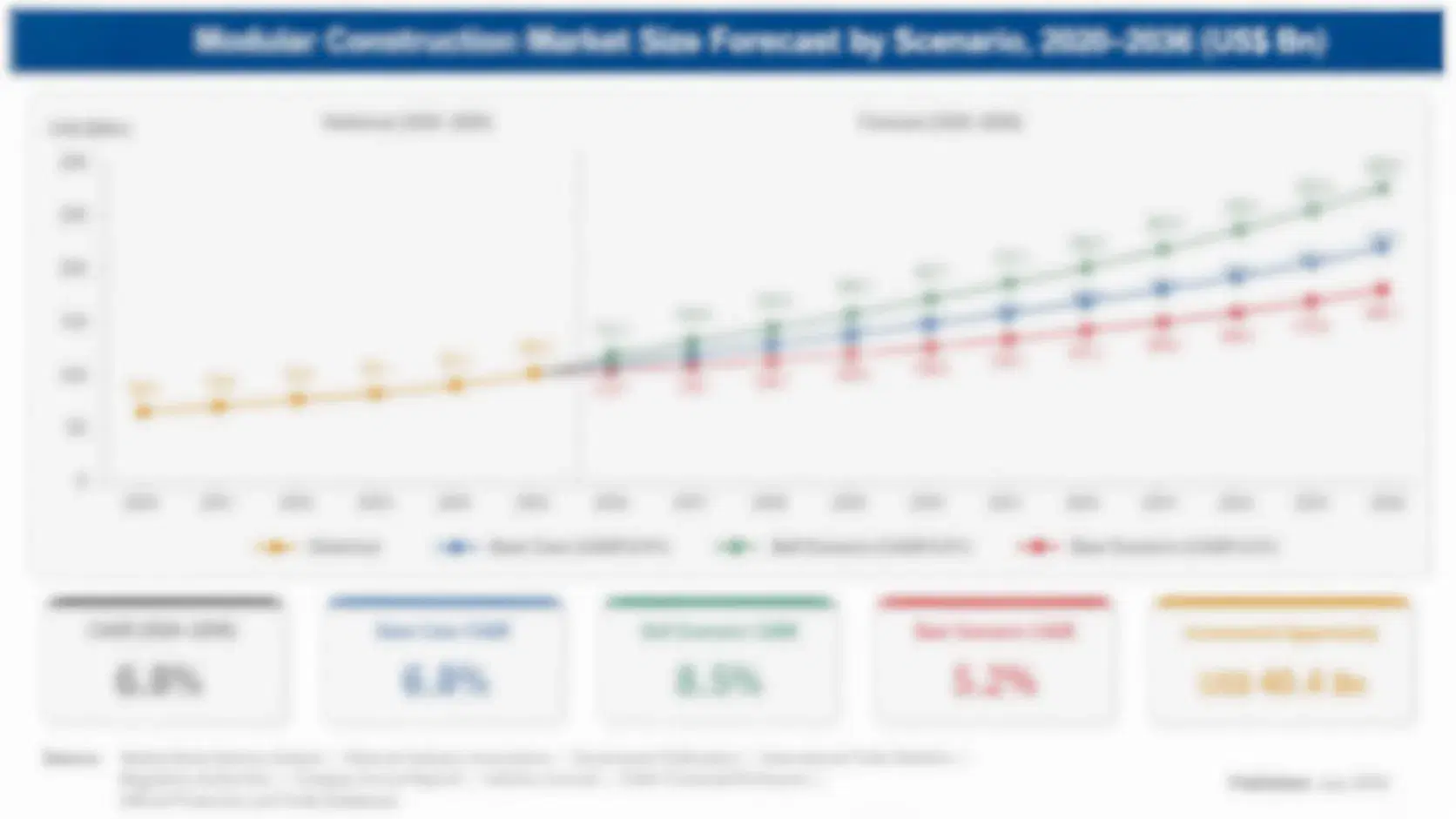
Industrial exhaust system demand grew steadily between 2020 and 2025, tracking general manufacturing capacity rather than any single catalyst across most major global markets worldwide today and over time. Growth held near 3.6% annually as battery gigafactory investment accelerated through the period, pulling specification toward chemical-resistant fume extraction grades well ahead of broader market trends.
The base case assumes 4.4% annual growth through 2036, built on three mechanisms: continued battery and EV cell manufacturing capacity additions across China, Europe, and North America requiring chemical-resistant exhaust systems, sustained general manufacturing and metals processing growth across emerging markets, and gradual replacement of basic exhaust equipment with integrated filtration systems as workplace safety codes tighten. None of these mechanisms depends on a single capital project clearing, which supports a moderate bull-bear spread relative to more volatile industrial categories.
The bull case centers on accelerated battery gigafactory construction pulling fume extraction specification above current base-case assumptions, particularly if announced capacity additions outside China clear financing faster than expected. The bear risk is a slowdown in general manufacturing construction activity, which has historically triggered sharp order declines across equipment makers reliant on new facility construction customers.

Battery Manufacturing Rewrites a Legacy Equipment Category

Industrial exhaust system manufacturing sits on a mature engineering base, but demand composition has shifted as battery manufacturing scales rapidly across the industry. General manufacturing and metals processing applications still account for the bulk of shipped units, yet margin growth is concentrating in fume extraction systems for battery cell production, where chemical resistance carries more commercial weight than price.
MARKET CONCENTRATIONCR5 35%chemical resistance engineering concentrates share among a few specialists
AVERAGE SELLING PRICE$48,000 per systemfume extraction systems command several times standard pricing
TOP PRODUCING COUNTRY SHAREGermany 23%reflects decades of deep industrial exhaust engineering expertise
CAPACITY UTILISATION71%equipment makers run below peak amid lumpy gigafactory order timing
FEEDSTOCK SHARE COGS36%stainless steel and specialty coatings dominate direct input costs
REPLACEMENT CYCLE LENGTH10 to 15 yearssystems outlast most other industrial ventilation equipment categories
Equipment makers that invested early in chemical-resistant engineering and battery manufacturer relationships are now capturing a disproportionate share of new gigafactory orders, while general-purpose exhaust producers continue to compete mainly on price in basic manufacturing applications. This split is reshaping capital allocation across the industry, with several mid-size equipment makers now directing development spending toward chemical-resistant platforms rather than adding conventional exhaust capacity.
Stainless steel and specialty coating costs remain the dominant input variables across the industry, and equipment makers without integrated component manufacturing face thinner margins on fixed-price fabricator contracts. Trade flows are shifting too, as Chinese battery manufacturers increasingly favor domestically manufactured exhaust systems over German and Japanese imports, citing cost advantage and faster delivery as the deciding factors in most recent purchasing decisions.
"An exhaust fan used to be whatever moved air out of the building. Now a battery plant's fume extraction system has to handle chemistry that would eat through a standard duct in months."
Senior Analyst, Industrial Ventilation Equipment Practice · MMA Construction and Industrial Equipment Practice · October 2026

Market Trends

Battery Gigafactory Buildout Demands Chemical-Resistant Exhaust Systems

Battery and EV cell manufacturers expanding gigafactory production capacity across China, Europe, and North America require exhaust systems engineered to withstand electrolyte solvents and other corrosive chemistries that standard ventilation equipment was never designed to handle. Battery makers increasingly specify chemical compatibility testing and documented corrosion resistance directly in facility design documents rather than leaving equipment selection to general contractors during final build-out. Equipment makers serving this segment have begun co-locating engineering teams near major battery manufacturing clusters to support rapid commissioning ahead of production ramp schedules across multiple facilities simultaneously.
Market Impact: Sustains demand across 10-year replacement cycles

Workplace Safety Codes Tighten Around Combustible Dust Exhaust

Tightening workplace safety codes around combustible dust and chemical fume exposure are requiring manufacturing facilities to upgrade basic exhaust equipment to systems with documented capture efficiency and spark-resistant construction. Facility safety officers increasingly specify certified fume extraction systems rather than accepting whatever exhaust equipment a general contractor happens to install during construction. This shift is adding specification volume that did not exist in metals processing and chemical manufacturing facility orders five years ago, particularly across newer regulatory jurisdictions tightening enforcement year after year across multiple industrial sectors worldwide today and increasingly tomorrow.
Market Impact: Sustains revenue across 12-year assets

Market Opportunities and Growth Drivers

General Metals Processing Sustains Core Equipment Volume

General metals processing and manufacturing facilities across mature and emerging markets continue generating substantial baseline exhaust system demand independent of the higher-growth battery segment entirely across most regional industrial corridors. Facility engineers specify exhaust system requirements early in facility design, often locking in a single equipment supplier for an entire manufacturing facility spanning multiple ventilation zones, giving manufacturers with established engineering relationships and proven reliability a durable specification advantage over new entrants lacking a comparable track record on comparable large-scale industrial construction projects spanning multiple years and successive project phases.
Market Impact: Swings input costs over 20%

Long Equipment Life Sustains Recurring Filter Revenue

Installed exhaust systems operate for ten to fifteen years, generating recurring filter replacement, ductwork maintenance, and fan service revenue that persists regardless of new equipment order activity in a given year across the broader market. Original equipment makers with large installed bases capture disproportionate service revenue share, since facility managers generally prefer continuity with the original system designer over switching to a new maintenance provider mid-asset-life. This service revenue stream provides equipment makers a meaningful buffer against new construction order volatility tied to broader industrial capital spending cycles across the sector.
Market Impact: Delays launches 6 to 10 months

Market Restraints and Challenges

Stainless Steel Price Volatility Compresses Margins

Stainless steel and specialty coating costs have swung by more than 20% within single-year windows over the past five years, driven by broader commodity market volatility and nickel supply constraints affecting stainless alloy pricing in several major markets. The root cause is thin global stainless steel production capacity relative to demand growth across multiple competing end-use industries. Equipment makers without long-term metal supply contracts face the sharpest margin compression during spikes, and several mid-size producers are now pursuing hedging arrangements to dampen future volatility exposure across their broader metal procurement strategies.
Market Impact: Lifts battery exhaust demand 7.6% CAGR

Chemical Compatibility Testing Delays New Product Launches

Certifying chemical-resistant exhaust systems for new battery chemistries requires extensive compatibility testing that slows product development timelines relative to general-purpose ventilation equipment across most new product categories. The root cause is the rapid pace of battery chemistry innovation outpacing the equipment certification cycles needed to validate long-term chemical resistance under real operating conditions. Equipment makers are now investing in accelerated testing protocols and parallel certification programs to compress development timelines and keep pace with evolving battery manufacturer chemistry roadmaps across multiple active product lines and customer accounts simultaneously across the broader industry.
Market Impact: Adds 15,000 facility upgrade orders
3 additional market trends, 4 additional growth drivers, and 2 additional restraints and challenges are covered in the full report. Contact sales@marketmindsadvisory.com to access the complete intelligence.

Segment CAGR and Growth Architecture

Industrial exhaust systems segment by contaminant type and chemical resistance class, the single classification logic that holds consistently across battery, metals, and chemical processing applications without mixing equipment class with end-use, feedstock, or distribution channel considerations at any point. Five segments cover the category's full range from basic dust collection to chemical-resistant fume extraction.
industrial-exhaust-systems-market-market-share-analysis-1791069412783

Fume Extraction Systems for Battery and EV Cell Manufacturing

Fume extraction systems for battery and EV cell manufacturing are the fastest-growing segment, driven almost entirely by gigafactory construction rather than general industrial ventilation demand across the broader equipment market. These systems require specialized chemical resistance and corrosion protection that standard exhaust equipment was never engineered to deliver against electrolyte solvents and battery chemistry byproducts of various kinds. Equipment makers serving this segment maintain chemical compatibility testing capability general ventilation producers typically lack, creating a credible barrier against new entrants. Battery makers rarely switch suppliers mid-construction once a system configuration clears qualification and commissioning testing across multiple production lines and successive battery chemistry generations as chemical formulations continue evolving rapidly across the industry.
CAGR 7.6%

Chemical Processing Corrosive Fume Exhaust

Chemical processing corrosive fume exhaust systems form the second-fastest segment, expanding as specialty chemical and pharmaceutical manufacturing facilities require exhaust equipment engineered for sustained corrosive gas exposure. These systems compete on documented chemical compatibility and corrosion resistance rather than price alone, holding an advantage in applications where equipment failure risks both safety incidents and costly facility downtime. Chemical plant engineers are specifying corrosion-resistant exhaust as standard rather than exception, a shift that barely existed in equipment specification documents a decade ago. Growth here trails the fastest segment, but the trajectory is steady and tied to specialty chemical capacity that is not reversing anytime soon across most developed economies pursuing chemical manufacturing growth.
CAGR 6.3%
Full segment breakdown across 5 segments available in the complete report.

Regional Architecture and Country Demand Map

East Asia leads global industrial exhaust system demand on concentrated battery and general manufacturing capacity across the broader region today, while South Asia and Pacific posts the fastest regional growth as electronics and battery manufacturing expands rapidly across several Southeast Asian economies throughout this decade.

East Asia

Concentrated battery manufacturing and general industrial production across China anchor East Asia's position as the largest industrial exhaust system market globally, supplying both domestic gigafactory demand and substantial manufacturing output for other sectors. China's sustained metals processing and chemical manufacturing output generates baseline demand independent of the battery-driven growth. South Korea and Japan contribute smaller but steady precision manufacturing and electronics exhaust demand. Growth here tracks moderately above the global average, reflecting both continued battery capacity expansion and domestic Chinese equipment manufacturers capturing share from Western suppliers that historically served this market through exports for several decades before domestic capability caught up enough to compete directly on price and overall quality.
Share: 29% | CAGR: 5.4% (2026 to 2036)

North America

A mature general manufacturing and metals processing installed base anchors North America's exhaust system demand, generating steady replacement volume that does not depend heavily on new construction activity. The United States accounts for the large majority of regional volume, driven by established industrial manufacturing, growing domestic battery gigafactory construction under incentive programs, and workplace safety code compliance upgrades. Canada contributes a smaller but stable share tied to its own industrial and mining sectors. Growth here trails East Asia but remains solid, underpinned by both steady replacement demand and emerging domestic battery manufacturing capacity additions that barely existed in this market five years ago across most major metropolitan areas and industrial corridors.
Share: 25% | CAGR: 3.8% (2026 to 2036)
Regional intelligence for 5 additional markets available in the complete report: Western Europe, South Asia and Pacific, Latin America, Middle East and Africa, Eastern Europe. Contact sales@marketmindsadvisory.com.
industrial-exhaust-systems-market-country-cagr-analysis-1791069413156

Where Exhaust System Margins Concentrate

Margin expansion in industrial exhaust systems is concentrating around chemical resistance engineering depth, battery manufacturer relationship breadth, and service revenue durability rather than unit volume growth alone across the category. Equipment makers positioned across these three levers can lift blended margins meaningfully even in segments where unit volume growth remains modest and commodity pricing pressure stays intense.

Build Chemical-Resistant Engineering Capability for Battery Plants

Equipment makers that build out chemical-resistant engineering capability tailored to battery manufacturing can capture specification wins worth two to three times standard exhaust equipment pricing on a per-unit basis, often an additional $10,000 to $18,000 per installed system. Developing this capability requires sustained chemistry and materials engineering investment and typically twelve to eighteen months to establish credibility with battery manufacturers, but the resulting relationships are durable once a system clears qualification. Equipment makers lacking this capability increasingly compete only in declining general-purpose segments at steadily thinning margins year after year.
Market Impact: Adds $10,000 to $18,000 per unit fully installed

Build Recurring Filter and Chemical Testing Service Revenue

Equipment makers that build out dedicated filter replacement and chemical compatibility testing service contracts against their installed base can capture recurring revenue worth four to six percent of original equipment value annually, a stream largely insulated from new order volatility. Service relationships typically extend the full ten to fifteen year equipment life, worth $15,000 to $25,000 per contract, once established, since facility managers rarely switch maintenance providers mid-asset-life without a compelling reason. Equipment makers with the largest installed bases capture disproportionate service revenue share relative to their new equipment market position across most fleet accounts worldwide.
Market Impact: Captures 4 to 6% of equipment value annually

Who Controls the Margin Pool

CR5 stands at 35%, a moderate concentration reflecting a market where chemical resistance engineering depth and OEM relationships matter more than scale alone on a reported equipment revenue basis. The gap between leading players and the next tier is meaningful, since battery and chemical manufacturers weight proven chemical compatibility and corrosion resistance heavily when specifying new capacity. No single producer dominates both general industrial exhaust and chemical-resistant battery manufacturing systems simultaneously.
Current competitive activity centers on expanding chemical resistance engineering capability and manufacturing presence near announced battery gigafactory clusters in China, Europe, and the United States. Several equipment makers have announced chemical-resistant product launches timed to specific gigafactory commissioning schedules, while others are investing in domestic Chinese production to compete with lower-cost local entrants. Pricing competition remains intense in standard exhaust segments.

Rankings are most likely to shift as battery manufacturing volume continues overtaking general industrial exhaust volume in overall importance, favoring equipment makers with early chemical resistance presence over exporters reliant on commodity exhaust volume alone. Domestic Chinese manufacturers may gain share disproportionate to their current global revenue position if cost competitiveness continues outweighing established suppliers' engineering reputation through the back half of the forecast period.
industrial-exhaust-systems-market-company-positioning-matrix-1791069413533

Competitive Moat and Risk Dimensions

CAMFIL AIR POLLUTION CONTROL

Moat: Broad Chemical Resistance Portfolio

Camfil Air Pollution Control carries one of the broadest chemical-resistant exhaust product portfolios in the category, supporting specification wins across battery, chemical, and pharmaceutical customers from a shared engineering and testing base. This breadth took decades to build and is difficult for narrower competitors to replicate at comparable scale.
CAMFIL AIR POLLUTION CONTROL

Risk: Standard Equipment Margin Exposure

A meaningful share of Camfil's revenue still sits in general industrial exhaust equipment, where price competition from regional manufacturers continues compressing margins in commodity manufacturing segments across multiple regions. Defending this base requires continued operational efficiency gains against smaller competitors carrying lower overhead cost structures and faster regional delivery.
NEDERMAN

Moat: Deep Metals Processing Specialization

Nederman carries deep metals processing and welding fume exhaust specialization in the category, supporting specification wins across industrial customers where documented capture efficiency determines supplier selection. This specialization took years to build and is difficult for diversified competitors to replicate quickly at comparable depth or credibility.
NEDERMAN

Risk: Battery Segment Entry Lag

Nederman entered the chemical-resistant battery manufacturing segment later than specialized competitors, creating a credibility gap with gigafactory customers that newer, battery-focused entrants have already closed through dedicated engineering investment and proven installations at scale across multiple active production lines and customer accounts across the industry worldwide today.

Players Tracked

Prominent Players

Camfil Air Pollution Control
CECO Environmental
Donaldson Torit
Nederman
Plymovent

Other Key Players

Dustex Corporation
Robovent
Met-Pro Environmental
Airflow Systems
Imperial Systems
Diversitech Equipment and Process Industries
Torit Products
Clarcor Industrial Air
Farr Air Pollution Control
Absolent Group
BOFA International
Guangzhou Jiema Environmental
Shandong Huatai Environmental
Quatro Air Technologies
Micro Air

Recent Developments

MAY 2026

Camfil Air Pollution Control announced a joint engineering program with a major battery manufacturer to co-develop chemical-resistant exhaust systems for a new gigafactory platform, embedding dedicated engineers within the customer's development team ahead of a planned production launch scheduled within the next eighteen months across multiple facilities.
Signal: Signals established producers are pursuing deeper battery manufacturer integration to secure specification ahead of competitors across the broader market.
SEPTEMBER 2025

Nederman completed an organic capacity expansion at an existing manufacturing facility, increasing output dedicated to chemical-resistant exhaust systems rather than standard metals processing equipment, in direct response to sustained demand growth from Asian battery manufacturing customers across multiple countries and manufacturing regions across the broader industry.
Signal: Signals established producers are reallocating capacity toward battery manufacturing as general industrial demand growth slows across most regions.

Stainless Steel and Coating Exposure

Stainless steel and specialty coating components account for roughly 36% of direct production cost in industrial exhaust system manufacturing, making these inputs the largest cost category ahead of fans and controls combined. Stainless steel supply concentrates among a small number of specialized mills in China, Germany, and the United States, with limited substitute supply during regional disruptions or nickel shortages.
Stainless steel prices spiked more than 20% during 2021 and 2022 as nickel supply constraints and broader commodity market inflation affected alloy imports across several major equipment manufacturing markets, according to IEA data on industrial metal pricing. Several equipment makers absorbed the increase through compressed margins on fixed-price battery manufacturer contracts rather than passing costs through immediately, fearing order loss to competitors holding pre-purchased steel inventory.

Equipment makers without long-term steel supply contracts face the sharpest margin compression during these episodes, since they cannot smooth cost volatility through forward purchasing arrangements the way integrated rivals can. Equipment makers like Camfil with established multi-supplier steel relationships carry a durable cost advantage during spikes, while Asian manufacturers sourcing steel regionally face different exposure than European producers dependent on imported nickel alloy feedstock.
industrial-exhaust-systems-market-cost-volatility-analysis-1791069413861

Long-Term Steel Supply Contracts

Several equipment makers are negotiating multi-year fixed or collared pricing contracts directly with steel mills, trading some pricing flexibility for predictability during periods of nickel supply disruption or exchange price spikes. These arrangements have started replacing spot-market purchasing as the default procurement model among producers lacking integrated steel sourcing capacity of their own facilities and supply chains.

Alternate Coating Material Qualification

A number of equipment makers are qualifying alternate specialty coating formulations that reduce dependence on nickel-intensive alloys while maintaining acceptable chemical resistance performance across most applications. This approach provides flexibility during price spikes and gives manufacturers leverage to negotiate better terms when demand shifts between suppliers and geographies as market conditions shift over time.

Portfolio Architecture for Margin Defence

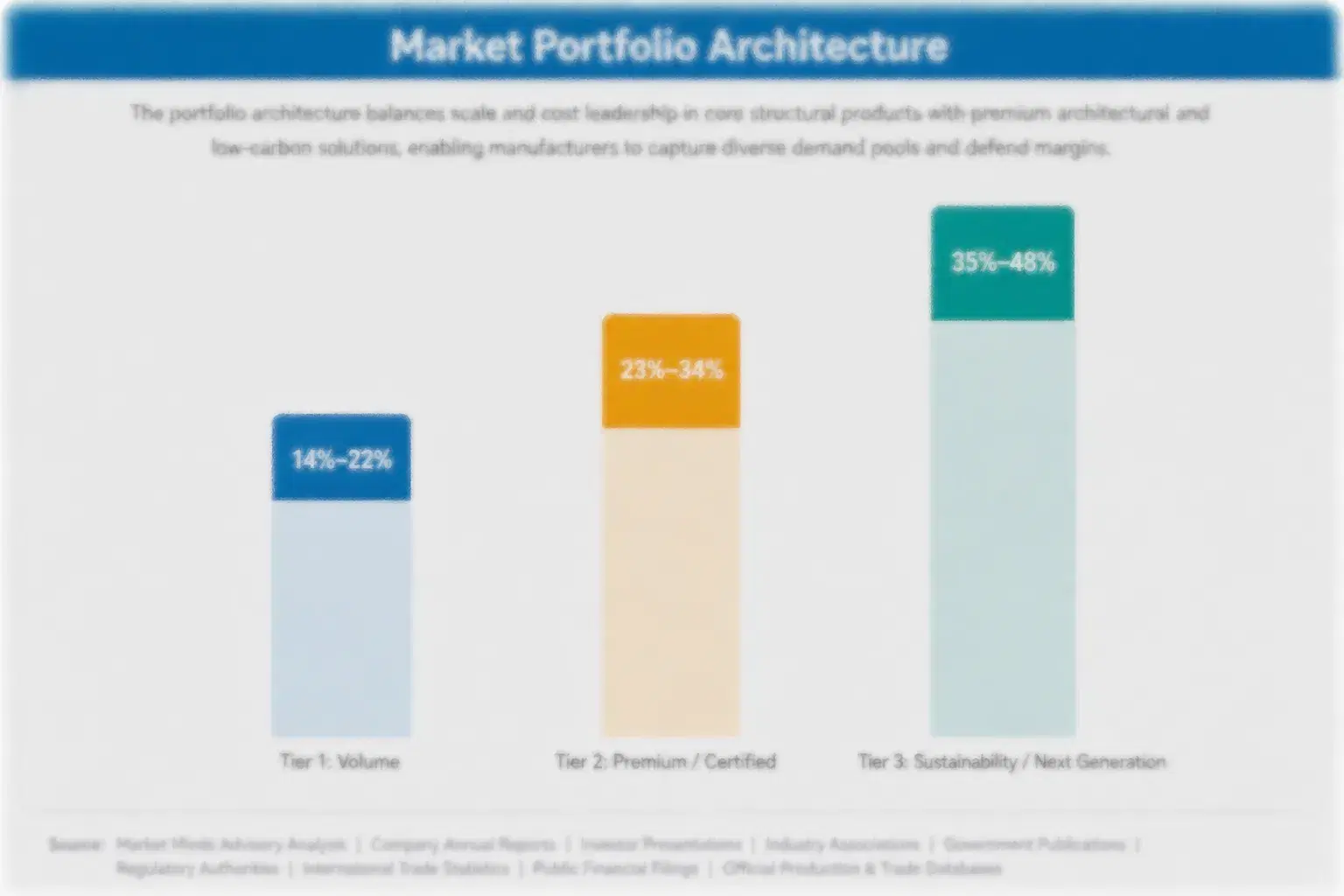
Industrial exhaust system economics split cleanly into three tiers, separated primarily by chemical resistance and contaminant complexity rather than physical system size alone. Volume-tier general manufacturing exhaust competes largely on price, with gross margins thinner than either of the two higher tiers sitting above it in the broader portfolio structure.
Premium certified chemical processing exhaust systems, built for corrosive gas environments, command meaningfully higher margins through documented corrosion resistance testing and OEM relationships that discourage casual new entrants from competing directly. The sustainability and next-generation tier, led by battery manufacturing fume extraction systems, carries the highest margins of all three but also the steepest chemistry barriers, since battery makers rarely switch suppliers once a system clears qualification and commissioning.

The tension running through the category sits between chasing volume-tier scale in general manufacturing exhaust, where competition from regional makers keeps pricing power limited, and investing in the chemical resistance engineering infrastructure that premium and next-generation tiers require upfront. High-value margin pools concentrate overwhelmingly in the certified and battery tiers, even though they represent a minority of total shipped units across the broader exhaust market as a whole.

General manufacturing and metals processing exhaust units sold primarily on price and delivery reliability, earning gross margins in the 16 to 22 percent range typical of mature commodity segments with thin differentiation.
Gross Margin

Chemical processing corrosive fume exhaust systems carrying documented corrosion resistance certification, commanding gross margins in the 28 to 36 percent range through specialized engineering and smaller production runs across most plant accounts.
Gross Margin

Battery manufacturing fume extraction systems commanding gross margins in the 38 to 48 percent range alongside the steepest chemistry barriers and the longest OEM relationships once a system is formally approved.
Gross Margin
industrial-exhaust-systems-market-portfolio-architecture-1791069414162

High-value Sub-segments and Strategic Watch-out

Fume Extraction Systems for Battery and EV Cell Manufacturing

The highest-value, fastest-growing pool in the category, carrying margins well above the portfolio average as gigafactory capacity additions pull specification toward chemical-resistant systems across most new production lines worldwide. Capital allocation across the industry is increasingly tilted toward this segment as battery investment continues expanding steadily.

Chemical Processing Corrosive Fume Exhaust

A high-value segment growing moderately as specialty chemical and pharmaceutical manufacturing capacity expands across major producing regions over the coming decade. Margins sit above general manufacturing exhaust, though the segment remains smaller in absolute volume than the core categories positioned above it in the portfolio.

General Manufacturing Dust and Particulate Exhaust

The volume core of the category, generating the bulk of unit shipments through steady industrial replacement cycles worldwide, but carrying thinner margins under sustained regional manufacturer price pressure across most commodity segments globally, year after year without much relief for most producers currently in operation.

Commercial Kitchen and Food Processing Exhaust

A strategic watch-out segment where general-purpose equipment has advanced furthest toward commoditization, eroding established supplier share fastest among all segments and signaling clearly where competitive pressure will likely intensify next across the broader exhaust equipment base over the coming several years across most regional markets worldwide.

Facility-Life Specification Economics

Industrial exhaust system demand runs on facility-life economics rather than frequent repeat purchase, since a system configuration is locked into facility design during construction and then operates for ten to fifteen years. Once a facility engineer selects an equipment supplier during design, that relationship typically holds through construction and subsequent operation, giving incumbent equipment makers rare long-term revenue visibility.
Adoption stickiness varies sharply by end-use vertical. Battery manufacturers rarely switch equipment suppliers mid-construction, since requalification carries real cost and schedule risk that few facility managers want to absorb. General manufacturing buyers switch more readily between projects, often weighting price and delivery speed over deep engineering history, since standard exhaust carries less application-specific complexity than chemical-resistant systems. This split explains why battery relationships command higher retention than general manufacturing sales.

A generational shift in buyer profiles is underway as facility procurement teams increasingly weight documented chemical compatibility and corrosion resistance data more heavily than predecessors did, favoring equipment makers that can demonstrate verified performance across operating conditions. Younger facility managers also rely more on digital maintenance tracking platforms that flag filter replacement and corrosion risk automatically, shifting influence away from legacy relationship-based purchasing toward documented, data-driven supplier performance comparisons.
industrial-exhaust-systems-market-end-use-penetration-index-1791069414493

The MMA Verdict

These are among the four positions where our research anticipates prominent divergence between winners and laggards over the coming forecast period. Each is grounded in the demand model, the regulatory perimeter, and the announced capacity pipeline.
01 / CHEMICAL RESISTANCE INVESTMENT

Build battery-grade engineering before capacity

Chemical resistance engineering, not raw exhaust capacity, is what determines access to the fastest-growing battery manufacturing segment through the forecast period. Equipment makers lacking documented corrosion testing today are already being excluded from gigafactory specification decisions regardless of their general exhaust scale, and that gap is widening each quarter as more battery plants clear financing. Building this capability should be the first priority for any equipment maker seriously targeting durable, meaningful share gains across battery accounts worldwide over the next decade.
02 / SERVICE REVENUE EXPANSION

Convert installed base into recurring revenue streams

Equipment makers with large installed bases hold a durable advantage in recurring filter and maintenance revenue that new entrants cannot easily replicate, since facility managers rarely switch providers mid-asset-life without compelling reason. Equipment makers should prioritize converting new equipment wins into long-term service contracts rather than treating each sale as a one-time transaction. This recurring, far more durable stream increasingly separates genuinely profitable equipment makers from those chasing thin new-order margins alone across a volatile capital cycle that rewards patience over short-term order chasing.
03 / TESTING PROTOCOL ACCELERATION

Compress certification cycles to match battery pace

Battery chemistry innovation is outpacing traditional equipment certification cycles, and equipment makers that compress testing timelines now will capture specification wins before slower-moving competitors can respond. Equipment makers should invest in accelerated testing protocols and parallel certification programs rather than relying on legacy development timelines built for a slower-moving industrial era. Producers that fail to adapt quickly enough risk losing specification slots entirely to faster-moving competitors already serving major battery customers across multiple active gigafactory projects spanning several continents worldwide.
04 / CHINESE COMPETITION RESPONSE

Compete on engineering depth, not price alone

Domestic Chinese manufacturers' cost advantage in commodity exhaust segments is rooted in lower labor and component costs and is unlikely to close through pricing alone, so established producers competing purely on price in that tier are fighting for a shrinking, thinning-margin pool. The more durable path is competing on chemical resistance engineering depth and battery manufacturer relationships where equipment cost matters less than corrosion reliability and documented performance. Chasing commodity volume defensively drains resources better spent building certified capacity instead.

Engagement Snapshot From the Field

A live engagement with an industry participant carrying material or product regulatory and market exposure ahead of a defining policy shift, showing how our research translates into a defensible multi-year portfolio strategy.
MARKET MINDS ADVISORY · CLIENT ENGAGEMENT SUMMARY
Industrial Exhaust System Producer Strategic Portfolio Review and Transition Roadmap 2026·Investment Scenario on Industrial Exhaust System Exposure Evaluation 2025-26
CLIENT PROFILE
The client is a mid-size exhaust equipment manufacturer with established general manufacturing sales across North America and no meaningful chemical-resistant engineering capability. Annual revenue sits in the $70 million to $110 million range (client-reported, unverified by MMA), concentrated almost entirely in standard industrial exhaust segments. The company had no existing battery manufacturer relationships before engaging MMA.
STRATEGIC CHALLENGE
Management was evaluating whether to invest in chemical-resistant engineering capability or continue focusing resources on its established general manufacturing business. Internal forecasts conflicted sharply, with sales leadership favoring familiar industrial volume while business development flagged battery gigafactory demand as the faster-growing opportunity worth the engineering investment and the associated execution risk involved.
MMA APPROACH
MMA conducted primary interviews with battery gigafactory procurement teams and modeled market entry payback under base, bull, and bear demand scenarios. The analysis compared capital requirements and margin profiles for continued general manufacturing focus against chemical-resistant engineering investment, isolating the capital intensity gap relative to the client's balance sheet capacity.
KEY FINDINGS
  1. Battery manufacturing exhaust demand was growing roughly three times faster than the client's existing general manufacturing segment, with chemical resistance engineering as the primary access barrier.
  2. Engineering investment payback was modeled at under two years under base-case assumptions, materially faster than management's initial internal planning estimates had assumed.
  3. Continued general manufacturing focus alone carried a real risk of margin erosion from continued regional manufacturer price competition in commodity segments over the following five years.
  4. Early engineering capability gave the client a credible lead-time advantage over slower-moving competitors still evaluating battery market entry at the time of the engagement.
CLIENT PROFILE
The client is a mid-size exhaust equipment manufacturer with established general manufacturing sales across North America and no meaningful chemical-resistant engineering capability. Annual revenue sits in the $70 million to $110 million range (client-reported, unverified by MMA), concentrated almost entirely in standard industrial exhaust segments. The company had no existing battery manufacturer relationships before engaging MMA.
STRATEGIC CHALLENGE
Management was evaluating whether to invest in chemical-resistant engineering capability or continue focusing resources on its established general manufacturing business. Internal forecasts conflicted sharply, with sales leadership favoring familiar industrial volume while business development flagged battery gigafactory demand as the faster-growing opportunity worth the engineering investment and the associated execution risk involved.
MMA APPROACH
MMA conducted primary interviews with battery gigafactory procurement teams and modeled market entry payback under base, bull, and bear demand scenarios. The analysis compared capital requirements and margin profiles for continued general manufacturing focus against chemical-resistant engineering investment, isolating the capital intensity gap relative to the client's balance sheet capacity.
KEY FINDINGS
  1. Battery manufacturing exhaust demand was growing roughly three times faster than the client's existing general manufacturing segment, with chemical resistance engineering as the primary access barrier.
  2. Engineering investment payback was modeled at under two years under base-case assumptions, materially faster than management's initial internal planning estimates had assumed.
  3. Continued general manufacturing focus alone carried a real risk of margin erosion from continued regional manufacturer price competition in commodity segments over the following five years.
  4. Early engineering capability gave the client a credible lead-time advantage over slower-moving competitors still evaluating battery market entry at the time of the engagement.
RECOMMENDED STRATEGY
Phase 1: Phase one: build chemical-resistant exhaust engineering capability within fourteen months, prioritizing this fully over continued general manufacturing expansion plans in place. Phase 2: Phase two: pursue qualification with two to three anchor battery gigafactory customers through direct embedded engineering relationship development and site visits. Phase 3: Phase three: redirect planned general manufacturing marketing budget toward battery production capacity once anchor customer qualification is fully and formally secured.
OUTCOME
The client built chemical-resistant engineering capability and secured qualification with one battery gigafactory customer within fifteen months. Reported revenue from battery manufacturing systems grew from zero to roughly $8 million (client-reported, unverified by MMA) within the first eighteen months of qualified supply, ahead of the client's original internal planning timeline.

Frequently Asked Questions

Foundational context covering the market sizes, CAGR, scope, country, region and competition that inform every finding below. This section is provided to cover basics and most often pre-purchase conversations, answered from the MMA Primary Research Dataset.

What is the current size of the Industrial Exhaust System Market?

The global industrial exhaust system market is valued at $3.1 billion in 2025, the defined base year for this report. It is projected to reach $3.236 billion by 2026 as the forecast period begins.

How large will the Industrial Exhaust System Market be by 2036?

The market is projected to reach $4.978 billion by 2036, up from $3.236 billion in 2026. That represents a 1.54x expansion over the eleven-year forecast period.

What is the CAGR for the Industrial Exhaust System Market 2026 to 2036?

The market is forecast to grow at a 4.4% CAGR between 2026 and 2036. Bull and bear scenarios range from 5.6% to 3.2% depending on battery manufacturing timing.

Which segment is growing fastest?

Fume extraction systems for battery and EV cell manufacturing are the fastest-growing segment, expanding at a 7.6% rate, roughly 1.73 times the overall market CAGR of 4.4% through the forecast period.

Who are the major companies in the Industrial Exhaust System Market?

Camfil Air Pollution Control, CECO Environmental, Donaldson Torit, Nederman, and Plymovent lead the category across most facility types. The top five hold a combined CR5 of 35%.

Which country is growing fastest?

China leads regional growth at 6.7% annually, driven by sustained battery and general manufacturing capacity growth right across the entire country nationwide today and beyond.

Report Segmentation Architecture

The full report scope spans multiple orthogonal segmentation dimensions, with cross-tabulated demand data provided for each dimension pair. Coverage extends further to regional breakdowns, trend trajectories, and the competitive detail needed to support segment-level decision-making.
  • General Manufacturing Dust and Particulate Exhaust
  • Fume Extraction Systems for Battery Manufacturing
  • Metals Processing and Welding Fume Exhaust
  • Chemical Processing Corrosive Fume Exhaust
  • Commercial Kitchen and Food Processing Exhaust
  • Battery and EV Cell Manufacturing
  • General Manufacturing
  • Metals and Welding
  • Chemical and Pharmaceutical Processing
  • Commercial Food Service
  • Direct Capital Equipment Sales
  • Filter and Maintenance Service Contracts
  • Chemical Compatibility Testing Contracts

By Region

  • East Asia
  • North America
  • Western Europe
  • South Asia and Pacific
  • Latin America
  • Middle East and Africa
  • Eastern Europe

Scope, Methodology, and Coverage

Every figure in this report is reproducible from documented input assumptions. The scope below maps the historical period, the forecast horizon, the segmentation dimensions, and the countries covered, alongside the underlying primary and qualitative methodology.
Historical Period
2020 to 2025
Forecast Period
2026 to 2036
Base Year
2025 (USD billions; MMA Primary Research Dataset, October 2026)
Market Definition
This market covers equipment that captures, filters, and expels contaminated air from industrial facilities, including fume hoods, ductwork, fans, and filtration components engineered for manufacturing and chemical processing environments. It excludes general HVAC exhaust fans and standalone air make-up units sold without integrated contaminant capture.
Quantitative Units
USD billions (current prices); CAGR in percent
Segmentation Dimensions
By Contaminant Type and Chemical Resistance Class; By End-Use Industry; By Commercial Dimension; By Region
Regions Covered
East Asia, North America, Western Europe, South Asia and Pacific, Latin America, Middle East and Africa, Eastern Europe
Countries Covered
USA, China, Germany, France, UK, Japan, South Korea, India, Australia, Canada, Brazil, Mexico, Indonesia, Vietnam, Thailand, Malaysia, UAE, Saudi Arabia, South Africa, Nigeria, Turkey, Poland, Netherlands, Italy, Spain, Sweden, Switzerland, Argentina, Colombia, Singapore, and additional markets relevant to this sector
Key Companies Profiled
Camfil Air Pollution Control, CECO Environmental, Donaldson Torit, Nederman, Plymovent, Dustex Corporation, Robovent, Met-Pro Environmental, Airflow Systems, Imperial Systems, Diversitech Equipment and Process Industries, Torit Products, Clarcor Industrial Air, Farr Air Pollution Control, Absolent Group, BOFA International, Guangzhou Jiema Environmental, Shandong Huatai Environmental, Quatro Air Technologies, Micro Air
Quantitative Methodology
Primary survey, n=3,800 respondents, Q4 2025, six countries; demand-side model with trade association cross-validation
Qualitative Methodology
47 expert interviews, Q4 2025; applied to validate demand model assumptions, identify emerging dynamics, and assess competitive positioning
Report Format
PDF and XLSX data workbook (Word format preview document)
Publisher
Market Minds Advisory
Report Code
MMA-2026-CON-987
Published
October 2026
Contact
sales@marketmindsadvisory.com | www.marketmindsadvisory.com

Purchase the full Industrial Exhaust System Market Report (2026 to 2036).

This report delivers a complete sizing, segmentation, and competitive assessment of the global industrial exhaust system market through 2036. It covers demand drivers across general manufacturing, battery, chemical, and metals processing applications, alongside the shift from basic exhaust equipment to chemical-resistant and certified fume extraction systems, with detailed regional analysis spanning all seven major world regions. Competitive profiling includes twenty leading manufacturers assessed on a consistent revenue basis, with detailed input cost and portfolio margin analysis supporting capital allocation decisions. The analysis draws on primary survey data, expert interviews, and company disclosures gathered throughout 2025 and 2026.
Seven-region demand sizing data through 2036
Five-segment MECE market breakdown framework included
Twenty-company competitive benchmarking and risk profiling
Stainless steel and coating cost exposure analysis
Three-tier portfolio margin analysis framework included
Anonymized client case study with measured outcomes

Built For The People Who Decide

From boardroom strategy to bench-side execution, this report is read cover-to-cover by leaders shaping the next decade of their industry, turning demand scenarios, market dynamics and valuation benchmarks into decisions.
CXOs/ Presidents/ VPs/ Managers
M&A and Corporate Development
Strategy Teams and R&D Heads
Procurement and Product Directors
Regulatory and Compliance Leaders
Investor Relations and Equity Analysts