Alternative Fuels Infrastructure Regulation Forces Station-Level Detector Density
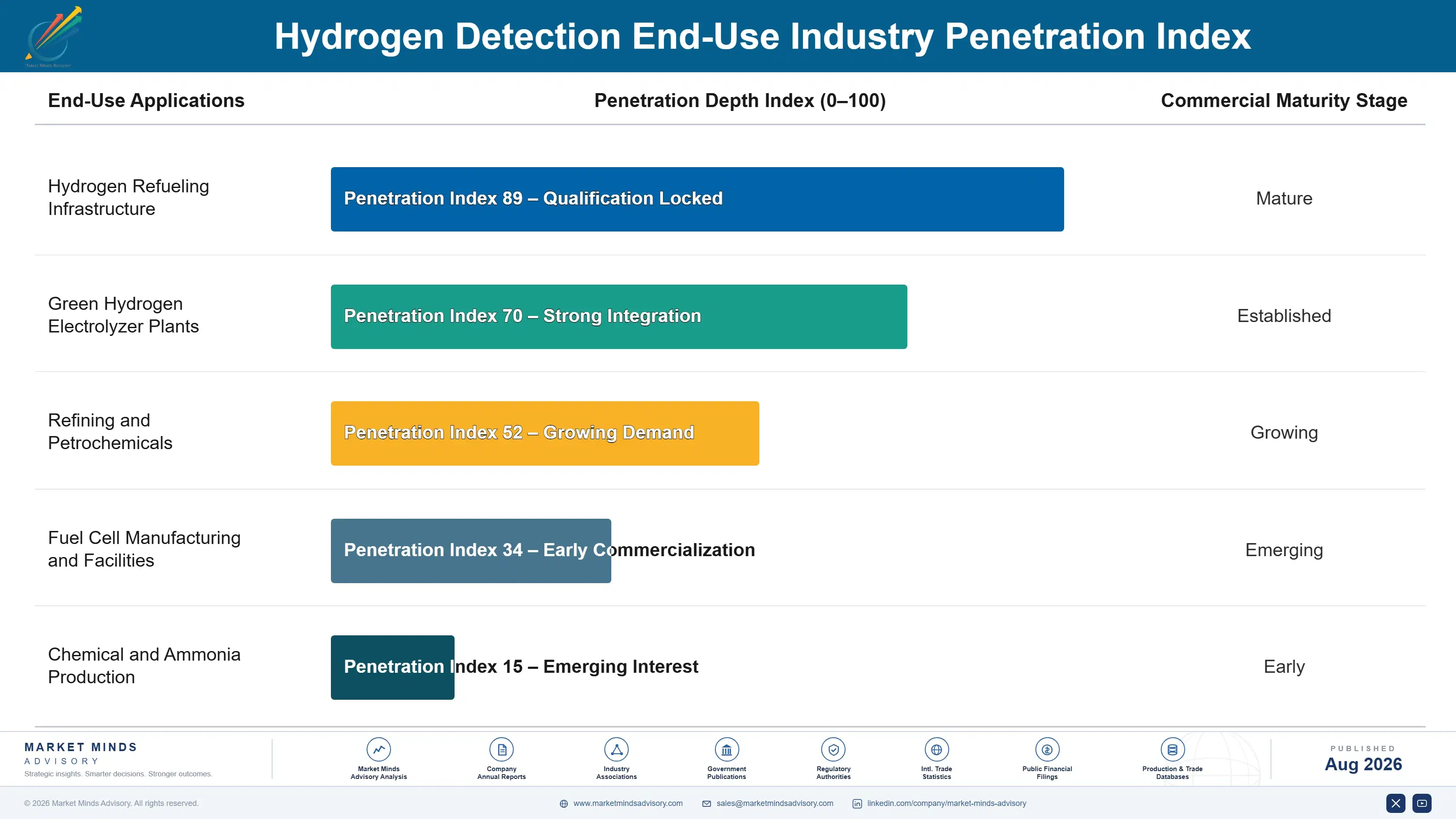
The European Union's Alternative Fuels Infrastructure Regulation requires hydrogen refueling stations at least every 200 kilometres along the core TEN-T road network by 2031, with a minimum daily capacity of two tonnes per station. Each station requires fixed hydrogen detectors at dispensing bays, storage compounds, and compressor enclosures under national ATEX-derived codes, typically six to twelve points per site depending on layout. Station operators are standardising on hydrogen-specific electrochemical or MEMS sensors rather than adapted combustible-gas units, because insurers increasingly require documented cross-sensitivity performance before underwriting new sites. That underwriting requirement is becoming the primary purchasing trigger.
Market Impact: Adds detection to 20+ GW pipeline