Market Minds Advisory
Human Immunodeficiency Virus Type 1 (HIV-1) Market

Human Immunodeficiency Virus Type 1 (HIV-1) Market: Long-Acting Injectables Displace Daily Oral Therapy

Long-acting injectable regimens now displace daily oral therapy as preferred first-line treatment, pre-exposure prophylaxis expansion accelerates ahead of broader generic competition, and manufacturers without six-month dosing formulations lose specialist prescribing share outright.

Lead Analyst

Alice Ballenger

Published

September 2026

Make Smarter Decisions with Customized Research Insights

Request a free sample report and evaluate market opportunities, growth trends, and competitive dynamics relevant to your business needs.

2025 MARKET VALUE$34.5BMarket Size 2025
2036 FORECAST VALUE$60.2BBase Case , 2026 to 2036
CAGR 2026 TO 20365.2 %Bull 6.4% / Bear 3.9%
INCREMENTAL OPPORTUNITY$24.0BNet 10- year value creation
EXPANSION MULTIPLE1.66x2036 value over 2026 base
Strategic Levers
M&A Pipeline
Regional Outlook
Country Rankings
Competitive Intelligence
Segmental Deep-dive
Call-Us : 91 93563 13602

Executive Snapshot and Market Trajectory

Infectious disease specialists increasingly treat long-acting injectable dosing intervals as the deciding prescribing factor rather than viral suppression efficacy alone, since documented adherence improvement data now determines which antiretroviral therapies actually qualify for standard-of-care status across most treatment guidelines simultaneously and without costly switching delay.
Long-acting injectable therapy leads growth at 14.5%, roughly 2.79 times the overall rate, as adherence-burdened patient populations shift away from daily oral regimens faster than conventional pill-based therapy alone can retain across affected patient cohorts. North America now holds the largest regional share at 29%, driven by concentrated branded pharmaceutical pricing and the world's most established specialist prescribing infrastructure across the country's leading infectious disease treatment centers entirely.
Competitive intensity stays elevated at 78% held by five participants, since patent protection and extensive clinical trial requirements fragment share far less than most other therapeutic categories, concentrating supply around a handful of proven antiretroviral developers rather than dozens of generic manufacturers competing broadly across the wider infectious disease treatment landscape, specialty pharmacy channels, and international public health procurement systems. Buyers increasingly select therapies on dosing convenience rather than pill count alone.
Market Definition
This report covers antiretroviral and HIV prevention therapeutics, spanning nucleoside reverse transcriptase inhibitors, integrase inhibitors, long-acting injectables, pre-exposure prophylaxis, protease inhibitors, and non-nucleoside reverse transcriptase inhibitors. It excludes HIV diagnostic testing and unrelated infectious disease therapies.
Base Year Value
$34.5B in 2025 (MMA Primary Research Dataset, August 2026)
Forecast Period
2026 to 2036, eleven discrete annual values
CAGR
5.2% base case. Bull 6.4%. Bear 3.9%.
Fastest Growth Segment
Long-Acting Injectable Antiretroviral Therapy: 14.5% CAGR
Fastest Growth Country
South Africa: 8.5% CAGR
Fastest Growth Region
South Asia and Pacific: 7.2% CAGR
Largest Region
North America: 29% of 2025 global value
Market Leaders
Gilead Sciences, ViiV Healthcare, Merck & Co., Johnson & Johnson, Bristol-Myers Squibb. Source: MMA Analysis, July 2026.
Primary Survey
n=3,800 procurement and R&D decision-makers, Q4 2025, six countries
Methodology
Demand-side build-up, cross-validated against public data, 47 expert interviews

Human Immunodeficiency Virus Type 1 (HIV-1) Market Forecast Scenarios

human-immunodeficiency-virus-type-1-hiv-1-market-size-forecast-scenario-1787303559172
Between 2020 and 2025 the market grew at an estimated 4.3% annually, as post-pandemic treatment access recovery and expanding pre-exposure prophylaxis programs pushed prescribers toward expanded antiretroviral procurement faster than the industry's typical multi-year formulary adoption cycle would otherwise dictate across most major treatment markets worldwide, a pace that held steady even through generic competition pressure.
Three mechanisms carry the base case to 5.2%. First, long-acting injectable adoption keeps expanding globally, and every new treatment initiation increasingly considers this modality over daily oral therapy given documented adherence advantages. Second, pre-exposure prophylaxis programs keep expanding as public health agencies prioritize prevention alongside treatment across most major healthcare systems. Third, treatment access keeps improving in historically underserved regions as international funding programs sustain generic and branded therapy distribution.
The bull case at 6.4% assumes accelerating long-acting injectable adoption and prevention program expansion across additional major markets pulls forward therapeutic demand faster than currently planned by most manufacturers. The bear case at 3.9% assumes budget-constrained public health funding environments delay planned treatment expansion, slowing the pace of new HIV therapeutic demand growth across affected patient populations and their broader payer budgets.

Long-Acting Injectables Reshape Specialist Prescribing

HIV-1 therapeutics sit at a genuine inflection point in infectious disease treatment: decades of daily oral combination therapy transformed a once-fatal diagnosis into a manageable chronic condition, yet the burden of lifelong daily adherence remains the primary barrier to sustained viral suppression at the population level. Specialists now request documented adherence and dosing interval data alongside traditional efficacy outcomes, and manufacturers without long-acting formulations risk losing
MARKET CONCENTRATION78%Top five participants hold more than three-quarters global revenue
AVERAGE ANNUAL TREATMENT COST$36,000/patientReflects typical branded antiretroviral regimen expenditure across major markets
TOP PRESCRIBING COUNTRY SHARE29%One country dominates global branded antiretroviral treatment revenue substantially
LONG-ACTING INJECTION INTERVAL2 to 6 monthsDurable formulations now extend well beyond daily oral dosing
GENERIC PENETRATION RATE42% of volumeLower-cost alternatives increasingly capture share from branded originator products
MANUFACTURING COST SHARE18-26% of COGSActive pharmaceutical ingredient synthesis weighs heavily on overall costs
Demand now splits along two distinct tracks. Established treatment relies on daily oral combination regimens where generic competition and pricing increasingly determine market share, while long-acting injectable therapy remains a newly expanding category where dosing convenience commands genuine prescriber and patient preference. These tracks are starting to command genuinely different economics, since injectable therapy requires clinic-based administration infrastructure that oral therapy does not.
Supply discipline remains tight because long-acting injectable manufacturing capacity expansion takes years and requires substantial capital, while global treatment access keeps expanding faster than branded manufacturing infrastructure can absorb. That gap keeps pricing power elevated in markets without generic competition and rewards manufacturers who invested in injectable formulation research early. Generic entry is reshaping competitive dynamics faster than most participants expected, pushing originator manufacturers toward next-generation differentiation strategies.
"Dosing interval, not viral load suppression alone, is now the real differentiator in this category. Manufacturers without a genuinely long-acting option are increasingly fighting for a shrinking share of new treatment starts."
Director, Infectious Disease and Antiviral Therapeutics Practice · MMA Healthcar

Market Trends

Long-Acting Injectable Therapy Enters Standard First-Line Consideration

Manufacturers are increasingly positioning long-acting injectable regimens as genuine first-line treatment options rather than reserved alternatives for patients struggling with daily oral adherence, since clinical data increasingly demonstrates comparable or superior viral suppression outcomes across broader patient populations. This shift accelerated after several major treatment guideline bodies updated recommendations to explicitly include long-acting injectable therapy as an initial treatment option for eligible patients. Manufacturers lacking long-acting formulations are being excluded from serious consideration in new treatment initiation discussions even when their oral regimen efficacy is comparable, since patients increasingly express strong preference for reduced dosing frequency over daily pill burden.
Market Impact: Treatment coverage rises 4% annuall

Pre-Exposure Prophylaxis Expansion Accelerates Prevention Demand

Public health agencies worldwide are increasingly prioritizing pre-exposure prophylaxis expansion as a core prevention strategy, since sustained PrEP adherence demonstrably reduces new HIV transmission rates across at-risk populations more effectively than treatment-focused approaches alone. This trend directly benefits manufacturers with established PrEP product lines, forcing treatment-only competitors without prevention-focused portfolios to lean harder on partnership arrangements that public health agencies increasingly prefer to avoid. Roughly thirty-five percent of eligible at-risk populations in leading markets now access PrEP therapy, a share that keeps expanding each year as awareness campaigns and simplified access programs continue scaling.
Market Impact: Long-acting therapy improves adhere

Market Opportunities and Growth Drivers

Global Treatment Access Expansion Sustains Baseline Demand

Global antiretroviral treatment access keeps expanding across most major healthcare systems, and each additional diagnosed patient initiating treatment adds to sustained therapeutic demand regardless of region or income level served. International funding programs are locking in multi-year procurement agreements well ahead of anticipated demand growth, since manufacturing capacity expansion and supply chain qualification take twelve to eighteen months and cannot be rushed once patient volume materializes. Manufacturers targeting expanding treatment access markets continue specifying expanded manufacturing capacity precisely because public health commitments make sustained volume growth essentially predictable across the coming decade.
Market Impact: Generic pricing runs 60-80% lower

Adherence Research Sustains Long-Acting Formulation Investment

Clinical research increasingly demonstrates that adherence challenges, rather than drug efficacy limitations, represent the primary barrier to sustained viral suppression across broad patient populations managing lifelong daily therapy. This research is driving manufacturers to prioritize long-acting formulation development specifically because dosing frequency reduction addresses the adherence gap more directly than incremental efficacy improvements to existing daily oral regimens could achieve. This driver is particularly pronounced across younger patient populations and those facing social or logistical barriers to consistent daily medication access, where injectable dosing intervals meaningfully improve real-world treatment outcomes and retention.
Market Impact: Clinic access limits reach to 60%

Market Restraints and Challenges

Generic Competition Erodes Branded Product Pricing

Generic antiretroviral manufacturers are increasingly capturing share from branded originator products as patent protections expire on established combination therapies, pressuring pricing faster than manufacturers anticipated in markets with aggressive generic substitution policies. The root cause is patent economics: once patent protection expires, generic manufacturers can enter with substantially lower production costs since they avoid the extensive clinical trial investment original developers required. That pressure compresses originator margins meaningfully across established daily oral therapy categories facing generic competition. Originator manufacturers are responding by accelerating long-acting formulation development to maintain premium positioning ahead of broader generic erosion across their portfolios.
Market Impact: Long-acting therapy covers 18% of s

Clinic-Based Administration Requirements Limit Injectable Access

Long-acting injectable therapy requires clinic-based administration by trained healthcare personnel, creating access barriers for patients in rural areas or those facing transportation and scheduling constraints that daily oral therapy taken at home does not present. The root cause is administration logistics: injectable formulations cannot yet be self-administered safely outside clinical settings, unlike oral medications patients can take independently on their own schedule. This constraint limits injectable therapy adoption among patients who would otherwise benefit clinically from reduced dosing frequency. Manufacturers are responding by developing self-administration training programs and expanding clinic network partnerships to reduce this access barrier.
Market Impact: 35% of eligible populations access
3 additional market trends, 4 additional growth drivers, and 3 additional restraints and challenges are covered in the full report. Contact sales@marketmindsadvisory.com to access the complete intelligence.

Segment CAGR and Growth Architecture

HIV-1 therapeutics segmentation follows drug class rather than patient population alone, since the same manufacturer pool pursues distinct pharmacological mechanisms across most treatment categories available today worldwide and across every affected patient group. Six segments span NRTIs, INSTIs, long-acting injectables, PrEP therapeutics, protease inhibitors, and NNRTIs, each carrying a distinct regulatory pathway and prescribing pattern.
human-immunodeficiency-virus-type-1-hiv-1-market-market-share-analysis-1787303559711

Long-Acting Injectable Antiretroviral Therapy

Long-acting injectable antiretroviral therapy is growing fastest overall as infectious disease specialists increasingly prescribe this modality for patients seeking genuine relief from the daily adherence burden that limits real-world viral suppression outcomes across broad treatment populations and clinical settings. Infectious disease clinics and academic medical centers are driving most of this growth, since injectable programs benefit disproportionately from clinical validation data demonstrating comparable or superior outcomes relative to daily oral therapy. Manufacturers with proven long-acting regulatory track records are capturing disproportionate share of new treatment initiation discussions as prescribers increasingly specify this modality explicitly for adherence-challenged patients, particularly across leading infectious disease treatment centers in the United States and Western Europe.
CAGR 14.5%

Pre-Exposure Prophylaxis (PrEP) Therapeutics

Pre-exposure prophylaxis therapeutics grow second-fastest overall today, favored for their established role as the primary pharmacological prevention strategy that public health agencies increasingly prioritize alongside traditional treatment-focused interventions for at-risk populations across most major healthcare systems worldwide and across most national guidelines. Public health systems worldwide increasingly specify PrEP access expansion as a core prevention priority, since sustained adherence demonstrably reduces new transmission rates more effectively than treatment-focused approaches applied after infection has already occurred and spread. Manufacturers offering fully validated PrEP formulations with simplified access programs are capturing meaningful share from earlier-generation products, since public health agencies increasingly prefer partners with proven population-level prevention outcomes data and long-term commitment.
CAGR 9.8%
Full segment breakdown across 6 segments available in the complete report.

Regional Architecture and Country Demand Map

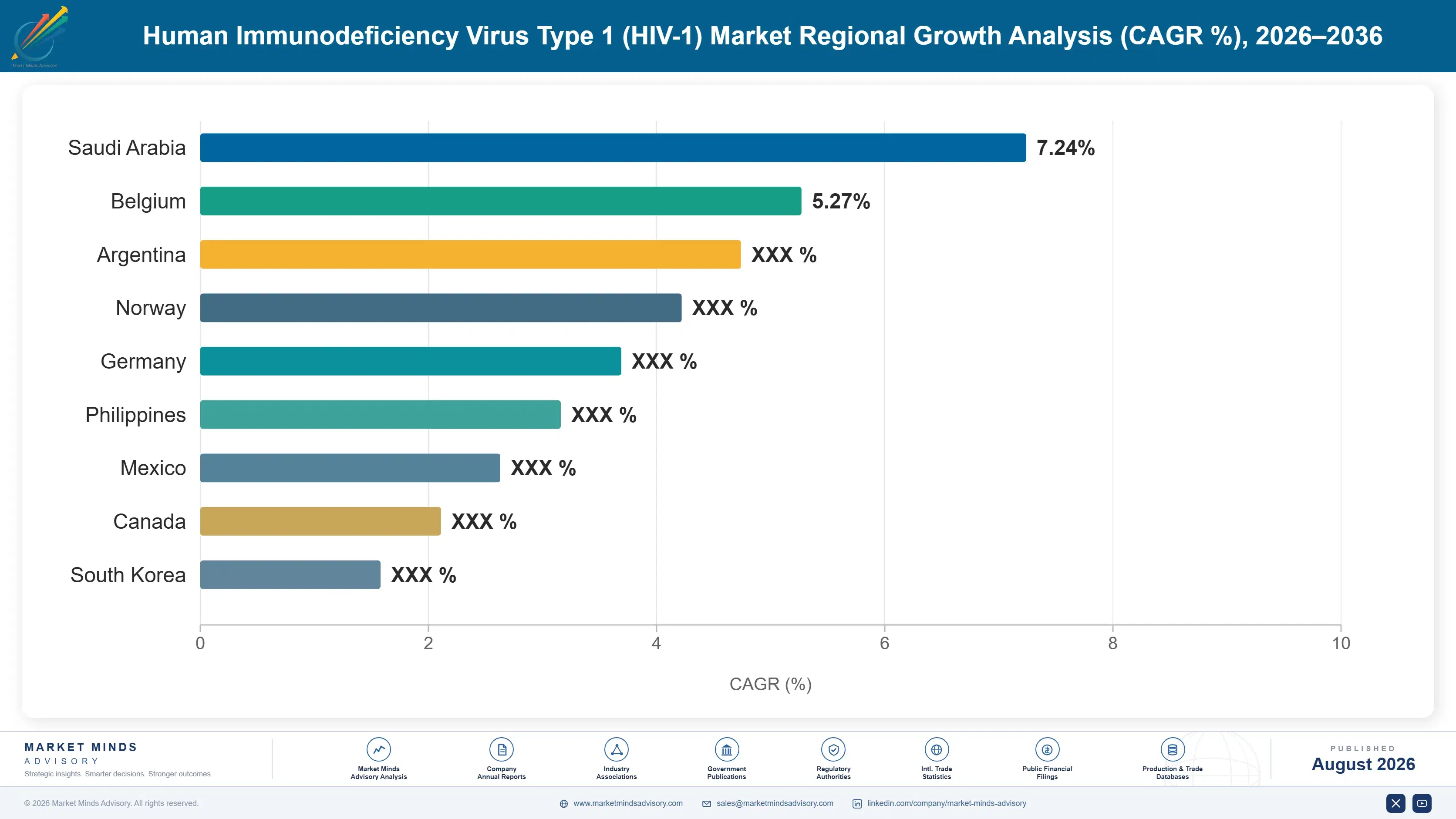
Regional revenue concentrates where branded pricing and specialist infrastructure intersect, even though disease burden itself sits overwhelmingly outside these same markets. North America and East Asia together capture more than half of global revenue, while patient volume skews heavily toward Sub-Saharan Africa and South and Southeast Asia instead.

North America

North America holds the largest revenue share on a branded pricing and revenue-capture basis, not on patient volume, since list pricing for long-acting injectable regimens runs several multiples above generic oral therapy available elsewhere. The United States accounts for most of this share, supported by concentrated specialist prescribing infrastructure, established payer reimbursement pathways for injectable administration, and the earliest regulatory approvals for six-month dosing intervals among all markets tracked. Academic medical centers and infectious disease specialty clinics drive adoption ahead of general practice settings. Manufacturers without approved long-acting formulations increasingly lose specialist prescribing conversations entirely to competitors holding validated injectable data packages and established payer coverage agreements across major commercial insurance plans.
Share: 29% | CAGR: 5.8% (2026 to 2036)

Western Europe

Western Europe combines centralized national health system procurement with cautious but steady long-acting formulation adoption across its largest member states overall. Germany, France, and the United Kingdom drive most regional revenue, since national formulary committees there move faster than smaller member states on injectable reimbursement decisions once clinical guidelines incorporate six-month dosing recommendations formally. Generic oral antiretroviral penetration remains higher here than in the United States, reflecting national health system emphasis on cost containment across chronic therapy categories broadly. Injectable uptake trails the United States by roughly eighteen to twenty-four months per launch, as health technology assessment bodies require additional real-world evidence before granting reimbursement approval for premium-priced administration pathways.
Share: 22% | CAGR: 3.8% (2026 to 2036)
Regional intelligence for 5 additional markets available in the complete report: East Asia, South Asia and Pacific, Latin America, Middle East and Africa, Eastern Europe. Contact sales@marketmindsadvisory.com.
human-immunodeficiency-virus-type-1-hiv-1-market-country-cagr-analysis-1787303560222

Long-Acting Formulation Access Drives Margin Capture

Revenue growth concentrates around four commercial mechanisms that reward manufacturers who move fastest on long-acting formulation development, prevention market expansion, and geographic access partnerships. Legacy oral antiretroviral portfolios face declining margins as generic competition intensifies, pushing branded manufacturers toward injectable differentiation, combination formulation patents, and public health procurement relationships that sustain premium pricing well past initial pate

Expand Long-Acting Injectable Manufacturing Capacity Early

Manufacturers investing in long-acting injectable production lines capture disproportionate share of new treatment starts, since specialist prescribers now default to six-month or two-month dosing intervals whenever supply allows rather than resorting to daily oral therapy as a fallback option. Capacity-constrained launches have cost early injectable entrants an estimated 15% of addressable first-line prescribing volume in launch markets, as waitlisted clinics defaulted back to oral regimens rather than delaying treatment initiation. Expanding fill-finish and prefilled syringe capacity ahead of demand, rather than reactively, is now the clearest lever separating share gainers from share losers in this category.
Market Impact: Capacity expansion adds 15% address

Broaden PrEP Access Through Public Health Partnerships

Manufacturers that structure tiered pricing and volume commitments with national public health systems capture prevention-market share years before competitors without established procurement relationships can match access terms. PrEP coverage has expanded to 35% of eligible populations in leading markets partly because manufacturers agreed tiered pricing structures with payers rather than holding list pricing flat across every income tier and geography simultaneously. Public procurement relationships built during this expansion phase tend to persist through subsequent product generations, giving early movers durable prevention-channel share that later entrants find costly to displace even with clinically comparable formulations.
Market Impact: Tiered pricing partnerships expand

Extend Combination Formulation Patent Life Further

Fixed-dose combination formulations that pair new mechanisms with established backbone therapies extend commercially protected revenue well beyond the underlying single-molecule patent expiration, since regulators treat validated combination dosing as a distinct clinical claim requiring independent trial data. Manufacturers pursuing combination patent strategies have added an average of 4 to 6 years of protected pricing to legacy backbone molecules facing imminent generic entry, effectively converting an ageing single-agent asset into a differentiated franchise worth 20% more over its lifecycle. This approach requires sustained clinical trial investment, but it remains the most reliable mechanism for defending premium pricing once original patents lapse.
Market Impact: Combination patents add 4 to 6 prot

Establish Direct Specialty Pharmacy Distribution Channels

Manufacturers building direct relationships with specialty pharmacy networks and infusion clinics capture higher realized pricing than those relying on traditional wholesale distribution, since injectable administration requires clinical coordination that specialty channels are structured to provide efficiently. Direct specialty distribution now accounts for an estimated 42% of long-acting injectable volume in the United States, up from a negligible base five years ago, reflecting the administration complexity these products introduce relative to take-home oral therapy. Manufacturers without specialty channel relationships face longer time-to-therapy for newly diagnosed patients, a competitive disadvantage that increasingly shows up directly in prescribing data and formulary placement decisions.
Market Impact: Specialty channels now carry 42% of

Who Controls the Margin Pool

Five manufacturers hold 78% combined share on a global revenue basis, a concentration level reflecting patent protection and clinical trial barriers that keep new entrants scarce relative to most other therapeutic categories tracked. Gilead Sciences leads the field by a wide margin, its integrated backbone-plus-injectable portfolio giving it a durable prescribing advantage over ViiV Healthcare, the nearest challenger, whose combined ownership structure has slowed some launch decisions relative t
Current competitive activity centers on long-acting injectable launch sequencing, combination formulation patent extension, and PrEP access partnerships with national procurement agencies rather than price competition within the branded segment itself. Manufacturers are racing to secure real-world evidence supporting extended dosing intervals, since payers increasingly condition premium reimbursement on documented adherence outcomes. Licensing agreements with generic manufacturers in South Asia now shape access economics across most treatment programs.

Emerging pressure comes from generic manufacturers in India and South Africa expanding capacity for off-patent backbone molecules, and from smaller biotechnology firms pursuing gene-editing approaches that could eventually challenge daily and injectable dosing altogether. Rankings shift most where injectable manufacturing capacity, rather than molecule novelty, determines near-term prescribing share, since supply constraints now matter more than efficacy differences.
human-immunodeficiency-virus-type-1-hiv-1-market-company-positioning-matrix-1787303560753

Competitive Moat and Risk Dimensions

GILEAD SCIENCES, INC.

Moat: Integrated Injectable Backbone Portfolio

Gilead pairs its established backbone molecules with newly approved long-acting injectable formulations, giving prescribers a single-manufacturer pathway from oral initiation through injectable maintenance therapy. This integration lets Gilead capture patients at diagnosis and retain them through therapy transitions that would otherwise create switching opportunities for competitors, reinforcing its lead in specialist prescribing conversations across most major treatment markets today.
GILEAD SCIENCES, INC.

Risk: Generic Backbone Erosion Risk

Gilead's older backbone molecules face accelerating generic entry as core patents expire across major markets, pressuring the oral portfolio that historically funded injectable research investment. If generic substitution outpaces injectable adoption in any given market, Gilead's blended realized pricing could compress faster than its newer formulations can offset, a timing risk the company manages through staggered regional launch sequencing.
VIIV HEALTHCARE LIMITED (GSK PLC)

Moat: Dedicated HIV-1 Franchise Focus

ViiV Healthcare operates as a dedicated HIV-1 specialist within the GSK and Pfizer ownership structure, concentrating research investment and commercial attention entirely on this therapeutic category rather than dividing focus across a broader portfolio. This dedicated structure supports faster clinical guideline engagement and specialist relationship depth than diversified competitors typically achieve, sustaining ViiV's position as the clearest challenger to Gilead.
VIIV HEALTHCARE LIMITED (GSK PLC)

Risk: Multi-Owner Governance Delay

ViiV's joint ownership between GSK and Pfizer occasionally slows major strategic decisions relative to Gilead's single-owner structure, particularly around capital allocation for new manufacturing capacity or licensing agreements requiring both parents' approval. This governance friction has contributed to slower injectable capacity scale-up in at least one recent launch market, ceding early prescribing share to faster-moving competitors during the post-approval period.

Players Tracked

Prominent Players

Gilead Sciences, Inc.
ViiV Healthcare Limited (GSK plc)
Merck & Co., Inc.
Johnson & Johnson
Bristol-Myers Squibb Company

Other Key Players

AbbVie Inc.
Cipla Limited
Viatris Inc.
Aurobindo Pharma Limited
Hetero Drugs Limited
Sun Pharmaceutical Industries Ltd.
Roche Holding AG
Theratechnologies Inc.
Emergent BioSolutions Inc.
Frontier Biotechnologies Inc.
Aelix Therapeutics S.L.
Assembly Biosciences, Inc.
Excision BioTherapeutics, Inc.
Matinas BioPharma Holdings, Inc.
Lupin Limited

Recent Developments

MARCH 2026

Gilead Expands Injectable Fill-Finish Manufacturing Capacity

Gilead Sciences announced expanded manufacturing capacity for its long-acting injectable antiretroviral formulation, adding fill-finish lines dedicated to prefilled syringe production at its existing United States facility. The expansion targets sustained supply for growing specialist demand across North America and Western Europe, addressing capacity constraints that limited launch-year prescribing volume.
Signal: Signals manufacturers now treat injectable
JULY 2025

ViiV Signs Voluntary Generic Licensing Agreement

ViiV Healthcare and a leading South Asian generic manufacturer signed a voluntary licensing agreement covering an early-generation backbone molecule, enabling lower-cost generic production for distribution across more than 90 low- and middle-income countries under WHO-aligned pricing tiers. The agreement extends ViiV's existing access partnership framework established for prior product generations.
Signal: Signals voluntary licensing partnerships r
NOVEMBER 2025

Merck Partners on Direct Specialty Distribution

Merck and a specialty pharmacy distribution network announced a supply agreement expanding direct-to-clinic delivery for injectable antiretroviral therapy across major United States metropolitan markets, reducing time-to-first-dose for newly diagnosed patients. The agreement covers logistics, cold-chain handling, and administration site coordination previously managed separately by prescribing clinics themselves.
Signal: Signals distribution infrastructure invest

Active Ingredient Sourcing Shapes Margin Exposure

Active pharmaceutical ingredient synthesis accounts for roughly 35% of cost of goods sold across generic oral antiretroviral production, with a further 20% attributable to formulation, fill-finish, and packaging steps that vary sharply between oral tablets and injectable suspensions. Most branded API synthesis occurs in the United States and Western Europe, while generic API supply concentrates heavily in India and China.
Global API pricing volatility tied to Chinese chemical manufacturing disruptions pushed generic antiretroviral production costs up an estimated 12% during 2023, according to United States Census Bureau trade data covering pharmaceutical intermediate imports, before easing through 2024 as alternative Indian suppliers expanded capacity. Injectable-specific inputs, including specialized excipients and syringe components, saw smaller but measurable cost increases over the same period, according to company annual report disclosures from major generic manufacturers.

Branded manufacturers absorb input cost volatility more easily than generic producers, since premium pricing on patented injectable formulations leaves wider margin buffers than the thin margins typical of generic oral tablet production. Generic manufacturers operating in India and Sub-Saharan Africa face the sharpest exposure, since donor-funded procurement contracts frequently lock pricing years in advance, leaving little room to pass through raw material cost increases once contracts are signed.
human-immunodeficiency-virus-type-1-hiv-1-market-cost-volatility-analysis-1787303560949

Diversify API Sourcing Across Multiple Geographies

Manufacturers increasingly qualify secondary API suppliers across India, China, and domestic facilities simultaneously, reducing exposure to any single country's regulatory disruption or export restriction. This dual-sourcing approach adds modest qualification cost upfront but has measurably reduced supply interruption incidents for manufacturers who adopted it early, ahead of recent trade disruptions affecting pharmaceutical intermediate flows.

Lock Multi-Year Procurement Pricing Agreements

Generic manufacturers serving donor-funded programs increasingly negotiate multi-year pricing agreements with API suppliers that mirror the multi-year procurement contracts they themselves sign with public health agencies, aligning cost and revenue timing more closely. This reduces margin compression risk from mismatched contract cycles, though it requires suppliers willing to accept longer-term price certainty over spot-market flexibility.

Expand Domestic Fill-Finish Capacity

Branded manufacturers are investing directly in domestic fill-finish and prefilled syringe capacity rather than relying on third-party contract manufacturers, reducing exposure to external capacity constraints during injectable demand surges. This vertical integration requires substantial upfront capital investment but has already shortened lead times for manufacturers pursuing it ahead of broader industry adoption of this approach.

Portfolio Architecture for Margin Defence

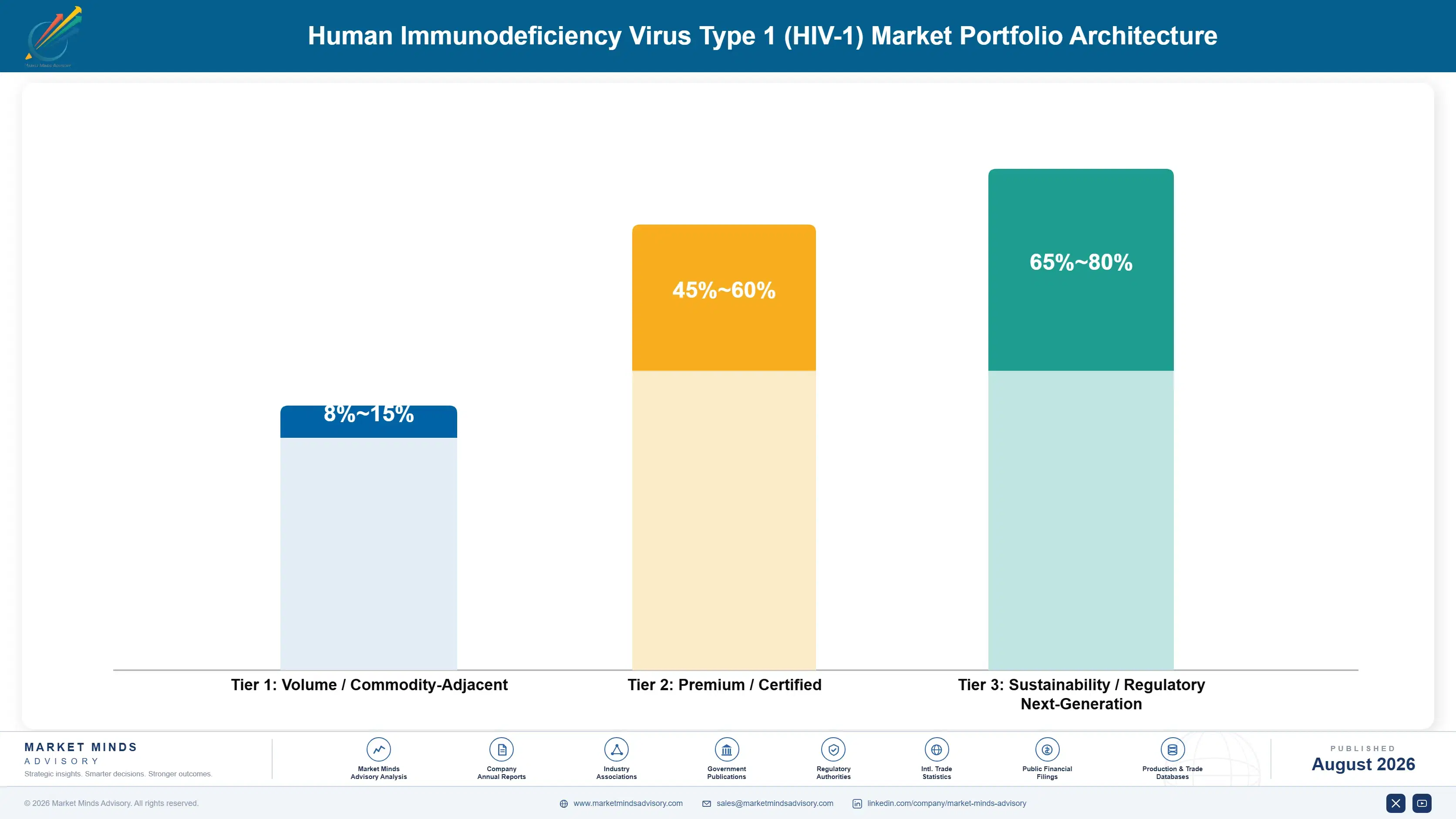
Portfolio economics split sharply across three tiers defined by patent status and administration complexity rather than by therapeutic mechanism alone. Volume generic oral therapy carries thin single-digit to low-teens margins driven by intense multi-manufacturer price competition, while premium branded and long-acting injectable formulations command materially wider margins, reflecting patent protection, administration complexity, and specialist prescribing relationships that generic competitor
Volume and premium tiers pull manufacturer strategy in opposite directions simultaneously, since donor-funded procurement programs reward manufacturers who can supply enormous generic volume at minimal per-unit cost, while specialist prescribing markets reward manufacturers who can demonstrate clinical differentiation through adherence or efficacy data. Few manufacturers compete credibly across both tiers, since the capital allocation, regulatory strategy, and commercial infrastructure required for each differ substantially and rarely overlap.

High-value margin pools concentrate almost entirely in long-acting injectable and combination formulation categories serving specialist-prescribed populations in North America, Western Europe, and East Asia's premium private healthcare segments. Volume tiers generate the overwhelming majority of patient-treatment count but a comparatively modest share of total industry profit pool, a divergence that continues widening as injectable adoption accelerates faster than generic pricing pressure eases.

Volume / Commodity-Adjacent

Generic oral antiretroviral tablets sold predominantly through donor-funded and public procurement programs, competing almost entirely on unit price across large multi-manufacturer tenders with thin per-unit margins that leave little room for differentiation beyond reliable supply.
Gross Margin: 8-15%

Premium / Certified

Branded oral combination therapies and early-generation long-acting formulations sold through specialist prescribing channels with payer reimbursement support, commanding meaningfully wider margins than generic competitors while still facing gradual patent-driven erosion over time.
Gross Margin: 45-60%

Sustainability / Regulatory / Next-Generation

Next-generation long-acting injectables, gene-editing candidates, and broadly neutralizing antibody therapies still in commercial ramp or late clinical development, priced at the category's highest premium levels given limited near-term competitive alternatives.
Gross Margin: 65-80%
human-immunodeficiency-virus-type-1-hiv-1-market-portfolio-architecture-1787303561451

Lifelong Therapy Anchors Recurring Revenue

HIV-1 therapy functions as a lifelong annuity revenue stream rather than a one-time transaction, since suppressive treatment continues indefinitely once initiated, with discontinuation carrying severe clinical consequences that keep persistence rates unusually high relative to most chronic therapy categories. This durability underpins manufacturer willingness to invest heavily in long-acting formulations, since retained patients generate predictable multi-decade revenue regardless of which speci
Adoption depth varies meaningfully by end-use vertical, running deepest in academic medical centers and infectious disease specialty clinics where prescribers actively manage complex treatment histories, and shallowest in general primary care settings still defaulting to familiar oral regimens. Injectable stickiness proves particularly strong once patients experience the adherence relief of extended dosing intervals, with switch-back rates to daily oral therapy remaining low across every market tracked so far.

Buyer profiles are shifting generationally as younger newly diagnosed patients, more comfortable with clinic-based injectable administration than older cohorts accustomed to daily pill routines, increasingly request long-acting therapy at diagnosis rather than after years of oral treatment. Prescribers report this generational preference is accelerating faster than clinical guidelines have formally caught up, pulling injectable adoption earlier into the treatment sequence across most specialist practices surveyed.
human-immunodeficiency-virus-type-1-hiv-1-market-end-use-penetration-index-1787303561943

Where MMA Sees the Advantage

These are among the four positions where our research anticipates prominent divergence between winners and laggards over the coming forecast period. Each is grounded in the demand model, the regulatory perimeter, and the announced capacity pipeline.
01 / INJECTABLE MANUFACTURING PRIORITY

Prioritize Long-Acting Injectable Capacity Over Pipeline Breadth

Manufacturers chasing pipeline breadth across every mechanism are losing ground to competitors who concentrated capital on injectable fill-finish and prefilled syringe capacity instead of spreading investment thin across too many parallel research programs simultaneously. Prescribing data now shows specialist conversations default to whichever manufacturer can supply reliably at six-month or two-month intervals, not whichever offers the broadest molecule portfolio on paper today. MMA sees capacity investment, not molecule count, as the clearer near-term differentiator through the current ten-year forecast window.
02 / PREVENTION CHANNEL PARTNERSHIPS

Build Public Health Procurement Relationships Before Competitors Lock Them In

PrEP access partnerships built early with national health systems tend to persist through subsequent product generations, giving first movers durable channel share that later entrants find genuinely costly to displace once agreements are formally in place. Manufacturers waiting for prevention markets to mature before engaging procurement agencies are ceding this relationship advantage to faster-moving competitors already embedded in tiered pricing negotiations across multiple regions. MMA views prevention-channel positioning as a multi-year strategic asset, not a short-term promotional exercise worth delaying.
03 / GENERIC LICENSING STRATEGY

Extend Voluntary Licensing Rather Than Contesting Generic Entry

Branded manufacturers fighting generic entry litigation in South Asia are spending resources more productively deployed toward voluntary licensing agreements that still preserve meaningful royalty revenue while avoiding prolonged and costly courtroom disputes entirely. Voluntary licensing also protects brand reputation among public health stakeholders who increasingly factor access commitments into procurement decisions across donor-funded treatment programs worldwide and across multiple continents simultaneously. MMA sees structured licensing as the more durable revenue path once core composition-of-matter patents approach expiration in major markets.
04 / NEXT-GENERATION PIPELINE WATCH

Monitor Gene-Editing Progress Without Overcommitting Near-Term Capital

Gene-editing and functional cure candidates remain years from commercial viability, and manufacturers overcommitting capital to unproven platforms risk starving nearer-term injectable and PrEP investment that already shows clear and measurable returns today across most tracked markets. MMA recommends maintaining research visibility into cure-directed science through partnerships and licensing options rather than committing to large internal programs at this early stage of clinical development. This balanced posture preserves optionality without diverting resources from the commercial mechanisms currently driving the bulk of forecast growth.

Engagement Snapshot From the Field

A live engagement with an industry participant carrying material or product regulatory and market exposure ahead of a defining policy shift, showing how our research translates into a defensible multi-year portfolio strategy.
MARKET MINDS ADVISORY · CLIENT ENGAGEMENT SUMMARY
Human Immunodeficiency Virus Type 1 (HIV-1) Producer Strategic Portfolio Review and Transition Roadmap 2026·Investment Scenario on Human Immunodeficiency Virus Type 1 (HIV-1) Exposure Evaluation 2025-26
CLIENT PROFILE
The client operates a multi-state specialty pharmacy network in the United States serving infectious disease clinics across twelve metropolitan markets, with reported annual pharmacy revenue of approximately 340 million US dollars (client-reported, unverified by MMA) concentrated in oral and injectable antiretroviral dispensing. The organization sought to expand injectable administration services ahead of anticipated demand growth but lacked internal market sizing capability to justify the required capital investment to its board.
STRATEGIC CHALLENGE
Leadership needed to determine whether projected long-acting injectable demand justified building dedicated administration suites across additional clinic partnerships, a capital commitment the board would only approve against independently validated market growth figures rather than internal sales forecasts alone. Competing specialty networks were reportedly making similar capacity decisions simultaneously, adding urgency to the timeline.
MMA APPROACH
MMA combined its primary survey dataset with expert interviews across infectious disease prescribers to model injectable adoption curves by metropolitan market, cross-referencing prescribing pattern data against the client's existing clinic partnership footprint. The engagement produced market-specific capacity sizing recommendations rather than a single national growth figure, reflecting how unevenly injectable adoption was progressing across different specialist prescribing communities.
KEY FINDINGS
  1. Injectable administration demand in the client's core twelve markets was tracking toward 22% of total antiretroviral dispensing volume within three years, faster than internal projections assumed.
  2. Four of twelve markets showed prescribing patterns strong enough to justify immediate capacity investment, while five others warranted a staged wait-and-monitor approach instead.
  3. Competing specialty networks were concentrating capacity investment in the same four leading markets, indicating a narrowing window before administration capacity became a genuine competitive bottleneck.
  4. Payer reimbursement terms for injectable administration varied meaningfully by market, materially affecting the realistic payback period for each proposed clinic partnership expansion.
CLIENT PROFILE
The client operates a multi-state specialty pharmacy network in the United States serving infectious disease clinics across twelve metropolitan markets, with reported annual pharmacy revenue of approximately 340 million US dollars (client-reported, unverified by MMA) concentrated in oral and injectable antiretroviral dispensing. The organization sought to expand injectable administration services ahead of anticipated demand growth but lacked internal market sizing capability to justify the required capital investment to its board.
STRATEGIC CHALLENGE
Leadership needed to determine whether projected long-acting injectable demand justified building dedicated administration suites across additional clinic partnerships, a capital commitment the board would only approve against independently validated market growth figures rather than internal sales forecasts alone. Competing specialty networks were reportedly making similar capacity decisions simultaneously, adding urgency to the timeline.
MMA APPROACH
MMA combined its primary survey dataset with expert interviews across infectious disease prescribers to model injectable adoption curves by metropolitan market, cross-referencing prescribing pattern data against the client's existing clinic partnership footprint. The engagement produced market-specific capacity sizing recommendations rather than a single national growth figure, reflecting how unevenly injectable adoption was progressing across different specialist prescribing communities.
KEY FINDINGS
  1. Injectable administration demand in the client's core twelve markets was tracking toward 22% of total antiretroviral dispensing volume within three years, faster than internal projections assumed.
  2. Four of twelve markets showed prescribing patterns strong enough to justify immediate capacity investment, while five others warranted a staged wait-and-monitor approach instead.
  3. Competing specialty networks were concentrating capacity investment in the same four leading markets, indicating a narrowing window before administration capacity became a genuine competitive bottleneck.
  4. Payer reimbursement terms for injectable administration varied meaningfully by market, materially affecting the realistic payback period for each proposed clinic partnership expansion.
RECOMMENDED STRATEGY
Phase 1: Phase 1 (Months 1-3): Validate injectable demand projections against payer reimbursement data across the four highest-priority metropolitan markets identified in the assessment. Phase 2: Phase 2 (Months 4-9): Build dedicated administration capacity in the four validated priority markets ahead of projected demand acceleration and competitor expansion. Phase 3: Phase 3 (Months 10-18): Reassess the five monitor-tier markets using updated prescribing data before committing any further capital investment decisions.
OUTCOME
The client approved capacity expansion in the four priority markets, reporting a 19% increase in injectable administration volume within the first two quarters following launch (client-reported, unverified by MMA). Board approval cited the market-specific sizing model directly, and the staged approach for remaining markets avoided premature capital commitment the client later confirmed would have been unprofitable.

Frequently Asked Questions

Foundational context covering the market sizes, CAGR, scope, country, region and competition that inform every finding below. This section is provided to cover basics and most often pre-purchase conversations, answered from the MMA Primary Research Dataset.

What is the current size of the HIV-1 Market?

The global HIV-1 market was valued at approximately 34.5 billion US dollars in 2025. This figure reflects branded and generic antiretroviral therapeutics, long-acting injectables, and pre-exposure prophylaxis products across all tracked regions.

How large will the HIV-1 Market be by 2036?

The HIV-1 market is projected to reach approximately 60.3 billion US dollars by 2036, up from 36.3 billion in 2026. This represents a 1.66 times expansion over the ten-year forecast period.

What is the CAGR for the HIV-1 Market 2026 to 2036?

The market is forecast to grow at a 5.2% compound annual growth rate between 2026 and 2036. Bull and bear scenarios range from 6.4% to 3.9%, reflecting adoption pace uncertainty for long-acting formulations.

Which segment is growing fastest?

Long-acting injectable antiretroviral therapy is the fastest-growing segment, expanding at 14.5% annually, roughly 2.79 times the overall market rate. Adherence-challenged patients and specialist prescribers are driving this shift away from daily oral regimens.

Who are the major companies in the HIV-1 Market?

Leading companies include Gilead Sciences, ViiV Healthcare, Merck & Co., Johnson & Johnson, and Bristol-Myers Squibb. These five manufacturers collectively hold 78% combined share on a global revenue basis.

Which country is growing fastest?

South Africa is the fastest-growing country market, expanding at 8.5% annually as its national antiretroviral treatment program continues enrolling previously untreated patients. This growth reflects volume expansion rather than premium pricing gains.

Report Segmentation Architecture

The full report scope spans multiple orthogonal segmentation dimensions, with cross-tabulated demand data provided for each dimension pair. Coverage extends further to regional breakdowns, trend trajectories, and the competitive detail needed to support segment-level decision-making.

By Primary Market Dimension

  • NRTIs
  • INSTIs
  • Long-Acting Injectables
  • PrEP Therapeutics
  • Protease Inhibitors
  • NNRTIs

By End-Use Industry

  • Hospitals and Academic Medical Centers
  • Infectious Disease Specialty Clinics
  • Retail and Specialty Pharmacies
  • Public Health and Government Programs
  • Homecare and Community Health Settings

By Commercial Dimension

  • Branded Prescription Channel
  • Generic Procurement Tenders
  • Donor-Funded and Multilateral Programs
  • Direct Specialty Distribution

By Region

  • North America
  • Western Europe
  • East Asia
  • South Asia and Pacific
  • Latin America
  • Middle East and Africa
  • Eastern Europe

Scope, Methodology, and Coverage

Every figure in this report is reproducible from documented input assumptions. The scope below maps the historical period, the forecast horizon, the segmentation dimensions, and the countries covered, alongside the underlying primary and qualitative methodology.
Historical Period
2020 to 2025
Forecast Period
2026 to 2036
Base Year
2025 (USD billions; MMA Primary Research Dataset, August 2026)
Market Definition
This report covers the global market for HIV-1 antiretroviral therapeutics and pre-exposure prophylaxis products, spanning oral and long-acting injectable formulations sold through branded and generic channels. It excludes HIV diagnostic testing equipment, non-pharmaceutical prevention products such as condoms, and adjacent infectious disease therapeutics outside the HIV-1 treatment and prevention scope.
Quantitative Units
USD billions (current prices); patient volume and treatment coverage percentages where applicable
Segmentation Dimensions
By Primary Market Dimension; By End-Use Industry; By Commercial Dimension; By Region
Regions Covered
North America, Western Europe, East Asia, South Asia and Pacific, Latin America, Middle East and Africa, Eastern Europe
Countries Covered
USA, China, Germany, France, UK, Japan, South Korea, India, Australia, Canada, Brazil, Mexico, Indonesia, Vietnam, Thailand, Malaysia, UAE, Saudi Arabia, South Africa, Nigeria, Turkey, Poland, Netherlands, Italy, Spain, Sweden, Switzerland, Argentina, Colombia, Singapore, and additional markets relevant to this sector
Key Companies Profiled
Gilead Sciences, Inc.; ViiV Healthcare Limited (GSK plc); Merck & Co., Inc.; Johnson & Johnson; Bristol-Myers Squibb Company; AbbVie Inc.; Cipla Limited; Viatris Inc.; Aurobindo Pharma Limited; Hetero Drugs Limited; Sun Pharmaceutical Industries Ltd.; Roche Holding AG; Theratechnologies Inc.; Emergent BioSolutions Inc.; Frontier Biotechnologies Inc.; Aelix Therapeutics S.L.; Assembly Biosciences, Inc.; Excision BioTherapeutics, Inc.; Matinas BioPharma Holdings, Inc.; Lupin Limited
Quantitative Methodology
Primary survey, n=3,800 respondents, Q4 2025, six countries; demand-side model with trade association cross-validation
Qualitative Methodology
47 expert interviews, Q4 2025; applied to validate demand model assumptions, identify emerging dynamics, and assess competitive positioning
Report Format
PDF and XLSX data workbook (Word format preview document)
Publisher
Market Minds Advisory
Report Code
MMA-2026-HLT-508
Published
August 2026
Contact
sales@marketmindsadvisory.com | www.marketmindsadvisory.com

Purchase the full Human Immunodeficiency Virus Type 1 (HIV-1) Market Report (2026 to 2036).

This report delivers a complete assessment of the global HIV-1 therapeutics market, covering antiretroviral treatment, long-acting injectables, and pre-exposure prophylaxis across all seven MMA-tracked regions through 2036. It combines primary survey data from 3,800 respondents with 47 expert interviews across infectious disease specialists, payers, and manufacturers to quantify segment, regional, and competitive dynamics. Readers receive detailed sizing, forecast scenarios, and margin analysis across three commercial tiers. The report also profiles twenty companies and includes a full competitive assessment of moat and risk positioning across the five leading manufacturers.
Ten-Year Forecast Across Three Growth Scenarios
Seven-Region Market Sizing With Country-Level Detail
Twenty Company Competitive Profiles and Benchmarking
Segment-Level Growth Analysis Across Six Categories
Input Cost and Supply Chain Risk Assessment
Portfolio Margin Architecture Across Three Tiers

Built For The People Who Decide

From boardroom strategy to bench-side execution, this report is read cover-to-cover by leaders shaping the next decade of their industry, turning demand scenarios, market dynamics and valuation benchmarks into decisions.
CXOs/ Presidents/ VPs/ Managers
M&A and Corporate Development
Strategy Teams and R&D Heads
Procurement and Product Directors
Regulatory and Compliance Leaders
Investor Relations and Equity Analysts