Market Minds Advisory
Hot and Cold Therapy Market

Hot and Cold Therapy Market: Cryotherapy Growth and Post-Surgical Recovery Adoption

Orthopedic surgeons and sports medicine clinics are prescribing cold compression and cryotherapy devices earlier in recovery protocols, while consumer wellness demand pulls premium recovery brands into retail channels that once carried only basic gel packs.

Lead Analyst

Alice Ballenger

Published

September 2026

Make Smarter Decisions with Customized Research Insights

Request a free sample report and evaluate market opportunities, growth trends, and competitive dynamics relevant to your business needs.

2025 MARKET VALUE$2.9BMarket Size 2025
2036 FORECAST VALUE$6.0BBase Case , 2026 to 2036
CAGR 2026 TO 20366.8 %Bull 8.0% / Bear 5.6%
INCREMENTAL OPPORTUNITY$2.9BNet 10- year value creation
EXPANSION MULTIPLE1.93x2036 value over 2026 base
Strategic Levers
M&A Pipeline
Regional Outlook
Country Rankings
Competitive Intelligence
Segmental Deep-dive
Call-Us : 91 93563 13602

Executive Snapshot and Market Trajectory

Orthopedic surgeons and physical therapists are prescribing cold compression therapy earlier in post-surgical recovery protocols, reflecting clinical evidence too compelling for most treating physicians to continue relying on basic ice packs alone routinely for major joint procedures. Momentum shows no sign of reversing.
Cryotherapy devices are growing far faster than traditional gel pack and heating pad products, concentrated heavily in North American sports medicine clinics and consumer wellness retail channels, while premium recovery brands increasingly cross over from professional athletic training rooms into mainstream consumer purchasing as awareness spreads through social media and celebrity endorsement. Retailers everywhere are watching this crossover closely as premium product shelf space keeps expanding. Retailers say premium shelf space keeps expanding. today.
Five companies hold under a third of category revenue, leaving this a genuinely fragmented market where clinical device specialists and consumer wellness brands compete across meaningfully different channels and price points. Post-surgical rehabilitation protocols are becoming the most consequential factor determining which device categories capture premium clinical reimbursement. Smaller brands face growing pressure to differentiate through clinical evidence rather than price alone. Buyers confirm no sign of slowing.
Market Definition
The hot and cold therapy market covers devices and products delivering thermal treatment for pain management, injury recovery, and rehabilitation, including gel and cold packs, electric heating pads, cold compression therapy systems, whole-body and localized cryotherapy devices, infrared heat therapy devices, and contrast therapy systems. It excludes general wellness spa services, saunas not marketed for therapeutic recovery use, and pharmaceutical topical pain relief products.
Base Year Value
$2.9B in 2025 (MMA Primary Research Dataset, August 2026)
Forecast Period
2026 to 2036, eleven discrete annual values
CAGR
6.8% base case. Bull 8.0%. Bear 5.6%.
Fastest Growth Segment
Whole-Body and Localized Cryotherapy Devices: 10.8% CAGR
Fastest Growth Country
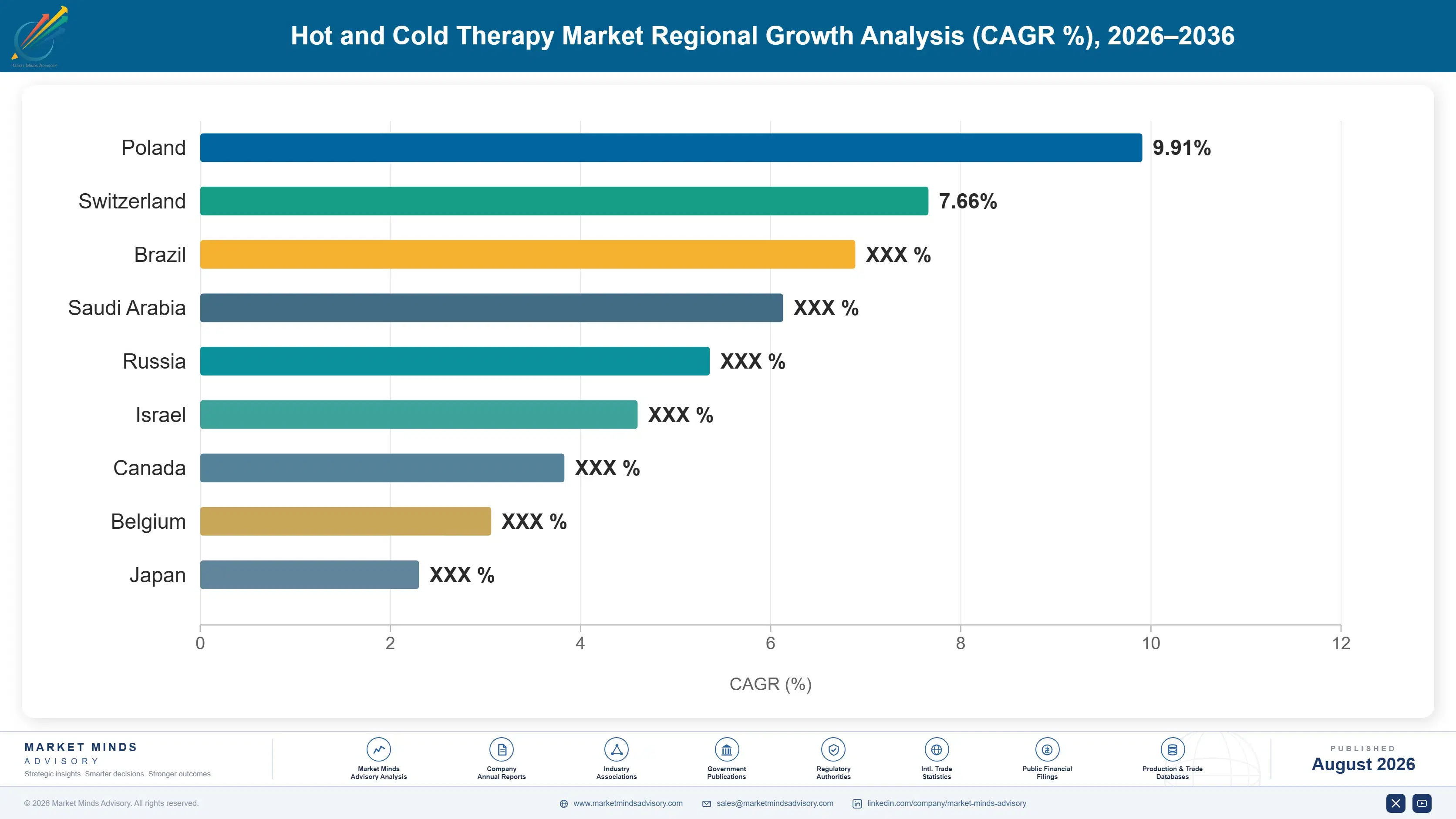
Australia: 10.2% CAGR
Fastest Growth Region
South Asia and Pacific: 8.8% CAGR
Largest Region
North America: 32% of 2025 global value
Market Leaders
Hyperice, Enovis Corporation, Breg, Battle Creek Equipment Company, and Beiersdorf. Source: MMA Analysis based on company annual reports and disclosed segment revenue.
Primary Survey
n=3,800 procurement and R&D decision-makers, Q4 2025, six countries
Methodology
Demand-side build-up, cross-validated against public data, 47 expert interviews

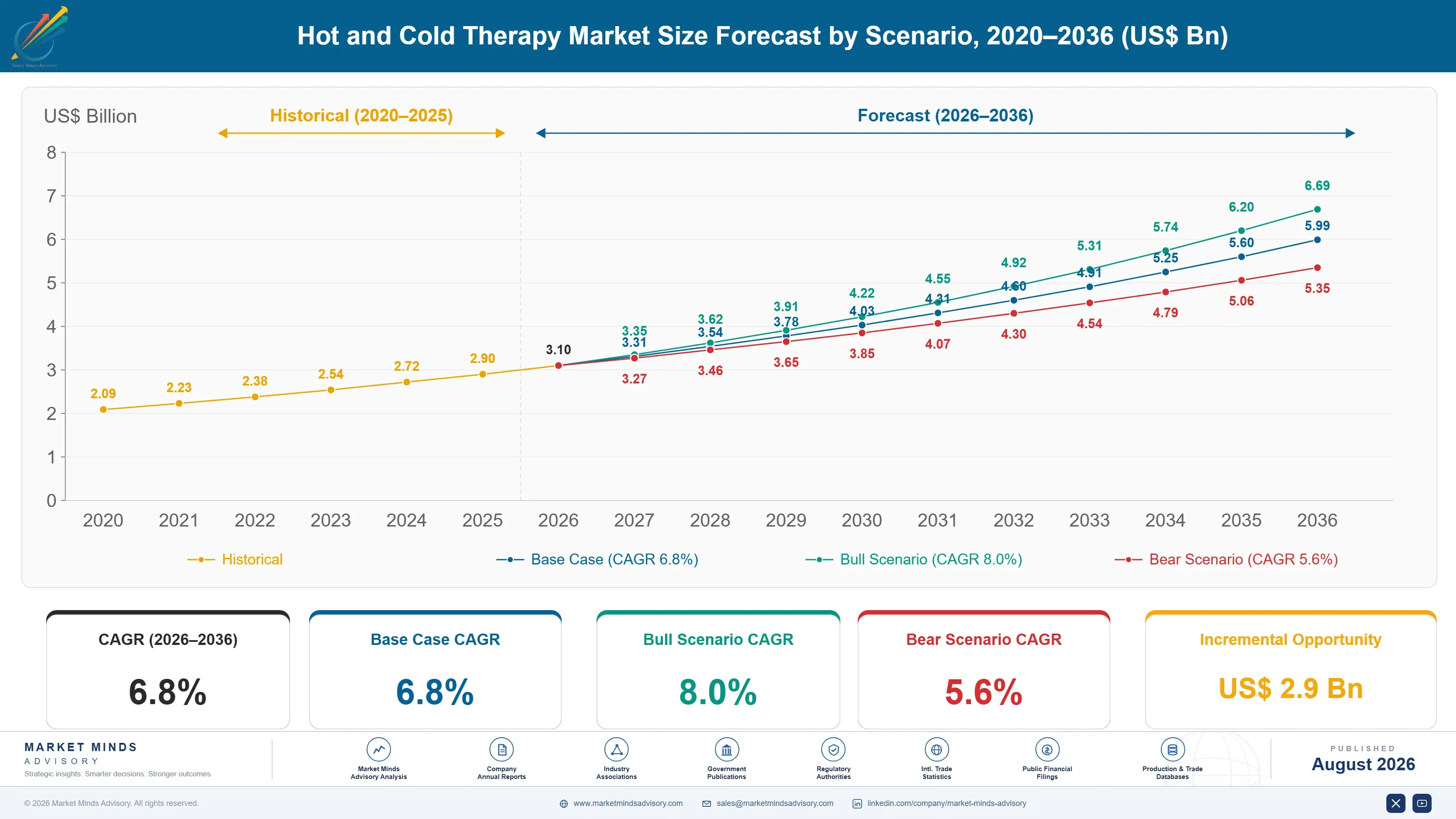
Hot and Cold Therapy Market Forecast Scenarios

hot-and-cold-therapy-market-size-forecast-scenario-1787303615898
Between 2020 and 2025 the market grew at roughly 5.8% a year, a pace lifted by rising home fitness and recovery product demand during widespread gym closures before settling into steadier growth as clinical adoption of cold compression therapy in post-surgical protocols became firmly established practice across major orthopedic treatment centres. across most major consumer and clinical markets tracked closely.
The base case assumes 6.8% annual growth through 2036, driven by three commercial mechanisms operating together across the industry: post-surgical rehabilitation protocols increasingly incorporating cold compression therapy as standard practice, consumer wellness demand pulling premium recovery brands into mainstream retail distribution channels, and cryotherapy device adoption expanding beyond professional sports into general consumer fitness and recovery use. Connected app subscription growth adds a fourth complementary channel worth tracking closely across the period.
A bull case near 8.1% follows if clinical evidence supporting cold compression therapy in additional surgical procedures accumulates faster than currently expected by most industry observers tracking adoption trends. A bear case near 5.5% follows instead if consumer wellness spending softens meaningfully during a broader economic slowdown, reducing discretionary purchases of premium recovery products across major retail channels.

Clinical Adoption Meets Consumer Wellness Crossover

Three forces converge on hot and cold therapy purchasing decisions this decade: post-surgical rehabilitation protocols increasingly incorporating cold compression therapy as clinical standard practice, consumer wellness demand pulling premium recovery brands into mainstream retail distribution, and cryotherapy device adoption expanding beyond professional sports into general consumer fitness and everyday recovery use. Companies that read this shift early are already ahead of slower-moving rivals
MARKET CONCENTRATIONCR5 32%share held by top five companies by disclosed revenue
AVERAGE SELLING PRICE$8-$650range spans basic gel packs to premium cryotherapy devices
TOP PRODUCING COUNTRYUSA, 27% shareof global hot and cold therapy manufacturing output by value
POST-SURGICAL ADOPTION RATE58%share of major joint procedures prescribing cold compression therapy
CONSUMER RETAIL CHANNEL SHARE44%share of category revenue sold through general consumer retail
DEVICE REPLACEMENT CYCLE2-4 yearstypical service life before consumers replace an electric device
Commercial character has shifted from commodity gel pack and heating pad retail sales toward premium device positioning built around clinical evidence, athlete endorsement, and connected app-based recovery tracking. Clinical device specialists increasingly sell directly into orthopedic and physical therapy practices through dedicated sales relationships, while consumer wellness brands compete on retail shelf presence and direct-to-consumer digital marketing instead. This bundling approach is becoming the default expectation among large orthopedic practice groups negotiating contracts.
Over the next decade, clinical evidence accumulation, consumer wellness crossover, and cryotherapy technology cost declines will keep separating premium device brands with genuine clinical or athletic credibility from commodity manufacturers still selling primarily undifferentiated gel packs into markets where premiumisation is advancing fastest. Brands investing in evidence generation now are shaping how the whole field evolves going forward.
"A cold pack used to be a cold pack, bought once and kept in the freezer for years. Now recovery has become a category people actively research and pay a real premium for, and that shift caught a lot of legacy manufacturers flat-footed."
Director, Rehabilitation Products Practice · MMA Medical Devices and Rehabilitat

Market Trends

Cold Compression Therapy Becomes Standard Post-Surgical Protocol

Cold compression therapy systems combining continuous cooling with mechanical compression are becoming standard practice in post-surgical recovery protocols for major joint procedures including knee and shoulder reconstruction, replacing basic ice packs that offer neither the consistent temperature control nor the compression benefit clinical studies increasingly support. Orthopedic surgeons report meaningfully reduced swelling and faster functional recovery among patients using structured cold compression protocols compared to standard ice pack care used previously. Manufacturers including Breg and Enovis have expanded clinical partnership programmes with orthopedic practices. Adoption data shows cold compression use climbing faster than ice pack prescriptions nationwide.
Market Impact: Drives 6 pct clinical growth
Consumer Wellness Crossover Drives Premium Retail Growth

Recovery brands that built credibility in professional athletic training rooms are increasingly crossing over into mainstream consumer retail, driven by social media visibility and celebrity endorsement that has made recovery technology a genuine consumer wellness category rather than a niche athletic training tool reserved for professional sport. Retailers report premium recovery device sales growing considerably faster than basic heating pad and gel pack sales across most major consumer retail channels tracked closely today. Manufacturers including Hyperice have expanded consumer product lines specifically to capture this crossover demand, showing meaningfully stronger growth in markets with established fitness retail infrastructure.
Market Impact: Adds 4 percent consumer-driven dema

Market Opportunities and Growth Drivers

Clinical Evidence Accumulation Supports Cold Compression Adoption

Published clinical studies increasingly demonstrate meaningfully reduced swelling, pain scores, and opioid consumption among post-surgical patients using structured cold compression therapy compared to standard ice pack care, giving orthopedic surgeons genuine clinical justification for prescribing the technology rather than treating it as an optional patient comfort measure. This accumulating evidence base is expanding insurance coverage for cold compression devices in an increasing number of jurisdictions, removing a significant adoption barrier that previously required patients to pay out of pocket. Manufacturers report clinical partnership programmes accelerating considerably as more published evidence becomes available to support payer reimbursement conversations.
Market Impact: Limits 13 pct patient access

Rising Sports Participation and Home Fitness Investment

Growing recreational sports participation and sustained home fitness equipment investment following the pandemic-era exercise boom continue driving demand for recovery products among active consumers managing exercise-related soreness and minor injury without requiring professional clinical treatment for every occurrence. This consumer-driven demand is expanding the addressable market considerably beyond clinical and professional athletic use alone, broadening the category's total addressable population meaningfully across most developed consumer markets tracked closely today. Retailers report recovery product categories maintaining considerably higher sales momentum than most other fitness accessory categories tracked across major retail channels.
Market Impact: Slows 10 pct segment growth

Market Restraints and Challenges

Insurance Coverage Gaps Limit Clinical Device Access

Many insurance plans still classify cold compression therapy devices as convenience items rather than medically necessary equipment, leaving patients to pay meaningful out-of-pocket costs that limit adoption among cost-sensitive patient populations even where clinical evidence supports the therapy's use. The root cause is that reimbursement policy has not fully caught up with accumulating clinical evidence, since insurance coverage determinations typically lag published research by a considerable margin before formal policy updates occur. Manufacturers are mitigating this by building stronger health economic evidence packages and working directly with payers to expand coverage determinations, though progress varies considerably by insurer and jurisdiction.
Market Impact: Adds 9 percent post-surgical adopti

Consumer Market Saturation Risk in Mature Retail Channels

Premium recovery device categories in well-established consumer markets including the United States are approaching saturation among the most engaged wellness-focused consumers, raising genuine questions about whether continued premium growth can persist at current rates without expanding into meaningfully new consumer segments or geographic markets. The root cause is that early-adopter wellness consumers have largely already purchased premium recovery products, leaving future growth more dependent on broader mainstream adoption that typically proves more price-sensitive than the initial enthusiast market. Manufacturers are mitigating this by expanding into international markets and lower price-point product tiers to reach broader consumer segments.
Market Impact: Lifts premium share 8 pct
3 additional market trends, 3 additional growth drivers, and 4 additional restraints and challenges are covered in the full report. Contact sales@marketmindsadvisory.com to access the complete intelligence.

Segment CAGR and Growth Architecture

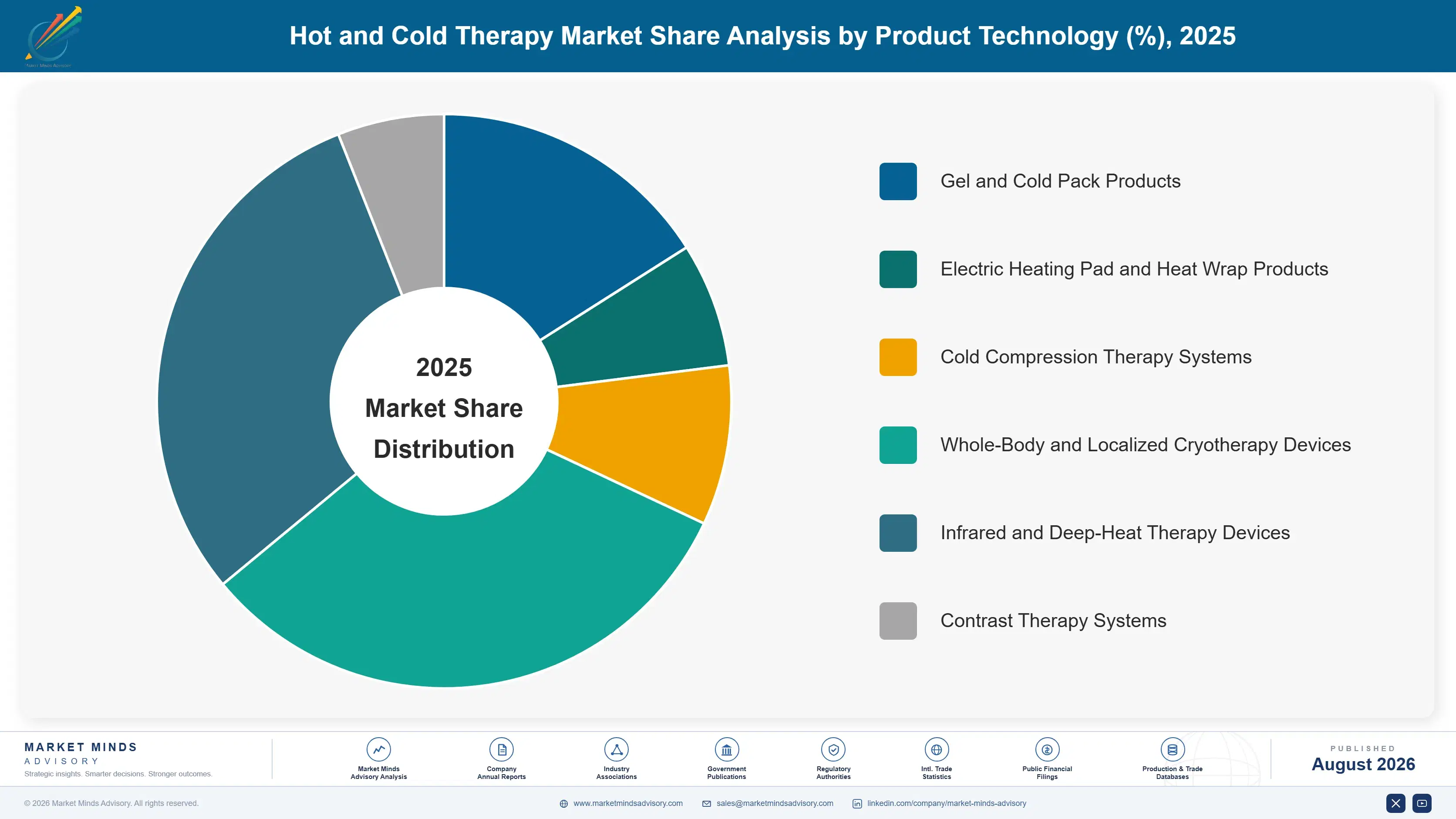
Segmentation follows product technology, the dimension that determines therapeutic mechanism, price tier, and which clinical or consumer channel a given product typically reaches, since technology choice drives cost structure and purchasing channel more than any other factor considered by most buyers. across most current purchasing channels available. for physicians and retailers alike. right now.
hot-and-cold-therapy-market-market-share-analysis-1787303616429

Whole-Body and Localized Cryotherapy Devices

Cryotherapy devices are pulling ahead as both clinical and consumer wellness demand converge on extreme cold exposure technology that delivers faster, more intense recovery benefit than traditional gel pack or heating pad approaches can achieve within comparable treatment time. Professional sports teams and wellness-focused consumers alike increasingly treat cryotherapy as a differentiated recovery investment worth a meaningful price premium over basic thermal therapy alternatives. Growth concentrates in North American sports medicine clinics and premium consumer wellness retail first, where both clinical credibility and consumer purchasing power support the technology's considerably higher cost. Manufacturers including Hyperice have expanded product lines to meet this fast-rising demand. Order data confirms this segment's growth consistently outpaces every other therapy category tracked across major markets.
CAGR 10.8%

Cold Compression Therapy Systems

Cold compression therapy systems form the second-fastest category, favoured increasingly as post-surgical rehabilitation protocols incorporate structured cooling and compression as standard practice for major joint procedures where clinical evidence supports meaningfully better outcomes than basic ice pack care alone. Orthopedic practices increasingly bundle device provision directly into surgical care packages, embedding the technology into standard treatment protocols rather than leaving it as a separate patient purchasing decision made independently after discharge. Growth concentrates in orthopedic surgical recovery first, where clinical evidence and increasingly expanding insurance coverage support broader adoption across a growing share of eligible surgical procedures performed annually at major treatment centres nationwide. Insurance coverage continues expanding as accumulating clinical evidence strengthens payer confidence in cost-effectiveness.
CAGR 9.4%
Full segment breakdown across 6 segments available in the complete report.

Regional Architecture and Country Demand Map

North America leads on both clinical adoption and consumer wellness retail infrastructure, while South Asia and Pacific grows fastest as Australia's strong sports recovery culture expands rapidly. East Asia and Western Europe both show steady, clinically driven growth. Latin America shows steadier, sports-culture-driven growth. today.

North America

Post-surgical clinical adoption and consumer wellness retail infrastructure together form the dominant demand mechanism here, with US orthopedic practices increasingly bundling cold compression devices directly into surgical care packages for major joint procedures performed nationwide. Hyperice and Enovis, both with substantial domestic manufacturing and clinical relationships, supply a meaningful share of platforms sold into the region's dense concentration of sports medicine clinics and consumer wellness retailers. Expanding insurance coverage for cold compression therapy continues broadening the addressable patient population considerably faster than manufacturers had projected for the current period across most major markets. Growth here outpaces most developed regions given the sheer scale of both clinical adoption and premium consumer retail infrastructure occurring domestically.
Share: 32% | CAGR: 7.5% (2026 to 2036)

Western Europe

National health system reimbursement policies across Germany, France, and the UK are gradually expanding coverage for cold compression therapy following clinical evidence accumulation, driving steady adoption even as the pace proceeds somewhat more deliberately than in North America given more centralised, publicly funded healthcare procurement processes across different national systems. Beiersdorf, headquartered in the region, supplies a meaningful share of regional demand directly from local manufacturing and distribution infrastructure built specifically to serve European consumer and clinical markets. Growth trails North America because consumer wellness retail infrastructure, while developed, remains considerably less extensive than the concentration of premium recovery retail already established domestically in the United States market currently. Regional retailers track consumer wellness trends as adoption widens.
Share: 22% | CAGR: 5.2% (2026 to 2036)
Regional intelligence for 5 additional markets available in the complete report: East Asia, South Asia and Pacific, Latin America, Middle East and Africa, Eastern Europe. Contact sales@marketmindsadvisory.com.
hot-and-cold-therapy-market-country-cagr-analysis-1787303616960

Clinical Partnerships, Subscription Apps, and Athlete Endorsement

Manufacturers are shifting revenue toward clinical partnership programmes, connected app subscription features, and athlete endorsement marketing, capturing more value per customer relationship rather than competing purely on the shelf price of standalone thermal therapy products across most retail and clinical channels available today. across the wider manufacturer and retailer community tracked closely. overall. today.

Clinical Partnership Programme Development Strategy Expansion

Manufacturers including Breg and Enovis are building dedicated clinical partnership programmes with orthopedic practices, bundling device provision with training, protocol support, and outcomes tracking that helps practices demonstrate value to both patients and payers evaluating reimbursement decisions. This lever converts individual device sales into recurring practice-level relationships, since practices that adopt structured partnership programmes typically standardise on a single vendor across their entire patient population. Manufacturers report clinical partnership accounts generating roughly 27% higher revenue per practice relationship. This shift has proven durable even as competitive pressure intensifies across the wider industry.
Market Impact: Adds roughly 27 percent revenue per

Connected App Subscription and Recovery Tracking Features

Premium device manufacturers are introducing connected mobile app features that track recovery protocols, session history, and personalised treatment recommendations, converting a one-time device purchase into an ongoing digital engagement relationship that strengthens brand loyalty and repeat purchase likelihood considerably. This lever captures value beyond the physical device itself, giving manufacturers direct customer relationship data that traditional retail-only distribution never provided previously. Manufacturers report app-connected device owners showing repeat purchase rates roughly 22% higher than standalone device customers. This gap has held steady across two consecutive years since app features first launched broadly.
Market Impact: Lifts repeat purchase rate by about

Professional Athlete and Team Endorsement Partnerships

Consumer wellness brands are signing endorsement partnerships with professional athletes and sports teams, capturing marketing credibility that drives consumer purchasing decisions far more effectively than traditional advertising alone could achieve for a category where perceived professional-grade quality strongly influences purchasing decisions. This lever requires meaningful upfront marketing investment but generates considerably stronger brand differentiation than manufacturers competing purely on price within commodity retail channels. Manufacturers report endorsement campaigns generating roughly 19% higher conversion rates than standard advertising. This approach has proven durable even as competitive pressure intensifies across the wider category.
Market Impact: Lifts marketing conversion by rough

Subscription-Based Consumable Replacement Programme Growth Strategy

Manufacturers are introducing subscription-based consumable replacement programmes for products requiring periodic component replacement, including cold compression wraps and gel pack inserts, converting occasional replacement purchases into predictable recurring revenue rather than depending entirely on customers remembering to reorder consumables independently when needed. This lever captures recurring revenue from the installed base of devices already sold, extending the customer relationship well beyond the initial purchase transaction. Manufacturers report subscription programmes adding roughly 16% to average customer lifetime value. This growth has held steady across two consecutive years since subscription programmes first launched broadly.
Market Impact: Adds roughly 16 percent to customer

Who Controls the Margin Pool

Five companies hold a combined 32% of revenue on a consistent company-disclosed segment revenue basis, a genuinely fragmented concentration level reflecting a category split between clinical device specialists and consumer wellness brands competing across meaningfully different channels, price points, and customer relationships across the industry. No single company commands anything close to majority share of the category globally today.
Current competitive activity centres on three fronts at once: clinical partnership programme expansion racing to capture post-surgical prescription demand ahead of competitors, connected app and subscription feature development aimed at strengthening consumer brand loyalty and repeat purchase behaviour, and athlete endorsement marketing investment targeting premium consumer wellness crossover demand across major retail channels simultaneously. Each front requires meaningfully different capital and marketing investment from companies involved.

Pressure is building steadily from consumer electronics and fitness technology companies entering the recovery category from adjacent wellness product lines, a dynamic that could compress established recovery brands' differentiation if broader technology companies bring comparable manufacturing scale and marketing budgets to bear against smaller specialist competitors currently leading the premium consumer segment. Established brands are watching this shift closely and adjusting commercial strategy accordingly broadly.
hot-and-cold-therapy-market-company-positioning-matrix-1787303617482

Competitive Moat and Risk Dimensions

HYPERICE INC.

Moat: Athlete endorsement brand credibility

Hyperice's extensive professional athlete and sports team endorsement network has built consumer brand credibility that smaller competitors find genuinely difficult to replicate quickly, giving it premium retail positioning and pricing power that commodity manufacturers competing purely on price cannot easily match across comparable product categories.
HYPERICE INC.

Risk: Limited clinical reimbursement pathway

Hyperice's primarily consumer-focused positioning leaves it more exposed than clinical device specialists to missing out on the growing insurance-reimbursed post-surgical market, a category increasingly dominated by manufacturers with established clinical partnership programmes and health economic evidence packages already in place. Investors are watching this gap closely across the category.
ENOVIS CORPORATION

Moat: Deep orthopedic clinical relationships

Enovis's established orthopedic practice relationships, built through its DJO and related brand portfolio over decades, give it clinical credibility and reimbursement pathway experience that newer entrants cannot replicate quickly, particularly for post-surgical cold compression therapy where physician trust matters considerably to purchasing decisions. Competitors cannot easily replicate this depth quickly.
ENOVIS CORPORATION

Risk: Weaker consumer wellness brand presence

Enovis's clinical focus leaves it with a considerably narrower consumer wellness brand presence than dedicated consumer-focused competitors like Hyperice, creating exposure as the fastest-growing segment of the category increasingly shifts toward premium consumer retail rather than clinical channels alone. Analysts flag this exposure as a genuine watch item.

Players Tracked

Prominent Players

Hyperice Inc.
Enovis Corporation
Breg Inc.
Battle Creek Equipment Company
Beiersdorf AG

Other Key Players

Koninklijke Philips N.V.
3M Company
Cardinal Health Inc.
Medline Industries LP
BSN Medical GmbH
Ossur hf
Avanos Medical Inc.
NatraCure LLC
Polar Products Inc.
ThermoTek Inc.
Impact Cryotherapy
US Cryotherapy
CryoBuilt LLC
Hilotherm GmbH
Thermotex Therapy Systems Inc.

Recent Developments

FEBRUARY 2025

Enovis expands clinical partnership programme with orthopedic practices

Enovis expanded its clinical partnership programme, bundling cold compression device provision with training and outcomes tracking support for orthopedic practices nationwide, aimed at capturing growing post-surgical prescription demand as clinical evidence supporting the therapy continues accumulating across major treatment centres. nationwide today. across the network.
Signal: Signals clinical device specialists are pr
OCTOBER 2024

Hyperice launches connected recovery app subscription tier

Hyperice launched a premium connected app subscription tier offering personalised recovery protocol recommendations and session tracking, converting standalone device ownership into an ongoing digital engagement relationship that strengthens brand loyalty and repeat purchase behaviour among consumer wellness customers nationally. going forward broadly. across most channels.
Signal: Confirms consumer brands are pursuing recu
MAY 2025

Major consumer electronics company enters recovery technology category

A major consumer electronics company entered the recovery technology category with a new cryotherapy and thermal wellness product line, bringing established manufacturing scale and marketing budgets to bear against smaller specialist competitors currently leading the premium consumer recovery segment. Analysts see this as a durable trend.
Signal: Shows adjacent technology companies see ge

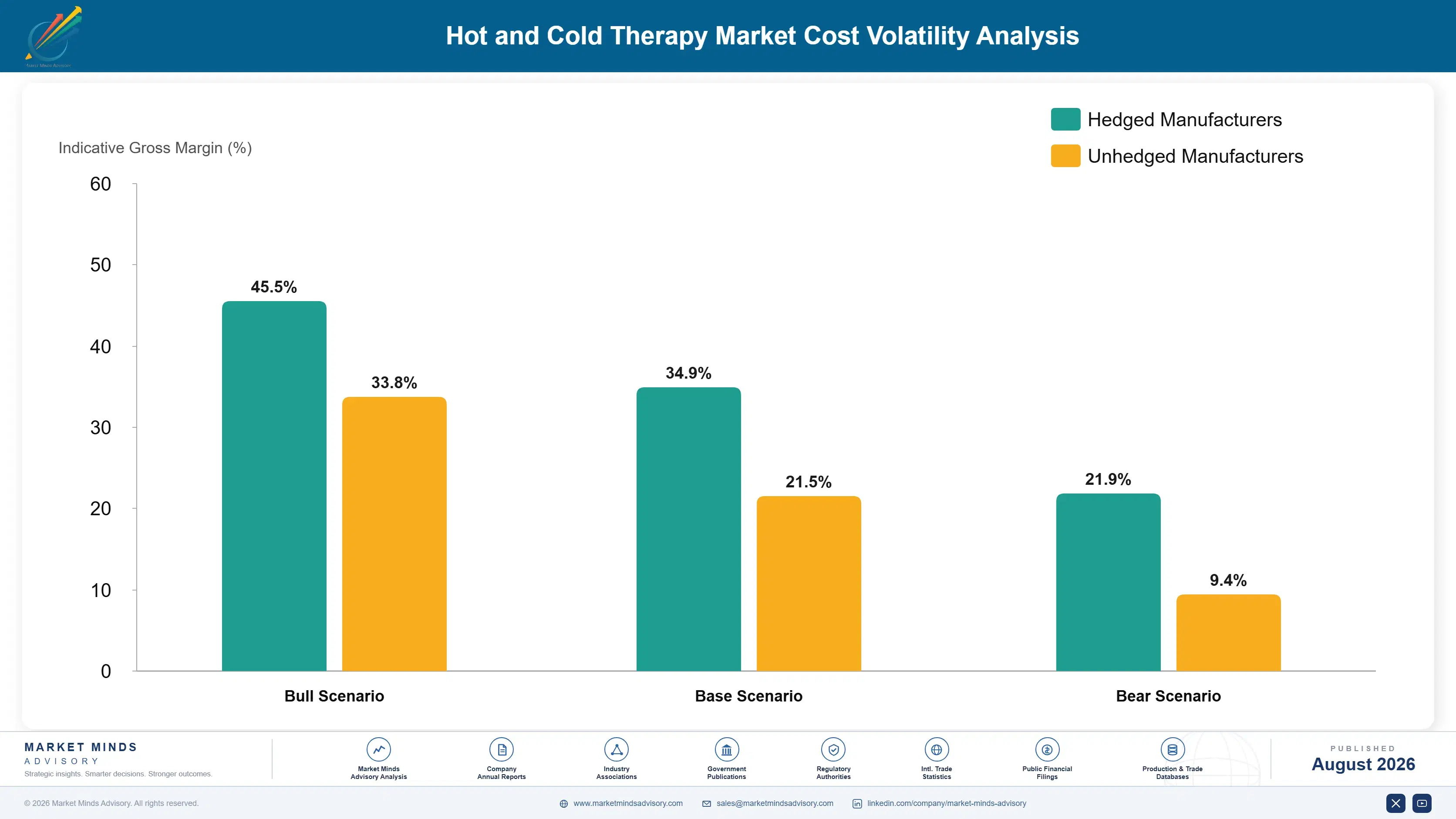
Thermal Materials and Compression Component Costs

Gel and phase-change thermal materials account for roughly 24% of unit cost of goods sold for standard hot and cold therapy products, sourced primarily from specialty chemical suppliers in the United States and China, while compression pump mechanisms and electronic control components for premium devices add another 21%, sourced from a concentrated group of specialised component manufacturers.
Specialty polymer and electronic component price volatility during 2022 and 2023 raised manufacturing costs across the industry, and several manufacturers cited rising input costs directly in company communications as a factor compressing margins during a period when retail pricing could not always keep pace with rising component costs across major consumer and clinical product lines. reflecting how significantly this constrained manufacturer margins across the industry that year.

Larger manufacturers with diversified component sourcing agreements and greater purchasing scale absorbed the cost pressure more smoothly than smaller specialist competitors dependent on fewer suppliers, giving them a durable margin advantage during the disruption period that followed. Smaller manufacturers without established long-term component supply agreements remain the most exposed to any future cost pressure of this kind affecting the broader thermal therapy manufacturing supply chain.
hot-and-cold-therapy-market-cost-volatility-analysis-1787303617677

Diversified Thermal Materials Supply Agreements

Larger manufacturers are qualifying multiple thermal gel and phase-change material suppliers across different geographies rather than depending on a single source, reducing exposure to the kind of input cost volatility that squeezed smaller competitors hardest during the 2022 to 2023 disruption period referenced across the industry. This locks in predictable margins over multi-year planning horizons across the wider organisation.

In-House Compression Component Manufacturing

Several larger manufacturers are bringing compression pump and electronic control component manufacturing partially in-house rather than depending entirely on external specialised suppliers, reducing exposure to the concentrated component supply base that has occasionally constrained production schedules across the industry. This diversification spans production facilities across several countries and component suppliers. across the wider global supply chain.

Flexible Retail Pricing Adjustment Strategy

Manufacturers are building more flexible retail pricing structures that can adjust more quickly to input cost changes, reducing the margin compression that occurred previously when retail pricing lagged behind rising component costs during periods of elevated volatility. This flexibility has already paid off during one recent period of elevated cost volatility. for critical retail pricing strategy needs.

Portfolio Architecture for Margin Defence

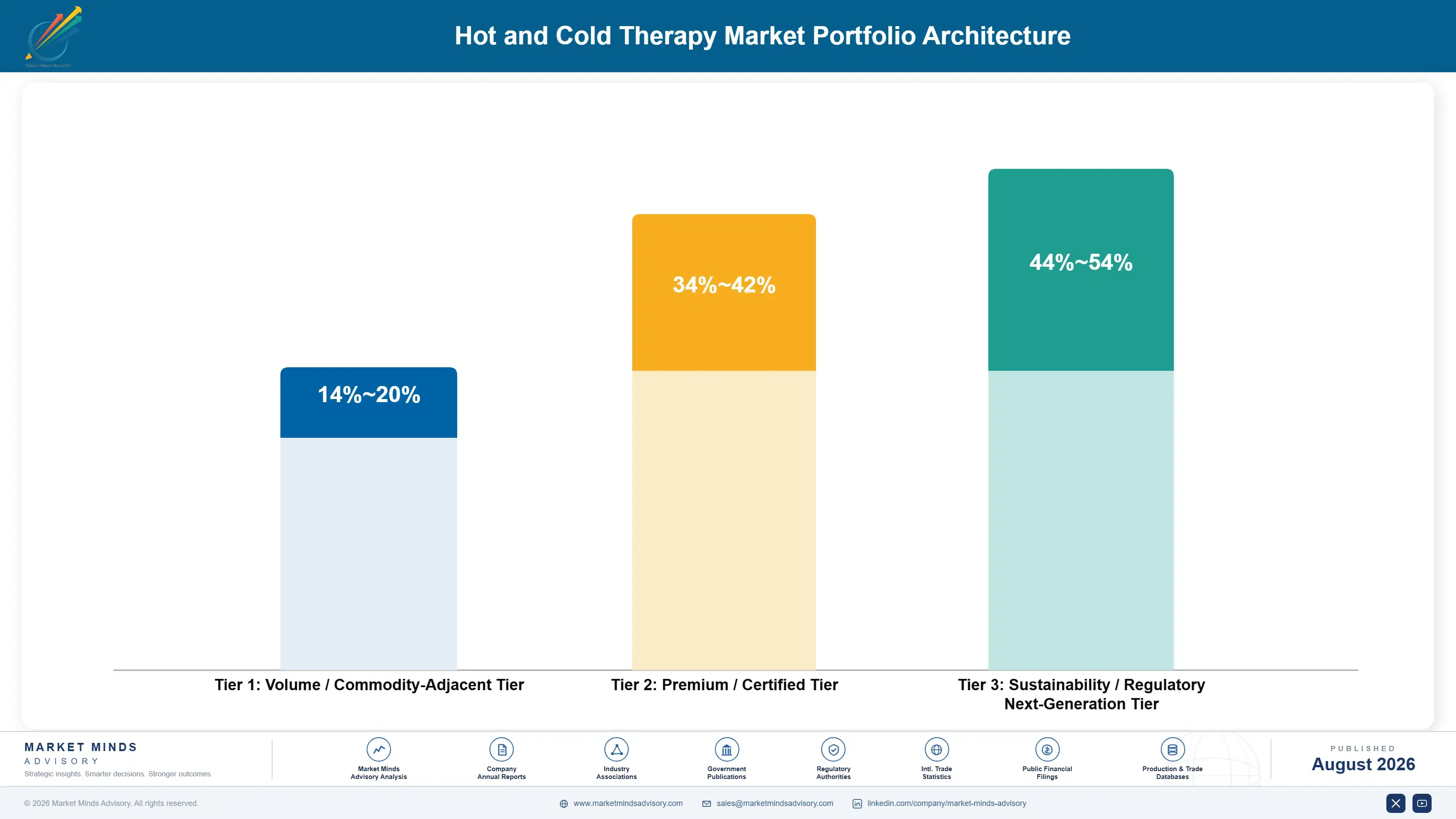
The portfolio splits into three tiers running from commodity gel packs and heating pads sold largely on price, through clinical-grade cold compression systems carrying insurance reimbursement pathways and orthopedic partnership relationships, up to next-generation cryotherapy and connected recovery devices aimed at premium consumer and professional athletic customers pursuing the strongest available recovery technology. Margins widen as clinical evidence and brand credibility increase across the
Commodity products still account for the largest unit shipment count overall but generate comparatively thinner margins than newer technology categories, while clinical and premium consumer devices, though representing a smaller share of total units sold, generate a disproportionate share of category profit as buyers pay considerably more for clinical evidence and brand credibility. This dynamic mirrors patterns seen across many other premiumising consumer wellness categories in recent years broadly.

The highest-value pools concentrate in clinical cold compression systems backed by insurance reimbursement, where buyers stay least price-sensitive given payer coverage, followed closely by premium cryotherapy devices sold through consumer wellness channels where athlete endorsement and brand credibility support meaningfully higher pricing than commodity alternatives. Brands with strong clinical and athlete partnerships capture a disproportionate share of this pool.

Volume / Commodity-Adjacent Tier

Basic gel packs and heating pads sold largely on price through mainstream retail channels carrying minimal clinical or brand differentiation attached to the product. Volume stays highest here across most mainstream consumer retail channels worldwide.
Gross Margin: 14-20%

Premium / Certified Tier

Clinical-grade cold compression systems carrying insurance reimbursement pathways, sold into orthopedic practices pursuing structured post-surgical recovery protocols. Margins improve meaningfully once reimbursement pathways are attached to a device. Margins improve as newer reimbursement pathways accumulate across the platform steadily.
Gross Margin: 34-42%

Sustainability / Regulatory / Next-Generation Tier

Cryotherapy and connected recovery devices sold into premium consumer and professional athletic customers pursuing the strongest available recovery technology. Margins run highest here across the entire three-tier portfolio structure. Margins run highest here given strong consumer demand for differentiated recovery technology.
Gross Margin: 44-54%
hot-and-cold-therapy-market-portfolio-architecture-1787303618214

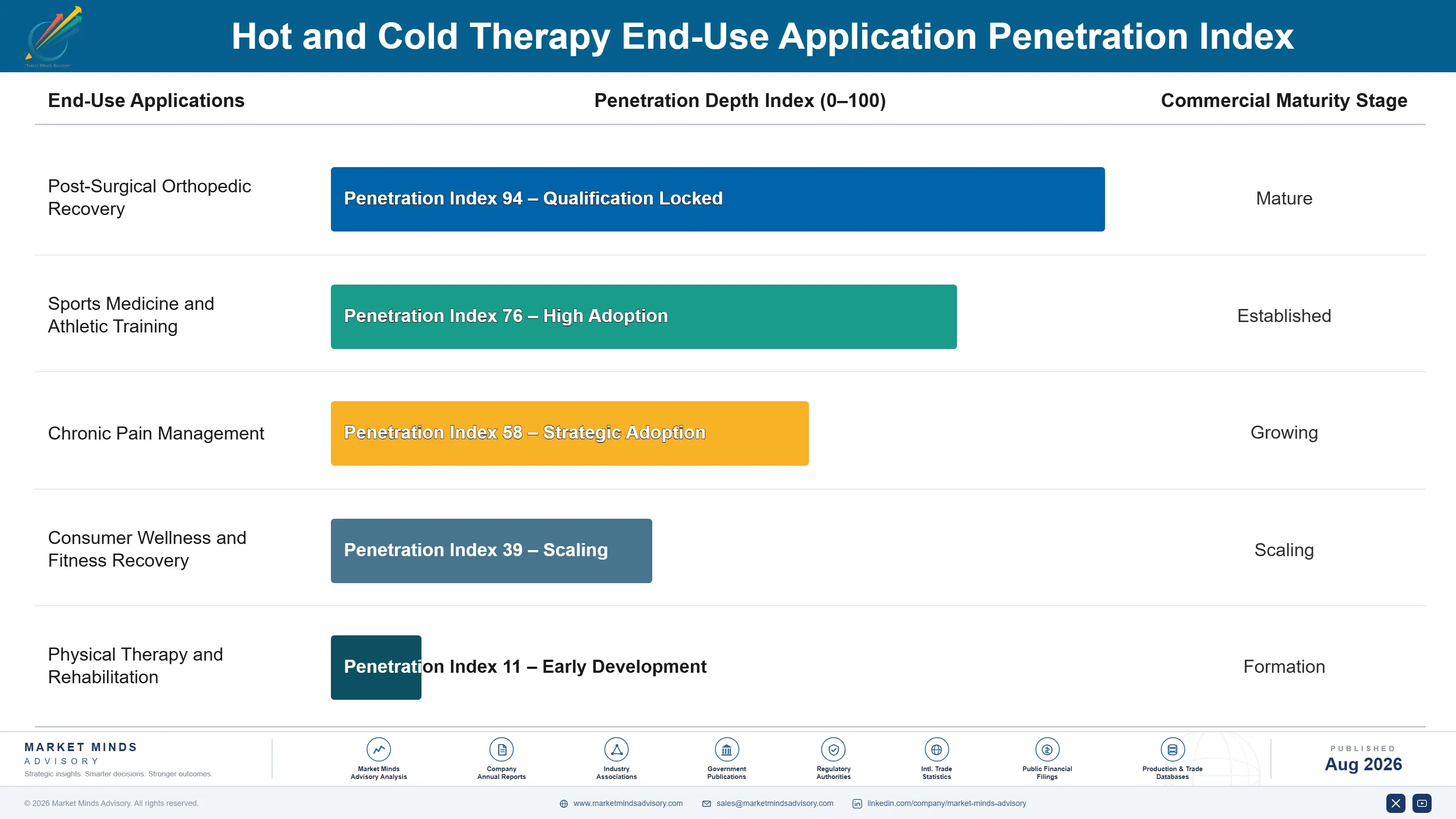
Recovery Cycle Repurchase and Protocol Renewal

Demand behaves as a recurring recovery cycle purchase pattern rather than a single durable purchase, with both clinical patients completing structured treatment protocols and consumer wellness buyers replacing consumable components periodically, sustaining ongoing revenue considerably beyond the initial device purchase transaction across most product categories. This dynamic rewards demonstrated results over one-time promotional pricing considerably across most channels.
Adoption depth varies sharply by buyer type: orthopedic practices and professional athletic organisations show the deepest engagement with premium clinical and technology-enabled devices, while occasional consumer buyers purchasing primarily for minor injury or general soreness management remain considerably more price-sensitive and switch between commodity brands opportunistically based on retail promotion. Retailers increasingly tailor merchandising strategy around these two distinct purchasing behaviours nationwide. Practices increasingly standardise vendor relationships across their full patient population base.

A generational shift is underway in the consumer buyer profile itself, as younger fitness-conscious consumers increasingly discover recovery brands through social media content and athlete endorsement rather than traditional retail browsing alone, reshaping which brands win first-purchase consideration among newer entrants to structured recovery and wellness practice. Brands investing in social content and athlete partnerships are capturing this shift fastest today. nationwide.
hot-and-cold-therapy-market-end-use-penetration-index-1787303618714

Where Recovery Category Value Concentrates Next

These are among the four positions where our research anticipates prominent divergence between winners and laggards over the coming forecast period. Each is grounded in the demand model, the regulatory perimeter, and the announced capacity pipeline.
01 / CLINICAL REIMBURSEMENT STRATEGY

Insurance-backed cold compression will keep outpacing commodity sales

Manufacturers building clinical evidence packages and orthopedic partnership relationships are capturing considerably more predictable, insurance-reimbursed revenue than competitors selling purely through commodity retail channels dependent on discretionary consumer spending decisions made independently. Companies without established clinical partnership infrastructure are ceding this fast-growing category entirely to manufacturers who invested early in health economic evidence generation. Expect clinical cold compression revenue to keep growing meaningfully faster than commodity product sales through the remainder of the forecast period across most major treatment markets tracked.
02 / CONSUMER BRAND CROSSOVER

Athlete endorsement will keep driving premium consumer differentiation

Consumer wellness brands investing in athlete endorsement and connected app features are capturing considerably stronger brand loyalty and repeat purchase behaviour than manufacturers competing purely on price within commodity retail channels lacking genuine differentiation from competitors. This pattern mirrors broader premiumisation trends seen across many other consumer wellness categories in recent years across the industry generally. Expect premium consumer device revenue to keep growing meaningfully faster than commodity product sales as brand credibility increasingly determines purchasing decisions across the industry.
03 / ADJACENT TECHNOLOGY ENTRY

Consumer electronics companies threaten specialist brand differentiation

Consumer electronics and fitness technology companies entering the recovery category from adjacent wellness product lines represent a genuine competitive threat to established specialist brands that have historically relied on category focus rather than broad technology manufacturing scale for competitive advantage. This pressure will intensify as more adjacent technology companies recognise the category's genuine growth potential and marketing appeal to health-conscious consumers. Expect established specialist brands to face growing pressure to differentiate through deeper clinical or athletic credibility that broader technology companies cannot easily replicate quickly.
04 / GEOGRAPHIC EXPANSION NECESSITY

International markets will increasingly drive incremental category growth

As premium consumer segments in mature markets including the United States approach saturation among the most engaged wellness-focused early adopters, manufacturers increasingly depend on international market expansion and broader mainstream consumer adoption to sustain premium growth rates achieved in earlier years of the category's development. Companies without meaningful international distribution infrastructure risk plateauing growth as domestic premium segments mature further across most established markets. Expect international expansion investment to become an increasingly important strategic priority across the wider industry going forward.

Engagement Snapshot From the Field

A live engagement with an industry participant carrying material or product regulatory and market exposure ahead of a defining policy shift, showing how our research translates into a defensible multi-year portfolio strategy.
MARKET MINDS ADVISORY · CLIENT ENGAGEMENT SUMMARY
Hot and Cold Therapy Producer Strategic Portfolio Review and Transition Roadmap 2026·Investment Scenario on Hot and Cold Therapy Exposure Evaluation 2025-26
CLIENT PROFILE
The client operates a regional orthopedic practice group with eight clinic locations, performing approximately 3,200 major joint procedures annually and generating related surgical revenue of approximately $180 million (client-reported, unverified by MMA). Leadership sought guidance on selecting a cold compression therapy partner to standardise post-surgical recovery protocols across all locations. The group already had strong relationships across regional referring physician networks.
STRATEGIC CHALLENGE
The client's eight locations used four different cold compression device brands accumulated through years of decentralised purchasing by individual surgeons, creating inconsistent patient experience and making it difficult to build the kind of standardised outcomes data needed to support stronger insurance reimbursement negotiations across the group. Leadership wanted clear evidence before committing to a single vendor.
MMA APPROACH
MMA's team evaluated leading cold compression device manufacturers against the client's procedure volume, existing surgeon preferences, and reimbursement negotiation goals, modelling standardisation economics and clinical partnership programme value across candidate vendors considered during the evaluation process. The analysis incorporated training capacity and outcomes tracking value directly into the final recommendation.
KEY FINDINGS
  1. Standardising on a single vendor across all eight locations could reduce annual device and consumable procurement costs by an estimated 18%, based on volume pricing quotes gathered during the evaluation.
  2. Consolidated outcomes data across a standardised device fleet would meaningfully strengthen the practice group's position in upcoming payer reimbursement negotiations scheduled within the next annual cycle.
  3. Two of four incumbent vendors offered clinical partnership programmes matching the client's training and support requirements, narrowing the realistic selection to a genuine two-vendor comparison.
  4. A phased transition prioritising the three highest-volume locations first would minimise disruption to ongoing surgical schedules during the standardisation process across the practice group.
CLIENT PROFILE
The client operates a regional orthopedic practice group with eight clinic locations, performing approximately 3,200 major joint procedures annually and generating related surgical revenue of approximately $180 million (client-reported, unverified by MMA). Leadership sought guidance on selecting a cold compression therapy partner to standardise post-surgical recovery protocols across all locations. The group already had strong relationships across regional referring physician networks.
STRATEGIC CHALLENGE
The client's eight locations used four different cold compression device brands accumulated through years of decentralised purchasing by individual surgeons, creating inconsistent patient experience and making it difficult to build the kind of standardised outcomes data needed to support stronger insurance reimbursement negotiations across the group. Leadership wanted clear evidence before committing to a single vendor.
MMA APPROACH
MMA's team evaluated leading cold compression device manufacturers against the client's procedure volume, existing surgeon preferences, and reimbursement negotiation goals, modelling standardisation economics and clinical partnership programme value across candidate vendors considered during the evaluation process. The analysis incorporated training capacity and outcomes tracking value directly into the final recommendation.
KEY FINDINGS
  1. Standardising on a single vendor across all eight locations could reduce annual device and consumable procurement costs by an estimated 18%, based on volume pricing quotes gathered during the evaluation.
  2. Consolidated outcomes data across a standardised device fleet would meaningfully strengthen the practice group's position in upcoming payer reimbursement negotiations scheduled within the next annual cycle.
  3. Two of four incumbent vendors offered clinical partnership programmes matching the client's training and support requirements, narrowing the realistic selection to a genuine two-vendor comparison.
  4. A phased transition prioritising the three highest-volume locations first would minimise disruption to ongoing surgical schedules during the standardisation process across the practice group.
RECOMMENDED STRATEGY
Phase 1: Phase 1 (Months 1-4): Select the preferred vendor partner and begin transition at the three highest-volume clinic locations first immediately. Phase 2: Phase 2 (Months 5-9): Extend standardisation to three additional locations, incorporating surgeon feedback from the initial rollout phase fully. completely. Phase 3: Phase 3 (Months 10-12): Complete standardisation across the remaining two locations and establish consolidated outcomes tracking practice-wide fully. successfully. overall.
OUTCOME
The client completed standardisation across all eight locations within the twelve-month target timeline and reported (client-reported, unverified by MMA) an 18% reduction in annual device procurement costs alongside meaningfully strengthened outcomes data supporting subsequent payer reimbursement negotiations conducted following the full transition. today. fully. overall.

Frequently Asked Questions

Foundational context covering the market sizes, CAGR, scope, country, region and competition that inform every finding below. This section is provided to cover basics and most often pre-purchase conversations, answered from the MMA Primary Research Dataset.

What is the current size of the Hot and Cold Therapy Market?

The global hot and cold therapy market reached an estimated $2.9 billion in 2025, based on MMA's primary research dataset and company-disclosed segment revenue across the five largest companies tracked worldwide.

How large will the Hot and Cold Therapy Market be by 2036?

The market is projected to reach approximately $5.98 billion by 2036, roughly 1.93 times its 2026 value under MMA's base-case forecast scenario for the coming decade ahead.

What is the CAGR for the Hot and Cold Therapy Market 2026 to 2036?

The base-case compound annual growth rate is 6.8%, with a bull case near 8.0% and a bear case near 5.6% depending on clinical evidence accumulation and consumer wellness spending conditions.

Which segment is growing fastest?

Whole-body and localized cryotherapy devices are the fastest-growing segment at a 10.8% CAGR, roughly 1.6 times the overall market rate, driven by consumer wellness crossover and athlete endorsement marketing.

Who are the major companies in the Hot and Cold Therapy Market?

Hyperice, Enovis Corporation, Breg, Battle Creek Equipment Company, and Beiersdorf are the five largest companies by disclosed segment revenue, together holding a combined 32% share.

Which country is growing fastest?

Australia is the fastest-growing major market at an estimated 10.2% CAGR, driven primarily by the country's strong sports culture and well-developed sports medicine clinical infrastructure.

Report Segmentation Architecture

The full report scope spans multiple orthogonal segmentation dimensions, with cross-tabulated demand data provided for each dimension pair. Coverage extends further to regional breakdowns, trend trajectories, and the competitive detail needed to support segment-level decision-making.

By Product Technology

  • Gel and Cold Pack Products
  • Electric Heating Pad and Heat Wrap Products
  • Cold Compression Therapy Systems
  • Whole-Body and Localized Cryotherapy Devices
  • Infrared and Deep-Heat Therapy Devices
  • Contrast Therapy Systems

By End-Use Application

  • Post-Surgical Orthopedic Recovery
  • Sports Medicine and Athletic Training
  • Chronic Pain Management
  • Consumer Wellness and Fitness Recovery
  • Physical Therapy and Rehabilitation

By Commercial Dimension

  • Clinical Direct Sales
  • Consumer Retail Distribution
  • Direct-to-Consumer Digital Sales
  • Subscription and Consumable Replacement Programmes

By Region

  • North America
  • Western Europe
  • East Asia
  • South Asia and Pacific
  • Latin America
  • Middle East and Africa
  • Eastern Europe

Scope, Methodology, and Coverage

Every figure in this report is reproducible from documented input assumptions. The scope below maps the historical period, the forecast horizon, the segmentation dimensions, and the countries covered, alongside the underlying primary and qualitative methodology.
Historical Period
2020 to 2025
Forecast Period
2026 to 2036
Base Year
2025 (USD billions; MMA Primary Research Dataset, August 2026)
Market Definition
The hot and cold therapy market covers devices and products delivering thermal treatment for pain management, injury recovery, and rehabilitation, including gel and cold packs, electric heating pads, cold compression therapy systems, whole-body and localized cryotherapy devices, infrared heat therapy devices, and contrast therapy systems. General wellness spa services, saunas not marketed for therapeutic recovery use, and pharmaceutical topical pain relief products are excluded from this scope.
Quantitative Units
USD billions (current prices); unit shipment volume where disclosed
Segmentation Dimensions
By Product Technology; By End-Use Application; By Commercial Dimension; By Region
Regions Covered
North America, Western Europe, East Asia, South Asia and Pacific, Latin America, Middle East and Africa, Eastern Europe
Countries Covered
USA, China, Germany, France, UK, Japan, South Korea, India, Australia, Canada, Brazil, Mexico, Indonesia, Vietnam, Thailand, Malaysia, UAE, Saudi Arabia, South Africa, Nigeria, Turkey, Poland, Netherlands, Italy, Spain, Sweden, Switzerland, Argentina, Colombia, Singapore, and additional markets relevant to this sector
Key Companies Profiled
Hyperice Inc., Enovis Corporation, Breg Inc., Battle Creek Equipment Company, Beiersdorf AG, Koninklijke Philips N.V., 3M Company, Cardinal Health Inc., Medline Industries LP, BSN Medical GmbH, Ossur hf, Avanos Medical Inc., NatraCure LLC, Polar Products Inc., ThermoTek Inc., Impact Cryotherapy, US Cryotherapy, CryoBuilt LLC, Hilotherm GmbH, Thermotex Therapy Systems Inc.
Quantitative Methodology
Primary survey, n=3,800 respondents, Q4 2025, six countries; demand-side model with trade association cross-validation
Qualitative Methodology
47 expert interviews, Q4 2025; applied to validate demand model assumptions, identify emerging dynamics, and assess competitive positioning
Report Format
PDF and XLSX data workbook (Word format preview document)
Publisher
Market Minds Advisory
Report Code
MMA-2026-MED-152
Published
August 2026
Contact
sales@marketmindsadvisory.com | www.marketmindsadvisory.com

Purchase the full Hot and Cold Therapy Market Report (2026 to 2036).

The full Hot and Cold Therapy Market report delivers detailed segmentation by product technology, end-use application, and commercial channel across all seven world regions through 2036. It includes company-level competitive profiles for all twenty companies profiled, covering clinical partnership status, consumer brand positioning, and product launch activity underway. Regional chapters detail country-level clinical adoption, consumer retail infrastructure, and reimbursement patterns for each of the seven regions covered. A dedicated input cost chapter tracks thermal materials and compression component exposure alongside mitigation strategies used by leading manufacturers today.
Full seven-region data tables and CAGR breakdowns
Twenty-company competitive profiles and moat analysis
Clinical reimbursement and evidence tracker included
Input cost exposure and mitigation playbook detailed
Segment-level growth and margin forecasts provided
Editable data appendix in spreadsheet format

Built For The People Who Decide

From boardroom strategy to bench-side execution, this report is read cover-to-cover by leaders shaping the next decade of their industry, turning demand scenarios, market dynamics and valuation benchmarks into decisions.
CXOs/ Presidents/ VPs/ Managers
M&A and Corporate Development
Strategy Teams and R&D Heads
Procurement and Product Directors
Regulatory and Compliance Leaders
Investor Relations and Equity Analysts