Market Minds Advisory
HIV Diagnostics Market

HIV Diagnostics Market: Donor Funding Exposure, Viral Load Scale-Up, and Injectable Prevention Testing

Roughly six in ten HIV tests worldwide are paid for by donors rather than health systems, which makes the largest risk in this market a decision taken in a treasury department rather than anything clinical.

Lead Analyst

Alice Ballenger

Published

September 2026

Make Smarter Decisions with Customized Research Insights

Request a free sample report and evaluate market opportunities, growth trends, and competitive dynamics relevant to your business needs.

2025 MARKET VALUE$3.6BMarket Size 2025
2036 FORECAST VALUE$7.4BBase Case , 2026 to 2036
CAGR 2026 TO 20366.8 %Bull 8.0% / Bear 5.6%
INCREMENTAL OPPORTUNITY$3.6BNet 10- year value creation
EXPANSION MULTIPLE1.93x2036 value over 2026 base
Strategic Levers
M&A Pipeline
Regional Outlook
Country Rankings
Competitive Intelligence
Segmental Deep-dive
Call-Us : 91 93563 13602

Executive Snapshot and Market Trajectory

Long-acting injectable prevention has created a testing requirement nobody planned for. Every injection of cabotegravir or lenacapavir needs a confirmed negative result beforehand, because breakthrough infection under partial drug cover produces resistance, so every dose consumes an assay. Prevention has become a diagnostics business.
Self-testing kits compound at 10.2%, a full 1.50x the market rate, because the remaining undiagnosed population is precisely the group that will not walk into a clinic. Middle East and Africa holds the largest share at 26%, far outside the band MMA normally applies, and the reason is straightforward: sub-Saharan Africa carries roughly two thirds of everyone living with HIV worldwide. Losing a placement round costs a country for years.
Concentration sits at 68%, with Abbott Laboratories and Roche Diagnostics leading through installed molecular platforms placed largely under donor programmes. Around 62% of global testing volume is donor-funded, and the 2025 restructuring of United States foreign assistance disrupted procurement across several high-burden countries. The exposure here is fiscal rather than clinical or technical. Instrument placement rather than assay pricing is where durable value sits. The science is settled here and the financing plainly is not.
Market Definition
This market covers diagnostic tests used to detect HIV infection, confirm diagnosis and monitor treatment, spanning rapid diagnostic screening tests, laboratory immunoassays, molecular viral load assays, early infant diagnosis nucleic acid tests, self-testing kits and drug resistance genotyping assays. Measurement covers assay and kit revenue plus laboratory testing service revenue. Antiretroviral therapy, CD4 enumeration instruments sold independently, sample collection consumables sold separately, and HIV vaccine or cure research reagents are excluded.
Base Year Value
$3.6B in 2025 (MMA Primary Research Dataset, August 2026)
Forecast Period
2026 to 2036, eleven discrete annual values
CAGR
6.8% base case. Bull 8.0%. Bear 5.6%.
Fastest Growth Segment
HIV Self-Testing Kits: 10.2% CAGR
Fastest Growth Country
India: 10.4% CAGR
Fastest Growth Region
South Asia and Pacific: 9.0% CAGR
Largest Region
Middle East and Africa: 26% of 2025 global value
Market Leaders
Abbott Laboratories, Roche Diagnostics, Danaher, Hologic, and bioMérieux. Source: MMA Primary Research Dataset, July 2026.
Primary Survey
n=3,800 procurement and R&D decision-makers, Q4 2025, six countries
Methodology
Demand-side build-up, cross-validated against public data, 47 expert interviews

HIV Diagnostics Market Forecast Scenarios

hiv-diagnostics-market-size-forecast-scenario-1787303463773
Growth ran at roughly 5.5% between 2020 and 2025, and two opposing forces shaped it. Pandemic disruption closed testing services across high-burden countries through 2020 and 2021, and diagnosis rates fell measurably for the first time in two decades. Viral load monitoring then scaled quickly as treatment programmes expanded and pooled procurement drove assay prices below ten dollars, which lifted volumes while suppressing the value those volumes generated.
Base case growth of 6.8% rests on three mechanisms. Viral load monitoring keeps expanding as treatment reaches more of the roughly 40 million people living with HIV, and monitoring is recurring rather than single. Long-acting injectable prevention requires a confirmed negative result before every single administration, which creates a recurring stream growing independently of diagnosis. And self-testing reaches populations that clinic-based services have consistently failed to find at any cost.
The bull case at 8.0% assumes donor funding stabilises and long-acting prevention scales across high-burden countries, which would add a large recurring testing requirement to programmes already funded. The bear case at 5.6% is fiscal: sustained reduction in United States and multilateral contributions would cut testing volumes directly, since roughly 62% of global volume depends on donor procurement.

HIV Diagnostics: Donor Dependence and Prevention Testing

The commercial architecture here is unlike anything else in diagnostics. Roughly 62% of global testing volume is procured by donor programmes rather than by health systems, at pooled prices negotiated centrally and applied across dozens of countries at once. A manufacturer wins or loses an entire region in a single tender. The 2025 restructuring of United States foreign assistance demonstrated exactly how concentrated that dependence has become.
TOP FIVE CONCENTRATION68%Platform companies holding installed molecular analyser fleets across programmes
UNDIAGNOSED POPULATION SHARE14%People living with the virus who remain unaware of infection
AVERAGE VIRAL LOAD PRICEUSD 8.60Pooled procurement price per molecular viral load assay
VIRAL LOAD COVERAGE RATE71%Treated patients receiving routine monitoring at recommended intervals
DONOR FUNDED VOLUME SHARE62%Testing volume procured through international donor programmes rather than governments
SELF-TEST VOLUME SHARE18%Screening volume conducted by individuals outside any clinical setting
Volume has shifted decisively from diagnosis to monitoring. Around 14% of people living with HIV remain undiagnosed, and reaching them costs far more per case found than the early years of testing expansion did. Meanwhile roughly 40 million people are on treatment and require routine viral load monitoring, which is a recurring test rather than a single event. Monitoring now drives most assay volume in the category.
Prevention has quietly become a diagnostics business. Long-acting injectable cabotegravir and lenacapavir require a confirmed negative result before every administration, because infection acquired under partial drug cover selects for resistance that would compromise future treatment. Every injection therefore consumes a test, and prevention programmes that were once counted in pills are now counted in assays as well.
"This is the only diagnostics market I cover where the most important number is a line in somebody's foreign aid budget. The science is settled, the products work, and roughly six tests in ten happen because a donor decided to pay for them."
Director, Infectious Disease and Global Health Diagnostics Practice · MMA Health

Market Trends

Injectable prevention creates recurring pre-dose testing requirements

Long-acting injectable cabotegravir and lenacapavir require confirmed HIV-negative status before every administration, because infection acquired while partially protected selects for integrase or capsid resistance that would compromise later treatment options. Cabotegravir dosing every two months and lenacapavir every six months therefore generate a recurring assay requirement per person on prevention. As injectable prevention scales across high-burden countries, that stream grows independently of diagnosis rates and independently of treatment monitoring, which no previous prevention approach ever produced. Manufacturers named in prevention programme protocols capture that stream by default, and the specifying decision is taken during programme design.
Market Impact: Around 40 million require monitorin
Self-testing reaches populations clinic services never found

Around 14% of people living with HIV remain undiagnosed, and that residual group is disproportionately made up of men, adolescents and key populations who avoid clinical settings for reasons of stigma, criminalisation or simple inconvenience. Self-testing removes the clinic entirely, and World Health Organization guidance now recommends it as a standard component of testing services. Distribution runs through pharmacies, community organisations, workplaces and partner delivery rather than through health facilities, which is a completely different commercial channel from every other assay in this market. That channel capability looks nothing like programme tendering.
Market Impact: Cuts result delay from 3 weeks

Market Opportunities and Growth Drivers

Treatment scale-up converts diagnosis into recurring monitoring demand

Roughly 40 million people are living with HIV and the great majority are now on antiretroviral therapy, each requiring viral load monitoring at recommended intervals to confirm suppression and detect treatment failure early. That is a recurring assay for the rest of a patient's life rather than a single diagnostic event. Coverage sits near 71% of treated patients, so volume grows both from more people entering treatment and from closing the gap between recommended and actual monitoring frequency. Monitoring rather than diagnosis now drives most assay volume in the category.
Market Impact: Roughly 62% of volume donor-funded

Near-patient viral load testing reduces loss to follow-up

Centralised viral load testing in high-burden countries returns results in weeks, by which time a substantial share of patients has not returned to collect them and clinical action never happens. Point-of-care platforms placed in district facilities deliver same-visit results, and programme data consistently shows better retention and faster regimen switching where they are used. That is an outcome argument rather than a cost argument, and it has moved procurement decisions in ways that assay pricing alone has repeatedly failed to. Programme managers increasingly weight decentralisation heavily when deciding which platform to place next.
Market Impact: Assays clear below 9 dollars

Market Restraints and Challenges

Donor funding decisions determine most global testing volume

Roughly 62% of HIV testing volume worldwide is procured through international donor programmes rather than by national health budgets, and the 2025 restructuring of United States foreign assistance disrupted procurement and distribution across several high-burden countries within weeks. The root cause is that testing scale-up was built on external financing that was never transitioned to domestic budgets. Commercial impact is revenue exposed to appropriations decisions. Manufacturers and programmes are responding by supporting domestic financing transition plans and by diversifying toward self-pay and private channels. Domestic financing transition is proceeding considerably more slowly than anybody's planning assumptions allowed for.
Market Impact: Requires 6 tests per patient year

Pooled procurement pricing leaves manufacturers almost no margin

Central procurement mechanisms negotiate a single price applied across dozens of countries, and viral load assays now clear below nine dollars against laboratory pricing several times higher in wealthy markets. The root cause is a deliberate access policy that has worked exactly as intended for patients. Commercial impact is that high-volume programme business generates very thin margin and manufacturers depend on wealthy-market pricing to fund development. Suppliers respond by pursuing instrument placement annuities, multi-disease menu expansion and private-sector channels alongside programme supply. Wealthy-market pricing funds the development that programme business alone cannot.
Market Impact: Self-tests now 18% of screening
3 additional market trends, 2 additional growth drivers, and 4 additional restraints and challenges are covered in the full report. Contact sales@marketmindsadvisory.com to access the complete intelligence.

Segment CAGR and Growth Architecture

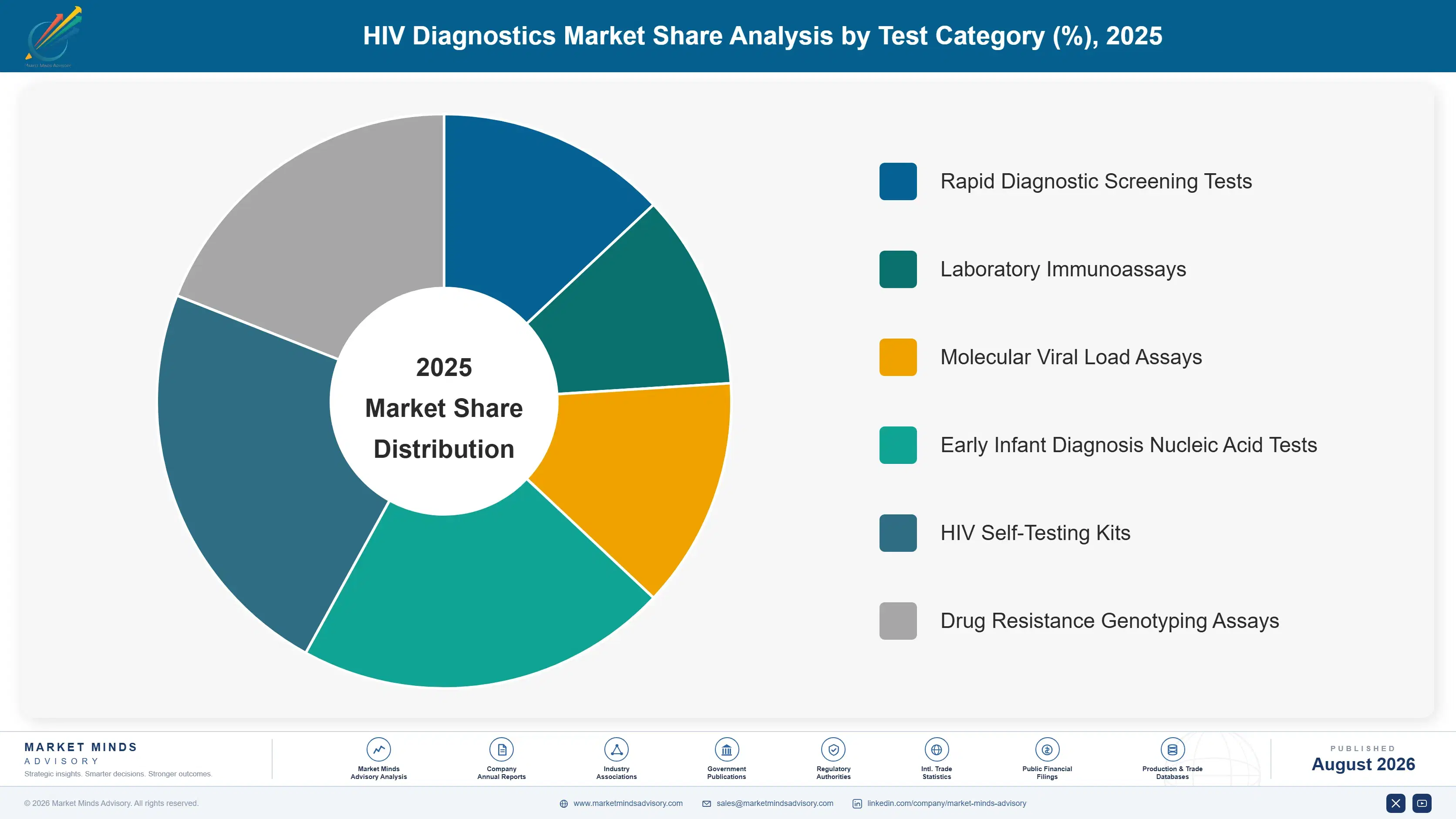
Segmentation follows test category, because category determines the regulatory pathway, the setting where testing happens, the procurement mechanism and the price a programme or patient will pay. Six categories cover HIV testing without overlap. Purpose, whether screening, confirmation, monitoring or prevention support, cuts across several categories and is treated as an application attribute here.
hiv-diagnostics-market-market-share-analysis-1787303464325

HIV Self-Testing Kits

Growing at 10.2%, a full 1.50x the market rate, self-testing removes the clinic from the diagnostic pathway entirely and reaches the roughly 14% of people living with HIV who remain undiagnosed. That residual group is disproportionately men, adolescents and key populations who avoid health facilities for reasons of stigma, criminalisation or inconvenience rather than availability. World Health Organization guidance now recommends self-testing as a standard service component. Distribution runs through pharmacies, community organisations, workplaces and partner delivery, which is a fundamentally different commercial channel from every other assay category in this market and demands quite different capability. Pharmacy chains and community organisations are the buyers here rather than programme procurement agents, and pricing behaves like ordinary consumer diagnostics.
CAGR 10.2%

Molecular Viral Load Assays

Viral load monitoring grows at 8.4% and now drives most assay volume in the category, because roughly 40 million people on antiretroviral therapy require routine testing for the rest of their lives rather than a single diagnostic event. Coverage sits near 71% of treated patients, so growth comes from both treatment expansion and from closing the monitoring frequency gap. Pooled procurement has driven pricing below nine dollars, which makes this enormous volume at very thin margin. Instrument placement is where the durable value sits, because a placed analyser commits a laboratory to one supplier's cartridges for years. Menu breadth across tuberculosis and hepatitis raises utilisation and strengthens the case at every subsequent placement round.
CAGR 8.4%
Full segment breakdown across 6 segments available in the complete report.

Regional Architecture and Country Demand Map

Regional shares here reflect disease burden rather than income, which produces a distribution unlike any other diagnostics market MMA tracks. Sub-Saharan Africa carries most of the global patient population and therefore most of the testing volume, at prices a fraction of wealthy-market levels. Income explains almost none of it.

Middle East and Africa

Middle East and Africa holds the largest share at 26%, far outside the band MMA normally applies. Note: this share is stated out of band because sub-Saharan Africa genuinely carries roughly two thirds of everyone living with HIV worldwide, and the region runs the largest viral load monitoring programmes anywhere. South Africa, Nigeria, Kenya, Uganda, Tanzania and Mozambique account for most of it. Pricing is a fraction of wealthy-market levels under pooled procurement, so this share understates volume enormously. Donor dependence is highest here at well above the global average, which makes the region simultaneously the largest opportunity and the largest fiscal exposure. Domestic financing transition here is the single most consequential variable in this forecast.
Share: 26% | CAGR: 7.0% (2026 to 2036)

North America

Twenty-two per cent of value on a small fraction of the world's patient population, entirely because United States assay pricing runs many times pooled procurement levels and testing is embedded in routine clinical care. Fourth-generation laboratory immunoassays, resistance genotyping and frequent viral load monitoring all sit at commercial pricing here. Long-acting injectable prevention has scaled faster in the United States than anywhere, adding a recurring pre-dose testing requirement across a substantial prevention population. Growth at 5.6% is among the slowest tracked, because diagnosis rates are already high and volume growth depends on prevention rather than on finding new infections. Prevention testing rather than new diagnosis is now the growth mechanism across the whole region.
Share: 22% | CAGR: 5.6% (2026 to 2036)
Regional intelligence for 5 additional markets available in the complete report: East Asia, Western Europe, South Asia and Pacific, Latin America, Eastern Europe. Contact sales@marketmindsadvisory.com.
hiv-diagnostics-market-country-cagr-analysis-1787303464860

Where HIV Testing Value Actually Accrues

Assay pricing under pooled procurement leaves almost nothing, so nobody builds a business on programme supply alone. Value accrues to placed instruments and the consumables that follow, to menu breadth that fills those instruments, and to the channels that sit outside donor procurement entirely. Assay margin on its own funds very little of anything here.

Place instruments to secure multi-year cartridge annuities

Viral load assays clear below nine dollars under pooled procurement, so the assay itself funds very little. The placed analyser is the asset, and donor programmes have funded roughly 8,000 of them: a molecular platform installed in a district laboratory commits that laboratory to one supplier's cartridge format for seven or eight years, and donor programmes have funded placements at a scale no commercial cycle would support. Manufacturers who won placement rounds hold the consumable stream regardless of assay pricing afterwards. Losing a placement round means losing a country for the better part of a decade.
Market Impact: Locks cartridge supply for up to 8

Fill placed analysers with tuberculosis and hepatitis menus

An instrument running HIV viral load alone sits idle much of the time, and district laboratories in high-burden countries need tuberculosis, hepatitis, human papillomavirus and sexually transmitted infection testing on the same platform. Menu breadth raises utilisation, strengthens the case for the next placement round and converts a single-disease programme asset into general laboratory capability. Suppliers with wide molecular menus hold roughly 40% more placed instruments than single-disease competitors, because programme managers explicitly value multi-disease capability when choosing what to install. Menu development is therefore a placement strategy rather than an assay portfolio decision.
Market Impact: Holds around 40% more placed instru

Build channels that sit outside donor procurement entirely

Roughly 62% of global volume depends on donor appropriations, and the 2025 foreign assistance restructuring showed how quickly that can move. Private laboratory networks, pharmacy self-test distribution, workplace testing programmes and domestically financed national programmes in India, Brazil and China all sit outside that exposure. Building those channels takes years and generates lower volumes at better margins. Manufacturers concentrated in donor procurement discovered in 2025 that a single appropriations decision can remove a substantial share of revenue without warning. A single appropriations decision removed substantial revenue without warning in 2025.
Market Impact: Reduces exposure to that 62% donor

Position assays into long-acting prevention testing protocols

Injectable cabotegravir requires a confirmed negative result every two months and lenacapavir every six, because breakthrough infection under partial drug cover selects for resistance. That produces up to 6 assays per person each year on prevention, growing entirely independently of diagnosis and treatment monitoring. Manufacturers whose tests are specified in prevention programme protocols capture that stream by default. The specification decision happens during programme design rather than through any procurement tender, which is a different relationship than most diagnostics organisations are built to manage. Most diagnostics organisations are not currently built to manage a relationship of that kind.
Market Impact: Generates up to 6 assays per person

Who Controls the Margin Pool

Concentration sits at 68% across the top five, measured on annual revenue from HIV diagnostic assays and instruments, the single basis applied throughout. Abbott Laboratories and Roche Diagnostics lead through large installed molecular platform fleets, many placed under donor-funded programmes across high-burden countries. Danaher through Cepheid holds a strong near-patient position, with Hologic and bioMérieux following through laboratory molecular and immunoassay systems respectively.
Competition runs on three dimensions unrelated to assay performance, since sensitivity converged years ago and programmes prequalify on defined thresholds. Instrument placement is the first and most decisive, because a placed analyser holds a laboratory for years. Menu breadth is the second, since programme managers want tuberculosis and hepatitis on the same platform. Price under pooled procurement is the third, and it is a qualifying threshold rather than a differentiator.

Pressure builds from two directions. Indian and Chinese manufacturers including Mylab, Premier Medical and Wondfo supply rapid tests and increasingly molecular assays at prices that international suppliers cannot match, and prequalification pathways have opened to them. Separately, donor funding volatility has made programme-dependent revenue less attractive to investors. Rankings shift most where a supplier converts placed instruments into general laboratory platforms rather than defending single-disease programme positions.
hiv-diagnostics-market-company-positioning-matrix-1787303465413

Competitive Moat and Risk Dimensions

ABBOTT LABORATORIES

Moat: Breadth across every test category

Abbott supplies rapid screening tests, laboratory immunoassays, molecular viral load platforms and self-tests, which lets it serve a national programme across the whole testing pathway rather than a single step. Very few competitors span that range, and programme managers designing an integrated testing strategy find a single supplier relationship materially simpler to manage and to fund.
ABBOTT LABORATORIES

Risk: Donor procurement concentration

A substantial share of volume depends on donor-funded programmes whose appropriations moved sharply in 2025, and pooled procurement pricing leaves very thin margin on that volume. Indian and Chinese manufacturers now hold prequalification and compete directly on rapid test pricing. Wealthy-market revenue funds development that programme business cannot support on its own.
ROCHE DIAGNOSTICS

Moat: Installed molecular platform fleet

Roche holds one of the largest installed molecular analyser bases across reference and district laboratories in high-burden countries, and each placement commits that laboratory to proprietary reagent formats for the working life of the instrument. Menu breadth across tuberculosis, hepatitis and human papillomavirus raises utilisation and strengthens the case for retaining the platform at every review.
ROCHE DIAGNOSTICS

Risk: Centralised testing model exposure

The position rests on centralised laboratory testing, which is precisely the model losing ground to near-patient platforms that deliver same-visit results and reduce loss to follow-up. Programme managers increasingly weight decentralisation heavily. Pooled procurement pricing on viral load assays continues to compress, and instrument service costs in remote district settings are considerably harder to recover.

Players Tracked

Prominent Players

Abbott Laboratories
Roche Diagnostics
Danaher
Hologic
bioMérieux

Other Key Players

OraSure Technologies
Chembio Diagnostics
SD Biosensor
Bio-Rad Laboratories
Siemens Healthineers
Thermo Fisher Scientific
Becton Dickinson
Qiagen
Trinity Biotech
Wondfo Biotech
Mylab Discovery Solutions
Premier Medical Corporation
Atomo Diagnostics
bioLytical Laboratories
Access Bio

Recent Developments

MARCH 2025

United States foreign assistance restructuring disrupts HIV programme procurement

Restructuring of United States foreign assistance disrupted procurement and distribution of HIV testing commodities across several high-burden countries within weeks, interrupting supply chains that had been built over two decades on the assumption of continuous external financing. Several national programmes reported testing stock-outs within the same quarter.
Signal: Testing volume in this market depends on a
AUGUST 2025

World Health Organization guidance supports lenacapavir prevention testing protocols

World Health Organization guidance addressed testing requirements around long-acting injectable prevention, confirming that confirmed negative status is required before each administration to avoid resistance selection from infection acquired under partial drug protection during the dosing interval. Cabotegravir requires testing every two months and lenacapavir every six.
Signal: Prevention programmes have now become a re
JANUARY 2026

Indian manufacturers secure prequalification for molecular viral load assays

Several Indian diagnostic manufacturers obtained prequalification for molecular HIV viral load assays, an organic capability development rather than any licensing arrangement, opening pooled procurement tenders that had previously been served almost entirely by international suppliers. Pricing quoted sat well below the incumbent international supplier levels.
Signal: Prequalification pathways are now open to

Reagent, Antibody and Distribution Cost Exposure

Cost structures split sharply between molecular and rapid formats, and both are squeezed hard by pooled procurement pricing. Molecular assays carry enzyme, primer and probe reagent cost at roughly 31% of cost of goods, plus cartridge injection moulding and precision assembly. Rapid tests sit on nitrocellulose membrane, colloidal gold conjugate and recombinant antigen at around 36%, with membrane supply concentrated among very few global manufacturers.
Cold chain distribution into high-burden countries adds cost that wealthy-market suppliers rarely model properly. Reagent shipments requiring temperature control to district laboratories across sub-Saharan Africa can add materially to delivered cost, and the 2025 foreign assistance disruption showed how quickly those chains break when funding pauses. Abbott and Roche both referenced supply chain and distribution complexity in emerging market operations within their annual reporting for that year.

The disadvantage falls on international suppliers competing against domestic manufacturers in the largest volume markets. Indian and Chinese producers hold labour, facility and regulatory cost positions that no Western efficiency programme can approach, and prequalification pathways have now opened to them. Geography compounds it: manufacturing far from the point of use adds freight, cold chain and lead time a domestic competitor never carries.
hiv-diagnostics-market-cost-volatility-analysis-1787303465623

Establish regional manufacturing or fill-finish near high-burden markets

Freight, cold chain and lead time all fall sharply when production sits near the point of use, and several African governments now apply local content preference in health procurement. The capital cost is real and it also positions a supplier for domestic financing transitions that donors and governments have both committed to pursuing over the coming decade.

Hold standing nitrocellulose membrane supply across multiple producers

Membrane capacity for lateral flow manufacture is concentrated among very few global suppliers, and allocation rather than price decided output during the last shortage. Standing multi-supplier agreements cost more per roll through quiet periods and are the difference between supplying a tender and defaulting on one when demand moves suddenly. Very few suppliers carry that commitment.

Build menu breadth to spread instrument and reagent overhead

A molecular platform running HIV viral load alone carries its full service, calibration and cold chain overhead against limited volume. Adding tuberculosis, hepatitis and human papillomavirus assays spreads that overhead across far more tests, which improves delivered economics considerably more than any negotiation on reagent input pricing achieves. Reagent input negotiation achieves nothing comparable at all.

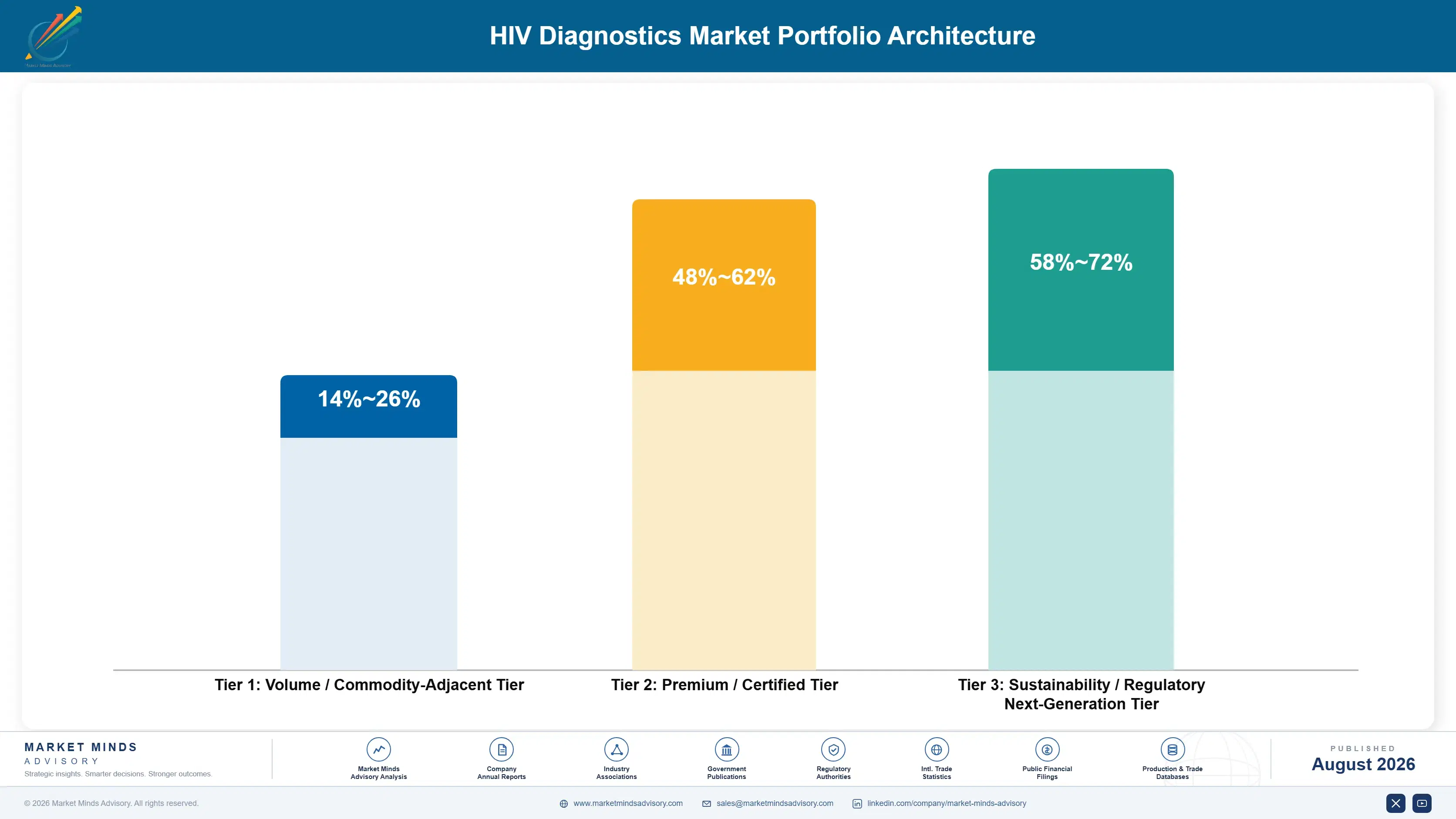
Portfolio Architecture for Margin Defence

Margin architecture divides on who is paying and through what mechanism. Assays supplied under pooled donor procurement clear below nine dollars and generate very thin margin whatever the volume, because access pricing is the explicit policy objective. Wealthy-market laboratory testing earns many times that for the same analytical result. Instrument-tied cartridges sit between the two, protected by placement lock-in rather than by pricing power.
The volume versus premium tension is geographic and it is stark. Almost all the testing volume sits in countries paying access prices, while almost all the margin sits in countries with small patient populations and commercial reimbursement. That is a defensible public health outcome and a difficult commercial structure, and every supplier in this market funds its development from the second while building its scale in the first.

High-value pools concentrate where testing sits outside donor procurement. Wealthy-market laboratory immunoassays and resistance genotyping, private laboratory networks in middle income countries, pharmacy self-test retail and long-acting prevention protocols in commercially insured populations all price on ordinary diagnostics economics. Programme-supplied rapid tests and pooled-procurement viral load assays sit at the other extreme entirely, where price is set centrally and applied everywhere.

Volume / Commodity-Adjacent Tier

Rapid screening tests and viral load assays supplied under pooled donor procurement, where a single negotiated price applies across dozens of countries and Indian and Chinese manufacturers increasingly hold prequalification to compete directly.
Gross Margin: 14-26%

Premium / Certified Tier

Instrument-tied molecular cartridges and wealthy-market laboratory immunoassays, protected by placement lock-in, proprietary reagent formats and commercial reimbursement that pooled procurement pricing never touches at all. Placement rounds decide these positions years apart.
Gross Margin: 48-62%

Sustainability / Regulatory / Next-Generation Tier

Drug resistance genotyping, prevention protocol testing and pharmacy self-test retail, protected by technical complexity, programme specification or consumer channel access. Best margins available and furthest removed from central procurement pressure.
Gross Margin: 58-72%
hiv-diagnostics-market-portfolio-architecture-1787303466141

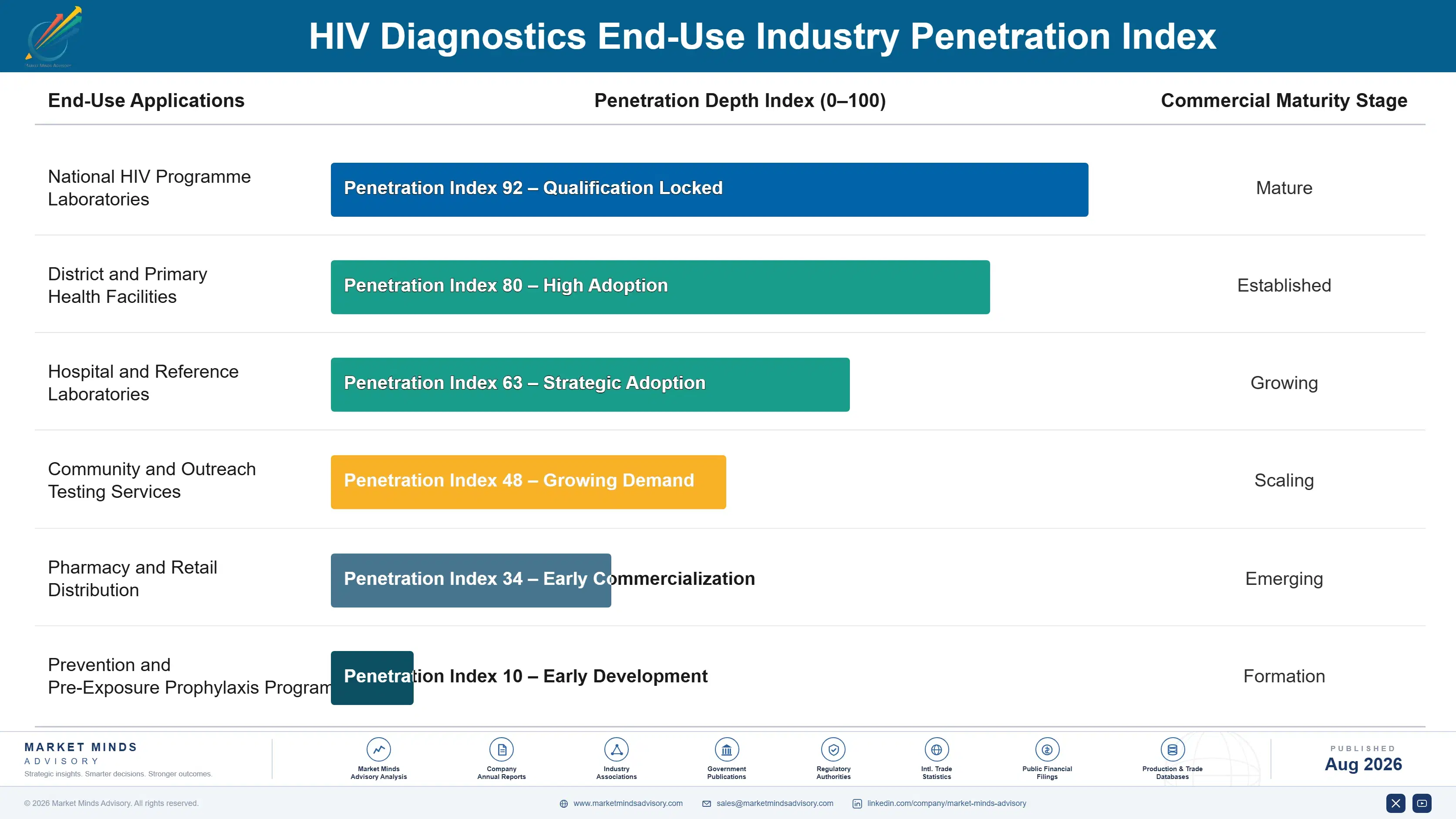
Recurring Testing Across Treatment Lifetimes

Demand here has shifted decisively from diagnosis to recurring monitoring. A person diagnosed with HIV requires viral load testing at recommended intervals for the rest of their life, and roughly 40 million people are now living with the virus. Coverage sits near 71% of treated patients, so the recurring base grows both through treatment expansion and through closing the gap between recommended and actual monitoring frequency in resource-limited settings.
Stickiness follows the instrument rather than the assay. A molecular platform placed in a district or reference laboratory commits that facility to one supplier's cartridge format for the working life of the machine, and replacing it means recapitalising and revalidating across a laboratory with no capital budget. Rapid tests and self-tests show almost no stickiness and move entirely on tender price or shelf availability.

Buyer profiles are unlike anything else in diagnostics. Donor programme managers and pooled procurement agents negotiate for dozens of countries simultaneously, so a single decision moves an entire region. National programme managers in domestically financed countries including Brazil, China and India behave more conventionally. Pharmacy chains and private laboratory networks now form a third buyer type entirely, growing as self-testing and private-sector testing expand.
hiv-diagnostics-market-end-use-penetration-index-1787303466645

Where HIV Testing Strategy Lands

These are among the four positions where our research anticipates prominent divergence between winners and laggards over the coming forecast period. Each is grounded in the demand model, the regulatory perimeter, and the announced capacity pipeline.
01 / PLACEMENT ROUND PRIORITY

Winning the instrument decides the country for a decade

Viral load assays clear below nine dollars under pooled procurement, so the assay itself funds very little and the placed analyser is where the durable value actually sits. A molecular platform installed in a district laboratory commits that facility to one supplier's cartridge format for seven or eight years, because recapitalising and revalidating is beyond most programme budgets. Losing a placement round therefore means losing an entire national market for the better part of a decade, whatever the assay pricing offered afterwards.
02 / MENU BREADTH INVESTMENT

Single-disease platforms lose placement rounds to broader ones

An instrument running HIV viral load alone sits idle much of the time while district laboratories need tuberculosis, hepatitis, human papillomavirus and sexually transmitted infection testing on the same machine. Suppliers holding wide molecular menus carry roughly 40% more placed instruments than single-disease competitors, because programme managers explicitly weight multi-disease capability when deciding what to install. Menu development is therefore a placement strategy rather than an assay portfolio decision, and it needs funding on that basis well ahead of the round.
03 / FUNDING EXPOSURE MANAGEMENT

Six tests in ten depend on an appropriations decision

Roughly 62% of all global HIV testing volume is procured through donor programmes rather than through national health budgets, and the 2025 restructuring of United States foreign assistance interrupted commodity supply across several high-burden countries within weeks of the decision. Private laboratory networks, pharmacy self-test retail and the domestically financed programmes in Brazil, China and India all sit entirely outside that particular exposure. Building those channels is slow work, lower volume and considerably better margin than programme supply ever generates.
04 / PREVENTION PROTOCOL SPECIFICATION

Injectable prevention created a recurring diagnostics stream

Long-acting cabotegravir requires confirmed negative status every two months and lenacapavir every six, because an infection acquired under partial drug cover selects for resistance that then compromises later treatment options. That generates up to six recurring assays per person each year, growing entirely independently of diagnosis rates or of treatment monitoring volume. The specifying decision happens during programme design rather than through any procurement tender, which is a relationship most diagnostics commercial organisations are not currently built to manage at all.

Engagement Snapshot From the Field

A live engagement with an industry participant carrying material or product regulatory and market exposure ahead of a defining policy shift, showing how our research translates into a defensible multi-year portfolio strategy.
MARKET MINDS ADVISORY · CLIENT ENGAGEMENT SUMMARY
HIV Diagnostics Producer Strategic Portfolio Review and Transition Roadmap 2026·Investment Scenario on HIV Diagnostics Exposure Evaluation 2025-26
CLIENT PROFILE
An international diagnostics manufacturer supplying HIV rapid tests and a molecular viral load platform into donor-funded programmes across sub-Saharan Africa and Southeast Asia, with annual HIV diagnostics revenue of approximately USD 185 million (client-reported, unverified by MMA). Roughly 78% of that came through pooled procurement mechanisms. The company held a modest installed analyser base and a molecular menu limited to HIV and tuberculosis.
STRATEGIC CHALLENGE
Restructured United States foreign assistance had interrupted procurement across three of the client's largest programme markets within a single quarter, exposing how concentrated its revenue base had become. The board wanted to know whether to defend programme share through further price reduction, or to invest in menu breadth and non-donor channels that would take years to build and generate lower volumes.
MMA APPROACH
MMA conducted 47 expert interviews across national programme managers, pooled procurement agents, district laboratory directors, pharmacy chain buyers and prevention programme designers in six countries. A quantitative survey of 3,800 respondents established testing behaviour, channel preference and willingness to pay across programme and private settings. We then modelled revenue and margin under both options against observed funding trajectories and placement round schedules in each market.
KEY FINDINGS
  1. Programme managers selecting molecular platforms weighted multi-disease menu breadth above assay pricing in five of six countries, and several had rejected single-disease platforms outright.
  2. Pooled procurement price reduction produced no measurable share gain in the client's markets, because pricing had already fallen below the threshold at which procurement agents differentiate between qualified suppliers.
  3. Private laboratory and pharmacy self-test channels in the client's markets were growing considerably faster than programme volume and carried gross margins several times pooled procurement levels.
  4. Prevention programme designers specified testing protocols during programme design and rarely revisited supplier selection afterwards, yet no supplier had engaged them at that stage in any market surveyed.
CLIENT PROFILE
An international diagnostics manufacturer supplying HIV rapid tests and a molecular viral load platform into donor-funded programmes across sub-Saharan Africa and Southeast Asia, with annual HIV diagnostics revenue of approximately USD 185 million (client-reported, unverified by MMA). Roughly 78% of that came through pooled procurement mechanisms. The company held a modest installed analyser base and a molecular menu limited to HIV and tuberculosis.
STRATEGIC CHALLENGE
Restructured United States foreign assistance had interrupted procurement across three of the client's largest programme markets within a single quarter, exposing how concentrated its revenue base had become. The board wanted to know whether to defend programme share through further price reduction, or to invest in menu breadth and non-donor channels that would take years to build and generate lower volumes.
MMA APPROACH
MMA conducted 47 expert interviews across national programme managers, pooled procurement agents, district laboratory directors, pharmacy chain buyers and prevention programme designers in six countries. A quantitative survey of 3,800 respondents established testing behaviour, channel preference and willingness to pay across programme and private settings. We then modelled revenue and margin under both options against observed funding trajectories and placement round schedules in each market.
KEY FINDINGS
  1. Programme managers selecting molecular platforms weighted multi-disease menu breadth above assay pricing in five of six countries, and several had rejected single-disease platforms outright.
  2. Pooled procurement price reduction produced no measurable share gain in the client's markets, because pricing had already fallen below the threshold at which procurement agents differentiate between qualified suppliers.
  3. Private laboratory and pharmacy self-test channels in the client's markets were growing considerably faster than programme volume and carried gross margins several times pooled procurement levels.
  4. Prevention programme designers specified testing protocols during programme design and rarely revisited supplier selection afterwards, yet no supplier had engaged them at that stage in any market surveyed.
RECOMMENDED STRATEGY
Phase 1: Phase one: halt further pooled procurement price reduction, since the evidence showed it produced no share response at prevailing price levels in any market. Phase 2: Phase two: extend the molecular menu to hepatitis and human papillomavirus ahead of the next placement rounds, treating menu development as a placement strategy. Phase 3: Phase three: build pharmacy and private laboratory channel capability, and engage prevention programme designers directly during protocol design rather than at tender.
OUTCOME
The client extended its molecular menu within fourteen months and won placement rounds in two countries it had previously lost (client-reported, unverified by MMA). Non-donor channel revenue roughly doubled from a small base, and blended gross margin improved about six percentage points despite programme volume remaining broadly flat throughout.

Frequently Asked Questions

Foundational context covering the market sizes, CAGR, scope, country, region and competition that inform every finding below. This section is provided to cover basics and most often pre-purchase conversations, answered from the MMA Primary Research Dataset.

What is the current size of the HIV Diagnostics Market?

The global HIV diagnostics market was valued at USD 3.6 billion in 2025, covering rapid screening tests, laboratory immunoassays, molecular viral load assays, early infant diagnosis, self-testing kits and resistance genotyping. Antiretroviral therapy falls outside this definition.

How large will the HIV Diagnostics Market be by 2036?

MMA forecasts the market at USD 7.42 billion by 2036, expanding 1.93 times from the 2026 base of USD 3.84 billion. That represents roughly USD 3.58 billion of incremental value across the forecast decade.

What is the CAGR for the HIV Diagnostics Market 2026 to 2036?

The base case compound annual growth rate is 6.8%, with a bull case of 8.0% and a bear case of 5.6%. The bear case reflects sustained reduction in donor funding, which supplies roughly 62% of global testing volume.

Which segment is growing fastest?

Self-testing kits grow at 10.2%, a full 1.50x the overall market rate. They reach the roughly 14% of people living with HIV who remain undiagnosed and who avoid clinical settings for reasons other than availability.

Who are the major companies in the HIV Diagnostics Market?

Abbott Laboratories, Roche Diagnostics, Danaher, Hologic and bioMérieux together hold 68% of revenue, largely through molecular platforms placed under donor-funded programmes. Indian and Chinese manufacturers are now securing prequalification and competing directly on price.

Which country is growing fastest?

India grows fastest at 10.4%, supported by domestic manufacturing and national programme financing that is considerably less exposed to donor appropriations. Middle East and Africa is the largest region at 26% of value.

Report Segmentation Architecture

The full report scope spans multiple orthogonal segmentation dimensions, with cross-tabulated demand data provided for each dimension pair. Coverage extends further to regional breakdowns, trend trajectories, and the competitive detail needed to support segment-level decision-making.

By Test Category

  • Rapid Diagnostic Screening Tests
  • Laboratory Immunoassays
  • Molecular Viral Load Assays
  • Early Infant Diagnosis Nucleic Acid Tests
  • HIV Self-Testing Kits
  • Drug Resistance Genotyping Assays

By End-Use Industry

  • National HIV Programme Laboratories
  • District and Primary Health Facilities
  • Hospital and Reference Laboratories
  • Community and Outreach Testing Services
  • Pharmacy and Retail Distribution
  • Prevention and Pre-Exposure Prophylaxis Programmes

By Commercial Dimension

  • Pooled Donor Procurement
  • National Government Tender Programmes
  • Private Laboratory Network Supply
  • Pharmacy and Consumer Retail
  • Instrument-Linked Consumable Contracts
  • Non-Governmental and Community Organisation Distribution

By Region

  • Middle East and Africa
  • North America
  • East Asia
  • Western Europe
  • South Asia and Pacific
  • Latin America
  • Eastern Europe

Scope, Methodology, and Coverage

Every figure in this report is reproducible from documented input assumptions. The scope below maps the historical period, the forecast horizon, the segmentation dimensions, and the countries covered, alongside the underlying primary and qualitative methodology.
Historical Period
2020 to 2025
Forecast Period
2026 to 2036
Base Year
2025 (USD billions; MMA Primary Research Dataset, August 2026)
Market Definition
This market comprises diagnostic tests used to detect HIV infection, confirm diagnosis, support prevention programmes and monitor treatment response, measured at assay and kit revenue plus laboratory testing service revenue across donor-procured, government-tendered, private laboratory and consumer retail channels. Coverage spans rapid diagnostic screening tests, laboratory fourth-generation antigen and antibody immunoassays, molecular viral load quantification assays, early infant diagnosis nucleic acid tests, self-testing kits supplied through pharmacy, community and online channels, and drug resistance genotyping assays. Antiretroviral therapy and prevention medicines themselves, CD4 enumeration instruments and flow cytometers sold independently of HIV assays, sample collection swabs and dried blood spot cards sold separately, laboratory information systems, HIV vaccine and cure research reagents, and general sexually transmitted infection panels not including an HIV target fall outside scope.
Quantitative Units
USD billions (current prices); test volumes by category; pooled procurement price per assay; installed molecular analyser base; viral load monitoring coverage rate
Segmentation Dimensions
By Test Category; By End-Use Industry; By Commercial Dimension; By Region
Regions Covered
Middle East and Africa, North America, East Asia, Western Europe, South Asia and Pacific, Latin America, Eastern Europe
Countries Covered
South Africa, Nigeria, Kenya, Uganda, Tanzania, Mozambique, Zambia, Zimbabwe, Ethiopia, United States, Canada, Mexico, Brazil, Argentina, Colombia, Peru, China, Japan, South Korea, India, Indonesia, Vietnam, Philippines, Thailand, Australia, United Kingdom, France, Germany, Spain, Italy, Portugal, Netherlands, Russia, Ukraine, Poland, and additional markets relevant to HIV programme analysis
Key Companies Profiled
Abbott Laboratories, Roche Diagnostics, Danaher, Hologic, bioMérieux, OraSure Technologies, Chembio Diagnostics, SD Biosensor, Bio-Rad Laboratories, Siemens Healthineers, Thermo Fisher Scientific, Becton Dickinson, Qiagen, Trinity Biotech, Wondfo Biotech, Mylab Discovery Solutions, Premier Medical Corporation, Atomo Diagnostics, bioLytical Laboratories, Access Bio
Quantitative Methodology
Primary survey, n=3,800 respondents, Q4 2025, six countries; demand-side model with trade association cross-validation
Qualitative Methodology
47 expert interviews, Q4 2025; applied to validate demand model assumptions, identify emerging dynamics, and assess competitive positioning
Report Format
PDF and XLSX data workbook (Word format preview document)
Publisher
Market Minds Advisory
Report Code
MMA-2026-HLT-143
Published
August 2026
Contact
sales@marketmindsadvisory.com | www.marketmindsadvisory.com

Purchase the full HIV Diagnostics Market Report (2026 to 2036).

The full MMA report treats donor financing as the central commercial variable rather than a background condition, quantifying exposure by country and mapping which channels sit outside it. It sizes six test categories and seven regions to 2036, modelling testing volumes, pooled procurement pricing, instrument placement and monitoring coverage separately so that volume and value trajectories can be distinguished properly. Competitive assessment covers twenty suppliers on one consistent revenue basis. Cost exposure is traced through molecular reagents, nitrocellulose membrane supply and cold chain distribution into high-burden markets. Four commercial levers and a strategic verdict close the report, grounded in 47 expert interviews and a 3,800-respondent survey.
Six test categories sized separately to 2036
Donor funding exposure quantified by country programme
Instrument placement annuities modelled across high-burden markets
Twenty suppliers assessed on one consistent basis
Long-acting prevention testing demand modelled from protocols
Anonymised client engagement with tested strategic recommendations

Built For The People Who Decide

From boardroom strategy to bench-side execution, this report is read cover-to-cover by leaders shaping the next decade of their industry, turning demand scenarios, market dynamics and valuation benchmarks into decisions.
CXOs/ Presidents/ VPs/ Managers
M&A and Corporate Development
Strategy Teams and R&D Heads
Procurement and Product Directors
Regulatory and Compliance Leaders
Investor Relations and Equity Analysts