Market Minds Advisory
High-End Performance Packaging Market

High-End Performance Packaging Market: High-End Performance Packaging Market. Premium Materials, Barrier Technology, and Brand Differentiation Through 2036

Premium beauty, spirits, and specialty food brands push packaging converters toward advanced barrier films, tactile finishes, and refillable formats as sustainability mandates collide with the shelf appeal demands of luxury positioning reflecting sustained.

Lead Analyst

Published

September 2026

Make Smarter Decisions with Customized Research Insights

Request a free sample report and evaluate market opportunities, growth trends, and competitive dynamics relevant to your business needs.

2025 MARKET VALUE$41.5BMarket Size 2025
2036 FORECAST VALUE$83.0BBase Case , 2026 to 2036
CAGR 2026 TO 20366.5 %Bull 7.6% / Bear 5.3%
INCREMENTAL OPPORTUNITY$38.8BNet 10- year value creation
EXPANSION MULTIPLE1.88x2036 value over 2026 base
Strategic Levers
M&A Pipeline
Regional Outlook
Country Rankings
Competitive Intelligence
Segmental Deep-dive
Call-Us : 91 93563 13602

Executive Snapshot and Market Trajectory.

Premium brand owners are directing packaging budgets toward materials and finishes that visibly signal quality on shelf, even as regulatory pressure pushes the same brands toward recyclable and refillable formats simultaneously reflecting sustained brand owner investment across premium packaging programs as adoption continues expanding.
Cosmetics and prestige spirits categories drive the largest share of premium packaging spend, with refillable formats emerging as the fastest-growing category as brands respond to extended producer responsibility rules in Europe. East Asia and Western Europe account for the largest demand concentration, reflecting dense luxury brand headquarters and premium converter manufacturing clusters reflecting sustained brand owner investment across premium packaging programs as adoption continues expanding across cosmetics, spirits,.
Competition splits between specialty glass and rigid plastics converters with decades-long luxury brand relationships and newer sustainable materials innovators building barrier coatings and mono-material structures from scratch. Extended producer responsibility fees and rising virgin glass and aluminum input costs both shape which converters can maintain margin while meeting brand sustainability commitments reflecting sustained brand owner investment across premium packaging programs as adoption continues expanding across cosmetics, spirits, and reflecting sustained brand owner investment across premium.
Market Definition
This report covers rigid and flexible packaging engineered for premium and luxury brand positioning across cosmetics, prestige spirits, and specialty food categories, including specialty glass, rigid plastics, and high-barrier flexible structures. It excludes standard commodity packaging without premium finishing or barrier specification.
Base Year Value
$41.5B in 2025 (MMA Primary Research Dataset, September 2026)
Forecast Period
2026 to 2036, eleven discrete annual values
CAGR
6.5% base case. Bull 7.6%. Bear 5.3%.
Fastest Growth Segment
Refillable and Reusable Premium Formats: 10.5% CAGR
Fastest Growth Country
China: 8.0% CAGR
Fastest Growth Region
South Asia and Pacific: 8.5% CAGR
Largest Region
North America: 27% of 2025 global value
Market Leaders
Amcor plc, Sealed Air Corporation, Berry Global Group Inc, Gerresheimer AG, WestRock Company. Source: MMA Primary Research Dataset, July 2026.
Primary Survey
n=3,800 procurement and R&D decision-makers, Q4 2025, six countries
Methodology
Demand-side build-up, cross-validated against public data, 47 expert interviews

High-End Performance Packaging Market Forecast Scenarios

high-end-performance-packaging-market-size-forecast-scenario-1789992581568
The 2020 to 2025 period saw steady growth as prestige beauty and spirits brands expanded packaging differentiation investment even through pandemic disruption, since premium positioning proved relatively resilient to consumer spending pullback compared with mass-market categories reflecting sustained brand owner investment across premium packaging programs as adoption continues expanding across cosmetics, spirits, and specialty food categories supporting consistent.
MMA's base case assumes continued mid-single-digit growth driven by three commercial mechanisms: expanding refillable format adoption as brands respond to European extended producer responsibility rules, rising premiumization spending across emerging market luxury consumer bases, and growing demand for tactile finishing techniques that differentiate shelf presence in an increasingly crowded prestige retail environment reflecting sustained brand owner investment across premium packaging programs as adoption continues expanding across cosmetics, spirits, and specialty food categories supporting consistent order growth across contract.
The bull case centers on faster-than-expected refillable format adoption as more brands launch permanent refill programs ahead of regulatory deadlines. The bear case centers on virgin material cost volatility squeezing converter margins, with several smaller converters already struggling to pass through glass and aluminum price increases reflecting sustained brand owner investment across premium packaging programs as adoption continues expanding across cosmetics, spirits,.

Refillable Formats Reshape Premium Shelf Strategy

Premium packaging spending concentrates in cosmetics and prestige spirits today, though refillable formats are the fastest-growing category as brands respond to European extended producer responsibility rules. Specialty glass converters maintain the strongest brand relationships given long qualification cycles for luxury packaging reflecting sustained brand owner investment across premium packaging programs as adoption continues expanding across cosmetics, spirits, and specialty food categories supporting.
MARKET CONCENTRATIONCR5 38%Fragmented across specialty converters and regional glass manufacturers reflecting.
AVERAGE SELLING PRICE$0.85 per unit premiumReflects specialty glass, finishing, and closure component premiums reflecting.
TOP PRODUCING COUNTRY SHAREChina 19%Concentrated among specialty glass and rigid plastics manufacturing clusters.
CAPACITY UTILISATION76% averageIndicates moderate headroom before converters require new capacity reflecting.
FEEDSTOCK COST SHARE48%Reflects glass, aluminum, and specialty resin input cost exposure.
TRADE INTENSITY34% cross-borderReflects converters serving brand headquarters across multiple regions reflecting.
Converters increasingly invest in tactile finishing techniques including soft-touch coatings, embossing, and metallic decoration to help brands differentiate shelf presence in an increasingly crowded prestige retail environment. This finishing investment commands meaningful price premiums over unfinished packaging reflecting sustained brand owner investment across premium packaging programs as adoption continues expanding across cosmetics, spirits, and specialty food categories supporting consistent order growth.
Brand owners weigh premium finishing investment against sustainability commitments, since some tactile finishes complicate recycling. The converters succeeding most combine premium aesthetics with mono-material structures that satisfy both shelf appeal and recyclability requirements simultaneously reflecting sustained brand owner investment across premium packaging programs as adoption continues expanding across cosmetics, spirits, and specialty food categories supporting consistent order growth across contract packaging manufacturer.
"Brands that treat sustainability and premium positioning as competing priorities are already losing shelf space to competitors who figured out that refillable can look more luxurious than disposable, not less."
Director, Premium Packaging and Brand Materials Practice · MMA Packaging: Premium and Performance-Engineered Packaging Systems Practice · September 2026

Market Trends

Refillable Formats Scale Under European Producer Responsibility Rules reflecting.

Prestige beauty and fragrance brands are launching permanent refillable packaging programs at an accelerating pace as the European Union's Packaging and Packaging Waste Regulation pushes producers toward reusable formats, with the regulation setting binding reuse targets that take effect in phases through 2030. Brands including several major fragrance houses have already converted flagship product lines to refillable formats ahead of mandatory compliance dates. Converters investing early in refill-compatible closure and dispensing mechanism technology are securing multi-year supply agreements with brands racing to meet regulatory deadlines before competitors do reflecting sustained brand owner investment across premium packaging programs as.
Market Impact: Drives orders up 9 percent yearly

Tactile Finishing Technology Becomes A Shelf Differentiation Battleground reflecting.

Premium brands increasingly specify soft-touch coatings, hot foil stamping, and embossed textures on packaging as digital commerce reduces opportunities for in-person tactile brand engagement elsewhere in the purchase journey. Converters offering advanced finishing capability command price premiums of 15 to 25 percent over unfinished comparable packaging, according to industry association benchmarking data. This has pushed mid-tier converters to invest in finishing equipment previously reserved for the highest luxury tier alone, narrowing the technical gap between premium categories reflecting sustained brand owner investment across premium packaging programs as adoption continues expanding across cosmetics, spirits, and specialty food categories.
Market Impact: Generates margin premiums above 30 percent

Market Opportunities and Growth Drivers

Prestige Beauty Category Growth Across Emerging Market Consumer Bases.

Prestige beauty brand revenue continues expanding across emerging market consumer bases, particularly in China and Southeast Asia, where rising disposable income supports growing premium cosmetics purchase frequency among younger consumers. This category growth directly drives packaging order volume since prestige beauty brands specify premium glass, rigid plastics, and specialty finishing at a far higher rate than mass-market cosmetics competitors. Packaging converters serving this category have expanded capacity meaningfully to keep pace with brand order growth across the past several years, adding new production lines in multiple regions reflecting sustained brand owner investment across premium packaging programs as adoption.
Market Impact: Raised energy costs by 40 percent

Prestige Spirits Brands Expand Limited Edition Packaging Programs reflecting.

Prestige spirits producers increasingly launch limited edition packaging programs featuring specialty glass shapes, metallic decoration, and premium closure hardware to command higher price points and drive collector demand among enthusiast consumers. These limited runs carry substantially higher per-unit packaging cost than standard bottling but generate meaningful margin premium that brands find worthwhile. Specialty glass converters capable of handling shorter, more complex production runs have captured disproportionate share of this expanding limited edition packaging demand category reflecting sustained brand owner investment across premium packaging programs as adoption continues expanding across cosmetics, spirits, and specialty food categories supporting consistent order.
Market Impact: Adds compliance fees of 12 percent

Market Restraints and Challenges

Virgin Glass And Aluminum Cost Volatility Squeezes Converter Margins.

Virgin glass and aluminum input costs have risen sharply since 2022, driven by natural gas price volatility affecting glass furnace energy costs across major European manufacturing hubs. The root cause traces to Europe's energy market disruption following reduced Russian natural gas supply, which raised furnace operating costs substantially for glass converters unable to quickly switch fuel sources. The commercial impact falls hardest on smaller converters lacking pricing power to pass costs through to brand customers. Larger converters are mitigating by investing in electric furnace technology that reduces natural gas dependence over time reflecting sustained brand owner investment across.
Market Impact: Targets full reuse rates by 2030

Recyclability Requirements Complicate Premium Finishing Technique Adoption reflecting sustained.

Extended producer responsibility fee structures across Europe increasingly penalize packaging with mixed-material construction or finishes that complicate recycling, creating tension with brand demand for premium tactile finishes. The root cause is that many decorative coatings and metallic finishes were developed before recyclability became a regulatory priority, leaving converters with technology that now carries fee penalties. The commercial impact includes both direct compliance fees and reputational risk. Converters are mitigating by developing mono-material finishing techniques that achieve similar visual effects without recycling penalties reflecting sustained brand owner investment across premium packaging programs as adoption continues expanding across cosmetics, spirits,.
Market Impact: Commands 15 to 25 percent premiums
4 additional market trends, 3 additional growth drivers, and 4 additional restraints and challenges are covered in the full report. Contact sales@marketmindsadvisory.com to access the complete intelligence.

Segment CAGR and Growth Architecture

Premium packaging spans specialty glass, rigid plastics, flexible barrier structures, closures, and finishing services, each following distinct qualification cycles. Refillable formats and specialty glass now grow faster than standard rigid packaging as brands respond to reuse mandates reflecting sustained brand owner investment across premium packaging programs as adoption continues expanding across cosmetics, spirits, and specialty food categories.
high-end-performance-packaging-market-market-share-analysis-1789992582184

Refillable and Reusable Premium Formats

Refillable and reusable premium formats lead all packaging categories at a 10.5 percent CAGR, roughly 1.62 times the overall market rate, as prestige beauty and fragrance brands launch permanent refill programs ahead of the European Union's binding reuse targets taking effect through 2030. These formats require redesigned closure and dispensing mechanisms capable of surviving repeated refill cycles without degrading, a technical challenge that favors converters with strong engineering capability over pure decorative specialists. Several major fragrance houses have already converted flagship product lines, and mid-tier brands are following as consumer acceptance grows and refill station retail infrastructure expands across major European and North American markets reflecting sustained brand owner investment across premium packaging programs as adoption continues expanding.
CAGR 10.5%

Specialty Glass Packaging

Specialty glass packaging grows at 8.5 percent annually as prestige spirits and premium fragrance brands specify custom bottle shapes, weighted bases, and specialty finishes that plastic alternatives cannot replicate at comparable visual quality. Limited edition spirits packaging programs drive particularly strong demand for converters capable of handling shorter, more complex production runs with intricate mold work. Rising energy costs at glass furnaces have pressured converter margins, but brand willingness to pay premium prices for genuine glass authenticity has kept demand resilient even as some categories shift toward lighter-weight alternatives to reduce shipping costs and carbon footprint reflecting sustained brand owner investment across premium packaging programs as adoption continues expanding across cosmetics, spirits, and specialty food categories supporting consistent.
CAGR 8.5%
Full segment breakdown across 7 segments available in the complete report.

Regional Architecture and Country Demand Map

North America leads on prestige beauty and spirits consumption scale, while Western Europe follows closely given its concentration of luxury brand headquarters and specialty glass converter manufacturing clusters reflecting sustained brand owner investment across premium packaging programs as adoption continues expanding across cosmetics, spirits, and.

North America

The United States anchors this region through its scale as the largest single consumer market for prestige beauty and premium spirits, supporting substantial converter capacity dedicated to serving both domestic brand headquarters and imported European luxury brands sold at retail. Canada contributes additional demand tied to its own premium retail sector. Strong consumer purchasing power across affluent metropolitan markets keeps demand resilient even during broader consumer spending pullbacks, supporting steady converter order volume reflecting sustained brand owner investment across premium packaging programs as adoption continues expanding across cosmetics, spirits, and specialty food categories supporting consistent order growth across contract packaging manufacturer networks reinforcing demand visibility for converters planning capacity investment ahead reflecting.
Share: 27% | CAGR: 6.5% (2026 to 2036)

Western Europe

France and Italy anchor regional demand through their concentration of luxury fragrance, cosmetics, and spirits brand headquarters specifying premium packaging at design and sourcing stages. Germany contributes substantial specialty glass converter manufacturing capacity serving both domestic and export brand customers. The region's growth trails other regions somewhat as extended producer responsibility compliance costs and energy price pressure on glass furnaces weigh on converter margins even as brand demand stays strong reflecting sustained brand owner investment across premium packaging programs as adoption continues expanding across cosmetics, spirits, and specialty food categories supporting consistent order growth across contract packaging manufacturer networks reinforcing demand visibility for converters planning capacity investment ahead reflecting sustained brand owner.
Share: 26% | CAGR: 5.0% (2026 to 2036)
Regional intelligence for 5 additional markets available in the complete report: East Asia, South Asia and Pacific, Latin America, Middle East and Africa, Eastern Europe. Contact sales@marketmindsadvisory.com.
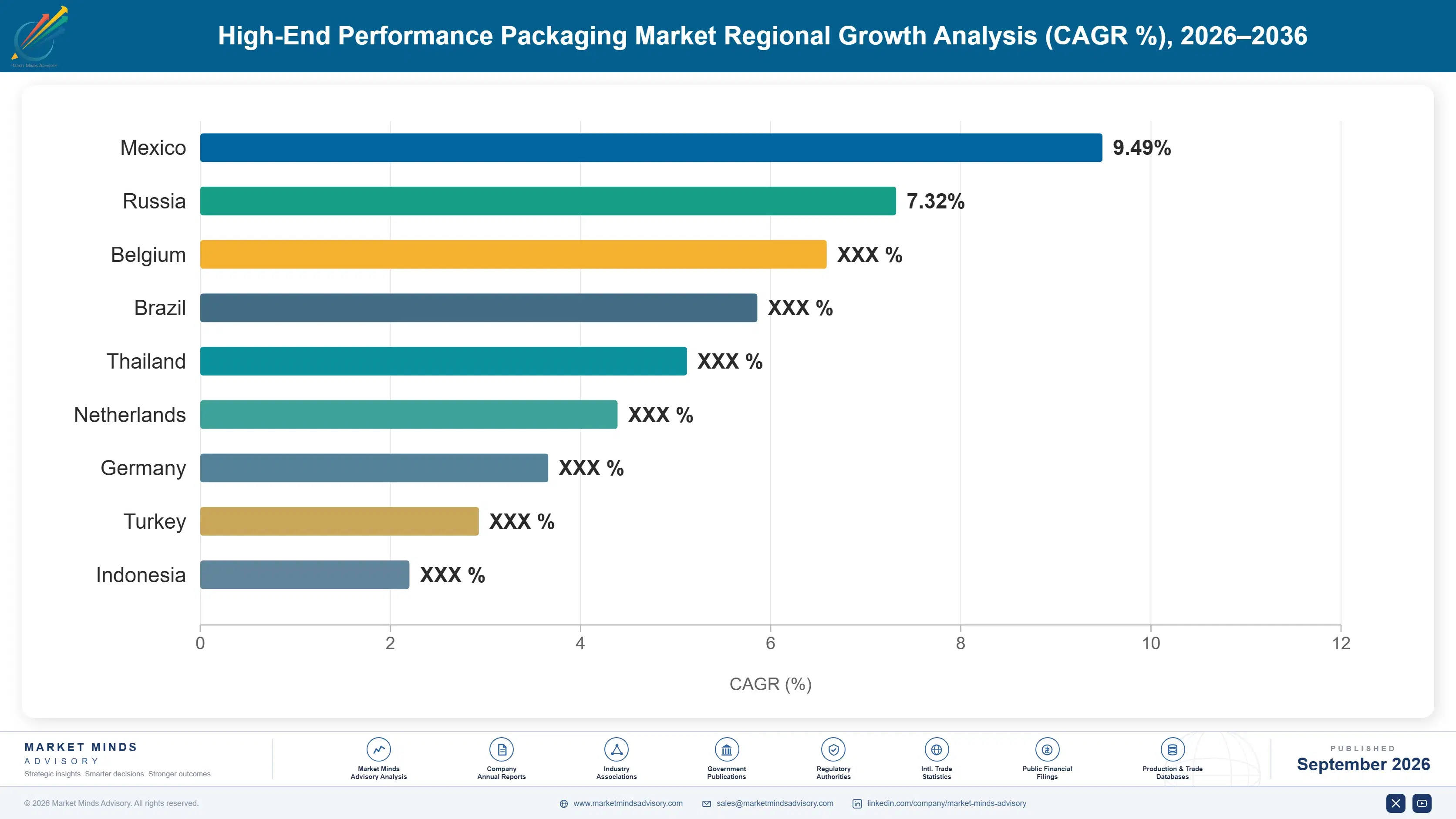
high-end-performance-packaging-market-country-cagr-analysis-1789992582715

Where Converters Can Capture Additional Margin reflecting.

Converters capture disproportionate value by shifting mix toward finishing services, closure hardware, and refill-compatible mechanisms that command premium pricing beyond basic container manufacturing alone reflecting sustained brand owner investment across premium packaging programs as adoption continues expanding across cosmetics, spirits, and specialty food categories supporting consistent order growth across contract packaging manufacturer networks reinforcing.

Expand Proprietary Finishing Services Beyond Basic Container Manufacturing.

Converters offering in-house soft-touch coating, hot foil stamping, and embossing capability capture an estimated 20 percent price premium over converters that outsource finishing to third parties, since brands prefer single-source accountability for quality control across the full production process. This vertical integration also shortens lead times meaningfully, a critical advantage for brands launching limited edition packaging programs on tight seasonal timelines reflecting sustained brand owner investment across premium packaging programs as adoption continues expanding across cosmetics, spirits, and specialty food categories supporting consistent order growth across contract packaging manufacturer networks reinforcing demand visibility.
Market Impact: Adds approximately 20 percent price premium overall reflecting.

Develop Refill-Compatible Closure And Dispensing Mechanism Technology reflecting sustained.

Converters investing early in refill-compatible closure and dispensing mechanism engineering are securing multi-year supply agreements worth over 400 million dollars combined as brands race to launch permanent refill programs ahead of European regulatory deadlines. This technical capability creates meaningful switching costs for brands once a closure mechanism is qualified and integrated into a product line, generating durable multi-year contract relationships reflecting sustained brand owner investment across premium packaging programs as adoption continues expanding across cosmetics, spirits, and specialty food categories supporting consistent order growth across contract packaging manufacturer networks reinforcing demand visibility.
Market Impact: Secured agreements worth over 400 million dollars reflecting.

Offer Mono-Material Structures That Satisfy Recyclability Requirements reflecting sustained.

Converters developing mono-material packaging structures that achieve premium visual effects while satisfying extended producer responsibility recyclability requirements are winning share from converters still reliant on mixed-material construction, a shift expanding at roughly 14 percent annually. This positions early movers to avoid compliance fee penalties entirely while brands increasingly require recyclability certification as a procurement condition reflecting sustained brand owner investment across premium packaging programs as adoption continues expanding across cosmetics, spirits, and specialty food categories supporting consistent order growth across contract packaging manufacturer networks reinforcing demand visibility for converters planning capacity.
Market Impact: Expanding roughly 14 percent annually industry-wide reflecting sustained.

Who Controls the Margin Pool

Market concentration sits at a moderate CR5 of 38 percent, reflecting a field fragmented across specialty glass converters, rigid plastics manufacturers, and regional finishing specialists. Amcor leads through its broad global converter footprint and diversified premium packaging portfolio, holding a moderate gap over the nearest challenger reflecting sustained brand owner investment across premium packaging programs as adoption continues.
Current competitive activity centers on refill-compatible closure development and mono-material structure engineering as converters race to meet brand sustainability commitments. Specialty glass converters compete primarily on design complexity and finishing capability, while rigid plastics manufacturers compete on cost efficiency and recyclability certification breadth reflecting sustained brand owner investment across premium packaging programs as adoption continues expanding across cosmetics, spirits, and specialty food categories supporting consistent.

Emerging pressure comes from Chinese specialty glass and rigid plastics manufacturers scaling finishing capability previously limited to Western converters, pressuring established players on price for mid-tier premium accounts. Ranking shifts are most likely if a major converter successfully commercializes mono-material finishing technology ahead of rivals still reliant on mixed-material construction reflecting sustained brand owner investment across premium packaging programs as adoption continues expanding across cosmetics, spirits,.
high-end-performance-packaging-market-company-positioning-matrix-1789992583244

Competitive Moat and Risk Dimensions

AMCOR PLC

Moat: Global Converter Footprint Scale.

Amcor uses its extensive global manufacturing footprint to serve multinational prestige brands consistently across regions, letting large brand customers standardize specifications with one supplier rather than managing multiple regional converters separately. Its scale also supports substantial ongoing investment in sustainable materials research that smaller competitors cannot match reflecting sustained brand owner investment.
AMCOR PLC

Risk: Slower Niche Innovation.

Amcor's scale advantage can slow its ability to chase niche premium finishing trends compared with smaller specialist converters that pivot faster on limited edition and boutique brand orders. Maintaining innovation speed while managing a vast global operation requires continuous internal investment that smaller rivals avoid by focusing narrowly on premium segments.
GERRESHEIMER AG

Moat: Specialty Glass Design Expertise.

Gerresheimer holds deep specialty glass design and engineering expertise built over decades serving prestige fragrance and spirits brands with complex custom bottle shapes. This design capability creates strong switching costs once a brand qualifies a specific mold and production process, since requalifying with a competing converter requires significant time and cost.
GERRESHEIMER AG

Risk: Energy Cost Exposure.

Gerresheimer's glass manufacturing base concentrates energy cost exposure more heavily than diversified converters with broader material mix, making it more vulnerable to natural gas price volatility affecting European furnace operating costs. Passing these costs through to brand customers without losing competitive positioning remains an ongoing margin management challenge reflecting sustained.

Players Tracked

Prominent Players

Amcor plc
Sealed Air Corporation
Berry Global Group Inc
Gerresheimer AG
WestRock Company

Other Key Players

Verallia SA
Owens-Illinois Inc
Ardagh Group SA
Aptar Group Inc
Albea Group SA
HCP Packaging Co Ltd
Quadpack Industries SA
Silgan Holdings Inc
Guala Closures Group SpA
Vetropack Holding AG
Piramal Glass Private Limited
Bormioli Luigi SpA
Fusion Packaging LLC
TricorBraun Inc
Zhejiang Zhengchang Packaging Co Ltd

Recent Developments

APRIL 2026

Amcor plc: Product Launch

Amcor launched a new mono-material rigid packaging line for prestige cosmetics brands designed to satisfy European extended producer responsibility recyclability requirements while maintaining premium tactile finishing capability, targeting brands seeking to meet sustainability commitments without sacrificing shelf appeal reflecting sustained brand owner investment across premium packaging programs.
Signal: Signals converters racing to reconcile sustainability requirements with premium finishing demand reflecting sustained brand owner reflecting sustained.
OCTOBER 2025

Gerresheimer AG: Capacity Expansion

Gerresheimer announced an organic capacity expansion of its specialty glass manufacturing facility in Germany, adding electric furnace technology to reduce natural gas dependence while supporting growing order volume from prestige fragrance and spirits brand customers across Europe reflecting sustained brand owner investment across premium packaging programs.
Signal: Signals converters investing in electric furnace technology to reduce energy cost exposure reflecting sustained brand reflecting sustained.
JANUARY 2026

Aptar Group Inc: Strategic Partnership

Aptar Group entered a supply agreement with several prestige fragrance brands to provide refill-compatible dispensing mechanisms designed to meet upcoming European Union reuse mandates, expanding its position in the fast-growing refillable packaging category ahead of competitors reflecting sustained brand owner investment across premium packaging programs.
Signal: Signals closure specialists capturing share as refillable format adoption accelerates industry-wide reflecting sustained brand owner reflecting sustained.

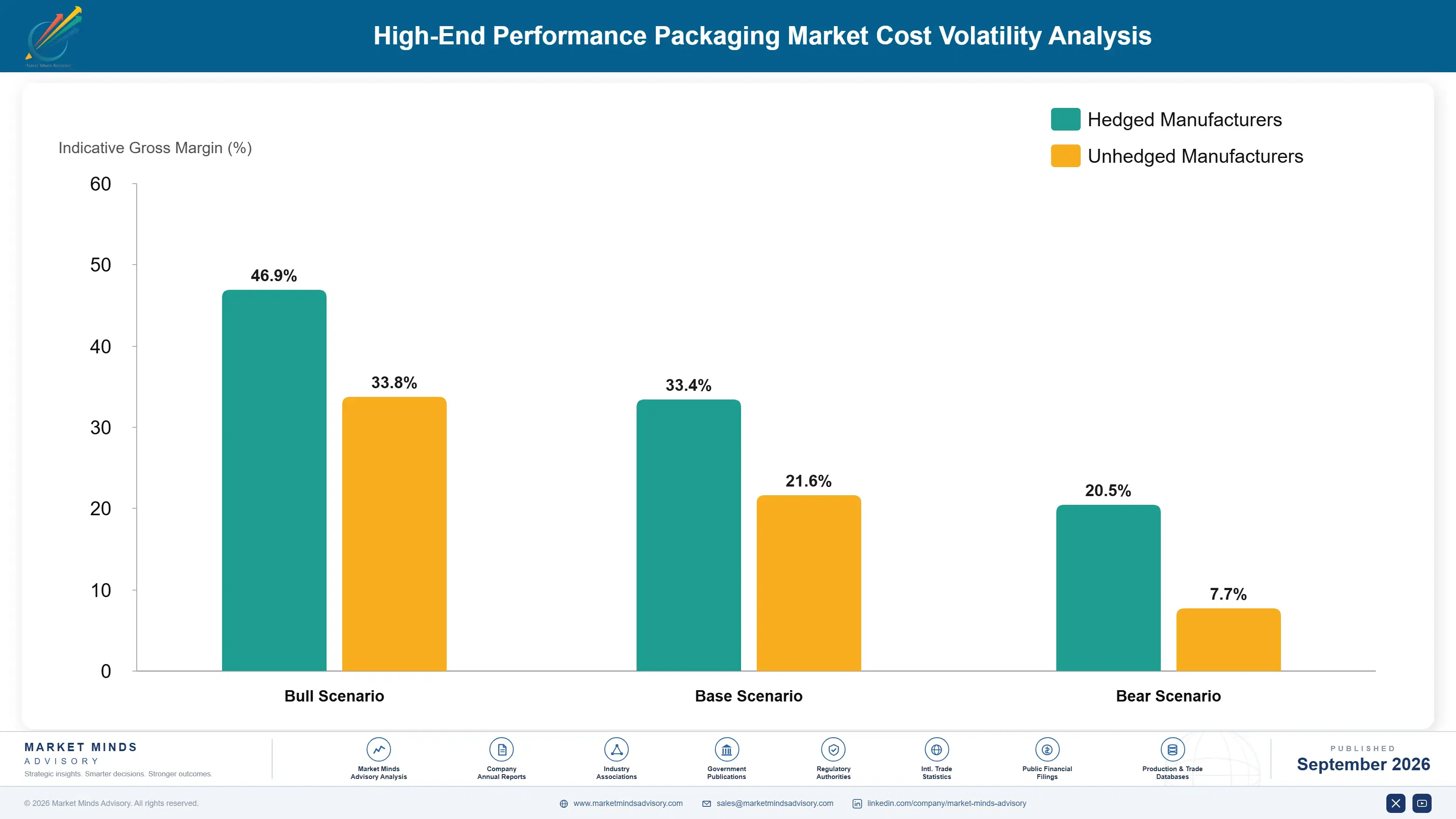
Glass And Aluminum Cost Exposure reflecting.

Virgin glass and aluminum represent the largest cost input for premium packaging, running an estimated 45 to 50 percent of converter cost of goods sold, sourced predominantly from European furnace operators and global aluminum smelters. Specialty resins for rigid plastics and finishing materials add a smaller additional share reflecting sustained brand owner investment across premium packaging programs as.
Glass furnace energy costs spiked sharply during 2022 as natural gas prices surged following reduced Russian pipeline supply into Europe, according to IEA data on European industrial energy costs. Several glass converters reported furnace operating cost increases exceeding 40 percent year over year, forcing some smaller converters to idle capacity temporarily while renegotiating brand customer pricing agreements reflecting sustained brand owner investment across premium packaging programs as adoption continues expanding across.

Smaller converters face a meaningful competitive disadvantage since they lack the scale to invest in electric furnace conversion or secure favorable long-term energy contracts, unlike Amcor and Gerresheimer which can spread capital investment across larger production volumes. This exposure varies by geography, with converters outside Europe facing less acute energy cost pressure given different regional energy market structures reflecting sustained brand owner investment across premium packaging programs.
high-end-performance-packaging-market-cost-volatility-analysis-1789992583449

Convert Glass Furnaces To Electric Operation Gradually reflecting.

Leading converters are gradually converting glass furnaces to electric operation, reducing natural gas dependence and insulating production costs from future gas price volatility. This requires substantial upfront capital investment but positions converters favorably against energy market disruption risk that continues affecting smaller competitors reliant on traditional gas furnaces reflecting sustained brand owner investment across premium.

Secure Long-Term Aluminum And Glass Supply Contracts reflecting.

Converters increasingly negotiate multi-year supply contracts with aluminum smelters and glass batch material suppliers, locking in predictable pricing that shields margin from spot market volatility. This approach requires strong balance sheet capacity to commit to volume guarantees but provides meaningful pricing stability for long-term brand customer contract planning reflecting sustained brand owner investment across premium.

Portfolio Architecture for Margin Defence

Portfolio economics split between commodity-adjacent standard rigid packaging carrying thin margins and premium specialty glass or refillable formats commanding substantially higher gross margins tied to design complexity and finishing capability. Volume plays chase unit shipment scale while premium plays extract value through closure technology and finishing services layered atop the base container reflecting sustained brand owner investment across premium packaging programs as.
The tension between chasing volume and defending premium positioning defines strategic choices across the converter landscape. Converters pursuing mass prestige beauty accounts must accept thinner unit margins in exchange for order scale, while boutique and limited edition specialists sacrifice volume for durable premium per-unit economics tied to design exclusivity reflecting sustained brand owner investment across premium packaging programs as adoption continues expanding across.

High-value margin pools concentrate in finishing services, closure hardware, and refill-compatible mechanism engineering rather than in base container manufacturing itself, reinforcing why converters increasingly treat the container as a platform for higher-margin technical and decorative value-add that compounds across the brand relationship lifecycle reflecting sustained brand owner investment across premium packaging programs as adoption continues expanding across cosmetics, spirits, and specialty food.

Standard Rigid Cosmetics Packaging

Mass-market rigid plastics and standard glass containers sold at accessible price points to mid-tier beauty brands, prioritizing unit shipment volume over per-unit margin capture reflecting sustained brand owner investment across premium packaging programs.
Gross Margin: 18-26%

Specialty Glass And Finished Packaging

Custom specialty glass bottles and rigid plastics with advanced tactile finishing sold to prestige beauty and spirits brands, carrying durable premium pricing tied to design exclusivity reflecting sustained brand owner investment across premium.
Gross Margin: 35-44%

Refillable And Mono-Material Systems

Refill-compatible closures and mono-material recyclable structures representing the fastest-growing and highest strategic priority portion of converter portfolio investment today reflecting sustained brand owner investment across premium packaging programs as adoption continues expanding.
Gross Margin: 42-52%
high-end-performance-packaging-market-portfolio-architecture-1789992583959

High-value Sub-segments and Strategic Watch-out

Refill-Compatible Closure Mechanisms

Small today but expanding rapidly as prestige brands launch permanent refill programs ahead of European reuse mandates, generating durable multi-year contract revenue once a closure mechanism is qualified into a product line reflecting sustained brand owner investment across premium packaging programs as adoption continues reflecting sustained.
Gross Margin: 48-56%

Premium Tactile Finishing Services

A substantial and steadily expanding segment as brands seek shelf differentiation through soft-touch coatings and embossing, generating durable margin premium over unfinished comparable packaging across most prestige categories reflecting sustained brand owner investment across premium packaging programs as adoption continues expanding across cosmetics, spirits, reflecting sustained.
Gross Margin: 40-48%

Standard Rigid Cosmetics Packaging

The largest volume segment today, anchored by broad mid-tier beauty brand adoption, though margin per unit remains comparatively thin relative to specialty glass and refillable segments across the wider portfolio reflecting sustained brand owner investment across premium packaging programs as adoption continues expanding reflecting sustained brand.
Gross Margin: 18-26%

Mixed-Material Decorative Finishes

A strategic watch-out segment given tightening extended producer responsibility fee structures penalizing non-recyclable construction. Converters must transition toward mono-material alternatives to avoid mounting compliance cost exposure reflecting sustained brand owner investment across premium packaging programs as adoption continues expanding across cosmetics, spirits, and specialty reflecting sustained.
Gross Margin: 30-38%

Recurring Orders Beyond The Launch reflecting.

Packaging orders alone rarely produce durable annuity economics on their own since brand product line refreshes happen every two to four years. Converters increasingly design multi-year closure and finishing supply agreements to generate revenue continuity between major redesign cycles, a strategy that mirrors long-term supplier relationships common in automotive component manufacturing reflecting sustained brand owner investment across premium packaging programs as adoption.
Adoption stickiness varies considerably by end-use vertical. Prestige spirits and fragrance brands show the deepest stickiness once a specific bottle mold and finishing process is qualified, since requalifying with a competing converter requires significant time and regulatory testing cost. Mass prestige cosmetics brands show shallower stickiness, often multi-sourcing standard containers across several converters simultaneously reflecting sustained brand owner investment across premium packaging programs as adoption continues expanding across.

Generational buyer shifts are also underway. Younger brand marketing executives show markedly stronger preference for visibly sustainable packaging than older cohorts, who historically prioritized pure aesthetic differentiation. Procurement decision authority is simultaneously shifting from packaging engineering teams toward sustainability and brand marketing leadership, changing how converters must position their value proposition reflecting sustained brand owner investment across premium packaging programs as adoption continues expanding across cosmetics, spirits, and.
high-end-performance-packaging-market-end-use-penetration-index-1789992584455

Where MMA Sees The Opportunity reflecting.

These are among the four positions where our research anticipates prominent divergence between winners and laggards over the coming forecast period. Each is grounded in the demand model, the regulatory perimeter, and the announced capacity pipeline.
01 / REFILL TECHNOLOGY INVESTMENT.

Invest In Closure Engineering Ahead Of Regulatory Deadlines reflecting sustained.

Converters investing early in refill-compatible closure and dispensing mechanism engineering are securing multi-year supply agreements as brands race to launch permanent refill programs ahead of European Union binding reuse targets taking effect through 2030. Converters that delay this investment risk losing qualification opportunities to competitors already embedded in brand development cycles. MMA views closure technology investment as the single highest leverage capital allocation decision available to converters over the next three years reflecting sustained brand owner investment across premium packaging programs as adoption continues expanding.
02 / MONO-MATERIAL FINISHING DEVELOPMENT.

Develop Mono-Material Alternatives To Decorative Mixed Finishes reflecting sustained brand.

Extended producer responsibility fee structures increasingly penalize mixed-material construction and decorative finishes that complicate recycling, creating a widening cost gap between compliant and non-compliant packaging options across European markets. Converters that develop mono-material finishing techniques achieving comparable visual effects will win share from slower competitors still carrying compliance fee exposure. MMA views this technical transition as increasingly urgent rather than optional for converters serving European prestige brand customers reflecting sustained brand owner investment across premium packaging programs as adoption continues expanding across cosmetics, spirits, and specialty food.
03 / ENERGY COST RESILIENCE PLANNING.

Convert Furnace Operations To Reduce Natural Gas Dependence reflecting sustained.

Glass furnace energy costs spiked sharply following Europe's natural gas supply disruption, and converters without electric furnace capability remain exposed to future volatility that smaller competitors cannot easily absorb. Larger converters investing in electric furnace conversion are positioning themselves favorably against future energy market disruption while smaller rivals continue struggling with unpredictable operating costs. MMA views furnace conversion as a durable competitive advantage rather than merely a compliance cost for converters with sufficient capital reflecting sustained brand owner investment across premium packaging programs as adoption continues expanding.
04 / PRESTIGE CATEGORY CAPACITY PLANNING.

Expand Specialty Capacity Toward Fastest-Growing Prestige Categories reflecting sustained brand.

Prestige beauty and spirits category growth across emerging market consumer bases directly drives packaging order volume, since these brands specify premium materials and finishing at a far higher rate than mass-market competitors. Converters that expand specialty capacity toward these fastest-growing categories will capture disproportionate order growth relative to competitors focused on slower-growing standard packaging segments. MMA views capacity planning aligned with prestige category growth as more valuable than broad-based capacity expansion across all segments reflecting sustained brand owner investment across premium packaging programs as adoption continues expanding.

Engagement Snapshot From the Field

A live engagement with an industry participant carrying material or product regulatory and market exposure ahead of a defining policy shift, showing how our research translates into a defensible multi-year portfolio strategy.
MARKET MINDS ADVISORY · CLIENT ENGAGEMENT SUMMARY
High-End Performance Packaging Producer Strategic Portfolio Review and Transition Roadmap 2026·Investment Scenario on High-End Performance Packaging Exposure Evaluation 2025-26
CLIENT PROFILE
The client is a prestige fragrance house operating multiple flagship product lines across Europe and North America, evaluating whether to convert its top-selling fragrance line to a refillable format ahead of European Union reuse mandate deadlines taking effect over the coming years reflecting sustained brand owner investment across premium packaging programs as adoption continues expanding.
STRATEGIC CHALLENGE
The client needed to determine whether a refillable format could maintain the premium unboxing experience central to its brand positioning while meeting regulatory requirements and controlling incremental packaging development cost reflecting sustained brand owner investment across premium packaging programs as adoption continues expanding across cosmetics, spirits, and specialty food categories.
MMA APPROACH
MMA combined its primary consumer survey data with expert interviews across converter engineering teams and competing fragrance brands to benchmark refillable format consumer reception and closure mechanism reliability across comparable prestige launches already in market reflecting sustained brand owner investment across premium packaging programs as adoption continues expanding across cosmetics, spirits, and specialty food categories.
KEY FINDINGS
  1. Consumers rated refillable formats as equally or more premium than disposable alternatives when the refill mechanism itself carried visible quality cues reflecting sustained.
  2. Refill station retail infrastructure availability strongly influenced purchase intent, with consumers favoring brands offering in-store refill options reflecting sustained brand owner investment.
  3. Closure mechanism reliability across repeated refill cycles emerged as the primary technical risk requiring extended engineering validation before launch reflecting sustained brand owner.
  4. Younger consumers showed meaningfully higher willingness to pay a modest premium for refillable packaging than older demographic cohorts surveyed reflecting sustained brand.
CLIENT PROFILE
The client is a prestige fragrance house operating multiple flagship product lines across Europe and North America, evaluating whether to convert its top-selling fragrance line to a refillable format ahead of European Union reuse mandate deadlines taking effect over the coming years reflecting sustained brand owner investment across premium packaging programs as adoption continues expanding.
STRATEGIC CHALLENGE
The client needed to determine whether a refillable format could maintain the premium unboxing experience central to its brand positioning while meeting regulatory requirements and controlling incremental packaging development cost reflecting sustained brand owner investment across premium packaging programs as adoption continues expanding across cosmetics, spirits, and specialty food categories.
MMA APPROACH
MMA combined its primary consumer survey data with expert interviews across converter engineering teams and competing fragrance brands to benchmark refillable format consumer reception and closure mechanism reliability across comparable prestige launches already in market reflecting sustained brand owner investment across premium packaging programs as adoption continues expanding across cosmetics, spirits, and specialty food categories.
KEY FINDINGS
  1. Consumers rated refillable formats as equally or more premium than disposable alternatives when the refill mechanism itself carried visible quality cues reflecting sustained.
  2. Refill station retail infrastructure availability strongly influenced purchase intent, with consumers favoring brands offering in-store refill options reflecting sustained brand owner investment.
  3. Closure mechanism reliability across repeated refill cycles emerged as the primary technical risk requiring extended engineering validation before launch reflecting sustained brand owner.
  4. Younger consumers showed meaningfully higher willingness to pay a modest premium for refillable packaging than older demographic cohorts surveyed reflecting sustained brand.
RECOMMENDED STRATEGY
Phase 1: Phase one: develop and validate refill-compatible closure mechanism through extended reliability testing across repeated cycles reflecting sustained brand owner investment. Phase 2: Phase two: pilot refillable format at flagship retail locations offering in-store refill stations before broader rollout reflecting sustained brand owner. Phase 3: Phase three: expand refillable format across additional product lines based on pilot sell-through and consumer feedback data reflecting sustained brand.
OUTCOME
The client launched the refillable format at 25 flagship retail locations, reporting refill station adoption rates approximately 35 percent above initial forecast within two quarters (client-reported, unverified by MMA), and subsequently approved expansion to two additional fragrance product lines reflecting sustained brand owner investment across premium packaging programs as adoption continues expanding.

Frequently Asked Questions

Foundational context covering the market sizes, CAGR, scope, country, region and competition that inform every finding below. This section is provided to cover basics and most often pre-purchase conversations, answered from the MMA Primary Research Dataset.

What is the current size of the High-End Performance Packaging Market?

The global high-end performance packaging market is valued at 41.5 billion dollars in 2025, the base year for this report's forecast period reflecting sustained brand.

How large will the High-End Performance Packaging Market be by 2036?

MMA projects the market will reach approximately 82.97 billion dollars by 2036, driven by refillable format adoption and prestige category growth reflecting sustained brand owner investment.

What is the CAGR for the High-End Performance Packaging Market 2026 to 2036?

The market is forecast to grow at a compound annual growth rate of 6.5 percent between 2026 and 2036 under MMA's base case scenario reflecting sustained.

Which segment is growing fastest?

Refillable and reusable premium formats lead at a 10.5 percent CAGR, roughly 1.62 times the overall market rate, driven by European reuse mandates reflecting sustained.

Who are the major companies in the High-End Performance Packaging Market?

Amcor, Sealed Air, Berry Global, Gerresheimer, and WestRock hold leading positions, together with specialists including Verallia and Aptar Group reflecting sustained brand owner investment across.

Which country is growing fastest?

China leads at an 8.0 percent CAGR, supported by its specialty glass and rigid plastics manufacturing base serving both domestic and export brands reflecting sustained.

Report Segmentation Architecture

The full report scope spans multiple orthogonal segmentation dimensions, with cross-tabulated demand data provided for each dimension pair. Coverage extends further to regional breakdowns, trend trajectories, and the competitive detail needed to support segment-level decision-making.

By Product Type

  • Specialty Glass Packaging
  • Rigid Plastics Packaging
  • High-Barrier Flexible Structures
  • Refillable and Reusable Premium Formats
  • Premium Closures and Dispensing Systems
  • Finishing and Decoration Services

By End-Use Industry

  • Prestige Beauty and Cosmetics
  • Fragrance
  • Premium Spirits
  • Specialty Food
  • Luxury Personal Care
  • Premium Pharmaceuticals

By Commercial Dimension

  • Direct Brand Owner Contracts
  • Contract Packaging Manufacturer Channel
  • Design and Finishing Services
  • Closure and Component Supply

By Region

  • North America
  • Western Europe
  • East Asia
  • South Asia and Pacific
  • Latin America
  • Middle East and Africa
  • Eastern Europe

Scope, Methodology, and Coverage

Every figure in this report is reproducible from documented input assumptions. The scope below maps the historical period, the forecast horizon, the segmentation dimensions, and the countries covered, alongside the underlying primary and qualitative methodology.
Historical Period
2020 to 2025
Forecast Period
2026 to 2036
Base Year
2025 (USD billions; MMA Primary Research Dataset, September 2026)
Market Definition
This report covers rigid and flexible packaging engineered for premium and luxury brand positioning across cosmetics, prestige spirits, and specialty food categories, including specialty glass, rigid plastics, and high-barrier flexible structures. It excludes standard commodity packaging without premium finishing or barrier specification.
Quantitative Units
USD billions, unit shipments where cited
Segmentation Dimensions
Product Type, End-Use Industry, Commercial Dimension, Region
Regions Covered
North America, Western Europe, East Asia, South Asia and Pacific, Latin America, Middle East and Africa, Eastern Europe
Countries Covered
United States, France, Germany, Italy, China, Japan, India, Brazil, Mexico, and 30 additional countries
Key Companies Profiled
20
Quantitative Methodology
Primary survey, n=3,800 respondents, Q4 2025, six countries; demand-side model with trade association cross-validation
Qualitative Methodology
47 expert interviews, Q4 2025; applied to validate demand model assumptions, identify emerging dynamics, and assess competitive positioning
Report Format
PDF and XLSX data workbook (Word format preview document)
Publisher
Market Minds Advisory
Report Code
MMA-2026-PAC-118
Published
September 2026
Contact
sales@marketmindsadvisory.com | www.marketmindsadvisory.com

Purchase the full High-End Performance Packaging Market Report (2026 to 2036).

The full report provides comprehensive coverage of the global high-end performance packaging market across all segments, regions, and competitive dynamics outlined in this summary. It includes detailed converter profiles, pricing benchmarks, and quantified segment-level forecasts through 2036. These findings draw on MMA's primary survey of 3,800 respondents and 47 expert interviews conducted in the fourth quarter of 2025. Subscribers receive quarterly data updates tracking material cost trends and competitive positioning shifts as the market evolves. Regional appendices break out country-level detail across thirty nine markets covered in this study.
Segment-level revenue forecasts through 2036 reflecting sustained.
Twenty converter competitive profiles and benchmarking reflecting.
Country-level market sizing across 39 countries reflecting.
Quarterly data updates through subscription access reflecting.
Primary survey data across six countries reflecting.
Expert interview transcripts and analyst commentary reflecting.

Built For The People Who Decide

From boardroom strategy to bench-side execution, this report is read cover-to-cover by leaders shaping the next decade of their industry, turning demand scenarios, market dynamics and valuation benchmarks into decisions.
CXOs/ Presidents/ VPs/ Managers
M&A and Corporate Development
Strategy Teams and R&D Heads
Procurement and Product Directors
Regulatory and Compliance Leaders
Investor Relations and Equity Analysts