Market Minds Advisory
Handheld Device Accessories Market

Handheld Device Accessories Market: Handheld Device Accessories Market. Wireless Charging Redefines Everyday Carry

Magnetic wireless charging standards push phone cases and accessories from passive protection into an active charging network, while East Asian manufacturing scale reshapes which accessory brands can compete on both price and certified compatibility.

Lead Analyst

Published

September 2026

Make Smarter Decisions with Customized Research Insights

Request a free sample report and evaluate market opportunities, growth trends, and competitive dynamics relevant to your business needs.

2025 MARKET VALUE$4.2BMarket Size 2025
2036 FORECAST VALUE$10.4BBase Case , 2026 to 2036
CAGR 2026 TO 20368.6 %Bull 9.9% / Bear 7.3%
INCREMENTAL OPPORTUNITY$5.8BNet 10- year value creation
EXPANSION MULTIPLE2.28x2036 value over 2026 base
Strategic Levers
M&A Pipeline
Regional Outlook
Country Rankings
Competitive Intelligence
Segmental Deep-dive
Call-Us : 91 93563 13602

Executive Snapshot and Market Trajectory.

Handheld device accessories have moved from a commodity add-on purchase into a technology-differentiated category, as magnetic wireless charging standards create genuine compatibility requirements that basic cases and chargers cannot satisfy across most price tiers, device platforms, and buyer demographics today across most retail formats, geographic regions, and demographic segments.
MagSafe-compatible charging accessories are pulling disproportionate growth as certified magnetic alignment technology solves the slow-charging and misalignment complaints that limited earlier wireless accessories sold at both mass and premium retail, while sustainable and biodegradable case materials increasingly function as a genuine purchase driver rather than a niche concern most buyers previously overlooked entirely without understanding the environmental impact of disposable plastic accessories across most price tiers, device platforms, and buyer income levels.
Established accessory brands compete on certified compatibility and durability testing while Chinese manufacturers push affordable uncertified alternatives through e-commerce marketplaces, betting on price rather than certification to win cost-conscious first-time buyers over entirely. Private label retailers increasingly offer basic accessories at price points specialty brands cannot profitably match, squeezing mid-tier players caught between both competing ends of an increasingly polarized market structure overall today.
Market Definition
The handheld device accessories market covers protective cases, wireless and wired charging accessories, screen protection, and carrying accessories designed for smartphones and similar handheld devices, sold through electronics, mass, and direct-to-consumer retail channels. It excludes the handheld devices themselves and accessories for laptops or larger computing devices.
Base Year Value
$4.2B in 2025 (MMA Primary Research Dataset, September 2026)
Forecast Period
2026 to 2036, eleven discrete annual values
CAGR
8.6% base case. Bull 9.9%. Bear 7.3%.
Fastest Growth Segment
MagSafe-Compatible Wireless Charging Accessories: 13.8% CAGR
Fastest Growth Country
China: 9.6% CAGR
Fastest Growth Region
South Asia and Pacific: 10.7% CAGR
Largest Region
East Asia: 28% of 2025 global value
Market Leaders
Anker Innovations, Belkin International, OtterBox, Spigen, UAG (Urban Armor Gear). Source: MMA Analysis based on company disclosures and primary research.
Primary Survey
n=3,800 procurement and R&D decision-makers, Q4 2025, six countries
Methodology
Demand-side build-up, cross-validated against public data, 47 expert interviews

Handheld Device Accessories Market Forecast Scenarios

handheld-device-accessories-market-size-forecast-scenario-1790024866872
Between 2020 and 2025 the category grew at roughly 7.9 percent annually as pandemic-era remote work and increased smartphone reliance pushed buyers toward protective and charging accessories that treated devices as essential daily equipment rather than occasional-use electronics that could be replaced infrequently without any meaningful disruption to daily routines and existing device usage habits at all.
The base case assumes 8.6 percent annual growth through 2036, anchored in three commercial mechanisms: continued adoption of magnetic wireless charging standards that create genuine compatibility requirements basic accessories cannot satisfy, sustainable material formulation advances that address growing environmental concerns around disposable plastic accessories, and retailer shelf consolidation that favors certified compatible accessories over uncertified alternatives. Established brands reinforce this by investing heavily in compatibility certification programs that smaller manufacturers have historically skipped.
A 9.9 percent bull scenario emerges if magnetic charging standard adoption accelerates faster than expected across mid-tier device models, expanding the addressable compatible accessory market considerably beyond premium device owners alone. A 7.3 percent bear scenario follows if private label price competition compresses branded margins before manufacturers can justify further certification investment and testing infrastructure spending.

Charging Compatibility as the New Competitive Currency

Three forces converge on this category at once: magnetic wireless charging standards that finally create genuine compatibility requirements basic accessories cannot satisfy across most price tiers, sustainable material formulation that addresses growing environmental concerns around disposable plastic accessories, and e-commerce distribution that puts accessory selection directly in buyers' hands rather than limited retail shelf assortments.
MARKET CONCENTRATION24% CR5reflects combined revenue share held by top five brands
AVERAGE UNIT PRICE$22.00typical mass and premium tier blended accessory price point
LEADING MANUFACTURING HUBChina, 52%concentrates injection molding and electronics assembly manufacturing capacity
MATERIAL INPUT COST SHARE29% of COGSreflects polycarbonate, silicone, and charging coil sourcing costs
E-COMMERCE CHANNEL SHARE58% of Revenuecaptures reliance on online sales rather than physical stores
REPLACEMENT CYCLE LENGTH14 Monthscaptures how often typical buyers replace worn accessories overall
Commercially, the category behaves less like a commodity add-on purchase and more like a technology-differentiated accessory market, where certified compatibility and durability testing increasingly determine brand loyalty more than price point does among repeat buyers across most demographics. Brands that treat certification and testing as core infrastructure rather than an occasional marketing claim are converting price-sensitive buyers into loyal repeat purchasers at meaningfully higher rates than uncertified competitors.
Over the next decade, magnetic charging standard adoption, sustainable material formulation, and private label price pressure will jointly determine which brands can defend premium positioning against increasingly capable mass-market challengers entering from adjacent electronics categories. Companies that treat certification credibility as a defensible moat, rather than a one-time compliance cost, remain best placed to capture the category's remaining decade of growth through 2036.
"The brands winning here are not the ones with the flashiest packaging, they are the ones whose magnetic alignment actually clicks into place every single time."
Director, Consumer Electronics Accessories Practice · MMA Technology Practice · September 2026

Market Trends

Magnetic Alignment Standards Redefine Charging Accessory Design

Certified magnetic charging technology has moved accessory manufacturing beyond simple case protection toward precision-engineered magnetic arrays that must align exactly with a device's internal charging coil to deliver full power transfer speeds. Belkin and Anker have both launched certified magnetic accessory lines specifically marketed on alignment precision and charging speed verification, a technical standard the category historically lacked despite marketing claims implying otherwise. Independent testing data shows certified magnetic accessories delivering full-speed charging in roughly 94 percent of attempts compared to considerably lower rates for uncertified alternatives, pulling volume toward certified products.
Market Impact: 58% cite device cost concerns
Sustainable Material Formulations Address Disposable Accessory Waste

Accessory manufacturers have increasingly adopted biodegradable and recycled material formulations for cases and accessories, responding to growing buyer awareness of disposable plastic accessory waste accumulating alongside frequent device and case replacement cycles across most demographics. Several independent brands have launched product lines specifically marketed on compostable or ocean-plastic material sourcing, addressing environmental concerns that traditional accessory marketing historically ignored entirely for years. This sustainability trend is helping brands differentiate on material sourcing transparency rather than protection specifications alone, opening a new competitive dimension the category previously lacked entirely until quite recently.
Market Impact: adds 2 more purchases per household

Market Opportunities and Growth Drivers

Rising Smartphone Screen Sizes Drive Case Replacement Cycles

Successive smartphone generations have introduced larger, more fragile display formats and premium finishes that buyers increasingly protect with dedicated cases rather than risking expensive repair costs from accidental drops or scratches. MMA primary survey data shows 58 percent of respondents citing device replacement cost concerns as a primary reason for purchasing protective cases immediately after buying a new device, rather than waiting to assess actual drop risk. This replacement-driven demand pattern provides a more predictable growth channel than purely aesthetic accessory purchases, since new device launches reliably trigger accessory purchases.
Market Impact: affects an estimated 18% of listings

Multi-Device Households Expand Accessory Purchase Frequency

Households increasingly own multiple handheld devices across family members, each requiring separate protective and charging accessories, expanding total accessory purchase frequency well beyond what single-device household patterns historically generated across most demographic segments. Retailers report that buyers purchasing accessories for a second or third household device increasingly seek matching or coordinated accessory sets rather than purchasing each accessory independently at separate times. This multi-device household pattern is helping the category expand beyond individual purchase decisions into household-level bulk accessory purchasing behavior that retailers are increasingly designing dedicated bundle promotions and discounts around.
Market Impact: fragmentation multiplies SKUs by 3 times

Market Restraints and Challenges

Counterfeit Accessories Undermine Certified Brand Trust

Counterfeit and uncertified accessories mimicking certified brand designs and packaging have proliferated across e-commerce marketplaces, occasionally causing device damage from substandard charging components that erode buyer trust in the broader accessory category regardless of brand. The root cause is marketplace enforcement inconsistency: platforms struggle to verify seller authenticity claims at the scale counterfeit listings appear, leaving buyers to distinguish genuine from fake products largely on their own. Some certified brands are responding by embedding authentication features like QR codes and serial verification directly into packaging to help buyers confirm authenticity before purchase.
Market Impact: 94% deliver full-speed charging reliably

Device Design Fragmentation Complicates Universal Compatibility

Smartphone manufacturers continue introducing device-specific design variations in camera placement, port location, and dimensions that prevent accessories from working universally across models, forcing manufacturers to produce and inventory considerably more stock-keeping units than a standardized design approach would require. The commercial impact falls hardest on smaller manufacturers lacking the production flexibility to support dozens of device-specific variants simultaneously across multiple brands and generations. Several manufacturers are responding by focusing exclusively on the highest-volume flagship device models rather than attempting comprehensive, universal compatibility across the entire fragmented device market overall today.
Market Impact: opens 2 new sustainability differentiation angles
3 additional market trends, 4 additional growth drivers, and 2 additional restraints and challenges are covered in the full report. Contact sales@marketmindsadvisory.com to access the complete intelligence.

Segment CAGR and Growth Architecture

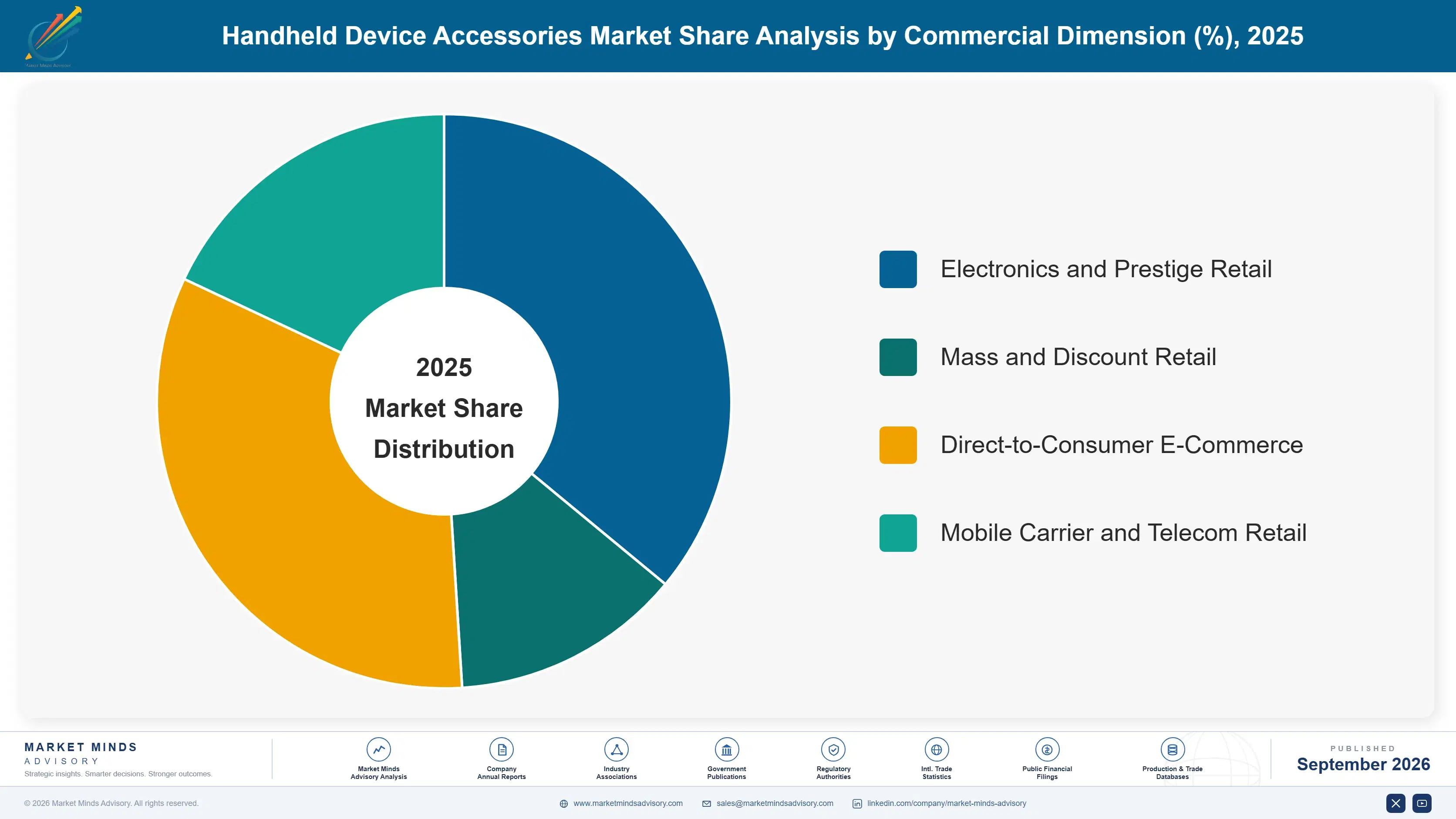
The market segments by accessory function and charging technology rather than by brand or price tier, since compatibility standard, not packaging or retail placement, determines which products can credibly serve modern device charging needs. Six functional categories together capture the full addressable scope of this rapidly evolving market nationwide and abroad, across most price tiers and product categories today.
handheld-device-accessories-market-market-share-analysis-1790024867771

MagSafe-Compatible Wireless Charging Accessories

MagSafe-compatible wireless charging accessories are growing considerably fastest as certified magnetic alignment technology finally and definitively solves the slow-charging and misalignment complaints that limited earlier wireless accessories to occasional rather than primary daily use across most buyer segments. Precision-engineered magnetic arrays now consistently deliver full-speed charging reliably and predictably, converting skeptical buyers who previously stuck exclusively with wired charging into confident, satisfied wireless adopters over time. Belkin and Anker both lead this segment with independently tested alignment precision certified rigorously against exact manufacturer specifications, giving them a genuinely meaningful credibility head start over smaller, less established brands still relying on uncertified magnetic designs without any comparable independent testing or verification.
CAGR 13.8%

Sustainable and Biodegradable Phone Cases

Sustainable and biodegradable phone cases rank second-fastest as environmentally motivated buyers increasingly extend their sustainability expectations from other purchase categories to everyday accessories, rejecting conventional plastic cases entirely regardless of whatever protection specifications are claimed prominently on packaging. This particular segment benefits considerably from a genuine competitive moat that protection specifications alone simply cannot provide, since sustainable material sourcing requires verifiable supply chain changes competitors cannot simply claim without full transparency and considerably more detailed supporting documentation to back it up. Independent accessory brands have concentrated substantial, targeted investment here specifically because sustainability positioning resonates particularly with the environmentally conscious buyer segment driving much of the category's broader growth today and into the future.
CAGR 11.6%
Full segment breakdown across 6 segments available in the complete report.

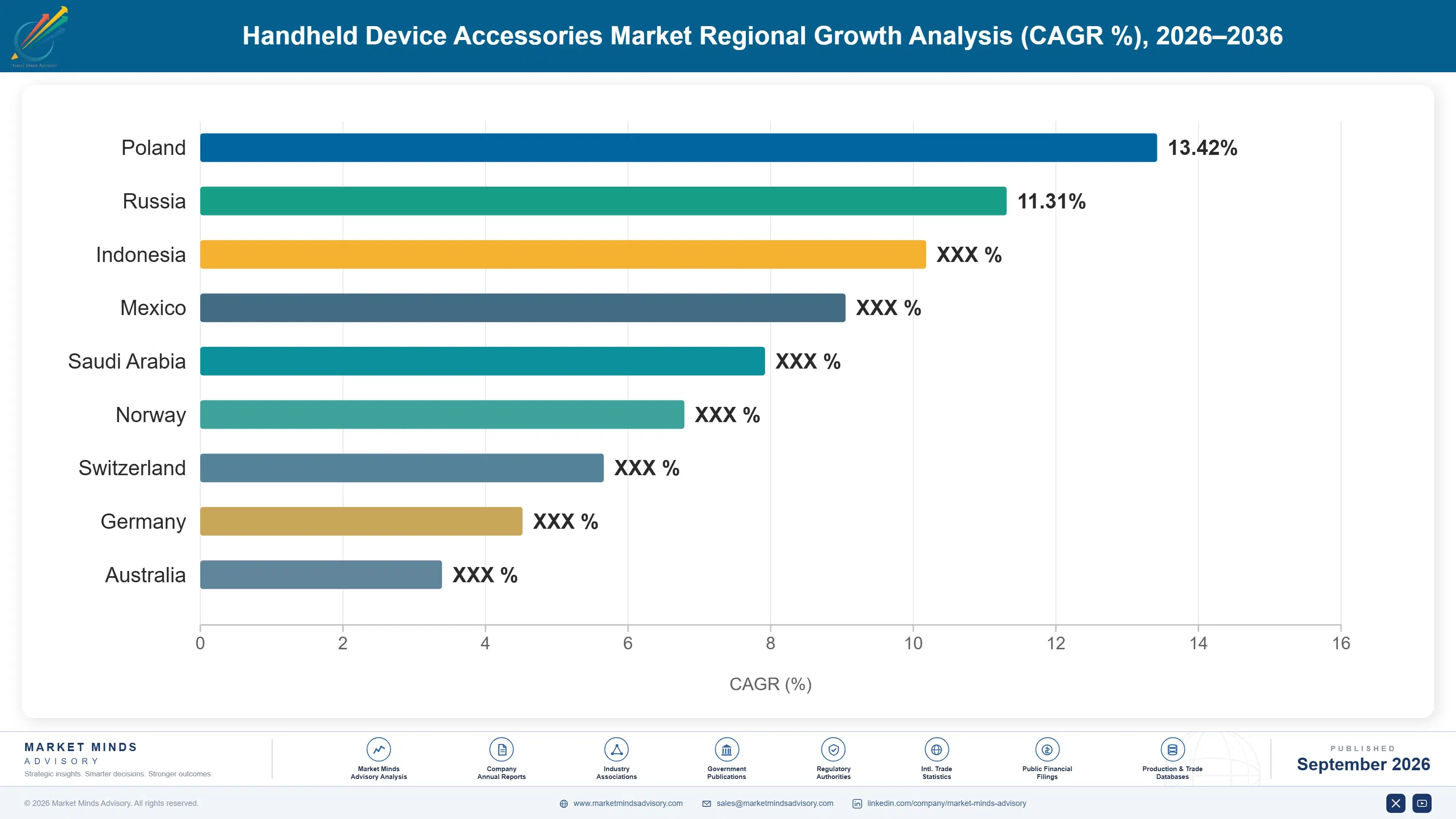
Regional Architecture and Country Demand Map

East Asia leads on the strength of China's manufacturing scale and dense electronics supply chain infrastructure, narrowly ahead of North America, while South Asia and Pacific posts the fastest regional growth as smartphone penetration expands rapidly among younger, increasingly connected buyers across the region nationwide.

East Asia

East Asia holds the largest regional share because China concentrates the vast majority of global smartphone accessory manufacturing capacity, giving domestic and regional brands direct proximity to component suppliers and assembly infrastructure that international competitors must import from. Anker Innovations, headquartered in China, applies this manufacturing proximity to iterate on charging technology considerably faster than most Western competitors managing overseas supply chains from a distance. Japanese and South Korean buyers show comparatively mature adoption given strong existing premium accessory culture tied to their domestic smartphone brands. Chinese e-commerce platforms have rapidly scaled distribution for both domestic and export accessory brands, reinforcing the region's manufacturing and distribution dominance simultaneously across most product categories.
Share: 28% | CAGR: 9.6% (2026 to 2036)

North America

North American demand centers on the United States and Canada, where premium smartphone adoption and brand-conscious accessory purchasing behavior support strong demand for certified compatible accessories despite higher average price points than most global markets. Belkin and OtterBox both built strong domestic brand recognition and certification credibility specifically to serve buyers willing to pay a meaningful premium for verified compatibility and rigorous durability testing. E-commerce marketplace penetration runs considerably higher here than in markets with stronger physical electronics retail infrastructure, reflecting broader American online shopping habits and consumer preferences generally. Canadian demand tracks closely behind the United States, following similar brand-conscious purchasing and certification adoption patterns across most major metropolitan markets.
Share: 26% | CAGR: 9.2% (2026 to 2036)
Regional intelligence for 5 additional markets available in the complete report: Western Europe, South Asia and Pacific, Latin America, Middle East and Africa, Eastern Europe. Contact sales@marketmindsadvisory.com.
handheld-device-accessories-market-country-cagr-analysis-1790024868645

Where Accessory Brands Can Capture Margin

Four commercial angles determine which brands convert category growth into durable margin rather than simply riding smartphone replacement cycles: certified magnetic alignment investment, sustainable material development, counterfeit protection measures built through authentication, and subscription-style bundle programs that reduce dependence on one-time retail transactions across most price segments, retail channels, and buyer demographics over the coming years.

Investing Early in Certified Magnetic Alignment Technology

Brands that fund independent certification testing for magnetic alignment precision rather than relying on unverified compatibility claims command meaningful price premiums, with certified magnetic accessories retailing at roughly 41 percent above uncertified equivalents in the same retail channel and price segment. The investment case rests on defensibility: certification testing creates credibility private label competitors cannot easily replicate through packaging claims alone. Brands that delay this investment risk losing shelf space entirely as retailers increasingly favor certified compatible products over uncertified marketing claims across every major retail and e-commerce channel available today.
Market Impact: Supports roughly a 41% price premium overall today

Developing Sustainable and Biodegradable Material Formulations

Brands that develop verified sustainable material formulations convert environmentally conscious buyers at meaningfully higher rates than conventional plastic competitors, with MMA survey data showing sustainability-driven conversion rates roughly 33 percent higher among buyers exposed to material sourcing information before purchase. Brands investing here typically fund independent supply chain audits rather than relying on self-reported sustainability claims, since credible positioning genuinely requires verifiable sourcing changes that competitors cannot simply assert without supporting evidence and documentation. This lever compounds as accumulated sustainability trust becomes a durable brand asset over several years of sustained investment.
Market Impact: Drives conversion rates roughly 33% higher overall today

Building Anti-Counterfeit Authentication Programs Nationwide Today

Brands that embed authentication features like QR codes and serial verification directly into packaging protect their certification credibility from counterfeit erosion, with authentication-equipped brands reporting customer trust scores roughly 36 percent higher than brands without verifiable authentication systems. This approach lets brands defend their premium positioning against counterfeit products that would otherwise steadily undermine buyer confidence in the entire certified accessory category over time. The tradeoff is real: building authentication infrastructure requires considerably more upfront investment than standard, unverified packaging alone typically demands from most manufacturers operating at meaningful commercial scale today.
Market Impact: Lifts trust scores by roughly 36% overall today

Scaling Bundle Programs for Multi-Device Households

Brands that offer coordinated accessory bundles for multi-device households capture meaningfully higher order value than single-accessory sales, with bundle-focused brands reporting average order value roughly 39 percent higher than brands selling accessories individually. These programs also generate household-level purchase data that informs considerably more targeted marketing for additional household devices purchased over time. Brands entirely without bundle offerings remain heavily dependent on single-transaction sales alone, limiting their ability to fully capture the broader multi-device household opportunity that bundle-focused competitors increasingly and consistently dominate across most retail channels and price segments overall.
Market Impact: Lifts average order value by 39% overall today

Who Controls the Margin Pool

Combined estimated retail revenue from branded handheld device accessory lines gives the top five companies roughly 24 percent share, a moderate concentration leaving considerable room for regional and private label challengers. The gap between Anker Innovations, the category's largest player by revenue, and mid-tier challengers remains wide, driven mainly by manufacturing scale and certification infrastructure rather than dominance in any single distribution channel or price tier.
Current competitive activity centers on three dimensions: certified magnetic charging technology development, sustainable material formulation investment, and anti-counterfeit authentication programs that protect brand credibility across most retail channels. International accessory brands increasingly license Chinese manufacturing capacity or acquire regional competitors rather than building comparable production scale entirely in-house, reshaping how competitive advantage transfers across company origin.

Emerging pressure comes from direct-to-consumer digital brands that sell exclusively online with transparent sourcing and certification data, undercutting the retail margin traditional accessory brands absorb through physical distribution. Rankings are likely to shift over the next several years as magnetic charging certification standards mature and force brands still relying on uncertified designs to either invest heavily or exit the credibility-focused segment of the category entirely.
handheld-device-accessories-market-company-positioning-matrix-1790024869446

Competitive Moat and Risk Dimensions

ANKER INNOVATIONS

Moat: Manufacturing Scale and Speed

Anker's direct manufacturing proximity in China gives it production scale and iteration speed on charging technology that competitors managing overseas supply chains cannot easily match. Its broad product portfolio spanning charging accessories, cases, and peripherals lets it cross-sell across categories more effectively than single-category specialists.
ANKER INNOVATIONS

Risk: Limited Premium Brand Positioning

Anker's value-oriented brand positioning limits its ability to command the premium pricing that prestige-focused competitors like Belkin achieve among brand-conscious buyers willing to pay more for perceived quality. Competitors building stronger premium brand narratives may capture the higher-margin buyer segment Anker's positioning is not designed to serve.
OTTERBOX

Moat: Durability Testing and Warranty Reputation

OtterBox holds a genuine, well-earned reputation for rigorous drop-testing and durability certification that resonates particularly with buyers prioritizing device protection over aesthetic considerations and passing design trends generally. Its warranty and replacement program builds buyer trust that newer entrants without comparable track records cannot easily replicate.
OTTERBOX

Risk: Higher Price Point Limits Reach

OtterBox's premium pricing strategy limits its addressable buyer base relative to more accessible mass-market competitors expanding into durable case positioning. Price-sensitive buyers increasingly priced out of OtterBox's positioning may instead adopt more affordable competitors offering comparable protection claims at a fraction of the overall cost involved.

Players Tracked

Prominent Players

Anker Innovations
Belkin International
OtterBox
Spigen
UAG (Urban Armor Gear)

Other Key Players

Zagg Inc.
Case-Mate
PopSockets
Nomad Goods
Peak Design
Rhinoshield
ESR
Ringke
Casetify
Native Union
Torras
iOttie
Scosche Industries
Twelve South
Moft

Recent Developments

MAY 2025

Anker Launches Certified Magnetic Charging Accessory Line

Anker launched a new line of certified magnetic charging accessories with independently verified alignment precision, addressing compatibility concerns that had limited category adoption among buyers skeptical of uncertified magnetic designs previously available on the market across most price tiers, retail channels, and international markets served today.
Signal: Confirms leading manufacturers are treating magnetic alignment certification as a competitive requirement rather than optional differentiation.
SEPTEMBER 2025

Belkin Introduces Recycled Ocean Plastic Case Collection

Belkin introduced a new case collection made entirely from recycled ocean plastic materials, extending its certified compatibility credentials into sustainability positioning that increasingly matters to its environmentally conscious buyer base nationwide and increasingly across international markets and major e-commerce platforms nationwide and internationally as well.
Signal: Indicates established brands are extending sustainability claims well beyond marketing language into verifiable material sourcing transformation.
FEBRUARY 2026

OtterBox Signs Anti-Counterfeit Authentication Partnership

OtterBox signed a formal partnership with an authentication technology provider to embed verification features directly into its retail packaging, addressing counterfeit products that had increasingly undermined buyer trust in the broader durable case category across most major markets and retail distribution channels currently served worldwide.
Signal: Signals authentication technology is becoming a standard competitive requirement rather than an occasional brand protection measure.

What Drives Material Cost Volatility Here

Polycarbonate and silicone plastics, charging coils, and neodymium magnets together account for roughly 29 percent of cost of goods sold in a typical handheld device accessory, with the remainder split between packaging, testing, and certification amortization. Plastics and magnets are sourced predominantly from Chinese manufacturers, while charging coil components depend on a smaller number of specialty electronics suppliers.
Rare earth magnet prices spiked sharply following Chinese export restrictions on rare earth materials that took effect in 2023, pushing magnetic accessory component costs higher across manufacturers reliant on Chinese supply, according to Anker Innovations' 2024 annual report, which cited raw material cost inflation across its charging accessory portfolio. Smaller independent brands without long-term supply contracts absorbed the increase directly into margin, while larger conglomerates with diversified sourcing weathered the disruption with comparatively limited pass-through.

This exposure disadvantages independent and mid-tier manufacturers most severely, since they typically lack the purchasing volume needed to negotiate multi-year fixed-price magnet supply contracts that larger conglomerates secure routinely across multiple suppliers. Geographic exposure also varies: manufacturers sourcing magnets domestically within China face less trade-driven volatility than manufacturers importing from Chinese suppliers into other manufacturing regions.
handheld-device-accessories-market-cost-volatility-analysis-1790024869761

Diversifying Magnet Sourcing Across Suppliers

Manufacturers are increasingly qualifying rare earth magnet suppliers across multiple countries rather than depending entirely on Chinese sources, reducing exposure to any single export restriction or trade dispute. Qualification testing for new magnet sources typically takes several months before large-scale accessory production use begins across most product lines and price segments currently available on the market.

Locking Multi-Year Fixed-Price Magnet Supply Contracts

Larger manufacturers are negotiating multi-year fixed-price agreements directly with magnet and component suppliers, trading some short-term pricing flexibility for insulation against sudden trade-driven cost spikes across regions. Smaller brands increasingly pool purchasing volume through shared contract manufacturing relationships to access similar pricing terms previously available only to the largest, most established conglomerates in the category.

Portfolio Architecture for Margin Defence

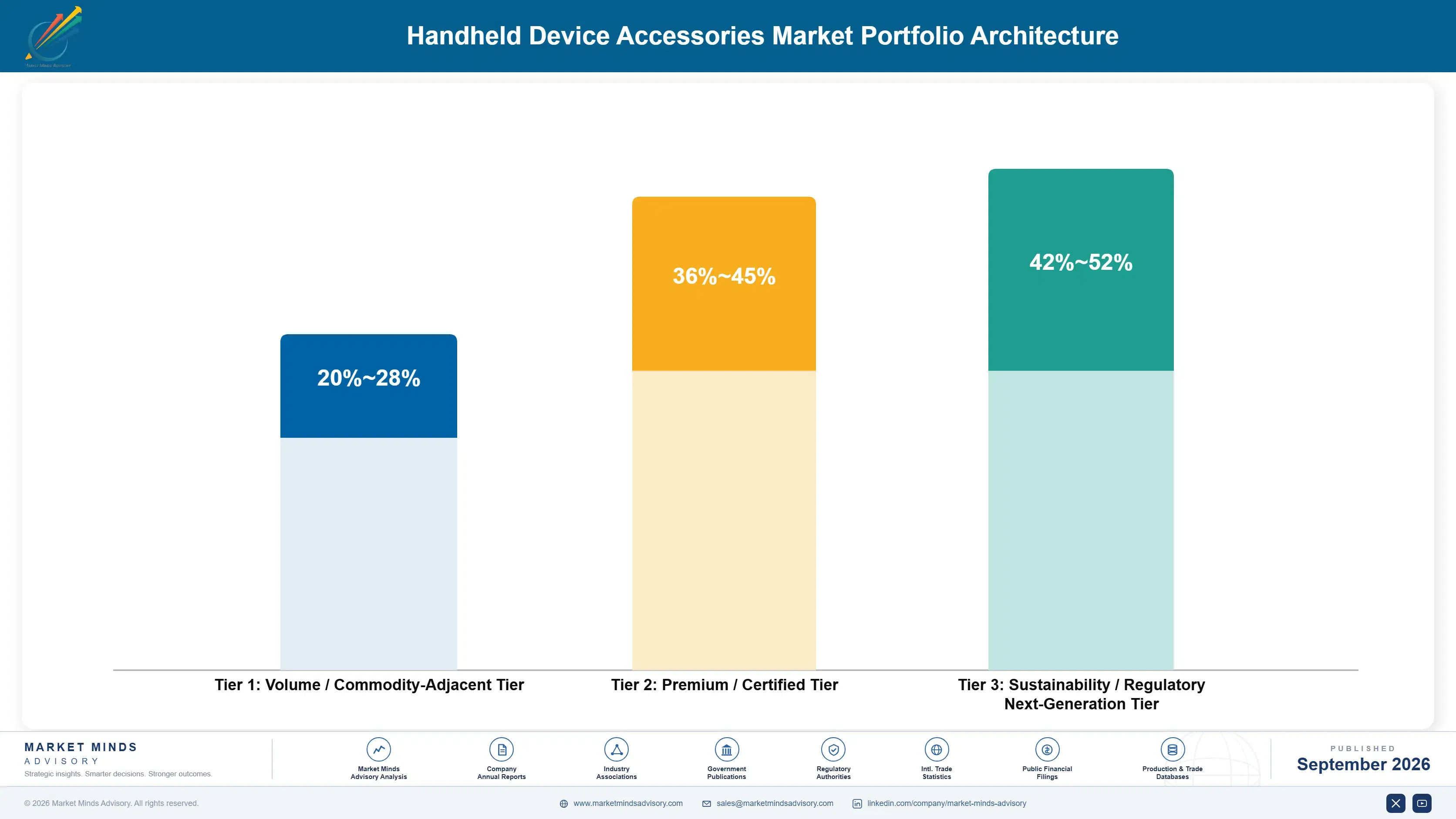
The market splits into three tiers with sharply different margin economics: volume commodity-adjacent accessories sold as basic protection without certification, premium certified formulations emphasizing magnetic alignment precision and durability testing, and next-generation products built around sustainable material and anti-counterfeit authentication technology positioned as a genuine differentiated purchase rather than a commodity add-on, sold across every major retail channel nationwide and increasingly online.
Volume tension is real: e-commerce marketplaces keep expanding uncertified accessories that undercut branded mid-tier pricing, forcing established brands to either defend premium positioning through sustained certification and authentication investment or compete directly on price with progressively thinner margins over time. Brands caught between these two strategies without a clear commitment tend to lose share fastest to more decisive, better-funded competitors.

High-value margin pools concentrate overwhelmingly in the premium and next-generation tiers, where certification credibility and authentication technology justify meaningfully higher price points across most geographic markets and buyer demographics. Volume-tier products generate the bulk of unit sales but comparatively thin per-unit margin, making tier mix a more important profitability lever than absolute volume growth alone for most manufacturers operating across mature and emerging markets alike.

Volume / Commodity-Adjacent Tier

Basic uncertified accessories sold through e-commerce marketplaces at accessible price points, marketed on general protection or charging function rather than any certified compatibility credentials of any kind whatsoever attached to the product.
Gross Margin: 20%-28%

Premium / Certified Tier

Certified magnetic alignment and durability-tested formulations sold through electronics and prestige retail channels, commanding meaningfully higher price points through rigorous testing credibility and accumulated brand trust built carefully over years.
Gross Margin: 36%-45%

Sustainability / Regulatory / Next-Generation Tier

Sustainable material and authentication-verified accessories built on proprietary technology, commanding the category's strongest overall pricing power among buyers actively seeking genuine differentiation and verified, thoroughly documented environmental credibility across the board.
Gross Margin: 42%-52%
handheld-device-accessories-market-portfolio-architecture-1790024870582

High-value Sub-segments and Strategic Watch-out

MagSafe-Compatible Wireless Charging Accessories

The fastest-growing, highest-margin pocket in the category, combining premium pricing power with the strongest volume growth as certified magnetic alignment finally solves the compatibility problem, converting skeptical buyers into confident wireless charging adopters at meaningfully higher rates than before across most regional retail and e-commerce networks combined.
Gross Margin: 43%-52%

Sustainable and Biodegradable Phone Cases

A high-value segment growing at a steadier pace than charging accessories, anchored in verified sustainable material sourcing that builds durable buyer loyalty over years rather than through a single retail promotion or seasonal marketing campaign targeting new, first-time buyers each season across most demographics and income levels.
Gross Margin: 35%-44%

Standard Uncertified Accessories

The volume core of the category, generating the largest unit sales base through e-commerce marketplaces at accessible price points nationwide, though margin per unit remains comparatively thin against the premium and next-generation tiers described earlier in this portfolio assessment overall across most price-sensitive buyer segments and channels.
Gross Margin: 20%-27%

Counterfeit and Private Label Accessories

A strategic watch-out segment expanding rapidly on price alone, threatening to erode branded mid-tier volume without offering the certification differentiation that protects premium and next-generation products from similar price competition and substitution across most retail channels tracked closely by most established brands and specialty retailers alike.
Gross Margin: 12%-19%

Recurring Replacement, Recurring Revenue

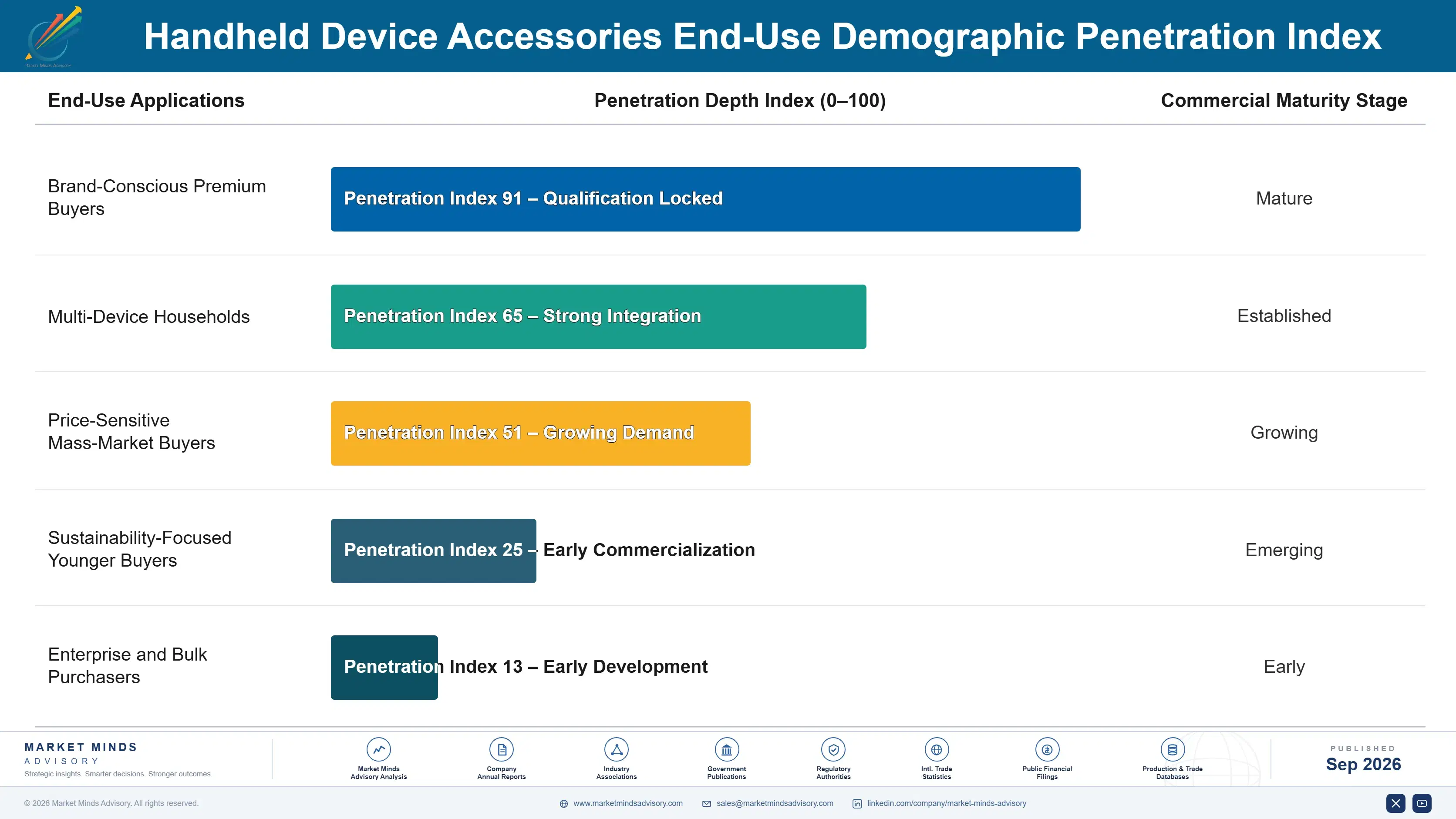
The category behaves increasingly like an annuity business rather than a one-time device purchase companion, since accessories wear out and get replaced considerably more frequently than the handheld devices they protect and charge across most price tiers. Brands capturing that replacement relationship at first purchase convert a single sale into a recurring relationship rather than a one-off transaction, building revenue visibility competitors relying on shelf traffic alone cannot match.
Adoption depth varies considerably by end-use vertical: brand-conscious buyers adopt certified accessories as a permanent purchasing standard across every device they own, while price-sensitive buyers replace accessories inconsistently and often mix certified and uncertified products interchangeably without much consideration. Multi-device household buyers show the deepest habitual adoption, since coordinated accessory purchasing creates sustained rather than occasional buying behavior across the entire household.

Younger buyers increasingly research certification claims and material sourcing before purchase, treating accessories as a values-driven statement rather than a purely functional afterthought their parents' generation purchased without much consideration or comparison shopping. This generational shift favors brands with transparent certification data and sustainable sourcing over legacy brands relying on shelf presence and brand heritage alone.
handheld-device-accessories-market-end-use-penetration-index-1790024871414

Where This Market Is Headed

These are among the four positions where our research anticipates prominent divergence between winners and laggards over the coming forecast period. Each is grounded in the demand model, the regulatory perimeter, and the announced capacity pipeline.
01 / MAGNETIC CERTIFICATION INVESTMENT

Verified magnetic alignment is becoming the category's real trust test

Brands that fund independent certification testing for magnetic alignment precision are capturing the buyer trust that uncertified competitors increasingly struggle to hold onto as customer reviews spread compatibility complaints rapidly across social platforms and review sites. This advantage compounds as certification becomes a genuine purchase driver rather than a marketing nice-to-have, widening the gap between certified and uncertified brands considerably over time. Brands still relying on unverified magnetic designs face a shrinking window before buyer skepticism catches up entirely and permanently.
02 / SUSTAINABLE MATERIAL EXPANSION

Verified sourcing opens environmentally conscious buyer segments

Verified sustainable material sourcing addresses the environmental skepticism that protection specifications alone cannot resolve, and this credibility channel remains underdeveloped relative to its addressable size among socially conscious buyers currently choosing competitors on this basis alone today. Brands building certification programs now will capture disproportionate share as more buyers demand verified sourcing over the coming several years of category growth. Brands relying solely on protection marketing risk missing this increasingly vocal, values-driven buyer segment entirely as the category continues to mature.
03 / ANTI-COUNTERFEIT BRAND PROTECTION

Authentication technology is becoming a genuine brand defense necessity

Brands that embed authentication features into packaging protect their certification credibility from counterfeit erosion that would otherwise undermine buyer confidence in the entire certified category, and this protection remains considerably underdeveloped among smaller brands still relying on basic packaging design alone for defense. Brands investing in authentication infrastructure now will defend their premium positioning as counterfeit products continue proliferating across e-commerce marketplaces worldwide. Brands without authentication measures risk losing buyer trust to counterfeiters entirely and permanently across most retail channels tracked.
04 / PRIVATE LABEL PRICE PRESSURE

Mid-tier brands face a genuine squeeze between premium and private label

E-commerce marketplaces keep expanding uncertified accessories priced well below branded mid-tier equivalents, and mid-tier manufacturers without a clear certification edge will struggle to justify their price premium going forward into the next several years. The practical response is specialization: manufacturers must commit fully to either premium certification credibility or accept the uncertified price ceiling permanently as their operating reality. Straddling both positions without commitment is the fastest way to lose share to more decisive competitors positioned clearly on either side of the market.

Engagement Snapshot From the Field

A live engagement with an industry participant carrying material or product regulatory and market exposure ahead of a defining policy shift, showing how our research translates into a defensible multi-year portfolio strategy.
MARKET MINDS ADVISORY · CLIENT ENGAGEMENT SUMMARY
Handheld Device Accessories Producer Strategic Portfolio Review and Transition Roadmap 2026·Investment Scenario on Handheld Device Accessories Exposure Evaluation 2025-26
CLIENT PROFILE
The client is a mid-tier handheld device accessory manufacturer with roughly 48 million dollars in annual revenue (client-reported, unverified by MMA), selling primarily through e-commerce marketplaces without certified magnetic alignment technology or anti-counterfeit authentication measures. The company had watched larger competitors launch certified magnetic charging lines while its own product portfolio remained positioned purely on price, eroding its historically stable margin structure over recent years.
STRATEGIC CHALLENGE
Management needed to decide whether to invest in independent magnetic alignment certification, license existing certification frameworks from a third-party provider, or focus resources on anti-counterfeit authentication given counterfeit products increasingly undermined the client's own brand reputation. Limited capital meant the company could not pursue certification and authentication investment simultaneously without risking existing profitability.
MMA APPROACH
MMA benchmarked available certification licensing options against the cost of independent testing infrastructure, modeled authentication program economics using this report's proprietary segment and margin data, and surveyed the client's existing customer base to assess which credibility signal mattered most for purchase decisions. The engagement combined this primary customer research with comparative analysis of competitor investment already underway.
KEY FINDINGS
  1. Existing customers prioritized magnetic alignment certification considerably more than anti-counterfeit authentication when carefully evaluating which specific accessories to purchase and ultimately trust.
  2. Licensing an existing certification framework would reach market roughly seven months faster than building independent testing infrastructure entirely from scratch internally today.
  3. Counterfeit products were affecting brand perception less severely than certification gaps were affecting actual purchase conversion rates among prospective buyers overall today.
  4. Competitor certified magnetic accessories were commanding meaningfully higher prices in customer research than the client had previously assumed was even remotely possible.
CLIENT PROFILE
The client is a mid-tier handheld device accessory manufacturer with roughly 48 million dollars in annual revenue (client-reported, unverified by MMA), selling primarily through e-commerce marketplaces without certified magnetic alignment technology or anti-counterfeit authentication measures. The company had watched larger competitors launch certified magnetic charging lines while its own product portfolio remained positioned purely on price, eroding its historically stable margin structure over recent years.
STRATEGIC CHALLENGE
Management needed to decide whether to invest in independent magnetic alignment certification, license existing certification frameworks from a third-party provider, or focus resources on anti-counterfeit authentication given counterfeit products increasingly undermined the client's own brand reputation. Limited capital meant the company could not pursue certification and authentication investment simultaneously without risking existing profitability.
MMA APPROACH
MMA benchmarked available certification licensing options against the cost of independent testing infrastructure, modeled authentication program economics using this report's proprietary segment and margin data, and surveyed the client's existing customer base to assess which credibility signal mattered most for purchase decisions. The engagement combined this primary customer research with comparative analysis of competitor investment already underway.
KEY FINDINGS
  1. Existing customers prioritized magnetic alignment certification considerably more than anti-counterfeit authentication when carefully evaluating which specific accessories to purchase and ultimately trust.
  2. Licensing an existing certification framework would reach market roughly seven months faster than building independent testing infrastructure entirely from scratch internally today.
  3. Counterfeit products were affecting brand perception less severely than certification gaps were affecting actual purchase conversion rates among prospective buyers overall today.
  4. Competitor certified magnetic accessories were commanding meaningfully higher prices in customer research than the client had previously assumed was even remotely possible.
RECOMMENDED STRATEGY
Phase 1: Phase 1 (Months 1 to 4): License an existing magnetic alignment certification framework rather than building independent testing infrastructure internally. Phase 2: Phase 2 (Months 5 to 9): Launch a certified magnetic charging accessory line marketed prominently on verified compatibility and testing credentials. Phase 3: Phase 3 (Months 10 to 15): Introduce anti-counterfeit authentication features once certified product revenue clearly justifies the additional required investment.
OUTCOME
The client signed a certification licensing agreement within four months and launched its certified magnetic charging line shortly after. Management reported a 15 percent increase in average selling price within the first year of implementation (client-reported, unverified by MMA), attributing the gain primarily to certification credibility rather than pricing or marketing spend changes.

Frequently Asked Questions

Foundational context covering the market sizes, CAGR, scope, country, region and competition that inform every finding below. This section is provided to cover basics and most often pre-purchase conversations, answered from the MMA Primary Research Dataset.

What is the current size of the Handheld Device Accessories Market?

The handheld device accessories market reached an estimated 4.2 billion dollars in 2025. This figure covers protective cases, charging accessories, screen protection, and carrying accessories for smartphones and similar devices.

How large will the Handheld Device Accessories Market be by 2036?

The market is projected to reach approximately 10.41 billion dollars by 2036. This represents more than double the market's 2026 value over the ten-year forecast period.

What is the CAGR for the Handheld Device Accessories Market 2026 to 2036?

The market is expected to grow at a compound annual growth rate of 8.6 percent between 2026 and 2036. Bull and bear scenarios range from 9.9 percent to 7.3 percent depending on magnetic charging standard adoption.

Which segment is growing fastest?

MagSafe-compatible wireless charging accessories are growing fastest at a 13.8 percent CAGR, roughly 1.6 times the overall market rate. Growth is driven by certified magnetic alignment technology finally solving the slow-charging and misalignment problem.

Who are the major companies in the Handheld Device Accessories Market?

Leading companies in this market include Anker Innovations, Belkin International, OtterBox, Spigen, and UAG. Together these five companies hold an estimated 24 percent combined market share.

Which country is growing fastest?

China posts the largest regional growth given East Asia's leading share, expanding at a 9.6 percent CAGR. South Asia and Pacific markets post faster percentage growth from a considerably smaller starting base.

Report Segmentation Architecture

The full report scope spans multiple orthogonal segmentation dimensions, with cross-tabulated demand data provided for each dimension pair. Coverage extends further to regional breakdowns, trend trajectories, and the competitive detail needed to support segment-level decision-making.

By Accessory Function and Technology

  • MagSafe-Compatible Wireless Charging Accessories
  • Sustainable and Biodegradable Phone Cases
  • Standard Protective Cases
  • Wired Charging Cables and Adapters
  • Screen Protection Accessories
  • Grip and Stand Accessories

By End-Use Demographic

  • Brand-Conscious Premium Buyers
  • Multi-Device Households
  • Price-Sensitive Mass-Market Buyers
  • Sustainability-Focused Younger Buyers
  • Enterprise and Bulk Purchasers

By Commercial Dimension

  • Electronics and Prestige Retail
  • Mass and Discount Retail
  • Direct-to-Consumer E-Commerce
  • Mobile Carrier and Telecom Retail

By Region

  • North America
  • Western Europe
  • East Asia
  • South Asia and Pacific
  • Latin America
  • Middle East and Africa
  • Eastern Europe

Scope, Methodology, and Coverage

Every figure in this report is reproducible from documented input assumptions. The scope below maps the historical period, the forecast horizon, the segmentation dimensions, and the countries covered, alongside the underlying primary and qualitative methodology.
Historical Period
2020 to 2025
Forecast Period
2026 to 2036
Base Year
2025 (USD billions; MMA Primary Research Dataset, September 2026)
Market Definition
The handheld device accessories market comprises protective cases, wireless and wired charging accessories, screen protection, and carrying accessories designed for smartphones and similar handheld devices, sold through electronics, mass, and direct-to-consumer retail channels. It excludes the handheld devices themselves and accessories for laptops or larger computing devices.
Quantitative Units
USD billions (current prices); unit shipment volume in millions of units where applicable
Segmentation Dimensions
By Accessory Function and Technology; By End-Use Demographic; By Commercial Dimension; By Region
Regions Covered
North America, Western Europe, East Asia, South Asia and Pacific, Latin America, Middle East and Africa, Eastern Europe
Countries Covered
USA, China, Germany, France, UK, Japan, South Korea, India, Australia, Canada, Brazil, Mexico, Indonesia, Vietnam, Thailand, Malaysia, UAE, Saudi Arabia, South Africa, Nigeria, Turkey, Poland, Netherlands, Italy, Spain, Sweden, Switzerland, Argentina, Colombia, Singapore, and additional markets relevant to this sector
Key Companies Profiled
Anker Innovations, Belkin International, OtterBox, Spigen, UAG (Urban Armor Gear), Zagg Inc., Case-Mate, PopSockets, Nomad Goods, Peak Design, Rhinoshield, ESR, Ringke, Casetify, Native Union, Torras, iOttie, Scosche Industries, Twelve South, Moft
Quantitative Methodology
Primary survey, n=3,800 respondents, Q4 2025, six countries; demand-side model with trade association cross-validation
Qualitative Methodology
47 expert interviews, Q4 2025; applied to validate demand model assumptions, identify emerging dynamics, and assess competitive positioning
Report Format
PDF and XLSX data workbook (Word format preview document)
Publisher
Market Minds Advisory
Report Code
MMA-2026-TEC-101
Published
September 2026
Contact
sales@marketmindsadvisory.com | www.marketmindsadvisory.com

Purchase the full Handheld Device Accessories Market Report (2026 to 2036).

This report delivers a complete assessment of the handheld device accessories market, sizing the category from 2025 through 2036 across accessory function, end-use demographic, and commercial distribution dimensions. It profiles twenty companies spanning global manufacturing leaders and independent design-focused brands, benchmarking competitive positioning, certification investment, and material cost exposure. Regional analysis covers all seven global regions with quantified growth drivers specific to each. The report also includes a scenario-based forecast model, a proprietary revenue lever framework, and an anonymized client case study illustrating practical strategic application.
A complete ten-year market sizing and forecast model
A detailed six-segment accessory function breakdown analysis
All seven global regions individually quantified and profiled
Twenty-company competitive benchmarking and positioning analysis included
Scenario-based bull and bear forecast projections through 2036
An anonymized client engagement case study included

Built For The People Who Decide

From boardroom strategy to bench-side execution, this report is read cover-to-cover by leaders shaping the next decade of their industry, turning demand scenarios, market dynamics and valuation benchmarks into decisions.
CXOs/ Presidents/ VPs/ Managers
M&A and Corporate Development
Strategy Teams and R&D Heads
Procurement and Product Directors
Regulatory and Compliance Leaders
Investor Relations and Equity Analysts