Market Minds Advisory
Hair Care Packaging Market

Hair Care Packaging Market: Refill Systems Redraw Shampoo Container Economics

Brands are specifying refillable pump systems over single-use bottles as retailers push plastic reduction targets, forcing legacy bottle converters to defend commodity volume against reusable formats that regulators and consumers increasingly favour.

Lead Analyst

Bilal Shaikh

Published

September 2026

Make Smarter Decisions with Customized Research Insights

Request a free sample report and evaluate market opportunities, growth trends, and competitive dynamics relevant to your business needs.

2025 MARKET VALUE$12.5BMarket Size 2025
2036 FORECAST VALUE$26.3BBase Case , 2026 to 2036
CAGR 2026 TO 20367.0 %Bull 8.2% / Bear 5.8%
INCREMENTAL OPPORTUNITY$12.9BNet 10- year value creation
EXPANSION MULTIPLE1.97x2036 value over 2026 base
Strategic Levers
M&A Pipeline
Regional Outlook
Country Rankings
Competitive Intelligence
Segmental Deep-dive
Call-Us : 91 93563 13602

Executive Snapshot and Market Trajectory

Hair care packaging has moved past its single-use-default phase, as refillable pouch and pump systems demonstrate commercially viable consumer adoption, and brands increasingly specify reusable formats wherever retailer sustainability targets or shelf positioning genuinely rewards the switch over holding to legacy single-use bottle formats.
Refillable and reusable systems are pulling ahead of every other product category, growing considerably faster than virgin plastic bottles as brands prioritise plastic reduction credentials and consumer loyalty programmes over unit cost alone. Berry Global and AptarGroup still anchor much of the installed converter relationships on decades of packaging trust, but Albéa is undercutting integration complexity to win premium beauty accounts, and East Asia consumes the largest share of that spending given its manufacturing concentration.
Competitive character splits between diversified packaging majors defending broad container portfolios and specialist refill system converters competing on dispensing mechanism reliability and recycled content certification. Regulatory clearance pathways for new material formulations remain more predictable than brand procurement cycles, which still vary considerably by individual company in how aggressively they mandate supplier material transition across their full category roster over this coming decade of packaging change.
Market Definition
The hair care packaging market covers primary packaging containers and dispensing systems used for shampoo, conditioner, hair color, hair oil, and hair styling products, including refillable and reusable pouch and pump systems, PCR and virgin plastic bottles, aluminum and metal packaging, sachets and flexible pouches, and glass packaging. It excludes secondary and tertiary shipping packaging not used for retail display and packaging for skin care or oral care products.
Base Year Value
$12.5B in 2025 (MMA Primary Research Dataset, August 2026)
Forecast Period
2026 to 2036, eleven discrete annual values
CAGR
7.0% base case. Bull 8.2%. Bear 5.8%.
Fastest Growth Segment
Refillable and Reusable Pouch and Pump Systems: 12.5% CAGR
Fastest Growth Country
India: 11.0% CAGR
Fastest Growth Region
South Asia and Pacific: 9.0% CAGR
Largest Region
East Asia: 32% of 2025 global value
Market Leaders
Berry Global Inc., AptarGroup Inc., Albéa S.A., Silgan Holdings Inc., Gerresheimer AG. Source: MMA Analysis based on company annual reports.
Primary Survey
n=3,800 procurement and R&D decision-makers, Q4 2025, six countries
Methodology
Demand-side build-up, cross-validated against public data, 47 expert interviews

Hair Care Packaging Market Forecast Scenarios

hair-care-packaging-market-size-forecast-scenario-1787304418479
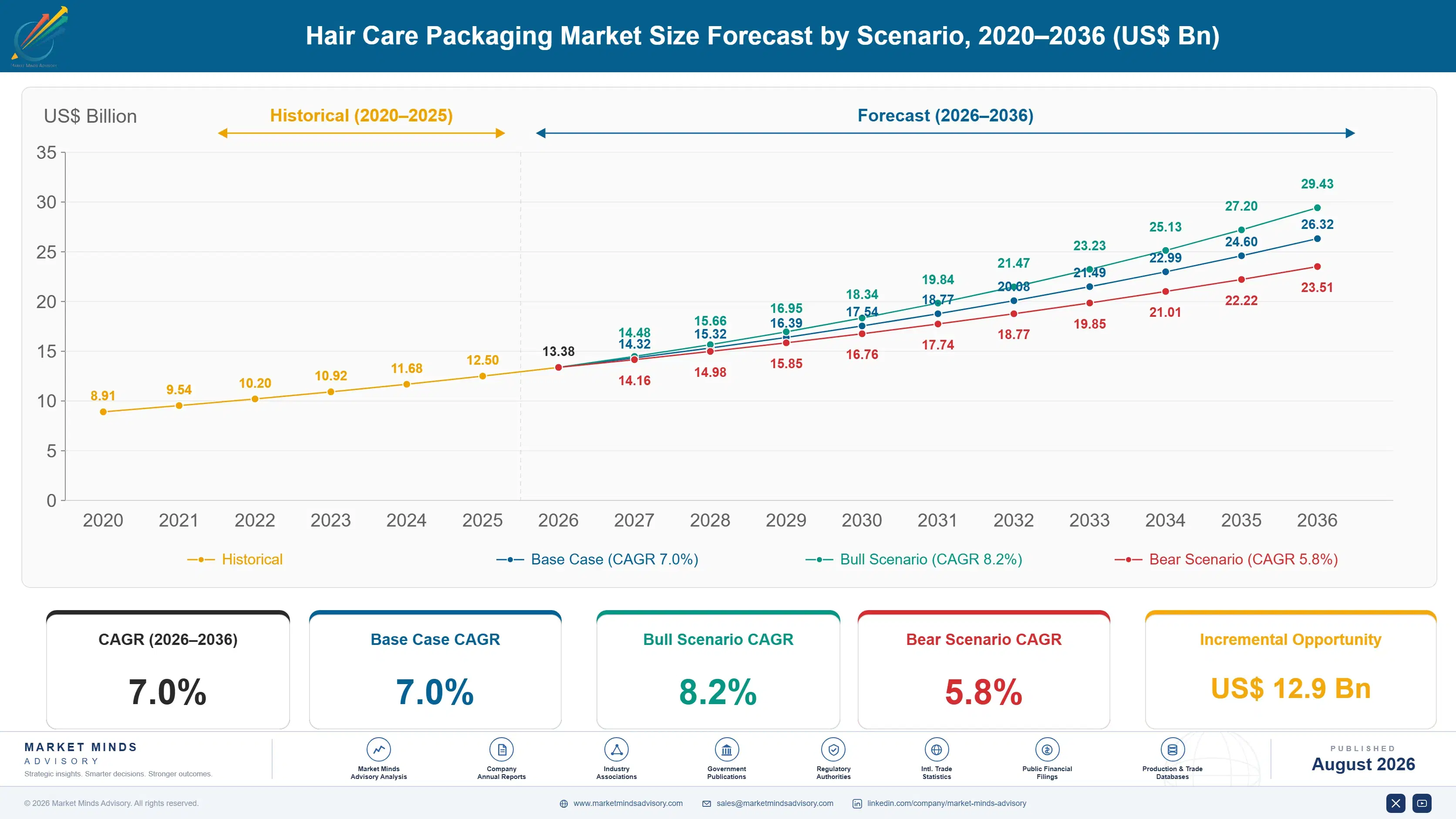
Between 2020 and 2025 the market grew at a 6.3% historical CAGR, tracking general personal care packaging demand closely through most of the period. Refill system adoption only gained real momentum from 2023 onward as retailer plastic reduction commitments tightened considerably across major grocery and beauty chains. Reporting that period remained limited given fragmented brand procurement disclosure practices industry-wide.
The base case carries the market to a 7.0% CAGR through 2036 on three mechanisms. First, brands increasingly specify refillable and reusable systems over single-use bottles as retailer sustainability targets and consumer expectations both intensify. Second, rising global hair care product consumption keeps expanding the underlying packaged volume across developing and mature markets alike. Third, expanding formal beauty retail infrastructure in developing markets keeps pulling new demand into standardised, branded packaging formats rather than unbranded bulk alternatives.
The bull case reaches 8.2% if additional retailers adopt binding plastic reduction commitments faster than currently modelled, pulling forward converter material transition across a compressed timeline. The bear case falls to 5.8% if refill system cost premiums stay elevated, keeping demand tied mostly to standard bottle replacement rather than new format specification across the broader category.

Why Refill Systems Are Redrawing Packaging Format Choice

Three forces converge on hair care packaging demand at once. Brands increasingly specify refillable and reusable systems over single-use bottles as retailer sustainability targets and consumer expectations both intensify across every major market. Rising global hair care product consumption keeps expanding the underlying packaged volume across developing and mature economies alike. And expanding formal beauty retail infrastructure in developing markets keeps pulling new demand into standardised,
MARKET CONCENTRATIONCR5: 36%Many regional converters keep this category quite fragmented
AVERAGE SELLING PRICEUSD 0.08 to 1.20 per unitPricing spans standard bottles to premium refill systems
TOP PRODUCING COUNTRY SHAREChina: 24% of units producedPersonal care packaging manufacturing capacity remains heavily concentrated
CAPACITY UTILISATION70 to 82%Certified production lines run consistently near committed capacity
INPUT COST SHARE32 to 40% of COGSResin feedstock and pump mechanism components dominate recurring cost
REPLACEMENT CYCLE LENGTHSingle-use or multi-fill formatFormats range from disposable to reusable across product lines
Commercially, the market behaves like specialised personal care packaging rather than generic container manufacturing. Buyers specify by dispensing mechanism reliability, recycled content certification, and shelf presentation quality rather than by price alone, because a leaking pump or poorly performing refill system damages a brand's premium positioning and drives costly returns across its network. That specification discipline protects margin for makers with genuine mechanism engineering depth and keeps generic converters out of premium brand contracts entirely.
Over the next decade, refill mechanism reliability becomes the real differentiator between makers. Makers that combine reusable format engineering with verified recycled content certification are capturing the premium brand contracts increasingly dominating new specification spending, while single-use-only makers lose ground even where basic protective performance remains broadly comparable across categories.
"A refill pouch that leaks in a customer's bathroom doesn't just cost a return, it costs the brand loyalty that justified the whole refill programme, so buyers are paying up for mechanism reliability long before they ever ask about the price per unit."
Director, Personal Care Packaging and Sustainable Materials Practice · MMA Packa

Market Trends

Refillable Systems Replace Single-Use Bottle Formats

Beauty brands increasingly specify refillable pump and pouch systems over single-use plastic bottles, since refill formats satisfy retailer plastic reduction commitments that increasingly apply to personal care packaging across multiple major grocery and beauty chains worldwide. That retailer pressure is pulling procurement toward refill system converters even where unit cost runs higher than comparable single-use bottles, because non-compliant packaging risks removal from premium shelf placement entirely and permanently. Berry Global and AptarGroup have both expanded refillable system product lines specifically to capture brands replacing single-use-only packaging programmes across their full category roster this year.
Market Impact: Covers 50%+ of retail
Recycled Content Certification Becomes A Brand Procurement Requirement

Major beauty and personal care brands increasingly require third-party verified recycled content certification before approving any new packaging supplier, since unverified sustainability claims expose brands to genuine greenwashing liability under tightening consumer protection regulation across multiple jurisdictions worldwide. That certification requirement has converted recycled content from a marketing claim into a standing procurement compliance line item that suppliers cannot avoid regardless of manufacturing scale or regional presence. Albéa and Silgan Holdings have both expanded certified PCR product lines specifically to serve brands navigating tightening sustainability disclosure regulation across their key markets this year.
Market Impact: Adds 10-15% volume yearly

Market Opportunities and Growth Drivers

Retailer Plastic Reduction Commitments Mandate Material Transition

Major grocery and beauty retail chains in multiple markets increasingly commit to binding plastic reduction targets that require suppliers to demonstrate measurable progress toward reusable or recycled packaging formats, moving refillable systems from a discretionary sustainability upgrade into a standing commercial requirement that suppliers cannot avoid regardless of category or contract size. That mandate has converted packaging material specification from a brand marketing decision into a standing retailer compliance obligation that procurement teams must satisfy before a product can even reach shelf placement. Retailers increasingly build material compliance verification into new supplier onboarding processes across their full network this year.
Market Impact: Raises unit cost 25-45%

Rising Global Hair Care Consumption Expands Packaged Volume

Global hair care product consumption keeps expanding as rising disposable income and expanding beauty retail infrastructure pull more consumers into branded packaged formats rather than unbranded bulk alternatives, particularly across markets where formal beauty retail is still developing rapidly and unevenly. That volume growth is considerably less cyclical than most packaging categories, since personal care product demand persists regardless of broader economic conditions or discretionary spending pressure across most income brackets. Brands increasingly build packaging capacity planning around demographic and consumption trend projections rather than short-term seasonal volume alone across their forecasting cycles.
Market Impact: Limits use to 40%

Market Restraints and Challenges

Refill System Cost Premium Limits Adoption In Price-Sensitive Markets

Refillable pouch and pump systems cost considerably more per unit than conventional single-use bottles, a price gap that price-sensitive retail markets absorb poorly across thin personal care margins, the root cause being that refill mechanism engineering requires meaningfully more manufacturing investment and precision tooling than standard bottle injection moulding processes. That cost gap keeps refill adoption concentrated in premium or sustainability-positioned brands, leaving price-sensitive market segments dependent on single-use packaging regardless of underlying environmental preference. Makers are responding with process efficiency investment aimed specifically at closing that cost gap over the coming years.
Market Impact: Cuts plastic use 50-70%

Dispensing Mechanism Reliability Concerns Limit Premium Format Trust

Refill pump and pouch mechanisms still face genuine reliability concerns among some consumers and brands regarding leak resistance and dispensing consistency over repeated refill cycles, a functional concern that limits adoption regardless of sustainability positioning, the root cause being that mechanical refill systems introduce more failure points than a simple sealed single-use bottle. That reliability concern keeps some brands specifying single-use formats for their most premium product lines even while converting lower-risk categories to refill systems. Makers are responding by developing improved seal and valve technologies aimed at closing the reliability gap.
Market Impact: Requires 85%+ certification coverag
3 additional market trends, 4 additional growth drivers, and 3 additional restraints and challenges are covered in the full report. Contact sales@marketmindsadvisory.com to access the complete intelligence.

Segment CAGR and Growth Architecture

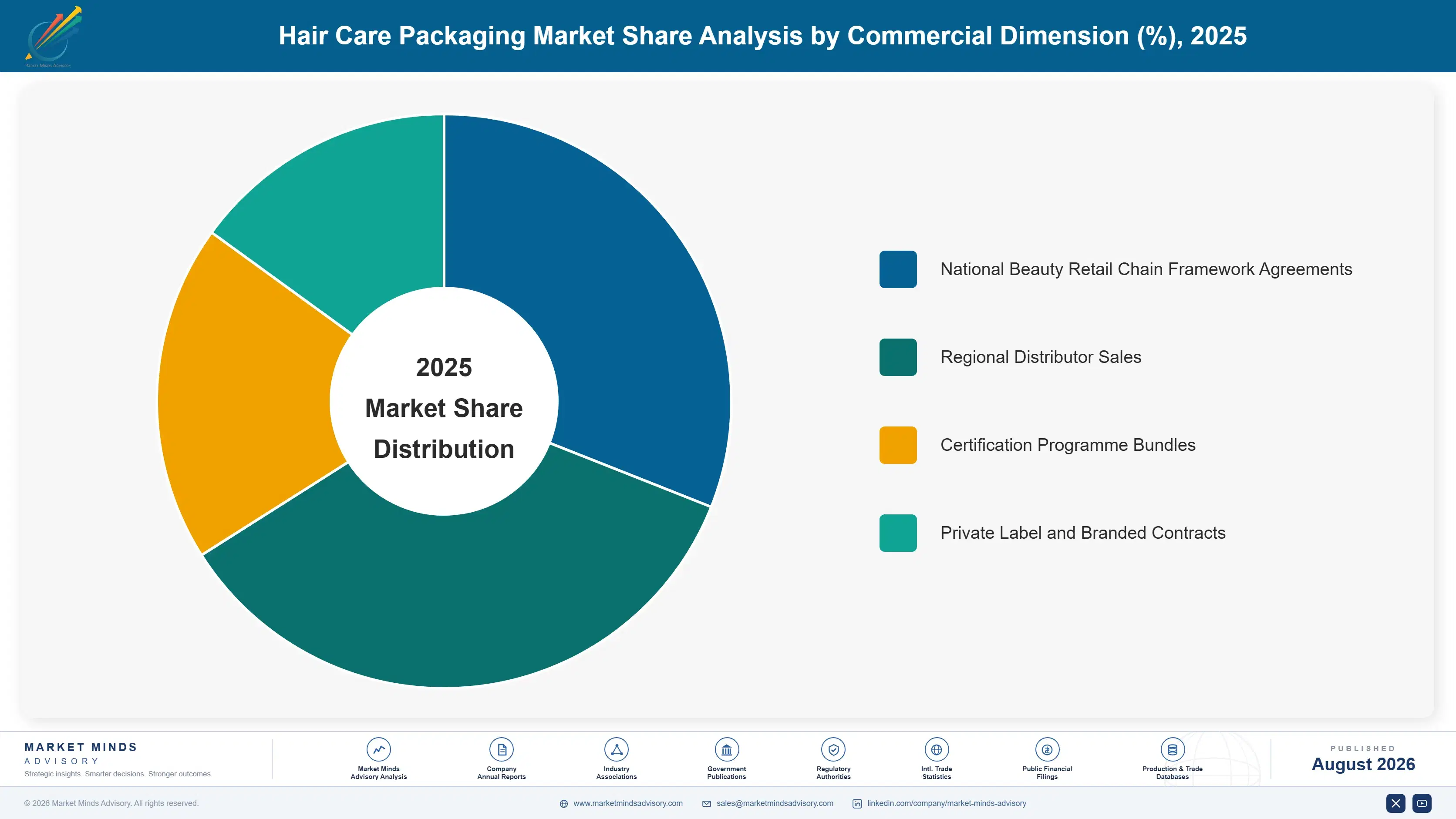
Segmentation follows format type, the single engineering logic that determines dispensing mechanism, material composition, and reuse profile of each container across the category as a whole. Refillable systems, PCR bottles, virgin plastic bottles, aluminum packaging, and sachets each carry genuinely distinct performance profiles evaluated consistently throughout this report on one comparable manufacturing basis throughout.
hair-care-packaging-market-market-share-analysis-1787304419014

Refillable and Reusable Pouch and Pump Systems

Refillable and reusable pouch and pump systems grow fastest at 12.5%, about 1.79 times the market's 7.0% overall rate, as brands increasingly specify reusable formats that satisfy retailer plastic reduction commitments applying to personal care packaging across major chains. Berry Global still commands the largest share of refill system installations on established manufacturing scale, but AptarGroup and Albéa are expanding competing platforms into overlapping premium brand contract categories once considered defensible. Falling production costs are letting more mid-size brands justify their first refill programme without waiting for large retailer minimum order commitments to materialise. Adoption concentrates first among premium and sustainability-positioned brands before spreading into broader mainstream product lines across the category.
CAGR 12.5%

PCR Plastic Bottles

PCR plastic bottles grow second-fastest at 10.5%, driven by brands seeking recycled content credentials without the mechanism complexity and consumer education requirements that refillable systems demand of both retailer and shopper alike. Rather than requiring behaviour change from consumers, PCR bottles let brands maintain familiar single-use packaging formats while still meeting recycled content regulation and retailer sustainability requirements across their full supplier base. Silgan Holdings and Gerresheimer have both expanded certified PCR product lines specifically to serve brands requiring both familiar formats and regulatory compliance simultaneously across multiple developed markets. Adoption is fastest among mainstream brands where consumer refill behaviour change still carries genuine adoption risk for the brand today.
CAGR 10.5%
Full segment breakdown across 6 segments available in the complete report.

Regional Architecture and Country Demand Map

Global demand concentrates where personal care manufacturing infrastructure and beauty retail volume run deepest. East Asia leads on manufacturing concentration and rising consumption, North America and Western Europe follow on established branded packaging demand, and South Asia and Pacific is closing the gap fastest of any region.

East Asia

China's personal care packaging manufacturing base, concentrated across dedicated beauty industrial clusters, supplies both domestic brands and a substantial share of global export demand, generating the largest single share of world hair care packaging production and consumption of any country tracked. Domestic converters have scaled quickly behind that base, competing on price against Berry Global and AptarGroup for standard bottle formats while a smaller premium segment adopts refill technology. Japan and South Korea add a further demand layer through established premium beauty packaging culture, with South Korea's K-beauty industry driving considerable innovation in dispensing. This region's share sits above the standard band because China's manufacturing concentration genuinely supplies a disproportionate share of global demand, unlike most other MMA-tracked packaging categories.
Share: 32% | CAGR: 8.0% (2026 to 2036)

North America

The United States drives regional demand through its large established personal care packaging volume, with major beauty retailers increasingly mandating plastic reduction commitments across their supplier base and reporting measurable progress publicly to shareholders each year. Berry Global's domestic manufacturing base gives it genuine incumbency advantage in brand replacement tenders, competing against AptarGroup's broader dispensing technology positioning across premium accounts nationwide. Canada contributes a smaller layer through comparable personal care packaging demand tied closely to shared retail supply chains and cross-border distribution networks. Growth of 7.0% reflects continued refill adoption and expanding packaged hair care volume across the region's major beauty and grocery retail chains through this full forecast period.
Share: 22% | CAGR: 7.0% (2026 to 2036)
Regional intelligence for 5 additional markets available in the complete report: Western Europe, South Asia and Pacific, Latin America, Middle East and Africa, Eastern Europe. Contact sales@marketmindsadvisory.com.
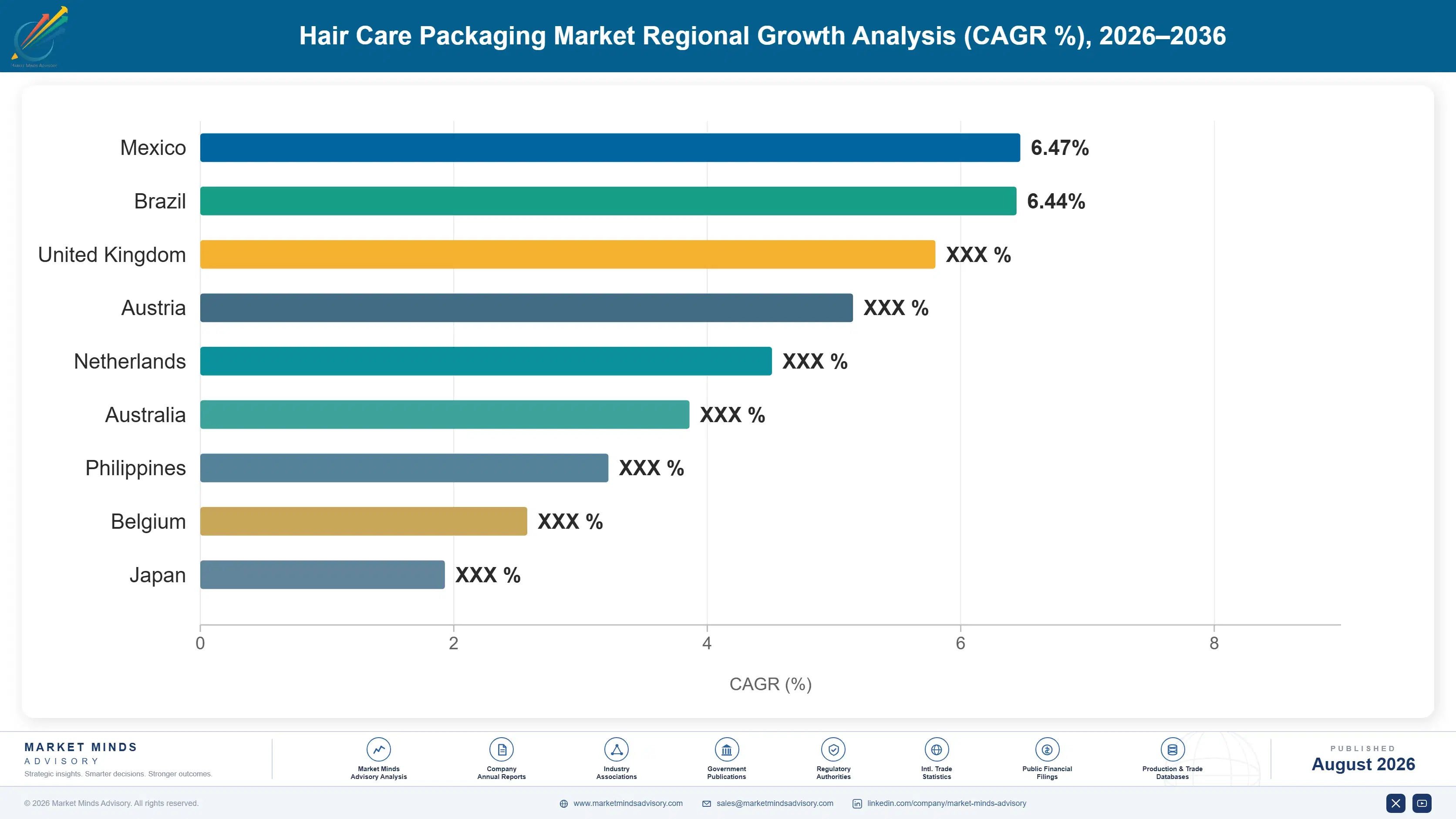
hair-care-packaging-market-country-cagr-analysis-1787304419522

Where Packaging Makers Can Defend Margin

Brand procurement increasingly favours makers who can guarantee both mechanism reliability and recycled content certification across their full contract portfolio and geography this decade. The four levers below capture revenue before a procurement cycle locks its supplier list rather than after, rewarding makers who prove reliability credibly across a brand's entire category volume and footprint.

Bundle Packaging Into Brand Sustainability Programme Contracts

Packaging specification increasingly happens during brand sustainability programme design rather than during later category procurement, when material standards and packaging commitments are already fixed and costly to change midstream once locked. Makers that place sustainability specialists inside programme design teams from the outset capture the full category scope rather than competing for a smaller retrofit order later in the cycle. Berry Global reports that contracts bundling packaging into initial sustainability programme design carry order values roughly 22% higher than late-stage category procurement on comparable brand volume across its full account base.
Market Impact: Lifts contract value roughly 22% vi

Sell Verified Recycled Content Certification Programmes

Brands increasingly want documented, third-party verified recycled content claims before specifying PCR and refillable formats at scale, and makers offering certification programme support are capturing recurring specification loyalty worth 7 to 13% more in realised revenue per brand relationship compared with uncertified standard sales across comparable categories and geographies alike. That certification commitment extends brand relationships across multiple category renewal cycles rather than a single order, deepening the account meaningfully over time and across categories. AptarGroup has expanded its certification programme specifically to capture this loyalty layer across its largest accounts worldwide.
Market Impact: Adds 7-13% more revenue per brand a

Build Tiered Product Lines For Smaller Beauty Brands

Smaller independent beauty brands cannot justify the cost of full premium refill and certified PCR product ranges, yet they represent a large, historically underserved segment that larger makers previously found less economical to pursue directly at scale. Makers offering tiered product lines with core compliance capability at a lower price point capture this segment at a fraction of the full-range cost, cutting the effective entry price by roughly 28% for smaller, budget-constrained brands entering the category for the first time. Albéa has scaled exactly this tiered approach across smaller beauty brands since 2024.
Market Impact: Cuts entry price by roughly 28% for

Target National Beauty Retail Chain Framework Agreements

National beauty and grocery retail chains coordinating material standards across dozens of supplier brands increasingly want one certified supplier network rather than a different packaging format at every brand, which shifts the purchasing decision upstream to a small number of corporate procurement teams making one decision at once across the network. Securing a framework agreement covering a chain's full supplier network delivers volume that no number of individual brand orders can match on comparable terms or timelines. Silgan Holdings has pursued exactly this framework approach with several national beauty retail chains since 2023.
Market Impact: Locks in supply across a full 200+

Who Controls the Margin Pool

Concentration sits at CR5 36%, fragmented for a category split between diversified packaging majors and specialist refill system converters. Berry Global and AptarGroup lead on manufacturing scale and dispensing technology relationships, while the gap to challengers like Albéa is more about certification depth than manufacturing scale. All participants are assessed on one consistent basis, hair care packaging revenue.
Current competitive activity runs across three dimensions. Product development concentrates on refill mechanism reliability to close the trust gap with single-use formats. Certification investment focuses on verified recycled content rather than material claims alone. And account structure centres on national beauty retail chain framework agreements rather than one-off brand orders, a shift that rewards makers with genuine multi-region delivery capability.

Emerging pressure comes from regional converters scaling behind domestic sustainability regulation, winning price-sensitive standard formulation tenders that global incumbents once assumed were theirs by default across most markets. Rankings will shift toward makers who combine refill system depth with proven certification credentials, since that combination is what large beauty chains increasingly specify by default across their national contracts. Makers without a credible refill roadmap face the sharpest erosion over the coming decade as buyer requirements keep tightening.
hair-care-packaging-market-company-positioning-matrix-1787304420092

Competitive Moat and Risk Dimensions

BERRY GLOBAL INC.

Moat: Deep manufacturing and channel scale

Berry Global holds decades of accumulated packaging manufacturing scale and beauty brand relationships, giving it a genuine credibility advantage winning large framework contracts that newer entrants without comparable manufacturing history cannot easily replicate quickly, even with meaningful capital investment and hiring behind them across regions.
BERRY GLOBAL INC.

Risk: Exposed to refill transition pressure

Berry Global's core single-use manufacturing base leaves it more exposed than refill-native competitors to the retailer-driven shift away from disposable packaging, since brands increasingly specify reusable formats over conventional single-use bottles across their full category roster, entire supplier base, and geographic footprint worldwide right now.
APTARGROUP INC.

Moat: Deep dispensing mechanism engineering

AptarGroup draws on decades of accumulated pump and dispensing mechanism engineering expertise from its wider packaging business, giving it a genuine advantage in refill system reliability that competitors without comparable core mechanism depth cannot easily replicate quickly across comparable product categories, price tiers, and account sizes.
APTARGROUP INC.

Risk: Cost base limits pricing

AptarGroup's premium dispensing technology positioning sometimes trades off against the price competitiveness that fast-scaling regional converters increasingly demand, leaving open room for smaller competitors to win standard formulation business purely on cost alone in price-sensitive markets across several developing regions and various mid-tier brand accounts.

Players Tracked

Prominent Players

Berry Global Inc.
AptarGroup Inc.
Albéa S.A.
Silgan Holdings Inc.
Gerresheimer AG

Other Key Players

Fusion Packaging LLC
Quadpack Industries S.A.
TricorBraun Inc.
O.Berk Company LLC
WestRock Company
Amcor plc
Cosmogen SAS
Libo Cosmetics Company Ltd
HCT Group
Yonwoo Co. Ltd
Lumson S.p.A.
Virospack S.L.
Pollena-Ewa S.A.
Guangzhou Xinlong Packaging Co. Ltd
RPC Bramlage GmbH

Recent Developments

MARCH 2025

Berry Global launches next-generation leak-resistant refill pouch system

Berry Global introduced a new refill pouch system with improved seal technology addressing leak concerns for premium beauty brand categories worldwide. This was an organic product launch, not an acquisition, extending Berry Global's addressable refill category coverage into new premium segments served only partially in the past.
Signal: Seal and valve reliability is becoming the
SEPTEMBER 2025

AptarGroup acquires specialty recycled content verification technology company

AptarGroup completed the acquisition of a specialty recycled content verification technology company with proprietary traceability software built specifically for packaging supply chains and brand compliance teams. The deal brought advanced certification capability in-house, expanding AptarGroup's offering considerably beyond its prior hardware-only product line into a fuller certification services suite.
Signal: Recycled content verification technology i
JULY 2025

Albéa signs framework agreement with national beauty retail chain

Albéa entered a multi-year framework agreement to supply refillable and certified PCR packaging across a national beauty retail chain's supplier network spanning multiple product categories nationwide. The agreement was a commercial supply contract, not a joint venture or equity transaction, covering supply across the full brand roster and store footprint.
Signal: Multi-year, multi-brand framework agreemen

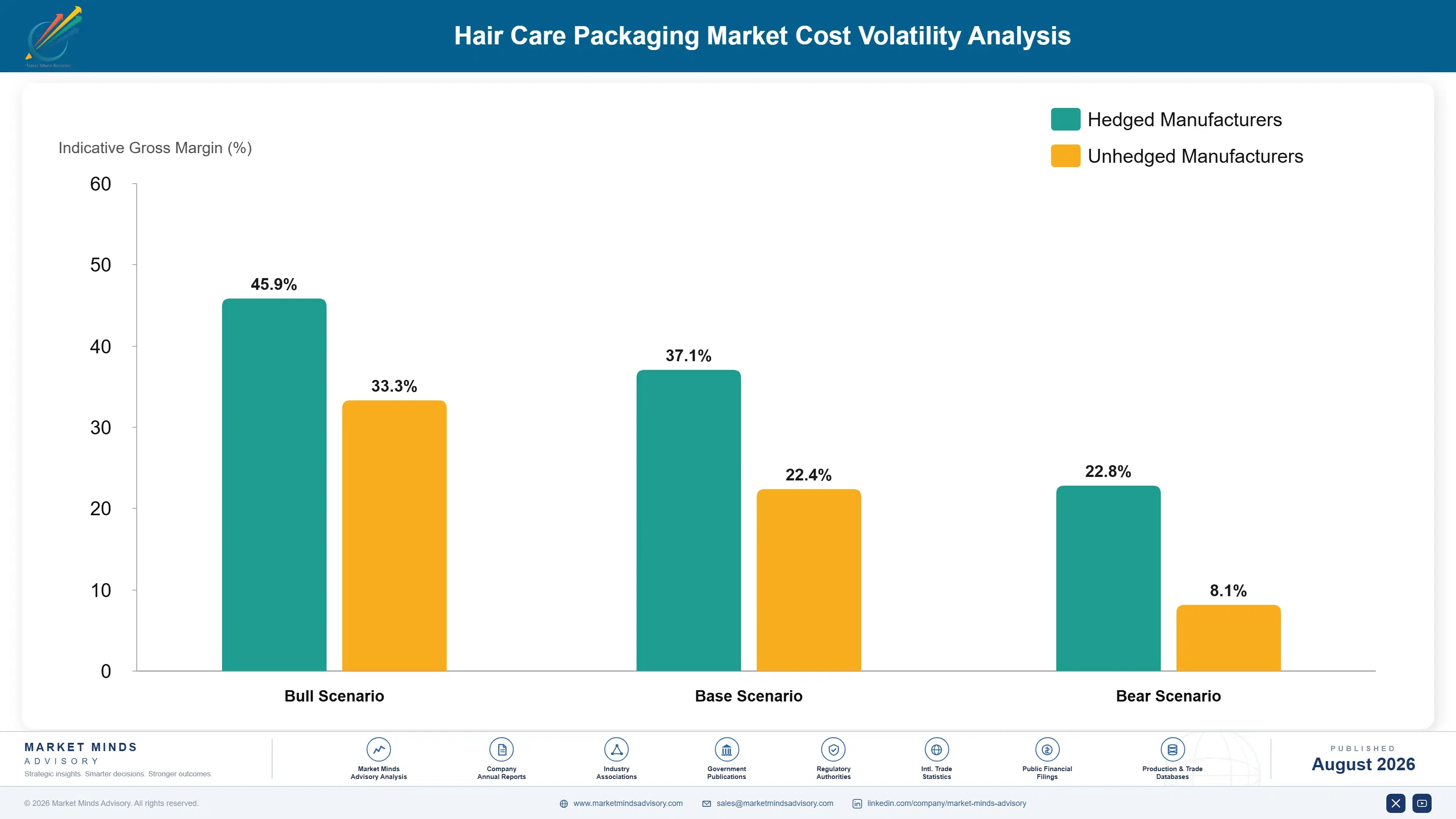
Resin Feedstock And Pump Mechanism Component Exposure

Resin feedstock, including virgin and recycled polyethylene and polypropylene, runs 32 to 40% of COGS, sourced from a concentrated set of petrochemical derivative manufacturers that also supply the wider consumer packaging industry across multiple product categories. Pump mechanism and dispensing components add a further 18 to 26%, with printing and decoration materials accounting for most of the remainder.
The global petrochemical feedstock disruption running through 2021 and 2022 hit packaging production directly, since polyethylene and polypropylene resin, derivatives of broader petrochemical supply chains, faced extended shortages that rippled through downstream packaging converters. Berry Global's 2022 Annual Report disclosed elevated raw material costs and extended lead times across its packaging segment, attributing part of the pressure to resin allocation constraints that persisted through much of the year overall.

Exposure varies sharply by player type. Vertically integrated majors like Berry Global manufacture much of their own resin formulation in-house, insulating them from the worst allocation constraints, while smaller specialists depend on third-party resin suppliers and absorb price spikes directly into thinner margins. Geography matters too, since makers sourcing components domestically face different exposure than those depending on imported feedstock.
hair-care-packaging-market-cost-volatility-analysis-1787304420297

Dual-Source Resin From Separate Suppliers

Qualifying formulations against resin feedstock from two separate suppliers, rather than one, keeps a shortage at either supplier from halting production entirely. Several makers adopted dual-sourcing as standard practice after the 2021 disruption exposed how concentrated their supply chains genuinely were across most product lines. That approach held even as broader markets stabilised across the industry overall.

Vertically Integrate Resin Production Where Feasible

Manufacturing resin formulation in-house rather than sourcing it externally insulates the very largest makers from allocation shortages during industry-wide supply disruptions and price spikes alike. Smaller specialists lacking that scale have instead pursued long-term supply agreements with established chemical manufacturers to secure priority allocation, considerably reducing spot-market exposure across most of their sourcing categories.

Shift Product Mix Toward Value-Added Certified Formats

Premium certified refill and recycled content formats carry considerably better margin resilience against resin price volatility than standard formats, giving makers a durable way to protect blended margin over time by shifting revenue mix toward differentiated products across their portfolio. That shift has meaningfully improved margin stability across portfolios facing sustained feedstock pressure this decade.

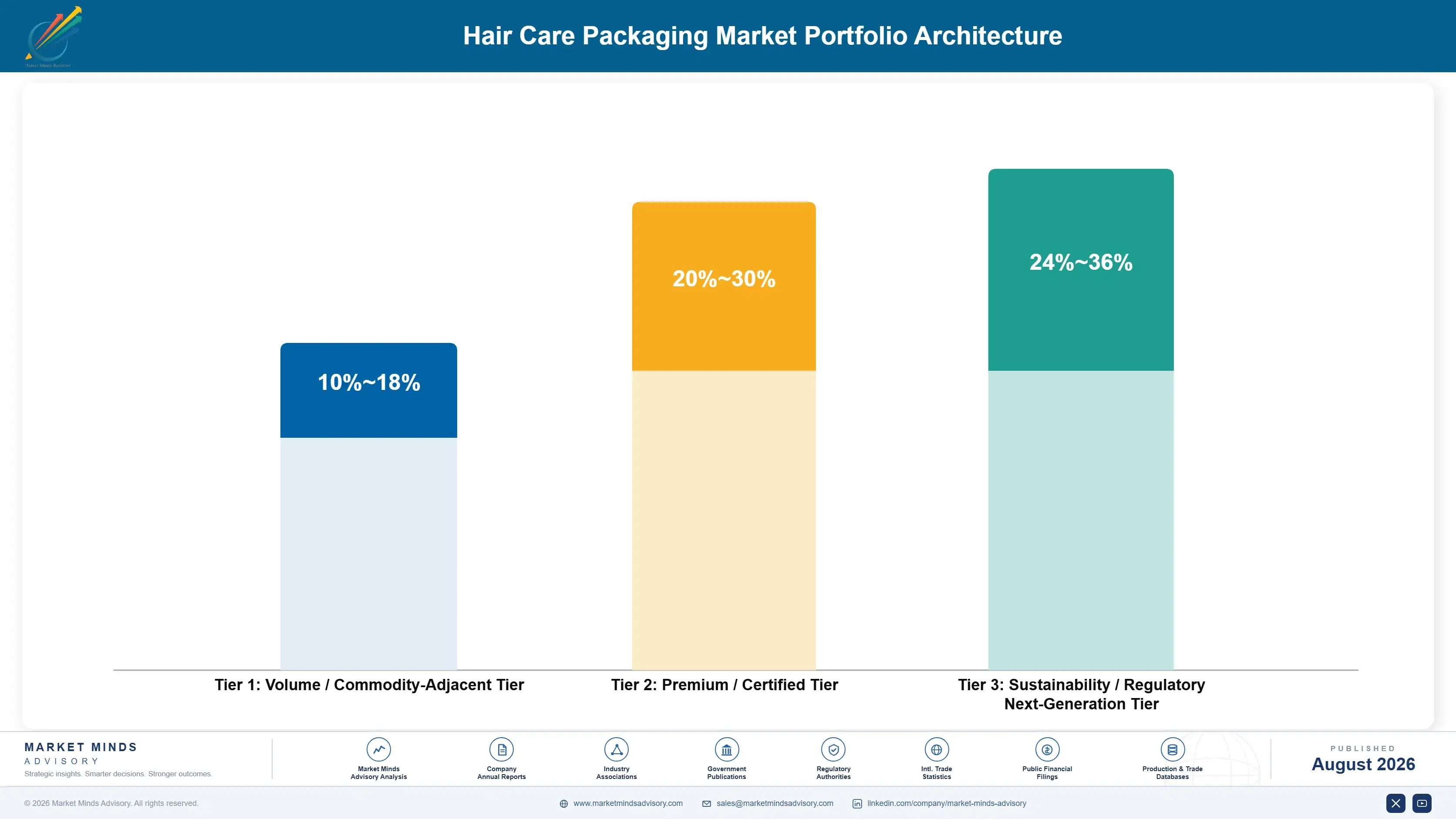
Portfolio Architecture for Margin Defence

The portfolio splits into three tiers with real margin separation, and the gap between tiers has widened as refill mechanism reliability becomes a genuine differentiator rather than an add-on feature bolted onto an existing bottle line. Volume-tier standard bottles compete on price against generic manufacturers and earn modestly. Premium refill and framework-contracted formats earn considerably more because they solve a genuine sustainability compliance problem that brands cannot engineer around
The tension is between standard bottle volume and per-contract certified margin. Makers selling standard bottles in bulk push hard on unit price, while national beauty chains standardising on refill framework agreements pay for mechanism reliability and certification depth rather than negotiating down to the last dollar on every single unit. Makers serving both buyer types run genuinely different sales motions under one brand and one operating structure.

High-value pools concentrate in refill and certified PCR formats sold with certification programmes and national framework agreements, where switching cost runs highest and price sensitivity lowest. Legacy standard bottle business remains large in volume but persistently thin in margin, as brands increasingly treat it as a commodity purchase rather than a differentiated one worth defending.

Volume / Commodity-Adjacent Tier

Standard virgin plastic bottles sold into routine product lines, priced against generic manufacturers on thin margin. Buyers negotiate primarily on unit price rather than sustainability credentials, keeping differentiation minimal across most contracts.
Gross Margin: 10-18%

Premium / Certified Tier

Refillable and framework-contracted formats sold into beauty chains standardising national sustainability specifications across their supplier base. Buyers pay for mechanism reliability and certification depth rather than for material cost alone.
Gross Margin: 20-30%

Sustainability / Regulatory / Next-Generation Tier

Advanced refill and PCR systems bundled with certification programme support sold to national beauty chains and premium brands seeking documented compliance. Margin reflects both technology differentiation and recurring specification loyalty over time.
Gross Margin: 24-36%
hair-care-packaging-market-portfolio-architecture-1787304420796

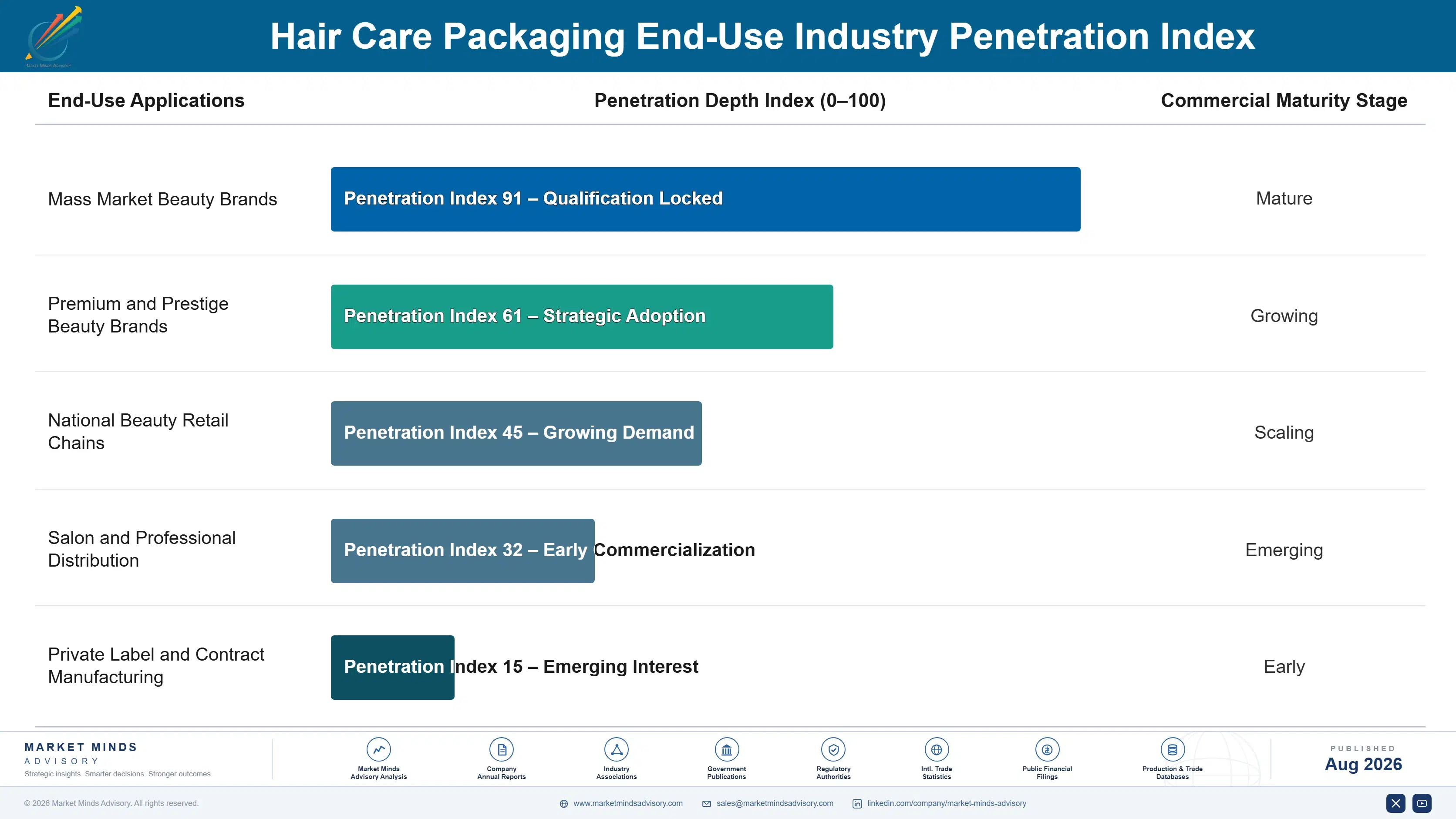
Recurring Category Volume Behind Every Brand

Demand behaves like an annuity once a brand standardises on a certified supplier, because packaged hair care product lines require continuing supply throughout each product cycle and require renewed certification alongside continuing distribution volume across every market they serve. That continuity, plus the underlying category expansion demand it eventually triggers, gives makers a predictable revenue tail that extends well beyond any single order or contract renewal date.
Adoption depth varies sharply by end-use vertical. Large national beauty chains adopt refill formats fastest and deepest, since fleet-wide standardisation directly improves sustainability compliance across every supplier brand under one roof. Premium and prestige beauty brands follow closely on certified PCR adoption, chasing comparable credentials at a somewhat slower pace. Smaller independent brands adopt more slowly, often waiting for a regulatory deadline or competitive pressure to force the material decision on their own timeline.

Buyer profiles are shifting generationally. Procurement once sat with individual brand managers evaluating single packaging formats on their own; it now increasingly involves corporate sustainability and procurement teams who specify material standards before a single brand selects its supplier. That shift moves the real purchasing decision earlier into the planning cycle, well ahead of any single product launch.
hair-care-packaging-market-end-use-penetration-index-1787304421316

Where Hair Care Packaging Value Concentrates

These are among the four positions where our research anticipates prominent divergence between winners and laggards over the coming forecast period. Each is grounded in the demand model, the regulatory perimeter, and the announced capacity pipeline.
01 / REFILL SYSTEM STRATEGY

Reusable Format Adoption Now Decides Category Position

Refillable and reusable systems are growing at 12.5%, about 1.79 times the market's 7.0% overall rate, and that gap is widening as brands increasingly specify reusable formats to satisfy retailer plastic reduction commitments across multiple major chains. Makers still anchored on standard bottles alone risk losing the fastest-growing, highest-margin national framework contracts to rivals offering proven refill capability already deployed at scale. The window to build credible refill capability is closing within this forecast period, and makers who act now capture the largest contracts.
02 / CERTIFICATION AND TRUST

Verified Recycled Content Is Becoming Table Stakes

National beauty chains increasingly refuse to specify formats without documented, third-party verified recycled content certification, since an unverified sustainability claim represents a genuine greenwashing liability risk under tightening consumer protection regulation across multiple jurisdictions worldwide today. Makers who build this certification capability capture recurring specification loyalty and preferred-vendor status that material-only competitors cannot easily replicate at comparable scale. Those without a credible certification programme will find themselves excluded from the largest national framework agreements, losing meaningful share to better-equipped rivals.
03 / NATIONAL CHAIN FRAMEWORK CHANNEL

Multi-Brand Frameworks Will Outgrow Single-Order Sales

National beauty chains are increasingly folding packaging procurement into corporate sustainability standards rather than leaving it to individual brand managers, concentrating real purchasing power in a small number of framework decisions that smaller makers cannot easily access at scale. Makers who secure framework status with major chains capture volume across an entire supplier network that no number of individual brand orders can replicate on comparable terms. Those still selling purely brand by brand risk being locked out of this fastest-growing channel entirely and permanently.
04 / REGIONAL CONVERTER PRICING

Regional Converter Scale Will Keep Pressuring Standard Pricing

Regional packaging converters have scaled fast enough to win price-sensitive standard formulation tenders that global incumbents once assumed were theirs by default, and that pricing pressure is starting to spread into premium certified formulation procurement as well. Makers competing purely on price against regional converter scale will struggle to hold margin over any meaningful time horizon. The more durable response is competing on mechanism reliability depth and certification credentials, categories where regional entrants still visibly lag behind global incumbents today.

Engagement Snapshot From the Field

A live engagement with an industry participant carrying material or product regulatory and market exposure ahead of a defining policy shift, showing how our research translates into a defensible multi-year portfolio strategy.
MARKET MINDS ADVISORY · CLIENT ENGAGEMENT SUMMARY
Hair Care Packaging Producer Strategic Portfolio Review and Transition Roadmap 2026·Investment Scenario on Hair Care Packaging Exposure Evaluation 2025-26
CLIENT PROFILE
A regional beauty retail chain operating 220 stores approached MMA after adopting a binding plastic reduction commitment that required rapid transition of its supplier packaging base across nearly every product category it carried. The client reported that inconsistent supplier readiness across brand categories was creating compliance risk that leadership considered urgent to resolve before the deadline (client-reported, unverified by MMA).
STRATEGIC CHALLENGE
The chain had relied on single-use plastic packaging across its full supplier base for over a decade without a transition plan, assuming voluntary timelines would allow gradual change. The accelerated commercial commitment forced leadership to confront how far behind current refill supplier relationships its procurement team had fallen, with a limited transition budget.
MMA APPROACH
MMA benchmarked the chain's supplier readiness against comparable beauty retail chains already completing packaging transitions, quantifying the compliance timeline a structured transition would realistically require. We evaluated tiered supplier options sized to each category's volume, and modelled a phased transition schedule against the chain's commercial commitment deadline and limited budget.
KEY FINDINGS
  1. The chain's existing single-use-only supplier base showed considerably longer refill transition timelines than comparable chains already working with diversified format suppliers, based on benchmarking performed during the review.
  2. A tiered transition concentrated on the chain's highest-volume shampoo and conditioner categories addressed most of the compliance risk without requiring simultaneous transition across every product category immediately.
  3. Two of three refill suppliers evaluated could deliver tiered formats within the chain's compressed commitment deadline; the third required a considerably longer lead time incompatible with the timeline.
  4. Phasing the transition by category rather than attempting a single simultaneous changeover considerably improved supplier delivery reliability during the compliance window (client-reported, unverified by MMA).
CLIENT PROFILE
A regional beauty retail chain operating 220 stores approached MMA after adopting a binding plastic reduction commitment that required rapid transition of its supplier packaging base across nearly every product category it carried. The client reported that inconsistent supplier readiness across brand categories was creating compliance risk that leadership considered urgent to resolve before the deadline (client-reported, unverified by MMA).
STRATEGIC CHALLENGE
The chain had relied on single-use plastic packaging across its full supplier base for over a decade without a transition plan, assuming voluntary timelines would allow gradual change. The accelerated commercial commitment forced leadership to confront how far behind current refill supplier relationships its procurement team had fallen, with a limited transition budget.
MMA APPROACH
MMA benchmarked the chain's supplier readiness against comparable beauty retail chains already completing packaging transitions, quantifying the compliance timeline a structured transition would realistically require. We evaluated tiered supplier options sized to each category's volume, and modelled a phased transition schedule against the chain's commercial commitment deadline and limited budget.
KEY FINDINGS
  1. The chain's existing single-use-only supplier base showed considerably longer refill transition timelines than comparable chains already working with diversified format suppliers, based on benchmarking performed during the review.
  2. A tiered transition concentrated on the chain's highest-volume shampoo and conditioner categories addressed most of the compliance risk without requiring simultaneous transition across every product category immediately.
  3. Two of three refill suppliers evaluated could deliver tiered formats within the chain's compressed commitment deadline; the third required a considerably longer lead time incompatible with the timeline.
  4. Phasing the transition by category rather than attempting a single simultaneous changeover considerably improved supplier delivery reliability during the compliance window (client-reported, unverified by MMA).
RECOMMENDED STRATEGY
Phase 1: Phase 1 (0 to 6 months): Transition the chain's highest-volume shampoo and conditioner categories to certified refill systems first, prioritising categories facing the nearest compliance deadlines. Phase 2: Phase 2 (6 to 18 months): Extend the transition to remaining personal care categories across the chain's full network, validating supplier delivery reliability at each stage. Phase 3: Phase 3 (18 to 36 months): Fold the refill transition into the chain's standing packaging procurement standard going forward, reviewing supplier performance annually.
OUTCOME
The chain transitioned its highest-volume shampoo and conditioner categories to certified refill systems ahead of its commercial deadline and reported no compliance gaps during the following review period. The phased transition approach has since extended to its remaining personal care categories facing later compliance deadlines (client-reported, unverified by MMA).

Frequently Asked Questions

Foundational context covering the market sizes, CAGR, scope, country, region and competition that inform every finding below. This section is provided to cover basics and most often pre-purchase conversations, answered from the MMA Primary Research Dataset.

What is the current size of the Hair Care Packaging Market?

The market was valued at USD 12.5 billion in 2025, with demand concentrated in refillable systems and standard plastic bottle formats across major global beauty retail markets.

How large will the Hair Care Packaging Market be by 2036?

The market is projected to reach USD 26.32 billion by 2036, an expansion multiple of 1.97 times its 2026 value. Refillable system adoption drives much of that growth.

What is the CAGR for the Hair Care Packaging Market 2026 to 2036?

The base case CAGR is 7.0%, with a bull case of 8.2% and a bear case of 5.8%. The range reflects uncertainty around refill system cost premiums.

Which segment is growing fastest?

Refillable and reusable pouch and pump systems grow fastest at 12.5%, about 1.79 times the overall market rate, as brands specify reusable formats meeting retailer commitments.

Who are the major companies in the Hair Care Packaging Market?

Berry Global, AptarGroup, Albéa, Silgan Holdings, and Gerresheimer lead the fragmented market at CR5 36%, reflecting genuine manufacturing scale and deep beauty brand channel relationships built over many years.

Which country is growing fastest?

India grows fastest at 11.0%, driven by rapidly expanding organised beauty retail infrastructure and packaged product culture. China remains the region's leading manufacturing hub by volume.

Report Segmentation Architecture

The full report scope spans multiple orthogonal segmentation dimensions, with cross-tabulated demand data provided for each dimension pair. Coverage extends further to regional breakdowns, trend trajectories, and the competitive detail needed to support segment-level decision-making.

By Format Type

  • Refillable and Reusable Pouch and Pump Systems
  • PCR Plastic Bottles
  • Virgin Plastic Bottles
  • Aluminum and Metal Packaging
  • Sachets and Flexible Pouches
  • Glass Packaging

By End-Use Industry

  • Mass Market Beauty Brands
  • Premium and Prestige Beauty Brands
  • National Beauty Retail Chains
  • Salon and Professional Distribution
  • Private Label and Contract Manufacturing

By Commercial Dimension

  • National Beauty Retail Chain Framework Agreements
  • Regional Distributor Sales
  • Certification Programme Bundles
  • Private Label and Branded Contracts

By Region

  • East Asia
  • North America
  • Western Europe
  • South Asia and Pacific
  • Latin America
  • Middle East and Africa
  • Eastern Europe

Scope, Methodology, and Coverage

Every figure in this report is reproducible from documented input assumptions. The scope below maps the historical period, the forecast horizon, the segmentation dimensions, and the countries covered, alongside the underlying primary and qualitative methodology.
Historical Period
2020 to 2025
Forecast Period
2026 to 2036
Base Year
2025 (USD billions; MMA Primary Research Dataset, August 2026)
Market Definition
The hair care packaging market comprises primary packaging containers and dispensing systems used for shampoo, conditioner, hair color, hair oil, and hair styling products, spanning refillable and reusable pouch and pump systems, PCR and virgin plastic bottles, aluminum and metal packaging, sachets and flexible pouches, and glass packaging. Secondary and tertiary shipping packaging not used for retail display and packaging for skin care or oral care products are excluded.
Quantitative Units
USD billions (current prices); packaging units produced where applicable
Segmentation Dimensions
By Format Type; By End-Use Industry; By Commercial Dimension; By Region
Regions Covered
East Asia, North America, Western Europe, South Asia and Pacific, Latin America, Middle East and Africa, Eastern Europe
Countries Covered
USA, China, Germany, France, UK, Japan, South Korea, India, Australia, Canada, Brazil, Mexico, Indonesia, Vietnam, Thailand, Malaysia, UAE, Saudi Arabia, South Africa, Nigeria, Turkey, Poland, Netherlands, Italy, Spain, Sweden, Switzerland, Argentina, Colombia, Singapore, and additional markets relevant to this sector
Key Companies Profiled
Berry Global Inc., AptarGroup Inc., Albéa S.A., Silgan Holdings Inc., Gerresheimer AG, Fusion Packaging LLC, Quadpack Industries S.A., TricorBraun Inc., O.Berk Company LLC, WestRock Company, Amcor plc, Cosmogen SAS, Libo Cosmetics Company Ltd, HCT Group, Yonwoo Co. Ltd, Lumson S.p.A., Virospack S.L., Pollena-Ewa S.A., Guangzhou Xinlong Packaging Co. Ltd, RPC Bramlage GmbH
Quantitative Methodology
Primary survey, n=3,800 respondents, Q4 2025, six countries; demand-side model with trade association cross-validation
Qualitative Methodology
47 expert interviews, Q4 2025; applied to validate demand model assumptions, identify emerging dynamics, and assess competitive positioning
Report Format
PDF and XLSX data workbook (Word format preview document)
Publisher
Market Minds Advisory
Report Code
MMA-2026-PAC-118
Published
August 2026
Contact
sales@marketmindsadvisory.com | www.marketmindsadvisory.com

Purchase the full Hair Care Packaging Market Report (2026 to 2036).

The full MMA Hair Care Packaging report sizes the market across six format types, five end-use verticals, four commercial dimensions, and seven regions through 2036. It profiles twenty participants on a consistent packaging revenue basis, scoring each on mechanism engineering depth, certification credentials, and multi-region delivery reach. Scenario models quantify how retailer plastic reduction commitments, personal care consumption growth, and brand sustainability policy move both demand and realised pricing. The report also includes delivered-cost modelling by format type and a national beauty chain benchmarking tool built for packaging procurement and sustainability strategy teams.
Format type cost and mechanism reliability benchmarking
Packaged product volume and adoption tracker by region
National framework agreement structure and pricing tracker
Retailer plastic reduction policy comparison by country
Resin feedstock supply chain risk screen
Certification programme revenue forecasting and modelling

Built For The People Who Decide

From boardroom strategy to bench-side execution, this report is read cover-to-cover by leaders shaping the next decade of their industry, turning demand scenarios, market dynamics and valuation benchmarks into decisions.
CXOs/ Presidents/ VPs/ Managers
M&A and Corporate Development
Strategy Teams and R&D Heads
Procurement and Product Directors
Regulatory and Compliance Leaders
Investor Relations and Equity Analysts