Market Minds Advisory
Gudgeon Pin Market

Gudgeon Pin Market: Friction Coatings, Hollow Geometry and the Long Internal Combustion Tail

Friction coatings once reserved for racing engines are appearing on volume programmes chasing carbon targets, hollow geometries keep taking mass out, and hybrids are extending internal combustion further than anyone planned.

Lead Analyst

David Horsley

Published

September 2026

Make Smarter Decisions with Customized Research Insights

Request a free sample report and evaluate market opportunities, growth trends, and competitive dynamics relevant to your business needs.

2025 MARKET VALUE$2.1BMarket Size 2025
2036 FORECAST VALUE$3.0BBase Case , 2026 to 2036
CAGR 2026 TO 20363.4 %Bull 4.6% / Bear 2.2%
INCREMENTAL OPPORTUNITY$0.9BNet 10- year value creation
EXPANSION MULTIPLE1.40x2036 value over 2026 base
Strategic Levers
M&A Pipeline
Regional Outlook
Country Rankings
Competitive Intelligence
Segmental Deep-dive
Call-Us : 91 93563 13602

Executive Snapshot and Market Trajectory

A gudgeon pin is a hardened steel tube about the size of a thumb, and it is the most heavily loaded plain bearing in an engine. It transfers every combustion event from piston to connecting rod, and it must do that several billion times without measurable wear.
Diamond-like carbon coated pins grow at 5.1%, a full 1.50 times the market rate, because the coating cuts friction at the piston boss and small end enough to register on a regulatory drive cycle, which is why a technology once confined to racing now appears on volume programmes. East Asia holds 36% of global value, above the standard regional band, because China builds roughly 30 million vehicles annually alongside enormous motorcycle output.
Concentration sits at 42% for the top five, and the commercial structure beneath it is genuinely unusual. Piston manufacturers supply most pins because pin and piston must be matched to microns, which makes this a component almost nobody sells independently at volume. Independent grinders exist mainly in performance, motorsport and aftermarket work rather than in original equipment programmes, where the matching problem effectively excludes them from competing.
Market Definition
This report covers gudgeon pins, also termed piston pins or wrist pins, for reciprocating internal combustion engines across passenger vehicles, commercial vehicles, motorcycles, off-highway equipment, marine and stationary applications, spanning all surface treatments and coatings. Pistons, piston rings, connecting rods, circlips and retaining hardware sold separately, complete piston assemblies valued at assembly level, and compressor or pump pins are excluded from the sizing.
Base Year Value
$2.1B in 2025 (MMA Primary Research Dataset, August 2026)
Forecast Period
2026 to 2036, eleven discrete annual values
CAGR
3.4% base case. Bull 4.6%. Bear 2.2%.
Fastest Growth Segment
Diamond-Like Carbon Coated Pin: 5.1% CAGR
Fastest Growth Country
India: 6.0% CAGR
Fastest Growth Region
South Asia and Pacific: 5.6% CAGR
Largest Region
East Asia: 36% of 2025 global value
Market Leaders
Mahle, Tenneco, Rheinmetall, Art Metal Manufacturing and Shriram Pistons and Rings lead on pin shipment volume. Source: MMA Analysis, July 2026.
Primary Survey
n=3,800 procurement and R&D decision-makers, Q4 2025, six countries
Methodology
Demand-side build-up, cross-validated against public data, 47 expert interviews

Gudgeon Pin Market Forecast Scenarios

gudgeon-pin-market-size-forecast-scenario-1787317003298
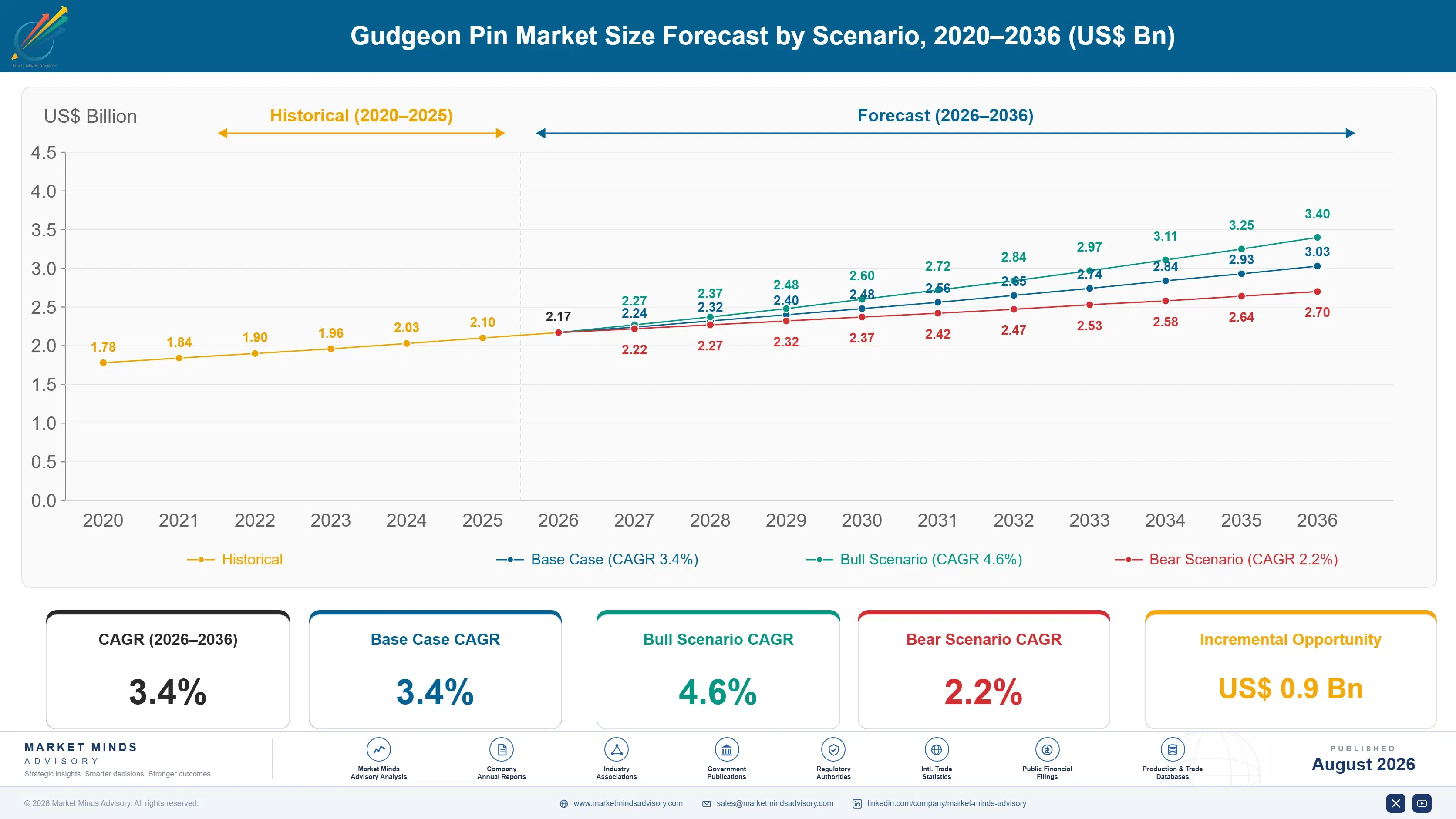
Between 2020 and 2025 the market compounded at 2.4%, and content rather than volume explains it. Engine production fell hard through 2020 and has not recovered to earlier peaks in Europe or Japan, while battery electric share climbed steadily. What lifted value instead was specification: coated and hollow profiled pins spread through volume programmes at prices well above the plain case-carburised parts they replaced.
The base case at 3.4% rests on three mechanisms. Hybrid architectures keep internal combustion in the fleet far longer than pure battery forecasts assumed, and every hybrid engine carries pins working harder under frequent stop-start cycling. Coating and geometry specification keeps rising as manufacturers chase every gram of carbon dioxide available. Asian motorcycle and small engine production adds genuine unit growth in segments where no electrification substitute has yet reached price parity.
The bull case at 4.6% turns on hybrid share rising faster than battery electric across major markets, which would extend engine production well into the 2040s and keep coated pin demand climbing. The bear case at 2.2% is a sharper battery transition combined with specification plateau: once coatings reach the programmes that value them, the mix improvement carrying this market largely stops.

What Actually Determines Gudgeon Pin Value

The engineering problem here is deceptively narrow. A gudgeon pin operates as a plain bearing under the highest specific loading anywhere in an engine, oscillating through a small angle rather than rotating, which means it never builds a proper hydrodynamic oil film. It survives on boundary lubrication and surface hardness alone.
TOP FIVE CONCENTRATION42%Share held by the five largest global pin manufacturers
AVERAGE UNIT PRICE$2.40Typical realised price for a passenger engine pin
PINS PER ENGINE4 pinsGudgeon pins fitted across a typical passenger engine
STEEL COST SHARE37% of COGSBar stock and forging content as portion of cost
BORE TOLERANCE3 micronsTypical bore roundness held across full production volumes
AFTERMARKET VOLUME SHARE21%Portion of volume destined for engine rebuild and repair
That constraint is why surface treatment matters more than anything else about the part. A case-carburised pin runs perfectly well for a naturally aspirated engine at moderate cylinder pressure. Push the pressure up, as downsized turbocharged engines did across the past decade, and scuffing at the piston boss becomes a genuine failure mode. Coatings answered that, and then engineers noticed the friction reduction also showed up on the drive cycle, which turned a durability fix into a carbon dioxide measure.
Commercially the part is unusual because almost nobody sells it independently at volume. Pin and piston bore must be matched to a few microns, so piston manufacturers supply the pins with the pistons and the two are engineered together. Independent grinders concentrate in performance, motorsport and aftermarket work, where the matching problem is handled differently and margins are considerably better.
"Nobody outside an engine plant has ever thought about a gudgeon pin, and yet the coating on it is worth a measurable fraction of a gram of carbon dioxide per kilometre. That is the whole modern engine business in one component: enormous engineering effort spent on things the customer will never see."
Practice Director, Automotive Components, Market Minds Advisory · MMA Automotive

Market Trends

Friction Coatings Migrate From Motorsport Into Volume Engines

Diamond-like carbon coatings began in motorsport where scuffing resistance justified almost any cost, and they now appear on mainstream programmes because the friction reduction registers on regulatory drive cycles. The coating cuts boundary friction at the piston boss and small end bearing measurably, and manufacturers chasing fleet carbon dioxide limits count every contribution available to them. Coating adds roughly 2.8 times the cost of an uncoated pin, which sounds prohibitive until the alternative measures delivering the same benefit are priced alongside it and turn out to cost considerably more per gram delivered.
Market Impact: Extends fitment 8 years longer
Hollow Profiled Geometry Removes Reciprocating Mass Directly

Pins have moved from plain cylindrical bores toward profiled internal geometry, with material removed where stress analysis shows it contributes nothing to fatigue strength. Reciprocating mass matters disproportionately in an engine, since every gram must be accelerated and decelerated twice per revolution, and removing it reduces bearing loads throughout the assembly. Modern profiled designs cut pin mass by around 25% against solid equivalents without sacrificing fatigue life. Machining that internal profile requires capability that plain bore grinding never demanded, which narrows the supplier field able to quote these programmes considerably.
Market Impact: Adds 24 million annual engines

Market Opportunities and Growth Drivers

Hybrid Architectures Extend Internal Combustion Pin Demand

Hybrid share is now rising faster than battery electric across North America, Japan and increasingly Europe too, and every hybrid carries an engine and therefore pins. The duty is arguably harder than continuous running: frequent stop-start cycling means repeated cold starts where oil film has drained away and boundary contact is at its worst, which is precisely the condition coatings address. Engine families scheduled to end are being revised and extended instead, and suppliers who had already written this business down are now finding programmes running considerably longer than anyone planned.
Market Impact: Removes 18% of addressable engines

Asian Motorcycle Production Adds Genuine Unit Growth

India, Indonesia, Vietnam and Thailand together build motorcycles and three-wheelers at volumes that no Western market even approaches, and every unit carries a pin. Electrification in those formats is progressing but has not reached price parity in the segments carrying most volume, so the internal combustion base keeps expanding rather than shrinking. Realised value per pin is a fraction of passenger car levels, which is why the region contributes far more to unit volume than to market value, but the manufacturing scale it supports across the region is genuinely substantial.
Market Impact: Holds margins near 13%

Market Restraints and Challenges

Battery Electric Platforms Remove The Component Entirely

A battery electric vehicle has no reciprocating engine and therefore no gudgeon pins at all. This is not substitution by a cheaper alternative; it removes the addressable unit completely. The root cause is powertrain architecture and no supplier response changes it. Commercially the effect concentrates in Western Europe and China, the markets with the highest realised pricing per pin. Participants are responding by building aftermarket depth ahead of the fitment decline, by pushing coating and geometry content that raises value per unit, and by extending into off-highway and stationary applications.
Market Impact: Costs 2.8 times uncoated pin

Precision Grinding Commoditises At The Uncoated Volume End

An uncoated case-carburised pin is bar stock, heat treatment and grinding, and Chinese and Indian manufacturers hold cost positions Western plants cannot match on delivered price. The root cause is genuinely low differentiation: the tolerances are demanding but well understood, and the capability is widely held. Commercially this holds margins in the low teens across most of the volume base. Participants are responding by moving mix toward coated and profiled product, by bundling pins with pistons where matching creates a barrier, and by competing on engineering capability rather than on delivered price.
Market Impact: Cuts pin mass by 25%
3 additional market trends, 4 additional growth drivers, and 2 additional restraints and challenges are covered in the full report. Contact sales@marketmindsadvisory.com to access the complete intelligence.

Segment CAGR and Growth Architecture

Segmentation follows surface treatment and coating specification, because what is applied to the pin surface determines scuffing resistance, friction contribution, the cylinder pressures the part tolerates, the manufacturing capability required and the realised price per unit. Geometry, material grade and engine application all sit downstream of that treatment decision and are priced against it.
gudgeon-pin-market-market-share-analysis-1787317003838

Diamond-Like Carbon Coated Pin

The fastest segment at 5.1%, a full 1.50 times the market rate, covering pins finished with an amorphous carbon coating applied by physical vapour deposition, giving an extremely hard low-friction surface over the hardened steel beneath. The coating started in motorsport, where scuffing resistance justified almost any cost, and moved into volume production once engineers established that the friction reduction registers on regulatory drive cycles rather than only on a test rig. Coated pins cost roughly 2.8 times uncoated equivalents. What limits adoption is coating chamber capacity and process control rather than any technical doubt, since deposition is a batch operation with throughput economics that sit awkwardly against high-volume engine plant schedules.
CAGR 5.1%

Chromium Nitride Physical Vapour Deposition Pin

Growing at 4.3% on pins finished with chromium nitride or comparable ceramic coatings deposited by physical vapour deposition, which sit between nitriding and diamond-like carbon in both cost and performance. Commercial and heavy duty applications favour them particularly. The coating tolerates the sustained high loading and elevated temperatures of a diesel engine better than carbon films, which can degrade under prolonged thermal exposure in ways that matter across a fifteen year service life. Deposition cost runs well below diamond-like carbon while delivering most of the scuffing resistance. What limits the segment is that friction reduction falls short of carbon coatings, so passenger programmes chasing drive cycle numbers generally specify the more expensive option.
CAGR 4.3%
Full segment breakdown across 5 segments available in the complete report.

Regional Architecture and Country Demand Map

East Asia holds 36% of global value on Chinese engine output, enormous motorcycle production and the most demanding pin engineering in the industry. North America follows closely on large-displacement engines and rebuild demand, while growth runs fastest across South Asia and Pacific on motorcycle and three-wheeler volume together.

East Asia

Note: East Asia holds 36% against a 22 to 30% band because China builds roughly 30 million vehicles a year alongside enormous motorcycle and small engine output, and Japan hosts the most demanding pin engineering in the industry. Riken, Teikoku and Nippon Piston Ring all supply pins into programmes where friction targets are set to grams of carbon dioxide rather than to durability alone. Chinese producers around Shandong and Hebei supply domestic engine plants and export heavily into aftermarket channels at delivered costs no Western grinder approaches. Hybrid share across Japan is the highest anywhere, which keeps internal combustion pin demand considerably more durable than battery forecasts assumed. Value and volume both concentrate here.
Share: 36% | CAGR: 4.6% (2026 to 2036)

North America

Displacement rather than unit volume defines this region. Full-size pickups and body-on-frame utilities run large-capacity engines with six or eight pins each, and those platforms are electrifying more slowly than any other segment in the world, which keeps demand unusually resilient. The installed parc above 290 million vehicles sustains a rebuild and repair market larger than new engine production alone would generate, particularly in performance and heavy duty applications. Diamond-like carbon coated pins entered volume production here on truck engines chasing fuel economy standards, and the coating capability that followed now serves export programmes as well as domestic ones. Rebuild volume here runs well above what new engine production alone would ever generate, and it is far less cyclical.
Share: 22% | CAGR: 2.9% (2026 to 2036)
Regional intelligence for 5 additional markets available in the complete report: Western Europe, South Asia and Pacific, Latin America, Middle East and Africa, Eastern Europe. Contact sales@marketmindsadvisory.com.
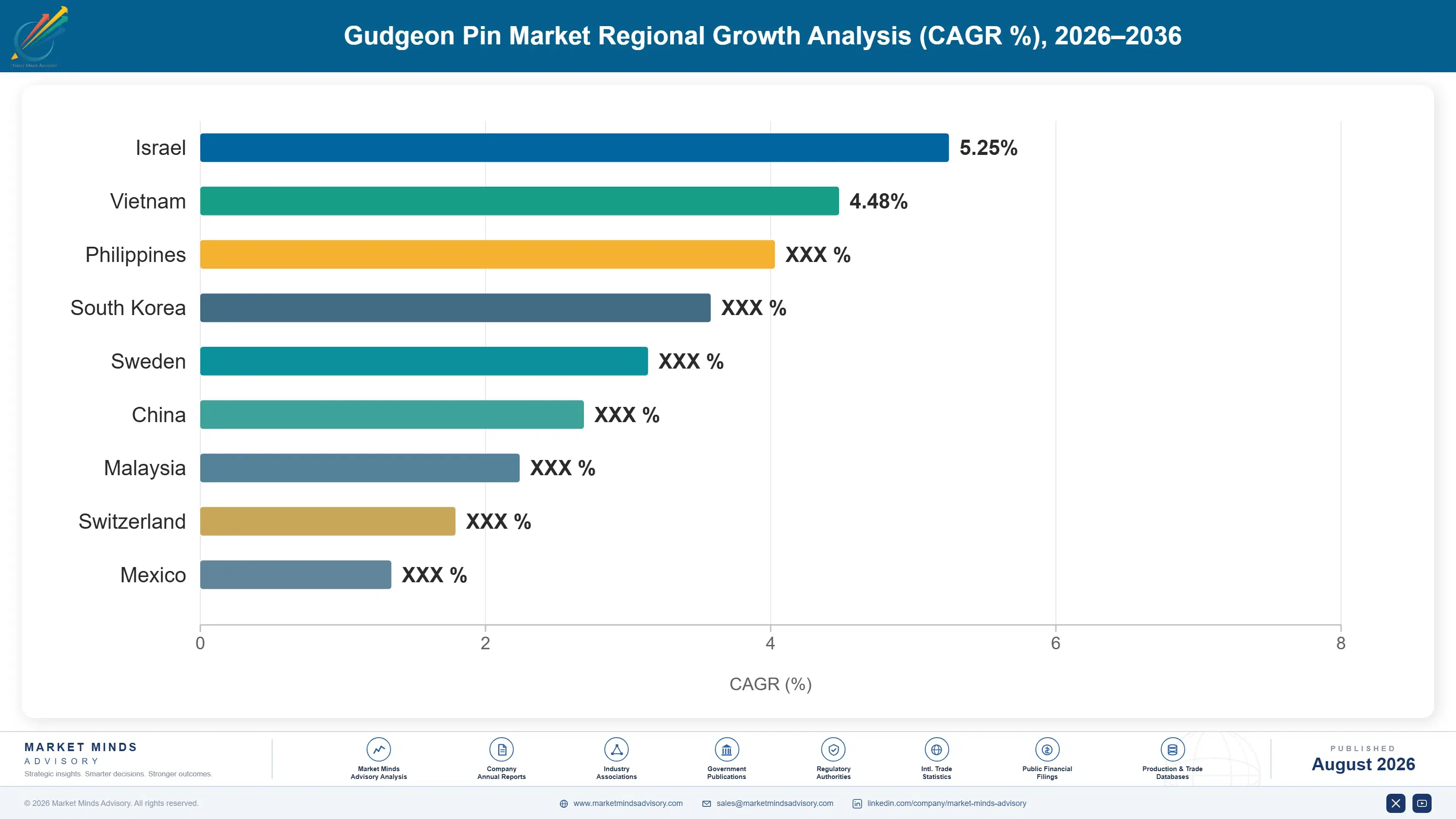
gudgeon-pin-market-country-cagr-analysis-1787317004352

Where Gudgeon Pin Margin Is Won

Four positions separate manufacturers earning real margin from those grinding bar stock at commodity rates: owning coating capacity rather than subcontracting it, bundling pins with pistons where micron matching creates a genuine barrier, building aftermarket depth ahead of the fitment decline, and holding profiled geometry machining capability that ordinary plain bore grinders cannot replicate at all.

Own Coating Capacity Rather Than Subcontracting Deposition

Coated pins realise roughly 2.8 times uncoated pricing, and manufacturers subcontracting deposition hand a substantial share of that premium straight to the coating house while accepting its throughput schedule as their own delivery constraint. In-house physical vapour deposition capacity captures between 10 and 15 points of additional gross margin on every coated pin, and it removes a lead time dependency that quietly costs delivery performance. Chamber capital and process qualification are the barriers, which is exactly why the capability concentrates in far fewer plants than current specification demand actually justifies.
Market Impact: Captures 15 additional margin point

Bundle Pins With Pistons Where Matching Creates Barriers

Pin and piston bore must be matched to within a few microns, which means whoever supplies the piston is best placed to supply the pin, and an independent grinder then faces a coordination problem that nobody wants to manage. Manufacturers selling matched assemblies rather than loose pins hold 20% to 26% higher realised price, and they face materially fewer competitive tenders on that work. The barrier here is genuine engineering rather than contractual, and it explains why almost nobody sells gudgeon pins independently into original equipment programmes at any real volume.
Market Impact: Holds 26% higher realised pricing o

Build Aftermarket Depth Before Fitment Volume Declines

Aftermarket already takes 21% of total volume and earns between 16 and 22 points more gross margin than original equipment supply does, because a rebuilder buying pins is solving an immediate engine problem rather than negotiating a multi-year supply contract. Every engine family in production today generates rebuild demand for well over a decade after the very last unit is built. Manufacturers building catalogue coverage and distribution reach right now capture that entire tail; those waiting until fitment declines before acting will find the distributor shelf space has already been taken.
Market Impact: Adds 22 margin points across all re

Hold Profiled Geometry Machining Plain Grinders Cannot Match

Modern pins carry internal profiles engineered to remove roughly 25% of pin mass without sacrificing fatigue life, and machining that geometry demands capability which plain bore grinding never once required. Manufacturers holding that capability win exactly the downsized turbocharged programmes where reciprocating mass matters most, at somewhere between 18% and 24% higher realised pricing than plain cylindrical equivalents command. The investment sits in machine tools and process development rather than in anything exotic, but it takes several years to establish and most volume grinders have simply chosen not to make it.
Market Impact: Realises 24% higher pricing across

Who Controls the Margin Pool

Concentration sits at 42% for the top five measured on pin shipment volume, the basis used throughout this section. Mahle and Tenneco lead through piston businesses that supply matched pin and piston assemblies rather than loose components, with Rheinmetall holding comparable European position and Art Metal and Shriram strong across Japanese and Indian programmes respectively. The gap to the next tier is moderate in units and considerably wider in coated product.
Competitive activity runs on three fronts. Coating capacity is the first and the most consequential, since deposition throughput now constrains how quickly coated specification can spread. Profiled geometry machining is the second, and it separates suppliers capable of quoting downsized turbocharged programmes from those confined to plain cylindrical work. The third is aftermarket catalogue depth, where several participants are investing hard as original equipment volume softens.

Pressure arrives from two directions. Chinese and Indian manufacturers compete aggressively on uncoated volume at delivered costs Western plants cannot approach. Separately, engine programme cancellations remove positions that suppliers expected to run for years. Rankings will shift on who built coating capacity and aftermarket depth before fitment declined, which is a decision most participants are taking right now.
gudgeon-pin-market-company-positioning-matrix-1787317004871

Competitive Moat and Risk Dimensions

MAHLE

Moat: Matched piston and pin supply

Supplying pistons and pins as engineered assemblies rather than loose components removes the micron matching problem that would otherwise force an engine plant to coordinate two suppliers, and that convenience is worth real money at tender. The position is reinforced by coating and profiled machining capability that independent grinders have not replicated at comparable scale.
MAHLE

Risk: Combustion portfolio run-off exposure

A very large share of group content disappears entirely on battery electric platforms, and the thermal and electrified businesses being built do not replace it at comparable value. Managing that decline while funding electrification investment forces capital allocation choices that a smaller, more focused competitor can sidestep by concentrating on aftermarket alone.
TENNECO

Moat: Aftermarket brand and distribution reach

An aftermarket brand portfolio with genuine distribution depth converts every original equipment programme into a rebuild revenue tail lasting well over a decade after production ends. That channel earns considerably better margins than original fitment and provides revenue that engine programme cancellations cannot touch, which is unusual protection in a declining category.
TENNECO

Risk: Debt load constrains coating investment

Balance sheet obligations limit how aggressively the business can fund deposition capacity and profiled machining simultaneously, and both are needed to hold position as specification mix shifts. Competitors with lighter structures or lower cost manufacturing can outspend on either front, forcing sequencing where the market rewards moving on both at once.

Players Tracked

Prominent Players

Mahle
Tenneco
Rheinmetall
Art Metal Manufacturing
Shriram Pistons and Rings

Other Key Players

Riken Corporation
Teikoku Piston Ring
Nippon Piston Ring
Aisin Corporation
IZUMI
Wossner Kolben
CP-Carrillo
Wiseco Performance Products
Bohai Automotive Systems
Shandong Binzhou Bohai Piston
Menon Pistons
India Pistons
Zynp Corporation
GKN Powder Metallurgy
Anhui Huaye Xiangyang

Recent Developments

JANUARY 2025

Coating capacity expanded for volume passenger engine programme

A manufacturer commissioned additional physical vapour deposition chambers dedicated entirely to diamond-like carbon pin coating at a European plant during the year, responding to volume passenger programmes now specifying coated pins for their drive cycle friction benefits rather than only for scuffing resistance under high load.
Signal: Deposition chamber throughput rather than
JUNE 2025

Profiled pin geometry adopted on downsized turbocharged family

A European engine manufacturer specified internally profiled pins right across a downsized turbocharged engine family, removing roughly a quarter of reciprocating pin mass and reducing bearing loads throughout the assembly without any measurable loss of fatigue strength at rated cylinder pressure across the whole family.
Signal: Reciprocating mass reduction is being purs
OCTOBER 2025

Aftermarket catalogue extended across legacy engine families

A major supplier extended its rebuild pin catalogue coverage across several hundred additional engine applications during the year including a number of families no longer in production at all, which targets the revenue tail continuing for well over a decade after original fitment on those families ended entirely.
Signal: Catalogue depth is quickly becoming the pr

What Moves Gudgeon Pin Cost

Case-hardening bar stock accounts for roughly 37% of manufactured cost, generally chromium nickel molybdenum grades sourced regionally because freight on steel is unforgiving. Heat treatment energy contributes around 14%, which is unusually high for a small component and reflects the carburising cycle length. Grinding, honing and inspection labour add about 21%, and coating deposition roughly 9% on treated product, though that figure rises sharply on carbon coated grades.
Steel pricing moved sharply through 2021 and 2022 on demand recovery and energy costs, and again during 2025 as tariff measures reshaped trade flows. European gas pricing during 2022 hit heat treatment costs hard, since carburising furnaces run for many hours per batch. Mahle Annual Report 2025 and Rheinmetall Annual Report 2025 both identify energy and raw material cost as continuing pressure on component margins.

The disadvantage mechanism is energy exposure rather than steel purchasing. A manufacturer running carburising furnaces on European industrial gas carries a cost position that an Asian competitor on subsidised power simply does not, and where heat treatment is a seventh of cost that gap decides who quotes profitably. Exposure varies by product too: coated grades carry deposition energy while uncoated work is dominated by furnace cost.
gudgeon-pin-market-cost-volatility-analysis-1787317005065

Index bar stock pricing to published steel benchmarks

Supply contracts written against published alloy steel indices rather than fixed annual pricing move volatility onto a formula both parties can verify, which shortens negotiation considerably. On a product earning low teens gross margin at the volume end, the difference between recovering an input move and absorbing it decides whether a programme makes money at all across its life.

Recover and reuse carburising furnace waste heat

Carburising cycles run for many hours and reject substantial heat that most plants simply vent. Recovery into building heating, wash line water or preheating incoming stock cuts net energy consumption meaningfully on a cost line running around a seventh of the total. Capital payback runs to a few years at European industrial energy prices, and considerably longer elsewhere.

Batch coating work to fill deposition chamber capacity

Physical vapour deposition is a batch process with fixed cycle cost regardless of how full the chamber runs, so scheduling discipline translates directly into unit cost. Coordinating coated production across several programmes to fill chambers rather than running partial loads cuts deposition cost per pin materially. It requires production planning that plants organised around continuous grinding rarely developed.

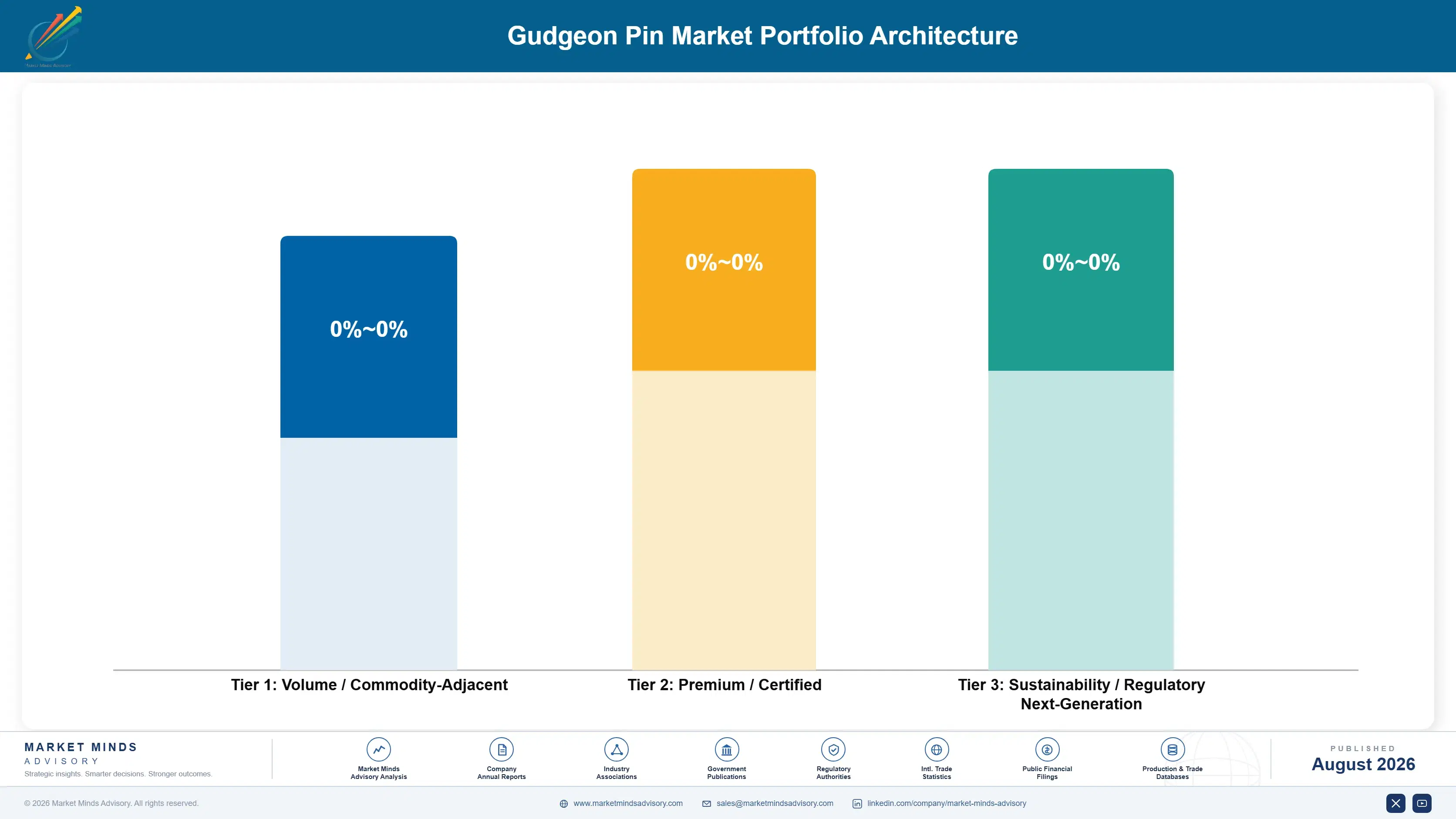
Portfolio Architecture for Margin Defence

Portfolio economics here divide on surface treatment and channel rather than on any mechanical distinction. Uncoated case-carburised pins quoted into competitive engine tenders earn gross margins in the low teens, because the tolerances are demanding but well understood, the capability is widely held, and Chinese and Indian manufacturers hold delivered cost positions Western plants cannot approach at all.
The premium tier is coated and profiled original equipment product. Diamond-like carbon or ceramic coatings plus internally profiled geometry demand deposition capacity and machining capability that volume grinders lack, and the resulting pins realise several times uncoated pricing. Margins run in the mid twenties to low thirties across that work. Deposition ownership decides where in that range a manufacturer actually lands.

Above both sits aftermarket and performance supply. A rebuilder or engine builder buying pins is solving an immediate problem rather than negotiating a supply contract, performance applications specify coated and profiled parts as standard, and catalogue coverage rather than manufacturing cost determines who captures the demand. Margins reach the high thirties, and the revenue continues for well over a decade after original fitment on any given engine family has ended.

Volume / Commodity-Adjacent

Uncoated case-carburised pins quoted into competitive engine tenders. Demanding but widely held tolerances, plus Asian delivered cost positions Western plants cannot match, hold margin near the floor across the whole segment.
Gross Margin: 11 to 16%

Premium / Certified

Coated and internally profiled original equipment pins. The range reflects whether a manufacturer owns deposition capacity or subcontracts it, which changes the economics of every single coated unit quite considerably.
Gross Margin: 24 to 32%

Sustainability / Regulatory / Next-Generation

Aftermarket rebuild catalogue and performance engine supply. The wide range spans routine rebuild catalogue parts through to motorsport specification, where pricing bears very little relation to manufacturing cost at all.
Gross Margin: 34 to 42%
gudgeon-pin-market-portfolio-architecture-1787317005563

High-value Sub-segments and Strategic Watch-out

Performance And Motorsport Pin Supply

High value and steady growth together. Engine builders specify coated profiled pins as standard, order quantities are small enough that pricing bears little relation to manufacturing cost, and these customers value availability and exact specification far above whatever the delivered unit price happens to be.
Gross Margin: 37 to 45%

Aftermarket Rebuild Catalogue Supply

High value running on moderate growth. Every engine family in production generates rebuild demand for well over a decade after the last unit ships, the buyer is solving an immediate problem rather than negotiating supply, and catalogue coverage rather than manufacturing cost decides who captures it.
Gross Margin: 33 to 40%

Coated Original Equipment Programmes

The volume core that carries this entire industry's specification improvement story forward year after year. Coated pins realise several times the price of uncoated equivalents, and deposition chamber capacity rather than any technical doubt is what currently constrains how quickly the specification spreads across new programmes.
Gross Margin: 24 to 32%

Uncoated Volume Pin Production

The strategic watch-out sitting squarely inside this particular portfolio. Volumes here remain genuinely large across motorcycles and entry level engines, but Asian delivered cost positions are simply unreachable from Western plants and nothing durable at all accrues to the supplier from winning that particular work.
Gross Margin: 11 to 16%

How Gudgeon Pin Demand Repeats

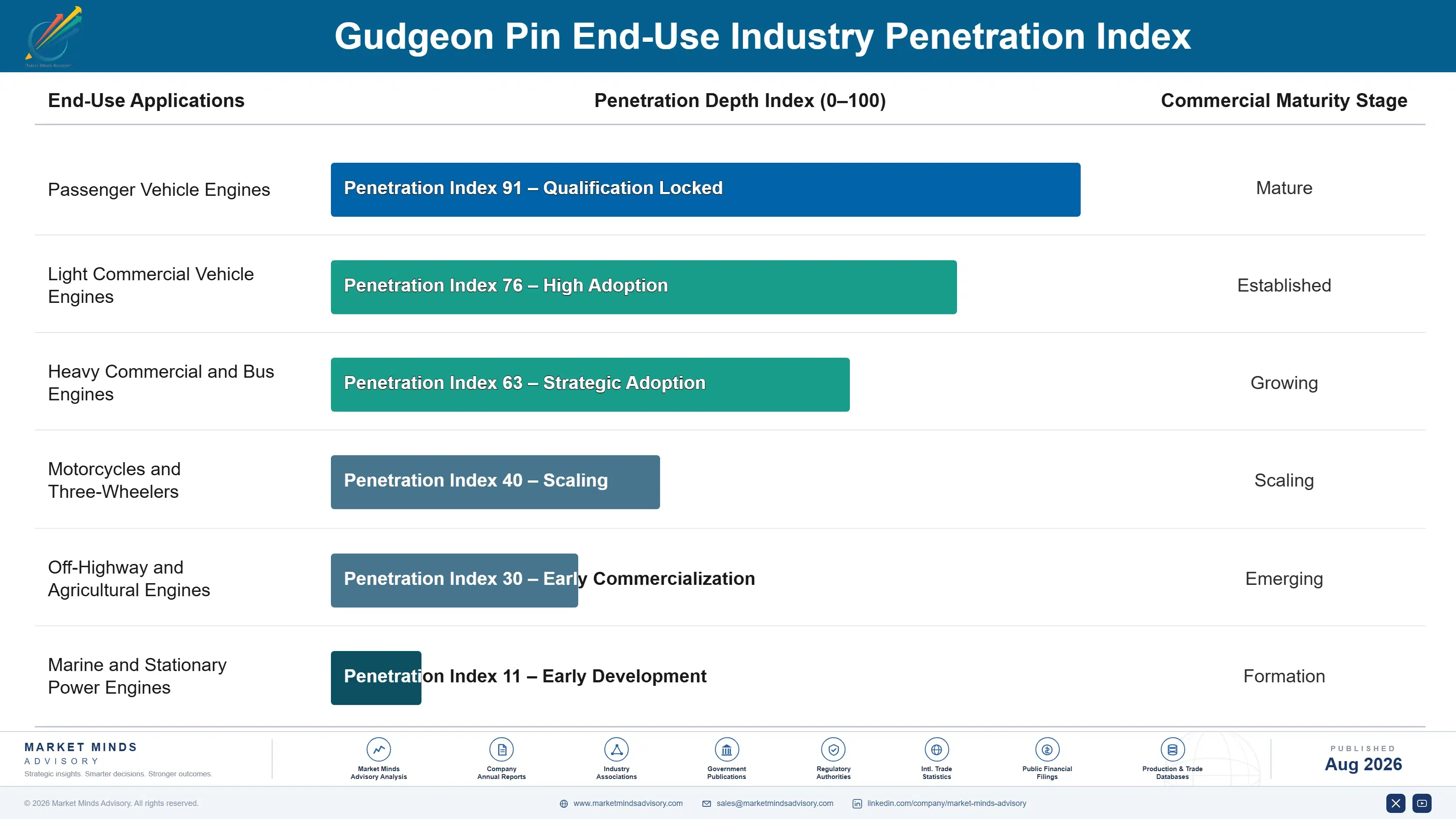
This market has an unusually long tail that most participants underweight. An engine family fitted with a particular pin specification generates original equipment revenue for roughly nine years of production, then rebuild and replacement demand for well over a decade beyond that, at considerably better margin. The specification decision taken once therefore determines two decades of demand, which is why losing a programme costs far more than the contract value alone suggests.
Stickiness varies by channel rather than by end-use. Original equipment positions are locked for the programme but fully contestable at each engine revision, and matched piston and pin supply makes them harder to break than loose component contracts. Engine rebuilders develop preferences for pins that measure correctly out of the box and rarely switch without a reason. Distributor and value-line channels are the least sticky, buying purely on delivered price and availability.

The buyer profile has shifted generationally. Specification once sat with engine designers weighing bearing loads, fatigue life and scuffing margin in isolation. Today it sits with powertrain teams balancing friction contribution against fleet carbon dioxide targets alongside durability, which favours suppliers who can quantify drive cycle benefit rather than only demonstrate that the part survives testing.
gudgeon-pin-market-end-use-penetration-index-1787317006048

Where To Compete And Why

These are among the four positions where our research anticipates prominent divergence between winners and laggards over the coming forecast period. Each is grounded in the demand model, the regulatory perimeter, and the announced capacity pipeline.
01 / COATING CAPACITY OWNERSHIP

Own the chamber or lose the premium

Coated pins realise roughly 2.8 times uncoated pricing, and manufacturers subcontracting deposition hand a substantial share of that premium to the coating house while inheriting its throughput schedule as their own delivery constraint. In-house physical vapour deposition capacity captures between 10 and 15 points of additional gross margin on every coated pin shipped. Chamber capital and process qualification are the real barriers here, which is exactly why the capability concentrates in far fewer plants than current specification demand actually justifies.
02 / MATCHED ASSEMBLY SUPPLY

Sell the pair not the pin

Pin and piston bore must be matched within a few microns, which means whoever supplies the piston is best placed to supply the pin, and an independent grinder faces a coordination problem no engine plant wants to manage. Manufacturers selling matched assemblies rather than loose pins hold 20% to 26% higher realised price and face materially fewer competitive tenders. The barrier is genuine engineering rather than contractual, which is precisely why almost nobody sells gudgeon pins independently into volume programmes.
03 / AFTERMARKET TAIL CAPTURE

The rebuild market outlives the programme

Aftermarket already takes 21% of volume and earns 16 to 22 points more gross margin than original equipment supply, because a rebuilder buying pins is solving an engine problem rather than negotiating a contract. Every engine family in production today generates rebuild demand for well over a decade after the very last unit is built. Manufacturers building catalogue coverage now capture that tail, while those waiting for fitment to decline before acting will find the distributor shelf space already gone.
04 / PROFILED MACHINING CAPABILITY

Mass reduction needs tools grinders lack

Modern pins carry internal profiles removing roughly 25% of mass without sacrificing fatigue life, and machining that geometry demands capability plain bore grinding never required at all. Manufacturers holding that capability win the downsized turbocharged programmes where reciprocating mass matters most, at 18% to 24% higher realised pricing than plain cylindrical equivalents. The investment sits in machine tools and process development rather than anything exotic, but it takes several years to establish and most volume grinders simply declined to make it.

Engagement Snapshot From the Field

A live engagement with an industry participant carrying material or product regulatory and market exposure ahead of a defining policy shift, showing how our research translates into a defensible multi-year portfolio strategy.
MARKET MINDS ADVISORY · CLIENT ENGAGEMENT SUMMARY
Gudgeon Pin Producer Strategic Portfolio Review and Transition Roadmap 2026·Investment Scenario on Gudgeon Pin Exposure Evaluation 2025-26
CLIENT PROFILE
A European manufacturer of precision engine components with annual revenue near $185 million (client-reported, unverified by MMA), roughly 79% of it from uncoated gudgeon pins supplied into European engine programmes. The business held excellent grinding capability and long customer relationships but subcontracted all coating work, held no profiled machining capacity, and had almost no aftermarket presence to speak of.
STRATEGIC CHALLENGE
European engine production was declining while the programmes replacing lost volume specified coated or profiled pins the client could not supply competitively. Margins on uncoated work had fallen into single digits against Asian competition. Management needed to choose between investing in deposition capacity, building profiled machining capability, or entering the aftermarket channel from a standing start.
MMA APPROACH
MMA modelled pin specification demand across 61 European and Asian engine families through 2040, mapped rebuild demand from the client's own installed base against catalogue coverage it did not hold, and assessed capital and timeline requirements for each option. Twenty-four expert interviews with engine designers, rebuilders and distribution buyers tested where purchasing decisions were genuinely made.
KEY FINDINGS
  1. Rebuild demand from engine families the client already supplied would exceed its declining original equipment revenue before 2034, and that tail was entirely unaddressed because no catalogue coverage existed.
  2. Subcontracted coating cost the client roughly 13 points of gross margin per coated pin against in-house deposition, and imposed lead times that had already cost two programme awards outright.
  3. Profiled machining investment targeted downsized turbocharged programmes, of which nine of the fourteen studied were scheduled to end or convert to hybrid derivatives within the payback period.
  4. Rebuilders selected pins on dimensional consistency and availability rather than on price or brand, which favoured a supplier with genuine original equipment grinding behind the catalogue.
CLIENT PROFILE
A European manufacturer of precision engine components with annual revenue near $185 million (client-reported, unverified by MMA), roughly 79% of it from uncoated gudgeon pins supplied into European engine programmes. The business held excellent grinding capability and long customer relationships but subcontracted all coating work, held no profiled machining capacity, and had almost no aftermarket presence to speak of.
STRATEGIC CHALLENGE
European engine production was declining while the programmes replacing lost volume specified coated or profiled pins the client could not supply competitively. Margins on uncoated work had fallen into single digits against Asian competition. Management needed to choose between investing in deposition capacity, building profiled machining capability, or entering the aftermarket channel from a standing start.
MMA APPROACH
MMA modelled pin specification demand across 61 European and Asian engine families through 2040, mapped rebuild demand from the client's own installed base against catalogue coverage it did not hold, and assessed capital and timeline requirements for each option. Twenty-four expert interviews with engine designers, rebuilders and distribution buyers tested where purchasing decisions were genuinely made.
KEY FINDINGS
  1. Rebuild demand from engine families the client already supplied would exceed its declining original equipment revenue before 2034, and that tail was entirely unaddressed because no catalogue coverage existed.
  2. Subcontracted coating cost the client roughly 13 points of gross margin per coated pin against in-house deposition, and imposed lead times that had already cost two programme awards outright.
  3. Profiled machining investment targeted downsized turbocharged programmes, of which nine of the fourteen studied were scheduled to end or convert to hybrid derivatives within the payback period.
  4. Rebuilders selected pins on dimensional consistency and availability rather than on price or brand, which favoured a supplier with genuine original equipment grinding behind the catalogue.
RECOMMENDED STRATEGY
Phase 1: Phase one: build replacement pin catalogue coverage across every engine family the business has ever supplied, starting with the highest installed volumes. Phase 2: Phase two: commission in-house deposition capacity, recovering the margin currently paid away and removing the lead time constraint that has already cost programme awards. Phase 3: Phase three: defer profiled machining investment until hybrid engine family commitments clarify, rather than committing capital against programmes that may not run.
OUTCOME
The client launched catalogue coverage across 280 applications within twelve months and reported first-year aftermarket revenue of $21 million against a $14 million plan (client-reported, unverified by MMA). Deposition capacity was commissioned the following year, blended gross margin improved by roughly six points, and the profiled machining decision remains deliberately deferred.

Frequently Asked Questions

Foundational context covering the market sizes, CAGR, scope, country, region and competition that inform every finding below. This section is provided to cover basics and most often pre-purchase conversations, answered from the MMA Primary Research Dataset.

What is the current size of the Gudgeon Pin Market?

The global gudgeon pin market was valued at $2.10 billion in 2025, reaching an estimated $2.17 billion in 2026. That covers piston pins across passenger, commercial, motorcycle, off-highway, marine and stationary engine applications.

How large will the Gudgeon Pin Market be by 2036?

MMA forecasts the market reaching $3.03 billion by 2036, an increase of $0.86 billion over the 2026 base. That represents an expansion multiple of 1.40 times across the forecast period.

What is the CAGR for the Gudgeon Pin Market 2026 to 2036?

The base case compound annual growth rate is 3.4%, with a bull case of 4.6% and a bear case of 2.2%. Historical growth between 2020 and 2025 ran at 2.4% annually.

Which segment is growing fastest?

Diamond-like carbon coated pins grow at 5.1%, a full 1.50 times the market rate, on friction reduction that registers on regulatory drive cycles. Chromium nitride coated pins follow at 4.3% annually.

Who are the major companies in the Gudgeon Pin Market?

Mahle, Tenneco, Rheinmetall, Art Metal Manufacturing and Shriram Pistons and Rings lead on pin shipment volume. Together they account for roughly 42% of global shipments across all specifications.

Which country is growing fastest?

India grows fastest at 6.0% annually, driven by motorcycle and three-wheeler production volumes no Western market approaches plus expanding passenger engine output. Indonesia and Vietnam follow closely.

Report Segmentation Architecture

The full report scope spans multiple orthogonal segmentation dimensions, with cross-tabulated demand data provided for each dimension pair. Coverage extends further to regional breakdowns, trend trajectories, and the competitive detail needed to support segment-level decision-making.

By Surface Treatment and Coating

  • Diamond-Like Carbon Coated Pin
  • Chromium Nitride Physical Vapour Deposition Pin
  • Nitrided Pin
  • Phosphate and Manganese Treated Pin
  • Uncoated Case-Carburised Pin

By End-Use Industry

  • Passenger Vehicle Engines
  • Light Commercial Vehicle Engines
  • Heavy Commercial and Bus Engines
  • Motorcycles and Three-Wheelers
  • Off-Highway and Agricultural Engines
  • Marine and Stationary Power Engines

By Commercial Dimension

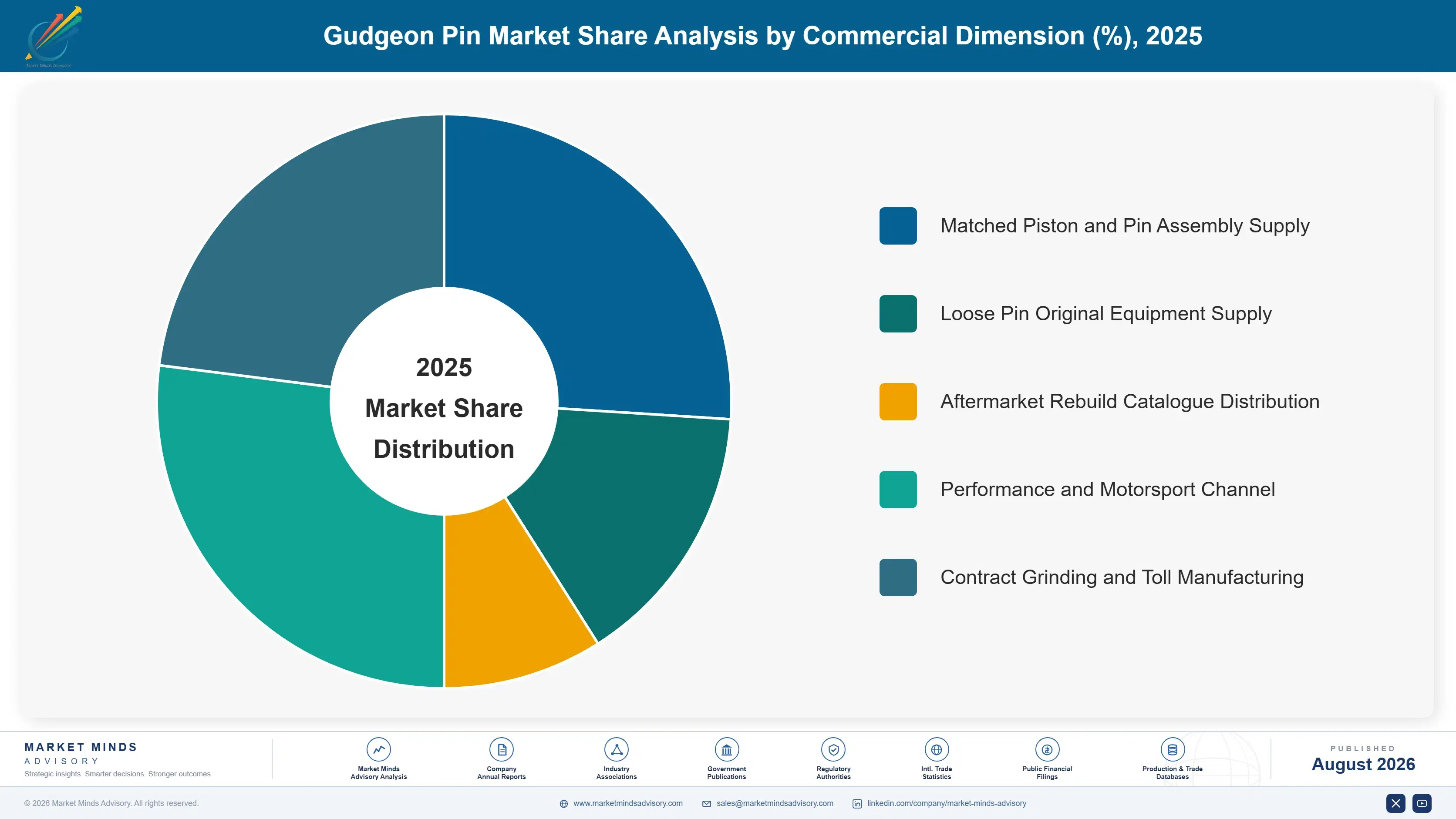
  • Matched Piston and Pin Assembly Supply
  • Loose Pin Original Equipment Supply
  • Aftermarket Rebuild Catalogue Distribution
  • Performance and Motorsport Channel
  • Contract Grinding and Toll Manufacturing

By Region

  • North America
  • Western Europe
  • East Asia
  • South Asia and Pacific
  • Latin America
  • Middle East and Africa
  • Eastern Europe

Scope, Methodology, and Coverage

Every figure in this report is reproducible from documented input assumptions. The scope below maps the historical period, the forecast horizon, the segmentation dimensions, and the countries covered, alongside the underlying primary and qualitative methodology.
Historical Period
2020 to 2025
Forecast Period
2026 to 2036
Base Year
2025 (USD billions; MMA Primary Research Dataset, August 2026)
Market Definition
This report covers gudgeon pins, also known as piston pins or wrist pins, for reciprocating internal combustion engines across passenger vehicles, light and heavy commercial vehicles, motorcycles and three-wheelers, off-highway and agricultural equipment, marine and stationary power applications, spanning every surface treatment and coating grade. Pistons, piston rings, connecting rods, circlips and retaining hardware sold separately, complete piston assemblies valued at assembly level, and compressor or hydraulic pump pins are excluded from the sizing.
Quantitative Units
USD billions at manufacturer realised value; pin shipments in billions of units; average realised price in USD per pin.
Segmentation Dimensions
By surface treatment and coating; by end-use industry; by commercial dimension; by region.
Regions Covered
North America, Western Europe, East Asia, South Asia and Pacific, Latin America, Middle East and Africa, Eastern Europe
Countries Covered
China, Japan, South Korea, India, Indonesia, Thailand, Vietnam, United States, Canada, Mexico, Germany, Italy, France, United Kingdom, Spain, Brazil, Colombia, South Africa, Poland, Turkey.
Key Companies Profiled
Mahle, Tenneco, Rheinmetall, Art Metal Manufacturing, Shriram Pistons and Rings, Riken Corporation, Teikoku Piston Ring, Nippon Piston Ring, IZUMI, Wossner Kolben, CP-Carrillo, Menon Pistons, India Pistons, Zynp Corporation and others.
Quantitative Methodology
Primary survey, n=3,800 respondents, Q4 2025, six countries; demand-side model with trade association cross-validation
Qualitative Methodology
47 expert interviews, Q4 2025; applied to validate demand model assumptions, identify emerging dynamics, and assess competitive positioning
Report Format
PDF and XLSX data workbook (Word format preview document)
Publisher
Market Minds Advisory
Report Code
MMA-2026-AUT-963
Published
August 2026
Contact
sales@marketmindsadvisory.com | www.marketmindsadvisory.com

Purchase the full Gudgeon Pin Market Report (2026 to 2036).

The full report sizes the gudgeon pin market across five surface treatment grades, six end-use industries and seven regions, with unit shipment and realised pricing detail behind every value estimate. It profiles twenty global manufacturers on coating capacity, profiled machining capability and aftermarket catalogue depth. Regional chapters cover engine production outlook, motorcycle volume and hybrid persistence by market. Specification analysis quantifies coating adoption against drive cycle friction requirements by programme. Cost analysis tracks alloy steel and heat treatment energy exposure across manufacturing regions and product grades.
Pin shipment and pricing detail by treatment grade
Coating capacity mapping across major manufacturers
Profiled geometry adoption forecasts through 2040
Rebuild demand tail from engine families in production
Competitive position assessments across twenty global manufacturers
Heat treatment energy exposure by manufacturing region

Built For The People Who Decide

From boardroom strategy to bench-side execution, this report is read cover-to-cover by leaders shaping the next decade of their industry, turning demand scenarios, market dynamics and valuation benchmarks into decisions.
CXOs/ Presidents/ VPs/ Managers
M&A and Corporate Development
Strategy Teams and R&D Heads
Procurement and Product Directors
Regulatory and Compliance Leaders
Investor Relations and Equity Analysts