

Market Minds Advisory
Grape Seed Extracts Market

Grape Seed Extracts Market: Grape Seed Extracts Market. Bioavailability Science and Wine Pomace Valorization Reshape Polyphenol Ingredient Economics.

Grape seed extracts are shifting from antioxidant powders toward standardized proanthocyanidin ingredients, while wine harvest swings, assay disputes, and price pressure from other polyphenols decide who holds contracts with supplement, food, and cosmetic brands.

Lead Analyst

Published

September 2026

Make Smarter Decisions with Customized Research Insights

Request a free sample report and evaluate market opportunities, growth trends, and competitive dynamics relevant to your business needs.

2025 MARKET VALUE$0.5BMarket Size 2025
2036 FORECAST VALUE$1.1BBase Case , 2026 to 2036
CAGR 2026 TO 20367.2 %Bull 8.5% / Bear 5.9%
INCREMENTAL OPPORTUNITY$0.5BNet 10- year value creation
EXPANSION MULTIPLE2.00x2036 value over 2026 base
Strategic Levers
M&A Pipeline
Regional Outlook
Country Rankings
Competitive Intelligence
Segmental Deep-dive
Call-Us : 91 93563 13602

Executive Snapshot and Market Trajectory.

Grape seed extract began as a by-product story: wineries paid to dispose of pomace, and extractors turned the seeds into a cheap antioxidant powder. Brands want measured proanthocyanidin content, absorption data, and clean assays, and suppliers that can deliver them are separating from the commodity trade.
Low-molecular-weight bioavailable extracts are growing fastest, helped by clinical work on vascular and skin health, while standardized 95% proanthocyanidin grades anchor supplement volume. Western Europe holds the largest share because France, Italy, and Spain supply most pomace and host leading extractors, and North America follows through the biggest supplement retail market and Californian extraction. Chile and India add capacity near wine regions, and brands pay premiums for extract lots that come with verified assays.
The competitive field mixes integrated winery-linked extractors, global botanical houses, and Chinese and Indian producers selling lower-cost powders. Advantage comes from pomace access, assay discipline, and clinical support rather than price. Regulation cuts both ways, since claim rules limit marketing while pesticide, residue, and heavy metal limits reward suppliers with traceable, tested lots. Buyers reward documented origin, verified potency, and consistent delivery above the lowest price.
Market Definition
Grape seed extracts are polyphenol-rich powders and liquids obtained from the seeds of wine and juice grapes by water or ethanol extraction, sold as standardized proanthocyanidin, polyphenol, low-molecular-weight, or organic extracts to supplement makers, food and beverage producers, and cosmetic and pharmaceutical manufacturers. The scope excludes grape seed oil, grape skin and resveratrol extracts, whole grape pomace flour, and finished supplements or creams.
Base Year Value
$0.5B in 2025 (MMA Primary Research Dataset, September 2026)
Forecast Period
2026 to 2036, eleven discrete annual values
CAGR
7.2% base case. Bull 8.5%. Bear 5.9%.
Fastest Growth Segment
Low-Molecular-Weight Bioavailable Extracts: 10.0% CAGR
Fastest Growth Country
India: 9.8% CAGR
Fastest Growth Region
South Asia and Pacific: 9.4% CAGR
Largest Region
Western Europe: 28% of 2025 global value
Market Leaders
Polyphenolics, Indena, Naturex, Euromed, Layn Natural Ingredients. Source: MMA Analysis, company annual reports.
Primary Survey
n=3,800 procurement and R&D decision-makers, Q4 2025, six countries
Methodology
Demand-side build-up, cross-validated against public data, 47 expert interviews

Grape Seed Extracts Market Forecast Scenarios

grape-seed-extracts-market-size-forecast-scenario-1789757413978
Between 2020 and 2025, grape seed extracts grew steadily as pandemic interest in immunity and vascular health lifted supplement sales, and clean-label brands adopted polyphenol ingredients. Growth averaged 6.4% a year, with standardized and bioavailable grades outpacing basic polyphenol powders, though smaller European harvests in 2021 and 2023 tightened seed supply and lifted extract prices in some quarters.
The base case assumes 7.2% annual growth through 2036, built on three named mechanisms: wider use of standardized proanthocyanidin extracts in vascular, skin, and metabolic health supplements backed by published trials, expansion of low-molecular-weight and water-soluble grades that improve absorption and open beverage formats, and steady growth in upcycled and circular-economy positioning that favors wine pomace ingredients. New extraction capacity in Spain, India, and Chile adds supply. Each mechanism reinforces the others over time.
The bull case, at 8.5%, needs stronger clinical evidence on bioavailable grades and stable harvests. The bear case, at 5.9%, reflects another drought-hit vintage, assay scandals that undermine trust, and substitution toward pine bark, green tea, and cocoa flavanol ingredients that compete on similar claims. Either scenario leaves the underlying demand base intact, though pricing and mix would differ noticeably from the base path.

Pomace Access and Assay Proof Determine Extract Value

Grape seed extract is made by separating seeds from wine pomace, drying and milling them, and extracting polyphenols with water or ethanol, followed by concentration and spray drying. Seed quality, drying speed, and solvent choice affect proanthocyanidin content, color, and taste. Because pomace spoils quickly after pressing, extractors sit close to wine regions and depend on winery cooperation. Quality is set at the winery.
MARKET CONCENTRATION24% CR5Leading five suppliers hold a moderate combined share
AVERAGE SELLING PRICE$58 per kgBioavailable grades sell far above basic polyphenol powders
TOP PRODUCING COUNTRY19% shareFrance supplies a large slice of global seed material
EXTRACT YIELD3%Only a small share of seed weight becomes extract
SEED COST SHARE34% of COGSPomace seed cost dominates production cost and margins
TYPICAL PROANTHOCYANIDIN CONTENT95%Premium extracts are standardized to a very high level
Buyers use the extract in different ways. Supplement brands sell capsules and tablets for vascular and antioxidant support, food and beverage makers use it as a natural antioxidant and astringency modifier, cosmetic brands add it to skin products, and pharmaceutical buyers use standardized grades in nutraceutical formulations. Specifications cover proanthocyanidin percentage, assay method, residue limits, and heavy metals. Records matter as much as content.
The industry is concentrated at the top and fragmented below. A few European and Californian extractors control premium supply, global botanical houses add formulation and distribution, and many Chinese and Indian producers sell lower-cost powders. Harvest swings, assay methods, and claim rules shape investment, and consolidation is starting as scale suppliers acquire regional extractors to secure pomace and quality.
"The category has treated grape seed extract as one product for twenty years. It is really a ladder, from a cheap antioxidant powder at the bottom to a clinically supported, well-absorbed ingredient at the top, and the price gap between the rungs keeps widening."
Practice Lead, Nutraceutical Ingredients and Botanical Extracts Practice · MMA Nutraceutical Ingredients and Botanical Extracts Practice · September 2026

Market Trends

Low-Molecular-Weight Extracts Turn Absorption Data Into Premium Pricing

Extractors are developing low-molecular-weight and water-soluble grape seed extracts, in which large proanthocyanidin polymers are broken into smaller units that the body absorbs more readily. Clinical studies on blood pressure, venous health, and skin elasticity use these grades, and supplement brands market them with published data. Suppliers add enzymatic and membrane steps, sign annual contracts with brands, and earn premiums over standard extracts because buyers accept higher prices for documented absorption. Pilot studies show blood levels several times higher after low-molecular-weight doses, and brands cite these numbers on labels, which helps retailers justify shelf space for premium priced products.
Market Impact: adults with hypertension exceed 30%

Upcycled Wine Pomace Positioning Supports Circular-Economy Ingredient Demand

Wineries, beverage groups, and retailers are promoting upcycled ingredients, and grape seed extract fits the circular-economy story because it turns pomace, a waste stream, into a valuable ingredient. The European Union's waste framework and national food waste targets encourage valorization, and certification schemes for upcycled products help brands communicate sourcing. Extractors sign pomace agreements with wineries and cooperatives, and brands pay for the sustainability narrative in premium supplement and cosmetic lines. Wineries benefit as well, because pomace disposal costs money, and cooperatives that sign seed contracts turn a cost into a small revenue line.
Market Impact: nutricosmetic launches up 11% annually

Market Opportunities and Growth Drivers

Cardiovascular Health Trials Support Repeat Supplement Purchases of Standardized Extracts

Cardiovascular and metabolic conditions affect large adult populations, and consumers increasingly buy supplements for blood pressure, circulation, and vascular support. Clinical trials on grape seed extract report modest reductions in blood pressure in adults with elevated levels, and physicians in Europe and North America recommend it as a complement to lifestyle changes. Growing evidence supports repeat purchase, and brands that publish trial data win longer contracts and shelf space. Retail pharmacists report that customers who begin a vascular supplement often continue for a year or more, which supports predictable reorder volume for brands.
Market Impact: 2023 output fell to 60-year low

Beauty-From-Within Launches Widen Demand Beyond Traditional Supplement Retail

Skin health and beauty-from-within products are a growing use, because grape seed proanthocyanidins support collagen and protect against oxidative stress in studies, and Asian and European brands launch drinkable beauty and capsule products. Cosmetic and nutricosmetic brands buy standardized extracts and pay for clean assays and origin stories. Demand from beauty channels widens the buyer base beyond traditional supplement retail and supports higher-priced, well-documented grades. Drinkable beauty products sold in Japan, Korea, and China often include grape seed extract alongside collagen and vitamin C, and retailers report that these products sell through quickly, which lifts orders for premium water-soluble grades.
Market Impact: colorimetric tests overstate potency by 20%

Market Restraints and Challenges

Historic Harvest Shortfalls Cut Pomace Volume and Lift Seed Prices

Wine harvests swing with weather, and world wine production in 2023 fell to its lowest level in more than 60 years, according to the International Organisation of Vine and Wine. The root cause is drought, heat, and disease in major producing regions. Lower pomace volume lifts seed prices and idles extractors. Mitigation includes multi-region pomace contracts, storage of dried seed, and diversification into Chile, Argentina, and South Africa. Extractors without contracts paid spot prices for seed that rose by roughly a third, and some idled lines, while integrated players with stored dried seed kept supplying customers.
Market Impact: bioavailable premiums reach 40-70%

Inconsistent Assay Methods Undermine Buyer Trust and Compress Honest Suppliers

Proanthocyanidin content is measured by different assay methods, and simple colorimetric tests can overstate potency, so cheap extracts sometimes carry inflated claims, according to industry reports. The root cause is inconsistent standards and weak enforcement. Buyers lose trust and honest suppliers lose bids. Mitigation includes HPLC-based specifications, third-party testing, and industry efforts to harmonize methods, while brands ask for certificates of analysis on every lot. Some retail products tested below label claims in independent studies, and reports of underdosed capsules have led buyers to add HPLC specifications, which raises testing cost but favors established producers.
Market Impact: 10% waste cut target by 2030
3 additional market trends, 4 additional growth drivers, and 3 additional restraints and challenges are covered in the full report. Contact sales@marketmindsadvisory.com to access the complete intelligence.

Segment CAGR and Growth Architecture

Grape seed extracts are segmented by grade and standardization, because bioavailability, proanthocyanidin content, and certification determine price, clinical positioning, and buyer type more directly than seed origin does. Low-molecular-weight bioavailable extracts attract the most new investment as supplement brands convert absorption data into multi-year purchase specifications. Absorption data now drives pricing power across the category.
grape-seed-extracts-market-market-share-analysis-1789757414151

Low-Molecular-Weight Bioavailable Extracts

Low-molecular-weight bioavailable extracts are the fastest-growing segment, produced by enzymatic or hydrolytic treatment that shortens proanthocyanidin chains and improves solubility. Supplement, beverage, and nutricosmetic brands pay premiums of 40% to 70% over standard extracts, and specify degree of polymerization and assay methods. Process know-how and patents limit competition, so suppliers with clinical dossiers and controlled seed supply hold strong pricing power and earn long-term customers. The process needs controlled temperature and enzyme selection, and yields fall as chains shorten, so cost per kilogram rises. Brands ask for degree of polymerization data and dissolution tests, and suppliers that provide both with clinical references secure annual agreements, while rivals offering only claims struggle to pass supplier audits at larger companies.
CAGR 10.0%

Standardized 95% Proanthocyanidin Extracts

Standardized 95% proanthocyanidin extracts are the second-fastest segment, made by concentration and purification to reach a defined content verified by HPLC or similar methods. Supplement brands use them for dose-defined capsules and cite clinical trials, and pharmacies favor them for traceability. Competition is broader than in bioavailable grades, so suppliers differentiate through seed origin, residue testing, and stable supply, while producers without testing capability are pushed toward commodity trade. Purification removes tannins and sugars, and gentle drying preserves color and solubility, so capital and skill limit small entrants. Prices sit 30% to 50% below bioavailable grades, and volumes are larger, since capsules and tablets need only doses, while Indian and Chinese producers offer competing grades at lower cost.
CAGR 8.4%
Full segment breakdown across 6 segments available in the complete report.

Regional Architecture and Country Demand Map

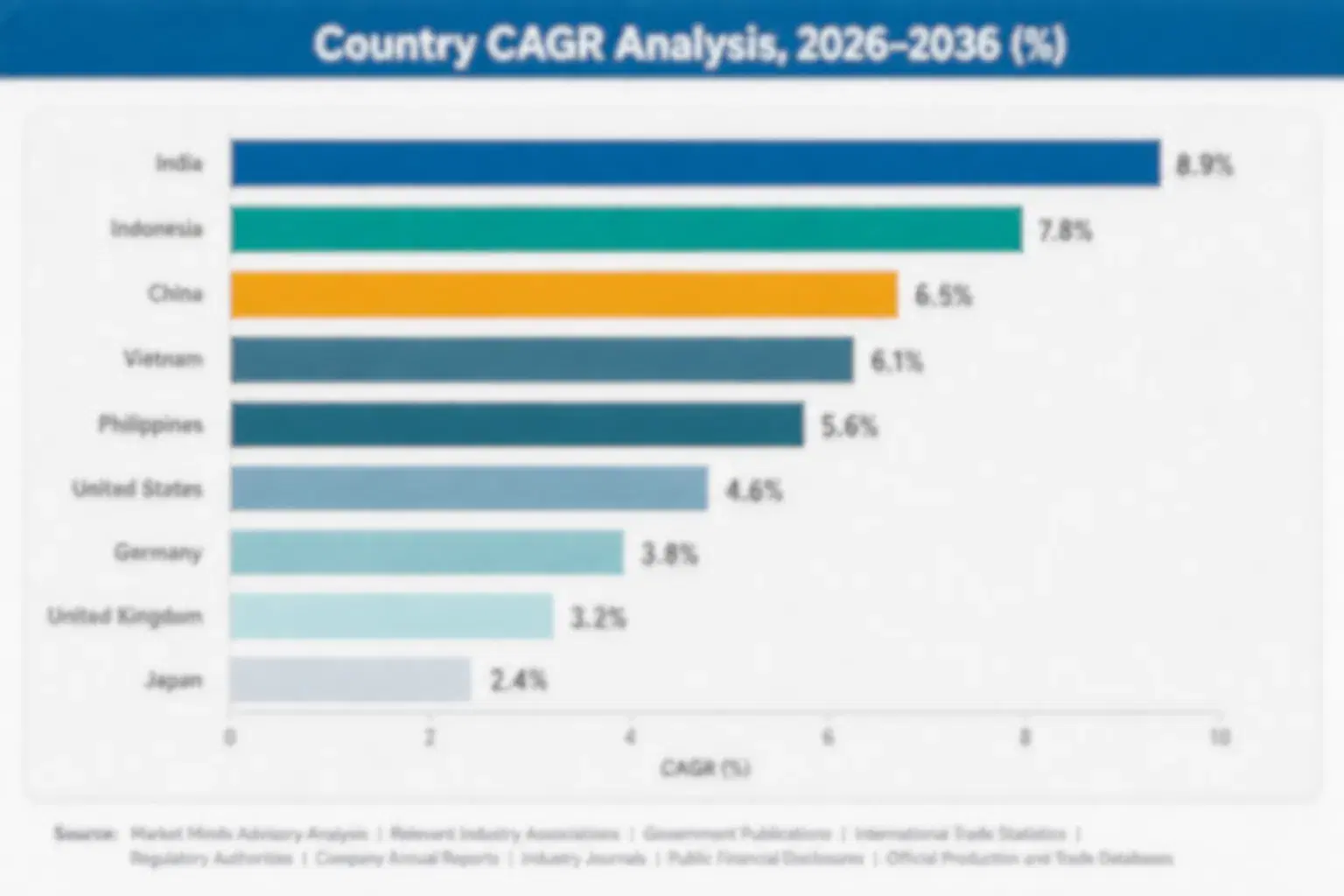
Grape seed extract value follows pomace geography and regulated demand. Western Europe leads through French, Italian, and Spanish supply and extraction, North America follows through the largest supplement market, and India is the fastest-growing consumer as wellness retail expands. Asian export volumes are still catching up.

North America

North America holds 26% share, led by the United States, where the largest supplement retail market and Californian extractors such as Polyphenolics in Madera create strong demand for standardized extracts. Structure-function rules let brands describe vascular and antioxidant support without preapproval, though the FDA requires substantiation. California wineries supply pomace, and online subscriptions and natural retailers sell capsules, so North America ranks second on spending power. Subscription supplement brands sell vascular and beauty products online, and natural retailers stock grape seed capsules beside other polyphenols. California wineries in Sonoma, Napa, and the Central Valley supply pomace, and extractors ship standardized grades to brands across the continent, while Proposition 65 leads suppliers to publish heavy metal test results.
Share: 26% | CAGR: 7.7% (2026 to 2036)

Western Europe

Western Europe holds 28% share, above its usual band, because France, Italy, and Spain generate most global pomace, host leading extractors such as Indena, Naturex, and Euromed, and run the strictest quality and residue rules. Value sits where seed supply, extraction, and regulated pharmacy demand meet, so the region leads by geography and quality in commercial terms. Germany and France add strong pharmacy and nutricosmetic demand. French Bordeaux, Burgundy, and Champagne cooperatives sell pomace to extractors, while Italian and Spanish producers add volume from Veneto, Tuscany, and Rioja. Pharmacy channels in Germany and France favor documented extracts under pharmacist guidance, and cosmetic groups in France buy standardized grades for skin products, although higher energy cost squeezes margins on standard powders.
Share: 28% | CAGR: 5.7% (2026 to 2036)
Regional intelligence for 5 additional markets available in the complete report: East Asia, South Asia and Pacific, Latin America, Middle East and Africa, Eastern Europe. Contact sales@marketmindsadvisory.com.
grape-seed-extracts-market-country-cagr-analysis-1789757414341

Four Profit Levers for Grape Seed Extract Producers

Margin in grape seed extract comes from moving beyond commodity polyphenol powder toward bioavailable and standardized grades with proven assays that brands cannot easily replace. Producers that secure pomace, invest in absorption technology, prove potency by HPLC, and build brand partnerships earn more per kilogram than extractors competing only on price. Each route needs different capital.

Developing Low-Molecular-Weight Grades With Clinical Support

Bioavailable grades earn 40% to 70% more per kilogram than standard extracts, because supplement, beverage, and beauty brands pay for documented absorption. Enzymatic and membrane steps require capital and process know-how, but patents and clinical dossiers protect pricing. Producers that fund human absorption studies costing $300,000 to $700,000 secure exclusive positioning, and the resulting data supports multi-year contracts with brands. Contracts with brands typically run three years and include volume floors, so producers gain planning certainty, while brands gain exclusive access to grades their competitors cannot copy quickly, and the resulting margin supports further investment in research and quality control.
Market Impact: bioavailable grades earn 40% to 70% more per kilogram

Locking In Pomace Supply Through Winery and Cooperative Contracts

Seed is about 34% of cost, and the smaller 2023 harvest raised seed prices sharply, so multi-year agreements with wineries and cooperatives protect margin and delivery. Producers that dry seeds on site and store them for months smooth supply. Contracts across France, Spain, Chile, and California protect 3 to 5 margin points during short harvests, and wineries gain a small but reliable revenue stream. Some producers also dry seed on the winery site using low-cost solar dryers, which stops spoilage before transport, and cooperatives value the arrangement because it removes a disposal problem.
Market Impact: pomace contracts protect 3 to 5 margin points

Proving Potency Through HPLC Assays and Third-Party Testing

Assay disputes depress prices for honest suppliers, so producers that publish HPLC-based specifications and third-party results win contracts and premiums of 10% to 18%. Laboratory equipment costs under $200,000 and pays back quickly when it prevents one rejected shipment. Brands that market authenticity report stronger repeat purchase, which makes testing capability the cheapest form of market access insurance for premium extractors. Brands increasingly ask for chromatograms and certificates on every lot, and purchasing teams reject suppliers that cannot produce them within days, so an in-house laboratory shortens approval time and lets producers respond quickly to audit requests from retailers.
Market Impact: verified assays earn 10% to 18% higher prices

Building Beauty and Beverage Applications With Brand Partners

Nutricosmetic and beverage brands pay 15% to 25% more for extracts tuned to solubility, taste, and color stability, because performance decides product acceptance. Suppliers with application laboratories shorten customer trials and win recurring volume. The investment is modest compared with new extraction lines, and it builds switching costs, since brands rarely reformulate after stability testing and consumer approval are complete. Stability tests cover heat, light, and pH over several months, and beverage brands need clear solution without sediment, so suppliers that supply data early help formulators finish testing within one quarter and win the first commercial orders.
Market Impact: application-tuned grades earn 15% to 25% more per kilogram

Who Controls the Margin Pool

The grape seed extract industry is moderately concentrated, with the top five suppliers holding about 24% of global revenue, the basis used throughout this section. Polyphenolics, Indena, Naturex, Euromed, and Layn Natural Ingredients lead through pomace access, standardization, and brand relationships, while dozens of Chinese, Indian, and Spanish producers supply lower-cost powders. The gap between leaders and challengers is wide in premium grades. Concentration reflects pomace access, not brand alone.
Competition centers on three dimensions: secure access to seed and pomace, extraction technology and verified proanthocyanidin content, and clinical evidence that supports supplement and cosmetic positioning. Leaders sign annual contracts with brands and publish assay results, while challengers compete on price and flexible order sizes. Organic and upcycled certifications add another layer of differentiation, especially for European and North American buyers.

Emerging pressure comes from Indian and Chinese extractors adding standardized grades, from pine bark, green tea, and cocoa flavanol ingredients, and from wineries integrating forward into extraction. Rankings shift where suppliers win bioavailable contracts, secure multi-region pomace, or suffer assay scandals. Acquisitions of regional extractors and licensing of absorption technology will reorder positions faster than organic capacity growth.
grape-seed-extracts-market-company-positioning-matrix-1789757414521

Competitive Moat and Risk Dimensions

POLYPHENOLICS

Moat: Californian Pomace Integration and Science

Polyphenolics extracts grape seed and skin polyphenols in California, close to large winery volumes, and supports its ingredients with clinical research and long relationships with supplement brands. Its pomace access, in-house testing, and decades of data give credibility in standardized extracts, and proximity to North American brands shortens delivery and supports contracts that international rivals cannot easily match.
POLYPHENOLICS

Risk: Regional Harvest Concentration Risk

Polyphenolics depends heavily on Californian grape supply, so drought, wildfire smoke, and weak wine harvests can cut pomace and raise costs. European and South American extractors with multi-region sourcing may offer steadier supply, and buyers seeking geographic diversity may split orders, reducing volume during shortages.
INDENA

Moat: Phytosome Delivery and Clinical Depth

Indena is an Italian botanical extract group with strong pharmaceutical-grade quality systems, patented delivery technologies such as phytosome complexes for grape seed polyphenols, and clinical studies that support premium positioning. Its regulatory expertise and global customer base give it credibility with supplement and pharmaceutical buyers who require documented safety and bioavailability data across markets.
INDENA

Risk: Portfolio Breadth Dilutes Focus

Grape seed is one of many botanical lines at Indena, so it competes for capital and attention with larger categories. Specialist extractors can move faster on new bioavailable grades and offer more flexible order sizes, and Indena relies on outside suppliers for part of its seed supply, exposing it to harvest shocks.

Players Tracked

Prominent Players

Polyphenolics
Indena
Naturex
Euromed
Layn Natural Ingredients

Other Key Players

Martin Bauer Group
Kerry Group
dsm-firmenich
Bio-Botanica
Sabinsa Corporation
Bioiberica
Cargill
Archer Daniels Midland
Lonza
Provital Group
Seppic
Glanbia Nutritionals
NOW Foods
Nature's Way
Swanson Health Products

Recent Developments

MARCH 2026

Euromed Expands Grape Seed Extraction Capacity in Spain

Euromed completed an organic capacity expansion at its Spanish plant, adding membrane filtration and enzymatic treatment lines for low-molecular-weight grape seed extracts. The project is internal capital spending, not an acquisition. It increases supply of bioavailable grades, improves proanthocyanidin control, and reduces reliance on outside processors.
Signal: Shows leading extractors investing in bioavailable grades to serve supplement and beauty-from-within brand demand across Europe.
OCTOBER 2025

Indena Signs Pomace Supply Agreements With Italian Wineries

Indena signed multi-year pomace supply agreements with Italian wineries and cooperatives to secure grape seed for extraction. The deals are supply contracts, not equity stakes. They give wineries reliable waste disposal revenue, secure traceable raw material for Indena's standardized extracts, and support investment in seed drying and storage capacity.
Signal: Confirms multi-year winery contracts are becoming standard for securing traceable grape seed supply for extraction plants.
JANUARY 2026

Layn Natural Ingredients Acquires Chilean Grape Seed Extractor

Layn Natural Ingredients completed the acquisition of a Chilean grape seed extractor serving North American supplement brands. The purchase adds pomace access in the Southern Hemisphere and extraction capacity, and it gives Layn counter-seasonal supply. Management said the plant will follow Layn quality systems and expand standardized grades.
Signal: Reflects global extractors buying Southern Hemisphere capacity to diversify pomace supply and harvest calendar risk steadily.

What Drives Grape Seed Extract Costs

Grape seed accounts for roughly 34% of cost of goods, sourced from wineries and cooperatives in France, Italy, Spain, California, Chile, and Argentina. Extraction solvents, drying energy, and purification add about 30%, with testing, packaging, freight, and labor making up most of the remainder, so seed price and extraction yield together determine gross margin for most producers.
World wine production in 2023 fell to its lowest level in over 60 years, according to the International Organisation of Vine and Wine, and European gas and electricity prices spiked in 2022, according to European Commission energy reports. Extractors reported higher seed prices and drying costs, added surcharges to contracts, and in some cases delayed shipments, while brands absorbed part of the increase to protect shelf prices during the period.

Exposure varies by player type and geography. Integrated extractors with winery contracts and multi-region sourcing absorb shocks better than small producers buying seed from brokers. Chinese and Indian suppliers benefit from lower labor cost but carry residue and traceability risks that premium buyers penalize, while European extractors face the highest energy cost and rely on bioavailable and certified grades to defend margins.
grape-seed-extracts-market-cost-volatility-analysis-1789757414707

Signing Multi-Region Pomace Contracts With Wineries

Extractors negotiate three to five year agreements with wineries and cooperatives in both hemispheres, fix price bands, and specify drying and storage standards. Contracts reduce spot exposure and smooth supply through short harvests, though they lock in prices when vintages are strong. Wineries gain predictable waste revenue, which builds loyalty and protects extractors against poaching by rivals.

Installing Solvent Recovery and Efficient Drying Systems

Solvent recovery, heat exchangers, and modern spray dryers cut ethanol and energy use per kilogram of extract, and some plants use waste heat from wineries. Savings of 12% to 20% are common, and lower emissions support customer sustainability targets. Capital cost is meaningful, but payback usually arrives within a few seasons when energy prices remain elevated.

Holding Dried Seed Inventory and Diversifying Product Mix

Extractors hold dried seed for several months and shift capacity between standardized, bioavailable, and cosmetic grades as demand and margins change. Inventory ties up working capital and needs moisture control, but it protects customer commitments during poor harvest years. Larger extractors benefit most because they can spread storage cost across many product lines and long-term contracts.

Portfolio Architecture for Margin Defence

Margins run from thin returns on basic polyphenol powder to strong profits on bioavailable, standardized, and organic grades sold with assay proof, with gross margin roughly doubling between the volume tier and the top tier. Absorption data, assay discipline, and clinical support add pricing power over what starts as the same seed, and buyers pay for reliability because supplement brands cannot afford failed potency tests.
Volume and premium pull in different directions. Basic polyphenol powders sell in large lots to price-sensitive food and supplement buyers at thin margins and face competition from Chinese and Indian producers. Bioavailable and certified grades sell in smaller lots at much higher margins but need process technology, testing, and clinical dossiers, so extractors must choose how much capital to commit to premium positioning.

High-value pools concentrate in low-molecular-weight grades for supplements and beauty-from-within products, HPLC-verified 95% proanthocyanidin extracts for dose-defined capsules, and organic and upcycled-certified grades for premium retail. These segments benefit from documented evidence, recurring orders, and limited competition from small extractors. Suppliers combining pomace security, process know-how, and clinical support hold advantages that are difficult to replicate quickly.

Volume / Commodity-Adjacent Tier

Polyphenol-standardized powders at 40% to 80% content for food, feed, and low-cost supplements, sold on price through distributors, with thin margins, colorimetric assays, and competition from regional producers worldwide, with limited pricing power.
Gross Margin: 14%-24%

Premium / Certified Tier

Standardized 95% proanthocyanidin extracts with HPLC verification, organic certification, and audited seed origin, sold under annual contracts to supplement brands that require documented potency, residue testing, and reliable delivery throughout the year.
Gross Margin: 28%-40%

Sustainability / Regulatory / Next-Generation Tier

Low-molecular-weight and water-soluble extracts with absorption data, upcycled certification, and application support, positioned for vascular and beauty-from-within products, beverage formats, and circular-economy claims across developed and emerging markets, backed by published absorption data.
Gross Margin: 38%-52%
grape-seed-extracts-market-portfolio-architecture-1789757414898

High-value Sub-segments and Strategic Watch-out

Low-Molecular-Weight Bioavailable Extracts

Bioavailable extracts combine the fastest growth with strong pricing, as supplement, beverage, and beauty brands pay for documented absorption. Process know-how and patents protect margins, though suppliers must fund clinical studies and keep polymer profiles consistent to honor annual contracts and keep premium customers over time.
Gross Margin: 38%-52%

Standardized 95% Proanthocyanidin Extracts

Standardized 95% extracts offer solid growth and healthy premiums, because brands market dose-defined capsules and cite published trials. HPLC methods and consistent batches build barriers, while competition from multiple producers keeps pressure on pricing, so suppliers need testing discipline and technical support to keep customers.
Gross Margin: 28%-40%

Polyphenol-Standardized Grade

Polyphenol-standardized powders remain the volume core, moving the largest tonnage to food, feed, and low-cost supplement buyers at modest prices. Margins depend on seed cost, extraction yield, and buyer negotiation, and Chinese and Indian producers compete directly, so returns rely on cost discipline and scale rather than differentiation.
Gross Margin: 14%-24%

Competing Polyphenol Ingredients

Pine bark, green tea, and cocoa flavanol ingredients are the main strategic watch-out, since they target the same vascular and antioxidant buyers with strong evidence in some cases. If trial results weaken or claims stall, brands may switch, slowing premium grades and pressuring supplier pricing across categories.
Gross Margin: n/a (substitution risk)

Why Brands Keep Extract Suppliers

Grape seed extract demand behaves like an annuity once a supplement or cosmetic brand approves a supplier. Proanthocyanidin content, taste, color, and label claims are tied to a specific extract profile, so switching means new assays, possible stability studies, and risk of customer complaints. Annual agreements reinforce repeat orders, and buyers often accept modest price increases to protect supply continuity and consistent quality. Quality drift is a bigger fear than price.
Stickiness varies by end-use vertical. Supplement brands with clinical positioning show the deepest loyalty because marketing depends on the ingredient's published evidence. Cosmetic and nutricosmetic brands switch less often once formulas are stable, while food and beverage makers switch more often on taste and cost. Private label buyers rebid frequently, making that group the most price sensitive and least attractive for planning.

Buyer profiles are changing. Younger consumers and digitally native brands look for standardized, tested, and upcycled ingredients with visible assay results, and they favor suppliers that publish batch data and origin. Older buyers anchor on familiar antioxidant claims and price. Suppliers must serve both groups, but growth concentrates among brands that market vascular and beauty benefits through subscriptions.
grape-seed-extracts-market-end-use-penetration-index-1789757415082

MMA Verdict on Grape Seed Extracts

These are among the four positions where our research anticipates prominent divergence between winners and laggards over the coming forecast period. Each is grounded in the demand model, the regulatory perimeter, and the announced capacity pipeline.
01 / BIOAVAILABILITY TECHNOLOGY INVESTMENT

Invest in Low-Molecular-Weight Grades With Clinical Support

Bioavailable extracts grow about 1.39 times faster than the market and earn 40% to 70% more per kilogram than standard extracts. Enzymatic and membrane steps need capital, but patents and clinical dossiers protect pricing for years. MMA recommends funding absorption studies and process upgrades within the next two years, before rivals build competing capacity and the premium grades become more contested and widely available, and rights to key enzymes and process settings are often protected, so late entrants must build around existing patents.
02 / POMACE SUPPLY SECURITY

Lock In Multi-Region Winery Contracts Before Harvest Swings

Seed is about 34% of cost, and 2023 world wine output fell to a 60-year low, hitting extractors without contracts hard. Multi-region agreements protect 3 to 5 margin points and keep delivery reliable during short harvests. MMA regards pomace security as the foundation of every credible supply commitment to brands, since even the best extraction line cannot make margin from seed it cannot obtain, and suppliers with stored dried seed and multi-region contracts kept supplying customers and won market share while others idled lines.
03 / ASSAY DISCIPLINE AND TESTING

Prove Potency Through HPLC Specifications and Third-Party Testing

Assay disputes depress prices, and colorimetric tests can overstate potency by 20%. Suppliers that publish HPLC-based specifications earn premiums of 10% to 18%, and testing equipment pays back quickly. MMA regards authentication as the cheapest insurance against market access loss, especially for exporters targeting Western brands that audit suppliers and reject lots lacking full documentation, and one failed audit at a large retailer can remove a supplier from every listing for a full year, which is why laboratory investment earns priority in capital budgets before new capacity.
04 / APPLICATION PARTNERSHIP DEVELOPMENT

Build Beauty and Beverage Applications With Brand Partners

Application-tuned extracts earn 15% to 25% more, and once a formula is approved, brands rarely reformulate. Application laboratories shorten trials and create switching costs that protect volume. MMA advises starting with two anchor nutricosmetic customers, then extending the range as stability data builds and reference launches attract further inquiries from brands across Europe and Asia, and the first brand to approve an application grade often becomes the reference customer that later formulators ask about when they evaluate the same supplier for new launches.

Engagement Snapshot From the Field

A live engagement with an industry participant carrying material or product regulatory and market exposure ahead of a defining policy shift, showing how our research translates into a defensible multi-year portfolio strategy.
MARKET MINDS ADVISORY · CLIENT ENGAGEMENT SUMMARY
Grape Seed Extracts Producer Strategic Portfolio Review and Transition Roadmap 2026·Investment Scenario on Grape Seed Extracts Exposure Evaluation 2025-26
CLIENT PROFILE
The client is a mid-sized Spanish grape seed extractor with two plants and roughly $18 million in annual revenue (client-reported, unverified by MMA), selling polyphenol-standardized and 95% proanthocyanidin extracts to distributors and supplement brands. About 75% of volume was basic polyphenol grade, gross margin sat near 19% (client-reported, unverified by MMA), and it had no bioavailable grades.
STRATEGIC CHALLENGE
Chinese producers were eroding prices on basic powders, and smaller harvests had lifted seed costs, while brands asked for low-molecular-weight grades and HPLC-verified potency the client could not supply. Leadership needed a plan that secured pomace, upgraded assays, and moved volume toward premium grades without overextending capital. The board wanted a decision within a year.
MMA APPROACH
MMA benchmarked 11 extractors on cost structure and grade mix, interviewed supplement and nutricosmetic brand formulators about specifications and price points, and modeled the economics of an enzymatic line, an HPLC laboratory, and multi-region pomace contracts under bull, base, and bear harvest scenarios across both plants. The work covered both plants and three markets.
KEY FINDINGS
  1. An enzymatic and membrane line costing about $2 million could produce bioavailable grades priced roughly 55% higher and pay back within four years.
  2. Three brands indicated they would sign annual contracts if potency was verified by HPLC and origin was documented on every lot, according to interviews.
  3. Multi-region pomace contracts in Spain, Chile, and Portugal would protect roughly 4 margin points during a poor harvest year like 2023, based on winery discussions.
  4. Basic grade volume would remain necessary to fill plants, so the client should keep distributor contracts at about 50% of volume, which keeps plants running.
CLIENT PROFILE
The client is a mid-sized Spanish grape seed extractor with two plants and roughly $18 million in annual revenue (client-reported, unverified by MMA), selling polyphenol-standardized and 95% proanthocyanidin extracts to distributors and supplement brands. About 75% of volume was basic polyphenol grade, gross margin sat near 19% (client-reported, unverified by MMA), and it had no bioavailable grades.
STRATEGIC CHALLENGE
Chinese producers were eroding prices on basic powders, and smaller harvests had lifted seed costs, while brands asked for low-molecular-weight grades and HPLC-verified potency the client could not supply. Leadership needed a plan that secured pomace, upgraded assays, and moved volume toward premium grades without overextending capital. The board wanted a decision within a year.
MMA APPROACH
MMA benchmarked 11 extractors on cost structure and grade mix, interviewed supplement and nutricosmetic brand formulators about specifications and price points, and modeled the economics of an enzymatic line, an HPLC laboratory, and multi-region pomace contracts under bull, base, and bear harvest scenarios across both plants. The work covered both plants and three markets.
KEY FINDINGS
  1. An enzymatic and membrane line costing about $2 million could produce bioavailable grades priced roughly 55% higher and pay back within four years.
  2. Three brands indicated they would sign annual contracts if potency was verified by HPLC and origin was documented on every lot, according to interviews.
  3. Multi-region pomace contracts in Spain, Chile, and Portugal would protect roughly 4 margin points during a poor harvest year like 2023, based on winery discussions.
  4. Basic grade volume would remain necessary to fill plants, so the client should keep distributor contracts at about 50% of volume, which keeps plants running.
RECOMMENDED STRATEGY
Phase 1: Phase 1 (Months 1-6): Install an HPLC laboratory and sign pomace contracts with wineries in Spain, Portugal, and Chile, with progress reviewed monthly. Phase 2: Phase 2 (Months 7-15): Commission an enzymatic and membrane line and qualify bioavailable grades with three supplement brands, with audits scheduled first. Phase 3: Phase 3 (Months 16-30): Fund a human absorption study and launch nutricosmetic and beverage grades with two anchor customers while tracking margin monthly.
OUTCOME
Within 30 months, the client moved about 30% of volume into bioavailable and HPLC-verified grades and raised gross margin from 19% to an estimated 31% (client-reported, unverified by MMA). Three brand contracts were signed, pomace agreements held costs stable through a weak harvest, and revenue reached roughly $25 million (client-reported, unverified by MMA).

Frequently Asked Questions

Foundational context covering the market sizes, CAGR, scope, country, region and competition that inform every finding below. This section is provided to cover basics and most often pre-purchase conversations, answered from the MMA Primary Research Dataset.

What is the current size of the Grape Seed Extracts Market?

The global grape seed extracts market was valued at $0.5 billion in 2025. This covers standardized proanthocyanidin, polyphenol, and bioavailable extracts sold to supplement, food, and cosmetic makers.

How large will the Grape Seed Extracts Market be by 2036?

MMA projects the market will reach approximately $1.1 billion by 2036. This represents cumulative growth of roughly $0.5 billion over the full ten-year forecast window.

What is the CAGR for the Grape Seed Extracts Market 2026 to 2036?

The market is forecast to grow at a 7.2% compound annual rate between 2026 and 2036. The bull case reaches 8.5% while the bear case falls to 5.9%.

Which segment is growing fastest?

Low-Molecular-Weight Bioavailable Extracts is the fastest-growing segment at 10.0% CAGR, roughly 1.39 times the overall market rate. Standardized 95% Proanthocyanidin Extracts follows as the second-fastest segment at 8.4%.

Who are the major companies in the Grape Seed Extracts Market?

Leading companies include Polyphenolics, Indena, Naturex, Euromed, and Layn Natural Ingredients. These five suppliers together hold an estimated 24% of total global market revenue today.

Which country is growing fastest?

India is the fastest-growing major market, expanding at approximately 9.8% CAGR each year. Rising wellness retail and expanding export extraction capacity are driving this above-market growth.

Report Segmentation Architecture

The full report scope spans multiple orthogonal segmentation dimensions, with cross-tabulated demand data provided for each dimension pair. Coverage extends further to regional breakdowns, trend trajectories, and the competitive detail needed to support segment-level decision-making.

By Primary Market Dimension

  • Low-Molecular-Weight Bioavailable Extracts
  • Standardized 95% Proanthocyanidin Extracts
  • Polyphenol-Standardized Extracts
  • Organic-Certified Extracts
  • Cosmetic and Topical-Grade Extracts
  • Food Preservation-Grade Extracts

By End-Use Industry

  • Dietary Supplements
  • Food and Beverages
  • Cosmetics and Nutricosmetics
  • Pharmaceutical Nutraceuticals
  • Animal Nutrition

By Commercial Dimension

  • Direct Brand Supply Contracts
  • Ingredient Distributor Channels
  • Private Label Programs
  • Export Trade Channels

By Region

  • North America
  • Western Europe
  • East Asia
  • South Asia and Pacific
  • Latin America
  • Middle East and Africa
  • Eastern Europe

Scope, Methodology, and Coverage

Every figure in this report is reproducible from documented input assumptions. The scope below maps the historical period, the forecast horizon, the segmentation dimensions, and the countries covered, alongside the underlying primary and qualitative methodology.
Historical Period
2020 to 2025
Forecast Period
2026 to 2036
Base Year
2025 (USD billions; MMA Primary Research Dataset, September 2026)
Market Definition
Grape seed extracts are polyphenol-rich powders and liquids obtained from the seeds of wine and juice grapes by water or ethanol extraction, sold as standardized proanthocyanidin, polyphenol, low-molecular-weight, or organic extracts to supplement makers, food and beverage producers, and cosmetic and pharmaceutical manufacturers. The scope excludes grape seed oil, grape skin and resveratrol extracts, whole grape pomace flour, and finished supplements or creams.
Quantitative Units
USD billions (current prices); metric tons for volume references
Segmentation Dimensions
By Grade and Standardization; By End-Use Industry; By Commercial Dimension; By Region
Regions Covered
North America, Western Europe, East Asia, South Asia and Pacific, Latin America, Middle East and Africa, Eastern Europe
Countries Covered
USA, Canada, Mexico, Brazil, Chile, Argentina, France, Italy, Spain, Portugal, Germany, UK, Switzerland, Romania, Hungary, Georgia, Moldova, Bulgaria, South Africa, Israel, UAE, China, Japan, South Korea, India, Australia, New Zealand, Thailand, Vietnam, Indonesia, and additional markets relevant to this sector
Key Companies Profiled
Polyphenolics, Indena, Naturex, Euromed, Layn Natural Ingredients, Martin Bauer Group, Kerry Group, dsm-firmenich, Bio-Botanica, Sabinsa Corporation, Bioiberica, Cargill, Archer Daniels Midland, Lonza, Provital Group, Seppic, Glanbia Nutritionals, NOW Foods, Nature's Way, Swanson Health Products
Quantitative Methodology
Primary survey, n=3,800 respondents, Q4 2025, six countries; demand-side model with trade association cross-validation
Qualitative Methodology
47 expert interviews, Q4 2025; applied to validate demand model assumptions, identify emerging dynamics, and assess competitive positioning
Report Format
PDF and XLSX data workbook (Word format preview document)
Publisher
Market Minds Advisory
Report Code
MMA-2026-HLT-258
Published
September 2026
Contact
sales@marketmindsadvisory.com | www.marketmindsadvisory.com

Purchase the full Grape Seed Extracts Market Report (2026 to 2036).

The full report delivers a detailed assessment of global grape seed extract production, grade mix, and competitive positioning through 2036. It includes segment forecasts by grade and standardization, country-level data for all seven world regions, and profiles of the twenty companies most relevant to extraction and ingredient supply. Analysts also receive input cost modeling and portfolio margin benchmarking built from MMA's primary research dataset. A scenario planning module lets subscribers stress-test bull and bear assumptions against harvest and assay outcomes. Quarterly updates keep the whole dataset current throughout.
Ten-year segment and regional demand forecasts
Pomace supply and extraction capacity tracking
Competitive benchmarking of top twenty suppliers
Harvest and energy cost sensitivity modeling tools
Regional demand mechanism comparative analysis included
Quarterly primary survey data update access

Built For The People Who Decide

From boardroom strategy to bench-side execution, this report is read cover-to-cover by leaders shaping the next decade of their industry, turning demand scenarios, market dynamics and valuation benchmarks into decisions.
CXOs/ Presidents/ VPs/ Managers
M&A and Corporate Development
Strategy Teams and R&D Heads
Procurement and Product Directors
Regulatory and Compliance Leaders
Investor Relations and Equity Analysts