

Market Minds Advisory
Gourmet Salts Market

Gourmet Salts Market: Gourmet Salts Market. Chef-Led Premiumisation, Flavoured Finishing Formats, and Solar Evaporation Weather Risk Shape Global Supply.

Global gourmet salt supply spans hand-harvested sea salt and fleur de sel, Himalayan and mineral rock salt, smoked and infused salts, flaky finishing salts, and black and volcanic salts sold through retail, foodservice.

Lead Analyst

Published

September 2026

Make Smarter Decisions with Customized Research Insights

Request a free sample report and evaluate market opportunities, growth trends, and competitive dynamics relevant to your business needs.

2025 MARKET VALUE$7.4BMarket Size 2025
2036 FORECAST VALUE$13.8BBase Case , 2026 to 2036
CAGR 2026 TO 20365.8 %Bull 7.2% / Bear 4.5%
INCREMENTAL OPPORTUNITY$5.9BNet 10- year value creation
EXPANSION MULTIPLE1.76x2036 value over 2026 base
Strategic Levers
M&A Pipeline
Regional Outlook
Country Rankings
Competitive Intelligence
Segmental Deep-dive
Call-Us : 91 93563 13602

Executive Snapshot and Market Trajectory.

Gourmet salt is unrefined or lightly processed salt sold on origin, texture, and flavour rather than sodium chloride content, from Guérande fleur de sel to Himalayan rock salt. Chef influence and provenance premiums lift value, while sodium scrutiny and weather-dependent harvests limit volume growth. Buyers review suppliers every season.
Smoked, Infused, and Flavoured Gourmet Salts grow fastest as home cooks and foodservice buyers seek ready seasoning formats, while flaky finishing salts follow on restaurant influence. Western Europe holds the largest share because French, Italian, Portuguese, and British producers and brands sit there, while North America follows through premium retail. Origin sets price. Format sets growth. Supply contracts decide renewal. Delivery reliability decides supplier rankings.
Competition is fragmented, with global salt groups, heritage sea salt houses, and craft brands competing on provenance, texture, and shelf presence, while regional cooperatives and Himalayan exporters supply origin-led lines. Food labelling and mineral claim rules shape marketing. Provenance wins premium accounts. Scale wins private label volume. Margins follow sourcing discipline. Batch records protect future sales. Cost control separates leaders from followers. Clear specifications build buyer trust. Small buyers feel every input swing.
Market Definition
The market covers global sales of gourmet salts, valued at producer and brand level, including hand-harvested sea salt and fleur de sel, Himalayan and mineral rock salt, smoked, infused, and flavoured salts, flaky finishing salts, and black, volcanic, and ceremonial salts sold to retail, foodservice, and food manufacturers. The scope excludes refined table salt, de-icing and industrial salt, and salt substitutes.
Base Year Value
$7.4B in 2025 (MMA Primary Research Dataset, September 2026)
Forecast Period
2026 to 2036, eleven discrete annual values
CAGR
5.8% base case. Bull 7.2%. Bear 4.5%.
Fastest Growth Segment
Smoked, Infused, and Flavoured Gourmet Salts: 9.4% CAGR
Fastest Growth Country
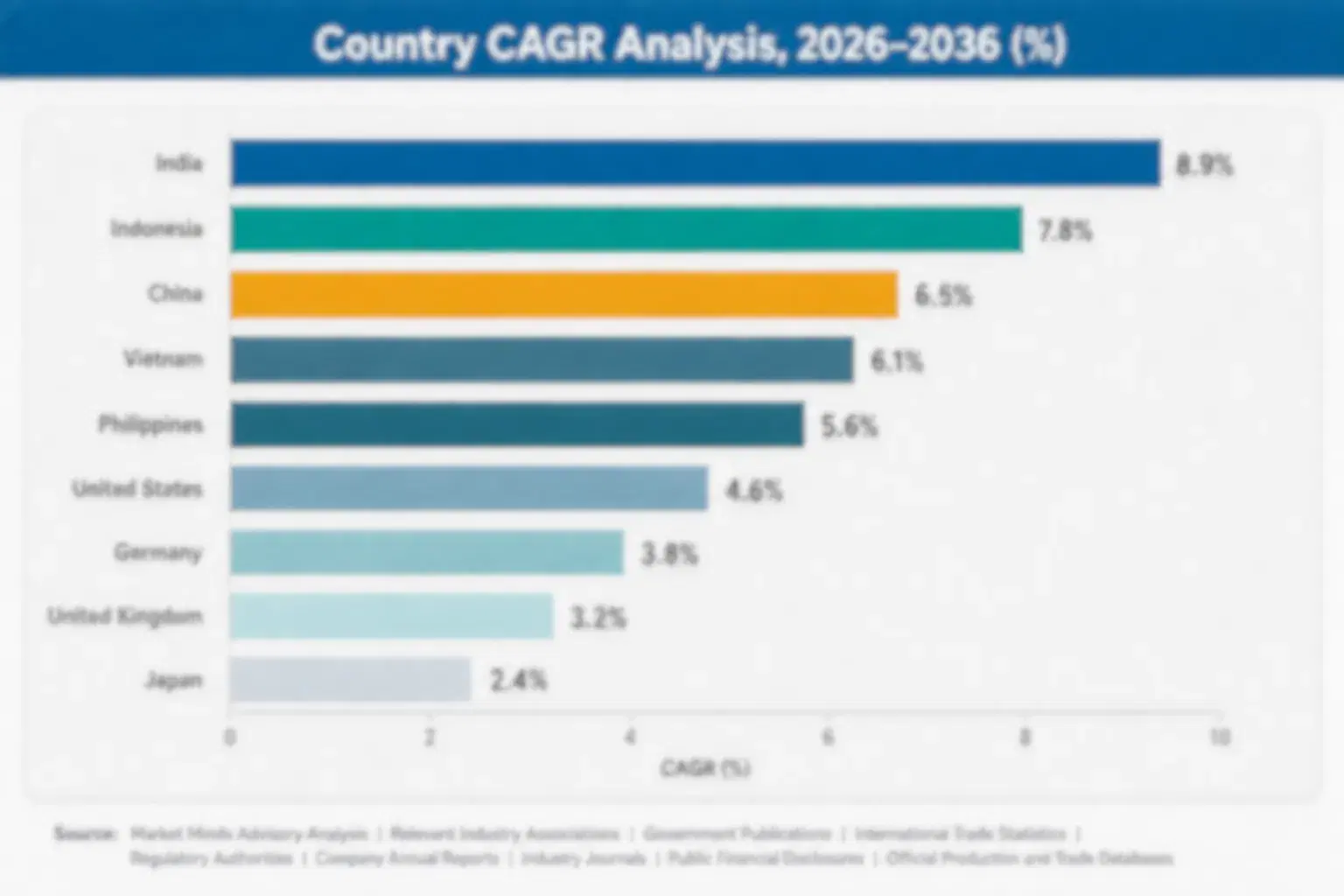
India: 8.6% CAGR
Fastest Growth Region
South Asia and Pacific: 8.0% CAGR
Largest Region
Western Europe: 28% of 2025 global value
Market Leaders
Morton Salt, K+S, Cargill, Maldon Salt Company, Salins Group. Source: MMA Analysis, company annual reports.
Primary Survey
n=3,800 procurement and R&D decision-makers, Q4 2025, six countries
Methodology
Demand-side build-up, cross-validated against public data, 47 expert interviews

Gourmet Salts Market Forecast Scenarios

gourmet-salts-market-size-forecast-scenario-1789884338953
Between 2020 and 2025, gourmet salt demand grew as home cooking rose after 2020, chefs popularised finishing salts, and retailers widened specialty seasoning shelves. Freight and glass packaging costs rose in 2022, and producers passed on cost changes unevenly to retail and foodservice buyers. Technical reach compounds over time. Audits repeat every year. Buyers review suppliers every season.
The base case rests on three commercial mechanisms. First, home cooking and chef influence keep adding finishing and flavoured salts to premium baskets. Second, provenance and craft claims support price premiums over refined salt. Third, foodservice and food manufacturers widen use in seasoning blends and snacks. Producers plan harvest capacity, packing, and certification around all three. Supply contracts decide renewal. Delivery reliability decides supplier rankings. Margins follow sourcing discipline. Batch records protect future sales.
The bull case needs faster premium retail expansion and stronger export demand for origin salts, which would lift volumes and prices. The bear case is a wet harvest season combined with tighter sodium rules, which would squeeze volumes and margins. Cost control separates leaders from followers. Clear specifications build buyer trust. Small buyers feel every input swing.

Chef Influence, Flavoured Formats, and Harvest Weather Set Gourmet Salt Outcomes

Gourmet salt supply starts with seawater evaporated in shallow pans by sun and wind, brine from ancient deposits, or rock salt mined in places such as the Punjab. Producers rake, wash, dry, and grade crystals, then sell them plain, smoke them, blend them with herbs, spices, or truffle, and pack them for retail, foodservice, and food manufacturers. Technical reach compounds over time.
MARKET CONCENTRATION22% CR5Leading five suppliers hold a small combined share
RETAIL CHANNEL SHARE58%Portion of global value sold through grocery and specialty retail
PACKAGING COST SHARE22%Portion of goods cost taken by jars, grinders, and cartons
PRICE PREMIUM8-40xTypical price gap between gourmet salt and refined table salt
HARVEST WINDOW3-5 monthsUsual sunny season available for solar evaporation harvest
SOLAR EVAPORATION YIELD20-60 kgTypical salt raked per pan each harvest day
Origin, crystal shape, moisture, mineral profile, and brand story decide value. Buyers run taste checks and audits, and premium salts earn multiples of 8 to 40 times refined salt. French and Portuguese cooperatives win on heritage, while Pakistani exporters win on cost. Weather swings harvest, so contract terms matter. Audits repeat yearly. Audits repeat every year. Buyers review suppliers every season.
Buyers judge gourmet salt on crystal texture, taste, provenance, purity, packaging, and price stability. Retailers want distinctive shelf appeal, chefs want consistent flakes, and manufacturers want uniform seasoning grades. Price sensitivity varies sharply by channel. Origin proof and audits decide shortlists. Supply contracts decide renewal. Delivery reliability decides supplier rankings. Margins follow sourcing discipline. Batch records protect future sales. Cost control separates leaders from followers.
"Salt is the only ingredient where the customer pays forty times more for the same chemistry and feels good about it. The premium is a story, and stories need paperwork. Brands that can prove the pan, the coast, and the harvest will keep the margin."
Senior Analyst, Specialty Food Ingredients and Seasonings Practice · MMA Gourmet Salts Practice · September 2026

Market Trends

Smoked and Infused Salts Turn Seasoning Into Ready Flavour Formats

Producers smoke salt over oak and hickory or blend it with truffle, chilli, citrus, and herbs, and retailers give these formats shelf space beside spices and sauces. Smoked, Infused, and Flavoured Gourmet Salts grow about 9.4% a year, and gross margins run 34% to 52% against 14% to 24% for plain rock salt. The trend needs flavour consistency and allergen control, and it rewards producers with blending skill and retail relationships. Clear specifications build buyer trust. Small buyers feel every input swing. Technical reach compounds over time. Audits repeat every year. Buyers review suppliers every season.
Market Impact: premium grocery grows 5-7% yearly

Chef-Led Finishing Salts Lift Flaky Salt Sales Across Channels

Chefs finish steaks, chocolate, and vegetables with flaky salts, and home cooks copy them, so retailers list flakes beside pepper and oil. Flaky and Finishing Gourmet Salts grow about 7.8% a year. The trend needs consistent crystal shape and durable packaging, and it rewards producers with heritage brands, chef endorsements, and the ability to supply foodservice and retail without breaking the flake in transit. Supply contracts decide renewal. Delivery reliability decides supplier rankings. Margins follow sourcing discipline. Batch records protect future sales. Cost control separates leaders from followers. Clear specifications build buyer trust.
Market Impact: 30% of premium snacks name salt

Market Opportunities and Growth Drivers

Home Cooking and Premium Grocery Trade-Up Sustain Gourmet Salt Demand

Premium grocery and specialty food sales grow about 5% to 7% a year in North America, Europe, and East Asia, and consumers trade up on small-ticket pantry items such as salt, pepper, and oil. Gift packs and grinders widen formats. The driver sustains steady demand and rewards producers with attractive packaging, reliable supply, and retailer programmes that turn a cheap ingredient into a premium purchase. Small buyers feel every input swing. Technical reach compounds over time. Audits repeat every year. Buyers review suppliers every season. Supply contracts decide renewal. Delivery reliability decides supplier rankings.
Market Impact: wet seasons cut harvests 30-60%

Foodservice and Snack Makers Adopt Origin Salts for Provenance Claims

Restaurants, bakeries, and snack makers use named sea salts and mineral salts on menus and packs, and about 30% of premium snack launches now name a salt origin. The practice supports price premiums for suppliers. The driver widens business-to-business demand and rewards producers with bulk grades, audited supply, and the ability to match consistent flake or grain size at industrial volumes. Margins follow sourcing discipline. Batch records protect future sales. Cost control separates leaders from followers. Clear specifications build buyer trust. Small buyers feel every input swing. Technical reach compounds over time.
Market Impact: sodium targets cut intake by 20%

Market Restraints and Challenges

Weather Risk and Limited Harvest Windows Restrain Gourmet Salt Supply

Solar evaporation needs sunny, dry weather for three to five months, and a wet season can cut a harvest by 30% to 60% in Atlantic and Mediterranean pans. The root cause is dependence on open pans and climate. Producers respond with stock buffers and covered pans, though covered capacity costs far more per tonne and stock ties up working capital for smaller houses. Audits repeat every year. Buyers review suppliers every season. Supply contracts decide renewal. Delivery reliability decides supplier rankings. Margins follow sourcing discipline. Batch records protect future sales. Cost control separates leaders from followers.
Market Impact: flavoured salts grow 9.4% yearly

Sodium Reduction Policy and Provenance Claim Scrutiny Restrain Premium Pricing

Health agencies push sodium reduction, and regulators and retailers question unproven mineral and detox claims for pink and rock salts. The root cause is that gourmet salt is still mostly sodium chloride. Producers respond with taste and provenance messaging and lower-sodium blends, though a 20% cut in sodium targets could slow foodservice volumes and lower demand for large bulk grades. Clear specifications build buyer trust. Small buyers feel every input swing. Technical reach compounds over time. Audits repeat every year. Buyers review suppliers every season. Supply contracts decide renewal. Delivery reliability decides supplier rankings.
Market Impact: finishing salts grow 7.8% yearly
3 additional market trends, 2 additional growth drivers, and 4 additional restraints and challenges are covered in the full report. Contact sales@marketmindsadvisory.com to access the complete intelligence.

Segment CAGR and Growth Architecture

The global gourmet salt market is segmented by product type, which shows where provenance, format, and flavour create pricing power in a fragmented market. Five segments cover hand-harvested sea salt, Himalayan and mineral rock salt, smoked and infused salts, flaky finishing salts, and black and volcanic salts. Smoked, infused, and flaky formats grow fastest as ready-to-use seasoning outpaces
gourmet-salts-market-market-share-analysis-1789884339126

Smoked, Infused, and Flavoured Gourmet Salts

Smoked, Infused, and Flavoured Gourmet Salts is the fastest-growing segment at 9.4% a year, about 1.62 times the overall market rate, from a moderate base. Home cooks and foodservice buyers seek ready seasoning, so gross margins of 34% to 52% against 14% to 24% for plain rock salt support blending and packaging investment. Flavour consistency and allergen control are the main constraints. Producers with retail relationships win. Margins follow sourcing discipline. Batch records protect future sales. Cost control separates leaders from followers. Clear specifications build buyer trust. Small buyers feel every input swing. Technical reach compounds over time. Audits repeat every year. Buyers review suppliers every season. Supply contracts decide renewal. Delivery reliability decides supplier rankings.
CAGR 9.4%

Flaky and Finishing Gourmet Salts

Flaky and Finishing Gourmet Salts grows at 7.8% a year, about 1.34 times the overall market rate, because chefs and home cooks want a crisp texture for finishing dishes, and buyers accept gross margins of 30% to 46% for consistent crystal shape and heritage brands. Packaging durability and chef endorsements shape supply. Producers with recognised brands hold price better than unbranded sellers. Margins follow sourcing discipline. Batch records protect future sales. Cost control separates leaders from followers. Clear specifications build buyer trust. Small buyers feel every input swing. Technical reach compounds over time. Audits repeat every year. Buyers review suppliers every season. Supply contracts decide renewal. Delivery reliability decides supplier rankings. Margins follow sourcing discipline.
CAGR 7.8%
Full segment breakdown across 5 segments available in the complete report.

Regional Architecture and Country Demand Map

Western Europe leads at 28% because France, Italy, Portugal, and the United Kingdom host heritage salt pans and brands. North America follows at 27% through premium grocery and craft brands, East Asia adds Japanese and Korean buyers, and South Asia and Pacific grows fastest as Himalayan exports and Indian

Western Europe

Western Europe holds 28% share, above its 18% to 26% band, and leads because France, Italy, Portugal, Spain, and the United Kingdom host the oldest salt pans and heritage brands, such as Guérande, Trapani, and Maldon, and consumers pay premiums for provenance. The lead reflects where origin and demand meet. Weather, labour costs, and mature retail restrain growth. Batch records protect future sales. Cost control separates leaders from followers. Clear specifications build buyer trust. Small buyers feel every input swing. Technical reach compounds over time. Audits repeat every year. Buyers review suppliers every season. Supply contracts decide renewal. Delivery reliability decides supplier rankings. Margins follow sourcing discipline. Batch records protect future sales.
Share: 28% | CAGR: 4.3% (2026 to 2036)

North America

In North America, 27% of value comes from the United States and Canada, where premium grocery, foodservice, and craft brands buy imported and domestic salts, and Morton Salt and Jacobsen Salt Co supply retail shelves. Growth runs slightly above the global rate. Retail slotting costs, freight, and sodium messaging restrain margins. Cost control separates leaders from followers. Clear specifications build buyer trust. Small buyers feel every input swing. Technical reach compounds over time. Audits repeat every year. Buyers review suppliers every season. Supply contracts decide renewal. Delivery reliability decides supplier rankings. Margins follow sourcing discipline. Batch records protect future sales. Cost control separates leaders from followers. Clear specifications build buyer trust. Small buyers feel every input swing.
Share: 27% | CAGR: 6.0% (2026 to 2036)
Regional intelligence for 5 additional markets available in the complete report: East Asia, South Asia and Pacific, Latin America, Middle East and Africa, Eastern Europe. Contact sales@marketmindsadvisory.com.
gourmet-salts-market-country-cagr-analysis-1789884339306

Four Margin Routes for Gourmet Salt Producers

Margin in gourmet salt comes from flavoured and finishing formats, provenance proof, packaging cost control, and foodservice contracts rather than plain rock salt volume. The routes below apply to salt houses, cooperatives, and craft brands, and each can start inside one planning cycle, with clear measures in gross margin points, cost per kilogram, and customer programmes served.

Shifting Volume Into Flavoured and Finishing Salt Formats

Flavoured and finishing formats earn gross margins of 30% to 52% against 14% to 24% for plain rock salt, so producers that add smoking, blending, and flake lines to shift 10% of volume into these formats report gross margin gains of 5 to 9 points on the mix. Blending and packing programmes cost $1 million to $4 million. Pilots with five retailers confirm demand. Margins follow sourcing discipline. Batch records protect future sales. Cost control separates leaders from followers. Clear specifications build buyer trust. Small buyers feel every input swing. Technical reach compounds over time.
Market Impact: premium mix shift lifts gross margin by 5-9 points

Winning Retailers and Chefs With Provenance Proof and Consistent Quality

Retailers and chefs need origin evidence and steady quality, so producers that document pans, publish mineral and moisture data, and hold organic or protected origin certificates win multi-year programmes and lift sales per customer by 10% to 18%. Certification costs $0.1 million to $0.5 million per site. Producers should target premium grocers and restaurant groups first. Audits repeat every year. Buyers review suppliers every season. Supply contracts decide renewal. Delivery reliability decides supplier rankings. Margins follow sourcing discipline. Batch records protect future sales. Cost control separates leaders from followers. Clear specifications build buyer trust.
Market Impact: provenance proof lifts sales per customer by 10-18%

Cutting Packaging Cost Through Refill and Bulk Formats

Jars, grinders, and cartons take about 22% of cost, so producers that offer refill pouches, bulk foodservice tubs, and simpler cartons cut cost and waste. Packaging redesign costs $0.5 million to $2 million per range and cuts packaging cost by 15% to 25%. Producers should test new formats with retailers early, protect flake integrity, and keep hero jars for gifting. Small buyers feel every input swing. Technical reach compounds over time. Audits repeat every year. Buyers review suppliers every season. Supply contracts decide renewal. Delivery reliability decides supplier rankings. Margins follow sourcing discipline.
Market Impact: refill formats cut packaging cost by 15-25% annually

Securing Harvest Stock and Covered Pan Capacity Against Weather

Wet seasons cut harvests by 30% to 60%, so producers that hold multi-year stock, add covered pans, and buy from several coasts protect supply and keep contracts. Buffer programmes cost $1 million to $5 million. Producers should agree volumes with retailers early, document origin carefully for blended supply, and use stock gains to defend prices in weak seasons. Batch records protect future sales. Cost control separates leaders from followers. Clear specifications build buyer trust. Small buyers feel every input swing. Technical reach compounds over time. Audits repeat every year. Buyers review suppliers every season.
Market Impact: stock buffers protect against 30-60% harvest shortfalls yearly

Who Controls the Margin Pool

The global gourmet salt market is fragmented, with a CR5 of 22%, and heritage houses, cooperatives, Himalayan exporters, and craft brands sit outside the leading five. This assessment measures participants on estimated gourmet salt sales, held constant across all players. Morton Salt leads through retail reach and brand breadth, while K+S, Cargill, Maldon Salt Company, and Salins Group follow, with a modest gap between the leader and the challengers.
Competition runs on four dimensions today: provenance and brand story, crystal quality and consistency, packaging and shelf presence, and channel reach. Global salt groups win on reach, heritage houses win on story, and Himalayan exporters win on cost. Imitators copy flavours quickly, so premiums outside protected origins and recognised brands erode within a season. Supply contracts decide renewal. Delivery reliability decides supplier rankings. Margins follow sourcing discipline.

Emerging pressure comes from private label premium lines, direct-to-consumer craft brands, and tighter provenance rules. Rankings shift where a producer wins a chef endorsement, signs a national retailer, or launches a flavoured range. Craft brands can move up quickly when they win shelf space, since story can outweigh scale. Batch records protect future sales. Cost control separates leaders from followers.
gourmet-salts-market-company-positioning-matrix-1789884339485

Competitive Moat and Risk Dimensions

MORTON SALT

Moat: Retail Reach and Brand Breadth

Morton Salt, a North American salt producer, sells table, kosher, and specialty salts through grocery and foodservice channels and supplies retailers with consistent quality and marketing support. Its retail reach, brand recognition, and customer relationships give it credibility with national grocers, and its position supports shelf space for gourmet lines and long-term contracts with retailers and foodservice distributors.
MORTON SALT

Risk: Heritage Story Disadvantage

Morton Salt is known for mass salt, so buyers may see gourmet lines as less authentic than heritage or craft brands. Smaller rivals can win chef and premium grocer accounts. Clear specifications build buyer trust. Small buyers feel every input swing. Technical reach compounds over time. Audits repeat every year.
K+S

Moat: Mining Scale and Supply

K+S, a German mining and salt group, produces rock salt and evaporated salt at scale and supplies food, industrial, and consumer customers with quality documentation and logistics. Its mining scale, supply reliability, and customer relationships give it credibility with manufacturers, and its position supports competitive pricing for bulk gourmet grades and long-term contracts with food companies.
K+S

Risk: Limited Consumer Brand Pull

K+S sells mostly to industrial and food customers, so it holds less consumer brand pull than heritage houses. Craft rivals can capture premium retail margin. Buyers review suppliers every season. Supply contracts decide renewal. Delivery reliability decides supplier rankings. Margins follow sourcing discipline. Batch records protect future sales.

Players Tracked

Prominent Players

Morton Salt
K+S
Cargill
Maldon Salt Company
Salins Group

Other Key Players

Compass Minerals
Tata Chemicals
Nobian
Saltverk
Halen MĂ´n
Jacobsen Salt Co
Cornish Sea Salt
Le Saunier de Camargue
Murray River Salt
Himalayan Chef
Amagansett Sea Salt
Flor de Sal d'Es Trenc
McCormick
Baleine
Wilderness Salt Co

Recent Developments

JANUARY 2026

Maldon Salt Company Announces Smoked and Herb Flake Range for Grocery Retailers

Maldon Salt Company announced a smoked and herb flake range for grocery retailers, according to company communications. It is a product launch, and it tests demand for flavoured formats from a heritage finishing salt brand. Sales volumes were not disclosed. Cost control separates leaders from followers.
Signal: Suggests heritage flake brands are moving into flavoured formats as retailers seek seasoning ranges and premium price points.
FEBRUARY 2026

Salins Group Expands Sea Salt Packing Capacity in France for Export and Retail Customers

Salins Group expanded sea salt packing capacity in France for export and retail customers, according to company communications. It is an organic capacity expansion, not an acquisition, and it tests demand for origin salts. Investment terms were not disclosed. Clear specifications build buyer trust. Technical reach compounds over time.
Signal: Indicates French producers are adding packing capacity, which could extend reach of origin salts into export retail channels.
MARCH 2026

Jacobsen Salt Co Publishes Origin and Mineral Data for Its Pacific Sea Salt Range

Jacobsen Salt Co published origin and mineral data for its Pacific sea salt range, according to company communications. It is a transparency programme, not a product launch, and it tests whether data supports premium pricing. Costs were not disclosed. Audits repeat every year. Buyers review suppliers every season.
Signal: Confirms craft brands are investing in origin evidence to defend premium pricing against private label and generic sea salts.

What Drives Gourmet Salt Production Costs

Packaging, including glass jars, grinders, and cartons, accounts for roughly 22% of cost of goods, harvest and processing labour about 24%, energy for smoking and drying about 10%, and flavourings, freight, and certification about 44%. Glass comes mainly from European and Asian furnaces and flavourings from spice and truffle chains. Delivery reliability decides supplier rankings. Margins follow sourcing discipline. Batch records protect future sales.
The clearest recent shock came from energy and glass prices. Gas prices surged in 2021 and 2022, as the IEA reported, and glass furnaces raised prices sharply, while K+S noted in its Annual Report 2022 that energy costs weighed on salt production. Producers raised prices by 8% to 20%. Cost control separates leaders from followers. Clear specifications build buyer trust. Small buyers feel every input swing. Technical reach compounds over time.

The competitive disadvantage falls on small producers without packaging contracts or stock buffers, which cannot pass costs on quickly. Large groups hold supply agreements, own packing lines, and spread cost across products. Exposure also varies by segment, since flavoured and finishing salts carry higher margins that absorb cost swings better than plain rock salt. Audits repeat every year.
gourmet-salts-market-cost-volatility-analysis-1789884339671

Multi-Season Packaging Contracts With Indexation

Producers sign multi-season contracts for jars and cartons with several suppliers and index selling prices to packaging and energy costs. Contracts cut spot purchases by roughly half and reduce margin swings by 10% to 20% in volatile years. The main challenge is buyer resistance, so producers offer transparent formulas. Buyers review suppliers every season. Supply contracts decide renewal.

Mix Shift Toward Flavoured and Finishing Formats

Producers shift capacity toward flavoured and finishing formats that carry higher margins and absorb cost swings. A shift of 10% of volume lifts gross margin by 5 to 9 points. The main challenge is retailer listing time, so producers run pilots early and keep plain lines for core customers. Delivery reliability decides supplier rankings. Margins follow sourcing discipline.

Refill Pouches and Lightweight Packaging

Producers add refill pouches, lighter jars, and simpler cartons to cut packaging and freight cost per kilogram, which lowers cost and waste. Redesign cuts packaging cost by 15% to 25%. The main challenge is shelf appeal, so producers keep hero jars for gifting and use refills for repeat buyers. Batch records protect future sales. Clear specifications build buyer trust.

Portfolio Architecture for Margin Defence

Margins run from thin returns on plain rock salt sold in bulk to strong returns on flavoured and finishing salts sold in branded packs. Three tiers separate volume products, certified premium lines, and next-generation formats, and each tier draws on different customer groups, origin positions, and packaging platforms in a fragmented market. Audits repeat every year. Buyers review suppliers every season.
The tension between volume and premium is sharp. Plain rock and sea salt fill warehouses and serve manufacturers but face price competition and sodium scrutiny, while flavoured and finishing salts earn higher margins on smaller volumes and depend on brand, packaging, and buyer trust. Producers that run only bulk struggle when freight rises, while producers that run only premium lose scale. Supply contracts decide renewal. Delivery reliability decides supplier rankings.

High-value pools concentrate in smoked, infused, and flavoured salts sold to grocery and gift buyers and in flaky finishing salts sold to chefs and premium retail. They gather where buyers pay for story and format rather than kilograms. Protected origin sea salts add a small steady pool. Margins follow sourcing discipline. Batch records protect future sales. Cost control separates leaders from followers.

Volume / Commodity-Adjacent Tier

Plain Himalayan and rock salt sold in bulk to food manufacturers and private label retailers under annual contracts at thin margins, with freight cost pass-through. Clear specifications build buyer trust. Small buyers feel every input swing.
Gross Margin: 14%-24%

Premium / Certified Tier

Fleur de sel and hand-harvested sea salt with protected origin, organic certificates, and pan records, sold to grocers and chefs that require consistent quality and documentation. Technical reach compounds over time. Audits repeat every year.
Gross Margin: 24%-40%

Sustainability / Regulatory / Next-Generation Tier

Smoked, infused, and flaky finishing salts with lower-sodium blends, refill formats, and recyclable packaging, sold to brands that pay for format, story, and sustainable presentation. Buyers review suppliers every season. Supply contracts decide renewal.
Gross Margin: 30%-52%
gourmet-salts-market-portfolio-architecture-1789884339861

High-value Sub-segments and Strategic Watch-out

Smoked, Infused, and Flavoured Gourmet Salts

Smoked, infused, and flavoured salts combine the fastest growth with strong pricing, since home cooks and foodservice buyers pay for ready seasoning at gross margins of 34% to 52%. Flavour consistency and allergen control limit competition, and producers with blending skill win. Repeat supply builds through retailer programmes.
Gross Margin: 34%-52%

Flaky and Finishing Gourmet Salts

Flaky and finishing salts deliver firm growth and pricing, since chefs and home cooks pay for crisp texture and consistent crystal shape at gross margins of 30% to 46%. Heritage brands and packaging durability form the entry barrier, and producers with chef endorsements win. Delivery reliability decides supplier rankings.
Gross Margin: 30%-46%

Himalayan and Mineral Rock Salt

Himalayan and mineral rock salt is the volume core, sold in bulk and retail packs. Value grows about 5.4% a year, and mining cost, freight, and delivery reliability decide profit. Producers anchor sales on long relationships with importers and private label retailers across several regions. Margins follow sourcing discipline.
Gross Margin: 14%-24%

Black, Volcanic, and Ceremonial Salts

Black, volcanic, and ceremonial salts are the strategic watch-out, since growth of about 6.6% a year is narrow, novelty fades, and buyers question mineral claims. Producers should manage this line selectively and steer capacity toward flavoured and finishing formats. Batch records protect future sales. Clear specifications build buyer trust.
Gross Margin: 20%-34%

Why Salt Buyers Keep Reordering

Gourmet salt demand behaves like an annuity attached to pantry habits and menu specifications. Once a retailer or restaurant qualifies a salt whose texture, taste, and packaging it trusts, it repeats the order every season, and switching means new taste tests, new shelf sets, and possible menu changes. Buyers use last year's batch consistency to fix renewals, so producers with clean records earn steadier volume than sellers reliant
Adoption stickiness differs by end-use vertical. Restaurants with named salts on menus are the deepest, since the supplier becomes part of the dish and changes only when quality fails. Premium grocers follow brand. Food manufacturers are moderate and switch on cost, while discount retailers are shallow and buy on price. Small buyers feel every input swing. Technical reach compounds over time. Audits repeat every year.

Buyer profiles are shifting between generations. Older buyers bought salt on habit and long supplier relationships, while younger consumers and chefs ask for origin stories, sustainable harvest, refill packaging, and social media appeal. Regulators add a third group that sets labelling and sodium rules. Producers that publish origin data win younger buyers and keep them as scrutiny tightens.
gourmet-salts-market-end-use-penetration-index-1789884340045

MMA Verdict on Gourmet Salt Strategy

These are among the four positions where our research anticipates prominent divergence between winners and laggards over the coming forecast period. Each is grounded in the demand model, the regulatory perimeter, and the announced capacity pipeline.
01 / FLAVOURED FORMAT STRATEGY

Shift Volume Into Flavoured and Finishing Formats Before Rivals Take Shelf Space

Smoked, Infused, and Flavoured Gourmet Salts grows at 9.4% a year, about 1.62 times the overall market rate, and gross margins of 34% to 52% compare with 14% to 24% for plain rock salt. Producers should invest $1 million to $4 million in smoking, blending, and packing lines, shift 10% of volume into flavoured and finishing formats, and lift gross margin by 5 to 9 points. Those that stay in plain salt will lose margin as freight rises, while branded producers keep retail accounts.
02 / FINISHING SALT STRATEGY

Secure Chef Endorsements and Retail Listings Before Private Label Flakes Erode Premiums

Flaky and Finishing Gourmet Salts grows at 7.8% a year, about 1.34 times the overall market rate, and gross margins of 30% to 46% reflect buyer demand for crisp texture and consistent crystal shape. Producers should invest in flake quality, durable packaging, and chef partnerships, target premium grocers and restaurant groups first, and publish origin records, lifting sales per customer by 10% to 18%. Those without recognised brands will lose listings, and early movers hold premiums and retailer listings for many years.
03 / HARVEST RESILIENCE STRATEGY

Hold Stock and Covered Pans Before Wet Seasons Cut Harvests Again

Wet seasons cut harvests by 30% to 60% in Atlantic and Mediterranean pans, energy and glass costs moved sharply in recent years, and small houses lack the stock to keep contracts. Producers should hold multi-year stock, add covered pans, buy from several coasts, index selling prices, and cut packaging cost by 15% to 25% through refill formats. Those that rely on one coast will absorb every weather swing, while diversified producers hold volume, margin, and buyer confidence through weak seasons.
04 / PROVENANCE PROOF STRATEGY

Document Pan Origin and Mineral Data Before Claim Scrutiny Shifts Programmes Elsewhere

Regulators and large retailers now question unproven mineral claims, sodium targets push volumes down, and private label copies origin stories, so undocumented producers face sudden programme losses. Producers should invest $0.1 million to $0.5 million per site in certification, publish pan, mineral, and moisture records, and support retailer audits, lifting contract renewals by 8% to 15%. Those that ignore provenance will lose accounts, while documented producers hold premium relationships with buyers for many years and defend their pricing through every audit and labelling review.

Engagement Snapshot From the Field

A live engagement with an industry participant carrying material or product regulatory and market exposure ahead of a defining policy shift, showing how our research translates into a defensible multi-year portfolio strategy.
MARKET MINDS ADVISORY · CLIENT ENGAGEMENT SUMMARY
Gourmet Salts Producer Strategic Portfolio Review and Transition Roadmap 2026·Investment Scenario on Gourmet Salts Exposure Evaluation 2025-26
CLIENT PROFILE
The client is a mid-sized North American premium grocery chain with annual sales near $1.4 billion (client-reported, unverified by MMA), selling a private label salt and seasoning range through 120 stores. It bought finishing and flavoured salts from three importers, held 60 days of stock, and had faced one out-of-stock season and one price rise. Buyers review suppliers every season.
STRATEGIC CHALLENGE
A wet harvest cut supply, importers proposed a price rise after packaging costs increased, and the chain's buyers wanted origin proof for its premium claims. Management needed to decide whether to qualify direct producers, sign an exclusive brand deal, or keep importer supply, with limited category staff and a shelf reset date.
MMA APPROACH
MMA analysed sales, stock-out, and cost data across 40 items, interviewed eight category and sourcing experts and four producers, and ran a shopper survey on salt premiums across three states. It modelled cost by sourcing scenario, tested supply and price cases, and ranked options by payback and execution risk. Supply contracts decide renewal.
KEY FINDINGS
  1. Two direct producers with documented pans would add about 6% to ingredient cost but remove importer stock-outs (client-reported, unverified by MMA). Delivery reliability decides supplier rankings.
  2. A flavoured private label range would add about 12 points of gross margin against plain salt lines. Margins follow sourcing discipline. Batch records protect future sales.
  3. Shoppers rated origin evidence and flake quality highly, and accepted a price rise of about 7%. Cost control separates leaders from followers. Clear specifications build buyer trust.
  4. Two qualified sources per item would add about 2% to cost but cut supply risk by about half. Small buyers feel every input swing.
CLIENT PROFILE
The client is a mid-sized North American premium grocery chain with annual sales near $1.4 billion (client-reported, unverified by MMA), selling a private label salt and seasoning range through 120 stores. It bought finishing and flavoured salts from three importers, held 60 days of stock, and had faced one out-of-stock season and one price rise. Buyers review suppliers every season.
STRATEGIC CHALLENGE
A wet harvest cut supply, importers proposed a price rise after packaging costs increased, and the chain's buyers wanted origin proof for its premium claims. Management needed to decide whether to qualify direct producers, sign an exclusive brand deal, or keep importer supply, with limited category staff and a shelf reset date.
MMA APPROACH
MMA analysed sales, stock-out, and cost data across 40 items, interviewed eight category and sourcing experts and four producers, and ran a shopper survey on salt premiums across three states. It modelled cost by sourcing scenario, tested supply and price cases, and ranked options by payback and execution risk. Supply contracts decide renewal.
KEY FINDINGS
  1. Two direct producers with documented pans would add about 6% to ingredient cost but remove importer stock-outs (client-reported, unverified by MMA). Delivery reliability decides supplier rankings.
  2. A flavoured private label range would add about 12 points of gross margin against plain salt lines. Margins follow sourcing discipline. Batch records protect future sales.
  3. Shoppers rated origin evidence and flake quality highly, and accepted a price rise of about 7%. Cost control separates leaders from followers. Clear specifications build buyer trust.
  4. Two qualified sources per item would add about 2% to cost but cut supply risk by about half. Small buyers feel every input swing.
RECOMMENDED STRATEGY
Phase 1: Phase 1 (Months 1-6): Qualify two direct producers, test every lot for moisture and flake size, and agree indexed pricing. Technical reach compounds over time. Phase 2: Phase 2 (Months 7-24): Launch a flavoured private label range and sign multi-year agreements with two producers. Audits repeat every year. Phase 3: Phase 3 (Months 25-42): Audit producers yearly, review sales data quarterly, and hold 90 days of stock. Buyers review suppliers every season.
OUTCOME
Within 42 months, out-of-stock events fell to zero, the flavoured range reached 25% of salt sales, and origin claims passed retailer review (client-reported, unverified by MMA). Gross margin rose by 3 points, repurchase rose by 6%, and the chain held supply through one wet harvest season. Supply contracts decide renewal.

Frequently Asked Questions

Foundational context covering the market sizes, CAGR, scope, country, region and competition that inform every finding below. This section is provided to cover basics and most often pre-purchase conversations, answered from the MMA Primary Research Dataset.

What is the current size of the Gourmet Salts Market?

The global gourmet salts market was valued at $7.40 billion in 2025 on a producer and brand value basis. Growth is supported by chef influence and flavoured formats, offset by sodium scrutiny and weather risk.

How large will the Gourmet Salts Market be by 2036?

The market is projected to reach $13.76 billion by 2036, up from $7.83 billion in 2026. The increase of $5.93 billion reflects flavoured formats, finishing salts, and provenance premiums.

What is the CAGR for the Gourmet Salts Market 2026 to 2036?

The market is forecast to grow at a 5.8% CAGR from 2026 to 2036. The bull case reaches 7.2% and the bear case 4.5%, depending on premium retail growth, sodium rules, and harvest weather.

Which segment is growing fastest?

Smoked, Infused, and Flavoured Gourmet Salts is the fastest-growing segment at 9.4% CAGR, roughly 1.62 times the overall market rate. Flaky and Finishing Gourmet Salts follows at 7.8% CAGR each year.

Who are the major companies in the Gourmet Salts Market?

Major companies include Morton Salt, K+S, Cargill, Maldon Salt Company, and Salins Group. Compass Minerals, Tata Chemicals, Nobian, and Saltverk also hold meaningful positions in gourmet salts.

Which country is growing fastest?

India is growing fastest at about 8.6% CAGR, because premium grocery and Himalayan salt exports are expanding. South Korea and China follow as premium seasoning use rises.

Report Segmentation Architecture

The full report scope spans multiple orthogonal segmentation dimensions, with cross-tabulated demand data provided for each dimension pair. Coverage extends further to regional breakdowns, trend trajectories, and the competitive detail needed to support segment-level decision-making.

By Primary Market Dimension

  • Hand-Harvested Sea Salt and Fleur de Sel
  • Himalayan and Mineral Rock Salt
  • Smoked, Infused, and Flavoured Salts
  • Flaky and Finishing Salts
  • Black, Volcanic, and Ceremonial Salts

By End-Use Industry

  • Household Cooking
  • Foodservice and Restaurants
  • Food Manufacturing
  • Snacks and Bakery
  • Gifting and Specialty Retail

By Commercial Dimension

  • Grocery and Specialty Retail
  • Foodservice Distributors
  • Direct-to-Consumer Online
  • Private Label Supply
  • Industrial Supply Contracts

By Region

  • Western Europe
  • North America
  • East Asia
  • South Asia and Pacific
  • Latin America
  • Middle East and Africa
  • Eastern Europe

Scope, Methodology, and Coverage

Every figure in this report is reproducible from documented input assumptions. The scope below maps the historical period, the forecast horizon, the segmentation dimensions, and the countries covered, alongside the underlying primary and qualitative methodology.
Historical Period
2020 to 2025
Forecast Period
2026 to 2036
Base Year
2025 (USD billions; MMA Primary Research Dataset, September 2026)
Market Definition
The market covers global sales of gourmet salts, valued at producer and brand level, including hand-harvested sea salt and fleur de sel, Himalayan and mineral rock salt, smoked, infused, and flavoured salts, flaky finishing salts, and black, volcanic, and ceremonial salts sold to retail, foodservice, and food manufacturers. The scope excludes refined table salt, de-icing and industrial salt, and salt substitutes.
Quantitative Units
USD billions (producer and brand value); tonnes for volume references
Segmentation Dimensions
By Product Type; By End-Use Industry; By Commercial Dimension; By Region
Regions Covered
Western Europe, North America, East Asia, South Asia and Pacific, Latin America, Middle East and Africa, Eastern Europe
Countries Covered
United States, Canada, Mexico, France, Italy, Portugal, Spain, Germany, United Kingdom, Poland, China, Japan, South Korea, India, Pakistan, Australia, Brazil, Chile, Turkey, Egypt, South Africa, Saudi Arabia, and additional markets relevant to this sector
Key Companies Profiled
Morton Salt, K+S, Cargill, Maldon Salt Company, Salins Group, Compass Minerals, Tata Chemicals, Nobian, Saltverk, Halen MĂ´n, Jacobsen Salt Co, Cornish Sea Salt, Le Saunier de Camargue, Murray River Salt, Himalayan Chef, Amagansett Sea Salt, Flor de Sal d'Es Trenc, McCormick, Baleine, Wilderness Salt Co
Quantitative Methodology
Primary survey, n=3,800 respondents, Q4 2025, six countries; demand-side model with trade association cross-validation
Qualitative Methodology
47 expert interviews, Q4 2025; applied to validate demand model assumptions, identify emerging dynamics, and assess competitive positioning
Report Format
PDF and XLSX data workbook (Word format preview document)
Publisher
Market Minds Advisory
Report Code
MMA-2026-AGR-754
Published
September 2026
Contact
sales@marketmindsadvisory.com | www.marketmindsadvisory.com

Purchase the full Gourmet Salts Market Report (2026 to 2036).

The full report delivers a detailed assessment of the global gourmet salts market through 2036, covering product type, end-use, and regional forecasts, competitive benchmarking of leading producers, and input cost analysis. It combines MMA primary research, including a six-country survey of 3,800 respondents and 47 expert interviews, with public statistical and company data. Analysts also model harvest weather scenarios, sodium rule paths, and flavoured format adoption. Clients receive segment margin ranges, salt pan location maps, and a case study on premium salt range strategy. Producer programme and contract frameworks are also included for planning.
Ten-year product type and end-use demand forecasts
Packaging, energy, and freight cost tracking
Competitive benchmarking of top twenty producers
Sodium and provenance labelling rule tracker
Regional market comparative analysis and forecasts included
Quarterly primary survey data update access

Built For The People Who Decide

From boardroom strategy to bench-side execution, this report is read cover-to-cover by leaders shaping the next decade of their industry, turning demand scenarios, market dynamics and valuation benchmarks into decisions.
CXOs/ Presidents/ VPs/ Managers
M&A and Corporate Development
Strategy Teams and R&D Heads
Procurement and Product Directors
Regulatory and Compliance Leaders
Investor Relations and Equity Analysts