Market Minds Advisory
Global Sheath Materials Market

Global Sheath Materials Market: Fire performance regulation, halogen substitution and cable qualification

Nobody specifies a cable sheath for what it does in normal service; they specify it for the twenty minutes in a fire when smoke density and acid gas decide whether people get out.

Lead Analyst

Bilal Shaikh

Published

September 2026

Make Smarter Decisions with Customized Research Insights

Request a free sample report and evaluate market opportunities, growth trends, and competitive dynamics relevant to your business needs.

2025 MARKET VALUE$11.8BMarket Size 2025
2036 FORECAST VALUE$22.4BBase Case , 2026 to 2036
CAGR 2026 TO 20366.0 %Bull 7.3% / Bear 4.8%
INCREMENTAL OPPORTUNITY$9.9BNet 10- year value creation
EXPANSION MULTIPLE1.79x2036 value over 2026 base
Strategic Levers
M&A Pipeline
Regional Outlook
Country Rankings
Competitive Intelligence
Segmental Deep-dive
Call-Us : 91 93563 13602

Executive Snapshot and Market Trajectory

Cable sheathing is specified almost entirely on what happens in a fire rather than on anything it does otherwise. Smoke density, acid gas release and flame propagation together decide the material, and those requirements have tightened steadily ever since several high-profile building fires finally forced regulators into action.
Growth concentrates in halogen-free flame retardant compounds, expanding at 9.0%, where removing halogen eliminates the corrosive acid gas that damages equipment and impedes evacuation, at the cost of loading in so much mineral filler that the mechanical properties become genuinely difficult to hold. East Asia holds 34% of value, the largest regional share, because Chinese cable manufacture consumes more sheathing compound than any other market and because regional construction fire codes have tightened considerably.
The supplier base is moderately concentrated, with the top five holding 37% of compound supply volume, and it divides between polyolefin compounders, specialty flame retardant houses and cable makers compounding in house for their own production. Competition runs on qualified fire performance rather than on compound price. Building fire regulation is the force now determining which materials may be installed anywhere at all.
Market Definition
Sheath materials comprise polymer compounds extruded as the outer protective layer of electrical and communication cable, spanning polyvinyl chloride sheathing compounds, polyethylene and crosslinked polyethylene sheathing, halogen-free flame retardant compounds, thermoplastic elastomer and polyurethane sheathing, fluoropolymer and high temperature sheathing, and specialty rubber sheathing compounds. Sizing covers compound sold or transferred to cable manufacturers at realised delivered price. Insulation and semiconductive compounds, bedding and filler materials, cable armouring and metallic screens, flame retardant additives sold as standalone chemicals, and finished cable itself all fall outside scope.
Base Year Value
$11.8B in 2025 (MMA Primary Research Dataset, August 2026)
Forecast Period
2026 to 2036, eleven discrete annual values
CAGR
6.0% base case. Bull 7.3%. Bear 4.8%.
Fastest Growth Segment
Halogen-Free Flame Retardant Compounds: 9.0% CAGR
Fastest Growth Country
India: 8.6% CAGR
Fastest Growth Region
South Asia and Pacific: 8.3% CAGR
Largest Region
East Asia: 34% of 2025 global value
Market Leaders
Borealis, Dow, Hanwha Solutions, Kingfa and Solvay lead on sheathing compound supply volume across polyolefin, halogen-free and specialty classes. Source: MMA Primary Research Dataset, July 2026.
Primary Survey
n=3,800 procurement and R&D decision-makers, Q4 2025, six countries
Methodology
Demand-side build-up, cross-validated against public data, 47 expert interviews

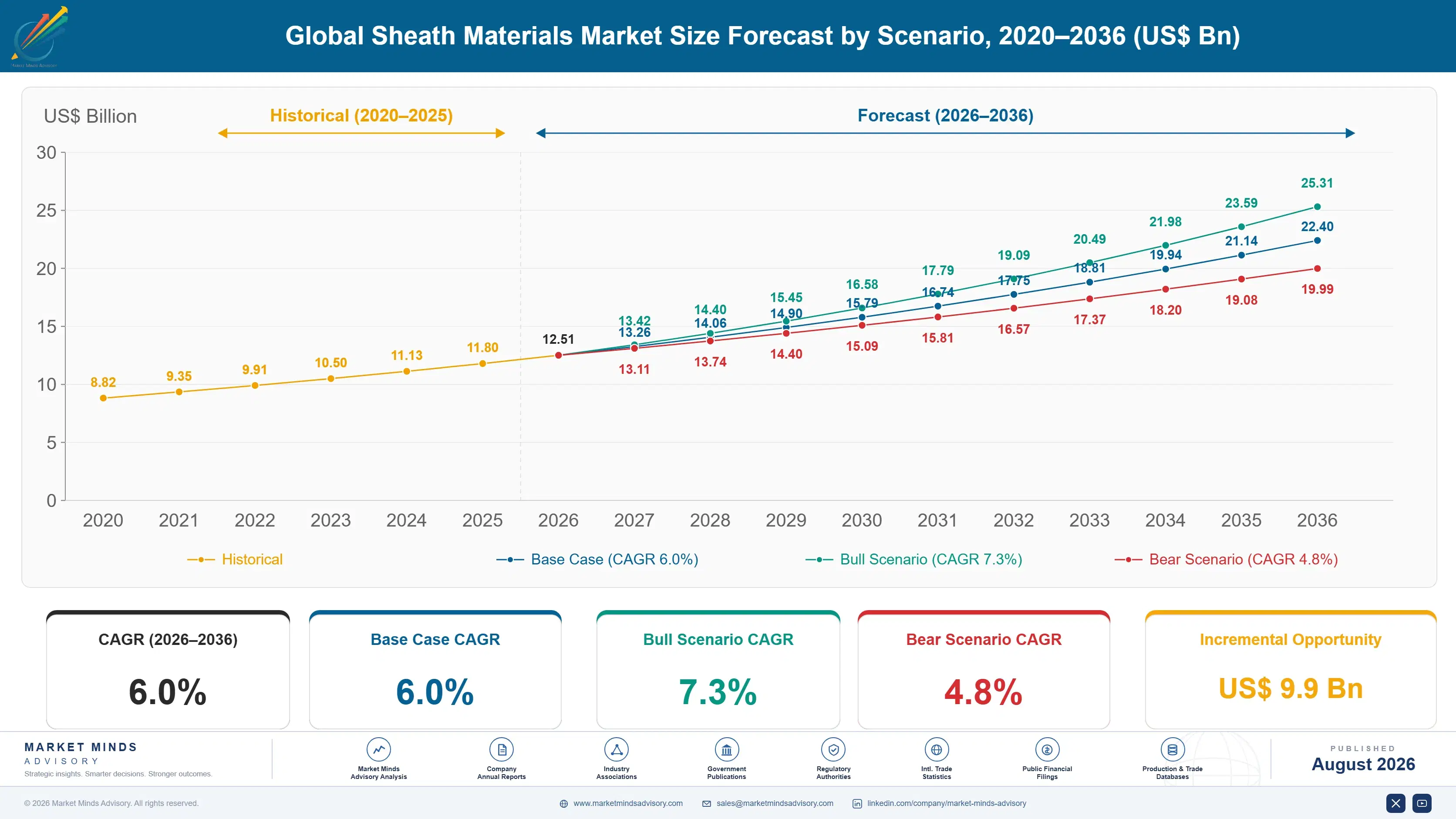
Global Sheath Materials Market Forecast Scenarios

global-sheath-materials-market-trends-size-forecast-scenario-1787311118325
Growth of 4.8% across 2020 to 2025 was driven by regulation and grid investment rather than by construction volume. Building fire performance rules tightened across Europe and several Asian markets following high-profile facade and cable fires, which shifted specification toward halogen-free compounds faster than cable makers had planned. Polyolefin and mineral filler pricing then moved sharply through 2022, compressing compounder margins for several quarters.
The base case at 6.0% rests on three mechanisms. Grid investment keeps expanding as transmission and distribution networks are reinforced for renewable generation and electrification, and every kilometre of cable installed consumes sheathing compound. Building fire codes keep tightening, which converts halogen-free specification from a premium option into a permit requirement in an expanding list of applications. And data centre and telecommunication cable demand keeps growing with connectivity investment across every region.
The bull case at 7.3% turns on grid reinforcement programmes accelerating faster than currently modelled, since transmission cable consumes sheathing compound at volumes that dwarf building wire on a per-kilometre basis. The bear case at 4.8% turns on construction. A sustained building downturn across China, Europe and North America together would remove volume faster than grid and data centre demand can replace it.

Sheath compounds: fire performance decides everything

Everything in this market is decided by a fire test that most of the product will never experience. Cable sheathing spends decades doing nothing more demanding than resisting sunlight and abrasion, and then gets specified entirely on smoke density, acid gas release and flame propagation measured over twenty minutes in a laboratory. That gap between service life and specification basis defines the whole commercial structure.
TOP FIVE CONCENTRATION37%Share of global compound supply volume held collectively
MINERAL FILLER LOADING62% by weightFiller content required to reach halogen-free flame performance
BUILDING WIRE APPLICATION SHARE41% of volumeLargest single application by consumed compound tonnage globally
POLYMER FEEDSTOCK COST SHARE48% of COGSPortion of delivered cost tied to base polymer resin
SMOKE DENSITY REQUIREMENTunder 60%Light transmission threshold that European classification now demands
CABLE QUALIFICATION LEAD TIME9 monthsApproval cycle before any cable maker adopts a compound
The halogen-free transition is where the technical difficulty sits. Removing halogen removes the corrosive acid gas, but reaching the same flame performance requires mineral filler loadings above 60% by weight, which makes the compound stiff, difficult to extrude at line speed and prone to poor elongation. Formulators earn their entire margin managing exactly that trade-off, and very few of them manage it well.
Demand divides according to whether a fire code actually governs the choice. Building wire takes 41% of volume and is increasingly specified by classification rather than by material. Power transmission, industrial and specialty cable sit in different worlds again, where operating temperature, oil resistance and mechanical durability decide the compound rather than anything to do with smoke.
"Compounders keep selling on filler loading and cost per kilogram, which is exactly the conversation a cable maker does not want to have. The ones winning qualifications arrive with extrusion line speed data and a scrap rate, because that is what actually decides whether the compound gets used."
Director, Polymer Compounds and Electrical Materials Practice · MMA Chemicals an

Market Trends

Fire classification tightening across building and infrastructure cable

European construction products classification and equivalent frameworks in several Asian markets now grade cable on flame spread, heat release, smoke production and acid gas together rather than on a simple flame test. Smoke density requirements below 60% light transmission and near-zero acid gas effectively exclude conventional polyvinyl chloride sheathing from an expanding list of building applications. That converts halogen-free from a premium specification into an access requirement, since a cable that cannot be classified cannot be installed. Compounders holding qualified halogen-free positions supply applications that conventional chemistry is simply barred from entering.
Market Impact: Grows 6.0% annually through 2036
Grid reinforcement consuming sheathing compound at transmission scale

Transmission and distribution network investment has accelerated across every region as renewable generation connects and electrification raises load, and high voltage cable consumes sheathing compound at volumes that dwarf building wire on a per-kilometre basis. Subsea and underground transmission cable carries particularly heavy sheathing requirements given mechanical protection and moisture barrier duties. Those projects specify compound during cable design and then consume it for the whole manufacturing campaign. Grid demand is genuinely far less cyclical than construction, which makes it disproportionately valuable to any compounder heavily exposed to building activity.
Market Impact: Grows 8.6% annually across India

Market Opportunities and Growth Drivers

Electrification and renewable connection driving cable installation volume

Grid reinforcement, renewable generation connection, electric vehicle charging infrastructure and data centre power distribution all consume cable in quantities that had no precedent a decade ago, and every metre installed carries a sheath. Transmission projects in particular consume sheathing compound at rates that dwarf building applications on a per kilometre basis. That demand is programme-driven rather than cyclical, which makes it considerably more predictable than construction-linked volume. Cable manufacturers are expanding capacity across every region to serve that demand, and compound consumption follows their capacity additions with a fairly short lag.
Market Impact: Requires 62% filler by weight

Asian construction fire codes converging toward European classification

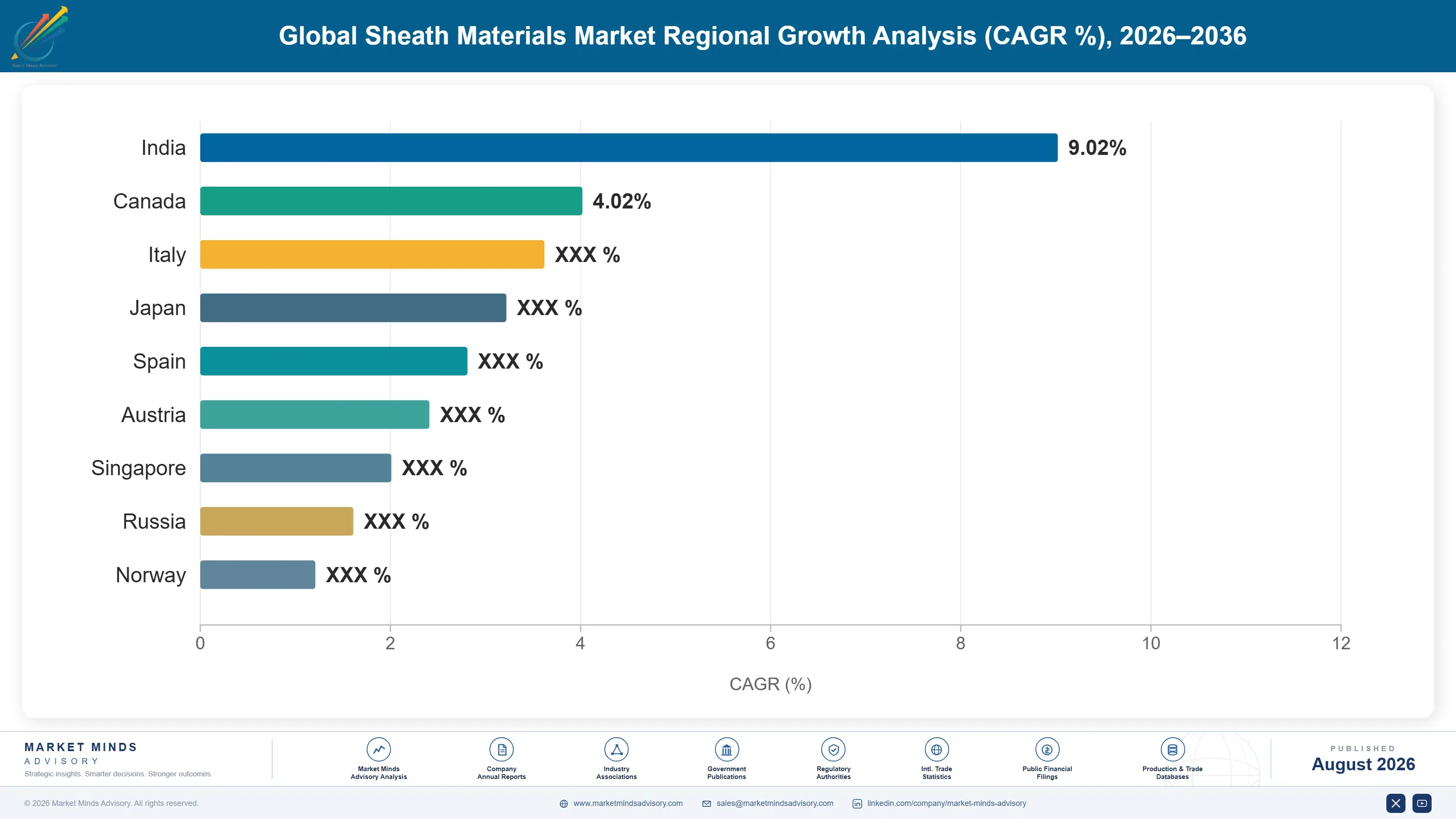
Chinese, Indian and Southeast Asian building fire regulations have moved steadily toward the classification approach used in Europe, grading cable on smoke, heat release and acid gas together rather than on a simple flame test alone. That regulatory convergence pulls halogen-free specification into markets where conventional polyvinyl chloride sheathing had dominated purely on cost for decades. Indian cable compound demand grows at 8.6% annually as construction and grid investment continue together. Local compounders have had to develop halogen-free capability very quickly or else concede the whole regulated segment to importers.
Market Impact: Exposes 48% of delivered cost

Market Restraints and Challenges

Mineral filler loading degrading processability and mechanical properties

Reaching halogen-free flame performance requires aluminium or magnesium hydroxide loadings above 60% by weight, which makes the compound stiff, abrasive on extrusion tooling and prone to poor elongation and tensile strength. The root cause is that flame retardancy comes from endothermic water release, so performance scales directly with how much filler is present. Commercially this slows extrusion lines, raises scrap rates and makes cable makers genuinely reluctant to convert at all. Compounders are responding with surface-treated fillers, coupling agents, nanocomposite approaches and polymer blends engineered specifically to tolerate the loading.
Market Impact: Demands smoke density under 60%

Polymer feedstock volatility compressing compounder margins repeatedly

Base polymer resin accounts for roughly 48% of delivered compound cost and prices on petrochemical cycles entirely unrelated to cable demand. The root cause is that compounders sit between commodity polymer producers and cable manufacturers who tender annually, which leaves them absorbing price movements from both directions with no natural hedge available at all. Commercially this destroys margin whenever polyolefin runs hard, exactly as it did right through 2022. Compounders are responding with indexed pass-through clauses, shorter contract terms, forward resin purchasing and a deliberate mix shift toward formulation-led halogen-free grades.
Market Impact: Adds compound across 41% building s
2 additional market trends, 4 additional growth drivers, and 3 additional restraints and challenges are covered in the full report. Contact sales@marketmindsadvisory.com to access the complete intelligence.

Segment CAGR and Growth Architecture

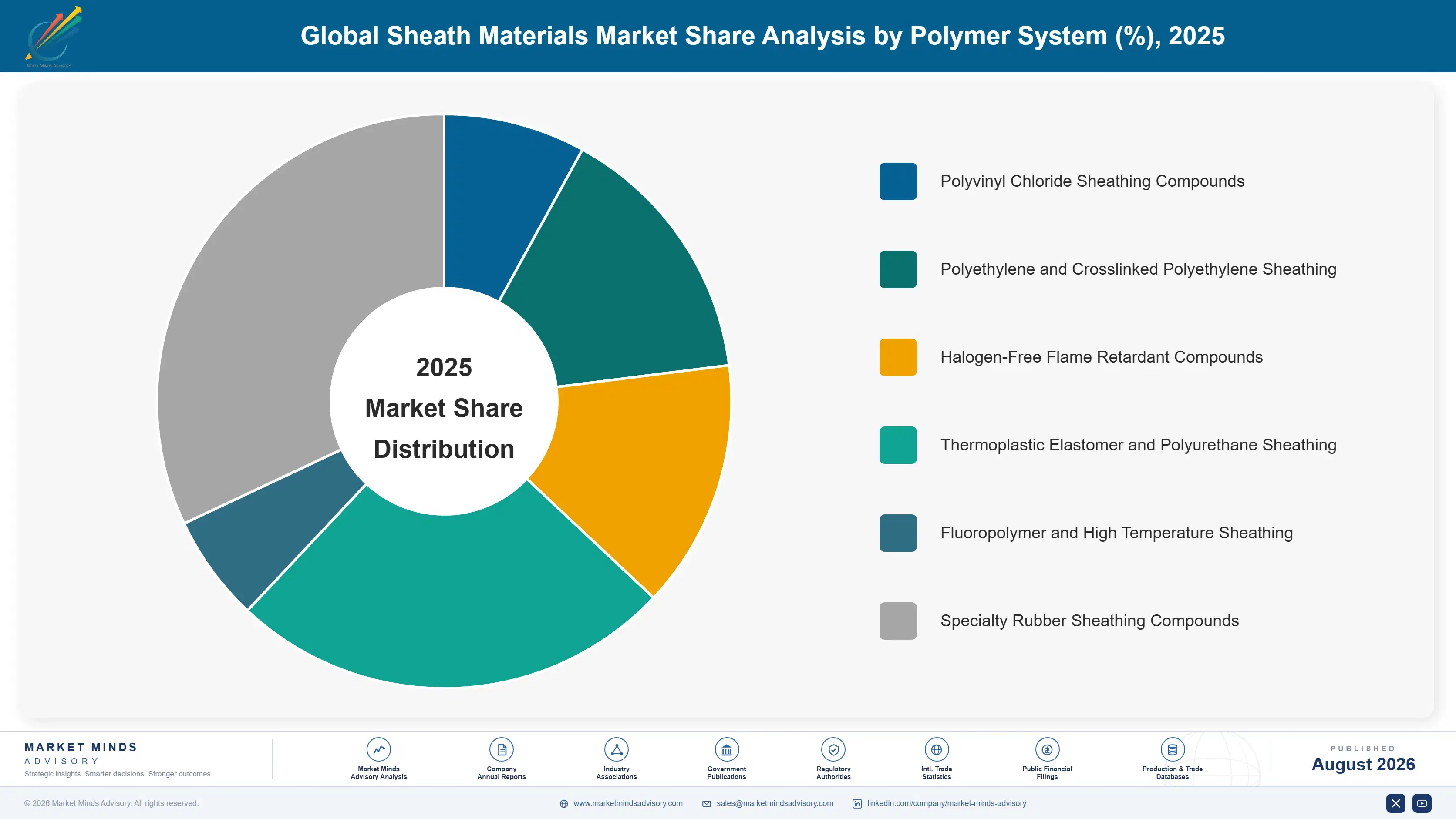
Segmentation follows the polymer system used in the sheath, because the base chemistry determines fire behaviour, operating temperature range, mechanical durability and the regulatory classification the finished cable can achieve. Six systems cover the whole market, from conventional polyvinyl chloride and polyolefin sheathing through halogen-free and elastomeric compounds to fluoropolymer and specialty rubber grades.
global-sheath-materials-market-trends-market-share-analysis-1787311119252

Halogen-Free Flame Retardant Compounds

Expanding at 9.0% annually, a full 1.50 times the market rate, on compounds that reach flame performance without halogen and therefore without the corrosive acid gas that damages equipment and impedes evacuation during any building fire. Achieving it requires mineral hydroxide loadings above 60% by weight, which makes the resulting compound stiff, abrasive and genuinely difficult to extrude at commercial line speeds. That processing difficulty is precisely where formulators earn their whole margin, since the fire performance itself is broadly achievable by anybody willing to load in enough filler. Fire classification frameworks increasingly exclude the conventional alternatives outright, which converts this from a premium option into a straightforward market access requirement.
CAGR 9.0%

Fluoropolymer and High Temperature Sheathing

Growing at 7.8% annually on the fluoropolymer and high temperature systems used wherever continuous operating temperature, chemical resistance or inherent flame performance exceed what polyolefin chemistry can deliver at any filler loading whatsoever. Aerospace wiring, plenum-rated communication cable, chemical plant instrumentation and downhole applications between them consume most of the volume, and each of them specifies on properties that no cheaper compound comes close to approaching. Realised pricing runs at several times polyolefin levels, which reflects both the raw material cost involved and a genuinely narrow qualified supplier field. Restriction proposals covering fluorinated chemistry are now the single significant risk hanging over what is otherwise a genuinely durable position here.
CAGR 7.8%
Full segment breakdown across 6 segments available in the complete report.

Regional Architecture and Country Demand Map

Sheathing compound demand tends to follow cable manufacture rather than cable installation, which puts it firmly wherever the cable factories themselves have actually happened to be built, and the fire classification frameworks then determine which compounds those factories are actually permitted to use at all.

East Asia

Thirty-four percent of global value here, comfortably the largest regional share, because Chinese cable manufacture consumes more sheathing compound than any other market anywhere and because regional construction fire codes have tightened considerably across the past decade. Note: this exceeds the standard regional band here because cable manufacturing capacity is concentrated in China to a degree that no cable installation or consumption measure would ever capture. Japanese and Korean compounders hold halogen-free and high temperature positions serving genuinely demanding infrastructure and electronics applications across the region. Growth of 6.9% here runs above the global rate, supported by grid investment and by fire code tightening working steadily together right across the region.
Share: 34% | CAGR: 6.9% (2026 to 2036)

North America

Twenty-two percent of global value here, weighted heavily toward the building wire, utility distribution cable and a substantial industrial and specialty cable position serving the oil and gas, mining and data centre sectors. Fire classification here follows a rather different framework from Europe and has moved considerably more slowly on halogen-free, which leaves conventional polyvinyl chloride sheathing holding a much larger share than it does in European markets. Grid reinforcement and data centre construction are comfortably the strongest demand drivers right across the region at present. Growth of 5.4% here reflects that steady utility and data centre cable demand alongside building wire volumes that track regional construction activity fairly closely.
Share: 22% | CAGR: 5.4% (2026 to 2036)
Regional intelligence for 5 additional markets available in the complete report: Western Europe, South Asia and Pacific, Latin America, Middle East and Africa, Eastern Europe. Contact sales@marketmindsadvisory.com.
global-sheath-materials-market-trends-country-cagr-analysis-1787311120064

Where sheathing compound margin genuinely sits

Four commercial positions separate the compounders earning genuine formulation economics from those selling filled polyolefin against a cost per kilogram. Each one of them rests on something a competitor cannot copy quickly: measured extrusion performance evidence, genuine classification capability, resin contract terms, or a qualified position sitting inside a cable maker's own certified product.

Sell extrusion line speed rather than filler loading

Cable makers evaluate a compound on what it does to line speed, scrap rate and tooling wear, and compounders who quote filler loading and cost per kilogram are simply answering a question that nobody asked them. Compounders presenting measured extrusion performance on production-representative tooling realise roughly 30% above the competitors still selling on formulation specification alone. The trial itself costs line time rather than capital, and the cable maker usually provides that time willingly. Most compounders avoid production trials because they expose exactly how much throughput the high filler loading actually costs.
Market Impact: Realises roughly 30% above specific

Build classification capability ahead of code adoption

Fire classification frameworks are spreading from Europe into Asian and Gulf markets, and a compound that cannot achieve the required class simply cannot be installed at all, regardless of what it costs. Compounders holding qualified halogen-free formulations across the demanding classes hold roughly 3 times the addressable position of those relying on conventional systems once a market adopts the framework. Achieving the top classifications while retaining acceptable processability is genuinely difficult development work. Starting after a code lands means arriving late into a market that competitors have already qualified into properly.
Market Impact: Holds roughly 3 times the addressab

Index polymer resin exposure across annual cable contracts

Base resin carries roughly 48% of delivered compound cost and prices on petrochemical cycles that have nothing to do with cable demand, yet cable makers tender annually on fixed pricing. Compounders holding indexed pass-through terms realise roughly 20% above those absorbing the movement, because that difference falls straight to margin rather than being competed away in the next tender. Cable manufacturers accept indexation readily enough, since they face exactly the same kind of exposure on copper themselves. Compounders who have not done it are simply carrying somebody else's petrochemical position without payment.
Market Impact: Realises roughly 20% above flat-pri

Qualify into cable maker platforms rather than bidding annually

A cable maker qualifying a compound runs extrusion trials, fire testing and cable-level certification over roughly nine months, and the compound written into that certification then supplies the product for as long as it remains in the catalogue. Compounders achieving that qualification capture roughly 5 times the lifetime volume of those bidding into annual purchasing reviews. Engagement has to begin with the cable maker's own process and certification engineers rather than with procurement. Most compounders sell only to purchasing and consequently never reach the people who actually make the decision.
Market Impact: Captures roughly 5 times the lifeti

Who Controls the Margin Pool

Concentration is moderate, with the top five holding 37% of global sheathing compound supply volume, the basis on which every participant here is assessed. Borealis and Dow lead through polyolefin integration combined with halogen-free formulation depth, while the challenger group spans specialty compounders, Asian volume producers scaling quickly, flame retardant houses moving downstream into compounds, and cable makers compounding in house for their own production lines.
Competition currently runs on fire classification capability, extrusion processability and resin position rather than on compound price, which decides very little in regulated applications. Qualification positions inside a cable maker's certified product hold for the catalogue life, which makes timing far more important than commercial terms. In-house compounding by the large cable makers removes merchant volume permanently wherever it happens to occur.

Emerging pressure comes from two directions at once. Fire classification frameworks keep spreading into markets where conventional sheathing dominated, which rewards formulation capability over polyolefin scale. And fluorinated chemistry restriction proposals threaten the high temperature segment that has been the most reliably profitable part of many portfolios, with no equivalent substitute available at the operating conditions involved.
global-sheath-materials-market-trends-company-positioning-matrix-1787311120910

Competitive Moat and Risk Dimensions

BOREALIS

Moat: Polyolefin integration and formulation depth

Integration from polyolefin production through to specialised cable compounds gives Borealis both a delivered cost position and formulation control that independent compounders buying resin on the open market cannot match. Decades of wire and cable formulation work also produce the halogen-free processability that cable makers actually qualify on, which is considerably harder to replicate than the fire performance itself.
BOREALIS

Risk: In-house compounding by customers

Large cable manufacturers increasingly compound sheathing material themselves to capture margin and control formulation, and each conversion removes merchant volume permanently rather than temporarily. Polyolefin integration provides no protection when the customer decides to buy resin directly and compound it, which is exactly the move that scale advantage makes attractive to them.
DOW

Moat: Wire and cable technology breadth

A technology position spanning insulation, semiconductive and sheathing compounds lets Dow serve a cable maker's whole material requirement rather than one layer, which matters because cable certification covers the construction as a system. That breadth also spreads qualification investment across more revenue than any single-layer compounder can manage on the same development spend.
DOW

Risk: Fluorinated chemistry restriction exposure

High temperature and plenum-rated sheathing rests substantially on fluoropolymer chemistry now facing restriction proposals across multiple jurisdictions, and no alternative approaches the same operating temperature and flame performance combination. That exposure sits in exactly the segment carrying the strongest realised margins, and reformulation would require requalification through every affected cable certification.

Players Tracked

Prominent Players

Borealis
Dow
Hanwha Solutions
Kingfa
Solvay

Other Key Players

LyondellBasell
Avient
Mexichem Specialty Compounds
Melos
Padanaplast
AEI Compounds
Teknor Apex
Trinseo
Sumitomo Bakelite
Riken Technos
Shanghai Kaibo
Zhejiang Wansheng
Nabaltec
Huber Advanced Materials
Kabelwerk Eupen

Recent Developments

MARCH 2025

Fire classification excludes conventional sheathing from building applications

A national building code formally adopted new cable fire classification requirements on both smoke density and acid gas release that conventional polyvinyl chloride sheathing simply cannot satisfy, thereby effectively removing it from a very broad range of building and infrastructure applications within the jurisdiction concerned.
Signal: Fire classification is now removing materi
JULY 2025

Cable maker converts sheathing compounding to in-house production

A large cable manufacturer commissioned its own dedicated in-house compounding capacity for its own halogen-free sheathing material requirement, buying its own polymer and mineral filler directly and thereby removing a genuinely substantial merchant volume permanently from the compounders that had previously been supplying that requirement.
Signal: Backward integration by the cable makers i
NOVEMBER 2025

Fluoropolymer restriction consultation reaches cable sheathing applications

Regulatory consultation on restricting fluorinated substances explicitly and directly considered fluoropolymer cable sheathing materials within the scope of the proposals, with detailed industry submissions arguing that the high temperature and plenum applications have no equivalent substitute available anywhere at the operating conditions the applications actually require.
Signal: Fluorinated restriction now threatens the

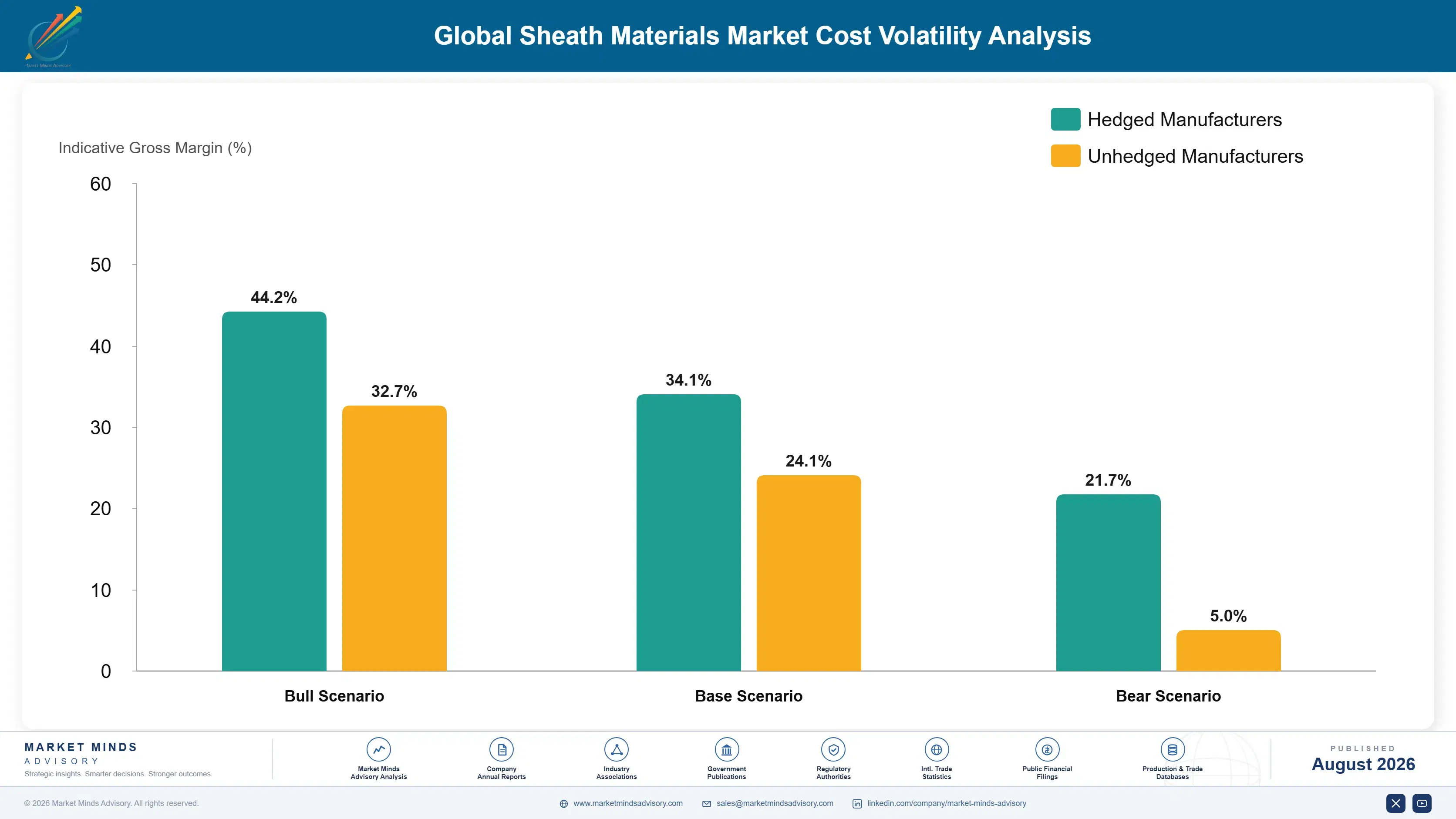
Polymer resin and mineral filler exposure

Base polymer resin accounts for roughly 48% of delivered compound cost, split between polyethylene, polyvinyl chloride, elastomers and fluoropolymer depending on the system. Mineral flame retardant filler contributes about 19% in halogen-free systems, plasticisers, stabilisers and coupling agents around 12%, compounding energy 6%, quality and fire testing 5%, with packaging, freight and working capital carrying the remaining 10% of delivered cost for most compounders.
Polymer and filler both moved sharply through the forecast history. European polyolefin pricing rose steeply through 2022 as energy costs the IEA documented as unprecedented for the sector pushed cracker economics against producers, and aluminium hydroxide supply tightened alongside it. Borealis Annual Report 2022 recorded raw material and energy cost pressure across its polyolefin and compound operations, and Avient Annual Report 2023 noted input cost recovery lagging contractual pricing across specialty materials lines.

The competitive disadvantage mechanism runs through resin position and formulation capability rather than through compounding cost. Independent compounders buying resin openly pay a margin to producers who sometimes compound downstream themselves. Those without halogen-free classification capability are excluded from the regulated applications where growth concentrates entirely. Smaller regional compounders typically carry both limitations, which confines them to conventional systems in unregulated markets.
global-sheath-materials-market-trends-cost-volatility-analysis-1787311121233

Index resin pass-through across annual cable supply contracts

Base resin carries nearly half of delivered compound cost and prices on petrochemical cycles, while cable makers tender annually on fixed terms, which leaves compounders absorbing an exposure nobody compensates them for. Indexed clauses tied to a published polymer reference remove it entirely, and cable manufacturers accept them because they face identical exposure on copper.

Develop halogen-free processability before classification arrives

Fire classification frameworks keep spreading into new markets and a compound that cannot achieve the required class cannot be installed at any price. Building the formulation capability to hold extrusion processability at high filler loading takes years of development, which means that starting only after a code lands guarantees arriving behind competitors who began earlier.

Secure surface-treated mineral filler supply on multi-year terms

Halogen-free performance depends on mineral hydroxide filler at loadings above 60% by weight, and surface treatment quality determines whether the compound extrudes acceptably or not. That filler comes from a narrower supplier base than most compounders assume, and multi-year contracting protects both the delivered cost and the processability that the whole formulation actually depends upon.

Portfolio Architecture for Margin Defence

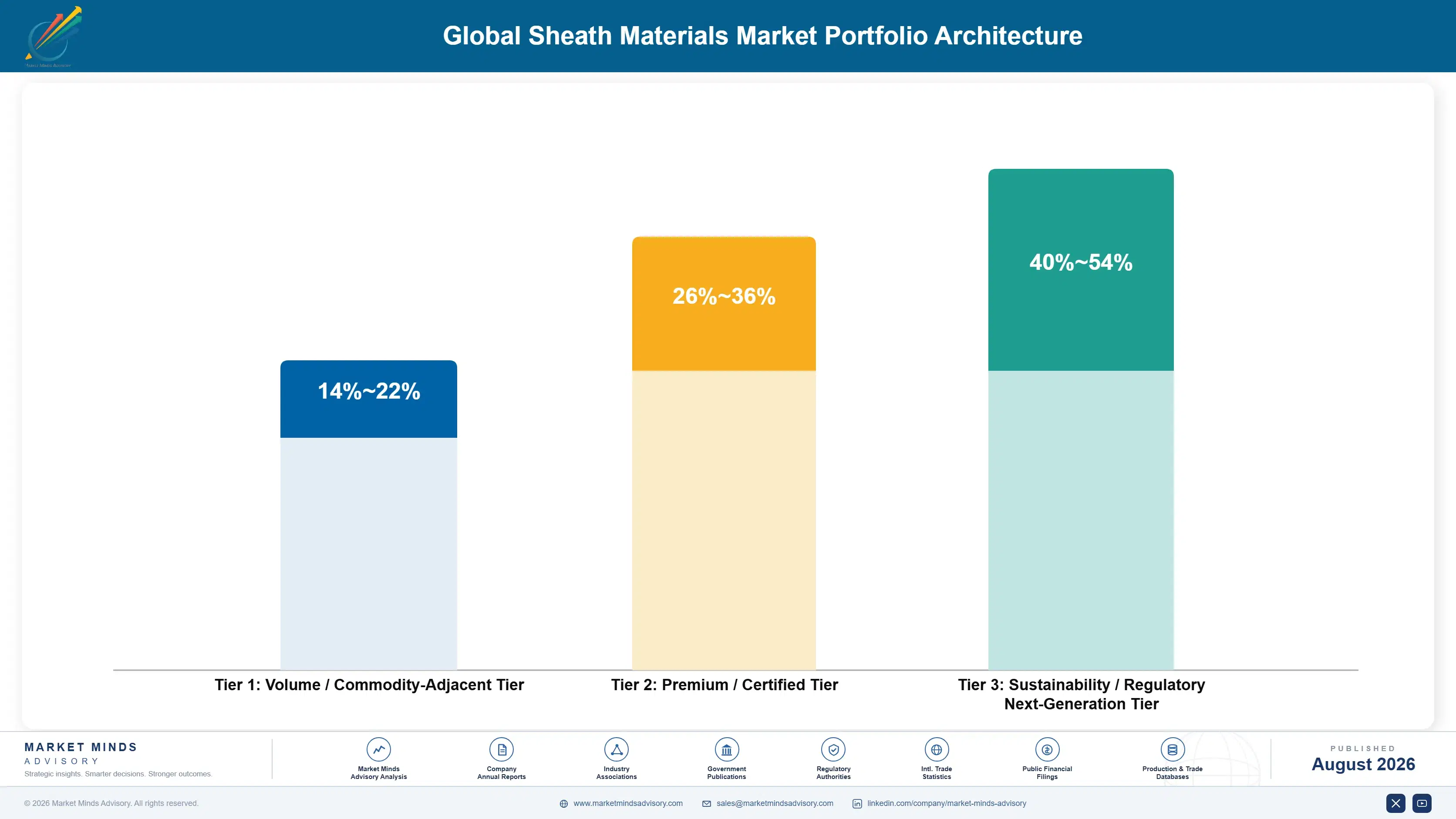
Margin architecture separates by fire classification capability rather than by polymer system, which is not at all how most compounders organise their own product management today. Conventional polyvinyl chloride and polyolefin sheathing sold into unregulated applications earns whatever regional compounding competition allows, because a great many suppliers meet that requirement and every cable maker knows it perfectly well.
Value climbs very steeply wherever fire classification limits the qualified supplier field. Halogen-free compounds achieving the demanding fire classes defend real pricing through formulation capability that competitors cannot assemble quickly, and particularly the processability achieved at high filler loading. Fluoropolymer and high temperature systems sit higher again, since operating temperature and inherent flame performance exclude every cheaper alternative outright.

The highest value pools concentrate where top fire classification meets acceptable extrusion performance, because cable makers genuinely need both at once and very few compounds deliver either of them comfortably. Those pools are modest in tonnage and quite disproportionate in realised margin. The commercial tension is that conventional volume keeps compounding lines loaded, which the fixed cost base requires, while sitting in exactly the applications that classification frameworks are steadily closing.

Volume / Commodity-Adjacent Tier

Conventional polyvinyl chloride and polyolefin sheathing compounds supplied into unregulated building, utility and general cable applications, where a great many compounders meet the requirement and delivered cost decides nearly every award made.
Gross Margin: 14-22%

Premium / Certified Tier

Halogen-free compounds achieving mid-range fire classifications and crosslinked polyolefin sheathing qualified into utility and infrastructure cable. Classification and processability defend pricing here. The ten-point range reflects catalogue supply against qualified platform positions.
Gross Margin: 26-36%

Sustainability / Regulatory / Next-Generation Tier

Top classification halogen-free compounds holding extrusion processability, alongside fluoropolymer and high temperature systems. Formulation difficulty and absent alternatives defend pricing strongly. The fourteen-point range reflects established fluoropolymer against emerging halogen-free classification economics.
Gross Margin: 40-54%
global-sheath-materials-market-trends-portfolio-architecture-1787311122114

High-value Sub-segments and Strategic Watch-out

Top classification halogen-free with processability

High value and genuinely high growth together here, because cable makers genuinely need both fire classification and extrusion line speed, and remarkably few compounds available today deliver either comfortably let alone both of them together at once. Realised margin here reflects that formulation difficulty very directly.
Gross Margin: 40-54%

Fluoropolymer and high temperature sheathing systems

Strong realised value on genuinely durable underlying demand, because the operating temperature and inherent flame performance exclude every cheaper alternative outright, though restriction proposals covering fluorinated chemistry now hang directly over the whole of this segment. Any requalification exercise would be genuinely extensive and slow.
Gross Margin: 38-50%

Conventional polyvinyl chloride sheathing supply

The volume core of this entire market here, keeping the compounding lines properly loaded while earning whatever regional competition permits on formulations that a great many other suppliers can readily match. Necessary for the basic operating scale, and yet steadily closing under successive classification frameworks.
Gross Margin: 14-22%

In-house compounding by large cable manufacturers

The strategic watch-out running right across the whole of this compound business here, given that every such conversion removes that merchant volume permanently and that sheer manufacturing scale is exactly what makes backward integration attractive to exactly those customers in the first place at all.
Gross Margin: 10-40%

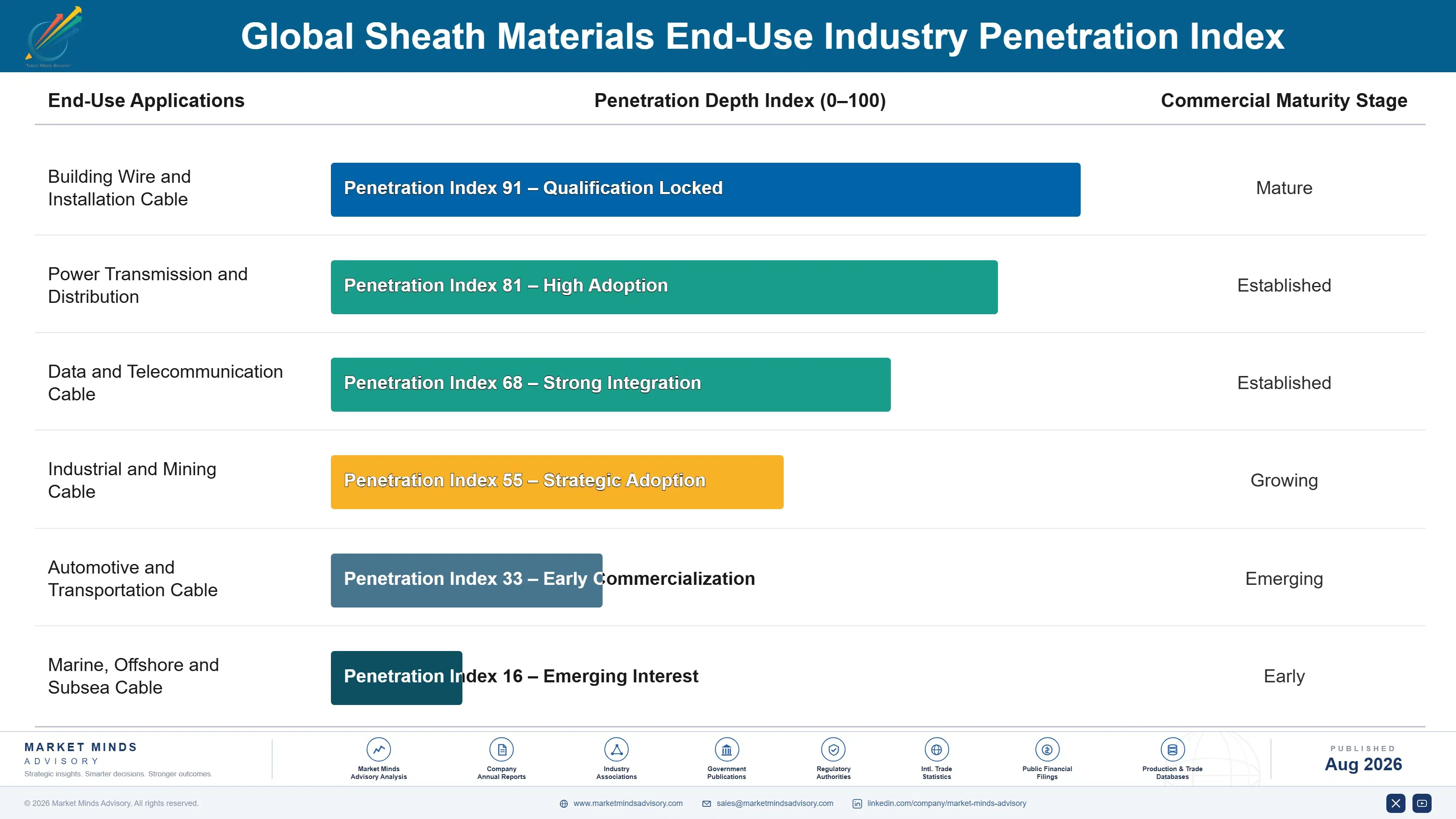
How sheathing compound demand behaves

Demand is qualification-locked at the cable maker rather than at the end user, which is where most compounders misread it. A cable manufacturer qualifying a compound runs extrusion trials, fire testing and cable-level certification over roughly nine months, and the compound named in that certification then supplies the product for as long as it remains in the catalogue. The installer, contractor and building owner never see that compound decision at all.
Stickiness follows the certification rather than the relationship. Conventional sheathing is loosest, substituted between contracts on price with the cable maker requalifying quickly. Halogen-free compounds achieving specific fire classes sit far tighter, because the cable certification names the material and requalifying means repeating all of the fire testing. High temperature and fluoropolymer positions are effectively locked, since no alternative reaches the operating conditions involved.

The buyer profile splits between cable makers and compounders in ways that defeat a single commercial model. Large cable manufacturers run central material qualification through process and certification engineering, then buy through procurement on annual terms against qualified alternatives. Smaller cable makers buy through distribution on delivered price and qualified availability, which is why distribution positions here survive conditions that eliminate compounder margins entirely.
global-sheath-materials-market-trends-end-use-penetration-index-1787311122902

What we would actually do here

These are among the four positions where our research anticipates prominent divergence between winners and laggards over the coming forecast period. Each is grounded in the demand model, the regulatory perimeter, and the announced capacity pipeline.
01 / EXTRUSION PERFORMANCE SELLING

Bring the line speed data, not the formulation sheet

Cable makers evaluate compound on what it does to line speed, scrap rate and tooling wear, and compounders quoting filler loading and cost per kilogram are answering a question nobody actually asked them. Compounders presenting measured extrusion performance on production-representative tooling realise roughly 30% above competitors selling on formulation specification. The trial itself costs line time rather than any capital at all, and most compounders avoid running one precisely because it exposes what the high filler loading actually costs in throughput.
02 / FIRE CLASSIFICATION CAPABILITY

Qualify the top classes before the code arrives

Fire classification frameworks keep spreading from Europe into Asian and Gulf markets, and a compound that cannot achieve the required class simply cannot be installed whatever it costs to make. Compounders holding qualified halogen-free formulations across the demanding classes hold roughly 3 times the addressable position of those relying on conventional systems. Achieving the top classification while retaining acceptable processability is genuinely difficult, and starting only after a code lands means arriving well behind competitors who began the work years earlier.
03 / RESIN EXPOSURE INDEXATION

Stop carrying the petrochemical cycle for free

Base resin carries roughly 48% of delivered compound cost and prices on petrochemical cycles unrelated to cable demand, yet cable makers still routinely tender annually on fixed pricing terms. Compounders holding indexed pass-through terms realise roughly 20% above those simply absorbing the movement themselves, because the whole of that difference falls straight to margin rather than being competed away. Cable manufacturers accept indexation readily enough, since they already face exactly the same kind of exposure on all the copper they buy.
04 / CABLE PLATFORM QUALIFICATION

Get named in the certification, then stop selling

A cable maker qualifying a compound runs extrusion trials, fire testing and cable-level certification across roughly nine months, and the compound named in that certification supplies the product for its whole catalogue life. Compounders achieving that qualification capture roughly 5 times the lifetime volume of those bidding into annual purchasing reviews instead. Engagement must begin with the process and certification engineers rather than with procurement, and most compounders sell only to purchasing and never reach the actual decision makers at all.

Engagement Snapshot From the Field

A live engagement with an industry participant carrying material or product regulatory and market exposure ahead of a defining policy shift, showing how our research translates into a defensible multi-year portfolio strategy.
MARKET MINDS ADVISORY · CLIENT ENGAGEMENT SUMMARY
Global Sheath Materials Producer Strategic Portfolio Review and Transition Roadmap 2026·Investment Scenario on Global Sheath Materials Exposure Evaluation 2025-26
CLIENT PROFILE
A cable compound producer operating compounding lines at two European sites, supplying halogen-free, polyvinyl chloride and polyolefin sheathing compounds to cable manufacturers across Europe, the Middle East and North Africa. Sheathing compound revenue approached EUR 132 million annually (client-reported, unverified by MMA), roughly sixty-five percent of it conventional polyvinyl chloride and polyolefin systems sold on annual fixed pricing.
STRATEGIC CHALLENGE
Margins had not recovered since the polyolefin spike and management attributed the pressure to Asian compound imports rather than to its own resin contract terms. A large cable maker customer had moved its sheathing compounding entirely in house. Halogen-free classification opportunities were being lost without anybody establishing why they were lost.
MMA APPROACH
We rebuilt margin by contract structure rather than by product family, quantified resin exposure across the annual order book under recent price movement, and reconstructed eleven lost halogen-free opportunities through interviews with cable maker process and certification engineering rather than the procurement contacts the client normally dealt with. Extrusion performance was benchmarked independently against four competitor compounds.
KEY FINDINGS
  1. Fixed annual pricing accounted for considerably more margin erosion across the period than Asian import competition did, by a consistent and measurable margin every year.
  2. Nine of eleven lost halogen-free opportunities failed on extrusion line speed and scrap rate rather than on fire classification, delivered price or lead time in any respect.
  3. The customer that integrated backward had raised processability concerns twice before converting, and neither concern had been escalated beyond the account manager involved.
  4. No production-representative extrusion trial had ever been run with any customer, so every halogen-free proposal relied on laboratory data that cable makers routinely discount.
CLIENT PROFILE
A cable compound producer operating compounding lines at two European sites, supplying halogen-free, polyvinyl chloride and polyolefin sheathing compounds to cable manufacturers across Europe, the Middle East and North Africa. Sheathing compound revenue approached EUR 132 million annually (client-reported, unverified by MMA), roughly sixty-five percent of it conventional polyvinyl chloride and polyolefin systems sold on annual fixed pricing.
STRATEGIC CHALLENGE
Margins had not recovered since the polyolefin spike and management attributed the pressure to Asian compound imports rather than to its own resin contract terms. A large cable maker customer had moved its sheathing compounding entirely in house. Halogen-free classification opportunities were being lost without anybody establishing why they were lost.
MMA APPROACH
We rebuilt margin by contract structure rather than by product family, quantified resin exposure across the annual order book under recent price movement, and reconstructed eleven lost halogen-free opportunities through interviews with cable maker process and certification engineering rather than the procurement contacts the client normally dealt with. Extrusion performance was benchmarked independently against four competitor compounds.
KEY FINDINGS
  1. Fixed annual pricing accounted for considerably more margin erosion across the period than Asian import competition did, by a consistent and measurable margin every year.
  2. Nine of eleven lost halogen-free opportunities failed on extrusion line speed and scrap rate rather than on fire classification, delivered price or lead time in any respect.
  3. The customer that integrated backward had raised processability concerns twice before converting, and neither concern had been escalated beyond the account manager involved.
  4. No production-representative extrusion trial had ever been run with any customer, so every halogen-free proposal relied on laboratory data that cable makers routinely discount.
RECOMMENDED STRATEGY
Phase 1: Phase one: index polymer resin pass-through across every annual cable contract at renewal and withdraw entirely from tenders that refuse to accept it. Phase 2: Phase two: run production-representative extrusion trials with the five largest halogen-free prospects and publish measured line speed and scrap performance. Phase 3: Phase three: pursue top fire classification qualification with two cable makers ahead of code adoption in the Gulf and South Asian markets.
OUTCOME
The client indexed resin exposure across most of the order book and ran extrusion trials at four cable makers. Two halogen-free platform qualifications were secured within ten months, and realised margin improved by 20% (client-reported, unverified by MMA) against the prior year on comparable compound tonnage.

Frequently Asked Questions

Foundational context covering the market sizes, CAGR, scope, country, region and competition that inform every finding below. This section is provided to cover basics and most often pre-purchase conversations, answered from the MMA Primary Research Dataset.

What is the current size of the Global Sheath Materials Market?

The market is valued at USD 11.8 billion in 2025, rising to USD 12.51 billion in 2026. Sizing covers compound sold or transferred to cable manufacturers at realised delivered price.

How large will the Global Sheath Materials Market be by 2036?

The market reaches USD 22.42 billion by 2036, an increase of USD 9.91 billion across the forecast period. That represents an expansion multiple of 1.79 times the 2026 base.

What is the CAGR for the Global Sheath Materials Market 2026 to 2036?

The base case CAGR is 6.0% across 2026 to 2036. The bull case reaches 7.3% on faster grid reinforcement, while the bear case sits at 4.8% under a sustained construction downturn.

Which segment is growing fastest?

Halogen-free flame retardant compounds grow fastest at 9.0%, a full 1.50 times the market rate. Fire classification frameworks increasingly exclude conventional alternatives from building applications outright.

Who are the major companies in the Global Sheath Materials Market?

Borealis, Dow, Hanwha Solutions, Kingfa and Solvay lead on compound supply volume, holding 37% collectively. The remaining field spans specialty compounders and cable makers compounding in house.

Which country is growing fastest?

India grows fastest at 8.6%, driven by cable manufacturing capacity expanding faster than anywhere else alongside grid reinforcement and construction activity that are proceeding together.

Report Segmentation Architecture

The full report scope spans multiple orthogonal segmentation dimensions, with cross-tabulated demand data provided for each dimension pair. Coverage extends further to regional breakdowns, trend trajectories, and the competitive detail needed to support segment-level decision-making.

By Polymer System

  • Polyvinyl Chloride Sheathing Compounds
  • Polyethylene and Crosslinked Polyethylene Sheathing
  • Halogen-Free Flame Retardant Compounds
  • Thermoplastic Elastomer and Polyurethane Sheathing
  • Fluoropolymer and High Temperature Sheathing
  • Specialty Rubber Sheathing Compounds

By End-Use Industry

  • Building Wire and Installation Cable
  • Power Transmission and Distribution
  • Data and Telecommunication Cable
  • Industrial and Mining Cable
  • Automotive and Transportation Cable
  • Marine, Offshore and Subsea Cable

By Customer Type and Channel

  • Large Integrated Cable Manufacturers
  • Independent Regional Cable Makers
  • Specialty and Custom Cable Producers
  • Polymer Distribution Channels
  • Contract Compounding Operations
  • Original Equipment Cable Assemblers

By Region

  • North America
  • Western Europe
  • East Asia
  • South Asia and Pacific
  • Latin America
  • Middle East and Africa
  • Eastern Europe

Scope, Methodology, and Coverage

Every figure in this report is reproducible from documented input assumptions. The scope below maps the historical period, the forecast horizon, the segmentation dimensions, and the countries covered, alongside the underlying primary and qualitative methodology.
Historical Period
2020 to 2025
Forecast Period
2026 to 2036
Base Year
2025 (USD billions; MMA Primary Research Dataset, August 2026)
Market Definition
The market comprises polymer compounds extruded as the outer protective sheath of electrical and communication cable, spanning polyvinyl chloride sheathing compounds, polyethylene and crosslinked polyethylene sheathing, halogen-free flame retardant compounds, thermoplastic elastomer and polyurethane sheathing, fluoropolymer and high temperature sheathing, and specialty rubber sheathing compounds. Sizing captures compound revenue at realised delivered price across building wire and installation cable, power transmission and distribution, data and telecommunication cable, industrial and mining cable, automotive and transportation cable, and marine, offshore and subsea cable applications, including captive transfers valued at market equivalent. Insulation and semiconductive compounds, bedding and filler materials, cable armouring and metallic screens, flame retardant additives sold as standalone chemicals, and finished cable itself all fall outside scope.
Quantitative Units
USD billions (current prices); compound shipped annually in millions of tonnes; USD per tonne at realised delivered price
Segmentation Dimensions
By Polymer System; By End-Use Industry; By Customer Type and Channel; By Region
Regions Covered
North America, Western Europe, East Asia, South Asia and Pacific, Latin America, Middle East and Africa, Eastern Europe
Countries Covered
USA, Canada, Mexico, UK, Germany, France, Italy, Spain, Netherlands, Belgium, Sweden, Poland, Romania, Hungary, Turkey, China, Japan, South Korea, Taiwan, India, Singapore, Malaysia, Thailand, Vietnam, Indonesia, Australia, Brazil, Argentina, Colombia, Chile, Saudi Arabia, UAE, Qatar, Egypt, Morocco, Nigeria, South Africa, and additional markets relevant to this sector
Key Companies Profiled
Borealis, Dow, Hanwha Solutions, Kingfa, Solvay, LyondellBasell, Avient, Mexichem Specialty Compounds, Melos, Padanaplast, AEI Compounds, Teknor Apex, Trinseo, Sumitomo Bakelite, Riken Technos, Shanghai Kaibo, Zhejiang Wansheng, Nabaltec, Huber Advanced Materials, Kabelwerk Eupen.
Quantitative Methodology
Primary survey, n=3,800 respondents, Q4 2025, six countries; demand-side model with trade association cross-validation
Qualitative Methodology
47 expert interviews, Q4 2025; applied to validate demand model assumptions, identify emerging dynamics, and assess competitive positioning
Report Format
PDF and XLSX data workbook (Word format preview document)
Publisher
Market Minds Advisory
Report Code
MMA-2026-CHM-662
Published
August 2026
Contact
sales@marketmindsadvisory.com | www.marketmindsadvisory.com

Purchase the full Global Sheath Materials Market Report (2026 to 2036).

The full report sizes the global sheath materials market across six polymer systems, six end-use industries, six customer channels and seven regions, with annual forecasts to 2036 in revenue and tonnage shipped. It benchmarks extrusion line speed and scrap performance across competing compounds on production-representative tooling, which is the analysis that establishes why halogen-free qualifications are actually won and lost. Twenty participants are assessed on a consistent compound supply volume basis, with fire classification capability mapped separately from compounding capacity. In-house compounding by cable makers is quantified region by region.
Six polymer systems sized and forecast annually to 2036
Extrusion line speed benchmarked on production-representative tooling directly
Twenty participants assessed on consistent compound supply volume basis
Fire classification capability mapped separately from compounding capacity
In-house compounding by cable makers quantified region by region
Fluorinated restriction exposure quantified across high temperature portfolios

Built For The People Who Decide

From boardroom strategy to bench-side execution, this report is read cover-to-cover by leaders shaping the next decade of their industry, turning demand scenarios, market dynamics and valuation benchmarks into decisions.
CXOs/ Presidents/ VPs/ Managers
M&A and Corporate Development
Strategy Teams and R&D Heads
Procurement and Product Directors
Regulatory and Compliance Leaders
Investor Relations and Equity Analysts