Market Minds Advisory
Glass Wool Insulation Market

Glass Wool Insulation Market: Thermal and Acoustic Insulation Materials for Building and Industrial Applications

Tightening building energy codes and retrofit incentive programs are pushing glass wool demand higher even as recycled cullet feedstock costs and rising energy prices squeeze manufacturer margins across major production regions.

Lead Analyst

Bilal Shaikh

Published

September 2026

Make Smarter Decisions with Customized Research Insights

Request a free sample report and evaluate market opportunities, growth trends, and competitive dynamics relevant to your business needs.

2025 MARKET VALUE$12.4BMarket Size 2025
2036 FORECAST VALUE$23.1BBase Case , 2026 to 2036
CAGR 2026 TO 20365.8 %Bull 7.0% / Bear 4.6%
INCREMENTAL OPPORTUNITY$9.9BNet 10- year value creation
EXPANSION MULTIPLE1.76x2036 value over 2026 base
Strategic Levers
M&A Pipeline
Regional Outlook
Country Rankings
Competitive Intelligence
Segmental Deep-dive
Call-Us : 91 93563 13602

Executive Snapshot and Market Trajectory

Building energy retrofit incentive programs are pushing glass wool demand into existing structures faster than manufacturers can expand capacity, straining supply chains built around new-construction volume rather than dispersed renovation project delivery across thousands of individual residential and commercial sites nationwide each construction season and fiscal year.
Retrofit and renovation demand is now the primary growth engine, with government incentive programs across North America and Europe subsidizing building envelope upgrades in aging housing stock facing rising energy costs and tightening minimum efficiency standards across multiple jurisdictions and regulatory bodies. Commercial construction in Asia is expanding steadily as urbanization continues across multiple large economies, adding a second durable demand pool distinct from mature-market retrofit spending and its very different distribution and delivery requirements.
Competition remains concentrated among a handful of scaled global manufacturers capable of large-scale cullet-fed furnace production, though numerous regional producers compete for smaller construction and industrial contracts across fragmented local markets and distribution territories. Rising natural gas and recycled glass feedstock costs are forcing smaller producers to consolidate or exit less profitable regional markets, reshaping the competitive landscape meaningfully across most territories and product categories.
Market Definition
This report covers the global market for glass wool insulation, meaning fiberglass thermal and acoustic insulation manufactured from molten recycled glass and virgin raw materials, used in building envelope, HVAC, and industrial applications. It excludes stone wool, cellulose, and rigid foam insulation products.
Base Year Value
$12.4B in 2025 (MMA Primary Research Dataset, August 2026)
Forecast Period
2026 to 2036, eleven discrete annual values
CAGR
5.8% base case. Bull 7.0%. Bear 4.6%.
Fastest Growth Segment
Retrofit and Renovation Insulation: 7.5% CAGR
Fastest Growth Country
India: 7.8% CAGR
Fastest Growth Region
South Asia and Pacific: 7.9% CAGR
Largest Region
East Asia: 27% of 2025 global value
Market Leaders
Saint-Gobain (Isover), Owens Corning, Knauf Insulation, Johns Manville, URSA Insulation. Source: MMA Primary Research, July 2026.
Primary Survey
n=3,800 procurement and R&D decision-makers, Q4 2025, six countries
Methodology
Demand-side build-up, cross-validated against public data, 47 expert interviews

Glass Wool Insulation Market Forecast Scenarios

glass-wool-insulation-market-trends-size-forecast-scenario-1787551055745
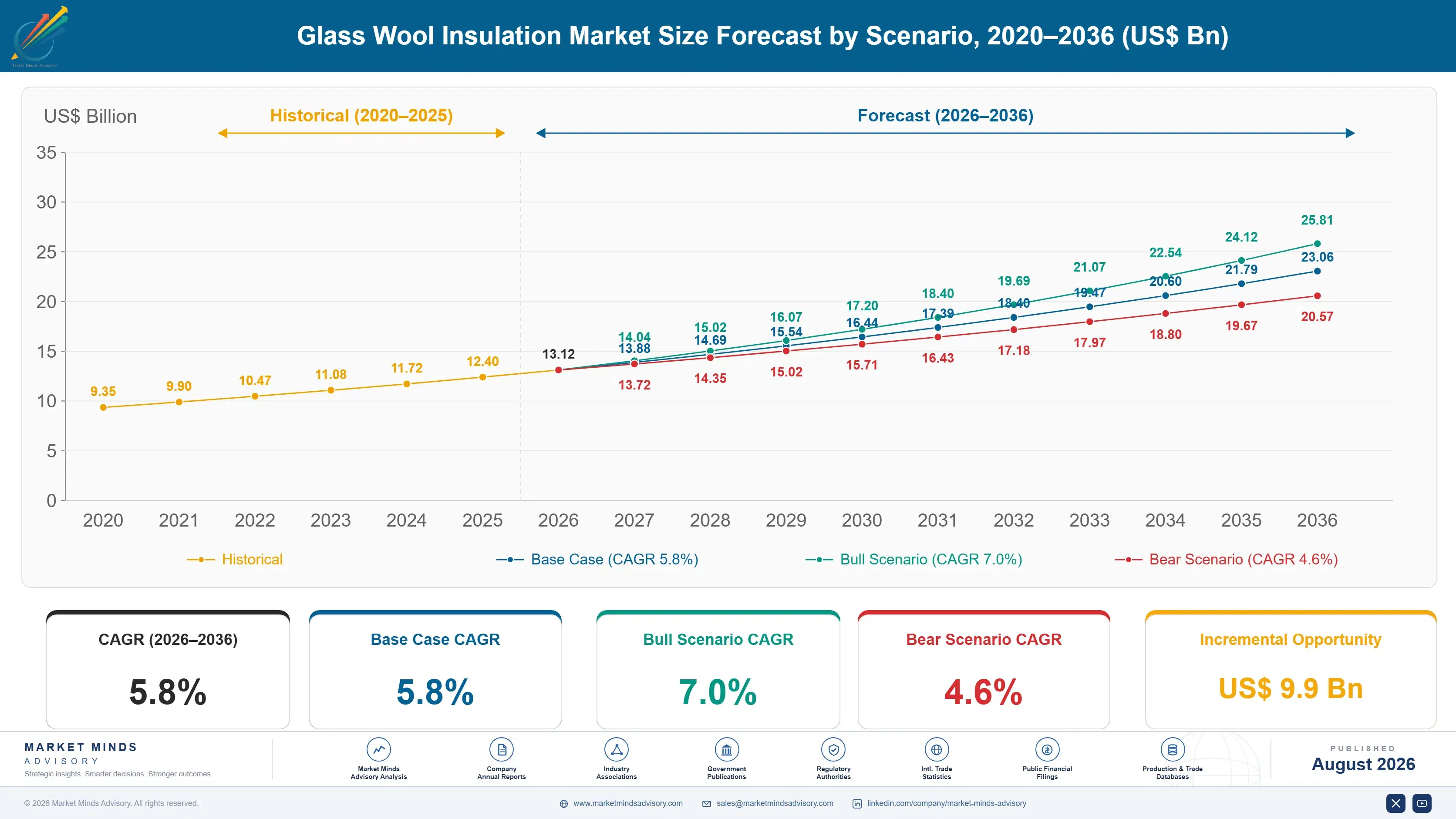
Glass wool demand grew at an estimated 5.2% annual pace between 2020 and 2025, a period shaped by pandemic-driven construction delays followed by a sharp recovery in retrofit spending as governments introduced energy efficiency incentive programs across multiple major economies. Natural gas price volatility added meaningful cost pressure to furnace-based production throughout the period, squeezing margins at smaller regional manufacturers.
The base case assumes 5.8% compound annual growth through 2036, driven by three commercial mechanisms: expanding building retrofit incentive programs raising renovation insulation demand across mature markets in North America and Europe, continued new construction growth across urbanizing Asian and South Asian economies, and tightening minimum energy efficiency standards forcing thicker or higher-performance insulation specifications across both residential and commercial segments. Industrial and HVAC demand continues growing more modestly throughout the forecast period.
A bull scenario of 7.0% growth assumes accelerated retrofit incentive funding across major economies alongside sustained Asian new-construction growth and faster efficiency standard adoption. The bear case of 4.6% reflects the risk that government retrofit subsidies face budget cuts amid competing fiscal priorities, delaying the renovation-driven volume growth the base case assumes across most mature markets.

Freight-Bound Economics Meeting Policy-Driven Demand

Glass wool is, like most bulky insulation materials, a logistics business as much as a chemistry business. Product value per cubic meter is low enough that freight cost governs which plants can economically serve which construction markets, keeping the industry genuinely regional in practice even as demand drivers like energy codes and retrofit incentives are increasingly global in origin and scope.
MARKET CONCENTRATIONCR5 48%Top five manufacturers hold nearly half of category revenue
AVERAGE SELLING PRICE$1.15/kgReflects density grade, facing type, and R-value performance level
TOP PRODUCING COUNTRY SHAREChina 26%Anchored by large domestic construction and industrial manufacturing base
CAPACITY UTILIZATION78%Constrained by seasonal construction cycles and furnace maintenance schedules
TRADE INTENSITY19% exportedReflects high freight cost limiting long-distance bulky material trade
CULLET FEEDSTOCK SHARE35% of COGSRecycled glass and virgin raw materials dominate total production cost
Production draws heavily on recycled glass cullet, which reduces both feedstock cost and furnace energy consumption compared to virgin raw material batches, giving manufacturers with reliable cullet supply chains a meaningful cost advantage over competitors lacking comparable recycling infrastructure and collection networks nationwide. This feedstock dependency creates periodic supply tightness in regions with underdeveloped glass recycling systems, particularly across emerging construction markets.
Government retrofit incentive programs are the single most powerful demand lever in mature markets, capable of shifting renovation insulation volume meaningfully within a single budget cycle and fiscal year. Building owners facing new subsidy programs often accelerate renovation timelines that would otherwise have stretched across several years, creating episodic demand surges that strain regional distribution capacity and occasionally cause temporary product shortages.
"Glass wool margins are won or lost on the trucking radius, not the furnace design. Everyone obsesses over R-value, but the real competitive edge is knowing exactly which zip codes you can serve profitably."
Director, Building Materials and Insulation Practice · MMA Construction and Industrial Equipment Practice · August 2026

Market Trends

Retrofit Incentive Programs Accelerating Renovation Demand

Government energy efficiency retrofit programs across the United States, European Union, and several Asian markets have expanded subsidy funding for building envelope renovation over the past several years, directly lifting glass wool demand in the existing building stock rather than new construction alone. Several major national programs have increased retrofit funding allocations by more than 25% over the past two years, citing energy security and emissions reduction goals as primary justification. This funding expansion is expected to continue supporting sustained renovation insulation demand even as new-construction growth moderates in mature Western markets facing demographic headwinds.
Market Impact: Tightens code requirements by 10%
Recycled Cullet Content Requirements Tightening in Procurement

Public and institutional building procurement increasingly specifies minimum recycled content thresholds for insulation materials, pushing manufacturers to secure reliable cullet supply chains capable of meeting documented sustainability requirements across major markets and construction types. Several major manufacturers have expanded recycled glass content in standard product lines to more than 60% by weight, citing both cost advantages and procurement compliance as dual motivations for the investment. This trend is expected to intensify as green building certification programs expand their scope and influence across both public and private construction markets globally over the coming years.
Market Impact: Targets 20% housing stock growth

Market Opportunities and Growth Drivers

Building Energy Codes Tightening Minimum Insulation Requirements

Building energy codes across major construction markets continue raising minimum thermal performance requirements, forcing builders toward thicker insulation or higher-density glass wool products that deliver improved R-value per unit thickness across residential and commercial segments. Several major jurisdictions have tightened minimum code requirements by more than 10% over the past several years, directly lifting insulation material volume per building even as construction starts remain roughly stable overall. This regulatory tightening trend shows no sign of reversing, as governments continue prioritizing building sector emissions reduction as part of broader climate commitments across multiple jurisdictions.
Market Impact: Gas costs climb more than 22%

Asian Urbanization Sustaining New Construction Volume Growth

Rapid urbanization across China, India, and Southeast Asia continues driving sustained new residential and commercial construction, with several national infrastructure programs targeting housing stock expansion of 20% or more over the coming decade across urban and peri-urban areas. Each new construction project represents durable insulation material demand, since building codes in most urbanizing markets now mandate minimum thermal performance standards from initial construction rather than allowing later retrofit. This construction pipeline is expected to remain a durable demand source even as growth in mature developed markets slows to more modest replacement-driven levels.
Market Impact: Freight exceeds 20% of delivered price

Market Restraints and Challenges

Natural Gas Price Volatility Squeezing Furnace Economics

Glass wool production relies on continuously operating furnaces consuming substantial natural gas volumes, meaning energy price swings directly affect production cost in ways many other building materials avoid. The root cause is technical: glass melting furnaces cannot be cycled on and off economically, forcing manufacturers to absorb energy price volatility rather than curtailing production during high-price periods. Natural gas costs have climbed more than 22% over the past two years at several major production facilities. Manufacturers are responding by investing in furnace efficiency upgrades and, in some cases, exploring electric melting technology to reduce gas dependence.
Market Impact: Increases retrofit funding by 25%

Freight Cost Limiting Economic Service Radius

Glass wool carries low value per cubic meter relative to bulky shipping volume, meaning freight cost frequently exceeds 20% of delivered price beyond a few hundred kilometers from the production plant. The root cause is basic material economics: insulation products are dosed at high volumes relative to their unit value, unlike specialty materials where freight is a minor cost component. This constraint forces manufacturers to maintain regional plant networks rather than centralizing production, raising capital intensity. Producers are responding by locating new capacity near major population centers and developing more compressed packaging formats that reduce shipping volume.
Market Impact: Recycled content now exceeds 60%
4 additional market trends, 3 additional growth drivers, and 3 additional restraints and challenges are covered in the full report. Contact sales@marketmindsadvisory.com to access the complete intelligence.

Segment CAGR and Growth Architecture

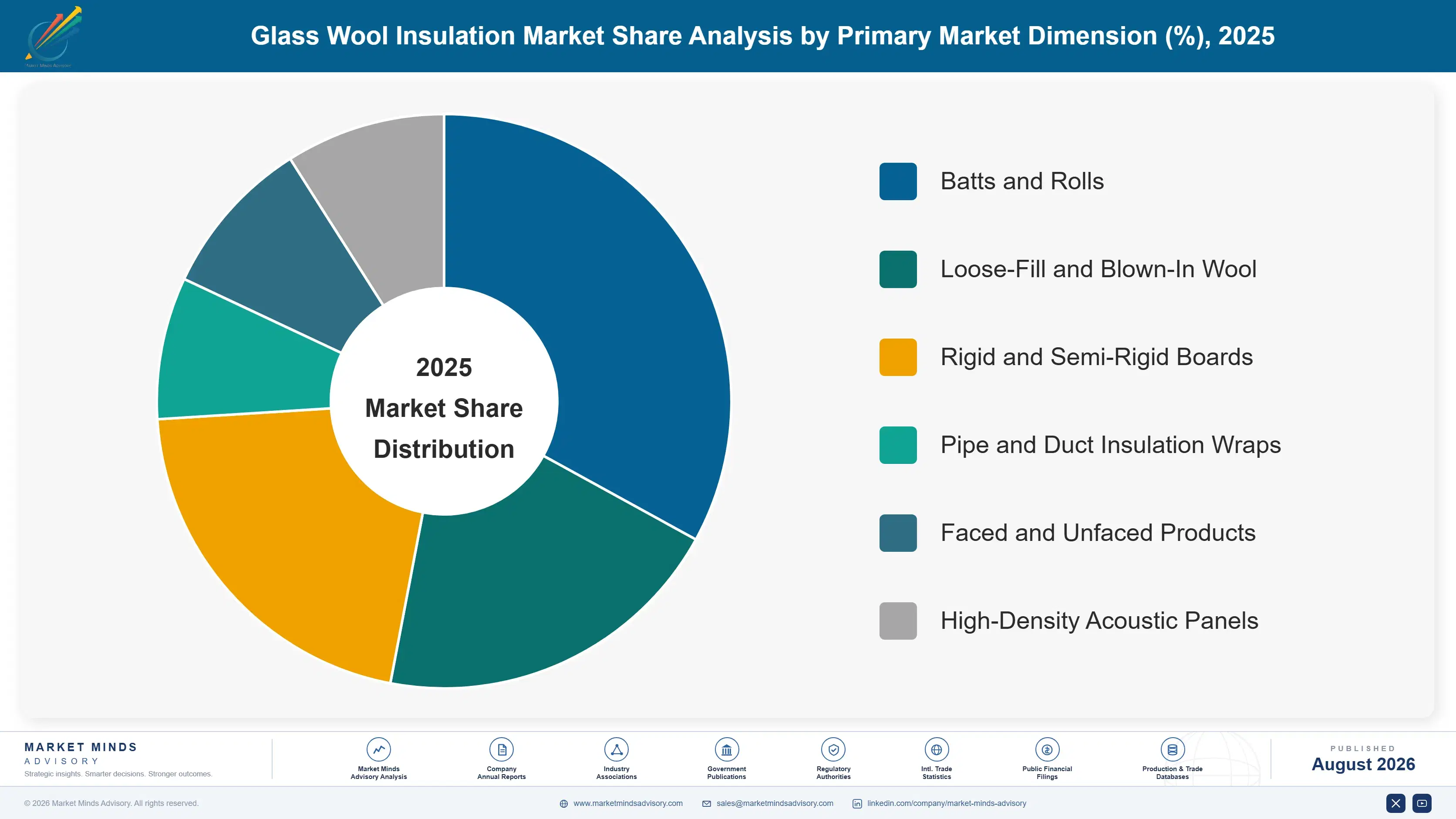
Glass wool demand splits across six application-based segments defined by end-use function rather than product density grade alone. Retrofit and renovation and commercial building envelope insulation lead growth, followed by residential envelope, HVAC duct, industrial equipment, and acoustic or OEM applications, each carrying distinct density, performance, and installation requirements across construction types and building categories.
glass-wool-insulation-market-trends-market-share-analysis-1787551056279

Retrofit and Renovation Insulation

Retrofit and renovation insulation represents the fastest-growing segment, driven directly by government energy efficiency incentive programs subsidizing building envelope upgrades in aging housing stock across North America and Europe specifically, where housing stock ages considerably and turnover remains slow. Building owners facing new subsidy programs frequently accelerate renovation timelines that would otherwise have stretched across several years, creating episodic demand surges concentrated around program launch periods and funding cycles. Contractors specializing in renovation work increasingly favor pre-cut, easy-installation product formats suited to occupied buildings rather than new construction sites. This segment's growth rate exceeds the overall market by roughly 1.29 times, reflecting sustained policy support globally across multiple jurisdictions and funding programs.
CAGR 7.5%

Commercial Building Envelope Insulation

Commercial building envelope insulation forms the second-fastest-growing segment as urbanization across Asia drives sustained new commercial construction requiring code-compliant thermal performance from initial building design and permitting stages across expanding metropolitan areas, industrial corridors, and logistics hubs worldwide. Developers increasingly specify higher-performance glass wool grades to achieve green building certification credits that support premium leasing rates and occupant demand across major metropolitan markets and competitive commercial real estate portfolios. This segment benefits from more predictable, project-based demand than residential retrofit, since commercial developers typically commit to multi-building specification standards across entire portfolios and long-term construction pipelines spanning multiple years, phases, and geographic markets. Adoption continues broadening across additional metropolitan markets and building types.
CAGR 6.8%
Full segment breakdown across 7 segments available in the complete report.

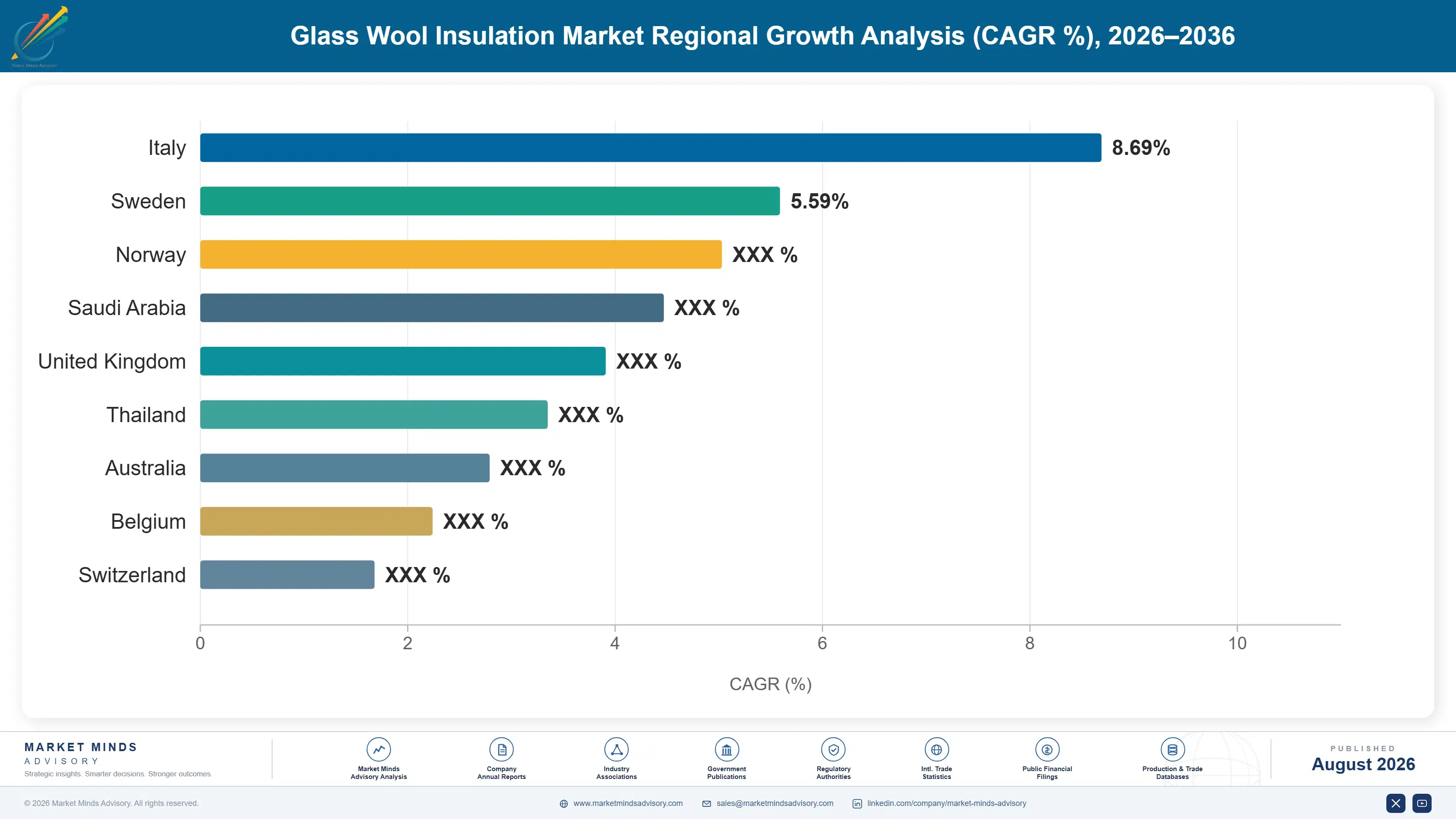
Regional Architecture and Country Demand Map

East Asia leads glass wool demand, anchored by China's large construction and industrial manufacturing base and its extensive export supply chains. North America and Western Europe follow as mature, retrofit-driven markets, while South Asia and Pacific shows the fastest regional growth off a smaller base.

North America

US demand centers on both new residential construction and a substantial retrofit market driven by federal and state energy efficiency incentive programs, with California and several Northeastern states offering particularly generous renovation subsidies to homeowners and building owners. Owens Corning and Johns Manville both maintain extensive domestic production capacity serving these markets directly, supported by well-established distribution networks reaching most metropolitan areas across the country. Canadian demand tracks similar drivers at smaller scale, concentrated in colder climate zones requiring higher insulation performance and thicker product specifications. Growth trails East Asia as domestic new construction activity expands more slowly than in rapidly urbanizing Asian markets, though retrofit incentive funding continues supporting steady volume growth.
Share: 24% | CAGR: 5.0% (2026 to 2036)

Western Europe

German and French construction markets lead regional demand, operating under some of the world's strictest building energy efficiency standards under European Union directives tightened progressively over the past decade and enforced through national building codes. Saint-Gobain's Isover brand and Knauf Insulation both anchor regional production capacity, drawing on well-developed glass recycling infrastructure across the bloc that supports high recycled cullet content in most product lines. Growth trails the global average as most major markets have already achieved substantial building envelope upgrade completion, leaving primarily replacement and incremental renovation demand rather than large-scale new retrofit programs across most member states and their national subsidy schemes. Sustainability reporting requirements are adding further pressure on legacy producers.
Share: 20% | CAGR: 4.4% (2026 to 2036)
Regional intelligence for 5 additional markets available in the complete report: East Asia, South Asia and Pacific, Latin America, Middle East and Africa, Eastern Europe. Contact sales@marketmindsadvisory.com.
glass-wool-insulation-market-trends-country-cagr-analysis-1787551056799

Defending Margin in a Freight-Bound Category

Glass wool suppliers face a genuinely freight-constrained margin environment where pricing power depends more on plant location and cullet supply security than on chemistry differentiation alone across the category. The levers below outline where producers can realistically defend and expand margin over the next several years despite persistent logistics and energy cost volatility across this freight-sensitive category.

Locating New Capacity Near Population Centers

Producers that site new furnace capacity closer to major population centers capture a durable freight cost advantage over competitors shipping from more distant plants, since freight can exceed 20% of delivered price beyond a few hundred kilometers from the source plant location. This advantage compounds over the life of a plant, since contractors and distributors rarely switch suppliers once a delivery relationship is established and reliable. Producers investing in strategically located capacity now are securing multi-decade regional advantages before competitors recognize the same opportunity and commit capital elsewhere. Suppliers without this location advantage remain permanently disadvantaged in bidding.
Market Impact: Cuts delivered freight cost by roughly 20 percent

Securing Long-Term Recycled Glass Cullet Supply Agreements

Producers that lock multi-year recycled glass cullet supply agreements insulate margin from the feedstock tightening that periodically hits regions with underdeveloped recycling infrastructure and collection networks. Cullet represents roughly 35% of total cost of goods sold, and reliable supply also reduces furnace energy consumption compared to virgin material batches, compounding the cost advantage meaningfully further across the production cycle. Early movers on long-term cullet contracts remain insulated from the volatility that unhedged competitors continue absorbing directly each production cycle and fiscal quarter. This lasting cost gap is difficult for less prepared rivals to close quickly.
Market Impact: Cullet represents roughly 35 percent of total COGS

Developing Higher-Performance Insulation Density Product Grades

Suppliers investing in higher-performance, higher-density product grades capture premium pricing as building energy codes tighten minimum thermal performance requirements by 10% or more across major jurisdictions and construction categories worldwide. This technical investment requires additional process engineering, but the resulting product commands meaningfully higher per-unit pricing that offsets the freight and feedstock cost pressures affecting the broader category. Suppliers with qualified high-performance grades are winning specification slots ahead of competitors still selling standard-density legacy products. Adoption continues expanding across both residential and commercial segments. today. Broader adoption is expected across every major regional market.
Market Impact: Meets newly tightened 10 percent code thresholds now

Building Direct Relationships with Retrofit Program Administrators

Suppliers establishing direct relationships with government retrofit incentive program administrators capture more durable, predictable revenue than those competing purely on price through general distribution channels and wholesale networks nationwide. These relationships provide advance visibility into program funding cycles, allowing suppliers to plan production and inventory ahead of demand surges that catch unprepared competitors off guard. Building this influence takes years, but suppliers with established program relationships report win rates roughly 25% higher than transactional competitors. Retention gains compound meaningfully across multi-year renewal cycles. today. Fewer than half of competitors maintain comparable program relationships currently.
Market Impact: Lifts contract win rates by roughly 25 percent

Who Controls the Margin Pool

The top five glass wool manufacturers hold roughly 48% of category revenue, a meaningful concentration reflecting the capital intensity of furnace-based production and the freight economics that favor scaled regional plant networks over fragmented small-scale operations. The gap between scaled global manufacturers and numerous smaller regional producers is real but narrower than in most specialty materials categories, since freight economics limit how much scale advantage actually translates into delivered price competitiveness.
Current competitive activity centers on three dimensions: locating new furnace capacity near major population centers to defend freight-cost advantage, securing long-term recycled cullet supply agreements to insulate margin from feedstock and energy volatility, and building direct relationships with government retrofit incentive program administrators who influence renovation demand timing. Producers investing across multiple dimensions simultaneously are winning share from narrower regional competitors.

Emerging pressure is coming from Chinese and Indian domestic producers scaling capacity to serve their own rapidly expanding construction pipelines, gradually reducing historical import dependence in those markets. Rankings are most likely to shift among smaller regional producers lacking either cullet supply security or retrofit program relationships, both increasingly necessary as regulatory tightening raises the technical bar for qualified suppliers.
glass-wool-insulation-market-trends-company-positioning-matrix-1787551057321

Competitive Moat and Risk Dimensions

SAINT-GOBAIN (ISOVER)

Moat: Broad Global Production Network

Saint-Gobain's dense network of Isover-branded production sites across 29 countries gives it freight-cost coverage across most major markets that single-plant competitors cannot match, combined with decades of contractor and specifier relationships supporting recurring, low-churn revenue across its broader building materials portfolio and technical service offering.
SAINT-GOBAIN (ISOVER)

Risk: European Regulatory Concentration Risk

Saint-Gobain's revenue remains heavily weighted toward European markets where retrofit incentive programs have already largely matured, meaning future growth depends more on Asian and emerging market expansion than on defending an already saturated core European customer base facing a slower, multi-year renovation demand trajectory ahead.
OWENS CORNING

Moat: Deep North American Distribution Reach

Owens Corning's extensive North American distribution network and long-standing contractor relationships give it retrofit market access that international competitors entering the region cannot easily replicate quickly, particularly given the fragmented, relationship-driven nature of renovation contracting across most states, provinces, and municipal jurisdictions nationwide and beyond.
OWENS CORNING

Risk: US Retrofit Policy Dependence

Owens Corning's substantial exposure to US federal and state retrofit incentive programs leaves it more vulnerable than geographically diversified competitors to policy reversals or funding cuts that could meaningfully reduce renovation-driven demand across its core domestic market and customer base over time and across cycles.

Players Tracked

Prominent Players

Saint-Gobain (Isover)
Owens Corning
Knauf Insulation
Johns Manville
URSA Insulation

Other Key Players

Superglass Insulation
CSR Bradford Insulation
Fletcher Insulation
Izocam
Nitto Boseki
Asahi Fiber Glass
IKING Group
Taishan Fiberglass
Shandong Luyang Energy-Saving Materials
UP Twiga Fiberglass
Guardian Fiberglass
Fibran Group
Hebei Shenzhou Thermal Building Material Group
Manson Insulation
Lloyd Insulations (India) Limited

Recent Developments

MARCH 2026

Saint-Gobain Expands Isover Production Capacity in Poland

Saint-Gobain announced expansion of Isover-branded glass wool production capacity at a Polish facility, targeting growing Eastern European construction demand and improved freight coverage across neighboring markets this year and the following construction season across several countries and regional distribution zones. nationwide. and beyond. overall. today.
Signal: Confirms established European suppliers are continuing to invest in defending their regional supply share. widely. today.
OCTOBER 2025

Owens Corning Signs Multi-Year Cullet Supply Agreement

Owens Corning signed a multi-year recycled glass cullet supply agreement with a regional recycling network, insulating feedstock costs from spot market volatility as glass recycling infrastructure continues expanding across North American markets this cycle and into several subsequent operating years and budget periods. nationwide. and beyond.
Signal: Shows leading suppliers are actively prioritizing feedstock security as a defensive strategy against volatility. widely. today.
JUNE 2025

Knauf Insulation Expands Indian Manufacturing Footprint

Knauf Insulation expanded its Indian manufacturing footprint, targeting the country's rapidly growing construction sector and rising building energy code compliance requirements across multiple states and urban development zones this past year and into the following extended fiscal period and planning cycle. nationwide. and beyond. overall.
Signal: Indicates suppliers are prioritizing South Asian market expansion ahead of accelerating regional demand growth. widely. today.

Cullet Feedstock and Energy Cost Exposure

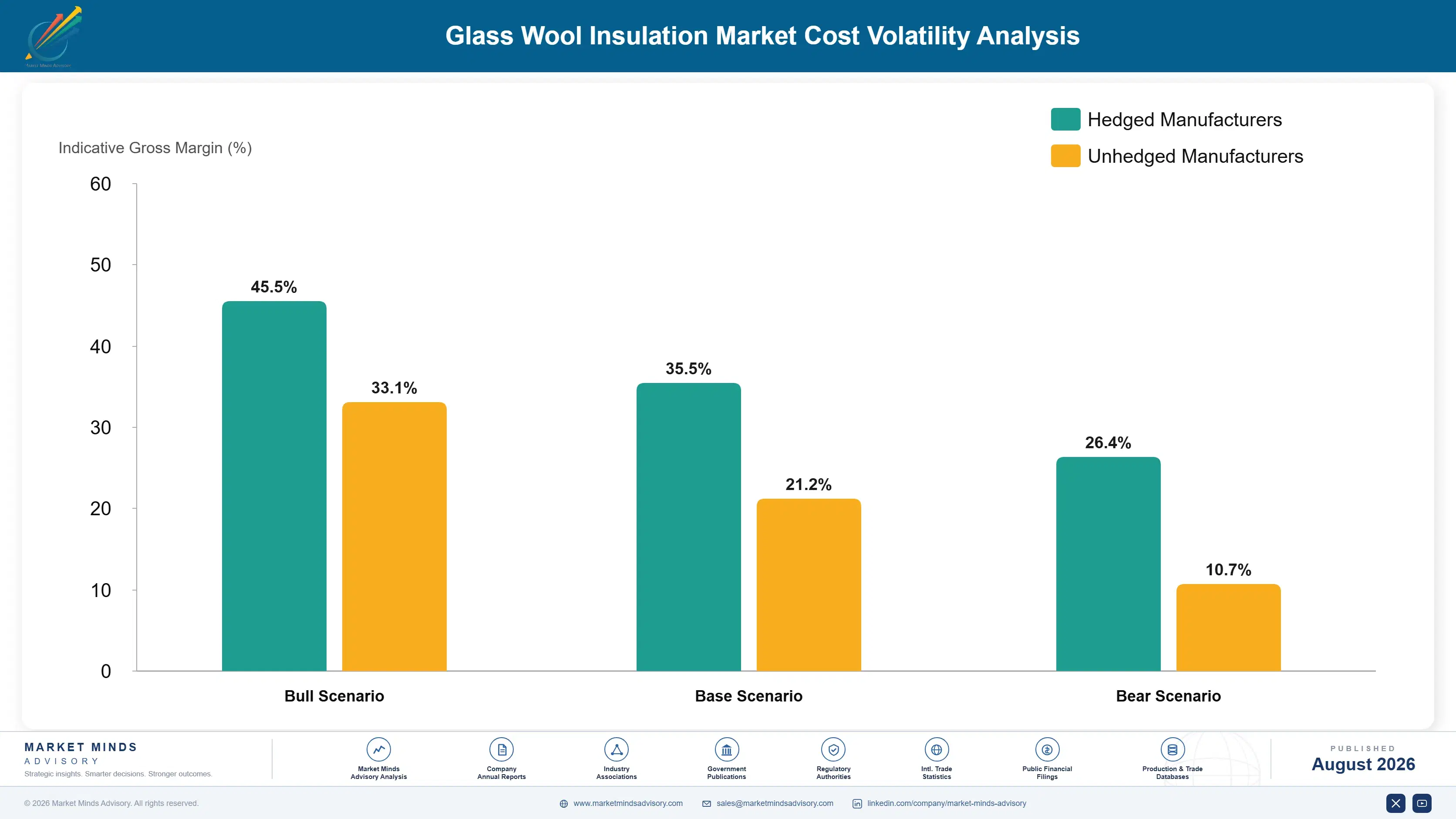
Recycled glass cullet and natural gas for furnace operation together account for an estimated 35% of glass wool cost of goods sold, with binder chemistry and packaging making up most of the remainder of total production cost. Cullet supply originates from regional glass recycling networks, concentrating exposure to local recycling infrastructure maturity rather than global commodity markets and pricing benchmarks.
Natural gas costs rose more than 22% over a twenty-four-month span through late 2025 as energy markets tightened across major producing regions worldwide and geopolitical tensions added further pricing pressure, according to International Energy Agency natural gas market data. Manufacturers without hedging programs absorbed the increase directly, and several smaller regional producers reported margin compression severe enough to trigger price increases passed through to construction customers on a lagged basis.

The competitive disadvantage mechanism is direct: manufacturers sourcing cullet exclusively from underdeveloped regional recycling networks face higher virgin material dependence and cost exposure that competitors with mature recycling infrastructure avoid entirely. Exposure varies by player type, with larger diversified manufacturers typically holding better cullet supply relationships than smaller regional producers purchasing feedstock opportunistically on the spot market.
glass-wool-insulation-market-trends-cost-volatility-analysis-1787551057515

Long-Term Cullet Supply Contracting

Manufacturers are increasingly locking multi-year recycled glass cullet purchase agreements directly with regional recycling networks, trading some pricing flexibility for predictable input costs that support stable customer-facing pricing across annual construction supply contracts and multi-year relationships spanning several harvest cycles and geographic regions. and long-term customer contracts. each renewal cycle. nationwide.

Furnace Energy Efficiency Investment

Leading manufacturers are investing in furnace efficiency upgrades and, in some cases, exploring electric melting technology to reduce natural gas dependence and insulate production costs from energy price volatility that has repeatedly squeezed unhedged competitors in recent production and pricing cycles across the category and beyond. and rising markets. and beyond broadly. nationwide.

Regional Recycling Infrastructure Investment

Some manufacturers are investing directly in regional glass recycling collection infrastructure to secure reliable cullet supply in markets where recycling systems remain underdeveloped, reducing dependence on costlier virgin raw material inputs over the medium to long term and across multiple production facilities and geographies. and export markets. each expansion phase. nationwide.

Portfolio Architecture for Margin Defence

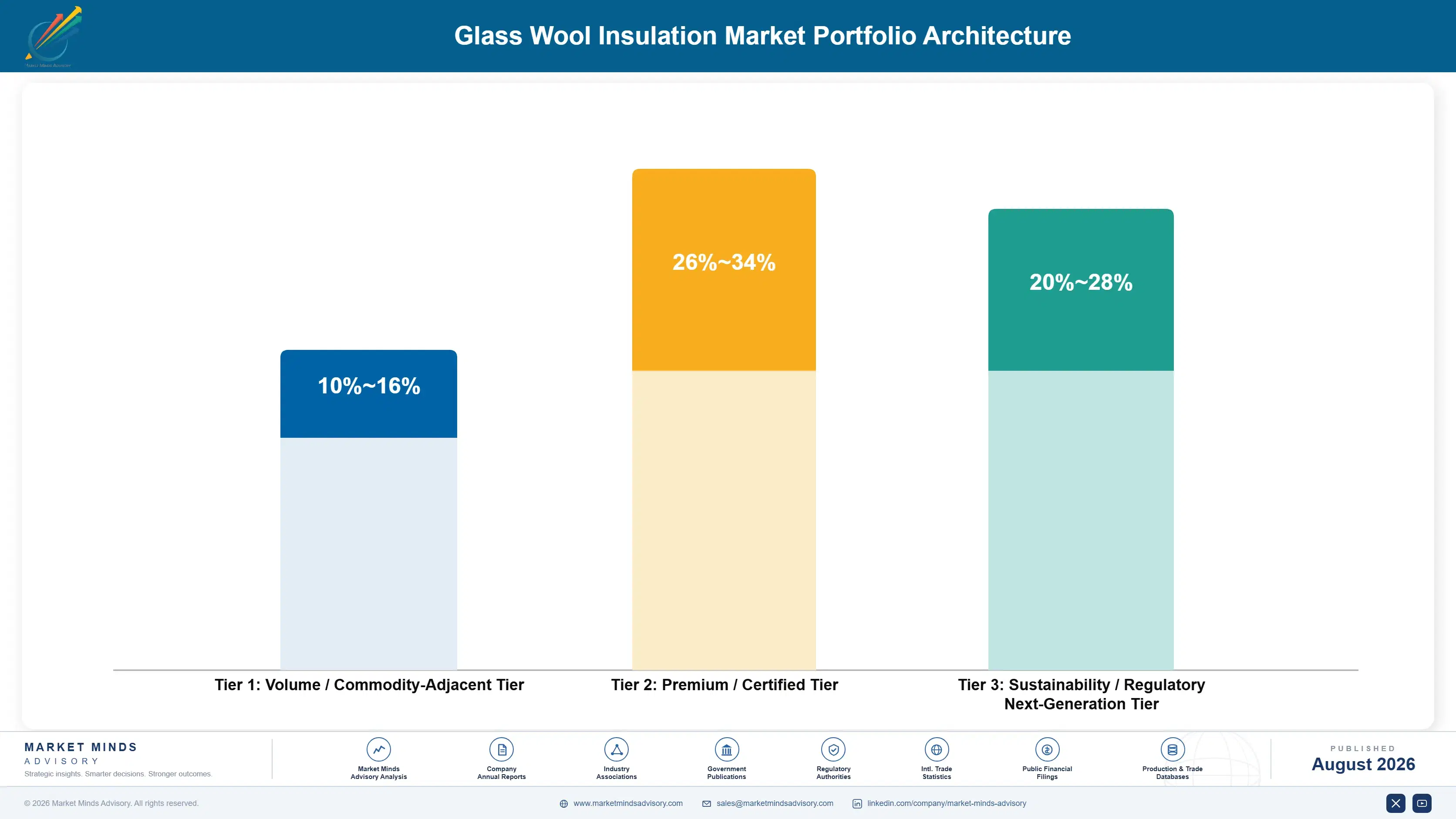
Glass wool margin economics divide across three tiers driven primarily by application performance and certification requirements rather than raw material complexity alone. Volume commodity-adjacent grades serving general residential construction carry thin margins under intense regional freight-bound competition among numerous local producers, while higher-performance density grades qualified for retrofit and commercial applications command substantially wider margins reflecting genuine technical differentiation.
The volume versus premium tension is fundamental to the category: commodity producers compete primarily on freight radius and delivery reliability against numerous regional rivals, while premium suppliers compete instead on thermal performance documentation and code compliance that architects and specifiers cannot easily substitute away from once specified into a building design. Switching costs favor incumbents meaningfully once a product is specified into a certified project, often for the life of the building.

High-value margin pools concentrate in retrofit-qualified and high-density commercial grades, where performance certification and technical documentation limit competitive entry to established, technically capable suppliers. Recycling-intensive product lines with high recycled cullet content, which extend sustainability credentials meaningfully, are emerging as a meaningful third pool commanding a genuine premium from customers pursuing green building certification and documented environmental performance.

Volume / Commodity-Adjacent Tier

General residential construction grade glass wool competes primarily on freight radius and delivery reliability against numerous regional producers with limited technical differentiation between offerings and price points. and customer accounts.
Gross Margin: 10-16%

Premium / Certified Tier

Higher-performance density grades qualified for retrofit and commercial applications command durable pricing power once specified into a certified building project that competitors cannot easily displace without lengthy requalification. or reformulation.
Gross Margin: 26-34%

Sustainability / Regulatory / Next-Generation Tier

High recycled cullet content product lines qualified against green building certification standards earn a meaningful premium from customers seeking documented environmental performance credentials ahead of tightening building codes. nationwide. today.
Gross Margin: 20-28%
glass-wool-insulation-market-trends-portfolio-architecture-1787551058008

High-value Sub-segments and Strategic Watch-out

Retrofit-Qualified High-Density Grades

The highest-value, fastest-growing pool as retrofit incentive programs mandate higher thermal performance across major markets; suppliers with qualified high-density formulations are capturing outsized margin expansion relative to the broader category, a gap widening each program funding cycle. Suppliers without qualified chemistry keep losing accounts. overall.
Gross Margin: 28-36%

Commercial Green-Certified Product Lines

Large and growing steadily as developers pursue green building certification credits for premium leasing across major metropolitan markets; margins remain solid though not yet at retrofit-grade premiums given more price-competitive dynamics among several capable regional suppliers. Retention gains compound across renewal cycles significantly. overall. today.
Gross Margin: 22-28%

General Residential Construction Grades

The volume core of the category, providing stable baseline revenue but limited margin expansion potential given intense regional price competition among numerous freight-constrained commodity producers with broadly comparable technical capability. Consolidation among smaller producers seems increasingly likely. Margin pressure continues intensifying across most regions. today.
Gross Margin: 10-15%

Natural Gas and Cullet Cost Exposure Risk

A strategic watch-out as rising energy and feedstock costs continue squeezing producers lacking cullet supply security or furnace efficiency investment across their operations; suppliers slow to hedge risk losing margin to better-prepared regional rivals. Diversification remains the only credible mitigation path. overall. Diversification takes years to fully execute.
Gross Margin: 8-14%

Program-Anchored Specification Economics

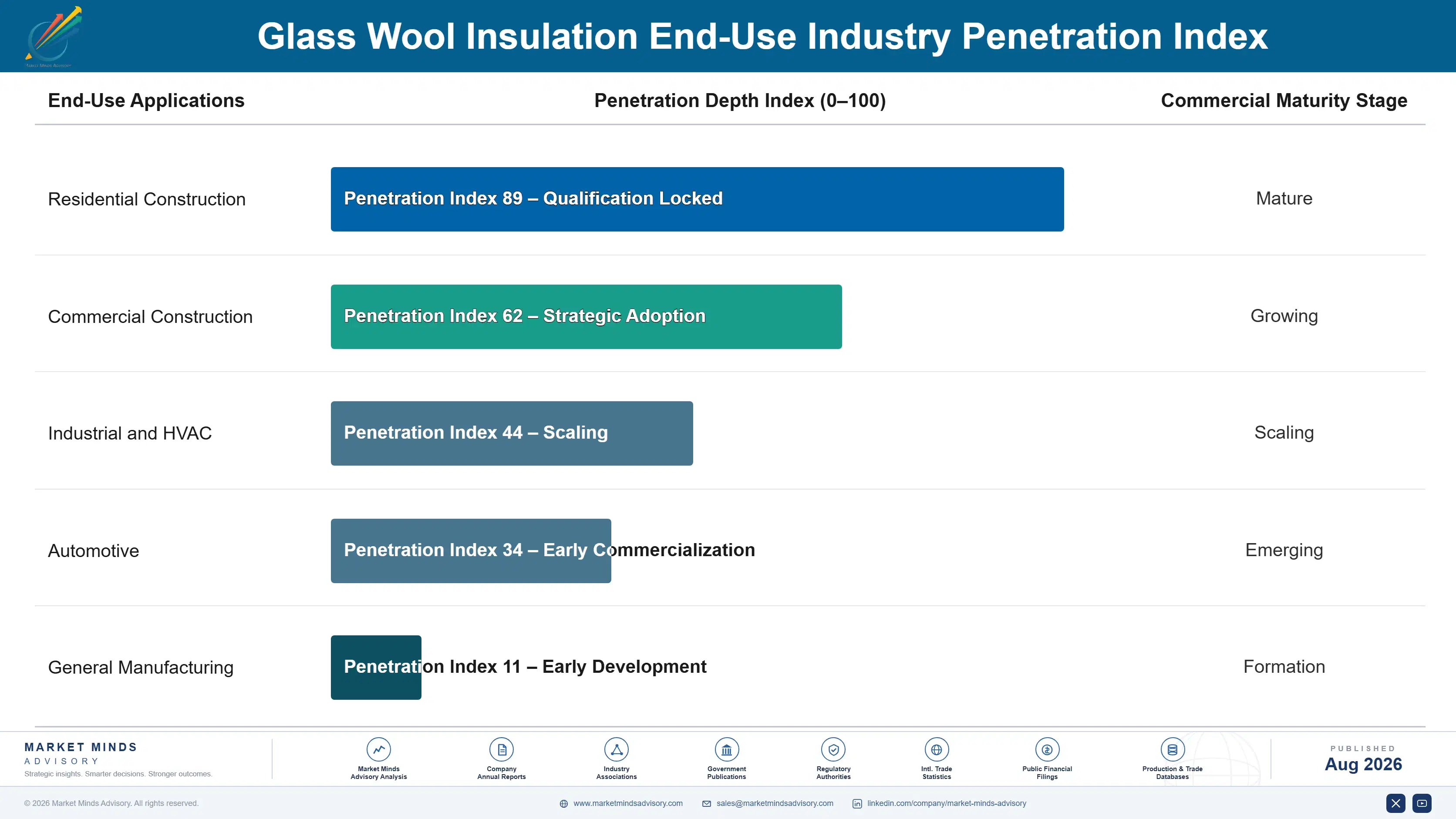
Glass wool revenue in certified applications behaves closer to an annuity than a transactional commodity sale once a product clears retrofit program or building code qualification and enters approved specification. Architects and specifiers rarely requalify an insulation supplier without a compelling cost or performance reason, since requalification consumes substantial documentation time and carries project risk most customers prefer to avoid entirely.
Adoption stickiness varies meaningfully by end-use vertical across the category. Retrofit program-qualified suppliers exhibit the deepest lock-in given documentation tied to government subsidy eligibility, while general residential customers switch suppliers more readily on price alone given shorter, less regulated product cycles. Commercial developers sit between the two, constrained by green building certification requirements referenced directly in leasing and marketing documentation.

Buyer profiles are shifting generationally as procurement teams increasingly include sustainability and compliance specialists alongside traditional purchasing managers, changing how insulation specification gets evaluated during project design and budgeting. Younger architects and engineering leads entering purchasing decisions weigh recycled content documentation and energy performance credentials more heavily than predecessors did, gradually reshaping which suppliers win new specification slots across both new and renovation projects.
glass-wool-insulation-market-trends-end-use-penetration-index-1787551058497

Priorities for Glass Wool Producers

These are among the four positions where our research anticipates prominent divergence between winners and laggards over the coming forecast period. Each is grounded in the demand model, the regulatory perimeter, and the announced capacity pipeline.
01 / PLANT LOCATION STRATEGY

Site new capacity close to underserved population centers now

Producers should evaluate new furnace capacity siting decisions primarily through a freight-radius lens rather than pure production cost, since delivered price to distant customers is dominated by logistics rather than manufacturing efficiency in this particular category and market structure. Locating near underserved population centers secures multi-decade regional advantages before competitors recognize the same opportunity and commit capital elsewhere first. Producers still optimizing purely for production cost will keep losing distant accounts to better-positioned regional rivals offering lower delivered pricing and faster service.
02 / CULLET SECURITY PRIORITY

Lock long-term cullet contracts before further feedstock tightening

Producers should secure multi-year recycled glass cullet agreements now, since regions with underdeveloped recycling infrastructure face persistent feedstock tightening that unhedged competitors continue absorbing directly each successive production cycle. Cullet represents roughly a third of cost of goods sold across the category, so securing supply carries more margin protection value than nearly any other operational lever available to producers today. Producers still buying cullet opportunistically will keep absorbing avoidable cost shocks each successive tightening cycle and losing ground to better-prepared rivals.
03 / RETROFIT PROGRAM INVESTMENT

Build relationships with retrofit program administrators early

Producers should invest in direct relationships with government retrofit program administrators now, since advance visibility into funding cycles allows suppliers to plan production and inventory ahead of demand surges that catch unprepared competitors off guard each program cycle. Building this influence takes years of technical collaboration, so early movers secure a durable head start over competitors still relying purely on price to win business at the bidding table. Waiting risks ceding the most defensible growth pool in the category to more proactive competitors already courting the same program administrators.
04 / DENSITY GRADE DEVELOPMENT

Develop higher-density formulations to capture code tightening

Producers should invest in higher-performance density formulations now, since building energy codes tightening minimum thermal performance requirements are creating durable demand for premium product grades that command meaningfully wider margins across most major markets and construction segments. This technical investment requires additional process engineering, but the resulting differentiation is durable and difficult for competitors to replicate quickly without similar capital commitment and technical expertise. Producers that delay this investment risk remaining confined permanently to increasingly commoditized standard-density product lines with shrinking margins.

Engagement Snapshot From the Field

A live engagement with an industry participant carrying material or product regulatory and market exposure ahead of a defining policy shift, showing how our research translates into a defensible multi-year portfolio strategy.
MARKET MINDS ADVISORY · CLIENT ENGAGEMENT SUMMARY
Glass Wool Insulation Producer Strategic Portfolio Review and Transition Roadmap 2026·Investment Scenario on Glass Wool Insulation Exposure Evaluation 2025-26
CLIENT PROFILE
The client is a regional home improvement retailer supplying glass wool insulation to contractors and DIY customers across several states, sourcing product from a single regional supplier located far outside its expanding delivery territory. Facing rising delivered costs and a new state retrofit incentive program driving demand surges, the client engaged MMA to evaluate its supplier options before renewing annual purchase agreements.
STRATEGIC CHALLENGE
The client's incumbent supplier's distant plant location meant delivered pricing had climbed steadily even as retrofit incentive demand increased order volume, and the supplier's limited production capacity created repeated stockouts during peak renovation season across multiple store locations, regional distribution centers, and delivery routes this year and the prior one.
MMA APPROACH
MMA benchmarked available regional suppliers on freight-adjusted delivered cost, cullet supply security, and production capacity, then carefully modeled the full multi-year cost impact of diversifying toward a closer-located supplier with dedicated retrofit-grade inventory capable of meeting the client's seasonal demand surges reliably across its full store network and distribution footprint.
KEY FINDINGS
  1. The client's incumbent supplier's plant sat over 350 kilometers away, adding an estimated 18% to delivered insulation pricing versus a regional alternative supplier.
  2. A closer regional supplier with dedicated retrofit inventory would have reduced stockout incidents by an estimated 60% during peak renovation season last year.
  3. The client's existing store logistics required only minor adjustment to accommodate the alternative supplier's delivery schedule, contrary to initial operational assumptions. affecting order timing.
  4. Switching suppliers would have shortened average delivery lead times by approximately five business days given closer proximity and dedicated inventory allocation. across the region.
CLIENT PROFILE
The client is a regional home improvement retailer supplying glass wool insulation to contractors and DIY customers across several states, sourcing product from a single regional supplier located far outside its expanding delivery territory. Facing rising delivered costs and a new state retrofit incentive program driving demand surges, the client engaged MMA to evaluate its supplier options before renewing annual purchase agreements.
STRATEGIC CHALLENGE
The client's incumbent supplier's distant plant location meant delivered pricing had climbed steadily even as retrofit incentive demand increased order volume, and the supplier's limited production capacity created repeated stockouts during peak renovation season across multiple store locations, regional distribution centers, and delivery routes this year and the prior one.
MMA APPROACH
MMA benchmarked available regional suppliers on freight-adjusted delivered cost, cullet supply security, and production capacity, then carefully modeled the full multi-year cost impact of diversifying toward a closer-located supplier with dedicated retrofit-grade inventory capable of meeting the client's seasonal demand surges reliably across its full store network and distribution footprint.
KEY FINDINGS
  1. The client's incumbent supplier's plant sat over 350 kilometers away, adding an estimated 18% to delivered insulation pricing versus a regional alternative supplier.
  2. A closer regional supplier with dedicated retrofit inventory would have reduced stockout incidents by an estimated 60% during peak renovation season last year.
  3. The client's existing store logistics required only minor adjustment to accommodate the alternative supplier's delivery schedule, contrary to initial operational assumptions. affecting order timing.
  4. Switching suppliers would have shortened average delivery lead times by approximately five business days given closer proximity and dedicated inventory allocation. across the region.
RECOMMENDED STRATEGY
Phase 1: Phase one: qualify the regional alternative supplier through a pilot program at stores facing the most severe stockout history this year. Phase 2: Phase two: negotiate dedicated retrofit-grade inventory allocation with the new supplier ahead of the next incentive program funding cycle. and forecast. Phase 3: Phase three: consolidate purchasing toward the regional supplier across all store locations to maximize freight-adjusted pricing benefits fully. and margins.
OUTCOME
The client switched to the regional supplier and reduced delivered insulation cost by an estimated 16% (client-reported, unverified by MMA) while eliminating stockout incidents entirely during the following peak renovation season across all affected store locations, regional distribution centers, delivery routes, and customer accounts nationwide.

Frequently Asked Questions

Foundational context covering the market sizes, CAGR, scope, country, region and competition that inform every finding below. This section is provided to cover basics and most often pre-purchase conversations, answered from the MMA Primary Research Dataset.

What is the current size of the Glass Wool Insulation Market?

The global market reached an estimated USD 12.4 billion in 2025. Growth is driven by building retrofit incentive programs and tightening energy efficiency codes worldwide.

How large will the Glass Wool Insulation Market be by 2036?

MMA projects the market will reach approximately USD 23.06 billion by 2036. This represents nearly a 1.76 times expansion from 2026 levels over the forecast decade.

What is the CAGR for the Glass Wool Insulation Market 2026 to 2036?

The market is projected to grow at a 5.8% compound annual growth rate between 2026 and 2036. Bull and bear scenarios range from 4.6% to 7.0% depending on retrofit funding levels.

Which segment is growing fastest?

Retrofit and Renovation Insulation is the fastest-growing segment, expanding at a 7.5% CAGR. That is roughly 1.29 times the overall market growth rate, driven by incentive programs.

Who are the major companies in the Glass Wool Insulation Market?

Leading global suppliers include Saint-Gobain, Owens Corning, Knauf Insulation, Johns Manville, and URSA Insulation Group. These five companies together hold roughly 48% of category revenue.

Which country is growing fastest?

India leads regional growth at a 7.9% CAGR, driven by rapid urbanization and tightening building energy codes. Expanding domestic manufacturing capacity reinforces this position through 2036.

Report Segmentation Architecture

The full report scope spans multiple orthogonal segmentation dimensions, with cross-tabulated demand data provided for each dimension pair. Coverage extends further to regional breakdowns, trend trajectories, and the competitive detail needed to support segment-level decision-making.

By Primary Market Dimension

  • Batts and Rolls
  • Loose-Fill and Blown-In Wool
  • Rigid and Semi-Rigid Boards
  • Pipe and Duct Insulation Wraps
  • Faced and Unfaced Products
  • High-Density Acoustic Panels

By End-Use Industry

  • Residential Construction
  • Commercial Construction
  • Industrial and HVAC
  • Automotive
  • General Manufacturing

By Commercial Dimension

  • Direct Manufacturer Sales
  • Distributor and Building Supply Channel
  • Contractor Installation Services
  • Retrofit Program Partnerships

By Region

  • North America
  • Western Europe
  • East Asia
  • South Asia and Pacific
  • Latin America
  • Middle East and Africa
  • Eastern Europe

Scope, Methodology, and Coverage

Every figure in this report is reproducible from documented input assumptions. The scope below maps the historical period, the forecast horizon, the segmentation dimensions, and the countries covered, alongside the underlying primary and qualitative methodology.
Historical Period
2020 to 2025
Forecast Period
2026 to 2036
Base Year
2025 (USD billions; MMA Primary Research Dataset, August 2026)
Market Definition
This report covers the global market for glass wool insulation, meaning fiberglass thermal and acoustic insulation manufactured from molten recycled glass and virgin raw materials, used in building envelope, HVAC, and industrial applications. It excludes stone wool, cellulose, and rigid foam insulation products.
Quantitative Units
USD billions (current prices); metric tons of insulation material where applicable
Segmentation Dimensions
By Primary Market Dimension; By End-Use Industry; By Commercial Dimension; By Region
Regions Covered
North America, Western Europe, East Asia, South Asia and Pacific, Latin America, Middle East and Africa, Eastern Europe
Countries Covered
USA, China, Germany, France, UK, Japan, South Korea, India, Australia, Canada, Brazil, Mexico, Indonesia, Vietnam, Thailand, Malaysia, UAE, Saudi Arabia, South Africa, Nigeria, Turkey, Poland, Netherlands, Italy, Spain, Sweden, Switzerland, Argentina, Colombia, Singapore, and additional markets relevant to this sector
Key Companies Profiled
Saint-Gobain (Isover), Owens Corning, Knauf Insulation, Johns Manville, URSA Insulation, Superglass Insulation, CSR Bradford Insulation, Fletcher Insulation, Izocam, Nitto Boseki, Asahi Fiber Glass, IKING Group, Taishan Fiberglass, Shandong Luyang Energy-Saving Materials, UP Twiga Fiberglass, Guardian Fiberglass, Fibran Group, Hebei Shenzhou Thermal Building Material Group, Manson Insulation, Lloyd Insulations (India) Limited
Quantitative Methodology
Primary survey, n=3,800 respondents, Q4 2025, six countries; demand-side model with trade association cross-validation
Qualitative Methodology
47 expert interviews, Q4 2025; applied to validate demand model assumptions, identify emerging dynamics, and assess competitive positioning
Report Format
PDF and XLSX data workbook (Word format preview document)
Publisher
Market Minds Advisory
Report Code
MMA-2026-CON-131
Published
August 2026
Contact
sales@marketmindsadvisory.com | www.marketmindsadvisory.com

Purchase the full Glass Wool Insulation Market Report (2026 to 2036).

The full report provides a comprehensive assessment of the global glass wool insulation market, covering historical performance from 2020 through 2025 and detailed ten-year forecasts through 2036. It segments the market by product form, end-use industry, and commercial channel, and profiles twenty leading manufacturers with benchmarking across freight positioning, cullet supply security, and technical capability. Regional chapters cover all seven world regions with country-level detail for major producing and consuming markets, including China, the United States, and Germany. Clients also receive underlying data tables and a live analyst briefing upon request.
Ten-year global market sizing and forecast model
Segment-level CAGR and market share breakdowns
Twenty-company competitive benchmarking and profiling database
Seven-region demand growth and pricing analysis
Cullet feedstock and energy cost exposure assessment
Direct analyst briefing and underlying data table access

Built For The People Who Decide

From boardroom strategy to bench-side execution, this report is read cover-to-cover by leaders shaping the next decade of their industry, turning demand scenarios, market dynamics and valuation benchmarks into decisions.
CXOs/ Presidents/ VPs/ Managers
M&A and Corporate Development
Strategy Teams and R&D Heads
Procurement and Product Directors
Regulatory and Compliance Leaders
Investor Relations and Equity Analysts