Market Minds Advisory
Gene Therapy in CNS Disorder Market

Gene Therapy in CNS Disorder Market: AAV Vector Platforms, Rare Disease Pipelines, and Regulatory Pathway Innovation

Biotech developers are racing to bring AAV-delivered gene therapies to Parkinson's and epilepsy patients as FDA accelerated approval pathways and payer willingness to fund one-time curative treatments turn CNS gene therapy into a viable category.

Lead Analyst

Alice Ballenger

Published

September 2026

Make Smarter Decisions with Customized Research Insights

Request a free sample report and evaluate market opportunities, growth trends, and competitive dynamics relevant to your business needs.

2025 MARKET VALUE$2.8BMarket Size 2025
2036 FORECAST VALUE$12.4BBase Case , 2026 to 2036
CAGR 2026 TO 203614.5 %Bull 15.9% / Bear 13.1%
INCREMENTAL OPPORTUNITY$9.2BNet 10- year value creation
EXPANSION MULTIPLE3.88x2036 value over 2026 base
Strategic Levers
M&A Pipeline
Regional Outlook
Country Rankings
Competitive Intelligence
Segmental Deep-dive
Call-Us : 91 93563 13602

Executive Snapshot and Market Trajectory

Payer willingness to fund single-administration curative treatments, not just clinical efficacy data, is now the primary gate on CNS gene therapy commercialization, and developers that secured outcomes-based reimbursement agreements two years ago are converting approvals into actual patient access faster than competitors still negotiating pricing with skeptical payers.
The United States generates more CNS gene therapy commercial revenue than the rest of the world combined, pulling AAV vector manufacturing and clinical trial investment toward American biotech hubs while Novartis, Regenxbio, and uniQure compete for the same limited pool of specialized manufacturing capacity. Parkinson's disease gene therapies are the fastest-growing indication class, a small revenue base today but critical to expanding the category beyond the ultra-rare pediatric disorders that defined its first commercial decade.
Five developers, Novartis, Regenxbio, uniQure, PTC Therapeutics, and Taysha Gene Therapies, hold roughly 71 percent of global CNS gene therapy commercial and late-stage pipeline value, a concentration built on AAV capsid engineering expertise that newer entrants cannot easily replicate. FDA regenerative medicine advanced therapy designations and EMA's equivalent accelerated pathways are pulling gene therapy approvals forward on development timelines well beyond what conventional drug review would have allowed.
Market Definition
The gene therapy in CNS disorder market covers viral vector-delivered and non-viral gene therapies administered to treat genetic and neurodegenerative central nervous system disorders, including approved and late-stage pipeline assets for spinal muscular atrophy, Parkinson's disease, epilepsy, Huntington's disease, and ALS. It excludes small-molecule neurology drugs, cell therapies without genetic modification, and gene-editing platforms not yet in CNS clinical development.
Base Year Value
$2.8B in 2025 (MMA Primary Research Dataset, August 2026)
Forecast Period
2026 to 2036, eleven discrete annual values
CAGR
14.5% base case. Bull 15.9%. Bear 13.1%.
Fastest Growth Segment
Parkinson's Disease: 17.8% CAGR
Fastest Growth Country
China: 18.2% CAGR
Fastest Growth Region
South Asia and Pacific: 16.7% CAGR
Largest Region
North America: 32% of 2025 global value
Market Leaders
Novartis, Regenxbio, uniQure, PTC Therapeutics, Taysha Gene Therapies. Source: MMA Analysis based on company annual reports and investor filings.
Primary Survey
n=3,800 procurement and R&D decision-makers, Q4 2025, six countries
Methodology
Demand-side build-up, cross-validated against public data, 47 expert interviews

Gene Therapy in CNS Disorder Market Forecast Scenarios

gene-therapy-in-cns-disorder-market-size-forecast-scenario-1787300023985
CNS gene therapy revenue grew rapidly from 2020 through 2025 as Zolgensma's continued commercial expansion and a wave of Parkinson's and epilepsy trial readouts pulled investor and payer attention toward the category. Manufacturing capacity constraints limited growth somewhat toward the end of the period, and the segment grew at roughly a 13.0 percent historical compound rate.
MMA's base case assumes 14.5 percent compound growth through 2036, anchored in three mechanisms. First, FDA and EMA accelerated approval pathways are pulling multiple Parkinson's and epilepsy programmes toward commercial launch faster than conventional neurology drug timelines allowed. Second, outcomes-based reimbursement agreements are resolving payer hesitancy that previously slowed adoption of high-cost, one-time curative treatments. Third, AAV manufacturing capacity expansion across contract development and manufacturing organizations is easing the supply constraint that has limited commercial launches to date.
A bull scenario near 15.9 percent follows if additional Parkinson's or epilepsy programmes achieve accelerated approval before 2030, expanding the category well beyond its current rare-disease footprint. The bear case near 13.1 percent materialises if a high-profile safety signal in a late-stage CNS programme triggers broader regulatory caution, slowing approval timelines and reimbursement negotiations across the category.

Payer Reimbursement Reshapes Commercial Viability

CNS gene therapy has moved from an academic research curiosity into a commercially validated therapeutic category faster than most analysts expected a decade ago, and that shift is reshaping how biotech developers structure pipeline investment. Indications that would have stayed in early-stage research for another development cycle are now advancing toward pivotal trials because payers and regulators increasingly treat a validated AAV delivery platform as a transferable asset rather than a one-o
MARKET CONCENTRATION71%Five developers hold most of global commercial and pipeline value
AVERAGE TREATMENT COST$2.1MReflects one-time administration pricing for approved CNS therapies
US REVENUE SHARE58%United States generates the majority of global commercial revenue
MANUFACTURING COST SHARE41%Vector production and quality testing dominate total treatment cost
PIPELINE CONVERSION RATE18%Share of CNS gene therapy trials reaching regulatory approval
TRADE INTENSITYLowSpecialized manufacturing keeps most production close to clinical sites
Commercial activity concentrates in AAV vector platforms and capsid engineering, where proprietary delivery technology and manufacturing scale give the five largest developers durable technical advantages. Parkinson's and epilepsy programmes remain a smaller but fast-scaling category, increasingly attracting the pipeline investment that ultra-rare pediatric indications defined during the category's first commercial decade. That shift is reshaping how developers structure early pipeline investment decisions.
The next decade will be shaped less by vector science breakthroughs than by how fast reimbursement frameworks can accommodate one-time, high-cost curative treatments at scale. Developers that can pair strong clinical data with credible outcomes-based payment structures capture disproportionate share of the commercial opportunity each new approval creates.
"The hardest part was never proving the biology worked. It was convincing a payer to write a single check for a therapy that only gets administered once."
Director, Gene Therapy and Advanced Neurology Practice · MMA Gene Therapy & Adva

Market Trends

FDA Accelerated Pathways Compress CNS Approval Timelines

The FDA's regenerative medicine advanced therapy designation and equivalent breakthrough pathways are compressing CNS gene therapy approval timelines that historically stretched a decade or more under conventional neurology drug review, allowing developers with strong early efficacy signals to reach pivotal trial design discussions years earlier than previous regulatory norms allowed. EMA's PRIME designation is producing a similar effect across European development programmes, increasingly synchronized with FDA timelines for the largest multinational trials. Novartis and Regenxbio both report that regulatory pathway acceleration, not manufacturing readiness, is now the primary determinant of how quickly a promising CNS programme can reach commercial launch.
Market Impact: Adds $2.4B in addressable pipeline value
Outcomes-Based Reimbursement Agreements Resolve Payer Hesitancy

Payers historically resisted funding single-administration gene therapies priced above one million dollars without a mechanism to recoup costs if clinical benefit faded faster than expected, creating an adoption barrier even for therapies with strong trial data. Outcomes-based reimbursement agreements, which tie a portion of payment to sustained clinical benefit over multiple years, are resolving this hesitancy across major US and European payers. Novartis and PTC Therapeutics have both negotiated outcomes-based agreements for their lead CNS programmes, and developers report that payers with an existing outcomes-based agreement template negotiate faster than payers encountering the structure for the first time.
Market Impact: Adds 35% more annual production capacity

Market Opportunities and Growth Drivers

Parkinson's and Epilepsy Pipeline Expansion Broadens Addressable Market

Multiple gene therapy programmes for Parkinson's disease and epilepsy have advanced into late-stage clinical trials, representing a meaningful expansion beyond the ultra-rare pediatric genetic disorders that defined the category's first wave of commercial approvals. These indications carry patient populations orders of magnitude larger than conditions like spinal muscular atrophy, and successful approvals would reshape the category's total addressable market beyond its current rare-disease framing. Voyager Therapeutics, Neurogene, and other developers are racing to establish differentiated delivery approaches for these larger-population indications, betting that first-mover positioning in a new indication class outweighs the execution risk of pioneering regulatory and reimbursement pathways.
Market Impact: Excludes access for 85% of patients

AAV Manufacturing Capacity Expansion Eases Supply Constraints

Contract development and manufacturing organizations have expanded dedicated AAV production capacity substantially over the past several years, easing a supply constraint that previously limited how many patients approved therapies could actually treat regardless of regulatory approval status. Novartis and Regenxbio have both invested in proprietary manufacturing capacity specifically to reduce dependence on third-party contract manufacturers during the critical early commercial launch period when demand typically exceeds initial production planning. This capacity expansion is lowering per-dose manufacturing costs gradually as production scales, though costs remain far above conventional biologics manufacturing given the specialized purification and quality testing CNS-directed vectors require.
Market Impact: Slows payer negotiations by 6 months

Market Restraints and Challenges

Extremely High Treatment Cost Limits Global Market Access

CNS gene therapies carry list prices above one million dollars per treatment, and the root cause is economic: rare disease populations must fund the entire cost of specialized manufacturing, clinical development, and regulatory approval across a payment base smaller than conventional drugs serve. That cost structure keeps therapies inaccessible across most middle-income and developing markets regardless of clinical need, concentrating revenue within wealthy healthcare systems capable of funding single treatments at this price point. Developers including PTC Therapeutics are mitigating the barrier by negotiating installment payment structures with wealthy-market payers, though global access remains years away for most therapies.
Market Impact: Cuts approval timelines by 3 years

Long-Term Durability Data Gaps Slow Payer Confidence

Most CNS gene therapies have only a handful of years of post-approval follow-up data, and the root cause is inherent to the category: these are new treatment modalities where long-term durability cannot be demonstrated faster than time allows, regardless of trial design sophistication. That data gap makes some payers reluctant to commit to full upfront payment without durability guarantees that developers cannot yet provide. Developers including Novartis and uniQure are mitigating the gap by publishing extended follow-up data as it becomes available and structuring outcomes-based agreements that account for durability uncertainty rather than asking payers to accept it.
Market Impact: Lifts payer approval rates by 24%
4 additional market trends, 3 additional growth drivers, and 3 additional restraints and challenges are covered in the full report. Contact sales@marketmindsadvisory.com to access the complete intelligence.

Segment CAGR and Growth Architecture

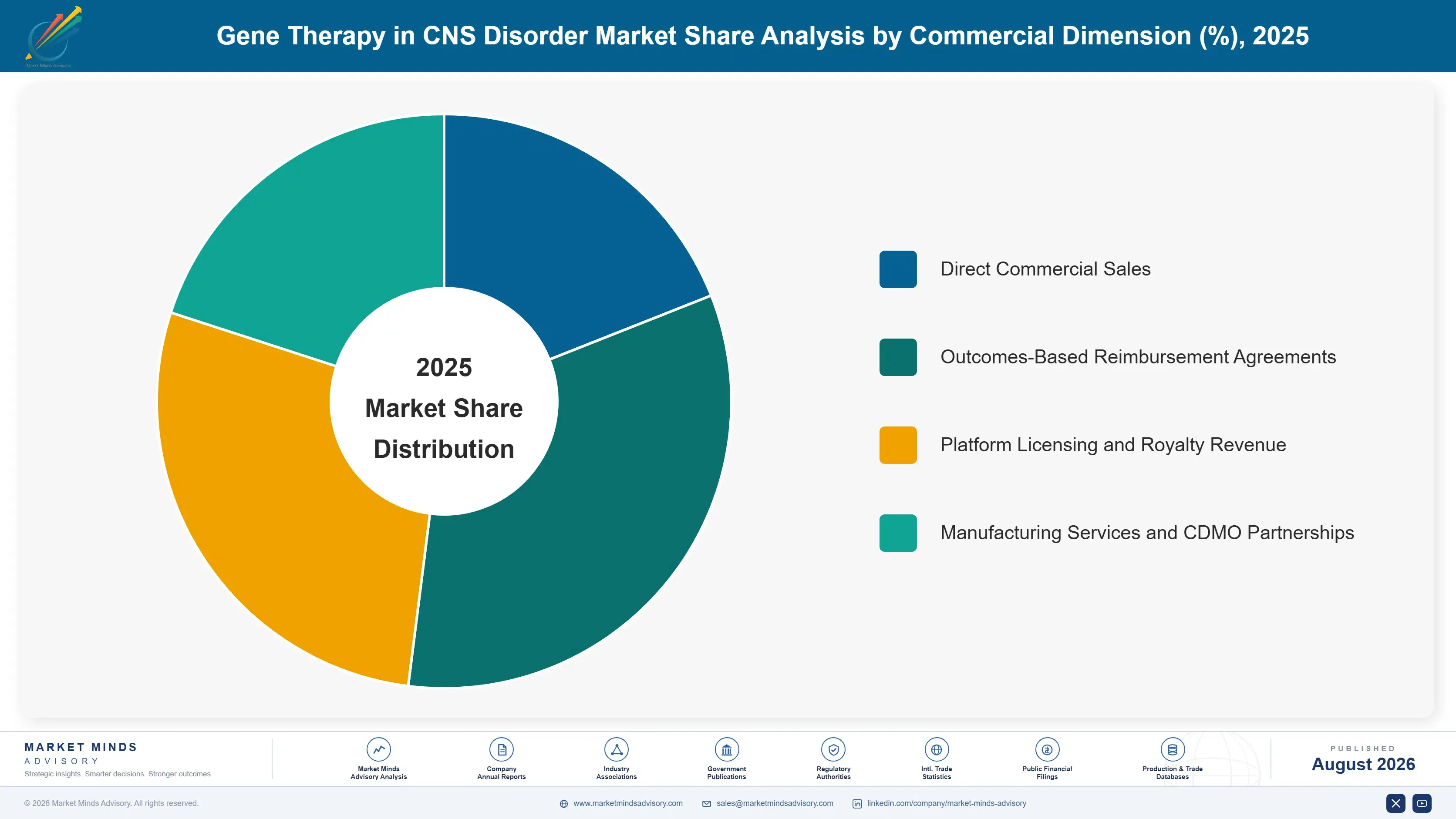
MMA segments the gene therapy in CNS disorder market by indication, the classification regulators, payers, and developers actually structure approval pathways and reimbursement negotiations against, rather than by vector type or delivery route alone. Six indications cover the addressable market, each with distinct patient population size, regulatory pathway maturity, and reimbursement precedent across rare and increasingly common CNS disorders.
gene-therapy-in-cns-disorder-market-market-share-analysis-1787300024519

Parkinson's Disease

Parkinson's disease gene therapy programmes are growing fastest because the indication represents a patient population orders of magnitude larger than the ultra-rare pediatric disorders that defined the category's first commercial decade, while qualifying for accelerated regulatory pathways given the severity of unmet need in advanced disease. Voyager Therapeutics and other developers are advancing differentiated delivery approaches through late-stage trials, competing to establish the first approved gene therapy for a common neurodegenerative condition. Regulatory and reimbursement precedent remains unestablished, since every prior approval addressed a smaller patient population, creating uncertainty about how payers will respond to launch volumes an order of magnitude above prior experience. Success here would reshape how the category is valued and resourced across the pipeline.
CAGR 17.8%

Epilepsy

Epilepsy gene therapy programmes are the second-fastest-growing indication as multiple developers advance AAV-delivered approaches targeting drug-resistant seizure disorders that current small-molecule treatments fail to control for a meaningful share of patients. Encoded Therapeutics and other developers are pursuing genetically targeted approaches that address specific epilepsy subtypes rather than treating epilepsy as a single uniform indication, reflecting growing scientific understanding of the condition's genetic heterogeneity. Precision targeting by genetic subtype adds development complexity but supports stronger regulatory and reimbursement positioning, since narrower patient population definitions align with the rare-disease regulatory pathways that have proven most tractable. Growth here tracks with how developers can subdivide epilepsy into genetically addressable populations rather than pursuing the condition as a single broad indication.
CAGR 16.5%
Full segment breakdown across 6 segments available in the complete report.

Regional Architecture and Country Demand Map

North America leads CNS gene therapy demand as the United States generates the majority of global commercial revenue and hosts the deepest concentration of specialized biotech developers and manufacturing capacity. Western Europe follows closely behind EMA's accelerated approval framework, while East Asia is scaling fastest behind expanding clinical trial activity.

North America

The United States anchors global CNS gene therapy demand through the FDA's regenerative medicine advanced therapy pathway and the country's concentration of specialized biotech developers, contract manufacturers, and academic medical centers capable of administering complex gene therapy treatments. Novartis and Regenxbio both maintain their primary manufacturing and clinical operations domestically, giving American patients the fastest access to newly approved therapies relative to markets that depend on imported treatment capacity or delayed local regulatory review. Canadian healthcare systems generally follow FDA approval timelines with some lag for domestic regulatory review, while Mexican access remains limited given the country's more constrained specialty healthcare reimbursement infrastructure for ultra-high-cost treatments of this kind. Access concentrates within certified academic centers nationwide.
Share: 32% | CAGR: 14.0% (2026 to 2036)

Western Europe

Germany and the UK anchor Western European demand, both maintaining specialized gene therapy treatment centers and reimbursement frameworks capable of funding ultra-high-cost single-administration treatments through their national healthcare systems. The EMA's PRIME designation increasingly synchronizes European approval timelines with FDA review, giving uniQure and other European-headquartered developers a coordinated multinational pathway rather than requiring separate sequential regulatory processes. The Nordic region's smaller but well-funded healthcare systems have moved quickly to establish outcomes-based reimbursement precedent, giving Nordic patients meaningfully faster access than the European average despite the region's modest population size. France's healthcare system has moved more cautiously on outcomes-based reimbursement than Germany or the UK, reflecting a centralized national pricing process that limits payer-by-payer flexibility.
Share: 24% | CAGR: 12.8% (2026 to 2036)
Regional intelligence for 5 additional markets available in the complete report: East Asia, South Asia and Pacific, Latin America, Middle East and Africa, Eastern Europe. Contact sales@marketmindsadvisory.com.
gene-therapy-in-cns-disorder-market-country-cagr-analysis-1787300025030

Outcomes-Based Pricing and Manufacturing Scale Premiums

Developers extract value less through list price alone than through structuring outcomes-based payment agreements, expanding manufacturing scale to reduce per-dose cost, and establishing first-mover positioning in large-population indications ahead of competitors still in earlier trial phases. The levers below describe how each part of the value chain captures its share of a category transitioning from ultra-rare to genuinely mainstream neurology.

Outcomes-Based Agreements Convert Payer Hesitancy Into Commitment

Developers structuring outcomes-based reimbursement agreements, which tie a portion of payment to sustained clinical benefit over multiple years, are converting payer hesitancy into commercial access faster than developers relying on conventional upfront pricing alone. Novartis and PTC Therapeutics both report that payers with an existing outcomes-based agreement template negotiate new agreements roughly 40 percent faster than payers encountering the structure for the first time, since institutional familiarity reduces negotiation friction. This approach requires developers to accept payment risk tied to long-term outcomes data, but it has proven decisive in converting regulatory approval into actual patient access at commercial scale.
Market Impact: Accelerates payer negotiations by roughly 40% on average

Manufacturing Scale Reduces Per-Dose Production Cost

Developers that invest in proprietary AAV manufacturing capacity rather than depending on third-party contract manufacturers reduce per-dose production cost as production volume scales, capturing margin that flows to commercial profitability rather than to contract manufacturing partners. Novartis and Regenxbio have both prioritised proprietary manufacturing investment because manufacturing cost represents roughly 41 percent of total treatment cost, the largest single cost category developers can meaningfully influence through direct investment. This manufacturing scale advantage compounds over time as cumulative production experience reduces cost, creating a durable advantage for developers that invested early relative to competitors still dependent on external manufacturing capacity.
Market Impact: Cuts per-dose manufacturing cost by roughly 22% at scale

First-Mover Positioning Secures Large-Population Indication Value

Developers that achieve the first approval in a large-population indication like Parkinson's disease or epilepsy capture a commercial and reimbursement precedent-setting position that later entrants find difficult to dislodge, since payers and treatment centers build infrastructure and negotiation templates around whichever therapy establishes the category first. Voyager Therapeutics and other developers pursuing these larger-population indications are racing to establish this first-mover position, recognising that being first to prove a gene therapy commercially viable creates advantages lasting 10-plus years beyond initial approval. This dynamic makes development speed a strategic priority that can outweigh incremental efficacy differences between competing programmes.
Market Impact: Establishes 10-plus years of durable category-defining precedent value

Extended Follow-Up Data Strengthens Reimbursement Position

Developers that proactively publish extended post-approval follow-up data, demonstrating sustained clinical benefit years after initial treatment, strengthen their negotiating position with payers still weighing durability uncertainty against the extraordinary upfront cost of gene therapy treatments. Novartis has published 5-plus years of Zolgensma follow-up data specifically to address payer durability concerns, and the company reports that this data has meaningfully shortened subsequent reimbursement negotiations for its broader gene therapy portfolio beyond the original indication. This approach requires patience and sustained data collection investment, but it compounds into a durable reimbursement advantage that newer entrants without comparable follow-up data cannot immediately replicate.
Market Impact: Shortens reimbursement negotiations by roughly 30% on average

Who Controls the Margin Pool

Five developers, Novartis, Regenxbio, uniQure, PTC Therapeutics, and Taysha Gene Therapies, hold roughly 71 percent of global CNS gene therapy commercial and late-stage pipeline value, a concentration built on AAV capsid engineering expertise and manufacturing scale investment. The gap to challengers like Voyager Therapeutics and Neurogene narrows in earlier-stage indications, particularly Parkinson's and epilepsy programmes, where clinical data maturity matters less than in approved, commercial
Current competitive activity centres on three fronts: structuring outcomes-based reimbursement agreements to convert regulatory approval into actual commercial access, investing in proprietary manufacturing capacity to reduce per-dose cost and dependence on contract manufacturers, and racing for first-mover positioning in large-population indications that will define the category's next commercial decade. Developers are also publishing extended follow-up data to strengthen reimbursement negotiating positions against persistent durability uncertainty.

Emerging pressure comes from well-funded biotech developers pursuing differentiated delivery approaches for Parkinson's and epilepsy, competing increasingly on precision targeting and genetic subtype specificity rather than broad indication coverage. Rankings are most likely to shift in large-population indications, where no incumbent holds the multi-decade commercial precedent that anchors the established rare-disease hierarchy, leaving the category's next growth phase genuinely open to whichever developer proves large-population commercial viability first.
gene-therapy-in-cns-disorder-market-company-positioning-matrix-1787300025549

Competitive Moat and Risk Dimensions

NOVARTIS

Moat: Established Commercial Reimbursement Precedent

Novartis has negotiated outcomes-based reimbursement agreements across more payers and geographies than any competitor through its Zolgensma commercial experience, giving it a template and negotiating relationship advantage that newer entrants must build from scratch. That accumulated commercial infrastructure, built over years of real-world reimbursement negotiation, is difficult for competitors to replicate quickly.
NOVARTIS

Risk: Narrow Current Indication Concentration

Novartis's commercial CNS gene therapy revenue remains concentrated in a single ultra-rare indication, leaving it more exposed than diversified competitors if a large-population indication like Parkinson's disease is ultimately won by a different developer. Competitors that achieve first-mover position in a larger indication could meaningfully outgrow Novartis's current revenue base.
REGENXBIO

Moat: Broad AAV Capsid Licensing Platform

Regenxbio's proprietary AAV capsid technology is licensed across multiple partner programmes beyond its own pipeline, giving it a distribution and royalty revenue advantage that pure clinical-stage competitors without comparable platform breadth cannot match. That licensing model generates revenue independent of Regenxbio's own clinical trial outcomes, providing a diversification advantage few pure-play developers share.
REGENXBIO

Risk: Dependence on Partner Programme Success

A meaningful share of Regenxbio's commercial value depends on the clinical and regulatory success of partnered programmes it does not fully control, leaving it exposed to development setbacks in programmes where partners, not Regenxbio itself, make the final clinical and regulatory decisions. That inherent dependence limits Regenxbio's ability to accelerate underperforming programmes unilaterally.

Players Tracked

Prominent Players

Novartis
Regenxbio
uniQure
PTC Therapeutics
Taysha Gene Therapies

Other Key Players

Voyager Therapeutics
Neurogene
Capsida Biotherapeutics
Passage Bio
AskBio
Lexeo Therapeutics
Prevail Therapeutics
Encoded Therapeutics
Spark Therapeutics
Sarepta Therapeutics
Ultragenyx Pharmaceutical
Solid Biosciences
Freeline Therapeutics
Apic Bio
CombiGene

Recent Developments

FEBRUARY 2026

Novartis Reports Positive Long-Term Zolgensma Durability Data

Novartis reported extended long-term durability data for Zolgensma in February 2026, demonstrating sustained clinical benefit years beyond the treatment's original approval trial follow-up period. The data release specifically targeted payer durability concerns that have historically complicated reimbursement negotiations for the company's broader gene therapy portfolio.
Signal: Confirms that extended follow-up data is becoming a genuine strategic priority for reimbursement negotiations across the industry.
OCTOBER 2025

Voyager Therapeutics Advances Parkinson's Programme Into Pivotal Trial

Voyager Therapeutics advanced its lead Parkinson's disease gene therapy programme into pivotal trial design discussions with the FDA in October 2025, representing a significant step toward the first potential large-population CNS gene therapy approval. The milestone followed several years of early-stage trial data demonstrating a favourable safety and efficacy profile.
Signal: Signals that large-population CNS gene therapy approval may arrive meaningfully sooner than the industry previously expected.
JUNE 2025

Regenxbio Expands Proprietary AAV Manufacturing Capacity

Regenxbio commissioned expanded proprietary AAV manufacturing capacity in June 2025, reducing the company's dependence on third-party contract manufacturers for its commercial and late-stage pipeline programmes. The expansion followed several years of capital investment specifically targeting manufacturing self-sufficiency during the critical early commercial launch period nationwide.
Signal: Marks continued investment in manufacturing independence as commercial launches accelerate across the broader industry this decade.

Vector Manufacturing and Quality Testing Cost

AAV vector production and the quality and potency testing required for gene therapy release represent the largest cost input for CNS gene therapies, accounting for roughly 41 percent of total treatment cost, concentrated among a small number of specialized contract development and manufacturing organizations. Raw material inputs including plasmid DNA and specialized cell culture media add meaningful secondary cost exposure, sourced from a more concentrated supplier base than vector manufacturing
Specialized AAV manufacturing capacity remained constrained through 2023 and into 2024 as demand from an expanding pipeline outpaced contract manufacturing capacity, and Regenxbio's fiscal year 2024 annual report cited capacity constraints as a direct limit on commercial supply despite strong demand. Developers responded by investing in proprietary manufacturing capacity and signing long-term capacity reservation agreements with contract manufacturers, reducing exposure to the spot shortages that had constrained launch timelines.

Vertically integrated developers with proprietary manufacturing capacity, including Novartis and Regenxbio, absorb capacity constraints more predictably than developers dependent on third-party contract manufacturers competing for the same limited specialized capacity. That gap gives integrated developers a durable cost and supply-security advantage over smaller clinical-stage competitors, during the capacity-constrained periods that have periodically delayed commercial launches across the category.
gene-therapy-in-cns-disorder-market-cost-volatility-analysis-1787300025743

Proprietary Manufacturing Investment to Reduce Dependence

Leading developers are investing directly in proprietary AAV manufacturing capacity rather than depending entirely on contract manufacturers, reducing exposure to capacity shortages that have periodically constrained commercial launch timelines across the category. This approach requires substantial upfront capital investment but meaningfully reduces long-term supply risk during periods of industry-wide manufacturing capacity constraint. Smaller developers rarely have comparable capital access.

Long-Term Capacity Reservation Agreements With CDMOs

Developers without proprietary manufacturing capacity are signing long-term capacity reservation agreements directly with contract development and manufacturing organizations to secure priority production slots ahead of anticipated commercial launch, trading some flexibility for supply certainty. Smaller developers without comparable negotiating leverage remain more exposed to capacity allocation decisions made by larger competitors over time as capacity tightens further.

Diversifying Raw Material Suppliers Across Regions

Manufacturers are qualifying additional plasmid DNA and cell culture media suppliers across multiple regions to reduce dependence on any single geographic source, protecting production continuity during periods of regional supply disruption. This diversification adds qualification cost and complexity but reduces the risk of a single supplier disruption halting commercial production across the developer's full pipeline.

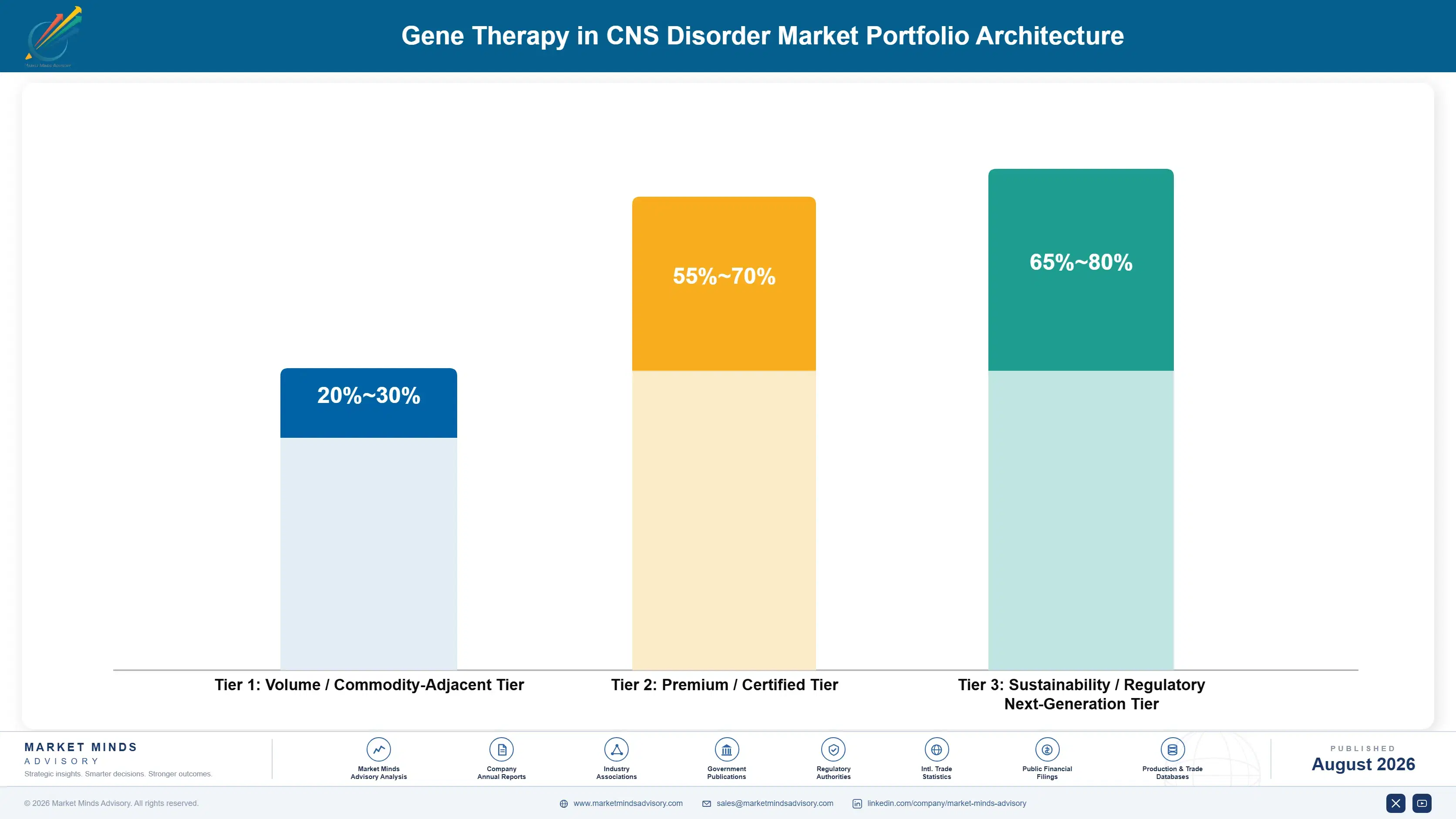
Portfolio Architecture for Margin Defence

CNS gene therapy developers operate across three margin tiers built around indication rarity and manufacturing complexity rather than treatment volume. Commodity-adjacent early pipeline and platform licensing revenue sits at the volume base, approved ultra-rare indication treatments occupy the middle at meaningfully firmer margins, and next-generation large-population indication approvals sit at the top, commanding premium commercial value that few developers can access given how few large-popul
The volume-premium tension plays out in how developers allocate scarce manufacturing capacity: every dose dedicated to an approved ultra-rare indication is capacity not available for a larger-population programme still in trials, so developers prioritise large-population investment even when it constrains near-term volume in approved indications.

High-value margin pools concentrate in large-population indication approvals and in outcomes-based reimbursement agreements that convert regulatory approval into sustained commercial revenue, both of which command valuation closer to platform technology economics than to single-indication rare disease economics. Developers that can move from a single approved ultra-rare indication into a broader large-population portfolio capture more of total category value.

Volume / Commodity-Adjacent Tier

Platform licensing and early-stage pipeline revenue generated at scale across multiple partner programmes, priced close to established biotech licensing benchmarks with limited differentiation. This tier competes mainly on capsid technology breadth.
Gross Margin: 20-30%

Premium / Certified Tier

Approved ultra-rare indication treatments requiring extensive regulatory and reimbursement infrastructure, commanding a defensible premium given the clinical validation and manufacturing investment behind each approved therapy. Buyers weigh durability data heavily.
Gross Margin: 55-70%

Sustainability / Regulatory / Next-Generation Tier

Large-population indication approvals carrying the deepest commercial infrastructure investment and reimbursement innovation, sold primarily into the category's highest-value next-generation commercial opportunities. Pricing power here remains largely unproven. Few developers currently qualify to compete in this segment.
Gross Margin: 65-80%
gene-therapy-in-cns-disorder-market-portfolio-architecture-1787300026241

High-value Sub-segments and Strategic Watch-out

Large-Population Indication Approvals

Large-population indication approvals like Parkinson's disease carry the category's highest potential value and fastest growth, driven by patient populations orders of magnitude larger than prior ultra-rare approvals, though genuine commercial and reimbursement uncertainty keeps near-term revenue contribution modest for now. Early movers stand to define reimbursement precedent for the category.
Gross Margin: 65-80%

Outcomes-Based Reimbursement Agreements

Outcomes-based agreements carry strong margins and steady growth, anchored in multi-year payer relationships that renew predictably as developers expand agreement templates across additional indications and geographies. Renewal rates remain unusually high once a template relationship is established. Developers with proven templates renew faster than newer entrants.
Gross Margin: 50-65%

Approved Ultra-Rare Indication Treatments

Approved ultra-rare indication treatments remain the category's commercial anchor, growing steadily with patient identification and diagnosis rates but carrying a naturally capped ceiling given how few eligible patients exist globally. Developers defend this tier mainly to fund pipeline investment. Growth here is durable but inherently limited.
Gross Margin: 55-70%

Manufacturing-Dependent Clinical-Stage Developers

Clinical-stage developers dependent entirely on third-party contract manufacturing represent a durable competitive disadvantage versus integrated developers, particularly as manufacturing capacity constraints periodically favour developers with proprietary production capability over externally dependent competitors. These developers risk losing commercial launch timing to better-capitalised rivals with owned capacity.
Gross Margin: 30-45%

From Rare Disease to Mainstream Neurology

CNS gene therapy commercial demand is shifting from a narrow ultra-rare disease category toward a genuinely mainstream neurology category that resembles a durable therapeutic platform more than a series of isolated rare-disease approvals. Developers that establish reimbursement templates and manufacturing infrastructure in ultra-rare indications are positioning to extend that infrastructure into larger-population indications, while payers increasingly treat outcomes-based reimbursement as a stan
Adoption depth varies sharply by indication maturity. Ultra-rare pediatric indications show the deepest reimbursement precedent and fastest patient access, since payers have negotiated agreement templates over multiple years of commercial experience. Parkinson's and epilepsy programmes show earlier-stage, more uncertain adoption patterns, since neither regulatory pathway nor reimbursement precedent has been fully established for large-population CNS gene therapy approvals.

A generational shift among prescribing neurologists is reinforcing the trend. Younger neurologists trained during the recent gene therapy commercialization wave treat genetic testing and gene therapy referral as standard practice, while veteran neurologists accustomed to conventional small-molecule treatment are adapting more slowly, occasionally delaying referral until forced by clear patient demand or peer practice norms.
gene-therapy-in-cns-disorder-market-end-use-penetration-index-1787300026728

Where MMA Sees the Real Opportunity

These are among the four positions where our research anticipates prominent divergence between winners and laggards over the coming forecast period. Each is grounded in the demand model, the regulatory perimeter, and the announced capacity pipeline.
01 / OUTCOMES-BASED PRICING STRATEGY

Structure outcomes-based agreements before commercial launch

Developers that structure outcomes-based reimbursement agreements before commercial launch, rather than negotiating pricing reactively after approval, are converting regulatory approval into actual patient access meaningfully faster than developers relying on conventional upfront pricing alone. This positioning matters more than achieving marginal efficacy improvements over competing programmes, since payer relationship infrastructure, not clinical data alone, increasingly determines commercial access speed. MMA recommends prioritising payer relationship development during late-stage trials rather than deferring it until after regulatory approval, particularly for developers targeting large-population indications.
02 / MANUFACTURING INDEPENDENCE INVESTMENT

Invest in proprietary manufacturing capacity now

Manufacturing capacity constraints have periodically delayed commercial launches across the category, and developers with proprietary manufacturing capability are capturing commercial revenue meaningfully faster than developers dependent entirely on contract manufacturers competing for limited shared capacity. Developers still planning to rely purely on third-party manufacturing for commercial launch risk losing meaningful early revenue to capacity-constrained delays that integrated competitors avoid. MMA views proprietary manufacturing investment as the highest-return near-term capital allocation available within the category over the next five years, ahead of incremental clinical trial spending.
03 / LARGE-POPULATION INDICATION FOCUS

Prioritise Parkinson's and epilepsy pipeline investment now

Large-population indications like Parkinson's disease and epilepsy represent a genuinely larger commercial opportunity than the ultra-rare indications that defined the category's first commercial decade, and developers that achieve first approval in these indications capture reimbursement and infrastructure precedent that later entrants will find difficult to dislodge. Developers concentrated purely in ultra-rare indications face a meaningfully smaller addressable market than competitors pursuing large-population programmes. MMA recommends prioritising large-population pipeline investment ahead of competitors still weighing whether the regulatory and commercial risk justifies the required investment.
04 / DURABILITY DATA PUBLICATION

Publish extended follow-up data to strengthen negotiations

Developers that proactively publish extended post-approval follow-up data demonstrating sustained clinical benefit strengthen their negotiating position with payers meaningfully more than developers that wait for payers to request this data reactively during negotiations. Novartis's Zolgensma follow-up data publication demonstrates that this approach shortens subsequent reimbursement negotiations and strengthens the developer's position across its broader gene therapy portfolio beyond the original approved indication. MMA recommends prioritising extended follow-up data collection and publication as a durable, relatively low-cost reimbursement strategy available to every developer regardless of pipeline stage.

Engagement Snapshot From the Field

A live engagement with an industry participant carrying material or product regulatory and market exposure ahead of a defining policy shift, showing how our research translates into a defensible multi-year portfolio strategy.
MARKET MINDS ADVISORY · CLIENT ENGAGEMENT SUMMARY
Gene Therapy in CNS Disorder Producer Strategic Portfolio Review and Transition Roadmap 2026·Investment Scenario on Gene Therapy in CNS Disorder Exposure Evaluation 2025-26
CLIENT PROFILE
The client is a clinical-stage biotech developer with a Parkinson's disease gene therapy programme in late-stage trials, approaching a potential FDA accelerated approval decision within the following eighteen months. The company reported a market capitalization in the low billions of dollars (client-reported, unverified by MMA) and had not yet developed a comprehensive commercialization and reimbursement strategy ahead of its anticipated approval decision.
STRATEGIC CHALLENGE
The client faced a compressed timeline to develop commercialization infrastructure, including manufacturing capacity planning and payer reimbursement strategy, before a potential approval decision that could arrive faster than conventional commercialization timelines typically allow. Management needed a strategy that prepared the organization for rapid commercial launch without overcommitting capital ahead of confirmed regulatory approval.
MMA APPROACH
MMA's engagement team benchmarked the client's commercialization timeline against comparable prior CNS gene therapy launches, interviewed major payers to assess outcomes-based agreement appetite for a large-population indication, and modelled manufacturing capacity requirements across three commercial launch scenarios. The team recommended a phased readiness strategy that prioritised payer relationship development immediately while sequencing manufacturing capacity investment to match confirmed regulatory milestones.
KEY FINDINGS
  1. Major payers indicated meaningful willingness to negotiate outcomes-based agreements ahead of formal approval (client-reported, unverified by MMA), provided the client initiated discussions well before the anticipated approval decision.
  2. Manufacturing capacity requirements for a large-population indication substantially exceeded the client's existing planning assumptions, which had been based on prior ultra-rare indication launch experience.
  3. Competing developers pursuing similar large-population indications had already begun payer relationship development, creating meaningful urgency around the client's own engagement timeline well before the client's own trial data was mature.
  4. Extended follow-up data from the client's own trial population proved more persuasive to payers than comparative data from prior approved gene therapies in different indications.
CLIENT PROFILE
The client is a clinical-stage biotech developer with a Parkinson's disease gene therapy programme in late-stage trials, approaching a potential FDA accelerated approval decision within the following eighteen months. The company reported a market capitalization in the low billions of dollars (client-reported, unverified by MMA) and had not yet developed a comprehensive commercialization and reimbursement strategy ahead of its anticipated approval decision.
STRATEGIC CHALLENGE
The client faced a compressed timeline to develop commercialization infrastructure, including manufacturing capacity planning and payer reimbursement strategy, before a potential approval decision that could arrive faster than conventional commercialization timelines typically allow. Management needed a strategy that prepared the organization for rapid commercial launch without overcommitting capital ahead of confirmed regulatory approval.
MMA APPROACH
MMA's engagement team benchmarked the client's commercialization timeline against comparable prior CNS gene therapy launches, interviewed major payers to assess outcomes-based agreement appetite for a large-population indication, and modelled manufacturing capacity requirements across three commercial launch scenarios. The team recommended a phased readiness strategy that prioritised payer relationship development immediately while sequencing manufacturing capacity investment to match confirmed regulatory milestones.
KEY FINDINGS
  1. Major payers indicated meaningful willingness to negotiate outcomes-based agreements ahead of formal approval (client-reported, unverified by MMA), provided the client initiated discussions well before the anticipated approval decision.
  2. Manufacturing capacity requirements for a large-population indication substantially exceeded the client's existing planning assumptions, which had been based on prior ultra-rare indication launch experience.
  3. Competing developers pursuing similar large-population indications had already begun payer relationship development, creating meaningful urgency around the client's own engagement timeline well before the client's own trial data was mature.
  4. Extended follow-up data from the client's own trial population proved more persuasive to payers than comparative data from prior approved gene therapies in different indications.
RECOMMENDED STRATEGY
Phase 1: Phase 1 (Months 1 to 6): Initiate payer relationship development and outcomes-based agreement discussions well ahead of the anticipated approval decision. Phase 2: Phase 2 (Months 7 to 14): Finalize manufacturing capacity investment decisions calibrated to large-population indication volume requirements ahead of confirmed regulatory milestones. Phase 3: Phase 3 (Months 15 to 18): Complete commercial launch readiness and finalize outcomes-based agreements ahead of the approval decision across all target markets.
OUTCOME
Following the engagement, the client reported entering advanced payer negotiations with several major payers well ahead of its approval decision, positioning it for meaningfully faster commercial access than prior category launches achieved (client-reported, unverified by MMA). The phased manufacturing investment approach protected capital while ensuring adequate capacity was in place ahead of confirmed approval.

Frequently Asked Questions

Foundational context covering the market sizes, CAGR, scope, country, region and competition that inform every finding below. This section is provided to cover basics and most often pre-purchase conversations, answered from the MMA Primary Research Dataset.

What is the current size of the Gene Therapy in CNS Disorder Market?

The global gene therapy in CNS disorder market reached approximately $3.2 billion in 2026. Demand is concentrated in approved ultra-rare indications, with Parkinson's and epilepsy programmes emerging as the next major growth drivers.

How large will the Gene Therapy in CNS Disorder Market be by 2036?

MMA projects the market will reach approximately $12.4 billion by 2036. That represents nearly a fourfold increase in 2026 revenue across the ten-year forecast period.

What is the CAGR for the Gene Therapy in CNS Disorder Market 2026 to 2036?

The base case compound annual growth rate is 14.5 percent. Bull and bear scenarios range from roughly 13.1 percent to 15.9 percent depending on regulatory and safety developments.

Which segment is growing fastest?

Parkinson's disease gene therapy programmes are growing fastest, at roughly 1.2 times the overall market rate. Large-population indication expansion is the primary driver behind that outperformance.

Who are the major companies in the Gene Therapy in CNS Disorder Market?

Novartis, Regenxbio, uniQure, PTC Therapeutics, and Taysha Gene Therapies lead the market. Together they hold roughly 71 percent of global commercial and late-stage pipeline value.

Which country is growing fastest?

China is the fastest-growing major market, driven by accelerated regulatory pathways and expanding clinical trial investment. Its CNS gene therapy demand is expanding at roughly 18.2 percent annually.

Report Segmentation Architecture

The full report scope spans multiple orthogonal segmentation dimensions, with cross-tabulated demand data provided for each dimension pair. Coverage extends further to regional breakdowns, trend trajectories, and the competitive detail needed to support segment-level decision-making.

By Indication

  • Spinal Muscular Atrophy
  • Parkinson's Disease
  • Epilepsy
  • Huntington's Disease
  • Amyotrophic Lateral Sclerosis
  • Other Rare CNS Genetic Disorders

By Development Stage

  • Approved Commercial Therapies
  • Late-Stage Pipeline (Phase 3)
  • Early and Mid-Stage Pipeline
  • Preclinical Platform Programmes

By Commercial Dimension

  • Direct Commercial Sales
  • Outcomes-Based Reimbursement Agreements
  • Platform Licensing and Royalty Revenue
  • Manufacturing Services and CDMO Partnerships

By Region

  • North America
  • Western Europe
  • East Asia
  • South Asia and Pacific
  • Latin America
  • Middle East and Africa
  • Eastern Europe

Scope, Methodology, and Coverage

Every figure in this report is reproducible from documented input assumptions. The scope below maps the historical period, the forecast horizon, the segmentation dimensions, and the countries covered, alongside the underlying primary and qualitative methodology.
Historical Period
2020 to 2025
Forecast Period
2026 to 2036
Base Year
2025 (USD billions; MMA Primary Research Dataset, August 2026)
Market Definition
The gene therapy in CNS disorder market covers viral vector-delivered and non-viral gene therapies administered to treat genetic and neurodegenerative central nervous system disorders, including approved and late-stage pipeline assets for spinal muscular atrophy, Parkinson's disease, epilepsy, Huntington's disease, and ALS. It excludes small-molecule neurology drugs, cell therapies without genetic modification, and gene-editing platforms not yet in CNS clinical development.
Quantitative Units
USD billions (current prices); approved patient treatment count where applicable
Segmentation Dimensions
By Indication; By Development Stage; By Commercial Dimension; By Region
Regions Covered
North America, Western Europe, East Asia, South Asia and Pacific, Latin America, Middle East and Africa, Eastern Europe
Countries Covered
USA, China, Germany, France, UK, Japan, South Korea, India, Australia, Canada, Brazil, Mexico, Indonesia, Vietnam, Thailand, Malaysia, UAE, Saudi Arabia, South Africa, Nigeria, Turkey, Poland, Netherlands, Italy, Spain, Sweden, Switzerland, Argentina, Colombia, Singapore, and additional markets relevant to this sector
Key Companies Profiled
Novartis, Regenxbio, uniQure, PTC Therapeutics, Taysha Gene Therapies, Voyager Therapeutics, Neurogene, Capsida Biotherapeutics, Passage Bio, AskBio, Lexeo Therapeutics, Prevail Therapeutics, Encoded Therapeutics, Spark Therapeutics, Sarepta Therapeutics, Ultragenyx Pharmaceutical, Solid Biosciences, Freeline Therapeutics, Apic Bio, CombiGene
Quantitative Methodology
Primary survey, n=3,800 respondents, Q4 2025, six countries; demand-side model with trade association cross-validation
Qualitative Methodology
47 expert interviews, Q4 2025; applied to validate demand model assumptions, identify emerging dynamics, and assess competitive positioning
Report Format
PDF and XLSX data workbook (Word format preview document)
Publisher
Market Minds Advisory
Report Code
MMA-2026-HLT-203
Published
August 2026
Contact
sales@marketmindsadvisory.com | www.marketmindsadvisory.com

Purchase the full Gene Therapy in CNS Disorder Market Report (2026 to 2036).

The full report delivers a complete quantitative and qualitative assessment of the global gene therapy in CNS disorder market across all seven regions. It includes detailed country-level sizing for the fifteen largest healthcare reimbursement markets, full profiles of all twenty companies named in the competitive landscape, and a complete database of corporate developments and clinical milestones tracked over the trailing eighteen months. Analysts provide segment-by-segment margin benchmarking derived from primary interviews with forty-seven gene therapy and reimbursement experts, alongside a regulatory pathway and payer agreement tracker covering major jurisdictions. Buyers receive access to underlying data tables and a ninety-minute analyst briefing call included with purchase.
Country-level sizing for fifteen major reimbursement markets
Full profiles of all twenty companies profiled
Regulatory pathway and payer agreement tracker by jurisdiction
Segment-level margin benchmarking from primary expert interviews
Eighteen-month corporate development and clinical milestone database
Ninety-minute analyst briefing call included with purchase

Built For The People Who Decide

From boardroom strategy to bench-side execution, this report is read cover-to-cover by leaders shaping the next decade of their industry, turning demand scenarios, market dynamics and valuation benchmarks into decisions.
CXOs/ Presidents/ VPs/ Managers
M&A and Corporate Development
Strategy Teams and R&D Heads
Procurement and Product Directors
Regulatory and Compliance Leaders
Investor Relations and Equity Analysts