Market Minds Advisory
Galactoarabinan Market

Galactoarabinan Market: Sawmill-Dependent Supply, Claim Substantiation Limits, and Derivatives Doing the Differentiating

Larch is felled for timber, and the polysaccharide comes out afterwards. Supply therefore answers to sawmill activity rather than to ingredient demand, which nobody in personal care formulation seems to expect.

Lead Analyst

Bilal Shaikh

Published

September 2026

Make Smarter Decisions with Customized Research Insights

Request a free sample report and evaluate market opportunities, growth trends, and competitive dynamics relevant to your business needs.

2025 MARKET VALUE$0.1BMarket Size 2025
2036 FORECAST VALUE$0.2BBase Case , 2026 to 2036
CAGR 2026 TO 20368.8 %Bull 10.0% / Bear 7.6%
INCREMENTAL OPPORTUNITY$0.1BNet 10- year value creation
EXPANSION MULTIPLE2.32x2036 value over 2026 base
Strategic Levers
M&A Pipeline
Regional Outlook
Country Rankings
Competitive Intelligence
Segmental Deep-dive
Call-Us : 91 93563 13602

Executive Snapshot and Market Trajectory

Galactoarabinan is recovered from larch that was cut down for timber, which means the supply of it follows forestry and sawmill activity rather than anything a formulator does. Extractors cannot simply make more when demand rises. That single fact governs almost everything else in this small market.
Commercial advantage belongs to suppliers offering modified fractions rather than the native polysaccharide, because a formulator choosing between natural film formers is comparing sensory profiles rather than any property nothing else delivers. Hydrolysed and modified derivatives grow fastest at 13.8%, roughly 1.57 times the market. North America holds the largest position at 30% of value, on both Western larch extraction capacity and the supplement market consuming most of it.
Concentration is very high at roughly 68% for the top five, because larch extraction requires forestry access and processing capability that very few operations hold. Cosmetics take 44% of volume at inclusion rates near 1.8%. Health claim substantiation limits how far the nutraceutical story can be told in several major markets. The same ingredient carries a completely different commercial proposition depending on jurisdiction. Suppliers therefore have to sell it differently in each one.
Market Definition
The market comprises galactoarabinan and arabinogalactan polysaccharide extracted from larch and supplied as a functional ingredient, covering cosmetic grade, nutraceutical and supplement grade, food ingredient grade, pharmaceutical excipient grade, industrial and technical grade, and hydrolysed or modified derivatives. Value is measured at ingredient supplier level. Larch timber and wood products, other plant gums and hydrocolloids, synthetic film formers, finished cosmetic and supplement products, and contract formulation services fall outside scope.
Base Year Value
$0.1B in 2025 (MMA Primary Research Dataset, August 2026)
Forecast Period
2026 to 2036, eleven discrete annual values
CAGR
8.8% base case. Bull 10.0%. Bear 7.6%.
Fastest Growth Segment
Hydrolysed and Modified Derivatives: 13.8% CAGR
Fastest Growth Country
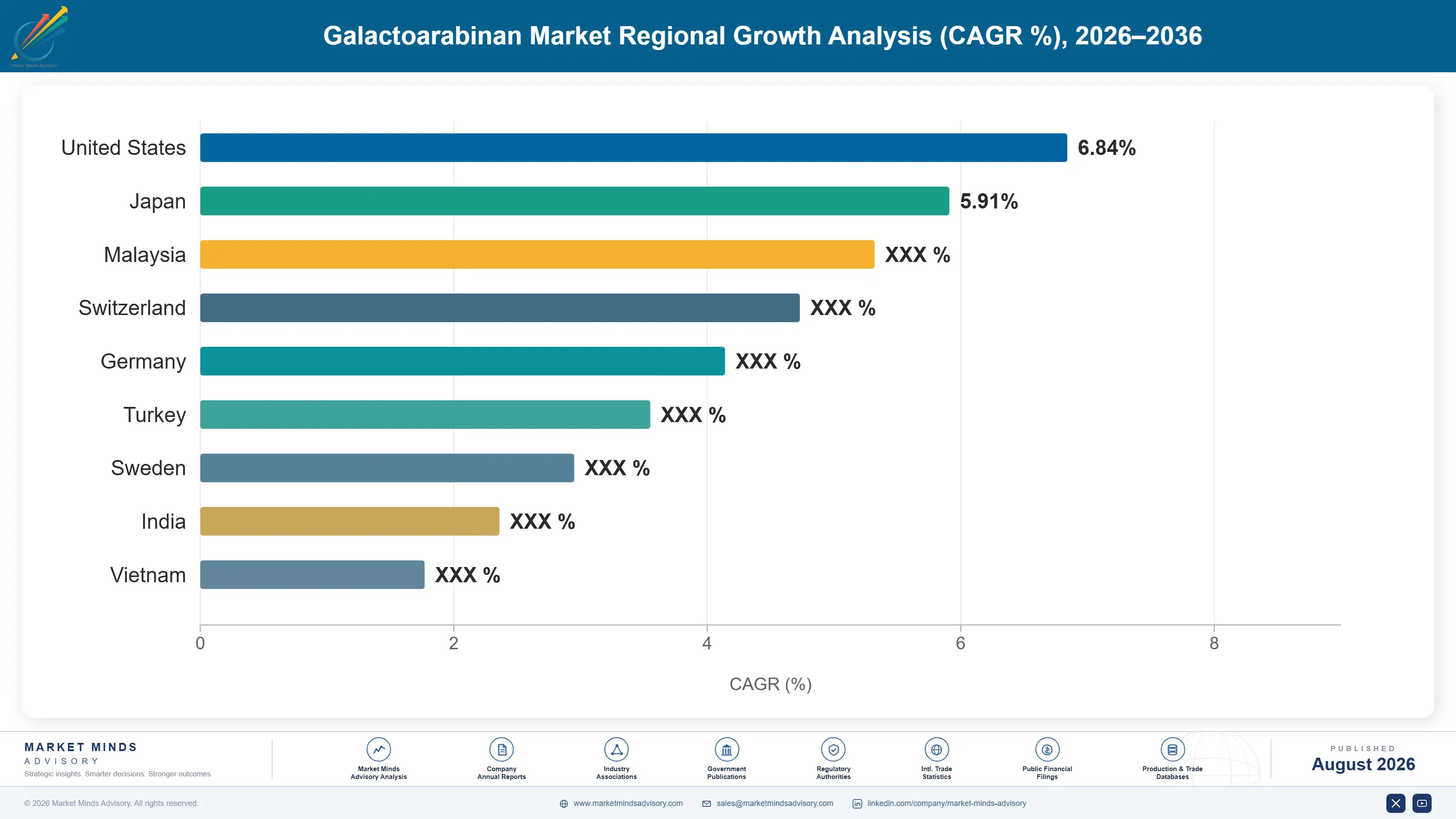
South Korea: 12.4% CAGR
Fastest Growth Region
South Asia and Pacific: 11.0% CAGR
Largest Region
North America: 30% of 2025 global value
Market Leaders
Ingredion, Ametis JSC, Nikko Chemicals, Arxada, and Lubrizol lead on galactoarabinan ingredient supply revenue. Source: company annual reports and MMA Analysis, July 2026.
Primary Survey
n=3,800 procurement and R&D decision-makers, Q4 2025, six countries
Methodology
Demand-side build-up, cross-validated against public data, 47 expert interviews

Galactoarabinan Market Forecast Scenarios

galactoarabinan-market-trends-size-forecast-scenario-1787551482532
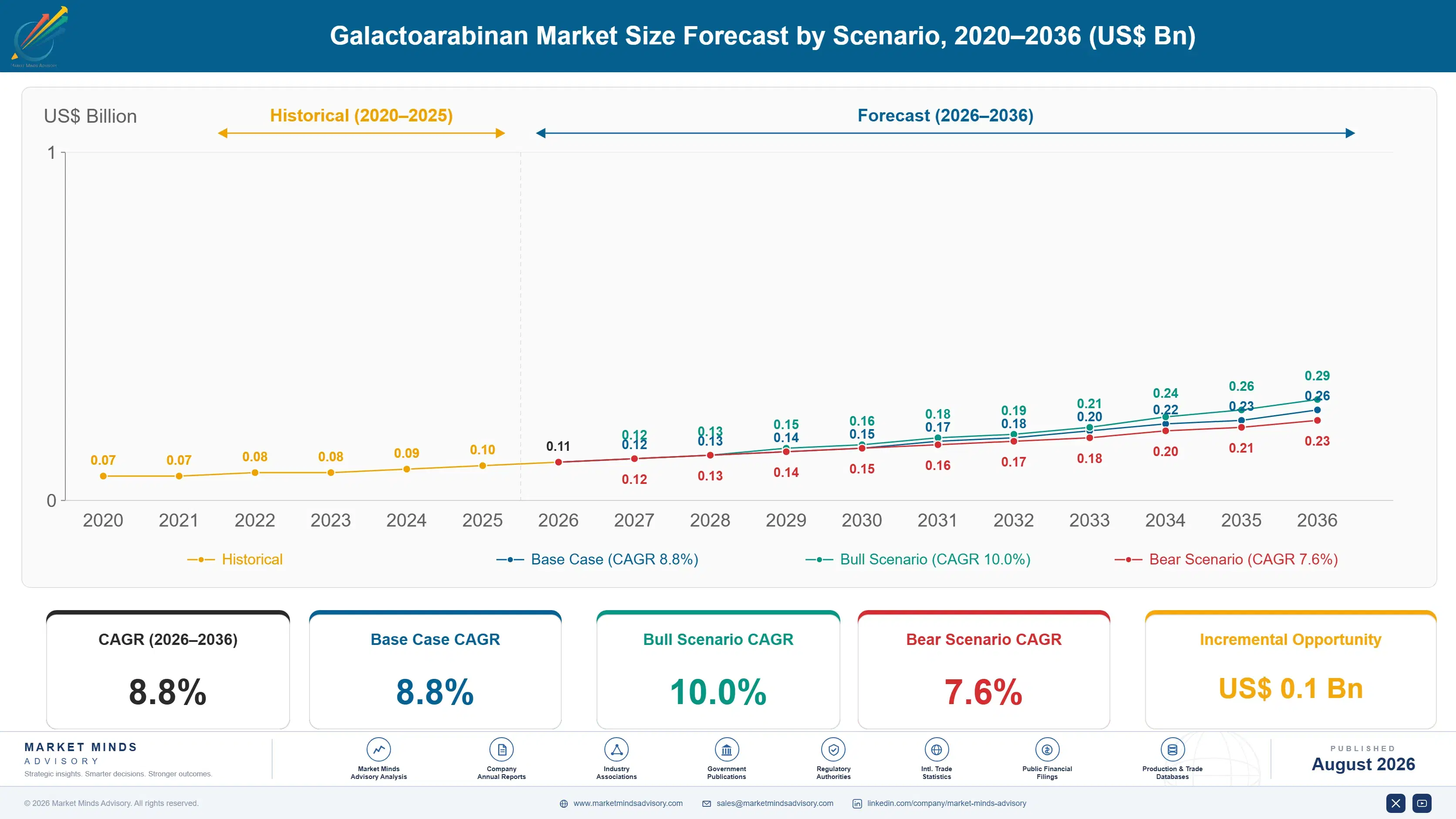
Between 2020 and 2025 the supply picture changed more than the demand picture did. Trade restrictions after 2022 complicated Siberian larch material that had served a meaningful share of Western formulators, tightening a supply base already limited by forestry access. Clean beauty positioning pulled cosmetic demand upward throughout. The 7.4% historical rate reflects genuine demand growth constrained periodically by material that simply was not available at any price.
The 8.8% base case rests on three mechanisms. Personal care formulators continue replacing synthetic film formers with botanical alternatives, and galactoarabinan delivers a sensory profile that formulators specifically request. Modified fractions with different molecular weight and solubility open applications native material never served. And pharmaceutical excipient qualification, though slow, creates positions that hold for the life of a drug product once established. None of the three depends on feedstock supply improving at all.
The 10.0% bull case assumes derivative development opens applications faster than expected while supply access improves. The 7.6% bear case reflects forestry activity constraining feedstock further, health claim restrictions limiting the nutraceutical narrative in Europe, and cheaper botanical film formers taking cosmetic share on price where the sensory difference is not decisive to the formulator.

Supply Set by Somebody Else's Sawmill

The supply mechanism is the first thing to understand and it explains most of what happens commercially. Larch is harvested for timber, galactoarabinan is recovered from the wood at yields near 12%, and extractors therefore depend on forestry and sawmill activity they have no influence over. A formulator placing a larger order does not cause more larch to be felled. Availability constrains this market far more often than demand does.
TOP-FIVE CONCENTRATION68%Combined share of ingredient supply held by leading extractors
AVERAGE REALISED PRICEUSD 34 per kilogramBlended across cosmetic, nutraceutical, and pharmaceutical grade material
LARCH EXTRACTION YIELD12%Portion of dry wood recovered as usable polysaccharide
COSMETIC APPLICATION SHARE44%Portion of volume entering personal care and cosmetic formulation
FORMULATION INCLUSION RATE1.8%Typical addition level in a finished personal care product
QUALIFICATION CYCLE LENGTH26 monthsTypical approval period for pharmaceutical excipient grade material
Cosmetics take 44% of volume and buy on sensory profile rather than on function. Galactoarabinan forms a film, holds moisture, and delivers a particular slip and lack of tack that formulators describe in surprisingly consistent language. Cheaper botanical alternatives exist and several perform adequately, so the choice usually turns on how a finished product feels rather than on any property that only this material provides.
The nutraceutical story is genuinely constrained by what can be said about it. Published research supports prebiotic and immune-related activity, and health claim regimes in Europe in particular permit very little of that to appear on a label. Suppliers therefore sell into markets where claim rules differ enormously, and the same ingredient carries a completely different commercial proposition depending on jurisdiction.
"Formulators talk about galactoarabinan the way they talk about a good silicone replacement, which is a compliment and also the whole problem. Nobody has to use it. They use it because of how the finished cream feels, and that is a preference rather than a specification."
Practice Director, Botanical Ingredients and Personal Care Chemistry · MMA Specialty Botanical Ingredients Practice · August 2026

Market Trends

Modified Fractions Open Applications Native Material Cannot Serve

Hydrolysing the native polysaccharide into lower molecular weight fractions changes solubility, viscosity contribution, and behaviour in emulsion systems, which opens formulations where the intact molecule was unusable. Suppliers offering a range of molecular weights rather than one material give formulators something to specify against rather than a commodity to price. Derivatives grow at 13.8%, the fastest here, and the processing capability required is genuinely limited. This is where differentiation in this market has moved over the past five years. Characterisation and batch consistency of the fraction distribution are considerably harder than for native material.
Market Impact: Cosmetics take 44% of volume
Trade Restrictions Reshaped Access to Siberian Material

Siberian larch supplied a meaningful share of the material reaching Western formulators, and restrictions after 2022 complicated those routes considerably for buyers who had treated availability as settled. Western larch capacity in the Pacific Northwest could not simply expand, since extraction depends on forestry activity nobody controls. Formulators who had single-sourced discovered how narrow the supply base actually is. Qualification of alternative material took months in applications where sensory consistency matters to the finished product. Buyers who had treated this as a routine ingredient purchase learned that it is closer to a commodity with a single harvest window.
Market Impact: South Korea grows fastest at 12.4%

Market Opportunities and Growth Drivers

Botanical Substitution Continues Across Personal Care Formulation

Formulators replacing synthetic film formers and silicone alternatives with plant-derived materials keep specifying galactoarabinan for the slip and non-tacky finish it contributes at inclusion rates near 1.8%. Clean beauty positioning drives the requirement and brand owners rather than formulators usually set it. Cosmetics already take 44% of volume and the substitution has considerable distance to run in mass market products where cost sensitivity has slowed adoption. Sensory testing rather than any technical specification decides most of these decisions. Mass market products remain the largest untapped volume, held back by cost sensitivity rather than by any formulation difficulty.
Market Impact: Recovery limited to 12% yield

Korean and Japanese Formulation Innovation Pulls Premium Demand

Personal care development in South Korea and Japan moves faster than anywhere else and specifies botanical actives at inclusion levels that Western mass market products rarely reach. South Korea grows fastest of any country at 12.4% for exactly that reason. Product lifecycles measured in months rather than years mean ingredient trials happen continuously rather than at fixed development gates. Suppliers with local technical support and rapid sampling capability capture that work; those shipping from another continent generally do not. Regional distributors rarely bridge that gap, because the technical conversation happens in a laboratory rather than in a sales meeting.
Market Impact: Claims restricted across 21% of demand

Market Restraints and Challenges

Feedstock Availability Follows Forestry Rather Than Demand

Larch is felled for timber and the polysaccharide is recovered afterwards at roughly 12% yield, which means extractors cannot increase output when ingredient demand rises. The root cause is that this is a by-product of an unrelated industry operating on its own cycle. Suppliers mitigate through multi-year forestry and sawmill supply agreements, through inventory positions carried across seasons, and by improving extraction yield from material already secured rather than attempting to secure more of it. A formulator placing a larger order does not cause a single additional larch to be felled anywhere, which surprises buyers repeatedly.
Market Impact: Derivatives grow at 13.8% annually

Health Claim Rules Limit the Nutraceutical Proposition

Published research supports prebiotic and immune-related activity, and European claim regimes permit almost none of it to reach a product label, which strips the commercial story of most of its content in that market. The root cause is regulatory rather than scientific. Suppliers mitigate by concentrating nutraceutical effort where claim rules are more permissive, by supporting structure and function positioning that stays within the rules, and by developing the cosmetic and excipient applications that carry no claim burden at all. The science and the label are two entirely separate commercial questions here.
Market Impact: Extraction yields only 12% recovery
3 additional market trends, 4 additional growth drivers, and 2 additional restraints and challenges are covered in the full report. Contact sales@marketmindsadvisory.com to access the complete intelligence.

Segment CAGR and Growth Architecture

Segmentation follows product grade, because purity, molecular weight distribution, and documentation requirements determine which applications a material can enter and what it realises per kilogram. Six grades cover commercial supply, and the divide between native polysaccharide sold on sensory preference and modified fractions sold on specified performance matters more than any application boundary between them.
galactoarabinan-market-trends-market-share-analysis-1787551483057

Hydrolysed and Modified Derivatives

The fastest grade at 13.8%, roughly 1.57 times the market, and where differentiation in this ingredient has genuinely moved. Controlled hydrolysis produces lower molecular weight fractions with different solubility, viscosity contribution, and emulsion behaviour, which opens formulations the intact polysaccharide could not enter at all. Suppliers offering a range of molecular weights give formulators something specifiable rather than a commodity to price against alternatives. Processing capability is limited to relatively few operations. Characterisation and batch-to-batch consistency of the fraction distribution are considerably harder than for the native material. Formulators who previously described this ingredient in sensory language can now write a molecular weight range into a specification, which changes the commercial relationship entirely.
CAGR 13.8%

Pharmaceutical Excipient Grade

Second fastest at 11.6%, with the smallest volume and the highest value per kilogram in this market by a wide margin. Qualification runs around 26 months and the material then appears in a drug master file, which locks the supplier in for the commercial life of the product and makes substitution a regulatory exercise rather than a purchasing decision. Documentation, impurity profiling, and manufacturing consistency requirements exceed anything cosmetic or food grades demand. Very few extractors have built the quality systems required, which is why the position holds once it is properly established. Volumes are tiny against cosmetic grade, and the revenue per kilogram makes the qualification investment worth pursuing regardless of tonnage.
CAGR 11.6%
Full segment breakdown across 6 segments available in the complete report.

Regional Architecture and Country Demand Map

Regional shares follow larch extraction capacity and the personal care and supplement formulation that consumes the output. All seven regions sit inside the standard bands, with North America leading on both supply access and application volume simultaneously. Supply access rather than population decides most of this map.

North America

Western larch in the Pacific Northwest is the principal commercial feedstock outside Russia, which gives the region extraction capacity nowhere else can readily replicate. The dietary supplement market here is also the largest single application globally, and claim rules permit structure and function positioning that European regimes do not allow at all. Ingredion and regional extractors hold established supply positions. Personal care formulation demand is substantial though inclusion rates run below Asian levels. Growth of 8.4% combines supply access with the supplement application that consumes most of the output. Pharmaceutical excipient qualification has advanced further here than elsewhere, supported by regulatory frameworks that formulation developers understand and by extractors close enough to support the documentation.
Share: 30% | CAGR: 8.4% (2026 to 2036)

Western Europe

Personal care formulation demand is strong and driven by clean beauty positioning that brand owners rather than formulators specify, with French and German laboratories among the most active users. Claim regimes restrict the nutraceutical proposition severely, which removes most of the commercial story that works in North America and leaves cosmetic and excipient applications carrying regional demand. Croda, Seppic, Gattefosse, and Sederma incorporate the material into formulated actives. Growth of 7.2% is the slowest anywhere, held back by claim restriction rather than by any formulation reluctance. Defined molecular weight fractions have found their earliest adoption here, since formulated active houses need something specifiable to build a documented claim around rather than a sensory description.
Share: 21% | CAGR: 7.2% (2026 to 2036)
Regional intelligence for 5 additional markets available in the complete report: East Asia, South Asia and Pacific, Latin America, Middle East and Africa, Eastern Europe. Contact sales@marketmindsadvisory.com.
galactoarabinan-market-trends-country-cagr-analysis-1787551483572

Four Moves Worth Real Capital

Advantage here comes from securing feedstock nobody can conjure, from selling specified performance rather than sensory preference, and from qualifications that survive a purchasing review. Four moves justify capital across the forecast period, and the first addresses the constraint most suppliers keep discovering the hard way. Extraction efficiency matters less than any of them.

Contract forestry supply across multiple seasons

Larch is felled for timber and the polysaccharide recovered afterwards at roughly 12% yield, so extraction capacity means nothing without wood arriving at the gate. Trade restrictions demonstrated how narrow the accessible feedstock base actually is. Multi-year sawmill and forestry agreements plus carried inventory are the only real protection, and improving extraction yield from secured material returns more than chasing additional volume that forestry activity may never release. The relationships take time to build because forestry and sawmill operators work to entirely different commercial rhythms from specialty ingredient buyers, and most extractors have never seriously tried.
Market Impact: Improves recovery above the current 12% yield level

Sell molecular weight fractions, not one material

A formulator choosing between botanical film formers is comparing how a finished cream feels, which is a preference rather than a specification and offers no defence at renewal. Controlled hydrolysis into defined molecular weight fractions gives that formulator something to specify against instead. Derivatives grow at 13.8% against a market rate of 8.8%, and the processing capability sits with relatively few operations. Suppliers offering only native material are competing on sensory description alone. Characterisation and batch-to-batch consistency of the fraction distribution are considerably harder than for native material, which is precisely why so few competitors have followed.
Market Impact: Enters a grade currently growing 13.8% each year

Build excipient quality systems for drug master files

Pharmaceutical excipient grade carries the highest value per kilogram here and qualification runs around 26 months, after which the material sits inside a drug master file and substitution becomes a regulatory exercise rather than a purchasing decision. Documentation, impurity profiling, and manufacturing consistency requirements exceed anything cosmetic grades demand. Very few extractors have built those systems, which is exactly why the position holds for the commercial life of the product once established. Volumes are tiny against cosmetic grade and the revenue per kilogram makes the investment worth pursuing regardless, which is an unusual argument to make about tonnage.
Market Impact: Locks positions behind a full 26-month qualification programme

Place technical support inside Asian formulation cycles

Korean and Japanese personal care development runs product lifecycles in months rather than years, which means ingredient trials happen continuously rather than at fixed development gates. South Korea grows fastest of any country at 12.4% and suppliers shipping samples from another continent arrive after the formulation has been fixed. Local technical support and rapid sampling capability capture that work. The investment is people rather than plant and it returns quickly where the cycle moves this fast. Distributors rarely bridge the gap either, because the conversation that decides a formulation happens in a laboratory rather than in a sales meeting.
Market Impact: Serves a market currently growing 12.4% each year

Who Controls the Margin Pool

Concentration is very high at roughly 68% for the top five on ingredient supply revenue, because larch extraction requires forestry access and processing capability that very few operations anywhere hold. Ingredion supplies through established hydrocolloid channels. Ametis operates the largest Russian Far East extraction position, Nikko anchors Japanese personal care supply with local technical depth, and Arxada and Lubrizol reach formulators through broader specialty ingredient portfolios.
Competition runs on three dimensions. Feedstock access is the first and it is nearly absolute, since no amount of capital creates larch where forestry activity does not deliver it. Derivative processing capability is the second, and it separates specified performance from sensory preference. Technical support proximity is the third, which decides most Asian formulation work. Nothing else separates one extractor from another here.

Pressure is building from two directions. Cheaper botanical film formers take cosmetic share wherever the sensory difference does not decide the formulation. Trade reorientation has moved Russian material eastward and left Western buyers with a narrower supply base. Rankings will shift toward suppliers holding secured feedstock and derivative capability together rather than toward whoever extracts most efficiently. Extraction efficiency matters less than the industry's cost focus suggests.
galactoarabinan-market-trends-company-positioning-matrix-1787551484089

Competitive Moat and Risk Dimensions

INGREDION

Moat: Hydrocolloid channel and formulator reach

Ingredion reaches food, personal care, and supplement formulators through established hydrocolloid and specialty ingredient channels that a standalone extractor would take many years to build. That distribution converts a niche botanical into a material formulators already encounter alongside gums they use routinely. Technical service depth across adjacent hydrocolloids also helps formulators position it correctly within a system.
INGREDION

Risk: Feedstock access outside control

Larch availability follows forestry and sawmill activity that no ingredient business influences, and trade restrictions demonstrated how quickly a supply route can close. Distribution strength does not help when material is unavailable at any price. Securing multi-year forestry agreements requires relationships in an industry with entirely different commercial rhythms from specialty ingredients.
AMETIS JSC

Moat: Siberian larch feedstock position

Ametis holds extraction capacity with access to Siberian larch at a scale no Western operation matches, which in a by-product market where feedstock is the binding constraint is the most valuable asset available. Vertical proximity to the forestry resource removes the supply risk that troubles every competitor. Production scale also supports investment in derivative processing that smaller extractors cannot justify.
AMETIS JSC

Risk: Trade access and route restriction

Restrictions since 2022 have complicated routes into Western markets that previously took a meaningful share of output, redirecting material eastward toward Asian buyers instead. Feedstock advantage delivers nothing where the customer cannot legally or practically receive the product. Rebuilding Western commercial positions depends on political developments entirely outside any commercial influence the company holds.

Players Tracked

Prominent Players

Ingredion
Ametis JSC
Nikko Chemicals
Arxada
Lubrizol

Other Key Players

Croda
BASF
Ashland
Clariant
Givaudan Active Beauty
Seppic
Gattefosse
Sederma
DSM-Firmenich
Roquette
Cargill
Vantage Specialty Chemicals
Xi'an Lyphar Biological
Provital
Bioland

Recent Developments

MARCH 2025

Formulator requalifies alternative source after supply interruption

A European personal care manufacturer completed requalification of an alternative galactoarabinan source following interrupted supply, a process that took several months because sensory consistency in the finished product had to be verified across the full range. Cost was not the deciding factor anywhere. Nobody discussed pricing.
Signal: Sensory consistency rather than any written specification makes source substitution genuinely slow in personal care applications
JULY 2025

Supplier launches defined molecular weight fraction range

An ingredient supplier introduced galactoarabinan fractions at three defined molecular weight ranges, allowing formulators to specify solubility and viscosity contribution rather than accepting whatever the native material delivered. Development had focused on fraction consistency rather than on any new extraction method. Extraction chemistry was unchanged throughout.
Signal: Fraction definition converts a preference-based ingredient into something a formulator can genuinely write into a specification
NOVEMBER 2025

Excipient grade enters drug master file after long qualification

A pharmaceutical manufacturer added galactoarabinan excipient grade to a drug master file following a qualification programme running well over two years, covering impurity profiling, manufacturing consistency, and documentation beyond anything cosmetic supply requires. Substitution now needs regulatory action. Cosmetic grade supply requires nothing remotely comparable at all.
Signal: Excipient qualification converts an ordinary supply relationship into a position that outlasts every purchasing review afterwards

What Extraction Actually Costs

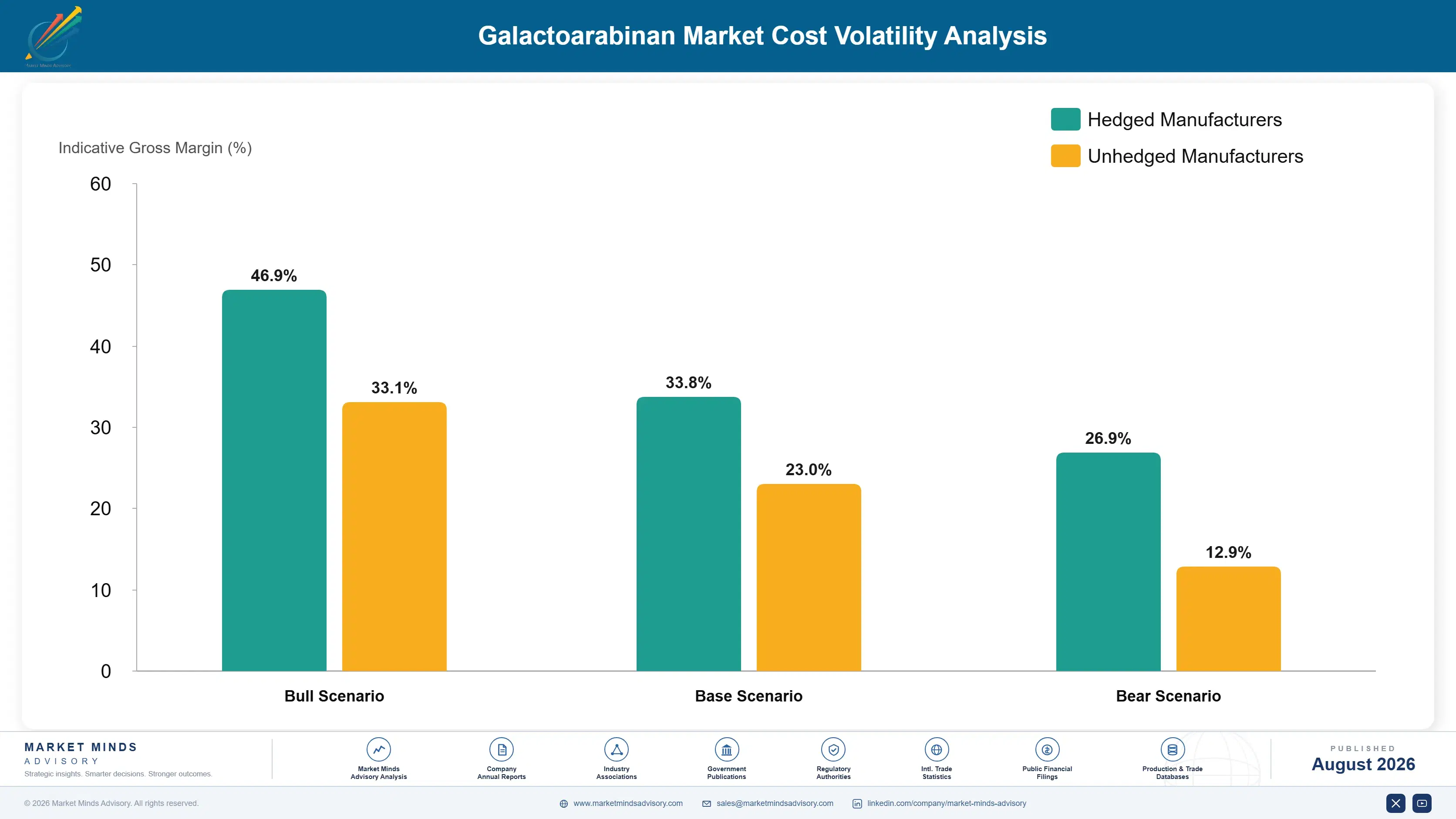
Larch wood feedstock represents roughly 29% of production cost, purchased from sawmills and forestry operations whose pricing follows timber markets rather than ingredient demand. Extraction energy for hot water processing and subsequent concentration takes a further 24%, since removing water from a dilute polysaccharide solution is genuinely energy intensive. Drying and milling absorb 13%. Quality control, characterisation, and documentation carry most of the remainder across grades.
Energy costs moved sharply through 2022 and 2023 in both North America and Europe, and extraction economics are unusually exposed because concentration and drying dominate the process. Regional timber pricing moved independently on construction demand rather than on anything happening in ingredients. Suppliers holding annual formulator agreements absorbed both movements directly, since a personal care contract is rarely written with an energy escalation clause attached to it.

Exposure divides on grade mix and feedstock position rather than on scale. Extractors with secured forestry agreements carry stable input cost while those buying opportunistically face timber market volatility they cannot pass on. Grade mix matters more still: pharmaceutical and derivative grades carry margins that absorb energy movement comfortably, while industrial and technical grades competing against cheaper polysaccharides have almost no headroom at all.
galactoarabinan-market-trends-cost-volatility-analysis-1787551484284

Secure feedstock through multi-year forestry agreements

Wood at 29% of production cost arrives from an industry operating on timber market logic that has nothing to do with ingredient demand, and opportunistic purchasing leaves an extractor exposed on both price and availability. Multi-year agreements with sawmills and forestry operators stabilise both. The relationships take time to build because the commercial rhythms are entirely unfamiliar to ingredient businesses.

Improve extraction yield rather than chasing volume

Recovery near 12% of dry wood means a yield improvement of even a few percentage points delivers more usable material than securing additional feedstock that forestry activity may never release anyway. Process optimisation, extraction time, and solvent system work all contribute. This is the one supply lever entirely within an extractor's control rather than dependent on somebody else's harvest.

Index formulator agreements to energy references

Concentration and drying dominate extraction cost and energy at 24% moves on regional power markets no supplier controls, yet personal care supply agreements are almost never written with escalation clauses. Indexation removes an exposure that has damaged margin repeatedly. Formulators resist initially and accept it once shown the alternative is a mid-year price conversation instead.

Portfolio Architecture for Margin Defence

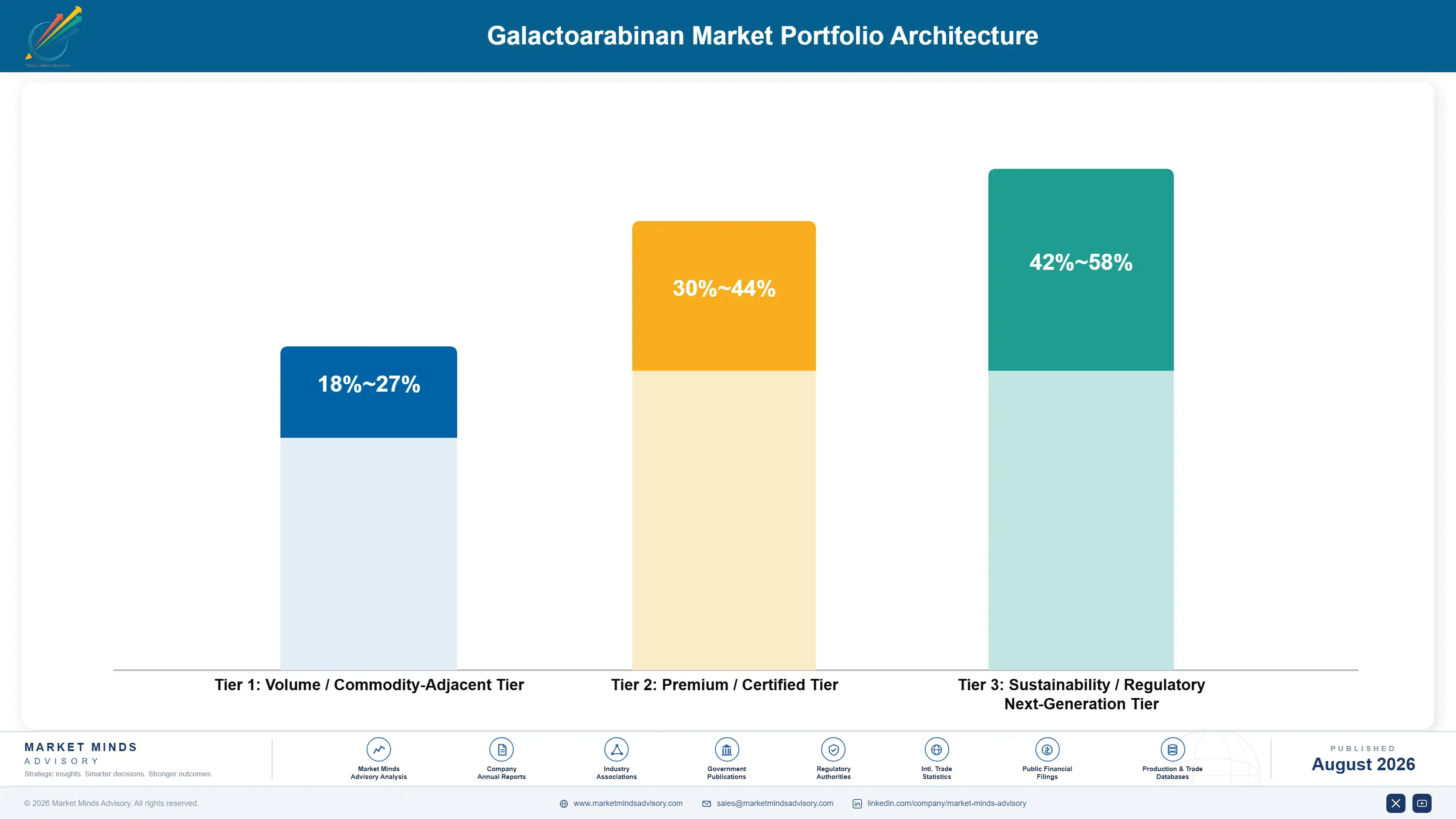
Margin architecture follows how easily a customer could change their mind. Industrial and technical grades compete against cheaper polysaccharides on function alone and earn accordingly. Cosmetic grade earns more but rests on sensory preference, which is durable in practice and indefensible in principle. Pharmaceutical excipient and defined derivative fractions earn most, because substitution there requires either regulatory action or reformulation work nobody wants to fund.
The volume and premium tension is unusual because supply, not demand, sets the ceiling. An extractor with limited material must decide which applications receive it, and the answer should follow value per kilogram rather than order size or relationship history. Several suppliers allocate on volume commitments made when material was plentiful, which quietly directs scarce output toward the lowest-value grades in the portfolio.

High-value pools concentrate in excipient grade behind drug master file positions, defined molecular weight fractions that formulators can specify, and Asian personal care work reached through local technical support. Each is defended by qualification, processing capability, or proximity rather than by extraction efficiency, which matters less than the industry's own cost focus suggests. Allocation discipline is worth more than any yield improvement.

Volume / Commodity-Adjacent Tier

Industrial, technical, and food ingredient grades competing against cheaper polysaccharides and hydrocolloids on functional performance alone. Nothing in the material defends the position. Scarce extraction output should rarely be allocated here at all.
Gross Margin: 18%-27%

Premium / Certified Tier

Cosmetic grade material specified for its sensory contribution at inclusion rates near 1.8%, and nutraceutical grade where claim rules permit a meaningful proposition. Preference rather than specification holds the position. The range reflects wide jurisdictional variation.
Gross Margin: 30%-44%

Sustainability / Regulatory / Next-Generation Tier

Pharmaceutical excipient grade held inside drug master files, and defined molecular weight fractions formulators can specify against alternatives. Qualification and processing capability defend both positions. The range is wide because excipient and derivative economics differ substantially.
Gross Margin: 42%-58%
galactoarabinan-market-trends-portfolio-architecture-1787551484785

High-value Sub-segments and Strategic Watch-out

Pharmaceutical Excipient Grade

Qualification running around 26 months places the material inside a drug master file, after which substitution becomes a regulatory exercise rather than a purchasing decision anybody takes lightly. Very few extractors hold the quality systems required. Documentation requirements exceed everything cosmetic grades ever ask for.
Gross Margin: 46%-58%

Defined Molecular Weight Fractions

Growing at 13.8% by converting a preference-based ingredient into something a formulator can specify, which is a completely different commercial position. Processing capability sits with relatively few operations anywhere in this market. Characterisation and batch consistency are considerably harder here than for the native material.
Gross Margin: 40%-54%

Asian Personal Care Supply

South Korea grows fastest at 12.4% on product lifecycles measured in months, which rewards local technical support and rapid sampling. Suppliers shipping from another continent arrive after the formulation is fixed. Local technical support and rapid sampling rather than any pricing argument decide these accounts.
Gross Margin: 34%-46%

Industrial and Technical Grades

The strategic watch-out. Competing against cheaper polysaccharides on function alone while consuming extraction output that scarcity makes genuinely valuable elsewhere in the portfolio at far better realised pricing. Allocation made on relationship history rather than on realised value quietly directs scarce extraction output straight here.
Gross Margin: 18%-27%

How the Ingredient Gets Specified

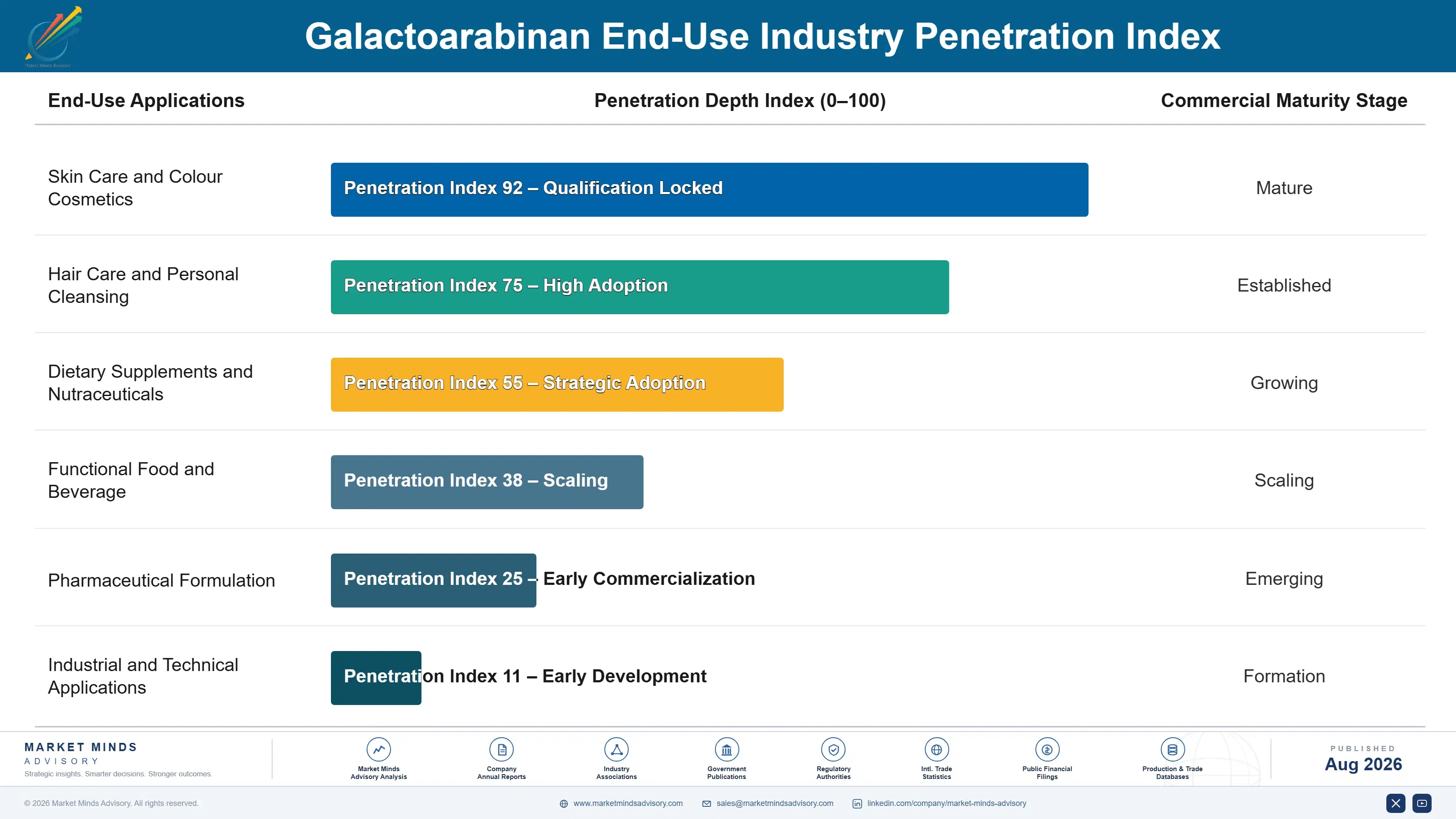
Demand reaches suppliers through formulation trials rather than through procurement, which is normal for specialty ingredients and unusually pronounced here. A cosmetic chemist tries the material, decides how the finished product feels with it, and writes it into a formulation that then runs for the life of the product. Supplement and pharmaceutical routes differ: supplement demand follows brand positioning and claim rules, while excipient demand follows a qualification programme measured in years.
Stickiness varies enormously with what was validated. Excipient positions inside a drug master file hold until the product is discontinued. Cosmetic formulations hold because reformulating and retesting sensory performance costs more than the ingredient does. Supplement demand holds only while the brand positioning does, which can change with a marketing decision. Nothing in a purchasing relationship protects any of that.

The deciding buyer sits with formulation and product development rather than purchasing across almost every application. Those people evaluate how something behaves in a system and rarely raise price at all. Suppliers organised around procurement relationships find their material specified out during the next reformulation and never learn why it happened. The reformulation happens quietly and nobody sends a notification about it.
galactoarabinan-market-trends-end-use-penetration-index-1787551485271

Where the Value Concentrates

These are among the four positions where our research anticipates prominent divergence between winners and laggards over the coming forecast period. Each is grounded in the demand model, the regulatory perimeter, and the announced capacity pipeline.
01 / FEEDSTOCK ACCESS SECURITY

Contract the wood before contracting the customer

Larch is felled for timber and galactoarabinan recovered afterwards at roughly 12% yield, which means extraction capacity delivers nothing at all without wood arriving at the gate on a schedule somebody else sets entirely for their own reasons. Trade restrictions after 2022 demonstrated how narrow the accessible feedstock base really is for anybody who had treated availability as settled. Multi-year sawmill and forestry agreements plus carried inventory are the only genuine protection available against a supply mechanism nobody in the ingredient industry controls.
02 / FRACTION SPECIFICATION CAPABILITY

Give formulators something they can actually specify

A cosmetic chemist choosing between botanical film formers is comparing how a finished cream feels on skin, which is a preference rather than a specification and offers no defence whatsoever when the next reformulation review comes around. Controlled hydrolysis into defined molecular weight fractions changes solubility, viscosity contribution, and emulsion behaviour, giving the formulator a specified property instead. Those derivatives grow at 13.8% against a market rate of 8.8%, and the processing capability sits with relatively few operations anywhere in the world.
03 / EXCIPIENT QUALIFICATION INVESTMENT

Build the quality systems for drug master files

Pharmaceutical excipient grade carries the highest value per kilogram in this market and qualification runs around 26 months, after which the material sits inside a drug master file and substitution becomes a regulatory exercise rather than any kind of purchasing decision anybody takes lightly. Documentation, impurity profiling, and manufacturing consistency requirements exceed everything cosmetic and food grades demand of a supplier. Very few extractors have built those systems, which is precisely why the position holds for a product's whole commercial life afterwards.
04 / ASIAN PROXIMITY INVESTMENT

Put people where the formulation cycles run

Korean and Japanese personal care development runs product lifecycles measured in months rather than years, which means ingredient trials happen continuously instead of at fixed development gates a supplier could plan around comfortably. South Korea grows fastest of any country in this report at 12.4% for exactly that reason, and suppliers shipping samples from another continent consistently arrive after the formulation has already been fixed. The investment required is people and sampling capability rather than plant, and it returns remarkably quickly.

Engagement Snapshot From the Field

A live engagement with an industry participant carrying material or product regulatory and market exposure ahead of a defining policy shift, showing how our research translates into a defensible multi-year portfolio strategy.
MARKET MINDS ADVISORY · CLIENT ENGAGEMENT SUMMARY
Galactoarabinan Producer Strategic Portfolio Review and Transition Roadmap 2026·Investment Scenario on Galactoarabinan Exposure Evaluation 2025-26
CLIENT PROFILE
A North American botanical extractor with galactoarabinan revenue near USD 24 million (client-reported, unverified by MMA), supplying native polysaccharide to personal care formulators and supplement manufacturers. No derivative fractions were produced, no pharmaceutical excipient capability existed, and feedstock was purchased opportunistically from regional sawmills without any agreement. Allocation had never once been examined on realised value.
STRATEGIC CHALLENGE
Two consecutive seasons of reduced regional timber harvest had left the business short of material while orders grew, and allocation decisions were being made on customer relationship rather than realised value. Competitors had introduced defined molecular weight fractions the client could not match. Formulator conversations still ran through purchasing. Nobody had modelled the shortfall properly.
MMA APPROACH
MMA analysed realised margin by grade and customer against allocated volume, assessed forestry contracting options across the regional supply base, and modelled derivative processing investment against formulator requirements. Forty-seven expert interviews with cosmetic chemists, supplement formulators, excipient qualification specialists, and sawmill operators established how each decision genuinely gets taken. Two seasons of allocation records were rebuilt from order history.
KEY FINDINGS
  1. Scarce material was being allocated to industrial and food grades on long-standing volume commitments while pharmaceutical and cosmetic enquiries at several times the realised price were being declined.
  2. No forestry or sawmill supply agreement existed anywhere, and two regional mills confirmed they would have signed multi-year arrangements had anybody ever asked them to.
  3. Cosmetic chemists at three major accounts described the material entirely in sensory terms and confirmed they would specify a defined fraction if one existed, which no supplier had offered them.
  4. Extraction yield sat measurably below what process modelling suggested was achievable, and nobody in the business had examined the concentration step in several years.
CLIENT PROFILE
A North American botanical extractor with galactoarabinan revenue near USD 24 million (client-reported, unverified by MMA), supplying native polysaccharide to personal care formulators and supplement manufacturers. No derivative fractions were produced, no pharmaceutical excipient capability existed, and feedstock was purchased opportunistically from regional sawmills without any agreement. Allocation had never once been examined on realised value.
STRATEGIC CHALLENGE
Two consecutive seasons of reduced regional timber harvest had left the business short of material while orders grew, and allocation decisions were being made on customer relationship rather than realised value. Competitors had introduced defined molecular weight fractions the client could not match. Formulator conversations still ran through purchasing. Nobody had modelled the shortfall properly.
MMA APPROACH
MMA analysed realised margin by grade and customer against allocated volume, assessed forestry contracting options across the regional supply base, and modelled derivative processing investment against formulator requirements. Forty-seven expert interviews with cosmetic chemists, supplement formulators, excipient qualification specialists, and sawmill operators established how each decision genuinely gets taken. Two seasons of allocation records were rebuilt from order history.
KEY FINDINGS
  1. Scarce material was being allocated to industrial and food grades on long-standing volume commitments while pharmaceutical and cosmetic enquiries at several times the realised price were being declined.
  2. No forestry or sawmill supply agreement existed anywhere, and two regional mills confirmed they would have signed multi-year arrangements had anybody ever asked them to.
  3. Cosmetic chemists at three major accounts described the material entirely in sensory terms and confirmed they would specify a defined fraction if one existed, which no supplier had offered them.
  4. Extraction yield sat measurably below what process modelling suggested was achievable, and nobody in the business had examined the concentration step in several years.
RECOMMENDED STRATEGY
Phase 1: Phase one: reallocate scarce material by realised value per kilogram rather than by relationship history, and exit industrial grade supply entirely for the present. Phase 2: Phase two: negotiate multi-year forestry and sawmill agreements while simultaneously running a yield improvement programme on the existing extraction process. Phase 3: Phase three: invest in controlled hydrolysis capability to offer defined molecular weight fractions, and begin scoping pharmaceutical excipient quality systems.
OUTCOME
The client exited industrial grade supply and redirected material toward cosmetic and supplement accounts within two quarters. Two forestry agreements were signed, extraction yield improved measurably, and blended gross margin improved 11.4 percentage points (client-reported, unverified by MMA). Derivative processing capital entered detailed evaluation shortly afterwards.

Frequently Asked Questions

Foundational context covering the market sizes, CAGR, scope, country, region and competition that inform every finding below. This section is provided to cover basics and most often pre-purchase conversations, answered from the MMA Primary Research Dataset.

What is the current size of the Galactoarabinan Market?

The market was valued at USD 0.1 billion in 2025, rising to an estimated USD 0.11 billion in 2026. North America holds the largest regional share at 30% of value.

How large will the Galactoarabinan Market be by 2036?

MMA forecasts USD 0.25 billion by 2036 under the base case, an expansion multiple of 2.32 times the 2026 value. That represents USD 0.14 billion of incremental value.

What is the CAGR for the Galactoarabinan Market 2026 to 2036?

The base case CAGR is 8.8%, with a bull case of 10.0% and a bear case of 7.6%. The spread reflects uncertainty over feedstock availability and health claim regulation.

Which segment is growing fastest?

Hydrolysed and modified derivatives grow fastest at 13.8%, roughly 1.57 times the market rate. Pharmaceutical excipient grade follows at 11.6% behind qualification programmes running over two years.

Who are the major companies in the Galactoarabinan Market?

Ingredion, Ametis JSC, Nikko Chemicals, Arxada, and Lubrizol lead, holding roughly 68% between them. Forestry access and extraction capability rather than formulation skill sustain that concentration.

Which country is growing fastest?

South Korea grows fastest at 12.4%, on personal care development cycles measured in months and botanical inclusion levels Western mass market products rarely approach at all.

Report Segmentation Architecture

The full report scope spans multiple orthogonal segmentation dimensions, with cross-tabulated demand data provided for each dimension pair. Coverage extends further to regional breakdowns, trend trajectories, and the competitive detail needed to support segment-level decision-making.

By Product Grade

  • Cosmetic Grade Galactoarabinan
  • Nutraceutical and Supplement Grade
  • Food Ingredient Grade
  • Pharmaceutical Excipient Grade
  • Industrial and Technical Grade
  • Hydrolysed and Modified Derivatives

By End-Use Industry

  • Skin Care and Colour Cosmetics
  • Hair Care and Personal Cleansing
  • Dietary Supplements and Nutraceuticals
  • Functional Food and Beverage
  • Pharmaceutical Formulation
  • Industrial and Technical Applications

By Customer Type

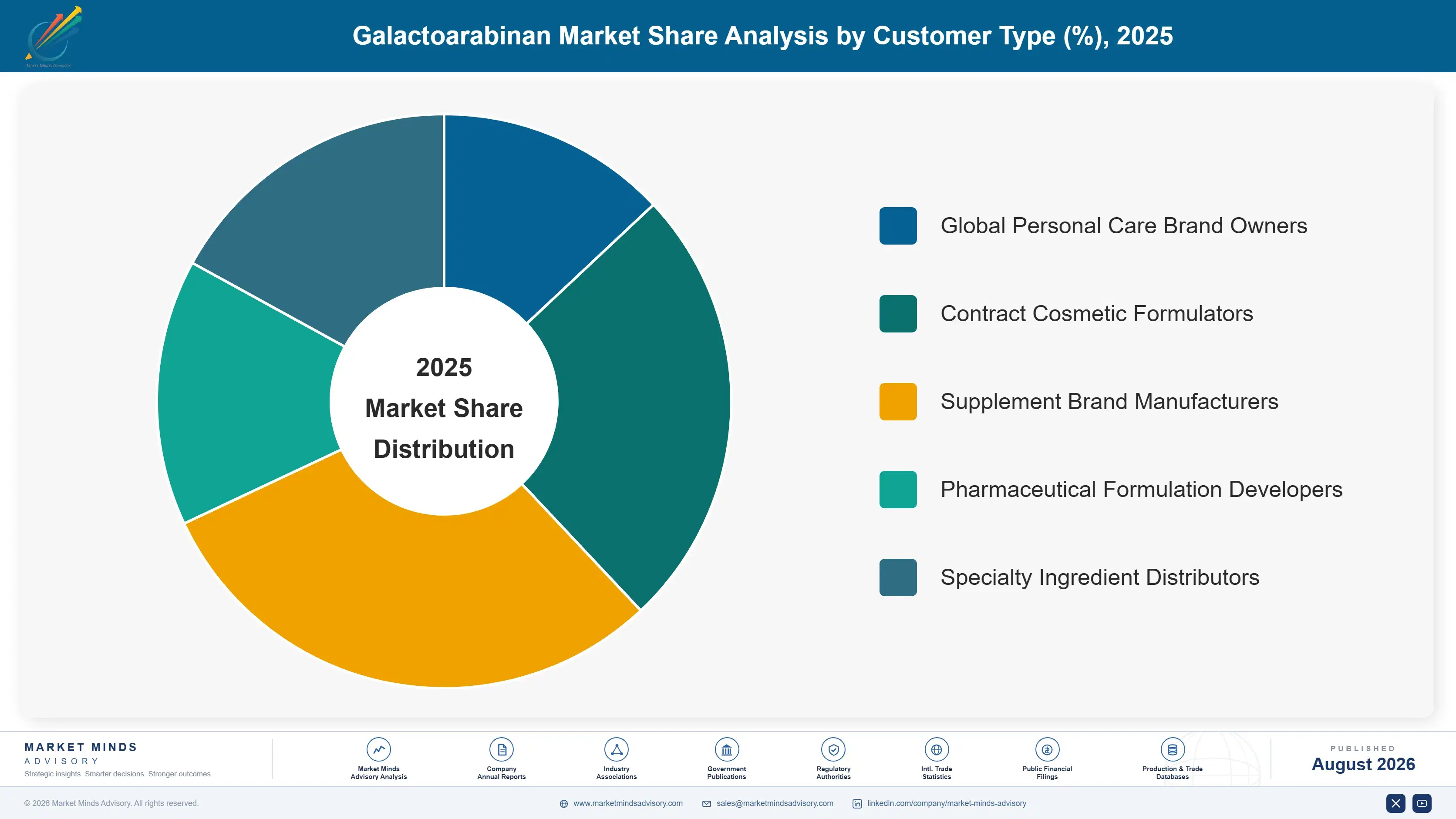
  • Global Personal Care Brand Owners
  • Contract Cosmetic Formulators
  • Supplement Brand Manufacturers
  • Pharmaceutical Formulation Developers
  • Specialty Ingredient Distributors

By Region

  • North America
  • Western Europe
  • East Asia
  • South Asia and Pacific
  • Latin America
  • Middle East and Africa
  • Eastern Europe

Scope, Methodology, and Coverage

Every figure in this report is reproducible from documented input assumptions. The scope below maps the historical period, the forecast horizon, the segmentation dimensions, and the countries covered, alongside the underlying primary and qualitative methodology.
Historical Period
2020 to 2025
Forecast Period
2026 to 2036
Base Year
2025 (USD billions; MMA Primary Research Dataset, August 2026)
Market Definition
The market comprises galactoarabinan and arabinogalactan polysaccharide extracted from larch and supplied as a functional ingredient, covering cosmetic grade, nutraceutical and supplement grade, food ingredient grade, pharmaceutical excipient grade, industrial and technical grade, and hydrolysed or modified derivatives. Value is measured at ingredient supplier level across personal care, supplement, food, and pharmaceutical applications. Larch timber and wood products, other plant gums and hydrocolloids, synthetic film formers, finished cosmetic and supplement products, and contract formulation services fall outside scope.
Quantitative Units
USD billions (current prices); tonnes of ingredient supplied annually; USD per kilogram by product grade and molecular weight fraction
Segmentation Dimensions
By Product Grade; By End-Use Industry; By Customer Type; By Region
Regions Covered
North America, Western Europe, East Asia, South Asia and Pacific, Latin America, Middle East and Africa, Eastern Europe
Countries Covered
United States, Canada, Mexico, South Korea, Japan, China, Taiwan, India, Australia, Thailand, Indonesia, Singapore, France, Germany, United Kingdom, Italy, Spain, Switzerland, Netherlands, Belgium, Poland, Czechia, Russia, Brazil, Argentina, Chile, United Arab Emirates, Saudi Arabia, Turkey, South Africa
Key Companies Profiled
Ingredion, Ametis JSC, Nikko Chemicals, Arxada, Lubrizol, Croda, BASF, Ashland, Clariant, Givaudan Active Beauty, Seppic, Gattefosse, Sederma, DSM-Firmenich, Roquette, Cargill, Vantage Specialty Chemicals, Xi'an Lyphar Biological, Provital, Bioland
Quantitative Methodology
Primary survey, n=3,800 respondents, Q4 2025, six countries; demand-side model with trade association cross-validation
Qualitative Methodology
47 expert interviews, Q4 2025; applied to validate demand model assumptions, identify emerging dynamics, and assess competitive positioning
Report Format
PDF and XLSX data workbook (Word format preview document)
Publisher
Market Minds Advisory
Report Code
MMA-2026-CHM-408
Published
August 2026
Contact
sales@marketmindsadvisory.com | www.marketmindsadvisory.com

Purchase the full Galactoarabinan Market Report (2026 to 2036).

The full report sizes galactoarabinan demand across six product grades, six end-use industries, and seven regions with 2026 to 2036 forecasts under base, bull, and bear cases. It treats feedstock availability as the binding constraint rather than demand, since larch is harvested for timber and the polysaccharide recovered afterwards at limited yield. Competitive profiles cover twenty suppliers assessed consistently on ingredient supply revenue, feedstock access, and derivative processing capability. Cost analysis traces wood, extraction energy, and quality documentation exposure by grade. Commercial guidance addresses feedstock contracting, fraction specification, excipient qualification, and Asian technical proximity.
Six product grades sized separately by region
Feedstock availability modelled against regional forestry activity
Health claim regimes compared across major supplement markets
Molecular weight fraction applications mapped by formulation type
Excipient qualification timelines assessed by regulatory jurisdiction
Allocation economics compared across grades under supply constraint

Built For The People Who Decide

From boardroom strategy to bench-side execution, this report is read cover-to-cover by leaders shaping the next decade of their industry, turning demand scenarios, market dynamics and valuation benchmarks into decisions.
CXOs/ Presidents/ VPs/ Managers
M&A and Corporate Development
Strategy Teams and R&D Heads
Procurement and Product Directors
Regulatory and Compliance Leaders
Investor Relations and Equity Analysts