Market Minds Advisory
France Period Panties Market

France Period Panties Market: France Period Panties Market. Destigmatized Marketing and Reusable Textile Innovation Reshape a Feminine Hygiene Category.

Destigmatized marketing and reusable textile innovation are reshaping a maturing feminine hygiene category, pushing manufacturers toward absorbency-specific and sustainability-certified designs across specialty, mass, and direct-to-consumer retail channels nationwide and internationally.

Lead Analyst

Published

September 2026

Make Smarter Decisions with Customized Research Insights

Request a free sample report and evaluate market opportunities, growth trends, and competitive dynamics relevant to your business needs.

2025 MARKET VALUE$1.1BMarket Size 2025
2036 FORECAST VALUE$3.1BBase Case , 2026 to 2036
CAGR 2026 TO 20369.4 %Bull 10.6% / Bear 8.2%
INCREMENTAL OPPORTUNITY$1.8BNet 10- year value creation
EXPANSION MULTIPLE2.46x2036 value over 2026 base
Strategic Levers
M&A Pipeline
Regional Outlook
Country Rankings
Competitive Intelligence
Segmental Deep-dive
Call-Us : 91 93563 13602

Executive Snapshot and Market Trajectory.

Destigmatized marketing and reusable textile innovation are pulling a maturing feminine hygiene category toward mainstream retail acceptance previously reserved for niche sustainability-focused consumers across most urban markets today, reshaping how French and global consumers purchase everyday feminine hygiene products entirely, permanently, and across most demographic segments and income levels today.
Commercial momentum concentrates in sport-specific and teen-focused formats, as younger consumers increasingly treat period underwear as a standard wardrobe category rather than a specialty purchase, while India's expanding middle-class purchasing power and destigmatized regional marketing drive the fastest unit volume growth worldwide across most price tiers and distribution channels, both specialty and mass retail nationwide, internationally, and across most sustainability-focused retail programs, school health initiatives, workplace wellness benefits, and public health campaigns.
Competition remains moderately concentrated among established direct-to-consumer brands even as mass apparel retailers expand private-label period underwear lines, while tightening sustainability certification standards across several European markets increasingly steer retailers toward certified, tested products rather than generic reusable underwear, reinforcing brand differentiation through certification credibility today and consistently across most retail formats, e-commerce platforms, subscription programs, and institutional procurement channels nationwide and internationally.
Market Definition
The France Period Panties Market covers manufactured reusable absorbent underwear designed to replace or supplement disposable menstrual products, excluding disposable pads, tampons, and menstrual cups or discs.
Base Year Value
$1.1B in 2025 (MMA Primary Research Dataset, September 2026)
Forecast Period
2026 to 2036, eleven discrete annual values
CAGR
9.4% base case. Bull 10.6%. Bear 8.2%.
Fastest Growth Segment
Sport / Active Period Panties: 13.5% CAGR
Fastest Growth Country
India: 12.8% CAGR
Fastest Growth Region
South Asia and Pacific: 11.3% CAGR
Largest Region
Western Europe: 34% of 2025 global value
Market Leaders
Thinx Inc, Modibodi Pty Ltd, Knix Wear Inc, Sisters Republic SAS, Dans Ma Culotte SAS. Source: MMA Analysis, company annual reports.
Primary Survey
n=3,800 procurement and R&D decision-makers, Q4 2025, six countries
Methodology
Demand-side build-up, cross-validated against public data, 47 expert interviews

France Period Panties Market Forecast Scenarios

france-period-panties-market-size-forecast-scenario-1790024702096
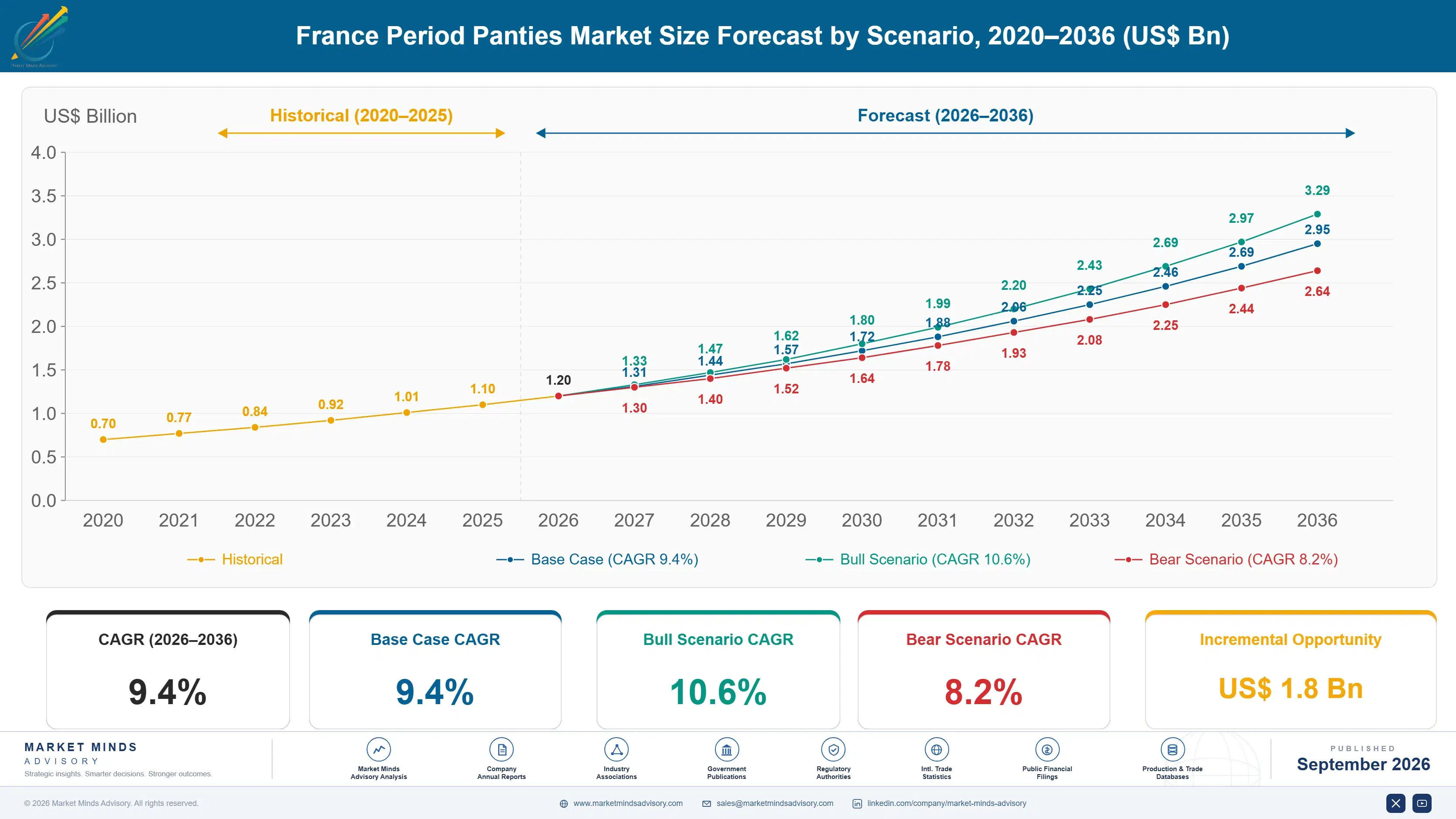
Between 2020 and 2025, the category grew steadily as destigmatized marketing campaigns and rising environmental awareness introduced period underwear to a much broader consumer base beyond early sustainability-focused niche buyers concentrated in metropolitan areas, producing an 8.4 percent historical CAGR overall across most specialty and mass retail distribution segments, geographic markets, and demographic cohorts nationwide and consistently.
The base case assumes continued growth driven by three distinct mechanisms: expanding sport-specific and teen-focused product lines capturing younger demographic cohorts previously unaddressed by generic designs and marketing across most retail channels, tightening European sustainability certification standards pushing retailers toward tested and certified products, and India's and Southeast Asia's rapidly expanding middle-class purchasing power driving meaningful incremental unit volume across most price tiers, distribution channels, and retail formats simultaneously and consistently.
A bull scenario hinges on accelerated destigmatization campaigns expanding category acceptance among older and more conservative consumer demographics currently underrepresented in category purchasing behavior nationwide and internationally. A bear scenario centers on persistent hygiene concerns and comfort skepticism limiting adoption relative to conventional disposable menstrual products over the coming years and decade across most price-sensitive markets today.

Destigmatization Redefines Feminine Hygiene Retail

The France Period Panties Market occupies a genuinely transitional moment in feminine hygiene retail, where a category long confined to niche direct-to-consumer sustainability brands is absorbing real mainstream retail investment, as destigmatized marketing and school health partnerships move period underwear from specialty purchase toward standard wardrobe consideration across most urban and suburban markets nationwide, internationally, and across most demographic segments and income tiers today.
MARKET CONCENTRATIONCR5: 32%Top five brands hold roughly one-third combined market share
AVERAGE SELLING PRICE€28 per pairBlended global price across everyday and sport-specific formats
TOP PRODUCING COUNTRY SHAREChina: 36%Share of global manufacturing output concentrated domestically today
CERTIFICATION COMPLIANCE RATE47%Share of units meeting formal absorbency and safety certification
TRADE INTENSITY41% exportedShare of manufactured units shipped across international borders yearly
REPLACEMENT CYCLE LENGTH18 monthsAverage time before consumers replace primary period underwear sets
China dominates manufacturing while France, the United States, and Western Europe drive the highest per-unit spending, reflecting mature sustainability-focused retail infrastructure and destigmatization campaigns that normalize category purchasing across demographic groups previously reluctant to adopt reusable menstrual products across most price tiers, retail channels, and geographic markets nationwide, internationally, and across most specialty distribution networks and educational institutions today.
Sport-specific and teen-focused design represents the clearest demographic inflection point in the category's short history, expanding the addressable buyer base well beyond the sustainability-motivated early adopters who originally defined the category's positioning across most specialty and mass retail environments nationwide and internationally, particularly among first-time reusable product purchasers entering the category through athletic retail channels, school health programs, and workplace wellness initiatives.
"Period underwear used to be a niche purchase for the already converted. Now it's a school health program line item, and that shift changes who the category has to win over next."
Practice Lead, Sustainable Feminine Hygiene Practice · MMA Sustainable Feminine Hygiene and Apparel Products Practice · September 2026

Market Trends

Sport-Specific Formats Enter Mainstream Athletic Retail

Sport-specific period underwear, engineered with moisture-wicking fabrics and higher absorbency capacity for active use, is rapidly migrating from specialty direct-to-consumer brands into mainstream athletic retail chains as component technology matures and price points fall toward comparable performance apparel across most price tiers and retail formats. Manufacturers increasingly partner with established athletic brands to co-develop products, lending performance credibility that pure feminine hygiene brands previously lacked. Retail data shows sport-specific formats increasingly anchor premium shelf positioning in specialty athletic and running retail environments nationwide, reflecting a broader shift toward category normalization.
Market Impact: 29% growth in first-time reusable buyers
School Health Programs Expand Institutional Distribution

Several French regional education authorities have expanded school health programs to include period underwear alongside traditional disposable products, responding to period poverty advocacy and destigmatization campaigns targeting adolescent students specifically across most secondary schools, colleges, and university health services nationwide and internationally today. Manufacturers increasingly pursue dedicated institutional sales relationships with regional education authorities, recognizing the stable, less price-sensitive revenue these contracts provide relative to consumer retail channels. Retailers report that school program exposure meaningfully increases brand awareness among first-time teenage buyers who subsequently convert to paying retail customers nationwide.
Market Impact: 22% higher conversion after destigmatized marketing

Market Opportunities and Growth Drivers

Rising Environmental Awareness Drives Reusable Adoption

Rising environmental awareness among younger European consumers, amplified through social media sustainability content and growing concern over disposable product waste, has meaningfully expanded willingness to pay a premium for reusable menstrual products across most demographic segments, income tiers, and geographic markets nationwide and internationally. Younger consumers in particular report treating sustainable product choices as a genuine identity marker rather than a niche lifestyle preference, driving category trial among demographics previously indifferent to eco-conscious purchasing decisions. Retailers report that sustainability messaging meaningfully influences purchase conversion for first-time period underwear buyers specifically.
Market Impact: 19% of buyers cite leakage concerns

Destigmatization Campaigns Expand Addressable Consumer Base

Sustained destigmatization campaigns across social media and traditional advertising have meaningfully normalized open discussion of menstruation and period products, expanding the addressable consumer base beyond early adopters comfortable with sustainability-focused direct-to-consumer marketing and messaging strategies nationwide and internationally today. Retailers report that in-store period underwear placement has moved from discreet specialty sections toward mainstream feminine hygiene aisles, reflecting broader cultural acceptance nationwide, internationally, and consistently across most retail formats. Brands increasingly feature diverse body types and candid product usage in marketing campaigns, reinforcing category normalization among previously hesitant consumer segments.
Market Impact: 26% of non-adopters cite maintenance burden

Market Restraints and Challenges

Absorbency and Leakage Concerns Limit Heavy Flow Adoption

Persistent consumer skepticism around absorbency capacity and leakage protection, particularly for heavy-flow days, limits adoption among consumers who require the highest confidence level in their menstrual products across most demographic segments and purchasing occasions. The root cause traces to genuine technical limitations in fabric absorbency technology relative to disposable alternatives with decades of engineering refinement behind them. The commercial impact falls hardest on heavy-flow and overnight product segments, where category penetration remains meaningfully lower than moderate-flow formats. Some manufacturers mitigate exposure by developing hybrid designs combining reusable underwear with disposable liner backup.
Market Impact: 24% growth in sport-specific unit sales

Washing and Maintenance Requirements Deter Convenience Buyers

Period underwear requires specific washing and maintenance routines that many convenience-focused consumers find genuinely burdensome compared to disposing of traditional single-use products without additional effort or planning required beforehand and consistently. The root cause traces to fabric technology requiring cold-water washing and air drying to preserve absorbency performance, incompatible with typical laundry routines for many households, dormitories, and shared living arrangements. The commercial impact creates genuine adoption friction among time-constrained consumers who otherwise express interest in sustainability benefits. Manufacturers increasingly mitigate this through simplified care instructions and machine-washable product redesigns.
Market Impact: 18% of teen buyers via schools
4 additional market trends, 3 additional growth drivers, and 3 additional restraints and challenges are covered in the full report. Contact sales@marketmindsadvisory.com to access the complete intelligence.

Segment CAGR and Growth Architecture

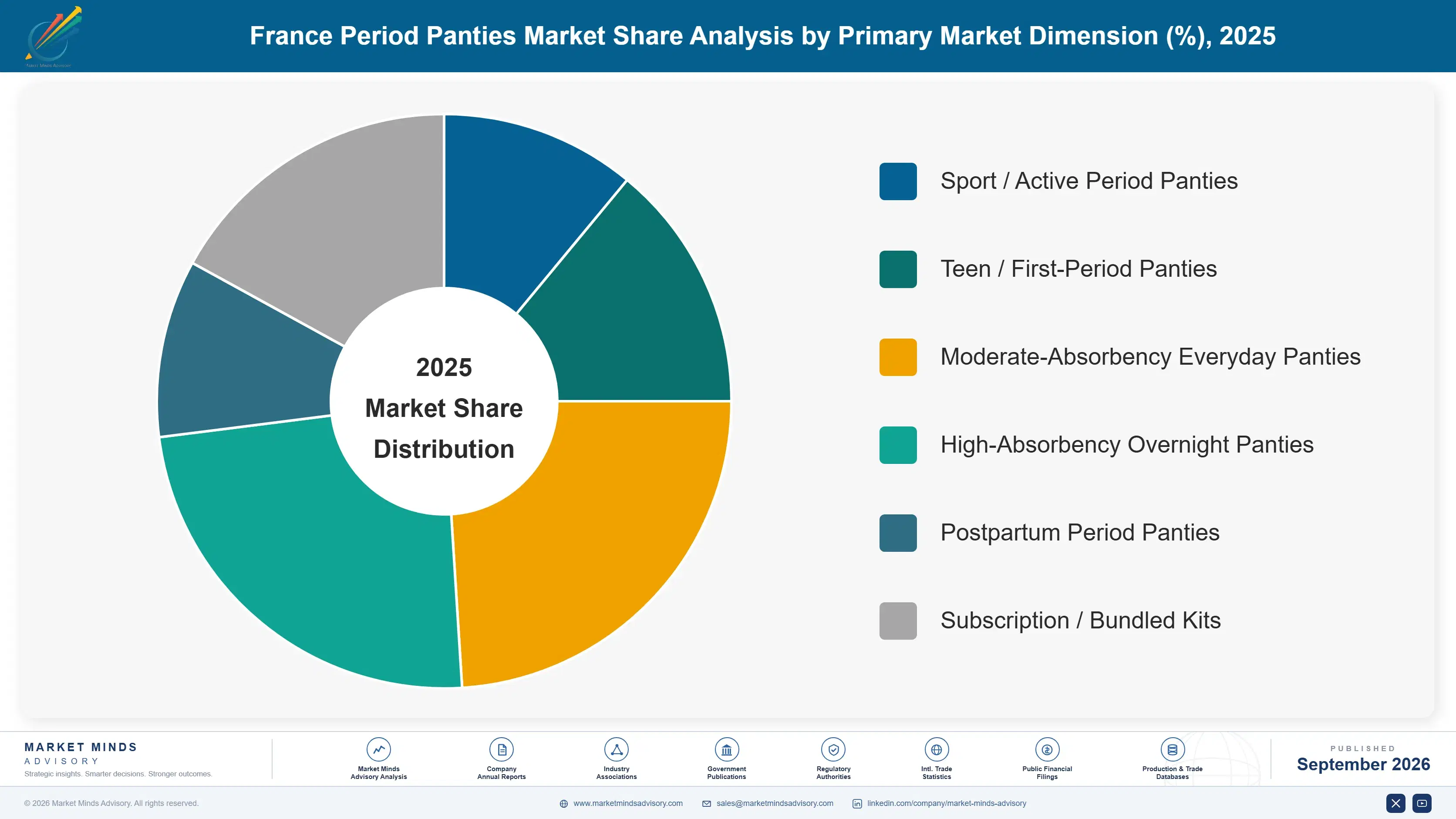
The France Period Panties Market splits into six product categories along a single absorbency and use-case dimension, ranging from moderate-absorbency everyday designs to sport-specific and teen-focused formats, each serving distinct flow levels, demographic segments, and lifestyle requirements across specialty and mass retail channels, e-commerce platforms, and institutional programs nationwide, internationally, and quite consistently today.
france-period-panties-market-market-share-analysis-1790024702634

Sport / Active Period Panties

Sport and active period underwear represent the fastest-growing segment, engineered with moisture-wicking fabrics and higher absorbency capacity specifically designed for physical activity rather than everyday wear across most price tiers and product categories today. Adoption concentrates heavily among athletic and fitness-focused consumers who previously avoided reusable menstrual products due to performance concerns during exercise and competitive athletic activity. Manufacturers have moved aggressively into this segment as fabric technology matures, with several established athletic brands launching dedicated period underwear collaborations within the past two years alone across most major consumer markets. Retail data shows sport-specific formats increasingly anchor premium shelf positioning in specialty athletic retail environments nationwide, reflecting broader category normalization.
CAGR 13.5%

Teen / First-Period Panties

Teen and first-period underwear, designed specifically for adolescent users beginning menstruation, have expanded rapidly as school health programs and destigmatized parenting content introduce period underwear as a first-choice product rather than a later-life sustainability upgrade across most developed retail markets and educational systems nationwide and internationally today. These products typically feature simplified sizing, discreet design language, and educational packaging content addressing common first-period anxieties directly and sensitively. Manufacturers increasingly partner with school health authorities and pediatric healthcare providers to build credibility with parents making initial purchasing decisions on behalf of adolescent daughters. Retailers report that teen-focused product lines increasingly drive family-wide brand loyalty as parents subsequently purchase adult formats themselves.
CAGR 12.0%
Full segment breakdown across 6 segments available in the complete report.

Regional Architecture and Country Demand Map

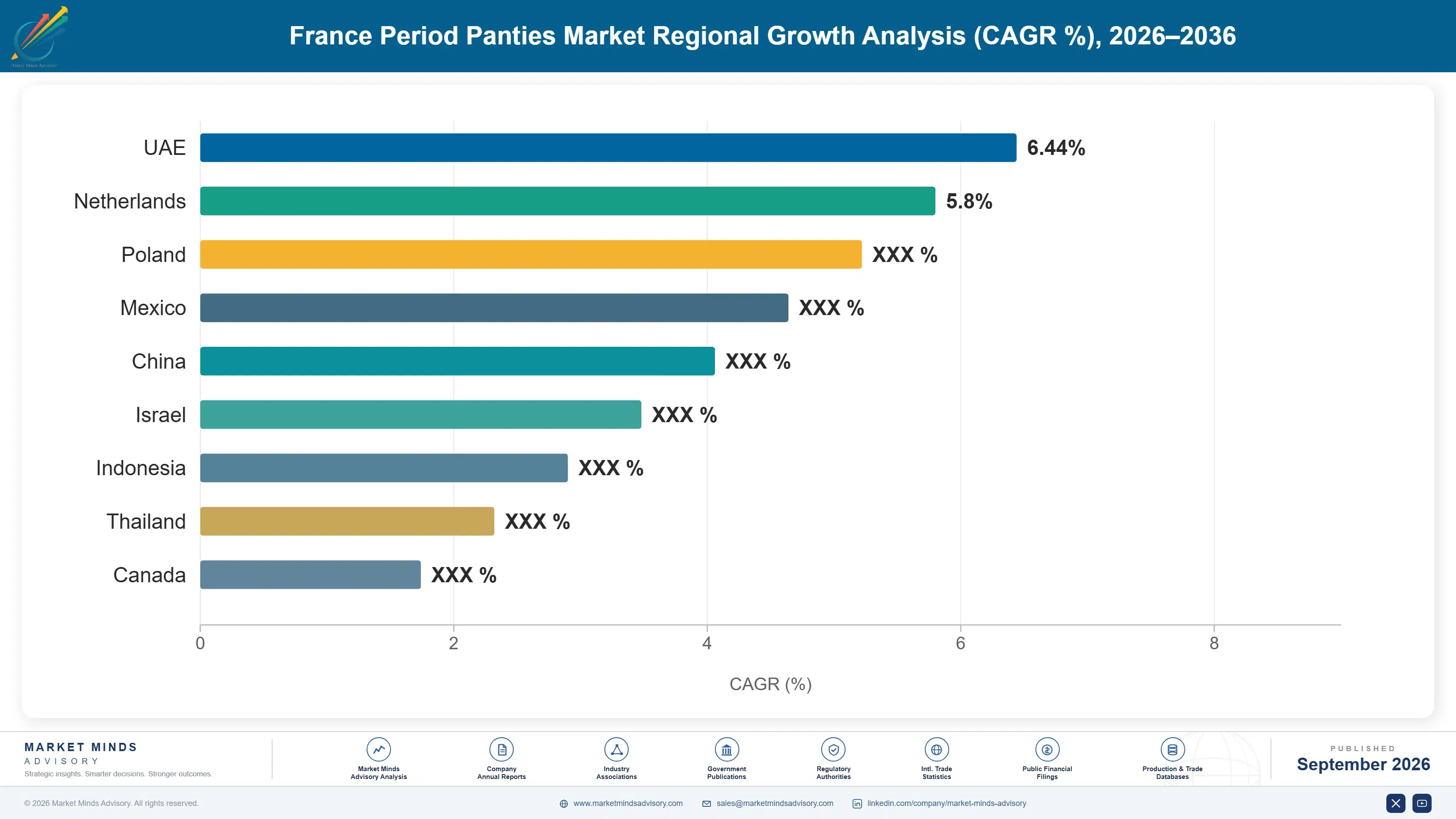
Regional demand reflects destigmatization culture depth and sustainability-focused retail maturity rather than pure population size, with Western Europe leading decisively due to France's outsized cultural influence, while South Asia and Pacific posts the fastest unit growth regionally and consistently across most emerging consumer markets today.

North America

North America carries a mature, well-established period underwear retail base with high per-capita spending on premium and destigmatized sustainability products, supported by extensive specialty and mass retail infrastructure across the United States and Canada nationwide and consistently over time, geography, and demographic segments. Sport-specific and teen-focused product lines have advanced furthest in this region, reflecting both higher disposable purchasing budgets and earlier destigmatization campaign adoption among American consumers and retailers across most price tiers. Direct-to-consumer subscription brands originated largely in North America before expanding internationally, reinforcing the region's brand innovation leadership position globally and consistently. Canada mirrors similar sustainability-driven purchasing patterns, though at meaningfully smaller absolute scale and population base.
Share: 22% | CAGR: 10.0% (2026 to 2036)

Western Europe

Western Europe sits far above its typical band because France, this report's primary market focus, pioneered much of the destigmatized menstrual health marketing and school health program integration that now defines the category's mainstream positioning across the region and beyond its own borders and cultural influence today and consistently. French regulatory attention toward period poverty has driven meaningful public sector procurement volume unmatched in most other developed markets and healthcare systems worldwide. Germany, the United Kingdom, and Scandinavian countries contribute additional strength through mature sustainability-focused retail infrastructure and strong consumer willingness to pay eco-premiums across most price tiers. This concentration reflects genuine cultural and regulatory depth, not a modeling artifact.
Share: 34% | CAGR: 7.8% (2026 to 2036)
Regional intelligence for 5 additional markets available in the complete report: East Asia, South Asia and Pacific, Latin America, Middle East and Africa, Eastern Europe. Contact sales@marketmindsadvisory.com.
france-period-panties-market-country-cagr-analysis-1790024703158

Where Period Underwear Brands Can Capture Margin

Manufacturers and retailers have several credible paths to expand margin beyond pure per-unit pricing, spanning subscription bundling, school and institutional partnerships, and value-added services that convert one-time buyers into recurring purchasing relationships over time. Each lever depends on deepening the customer relationship well beyond a single retail transaction or seasonal purchase decision entirely and permanently.

Period Underwear Subscription Replenishment Programs for Consumers

Recurring subscription plans covering scheduled period underwear replacement convert an intermittent purchase into predictable monthly revenue, mirroring subscription economics proven effective across adjacent apparel and personal care categories nationwide and internationally today. Operators offering subscription tiers report a 27 percent lift in customer lifetime value and lower churn than one-time buyers, since the recurring commitment reduces the likelihood customers revert to disposable alternatives after a single purchase. Subscription customers also generate more predictable demand forecasting for manufacturers, improving production planning and textile procurement across most product lines and retail channels nationwide.
Market Impact: 27% higher lifetime value on subscription customers today

School Health Program Partnership Development Initiatives

Building formal partnerships with regional education authorities to supply school health programs converts previously untapped institutional demand into a structured commercial channel with predictable volume and revenue forecasting across most public sector markets, regional jurisdictions, and educational districts nationwide and internationally. Institutional contracts typically run multi-year terms with guaranteed minimum order quantities, providing manufacturers a stable revenue base distinct from consumer retail seasonality and price sensitivity. Manufacturers investing in dedicated institutional sales capabilities report a 21 percent stronger win rate and larger average contract values than competitors treating schools as a secondary afterthought channel.
Market Impact: 21% higher win rate with dedicated school teams

Bundled Absorbency Tier Product Line Development Programs

Bundling multiple absorbency tiers into complete cycle kits increases average order value while offering consumers a single convenient purchase decision rather than assembling different products separately across multiple purchases, brands, and retail formats nationwide, internationally, and across most price tiers and demographic segments. Bundled kit sales carry gross margins roughly 13 percentage points higher than standalone single-absorbency transactions, justifying continued investment in complementary product development and packaging design. Retailers offering bundled kits report meaningfully higher basket sizes and stronger customer satisfaction among first-time period underwear purchasers navigating unfamiliar absorbency terminology.
Market Impact: 13 percentage point margin lift on bundled cycle kits

Licensed Athletic and Sport Brand Co-Branding Partnerships

Manufacturers increasingly license co-branded sport-specific product lines with established athletic apparel brands, capturing existing brand equity while sharing marketing costs through revenue-sharing arrangements rather than standalone advertising spend across most retail channels, marketing budgets, and promotional campaigns nationwide and internationally today. These partnerships typically command a full 18 percent price premium over unbranded equivalents, reflecting the perceived performance credibility transferred directly from the partner brand and its established reputation. Early results suggest these collaborations convert brand-loyal athletic consumers into period underwear purchasers at meaningfully higher rates than conventional category advertising.
Market Impact: 18% price premium on co-branded athletic product lines

Who Controls the Margin Pool

The France Period Panties Market carries a CR5 near 32%, moderate concentration reflecting the category's maturation beyond a handful of founding direct-to-consumer brands on a revenue basis across most price tiers and geographic markets worldwide and consistently. Thinx and Modibodi lead through decades-established brand recognition and destigmatization marketing credibility, with a meaningful gap separating them from smaller regional and private-label competitors nationwide and internationally today.
Current competitive activity centers on sport-specific design innovation, school health partnership expansion, and subscription bundling development across most major brands, retail formats, and institutional distribution channels worldwide and domestically today. Players increasingly differentiate through fabric technology and certification credibility rather than pure destigmatization messaging alone, since regional manufacturers have achieved functional parity on basic absorbency performance metrics worldwide and consistently.

Emerging pressure comes from mass apparel retailers launching private-label period underwear lines at substantially lower price points, bypassing traditional specialty and direct-to-consumer distribution entirely across most consumer demographics. Rankings could shift meaningfully if these retailers continue building fabric technology and certification credibility comparable to established players, eroding the brand differentiation that currently justifies premium specialty pricing at considerable scale and margin.
france-period-panties-market-company-positioning-matrix-1790024703688

Competitive Moat and Risk Dimensions

THINX INC

Moat: Category-Defining Destigmatization Marketing Legacy

Thinx's early destigmatization marketing campaigns built category-defining brand recognition that newer entrants cannot easily replicate, reinforcing pricing power and consumer trust across most specialty and mass retail channels nationwide, internationally, and consistently over time and across most price tiers, demographic segments, and expanding geographic markets.
THINX INC

Risk: Exposed to Private-Label Competition

Thinx faces genuine margin pressure from mass apparel retailers launching private-label period underwear lines at substantially lower price points, forcing continued investment in fabric technology and brand differentiation to justify premium specialty retail positioning nationwide, internationally, and across most online and offline retail channels and price tiers.
MODIBODI PTY LTD

Moat: Broad International Absorbency Range Portfolio

Modibodi's broad absorbency range portfolio, spanning light everyday formats to heavy-flow and postpartum products, gives it shelf presence and customer retention that narrower competitors lack, supporting favorable positioning across most specialty and mass retail channels nationwide and internationally today, consistently, and across most demographic segments.
MODIBODI PTY LTD

Risk: Slower Sport-Specific Format Development

Modibodi's broad-portfolio positioning, while a genuine strength in absorbency range coverage, has moved more slowly into dedicated sport-specific product development than specialized competitors, potentially ceding early positioning in this fastest-growing premium segment to smaller, more focused manufacturers entering the category aggressively nationwide, internationally, and consistently.

Players Tracked

Prominent Players

Thinx Inc
Modibodi Pty Ltd
Knix Wear Inc
Sisters Republic SAS
Dans Ma Culotte SAS

Other Key Players

Speax by Thinx
Wuka Wear Ltd
Saalt LLC
Proof (Prima Fase Inc)
Flux Undies Pty Ltd
Bambody Inc
Cheeky Wipes Ltd
Lunapads (Aisle)
Icon Period Underwear Inc
Femmycycle Inc
Ruby Love Inc
Dear Kate Inc
Blushed by JoJo SAS
Elia Underwear SAS
Culotte Menstruelle Marguerite SAS

Recent Developments

FEBRUARY 2026

Thinx Launches Sport-Specific Moisture-Wicking Line

Thinx introduced a new sport-specific period underwear line featuring moisture-wicking fabric technology developed in partnership with a performance apparel supplier, targeting fitness-focused consumers previously served primarily by everyday comfort-oriented designs across specialty athletic retail chains, online marketplaces, and direct e-commerce channels nationwide, internationally, and increasingly.
Signal: Signals accelerating sport-specific mainstreaming among established destigmatization-focused feminine hygiene brands nationwide, internationally, and across most price tiers.
SEPTEMBER 2025

Modibodi Expands School Health Program Partnerships

Modibodi announced an expanded partnership program with French regional education authorities to supply period underwear through school health initiatives, adding dedicated educational packaging content and teacher training materials supporting adoption among adolescent students across multiple regional school districts, educational networks, and public health agencies nationwide.
Signal: Signals continued investment in institutional distribution channels beyond Modibodi's traditional direct-to-consumer retail base and marketing approach.
JANUARY 2026

Knix Opens New European Distribution Center

Knix Wear commissioned a new European distribution center dedicated to serving expanding specialty and mass retail demand across France and continental Europe, reducing shipping lead times and improving inventory availability for sport-specific and teen-focused product lines across most regional markets, retail partners, and institutional customers.
Signal: Signals manufacturers investing directly in regional distribution infrastructure to support growing European demand and market expansion.

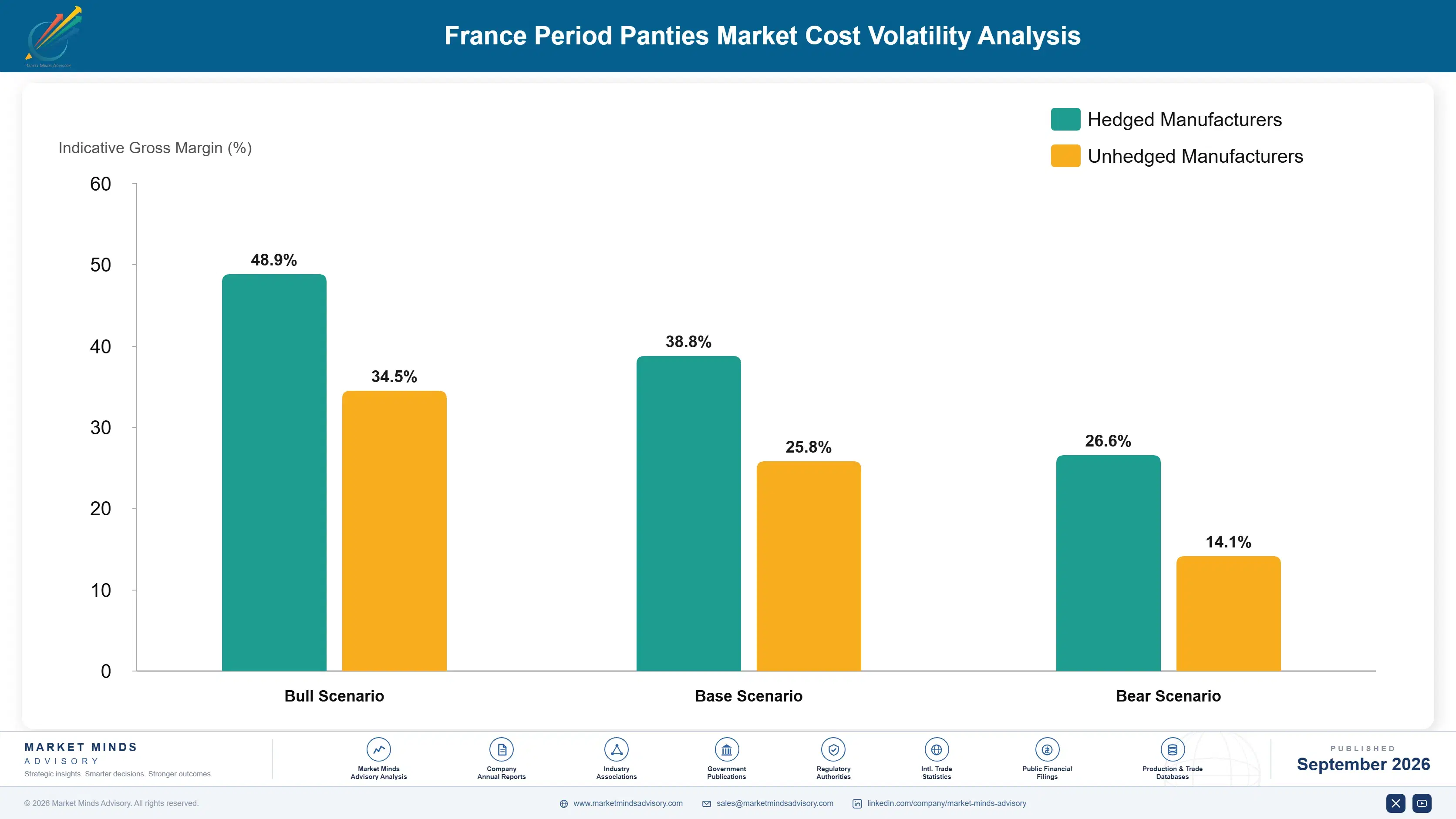
Specialty Textile and Membrane Materials Drive Costs

Moisture-wicking base fabric, absorbent membrane layers, and leak-resistant barrier textiles together represent roughly 54 percent of finished-product cost of goods sold across most manufacturers in this category, with base fabrics sourced predominantly from Asian textile mills and membrane materials tied to specialty polymer supply chains subject to independent commodity pricing cycles, regional export policies, and seasonal fiber availability.
Specialty textile prices rose sharply during 2022 as global cotton and synthetic fiber costs climbed alongside broader supply chain disruption affecting apparel manufacturing broadly across most producing regions and export markets, a pattern the International Energy Agency linked partly to elevated energy costs affecting synthetic fiber production, compressing manufacturer margins across the category for roughly a year before gradual normalization took hold across most affected regional supply chains.

Smaller regional manufacturers carry disproportionate exposure since they lack the long-term supply contracts and vertical integration that larger brands maintain with textile and membrane suppliers, leaving them more dependent on spot-market purchasing during price spikes, a disadvantage that widens further whenever feedstock volatility persists across export-reliant manufacturing regions, smaller-scale operations, private-label producers, and independent retail brands more broadly and consistently.
france-period-panties-market-cost-volatility-analysis-1790024703882

Multi-Region Textile Supply Diversification

Leading manufacturers increasingly diversify base fabric sourcing across multiple Asian textile mills under multi-year fixed-volume contracts, reducing exposure to any single regional feedstock disruption while preserving negotiating leverage on price during renewal cycles across the broader apparel category, export markets, domestic retail supply chains, specialty distribution networks, institutional procurement programs, and subscription fulfillment channels worldwide.

Membrane Material Standardization Programs

Several manufacturers now standardize absorbent membrane specifications across multiple absorbency tiers, reducing per-unit procurement complexity and enabling bulk purchasing leverage that smaller competitors offering fully customized membranes cannot easily match at comparable manufacturing scale, cost efficiency, sourcing flexibility, quality control consistency, export market positioning, certification compliance, long-term supplier relationships, or broader regional distribution capabilities.

Vertical Integration Into Fabric Production

Larger players increasingly invest directly in owned or joint venture fabric production capacity, capturing margin previously paid to third-party textile mills while gaining tighter control over material specifications used across premium and certified product lines industrywide, across most geographic markets, distribution channels, institutional procurement programs, export supply chains, subscription fulfillment networks, and regional retail partnerships.

Portfolio Architecture for Margin Defence

The France Period Panties Market splits into three commercial tiers with distinctly different margin economics: volume commodity-adjacent products competing largely on price and mass retail shelf presence, premium certified products commanding brand loyalty through fabric technology and destigmatization credibility, and sustainability or next-generation formats capturing early-adopter willingness to pay for sport-specific innovation and subscription convenience across most demographic segments nationwide, internationally, and consistently today.
Volume and premium tiers pull in genuinely different directions commercially: mass apparel retailers compress volume-tier pricing continuously through private-label expansion, while premium brands defend margin through fabric technology, destigmatization marketing, and subscription bundling that raise switching costs for loyal repeat customers across most retail and institutional channels nationwide, a tension showing no sign of easing as private-label quality keeps improving steadily and consistently.

High-value margin pools concentrate disproportionately in sport-specific and teen-focused formats, where fabric technology and destigmatization credibility matter more than raw absorbency claims alone, leaving traditional everyday formats increasingly commoditized across most price-sensitive retail channels and private-label competitive segments broadly today, a divergence manufacturers increasingly design entire product development roadmaps, marketing budgets, and certification strategies around deliberately and consistently.

Mass-market everyday period underwear sold through supermarkets and general apparel retailers nationwide and internationally, competing chiefly on unit price with heavy private-label penetration continuing to intensify across most channels and demographics.
Gross Margin: 24-30%

Fabric-certified, destigmatization-branded products carrying established brand names, sold through specialty and direct-to-consumer retail channels at meaningfully higher price points nationwide, internationally, and across comparable developed and emerging consumer markets today.
Gross Margin: 38-46%

Sport-specific and subscription-bundled formats targeting performance-conscious and convenience-seeking consumers willing to pay a premium for moisture-wicking technology, recurring replenishment convenience, and certified fabric performance across most price tiers and demographic segments today.
Gross Margin: 40-48%
france-period-panties-market-portfolio-architecture-1790024704389

High-value Sub-segments and Strategic Watch-out

Sport / Active Period Panties

The fastest-growing, highest-value segment, driven by demand for moisture-wicking performance fabric among athletic consumers, commanding premium pricing across most retail channels, geographic markets, distribution formats, and demographic cohorts nationwide and internationally, particularly across most price-sensitive tiers, purchasing occasions, athletic retail partnerships, and specialty sporting goods channels.
Gross Margin: 42-48%

Teen / First-Period Panties

A high-value, high-growth segment appealing to adolescent consumers and their parents seeking accessible entry-level products, particularly across school health programs where destigmatization campaigns and pediatric healthcare partnerships drive procurement decisions and long-term brand loyalty formation across most regional education systems, public health initiatives, and parental purchasing decisions.
Gross Margin: 38-45%

Moderate-Absorbency Everyday Panties

The volume core of the category, sold predominantly through mass retail and general apparel channels at established price points, facing continuous margin compression from private-label competition and slower unit growth than premium formats across most geographic markets, demographic segments, retail formats, and price-sensitive purchasing occasions today.
Gross Margin: 24-30%

High-Absorbency Overnight Panties

A strategic watch-out segment as consumer skepticism around heavy-flow protection reliability threatens continued category penetration, even as it remains a meaningful contributor to overall unit volume across most price-sensitive retail segments, demographic cohorts, and geographic markets nationwide, internationally, and across most established retail formats today.
Gross Margin: 30-36%

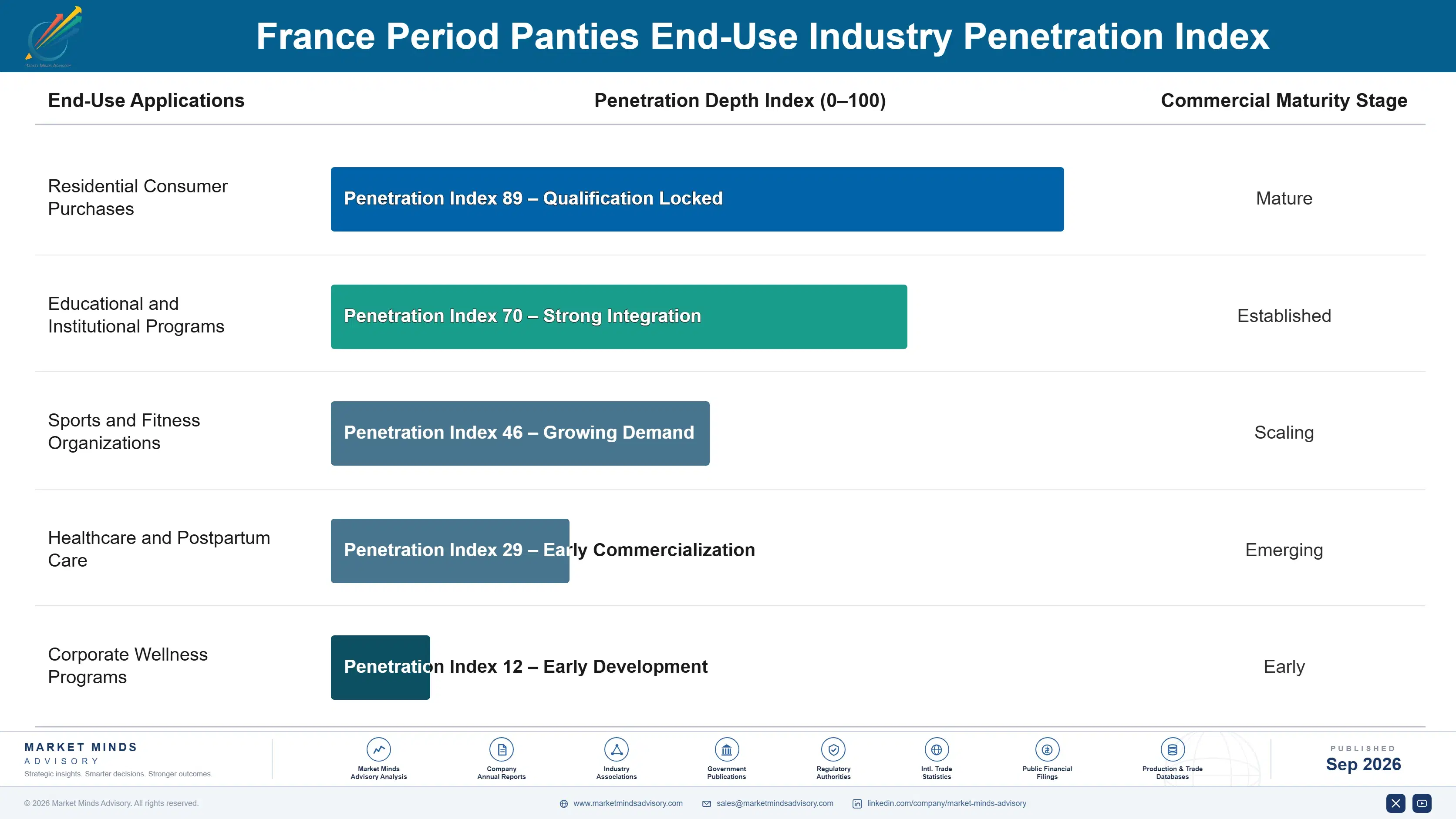
Cycle Recurrence Anchors Purchase Loyalty

Period underwear functions economically as a recurring, mandatory replacement product once a consumer adopts a preferred brand: replacement purchasing repeats every eighteen months for years, sometimes decades, generating predictable revenue far more valuable to manufacturers than any single transaction, and subscription programs lock in this cadence formally through automatic recurring shipments across most price tiers, retail channels, demographic segments, and geographic markets nationwide.
Adoption stickiness varies meaningfully by end-use vertical: casual first-time buyers often revert to disposable products if leakage or comfort disappoints during an early purchase experience, while sport-specific and destigmatization-motivated consumers under sustained brand engagement show far stronger loyalty once satisfied with fit and performance, making the sport-specific segment disproportionately valuable despite representing a smaller share of total unit volume across most geographic markets.

Buyer profiles are shifting generationally as younger consumers, exposed to destigmatized menstrual health content through social media platforms throughout their lives, increasingly expect period underwear as a standard wardrobe category rather than a specialty sustainability purchase, a shift retailers increasingly reflect by relocating products from niche shelving toward mainstream feminine hygiene sections nationwide, internationally, and across most price tiers.
france-period-panties-market-end-use-penetration-index-1790024704897

MMA Category Investment Verdict

These are among the four positions where our research anticipates prominent divergence between winners and laggards over the coming forecast period. Each is grounded in the demand model, the regulatory perimeter, and the announced capacity pipeline.
01 / FABRIC TECHNOLOGY INVESTMENT PRIORITY

Fund sport-specific fabric innovation before competitors close the gap

Manufacturers should prioritize sport-specific fabric technology investment now, since performance credibility increasingly drives premium purchasing decisions among the fastest-growing consumer segment across most developed retail markets and specialty athletic distribution channels nationwide and internationally today. Waiting risks ceding technology differentiation entirely to manufacturers already building athletic brand partnerships and specialized fabric research at meaningfully lower cost per acquired customer. Sport-specific credibility currently justifies premium pricing that pure destigmatization messaging increasingly cannot support alone across most retail channels and price tiers.
02 / SCHOOL PARTNERSHIP INVESTMENT PRIORITY

Build school health relationships before competitors lock in contracts

Manufacturers should build formal school health program partnerships now, since multi-year institutional contracts provide meaningfully more stable revenue than consumer retail seasonality alone can offer across most regional markets, price tiers, and educational districts nationwide. Brands that delay institutional investment risk ceding the largest, most predictable volume contracts and earliest brand exposure to faster-moving competitors already building education authority relationships and compliance documentation. Early movers gain a durable brand loyalty advantage that persists into adult purchasing behavior nationwide and internationally.
03 / GEOGRAPHIC DEFENSE SEQUENCING

Defend France's cultural leadership before regional competition intensifies

France's outsized destigmatization leadership reflects genuine cultural and regulatory depth that will persist for at least a decade, making continued domestic marketing investment the clearest priority for manufacturers seeking sustained category leadership across most price tiers, distribution channels, and export markets globally, consistently, and predictably over time. Competitors in Germany and the United Kingdom could erode this advantage if French manufacturers fail to maintain marketing and innovation momentum consistently over time. Later movers will face steeper competitive entry costs domestically and internationally.
04 / CONVENIENCE INNOVATION TIMING

Simplify washing requirements before convenience skepticism hardens

Brands should accelerate machine-washable and simplified care product redesigns now, before maintenance burden concerns meaningfully harden into a permanent category perception among convenience-focused consumers across most retail channels and demographic segments nationwide and internationally today and consistently. Manufacturers that solve genuine care friction gain both conversion advantage and meaningful differentiation from competitors still requiring cumbersome washing routines incompatible with typical household laundry habits and daily schedules. Waiting risks ceding this segment entirely to faster-moving specialist competitors and regional challengers alike.

Engagement Snapshot From the Field

A live engagement with an industry participant carrying material or product regulatory and market exposure ahead of a defining policy shift, showing how our research translates into a defensible multi-year portfolio strategy.
MARKET MINDS ADVISORY · CLIENT ENGAGEMENT SUMMARY
France Period Panties Producer Strategic Portfolio Review and Transition Roadmap 2026·Investment Scenario on France Period Panties Exposure Evaluation 2025-26
CLIENT PROFILE
A mid-sized specialty apparel retail chain operator with roughly 140 retail locations across the ÃŽle-de-France region approached MMA seeking guidance on expanding its period underwear category footprint amid rising customer inquiries for sport-specific and teen-focused products the chain's existing supplier relationships did not adequately serve across its full regional store network and merchandising strategy overall.
STRATEGIC CHALLENGE
The client's period underwear category was positioned entirely within a general feminine hygiene section featuring a single everyday-absorbency product line, generating declining foot traffic and unit sales despite client-reported growth in national category demand, and management could not determine whether the shortfall reflected weak supplier assortment, poor shelf placement, or genuine local demand softness.
MMA APPROACH
MMA combined primary survey data across the client's ÃŽle-de-France regional footprint with confidential store-level sales data to isolate assortment and placement effects from underlying demand trends, supplementing the analysis with expert interviews among category managers, athletic brand partners, supplier representatives, and two competing regional retailers to benchmark sport-specific merchandising practices.
KEY FINDINGS
  1. Store-level sales data consistently showed 26 percent higher unit velocity when sport-specific formats were merchandised near the main athletic apparel display sections.
  2. Consumers aged 16 to 28 consistently represented 41 percent of total category inquiries, a segment the client's existing assortment barely addressed adequately.
  3. Competing regional retailers carrying dedicated teen-focused product lines consistently reported 22 percent higher category revenue per available square foot of shelf space on average.
  4. Subscription-bundled kit penetration in the client's stores consistently lagged the regional average by 17 percentage points, indicating meaningful unrealized margin potential overall.
CLIENT PROFILE
A mid-sized specialty apparel retail chain operator with roughly 140 retail locations across the ÃŽle-de-France region approached MMA seeking guidance on expanding its period underwear category footprint amid rising customer inquiries for sport-specific and teen-focused products the chain's existing supplier relationships did not adequately serve across its full regional store network and merchandising strategy overall.
STRATEGIC CHALLENGE
The client's period underwear category was positioned entirely within a general feminine hygiene section featuring a single everyday-absorbency product line, generating declining foot traffic and unit sales despite client-reported growth in national category demand, and management could not determine whether the shortfall reflected weak supplier assortment, poor shelf placement, or genuine local demand softness.
MMA APPROACH
MMA combined primary survey data across the client's ÃŽle-de-France regional footprint with confidential store-level sales data to isolate assortment and placement effects from underlying demand trends, supplementing the analysis with expert interviews among category managers, athletic brand partners, supplier representatives, and two competing regional retailers to benchmark sport-specific merchandising practices.
KEY FINDINGS
  1. Store-level sales data consistently showed 26 percent higher unit velocity when sport-specific formats were merchandised near the main athletic apparel display sections.
  2. Consumers aged 16 to 28 consistently represented 41 percent of total category inquiries, a segment the client's existing assortment barely addressed adequately.
  3. Competing regional retailers carrying dedicated teen-focused product lines consistently reported 22 percent higher category revenue per available square foot of shelf space on average.
  4. Subscription-bundled kit penetration in the client's stores consistently lagged the regional average by 17 percentage points, indicating meaningful unrealized margin potential overall.
RECOMMENDED STRATEGY
Phase 1: Phase one: introduce sport-specific displays near main athletic apparel sections across all 140 stores within the first full fiscal quarter. Phase 2: Phase two: launch teen-focused product lines and partner with a regional school health initiative within the first four calendar months. Phase 3: Phase three: pilot a subscription replenishment program at 18 flagship stores before considering a broader, data-informed, chain-wide rollout decision nationwide.
OUTCOME
Within nine months of implementing phase one and two recommendations, the client reported (client-reported, unverified by MMA) a 24 percent increase in category unit sales and a 15 percent improvement in category gross margin, attributing the shift primarily to sport-specific merchandising and expanded teen-focused assortment reaching previously underserved younger customers.

Frequently Asked Questions

Foundational context covering the market sizes, CAGR, scope, country, region and competition that inform every finding below. This section is provided to cover basics and most often pre-purchase conversations, answered from the MMA Primary Research Dataset.

What is the current size of the France Period Panties Market?

The France Period Panties Market reached an estimated 1.15 billion dollars in 2025, reflecting rising destigmatization and sustainability awareness across major consumer markets worldwide and consistently.

How large will the France Period Panties Market be by 2036?

MMA projects the market will reach approximately 3.09 billion dollars by 2036, driven by sport-specific innovation, school health partnerships, and expanding e-commerce distribution nationwide and internationally.

What is the CAGR for the France Period Panties Market 2026 to 2036?

The market is projected to grow at a 9.4 percent compound annual growth rate between 2026 and 2036, supported by destigmatization marketing and expanding sustainability awareness.

Which segment is growing fastest?

Sport and Active Period Panties lead segment growth at a 13.5 percent CAGR, roughly 1.44 times the overall market rate, driven by demand for moisture-wicking performance fabric.

Who are the major companies in the France Period Panties Market?

Thinx and Modibodi lead the category, followed by Knix Wear, Sisters Republic, and Dans Ma Culotte, together holding roughly 32 percent combined market concentration nationwide and internationally.

Which country is growing fastest?

India leads national growth at a 12.8 percent CAGR, reflecting rising disposable income, expanding menstrual health awareness campaigns, and growing period poverty initiatives nationwide and internationally.

Report Segmentation Architecture

The full report scope spans multiple orthogonal segmentation dimensions, with cross-tabulated demand data provided for each dimension pair. Coverage extends further to regional breakdowns, trend trajectories, and the competitive detail needed to support segment-level decision-making.

By Primary Market Dimension

  • Sport / Active Period Panties
  • Teen / First-Period Panties
  • Moderate-Absorbency Everyday Panties
  • High-Absorbency Overnight Panties
  • Postpartum Period Panties
  • Subscription / Bundled Kits

By End-Use Industry

  • Residential Consumer Purchases
  • Educational and Institutional Programs
  • Sports and Fitness Organizations
  • Healthcare and Postpartum Care
  • Corporate Wellness Programs

By Commercial Dimension

  • Specialty and Direct-to-Consumer Retail
  • Mass Apparel Retail Channels
  • E-Commerce and Subscription Platforms
  • School and Institutional Procurement
  • Athletic Retail Partnerships

By Region

  • North America
  • Western Europe
  • East Asia
  • South Asia and Pacific
  • Latin America
  • Middle East and Africa
  • Eastern Europe

Scope, Methodology, and Coverage

Every figure in this report is reproducible from documented input assumptions. The scope below maps the historical period, the forecast horizon, the segmentation dimensions, and the countries covered, alongside the underlying primary and qualitative methodology.
Historical Period
2020 to 2025
Forecast Period
2026 to 2036
Base Year
2025 (USD billions; MMA Primary Research Dataset, September 2026)
Market Definition
The France Period Panties Market covers manufactured reusable absorbent underwear designed to replace or supplement disposable menstrual products, excluding disposable pads, tampons, and menstrual cups or discs.
Quantitative Units
USD billions, unit volume in millions of pairs
Segmentation Dimensions
Absorbency and use-case type, end-use industry, distribution channel
Regions Covered
North America, Western Europe, East Asia, South Asia and Pacific, Latin America, Middle East and Africa, Eastern Europe
Countries Covered
35+ countries across seven global regions
Key Companies Profiled
Thinx Inc, Modibodi Pty Ltd, Knix Wear Inc, Sisters Republic SAS, Dans Ma Culotte SAS, and 15 additional participants
Quantitative Methodology
Primary survey, n=3,800 respondents, Q4 2025, six countries; demand-side model with trade association cross-validation
Qualitative Methodology
47 expert interviews, Q4 2025; applied to validate demand model assumptions, identify emerging dynamics, and assess competitive positioning
Report Format
PDF and XLSX data workbook (Word format preview document)
Publisher
Market Minds Advisory
Report Code
MMA-2026-CON-215
Published
September 2026
Contact
sales@marketmindsadvisory.com | www.marketmindsadvisory.com

Purchase the full France Period Panties Market Report (2026 to 2036).

The full France Period Panties Market report delivers a complete forecast model spanning 2026 through 2036. Granular segmentation spans absorbency type, end-use industry, and distribution channel. It includes detailed competitive profiles for all twenty tracked participants, regional demand analysis across seven geographies, and input cost exposure modeling grounded in primary survey and expert interview data. The report further examines portfolio margin economics, revenue lever strategies, demand architecture, and a fully anonymized client engagement case study illustrating practical application of the underlying research findings across comparable markets.
Full regional breakdown across all seven global markets
Company-level competitive benchmarking with moat and risk assessment
Segment-by-segment growth rate forecasts through 2036
Input cost exposure analysis and mitigation pathway detail
Portfolio tiering framework with margin economics detail
Primary survey data collected across six countries

Built For The People Who Decide

From boardroom strategy to bench-side execution, this report is read cover-to-cover by leaders shaping the next decade of their industry, turning demand scenarios, market dynamics and valuation benchmarks into decisions.
CXOs/ Presidents/ VPs/ Managers
M&A and Corporate Development
Strategy Teams and R&D Heads
Procurement and Product Directors
Regulatory and Compliance Leaders
Investor Relations and Equity Analysts