Market Minds Advisory
Flue Gas Desulphurization Market

Flue Gas Desulphurization Market: Flue Gas Desulphurization Market. Global Sizing, Segmentation, and Competitive Analysis to 2036

New coal-fired capacity across South and Southeast Asia and tightening industrial boiler sulfur emission limits are sustaining flue gas desulphurization demand even as mature markets retire coal plants faster than new scrubbers are installed elsewhere.

Lead Analyst

Published

October 2026

Make Smarter Decisions with Customized Research Insights

Request a free sample report and evaluate market opportunities, growth trends, and competitive dynamics relevant to your business needs.

2025 MARKET VALUE$15.6BMarket Size 2025
2036 FORECAST VALUE$28.4BBase Case , 2026 to 2036
CAGR 2026 TO 20365.6 %Bull 6.9% / Bear 4.3%
INCREMENTAL OPPORTUNITY$11.9BNet 10- year value creation
EXPANSION MULTIPLE1.72x2036 value over 2026 base
Strategic Levers
M&A Pipeline
Regional Outlook
Country Rankings
Competitive Intelligence
Segmental Deep-dive
Call-Us : 91 93563 13602

Executive Snapshot and Market Trajectory.

Flue gas desulphurization demand is diverging sharply by region as mature markets retire coal capacity, while South and Southeast Asia continue building new coal and industrial boiler capacity that requires wet scrubber installation to meet tightening sulfur emission limits across newly commissioned plants.
Wet scrubber systems for new coal and industrial boiler capacity form the fastest-growing segment, concentrated almost entirely in India, Indonesia, and Vietnam where new generation capacity continues clearing final investment decisions at a steady pace. India leads global growth through sustained coal capacity additions paired with stricter sulfur dioxide emission standards, while China retains the largest installed base of operating scrubber systems from decades of prior coal fleet expansion and continued retrofit activity.
The competitive base concentrates around a handful of integrated environmental equipment suppliers, with CR5 reaching 42% as scale and engineering track record determine which suppliers win large utility contracts. Plant operators increasingly demand proven removal efficiency guarantees before awarding contracts for new installations, a bar smaller regional engineering firms have struggled to clear as consistently as established suppliers carrying decades of installed base performance data behind their product lines.
Market Definition
This market covers equipment and systems used to remove sulfur dioxide from industrial and power plant flue gas streams, including wet, dry, and semi-dry scrubber technologies. It excludes general particulate filtration equipment and nitrogen oxide control systems sold as standalone products.
Base Year Value
$15.6B in 2025 (MMA Primary Research Dataset, October 2026)
Forecast Period
2026 to 2036, eleven discrete annual values
CAGR
5.6% base case. Bull 6.9%. Bear 4.3%.
Fastest Growth Segment
Wet Scrubber Systems for New Coal and Industrial Boiler Capacity: 8.4% CAGR
Fastest Growth Country
India: 7.6% CAGR
Fastest Growth Region
South Asia and Pacific: 7.8% CAGR
Largest Region
East Asia: 36% of 2025 global value
Market Leaders
Mitsubishi Power, GE Vernova, Babcock & Wilcox, Andritz, Thermax. Source: MMA Primary Research Dataset, July 2026.
Primary Survey
n=3,800 procurement and R&D decision-makers, Q4 2025, six countries
Methodology
Demand-side build-up, cross-validated against public data, 47 expert interviews

Flue Gas Desulphurization Market Forecast Scenarios

flue-gas-desulphurization-market-size-forecast-scenario-1791062042237
Flue gas desulphurization demand grew unevenly between 2020 and 2025, as coal plant retirements across North America and Western Europe offset new installation activity in Asia during the same period. Growth held near 4.6% annually across the period, with India and Southeast Asia providing the clearest expansion as new coal capacity cleared environmental permitting and financing milestones.
The base case assumes 5.6% annual growth through 2036, built on three mechanisms: continued new coal and industrial boiler capacity additions across India, Indonesia, and Vietnam requiring mandatory scrubber installation, steady retrofit demand across China's existing fleet as emission standards tighten further, and selective replacement of aging scrubber internals across mature markets' remaining operating coal plants. None of these mechanisms depends on a single regulatory action clearing, which supports a moderate bull-bear spread relative to more volatile industrial categories.
The bull case centers on accelerated coal capacity additions across South and Southeast Asia pulling scrubber specification above current base-case assumptions, particularly if announced Indonesian and Vietnamese projects clear financing faster than expected. The bear risk is accelerated coal plant retirement schedules in mature markets outpacing new installation growth in Asia, which would compress the category's overall growth rate meaningfully.

A Mature Technology Finding New Growth in Asia

Flue gas desulphurization sits on a mature technology base, but the category's growth geography has shifted entirely across the past decade. Developed markets are retiring coal capacity faster than installing new scrubbers, while India, Indonesia, and Vietnam are commissioning new coal and industrial boiler capacity that requires wet scrubber systems to clear emission permitting requirements.
MARKET CONCENTRATIONCR5 42%scale and track record dominate large utility contract wins
AVERAGE SELLING PRICE$38 per kW installedwet scrubber systems command a premium over dry alternatives
TOP PRODUCING COUNTRY SHAREChina 31%reflects largest installed base and domestic equipment manufacturing
CAPACITY UTILISATION68%equipment makers run below peak amid lumpy project timing
FEEDSTOCK SHARE COGS29%limestone reagent and specialty alloy steel drive input costs
REPLACEMENT CYCLE LENGTH20 to 30 yearsscrubber internals outlast most other power plant components
Suppliers that built early engineering and reference project relationships in South and Southeast Asia are capturing a disproportionate share of new installation contracts, while producers focused solely on retrofit markets in mature economies face a shrinking addressable base. This geographic shift is reshaping where equipment makers locate engineering and fabrication capacity, with several suppliers now opening regional offices closer to Asian utility customers rather than serving the region from established headquarters.
Limestone reagent and specialty alloy steel costs remain the dominant input variables across the industry, and suppliers without integrated fabrication capacity face thinner margins on fixed-price utility contracts. Trade flows are shifting too, as utilities across India and Southeast Asia increasingly favor regionally manufactured equipment over imports, citing faster delivery and local maintenance support as the deciding factors in most recent contract awards.
"Everyone assumes FGD is a dying technology because of coal retirements in the West. They're missing that India alone is building more scrubber capacity right now than Europe installed in its entire buildout decades ago."
Senior Analyst, Energy and Emissions Control Equipment Practice · MMA Energy Practice · October 2026

Market Trends

South and Southeast Asian Coal Buildout Anchors Scrubber Demand

India, Indonesia, and Vietnam continue commissioning new coal-fired generation capacity even as mature markets retire coal plants, creating a sustained wet scrubber installation pipeline that did not exist in most developed markets a decade ago. India's national sulfur dioxide emission standards now require flue gas desulphurization on nearly all new and many existing coal units, pushing specification volume well above general industrial growth rates. Equipment suppliers have begun opening regional engineering offices across South Asia to serve this pipeline directly, reshaping where fabrication and project management capacity concentrates globally over the coming decade.
Market Impact: Forces retrofits across 400+ coal units

Industrial Boiler Sulfur Limits Tighten Beyond Power Generation

Sulfur dioxide emission limits are extending beyond utility-scale power generation into industrial boilers at cement, steel, and chemical manufacturing facilities across China and India, opening a new specification category that general power sector scrubber demand alone would not generate. Industrial facility operators favor smaller, modular dry and semi-dry scrubber systems over the large wet systems common at utility scale, creating distinct product requirements. This industrial segment remains smaller than utility-scale volume today but is growing from a low base as more countries extend sulfur limits to industrial sources nationwide and extend coverage further.
Market Impact: Sustains revenue across 20-year assets

Market Opportunities and Growth Drivers

National Emission Standards Mandate Retrofit Across Aging Fleets

Tightening national sulfur dioxide standards across China, India, and Indonesia are forcing utilities to retrofit existing coal plants that previously operated without flue gas desulphurization equipment at all installed on site. Utilities facing enforcement deadlines often have limited negotiating leverage on price, since non-compliance risks forced plant shutdown rather than a simple fine, giving equipment suppliers a durable specification advantage over new entrants lacking proven regulatory compliance track records across comparable large-scale retrofit projects spanning multiple countries, regulatory regimes, and utility ownership structures across the broader region and local market structure.
Market Impact: Shrinks retrofit base 15% by 2030

Long Asset Life Sustains Recurring Service Revenue

Installed scrubber systems operate for twenty to thirty years, generating recurring reagent supply, internals replacement, and maintenance service revenue that persists regardless of new installation activity in any given year across the broader market. Original equipment suppliers with large installed bases capture disproportionate service revenue share, since utilities generally prefer continuity with the original system designer over switching to a new maintenance provider mid-asset-life. This service revenue stream provides suppliers a meaningful buffer against new project order volatility tied to lumpy capital spending cycles across the broader utility sector worldwide.
Market Impact: Risks shortfalls at 30+ new plants

Market Restraints and Challenges

Coal Plant Retirements Shrink Mature Market Addressable Base

Accelerating coal plant retirements across North America and Western Europe are shrinking the addressable installed base for both new systems and recurring service revenue in these mature markets. The root cause is utility economics favoring gas and renewable generation over extending coal plant life through additional environmental capital spending commitments. Equipment suppliers reliant on mature-market retrofit revenue face declining order volume even as Asian growth accelerates, and several are now restructuring service divisions toward decommissioning and asset-retirement support work instead of pursuing new installation business opportunities across their remaining regional footprints.
Market Impact: Lifts Asian scrubber demand 8.4% CAGR

Limestone Reagent Availability Constrains Regional Expansion

Wet scrubber systems depend on consistent limestone reagent supply, and several fast-growing Southeast Asian markets lack domestic quarrying capacity matched to their new coal capacity buildout pace across multiple provinces. The root cause is limited prior investment in reagent supply infrastructure in markets that historically had little scrubber demand to justify it at all. Equipment suppliers and utilities are now jointly investing in dedicated limestone supply agreements and regional grinding facilities to secure reagent availability ahead of plant commissioning schedules over the next several years as new plants reach commissioning.
Market Impact: Adds 1,200 industrial boiler installations
3 additional market trends, 4 additional growth drivers, and 2 additional restraints and challenges are covered in the full report. Contact sales@marketmindsadvisory.com to access the complete intelligence.

Segment CAGR and Growth Architecture

Flue gas desulphurization segments by scrubber technology type, the single classification logic that holds consistently across utility and industrial boiler applications without mixing technology form with end-use, reagent type, or distribution channel considerations at any point. Five segments cover the category's full technical range from basic dry sorbent injection to large wet scrubber systems.
flue-gas-desulphurization-market-market-share-analysis-1791062042564

Wet Scrubber Systems for New Coal and Industrial Boiler Capacity

Wet scrubber systems for new coal and industrial boiler capacity are the fastest-growing segment, driven almost entirely by new plant construction across India, Indonesia, and Vietnam rather than mature-market retrofit activity across developed economies. These systems achieve the highest sulfur dioxide removal efficiency of any scrubber technology, a performance threshold new plants increasingly must meet to clear environmental permitting before construction can even begin. Suppliers serving this segment maintain large-project engineering and fabrication capability general equipment makers typically lack, creating a credible barrier against new entrants. Utilities rarely switch technology mid-project once a wet scrubber design clears permitting and detailed engineering review for a given coal or industrial boiler project under review.
CAGR 8.4%

Semi-Dry and Circulating Dry Scrubber Systems

Semi-dry and circulating dry scrubber systems form the second-fastest segment, expanding as mid-size industrial boilers and smaller utility plants seek lower water consumption alternatives to traditional wet scrubbing technology. These systems compete against wet scrubbers on total installed cost and water availability rather than removal efficiency alone, holding an advantage in water-constrained regions where wet scrubber blowdown disposal creates permitting complications. Industrial facility operators across China and India are specifying semi-dry systems increasingly as standard rather than exception, a shift that barely existed in specification documents a decade ago. Growth here trails the fastest segment, but the trajectory is steady and tied to water scarcity pressures that are not reversing anytime soon.
CAGR 6.1%
Full segment breakdown across 5 segments available in the complete report.

Regional Architecture and Country Demand Map

East Asia leads global flue gas desulphurization demand on China's decades-deep installed scrubber fleet and recurring service revenue base, exceeding its typical regional band, while South Asia and Pacific posts the fastest growth as India and Southeast Asia commission substantial new coal generation capacity nationwide.

East Asia

China's decades-deep installed scrubber fleet puts East Asia well outside its typical regional share band, reflecting the sheer scale of a coal generation base that required flue gas desulphurization retrofit across nearly its entire operating fleet starting in the 2000s. This installed base now generates substantial recurring reagent and internals replacement revenue independent of new construction activity. South Korea and Japan add smaller but steady industrial boiler retrofit demand on top of this China-driven volume. Growth here tracks moderately above the global average, reflecting both continued retrofit completion and new coal capacity additions in parts of the region. This concentration, rather than the band midpoint, is what the market actually shows for this region today.
Share: 36% | CAGR: 6.5% (2026 to 2036)

South Asia and Pacific

India's sustained new coal capacity additions are pushing South Asia and Pacific to the fastest regional growth rate in this market, outpacing even East Asia's larger absolute installed base. New national sulfur dioxide standards require flue gas desulphurization on nearly all new coal units, generating specification demand that did not exist at this scale five years ago. Indonesia and Vietnam are adding coal and industrial boiler capacity that requires scrubber installation at a pace outstripping general industrial growth across the broader region. Australia contributes a smaller, more mature share tied to existing industrial boiler retrofit. The region's lower base means growth percentages translate into comparatively modest absolute dollar volume relative to the larger established regions nearby.
Share: 12% | CAGR: 7.8% (2026 to 2036)
Regional intelligence for 5 additional markets available in the complete report: North America, Western Europe, Latin America, Middle East and Africa, Eastern Europe. Contact sales@marketmindsadvisory.com.
flue-gas-desulphurization-market-country-cagr-analysis-1791062042834

Where FGD Margins Concentrate Through 2036

Margin expansion in flue gas desulphurization is concentrating around service revenue depth, Asian market presence, and reagent supply security rather than new installation volume alone across the category. Suppliers positioned across these three levers can lift blended margins meaningfully even as mature-market new installation activity continues shrinking year after year across most developed regions.

Expand Recurring Service and Reagent Revenue

Suppliers that build out dedicated service and reagent supply contracts against their installed base can capture recurring revenue worth three to five percent of original system value annually, a stream largely insulated from new project order volatility across the broader market. Service relationships typically extend the full twenty to thirty year asset life once established, since utilities rarely switch maintenance providers mid-asset-life without a compelling cost or performance reason. Suppliers with the largest installed bases, concentrated heavily in China's 400-plus retrofitted coal units, capture disproportionate service revenue share relative to their new installation market position.
Market Impact: Captures 3 to 5% of system value annually

Secure Dedicated Limestone Reagent Supply Chains

Suppliers that secure dedicated limestone quarrying and grinding capacity ahead of new plant commissioning in Southeast Asia can avoid the reagent shortfalls currently constraining regional expansion, winning contracts worth 20 to 30 years of plant operating life that reagent-insecure competitors cannot credibly bid for. These arrangements typically require joint investment with utility customers or regional mining operators, but they lock in multi-decade supply relationships tied directly to the plant's operating life. Producers without secured reagent supply face real risk of losing contract awards to better-prepared competitors across the broader regional market.
Market Impact: Secures contracts spanning the full 20-year plant life

Who Controls the Margin Pool

CR5 stands at 42%, a moderate-to-high concentration reflecting a market where large-project engineering track record matters more than scale alone on a reported equipment revenue basis. The gap between leading players and the next tier is meaningful, since utility customers weight proven removal efficiency and installed base reliability heavily when awarding large contracts. No single producer dominates both mature-market service revenue and new Asian installation volume simultaneously.
Current competitive activity centers on expanding engineering and fabrication presence across India, Indonesia, and Vietnam to serve new coal capacity commissioning schedules. Several suppliers have announced regional joint ventures with local engineering firms, while others are investing directly in dedicated reagent supply infrastructure to secure contract awards. Pricing competition remains intense on new Asian installations, where local fabrication cost advantages pressure established exporters.

Rankings are most likely to shift as Asian installation volume overtakes mature-market service revenue in overall industry importance, favoring suppliers with early regional presence over those reliant on legacy developed-market relationships. Local Chinese and Indian fabricators may gain share disproportionate to their current global revenue position if cost competitiveness continues outweighing established suppliers' reference project advantage through the back half of the forecast period.
flue-gas-desulphurization-market-company-positioning-matrix-1791062043120

Competitive Moat and Risk Dimensions

MITSUBISHI POWER

Moat: Large-Project Engineering Depth

Mitsubishi Power carries decades of large-scale wet scrubber engineering experience across utility-scale coal plants, supporting specification wins on the largest and most technically complex installations where removal efficiency guarantees determine supplier selection. This track record took decades to build and is difficult for new entrants to replicate at comparable scale or confidence.
MITSUBISHI POWER

Risk: Mature Market Revenue Exposure

A meaningful share of Mitsubishi Power's installed base sits in markets retiring coal capacity, exposing long-term service revenue to gradual decline as plants shut down ahead of schedule. Defending this base requires expanding Asian presence faster than mature-market revenue erodes, a transition still underway across the organization.
THERMAX

Moat: Deep Indian Market Presence

Thermax carries the deepest domestic engineering and fabrication presence in India, the fastest-growing market in this category, supporting cost-competitive bids against international suppliers facing import duties and longer delivery timelines. This local presence took years to build and gives Thermax a durable advantage on Indian utility and industrial boiler contracts.
THERMAX

Risk: Limited Global Diversification

Thermax's revenue remains heavily concentrated in India and neighboring South Asian markets, creating exposure to any slowdown in Indian coal capacity additions that would be harder to absorb quickly than for globally diversified competitors with established positions across multiple regions and end markets worldwide today.

Players Tracked

Prominent Players

Mitsubishi Power
GE Vernova
Babcock & Wilcox
Andritz
Thermax

Other Key Players

Hitachi Zosen
Doosan Enerbility
Fuel Tech
China Everbright Environment
FLSmidth
Longking Environmental Protection
Clyde Bergemann
Marsulex Environmental Technologies
Alstom Power Systems
China National Pollution Control
Wuhan Kaidi Engineering
Valmet
Yara Environmental Technologies
Mitsubishi Hitachi Power Systems India
CECO Environmental

Recent Developments

JANUARY 2026

Thermax announced a joint venture with a regional engineering firm to expand wet scrubber fabrication capacity in Indonesia, supporting growing coal capacity commissioning schedules across the country and positioning the combined entity to bid on several announced power plant projects expected to clear financing within the next two years.
Signal: Signals established suppliers are forming local partnerships rather than exporting directly into fast-growing Southeast Asian markets.
JUNE 2025

Mitsubishi Power completed an organic capacity expansion at an existing fabrication facility, increasing output dedicated to wet scrubber internals for Asian utility customers rather than mature-market retrofit work, in direct response to sustained demand growth from new coal capacity commissioning across the broader region today.
Signal: Signals established producers are reallocating fabrication capacity toward Asian growth markets as mature-market retrofit demand declines.

Limestone Reagent and Alloy Exposure

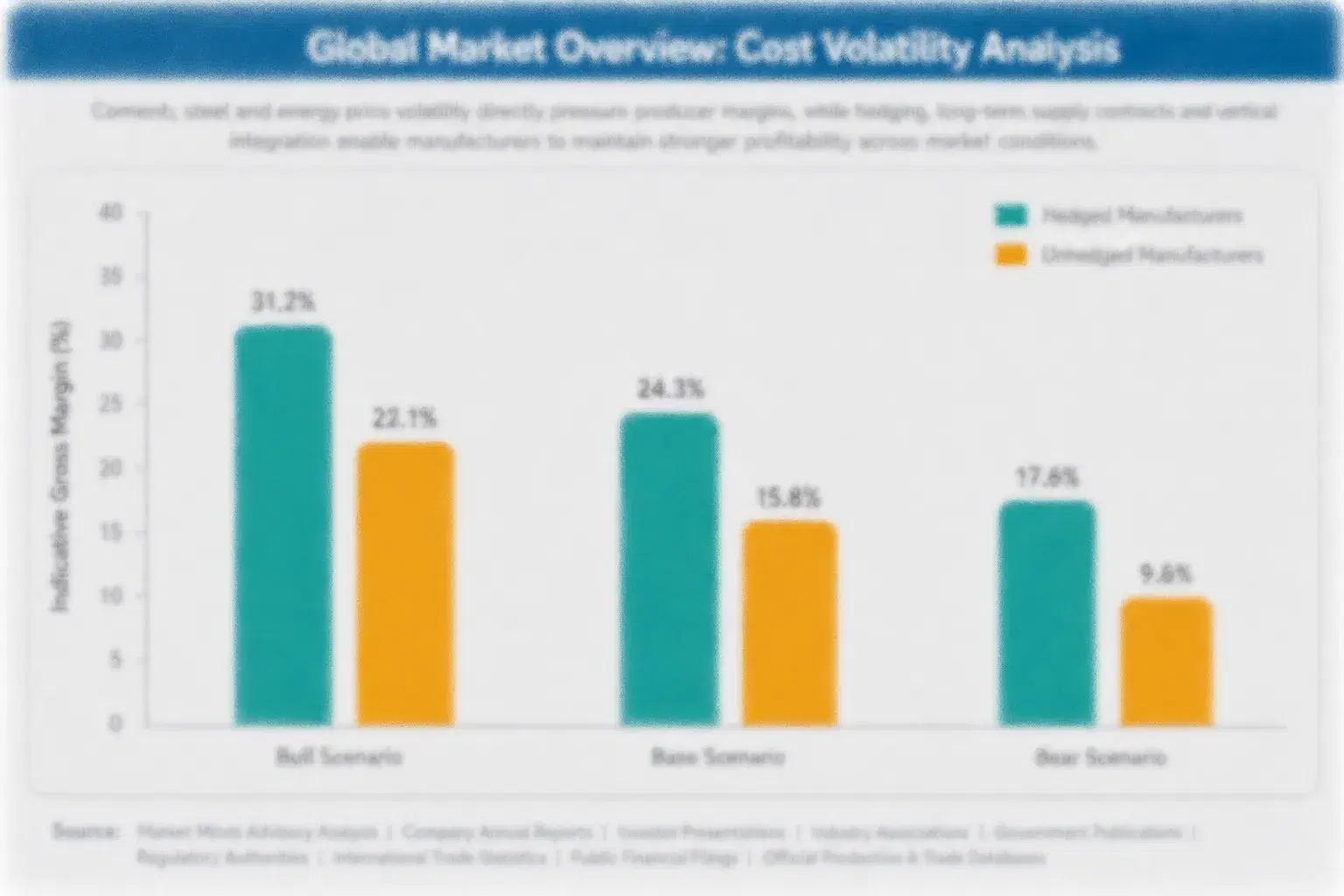
Limestone reagent and specialty alloy steel for scrubber internals account for roughly 29% of direct production cost in flue gas desulphurization systems, making feedstock a major input alongside fabrication labor. Limestone supply concentrates among domestic quarries near plant sites, while alloy steel sources from specialized mills in China, India, and Western Europe, with limited substitute supply during regional disruptions.
Alloy steel surcharges spiked more than 30% within weeks during the 2022 nickel market disruption on the London Metal Exchange, according to IEA data on critical mineral pricing across industrial supply chains worldwide. Several equipment suppliers absorbed the increase through compressed margins on fixed-price utility contracts rather than passing costs through immediately, fearing contract disputes with utility customers over previously committed long-term pricing terms negotiated months earlier.

Suppliers without secured limestone supply agreements near new Asian plant sites face the sharpest project delay risk, since reagent shortfalls can delay commissioning and trigger contractual penalties. Suppliers with established Chinese and Indian fabrication capacity carry a durable cost advantage over suppliers importing alloy steel internals, while utilities in reagent-scarce Southeast Asian markets face different exposure than those in established limestone-rich regions.
flue-gas-desulphurization-market-cost-volatility-analysis-1791062043475

Dedicated Limestone Supply Agreements

Several equipment suppliers are negotiating dedicated limestone quarrying and grinding agreements directly with mining operators near new Asian plant sites, trading upfront investment for guaranteed reagent availability ahead of plant commissioning schedules. These arrangements have started replacing spot-market sourcing as the default procurement model for new installations in reagent-scarce markets across the region over the coming years.

Long-Term Alloy Steel Supply Contracts

A number of suppliers are negotiating multi-year fixed or collared pricing contracts with alloy steel mills, trading some pricing flexibility for predictability during nickel market disruptions and exchange volatility. This approach has gained traction as fixed-price utility contracts leave little room to pass through sudden feedstock cost spikes to customers mid-project without contract amendment.

Portfolio Architecture for Margin Defence

Flue gas desulphurization economics split cleanly into three tiers, separated primarily by project type and recurring revenue depth rather than physical system size alone. Volume-tier new installations in cost-competitive Asian markets compete largely on price, with gross margins thinner than either of the two higher tiers sitting above it in the broader portfolio structure.
Premium tier service and reagent supply contracts against the installed base command meaningfully higher margins through recurring, predictable revenue that does not face the bidding competition new installations face. The sustainability and next-generation tier, covering advanced emission compliance and retrofit upgrade work for tightening regulatory standards, carries the highest margins of all three but also requires the deepest engineering relationships, since utilities rarely switch providers mid-asset-life once a system is commissioned.

The tension running through the category sits between chasing volume-tier new installation scale in cost-competitive Asian markets, where local fabricators keep pricing power limited, and investing in the service relationships and reagent supply infrastructure that premium and next-generation tiers require upfront. High-value margin pools concentrate overwhelmingly in the service and compliance-upgrade tiers, even though they represent a minority of total installed capacity across the broader global market.

New wet scrubber installations in cost-competitive Asian markets sold primarily on price and local fabrication cost advantage, earning gross margins in the 14 to 20 percent range typical of fiercely bid new-build project tenders.
Gross Margin

Recurring service and reagent supply contracts against the installed base, commanding gross margins in the 26 to 34 percent range through predictable, contracted revenue that avoids competitive new-build bidding pressure.
Gross Margin

Advanced emission compliance retrofit and upgrade work tied to tightening regulatory standards, commanding gross margins in the 38 to 46 percent range alongside the deepest engineering relationships and longest contract durations.
Gross Margin
flue-gas-desulphurization-market-portfolio-architecture-1791062043767

High-value Sub-segments and Strategic Watch-out

Wet Scrubber Systems for New Coal and Industrial Boiler Capacity

The highest-value, fastest-growing pool in the category, carrying margins well above the portfolio average as India, Indonesia, and Vietnam commission new coal capacity requiring certified removal efficiency. Capital allocation across the industry is increasingly tilted toward this segment as mature-market new installation activity continues shrinking.

Semi-Dry and Circulating Dry Scrubber Systems

A high-value segment growing moderately as water-constrained industrial boiler applications expand gradually across China and India over the coming decade. Margins sit above commodity wet scrubber installations, though the segment remains smaller in absolute volume than the core categories positioned above it in the portfolio.

Dry Scrubber Systems for Retrofit Applications

The volume core of mature-market activity, generating steady retrofit and service revenue through compliance-driven upgrade cycles across most remaining operating plants, but carrying thinner margins under sustained coal plant retirement pressure across North America and Western Europe specifically, year after year without much relief in sight.

Dry Sorbent Injection Systems

A strategic watch-out segment where the lowest-cost compliance technology has advanced furthest among smaller industrial boilers, eroding higher-margin wet scrubber share fastest among all segments and signaling clearly where cost-driven substitution pressure will likely intensify next across the broader market over the coming several years.

Asset-Life Service Economics

Flue gas desulphurization demand runs on asset-life economics far more than repeat purchase cycles, since each system installs once and then generates recurring reagent and service revenue for twenty to thirty years. Once a supplier wins the original installation, that relationship typically holds through the plant's operating life, giving incumbent suppliers rare multi-decade revenue visibility.
Adoption stickiness varies sharply by end-use vertical. Utility-scale coal plant operators rarely switch system designers mid-asset-life, since requalification and retrofit carry real cost and reliability risk that few plant managers want to absorb. Industrial boiler operators at cement and chemical facilities switch more readily between service providers, often on price alone, since these smaller systems carry less asset-specific complexity. This split explains why utility-scale relationships command materially higher retention than industrial boiler service contracts.

A generational shift in buyer profiles is underway as utility procurement teams increasingly weight documented lifecycle service cost more heavily than upfront installation price, favoring suppliers that can demonstrate predictable long-term maintenance economics. Younger engineering teams at fast-growing Asian utilities also rely more on digital asset management platforms that flag reagent and maintenance needs automatically, shifting influence away from legacy relationship-based service arrangements toward documented, data-driven supplier performance tracking.
flue-gas-desulphurization-market-end-use-penetration-index-1791062044044

The MMA Verdict

These are among the four positions where our research anticipates prominent divergence between winners and laggards over the coming forecast period. Each is grounded in the demand model, the regulatory perimeter, and the announced capacity pipeline.
01 / ASIAN MARKET ENTRY PRIORITY

Build engineering presence in India and Southeast Asia now

Asian new-installation volume is where the category's growth concentrates through the forecast period, and suppliers lacking local engineering and fabrication presence today are already losing bids to cost-competitive regional entrants on price alone. Building credible local presence through joint ventures or direct investment takes eighteen to thirty months. This should be the first priority for any supplier seriously targeting durable, meaningful share gains in the fastest-growing segment of this market going forward into the next decade and beyond, across nearly every major market.
02 / SERVICE REVENUE EXPANSION

Convert installed base into recurring revenue streams

Suppliers with large installed bases hold a durable advantage in recurring service and reagent revenue that new entrants cannot easily replicate, since utilities rarely switch maintenance providers mid-asset-life without compelling reason. Suppliers should prioritize converting installation wins into long-term service contracts rather than treating each sale as a one-time transaction. This recurring, highly durable stream is increasingly what separates genuinely profitable suppliers from those chasing thin new-build margins alone across fiercely bid Asian tenders where margins run thin for everyone involved.
03 / REAGENT SUPPLY SECURITY

Lock in limestone supply before competitors do

Reagent availability constraints in fast-growing Southeast Asian markets are shifting from a theoretical risk to an actual bottleneck as new coal capacity accelerates faster than regional quarrying infrastructure can expand to meet it. Suppliers that secure dedicated limestone supply agreements now will win contracts that reagent-insecure competitors cannot credibly bid for, since utilities increasingly require proof of secured reagent supply before awarding large contracts. Producers that wait too long risk losing specification slots entirely to better-prepared, faster-moving regional entrants across these same markets.
04 / MATURE MARKET TRANSITION STRATEGY

Shift mature-market focus from installation to compliance retrofit

Developed-market new installation volume is declining steadily as coal plants retire faster than new scrubbers install, and suppliers chasing this shrinking pool on price alone are fighting for a thinning-margin market with little room left to grow. The more durable path is redirecting mature-market capacity toward compliance-driven retrofit and upgrade work, where tightening emission standards continue generating demand independent of new coal capacity decisions. Treating mature markets as pure decline rather than a retrofit opportunity drains resources better spent building Asian presence.

Engagement Snapshot From the Field

A live engagement with an industry participant carrying material or product regulatory and market exposure ahead of a defining policy shift, showing how our research translates into a defensible multi-year portfolio strategy.
MARKET MINDS ADVISORY · CLIENT ENGAGEMENT SUMMARY
Flue Gas Desulphurization Producer Strategic Portfolio Review and Transition Roadmap 2026·Investment Scenario on Flue Gas Desulphurization Exposure Evaluation 2025-26
CLIENT PROFILE
The client is a mid-size power equipment supplier with established flue gas desulphurization service revenue across its North American installed base and no meaningful presence in Asian markets. Annual revenue sits in the $180 million to $280 million range (client-reported, unverified by MMA), concentrated almost entirely in mature-market retrofit and service work. The company had limited visibility into India and Southeast Asian new-installation opportunities before engaging MMA.
STRATEGIC CHALLENGE
Management was evaluating whether to invest in Asian market entry or continue focusing resources on defending its shrinking North American service base. Internal forecasts conflicted sharply, with finance leadership favoring the predictable North American service revenue while business development flagged Indian new-installation demand as the faster-growing opportunity worth the market entry investment and execution risk.
MMA APPROACH
MMA conducted primary interviews with Indian and Southeast Asian utility procurement teams and modeled market entry payback under base, bull, and bear demand scenarios. The analysis compared capital requirements and margin profiles for organic entry against joint venture partnership, isolating the capital intensity gap between the two approaches relative to the client's balance sheet capacity.
KEY FINDINGS
  1. Indian new-installation demand was growing roughly three times faster than the client's existing North American service segment, with local fabrication presence as the primary access barrier.
  2. Joint venture market entry payback was modeled at under three years under base-case assumptions, materially faster than organic entry given local partner fabrication capacity already in place.
  3. Continued North American focus alone carried a real risk of revenue decline as coal plant retirements accelerated faster than internal forecasts had assumed over the following five years.
  4. Early joint venture entry gave the client a credible lead-time advantage over slower-moving competitors still evaluating Asian market entry options at the time of the engagement.
CLIENT PROFILE
The client is a mid-size power equipment supplier with established flue gas desulphurization service revenue across its North American installed base and no meaningful presence in Asian markets. Annual revenue sits in the $180 million to $280 million range (client-reported, unverified by MMA), concentrated almost entirely in mature-market retrofit and service work. The company had limited visibility into India and Southeast Asian new-installation opportunities before engaging MMA.
STRATEGIC CHALLENGE
Management was evaluating whether to invest in Asian market entry or continue focusing resources on defending its shrinking North American service base. Internal forecasts conflicted sharply, with finance leadership favoring the predictable North American service revenue while business development flagged Indian new-installation demand as the faster-growing opportunity worth the market entry investment and execution risk.
MMA APPROACH
MMA conducted primary interviews with Indian and Southeast Asian utility procurement teams and modeled market entry payback under base, bull, and bear demand scenarios. The analysis compared capital requirements and margin profiles for organic entry against joint venture partnership, isolating the capital intensity gap between the two approaches relative to the client's balance sheet capacity.
KEY FINDINGS
  1. Indian new-installation demand was growing roughly three times faster than the client's existing North American service segment, with local fabrication presence as the primary access barrier.
  2. Joint venture market entry payback was modeled at under three years under base-case assumptions, materially faster than organic entry given local partner fabrication capacity already in place.
  3. Continued North American focus alone carried a real risk of revenue decline as coal plant retirements accelerated faster than internal forecasts had assumed over the following five years.
  4. Early joint venture entry gave the client a credible lead-time advantage over slower-moving competitors still evaluating Asian market entry options at the time of the engagement.
RECOMMENDED STRATEGY
Phase 1: Phase one: identify and negotiate a joint venture agreement with an established Indian engineering and fabrication partner within twelve months. Phase 2: Phase two: pursue qualification with two to three anchor Indian utility customers through the joint venture partner's existing engineering relationships. Phase 3: Phase three: redirect planned North American retrofit investment toward joint venture capacity expansion once anchor customer qualification is fully secured.
OUTCOME
The client formed a joint venture with an Indian engineering partner and secured qualification with one utility customer within fourteen months. Reported revenue from the joint venture grew from zero to roughly $16 million (client-reported, unverified by MMA) within the first eighteen months of operation, ahead of the client's original internal planning timeline.

Frequently Asked Questions

Foundational context covering the market sizes, CAGR, scope, country, region and competition that inform every finding below. This section is provided to cover basics and most often pre-purchase conversations, answered from the MMA Primary Research Dataset.

What is the current size of the Flue Gas Desulphurization Market?

The global flue gas desulphurization market is valued at $15.6 billion in 2025, the defined base year for this report. It is projected to reach $16.474 billion by 2026 as the forecast period begins.

How large will the Flue Gas Desulphurization Market be by 2036?

The market is projected to reach $28.408 billion by 2036, up from $16.474 billion in 2026. That represents a 1.72x expansion over the eleven-year forecast period.

What is the CAGR for the Flue Gas Desulphurization Market 2026 to 2036?

The market is forecast to grow at a 5.6% CAGR between 2026 and 2036. Bull and bear scenarios range from 6.9% to 4.3% depending on Asian coal capacity timing.

Which segment is growing fastest?

Wet scrubber systems for new coal and industrial boiler capacity are the fastest-growing segment, expanding at an 8.4% rate, roughly 1.5 times the overall market CAGR of 5.6% through the forecast period.

Who are the major companies in the Flue Gas Desulphurization Market?

Mitsubishi Power, GE Vernova, Babcock & Wilcox, Andritz, and Thermax lead the category across most major contract tenders. The top five hold a combined CR5 of 42%.

Which country is growing fastest?

India leads regional growth at 7.6% annually, driven by sustained new coal capacity additions paired with tightening national sulfur dioxide emission standards across its major industrial corridors nationwide.

Report Segmentation Architecture

The full report scope spans multiple orthogonal segmentation dimensions, with cross-tabulated demand data provided for each dimension pair. Coverage extends further to regional breakdowns, trend trajectories, and the competitive detail needed to support segment-level decision-making.
  • Wet Scrubber Systems
  • Dry Scrubber Systems
  • Semi-Dry and Circulating Dry Scrubber Systems
  • Dry Sorbent Injection Systems
  • Seawater Scrubbing Systems
  • Utility-Scale Coal Power Generation
  • Industrial Boilers and Process Heat
  • Cement Manufacturing
  • Steel and Metals Processing
  • Chemical Manufacturing
  • New Installation Project Contracts
  • Recurring Service and Reagent Supply
  • Retrofit and Upgrade Contracts

By Region

  • East Asia
  • North America
  • Western Europe
  • South Asia and Pacific
  • Latin America
  • Middle East and Africa
  • Eastern Europe

Scope, Methodology, and Coverage

Every figure in this report is reproducible from documented input assumptions. The scope below maps the historical period, the forecast horizon, the segmentation dimensions, and the countries covered, alongside the underlying primary and qualitative methodology.
Historical Period
2020 to 2025
Forecast Period
2026 to 2036
Base Year
2025 (USD billions; MMA Primary Research Dataset, October 2026)
Market Definition
This market covers equipment and systems used to remove sulfur dioxide from industrial and power plant flue gas streams, including wet, dry, and semi-dry scrubber technologies. It excludes general particulate filtration equipment and nitrogen oxide control systems sold as standalone products.
Quantitative Units
USD billions (current prices); CAGR in percent
Segmentation Dimensions
By Scrubber Technology Type; By End-Use Industry; By Commercial Dimension; By Region
Regions Covered
East Asia, North America, Western Europe, South Asia and Pacific, Latin America, Middle East and Africa, Eastern Europe
Countries Covered
USA, China, Germany, France, UK, Japan, South Korea, India, Australia, Canada, Brazil, Mexico, Indonesia, Vietnam, Thailand, Malaysia, UAE, Saudi Arabia, South Africa, Nigeria, Turkey, Poland, Netherlands, Italy, Spain, Sweden, Switzerland, Argentina, Colombia, Singapore, and additional markets relevant to this sector
Key Companies Profiled
Mitsubishi Power, GE Vernova, Babcock & Wilcox, Andritz, Thermax, Hitachi Zosen, Doosan Enerbility, Fuel Tech, China Everbright Environment, FLSmidth, Longking Environmental Protection, Clyde Bergemann, Marsulex Environmental Technologies, Alstom Power Systems, China National Pollution Control, Wuhan Kaidi Engineering, Valmet, Yara Environmental Technologies, Mitsubishi Hitachi Power Systems India, CECO Environmental
Quantitative Methodology
Primary survey, n=3,800 respondents, Q4 2025, six countries; demand-side model with trade association cross-validation
Qualitative Methodology
47 expert interviews, Q4 2025; applied to validate demand model assumptions, identify emerging dynamics, and assess competitive positioning
Report Format
PDF and XLSX data workbook (Word format preview document)
Publisher
Market Minds Advisory
Report Code
MMA-2026-ENE-853
Published
October 2026
Contact
sales@marketmindsadvisory.com | www.marketmindsadvisory.com

Purchase the full Flue Gas Desulphurization Market Report (2026 to 2036).

This report delivers a complete sizing, segmentation, and competitive assessment of the global flue gas desulphurization market through 2036. It covers demand drivers across utility coal generation, industrial boiler applications, and the geographic divergence between retiring mature-market fleets and expanding Asian coal capacity, alongside detailed regional analysis spanning all seven major world regions. Competitive profiling includes twenty leading manufacturers assessed on a consistent revenue basis, with detailed input cost and portfolio margin analysis supporting capital allocation decisions. The analysis draws on primary survey data, expert interviews, and company disclosures gathered throughout 2025 and 2026.
Seven-region demand sizing data through 2036
Five-segment MECE market breakdown framework included
Twenty-company competitive benchmarking and risk profiling
Limestone and alloy feedstock cost exposure analysis
Three-tier portfolio margin analysis framework included
Anonymized client case study with measured outcomes

Built For The People Who Decide

From boardroom strategy to bench-side execution, this report is read cover-to-cover by leaders shaping the next decade of their industry, turning demand scenarios, market dynamics and valuation benchmarks into decisions.
CXOs/ Presidents/ VPs/ Managers
M&A and Corporate Development
Strategy Teams and R&D Heads
Procurement and Product Directors
Regulatory and Compliance Leaders
Investor Relations and Equity Analysts