Market Minds Advisory
Fixed Cycle Regulator Residential Power Conditioner Market

Fixed Cycle Regulator Residential Power Conditioner Market: Fixed Cycle Regulator Residential Power Conditioner Market. Grid Instability Sustains Appliance Protection Demand

Aging low-voltage distribution networks and rising appliance sensitivity are colliding as households increasingly treat voltage regulation as mandatory equipment rather than an optional purchase, especially where grid reliability lags behind appliance sophistication considerably.

Lead Analyst

Published

September 2026

Make Smarter Decisions with Customized Research Insights

Request a free sample report and evaluate market opportunities, growth trends, and competitive dynamics relevant to your business needs.

2025 MARKET VALUE$1.8BMarket Size 2025
2036 FORECAST VALUE$3.7BBase Case , 2026 to 2036
CAGR 2026 TO 20366.8 %Bull 8.1% / Bear 5.5%
INCREMENTAL OPPORTUNITY$1.8BNet 10- year value creation
EXPANSION MULTIPLE1.93x2036 value over 2026 base
Strategic Levers
M&A Pipeline
Regional Outlook
Country Rankings
Competitive Intelligence
Segmental Deep-dive
Call-Us : 91 93563 13602

Executive Snapshot and Market Trajectory.

Voltage stabilization has shifted from a discretionary purchase to a near-mandatory appliance safeguard across markets with unreliable low-voltage distribution networks, reshaping product design priorities toward digital, IoT-connected regulation systems that consumers increasingly expect as standard equipment rather than an optional purchase add-on across most emerging retail markets today and tomorrow.
Manufacturers are racing to add smart monitoring and remote diagnostics to fixed cycle regulator designs, responding to consumer demand for appliance-level protection data and away from purely mechanical servo-based stabilizer technology that dominated the category for decades across most emerging market distribution channels, particularly in regions where refrigerator and air conditioner ownership continues expanding rapidly among first-time buyers each year and considerably beyond that as well.
Regional grid reliability gaps concentrate demand heavily in a handful of markets, while established manufacturers face growing competition from lower-cost entrants offering basic protection at a fraction of premium smart-regulator pricing, compressing margins across the value segment considerably and forcing established brands to defend share through service networks, extended warranties, and long-standing retailer relationships built carefully over many years of sustained market presence, brand trust, and consistent after-sales support quality.
Market Definition
This report covers fixed cycle voltage regulators and residential power conditioning equipment used to protect household appliances from voltage fluctuation and surge events, measured on a global unit-shipment basis. It excludes industrial-scale voltage regulation equipment and standalone surge protectors sold without active voltage correction capability.
Base Year Value
$1.8B in 2025 (MMA Primary Research Dataset, September 2026)
Forecast Period
2026 to 2036, eleven discrete annual values
CAGR
6.8% base case. Bull 8.1%. Bear 5.5%.
Fastest Growth Segment
Smart/IoT-Enabled Power Conditioners: 11.5% CAGR
Fastest Growth Country
India: 10.2% CAGR
Fastest Growth Region
South Asia and Pacific: 8.8% CAGR
Largest Region
East Asia: 30% of 2025 global value
Market Leaders
V-Guard Industries, Microtek International, Luminous Power Technologies, Bluebird Electric, Servokon Systems
Primary Survey
n=3,800 procurement and R&D decision-makers, Q4 2025, six countries
Methodology
Demand-side build-up, cross-validated against public data, 47 expert interviews

Fixed Cycle Regulator Residential Power Conditioner Market Forecast Scenarios

fixed-cycle-regulator-residential-power-conditione-size-forecast-scenario-1788256560307
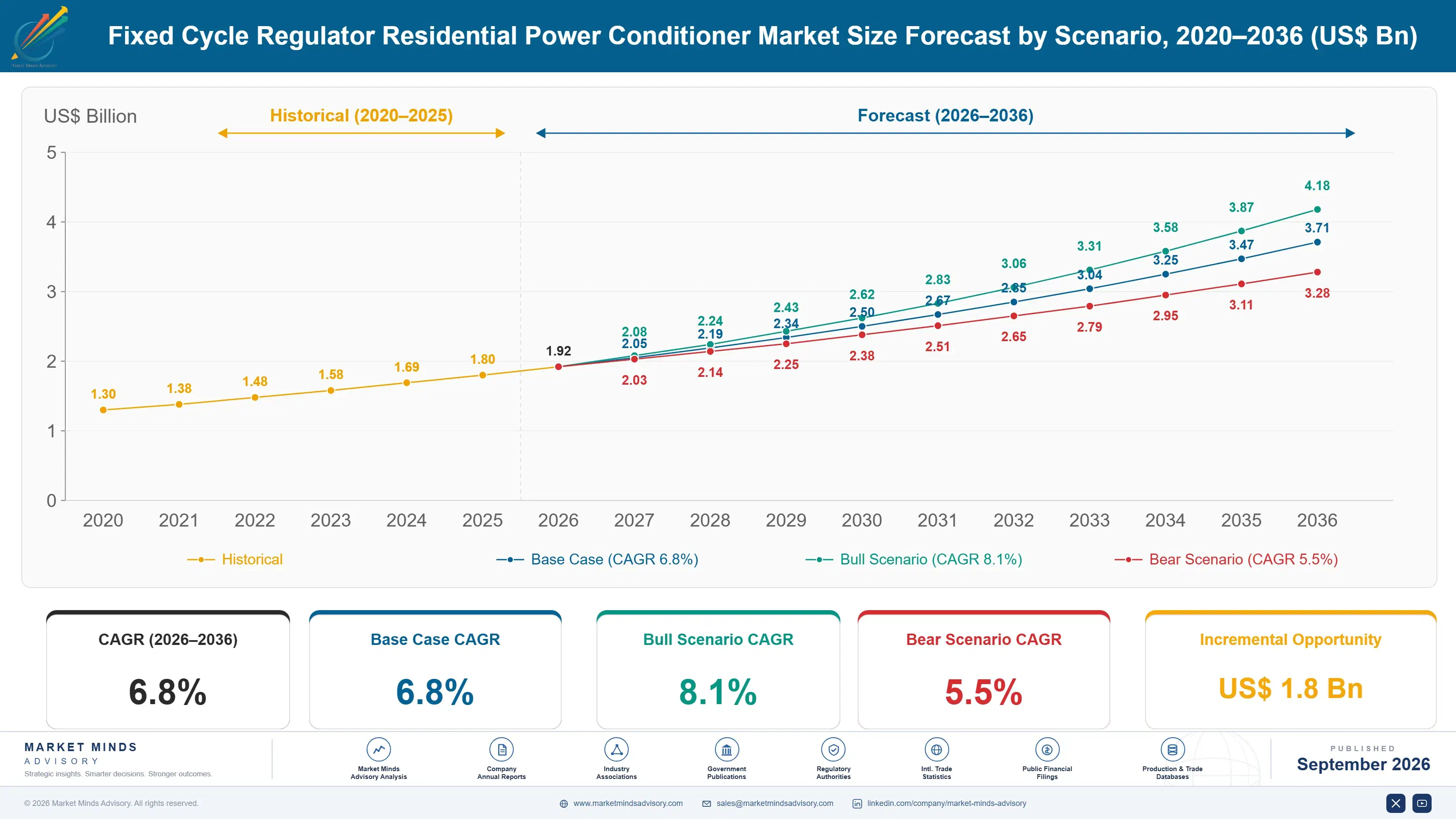
Between 2020 and 2025, residential power conditioner demand grew steadily as rising appliance sensitivity and expanding household electronics ownership across emerging markets outpaced grid reliability improvements, keeping voltage stabilization a persistent purchase priority rather than a fading legacy category as some analysts once predicted at the start of the decade, before smart-home adoption accelerated the category's relevance further.
The base case rests on three mechanisms holding steady through the entire forecast window: continued grid instability in high-growth emerging markets, rising penetration of sensitive appliances like inverter air conditioners and smart refrigerators, and gradual replacement of aging mechanical stabilizers with digital and IoT-connected units commanding higher price points across most retail and e-commerce channels reaching first-time buyers in previously underserved rural and semi-urban markets across several continents and their surrounding regions.
A bull scenario emerges if smart-regulator adoption accelerates faster than expected as connected home device networks expand across emerging markets, while a bear risk centers on grid modernization investment in key emerging markets reducing voltage fluctuation severity enough to weaken the core protection rationale that has sustained category demand for decades across most established and emerging distribution channels alike.

Grid Instability Sustains a Resilient Protection Category

Grid reliability, not income level, is the primary demand driver for this category, since households in regions with stable low-voltage distribution rarely purchase dedicated voltage regulation equipment regardless of appliance sophistication or disposable income levels. Even affluent households in unstable-grid markets treat a stabilizer as a mandatory companion purchase alongside major appliances, reflecting genuine engineering necessity rather than discretionary preference or brand-driven demand.
TOP MARKET SHARE28%India's share of total global unit shipment volume
SMART UNIT PENETRATION22%Share of shipments featuring digital or IoT connectivity currently
AVERAGE REPLACEMENT CYCLE8 yearsTypical service life before household unit replacement occurs
MARKET CONCENTRATION35%Combined production share held by the top five manufacturers
RETAIL CHANNEL SHARE58%Portion of unit sales moving through traditional retail outlets
RURAL HOUSEHOLD PENETRATION41%Share of rural households owning at least one protection unit
Manufacturers increasingly differentiate through smart monitoring features and mobile app connectivity rather than pure protection capacity, since basic voltage regulation has become commoditized among low-cost regional producers competing aggressively on price alone. Premium brands defend margin through extended warranty programs, dedicated service networks, and financing partnerships with appliance retailers that bundle protection equipment directly into major appliance purchase transactions nationwide.
Distribution remains heavily retail-dependent in emerging markets, where consumers prefer in-person demonstration and after-sales service access over e-commerce purchasing, though online channels are gaining share steadily among younger, tech-comfortable urban buyers seeking smart-connected units. Rural distribution still relies heavily on regional dealer networks and word-of-mouth reputation built over decades, favoring established brands with deep geographic service coverage over newer digital-first entrants nationwide.
"This category survives because the grid hasn't caught up to the appliance. Every inverter AC sold in an unstable-grid market is a stabilizer sale waiting to happen."
Practice Lead, Residential Electrical Equipment and Power Quality · MMA Residential Power Quality and Electrical Protection Equipment Practice · September 2026

Market Trends

Smart Connectivity Features Redefine Product Differentiation

Leading manufacturers are embedding Wi-Fi connectivity, mobile app monitoring, and predictive fault alerts into fixed cycle regulator designs, moving the category beyond passive protection into active appliance health monitoring across most premium product lines today. Roughly 22 percent of new unit shipments now include some form of digital connectivity, up from under 8 percent five years earlier, as manufacturers including V-Guard and Microtek launch dedicated smart product lines targeting urban households already comfortable with connected home device networks and willing to pay a meaningful price premium for real-time voltage monitoring data.
Market Impact: Adds 12 million new households annually
Inverter Appliance Proliferation Expands Core Addressable Demand

Rapid adoption of inverter-technology air conditioners and refrigerators, which are more sensitive to voltage fluctuation than older fixed-speed compressor designs, is expanding the addressable market for dedicated protection equipment considerably across most emerging urban and semi-urban markets today and tomorrow. Inverter AC penetration in key emerging markets has grown by over 15 percentage points over five years, and manufacturers report that inverter appliance owners are now the fastest-growing customer segment for premium stabilizer models specifically engineered for the tighter voltage tolerance these units require to operate reliably over their expected lifespan.
Market Impact: Attach rates reached 65% at purchase

Market Opportunities and Growth Drivers

Rural Electrification Programs Expand First-Time Purchase Demand

Government rural electrification initiatives across South Asia and parts of Africa are connecting millions of new households to grid power annually, but these newly connected networks frequently deliver unstable voltage during initial buildout years before infrastructure upgrades fully catch up to demand growth. This creates a substantial first-time purchase wave as newly connected households acquire major appliances alongside protective equipment, with an estimated 12 million new households entering the addressable market annually across the highest-growth rural electrification programs currently underway in key emerging economies worldwide and their surrounding rural regions overall.
Market Impact: Could cut addressable demand by 15%

Appliance Warranty Requirements Increasingly Mandate Voltage Protection

Major appliance manufacturers are increasingly voiding warranty coverage for inverter air conditioners and refrigerators damaged by voltage fluctuation unless a compatible stabilizer was installed at purchase, effectively making protection equipment a warranty-linked requirement rather than a purely discretionary add-on for most retail buyers today. This shift has pushed attach rates for stabilizers sold alongside major appliance purchases to roughly 65 percent in key emerging markets, up meaningfully from historical attach rates that rarely exceeded 40 percent before warranty policies tightened considerably across the wider industry and its retail and financing partners.
Market Impact: Counterfeits affect 18% of rural sales

Market Restraints and Challenges

Grid Modernization Investment Threatens Long-Term Category Demand

National grid modernization programs in several fast-growing emerging markets are reducing voltage fluctuation severity as utilities upgrade transformers and distribution networks reach higher reliability standards, threatening the fundamental protection rationale that has sustained category demand for decades across many established markets. The root cause is direct: as grid voltage stability improves toward developed-market standards, the practical need for dedicated stabilization equipment diminishes correspondingly. Manufacturers are responding by pivoting product positioning toward surge protection and power quality monitoring value propositions that remain relevant even as raw voltage stability improves across upgraded distribution networks nationwide.
Market Impact: Smart units reached 22% of shipments

Counterfeit and Substandard Units Erode Brand Trust

Low-cost counterfeit and substandard stabilizers, often lacking proper internal protection circuitry, have proliferated in price-sensitive rural markets, occasionally causing appliance damage that consumers wrongly attribute to legitimate branded products instead of the counterfeit units themselves. The root cause is weak enforcement of electrical safety certification standards in several key markets, where counterfeit goods can enter distribution channels with minimal regulatory scrutiny or consequence. Established manufacturers are responding with hologram-based authentication labels, QR-code verification systems, and consumer education campaigns to help buyers distinguish genuine products from counterfeits before purchase decisions are finalized.
Market Impact: Inverter AC penetration rose 15+ points
4 additional market trends, 3 additional growth drivers, and 3 additional restraints and challenges are covered in the full report. Contact sales@marketmindsadvisory.com to access the complete intelligence.

Segment CAGR and Growth Architecture

The residential power conditioner market splits into six product-technology segments defined by regulation method and connectivity level, ranging from mature mechanical servo stabilizers through fast-growing smart, IoT-enabled units capable of remote monitoring, diagnostics, and predictive fault alerts. Growth diverges sharply as digital connectivity becomes the primary differentiator across most emerging retail and appliance-bundling channels worldwide today.
fixed-cycle-regulator-residential-power-conditione-market-share-analysis-1788256560849

Smart/IoT-Enabled Power Conditioners

Smart, IoT-connected power conditioners represent the fastest-growing segment, embedding Wi-Fi connectivity, mobile app monitoring, and predictive fault alerts that let households track voltage events and appliance protection status remotely from anywhere with an internet connection available at any time and from anywhere on-site. Adoption concentrates among urban, tech-comfortable buyers willing to pay a meaningful premium over basic mechanical units for real-time visibility and remote diagnostics capability across their entire home network. Manufacturers including V-Guard and Microtek have launched dedicated smart product lines targeting this segment specifically, betting that connected home device network growth will continue pulling voltage regulation into the broader smart appliance category over the coming decade and considerably beyond its current scope.
CAGR 11.5%

Whole-House Automatic Voltage Regulators

Whole-house automatic voltage regulators protect an entire household's electrical circuit rather than individual appliances, appealing to homeowners seeking comprehensive protection without managing multiple point-of-use units scattered throughout the home separately and inconveniently across several rooms and separate circuits entirely. This segment benefits from rising new home construction in emerging markets, where builders increasingly offer whole-house protection as a premium feature bundled into new construction packages sold to middle-income and affluent buyers alike nationwide. Higher upfront cost limits penetration among budget-conscious buyers, but total cost of ownership advantages over multiple point-of-use units support steady adoption growth among middle-income and above households across expanding urban and suburban markets nationwide and increasingly abroad.
CAGR 9.2%
Full segment breakdown across 7 segments available in the complete report.

Regional Architecture and Country Demand Map

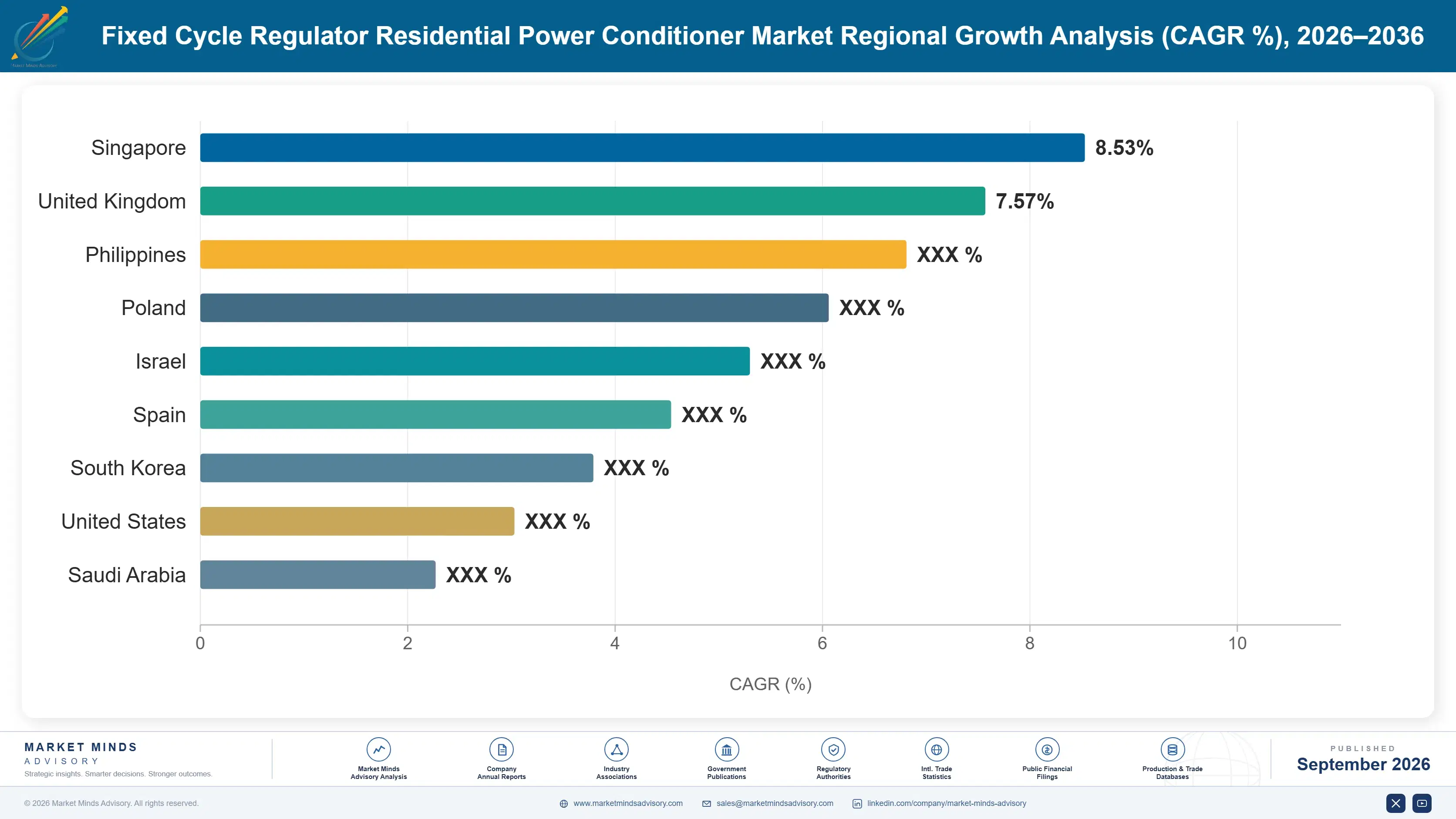
East Asia leads global residential power conditioner shipments, anchored by China's manufacturing scale and meaningful rural grid instability across many inland provinces, while South Asia posts the fastest regional growth rate as India's first-time appliance buyers rapidly expand the addressable market through 2036 and beyond.

East Asia

China dominates both manufacturing and consumption of residential power conditioners, with domestic brands supplying rural and semi-urban households where grid voltage still fluctuates meaningfully outside major coastal cities. Southeast Asian markets including Vietnam and the Philippines are following a similar adoption curve as inverter appliance ownership expands faster than distribution grid upgrades can keep pace. Japan and South Korea maintain smaller, more mature demand concentrated around surge protection rather than voltage stabilization, reflecting their considerably more reliable underlying grid infrastructure. Manufacturing scale advantages let Chinese producers export cost-competitive units across most of Asia and beyond. Local certification standards also shape which imported entrants can compete meaningfully in this large and fragmented consumer electronics category.
Share: 30% | CAGR: 7.8% (2026 to 2036)

North America

Residential voltage regulation demand in North America concentrates heavily in older housing stock, rural cooperatives, and off-grid or marine-adjacent applications rather than mainstream urban households, where grid reliability is generally high. Hurricane-prone regions along the Gulf Coast and Atlantic seaboard drive periodic demand spikes tied to storm-related grid instability and post-storm appliance replacement cycles. Data closets and home office equipment protection represent a growing niche application distinct from the appliance-protection use case dominant elsewhere globally. Overall penetration remains modest compared with unstable-grid emerging markets, but steady replacement demand sustains a meaningful baseline volume nationwide. Insurance-linked incentive programs in some hurricane-exposed states are beginning to encourage broader adoption among homeowners. Adoption remains a niche but durable category overall.
Share: 24% | CAGR: 7.0% (2026 to 2036)
Regional intelligence for 5 additional markets available in the complete report: Western Europe, South Asia and Pacific, Latin America, Middle East and Africa, Eastern Europe. Contact sales@marketmindsadvisory.com.
fixed-cycle-regulator-residential-power-conditione-country-cagr-analysis-1788256561409

Smart Connectivity and Warranty Bundling Priorities

Producers generate outsized returns not from raw protection capacity alone but from smart connectivity features, warranty-linked appliance bundling, and after-sales service networks built carefully over many years. Four levers stand out as the clearest paths to margin expansion across the forecast period, each requiring distinct product and channel investment from manufacturers pursuing them seriously and consistently.

Expand Smart Monitoring and Mobile App Features

Adding Wi-Fi connectivity, mobile app monitoring, and predictive fault alerts to fixed cycle regulator designs commands a 25 to 35 percent price premium over comparable mechanical units, appealing to urban buyers already comfortable with connected home device networks and willing to pay for real-time visibility across their entire household network and beyond it. Manufacturers investing early in this capability are capturing disproportionate share of premium segment growth as smart unit penetration climbs from single digits toward roughly a quarter of total shipments across major markets and their surrounding regions and neighboring countries.
Market Impact: Commands a 25 to 35% price premium overall

Secure Appliance Manufacturer Bundling Partnerships Broadly

Partnering directly with major appliance manufacturers to bundle protection equipment into warranty-linked purchase packages captures attach rates approaching 65 percent at point of sale, far above the roughly 40 percent typical of standalone retail purchasing across most consumer electronics channels nationwide and internationally as well. These partnerships also provide manufacturers predictable volume forecasting tied directly to appliance sales cycles, reducing the inventory risk that standalone stabilizer producers face when relying entirely on independent retail channel demand fluctuations across dispersed geographic markets and seasonal buying patterns each year. Programs continue expanding.
Market Impact: Captures attach rates near 65% at point of sale

Build Rural Distribution and Service Networks

Investing in rural dealer networks and localized after-sales service infrastructure captures first-time buyer demand from rural electrification programs before competitors establish distribution presence, a meaningful advantage given an estimated 12 million newly connected households entering the addressable market annually across several fast-growing emerging economies and their expanding rural territories nationwide and beyond. Service network depth also builds the brand trust that differentiates established manufacturers from counterfeit and substandard competitors in price-sensitive rural markets lacking reliable product verification infrastructure entirely across most distribution channels. Networks continue expanding steadily. Rural markets grow fastest.
Market Impact: Reaches roughly 12 million new households each year

Deploy Anti-Counterfeit Brand Authentication Technology Broadly

Implementing hologram-based authentication labels and QR-code verification systems protects brand reputation from counterfeit products that have captured an estimated 18 percent of rural sales volume in key emerging markets, occasionally causing appliance damage wrongly attributed to legitimate branded products instead of the counterfeits themselves entirely and quite unfairly. Manufacturers that invest in verification technology and consumer education campaigns increasingly command buyer preference and premium pricing from safety-conscious purchasers in markets where counterfeit prevalence is already well known and thoroughly documented by industry associations. Adoption continues expanding steadily nationwide. Fraud enforcement improves too.
Market Impact: Counters 18% of rural counterfeit market penetration broadly

Who Controls the Margin Pool

The market remains moderately fragmented, with the top five manufacturers holding an estimated 35 percent combined unit-shipment share globally across most emerging market territories. V-Guard Industries leads Indian domestic share by a meaningful margin over regional challengers, while Microtek and Luminous compete closely for second-tier positioning across similar geographic footprints and comparable product portfolios spanning multiple protection categories and price tiers.
Current competitive activity centers on smart connectivity feature launches, appliance manufacturer bundling partnerships, and rural distribution network expansion rather than raw protection capacity differentiation alone across most product tiers. Chinese manufacturers are increasingly exporting cost-competitive units into Southeast Asian and African markets, intensifying price pressure on established regional brands defending premium positioning through service quality, warranty coverage, and brand reputation built over decades.

Rankings could shift meaningfully as counterfeit enforcement tightens and smart connectivity becomes table stakes rather than a premium differentiator across most price tiers and geographic markets globally. Manufacturers with established rural service networks and appliance bundling relationships are best positioned, while smaller regional players risk losing ground to better-capitalized competitors investing heavily in connected product development, marketing, and nationwide distribution expansion.
fixed-cycle-regulator-residential-power-conditione-company-positioning-matrix-1788256562085

Competitive Moat and Risk Dimensions

V-GUARD INDUSTRIES

Moat: Rural Distribution Network Depth

V-Guard's decades-deep dealer and service network across rural and semi-urban India gives it a distribution reach that newer entrants cannot replicate quickly, reinforcing brand trust in a category where after-sales service accessibility strongly influences purchase decisions among first-time rural buyers considerably more than advertising or brand awareness campaigns alone.
V-GUARD INDUSTRIES

Risk: Smart Feature Development Lag

V-Guard's traditionally mechanical product heritage leaves it playing catch-up on smart connectivity features against newer, tech-focused entrants, risking share loss among younger urban buyers who increasingly prioritize app-based monitoring over pure protection capacity when selecting between competing premium product lines at retail counters nationwide and online.
MICROTEK INTERNATIONAL

Moat: Diversified Power Product Portfolio

Microtek's broader power equipment portfolio spanning inverters, UPS systems, and stabilizers gives it cross-selling advantages and shared distribution infrastructure that pure-play stabilizer competitors lack, supporting more resilient margins across product category demand cycles and reducing dependence on any single product line's performance in a given year.
MICROTEK INTERNATIONAL

Risk: Brand Dilution Across Categories

Microtek's broad portfolio approach risks diluting brand association with any single product category, potentially disadvantaging it against focused competitors that market themselves specifically as voltage protection specialists to safety-conscious appliance buyers who value category-specific expertise over diversified product breadth and general power equipment scale advantages.

Players Tracked

Prominent Players

V-Guard Industries
Microtek International
Luminous Power Technologies
Bluebird Electric
Servokon Systems

Other Key Players

Numeric Power Systems
Everest Power Solutions
Sukam Power Systems
Havells India
Crompton Greaves Consumer Electricals
Syska Electronics
Anchor by Panasonic
Su-Kam
Consul Neowatt
Delta Electronics
APC by Schneider Electric
Eaton Corporation
Legrand
Vertiv Group
CyberPower Systems

Recent Developments

JANUARY 2026

V-Guard launched a new smart stabilizer product line featuring mobile app connectivity and predictive fault alerts, targeting urban households in major Indian metropolitan markets already comfortable with connected home device networks and increasingly demanding real-time appliance protection visibility across their entire households and connected smart devices.
Signal: Signals established mechanical-heritage manufacturers are accelerating smart feature investment to defend their existing market share position
SEPTEMBER 2025

Microtek signed a bundling partnership with a major regional appliance retailer to bundle protection equipment directly into refrigerator and air conditioner purchase packages across several key emerging market territories and metropolitan retail chains nationwide, expanding its addressable customer base and overall market reach and brand visibility considerably.
Signal: Signals appliance bundling partnerships are quickly becoming the decisive distribution channel strategy across the entire industry
APRIL 2025

Luminous Power Technologies acquired a smaller regional stabilizer manufacturer to expand its rural distribution footprint and service network coverage across previously underserved secondary and tertiary market territories in several neighboring states, districts, municipalities, and rural cooperative electricity zones nationwide, strengthening its overall competitive position considerably.
Signal: Signals continued consolidation among mid-tier manufacturers seeking rural distribution scale advantages nationwide today and going forward

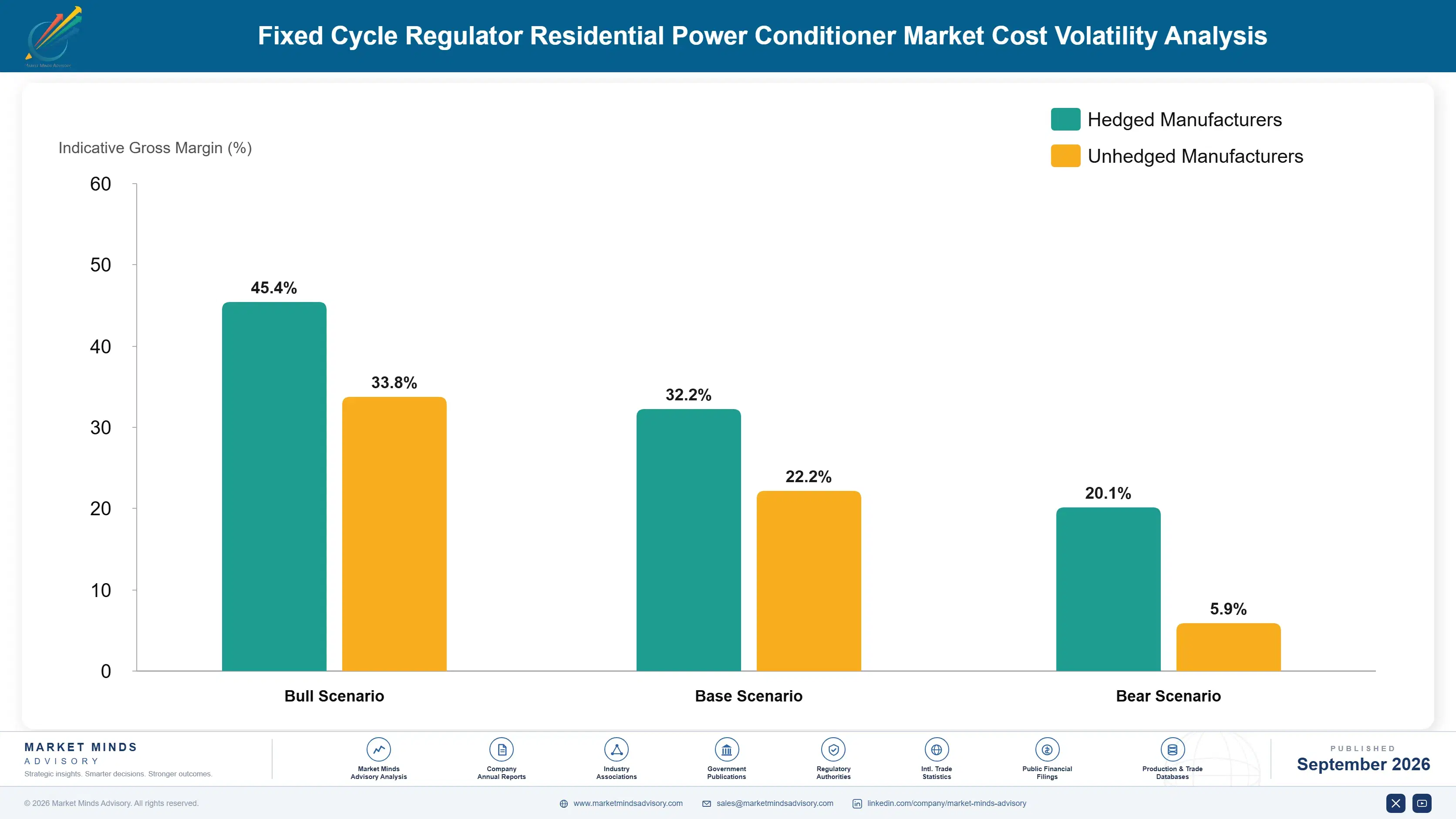
Copper and Electronics Costs Shape Margins

Copper windings, electronic control components, and enclosure materials represent 55 to 65 percent of total production cost for most manufacturers, with copper sourced predominantly from domestic and Southeast Asian refiners while semiconductor components increasingly originate from Chinese and Taiwanese electronics supply chains spanning multiple tiers of contract manufacturers, component distributors, regional assembly partners, and logistics providers. Diversification is accelerating steadily.
Copper prices rose more than 25 percent during 2024 amid supply constraints and rising renewable energy and electric vehicle demand competing for the same refined copper output, according to industry pricing data, squeezing manufacturer margins across the value and mid-tier product segments considerably during peak price months and forcing several smaller producers to delay planned capacity expansion until market conditions stabilized meaningfully across the broader supply chain.

Manufacturers without copper hedging programs or long-term supply contracts face a meaningful cost disadvantage against larger competitors with dedicated procurement teams and forward-purchasing capability built over many years of supplier relationship development, negotiation experience, and market intelligence gathering. This dynamic increasingly favors scaled manufacturers like V-Guard and Microtek over smaller regional producers tied to spot-market copper purchasing at unpredictable prices.
fixed-cycle-regulator-residential-power-conditione-cost-volatility-analysis-1788256562302

Establish Long-Term Copper Supply Contracts

Forward-purchasing agreements with copper refiners smooth input cost volatility, trading some upside during favorable price periods for protection against the sharp spikes that have repeatedly compressed smaller manufacturers' margins during recent supply-constrained years and unpredictable pricing cycles across the broader industry and its component supply base. Contracts are renewed annually. Terms improve gradually. Adoption grows steadily.

Substitute Aluminum Windings Where Feasible

Using aluminum windings in place of copper for lower-tier product lines reduces material cost exposure considerably, though at some efficiency tradeoff, allowing manufacturers to maintain price-competitive entry-level offerings during periods of elevated copper pricing volatility across most emerging market retail segments and price-sensitive rural buyer categories. Adoption keeps expanding steadily. Quality remains acceptable broadly.

Diversify Electronic Component Sourcing Regionally

Building relationships with multiple semiconductor and electronic component suppliers across different countries reduces exposure to single-source supply disruption, protecting production continuity during regional trade disputes or unexpected component shortage events affecting any single sourcing region or geopolitical trade corridor and its associated logistics networks. Diversification continues expanding steadily. Redundancy improves reliability considerably. Costs remain manageable.

Portfolio Architecture for Margin Defence

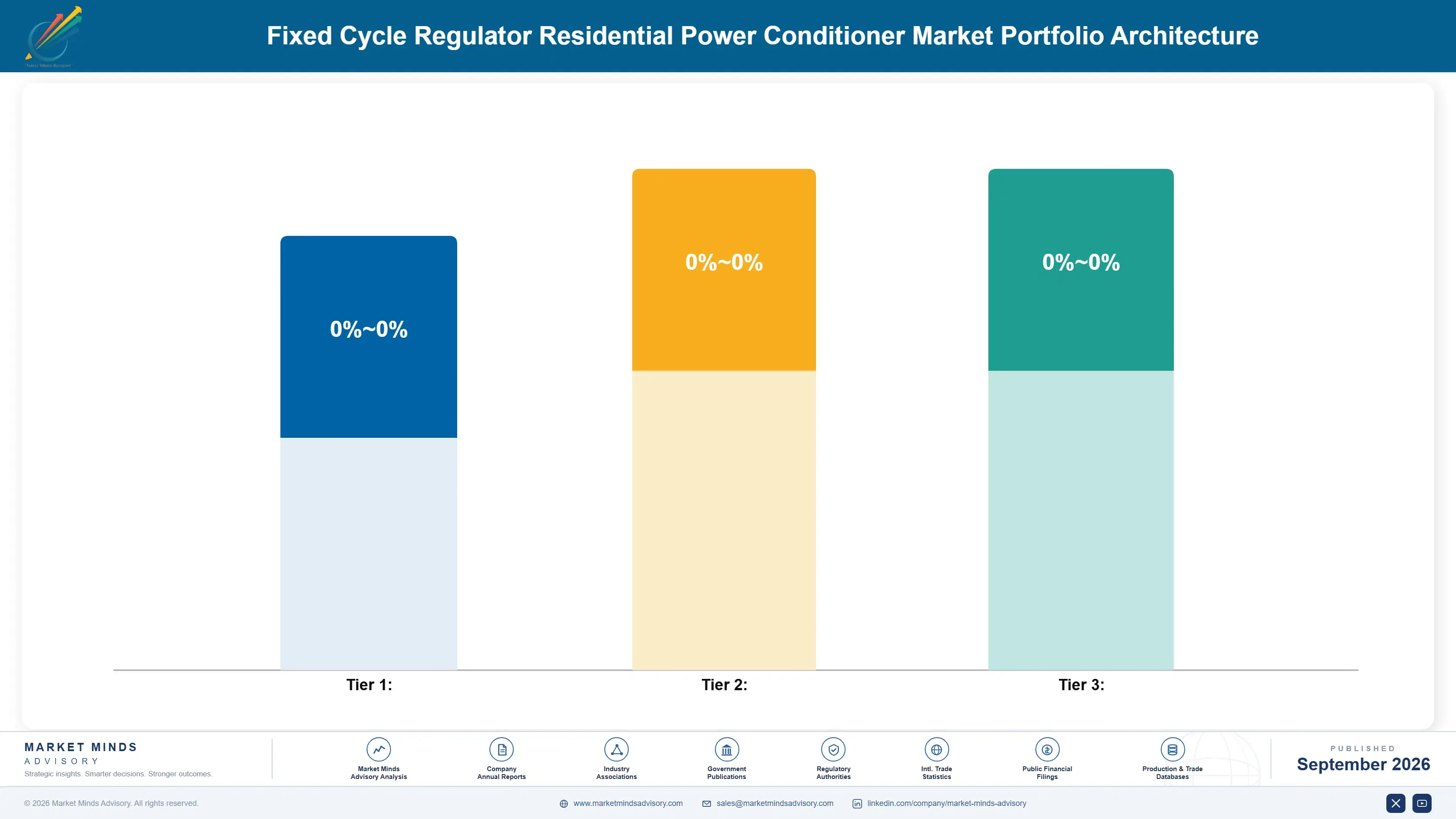
Producer portfolios split across three tiers: basic mechanical stabilizers competing on price, certified premium units bundled with appliance warranties, and next-generation smart-connected regulators still gaining share across most emerging retail and appliance-bundling channels. Margin economics diverge considerably between tiers, with the gap widening as connectivity features mature and appliance bundling partnerships expand steadily. Investment is accelerating.
Basic mechanical stabilizers compete almost entirely on manufacturing cost and distribution reach, with thin margins that leave little room for brand differentiation beyond service network depth and warranty terms built over many years. Smart-connected and premium bundled units capture meaningfully wider margins through feature differentiation and appliance manufacturer partnerships, insulating producers from pure commodity price competition that defines the volume tier across most emerging markets.

High-value pools concentrate in smart-connected units and appliance-bundled warranty products, where connectivity features and manufacturer partnership premiums reward producers willing to invest in software and retail relationship development considerably over time and across markets. Basic mechanical stabilizers remain the volume anchor but offer limited margin upside absent a fundamental shift toward connected product architecture or deeper appliance manufacturer bundling arrangements across major retail channels nationwide.

Basic mechanical stabilizers competing primarily on manufacturing cost and rural distribution network reach, coverage, and depth, with quite limited feature differentiation beyond core protection functionality across most price-sensitive retail markets.
Gross Margin

Appliance-bundled units carrying manufacturer warranty partnerships and certified safety compliance labeling commanding higher retail pricing through trust and reduced consumer decision friction at the point of major appliance purchase transactions.
Gross Margin

Smart, IoT-connected regulators with mobile app monitoring and predictive diagnostics still gaining much broader market penetration among urban, tech-comfortable buyers willing to pay premium pricing for connected home device integration.
Gross Margin
fixed-cycle-regulator-residential-power-conditione-portfolio-architecture-1788256562867

High-value Sub-segments and Strategic Watch-out

Smart/IoT-Enabled Power Conditioners

The clearest high-value, high-growth pool, combining strong feature-driven margins with an 11.5 percent CAGR as connectivity adoption accelerates across urban markets and appliance manufacturers continue expanding bundled smart-protection partnership programs nationwide and across neighboring emerging economies, retail chains, and e-commerce platforms as well. Adoption keeps rising.

Whole-House Automatic Voltage Regulators

Strong margins and steady growth from new home construction bundling and rising middle-income household adoption across expanding suburban markets, supported by builder partnerships that position whole-house protection as a premium construction feature bundled directly into new residential development sales and marketing packages nationwide. Interest keeps rising.

Point-of-Use Appliance Stabilizers

The volume core, generating most industry revenue despite thinner margins, anchored by decades of established rural distribution infrastructure, dealer relationships, and brand trust that newer connected-product entrants have not yet managed to replicate at comparable scale or geographic depth nationwide. Volume remains substantial and dependable.

Surge-Protection Combo Units

A strategic watch-out given persistent commoditization pressure despite steady demand, since differentiation from basic surge protectors remains difficult and margin compression from low-cost domestic and imported competitors continues eroding profitability across this increasingly crowded and price-sensitive product segment overall nationwide. Margins remain thin and vulnerable.

Grid Instability Anchors Durable Demand

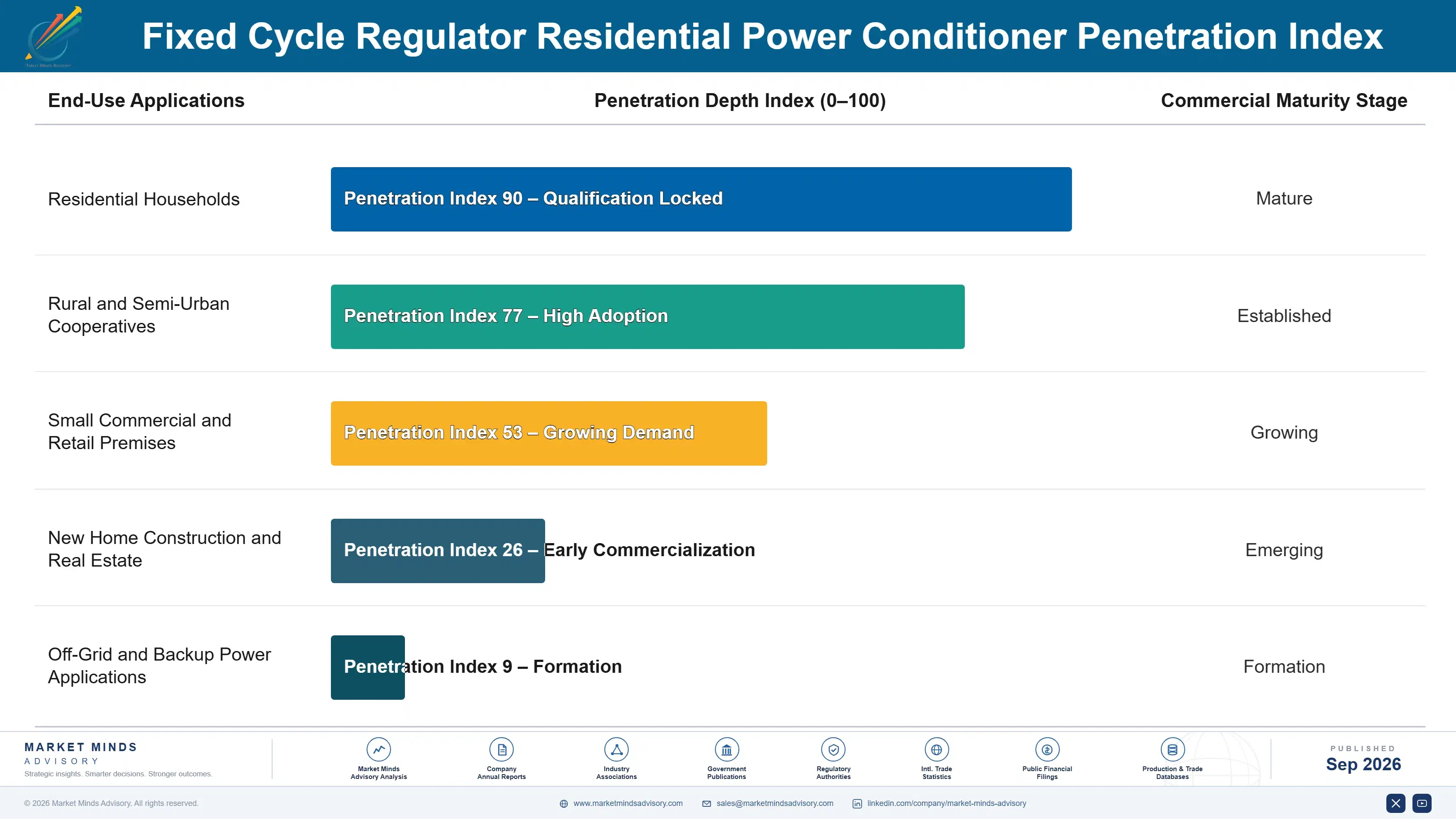
Voltage regulation demand behaves like an insurance product rather than a discretionary purchase in unstable-grid markets, since households treat appliance protection as a mandatory companion purchase alongside major electronics, creating annuity-like replacement demand every several years regardless of broader economic conditions or income fluctuations across the household. This durability distinguishes the category from purely discretionary consumer electronics purchases that fluctuate meaningfully with disposable income levels.
Adoption depth varies considerably by end-use vertical: refrigerator and air conditioner protection is nearly universal in unstable-grid households, while television and smaller electronics protection remains more discretionary, and whole-house protection adoption still trails individual appliance-level protection considerably despite offering superior comprehensive coverage across the entire home electrical system. Cost sensitivity keeps whole-house adoption concentrated among middle-income and above households specifically.

Buyer profiles are shifting generationally as younger, tech-comfortable urban households increasingly favor smart, app-connected units over the purely mechanical stabilizers their parents purchased, bringing higher willingness to pay for connectivity features and pulling manufacturers toward software-enabled product development investment across their entire portfolio. Rural buyers, however, remain considerably more price-sensitive and slower to adopt premium connected features regardless of urban trend momentum.
fixed-cycle-regulator-residential-power-conditione-end-use-penetration-index-1788256563370

Connectivity and Bundling Investment Priorities

These are among the four positions where our research anticipates prominent divergence between winners and laggards over the coming forecast period. Each is grounded in the demand model, the regulatory perimeter, and the announced capacity pipeline.
01 / SMART FEATURE INVESTMENT

Accelerate smart connectivity feature development immediately

Manufacturers still relying on purely mechanical stabilizer designs face a widening gap against smart-connected competitors already capturing 25 to 35 percent price premiums from urban, tech-comfortable buyers willing to pay for real-time visibility. Smart unit penetration has climbed from single digits to roughly 22 percent of shipments within five years, and this trajectory shows no sign of slowing across most emerging urban markets. Manufacturers delaying connectivity investment risk permanent share loss among the fastest-growing and most profitable customer segment in the category.
02 / APPLIANCE BUNDLING PRIORITY

Secure appliance manufacturer warranty bundling agreements now

Warranty-linked bundling partnerships with major appliance manufacturers capture attach rates approaching 65 percent at point of sale, far exceeding the roughly 40 percent typical of standalone retail purchasing across most emerging markets. Building these relationships takes years of negotiation and trust development with appliance manufacturers wary of quality or service failures reflecting poorly on their own brand reputation. Manufacturers that secure bundling partnerships now will lock in predictable volume well ahead of competitors still relying entirely on independent retail channel sales.
03 / RURAL DISTRIBUTION EXPANSION

Expand rural distribution ahead of electrification programs

Government rural electrification programs are connecting an estimated 12 million new households to grid power annually, creating a substantial first-time purchase wave for manufacturers with established distribution presence in these newly connected territories across multiple emerging economies. Building rural dealer networks and service infrastructure takes years of relationship development with local distributors and technicians unfamiliar with premium branded products or established warranty service protocols. Manufacturers that establish presence ahead of electrification rollout capture first-mover advantage before competitors recognize the emerging opportunity fully.
04 / ANTI-COUNTERFEIT PROTECTION STRATEGY

Deploy authentication technology to protect brand credibility

Counterfeit products have captured an estimated 18 percent of rural sales volume in key emerging markets, occasionally causing appliance damage wrongly attributed to legitimate branded manufacturers rather than the counterfeiters actually responsible. Regulatory enforcement against counterfeit electrical goods remains inconsistent across most affected markets, meaning manufacturers cannot rely solely on government action to resolve this brand-damaging problem effectively. Early investment in hologram authentication and consumer education protects both current revenue and long-term brand trust considerably more than delayed, reactive responses.

Engagement Snapshot From the Field

A live engagement with an industry participant carrying material or product regulatory and market exposure ahead of a defining policy shift, showing how our research translates into a defensible multi-year portfolio strategy.
MARKET MINDS ADVISORY · CLIENT ENGAGEMENT SUMMARY
Fixed Cycle Regulator Residential Power Conditioner Producer Strategic Portfolio Review and Transition Roadmap 2026·Investment Scenario on Fixed Cycle Regulator Residential Power Conditioner Exposure Evaluation 2025-26
CLIENT PROFILE
A mid-sized voltage stabilizer manufacturer with an established mechanical product line and strong rural distribution presence across a single South Asian country sought to evaluate whether launching a smart, connected product line made commercial sense given rising urban demand for app-based monitoring features and growing competitive pressure from newer, tech-focused market entrants nationwide and internationally.
STRATEGIC CHALLENGE
The client's engineering team had deep expertise in mechanical stabilizer design but limited software and connectivity development capability in-house, while urban competitors were rapidly capturing premium-segment share with smart product launches that commanded meaningfully higher retail pricing than the client's existing mechanical product portfolio across most major metropolitan retail territories.
MMA APPROACH
MMA benchmarked smart product launches from three category leaders, interviewed connectivity technology vendors capable of supplying white-label IoT modules, and modeled revenue and margin scenarios for both in-house development and vendor-partnership approaches to entering the smart-connected segment within a realistic eighteen-month timeline and limited engineering headcount and budget constraints overall.
KEY FINDINGS
  1. Vendor-partnership approaches could bring a smart product to market in roughly nine months versus over two years in-house (client-reported, unverified by MMA).
  2. Smart units commanded a 28 percent average price premium over comparable mechanical models in the client's target urban markets (client-reported, unverified by MMA).
  3. Urban retail partners expressed strong interest in stocking a domestically manufactured smart product line at competitive pricing tiers (client-reported, unverified by MMA).
  4. Competing manufacturers that delayed smart product launches saw meaningful urban market share erode within roughly twelve to fourteen months (client-reported, unverified by MMA).
CLIENT PROFILE
A mid-sized voltage stabilizer manufacturer with an established mechanical product line and strong rural distribution presence across a single South Asian country sought to evaluate whether launching a smart, connected product line made commercial sense given rising urban demand for app-based monitoring features and growing competitive pressure from newer, tech-focused market entrants nationwide and internationally.
STRATEGIC CHALLENGE
The client's engineering team had deep expertise in mechanical stabilizer design but limited software and connectivity development capability in-house, while urban competitors were rapidly capturing premium-segment share with smart product launches that commanded meaningfully higher retail pricing than the client's existing mechanical product portfolio across most major metropolitan retail territories.
MMA APPROACH
MMA benchmarked smart product launches from three category leaders, interviewed connectivity technology vendors capable of supplying white-label IoT modules, and modeled revenue and margin scenarios for both in-house development and vendor-partnership approaches to entering the smart-connected segment within a realistic eighteen-month timeline and limited engineering headcount and budget constraints overall.
KEY FINDINGS
  1. Vendor-partnership approaches could bring a smart product to market in roughly nine months versus over two years in-house (client-reported, unverified by MMA).
  2. Smart units commanded a 28 percent average price premium over comparable mechanical models in the client's target urban markets (client-reported, unverified by MMA).
  3. Urban retail partners expressed strong interest in stocking a domestically manufactured smart product line at competitive pricing tiers (client-reported, unverified by MMA).
  4. Competing manufacturers that delayed smart product launches saw meaningful urban market share erode within roughly twelve to fourteen months (client-reported, unverified by MMA).
RECOMMENDED STRATEGY
Phase 1: Phase one: partner with a connectivity technology vendor to accelerate smart product development and meaningfully reduce overall time to market. Phase 2: Phase two: launch the smart product line in top urban markets before expanding into secondary metropolitan retail territories broadly and steadily. Phase 3: Phase three: integrate learnings into next-generation in-house connectivity development while gradually reducing vendor dependency over the following several years ahead.
OUTCOME
The client launched its smart product line within ten months using the vendor-partnership approach, capturing meaningful urban market share and validating the pricing premium projected during the engagement, well ahead of the original eighteen-month internal development timeline and initial budget projections (client-reported, unverified by MMA).

Frequently Asked Questions

Foundational context covering the market sizes, CAGR, scope, country, region and competition that inform every finding below. This section is provided to cover basics and most often pre-purchase conversations, answered from the MMA Primary Research Dataset.

What is the current size of the Fixed Cycle Regulator Residential Power Conditioner Market?

The global market reached an estimated $1.8 billion in 2025, driven by grid instability in emerging markets and rising appliance sensitivity to voltage fluctuation. East Asia remains the largest producing and consuming region.

How large will the Fixed Cycle Regulator Residential Power Conditioner Market be by 2036?

MMA projects the market will reach approximately $3.71 billion by 2036, up from $1.92 billion in 2026. That represents roughly a 1.93x expansion across the ten-year forecast window.

What is the CAGR for the Fixed Cycle Regulator Residential Power Conditioner Market 2026 to 2036?

The base case forecast CAGR is 6.8% across 2026 to 2036, with a bull scenario of 8.1% and a bear scenario of 5.5% depending on grid modernization pace and smart adoption.

Which segment is growing fastest?

Smart/IoT-Enabled Power Conditioners lead at an 11.5% CAGR, roughly 1.69 times the overall market rate, as connected home device network adoption pulls voltage regulation into digital product categories.

Who are the major companies in the Fixed Cycle Regulator Residential Power Conditioner Market?

V-Guard Industries, Microtek International, Luminous Power Technologies, Bluebird Electric, and Servokon Systems lead the market, together holding an estimated combined unit-shipment share of 35% globally.

Which country is growing fastest?

India leads growth at a 10.2% CAGR, driven by rural electrification programs and decades of household stabilizer culture built around historically unstable grid voltage nationwide.

Report Segmentation Architecture

The full report scope spans multiple orthogonal segmentation dimensions, with cross-tabulated demand data provided for each dimension pair. Coverage extends further to regional breakdowns, trend trajectories, and the competitive detail needed to support segment-level decision-making.
  • Mechanical Servo-Based Stabilizers
  • Digital Static Voltage Regulators
  • Whole-House Automatic Voltage Regulators
  • Point-of-Use Appliance Stabilizers
  • Smart/IoT-Enabled Power Conditioners
  • Surge-Protection Combo Units
  • Residential Households
  • Rural and Semi-Urban Cooperatives
  • Small Commercial and Retail Premises
  • New Home Construction and Real Estate
  • Off-Grid and Backup Power Applications
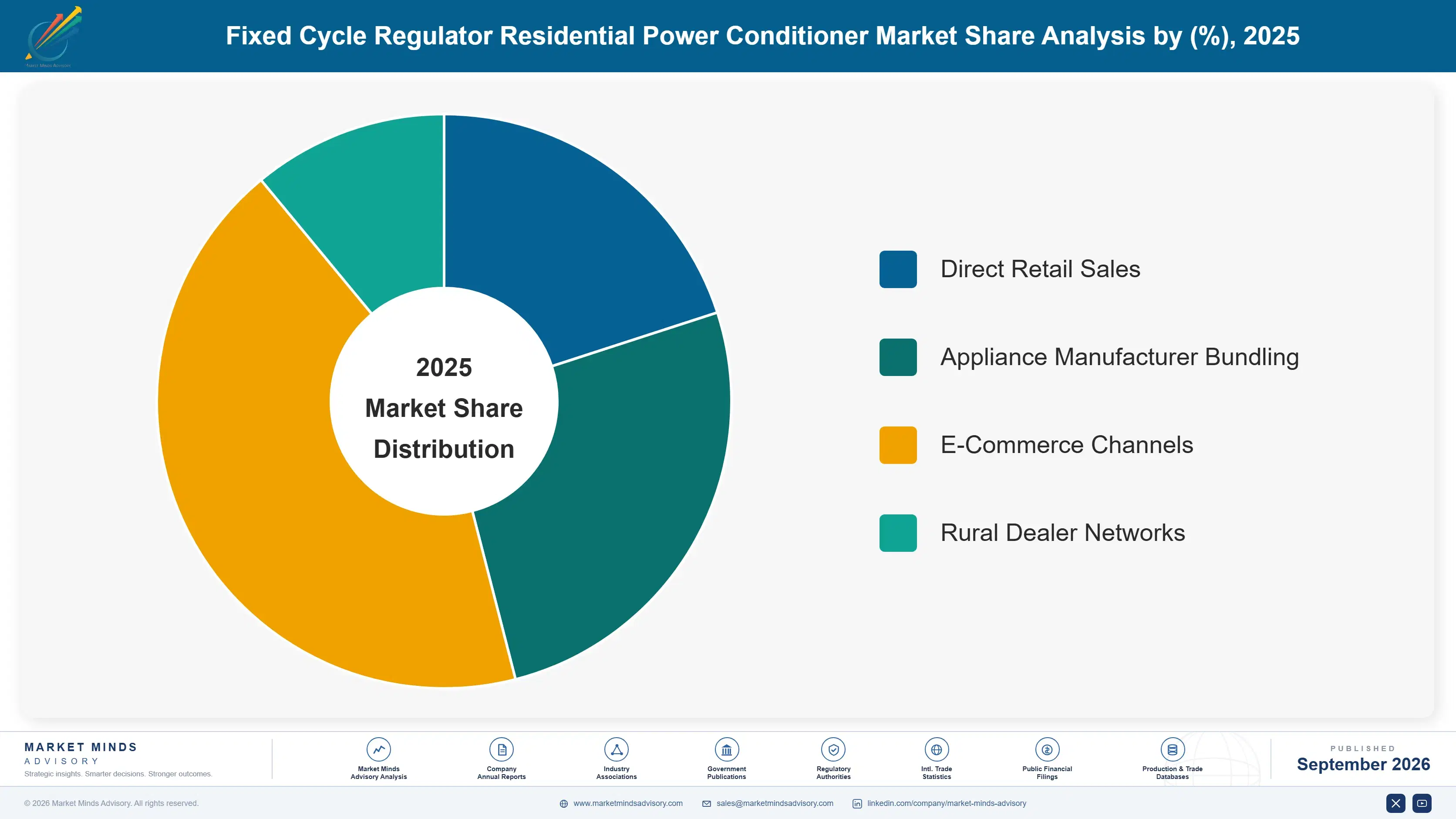
  • Direct Retail Sales
  • Appliance Manufacturer Bundling
  • E-Commerce Channels
  • Rural Dealer Networks

By Region

  • North America
  • Western Europe
  • East Asia
  • South Asia and Pacific
  • Latin America
  • Middle East and Africa
  • Eastern Europe

Scope, Methodology, and Coverage

Every figure in this report is reproducible from documented input assumptions. The scope below maps the historical period, the forecast horizon, the segmentation dimensions, and the countries covered, alongside the underlying primary and qualitative methodology.
Historical Period
2020 to 2025
Forecast Period
2026 to 2036
Base Year
2025 (USD billions; MMA Primary Research Dataset, September 2026)
Market Definition
This report covers fixed cycle voltage regulators and residential power conditioning equipment used to protect household appliances from voltage fluctuation and surge events, measured on a global unit-shipment basis. It excludes industrial-scale voltage regulation equipment and standalone surge protectors sold without active voltage correction capability.
Quantitative Units
USD billions, million units shipped, and percentage CAGR
Segmentation Dimensions
Product technology (mechanical servo, digital static, whole-house automatic, point-of-use, smart/IoT-enabled, surge-combo), end-use vertical, commercial channel, and geography
Regions Covered
North America, Western Europe, East Asia, South Asia and Pacific, Latin America, Middle East and Africa, Eastern Europe
Countries Covered
India, China, United States, Brazil, Nigeria, Indonesia, and 20+ additional countries across seven global regions
Key Companies Profiled
V-Guard Industries, Microtek International, Luminous Power Technologies, Bluebird Electric, Servokon Systems, and 15 additional manufacturers across the global competitive set
Quantitative Methodology
Primary survey, n=3,800 respondents, Q4 2025, six countries; demand-side model with trade association cross-validation
Qualitative Methodology
47 expert interviews, Q4 2025; applied to validate demand model assumptions, identify emerging dynamics, and assess competitive positioning
Report Format
PDF and XLSX data workbook (Word format preview document)
Publisher
Market Minds Advisory
Report Code
MMA-2026-ENE-125
Published
September 2026
Contact
sales@marketmindsadvisory.com | www.marketmindsadvisory.com

Purchase the full Fixed Cycle Regulator Residential Power Conditioner Market Report (2026 to 2036).

This report delivers a complete assessment of the global residential power conditioner market across the full 2026 to 2036 forecast period ahead. It combines primary survey data from 3,800 respondents with 47 expert interviews to quantify segment, regional, and competitive dynamics in careful detail. Coverage spans mechanical, digital, whole-house, and smart-connected product categories, alongside detailed manufacturer benchmarking across twenty companies. Analysts translate raw data into actionable connectivity investment, bundling partnership, and market entry guidance for manufacturers, investors, and retail buyers evaluating this resilient protection category.
Ten-year global market sizing and forecast model
Seven-region demand, pricing, and share breakdown
Twenty-company competitive benchmarking and positioning analysis
Segment-level growth, margin, and pricing analysis
Copper and component cost exposure assessment
Strategic verdict and prioritized investment guidance

Built For The People Who Decide

From boardroom strategy to bench-side execution, this report is read cover-to-cover by leaders shaping the next decade of their industry, turning demand scenarios, market dynamics and valuation benchmarks into decisions.
CXOs/ Presidents/ VPs/ Managers
M&A and Corporate Development
Strategy Teams and R&D Heads
Procurement and Product Directors
Regulatory and Compliance Leaders
Investor Relations and Equity Analysts