Market Minds Advisory
Film and TV IP Peripherals Market

Film and TV IP Peripherals Market: Film and TV IP Peripherals. Adult Collectors Reshape a Toy-Centric Category

Streaming-driven franchise renewal cycles are pushing studios to license faster-turnaround merchandise categories, forcing legacy toy-focused licensees to compete with adult collectible and streetwear-adjacent apparel makers for the same intellectual property rights.

Lead Analyst

Published

September 2026

Make Smarter Decisions with Customized Research Insights

Request a free sample report and evaluate market opportunities, growth trends, and competitive dynamics relevant to your business needs.

2025 MARKET VALUE$12.6BMarket Size 2025
2036 FORECAST VALUE$26.0BBase Case , 2026 to 2036
CAGR 2026 TO 20366.8 %Bull 8.1% / Bear 5.5%
INCREMENTAL OPPORTUNITY$12.5BNet 10- year value creation
EXPANSION MULTIPLE1.93x2036 value over 2026 base
Strategic Levers
M&A Pipeline
Regional Outlook
Country Rankings
Competitive Intelligence
Segmental Deep-dive
Call-Us : 91 93563 13602

Executive Snapshot and Market Trajectory.

The film and TV IP peripherals market is shifting away from toy-centric licensing toward adult collector and lifestyle categories as franchise audiences age alongside the properties they grew up watching decades earlier and continue to follow closely into adulthood and well beyond.
Toys and action figures remain the largest revenue category, but collectibles and statues are the fastest-growing segment as adult collectors pay premium prices for high-detail figures tied to legacy and current franchises alike across every major property. Streaming platforms are compressing the traditional theatrical merchandising window, forcing licensees to move from concept to shelf faster than the multi-year lead times toy manufacturers once relied on before the streaming era began.
Competition centers on a handful of major licensors defending exclusive category rights against a growing field of specialized collectible and apparel manufacturers competing for the same limited pool of in-demand franchises across every major retail channel and price tier available today and tomorrow. Licensing fee structures are shifting toward shorter terms and performance-based royalties as studios seek to capture more value from properties experiencing sudden viral popularity on streaming platforms nationwide and internationally as well.
Market Definition
The film and TV IP peripherals market covers licensed physical merchandise including toys, collectibles, apparel, accessories, and home and lifestyle goods produced under license from film and television intellectual property. It excludes the underlying film and television production and distribution business, video game software, and digital-only merchandise such as NFTs or virtual goods.
Base Year Value
$12.6B in 2025 (MMA Primary Research Dataset, September 2026)
Forecast Period
2026 to 2036, eleven discrete annual values
CAGR
6.8% base case. Bull 8.1%. Bear 5.5%.
Fastest Growth Segment
Collectibles and Statues: 10.0% CAGR
Fastest Growth Country
United States: 7.5% CAGR
Fastest Growth Region
South Asia and Pacific: 8.8% CAGR
Largest Region
North America: 30% of 2025 global value
Market Leaders
The Walt Disney Company, Funko Inc., Hasbro Inc., Bandai Namco Holdings, and Warner Bros. Discovery lead the market. Source: MMA Primary Research Dataset, July 2026.
Primary Survey
n=3,800 procurement and R&D decision-makers, Q4 2025, six countries
Methodology
Demand-side build-up, cross-validated against public data, 47 expert interviews

Film and TV IP Peripherals Market Forecast Scenarios

film-and-tv-ip-peripherals-market-size-forecast-scenario-1790014349192
The category grew steadily from 2020 to 2025 as pandemic-era streaming consumption expanded franchise audiences even as physical retail traffic declined, with a historical CAGR near 5.9 percent reflecting resilient demand despite shifting purchase channels toward e-commerce and direct-to-consumer sales across most major merchandise categories and price tiers nationwide and internationally throughout the entire period.
The base case assumes 6.8 percent annual growth through 2036, driven by three commercial mechanisms: expanding adult collector spending on premium statues and limited editions, streaming platforms accelerating franchise renewal cycles that keep properties commercially relevant longer, and licensees diversifying beyond toys into apparel and home goods categories with broader addressable audiences across every demographic. Legacy franchise nostalgia among adult buyers sustains steady demand independent of any single new release cycle.
The bull case reaches 8.1 percent if a major franchise achieves unexpected viral popularity, pulling forward licensing deals across multiple merchandise categories simultaneously and across every major retail channel nationwide. The bear case falls to 5.5 percent if studio production slowdowns reduce the pipeline of new franchise content available for licensing over the coming years across the broader industry.

From Toy Aisle to Adult Collector Shelf

Film and TV IP peripherals have evolved well beyond the traditional toy aisle, as licensors increasingly treat merchandise as a year-round revenue stream rather than a promotional tie-in timed to a single theatrical release window that has largely disappeared with streaming distribution replacing traditional box office timing across nearly every major franchise release schedule.
MARKET CONCENTRATIONCR5 41%Top five licensors and manufacturers hold under half of revenue
AVERAGE LICENSING ROYALTY RATE9% of wholesale priceReflects typical royalty paid to intellectual property rights holders
ADULT COLLECTOR CHANNEL SHARE38% of revenueShare of category revenue from buyers over age twenty-five
AVERAGE PRODUCT DEVELOPMENT CYCLE9 months typicalTypical duration from licensing agreement to retail shelf placement
DIRECT-TO-CONSUMER CHANNEL SHARE29% of unit volumeShare of purchases completed through branded online storefronts
AVERAGE LICENSING CONTRACT TERM3 years typicalTypical duration of standard merchandise licensing agreements industry-wide
Collectibles and statues represent the fastest-growing product category as adult buyers, many of whom grew up with the franchises now being licensed, pay premium prices for high-detail figures marketed as display pieces rather than children's toys meant for active play. This shift is reshaping which manufacturers win licensing deals, favoring specialists in premium collectible production over traditional mass-market toy makers focused primarily on lower price points and higher unit volumes.
Licensing terms are shortening as studios seek more flexibility to reallocate category rights toward whichever manufacturer can move fastest when a franchise experiences sudden viral popularity across social media platforms and streaming discussion forums. This favors licensees with flexible manufacturing capacity and established retail relationships over those locked into long-term exclusive agreements that limit their ability to capitalize on unexpected demand spikes.
"The manufacturers still pitching toys first are missing where the margin actually is. Adult collectors will pay three times the price for a statue that a kid's action figure could never command."
Director, Media and Licensed Products Practice · MMA Licensed Consumer Merchandise Practice · September 2026

Market Trends

Adult Collectors Drive Premium Statue Demand

Adult collectors are increasingly the primary target audience for premium collectible statues and high-detail figures, a category that commands prices far above traditional action figures aimed at children. This shift reflects the aging of franchise fan bases who grew up with properties now decades old, combined with disposable income that children's toy budgets never had access to in prior decades. Manufacturers specializing in premium collectibles report unit prices commanding roughly 4 times the average traditional action figure, with demand growing fastest for limited-edition and numbered releases tied to milestone franchise anniversaries.
Market Impact: Raises merchandise sales 45 percent

Streaming Platforms Compress Merchandising Release Windows

Streaming distribution has eliminated the traditional theatrical release window that once gave licensees several months of advance notice to prepare merchandise tied to a film's box office debut and marketing campaign timeline. Shows and films now generate viral popularity spikes within days of streaming release, and licensees able to move from concept to shelf within these compressed timelines capture disproportionate revenue relative to slower competitors. This has pushed average product development cycles down by roughly 30 percent over the past three years as manufacturers restructure their design and manufacturing processes.
Market Impact: Captures 29 percent of unit volume

Market Opportunities and Growth Drivers

Franchise Renewal Cycles Sustain Long-Term Merchandise Demand

Streaming platforms are continuously reviving and extending franchises through sequels, spinoffs, and prequel series that keep intellectual property commercially active far longer than the traditional theatrical release cycle ever allowed in earlier decades and eras of the industry. This renewal pattern gives licensees a durable, recurring merchandise opportunity tied to each new content release rather than a single concentrated launch window. Properties receiving a streaming revival report merchandise sales increasing by roughly 45 percent in the following year as renewed content exposure reintroduces the franchise to both lapsed and new audiences simultaneously.
Market Impact: Concentrates 60 percent in top franchises

Direct-to-Consumer Channels Expand Licensee Profit Margins

Licensees are increasingly selling directly to consumers through branded e-commerce storefronts rather than relying exclusively on traditional wholesale retail distribution, capturing margin previously ceded to retail intermediaries in the process across every product category and price tier available. This channel shift also gives licensees direct access to customer purchase data that informs future product development decisions more precisely than aggregated retail sales reports ever could provide. Direct-to-consumer channels now account for roughly 29 percent of category unit volume, up meaningfully from a much smaller base only a few years ago.
Market Impact: Diverts 15 percent of revenue

Market Restraints and Challenges

Franchise Concentration Risk Threatens Category Revenue

A small number of blockbuster franchises generate a disproportionate share of category revenue, a root cause tracing back to consumer preference for recognizable, culturally dominant intellectual property over smaller or newer properties without established fan bases and audience recognition built over time. This concentration leaves licensees exposed to revenue volatility when a major franchise pauses production or experiences declining cultural relevance between content releases. Manufacturers are addressing the gap by diversifying their licensing portfolios across multiple studios and properties rather than depending heavily on any single blockbuster franchise for revenue.
Market Impact: Commands 4 times action figure pricing

Counterfeit Products Steadily Erode Licensed Revenue

Counterfeit and unlicensed merchandise proliferates rapidly online whenever a franchise experiences viral popularity, a root cause tracing back to weak enforcement mechanisms on many e-commerce marketplaces that host third-party sellers without adequate intellectual property verification systems currently in place across most platforms and regions. This diverts meaningful revenue away from licensed manufacturers and royalty-paying licensees who invested in official production rights and quality control. Studios and licensees are addressing the gap through more aggressive takedown enforcement and marketplace partnerships that flag suspected counterfeit listings before they reach significant sales volume.
Market Impact: Cuts development cycles by 30 percent
3 additional market trends, 2 additional growth drivers, and 4 additional restraints and challenges are covered in the full report. Contact sales@marketmindsadvisory.com to access the complete intelligence.

Segment CAGR and Growth Architecture

The film and TV IP peripherals market splits into six product-based segments: toys and action figures, collectibles and statues, apparel and accessories, home and lifestyle goods, stationery and novelty items, and other specialty merchandise. Collectibles and apparel are gaining share fastest as adult buyers increasingly drive category spending over traditional children's toy purchases across every major franchise category.
film-and-tv-ip-peripherals-market-market-share-analysis-1790014349783

Collectibles and Statues

Collectibles and statues encompass high-detail resin, PVC, and premium mixed-media figures produced in limited quantities and marketed primarily as display pieces for adult collectors rather than interactive toys for children to play with directly on a daily basis and beyond childhood entirely and permanently. This segment commands substantially higher unit prices than mass-market toys, reflecting both manufacturing complexity and the collector market's willingness to pay for exclusivity and craftsmanship built into every finished piece. Manufacturers increasingly use numbered editions and pre-order campaigns to gauge demand before committing to full production runs, reducing inventory risk in a category where individual products can carry development costs far exceeding a comparable mass-market action figure.
CAGR 10.0%

Apparel and Accessories

Apparel and accessories licensed from film and television properties have expanded well beyond branded t-shirts into streetwear collaborations, designer partnerships, and fashion-forward pieces that deliberately obscure their franchise origin to appeal to buyers who might not otherwise purchase visibly branded merchandise at all under normal circumstances and everyday settings entirely and completely and consistently. This crossover approach has opened the category to fashion retailers previously uninterested in licensed products, expanding distribution well beyond specialty entertainment retail into mainstream fashion channels. Growth here is outpacing traditional toy categories as licensors recognize that apparel offers a lower-cost entry point for casual fans unwilling to invest in premium collectibles or full toy lines.
CAGR 8.5%
Full segment breakdown across 6 segments available in the complete report.

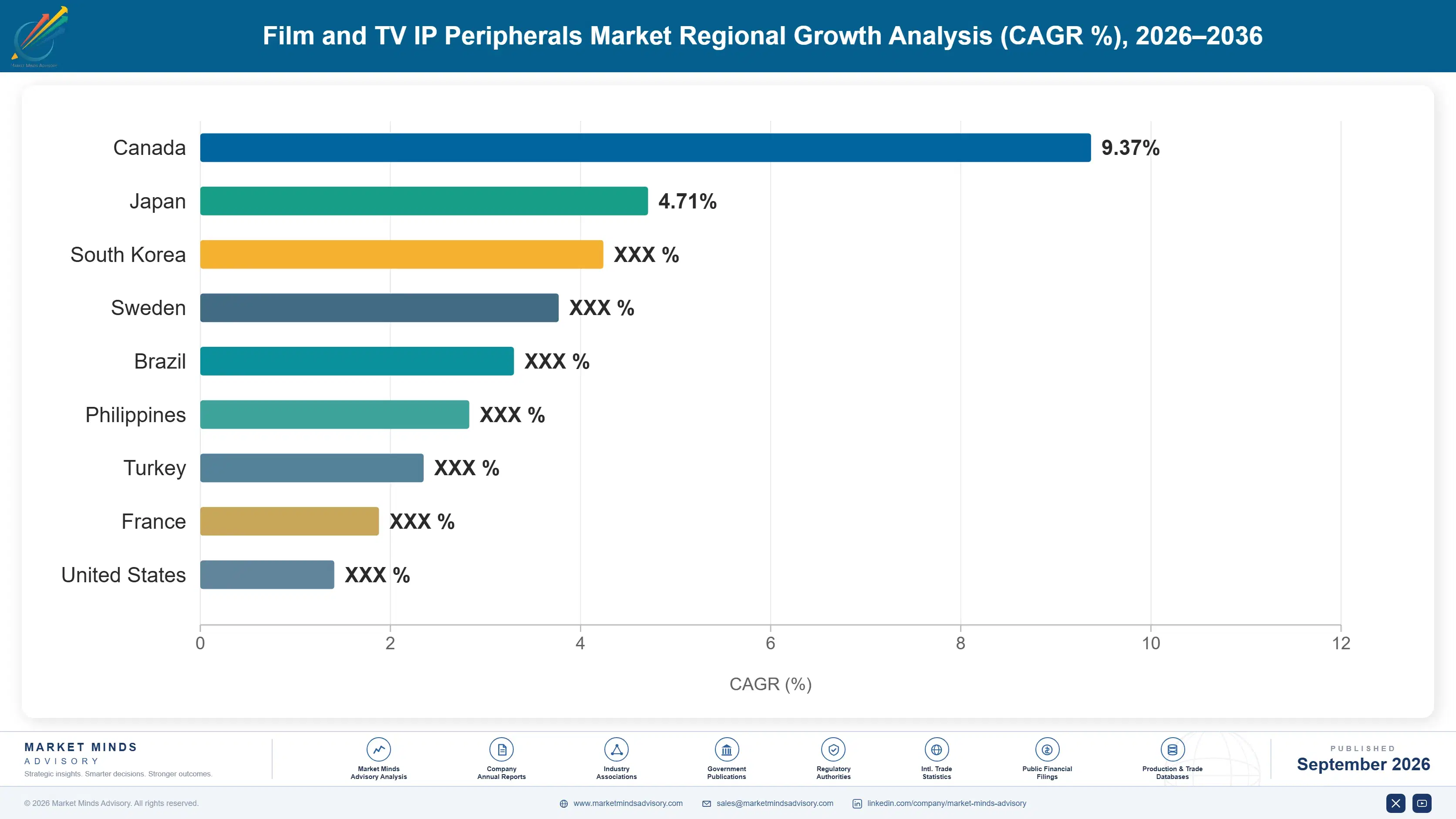
Regional Architecture and Country Demand Map

North America leads global demand, given its position as the origin market for most major film and television franchises and their earliest licensing decisions, followed by East Asia's large collector base. South Asia and Pacific is expanding fastest as streaming access broadens franchise fan bases across the region.

North America

North America holds the largest regional share because most major film and television franchises originate from studios headquartered in the United States, giving domestic licensees first access to new intellectual property before international licensing deals are finalized and executed across every territory and jurisdiction worldwide and beyond. The United States accounts for the large majority of regional volume given its concentration of studios, licensing agencies, and specialty retail infrastructure built around entertainment merchandise across every major metropolitan market and suburban shopping center nationwide. Canada follows at meaningfully smaller scale, with demand concentrated in similar retail channels serving comparable franchise fan bases across most provinces and territories nationwide and beyond their reach.
Share: 30% | CAGR: 7.5% (2026 to 2036)

Western Europe

Western Europe's growth trails North America and East Asia as licensing deals typically arrive several months after initial North American release, delaying merchandise availability relative to the franchise's peak cultural relevance and social media discussion cycle across every platform and demographic segment served nationwide and abroad and across every age group. Germany and the United Kingdom remain the largest national markets, reflecting their substantial retail infrastructure and established collector communities across every major city and secondary market nationwide and beyond. France's market follows a similar pattern, with demand concentrated in premium collectibles and apparel rather than mass-market toy categories broadly across the retail sector and grocery channels nationwide and internationally.
Share: 20% | CAGR: 5.3% (2026 to 2036)
Regional intelligence for 5 additional markets available in the complete report: East Asia, South Asia and Pacific, Latin America, Middle East and Africa, Eastern Europe. Contact sales@marketmindsadvisory.com.
film-and-tv-ip-peripherals-market-country-cagr-analysis-1790014350328

Where Licensees Can Capture More Value

Selling a single toy or apparel item at a modest unit margin is a scale business dependent on licensing fees and retail placement across every major retail channel. The larger margin opportunities sit in premium collectibles, direct-to-consumer channels, and limited-edition drops that licensees are increasingly building alongside core wholesale product lines across the broader category.

Expanding Premium Collectible and Statue Product Lines

Rather than competing purely in mass-market toy categories, licensees are increasingly developing premium collectible statues and limited-edition figures that command substantially higher unit prices and gross margins than standard action figures sold at mass retail chains nationwide and internationally across every price tier. These products target adult collectors willing to pay for craftsmanship and exclusivity, a customer base largely untapped by traditional mass-market toy pricing strategies used elsewhere. Manufacturers focused on premium collectibles report gross margins running roughly 20 percentage points higher than comparable mass-market toy lines across the same franchise properties.
Market Impact: Adds roughly 20 percentage points to gross margin

Building Direct-to-Consumer E-Commerce Storefronts Nationwide and Beyond

Licensees selling directly to consumers through branded e-commerce storefronts capture margin previously ceded to wholesale retail intermediaries, while also gaining direct access to customer purchase data that informs future product development more precisely than aggregated retail sales reports ever could provide at scale and speed across every product line. This channel requires upfront investment in logistics and customer service infrastructure, but it builds a durable, higher-margin revenue stream independent of retail shelf space negotiations. Direct-to-consumer sales now represent roughly 29 percent of category unit volume for licensees who have built this capability.
Market Impact: Captures roughly 29 percent of total unit volume

Running Limited-Edition Drops Tied to Franchise Anniversaries

Licensees increasingly time limited-edition product drops to coincide with franchise anniversaries, streaming revivals, or major content releases, creating artificial scarcity that drives both immediate sales velocity and secondary market resale value that reinforces the brand's collectible credibility over time and across every release cycle and generation of buyers and collectors nationwide and internationally. This approach requires careful production planning to avoid both understocking that frustrates buyers and overstocking that erodes scarcity value, but well-executed drops report sell-through rates roughly 40 percent higher than standard ongoing product lines across the category.
Market Impact: Achieves sell-through rates roughly 40 percent higher overall

Licensing Proprietary Character Designs to Sub-Licensees

Primary licensees holding master licensing rights to a franchise can sub-license specific character designs or product categories to smaller specialized manufacturers, generating royalty revenue without requiring the primary licensee to manufacture every product category themselves or build out costly new production lines and capacity of their own from scratch entirely and completely. This model lets primary licensees monetize their master rights across a wider range of product categories than their own manufacturing capability could reach alone, adding an estimated 12 percent to overall licensing revenue through sub-licensing agreements with specialized manufacturers.
Market Impact: Adds an estimated 12 percent in sub-licensing revenue

Who Controls the Margin Pool

Ranked on global revenue from licensed film and TV merchandise sales, the market is moderately fragmented with a CR5 near 41 percent, reflecting the sheer breadth of franchises and product categories spanning the industry. The Walt Disney Company leads through its unmatched portfolio of owned franchises spanning multiple studios, while Funko has built a distinct position as the dominant specialist in stylized collectible figures across licenses it does not own outright. The gap between owned-IP licensors and third-party specialist manufacturers is widening as studios increasingly favor in-house merchandise divisions over external licensing partners.
Current competitive activity centers on expanding premium collectible product lines, direct-to-consumer e-commerce launches, and streaming platforms establishing in-house consumer products divisions rather than licensing exclusively through third parties. Several manufacturers launched limited-edition drop campaigns in the past year timed to franchise anniversaries and streaming revivals.

Emerging pressure comes from streaming platforms building direct merchandise capabilities in-house, threatening to disintermediate specialized licensees who previously served as the primary bridge between studios and retail. Rankings are most likely to shift as adult collector spending grows, rewarding manufacturers who invested early in premium collectible capability over those still focused primarily on children's toys.
film-and-tv-ip-peripherals-market-company-positioning-matrix-1790014350849

Competitive Moat and Risk Dimensions

THE WALT DISNEY COMPANY

Moat: Owned Multi-Franchise Portfolio Depth

The Walt Disney Company controls an unmatched portfolio of owned franchises spanning multiple studios and decades of content, giving it direct control over licensing decisions that third-party licensees must negotiate for individually. This ownership depth lets Disney cross-promote merchandise across its theme parks, streaming platform, and retail channels in ways no external licensee can replicate independently.
THE WALT DISNEY COMPANY

Risk: Slower Adult Collector Category Response

Disney's merchandise strategy has historically prioritized family-friendly, broad-audience products over the premium adult collector categories growing fastest in the category. Specialized competitors like Funko have moved faster to capture this audience, and Disney risks ceding share in the fastest-growing segment if it does not adapt its product strategy accordingly.
FUNKO INC.

Moat: Dominant Stylized Collectible Format

Funko's stylized vinyl figure format has become a recognizable, collectible standard across hundreds of licensed properties, giving it broad licensing access that specialized statue manufacturers focused on a narrower range of premium properties cannot match. This format recognition lets Funko secure licenses across a wider range of franchises than higher-priced premium collectible competitors.
FUNKO INC.

Risk: Format Fatigue Risk Among Collectors

Funko's reliance on a single recognizable stylized format creates risk if collector interest shifts toward more detailed, premium alternatives as the adult collector market matures and buyers seek greater craftsmanship. Competitors offering higher-detail alternatives could erode Funko's share among collectors seeking more sophisticated display pieces over time.

Players Tracked

Prominent Players

The Walt Disney Company
Funko Inc.
Hasbro Inc.
Bandai Namco Holdings
Warner Bros. Discovery

Other Key Players

Mattel Inc.
NBCUniversal
Sideshow Collectibles
Hot Toys
McFarlane Toys
Jakks Pacific
Diamond Select Toys
Spin Master
Bioworld Merchandising
Ripple Junction
Cinereplicas
Trends International
Changes Inc
Global Icon LLC
Beast Kingdom

Recent Developments

MARCH 2026

Disney Launches Premium Statue Line for Adult Collectors

The Walt Disney Company launched a premium collectible statue line targeting adult collectors across its legacy animated and Star Wars franchises, its first major push into the high-detail collectible category previously dominated by specialized competitors. The launch aims to capture adult collector spending Disney's traditional toy lines have not addressed.
Signal: Signals major owned-franchise licensors are finally committing meaningfully to premium adult collector categories nationwide and abroad
OCTOBER 2025

Funko Acquires Premium Statue Manufacturer

Funko acquired a smaller premium statue manufacturer to expand beyond its core stylized vinyl figure format into higher-detail collectible categories serving more discerning adult buyers nationwide. The acquisition reflects Funko's strategy of diversifying product formats rather than relying solely on its signature stylized aesthetic across every franchise.
Signal: Signals format specialists are diversifying beyond their signature category to defend against premium collectible competitors nationwide
MAY 2026

Warner Bros. Discovery Signs Direct-to-Consumer Partnership

Warner Bros. Discovery signed a multi-year direct-to-consumer e-commerce partnership to expand branded merchandise sales across its film and television franchise portfolio without relying exclusively on third-party retail distribution channels nationwide. The agreement reflects growing studio interest in capturing e-commerce margin previously ceded to external retailers.
Signal: Signals studios increasingly prefer direct e-commerce control over relying entirely on third-party licensees and retailers nationwide

Licensing Royalties and Plastics Cost Exposure

Licensing royalty payments represent roughly 9 percent of wholesale price for most film and TV IP peripherals, paid directly to studios and rights holders under negotiated licensing agreements. Plastic resin and specialty materials used in toy and collectible manufacturing represent a further significant cost component, sourced primarily from petrochemical producers concentrated in China, South Korea, and the United States.
Plastic resin prices spiked sharply in 2022 amid oil price volatility and supply chain disruptions affecting petrochemical production broadly across major manufacturing regions, based on Census Bureau commentary on industrial materials supply chains and global trade flows. Several manufacturers reported input cost increases of 12 to 20 percent during that period before prices partially normalized through 2024, compressing margins across mass-market toy categories most exposed to raw material costs.

Manufacturers reliant on single-source plastic resin suppliers face greater margin exposure during price spikes than diversified competitors who can shift sourcing across multiple petrochemical producers or regions on short notice. Premium collectible manufacturers face comparatively less exposure given their focus on resin and mixed-media materials commanding higher margins that better absorb input cost volatility without eroding profitability.
film-and-tv-ip-peripherals-market-cost-volatility-analysis-1790014351046

Diversifying Plastic Resin Supply Across Regions

Larger manufacturers are securing supply contracts with petrochemical producers across multiple regions rather than relying on a single domestic source, reducing exposure to regional plant outages or oil price spikes affecting any one market. This diversification requires more complex logistics and inventory management but meaningfully reduces the risk of production disruption during a regional supply shock.

Shifting Toward Premium Materials and Formats

Manufacturers are increasingly shifting product mix toward premium collectible formats using resin and mixed-media materials that command higher margins, reducing overall exposure to commodity plastic price volatility affecting mass-market toy lines across the broader category. This approach also aligns with growing adult collector demand for premium formats over standard plastic action figures sold at retail.

Portfolio Architecture for Margin Defence

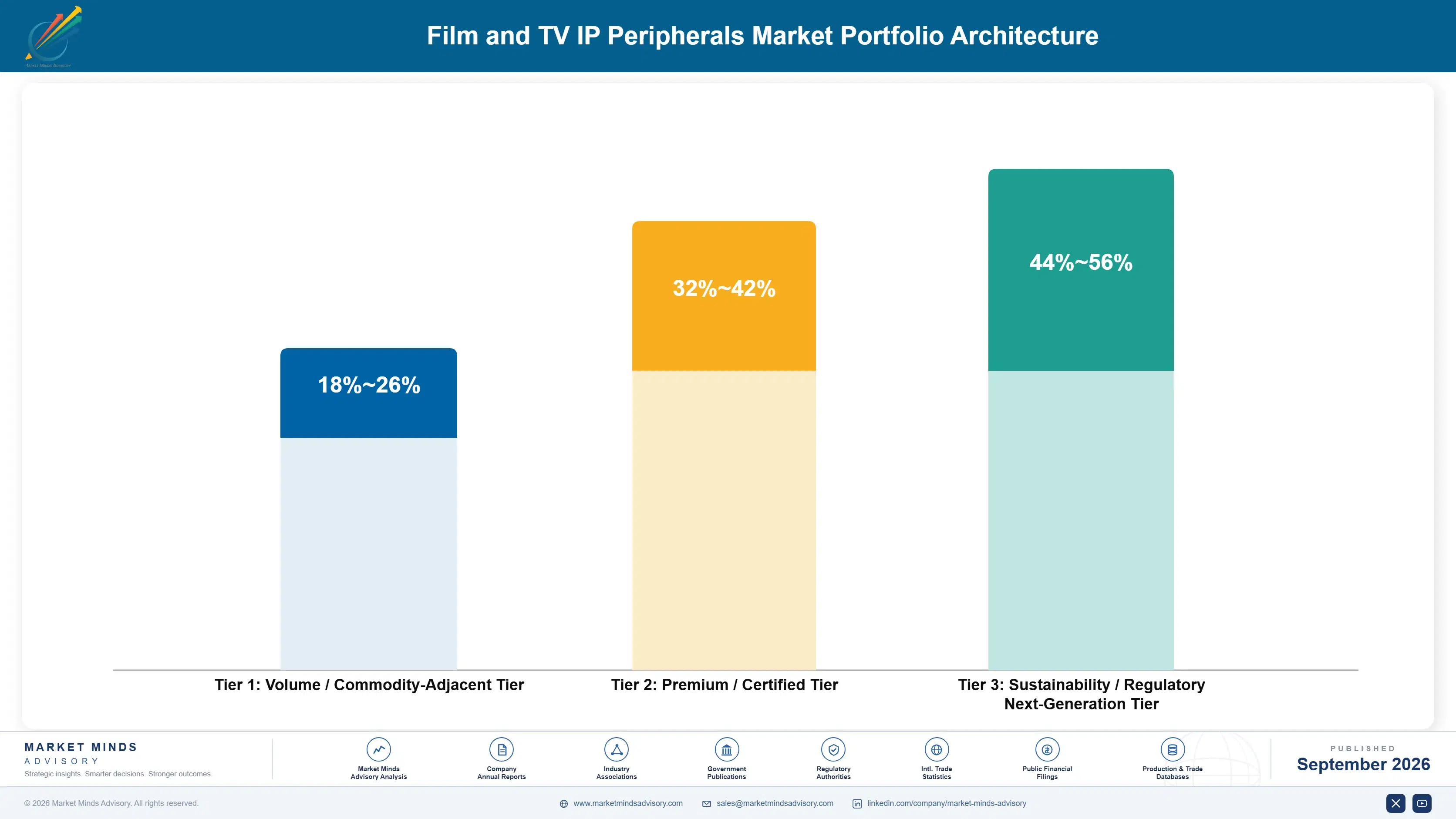
The category splits into three commercial tiers with distinct margin economics. Volume commodity-adjacent toys and mass-market apparel sold across mainstream retail carry moderate margins given intense price competition among numerous licensed and unlicensed alternatives. Premium certified collectibles and streetwear crossover apparel command higher margins through craftsmanship and design differentiation, and the sustainability-focused next-generation tier of limited-edition drops and direct-to-consumer exclusives, while smallest in volume, captures a growing share of category gross profit.
Volume producers compete on price and manufacturing scale, leaving thin room to differentiate beyond basic licensing compliance in a category with many similar competitors chasing the same popular franchises. Premium and next-generation suppliers instead compete on craftsmanship, scarcity, and direct customer relationships, letting them expand margin as buyers prioritize collectible value and design over unit price alone.

High-value margin pools concentrate in premium collectibles and limited-edition drops rather than standard mass-market toys and apparel sold across mainstream retail channels. Standard toys remain the largest volume base but the more moderate margin pool in the category, a gap that continues widening as adult collector spending accelerates and buyers increasingly prioritize documented scarcity and craftsmanship over price alone.

Volume / Commodity-Adjacent Tier

Standard toys, action figures, and mass-market apparel sold across mainstream retail chains, competing primarily on price and manufacturing scale rather than differentiated craftsmanship or exclusivity features and connectivity options available.
Gross Margin: 18-26%

Premium / Certified Tier

Certified premium collectibles and streetwear crossover apparel with documented craftsmanship, sold to buyers seeking differentiated design and materials beyond standard mass-market licensed products and offerings available broadly across most retail formats.
Gross Margin: 32-42%

Sustainability / Regulatory / Next-Generation Tier

Limited-edition drops and direct-to-consumer exclusives with numbered production runs, sold into premium collector channels commanding the category's highest unit pricing and secondary market resale value nationwide and internationally across every channel.
Gross Margin: 44-56%
film-and-tv-ip-peripherals-market-portfolio-architecture-1790014351554

High-value Sub-segments and Strategic Watch-out

Collectibles and Statues

Collectibles and Statues: the fastest-growing, highest-margin segment as adult buyers pay premium prices for high-detail figures that traditional mass-market action figures cannot match in craftsmanship across every major franchise and price tier nationwide and internationally, especially in mature markets with established collector cultures and communities.
Gross Margin: 46-56%

Apparel and Accessories

Apparel and Accessories: strong growth and healthy margins as streetwear crossover collaborations expand distribution into fashion retail channels previously uninterested in licensed entertainment products across every major fashion category and price point available nationwide and abroad, especially among younger consumers and fashion-forward buyers seeking novelty.
Gross Margin: 34-42%

Toys and Action Figures

Toys and Action Figures: the largest volume base today, generating steady but moderate margins as manufacturers compete intensely on price across mainstream retail chains and established licensing relationships nationwide and across every major retail channel and price tier available today and tomorrow across the industry.
Gross Margin: 18-26%

Counterfeit Enforcement Pressure

Counterfeit Enforcement Pressure: a segment to watch as marketplace enforcement tightens, potentially reshaping which licensees can defend their category rights against unlicensed competitors entirely across every major online and offline retail channel and jurisdiction worldwide and beyond current enforcement mechanisms, legal frameworks, and industry standards.
Gross Margin: 20-30%

The Fan Loyalty Economics of Merchandise

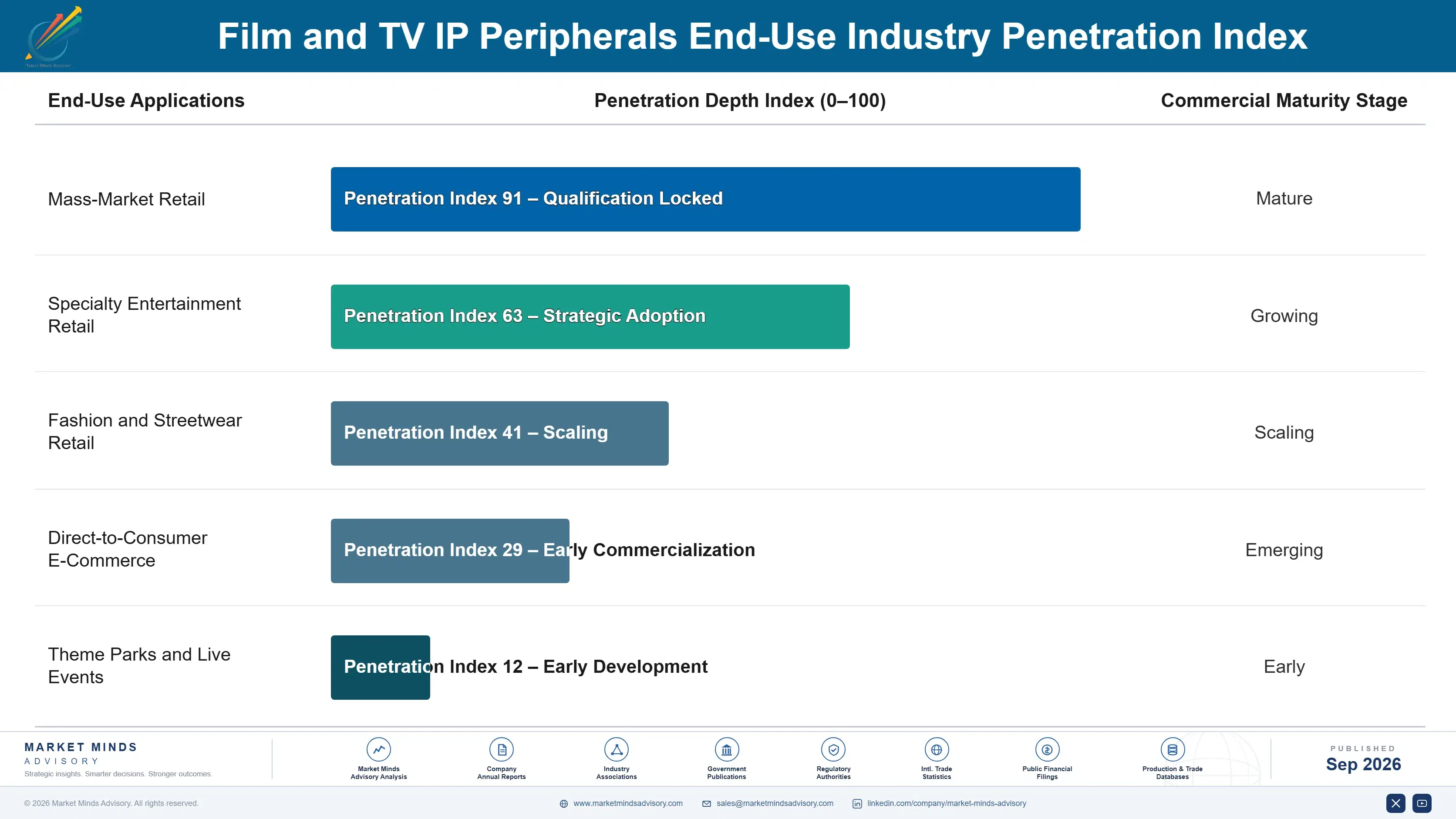
Film and TV IP peripheral purchasing behaves like an annuity for franchises that sustain multi-decade fan bases, since collectors and lifelong fans continue purchasing merchandise tied to properties long after the original content ceased active production and new episodes stopped airing. This creates durable, recurring revenue for licensees holding rights to legacy franchises independent of any single new release, particularly in the collectibles segment where nostalgia drives sustained demand.
Adoption stickiness varies by end-use vertical. Collectors show the deepest lock-in, since completing a collection or series creates a psychological commitment that drives repeat purchases regardless of individual item price or franchise popularity at any given moment. Casual apparel buyers show far less stickiness, purchasing opportunistically based on current franchise visibility rather than any long-term collecting commitment to a specific property.

Buyer profiles are shifting generationally as younger fans, raised entirely within the streaming era rather than theatrical release culture, engage with franchises differently than previous generations who experienced properties through singular cultural moments shared broadly across society. This generational shift is reshaping which merchandise formats resonate, favoring digital-adjacent and limited-drop products over traditional shelf-stable toy lines that dominated prior decades.
film-and-tv-ip-peripherals-market-end-use-penetration-index-1790014352046

Where Licensees Should Focus Next

These are among the four positions where our research anticipates prominent divergence between winners and laggards over the coming forecast period. Each is grounded in the demand model, the regulatory perimeter, and the announced capacity pipeline.
01 / ADULT COLLECTOR INVESTMENT

Prioritize premium collectibles ahead of legacy toy-first strategies

Licensees still treating premium collectibles as a secondary product line are underestimating how much of category profit now concentrates in adult collector spending rather than traditional children's toy sales across every major franchise. Adult collectors pay substantially more per unit and show stronger brand loyalty than casual toy buyers, making this segment disproportionately valuable relative to its unit volume. The manufacturers gaining the strongest margins today are the ones that shifted resources toward premium collectibles years before this shift became obvious to competitors.
02 / DIRECT-TO-CONSUMER CHANNEL BUILD

Build e-commerce capability before margin erodes further to retailers

Licensees relying entirely on wholesale retail distribution are ceding meaningful margin to intermediaries that direct-to-consumer channels could capture instead across nearly every product category and price tier available today and tomorrow. Building e-commerce and logistics capability requires upfront investment, but the customer data and margin captured pay that investment back faster than continued dependence on wholesale-only distribution channels. Licensees slow to build this capability will find themselves persistently disadvantaged relative to competitors who already control their own customer relationships directly.
03 / FRANCHISE DIVERSIFICATION STRATEGY

Diversify across multiple franchises before any single property declines

Licensees overly dependent on a single blockbuster franchise face significant revenue risk if that property pauses production or experiences declining cultural relevance between content releases and sequels over time and across generations. Diversifying across multiple studios and properties reduces this concentration risk while also building relationships that position licensees favorably for future licensing opportunities as new franchises emerge and gain cultural traction. The licensees best positioned for long-term stability are treating franchise diversification as a core strategic priority rather than an afterthought.
04 / COUNTERFEIT ENFORCEMENT INVESTMENT

Invest in enforcement before counterfeit erosion accelerates further

Counterfeit merchandise proliferates fastest during periods of viral franchise popularity, precisely when licensed manufacturers most need to capture maximum revenue from that attention and cultural moment available to them. Licensees who invest proactively in marketplace enforcement and takedown partnerships protect more of this revenue than those who react only after counterfeit listings have already captured significant sales volume and customer attention. The manufacturers treating enforcement as a continuous priority rather than a reactive measure will retain more category revenue over time.

Engagement Snapshot From the Field

A live engagement with an industry participant carrying material or product regulatory and market exposure ahead of a defining policy shift, showing how our research translates into a defensible multi-year portfolio strategy.
MARKET MINDS ADVISORY · CLIENT ENGAGEMENT SUMMARY
Film and TV IP Peripherals Producer Strategic Portfolio Review and Transition Roadmap 2026·Investment Scenario on Film and TV IP Peripherals Exposure Evaluation 2025-26
CLIENT PROFILE
The client is a mid-sized licensee producing apparel and accessories under license from several film and television franchises, selling primarily through wholesale distribution to major retail chains across North America. The client had relied almost entirely on wholesale relationships and faced compressing margins as retailers increasingly demanded deeper wholesale discounts amid intensifying competition for shelf space.
STRATEGIC CHALLENGE
The client needed to evaluate whether launching a direct-to-consumer e-commerce channel could offset eroding wholesale margins, without in-house e-commerce or logistics expertise built up internally over prior years. Leadership needed a defensible business case within a single budget cycle before committing capital to build out new digital infrastructure and staffing.
MMA APPROACH
MMA benchmarked the client's wholesale economics against comparable direct-to-consumer licensee models, evaluating logistics cost structure, customer acquisition cost, and margin capture potential across a three-year horizon and multiple growth scenarios considered. The engagement combined primary interviews with comparable licensees and comparative financial modeling across continued wholesale-only and hybrid direct-to-consumer scenarios.
KEY FINDINGS
  1. Direct-to-consumer sales carried gross margins approximately 18 percentage points higher (client-reported, unverified by MMA) than comparable wholesale transactions across the client's product lines.
  2. Customer acquisition costs for the new channel were manageable given the client's existing social media following built around its licensed apparel lines.
  3. The client's existing wholesale retail relationships showed no meaningful resistance whatsoever to a parallel direct-to-consumer channel launching alongside continued retail distribution nationwide.
  4. A phased twelve-month launch allowed the client to validate demand and logistics capability fully before committing to broader marketing investment and expansion.
CLIENT PROFILE
The client is a mid-sized licensee producing apparel and accessories under license from several film and television franchises, selling primarily through wholesale distribution to major retail chains across North America. The client had relied almost entirely on wholesale relationships and faced compressing margins as retailers increasingly demanded deeper wholesale discounts amid intensifying competition for shelf space.
STRATEGIC CHALLENGE
The client needed to evaluate whether launching a direct-to-consumer e-commerce channel could offset eroding wholesale margins, without in-house e-commerce or logistics expertise built up internally over prior years. Leadership needed a defensible business case within a single budget cycle before committing capital to build out new digital infrastructure and staffing.
MMA APPROACH
MMA benchmarked the client's wholesale economics against comparable direct-to-consumer licensee models, evaluating logistics cost structure, customer acquisition cost, and margin capture potential across a three-year horizon and multiple growth scenarios considered. The engagement combined primary interviews with comparable licensees and comparative financial modeling across continued wholesale-only and hybrid direct-to-consumer scenarios.
KEY FINDINGS
  1. Direct-to-consumer sales carried gross margins approximately 18 percentage points higher (client-reported, unverified by MMA) than comparable wholesale transactions across the client's product lines.
  2. Customer acquisition costs for the new channel were manageable given the client's existing social media following built around its licensed apparel lines.
  3. The client's existing wholesale retail relationships showed no meaningful resistance whatsoever to a parallel direct-to-consumer channel launching alongside continued retail distribution nationwide.
  4. A phased twelve-month launch allowed the client to validate demand and logistics capability fully before committing to broader marketing investment and expansion.
RECOMMENDED STRATEGY
Phase 1: Phase one: launch a limited direct-to-consumer storefront covering the client's top three licensed franchise lines within one full fiscal quarter. Phase 2: Phase two: expand product catalog and marketing investment once initial demand and logistics performance were validated over two full quarters. Phase 3: Phase three: integrate customer data insights into future wholesale product planning and franchise licensing renewal negotiations across the entire portfolio.
OUTCOME
The client launched its direct-to-consumer channel within the planned quarter and reported margin improvement consistent with modeled projections during the following two quarters (client-reported, unverified by MMA). The client subsequently used customer data from the new channel to inform which franchise licenses to renew and prioritize.

Frequently Asked Questions

Foundational context covering the market sizes, CAGR, scope, country, region and competition that inform every finding below. This section is provided to cover basics and most often pre-purchase conversations, answered from the MMA Primary Research Dataset.

What is the current size of the Film and TV IP Peripherals Market?

The market reached $12.6 billion globally in 2025. This covers licensed toys, collectibles, apparel, accessories, and home goods produced under license from film and television intellectual property.

How large will the Film and TV IP Peripherals Market be by 2036?

MMA projects the market will reach $25.99 billion by 2036 under the base case scenario. That represents roughly 1.93 times the 2026 starting value over the ten-year forecast window.

What is the CAGR for the Film and TV IP Peripherals Market 2026 to 2036?

The base case CAGR is 6.8 percent annually through 2036. Bull and bear scenarios range from 5.5 to 8.1 percent depending on franchise renewal cycle timing.

Which segment is growing fastest?

Collectibles and statues lead at a 10.0 percent CAGR, roughly 1.47 times the overall market rate today. Apparel and accessories follow as the second-fastest segment.

Who are the major companies in the Film and TV IP Peripherals Market?

The Walt Disney Company, Funko, Hasbro, Bandai Namco Holdings, and Warner Bros. Discovery lead the market with an estimated CR5 near 41 percent of category revenue combined.

Which country is growing fastest?

The United States leads at an estimated 7.5 percent CAGR, driven by its position as the origin market for most major franchises. South Asia and Pacific follows closely as streaming access expands regional fan bases.

Report Segmentation Architecture

The full report scope spans multiple orthogonal segmentation dimensions, with cross-tabulated demand data provided for each dimension pair. Coverage extends further to regional breakdowns, trend trajectories, and the competitive detail needed to support segment-level decision-making.

By Primary Market Dimension

  • Toys and Action Figures
  • Collectibles and Statues
  • Apparel and Accessories
  • Home and Lifestyle Goods
  • Stationery and Novelty Items
  • Other Specialty Merchandise

By End-Use Industry

  • Mass-Market Retail
  • Specialty Entertainment Retail
  • Fashion and Streetwear Retail
  • Direct-to-Consumer E-Commerce
  • Theme Parks and Live Events

By Commercial Dimension

  • Master Licensing Agreements
  • Sub-Licensing Arrangements
  • Direct-to-Consumer Sales
  • Limited-Edition Drop Campaigns

By Region

  • North America
  • Western Europe
  • East Asia
  • South Asia and Pacific
  • Latin America
  • Middle East and Africa
  • Eastern Europe

Scope, Methodology, and Coverage

Every figure in this report is reproducible from documented input assumptions. The scope below maps the historical period, the forecast horizon, the segmentation dimensions, and the countries covered, alongside the underlying primary and qualitative methodology.
Historical Period
2020 to 2025
Forecast Period
2026 to 2036
Base Year
2025 (USD billions; MMA Primary Research Dataset, September 2026)
Market Definition
The film and TV IP peripherals market covers licensed physical merchandise including toys, collectibles, apparel, accessories, and home and lifestyle goods produced under license from film and television intellectual property. It excludes the underlying film and television production and distribution business, video game software, and digital-only merchandise such as NFTs or virtual goods.
Quantitative Units
USD billions (current prices); unit volume of merchandise sold where applicable
Segmentation Dimensions
By Primary Market Dimension; By End-Use Industry; By Commercial Dimension; By Region
Regions Covered
North America, Western Europe, East Asia, South Asia and Pacific, Latin America, Middle East and Africa, Eastern Europe
Countries Covered
USA, China, Germany, France, UK, Japan, South Korea, India, Australia, Canada, Brazil, Mexico, Indonesia, Vietnam, Thailand, Malaysia, UAE, Saudi Arabia, South Africa, Nigeria, Turkey, Poland, Netherlands, Italy, Spain, Sweden, Switzerland, Argentina, Colombia, Singapore, and additional markets relevant to this sector
Key Companies Profiled
The Walt Disney Company, Funko Inc., Hasbro Inc., Bandai Namco Holdings, Warner Bros. Discovery, Mattel Inc., NBCUniversal, Sideshow Collectibles, Hot Toys, McFarlane Toys, Jakks Pacific, Diamond Select Toys, Spin Master, Bioworld Merchandising, Ripple Junction, Cinereplicas, Trends International, Changes Inc, Global Icon LLC, Beast Kingdom
Quantitative Methodology
Primary survey, n=3,800 respondents, Q4 2025, six countries; demand-side model with trade association cross-validation
Qualitative Methodology
47 expert interviews, Q4 2025; applied to validate demand model assumptions, identify emerging dynamics, and assess competitive positioning
Report Format
PDF and XLSX data workbook (Word format preview document)
Publisher
Market Minds Advisory
Report Code
MMA-2026-TEC-472
Published
September 2026
Contact
sales@marketmindsadvisory.com | www.marketmindsadvisory.com

Purchase the full Film and TV IP Peripherals Market Report (2026 to 2036).

This report delivers a comprehensive assessment of the film and TV IP peripherals market, covering market sizing, segmentation, and regional demand through 2036 across seven major world regions. It profiles the twenty leading licensors and manufacturers, benchmarking competitive positioning, moat durability, and emerging risk across the top two market leaders in depth. The analysis includes detailed input cost exposure, portfolio margin architecture, and revenue diversification opportunities specific to licensed merchandise producers. A dedicated case study illustrates how a mid-sized licensee navigated a live channel launch engagement.
Ten-year market sizing and forecast to 2036
Six-segment MECE product segmentation overview detailed
Seven-region demand, share, and growth rate analysis
Twenty-company competitive benchmarking with moat and risk assessment
Input cost exposure and mitigation pathways
Anonymized licensee channel launch case study

Built For The People Who Decide

From boardroom strategy to bench-side execution, this report is read cover-to-cover by leaders shaping the next decade of their industry, turning demand scenarios, market dynamics and valuation benchmarks into decisions.
CXOs/ Presidents/ VPs/ Managers
M&A and Corporate Development
Strategy Teams and R&D Heads
Procurement and Product Directors
Regulatory and Compliance Leaders
Investor Relations and Equity Analysts