Market Minds Advisory
Europe Wealth Management Market

Europe Wealth Management Market: Digital Advisory Adoption and Cross-Border Consolidation

Digital advisory platform adoption, cross-border wealth manager consolidation, and rising next-generation client expectations across the entire European private wealth management industry are jointly reshaping the region's overall wealth structure today.

Lead Analyst

Published

September 2026

Make Smarter Decisions with Customized Research Insights

Request a free sample report and evaluate market opportunities, growth trends, and competitive dynamics relevant to your business needs.

2025 MARKET VALUE$1450MMarket Size 2025
2036 FORECAST VALUE$2869MBase Case , 2026 to 2036
CAGR 2026 TO 20366.4 %Bull 7.7% / Bear 5.1%
INCREMENTAL OPPORTUNITY$1326MNet 10- year value creation
EXPANSION MULTIPLE1.86x2036 value over 2026 base
Strategic Levers
M&A Pipeline
Regional Outlook
Country Rankings
Competitive Intelligence
Segmental Deep-dive
Call-Us : 91 93563 13602

Executive Snapshot and Market Trajectory

Wealth managers are digitizing advisory delivery just as cross-border consolidation accelerates, and Europe's private banking hubs now anchor one of the world's most sophisticated wealth management structures anywhere. Regulators are watching this consolidation closely. Digital adoption is compounding this advantage steadily across the market. Regulators are watching this shift closely.
Western European wealth management assets under management still generate one of the largest regional pools globally, but growth has accelerated fastest in South Asia as India's expanding high-net-worth population and rising formal wealth advisory penetration pull previously self-managed assets into professional advisory for the first time. Digital hybrid advisory platforms are gaining share among next-generation clients. This shift deepens fintech competitive pressure meaningfully. UBS and Julius Baer continue expanding digital wealth platforms.
Competition remains concentrated among global private banks and independent wealth managers, with digital platform quality and cross-border booking center depth increasingly separating leaders from laggards. Regulatory pressure around beneficial ownership disclosure and cross-border tax transparency requirements is rising across the market, raising compliance costs that smaller regional managers increasingly struggle to absorb without merger or partnership support. Managers without dedicated digital capability fall behind on client acquisition.
Market Definition
This report covers advisory fees, asset management fees, and net interest income from high-net-worth and ultra-high-net-worth client relationships managed by wealth management divisions and independent advisory firms globally. It excludes retail mass-market investment products, institutional asset management, and pure investment banking activities offered through the same institutions.
Base Year Value
$1450M in 2025 (MMA Primary Research Dataset, August 2026)
Forecast Period
2026 to 2036, eleven discrete annual values
CAGR
6.4% base case. Bull 7.7%. Bear 5.1%.
Fastest Growth Segment
Digital-First Hybrid Advisory Platforms: 13.8% CAGR
Fastest Growth Country
India: 11.6% CAGR
Fastest Growth Region
South Asia and Pacific: 8.7% CAGR
Largest Region
Western Europe: 32% of 2025 global value
Market Leaders
UBS, Julius Baer, Deutsche Bank Wealth Management, Credit Suisse Wealth Management, HSBC Private Banking. Source: MMA Analysis based on company annual reports.
Primary Survey
n=3,800 procurement and R&D decision-makers, Q4 2025, six countries
Methodology
Demand-side build-up, cross-validated against public data, 47 expert interviews

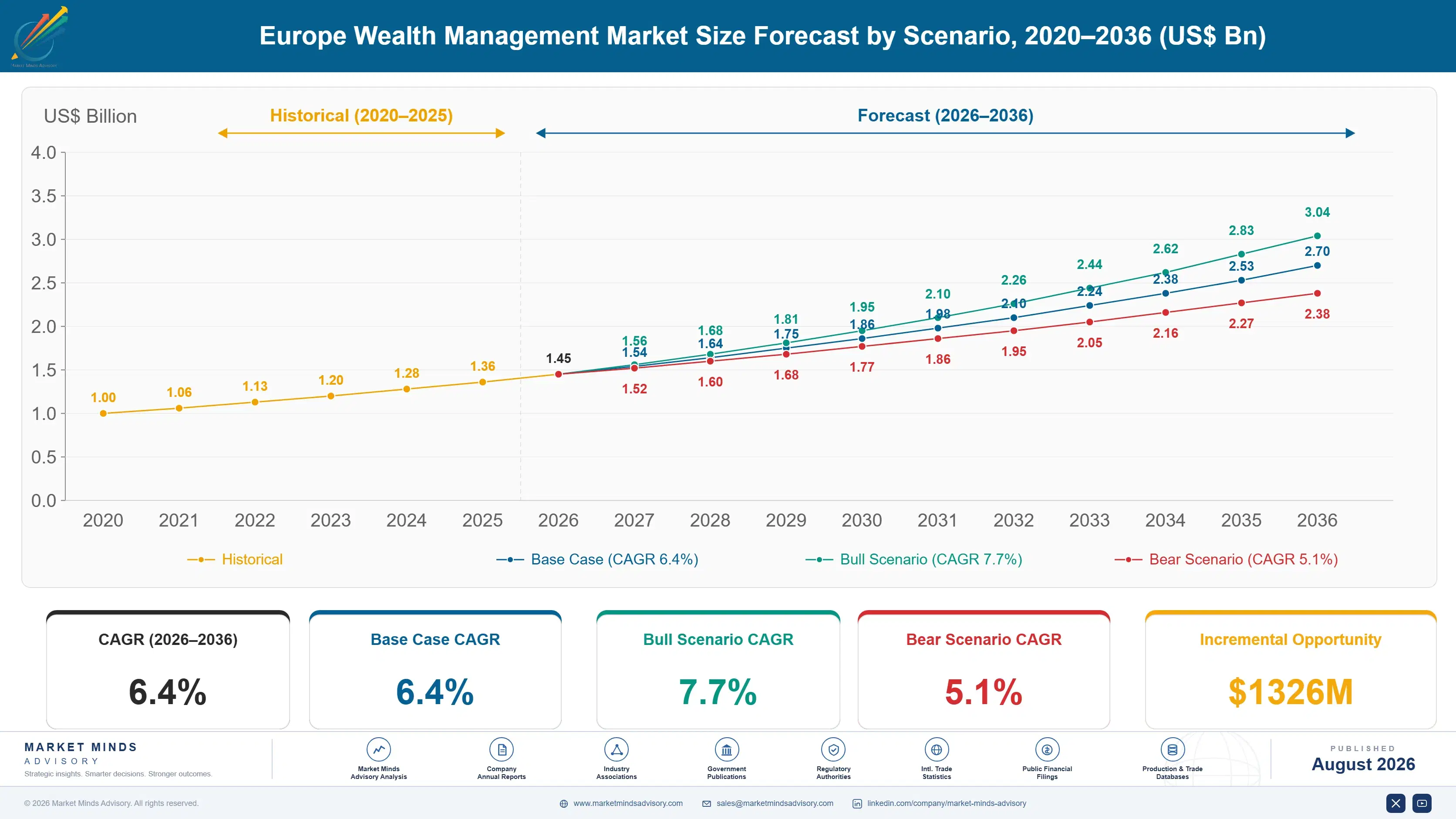
Europe Wealth Management Market Forecast Scenarios

europe-wealth-management-market-size-forecast-scenario-1787916703984
Between 2020 and 2025 the market grew at an estimated 5.7% annually, held back early by pandemic-era travel restrictions that slowed cross-border relationship onboarding, before accelerating from 2022 onward as European wealth hubs reopened and cross-border asset consolidation resumed at scale. Growth stayed concentrated in digital advisory and cross-border booking through most of the period, with traditional relationship-only banking expanding more slowly across the sector.
The base case carries the market to 6.4% CAGR through 2036 on three mechanisms. Cross-border consolidation keeps expanding booking center volume for Switzerland and UK-based wealth managers. India's expanding high-net-worth population keeps pulling previously self-managed assets into formal professional wealth advisory. Digital hybrid platforms keep compressing advisory delivery cost, widening margin for technology-forward managers over legacy relationship-only competitors. Regulatory acceptance of digital-first advisory keeps broadening across additional client segments and jurisdictions over time.
The bull case rests on faster next-generation wealth transfer accelerating digital platform adoption beyond current projections. The bear risk centers on renewed regulatory tightening around cross-border tax transparency, which would compress booking center volume industrywide even as underlying wealth accumulation continues growing steadily overall. Managers with strong compliance infrastructure already built are better positioned to weather this bear scenario.

Digital Advisory Reshapes Wealth Delivery Economics

Wealth management economics increasingly hinge on digital advisory delivery cost rather than pure relationship manager headcount, since hybrid digital-human advisory now serves a substantial share of client relationships at meaningfully lower cost than fully bespoke traditional service. This shift is reshaping where managers invest, moving budget toward digital platform development and hybrid advisory capability.
TOP 5 CONCENTRATION34%Combined share held by leading global private banks
AVERAGE ASSETS PER RELATIONSHIP$3.8MBlended assets under management held per client relationship
DIGITAL ADVISORY ADOPTION SHARE31%Client assets touched by digital advisory tools currently
COST-TO-INCOME RATIO66%Operating expenses as share of revenue generated currently
CROSS-BORDER ASSET SHARE42%Assets booked outside client's country of residence currently
NEXT-GENERATION CLIENT GROWTH RATE15%Annual growth in clients under age forty specifically
Cross-border consolidation is concentrating booking center volume among fewer, larger regional hubs, particularly Switzerland and the UK, where regulatory stability and banking infrastructure quality continue attracting client assets. Cost-to-income ratios remain manageable across most large managers, though smaller regional players carry meaningfully higher relationship-manager-dependent cost structures than digitally forward global competitors. Managers with strong data infrastructure manage this cost gap better than smaller competitors relying on legacy relationship-manager-heavy models.
Digital hybrid platforms are compressing advisory delivery cost industrywide as automated portfolio management replaces fully bespoke relationship management for standard client segments. Managers with strong digital and cross-border booking capability are capturing disproportionate share of new asset growth, while managers relying on relationship-manager-only distribution increasingly lag the broader category. Regulatory scrutiny of cross-border tax transparency practices is rising across several major markets, though enforcement so far has done little to slow the underlying migration trend.
"Wealth management used to sell exclusivity through scarcity of attention. Now the managers winning are the ones who figured out how to scale that attention digitally."
Practice Lead, Financial Services and Wealth Management Intelligence · MMA Financial Services and Wealth Management Practice · August 2026

Market Trends

Digital Hybrid Platforms Expand Mainstream Advisory Reach

Digital hybrid advisory platforms, historically marketed as a supplement to traditional relationship management, have expanded into mainstream advisory delivery as wealth managers recognize that hybrid digital-human models reach clients more efficiently than fully bespoke service alone. UBS and Julius Baer have both expanded standalone digital advisory platforms offering portfolio construction and rebalancing tools previously reserved for the highest-tier clients. This shift reflects a genuine change in how managers view digital advisory: no longer a cost-saving supplement, but a primary service delivery channel across the entire client base. Managers without comparable digital platforms struggle to match this reach.
Market Impact: Transfers $3.1 trillion to next generation
Cross-Border Consolidation Concentrates Regional Booking Centers

Wealthy individuals across Europe are increasingly consolidating assets in Switzerland and UK booking centers as regulatory stability and banking infrastructure quality outweigh proximity considerations for cross-border wealth management. UBS and HSBC Private Banking have both expanded regional booking center capacity to accommodate rising cross-border asset inflows from continental Europe and beyond. This consolidation reflects a broader industry recognition that booking center choice increasingly depends on regulatory and infrastructure quality rather than geographic proximity alone. Managers without comparable regional booking center capacity increasingly cede volume to consolidated competitors across most major European corridors.
Market Impact: Adds 380,000 new high-net-worth clients

Market Opportunities and Growth Drivers

Next-Generation Wealth Transfer Accelerates Digital Adoption

A significant intergenerational wealth transfer is underway across Europe as first-generation wealth creators pass assets to heirs who expect digital-first advisory experiences comparable to their everyday financial apps rather than exclusively relationship-manager-mediated service. Banks investing early in digital platform capability are capturing disproportionate share of this generational transition, since next-generation clients increasingly evaluate wealth managers on app quality alongside traditional advisory credentials. Managers slower to modernize risk losing these relationships entirely during the transfer. This transition represents a genuine, lasting shift in client expectations, meaning managers investing early build a durable advantage that compounds over successive years.
Market Impact: Adds compliance cost across 17 jurisdictions

India High-Net-Worth Population Expansion Drives Formal Advisory

India's rapidly expanding high-net-worth population, combined with rising financial sophistication and formal wealth planning awareness, is pulling previously self-managed assets into professional advisory relationships for the first time. Digital-first wealth platforms are building distribution directly on top of expanding digital financial infrastructure, reaching wealthy individuals traditional wealth management never economically served given historically high minimum relationship thresholds. This underserved population represents genuine incremental market growth rather than share shifted from existing managers, since most of these new clients had no formal wealth advisory relationship previously in their financial lives. Digital infrastructure has been critical to this genuine expansion.
Market Impact: Raises talent costs 21% above average

Market Restraints and Challenges

Cross-Border Tax Transparency Rules Raise Compliance Cost

Regulators across major booking centers are tightening beneficial ownership disclosure and automatic tax information exchange requirements, raising compliance complexity for managers serving cross-border high-net-worth clients across multiple jurisdictions simultaneously. The root cause is genuine international coordination against tax evasion following years of coordinated regulatory pressure from major economies. This has forced managers to rebuild client onboarding and reporting processes, raising compliance cost meaningfully across cross-border relationships. Managers are responding by building dedicated regulatory technology infrastructure to manage this reporting burden efficiently. Managers with strong regulatory technology manage this reporting burden more efficiently than smaller competitors lacking comparable capability.
Market Impact: Expands digital advisory to 31%

Relationship Manager Talent Scarcity Constrains Growth

Qualified relationship managers with both technical wealth management expertise and cross-cultural client relationship skills remain scarce across Europe, constraining growth capacity for managers expanding into new booking centers or client segments. The root cause is genuine talent pipeline limitation, since building this expertise requires years of specialized training that few institutions can accelerate significantly. This has pushed compensation costs higher industrywide as managers compete for a limited talent pool. Managers are responding by investing in digital tools that extend relationship manager capacity. Managers with strong training pipelines manage this talent constraint more effectively than smaller competitors lacking comparable development infrastructure.
Market Impact: Adds 42% cross-border booked assets
3 additional market trends, 4 additional growth drivers, and 2 additional restraints and challenges are covered in the full report. Contact sales@marketmindsadvisory.com to access the complete intelligence.

Segment CAGR and Growth Architecture

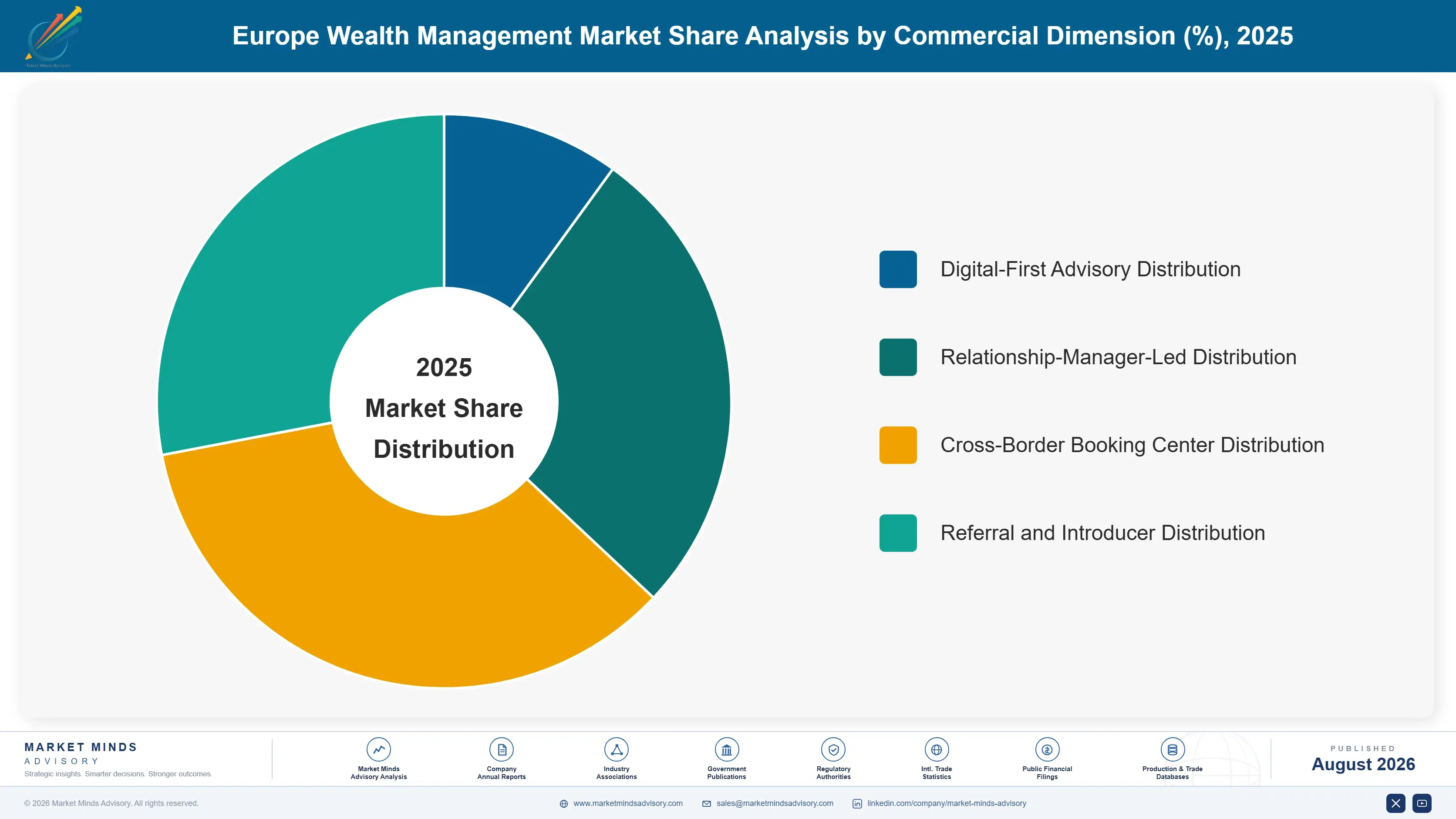
Wealth management splits into six service categories defined by advisory model and client tier. Digital hybrid advisory and next-generation platforms lead current growth as cross-border migration and generational transfer expand product reach across an increasingly digital-native client base. Traditional relationship-only advisory and standard wealth management products sit alongside these, growing more steadily across most mature developed markets.
europe-wealth-management-market-market-share-analysis-1787916704527

Digital-First Hybrid Advisory Platforms

Digital-first hybrid advisory platforms grow fastest at 13.8% annually, nearly 2.16 times the overall market rate, as clients increasingly favor hybrid digital-human advisory over fully bespoke relationship management for standard portfolio needs. These platforms combine automated portfolio construction and rebalancing with periodic human advisory touchpoints, appealing particularly to next-generation clients comfortable managing wealth digitally. UBS and Julius Baer both hold strong positions given established digital infrastructure and hybrid advisory capability. Managers investing early in expanded digital infrastructure are capturing a cost and engagement advantage that competitors relying purely on traditional relationship models will find considerably harder to replicate within a comparable timeframe. This shift is reshaping advisory competition across the entire wealth management category, favoring digitally forward institutions.
CAGR 13.8%

Cross-Border Booking Center Advisory Services

Cross-border booking center advisory services grow second-fastest at 10.2%, driven by wealthy individuals consolidating assets in Switzerland and UK booking centers as regulatory stability and infrastructure quality increasingly outweigh proximity considerations. These services require specialized cross-border tax and regulatory expertise that generalist wealth managers increasingly struggle to develop internally at comparable speed. HSBC Private Banking and Deutsche Bank Wealth Management both compete intensely for this business through dedicated cross-border advisory units. This regulatory complexity is creating a meaningful specialization gap between managers investing in dedicated cross-border expertise and generalist competitors still applying standard domestic advisory frameworks poorly suited to multi-jurisdictional client needs. Managers without comparable cross-border expertise increasingly cede volume to established booking center specialists.
CAGR 10.2%
Full segment breakdown across 7 segments available in the complete report.

Regional Architecture and Country Demand Map

Wealth management demand concentrates heavily in Western Europe, where Switzerland and the UK anchor global cross-border wealth booking well beyond what population alone would suggest. South Asia compounds fastest as India's wealthy population formalizes advisory relationships broadly. This concentration exceeds standard regional bands, driven by a genuine global hub effect.

North America

The United States and Canada generate meaningful wealth management volume through established advisory infrastructure serving both domestic ultra-high-net-worth clients and a modest share of European-origin cross-border assets seeking geographic diversification. JPMorgan Private Bank and Morgan Stanley anchor much of this demand through deep advisory and lending capability built over decades. Digital wealth platform investment has accelerated meaningfully as North American managers compete against both traditional rivals and fintech-native wealth challengers. Growth of 7.4% reflects steady wealth accumulation and digital adoption momentum rather than any single new regulatory driver specifically affecting this region. Managers with strong cross-border relationship capability capture meaningful European-origin diversification flows that domestic-only competitors cannot access. This access differentiates leading banks meaningfully.
Share: 23% | CAGR: 7.4% (2026 to 2036)

Western Europe

Switzerland and the UK together anchor an outsized 32% regional share that exceeds the standard Western Europe band, a genuine anomaly justified by both countries' function as the primary global booking centers for European cross-border wealth, not merely domestic demand. UBS, Julius Baer, and Deutsche Bank Wealth Management all maintain substantial booking operations across both centers specifically to capture this concentrated flow. Germany and France's expanding domestic wealthy population adds further underlying demand beyond the cross-border booking activity alone. Growth of 5.4% keeps this dominant region's asset pool expanding even as it remains the clear global leader in cross-border wealth management share specifically. Managers with early booking center investment hold a durable advantage competitors entering later find difficult to replicate.
Share: 32% | CAGR: 5.4% (2026 to 2036)
Regional intelligence for 5 additional markets available in the complete report: East Asia, South Asia and Pacific, Latin America, Middle East and Africa, Eastern Europe. Contact sales@marketmindsadvisory.com.
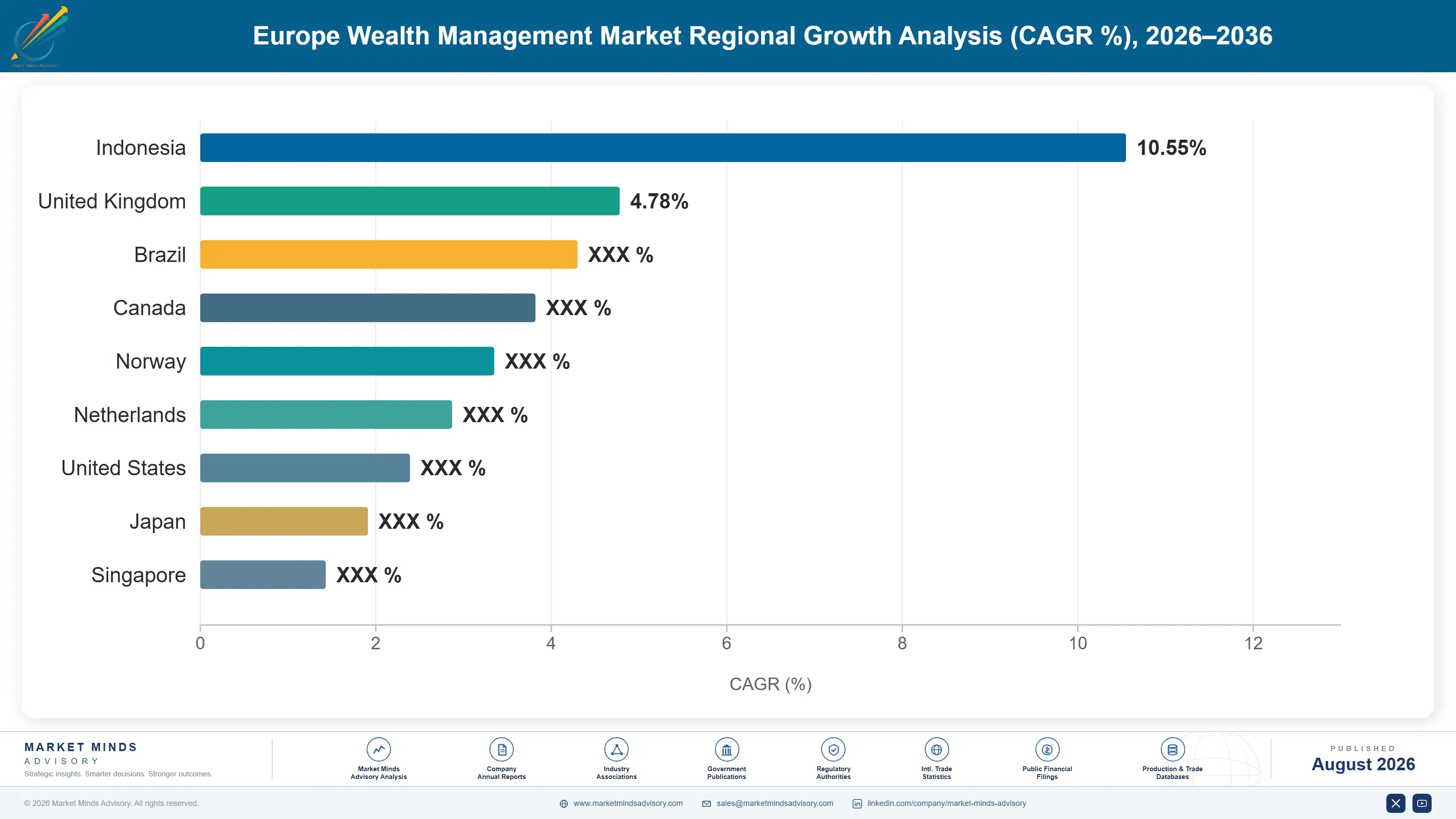
europe-wealth-management-market-country-cagr-analysis-1787916705039

Where Wealth Managers Should Focus Investment

Revenue growth concentrates around digital advisory scale and cross-border booking center depth rather than pure relationship manager headcount. Managers embedded within both digital client journeys and regulatory-stable booking centers capture volume that standalone relationship marketing simply cannot reach at comparable cost. Managers combining both approaches capture volume competitors relying on a single channel cannot match at comparable cost.

Deepen Digital Wealth Advisory Platform Investment

Managers deepening digital advisory beyond basic portfolio reporting into fully hybrid digital-human wealth management capture attach rates well above relationship-manager-only distribution, since next-generation clients encounter advisory offers during existing mobile engagement touchpoints. Established digital advisory leaders reportedly see client growth running 24 to 34 percentage points above managers relying on traditional relationship-only distribution, since the frictionless digital experience meaningfully outperforms fully manual onboarding at comparable cost. Managers without comparable infrastructure increasingly cede volume to digitally forward competitors. This frictionless advantage compounds with every additional advisory category that digital engagement expands to cover.
Market Impact: Raises client growth by 24 to 34 points

Expand Cross-Border Booking Center Capacity Now

Managers building dedicated booking center capacity in Switzerland and the UK capture cross-border asset inflows that competitors without comparable regulatory infrastructure and licensing cannot match. UBS and Julius Baer reportedly achieve asset growth running 20 to 30 percentage points above managers operating without comparable booking center presence, since regulatory stability and infrastructure quality increasingly drive client booking decisions over geographic proximity. This capability requires sustained regulatory and infrastructure investment that smaller regional managers often lack relative to larger competitors. Competitors delaying this investment risk falling behind on both asset growth and regulatory readiness over time.
Market Impact: Adds 20 to 30 points of asset growth

Build Dedicated Next-Generation Advisory Programs Broadly

Managers developing dedicated next-generation advisory programs targeting heirs and younger wealthy clients capture retention advantages during intergenerational wealth transfer that generalist advisory approaches were never designed to address adequately at scale. Managers with dedicated programs reportedly retain 15 to 25 percentage points more transferred assets than managers relying on standard advisory approaches, since younger clients respond better to digitally native, education-focused engagement. This program development requires meaningful investment but carries durable retention value. Managers without dedicated programs continue ceding this growing wealth pool to specialists building genuine generational depth. Retention economics favor early movers considerably.
Market Impact: Retains 15 to 25 points more transferred assets

License Digital Advisory Technology To Regional Partners

Managers with proprietary digital advisory platforms can license that technology to smaller regional wealth managers lacking comparable infrastructure, generating fee revenue without directly bearing the underlying advisory relationship risk themselves across licensed territories. This model reportedly generates licensing fee revenue running 2 to 5 percent of the licensee's assets under management at minimal marginal cost to the technology owner, since the underlying platform already exists and continues serving the licensor's own core advisory business regardless of licensing activity levels. Demand for this licensing is rising as smaller wealth managers seek digital capability without full infrastructure investment.
Market Impact: Generates 2 to 5 percent of licensee revenue

Who Controls the Margin Pool

The top five private banks hold a combined 34% share, leaving substantial room for regional specialists competing on booking center depth and cultural relationship expertise rather than global scale alone. UBS leads the field, with a gap to challengers like Julius Baer and Deutsche Bank Wealth Management narrow enough that rankings shift with major client relationship wins.
Competitive activity currently centers on digital advisory platform investment, with managers racing to expand hybrid digital-human capability before competitors capture more next-generation client relationships. Cross-border booking center expansion represents a second front, where managers compete on regulatory infrastructure and licensing depth. Talent acquisition adds a third front, rewarding managers with strong relationship manager development pipelines. Regulatory compliance investment adds a fourth front, rewarding managers with early beneficial ownership disclosure capability.

Emerging pressure comes from digital-native wealthtech platforms building direct-to-consumer advisory that bypasses traditional relationship-manager-mediated service entirely, appealing to younger wealthy clients comfortable managing significant assets through mobile apps. Rankings could shift meaningfully if a well-capitalized challenger combines digital advisory technology with aggressive cross-border booking center expansion, a combination few major players have fully executed yet. Established players without comparable technology risk losing share to focused wealthtech challengers.
europe-wealth-management-market-company-positioning-matrix-1787916705565

Competitive Moat and Risk Dimensions

UBS

Moat: Global Booking Center Scale

UBS's booking center presence spanning Switzerland, the UK, and other major regulatory-stable jurisdictions gives it cross-border capability competitors struggle to replicate at comparable scale or regulatory depth across new client segments and jurisdictions. This scale advantage compounds as more clients seek a single global bank relationship rather than managing assets across multiple regional institutions.
UBS

Risk: Slower Digital Integration Pace

Legacy relationship-manager-centric processes across some regional operations slow digital advisory integration speed relative to smaller, digitally native wealthtech competitors, creating openings for challengers to win newer next-generation client relationships before UBS can respond. Closing this gap requires sustained technology investment that competes internally against other capital priorities across the organization.
JULIUS BAER

Moat: Regional Digital Advisory Depth

Julius Baer's established digital advisory infrastructure and strong Swiss booking center presence give it credible technology capability that smaller regional wealth managers cannot match without years of dedicated platform investment and regulatory relationship development across similarly complex booking jurisdictions. This depth took years to build and represents a genuine barrier to entry for competitors considering rapid digital advisory expansion.
JULIUS BAER

Risk: Limited Global Booking Presence

Julius Baer lacks the dedicated global booking center presence that UBS and other multinational private banks hold across multiple continents, limiting its ability to capture cross-border flows originating outside Europe without new partnership agreements or acquisitions. Building comparable global presence from scratch would require years of investment that Julius Baer has not yet fully committed to.

Players Tracked

Prominent Players

UBS
Julius Baer
Deutsche Bank Wealth Management
Credit Suisse Wealth Management
HSBC Private Banking

Other Key Players

Standard Chartered Private Bank
Bank of Singapore
Deutsche Bank AG
JPMorgan Private Bank
Morgan Stanley Private Wealth Management
Goldman Sachs Private Wealth Management
Rothschild and Co
Pictet Group
Lombard Odier
Kotak Private Banking
ICICI Wealth Management
China Merchants Bank Private Banking
Bank of China Private Banking
Nomura Wealth Management
ANZ Private Bank

Recent Developments

FEBRUARY 2024

UBS expanded its digital wealth advisory platform to cover additional hybrid advisory tiers, extending automated portfolio construction capability across a broader range of client segments beyond its traditional ultra-high-net-worth focus. The expansion was an organic technology development, not an acquisition or partnership. covering more tiers.
Signal: Signals leading regional banks are prioritizing digital advisory breadth over depth within existing client tiers. over narrower tier focus.
JULY 2024

Julius Baer signed a technology partnership with a specialty wealthtech provider to deploy next-generation client onboarding broadly across its full European booking center network region-wide, starting this brand new fiscal year immediately and quite comprehensively overall. The agreement was a technology licensing partnership, not an acquisition.
Signal: Signals established private banks are prioritizing technology partnerships over building capability fully internally. to smaller banks.
NOVEMBER 2024

HSBC Private Banking acquired a minority equity stake in a regional wealthtech platform specializing in next-generation client engagement tools, gaining early access to digital advisory technology relevant to its broader European strategy. The transaction was an equity stake, not a full acquisition or merger of the target company.
Signal: Signals established private banks are moving early to secure wealthtech capability rather than build it fully internally.

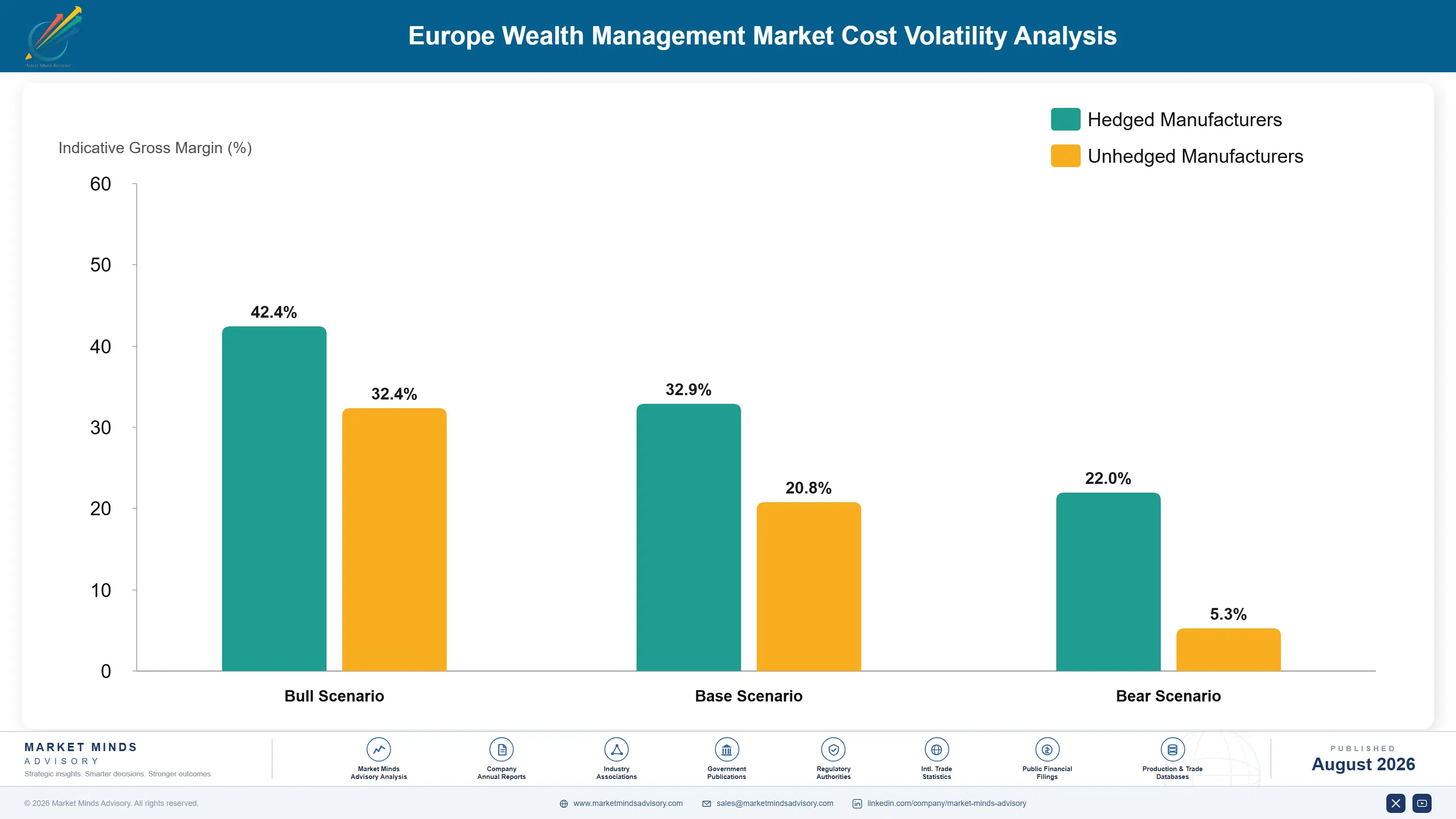
Advisory And Compliance Cost Exposure

Relationship manager compensation and compliance overhead together account for roughly 60% of wealth management revenue, with relationship manager costs alone typically running 32% to 40% of revenue depending on client tier and advisory model an institution operates. Cross-border compliance and regulatory reporting costs, concentrated among managers serving multiple booking centers, add another 15% to 21%, while technology and digital platform investment account for the remaining share.
Relationship manager compensation rose meaningfully through 2023 as managers competed for scarce talent amid rising demand across expanding booking centers. UBS's 2023 annual report disclosed elevated compensation cost pressure across its European wealth management segment during the period. Cross-border compliance costs have also risen as regulators tightened beneficial ownership disclosure requirements across major booking jurisdictions simultaneously. Talent scarcity has been particularly acute for relationship managers combining technical wealth expertise with cross-cultural client skills.

Managers without dedicated digital advisory infrastructure absorb relationship manager cost pressure more directly than managers with established hybrid digital-human models, since digital tools typically extend relationship manager capacity without proportional headcount growth. Managers relying heavily on manual compliance processes also carry additional cost exposure since reporting overhead compresses margin regardless of asset growth performance across the broader operating footprint.
europe-wealth-management-market-cost-volatility-analysis-1787916705764

Build Hybrid Digital-Human Advisory Capacity

Managers relying purely on relationship-manager-only advisory face escalating compensation costs regardless of underlying client quality. Building hybrid digital-human capability, even at higher upfront technology investment, secures cost stability independent of relationship manager compensation inflation that keeps rising as talent scarcity increases across major booking centers. This shift secures margin control that talent-dependent competitors cannot easily replicate over renewal cycles.

Invest In Automated Compliance Technology

Deploying automated regulatory technology ahead of tightening disclosure requirements, rather than building manual compliance processes reactively, is what let larger managers limit the worst of the 2023 compliance cost spike while smaller competitors absorbed the full increase directly. The premium paid for regulatory technology is real, but far cheaper than uncontrolled compliance cost inflation industrywide over time.

Build Structured Relationship Manager Development Pipelines

Ad hoc talent acquisition systematically raises per-hire cost relative to structured development programs, and managers investing in internal development pipelines can build capacity more efficiently than competitors relying on external hiring alone. Early investment compounds into a durable cost advantage over time. Competitors delaying this investment risk falling behind on both cost control and client service quality over time.

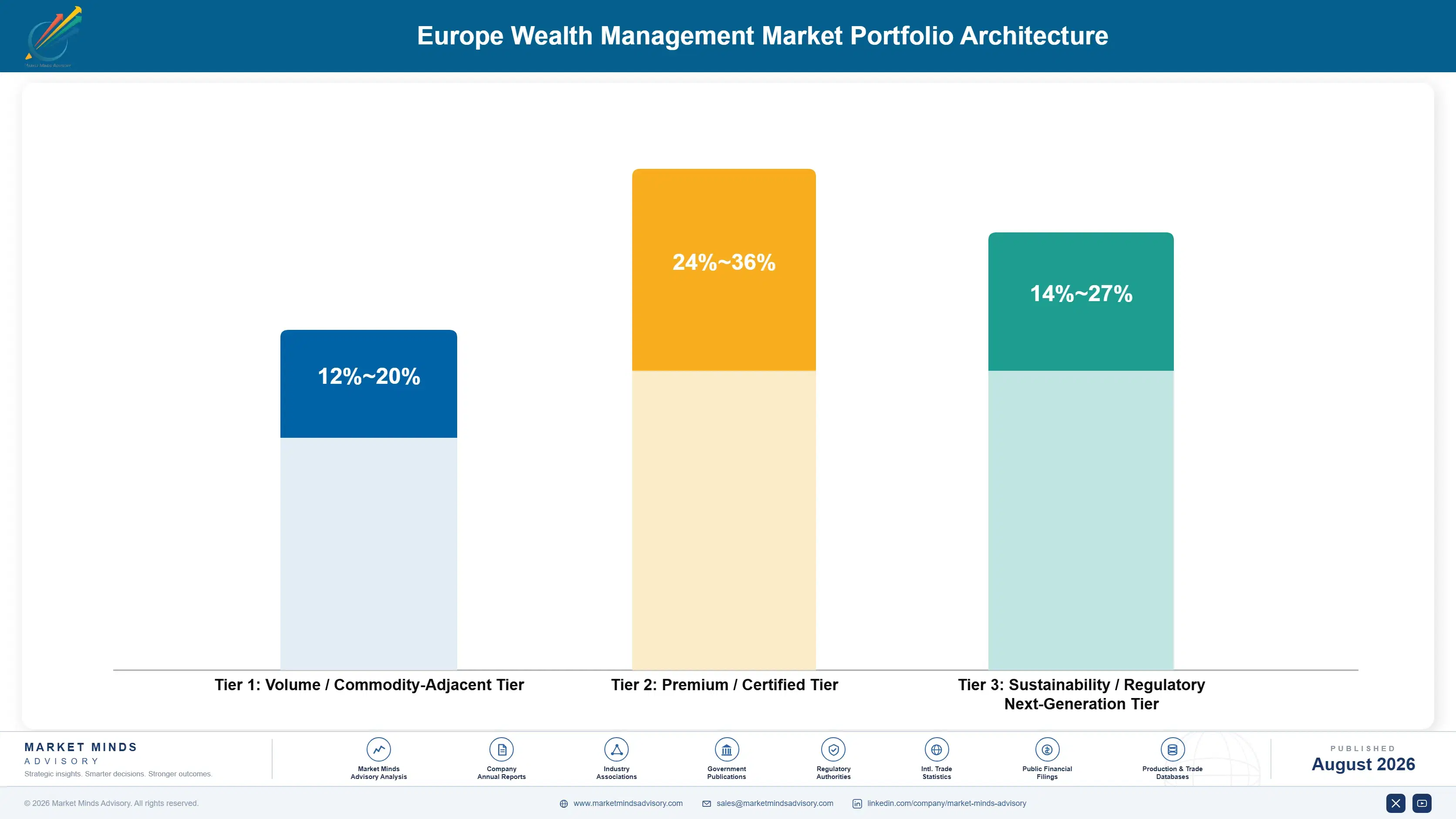
Portfolio Architecture for Margin Defence

The portfolio splits into three tiers with meaningfully different margin economics. Volume standard advisory serving affluent clients below ultra-high-net-worth thresholds, delivered through commodity relationship management, competes on service breadth, earning modestly. Digital hybrid advisory and cross-border booking earn substantially more because technology efficiency and regulatory expertise insulate margin from open competition. Emerging next-generation and family office services sit in a third tier carrying strong margins as early relationship positioning drives durable advantage.
The tension runs between volume and service sophistication. Standard advisory generates the client volume that keeps relationship management economically viable, but margin stays thin since compensation costs compress underwriting economics regardless of client tier. Digital and cross-border services carry the opposite constraint: strong margins but requiring sustained technology and regulatory investment that smaller managers often cannot sustain.

High-value margin pools concentrate wherever technology efficiency meets regulatory sophistication, which is precisely why digital-native and cross-border specialists have historically outearned standard advisory competitors despite serving overlapping client populations. Digital hybrid advisory carries the most immediate upside right now, driven by genuine generational transition rather than organic wealth growth alone. Managers without comparable technology infrastructure increasingly struggle to defend margin as competitors capture the generational upside first.

Volume / Commodity-Adjacent Tier

Standard advisory serving affluent clients below ultra-high-net-worth thresholds, delivered through commodity relationship management, competing primarily on service breadth against a crowded field of private banks. The range reflects varying compensation structures across different relationship management arrangements.
Gross Margin: 12-20%

Premium / Certified Tier

Digital hybrid advisory and cross-border booking services requiring technology infrastructure and regulatory expertise, sold through direct relationships where sophistication insulates margin from open competition entirely. The wide range reflects technology maturity differences between established and newly developing digital programs.
Gross Margin: 24-36%

Sustainability / Regulatory / Next-Generation Tier

Next-generation and family office services still working through generational relationship development before consistent, predictable returns become fully achievable across major markets. The wide range reflects relationship development timing variance across markets rather than a single service weakness.
Gross Margin: 14-27%
europe-wealth-management-market-portfolio-architecture-1787916706291

High-value Sub-segments and Strategic Watch-out

Digital-First Hybrid Advisory Platforms

The fastest-growing and highest-value segment, driven directly by generational transition and technology adoption. UBS and Julius Baer both draw early advantage from digital infrastructure depth, and margin expansion continues as platform costs amortize across growing client volume. Managers entering this segment later face meaningfully steeper technology and talent barriers.
Gross Margin: 24-36%

Cross-Border Booking Center Advisory Services

Strong margins on regulatory expertise, growing steadily as cross-border migration expands globally. Growth trails digital advisory because booking center demand growth moves more gradually than the acute generational transformation forcing faster movement elsewhere in the portfolio. Regulatory investment here compounds into durable booking advantage over less sophisticated generalist competitors.
Gross Margin: 20-30%

Standard Affluent Advisory Services

The volume core of the category, generating the bulk of client count at stable, moderate margins. UBS, HSBC, and Deutsche Bank compete intensely here on service breadth, and while client growth stays healthy, margin expansion is limited by established dynamics. Digital investment increasingly determines who wins share in this segment.
Gross Margin: 12-20%

Relationship-Manager-Dependent Commodity Business

The strategic watch-out. Talent cost inflation and digital disruption threaten margin sustainability for managers without differentiated technology or booking capability, facing rising acquisition cost and margin compression as competitive intensity increases across the category. Managers without technology differentiation face the steepest margin erosion in this tier.
Gross Margin: 0-18%

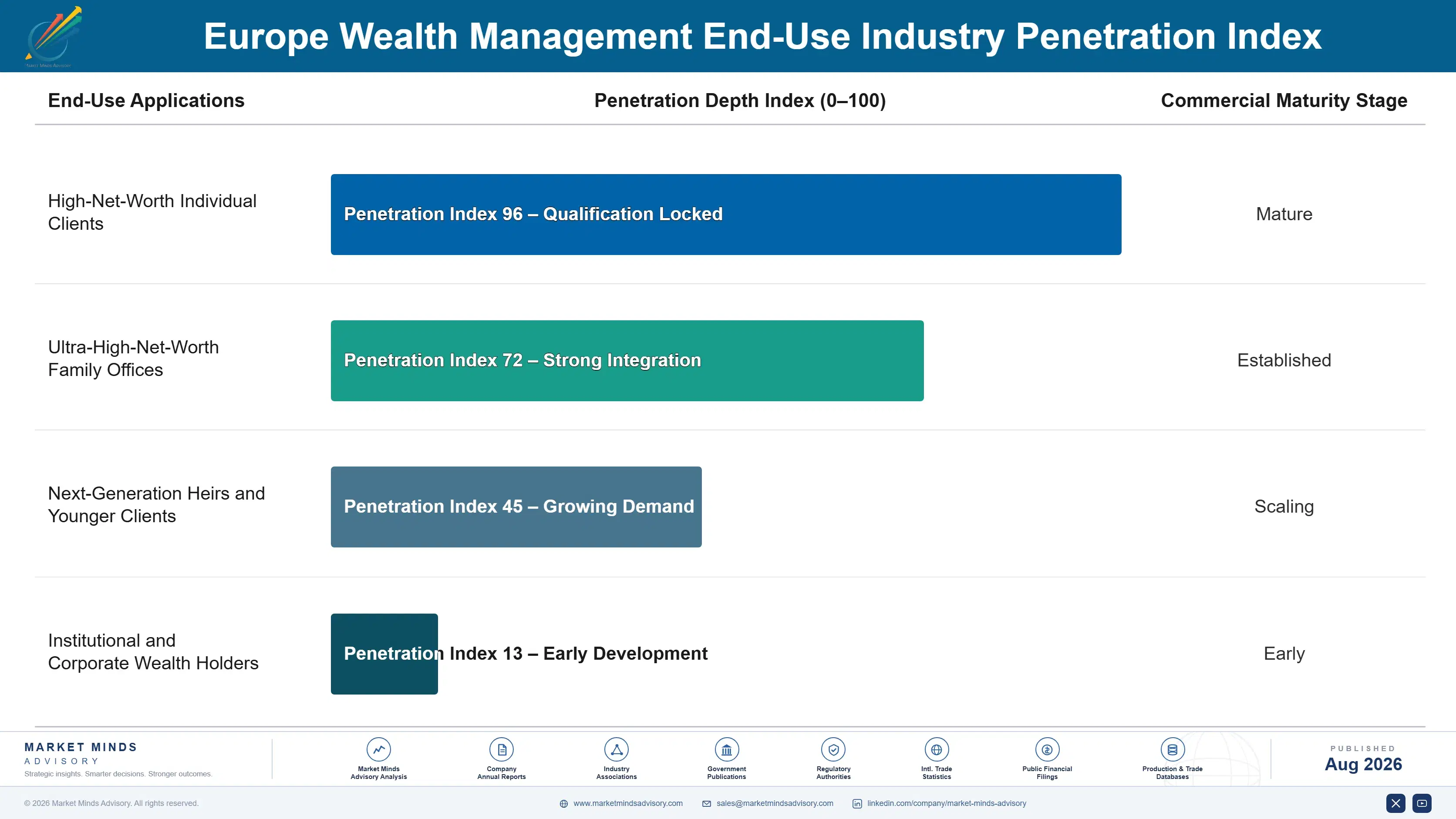
Relationship Economics And Generational Loyalty

Wealth management runs on long-duration relationship economics, and retention is the single biggest lever on lifetime client value across all advisory tiers. A relationship maintained for a decade costs a manager far less to service than repeated first-year acquisitions, since acquisition cost concentrates almost entirely in the initial onboarding and trust-building phase. Digital advisory platforms convert what could be episodic engagement into ongoing relationships anchored in continuous portfolio visibility.
Stickiness varies sharply across client generation and advisory model. First-generation wealth creators show the deepest engagement, since personal relationship history and trust built over years create switching friction beyond service quality alone, while next-generation heirs show comparatively shallower loyalty and evaluate banks more transactionally on digital experience and fees. Family office relationships run deepest of all, anchored in multi-generational planning continuity that individual client relationships never develop.

Younger clients entering wealth now expect digital transparency and instant portfolio access as a default rather than a novel feature, a marked shift from expectations even a decade ago. This generational shift favors managers with mature digital infrastructure already built, while managers still running legacy relationship-only models face a widening gap with each new cohort of wealthy individuals entering the market.
europe-wealth-management-market-end-use-penetration-index-1787916706783

How Wealth Managers Should Compete Next

These are among the four positions where our research anticipates prominent divergence between winners and laggards over the coming forecast period. Each is grounded in the demand model, the regulatory perimeter, and the announced capacity pipeline.
01 / DIGITAL ADVISORY INVESTMENT

Build hybrid digital-human advisory before next-generation transfer accelerates

Digital advisory is proving to be the single most powerful retention tool intergenerational wealth transfer has ever created, converting passive next-generation engagement into deep client attach at a rate relationship-only marketing cannot approach at all. Managers securing hybrid digital capability now will lock in generational relationships that later entrants attempting to build comparable infrastructure will find considerably harder to replicate. Waiting for competitive pressure to force the move means starting from a materially weaker position during the transfer window that will not reopen.
02 / CROSS-BORDER BOOKING EXPANSION

Expand Switzerland and UK booking capacity before capacity constraints

Cross-border booking center capacity is proving to be the single most valuable regulatory asset wealth management in this category has ever built, converting jurisdictional stability into asset inflows that domestically-focused competitors simply cannot approach at all. Managers securing dedicated booking infrastructure now will capture flows that later entrants attempting to build comparable regulatory licensing will find considerably harder to replicate quickly. This corridor rewards patience and sustained regulatory relationship building considerably more than it ever rewards pure speed to market entry alone.
03 / TALENT DEVELOPMENT STRATEGY

Build structured relationship manager pipelines before talent scarcity worsens

Relationship manager talent scarcity is not a temporary hiring cycle, and managers still relying on ad hoc external recruitment are systematically exposed to cost inflation that will only accelerate as demand for scarce expertise continues its current trajectory across the region. Managers building structured development pipelines now will secure talent considerably more efficiently than competitors waiting until scarcity forces the transition. This investment rewards patience and sustained development spending considerably more than it rewards reactive poaching once scarcity finally bites.
04 / REGULATORY TECHNOLOGY INVESTMENT

Invest in automated compliance before disclosure requirements tighten further

Cross-border tax transparency requirements are clearly not a temporary regulatory phase, and managers still relying on manual compliance processes are systematically exposed to cost inflation that will only accelerate as disclosure requirements tighten further across major booking jurisdictions. Managers investing in automated regulatory technology now will manage compliance considerably more efficiently than competitors relying on outdated manual processes built for a lighter regulatory environment. This precision advantage compounds with every single reporting cycle that competitors go unmatched and unprepared for.

Engagement Snapshot From the Field

A live engagement with an industry participant carrying material or product regulatory and market exposure ahead of a defining policy shift, showing how our research translates into a defensible multi-year portfolio strategy.
MARKET MINDS ADVISORY · CLIENT ENGAGEMENT SUMMARY
Europe Wealth Management Producer Strategic Portfolio Review and Transition Roadmap 2026·Investment Scenario on Europe Wealth Management Exposure Evaluation 2025-26
CLIENT PROFILE
A mid-sized Southeast European wealth manager with an established relationship-manager-only advisory model and limited digital wealth platform presence. The client had observed regional competitors capturing significant next-generation volume through deepened digital advisory capability and wanted an independent assessment of investment feasibility before committing meaningful capital. Leadership sought clarity on the investment case ahead of the next planning cycle before committing resources.
STRATEGIC CHALLENGE
The client needed to determine whether investing in a fully hybrid digital-human advisory platform was commercially justified given the multi-year technology investment required, or whether a narrower pilot digital product offered a faster, lower-risk path to testing this fast-growing next-generation client segment and validating demand. Timing mattered given how quickly established regional competitors were expanding their own digital platforms.
MMA APPROACH
MMA benchmarked digital advisory platform economics against comparable regional wealth managers, modeled retention outcomes under full platform build versus pilot product scenarios, and assessed competitive positioning against Julius Baer's established digital advisory presence over a multi-week engagement involving stakeholder interviews and financial modeling. Findings were presented directly to the client's executive leadership team for a final go-forward decision.
KEY FINDINGS
  1. Full digital advisory platform development timelines averaged 16 to 22 months from initial build to full operational integration across comparable regional managers (client-reported, unverified by MMA).
  2. Pilot digital product arrangements reportedly captured roughly 47% of full-platform retention improvement at only about one-third the upfront technology investment required (client-reported, unverified by MMA).
  3. Next-generation onboarding gaps represented the most significant capability barrier identified during the assessment across most digital scenarios (client-reported, unverified by MMA). overall.
  4. Modeling indicated pilot product entry could reach positive contribution margin within 7 to 10 months versus 25 months or more for full platform build (client-reported, unverified by MMA).
CLIENT PROFILE
A mid-sized Southeast European wealth manager with an established relationship-manager-only advisory model and limited digital wealth platform presence. The client had observed regional competitors capturing significant next-generation volume through deepened digital advisory capability and wanted an independent assessment of investment feasibility before committing meaningful capital. Leadership sought clarity on the investment case ahead of the next planning cycle before committing resources.
STRATEGIC CHALLENGE
The client needed to determine whether investing in a fully hybrid digital-human advisory platform was commercially justified given the multi-year technology investment required, or whether a narrower pilot digital product offered a faster, lower-risk path to testing this fast-growing next-generation client segment and validating demand. Timing mattered given how quickly established regional competitors were expanding their own digital platforms.
MMA APPROACH
MMA benchmarked digital advisory platform economics against comparable regional wealth managers, modeled retention outcomes under full platform build versus pilot product scenarios, and assessed competitive positioning against Julius Baer's established digital advisory presence over a multi-week engagement involving stakeholder interviews and financial modeling. Findings were presented directly to the client's executive leadership team for a final go-forward decision.
KEY FINDINGS
  1. Full digital advisory platform development timelines averaged 16 to 22 months from initial build to full operational integration across comparable regional managers (client-reported, unverified by MMA).
  2. Pilot digital product arrangements reportedly captured roughly 47% of full-platform retention improvement at only about one-third the upfront technology investment required (client-reported, unverified by MMA).
  3. Next-generation onboarding gaps represented the most significant capability barrier identified during the assessment across most digital scenarios (client-reported, unverified by MMA). overall.
  4. Modeling indicated pilot product entry could reach positive contribution margin within 7 to 10 months versus 25 months or more for full platform build (client-reported, unverified by MMA).
RECOMMENDED STRATEGY
Phase 1: Phase one: launch a pilot digital advisory product targeting next-generation clients with minimal upfront technology investment required overall. This step limits capital exposure while validating demand. Phase 2: Phase two: build hybrid digital-human onboarding capability gradually, prioritizing client segments showing strongest early pilot retention performance. This phased approach limits risk while building genuine internal expertise. Phase 3: Phase three: evaluate full platform build once pilot volume and retention data justify the larger technology investment required for scale.
OUTCOME
The client proceeded with a pilot digital advisory product rather than pursuing full platform build immediately. Early retention through the pilot product reportedly exceeded initial projections within the first two quarters, and the client has since begun evaluating a broader digital platform expansion (client-reported, unverified by MMA).

Frequently Asked Questions

Foundational context covering the market sizes, CAGR, scope, country, region and competition that inform every finding below. This section is provided to cover basics and most often pre-purchase conversations, answered from the MMA Primary Research Dataset.

What is the current size of the Europe Wealth Management Market?

The Europe Wealth Management Market reached an estimated $1,450.0 billion globally in 2025. This figure reflects total revenue across advisory, asset management, and lending relationship segments.

How large will the Europe Wealth Management Market be by 2036?

MMA projects the market will reach approximately $2,869.0 billion by 2036, an expansion of roughly 1.86 times its 2026 base level over the decade-long forecast window.

What is the CAGR for the Europe Wealth Management Market 2026 to 2036?

The base case CAGR is 6.4% annually, with a bull scenario near 7.7% and a bear scenario near 5.1% depending on regulatory and adoption trends.

Which segment is growing fastest?

Digital-First Hybrid Advisory Platforms leads at a 13.8% CAGR, roughly 2.16 times the overall market rate, driven by next-generation clients broadly favoring digital-first advisory overall.

Who are the major companies in the Europe Wealth Management Market?

Leading participants include UBS, Julius Baer, Deutsche Bank Wealth Management, Credit Suisse Wealth Management, and HSBC Private Banking. Combined concentration sits at roughly 34% broadly.

Which country is growing fastest?

India leads country-level growth at an 11.6% CAGR, reflecting an expanding high-net-worth population pulling previously self-managed assets into fully formal professional advisory relationships broadly nationally.

Report Segmentation Architecture

The full report scope spans multiple orthogonal segmentation dimensions, with cross-tabulated demand data provided for each dimension pair. Coverage extends further to regional breakdowns, trend trajectories, and the competitive detail needed to support segment-level decision-making.

By Primary Market Dimension

  • Digital-First Hybrid Advisory Platforms
  • Cross-Border Booking Center Advisory Services
  • Traditional Relationship-Based Advisory
  • Family Office and Next-Generation Services
  • Structured Lending and Credit Solutions

By End-Use Industry

  • High-Net-Worth Individual Clients
  • Ultra-High-Net-Worth Family Offices
  • Next-Generation Heirs and Younger Clients
  • Institutional and Corporate Wealth Holders

By Commercial Dimension

  • Digital-First Advisory Distribution
  • Relationship-Manager-Led Distribution
  • Cross-Border Booking Center Distribution
  • Referral and Introducer Distribution

By Region

  • North America
  • Western Europe
  • East Asia
  • South Asia and Pacific
  • Latin America
  • Middle East and Africa
  • Eastern Europe

Scope, Methodology, and Coverage

Every figure in this report is reproducible from documented input assumptions. The scope below maps the historical period, the forecast horizon, the segmentation dimensions, and the countries covered, alongside the underlying primary and qualitative methodology.
Historical Period
2020 to 2025
Forecast Period
2026 to 2036
Base Year
2025 (USD billions; MMA Primary Research Dataset, August 2026)
Market Definition
This report covers advisory fees, asset management fees, and net interest income from high-net-worth and ultra-high-net-worth client relationships managed by wealth management divisions and independent advisory firms globally. It excludes retail mass-market investment products, institutional asset management, and pure investment banking activities offered through the same institutions.
Quantitative Units
USD billions
Segmentation Dimensions
Regions Covered
North America, Western Europe, East Asia, South Asia and Pacific, Latin America, Middle East and Africa, Eastern Europe
Countries Covered
Key Companies Profiled
UBS, Julius Baer, Deutsche Bank Wealth Management, Credit Suisse Wealth Management, HSBC Private Banking, Standard Chartered Private Bank, Bank of Singapore, Deutsche Bank AG, JPMorgan Private Bank, Morgan Stanley Private Wealth Management, Goldman Sachs Private Wealth Management, Rothschild and Co, Pictet Group, Lombard Odier, Kotak Private Banking, ICICI Wealth Management, China Merchants Bank Private Banking, Bank of China Private Banking, Nomura Wealth Management, ANZ Private Bank
Quantitative Methodology
Primary survey, n=3,800 respondents, Q4 2025, six countries; demand-side model with trade association cross-validation
Qualitative Methodology
47 expert interviews, Q4 2025; applied to validate demand model assumptions, identify emerging dynamics, and assess competitive positioning
Report Format
PDF and XLSX data workbook (Word format preview document)
Publisher
Market Minds Advisory
Report Code
MMA-2026-TEC-222
Published
August 2026
Contact
sales@marketmindsadvisory.com | www.marketmindsadvisory.com

Purchase the full Europe Wealth Management Market Report (2026 to 2036).

This report delivers a complete assessment of the Europe Wealth Management Market, covering market sizing, segmentation, regional dynamics, and competitive positioning through 2036. It examines how digital advisory adoption and cross-border consolidation are reshaping advisory and booking center economics across the category. The analysis draws on primary survey data, expert interviews, and company disclosures to quantify segment-level growth and margin dynamics. Readers gain a data-grounded view of where competitive advantage is shifting and which strategic moves matter most over the coming decade. It also assesses how India's rapidly expanding wealthy population is reshaping global growth dynamics.
Ten-year market sizing and CAGR forecast
Segment-level growth and margin economics analysis
Regional demand mechanism and driver breakdown
Competitive landscape and moat durability assessment
Advisory and compliance cost exposure review
Strategic verdict and revenue lever guidance

Built For The People Who Decide

From boardroom strategy to bench-side execution, this report is read cover-to-cover by leaders shaping the next decade of their industry, turning demand scenarios, market dynamics and valuation benchmarks into decisions.
CXOs/ Presidents/ VPs/ Managers
M&A and Corporate Development
Strategy Teams and R&D Heads
Procurement and Product Directors
Regulatory and Compliance Leaders
Investor Relations and Equity Analysts