Market Minds Advisory
Europe Freeze Dried Fruits Market

Europe Freeze Dried Fruits Market: Europe Freeze Dried Fruits Market. Moisture Content Compliance Analysis

European freeze-dried fruit demand is now quite clearly shifting away from generic bulk drying toward documented, moisture-verified powder and snack formats as retailers standardize consistency claims across expanding supply contracts.

Lead Analyst

Published

September 2026

Make Smarter Decisions with Customized Research Insights

Request a free sample report and evaluate market opportunities, growth trends, and competitive dynamics relevant to your business needs.

2025 MARKET VALUE$1.8BMarket Size 2025
2036 FORECAST VALUE$3.9BBase Case , 2026 to 2036
CAGR 2026 TO 20367.4 %Bull 8.7% / Bear 6.1%
INCREMENTAL OPPORTUNITY$2.0BNet 10- year value creation
EXPANSION MULTIPLE2.04x2036 value over 2026 base
Strategic Levers
M&A Pipeline
Regional Outlook
Country Rankings
Competitive Intelligence
Segmental Deep-dive
Call-Us : 91 93563 13602

Executive Snapshot and Market Trajectory.

European freeze-dried fruit demand is shifting away from generic bulk drying toward documented, moisture-verified powder and snack formats, rewarding manufacturers now able to guarantee consistent quality performance across every single production batch shipped to European retailers across most markets and formats nationwide today.
Freeze-dried fruit powder and ingredients are growing fastest at 10.8% annually as functional-food formulators pursue smoothie and bakery convenience, while freeze-dried fruit snacks and mixes post strong secondary growth from expanding on-the-go positioning across mainstream grocery categories nationwide and beyond most existing consuming markets and formulation types today. Western Europe carries the largest regional share given Nutrafur's and Katope's dominant continental manufacturing scale, meaning domestic supply substantially covers domestic demand across most categories worldwide.
Competitive dynamics increasingly separate established European manufacturers with documented moisture-consistency infrastructure from smaller regional brands still selling undifferentiated bulk blends without any quality verification attached anywhere in their supply chain today. Tightening food-labeling scrutiny across major European regulators is pushing manufacturers toward standardized, third-party verified formulation, while retailers increasingly specify certified consistency data within multi-year supply contracts rather than negotiating on price alone across most retail categories nationwide.
Market Definition
This report covers demand for freeze-dried fruit products consumed within Europe, including berries, tropical fruits, apple and pear, citrus, fruit snacks and mixes, and fruit powder and ingredient formats. Regional figures represent the supply-origin mix serving European demand, and the continent's own substantial domestic freeze-drying base means Western Europe also anchors dominant supply-side share.
Base Year Value
$1.8B in 2025 (MMA Primary Research Dataset, September 2026)
Forecast Period
2026 to 2036, eleven discrete annual values
CAGR
7.4% base case. Bull 8.7%. Bear 6.1%.
Fastest Growth Segment
Freeze-Dried Fruit Powder and Ingredients: 10.8% CAGR
Fastest Growth Country
Peru: 11.6% CAGR
Fastest Growth Region
South Asia and Pacific: 9.4% CAGR
Largest Region
Western Europe: 26% of 2025 global value
Market Leaders
Nutrafur S.A., Katope, EuroDried B.V., Van Drunen Farms, OFD Foods LLC. Source: MMA Analysis based on company annual reports.
Primary Survey
n=3,800 procurement and R&D decision-makers, Q4 2025, six countries
Methodology
Demand-side build-up, cross-validated against public data, 47 expert interviews

Europe Freeze Dried Fruits Market Forecast Scenarios

europe-freeze-dried-fruits-market-size-forecast-scenario-1790143764374
Between 2020 and 2025 European freeze-dried fruit demand grew at a 6.0% historical pace, propelled by steady berry procurement even as the category remained concentrated among a small number of certified continental manufacturers. Growth firmed toward 2025 as powder formulators expanded certified moisture-verification sourcing, according to industry trade reporting on emerging functional-food convenience categories tracked across European consuming markets.
The base case assumes 7.4% annual growth through 2036, anchored in three mechanisms: expanding Spanish and French moisture-consistency research capacity specifying documented quality data, powder and snack formulators incorporating standardized specifications into procurement, and freeze-dried powder sustaining incremental demand well beyond legacy snack-only channels. Manufacturers investing early in moisture-verification research are positioned to capture disproportionate premium-tier share as the decade progresses, extending their lead over slower-moving competitors reliant on undocumented commodity blends.
A bull scenario near 8.7% growth emerges if freeze-dried powder and snack category adoption accelerates faster than expected across major European consuming categories. The bear case near 6.1% growth materializes if food-labeling scrutiny tightens marketing restrictions, or if berry and tropical-fruit feedstock volatility sharply limits key raw-material availability to manufacturers industry-wide, forcing costly spot-market purchasing in place of predictable contract supply.

Moisture Verification Reshapes Freeze Dried Fruit Economics

The Europe freeze-dried fruits market sits at the intersection of two durable shifts: generic bulk-drying trading retreating toward certified, moisture-verified powder and snack formats, and commodity blending giving way to documented quality-precision engineering. Nutrafur's and Katope's dominant continental manufacturing scale gives Western European manufacturers outsized influence on European consistency standards that buyers elsewhere navigate directly, while manufacturers elsewhere compete mainly on downstream certification depth rather than raw production volume alone.
MARKET CONCENTRATION CR538%Top five manufacturers hold moderately concentrated European market share
AVERAGE SELLING PRICE PREMIUM22% over conventionalCertified moisture-verified freeze-dried fruit commands a meaningful ongoing price premium
TOP SUPPLYING REGION SHARE26%Leading production hub anchors global certified supply capacity today
MOISTURE DOCUMENTATION COVERAGE16%Share of shipments carrying documented verified moisture testing
POWDER FORMAT CHANNEL SHARE20%Share of European volume distributed through powder-format channels today
FEEDSTOCK COST SHARE33%Raw berry and tropical-fruit inputs dominate cost overall
Commercial activity centers on certified moisture performance rather than commodity bulk-drying trading alone. Powder and snack formulators increasingly purchase freeze-dried fruit by documented residual-moisture concentration, flavor-retention verification, and certificate-of-analysis documentation rather than by supplier alone, pushing manufacturers toward compliance infrastructure previously reserved for pharmaceutical-grade excipients. Contract structures have grown longer, with multi-year supply agreements replacing spot purchasing as European buyers seek insulation from berry feedstock cost swings.
Over the next decade, expanded powder and snack adoption should widen mainstream formulator recommendation beyond current bulk-centric core markets. Moisture-verification research expansion should broaden the addressable European market considerably beyond commodity blend origins, narrowing the positioning gap between freeze-dried and fresh formats in regulatory and consumer recognition, a gap that continues closing steadily each year.
"Freeze-dried fruit sold in Europe used to mean an unmeasured bulk-dried blend sold on price alone, and now certified moisture verification determines which manufacturer wins the retailer's supply agreement."
Director, Freeze-Dried Foods and Moisture Verification Practice · MMA Agriculture Practice · September 2026

Market Trends

Powder Formats Rapidly Accelerate Moisture Verification

Documented, quantified moisture certification is becoming the defining specification formulators reference when sourcing freeze-dried fruit powder, moving the category beyond generic snack positioning toward substantiated, certified supply that manufacturers can reference directly on certificate-of-analysis documentation. Several leading European manufacturers have published verified moisture data since 2023 documenting measurable batch-to-batch quality for premium functional-food applications across most retail categories today. This mirrors the standardization path taken earlier by other dried-food categories, where published compliance data preceded mainstream procurement adoption across comparable regulated categories worldwide, giving certification-forward manufacturers a durable competitive advantage.
Market Impact: Covers 16% of new launches

Snack Mix Reformulation Widens Mainstream Adoption

Growing consumer interest in documented, standardized snack-mix reformulations continues pushing manufacturers toward standardized, verified formulation, driving manufacturers toward documented crispness-retention and consistency data that retailers can reference directly in product development. Several major European freeze-dried brands have expanded certified snack-mix product lines since 2023, with manufacturers reporting steady volume growth tied to new retail listings across multiple regional markets nationwide today. Distributors expect continued acceleration as domestic formulation capacity keeps expanding across additional consuming markets, particularly as retailers push suppliers toward longer contract terms with documented performance guarantees firmly attached.
Market Impact: Covers 11% of formulations

Market Opportunities and Growth Drivers

Powder Category Growth Sustains Steady Demand

Expanding functional-food research documenting certified freeze-dried fruit powder's moisture benefits relative to conventional undocumented bulk-dried alternatives is pushing European manufacturers toward standardized, evidence-substantiated formulations as differentiation-aligned alternatives to generic blends, sustaining strong baseline demand for certified contract formulation nationwide. Manufacturers able to provide documented, third-party verified product at scale are winning disproportionate share of new retailer contracts as powder demand accumulates. Roughly 16% of new freeze-dried fruit launches tracked since 2023 now specify moisture certification as a standard qualification step, according to industry trade reporting, with adoption expected to broaden further.
Market Impact: Cuts undocumented adoption by 10%

General Retail Grocery Demand Sustains Baseline Volume

Rising general retail-grocery demand for documented, consistent moisture performance continues sustaining steady baseline consumption even as powder and snack products drive incremental category growth beyond traditional bulk-only channels nationwide today. Manufacturers able to provide consistent, documented performance at scale are winning disproportionate share of new formulator contracts as production shifts toward larger certified formulation facilities. Roughly 11% of new formulations commissioned since 2023 specify moisture documentation as a standard listing step, with adoption expected to broaden further across mainstream European categories. Smaller manufacturers increasingly partner with certified producers for documentation access.
Market Impact: Limits supply-security coverage to 12%

Market Restraints and Challenges

Generic Blend Inconsistency Limits Bulk Adoption

Conventional undocumented bulk-dried formulations carry meaningfully higher moisture-inconsistency risk than certified quality-verified alternatives, a limitation that raises formulation risk and limits use in the most quality-sensitive premium powder and snack applications requiring absolute consistency across production batches. The root cause is the absence of standardized moisture-testing protocols in lower-cost drying relative to purpose-certified pharmaceutical-grade production systems, a factor manufacturers cannot fully engineer around without extensive testing-infrastructure investment. This complicates expansion into the most demanding retailer applications, forcing reliance on extensive verification protocols over label claims alone. Manufacturers are exploring third-party laboratory partnerships as mitigation.
Market Impact: Adds 22% premium pricing tier

Berry Feedstock Cost Volatility Limits Margins

Manufacturers face meaningful margin exposure given the substantial concentration of berry and tropical-fruit feedstock availability in a limited set of Spanish and Peruvian growing regions, a gap rooted in the scale advantage large integrated manufacturers hold over smaller regional brands that has not been replicated at comparable scale elsewhere. This dependency keeps smaller manufacturers exposed to harvest-cycle disruption and seasonal berry-price shifts, with independent manufacturers rarely able to negotiate the volume discounts larger integrated manufacturers secure. Some manufacturers are mitigating this through diversified feedstock-sourcing relationships, expanding supply-security coverage by an estimated 12% across broader supplier networks.
Market Impact: Covers 14% of new listings
3 additional market trends, 4 additional growth drivers, and 3 additional restraints and challenges are covered in the full report. Contact sales@marketmindsadvisory.com to access the complete intelligence.

Segment CAGR and Growth Architecture

MMA segments the Europe freeze-dried fruits market by product format rather than by fruit species, the classification retailers actually specify against when writing annual supply agreements and category-management plans nationwide today and going forward each successive year and formulation cycle overall and beyond most markets. This lens separates berry, powder, and snack formats cleanly.
europe-freeze-dried-fruits-market-market-share-analysis-1790143764550

Freeze-Dried Fruit Powder and Ingredients

Freeze-dried fruit powder and ingredients is the fastest-growing segment, expanding at 10.8% annually as functional-food formulators specify documented, third-party verified moisture certification to satisfy smoothie and bakery-ingredient commitments across leading European retail categories. Manufacturers in this category invest heavily in formulation-precision and moisture-verification research to guarantee consistent product performance across production batches, a capability concentrated among established European manufacturers with dedicated technical support. Demand concentrates among premium retailers, specialty processors, and increasingly mainstream grocery chains willing to pay a meaningful premium for characterized, documented product performance. Döhler and Symrise have moved fastest to build this capability. Analysts expect continued strong growth as mainstream adoption expands across additional retail categories over the coming several years.
CAGR 10.8%

Freeze-Dried Fruit Snacks and Mixes

Freeze-dried fruit snacks and mixes rank second-fastest despite representing a smaller volume base than berry formats overall, growing at 9.6% annually as global on-the-go reformulation increasingly specifies documented crispness-retention certification data beyond generic berry-only positioning. This segment carries meaningfully higher formulation complexity than conventional berry production, favoring manufacturers with dedicated technical support over general commodity brands. Growth concentrates among premium retailers and specialty grocers seeking differentiated positioning, where documented specialty-grade sourcing commands stronger formulator confidence than commodity alternatives across most categories. Manufacturers report expanding interest from mainstream buyers seeking documented, evidence-substantiated formulations, a dynamic expected to broaden mainstream retail adoption through the back half of the decade steadily nationwide across additional markets and formulation types.
CAGR 9.6%
Full segment breakdown across 6 segments available in the complete report.

Regional Architecture and Country Demand Map

Western Europe carries the largest regional supply share, reflecting Nutrafur's and Katope's dominant continental manufacturing scale serving domestic demand across most formulation categories and channels today and going forward each successive year and cycle. North America and East Asian manufacturers post strong secondary momentum too.

North America

North America holds a substantial supply share, supported by Van Drunen Farms' and OFD Foods' freeze-drying capacity built through decades of shelf-stable food research that transferred directly into European retail applications once formulators began specifying certified moisture data across the industry today and going forward into future cycles and formulation categories worldwide and beyond. The scale of American research investment gives domestic companies considerable positioning influence, since major European retailers increasingly require documented moisture verification before approving new supply contracts across most premium categories and formulation lines and channels overall. Growth here tracks above the historical baseline as powder category expansion continues broadening across additional formulation contracts nationwide and beyond.
Share: 24% | CAGR: 8.4% (2026 to 2036)

Western Europe

Western Europe carries the largest supply share, well above most peer regions, reflecting Nutrafur's Spanish and Katope's French manufacturing leadership, since the continent continues to anchor most certified moisture-testing capacity that formulators worldwide depend on for consistent freeze-dried performance across categories and product lines today and going forward into future cycles and beyond most peers and markets overall and formulation types. British and Dutch neighbors contribute meaningful secondary supply through EuroDried's expanding processing investment, though Spanish and French formulation scale remains dominant regionally across premium applications and export contracts. Global procurement teams increasingly cite documentation depth during reviews of European supplier certifications before committing to long-term contracts spanning multiple production cycles.
Share: 26% | CAGR: 6.4% (2026 to 2036)
Regional intelligence for 5 additional markets available in the complete report: East Asia, South Asia and Pacific, Latin America, Middle East and Africa, Eastern Europe. Contact sales@marketmindsadvisory.com.
europe-freeze-dried-fruits-market-country-cagr-analysis-1790143764728

Where Moisture Verification Concentrates Margin

Margin expansion in the Europe freeze-dried fruits market depends less on raw production volume than on downstream moisture-verification documentation depth, since verified consistency claims and application-specific formulations command meaningfully higher prices than generic undocumented bulk-dried blends sold without functional documentation attached, particularly among European retailers negotiating long multi-year contracts across most premium retail categories.

Moisture Verification Program for Premium Retailers

Manufacturers that invest in expanded moisture-testing certification and issue documented consistency verification for every production lot can charge a 18% to 25% premium over commodity bulk-dried blends, since major European retailers need substantiated moisture claims for product-listing compliance and consumer-trust marketing. This requires meaningful upfront testing-infrastructure investment, typically several hundred thousand dollars for a mid-sized manufacturer, but the payback period runs under two years given the premium captured on documented volume. Manufacturers with this capability report meaningfully longer contract durations with premium customers than brands still selling uncertified blends on spot terms.
Market Impact: Adds an 18% to 25% price premium overall

Powder Format Expansion Beyond Snack Only Sales

Extending beyond conventional snack-only sales into powder and ingredient reformulation lets manufacturers capture a considerably larger addressable European market, since specialty-focused retailers pay for documented consistency positioning rather than negotiating on conventional snack-grade terms. Manufacturers who have built dedicated powder product lines report volume growth roughly 1.3 times that of snack-only sales, though the compliance investment required for powder-grade certification is meaningful relative to standard applications and requires sustained capital commitment. Early movers in this category are securing supply agreements ahead of competitors still focused solely on legacy snack channels nationwide today.
Market Impact: Delivers roughly a 1.3x volume increase for early movers

Direct Retailer Contracts Beyond Traditional Distributors

Moving European retailers from spot purchasing toward multi-year manufacturer supply agreements locks in volume and reduces the working capital burden manufacturers otherwise carry to buffer berry-supply swings across most consuming regions worldwide. Manufacturers report that multi-year contracts typically carry pricing 10% to 16% above equivalent spot volume, since retailer buyers pay for supply certainty rather than negotiating opportunistically during low-cost periods. Building this contract book requires sustained account management investment and often means accepting slightly lower prices in favorable cost periods in exchange for protection during volatile ones going forward each year.
Market Impact: Locks in 10% to 16% pricing overall consistently

Regional Regulatory Filing Support Access Programs

Securing regulatory filing support and documentation packages tailored to regional food-labeling and novel-ingredient approval requirements opens access to formulator accounts that pay a meaningful premium, often in the range of 11% to 17%, for manufacturers who reduce the formulator's own regulatory affairs burden considerably over time. Building this capability requires sustained investment in regulatory affairs expertise and cross-border documentation, a process smaller independent manufacturers sometimes find difficult to complete without dedicated staffing. Larger manufacturers have increasingly centralized regulatory support on behalf of smaller regional partners, capturing referral fees while extending reach.
Market Impact: Captures 11% to 17% price premium overall consistently

Who Controls the Margin Pool

The Europe freeze-dried fruits market is moderately fragmented, with a CR5 near 38% built around established continental manufacturers that control moisture-verification infrastructure and regional distribution reach. Nutrafur and Katope lead on brand recognition and verified consistency claims, while a long tail of smaller regional brands competes primarily on price rather than direct certification-based competition against the leaders.
Current competitive activity concentrates on three fronts: moisture-verification investment to support documented consistency claims, direct retailer and distributor contract relationships that bypass traditional trading intermediaries, and expansion into adjacent formats such as powder and snack reformulations. Manufacturers that moved earliest into moisture standardization now hold meaningfully stronger positions with premium European retailers than competitors still selling primarily commodity-grade bulk-dried blends broadly.

Emerging pressure comes from Peruvian and Chilean processors building direct European formulator relationships that reduce dependence on traditional intermediary channels, and from American freeze-drying innovators offering premium formulation approaches that could eventually compete on differentiation. Rankings could shift meaningfully if a mid-tier manufacturer secures a major European retailer supply agreement, or if berry feedstock-supply volatility in key producing regions forces smaller manufacturers without diversified market access to exit certain applications entirely.
europe-freeze-dried-fruits-market-company-positioning-matrix-1790143764909

Competitive Moat and Risk Dimensions

NUTRAFUR S.A.

Moat: Spanish Manufacturing Scale Depth

Nutrafur's dominant Spanish freeze-drying manufacturing scale across berry, tropical-fruit, and powder formats gives it cross-format formulation expertise that smaller manufacturers still lack, letting the company capture premium branded-certification-support margin beyond commodity blend sales. This category leadership has compounded steadily over multiple decades, reinforcing pricing power across both domestic and export markets.
NUTRAFUR S.A.

Risk: Post-Commoditization Pricing Pressure

Nutrafur faces sustained pricing pressure from lower-cost regional brands competing primarily on price, potentially ceding volume-tier business to leaner, bulk-focused manufacturers willing to compete without comparable documentation investment across mature European markets. Diversifying into adjacent powder and snack categories could offset some of this margin exposure gradually.
KATOPE

Moat: French Category Pioneer Depth

Katope's established position as an early commercial freeze-dried fruit pioneer in France gives it brand credibility and moisture-verification research capability that smaller regional brands cannot easily match, letting the company capture premium branded-ingredient margin across diverse applications. This scale advantage shortens time-to-market considerably company-wide, particularly for new powder product launches.
KATOPE

Risk: Category Concentration Risk

Katope's substantial reliance on berry-contract economics means its freeze-dried-fruit fortunes remain tied closely to broader dried-food margin dynamics across its core European markets. This concentration risk could deepen further if key channel partners consolidate purchasing power or negotiate more aggressively on pricing terms during upcoming renewal cycles.

Players Tracked

Prominent Players

Nutrafur S.A.
Katope
EuroDried B.V.
Van Drunen Farms
OFD Foods LLC

Other Key Players

Mercer Foods LLC
Crispy Green Inc.
FutureFoods Netherlands B.V.
Harmony House Foods Inc.
Van Beek Global B.V.
MK Fruits SAS
Frusano GmbH
Agrofrost S.A.
Deroose Fruit Preparations N.V.
Symrise AG
Kerry Group plc
Ingredion Incorporated
Döhler Group SE
Sensient Technologies Corporation
Cargill Incorporated

Recent Developments

FEBRUARY 2025

Nutrafur Expands Moisture Verification Documentation

Nutrafur commissioned additional independent-laboratory testing capacity for its Spanish facilities, adding certified consistency documentation for premium retailers seeking quantified data ahead of expected demand growth in powder applications. The expansion follows growing customer requests for lot-level verification and standardized documentation across multiple regions and formulation categories.
Signal: Signals continued European investment in freeze-dried fruit documentation capacity as certification becomes standard practice across nationwide markets.
SEPTEMBER 2024

Katope Signs Multi Year Retail Agreement

Katope entered a multi-year supply agreement with a major European retail chain to provide certified freeze-dried powder and snack products for premium and value-tier programs, securing predictable volume commitments through 2029 for preferential pricing terms. The agreement reflects growing demand for traceable, documented sourcing relationships across premium formulation categories.
Signal: Reflects growing manufacturer preference for direct, traceable sourcing relationships despite ongoing feedstock cost concerns across the broader European industry.
APRIL 2025

Döhler Launches Fruit Powder Line Extension

Döhler launched a dedicated freeze-dried fruit powder product line targeting mainstream European formulators, investing in additional moisture-verification infrastructure separate from its traditional flavoring operations entirely and at considerable expense today. The move positions Döhler to capture premium contracts requiring documented formats that standard blends cannot match at scale.
Signal: Marks established manufacturer expansion into powder margins beyond conventional flavoring applications going forward across additional European markets.

Berry Feedstock Concentration Exposure

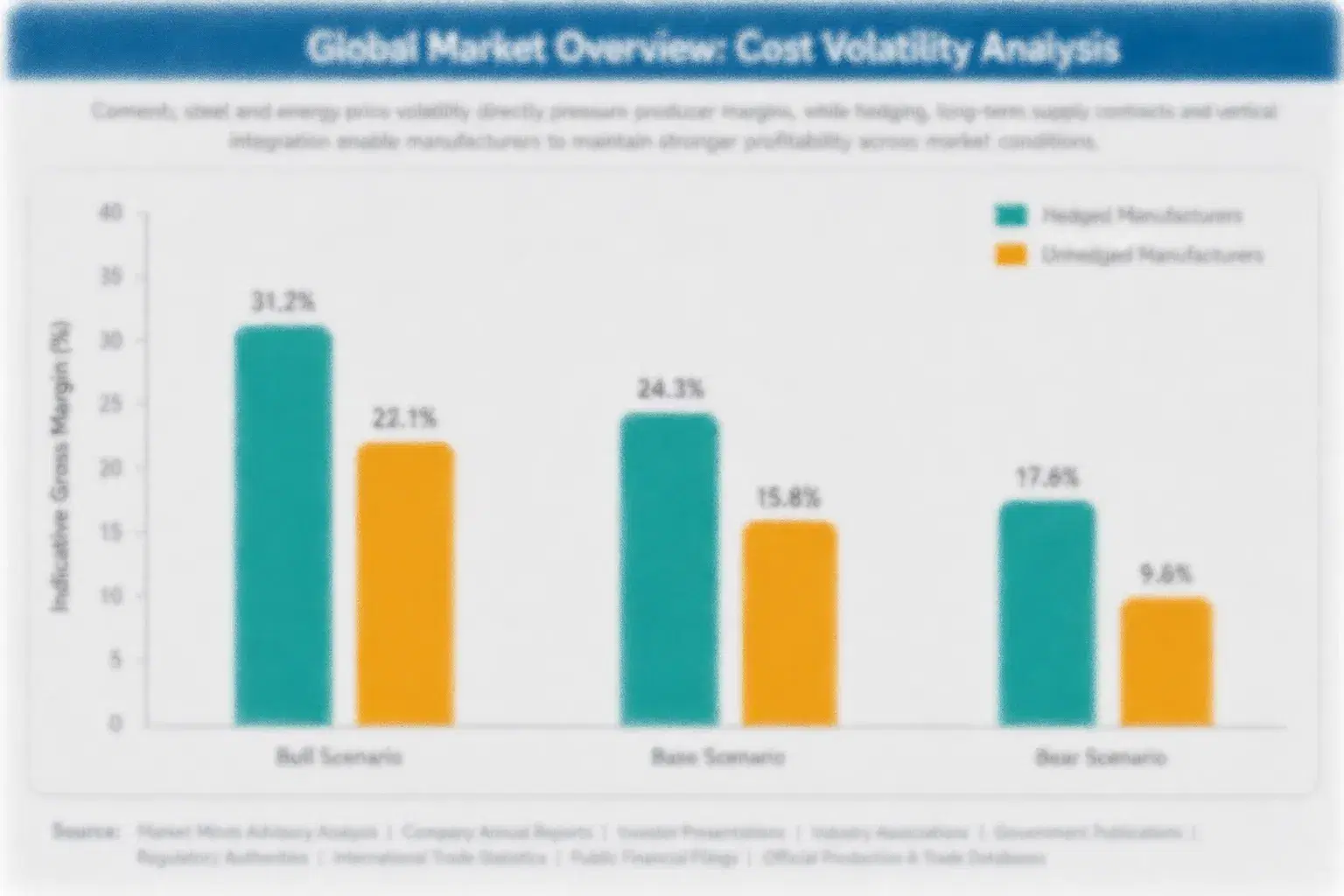
Raw berry and tropical-fruit feedstock inputs account for roughly 33% of total landed cost of goods sold, sourced from a concentrated group of Spanish and Peruvian growing regions rather than broad commodity global markets. European manufacturers purchase these inputs through long-term supply contracts or in-house drying capability, with pricing set largely by harvest-cycle economics and specialty-crop availability rather than by broader indices.
The 2021 to 2022 period illustrated this exposure clearly, when a widespread Southern European drought disruption pushed raw berry pricing meaningfully above the prior two-year average, according to European Commission agricultural commodity market reporting and named company annual report commentary. Manufacturers without in-house drying capability faced sharp cost increases during that period, while larger, vertically integrated manufacturers absorbed the shortfall with less disruption to downstream buyers.

This exposure disadvantages smaller independent brands lacking vertical integration or long-term supply contracts, since a period of feedstock cost inflation can force them into expensive spot-market purchasing or contract renegotiation with downstream buyers. Larger, vertically integrated manufacturers like Nutrafur weather these swings more comfortably, spreading exposure across in-house drying sourcing and production scale that smaller regional brands generally cannot replicate without significant capital investment.
europe-freeze-dried-fruits-market-cost-volatility-analysis-1790143765096

Vertical Integration Into Berry Cultivation

Larger manufacturers are investing in vertically integrated berry-cultivation partnerships to reduce dependence on external feedstock suppliers, since owning cultivation relationships provides a natural hedge against external cost inflation. Smaller manufacturers without comparable capital access typically rely instead on long-term supply agreements to achieve similar cost predictability across annual budget and multi-year planning cycles overall each year.

Long Term Feedstock Supply Contracts

Manufacturers are negotiating multi-year supply contracts with Spanish and Peruvian growing regions to lock in predictable pricing and reduce exposure to spot-market volatility, a mechanism smaller independent manufacturers without comparable purchasing scale sometimes struggle to access on equally favorable terms without cooperative arrangements. Industry cooperatives are beginning to pool purchasing volume for smaller members.

Geographic Diversification Investment

Investment in geographically diversified feedstock-sourcing networks spanning Western Europe, North America, and Latin America lets manufacturers reduce dependence on any single production region and improve overall supply resilience, partially offsetting input cost pressure, though this investment remains a meaningful barrier for smaller manufacturers with thinner margins across the broader European industry today, and likely for several years to come.

Portfolio Architecture for Margin Defence

The Europe freeze-dried fruits portfolio splits into three tiers by documentation and application sophistication. Volume and commodity-adjacent bulk snack products carry the thinnest margins, since buyers treat it as a substitutable bulk input sourced interchangeably from multiple suppliers. Premium and certified formats, including documented moisture-verified powder and ingredient formulations, command meaningfully higher margins by serving buyers who specify documentation as a procurement requirement. Buyers increasingly recognize this separation when negotiating terms.
Tension between volume and premium tiers centers on capital allocation: manufacturers chasing bulk volume compete mainly on price and reliable delivery, while manufacturers chasing premium positioning invest in analytical testing, regulatory compliance, and formulation science that smaller volume-focused competitors rarely fund. Larger manufacturers increasingly run both tiers simultaneously, using bulk volume to fund operations while directing premium-tier margin toward documentation investment. This dual-tier operating model has become standard practice among larger European producers.

High-value margin pools concentrate in documented moisture-verified and powder formulations sold directly to premium European retailers and specialty formulators, where buyers pay meaningfully above commodity pricing for documented quality performance and formulation differentiation rather than negotiating primarily on volume discounts. Independent brands without documentation capability generally remain confined to the lower-margin volume tier.

Volume / Commodity-Adjacent Tier

Bulk undifferentiated snack products sold largely to mid-tier formulators competing mainly on price rather than documentation depth or certification, with regional brands facing thin margins against substitutable alternatives nationwide and worldwide today.
Gross Margin: 14%-20%

Premium / Certified Tier

Documented moisture-verified formulations sold to premium European retailers and formulators willing to pay a meaningful premium for quality performance, regulatory compliance, and technical support across successive production runs worldwide every single year.
Gross Margin: 23%-30%

Sustainability / Regulatory / Next-Generation Tier

Powder and premium ingredient formulations sold to global European formulators requiring the highest published evidence, representing the fastest-growing and highest-margin portfolio segment as documentation-standardized applications expand across major European markets.
Gross Margin: 29%-38%
europe-freeze-dried-fruits-market-portfolio-architecture-1790143765286

High-value Sub-segments and Strategic Watch-out

Powder and Premium Ingredient Formulations

Documented, powder and premium ingredient formulations sold into premium regulated European applications command the portfolio's strongest margins, as buyers increasingly specify quantified sourcing-reference data on formulation documentation. Manufacturers with established documentation infrastructure and formulator relationships are best positioned to capture this rapidly expanding European demand pool going forward.
Gross Margin: 29%-38%

Certified Moisture Verified Berry Formulations

Moisture-verified berry formulations sold into premium European retail channels deliver strong, steady margins without the growth intensity of powder applications, serving an established regional base that continues expanding gradually across mainstream categories nationwide today across most channels, long-term supplier relationships, and evolving formulation categories overall.
Gross Margin: 22%-29%

Bulk Products for Mid Tier European Formulators

Undifferentiated bulk snack products remain the largest volume category by unit, sold primarily to mid-tier formulators on price and delivery reliability rather than documentation depth, anchoring manufacturer revenue even as margins stay considerably thinner than premium formats command across the broader European market and most consuming channels.
Gross Margin: 14%-19%

Conventional Dehydrated Fruit Technologies

Established conventional dehydrated-fruit categories could continue commanding mainstream European retail share if freeze-dried formulation preference shifts more slowly than projected, a squeeze intensifying further each cycle ahead as legacy providers expand custom capacity across additional markets. Manufacturers are monitoring this shift closely across major consuming European regions today.
Gross Margin: n/a

Recurring Moisture Specification Adoption

Europe freeze-dried fruit increasingly functions as a specified procurement input rather than a spot-purchased commodity, with retailers locking in multi-year supply relationships tied to defined moisture documentation, quality verification, and regulatory compliance requirements. This specification-driven purchasing model generates more predictable, recurring revenue for manufacturers than traditional generic bulk sales, which remain more exposed to spot-market pricing swings and berry feedstock volatility.
Adoption depth varies considerably by end-use vertical. Powder brands and specialty foodservice formulators show the deepest specification commitment, embedding documented certification requirements directly into supply agreements that are costly to reformulate around a different supplier. Regional independent retailers show moderate stickiness, valuing consistent quality but retaining more substitution flexibility. Conventional bulk-value distributors remain the least committed, treating freeze-dried fruit as one interchangeable input among several available options.

Buyer profiles are shifting generationally as younger procurement and formulation-science teams at European retail companies prioritize documented moisture performance and third-party compliance over legacy relationships with traditional specialty brands, a shift favoring manufacturers that invested early in documentation and formulation infrastructure over those competing primarily on price alone across the industry today, a gap that continues widening each year.
europe-freeze-dried-fruits-market-end-use-penetration-index-1790143765471

Where MMA Sees the Opportunity

These are among the four positions where our research anticipates prominent divergence between winners and laggards over the coming forecast period. Each is grounded in the demand model, the regulatory perimeter, and the announced capacity pipeline.
01 / MOISTURE VERIFICATION PRIORITY

Build certification depth before competitors close the gap

Manufacturers that invest early in moisture-verification documentation and supply-chain-traceability infrastructure are capturing premium European pricing that undocumented brands cannot access at comparable scale across most consuming markets. This advantage compounds as more European retailers make documentation a baseline procurement requirement rather than an optional differentiator across both direct and mainstream distribution channels. Spanish and French leaders have moved fastest, but well-capitalized Peruvian and Chilean suppliers still have a genuine window to build comparable capability before the gap becomes permanently difficult to close entirely.
02 / POWDER FORMAT EXPANSION

Powder demand offers the clearest new volume pool

Specialty-focused and powder-grade brands represent the most accessible path for manufacturers to capture volume growth that runs considerably above traditional snack-only economics across most consuming markets and formulation categories today. Early movers are already securing supply agreements ahead of slower-moving competitors, a capital requirement that remains modest relative to the volume uplift available given existing upstream formulation control and distribution reach. Waiting risks ceding this category to specialty importers without existing powder-grade production credibility, a gap analysts continue tracking closely and expect to persist.
03 / DOCUMENTATION TRANSITION PRIORITY

Move from generic bulk dried into certified formats

Manufacturers still selling primarily generic bulk-dried products are leaving meaningful margin on the table, since moisture verification delivers pricing considerably higher than commodity equivalents once documentation investment is complete and independently verified across most categories. Nutrafur and Katope have already demonstrated this transition is commercially viable at scale, providing a credible template for smaller commodity-focused manufacturers to follow across adjacent categories. Analysts expect this documentation transition to accelerate further as mainstream European buyers standardize procurement criteria across most consuming regions and formulation types.
04 / SUPPLY DIVERSIFICATION ACCESS

Secure diversified Spanish and Peruvian partnerships now

European retailers pay a meaningful premium for supply-security assurance given the substantial concentration of berry and tropical-fruit capacity within a small number of countries and suppliers worldwide today. Dedicated diversified partnership access remains concentrated among a relatively small number of larger manufacturers with the resources to manage multi-year sourcing agreements across regions, leaving many smaller buyers currently underserved. Independent buyers who invest in these partnerships now can capture disproportionate supply-security benefits before larger competitors extend programs further across additional markets.

Engagement Snapshot From the Field

A live engagement with an industry participant carrying material or product regulatory and market exposure ahead of a defining policy shift, showing how our research translates into a defensible multi-year portfolio strategy.
MARKET MINDS ADVISORY · CLIENT ENGAGEMENT SUMMARY
Europe Freeze Dried Fruits Producer Strategic Portfolio Review and Transition Roadmap 2026·Investment Scenario on Europe Freeze Dried Fruits Exposure Evaluation 2025-26
CLIENT PROFILE
The client is a mid-sized European retail grocery chain expanding its certified freeze-dried fruit sourcing across its powder and snack product portfolio, reporting approximately $8 million in annual procurement spend on this category (client-reported, unverified by MMA) across its multi-region distribution network. The client had relied on generic bulk purchasing but sought to formalize supply relationships as premium demand grew.
STRATEGIC CHALLENGE
The client faced growing competitive pressure from documented, moisture-verified competitors and lacked visibility into which manufacturers could reliably guarantee independent-laboratory documentation at the volume required for multi-region distribution expansion. Existing spot-purchasing relationships offered no contractual protection against berry feedstock swings, exposing the client to periodic reformulation risk and inconsistent moisture claims across production batches.
MMA APPROACH
MMA conducted a supplier landscape assessment covering major European manufacturers of freeze-dried fruit, evaluating documentation capability, production scale, and multi-year contract willingness. The engagement modeled cost exposure under multiple berry-supply scenarios and benchmarked pricing terms across established and newer-entrant supplier structures to identify partners capable of supporting the client's certified procurement commitments at multi-region distribution scale.
KEY FINDINGS
  1. Established Spanish and French manufacturers offered greater documented moisture depth than newer regional entrants, but required longer minimum contract commitments than the client had previously accepted from spot-market suppliers.
  2. Certified moisture-verified freeze-dried fruit carried an estimated 20% price premium over uncertified sourcing (client-reported, unverified by MMA), though improved consistency more than offset this cost differential.
  3. Diversifying across two separate supplier relationships reduced projected worst-case shortfall exposure by an estimated 14% compared to single-supplier dependence (client-reported, unverified by MMA).
  4. Multi-year contract structures with built-in certification-variance clauses proved more cost-effective than annual spot renegotiation across the modeled five-year planning horizon overall for the client.
CLIENT PROFILE
The client is a mid-sized European retail grocery chain expanding its certified freeze-dried fruit sourcing across its powder and snack product portfolio, reporting approximately $8 million in annual procurement spend on this category (client-reported, unverified by MMA) across its multi-region distribution network. The client had relied on generic bulk purchasing but sought to formalize supply relationships as premium demand grew.
STRATEGIC CHALLENGE
The client faced growing competitive pressure from documented, moisture-verified competitors and lacked visibility into which manufacturers could reliably guarantee independent-laboratory documentation at the volume required for multi-region distribution expansion. Existing spot-purchasing relationships offered no contractual protection against berry feedstock swings, exposing the client to periodic reformulation risk and inconsistent moisture claims across production batches.
MMA APPROACH
MMA conducted a supplier landscape assessment covering major European manufacturers of freeze-dried fruit, evaluating documentation capability, production scale, and multi-year contract willingness. The engagement modeled cost exposure under multiple berry-supply scenarios and benchmarked pricing terms across established and newer-entrant supplier structures to identify partners capable of supporting the client's certified procurement commitments at multi-region distribution scale.
KEY FINDINGS
  1. Established Spanish and French manufacturers offered greater documented moisture depth than newer regional entrants, but required longer minimum contract commitments than the client had previously accepted from spot-market suppliers.
  2. Certified moisture-verified freeze-dried fruit carried an estimated 20% price premium over uncertified sourcing (client-reported, unverified by MMA), though improved consistency more than offset this cost differential.
  3. Diversifying across two separate supplier relationships reduced projected worst-case shortfall exposure by an estimated 14% compared to single-supplier dependence (client-reported, unverified by MMA).
  4. Multi-year contract structures with built-in certification-variance clauses proved more cost-effective than annual spot renegotiation across the modeled five-year planning horizon overall for the client.
RECOMMENDED STRATEGY
Phase 1: Phase 1 (Months 1 to 3): Complete supplier documentation audits and negotiate multi-year framework agreements with two established manufacturers and one emerging producer. Phase 2: Phase 2 (Months 4 to 9): Transition procurement volume gradually from spot purchasing to contracted supply while validating moisture consistency across reformulated product lines. Phase 3: Phase 3 (Months 10 to 18): Complete multi-region rollout of certification-documented product lines and expand distribution using the new substantiation-backed positioning across retail networks.
OUTCOME
The client transitioned approximately 38% of volume to contracted supply within 18 months, reducing certification-cost exposure and supporting expanded certified-product distribution across three additional regional retail clusters (client-reported, unverified by MMA). Reported gross margin on the certified product line improved by roughly 4 percentage points following the supplier transition (client-reported, unverified by MMA).

Frequently Asked Questions

Foundational context covering the market sizes, CAGR, scope, country, region and competition that inform every finding below. This section is provided to cover basics and most often pre-purchase conversations, answered from the MMA Primary Research Dataset.

What is the current size of the Europe Freeze Dried Fruits Market?

The European market reached approximately $1.93 billion in 2026, following a 2025 base value of $1.8 billion. Growth reflects steadily rising demand for certified, moisture-verified formulations.

How large will the Europe Freeze Dried Fruits Market be by 2036?

MMA projects the market will reach approximately $3.95 billion by 2036, roughly 2.04 times its 2026 value. This reflects sustained berry demand alongside expanding powder applications.

What is the CAGR for the Europe Freeze Dried Fruits Market 2026 to 2036?

The market is projected to grow at a 7.4% compound annual growth rate between 2026 and 2036. Bull and bear scenarios range from 8.7% to 6.1% depending on powder-format certification adoption pace.

Which segment is growing fastest?

Freeze-dried fruit powder and ingredients is the fastest-growing segment, expanding at 10.8% annually, roughly 1.46 times the overall market rate. Freeze-dried fruit snacks and mixes follow at 9.6% annual growth.

Who are the major companies in the Europe Freeze Dried Fruits Market?

Leading companies include Nutrafur, Katope, EuroDried, Van Drunen Farms, and OFD Foods, with European market concentration moderately fragmented at a CR5 near 38% across the industry.

Which country is growing fastest?

Peru is currently growing fastest as a supplying country at 11.6% annually, driven by rapidly expanding freeze-drying export investment. Western Europe still anchors the largest overall supply share.

Report Segmentation Architecture

The full report scope spans multiple orthogonal segmentation dimensions, with cross-tabulated demand data provided for each dimension pair. Coverage extends further to regional breakdowns, trend trajectories, and the competitive detail needed to support segment-level decision-making.

By Product Format

  • Freeze-Dried Berries
  • Freeze-Dried Tropical Fruits
  • Freeze-Dried Apple and Pear
  • Freeze-Dried Citrus
  • Freeze-Dried Fruit Snacks and Mixes
  • Freeze-Dried Fruit Powder and Ingredients

By End-Use Industry

  • Retail Grocery Manufacturing
  • Foodservice Manufacturing
  • Bakery and Confectionery Manufacturing
  • Nutraceutical Manufacturing

By Commercial Dimension

  • Direct Retailer Contracts
  • Distributor and Broker Supply
  • Import and Export Trade

By Region

  • North America
  • Western Europe
  • East Asia
  • South Asia and Pacific
  • Latin America
  • Middle East and Africa
  • Eastern Europe

Scope, Methodology, and Coverage

Every figure in this report is reproducible from documented input assumptions. The scope below maps the historical period, the forecast horizon, the segmentation dimensions, and the countries covered, alongside the underlying primary and qualitative methodology.
Historical Period
2020 to 2025
Forecast Period
2026 to 2036
Base Year
2025 (USD billions; MMA Primary Research Dataset, September 2026)
Market Definition
This report covers demand for freeze-dried fruit products consumed within Europe, including berries, tropical fruits, apple and pear, citrus, fruit snacks and mixes, and fruit powder and ingredient formats. Regional figures represent the supply-origin mix serving European demand, and the continent's own substantial domestic freeze-drying base means Western Europe also anchors dominant supply-side share.
Quantitative Units
USD billions (current prices); metric tons of finished product where applicable
Segmentation Dimensions
By Product Format; By End-Use Industry; By Commercial Dimension; By Supply-Origin Region
Regions Covered
North America, Western Europe, East Asia, South Asia and Pacific, Latin America, Middle East and Africa, Eastern Europe
Countries Covered
Spain, France, Netherlands, United States, Japan, Peru, and additional supplying markets relevant to this sector
Key Companies Profiled
Nutrafur S.A., Katope, EuroDried B.V., Van Drunen Farms, OFD Foods LLC, Mercer Foods LLC, Crispy Green Inc., FutureFoods Netherlands B.V., Harmony House Foods Inc., Van Beek Global B.V.
Quantitative Methodology
Primary survey, n=3,800 respondents, Q4 2025, six countries; demand-side model with trade association cross-validation
Qualitative Methodology
47 expert interviews, Q4 2025; applied to validate demand model assumptions, identify emerging dynamics, and assess competitive positioning
Report Format
PDF and XLSX data workbook (Word format preview document)
Publisher
Market Minds Advisory
Report Code
MMA-2026-AGR-001
Published
September 2026
Contact
sales@marketmindsadvisory.com | www.marketmindsadvisory.com

Purchase the full Europe Freeze Dried Fruits Market Report (2026 to 2036).

This report provides a comprehensive analysis of freeze-dried fruit demand within Europe, covering sizing, segmentation, and regional supply dynamics across the 2026 to 2036 forecast period. It profiles twenty leading manufacturers including Nutrafur and Katope, benchmarking competitive positioning across formulation depth and documentation capability. The analysis examines Western European supply concentration led by pioneering Spanish and French manufacturing scale, moisture-verification standardization adoption across powder and snack applications, and pricing dynamics across volume, premium, and next-generation portfolio tiers. Supply deep-dives cover all seven MMA-defined geographies in careful detail.
Seven-region supply sizing with defined CAGR ranges
Twenty-company competitive benchmarking on formulation depth
Segment-level growth analysis across six product formats
Input cost exposure and mitigation strategy assessment
Revenue lever analysis with quantified margin impact
Anonymized case study on moisture verification strategy

Built For The People Who Decide

From boardroom strategy to bench-side execution, this report is read cover-to-cover by leaders shaping the next decade of their industry, turning demand scenarios, market dynamics and valuation benchmarks into decisions.
CXOs/ Presidents/ VPs/ Managers
M&A and Corporate Development
Strategy Teams and R&D Heads
Procurement and Product Directors
Regulatory and Compliance Leaders
Investor Relations and Equity Analysts