Europe Black and Wood Pellets Market
Europe Black and Wood Pellets Market Outlook from 2026 to 2033
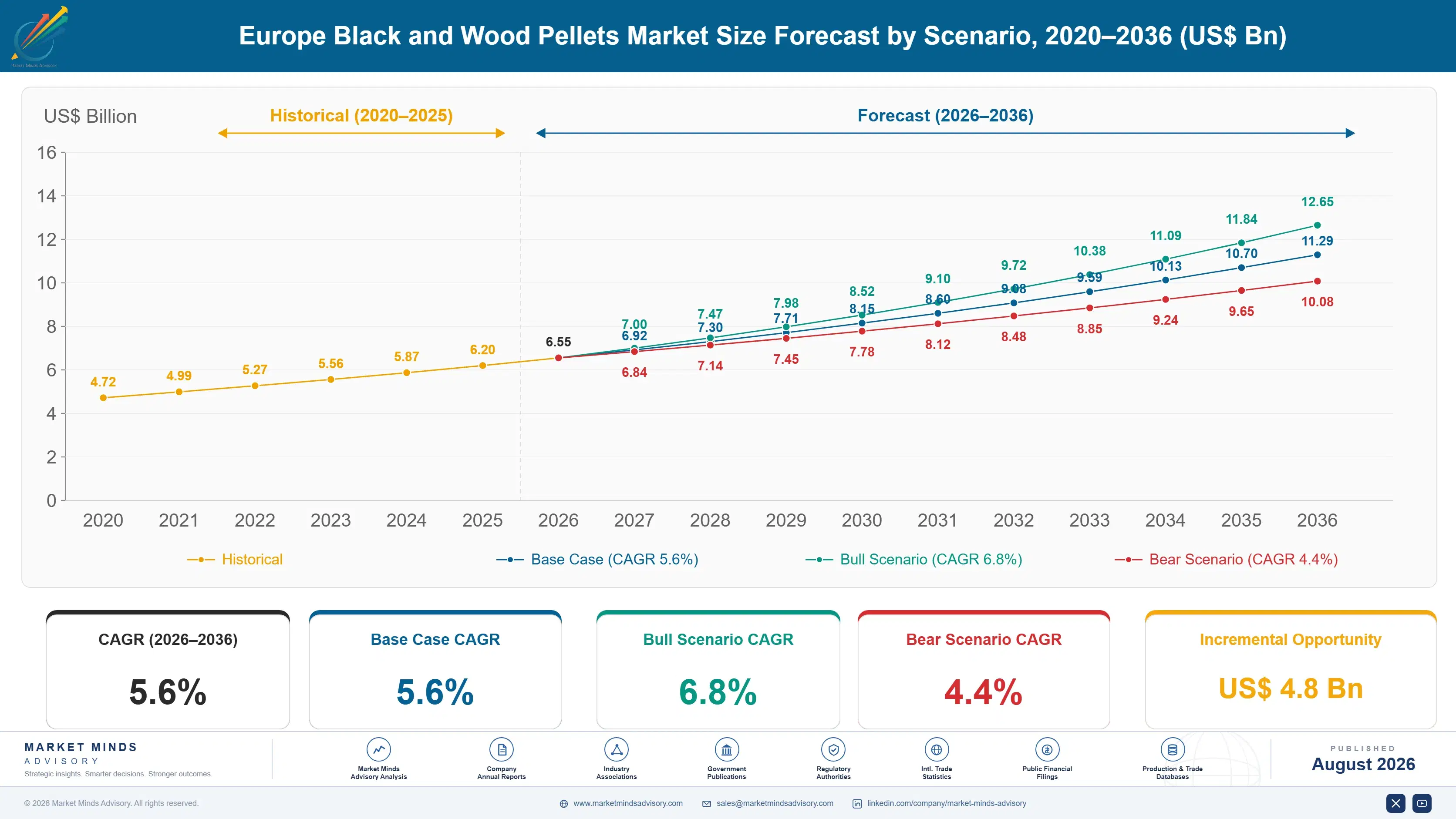
The Europe Black and Wood Pellets Market is poised for significant growth, driven by the region’s increasing focus on renewable energy and decarbonization of the power sector. In 2026, the market is estimated to be valued at USD 10.8 billion, with projections indicating a robust expansion to USD 18.7 billion by 2033, reflecting a CAGR of 7.8% over the forecast period. The market’s momentum is underpinned by supportive regulatory frameworks, rising demand for sustainable heating solutions, and the transition away from fossil fuels in both residential and industrial applications.
The market encompasses both black pellets, which are torrefied and offer higher energy density, and traditional wood pellets, widely used for heating and power generation. The adoption of these pellets is further accelerated by government incentives, carbon pricing mechanisms, and the growing emphasis on circular economy principles. As Europe intensifies efforts to meet its climate targets, the black and wood pellets sector is expected to play a pivotal role in the continent’s renewable energy landscape.

Europe Black and Wood Pellets Market Scenario & Strategic Insights
The Europe Black and Wood Pellets Market is experiencing a paradigm shift as utilities, industries, and households increasingly adopt biomass-based solutions to reduce greenhouse gas emissions. The market’s growth trajectory is shaped by stringent EU directives, such as the Renewable Energy Directive (RED II), which mandates higher shares of renewables in the energy mix. This regulatory push has led to increased investments in pellet production facilities, supply chain optimization, and technological advancements in pellet combustion systems.
Strategically, market participants are focusing on securing sustainable feedstock sources, enhancing pellet quality, and expanding export capabilities to meet rising demand within and beyond Europe. The competitive landscape is characterized by consolidation, vertical integration, and partnerships aimed at improving operational efficiency and ensuring long-term supply security. Furthermore, the market is witnessing a gradual shift towards black pellets, particularly in co-firing applications, due to their superior handling, storage, and combustion properties compared to conventional wood pellets.
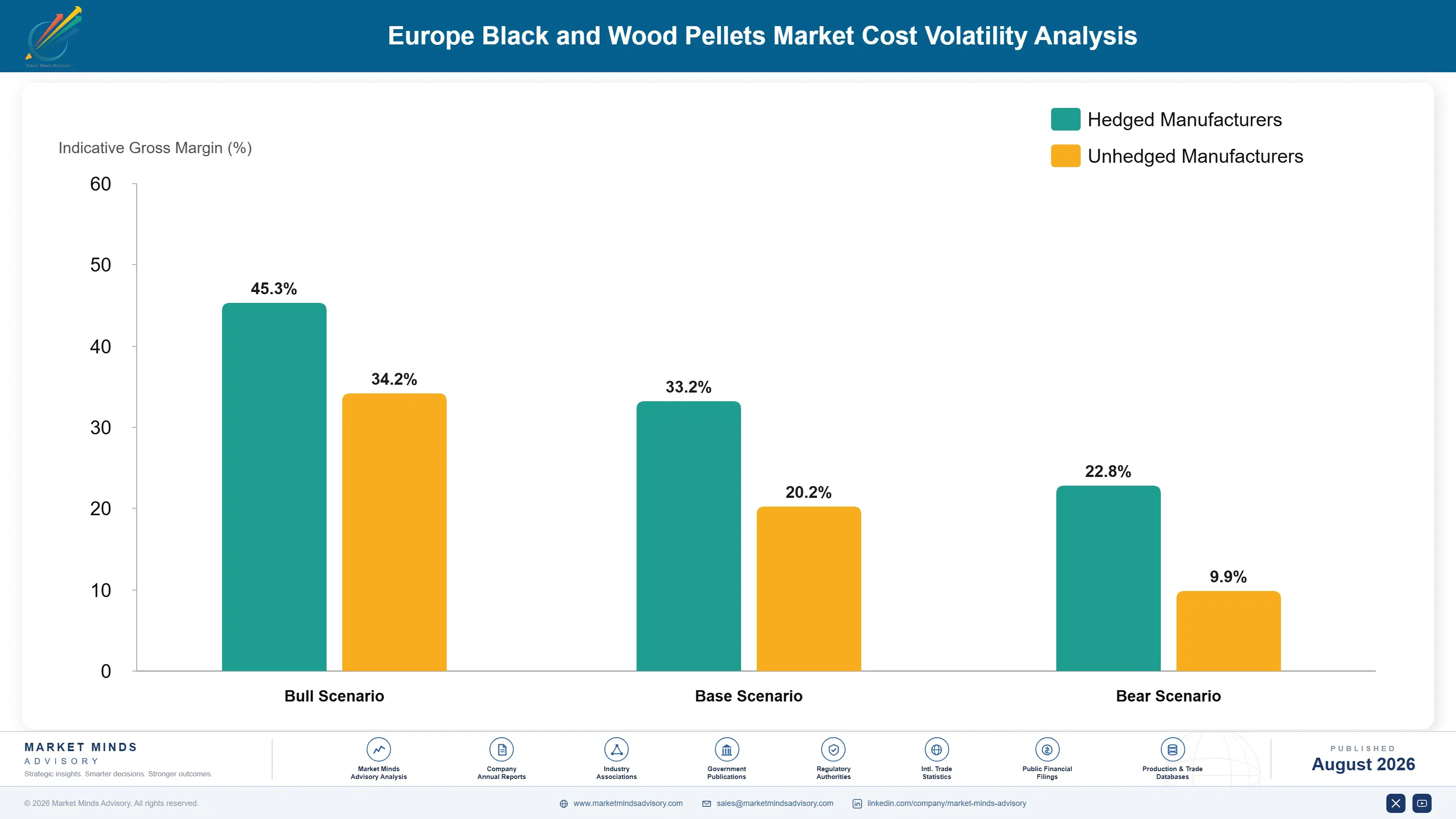
The interplay of policy support, technological innovation, and evolving consumer preferences is expected to sustain the market’s growth momentum. However, challenges such as feedstock availability, supply chain disruptions, and fluctuating raw material costs necessitate agile strategies and continuous investment in research and development.
| Attribute | 2026 (USD Billion) | 2033 (USD Billion) | CAGR (2026 – 2033) |
| Market Size | 10.8 | 18.7 | 7.8% |
Europe Black and Wood Pellets Market Trends
- Rising Adoption of Black Pellets for Industrial Applications
The market is witnessing a notable shift towards black pellets, especially in large-scale industrial and utility sectors. Black pellets, produced through torrefaction, offer higher energy density, improved hydrophobicity, and superior grindability compared to traditional wood pellets. These attributes make them particularly suitable for co-firing in coal-fired power plants, enabling utilities to reduce carbon emissions without significant modifications to existing infrastructure. As European countries accelerate coal phase-out plans, the demand for black pellets is expected to surge, supported by investments in torrefaction technology and supply chain enhancements.
- Expansion of Pellet-Based District Heating Networks
District heating systems powered by wood pellets are gaining traction across Europe, particularly in countries with cold climates and established biomass supply chains. Municipalities and local governments are increasingly investing in pellet-fired district heating plants to provide sustainable and cost-effective heating solutions to urban and rural communities. This trend is driven by the dual objectives of reducing reliance on fossil fuels and achieving local air quality targets. The integration of advanced combustion technologies and emission control systems further enhances the environmental performance of pellet-based district heating.
- Integration of Digital Technologies in Pellet Supply Chains
The adoption of digital solutions, such as IoT-enabled monitoring, blockchain for traceability, and predictive analytics, is transforming the black and wood pellets supply chain. These technologies enable real-time tracking of feedstock sourcing, production processes, and logistics, ensuring transparency, quality assurance, and regulatory compliance. Digitalization also facilitates optimization of inventory management, demand forecasting, and maintenance scheduling, resulting in cost savings and improved operational efficiency for pellet producers and distributors.
Segment & Category Analysis for Europe Black and Wood Pellets Market
By Product Type
- Black Pellets
- Wood Pellets
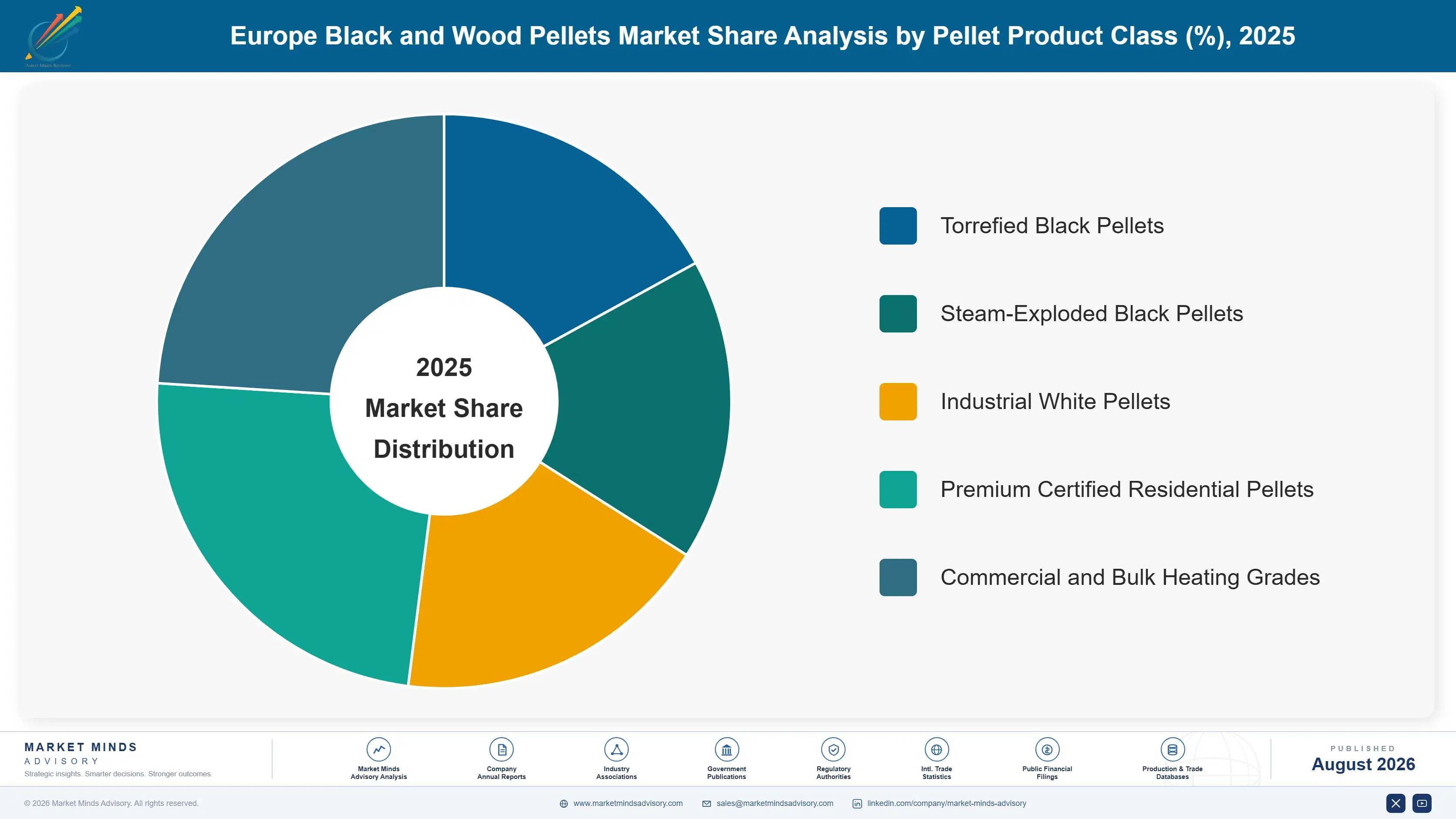
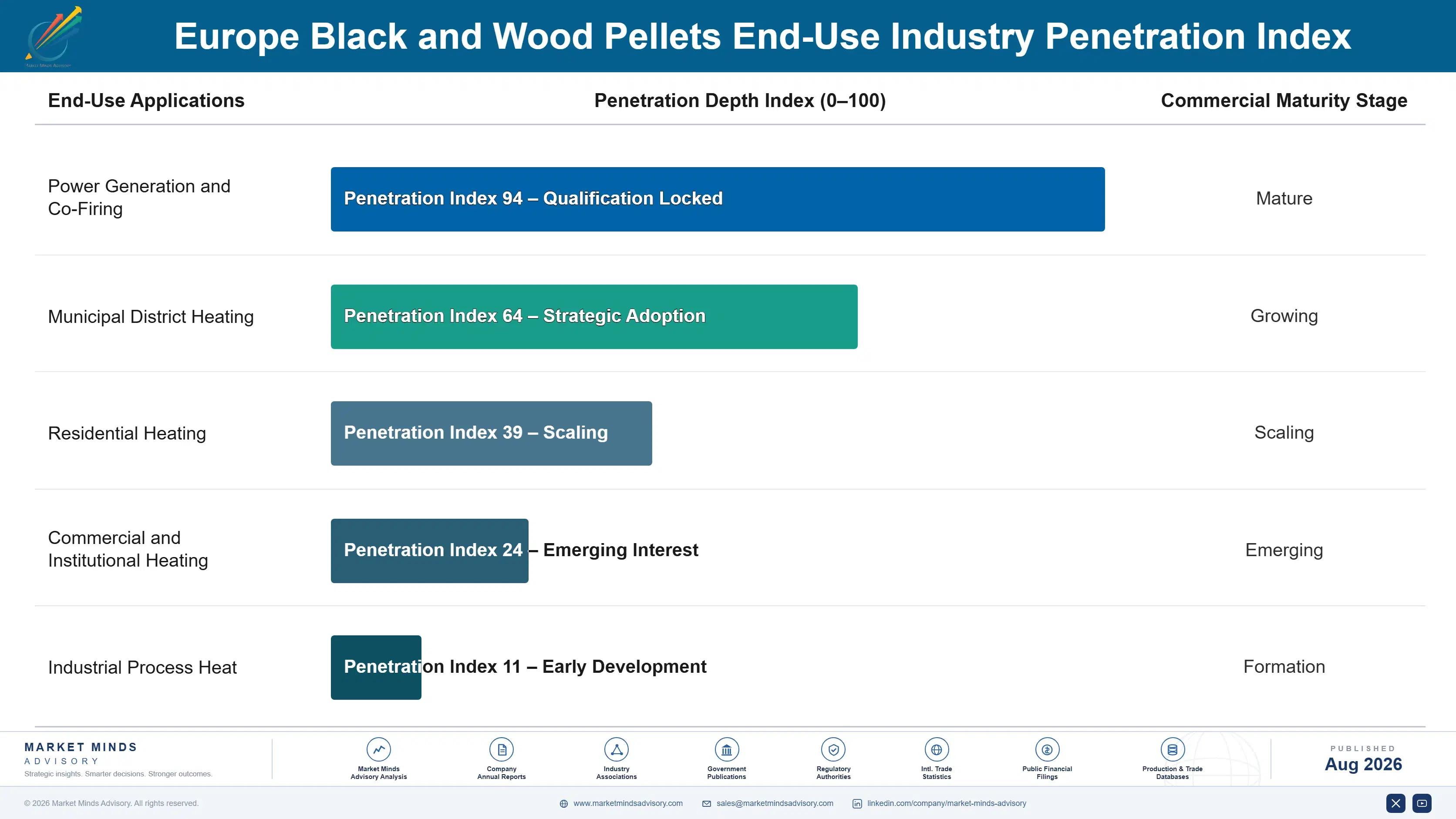
The Europe Black and Wood Pellets Market is segmented by product type into black pellets and wood pellets. Black pellets, produced through torrefaction, are gaining popularity due to their enhanced energy content, water resistance, and suitability for industrial-scale applications. Wood pellets, on the other hand, remain the dominant segment, widely used in residential heating, commercial boilers, and power generation. The growing emphasis on decarbonizing the energy sector is expected to drive the adoption of both product types, with black pellets witnessing faster growth in the industrial segment.

By Application
- Power Generation
- Residential Heating Commercial Heating Industrial Heating
- CHP (Combined Heat and Power)
Applications of black and wood pellets in Europe span power generation, residential and commercial heating, industrial heating, and combined heat and power (CHP) systems. Power generation remains the largest application segment, supported by the conversion of coal-fired plants to biomass and the expansion of renewable energy portfolios. Residential and commercial heating applications are also significant, driven by government incentives and consumer preference for sustainable heating solutions. Industrial heating and CHP applications are expected to grow steadily, supported by energy efficiency initiatives and decarbonization targets.
By Feedstock Source
- Forest Residues
- Agricultural Residues Sawdust & Wood Chips
- Energy Crops
The feedstock source segment includes forest residues, agricultural residues, sawdust & wood chips, and energy crops. Forest residues and sawdust & wood chips are the primary feedstocks for pellet production in Europe, owing to the region’s abundant forestry resources and well-established wood processing industries. Agricultural residues and energy crops are emerging as alternative feedstocks, supported by research into sustainable biomass sourcing and circular economy initiatives. Diversification of feedstock sources is critical for ensuring long-term supply security and mitigating risks associated with raw material price volatility.
By End User
- Utilities
- Residential Consumers Commercial Establishments
- Industrial Facilities
End users of black and wood pellets in Europe include utilities, residential consumers, commercial establishments, and industrial facilities. Utilities represent the largest end-user segment, driven by the need to comply with renewable energy mandates and reduce carbon emissions from power generation. Residential consumers and commercial establishments are increasingly adopting pellet-based heating systems for their cost-effectiveness and environmental benefits. Industrial facilities are also exploring pellet solutions for process heating and energy generation, particularly in sectors with high thermal energy demand.
By Distribution Channel
- Direct Sales
- Distributors & Wholesalers
- Online Platforms
The distribution channel segment comprises direct sales, distributors & wholesalers, and online platforms. Direct sales are prevalent among large-scale industrial and utility customers, enabling customized supply agreements and long-term contracts. Distributors and wholesalers play a crucial role in reaching residential and commercial customers, offering a wide range of pellet products and related services. Online platforms are emerging as a convenient channel for small-scale buyers, facilitating price comparisons, product selection, and doorstep delivery.

Growth Drivers and Opportunities in Europe Black and Wood Pellets Market
- Policy Support and Decarbonization Initiatives
The Europe Black and Wood Pellets Market is propelled by robust policy support at both the EU and national levels. The Renewable Energy Directive (RED II), carbon pricing mechanisms, and national renewable energy action plans are driving the adoption of biomass-based solutions across the region. These policies incentivize investments in pellet production, infrastructure development, and technology upgrades, creating a favorable environment for market growth. The ongoing transition towards a low-carbon economy presents significant opportunities for market participants to expand their offerings and capture new customer segments.
- Technological Advancements and Supply Chain Optimization
Continuous innovation in pellet production technologies, combustion systems, and supply chain management is unlocking new growth avenues for the market. Advanced torrefaction processes, emission control technologies, and digital supply chain solutions are enhancing the efficiency, sustainability, and competitiveness of black and wood pellets. Market players are investing in R&D to develop high-performance pellets, optimize feedstock utilization, and reduce production costs. These advancements are expected to drive market expansion and enable the sector to meet evolving customer and regulatory requirements.
Emerging Opportunities for Europe Black and Wood Pellets Market
- Expansion into New End-Use Sectors
The Europe Black and Wood Pellets Market is witnessing emerging opportunities in sectors beyond traditional power generation and heating. Industrial sectors such as cement, steel, and chemicals are exploring the use of pellets as a renewable alternative for process heating and energy generation. This diversification of end-use applications is expected to drive incremental demand and support market growth over the forecast period.
- Development of Export Markets
European pellet producers are increasingly targeting export markets in Asia and North America, leveraging the region’s advanced production capabilities and sustainable sourcing practices. The development of export-oriented supply chains and certification schemes is enabling European players to access new revenue streams and mitigate risks associated with domestic market fluctuations. This trend is expected to strengthen Europe’s position as a global leader in the black and wood pellets industry.
Growth Restrain factors and Challenges in Europe Black and Wood Pellets Market
- Feedstock Availability and Sustainability Concerns
The availability and sustainability of biomass feedstock remain critical challenges for the Europe Black and Wood Pellets Market. As demand for pellets increases, competition for raw materials such as forest residues, sawdust, and agricultural by-products intensifies. This can lead to supply constraints, price volatility, and concerns about the environmental impact of large-scale biomass harvesting. Ensuring sustainable sourcing practices, adhering to certification standards, and promoting responsible forest management are essential to address these challenges and maintain the market’s social license to operate.
In addition, the expansion of pellet production must be balanced with biodiversity conservation and land use considerations. Regulatory scrutiny and public perception regarding the sustainability of biomass sourcing can influence market dynamics and investment decisions. Market participants need to engage with stakeholders, invest in transparent supply chains, and adopt best practices to mitigate reputational and operational risks.
- Logistical and Infrastructure Constraints
The efficient transportation, storage, and handling of pellets present logistical challenges, particularly for black pellets, which require specialized infrastructure due to their higher energy density and hydrophobic properties. Inadequate transport networks, limited storage capacity, and bottlenecks at ports and distribution hubs can impede market growth and increase operational costs. Investments in infrastructure modernization, supply chain integration, and digitalization are necessary to overcome these constraints and support the market’s expansion.
Furthermore, cross-border trade of pellets within Europe and to export markets is subject to regulatory harmonization, quality standards, and certification requirements. Navigating these complexities requires collaboration among industry stakeholders, policymakers, and logistics providers to streamline processes and ensure the reliable and cost-effective movement of pellets across the value chain.
Competition Landscape in Europe Black and Wood Pellets Market
The Europe Black and Wood Pellets Market is characterized by a competitive landscape with a mix of large multinational corporations, regional players, and specialized pellet producers. Market participants are focusing on capacity expansion, vertical integration, and strategic partnerships to strengthen their market position and ensure long-term supply security. The competitive dynamics are further shaped by investments in R&D, sustainability certifications, and digitalization of supply chains. Mergers and acquisitions are also prevalent, enabling companies to expand their geographic footprint and diversify their product portfolios.
Major Players in Europe Black and Wood Pellets Market
- Enviva Inc.
- Drax Group plc
- Graanul Invest
- German Pellets GmbH
- Pinnacle Renewable Energy Inc.
- Lignetics, Inc.
- Fram Renewable Fuels LLC
- Rentech, Inc.
- Zilkha Biomass Energy
- Viridis Energy Inc.
- Land Energy Girvan Ltd.
- Pölkky Oy
- Stora Enso Oyj
- Vyborgskaya Cellulose LLC
- Ekman & Co AB
- Holmen AB
- Pacific BioEnergy Corporation
- Andritz AG
- CM Biomass Partners
- Bioenergy Europe
Recent Developments in Europe Black and Wood Pellets Market
- In March 2024, Drax Group plc announced the completion of a new black pellet production facility in the UK, increasing its annual capacity by 500,000 tons.
- In January 2024, Enviva Inc. entered into a long-term supply agreement with a major Japanese utility for the export of black pellets from Europe.
- In November 2023, Graanul Invest launched a digital supply chain platform to enhance traceability and sustainability of its pellet products.
- In September 2023, German Pellets GmbH expanded its distribution network in Eastern Europe through strategic partnerships with local distributors.
- In July 2023, Stora Enso Oyj received sustainability certification for its new pellet plant in Finland, reinforcing its commitment to responsible sourcing.
- In May 2023, Pinnacle Renewable Energy Inc. announced a joint venture with a Scandinavian utility to develop advanced torrefaction technology for black pellet production.
FAQ for Europe Black and Wood Pellets Market
- What is the projected market size of the Europe Black and Wood Pellets Market by 2033?
The Europe Black and Wood Pellets Market is projected to reach USD 18.7 billion by 2033, growing from an estimated USD 10.8 billion in 2026, at a CAGR of 7.8% during the forecast period.
- What are the key growth drivers for the Europe Black and Wood Pellets Market?
Key growth drivers include strong policy support for renewable energy, decarbonization initiatives, technological advancements in pellet production, and increasing demand for sustainable heating and power generation solutions.
- Which product segment is expected to witness the fastest growth in the market?
The black pellets segment is expected to witness the fastest growth, particularly in industrial and utility applications, due to its higher energy density, improved handling properties, and suitability for co-firing in coal-fired power plants.
- What are the major challenges facing the Europe Black and Wood Pellets Market?
Major challenges include feedstock availability and sustainability concerns, logistical and infrastructure constraints, price volatility, and the need to comply with stringent regulatory and certification requirements.
- Who are the leading players in the Europe Black and Wood Pellets Market?
Leading players include Enviva Inc., Drax Group plc, Graanul Invest, German Pellets GmbH, Pinnacle Renewable Energy Inc., Lignetics, Inc., Fram Renewable Fuels LLC, Rentech, Inc., and several others with significant market presence and production capacity.
Contact us today to access the full report and propel your business forward. Our advisory team is ready to provide in-depth insights into established and emerging players.