Market Minds Advisory
Enterprise Data Loss Prevention (DLP) Services Market

Enterprise Data Loss Prevention (DLP) Services Market: Enterprise DLP Services Market. Managed Services Adoption Reshapes Data Protection Delivery Models.

Chronic security operations staffing shortages and rising ransomware exfiltration incidents are pushing enterprises toward managed DLP services rather than in-house monitoring, reshaping vendor delivery models across the data protection services industry.

Lead Analyst

Published

September 2026

Make Smarter Decisions with Customized Research Insights

Request a free sample report and evaluate market opportunities, growth trends, and competitive dynamics relevant to your business needs.

2025 MARKET VALUE$4.3BMarket Size 2025
2036 FORECAST VALUE$14.4BBase Case , 2026 to 2036
CAGR 2026 TO 203611.5 %Bull 12.8% / Bear 10.3%
INCREMENTAL OPPORTUNITY$9.6BNet 10- year value creation
EXPANSION MULTIPLE2.97x2036 value over 2026 base
Strategic Levers
M&A Pipeline
Regional Outlook
Country Rankings
Competitive Intelligence
Segmental Deep-dive
Call-Us : 91 93563 13602

Executive Snapshot and Market Trajectory.

Enterprises are shifting data loss prevention monitoring from in-house security operations centers toward managed service providers, a change accelerating faster than most consulting firms anticipated as ransomware exfiltration incidents keep straining internal teams already stretched thin across most large organizations this year, a shift few predicted so soon.
Chronic cybersecurity talent shortages and rising ransomware exfiltration incident volume are the dominant commercial forces, with managed DLP services growing fastest as enterprises outsource around-the-clock monitoring rather than staffing internal security operations centers themselves. North America leads revenue through major consulting and MSSP headquarters concentration, even as incident response demand grows fastest in emerging markets facing newer data protection regulation enforcement. Providers without dedicated compliance practices are struggling to keep pace.
Competitive intensity concentrates among large consulting firms and specialized managed security service providers, leaving smaller boutique firms to compete on industry-specific expertise rather than broad service breadth alone. Regulatory enforcement activity tied to newer data protection laws continues shaping which service offerings enterprises prioritize, forcing providers to build compliance-specific practices around individual regulatory frameworks. Rankings shift slowly given how long qualification cycles lock in vendor relationships.
Market Definition
The enterprise DLP services market covers managed monitoring, implementation, consulting, incident response, training, and compliance audit services delivered around data loss prevention technology deployments. It excludes the DLP software licenses themselves and general cybersecurity services lacking specific data loss prevention scope.
Base Year Value
$4.3B in 2025 (MMA Primary Research Dataset, September 2026)
Forecast Period
2026 to 2036, eleven discrete annual values
CAGR
11.5% base case. Bull 12.8%. Bear 10.3%.
Fastest Growth Segment
Managed DLP Services: 15.5% CAGR
Fastest Growth Country
India: 14.0% CAGR
Fastest Growth Region
South Asia and Pacific: 13.5% CAGR
Largest Region
North America: 30% of 2025 global value
Market Leaders
IBM Security Services, Accenture Security, Deloitte Cyber, KPMG Cyber, NTT Security lead the field. Source: MMA Primary Research Dataset, July 2026.
Primary Survey
n=3,800 procurement and R&D decision-makers, Q4 2025, six countries
Methodology
Demand-side build-up, cross-validated against public data, 47 expert interviews

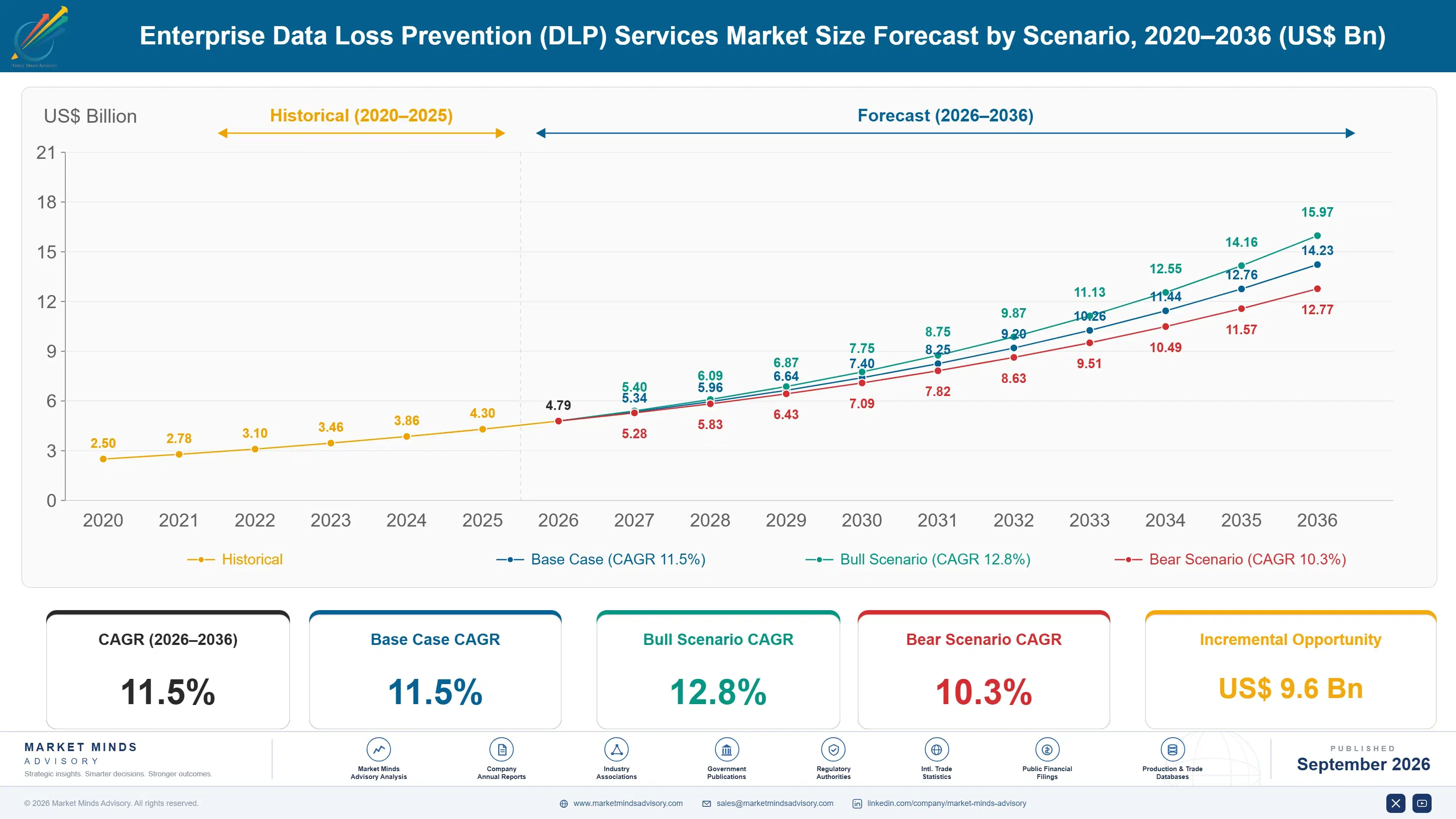
Enterprise Data Loss Prevention (DLP) Services Market Forecast Scenarios

enterprise-data-loss-prevention-dlp-services-marke-size-forecast-scenario-1788419169462
Between 2020 and 2025 the enterprise DLP services market grew steadily as remote work expansion and rising ransomware exfiltration incidents pushed enterprises to strengthen data protection monitoring beyond what internal teams alone could sustain reliably. New data protection regulations across several major jurisdictions further accelerated compliance-driven service demand. The historical annual growth rate held near 10.2 percent across the period.
The base case assumes cybersecurity talent shortages persist across major enterprise markets, ransomware groups continue prioritizing data exfiltration over pure encryption attacks, and newer data protection regulations in emerging markets drive compliance-related service demand comparable to earlier GDPR-driven adoption cycles across similar industries. These three mechanisms together sustain a forecast compound annual growth rate near 11.5 percent through 2036, with managed service delivery capturing an outsized share of incremental revenue.
The bull case assumes ransomware exfiltration incident volume accelerates faster than current forecasts anticipate, pushing growth toward 12.8 percent as enterprises rush to strengthen monitoring capability nationwide. The bear case assumes in-house security automation tools reduce reliance on external service providers entirely, capping growth near 10.3 percent as enterprises bring more monitoring capability back in-house.

Compliance Expertise Commands Premium Service Pricing

Service provider economics hinge on the trade-off between deep industry-specific compliance expertise and broad managed security service breadth, since enterprises increasingly favor providers who understand their specific regulatory environment over generalist security operations vendors. Providers that build vertical-specific compliance practices capture premium pricing over generalist managed services, even when raw monitoring technology capability is otherwise comparable between competing providers. Buyers increasingly treat compliance depth as a core selection criterion.
MARKET CONCENTRATION46% CR5Top five providers hold under half revenue overall
AVERAGE ENGAGEMENT VALUE$285,000 annuallyTypical annual contract value charged per enterprise account
TOP DEPLOYING COUNTRY SHARE31%United States accounts for largest single-country revenue share
ENGAGEMENT CYCLE LENGTH4 monthsAverage months from initial proposal to contract signing
MANAGED SERVICES ATTACH RATE52%Share of DLP deployments running managed monitoring services
CONTRACT RENEWAL RATE86%Share of enterprise clients renewing service contracts annually
Market concentration remains moderate, with the top five providers controlling roughly 46 percent of revenue, reflecting a landscape spanning large global consulting firms, specialized managed security service providers, and boutique compliance-focused firms. Engagement cycles run considerably longer than typical software purchases because enterprises validate provider security clearances and reference deployments before committing to ongoing monitoring relationships handling sensitive data. This dynamic favors specialists over generalist IT service vendors entering the category.
Average engagement values vary enormously by enterprise size and service scope, from single-project compliance assessments to multi-year managed monitoring contracts commanding contract values many times higher per account. Providers increasingly bundle incident response retainer services into managed monitoring contracts, since enterprises value guaranteed rapid response capability as much as pure ongoing monitoring functionality when evaluating provider selection.
"Enterprises used to buy a DLP license and staff a team to run it, and now they buy the outcome and let someone else worry about running it. That shift from product to managed outcome is the entire story here."
Lead Analyst, Cybersecurity Services Practice · MMA Technology Practice · September 2026

Market Trends

Ransomware Groups Increasingly Prioritize Data Exfiltration

Ransomware groups increasingly prioritize stealing sensitive data before encrypting systems, using exfiltration as double-extortion leverage even when victims maintain adequate backup systems that would otherwise neutralize pure encryption-based ransom demands entirely on their own. This shift is pushing enterprises to prioritize outbound data monitoring capability over purely internal encryption recovery planning, expanding the addressable market for DLP-specific managed services considerably. Providers report incident response engagements tied to exfiltration-focused ransomware growing over 50 percent faster than encryption-only incident response cases during 2025, confirming this shift in attacker methodology across the threat landscape.
Market Impact: Global talent gap exceeds 3.5 million
Emerging Market Data Protection Laws Drive Compliance Demand

New data protection regulations modeled partly on GDPR are taking effect across several emerging markets, including India's Digital Personal Data Protection Act, creating fresh compliance-driven demand for DLP consulting and audit services in jurisdictions previously underserved by established providers operating primarily in mature Western markets and economies. Enterprises operating across multiple jurisdictions increasingly need providers who understand overlapping and sometimes conflicting regulatory requirements simultaneously. Compliance-related service engagements in these emerging markets grew roughly 45 percent in 2025 as enforcement activity intensified meaningfully, according to primary provider interviews conducted this year.
Market Impact: Reporting engagements grew 22 percent

Market Opportunities and Growth Drivers

Cybersecurity Talent Shortage Drives Managed Services Demand

Global cybersecurity talent shortages, with an estimated 3.5 million unfilled security positions worldwide in 2025, are pushing enterprises to outsource DLP monitoring rather than compete for scarce in-house security analyst talent already commanding rising compensation packages. Managed DLP service engagements grew significantly faster than in-house monitoring team expansion during 2025, as enterprises recognized the difficulty of building and retaining internal security operations capability at scale. This shift is reshaping provider staffing models, with managed service providers increasingly investing in specialized talent development programs that individual enterprises cannot economically replicate on their own.
Market Impact: Adds 4 months to onboarding timeline

Board-Level Breach Scrutiny Elevates Compliance Reporting Demand

High-profile data breach disclosures continue drawing board-level scrutiny of enterprise data protection posture, pushing chief information security officers to demand measurable risk reduction reporting from service providers rather than pure technical monitoring output alone across their organizations. Compliance audit and reporting service engagements grew roughly 22 percent in 2025 as boards increasingly require formal third-party validation of data protection program effectiveness before major strategic decisions. This shift is pushing providers to invest in board-ready reporting capability that translates technical monitoring data into business risk language executives can act on directly.
Market Impact: Automation displaces roughly 10 percent

Market Restraints and Challenges

Sensitive Data Access Requirements Slow Provider Onboarding

Enterprises require extensive security clearance and background verification before granting managed service providers access to sensitive data monitoring systems, creating a lengthy onboarding process that delays revenue recognition for new client engagements considerably. The root cause is that DLP monitoring inherently requires deep access to an enterprise's most sensitive data flows, a trust threshold providers must earn through extensive documentation and audit rather than simple contract signing alone. Providers are mitigating this through pre-built compliance documentation packages and industry-specific certification programs that shorten the clearance verification timeline for prospective enterprise clients.
Market Impact: Exfiltration incidents grew 50 percent faster

In-House Automation Tools Threaten Managed Service Demand

Enterprise security automation platforms increasingly offer built-in DLP monitoring capability that reduces the perceived need for external managed service providers, particularly among larger enterprises with sufficient internal security operations capacity already in place. The root cause is that automation vendors are bundling monitoring capability directly into broader security platforms, competing directly with the managed service model on convenience and integration simplicity. Providers are mitigating this by positioning managed services as a complement to automation tools rather than a replacement, emphasizing human expertise for complex incident investigation automation alone cannot handle.
Market Impact: Compliance engagements grew 45 percent
4 additional market trends, 3 additional growth drivers, and 2 additional restraints and challenges are covered in the full report. Contact sales@marketmindsadvisory.com to access the complete intelligence.

Segment CAGR and Growth Architecture

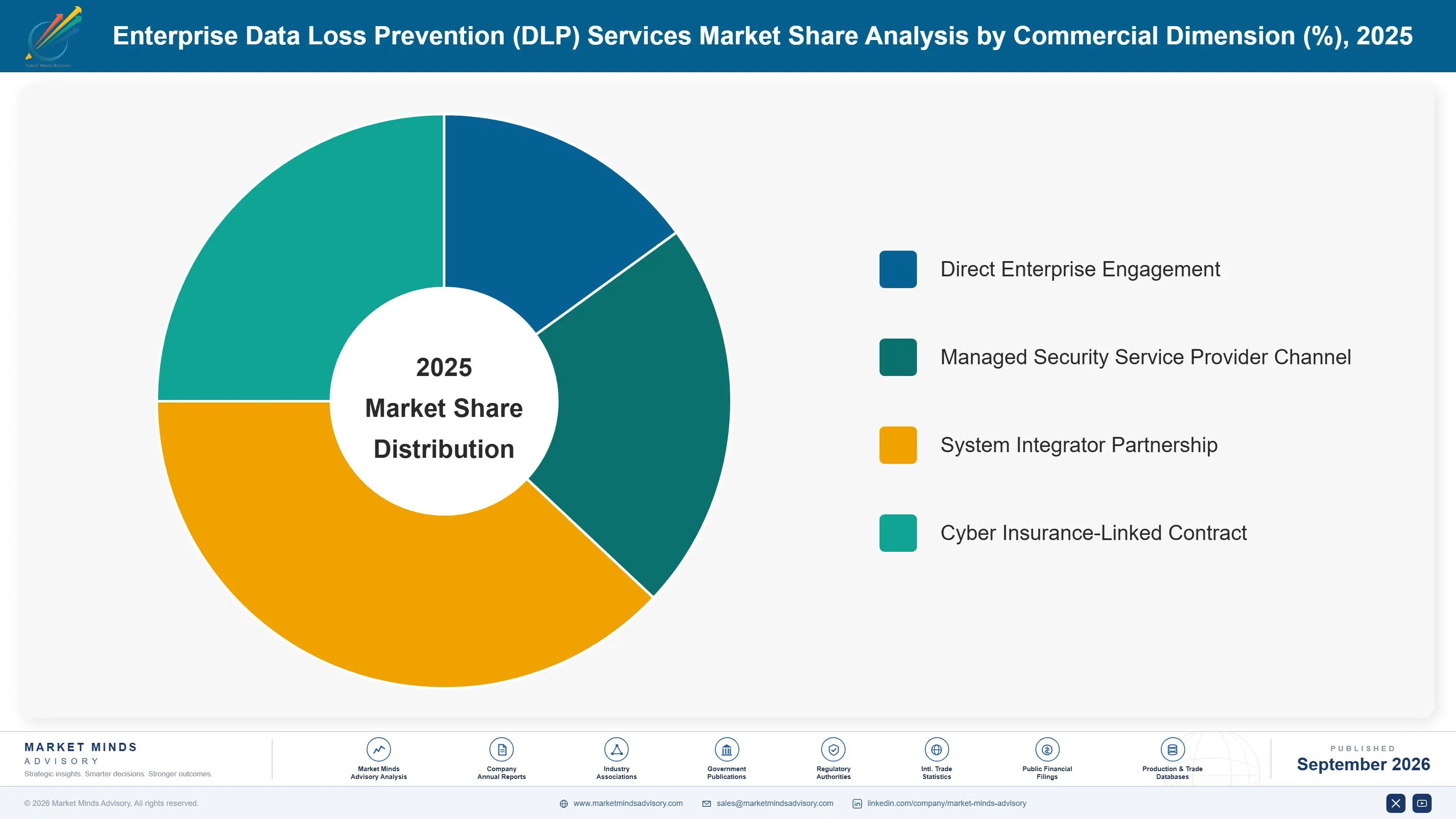
The enterprise DLP services market segments by service function delivered around data loss prevention technology, spanning managed monitoring, implementation and integration, consulting and risk assessment, incident response and forensics, training and awareness, and compliance audit and reporting services, each addressing a distinct client need. Pricing models and engagement lengths vary considerably across these six categories tracked in this analysis.
enterprise-data-loss-prevention-dlp-services-marke-market-share-analysis-1788419169995

Managed DLP Services

Managed DLP services provide ongoing around-the-clock monitoring of an enterprise's data loss prevention systems, handling alert triage, tuning, and escalation without requiring the client to staff an internal security operations team dedicated to this function alone. This segment is growing fastest because chronic cybersecurity talent shortages make internal staffing increasingly impractical for all but the largest enterprises with substantial security budgets. Providers have invested heavily in shared monitoring infrastructure that lets them serve many clients efficiently from centralized security operations centers, lowering the effective cost per client relative to what any single enterprise could achieve building comparable capability internally. Pricing for this segment carries a meaningful premium over conventional implementation-only engagements given the added ongoing staffing commitment required.
CAGR 15.5%

Incident Response and Forensics Services

Incident response and forensics services investigate confirmed or suspected data loss events, determining scope, root cause, and regulatory notification obligations for enterprises experiencing an actual security incident requiring immediate expert response. Growth is strong as ransomware groups increasingly prioritize data exfiltration, expanding the scope of forensic investigation required beyond pure encryption recovery into detailed data flow analysis and breach notification preparation. Enterprises increasingly negotiate retainer agreements guaranteeing rapid incident response availability, rather than negotiating response terms during an active crisis when negotiating leverage favors the provider considerably. Several major insurers now require these retainer agreements as a condition of favorable cyber insurance policy pricing terms for enterprise clients. Adoption keeps broadening steadily.
CAGR 13.5%
Full segment breakdown across 7 segments available in the complete report.

Regional Architecture and Country Demand Map

North America leads DLP services revenue through major consulting and MSSP headquarters concentration nationwide, while East Asia and Western Europe follow closely behind on a comparative revenue basis, and South Asia and Pacific posts the fastest regional growth driven by newer data protection regulation enforcement.

North America

Major consulting firms and managed security service providers headquartered in the United States drive this region's leading revenue share, serving financial services, healthcare, and government clients facing the strictest domestic compliance requirements. Persistent cybersecurity talent shortages give American enterprises the strongest commercial incentive to outsource monitoring quickly, and several mid-market financial institutions have followed the largest banks into managed service procurement decisions this year. Canada contributes a smaller but growing deployment base tied to shared North American regulatory frameworks and cross-border financial services relationships. Vendor headquarters concentration in this region also shortens engagement qualification timelines for domestic clients. Financing structures common in this market let mid-market enterprises join without heavy budget strain.
Share: 30% | CAGR: 12.5% (2026 to 2036)

Western Europe

Germany's manufacturing sector and the United Kingdom's financial services industry anchor this region's DLP services demand, particularly for compliance auditing tied to GDPR enforcement activity that has intensified considerably since the regulation's initial implementation. France contributes meaningful demand tied to its own data protection authority enforcement actions against major enterprises found non-compliant. The region hosts a more mature compliance culture than many other markets, with enterprises often exceeding minimum regulatory requirements proactively. The region's growth trails North America and East Asia as GDPR-driven demand has already matured relative to newer regulatory cycles emerging elsewhere. Nordic countries add modest additional demand tied to their own strong data protection cultures. Investment here continues rising steadily each quarter.
Share: 22% | CAGR: 10.0% (2026 to 2036)
Regional intelligence for 5 additional markets available in the complete report: East Asia, South Asia and Pacific, Latin America, Middle East and Africa, Eastern Europe. Contact sales@marketmindsadvisory.com.
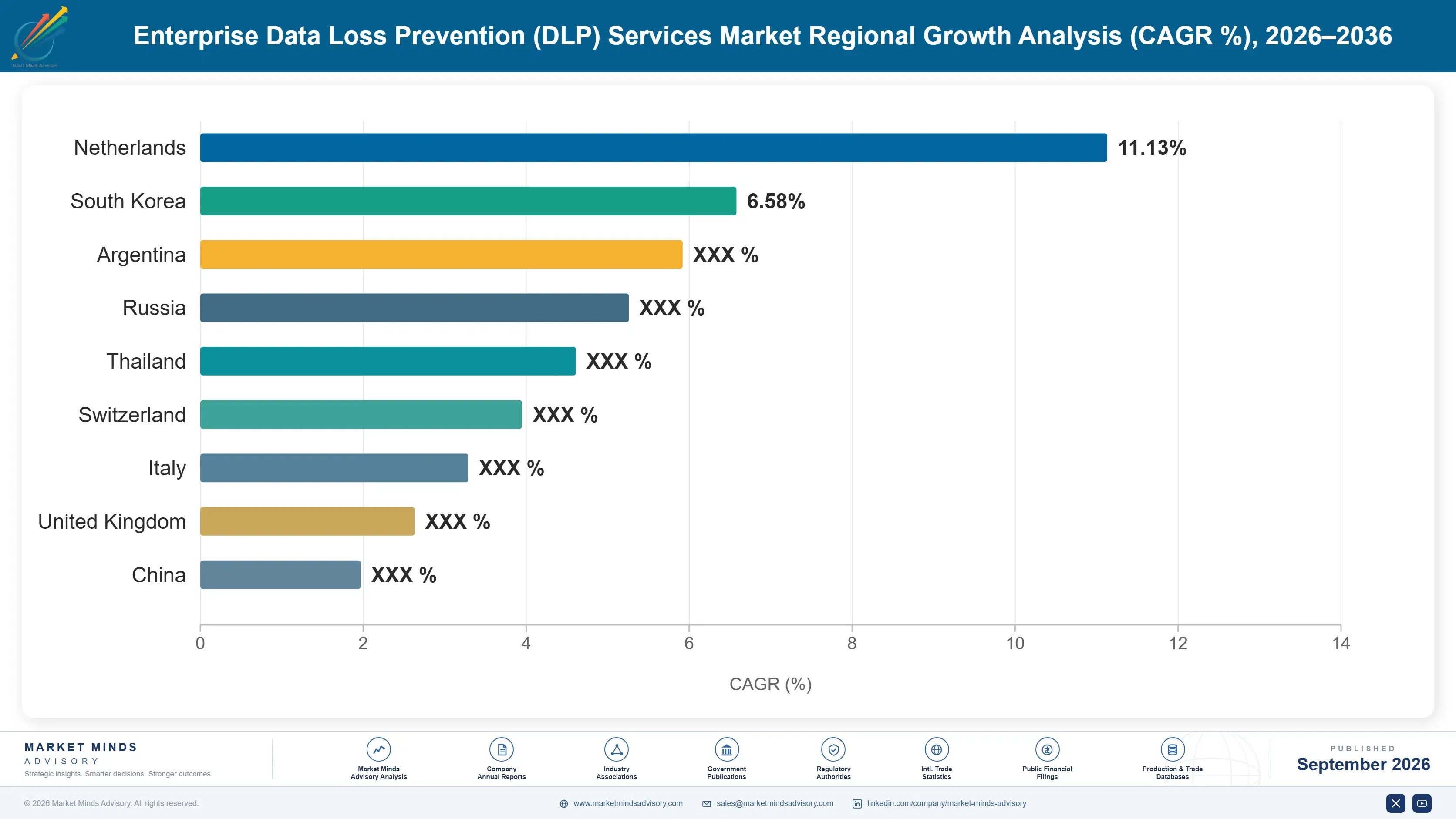
enterprise-data-loss-prevention-dlp-services-marke-country-cagr-analysis-1788419170503

Where DLP Provider Margins Concentrate Fastest

Provider profitability increasingly concentrates in managed monitoring and compliance-specific consulting rather than one-time implementation projects, as leading firms bundle incident response retainers and board-ready reporting into multi-year enterprise contracts that reduce reliance on project-based revenue. This shift rewards the deepest vertical expertise. Fewer providers compete effectively across every one of these dimensions simultaneously today.

Bundling Incident Response Retainers Into Contracts

Providers that bundle guaranteed incident response retainer availability into managed monitoring contracts capture premium pricing independent of whether an actual incident ever occurs, since enterprises value response guarantee certainty as insurance against catastrophic breach scenarios. This shifts provider economics toward predictable recurring retainer revenue rather than relying entirely on unpredictable project-based incident response engagements. Providers report retainer-attached contracts commanding pricing premiums averaging 25 percent above monitoring-only agreements, a figure growing steadily as enterprises recognize the value of guaranteed rapid response availability. Providers extend this model to smaller enterprise clients each year as retainer pricing standardizes.
Market Impact: Retainer contracts now command a 25 percent premium

Charging Board Reporting Fees For Executive Audiences

Providers offering board-ready risk reporting that translates technical monitoring data into business risk language executives can act on directly capture incremental revenue beyond standard technical monitoring deliverables alone. This capability requires specialized communication expertise that most technically-focused providers have historically lacked, creating a genuine differentiation opportunity for firms willing to invest in this translation layer. Providers offering board reporting capability report engagement values averaging 18 percent higher than providers offering purely technical deliverables without executive-level translation, rewarding early investment in this specialized capability. Few competitors possess comparable communication and translation expertise to compete here confidently.
Market Impact: Board reporting adds 18 percent to engagement value

Expanding Vertical-Specific Compliance Practice Depth Further

Providers building deep vertical-specific compliance expertise, particularly in financial services and healthcare, command meaningfully higher pricing than generalist providers competing purely on broad service breadth without industry specialization. This vertical depth requires sustained investment in regulatory expertise that takes years to build credibly, creating a durable barrier that protects specialized providers from new entrant competition. Vertical-specialist providers report win rates against generalist competitors averaging 35 percent higher in competitive bids, rewarding firms willing to invest in narrow but deep expertise rather than broad coverage. Few competitors possess comparable regulatory depth across as many specialized industry verticals.
Market Impact: Specialists now win 35 percent more competitive bids

Offering Multi-Jurisdiction Compliance Packages For Global Clients

Providers offering bundled multi-jurisdiction compliance packages that address overlapping data protection requirements across several countries simultaneously are capturing large multinational enterprise clients previously forced to coordinate separate regional providers themselves. This bundled approach reduces coordination overhead for clients while commanding premium pricing for the added regulatory complexity providers must navigate across jurisdictions. Multi-jurisdiction engagements now average roughly 2.5 times the contract value of single-country engagements, rewarding providers that invest early in building cross-border regulatory expertise across multiple legal frameworks and enforcement regimes. Adoption keeps accelerating among multinational clients each quarter of the year.
Market Impact: Multi-jurisdiction deals now average roughly 2.5 times value

Who Controls the Margin Pool

Competitive concentration sits at a moderate 46 percent CR5, reflecting a landscape spanning large global consulting firms, specialized managed security service providers, and regional compliance-focused boutiques. Participants are evaluated here on revenue, the most commercially consistent basis across providers with very different business models. The gap between IBM Security Services, the clear leader through its broad global reach, and the fifth-ranked competitor remains moderate.
Current activity centers on incident response retainer bundling, as providers race to add guaranteed response availability fast enough to meet enterprise cyber insurance requirements already becoming standard practice. Several providers have also expanded board-ready reporting capability, translating technical monitoring data into business risk language executives can act on directly. Vertical-specific compliance practice investment has intensified as providers seek differentiation.

Emerging pressure is coming from enterprise security automation platform vendors bundling native DLP monitoring capability, threatening standalone managed service providers that built their entire business on outsourced monitoring relationships. This threatens established providers' pricing power in commodity monitoring services specifically. Rankings are most likely to shift as vertical compliance expertise, not pure technical monitoring depth, increasingly determines which providers win the largest enterprise accounts.
enterprise-data-loss-prevention-dlp-services-marke-company-positioning-matrix-1788419171019

Competitive Moat and Risk Dimensions

IBM SECURITY SERVICES

Moat: Broadest Global Delivery Footprint

IBM Security Services maintains delivery capability across nearly every major global market, letting it serve multinational enterprises with a single vendor relationship spanning multiple jurisdictions and regulatory frameworks simultaneously. This breadth reduces coordination overhead for large multinational clients who would otherwise need to manage separate regional providers across different countries and compliance regimes.
IBM SECURITY SERVICES

Risk: Higher Cost Than Regional Specialists

IBM's global scale and brand premium translate into meaningfully higher pricing than regional specialist providers offering comparable technical capability at considerably lower cost, creating an opening for cost-conscious mid-market enterprises to select smaller, more agile competitors instead of the larger global incumbent on price alone.
ACCENTURE SECURITY

Moat: Deep Financial Services Vertical Expertise

Accenture Security has built extensive financial services vertical expertise over decades of engagements with major global banks, giving it credibility with risk-averse financial institution clients that generalist providers struggle to establish quickly. This vertical depth continues expanding as the firm accumulates more regulatory precedent knowledge each year across jurisdictions.
ACCENTURE SECURITY

Risk: Large Firm Overhead Limits Agility

As part of a much larger global consulting organization, Accenture Security sometimes moves slower on emerging threat response than nimbler boutique competitors focused entirely and exclusively on cybersecurity without competing internal practice area priorities, resource allocation processes, and broader corporate governance layers to navigate carefully.

Players Tracked

Prominent Players

IBM Security Services
Accenture Security
Deloitte Cyber
KPMG Cyber
NTT Security

Other Key Players

EY Cybersecurity
PwC Cyber
Wipro Cybersecurity
Tata Consultancy Services
Capgemini Cybersecurity
Optiv Security
Trustwave Holdings
Secureworks Corporation
Rapid7 Inc
Mandiant (Google Cloud)
BAE Systems Applied Intelligence
Atos Cybersecurity
Kroll LLC
Booz Allen Hamilton
HCLTech Cybersecurity

Recent Developments

JANUARY 2026

IBM Launches Board-Ready Risk Reporting Service

IBM Security Services launched a new board-ready risk reporting service that translates technical DLP monitoring data into business risk language for executive and board audiences. The launch responds directly to rising board-level scrutiny of enterprise data protection posture following several high-profile breach disclosures across multiple industries.
Signal: Signals that leading providers are now actively building strong executive communication capability to differentiate meaningfully from rivals.
AUGUST 2025

Accenture Security Wins Multi-Jurisdiction Banking Contract

Accenture Security secured a brand-new, multi-year compliance consulting contract with a major global banking group to provide coordinated data protection compliance services across twelve separate national jurisdictions simultaneously this year. The contract covers the client's entire international banking operations spanning multiple continents and regulatory regimes.
Signal: Signals that enterprise clients are now actively consolidating fragmented regional compliance relationships into single global providers.
MARCH 2026

KPMG Cyber Acquires Boutique Incident Response Firm

KPMG Cyber acquired a smaller boutique incident response firm specializing in ransomware negotiation and forensic investigation, adding entirely new specialized capability to its existing broader compliance consulting practice. The acquisition strengthens KPMG's ability to compete directly against dedicated incident response specialists in complex breach engagements.
Signal: Signals that established consulting firms are now building specialized capability through acquisition rather than internal development.

Skilled Analyst Talent Cost Exposure

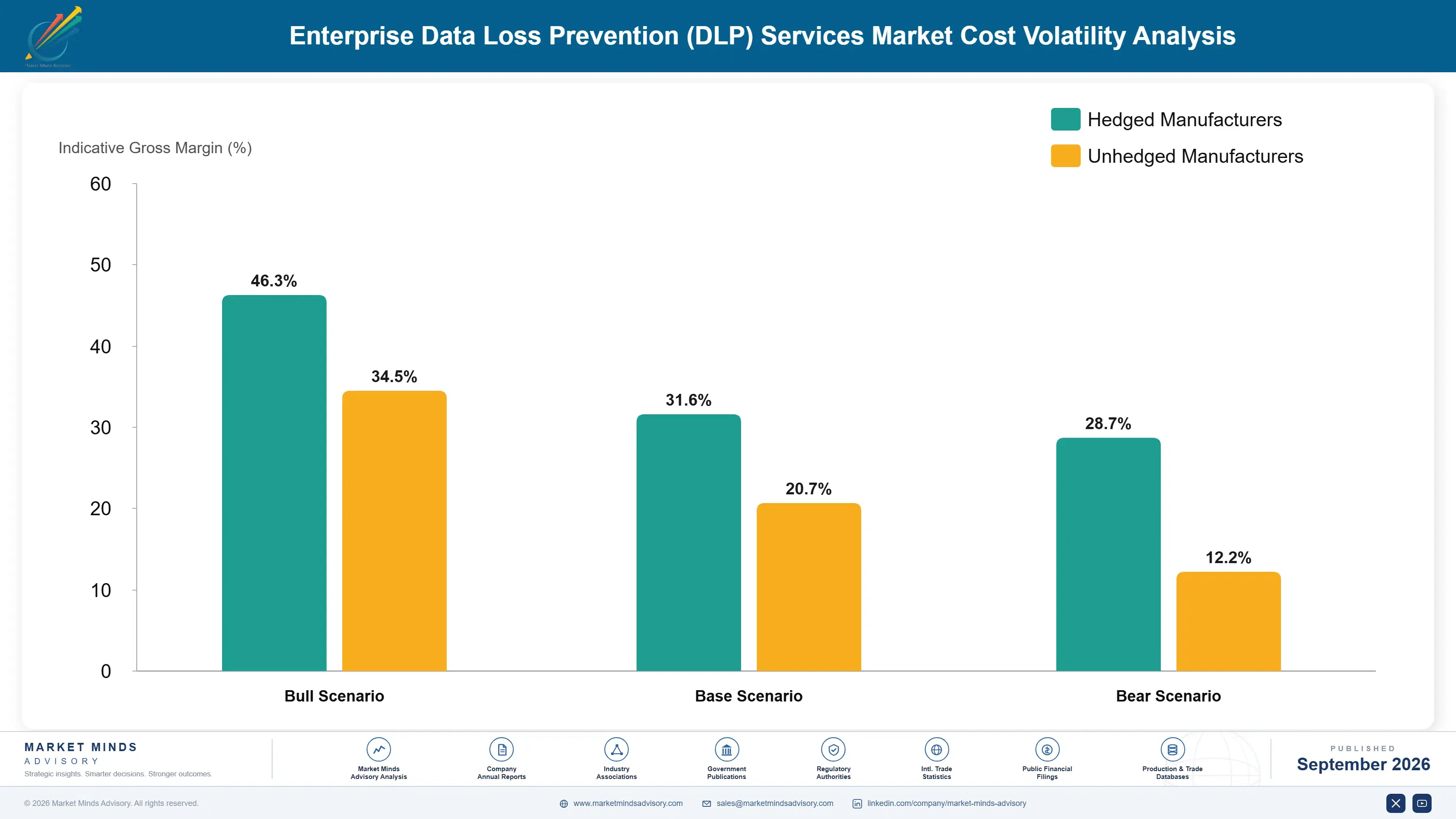
Skilled security analyst compensation accounts for roughly 58 percent of total service delivery cost for DLP service providers, reflecting intense competition for scarce talent capable of monitoring and investigating sophisticated data exfiltration attempts. Cloud infrastructure and monitoring platform licensing make up most of the remainder, sourced primarily from major cloud providers and security technology vendors.
Security analyst compensation rose meaningfully during 2024 and into 2025 as providers competed intensely for experienced talent capable of handling increasingly sophisticated ransomware exfiltration investigations, a trend documented across major provider annual reports and industry compensation surveys conducted this year. This compressed gross margins for smaller providers unable to match the compensation packages that larger, better-capitalized competitors could offer to retain their most experienced security analysts.

Providers without efficient analyst productivity tools face a meaningful competitive disadvantage as talent costs keep rising, since manual alert triage requires considerably more analyst time than automated triage workflows built for high-volume monitoring environments. This exposure varies by provider scale: larger providers like IBM Security Services can invest in proprietary automation tooling that smaller specialists simply cannot afford to build at comparable depth and sophistication.
enterprise-data-loss-prevention-dlp-services-marke-cost-volatility-analysis-1788419171215

Building Proprietary Alert Triage Automation Tools

Leading providers now invest heavily in proprietary alert triage automation that filters low-priority alerts before they reach human analysts, reducing dependence on expensive additional analyst headcount for routine monitoring tasks entirely. This automation requires meaningful upfront engineering investment before reducing ongoing analyst cost, a trade-off only well-capitalized providers can consistently afford to make comfortably.

Establishing Offshore Security Operations Center Hubs

Providers are establishing security operations center hubs in lower-cost regions with strong technical talent pools, reducing dependence on expensive North American and Western European analyst hiring markets for routine monitoring. This diversification adds coordination overhead across distributed shifts but meaningfully reduces the ongoing talent cost pressure that squeezes margins as competition for analysts intensifies further.

Portfolio Architecture for Margin Defence

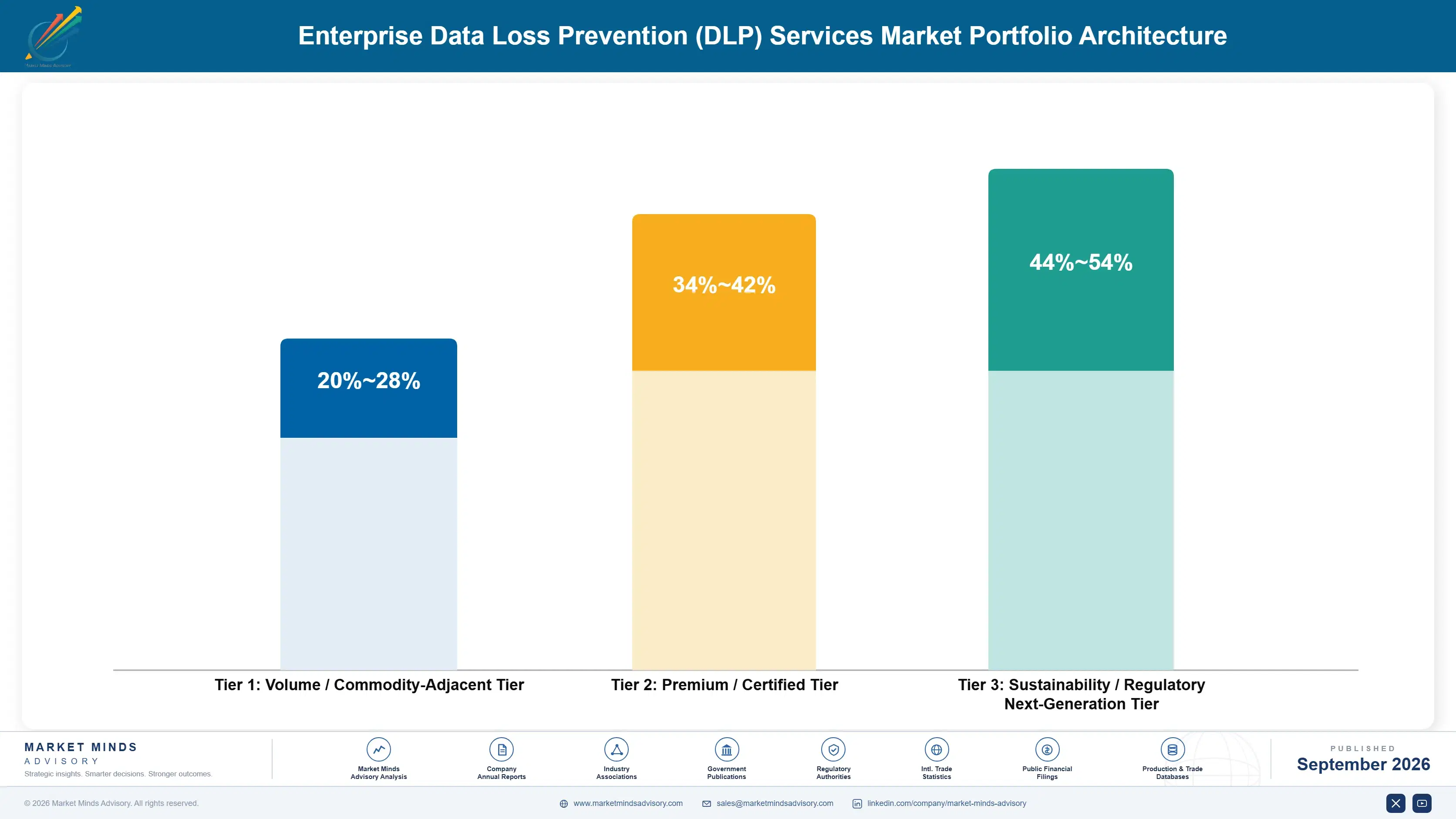
Portfolio economics split across three tiers running from commodity implementation and training services sold near competitive project pricing up through vertical-specific compliance consulting and next-generation managed monitoring bundled with incident response retainers. Gross margin widens considerably moving up this ladder, since regulatory expertise and retainer commitments create defensibility that pure project delivery alone cannot provide. Investors increasingly value providers by their revenue mix across these three tiers.
Volume tier services compete almost entirely on project price and delivery speed, leaving providers with thin margins that depend on scale to remain profitable across large numbers of smaller implementation engagements. Premium tier consulting instead competes on regulatory expertise and reference credentials, letting providers charge meaningfully more per engagement while facing far less price pressure during contract renewal negotiations. This tension shapes capital allocation across every provider's roadmap.

High-value margin pools concentrate almost entirely in the next-generation tier, where managed monitoring bundled with incident response retainers generates premium recurring revenue unavailable to providers still selling standalone implementation projects. Providers positioned only in the volume tier face real profitability ceilings that next-generation-tier competitors do not share, regardless of project volume signed across any given fiscal year of operation.

Volume / Commodity-Adjacent Tier

Commodity implementation and training services sold mainly to smaller enterprises prioritizing project cost over vendor reputation, competing largely on delivery speed against several established suppliers operating broadly across the market.
Gross Margin: 20-28%

Premium / Certified Tier

Vertical-specific compliance consulting and risk assessment services tailored to stricter regulatory requirements than generic engagements, commanding premium pricing from customers requiring deep industry expertise and strong reference credentials from prior engagements.
Gross Margin: 34-42%

Sustainability / Regulatory / Next-Generation Tier

Next-generation managed monitoring bundled with incident response retainers, positioned for large enterprise customers prioritizing guaranteed rapid response and recurring risk reduction well above pure project cost considerations entirely each contract.
Gross Margin: 44-54%
enterprise-data-loss-prevention-dlp-services-marke-portfolio-architecture-1788419171721

High-value Sub-segments and Strategic Watch-out

Managed DLP Services

Managed DLP services sit in the high-value high-growth quadrant, combining the fastest revenue growth rate tracked with the widest gross margin band once incident response retainer premiums layer on top of monitoring subscription pricing, making it the clearest priority for provider capital allocation across this entire decade of investment.
Gross Margin: 44-54%

Incident Response and Forensics Services

Incident response and forensics services occupy the high-value moderate-growth quadrant, generating strong per-engagement margin from ransomware investigation work even though growth trails managed monitoring, because these engagements remain reactive and considerably harder to forecast than recurring subscription revenue streams generated by comparable managed contracts today.
Gross Margin: 34-42%

Implementation and Integration Services

Implementation and integration services remain the volume core segment, generating the bulk of current project shipments at thinner margins, still essential for provider scale economics even as growth slows relative to managed monitoring alternatives entering the category more aggressively with each successive contract cycle today.
Gross Margin: 20-28%

Training and Awareness Services

Training and awareness services form the strategic watch-out segment, facing real commoditization risk as broader managed monitoring contracts increasingly bundle basic awareness content natively at no added cost today, threatening standalone providers that never expanded beyond simple training curricula into richer categories over the years.
Gross Margin: 18-24%

Managed Contracts Extend DLP Provider Relationships

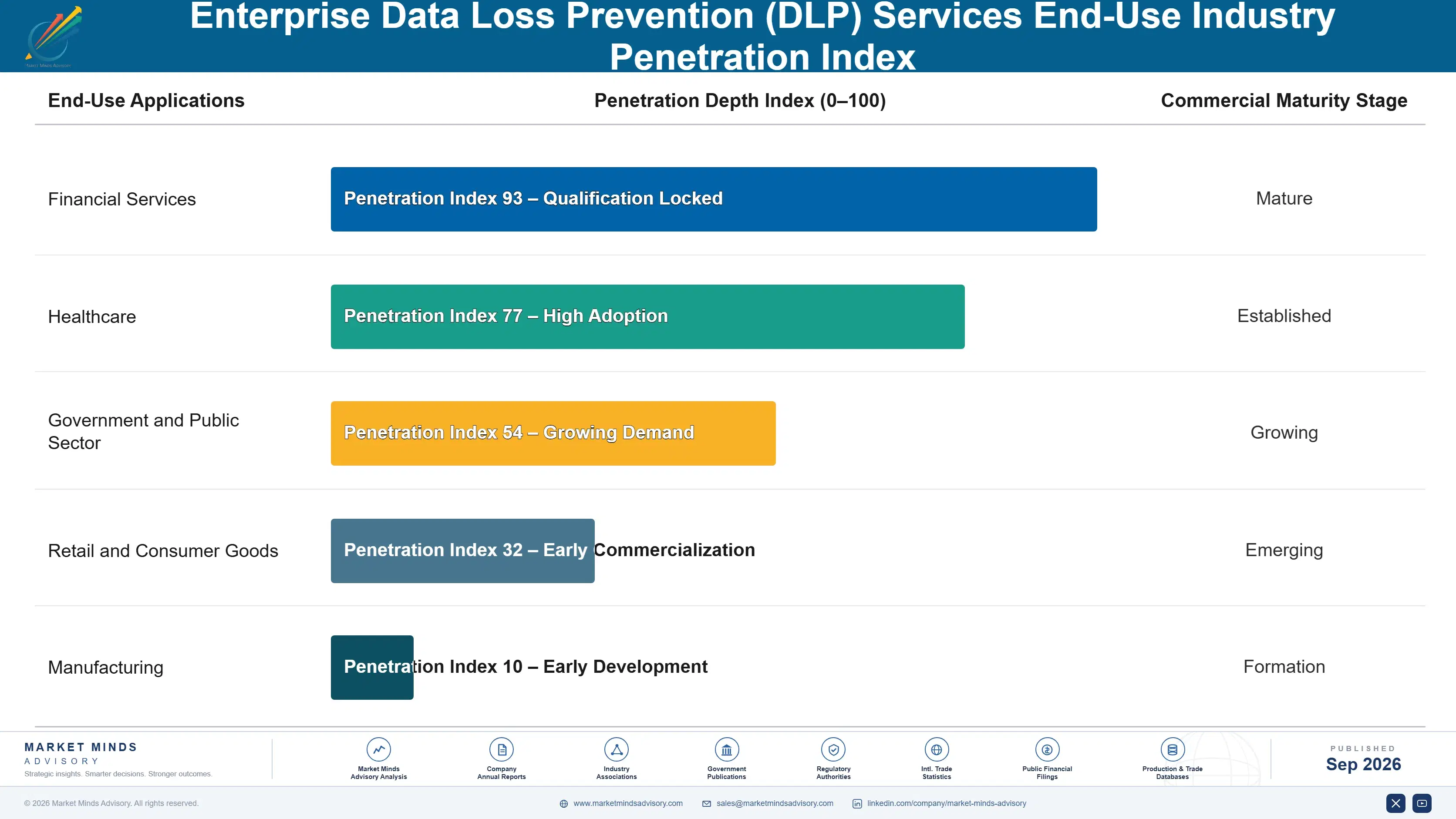
Providers increasingly bundle managed monitoring, incident response retainers, and compliance reporting into a single recurring contract, converting what was once a project-based consulting engagement into a longer-tail relationship spanning a client's entire security operations lifecycle. This bundled model gives providers recurring revenue visibility through contract renewal rather than relying entirely on one-time implementation project fees. Investors increasingly value providers on this recurring managed revenue mix rather than initial project count alone.
Adoption depth varies sharply by industry vertical: financial services and healthcare clients commit to multi-year managed monitoring contracts and rarely switch providers once security clearance and reference validation is complete, while smaller retail and manufacturing clients remain more price-sensitive at each contract renewal decision point. Government clients sit between these extremes, valuing clearance credentials over pure unit cost. This tension shapes provider capacity allocation priorities across every major client segment served.

Buyer profiles are shifting generationally as chief information security officers, rather than traditional IT directors, increasingly drive provider selection given growing board-level scrutiny of data protection posture following high-profile breach disclosures. This generational shift is reshaping which service capabilities providers prioritize, favoring measurable risk reduction reporting over the technical monitoring depth that historically dominated provider selection criteria.
enterprise-data-loss-prevention-dlp-services-marke-end-use-penetration-index-1788419172213

Where DLP Providers Should Focus Now

These are among the four positions where our research anticipates prominent divergence between winners and laggards over the coming forecast period. Each is grounded in the demand model, the regulatory perimeter, and the announced capacity pipeline.
01 / MANAGED SERVICES INVESTMENT

Build Managed Monitoring Capacity Before Talent Gap Widens

Providers still selling primarily project-based implementation are missing the fastest-growing opportunity in the industry, since managed DLP services are growing at 15.5 percent CAGR while conventional implementation growth trails considerably behind that pace across nearly every enterprise segment tracked this year. Providers with early managed monitoring investment are capturing enterprise clients that competitors focused purely on project work cannot serve at comparable scale today. Providers slow to build this capacity risk ceding the highest-growth customer segment entirely to faster-moving competitors within the next two engagement cycles.
02 / INCIDENT RESPONSE RETAINER BUNDLING

Bundle Incident Response Retainers Into Every Managed Contract

Providers without retainer bundling are missing pricing premiums averaging 25 percent above monitoring-only agreements, a gap that keeps widening as cyber insurance requirements increasingly mandate guaranteed response availability for enterprise policyholders across most major industries and jurisdictions worldwide today. Providers offering this bundle are capturing enterprise relationships that competitors without retainer capability simply cannot match on insurance compliance grounds alone today. Providers should prioritize this bundling now, since insurance-driven requirements will only become more stringent across future underwriting cycles ahead.
03 / EMERGING MARKET COMPLIANCE EXPANSION

Expand Into Emerging Market Compliance Before Rivals Establish

Providers concentrated purely in mature Western markets are missing compliance-driven demand growing 45 percent in emerging markets as newer data protection regulations take effect across previously underserved jurisdictions worldwide, expanding the addressable market meaningfully each year. Providers establishing early regulatory expertise in these markets are positioned to capture long-term client relationships before established Western providers extend their reach into these newer regulatory environments. Providers should invest in this expansion now, before competitors establish first-mover regulatory relationships that prove difficult to displace.
04 / ANALYST AUTOMATION INVESTMENT

Invest In Alert Triage Automation To Offset Talent Costs

Providers without proprietary alert triage automation face a persistent margin disadvantage as analyst compensation costs keep rising faster than service pricing can absorb without losing competitive positioning against better-capitalized rivals across the entire industry today. Providers investing in automation now are reducing dependence on additional analyst headcount for routine monitoring tasks, freeing capacity for higher-value advisory work instead of routine triage. Providers should prioritize this automation investment now, since talent cost pressure shows no signs of easing across the industry.

Engagement Snapshot From the Field

A live engagement with an industry participant carrying material or product regulatory and market exposure ahead of a defining policy shift, showing how our research translates into a defensible multi-year portfolio strategy.
MARKET MINDS ADVISORY · CLIENT ENGAGEMENT SUMMARY
Enterprise Data Loss Prevention (DLP) Services Producer Strategic Portfolio Review and Transition Roadmap 2026·Investment Scenario on Enterprise Data Loss Prevention (DLP) Services Exposure Evaluation 2025-26
CLIENT PROFILE
The client operates a network of 14 hospitals and outpatient facilities across the midwestern United States, handling substantial volumes of protected health information subject to strict federal privacy regulation. Facing chronic difficulty staffing an internal security operations team capable of round-the-clock monitoring, leadership needed a framework for evaluating managed DLP service providers. Annual revenue was reported at approximately 2.9 billion dollars (client-reported, unverified by MMA).
STRATEGIC CHALLENGE
Leadership faced a choice between three qualified managed service providers offering different combinations of pricing, healthcare-specific compliance expertise, and incident response retainer terms across their respective service agreements and contract structures. The board wanted assurance that any selected provider could demonstrate genuine healthcare regulatory experience rather than generic monitoring capability alone.
MMA APPROACH
MMA conducted a comparative evaluation across all three providers, incorporating primary interview data on each provider's healthcare client references and historical incident response performance during comparable breach scenarios at similar-sized health systems. The analysis modeled total cost of ownership across a five-year contract horizon including retainer costs. Findings were presented to the board alongside a recommended provider selection.
KEY FINDINGS
  1. The provider with the strongest healthcare-specific compliance credentials also carried meaningfully higher pricing than generalist competitors lacking comparable vertical reference experience in the industry.
  2. Incident response retainer terms varied considerably across providers, with only one offering guaranteed response times aligned with the client's cyber insurance policy requirements.
  3. Healthcare-specific compliance expertise correlated closely with faster onboarding timelines, since providers already understood relevant federal privacy regulation requirements without extensive client education.
  4. The recommended provider's board reporting capability was identified as a meaningful differentiator given the client's board-level scrutiny following a recent industry breach disclosure.
CLIENT PROFILE
The client operates a network of 14 hospitals and outpatient facilities across the midwestern United States, handling substantial volumes of protected health information subject to strict federal privacy regulation. Facing chronic difficulty staffing an internal security operations team capable of round-the-clock monitoring, leadership needed a framework for evaluating managed DLP service providers. Annual revenue was reported at approximately 2.9 billion dollars (client-reported, unverified by MMA).
STRATEGIC CHALLENGE
Leadership faced a choice between three qualified managed service providers offering different combinations of pricing, healthcare-specific compliance expertise, and incident response retainer terms across their respective service agreements and contract structures. The board wanted assurance that any selected provider could demonstrate genuine healthcare regulatory experience rather than generic monitoring capability alone.
MMA APPROACH
MMA conducted a comparative evaluation across all three providers, incorporating primary interview data on each provider's healthcare client references and historical incident response performance during comparable breach scenarios at similar-sized health systems. The analysis modeled total cost of ownership across a five-year contract horizon including retainer costs. Findings were presented to the board alongside a recommended provider selection.
KEY FINDINGS
  1. The provider with the strongest healthcare-specific compliance credentials also carried meaningfully higher pricing than generalist competitors lacking comparable vertical reference experience in the industry.
  2. Incident response retainer terms varied considerably across providers, with only one offering guaranteed response times aligned with the client's cyber insurance policy requirements.
  3. Healthcare-specific compliance expertise correlated closely with faster onboarding timelines, since providers already understood relevant federal privacy regulation requirements without extensive client education.
  4. The recommended provider's board reporting capability was identified as a meaningful differentiator given the client's board-level scrutiny following a recent industry breach disclosure.
RECOMMENDED STRATEGY
Phase 1: Phase 1 (Months 1 to 2): Finalize contract terms with the recommended provider, including retainer and board-level reporting specifications now. Phase 2: Phase 2 (Months 3 to 6): Complete onboarding and security clearance verification across all 14 facility locations in the network. Phase 3: Phase 3 (Months 7 to 12): Transition to full managed monitoring, validating performance against contracted service level agreements very closely.
OUTCOME
The client selected the recommended provider and retainer structure, avoiding an estimated 1.6 million dollars (client-reported, unverified by MMA) in projected incident response costs compared to the lowest-cost alternative under evaluation. Onboarding proceeded roughly on the recommended timeline, and the board reported improved confidence in data protection oversight.

Frequently Asked Questions

Foundational context covering the market sizes, CAGR, scope, country, region and competition that inform every finding below. This section is provided to cover basics and most often pre-purchase conversations, answered from the MMA Primary Research Dataset.

What is the current size of the Enterprise Data Loss Prevention (DLP) Services Market?

The enterprise DLP services market reached approximately 4.85 billion dollars in 2026, according to MMA Primary Research Dataset, July 2026. This figure covers managed monitoring, implementation, consulting, and incident response service revenue combined globally.

How large will the Enterprise Data Loss Prevention (DLP) Services Market be by 2036?

MMA projects the market will reach approximately 14.4 billion dollars by 2036 under the base case scenario. That represents roughly a 2.97 times expansion over the ten-year forecast period from 2026 through 2036.

What is the CAGR for the Enterprise Data Loss Prevention (DLP) Services Market 2026 to 2036?

The base case compound annual growth rate is 11.5 percent through 2036. Bull and bear scenarios range from 12.8 percent to 10.3 percent depending on ransomware trends and competitive conditions.

Which segment is growing fastest?

Managed DLP services are growing fastest at 15.5 percent CAGR, roughly 1.35 times the overall market rate. Chronic cybersecurity talent shortages are driving enterprises toward outsourced monitoring rather than in-house staffing.

Who are the major companies in the Enterprise Data Loss Prevention (DLP) Services Market?

Leading companies include IBM Security Services, Accenture Security, Deloitte Cyber, KPMG Cyber, and NTT Security. These five players hold a combined 46 percent share on a revenue basis.

Which country is growing fastest?

India is growing fastest at approximately 14.0 percent CAGR, driven by newly enforced data protection legislation creating fresh compliance-related service demand. This outpaces the United States and other mature service markets considerably.

Report Segmentation Architecture

The full report scope spans multiple orthogonal segmentation dimensions, with cross-tabulated demand data provided for each dimension pair. Coverage extends further to regional breakdowns, trend trajectories, and the competitive detail needed to support segment-level decision-making.

By Primary Market Dimension

  • Managed DLP Services
  • Implementation and Integration Services
  • Consulting and Risk Assessment Services
  • Incident Response and Forensics Services
  • Training and Awareness Services
  • Compliance Audit and Reporting Services

By End-Use Industry

  • Financial Services
  • Healthcare
  • Government and Public Sector
  • Retail and Consumer Goods
  • Manufacturing

By Commercial Dimension

  • Direct Enterprise Engagement
  • Managed Security Service Provider Channel
  • System Integrator Partnership
  • Cyber Insurance-Linked Contract

By Region

  • North America
  • Western Europe
  • East Asia
  • South Asia and Pacific
  • Latin America
  • Middle East and Africa
  • Eastern Europe

Scope, Methodology, and Coverage

Every figure in this report is reproducible from documented input assumptions. The scope below maps the historical period, the forecast horizon, the segmentation dimensions, and the countries covered, alongside the underlying primary and qualitative methodology.
Historical Period
2020 to 2025
Forecast Period
2026 to 2036
Base Year
2025 (USD billions; MMA Primary Research Dataset, September 2026)
Market Definition
The enterprise DLP services market covers managed monitoring, implementation, consulting, incident response, training, and compliance audit services delivered around data loss prevention technology deployments. It excludes the DLP software licenses themselves and general cybersecurity services lacking specific data loss prevention scope.
Quantitative Units
USD billions (current prices); enterprise engagements where applicable
Segmentation Dimensions
By Service Function Type; By End-Use Industry; By Commercial Dimension; By Region
Regions Covered
North America, Western Europe, East Asia, South Asia and Pacific, Latin America, Middle East and Africa, Eastern Europe
Countries Covered
USA, China, Germany, France, UK, Japan, South Korea, India, Australia, Canada, Brazil, Mexico, Indonesia, Vietnam, Thailand, Malaysia, UAE, Saudi Arabia, South Africa, Nigeria, Turkey, Poland, Netherlands, Italy, Spain, Sweden, Switzerland, Argentina, Colombia, Singapore, and additional markets relevant to this sector
Key Companies Profiled
IBM Security Services, Accenture Security, Deloitte Cyber, KPMG Cyber, NTT Security, EY Cybersecurity, PwC Cyber, Wipro Cybersecurity, Tata Consultancy Services, Capgemini Cybersecurity, Optiv Security, Trustwave Holdings, Secureworks Corporation, Rapid7 Inc, Mandiant (Google Cloud), BAE Systems Applied Intelligence, Atos Cybersecurity, Kroll LLC, Booz Allen Hamilton, HCLTech Cybersecurity
Quantitative Methodology
Primary survey, n=3,800 respondents, Q4 2025, six countries; demand-side model with trade association cross-validation
Qualitative Methodology
47 expert interviews, Q4 2025; applied to validate demand model assumptions, identify emerging dynamics, and assess competitive positioning
Report Format
PDF and XLSX data workbook (Word format preview document)
Publisher
Market Minds Advisory
Report Code
MMA-2026-TEC-607
Published
September 2026
Contact
sales@marketmindsadvisory.com | www.marketmindsadvisory.com

Purchase the full Enterprise Data Loss Prevention (DLP) Services Market Report (2026 to 2036).

This report delivers a comprehensive assessment of the global enterprise DLP services market, covering historical performance from 2020 through 2025 and forecasts through 2036 across all seven major world regions. It profiles the twenty leading providers shaping managed monitoring, compliance consulting, and incident response service delivery, including detailed competitive positioning and recent contract developments. The analysis quantifies segment-level growth across six service function categories and evaluates revenue diversification opportunities including retainer bundling and board-ready reporting. Primary research draws on a 3,800-respondent survey and 47 expert interviews conducted in Q4 2025.
Ten-year revenue forecast by segment and region
Competitive benchmarking of twenty profiled providers
Regional demand driver analysis across seven markets
Skilled analyst talent cost and risk assessment
Revenue diversification and retainer bundling lever analysis
Anonymized client case study with strategic recommendations

Built For The People Who Decide

From boardroom strategy to bench-side execution, this report is read cover-to-cover by leaders shaping the next decade of their industry, turning demand scenarios, market dynamics and valuation benchmarks into decisions.
CXOs/ Presidents/ VPs/ Managers
M&A and Corporate Development
Strategy Teams and R&D Heads
Procurement and Product Directors
Regulatory and Compliance Leaders
Investor Relations and Equity Analysts