Market Minds Advisory
Energy Efficient Windows Market

Energy Efficient Windows Market: Energy Efficient Windows Market. Advanced Glazing Technology for Building Code Compliance and Thermal Performance

Tightening building energy codes and rising retrofit incentive programs are pushing builders and homeowners toward triple-glazed and vacuum-insulated windows, reshaping procurement decisions across new construction and renovation markets worldwide simultaneously.

Lead Analyst

Published

September 2026

Make Smarter Decisions with Customized Research Insights

Request a free sample report and evaluate market opportunities, growth trends, and competitive dynamics relevant to your business needs.

2025 MARKET VALUE$42.5BMarket Size 2025
2036 FORECAST VALUE$91.3BBase Case , 2026 to 2036
CAGR 2026 TO 20367.2 %Bull 8.4% / Bear 6.0%
INCREMENTAL OPPORTUNITY$45.8BNet 10- year value creation
EXPANSION MULTIPLE2.00x2036 value over 2026 base
Strategic Levers
M&A Pipeline
Regional Outlook
Country Rankings
Competitive Intelligence
Segmental Deep-dive
Call-Us : 91 93563 13602

Executive Snapshot and Market Trajectory.

Building energy codes are tightening faster than window manufacturers can retool production, pushing triple glazing and vacuum-insulated units from premium options into standard specification across most major new construction and renovation markets worldwide today. Manufacturers slow to adapt production lines risk losing share to more agile, technically capable competitors.
Commercially, retrofit demand is emerging as an unexpected growth engine alongside new construction, since aging building stock across developed markets increasingly qualifies for government-backed energy efficiency incentive programs that offset the higher upfront cost of premium glazing. Western Europe and North America concentrate the bulk of near-term retrofit demand given the scale of their existing pre-2000 building stock requiring envelope upgrades. This retrofit-driven growth pattern shows no meaningful signs of slowing anytime soon at all.
The competitive field remains fragmented across thousands of regional fabricators, though smart dynamic glazing and vacuum-insulated technology increasingly separate technically capable manufacturers from commodity double-glazing producers competing purely on price. Builders are also demanding longer thermal performance warranties as energy codes shift procurement conversations from one-time material purchases toward multi-decade performance guarantees. Manufacturers investing early in vacuum-insulated and smart glazing capacity are winning the largest multi-year builder framework agreements.
Market Definition
This market covers residential and commercial windows engineered for superior thermal insulation, including double and triple-glazed low-emissivity units, vacuum-insulated glazing, and smart dynamic glazing systems. It excludes standard single-pane windows, skylights sold as standalone roofing products, and structural curtain wall systems sold independent of glazing units.
Base Year Value
$42.5B in 2025 (MMA Primary Research Dataset, September 2026)
Forecast Period
2026 to 2036, eleven discrete annual values
CAGR
7.2% base case. Bull 8.4%. Bear 6.0%.
Fastest Growth Segment
Smart Dynamic Glazing: 13.5% CAGR
Fastest Growth Country
Germany: 9.8% CAGR
Fastest Growth Region
South Asia and Pacific: 9.2% CAGR
Largest Region
Western Europe: 26% of 2025 global value
Market Leaders
Saint-Gobain, AGC Inc, Guardian Glass, Vitro Architectural Glass, Pella Corporation. Source: MMA Analysis based on company annual reports.
Primary Survey
n=3,800 procurement and R&D decision-makers, Q4 2025, six countries
Methodology
Demand-side build-up, cross-validated against public data, 47 expert interviews

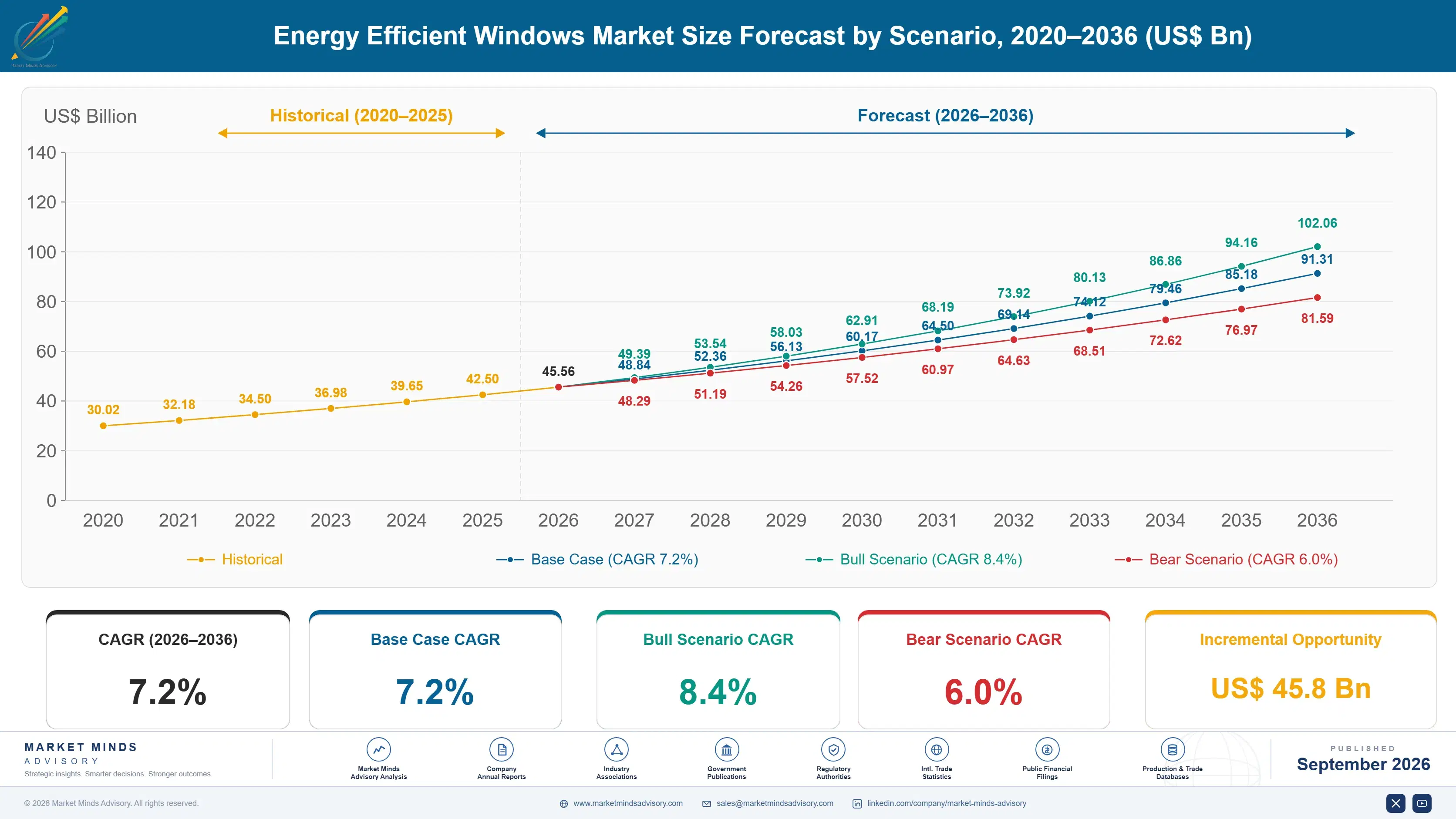
Energy Efficient Windows Market Forecast Scenarios

energy-efficient-windows-market-size-forecast-scenario-1788413182632
Energy efficient windows demand accelerated steadily between 2020 and 2025 as building codes tightened across most major markets and retrofit incentive programs expanded, with the historical growth rate holding near 6.2 percent annually through a period marked by growing consumer awareness of thermal performance benefits. Builders that adopted premium glazing early report meaningfully stronger sales in code-strict jurisdictions relative to laggard competitors.
The base case assumes continued building code tightening requiring lower U-value specifications, expanding retrofit incentive programs targeting aging building stock, and rising consumer willingness to pay for long-term energy savings despite higher upfront material costs. These three commercial mechanisms together sustain a forecast compound annual growth rate of 7.2 percent through 2036, with premium glazing penetration rising fastest among the strictest code jurisdictions. Jurisdictions with the strictest upcoming code deadlines are seeing premium glazing penetration rise fastest.
A bull scenario assumes accelerating retrofit incentive funding and faster-than-expected smart glazing cost reduction, pushing growth toward 8.4 percent. A bear scenario assumes construction slowdown and delayed code enforcement timelines in several major markets, pulling growth down toward 6.0 percent across the most affected regional construction markets. Both scenarios assume code tightening continues broadly on schedule.

Code Compliance Reshapes Glazing Procurement

Three converging forces define this market today: building energy codes tightening faster than manufacturers can retool production lines, retrofit incentive programs opening demand across aging pre-2000 building stock, and rising consumer willingness to pay for long-term energy savings despite higher upfront material costs across most developed housing markets. Manufacturers that fail to modernize production risk losing share to more agile competitors already retooled for triple-glazing and vacuum-insulated demand.
MARKET CONCENTRATION28% CR5combined share held by five leading glass manufacturers globally
RETROFIT SHARE OF DEMAND38%share of orders tied to existing building envelope upgrades
GLASS COST SHARE42%raw glass and coating input cost as share of build
AVERAGE PRODUCT LIFECYCLE22 yearstypical service life before window replacement becomes necessary
TRIPLE-GLAZED PENETRATION31%share of new installations specifying triple-glazed configurations today
TOP COUNTRY SHARE12%Germany share of global energy efficient window shipment volume
Commercially, the business increasingly resembles a specification-driven procurement category rather than a pure commodity material sale, with U-value performance certification, warranty duration, and installer network quality determining which manufacturers win the largest builder framework agreements over purely transactional distributor sales. Manufacturers offering bundled installation and extended warranty programs increasingly command premium pricing over point-material competitors selling glass alone without service support.
Over the next decade, smart dynamic glazing and vacuum-insulated technology will reshape which manufacturers remain competitive, while builders increasingly demand integrated performance data across entire building envelope systems rather than accepting standalone window specifications disconnected from broader energy modeling requirements. Manufacturers that resist data integration risk losing large builder accounts to more connected competitors over the coming decade of code evolution.
"Homeowners used to ask about window style. Now the first question is the U-value, and manufacturers who cannot answer that quickly are losing the sale before it starts."
Director, Building Envelope and Materials Practice · MMA High-Performance Building Envelope and Glazing Systems Practice · September 2026

Market Trends

Triple Glazing Becomes Standard Rather Than Premium Specification

Triple-glazed low-emissivity windows are shifting from a premium upgrade into standard specification across an expanding share of new construction projects in the strictest code jurisdictions, since these units meet tightening U-value requirements that double glazing increasingly cannot satisfy without additional coating or gas fill enhancements. Roughly 31 percent of new window installations in developed markets now specify triple-glazed configurations as a baseline requirement rather than an optional upgrade. Manufacturers with mature triple-glazing production lines are capturing a disproportionate share of these newly tightened code contracts. Regional fabricators lacking this capability increasingly lose bids to larger, better-equipped competitors.
Market Impact: 25 percent heating energy reduction
Smart Dynamic Glazing Expands Beyond Commercial Pilots

Electrochromic smart glazing that automatically tints in response to sunlight is moving beyond commercial pilot installations into mainstream premium residential and commercial specification, as cost reduction and improved reliability address early adoption barriers that limited deployment through the previous decade. Several major architecture firms have standardized on smart glazing specifications across their flagship commercial building portfolios. This segment is growing at roughly 13.5 percent annually, well ahead of the broader energy efficient window market it originated alongside as a niche technology. Cost curves for smart glazing continue falling as production scale expands across major manufacturers.
Market Impact: 38 percent tied to retrofit

Market Opportunities and Growth Drivers

Building Energy Codes Tighten Across Major Markets

Building energy codes across most major developed markets are tightening U-value and air infiltration requirements on a multi-year revision cycle, and windows represent one of the largest thermal loss points in typical building envelopes, making glazing performance a primary compliance lever for builders. The European Union's Energy Performance of Buildings Directive alone mandates near-zero energy standards for new construction, driving triple glazing specification across an expanding share of member state building stock. Compliant window specifications can reduce whole-building heating energy consumption by roughly 25 percent relative to legacy single-glazed equivalents.
Market Impact: 7-year payback period slows adoption

Retrofit Incentive Programs Expand Aging Stock Demand

Government-backed retrofit incentive programs across developed markets increasingly offset the higher upfront cost of premium glazing, targeting aging pre-2000 building stock that represents a substantial share of total housing inventory in most mature markets. Roughly 38 percent of current window demand now ties directly to retrofit projects rather than new construction, according to MMA primary survey data collected from contractor respondents across major program jurisdictions. These programs meaningfully accelerate adoption timelines that would otherwise take considerably longer through natural replacement cycles alone. Program administrators increasingly favor manufacturers with proven installer network reach.
Market Impact: 3-month installer backlogs, peak season

Market Restraints and Challenges

High Upfront Cost Slows Retrofit Adoption Pace

Premium triple-glazed and vacuum-insulated windows cost considerably more upfront than standard double-glazed equivalents, and homeowners without access to retrofit incentive programs often defer replacement despite long-term energy savings that would eventually offset the higher purchase price. The root cause is a payback period that frequently extends beyond seven years in markets with lower energy costs, making the investment case less compelling for cost-sensitive homeowners compared with other home improvement priorities. This slows retrofit adoption meaningfully in markets lacking substantial incentive program funding. Manufacturers increasingly offer financing partnerships as a mitigation pathway to spread upfront cost over time.
Market Impact: 31 percent specify triple glazing

Skilled Installer Shortage Delays Retrofit Project Completion

A persistent shortage of installers certified to handle premium glazing systems is extending average project completion timelines across major retrofit markets, with some regions reporting backlogs exceeding several months during peak renovation season. The root cause traces to insufficient vocational training pipeline capacity relative to demand growth, particularly for vacuum-insulated and smart glazing systems that require specialized handling expertise beyond standard double-glazing installation. This directly limits how quickly manufacturers can convert incentive-driven demand into completed installations. Several manufacturers are now funding installer certification academies as a mitigation pathway to build capacity internally.
Market Impact: 13.5 percent annual smart glazing growth
4 additional market trends, 3 additional growth drivers, and 3 additional restraints and challenges are covered in the full report. Contact sales@marketmindsadvisory.com to access the complete intelligence.

Segment CAGR and Growth Architecture

MMA segments this market by glazing technology, since thermal performance specifications, manufacturing processes, and cost structures differ meaningfully by glazing type rather than by frame material or end-use application alone, making glazing technology the most commercially decisive lens for demand analysis. This reflects how manufacturers organize production lines today. Six categories span demand from commodity double-glazing through smart glazing.
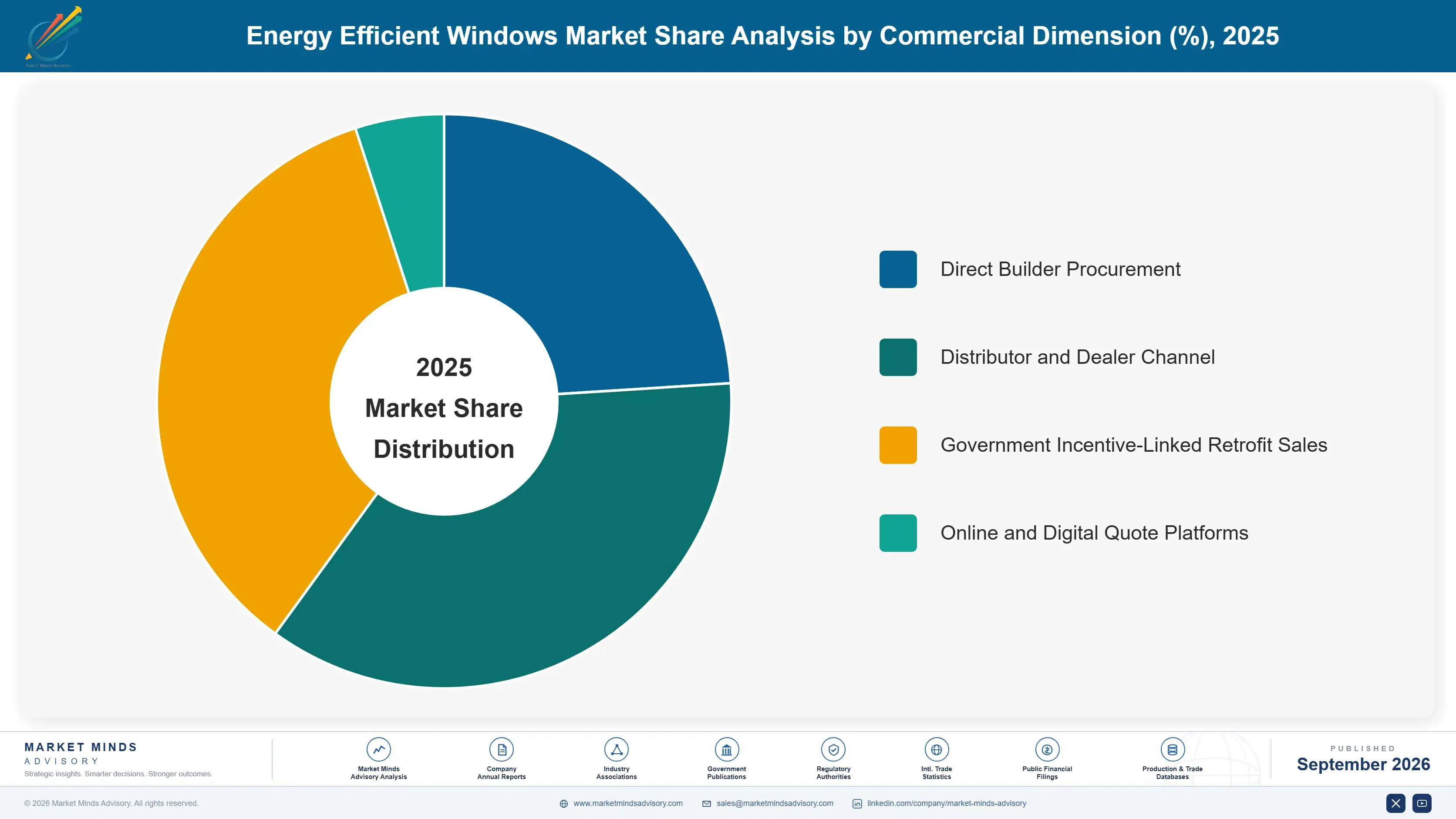
energy-efficient-windows-market-market-share-analysis-1788413184028

Smart Dynamic Glazing

This segment covers electrochromic and thermochromic glazing that automatically adjusts tint in response to sunlight, reducing cooling load and glare without mechanical shading systems. Demand here is expanding fastest of any category as cost reduction and improved reliability address early adoption barriers that limited deployment through the previous decade to mostly flagship commercial projects. Architecture firms increasingly specify smart glazing as a standard premium option rather than a novelty feature reserved for signature buildings, given growing evidence of meaningful whole-building energy savings. Manufacturers serving this segment increasingly maintain dedicated commercial architecture account teams separate from traditional residential glazing sales organizations. Cost curves continue falling as production scale expands across leading manufacturers investing in dedicated capacity.
CAGR 13.5%

Vacuum-Insulated Glazing

This segment covers ultra-thin vacuum-insulated glazing units that achieve superior thermal performance in a considerably thinner profile than conventional gas-filled triple glazing, making them well suited for historic building retrofits where window frame depth is constrained by preservation requirements. Growth here tracks closely with retrofit incentive program expansion in markets with substantial historic and pre-2000 building stock. Manufacturers with proven vacuum-sealing manufacturing processes increasingly win preferred status among architects and preservation specialists managing sensitive renovation projects where conventional triple glazing simply will not physically fit within existing window openings. Manufacturers increasingly bundle vacuum-insulated units with historic-preservation-compliant frame systems to capture the full retrofit project value rather than glazing alone. This bundled approach increasingly differentiates specialists from generalist window fabricators.
CAGR 11.0%
Full segment breakdown across 6 segments available in the complete report.

Regional Architecture and Country Demand Map

Western Europe leads global demand given the European Union's strict Energy Performance of Buildings Directive, closely followed by North America and East Asia, where code tightening and retrofit incentive programs sustain diversified manufacturer bases. South Asia and Pacific posts the fastest regional growth rate. Retrofit demand varies meaningfully by region.

North America

North America's demand reflects two forces operating simultaneously: state and provincial energy code adoption tightening U-value requirements on a multi-year revision cycle, and expanding federal and state retrofit incentive programs that offset the higher upfront cost of premium glazing for homeowners. Regional builders face mounting pressure to meet increasingly strict code deadlines, and triple glazing has moved from optional upgrade to standard specification in the strictest jurisdictions including much of the northern United States and Canada. Manufacturers serving this region increasingly maintain dedicated retrofit program certification teams given the complex, jurisdiction-specific incentive documentation many state programs now require for reimbursement. Canada contributes steadily growing demand tied to comparable code adoption priorities.
Share: 25% | CAGR: 7.5% (2026 to 2036)

Western Europe

Western European demand centers on the European Union's Energy Performance of Buildings Directive, which mandates near-zero energy standards for new construction and is accelerating triple-glazing specification across most member state building codes simultaneously. Germany's aggressive retrofit incentive funding has made it the fastest-growing individual country market MMA tracks, given the scale of its pre-1990 building stock requiring envelope upgrades. Retrofit demand dominates over new construction here, since most major metropolitan areas have limited greenfield development remaining within established urban boundaries. Growth trails the global average given the region's already-mature and heavily code-compliant existing building stock relative to faster-growing emerging markets. Nordic countries have moved fastest among the region's national code jurisdictions.
Share: 26% | CAGR: 5.8% (2026 to 2036)
Regional intelligence for 5 additional markets available in the complete report: East Asia, South Asia and Pacific, Latin America, Middle East and Africa, Eastern Europe. Contact sales@marketmindsadvisory.com.
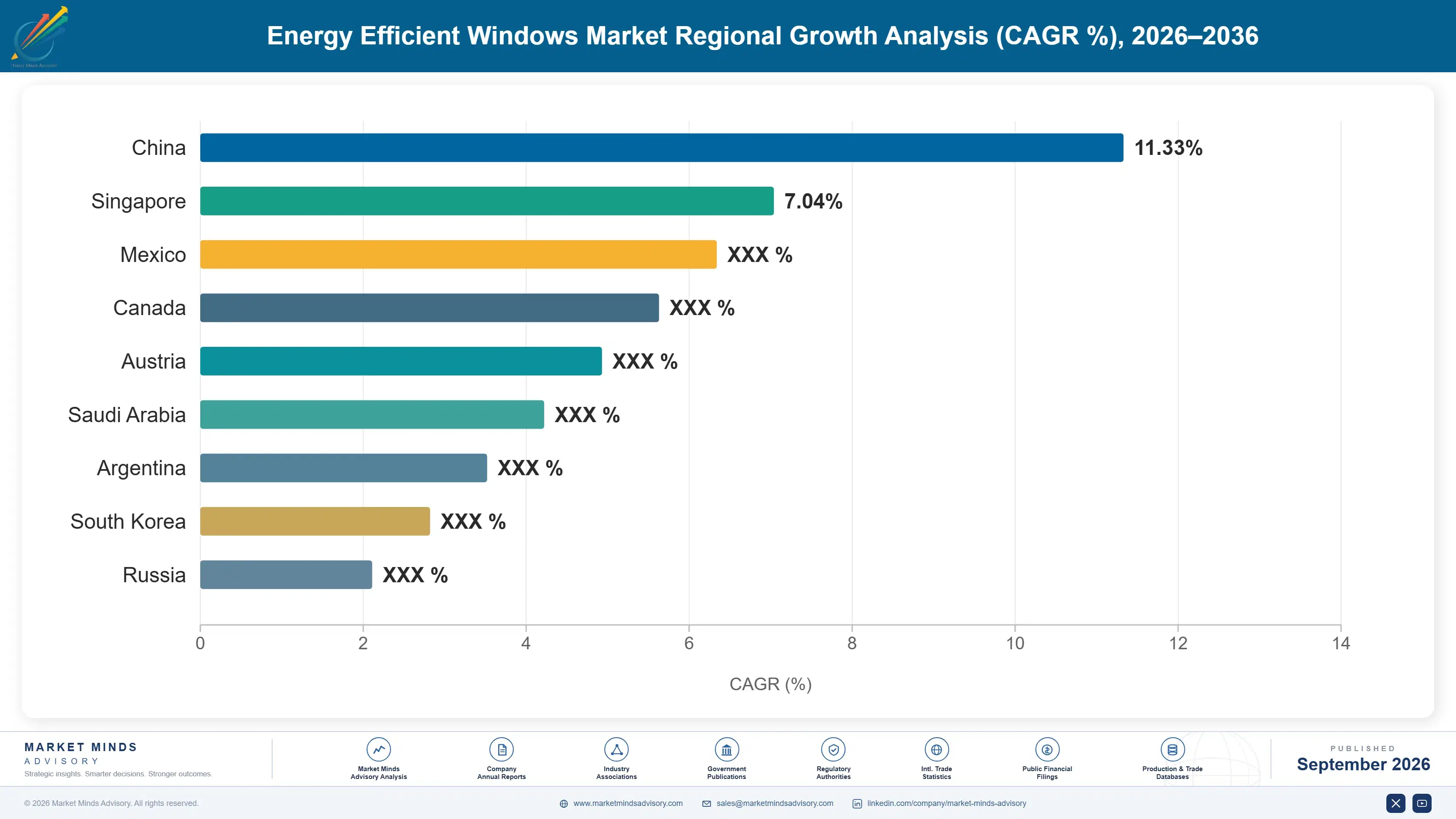
energy-efficient-windows-market-country-cagr-analysis-1788413184967

Where Glazing Manufacturers Can Capture Margin

Beyond core volume growth, several commercial mechanisms let manufacturers capture disproportionate margin as building codes tighten and retrofit incentive programs reshape procurement across most major construction markets over the coming decade worldwide. These mechanisms span production capacity, program navigation, niche specialization, and financing, rewarding manufacturers who invest ahead of visible demand signals rather than reacting once competitors have already moved.

Accelerate Triple Glazing Production Capacity Expansion

Manufacturers that expand triple-glazing production capacity ahead of code deadlines capture premium pricing from builders needing compliant units for permitted construction projects, while avoiding the capacity crunch that typically hits demand in the final year before enforcement deadlines take effect. Saint-Gobain and AGC have both expanded certified product lines targeting this transition directly, covering at least 40 percent of forecast triple-glazing demand through dedicated manufacturing capacity. Early movers also lock in preferred-vendor status across the largest builder framework agreements. Contractors bidding on public and incentive-linked projects increasingly require documented compliance before award, widening the gap between certified and under-capacity manufacturers.
Market Impact: Covers at least 40 percent of forecast demand

Build Dedicated Retrofit Program Certification Teams

Manufacturers that build dedicated teams to navigate jurisdiction-specific retrofit incentive documentation capture a disproportionate share of program-linked demand that generalist sales teams often lose to administrative complexity and processing delays. This requires investment in compliance expertise, but manufacturers executing it well report conversion rates meaningfully above those without dedicated program navigation support. The approach also builds durable relationships with program administrators who return for future incentive cycles once trust and reliable documentation quality are established. Manufacturers report roughly 30 percent higher program conversion rates once dedicated certification teams replace generalist sales coverage.
Market Impact: Delivers conversion rates roughly 30 percent above average

Expand Vacuum-Insulated Glazing for Historic Retrofits

Manufacturers expanding vacuum-insulated glazing product lines capture retrofit customers in historic and preservation-constrained buildings where conventional triple glazing simply will not fit within existing window openings, differentiating against competitors offering only standard-depth products. This niche commands meaningfully higher margins given limited competition and specialized manufacturing requirements. Guardian Glass and Vitro have both accelerated vacuum-insulated development, targeting expanded availability covering at least 15 percent of new preservation-market retrofit shipments within the forecast period. Distributors report growing architect willingness to pay a meaningful premium once preservation-compliance depth constraints are demonstrated clearly. Early movers in this niche capture disproportionate share.
Market Impact: Captures at least 15 percent of preservation-market shipments

Offer Financing Partnerships to Offset Upfront Cost

Manufacturers offering financing partnerships that spread the higher upfront cost of premium glazing over several years capture homeowner customers who would otherwise defer replacement given seven-year-plus payback periods in markets with lower energy costs. This shifts the purchase decision from an upfront capital constraint toward a manageable monthly payment comparison against energy savings. Manufacturers offering financing report meaningfully higher conversion rates among cost-sensitive homeowners, covering at least 25 percent of retrofit-segment revenue through financed transactions. Smaller manufacturers lacking financing partnerships increasingly struggle to compete for these larger, more price-sensitive retrofit accounts.
Market Impact: Covers at least 25 percent of retrofit revenue

Who Controls the Margin Pool

The top five players hold a combined 28 percent share on a shipment value basis, a moderate gap separating global glass majors with certified performance product lines from thousands of regional fabricators competing mainly on price. Basis of assessment is annual shipment value, held consistently across all companies profiled. This gap has widened as compliance requirements filter out under-resourced regional fabricators from the largest tenders.
Current competitive activity centers on three dimensions simultaneously: triple-glazing capacity expansion racing ahead of code enforcement deadlines, smart glazing technology development targeting premium commercial and residential specification, and retrofit program certification positioning as manufacturers navigate increasingly complex jurisdiction-specific incentive documentation requirements across multiple regional markets. Several manufacturers are also piloting integrated performance data platforms to help builders model whole-building energy compliance more efficiently.

Emerging pressure is coming from Chinese and Turkish fabricators scaling rapidly on price within their home markets and increasingly exporting into price-sensitive emerging market projects, compressing margins for global majors in cost-competitive tenders. Rankings could shift as manufacturers pooling financing partnerships and installer certification programs capture share previously reserved for the largest five majors. Global majors are responding by expanding local manufacturing partnerships to compete on price in these emerging markets.
energy-efficient-windows-market-company-positioning-matrix-1788413185898

Competitive Moat and Risk Dimensions

SAINT-GOBAIN

Moat: Vertically Integrated Manufacturing Scale

Saint-Gobain operates vertically integrated glass manufacturing spanning raw material processing through finished glazing units, giving it cost and quality control advantages that smaller competitors relying on third-party glass suppliers cannot easily replicate across comparable product categories. This integration matters enormously to builders needing guaranteed volume availability and consistent quality across dozens of simultaneous large-scale construction projects nationwide.
SAINT-GOBAIN

Risk: Slower Regional Pricing Flexibility

Saint-Gobain's scale sometimes slows regional pricing flexibility relative to nimble local fabricators competing aggressively on price in emerging markets, creating openings for smaller, more agile competitors in the fastest-growing price-sensitive segments of the market. Saint-Gobain has responded by expanding regional manufacturing partnerships to improve its cost position in fast-growing emerging markets directly.
AGC INC

Moat: Coating Technology Leadership

AGC holds deep expertise in low-emissivity and solar control coating technology, giving it credibility with architects and builders evaluating long-term thermal performance roadmaps rather than just near-term unit pricing across competing manufacturer bids. This coating expertise increasingly translates into multi-year framework agreements with builders who value certified thermal performance over marginal upfront cost differences.
AGC INC

Risk: Raw Glass Input Cost Exposure

AGC remains exposed to raw glass and coating material cost volatility that periodically compresses margins on its most technically advanced product lines relative to competitors with more vertically integrated raw material supply chains already established. AGC has responded by pursuing vertical integration investments to reduce its dependence on external raw glass procurement over time.

Players Tracked

Prominent Players

Saint-Gobain
AGC Inc
Guardian Glass
Vitro Architectural Glass
Pella Corporation

Other Key Players

Andersen Corporation
Marvin Windows and Doors
YKK AP
Fenesta Building Systems
Sisecam Group
China Southern Glass
Xinyi Glass Holdings
Nippon Sheet Glass
Cardinal Glass Industries
Ply Gem Building Products
VELUX Group
Deceuninck
Rehau Group
Internorm International
Kommerling

Recent Developments

JANUARY 2026

Saint-Gobain Expands Triple Glazing Capacity

Saint-Gobain announced a major triple-glazing production capacity expansion at its European manufacturing facilities, adding output specifically to serve growing retrofit demand ahead of upcoming Energy Performance of Buildings Directive enforcement deadlines across member states. The expansion follows growing builder demand for guaranteed triple-glazing supply ahead of code deadlines.
Signal: Signals accelerating manufacturer investment in capacity ahead of anticipated code enforcement demand across European member states
SEPTEMBER 2025

AGC Acquires Smart Glazing Technology Firm

AGC acquired a specialized electrochromic smart glazing technology developer to strengthen its premium commercial product portfolio, extending its offering without the multi-year cost of building comparable capability entirely in-house. The acquisition strengthens AGC's position bidding on flagship commercial projects specifying advanced dynamic glazing performance credentials.
Signal: Reflects growing manufacturer preference for acquisition over organic technology development across premium commercial project bids nationally
MAY 2025

Guardian Glass Signs Retrofit Financing Partnership

Guardian Glass entered a financing partnership with a consumer lending platform to offer homeowners installment payment options for premium glazing upgrades, addressing the upfront cost barrier that has slowed retrofit adoption in several major markets. The partnership is expected to accelerate retrofit conversion rates among cost-sensitive homeowner segments.
Signal: Indicates growing manufacturer focus on financing solutions to accelerate retrofit conversion among cost-sensitive homeowner segments broadly

Raw Glass and Coating Material Exposure

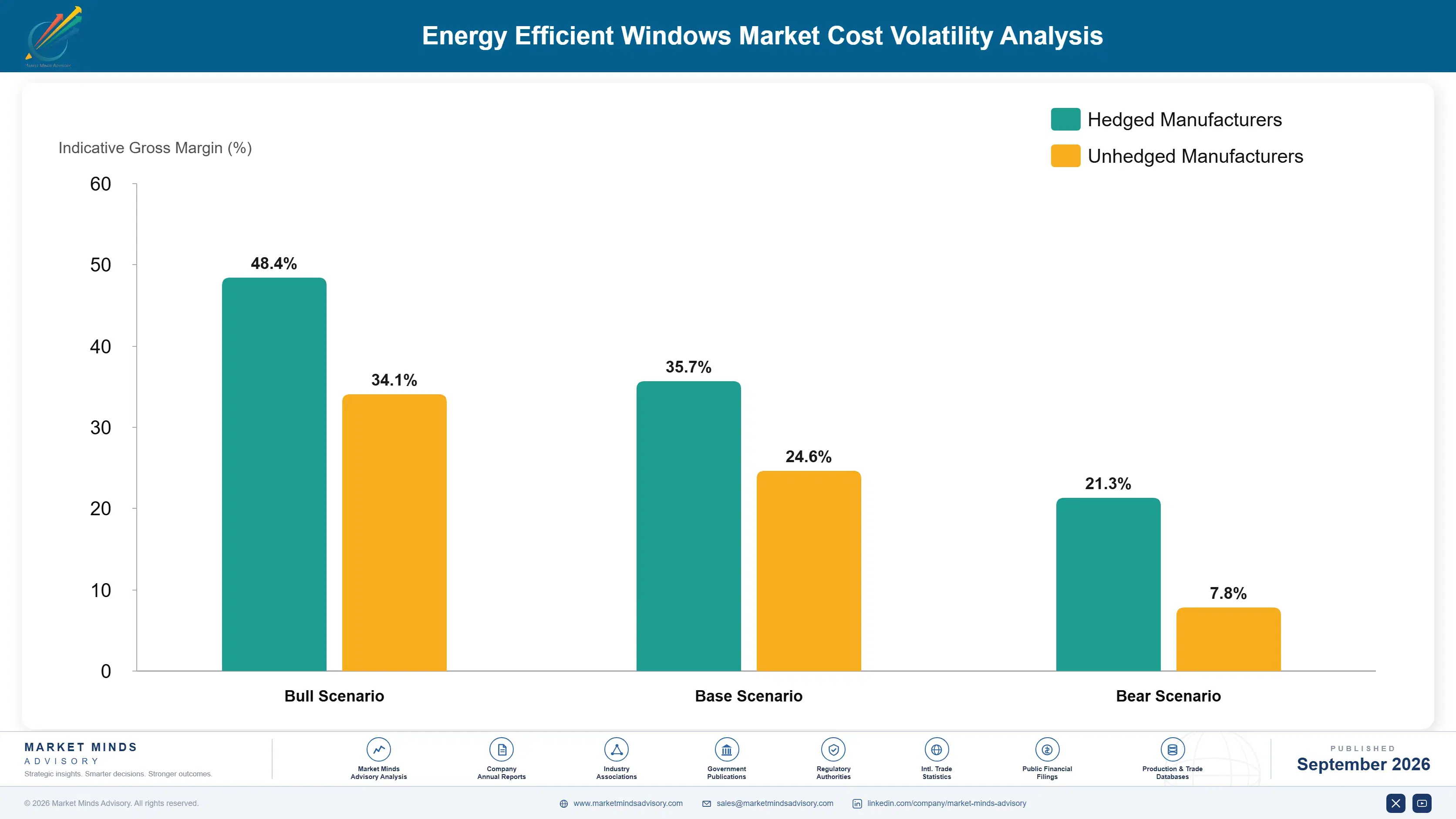
Raw glass and low-emissivity coating materials together represent roughly 42 percent of total cost of goods sold for window manufacturers, sourced primarily through regional float glass suppliers tied to natural gas pricing for melting furnace energy that varies meaningfully by continent and local energy market conditions. Argon and krypton gas fill for insulated units round out the remainder, at meaningfully smaller cost proportions relative to core glass and coating content.
Natural gas prices spiked more than 30 percent within a six-month window during 2022 following European energy supply disruption, according to IEA energy market reporting, forcing many glass manufacturers to renegotiate long-term supply contract pricing terms mid-cycle across affected European and adjacent markets simultaneously. Manufacturers without diversified energy contracts bore the full brunt of that swing directly, damaging customer relationships built over years of consistent quoting.

This exposure disadvantages smaller regional fabricators lacking hedging capability far more than global majors with treasury desks and forward energy purchasing programs, since smaller firms typically buy natural gas at spot prices and absorb volatility directly into thinner operating margins across most of their production. MMA's primary survey confirms this pattern held consistently across every region tracked during the disruption period.
energy-efficient-windows-market-cost-volatility-analysis-1788413186243

Layered Forward Natural Gas Contracts

Manufacturers lock a rolling portion of projected annual natural gas consumption through forward contracts, smoothing input costs across budget cycles and protecting quoted pricing on multi-month builder supply commitments. This approach is increasingly standard among manufacturers serving the largest, most demanding builder framework agreements. Manufacturers with strong treasury functions increasingly formalize this into a dedicated hedging desk.

Vertical Integration Into Raw Glass Supply

Larger manufacturers increasingly integrate backward into raw float glass production, reducing exposure to third-party supplier pricing volatility while capturing additional margin previously paid to external glass suppliers. This capital-intensive approach favors the largest manufacturers with sufficient scale to justify furnace investment. This trend has accelerated meaningfully among the largest five global manufacturers over recent years.

Regional Energy Sourcing Diversification

Manufacturers diversify natural gas sourcing across multiple regional suppliers and increasingly explore renewable electricity for furnace operations, reducing exposure to localized energy market disruptions considerably. Smaller manufacturers often lack the scale to negotiate favorable multi-supplier renewable energy terms effectively. Diversification also gives manufacturers stronger negotiating leverage during periods of localized energy supply constraint or disruption.

Portfolio Architecture for Margin Defence

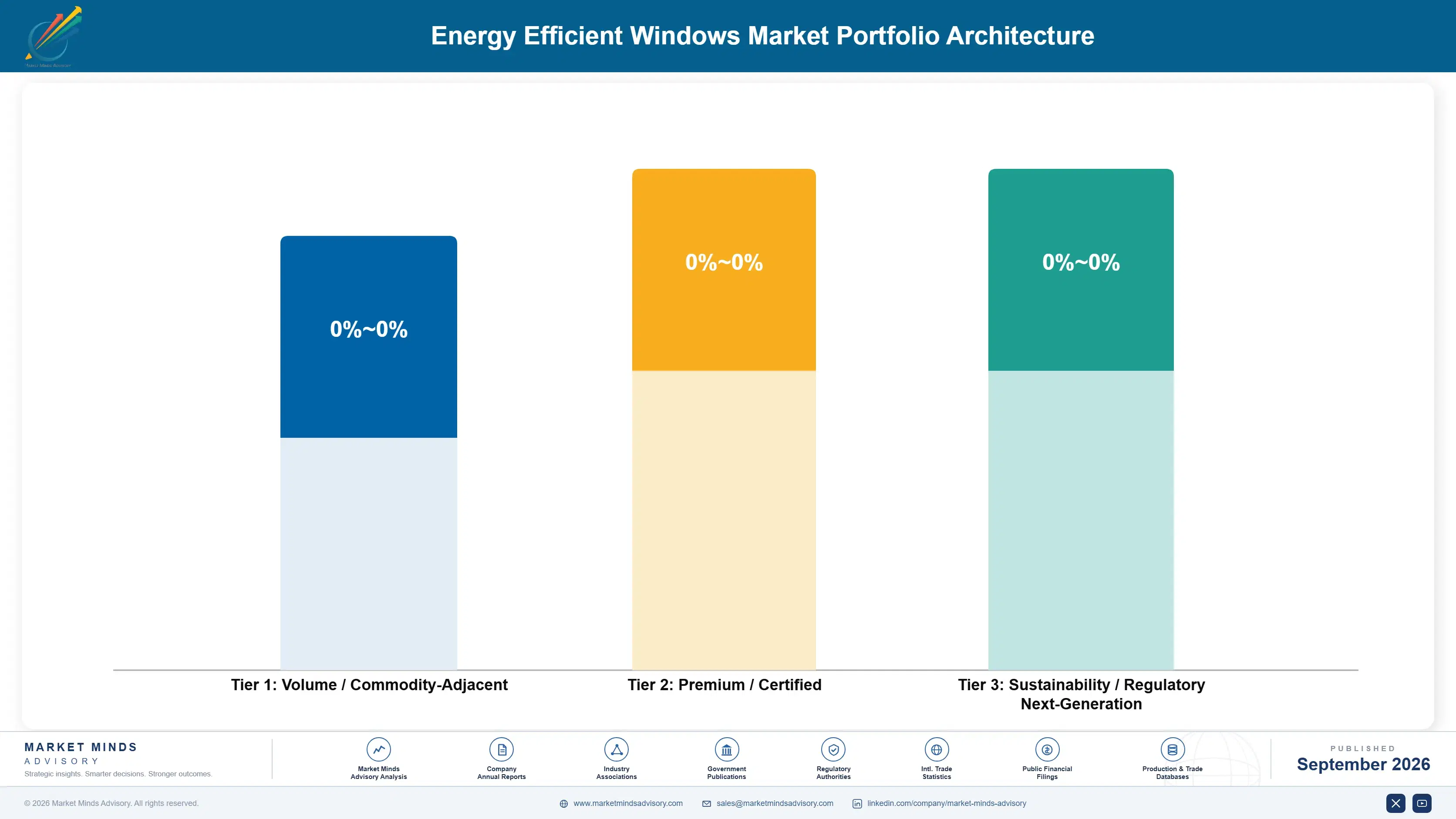
Portfolio economics split across three tiers: volume-commodity-adjacent double-glazing competing mainly on price, premium certified triple-glazing serving builders requiring documented code compliance, and next-generation smart and vacuum-insulated glazing capturing customers focused on performance and niche retrofit applications. Manufacturers with diversified portfolios weather commodity cycles better than single-tier specialists relying on one product category alone. Getting this balance right shapes long-term manufacturer profitability considerably across an entire product portfolio.
Volume tension is real: cost-constrained homeowners and builders on tight budgets default to standard double-glazing meeting minimum code requirements, while larger builders and architects managing brand and compliance risk increasingly specify certified triple-glazed or smart units regardless of marginal cost differences. Manufacturers leaning too heavily into commodity volume risk ceding the fastest-growing premium tenders to better-certified competitors. Getting this balance right separates the most profitable manufacturers from those merely chasing volume.

High-value margin pools concentrate in smart dynamic glazing and vacuum-insulated retrofit applications, where technical differentiation and niche specialization both support meaningfully wider margins than standard double-glazing sales agreements. Manufacturers positioning across both dimensions simultaneously capture the strongest blended portfolio economics available in this market today. The gap versus manufacturers competing purely on commodity volume continues widening steadily across most markets MMA tracks.

Volume / Commodity-Adjacent

Standard double-glazed units meeting minimum code requirements, sold primarily on price into cost-constrained residential and commercial tenders. Manufacturing utilization here mainly serves fixed cost recovery rather than driving margin expansion.
Gross Margin: 18 to 24%

Premium / Certified

Triple-glazed low-emissivity units meeting the strictest building code and retrofit incentive program requirements, commanding tender premiums tied to documented compliance credentials. This tier increasingly commands the largest share of manufacturer capital allocation.
Gross Margin: 26 to 34%

Sustainability / Regulatory / Next-Generation

Smart dynamic glazing and vacuum-insulated units serving premium commercial and historic retrofit applications where technical differentiation commands significant pricing power. This is the fastest-growing margin tier across the entire manufacturer portfolio landscape today.
Gross Margin: 32 to 40%
energy-efficient-windows-market-portfolio-architecture-1788413187148

High-value Sub-segments and Strategic Watch-out

Smart Dynamic Glazing Product Lines

The clearest high-value high-growth pocket in this market, combining premium tender pricing with the fastest segment CAGR tracked, as architecture firms increasingly treat automated tinting as standard specification rather than a niche option. Capital allocation here should continue rising through the forecast period. Priority allocation continues expanding steadily.
Gross Margin: 35 to 43%

Vacuum-Insulated Historic Retrofit Units

A high-value moderate-growth pool where preservation-compliance depth commands strong margins even as new construction growth moderates across already well-served core national markets. Manufacturers with proven vacuum-sealing expertise hold a durable edge. Preservation-focused architects increasingly favor specialized, proven suppliers over generalist window fabricators lacking comparable expertise.
Gross Margin: 30 to 38%

Standard Double-Glazed Volume Units

The volume core of this market, providing steady commodity-tier revenue at thinner margins that fund manufacturing utilization without materially expanding overall profitability across cycles. Manufacturers rely on this segment mainly to keep production lines productively utilized. Margins here rarely exceed the low twenties even in favorable pricing years.
Gross Margin: 18 to 24%

Single-Pane Legacy Window Formats

A strategic watch-out segment losing share to double and triple-glazed alternatives as energy codes tighten, forcing manufacturers still dependent on this format to plan technology transition before contracts lapse entirely. Early transition planning reduces stranded manufacturing capacity risk considerably. Revenue pressure here should build steadily through the forecast period.
Gross Margin: 10 to 15%

Replacement Cycles Sustain Long-Term Revenue

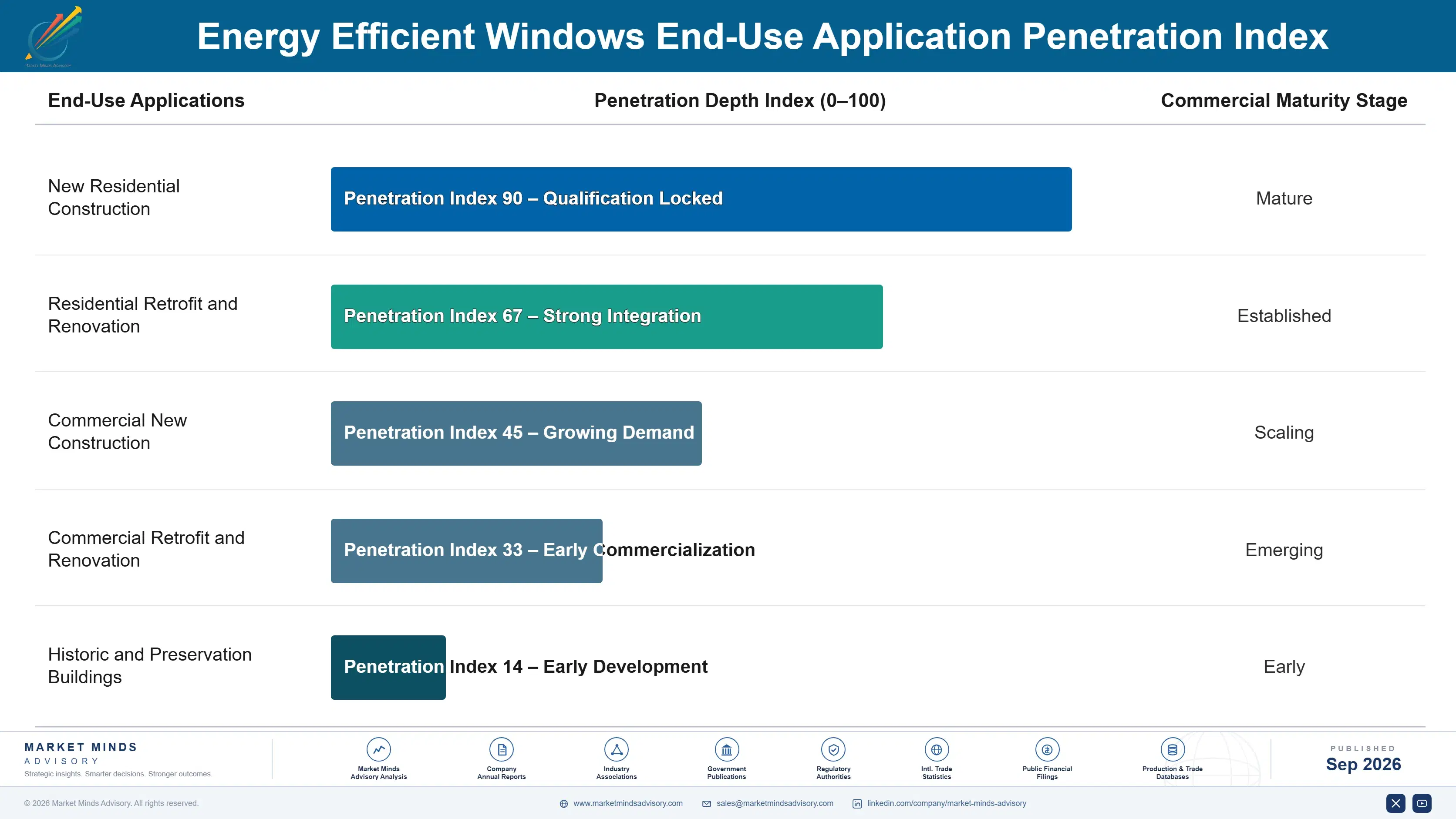
Energy efficient window demand behaves like an annuity tied to the roughly 22-year replacement cycle rather than a single purchase, since every window installed eventually requires replacement regardless of which manufacturer originally won the sale. Manufacturers that secure the initial installation capture repeat orders when replacement cycles arrive, and retrofit incentive programs add a predictable secondary revenue layer tied to government policy cycles rather than pure product wear.
New construction builders show the highest adoption stickiness, since standardized specifications across multi-phase developments rarely change manufacturers mid-project once initial vetting clears procurement approval. Retrofit homeowners show markedly lower stickiness, chasing whichever manufacturer offers the best combination of price, financing terms, and incentive program compatibility for a one-time renovation decision. Commercial architects show intermediate stickiness, balancing performance credentials against long-term relationship value.

Procurement authority is shifting from individual homeowners toward centralized purchasing at production builders and property management firms, who increasingly negotiate volume framework agreements directly with manufacturers rather than letting individual project managers select suppliers independently. Younger homeowners increasingly favor digital quote comparison platforms over relationship-based sales calls, rewarding manufacturers that offer transparent online pricing. This shift rewards manufacturers investing in digital-first sales infrastructure.
energy-efficient-windows-market-end-use-penetration-index-1788413187707

Where MMA Sees the Opportunity

These are among the four positions where our research anticipates prominent divergence between winners and laggards over the coming forecast period. Each is grounded in the demand model, the regulatory perimeter, and the announced capacity pipeline.
01 / TRIPLE GLAZING CAPACITY INVESTMENT

Accelerate certified capacity ahead of code enforcement deadlines

Roughly 31 percent of new window installations already specify triple-glazed configurations, and manufacturers without dedicated triple-glazing production lines are already losing bid eligibility on the largest builder tenders as code requirements tighten further across most major jurisdictions. Saint-Gobain and AGC have both expanded certified product lines targeting this transition directly, positioning themselves ahead of competitors still running standard-gauge tooling exclusively across their production networks. Suppliers that move now capture multi-year contracts before smaller competitors catch up on capacity, locking in preferred-vendor status across the largest builder portfolios.
02 / RETROFIT PROGRAM NAVIGATION

Build dedicated teams to navigate incentive documentation

Roughly 38 percent of current demand ties directly to retrofit projects, yet many manufacturers still serve this channel through generalist sales teams unequipped to navigate jurisdiction-specific incentive documentation that can meaningfully slow conversion rates across program-eligible customers. A dedicated program navigation team converts episodic retrofit inquiries into completed sales at meaningfully higher rates than generalist coverage achieves alone, since program administrators increasingly favor manufacturers with proven documentation quality. Manufacturers that build this capability now capture disproportionate share of a rapidly compounding incentive-linked revenue opportunity.
03 / HISTORIC RETROFIT SPECIALIZATION

Expand vacuum-insulated glazing for preservation-constrained buildings

Vacuum-insulated glazing addresses a persistent constraint that conventional triple glazing cannot solve, since historic and preservation-regulated buildings frequently cannot accommodate the additional frame depth triple glazing requires within existing window openings across most affected renovation projects. Guardian Glass and Vitro have both accelerated vacuum-insulated development, targeting this underserved niche directly ahead of broader competitor entry into the specialized preservation market segment. Manufacturers that build proven vacuum-sealing expertise now capture premium pricing where competition remains meaningfully limited by specialized manufacturing requirements few competitors can easily replicate.
04 / HOMEOWNER FINANCING PARTNERSHIPS

Offer financing to convert cost-deferred retrofit demand

Payback periods exceeding seven years in markets with lower energy costs cause many homeowners to defer replacement despite long-term energy savings that would eventually offset the higher purchase price of premium glazing across a typical multi-decade ownership horizon. Manufacturers offering financing partnerships convert this deferred demand into completed sales by reframing the decision around manageable monthly payments rather than upfront capital outlay that many homeowners find difficult to justify. This approach captures homeowner segments that price-only competitors without financing options consistently lose to more flexible manufacturers offering payment alternatives.

Engagement Snapshot From the Field

A live engagement with an industry participant carrying material or product regulatory and market exposure ahead of a defining policy shift, showing how our research translates into a defensible multi-year portfolio strategy.
MARKET MINDS ADVISORY · CLIENT ENGAGEMENT SUMMARY
Energy Efficient Windows Producer Strategic Portfolio Review and Transition Roadmap 2026·Investment Scenario on Energy Efficient Windows Exposure Evaluation 2025-26
CLIENT PROFILE
The client is a regional production homebuilder constructing roughly three thousand residential units annually across two states, facing tightening state energy codes that required a wholesale reassessment of its standard window specification and supplier relationships across its entire active development pipeline going forward. Leadership was evaluating whether to expand into adjacent states or first strengthen its existing regional position and margins.
STRATEGIC CHALLENGE
Rising code compliance costs and inconsistent supplier lead times were compressing project margins and delaying certificate of occupancy timelines, while the client's decentralized regional purchasing structure left it without leverage to negotiate volume pricing across its expanding multi-community development pipeline. Board leadership needed a defensible multi-year procurement plan before committing to further regional expansion investment.
MMA APPROACH
MMA conducted a supplier landscape assessment, benchmarked pricing and lead times across five manufacturers on a shipment-value basis, and modeled total lifecycle cost scenarios to identify the optimal standard specification for the client's centralized procurement transition going forward. Findings were validated against three years of historical procurement and code compliance cost data.
KEY FINDINGS
  1. Standardizing on a single triple-glazed specification across all communities could reduce average unit cost by an estimated 8 percent through consolidated volume purchasing.
  2. Two of five evaluated manufacturers offered financing partnerships that could accelerate homeowner upgrade decisions on premium glazing options during the sales process.
  3. Consolidated purchasing across all active communities provided sufficient volume to negotiate priority production scheduling during peak seasonal demand periods. ahead of the next selling season.
  4. Communities lacking centralized specification paid a measurable premium versus communities already buying through the client's largest negotiated supply agreement. over multi-year contract periods.
CLIENT PROFILE
The client is a regional production homebuilder constructing roughly three thousand residential units annually across two states, facing tightening state energy codes that required a wholesale reassessment of its standard window specification and supplier relationships across its entire active development pipeline going forward. Leadership was evaluating whether to expand into adjacent states or first strengthen its existing regional position and margins.
STRATEGIC CHALLENGE
Rising code compliance costs and inconsistent supplier lead times were compressing project margins and delaying certificate of occupancy timelines, while the client's decentralized regional purchasing structure left it without leverage to negotiate volume pricing across its expanding multi-community development pipeline. Board leadership needed a defensible multi-year procurement plan before committing to further regional expansion investment.
MMA APPROACH
MMA conducted a supplier landscape assessment, benchmarked pricing and lead times across five manufacturers on a shipment-value basis, and modeled total lifecycle cost scenarios to identify the optimal standard specification for the client's centralized procurement transition going forward. Findings were validated against three years of historical procurement and code compliance cost data.
KEY FINDINGS
  1. Standardizing on a single triple-glazed specification across all communities could reduce average unit cost by an estimated 8 percent through consolidated volume purchasing.
  2. Two of five evaluated manufacturers offered financing partnerships that could accelerate homeowner upgrade decisions on premium glazing options during the sales process.
  3. Consolidated purchasing across all active communities provided sufficient volume to negotiate priority production scheduling during peak seasonal demand periods. ahead of the next selling season.
  4. Communities lacking centralized specification paid a measurable premium versus communities already buying through the client's largest negotiated supply agreement. over multi-year contract periods.
RECOMMENDED STRATEGY
Phase 1: Phase 1 (near-term): standardize triple-glazed specification across all active communities within two fiscal quarters. with dedicated procurement support throughout the transition. Phase 2: Phase 2 (medium-term): negotiate a volume framework agreement with two primary manufacturers plus one qualified backup. covering all active communities. Phase 3: Phase 3 (longer-term): integrate manufacturer financing options into standard sales presentations across all communities. with quarterly sales team financing training.
OUTCOME
Within the first year of implementation, the client reported (client-reported, unverified by MMA) improved cost predictability across its development pipeline and fewer code-related certificate of occupancy delays, attributing the gains directly to the consolidated specification and supplier framework MMA designed for its procurement team. Leadership has since expanded the specification framework to additional communities under consideration.

Frequently Asked Questions

Foundational context covering the market sizes, CAGR, scope, country, region and competition that inform every finding below. This section is provided to cover basics and most often pre-purchase conversations, answered from the MMA Primary Research Dataset.

What is the current size of the Energy Efficient Windows Market?

The energy efficient windows market reached an estimated $42.5 billion in global value in 2025, driven by tightening building codes and expanding retrofit incentive programs across major markets.

How large will the Energy Efficient Windows Market be by 2036?

MMA projects the market will reach approximately $91.31 billion by 2036, roughly doubling in value as code tightening and retrofit demand continue expanding across every major regional market.

What is the CAGR for the Energy Efficient Windows Market 2026 to 2036?

The market is forecast to grow at a 7.2 percent compound annual growth rate between 2026 and 2036, with bull and bear scenarios ranging from 6.0 to 8.4 percent.

Which segment is growing fastest?

Smart dynamic glazing leads segment growth at a 13.5 percent CAGR, roughly 1.9 times the overall market rate, as electrochromic technology expands beyond commercial pilot installations.

Who are the major companies in the Energy Efficient Windows Market?

Saint-Gobain, AGC Inc, Guardian Glass, Vitro Architectural Glass, and Pella Corporation lead the market, together holding an estimated 28 percent combined share on a shipment value basis.

Which country is growing fastest?

Germany is growing fastest at a 9.8 percent CAGR, driven by aggressive retrofit incentive funding tied to its substantial pre-1990 building stock requiring envelope upgrades.

Report Segmentation Architecture

The full report scope spans multiple orthogonal segmentation dimensions, with cross-tabulated demand data provided for each dimension pair. Coverage extends further to regional breakdowns, trend trajectories, and the competitive detail needed to support segment-level decision-making.

By Glazing Technology

  • Double-Glazed Low-E Windows
  • Triple-Glazed Windows
  • Vacuum-Insulated Glazing
  • Smart Dynamic Glazing
  • Gas-Filled Insulated Units
  • Suspended Film Insulating Glazing

By End-Use Application

  • New Residential Construction
  • Residential Retrofit and Renovation
  • Commercial New Construction
  • Commercial Retrofit and Renovation
  • Historic and Preservation Buildings

By Commercial Dimension

  • Direct Builder Procurement
  • Distributor and Dealer Channel
  • Government Incentive-Linked Retrofit Sales
  • Online and Digital Quote Platforms

By Region

  • North America
  • Western Europe
  • East Asia
  • South Asia and Pacific
  • Latin America
  • Middle East and Africa
  • Eastern Europe

Scope, Methodology, and Coverage

Every figure in this report is reproducible from documented input assumptions. The scope below maps the historical period, the forecast horizon, the segmentation dimensions, and the countries covered, alongside the underlying primary and qualitative methodology.
Historical Period
2020 to 2025
Forecast Period
2026 to 2036
Base Year
2025 (USD billions; MMA Primary Research Dataset, September 2026)
Market Definition
This market covers residential and commercial windows engineered for superior thermal insulation, including double and triple-glazed low-emissivity units, vacuum-insulated glazing, and smart dynamic glazing systems. It excludes standard single-pane windows, skylights sold as standalone roofing products, and structural curtain wall systems sold independent of glazing units.
Quantitative Units
USD billions (current prices); unit shipment volume where applicable
Segmentation Dimensions
By Glazing Technology; By End-Use Application; By Commercial Dimension; By Region
Regions Covered
North America, Western Europe, East Asia, South Asia and Pacific, Latin America, Middle East and Africa, Eastern Europe
Countries Covered
USA, China, Germany, France, UK, Japan, South Korea, India, Australia, Canada, Brazil, Mexico, Indonesia, Vietnam, Thailand, Malaysia, UAE, Saudi Arabia, South Africa, Nigeria, Turkey, Poland, Netherlands, Italy, Spain, Sweden, Switzerland, Argentina, Colombia, Singapore, and additional markets relevant to this sector
Key Companies Profiled
Saint-Gobain, AGC Inc, Guardian Glass, Vitro Architectural Glass, Pella Corporation, Andersen Corporation, Marvin Windows and Doors, YKK AP, Fenesta Building Systems, Sisecam Group, China Southern Glass, Xinyi Glass Holdings, Nippon Sheet Glass, Cardinal Glass Industries, Ply Gem Building Products, VELUX Group, Deceuninck, Rehau Group, Internorm International, Kommerling
Quantitative Methodology
Primary survey, n=3,800 respondents, Q4 2025, six countries; demand-side model with trade association cross-validation
Qualitative Methodology
47 expert interviews, Q4 2025; applied to validate demand model assumptions, identify emerging dynamics, and assess competitive positioning
Report Format
PDF and XLSX data workbook (Word format preview document)
Publisher
Market Minds Advisory
Report Code
MMA-2026-CON-451
Published
September 2026
Contact
sales@marketmindsadvisory.com | www.marketmindsadvisory.com

Purchase the full Energy Efficient Windows Market Report (2026 to 2036).

This report provides a comprehensive assessment of the energy efficient windows market, covering demand drivers across new construction, retrofit, and historic preservation segments through 2036. It includes detailed competitive benchmarking of twenty leading glass manufacturers evaluated on a shipment value basis. Regional demand architecture is mapped across all seven global regions, with particular depth on Western European and North American dynamics. Raw glass input cost exposure and financing strategy are analyzed alongside revenue lever prioritization for manufacturers navigating this transition. The report is designed for glass manufacturing executives, homebuilder procurement leaders, and code compliance teams evaluating supplier positioning.
Ten-year global market sizing and forecast
Seven-region global regional demand architecture breakdown
Twenty-company detailed competitive benchmarking and profiling
Raw glass input cost exposure and hedging modeling
Revenue lever prioritization and margin framework
Anonymized regional homebuilder specification case study

Built For The People Who Decide

From boardroom strategy to bench-side execution, this report is read cover-to-cover by leaders shaping the next decade of their industry, turning demand scenarios, market dynamics and valuation benchmarks into decisions.
CXOs/ Presidents/ VPs/ Managers
M&A and Corporate Development
Strategy Teams and R&D Heads
Procurement and Product Directors
Regulatory and Compliance Leaders
Investor Relations and Equity Analysts