Market Minds Advisory
Electromagnetic NDT Market

Electromagnetic NDT Market: Electromagnetic NDT Market. Pipeline Aging Forces an Inspection Capacity Rebuild

Aging pipeline networks and stricter integrity mandates are forcing operators to inspect faster than manual eddy current crews ever could, pulling budget toward automated array systems that scan miles of steel in a single pass.

Lead Analyst

Published

September 2026

Make Smarter Decisions with Customized Research Insights

Request a free sample report and evaluate market opportunities, growth trends, and competitive dynamics relevant to your business needs.

2025 MARKET VALUE$3.8BMarket Size 2025
2036 FORECAST VALUE$7.5BBase Case , 2026 to 2036
CAGR 2026 TO 20366.4 %Bull 7.7% / Bear 5.1%
INCREMENTAL OPPORTUNITY$3.5BNet 10- year value creation
EXPANSION MULTIPLE1.86x2036 value over 2026 base
Strategic Levers
M&A Pipeline
Regional Outlook
Country Rankings
Competitive Intelligence
Segmental Deep-dive
Call-Us : 91 93563 13602

Executive Snapshot and Market Trajectory.

Automated eddy current array systems are replacing manual probe inspection as pipeline operators face mandatory integrity verification cycles that manual crews cannot complete within regulatory deadlines across aging infrastructure spanning thousands of miles of buried steel across multiple aging transmission corridors spanning several decades of continuous service.
Oil and gas pipeline operators and power generation utilities are driving the bulk of new equipment purchases as aging infrastructure approaches mandatory inspection intervals under tightening regulatory oversight. Adoption is fastest among large pipeline operators and aerospace manufacturers across East Asia and North America running extensive inspection programs. Automotive manufacturing quality control is emerging as a distinct, fast-growing application category drawing new dedicated vendor investment from equipment specialists and dedicated inspection service providers alike.
Equipment manufacturers and inspection service providers are converging on the same industrial accounts, each building automated array systems that scan larger surface areas per pass than legacy single-probe equipment. Rising steel and aluminum component complexity in electric vehicle manufacturing is accelerating adoption of tools that can detect subsurface flaws without physically contacting sensitive coated surfaces during high-volume production runs across multiple assembly line stations without slowing overall production throughput.
Market Definition
This report defines the Electromagnetic NDT Market as equipment and systems using eddy current, magnetic flux leakage, and remote field testing methods to detect surface and subsurface material defects without damaging the tested component. It excludes ultrasonic, radiographic, and visual inspection equipment, and general industrial quality control software unrelated to electromagnetic testing methods.
Base Year Value
$3.8B in 2025 (MMA Primary Research Dataset, September 2026)
Forecast Period
2026 to 2036, eleven discrete annual values
CAGR
6.4% base case. Bull 7.7%. Bear 5.1%.
Fastest Growth Segment
Automated Eddy Current Array Inspection Systems: 9.8% CAGR
Fastest Growth Country
China: 8.9% CAGR
Fastest Growth Region
South Asia and Pacific: 8.4% CAGR
Largest Region
East Asia: 27% of 2025 global value
Market Leaders
Olympus, Zetec, Eddyfi Technologies, GE Inspection Technologies, and MISTRAS Group lead the competitive field. Source: MMA Primary Research Dataset, July 2026.
Primary Survey
n=3,800 procurement and R&D decision-makers, Q4 2025, six countries
Methodology
Demand-side build-up, cross-validated against public data, 47 expert interviews

Electromagnetic NDT Market Forecast Scenarios

electromagnetic-ndt-market-size-forecast-scenario-1789998890686
Between 2020 and 2025, electromagnetic NDT adoption grew steadily at a 5.6% historical CAGR as pipeline operators and aerospace manufacturers gradually replaced manual probe inspection with early automated array systems. Growth was concentrated among large pipeline operators and aerospace manufacturers, while smaller industrial facilities relied on third-party inspection services instead of purchasing dedicated equipment outright.
The base case assumes continued steady growth through 2036 as three mechanisms compound: aging pipeline and power generation infrastructure keeps requiring mandatory integrity verification, electric vehicle manufacturing keeps generating demand for non-contact defect detection on coated components, and automated array systems keep proving faster inspection throughput than manual probe methods. Equipment manufacturer consolidation around integrated hardware and analysis software further supports sustained industrial adoption across most verticals through the middle years of the forecast window.
The bull case centers on accelerated pipeline integrity mandates across major oil and gas producing regions, which could push growth toward 7.7%. The bear case assumes industrial capital expenditure compression during a macroeconomic downturn delays inspection equipment upgrades, pulling growth toward 5.1% as operators extend existing equipment service life instead of replacing their electromagnetic testing fleets.

From Manual Probing to Automated Array Scanning

Electromagnetic NDT has moved from manual, single-probe inspection toward automated array scanning as pipeline operators and manufacturers faced inspection backlogs that manual crews could no longer clear within regulatory windows across increasingly aged infrastructure networks spanning multiple decades of continuous service life across nearly every major oil, gas, and power generation producing region.
MARKET CONCENTRATIONCR5: 52%Top five vendors hold just over half of global share
AVERAGE SYSTEM COST$85K per array systemTypical cost per automated eddy current array inspection system
AUTOMATION SHARE44% of new installationsShare of new installations using automated rather than manual scanning
SERVICE REVENUE SHARE31% of total revenueRevenue share generated through inspection services rather than equipment
INSPECTION THROUGHPUT GAIN3 to 5x fasterTypical throughput improvement automated systems deliver over manual methods
CERTIFICATION CYCLE12 to 18 monthsTypical time for new equipment to achieve industry certification approval
Vendors are racing to build array systems that scan wider surface areas per pass while maintaining defect detection sensitivity comparable to legacy single-probe equipment, a shift that favors integrated hardware and software providers over pure equipment manufacturers. Electric vehicle manufacturing is emerging as a fast-growing application as battery enclosure and structural component inspection requirements expand across most vehicle platforms entering high-volume electric vehicle production programs across multiple assembly facilities worldwide.
Pricing is shifting from equipment-only sales toward bundled hardware-plus-inspection-service contracts that extend vendor revenue capture beyond the initial equipment purchase significantly. Consolidation pressure is building as smaller inspection equipment specialists merge with broader industrial testing conglomerates seeking to offer integrated multi-method inspection programs across pipeline, aerospace, and automotive accounts under a single unified service contract rather than several fragmented, individually negotiated vendor relationships.
"Pipeline operators do not care how elegant the physics is. They care whether the crew can clear the inspection backlog before the regulator calls. Vendors selling speed are winning over vendors selling precision alone."
Senior Analyst, Industrial Inspection Practice · MMA Construction and Industrial Equipment Practice · September 2026

Market Trends

Automated Arrays Replace Manual Single-Probe Scanning

Automated eddy current array systems capable of scanning wide surface areas in a single pass are displacing manual single-probe inspection across pipeline and pressure vessel inspection programs facing mounting backlogs. This transition allows inspection crews to cover several times more surface area per shift without sacrificing defect detection sensitivity, directly addressing the labor shortage constraining many inspection service providers. Several major equipment manufacturers have announced expanded array product lines within the past year specifically targeting large pipeline operator accounts facing the steepest regulatory inspection backlogs and the tightest compliance deadlines nationwide.
Market Impact: Mandates drive 42% of equipment demand

Electric Vehicle Manufacturing Drives New Inspection Demand

Electric vehicle battery enclosures and structural aluminum components require non-contact defect detection methods that avoid damaging sensitive protective coatings, creating a fast-growing application category distinct from traditional pipeline and aerospace inspection. Automotive manufacturers are integrating electromagnetic testing directly into high-volume production lines rather than relying on offline sampling inspection as vehicle production volumes climb. Several equipment vendors have launched dedicated automotive production-line inspection systems this past year targeting major electric vehicle manufacturers specifically ramping production across multiple new assembly facilities worldwide over the next several years across multiple continents simultaneously.
Market Impact: Life extension adds 27% inspection volume

Market Opportunities and Growth Drivers

Pipeline Integrity Mandates Require Regular Verification

Regulatory pipeline integrity management programs across major oil and gas producing regions require electromagnetic inspection at intervals as frequent as every five years for high-consequence pipeline segments, directly mandating equipment and service purchases rather than leaving inspection frequency discretionary. Aging pipeline networks installed decades ago are now reaching multiple consecutive mandatory inspection cycles, compounding demand as operators work through accumulated backlogs. Operators report regulatory compliance as the single most common trigger for new inspection equipment procurement across most pipeline segments surveyed for this analysis this year across every major producing basin.
Market Impact: Inspector shortage extends timelines 20%

Power Generation Life Extension Programs Boost Demand

Utilities extending the operational life of aging power generation assets beyond original design specifications require extensive electromagnetic inspection to verify component integrity before regulators approve continued operation, creating concentrated demand cycles tied to plant life extension decisions. Nuclear and fossil fuel plant operators represent the largest single buyer category for advanced eddy current array systems given the criticality of component failure consequences. Vendors are responding by developing specialized probe geometries for the unique component shapes found in power generation equipment that standard probe designs cannot adequately access without custom engineering work.
Market Impact: Complex geometries limit 18% coverage

Market Restraints and Challenges

Skilled Inspector Certification Shortage Limits Capacity

Certified electromagnetic inspection technicians require years of specialized training and industry certification before operating advanced array systems independently, and the global shortage of qualified inspectors constrains how quickly operators can scale inspection programs regardless of equipment availability. The root cause is a persistent gap between industry certification program capacity and rising demand for qualified technicians across expanding pipeline and power generation inspection programs. The commercial impact shows up as extended project timelines and premium labor costs. Vendors are responding by developing simplified interfaces requiring less specialized operator training while preserving inspection accuracy standards.
Market Impact: Array throughput up 4x manual rate

Complex Geometries Limit Automated Array Coverage

Automated array systems struggle to maintain consistent probe contact across complex, irregular component geometries such as pipe fittings, welds, and nozzle connections, forcing continued reliance on manual single-probe inspection for these specific applications. The root cause lies in the mechanical constraints of rigid array probe assemblies designed primarily for flat or uniformly curved surfaces. The commercial impact includes incomplete automation coverage and continued labor cost exposure. Vendors are mitigating the problem through flexible, conformable array designs that adapt to irregular surface contours during routine field inspection work across most pipeline and pressure vessel programs.
Market Impact: EV inspection demand up 31% yearly
4 additional market trends, 3 additional growth drivers, and 4 additional restraints and challenges are covered in the full report. Contact sales@marketmindsadvisory.com to access the complete intelligence.

Segment CAGR and Growth Architecture

The market splits across six categories spanning testing method, equipment form factor, and service delivery. Automated eddy current array systems and electric vehicle production-line inspection tools are growing fastest as pipeline operators and automotive manufacturers replace manual single-probe methods with faster, higher-throughput scanning technology that legacy manual inspection crews cannot match at anywhere near comparable cost.
Section default visual

Automated Eddy Current Array Inspection Systems

Automated eddy current array systems deploy multiple sensing elements simultaneously across a probe assembly, scanning wider surface areas per pass than traditional single-probe equipment while maintaining comparable defect detection sensitivity. Growth is concentrated among pipeline operators and aerospace manufacturers facing mandatory inspection backlogs that manual crews cannot clear within regulatory deadlines. Vendors in this category compete primarily on scan speed, defect detection accuracy against known flaw standards, and the breadth of probe geometries available for different component shapes encountered in field inspection work across pipelines, pressure vessels, storage tanks, and structural welds across varied industrial settings spanning onshore, offshore, and coastal transmission infrastructure alike across every major oil, gas, and power generation producing basin worldwide.
CAGR 9.8%

Electric Vehicle Production-Line Inspection Tools

Electric vehicle production-line inspection tools integrate electromagnetic testing directly into high-volume manufacturing lines, detecting subsurface flaws in battery enclosures and structural components without physically contacting sensitive protective coatings. Adoption is accelerating fastest inside automotive manufacturers ramping electric vehicle production volumes across multiple new assembly facilities simultaneously. Vendors differentiate on inline integration speed matching production line takt time, detection reliability at high throughput, and their track record avoiding false rejections that disrupt manufacturing flow and increase scrap costs across the production line during peak manufacturing volume periods when line speeds run at their fastest and margin for error narrows considerably across every inspection station positioned along the entire production line simultaneously.
CAGR 8.6%
Full segment breakdown across 7 segments available in the complete report.

Regional Architecture and Country Demand Map

Regional adoption tracks pipeline network density and industrial manufacturing scale closely across the seven markets covered here. East Asia and North America lead on absolute spend, while South Asia and Pacific posts the fastest growth as infrastructure expansion accelerates rapidly across the region's largest emerging economies.

East Asia

China's extensive pipeline network, spanning both domestic oil and gas transmission and rapidly expanding petrochemical infrastructure, generates the largest single pool of mandatory inspection demand globally. Japan's aerospace and power generation sectors are driving steady demand for precision eddy current inspection given the country's strict component certification standards. South Korea's automotive manufacturing sector is adopting inline electromagnetic inspection rapidly as electric vehicle production scales across major domestic assembly plants operated by the country's largest vehicle manufacturers, several of which now export globally to markets across Europe, North America, Southeast Asia, and increasingly the Middle East and increasingly parts of Latin America, the Middle East, and Eastern Europe combined as well.
Share: 27% | CAGR: 7.2% (2026 to 2036)

North America

Extensive oil and gas pipeline infrastructure across the United States and Canada, much of it installed decades ago, drives sustained mandatory inspection demand under federal pipeline safety regulations. Aerospace manufacturers concentrated in the region continue setting quality standards that inspection equipment vendors design products to meet before other markets adopt comparable specifications. Power generation life extension programs across aging nuclear and fossil fuel facilities are generating concentrated inspection demand tied to regulatory relicensing cycles that determine whether facilities continue operating for additional decades beyond their originally licensed operating lifespan under increasingly rigorous regulatory review processes conducted at the federal level across every operating jurisdiction and asset class covered by federal oversight.
Share: 26% | CAGR: 7.6% (2026 to 2036)
Regional intelligence for 5 additional markets available in the complete report: Western Europe, South Asia and Pacific, Latin America, Middle East and Africa, Eastern Europe. Contact sales@marketmindsadvisory.com.
electromagnetic-ndt-market-market-share-analysis-1789998891218

Turning Equipment Sales Into Recurring Revenue

Vendors are expanding revenue beyond one-time equipment sales through inspection service contracts, certification training programs, and data analysis subscriptions offered directly to industrial and pipeline operators. These layered revenue streams generate materially higher lifetime value per account than standalone equipment sales while deepening customer retention across multiple equipment refresh cycles rather than a single upfront transaction alone.

Expand Inspection Service Contract Offerings Further

Vendors bundling ongoing inspection services alongside equipment sales capture materially higher recurring revenue than one-time hardware transactions, since service contracts typically add 25 to 35% on top of base equipment pricing annually. Operators lacking dedicated in-house inspection teams are the fastest-growing buyer segment for these bundled offerings, since they eliminate the need to hire and certify scarce specialized technicians. Vendors that built inspection service capability early are now winning renewal decisions against competitors selling equipment alone without accompanying service support of any kind attached to the initial hardware transaction at the point of purchase.
Market Impact: Service contracts add 25 to 35% annual revenue

Offer Certification Training Programs to Operators

Vendor-run certification training programs that qualify customer technicians to operate advanced array systems generate high-margin revenue independent of equipment sales while deepening customer dependence on vendor-specific training curricula. Operators facing the inspector certification shortage increasingly pay premium pricing of roughly 18 to 24% above standard equipment cost for bundled training access. Vendors with established training programs are winning competitive displacement deals against equipment-only competitors lacking comparable curricula or dedicated training staff to support customer certification needs across their entire operating workforce and every applicable shift rotation across all inspection crew assignments.
Market Impact: Training programs add 18 to 24% overall revenue

Monetize Aggregated Defect Trend Benchmark Data

Vendors are packaging anonymized, aggregated defect detection data across their customer base into industry benchmark reports sold to asset owners and insurance underwriters, generating high-margin revenue independent of individual equipment subscriptions, at premium pricing roughly 14 to 18% above base platform fees. This revenue stream requires no additional hardware deployment and scales directly with existing installed base size, making it highly attractive to vendors with the largest customer accounts already collecting comparable inspection data across thousands of individual pipeline and industrial assets already served across the largest installed equipment fleets.
Market Impact: Benchmark data licensing adds 14 to 18% margin

Extend Calibration Services Into Ongoing Contracts

Initial equipment calibration services are increasingly being converted into ongoing annual recalibration contracts that keep array systems compliant with evolving industry accuracy standards and reduce false detection rates by roughly 15% over time. This shift converts a one-time services fee into a recurring revenue stream with gross margins comparable to core equipment sales. Operators running large equipment fleets show the highest willingness to pay for ongoing calibration, since uncalibrated equipment risks failing certification audits during routine regulatory review cycles conducted by national safety authorities across every operating jurisdiction and asset class the operator manages.
Market Impact: Ongoing calibration cuts false detection rates by 15%

Who Controls the Margin Pool

The market shows moderate concentration with a CR5 of 52%, reflecting the specialized engineering knowledge required to compete credibly in electromagnetic inspection equipment. Olympus and Zetec lead through broad product portfolios and established certification track records, while smaller challengers like Eddyfi Technologies compete on specialized array technology rather than portfolio breadth. The gap between the top two vendors and the next tier remains moderate on installed base scale.
Current competitive activity centers on automated array system development and inline production integration, as vendors race to prove throughput advantages over legacy single-probe equipment without sacrificing certified detection accuracy. Several vendors have announced expanded array product lines within the past year targeting electric vehicle manufacturing accounts specifically, while others pursue acquisition of specialized probe technology firms to accelerate product development timelines.

Emerging pressure is coming from broader industrial testing conglomerates expanding into electromagnetic methods, threatening to commoditize standalone equipment sales as a bundled feature within integrated multi-method inspection service contracts. Rankings could shift meaningfully if a major industrial conglomerate acquires a leading array technology specialist, pressuring independent equipment manufacturers to prove differentiated value beyond basic hardware supply.
electromagnetic-ndt-market-country-cagr-analysis-1789998891743

Competitive Moat and Risk Dimensions

OLYMPUS

Moat: Broad Certification Track Record

Olympus's decades-long history of equipment certification across aerospace, pipeline, and power generation applications gives it credibility with conservative industrial buyers that newer entrants struggle to match. This certification track record reduces buyer risk perception meaningfully during procurement evaluations at conservative, risk-averse industrial accounts specifically across every major regulated sector.
OLYMPUS

Risk: Slower Array Innovation Pace

Olympus's broad, diversified product portfolio spanning multiple inspection methods can slow its focus on specialized array technology development relative to dedicated array specialists investing exclusively in that category. Buyers seeking the fastest possible array throughput may evaluate specialized alternatives with narrower but deeper focus instead of Olympus's broader catalog.
ZETEC

Moat: Specialized Array Technology Depth

Zetec's exclusive focus on eddy current and array technology, rather than a broader multi-method inspection portfolio, gives it deeper engineering expertise in this specific category that diversified competitors find difficult to match without dedicated specialized investment focused exclusively on this single, narrowly defined inspection category over many years.
ZETEC

Risk: Limited Cross-Selling Opportunities

Zetec's narrow focus limits its ability to cross-sell adjacent inspection methods to the same accounts, unlike diversified competitors that can bundle multiple testing technologies into a single vendor relationship, potentially losing broader contracts to full-portfolio competitors offering a single consolidated vendor relationship instead of managing several separate vendor contracts.

Players Tracked

Prominent Players

Olympus
Zetec
Eddyfi Technologies
GE Inspection Technologies
MISTRAS Group

Other Key Players

Sonatest
Magnaflux
Ashtead Technology
Applus+
Bureau Veritas
TWI Ltd
Nordco
Innerspec Technologies
Karl Deutsch
Sonotron NDT
Vidisco
Rolls-Royce Inspection Services
Team Industrial Services
Acuren Group
SGS SA

Recent Developments

JANUARY 2026

Olympus acquired a specialized flexible array probe manufacturer to accelerate development of inspection tools capable of scanning complex, irregular component geometries. The acquisition adds engineering talent with deep expertise in conformable sensor design specifically suited for weld and nozzle connection inspection applications across pipelines and pressure vessels alike.
Signal: Signals that major vendors are racing to close complex geometry coverage gaps quickly and decisively across product lines.
SEPTEMBER 2025

Zetec entered a multi-year supply agreement with a major pipeline operator to provide inspection equipment and technician training across the operator's national pipeline network. The agreement expands Zetec's addressable reach into ongoing service revenue beyond the initial equipment sale across the operator's multi-year contract term.
Signal: Shows equipment vendors expanding aggressively into recurring service revenue models across their entire pipeline customer base.
MAY 2025

GE Inspection Technologies expanded manufacturing capacity for its automated array systems following sustained demand growth across electric vehicle manufacturing accounts in East Asia and North America. The expansion includes new regional support centers designed to reduce equipment delivery timelines substantially across mid-size regional customer accounts.
Signal: Reflects sustained enterprise demand growth pulling new capacity investment directly into array production lines and facilities.

Precision Electronics and Rare Earth Cost Exposure

Precision sensor electronics and signal processing components represent roughly 30% of vendor cost of goods sold, sourced primarily from specialized electronics manufacturers concentrated in Japan, Germany, and the United States. Rare earth magnets used in magnetic flux leakage probe assemblies represent a further 15% of hardware cost, sourced predominantly from Chinese rare earth processing facilities.
A 2025 rare earth export restriction affecting neodymium magnet supply, reported in company annual filings and confirmed by industry trade associations, raised probe component costs by an estimated 20% for vendors without diversified sourcing agreements in place. Smaller inspection equipment vendors lacking direct supplier relationships absorbed the increase directly, delaying some product deliveries during the affected quarter, with several noting the disruption directly in earnings commentary.

Vendors dependent on single-source rare earth magnet supply face greater cost exposure than those with diversified sourcing across multiple processing regions, since single-source dependency removes negotiating leverage during periods of export policy uncertainty. Larger vendors with dedicated procurement teams and stockpiled inventory can absorb these cost shifts more easily than smaller competitors buying components through distributors without any similar long-term hedging arrangements in place.
electromagnetic-ndt-market-company-positioning-matrix-1789998891938

Diversify Rare Earth Sourcing Beyond Single Region

Larger vendors are qualifying rare earth magnet suppliers across multiple processing regions rather than depending on a single country's export policy, reducing exposure to sudden supply restrictions. This approach shields margins from policy-driven price volatility that smaller competitors remain exposed to fully during comparable periods of export policy tightening that smaller rivals cannot navigate as effectively.

Build Strategic Inventory Buffers for Critical Components

Vendors are maintaining larger strategic inventory buffers of rare earth magnets and precision electronics than historical practice required, absorbing higher carrying costs in exchange for reduced vulnerability to sudden export restrictions or supply disruptions affecting production schedules across multiple product lines simultaneously and geographic manufacturing sites facing similar export policy risk across their entire production footprint.

Redesign Probes Around Alternative Magnet Materials

Vendors are researching alternative magnet materials and probe designs that reduce dependency on rare earth elements subject to concentrated geographic supply risk, trading some performance optimization for meaningfully improved supply chain resilience during periods of policy uncertainty affecting the broader rare earth supply chain and its downstream component buyers across every probe category served.

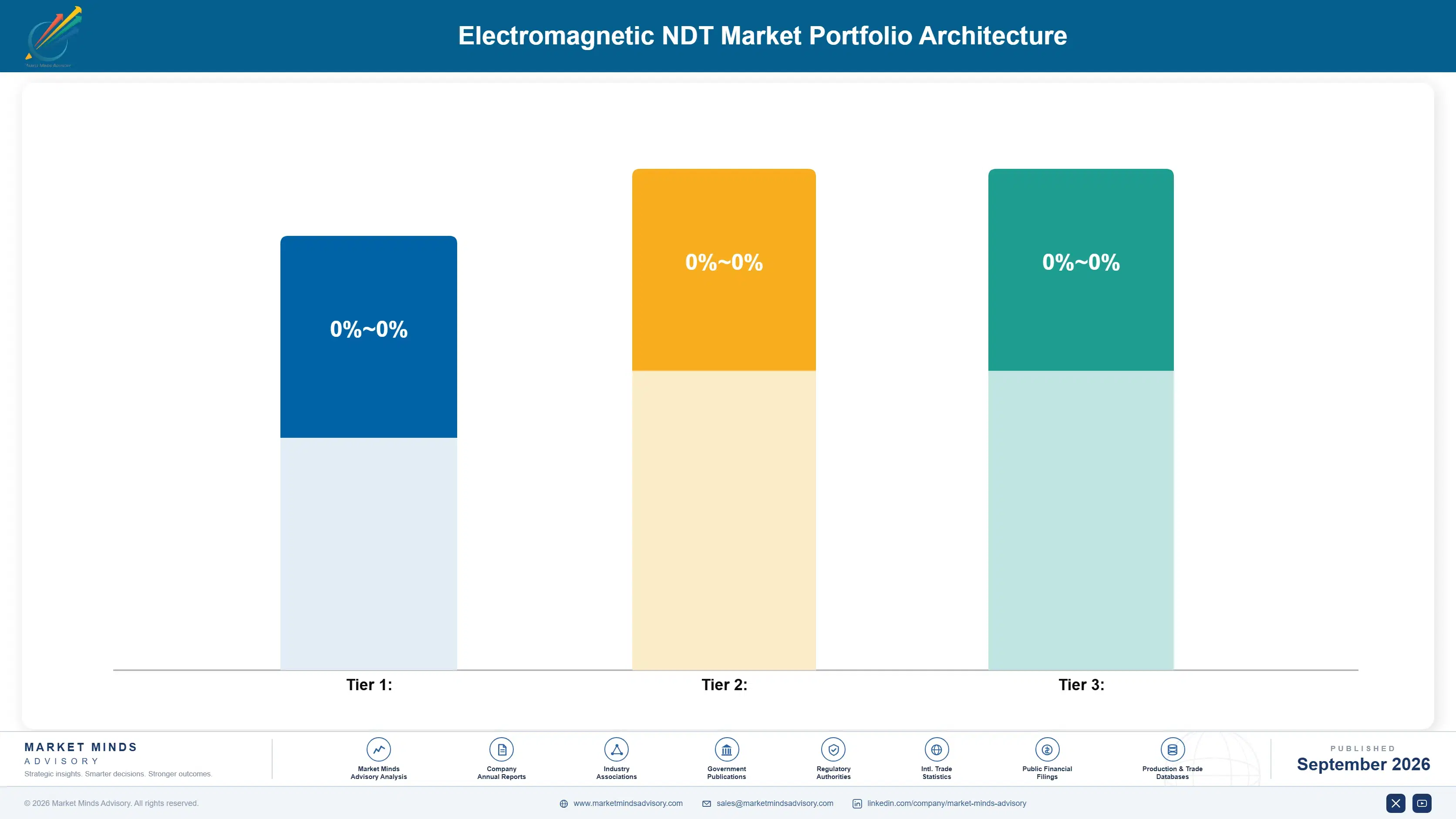
Portfolio Architecture for Margin Defence

Portfolio economics split across three tiers running from basic single-probe equipment to premium certified array systems and forward-looking automated production-line integration platforms. Gross margins widen considerably moving up the tier structure, reflecting the specialized engineering effort required to build reliable, high-throughput array systems that hold up reliably across diverse industrial field conditions ranging from onshore pipelines to offshore platforms.
Volume-tier single-probe equipment faces persistently lower long-term returns as commoditization pressure intensifies from low-cost manufacturers entering the market aggressively on price alone. Premium array systems retain pricing power because customers cannot easily replicate proprietary probe design and signal processing algorithms built over years of accumulated field testing across diverse component geometries and material types accumulated over many years of continuous refinement.

High-value revenue pools concentrate in enterprise accounts requiring certified inspection services and calibration support layered atop core equipment hardware, where switching costs run highest and renewal rates stay strongest. Vendors positioning purely on equipment price compete for shrinking margin in the volume tier, while those investing in certification and proprietary technology development capture disproportionate value as the market matures further over the coming decade of continued industrial adoption.

Basic single-probe eddy current equipment competing primarily on price against low-cost manufacturers, with gross margins in the 25 to 35% range across most vendors in this segment of the market.
Gross Margin

Automated array systems with proprietary signal processing and formal accuracy certifications, carrying gross margins between 50 and 60% across the premium vendor base overall, well above commodity-tier equipment pricing across the broader industrial testing market.
Gross Margin

Automated production-line inspection platforms purpose-built for high-volume manufacturing integration, commanding gross margins above 60% given specialized engineering investment required to build and continuously maintain them against evolving manufacturing standards and certification requirements over time.
Gross Margin
electromagnetic-ndt-market-cost-volatility-analysis-1789998892445

High-value Sub-segments and Strategic Watch-out

Automated Eddy Current Array Inspection Systems

The highest-value, fastest-growing segment as pipeline operators and aerospace manufacturers replace manual probing with automated scanning, with margins and growth rates both leading the broader market across nearly every region tracked in this report, a lead vendors expect to persist through most of the forecast window ahead.

Electric Vehicle Production-Line Inspection Tools

A high-value segment growing steadily as automotive manufacturers integrate electromagnetic testing directly into assembly lines, drawing dedicated vendor investment separate from established pipeline and aerospace inspection categories and their established vendor relationships built around traditional equipment sales rather than fully integrated production-line automation and analytics capability.

Manual Single-Probe Inspection Equipment

The volume core of the market, generating steady revenue from installed base renewals even as growth decelerates relative to newer automated array and inline production categories entering the field and capturing an increasing share of new industrial budget allocation away from legacy manual probe product lines.

Marine and Subsea Inspection Systems

A strategic watch-out segment as offshore operators face rising pressure to inspect subsea pipeline and platform infrastructure, a category still underserved by most mainstream onshore-focused vendors today despite growing offshore energy infrastructure investment across multiple producing basins worldwide facing rising regulatory scrutiny and safety compliance requirements.

Inspection as a Recurring Annuity

Electromagnetic NDT platforms generate durable, multi-year revenue because mandatory inspection cycles recur on fixed regulatory schedules, creating predictable demand independent of broader economic conditions affecting discretionary industrial capital spending across most producing regions worldwide. This regulatory anchoring gives vendors unusually stable long-term revenue visibility compared to most other industrial equipment categories tracked in this report.
Adoption stickiness varies by end-use vertical: pipeline operators show the deepest platform dependence given strict regulatory certification requirements tied to specific equipment models, while automotive manufacturers show comparatively higher willingness to switch vendors as newer inline inspection capability becomes available in the broader market. Aerospace buyers adopt more cautiously but retain equipment longer once certified, given the cost and complexity of requalifying alternative systems against strict aerospace industry standards.

Buyer profiles are shifting generationally as younger inspection engineers increasingly favor automated, software-driven array systems over the manual probe techniques that defined earlier generations of field inspection work. Younger engineers entering decision-making roles show stronger preference for data-driven defect analysis and remote diagnostic capability over the purely manual, judgment-based inspection approaches that previously defined the profession for many decades of hands-on field practice.
Section default visual

Where MMA Sees the Advantage

These are among the four positions where our research anticipates prominent divergence between winners and laggards over the coming forecast period. Each is grounded in the demand model, the regulatory perimeter, and the announced capacity pipeline.
01 / AUTOMATED ARRAY INVESTMENT

Prioritize automated array systems over manual probe equipment

Equipment manufacturers and inspection service providers should direct new product development budget toward automated eddy current array systems rather than incremental manual probe upgrades, since this is the fastest-growing segment in the market today. It expands at 9.8% CAGR, roughly 1.53 times the overall market rate, concentrated heavily among pipeline operators and aerospace manufacturers in East Asia and North America. Vendors slow to shift investment risk ceding this growth to faster-moving specialized competitors already capturing this growth across every major producing region.
02 / INSPECTION SERVICE BUNDLING

Bundle inspection services to capture higher recurring revenue

Vendors should expand inspection service contract offerings rather than competing purely on equipment pricing, since service contracts add 25 to 35% incremental recurring revenue while addressing operators' persistent inspector certification shortage. Companies with in-house service capability are already winning renewal decisions against equipment-only competitors. Vendors without comparable service capability risk losing renewal accounts to better-resourced rivals over time as operators increasingly demand deeper service support rather than equipment alone, a preference reshaping renewal negotiations across the entire industrial inspection industry.
03 / EAST ASIAN MARKET CONCENTRATION

Concentrate expansion investment across East Asia and China specifically

East Asia holds 27% of global market share and remains the largest single region given China's extensive pipeline network and rapidly expanding petrochemical infrastructure. Vendors should prioritize localized product development and service partnership investment there before other regions. Cost economics favor vendors able to price competitively given the region's high volume of mandatory inspection cycles that global competitors often find too costly to serve profitably given thin margins on individual equipment units sold at scale across the region's largest producing provinces.
04 / INSPECTOR SHORTAGE RISK

Address inspector certification shortage before scaling deployment

The global shortage of certified electromagnetic inspection technicians threatens to constrain how quickly operators can scale inspection programs regardless of equipment availability if left unaddressed by vendors racing to ship new capability. The root cause is a persistent gap between certification program capacity and rising demand for qualified technicians. Vendors investing in simplified interfaces and expanded training programs will outcompete rivals dependent on scarce specialized labor that grows harder to recruit and retain across the industry every single year across most producing regions worldwide.

Engagement Snapshot From the Field

A live engagement with an industry participant carrying material or product regulatory and market exposure ahead of a defining policy shift, showing how our research translates into a defensible multi-year portfolio strategy.
MARKET MINDS ADVISORY · CLIENT ENGAGEMENT SUMMARY
Electromagnetic NDT Producer Strategic Portfolio Review and Transition Roadmap 2026·Investment Scenario on Electromagnetic NDT Exposure Evaluation 2025-26
CLIENT PROFILE
The client is a regional pipeline operator managing several thousand miles of natural gas transmission infrastructure installed across multiple decades, facing a growing backlog of mandatory integrity inspections as more pipeline segments reached regulatory examination deadlines simultaneously. Facing mounting compliance pressure and rising manual inspection labor costs, leadership sought an independent assessment of which automated inspection approach could clear the backlog fastest.
STRATEGIC CHALLENGE
The operator's existing manual probe inspection crews could not clear the accumulated backlog within regulatory deadlines, creating compliance exposure that internal audit teams had flagged as a material risk during the most recent examination cycle. Competing internal regions had separately negotiated with different equipment vendors, creating fragmented equipment standards and duplicated training costs.
MMA APPROACH
MMA evaluated five leading automated array vendors against a standardized scoring framework covering scan throughput, defect detection accuracy, and total cost of ownership across the operator's actual pipeline segment profiles. The engagement combined vendor field trials across representative pipeline sections, reference customer interviews within the pipeline industry, and total cost of ownership modeling across a five-year inspection program horizon.
KEY FINDINGS
  1. Two of five evaluated vendors demonstrated meaningfully higher scan throughput during field trials, reversing the operator's prior vendor shortlist based on outdated equipment specifications.
  2. Consolidating around a single vendor rather than region-specific equipment reduced projected five-year total cost of ownership by an estimated 23% across the network.
  3. Automated array systems could clear the current inspection backlog within eighteen months compared to an estimated four years using existing manual crew capacity.
  4. Regional service and calibration support coverage varied considerably across vendors, with only two offering adequate presence across the operator's entire service territory.
CLIENT PROFILE
The client is a regional pipeline operator managing several thousand miles of natural gas transmission infrastructure installed across multiple decades, facing a growing backlog of mandatory integrity inspections as more pipeline segments reached regulatory examination deadlines simultaneously. Facing mounting compliance pressure and rising manual inspection labor costs, leadership sought an independent assessment of which automated inspection approach could clear the backlog fastest.
STRATEGIC CHALLENGE
The operator's existing manual probe inspection crews could not clear the accumulated backlog within regulatory deadlines, creating compliance exposure that internal audit teams had flagged as a material risk during the most recent examination cycle. Competing internal regions had separately negotiated with different equipment vendors, creating fragmented equipment standards and duplicated training costs.
MMA APPROACH
MMA evaluated five leading automated array vendors against a standardized scoring framework covering scan throughput, defect detection accuracy, and total cost of ownership across the operator's actual pipeline segment profiles. The engagement combined vendor field trials across representative pipeline sections, reference customer interviews within the pipeline industry, and total cost of ownership modeling across a five-year inspection program horizon.
KEY FINDINGS
  1. Two of five evaluated vendors demonstrated meaningfully higher scan throughput during field trials, reversing the operator's prior vendor shortlist based on outdated equipment specifications.
  2. Consolidating around a single vendor rather than region-specific equipment reduced projected five-year total cost of ownership by an estimated 23% across the network.
  3. Automated array systems could clear the current inspection backlog within eighteen months compared to an estimated four years using existing manual crew capacity.
  4. Regional service and calibration support coverage varied considerably across vendors, with only two offering adequate presence across the operator's entire service territory.
RECOMMENDED STRATEGY
Phase 1: Phase one consolidates inspection equipment procurement under a single vendor agreement, replacing the operator's fragmented regional tooling entirely within three quarters. Phase 2: Phase two sequences deployment starting with the pipeline segments carrying the nearest regulatory examination deadlines, then extends across the remaining network. Phase 3: Phase three establishes a standardized technician training program aligned with the new equipment across all regional operating divisions across the entire company footprint.
OUTCOME
The operator approved a vendor consolidation agreement covering its entire pipeline network with a projected five-year equipment and service spend of approximately $28 million (client-reported, unverified by MMA). Internal compliance reporting credited the new equipment with clearing the inspection backlog well ahead of the original regulatory deadline.

Frequently Asked Questions

Foundational context covering the market sizes, CAGR, scope, country, region and competition that inform every finding below. This section is provided to cover basics and most often pre-purchase conversations, answered from the MMA Primary Research Dataset.

What is the current size of the Electromagnetic NDT Market?

The global Electromagnetic NDT market reached $3.8 billion in 2025. Growth is driven primarily by mandatory pipeline integrity inspections and rising electric vehicle manufacturing demand.

How large will the Electromagnetic NDT Market be by 2036?

The market is projected to reach $7.51 billion by 2036. This reflects sustained demand for automated inspection across pipeline, aerospace, and automotive manufacturing applications worldwide.

What is the CAGR for the Electromagnetic NDT Market 2026 to 2036?

The market is forecast to grow at a 6.4% CAGR between 2026 and 2036. This accelerates from the 5.6% historical CAGR recorded over 2020 to 2025.

Which segment is growing fastest?

Automated Eddy Current Array Inspection Systems is the fastest-growing segment, expanding at 9.8% CAGR, roughly 1.53 times the overall market rate. Pipeline backlogs concentrate demand in this category.

Who are the major companies in the Electromagnetic NDT Market?

Olympus, Zetec, Eddyfi Technologies, GE Inspection Technologies, and MISTRAS Group lead the competitive landscape, together holding an estimated 52% combined share. Each competes on certification track record and array technology.

Which country is growing fastest?

China is the fastest-growing country market, expanding at 8.9% CAGR. Extensive pipeline networks and electric vehicle manufacturing scale are driving accelerated equipment adoption across the entire country.

Report Segmentation Architecture

The full report scope spans multiple orthogonal segmentation dimensions, with cross-tabulated demand data provided for each dimension pair. Coverage extends further to regional breakdowns, trend trajectories, and the competitive detail needed to support segment-level decision-making.

By Testing Method (Eddy Current, Magnetic Flux Leakage, Remote Field)

    By End-Use Industry (Oil and Gas, Aerospace, Power Generation, Automotive)

      By Commercial Dimension (Equipment Sale, Inspection Service, Training)

        By Region

        • East Asia
        • North America
        • Western Europe
        • South Asia and Pacific
        • Latin America
        • Middle East and Africa
        • Eastern Europe

        Scope, Methodology, and Coverage

        Every figure in this report is reproducible from documented input assumptions. The scope below maps the historical period, the forecast horizon, the segmentation dimensions, and the countries covered, alongside the underlying primary and qualitative methodology.
        Historical Period
        2020 to 2025
        Forecast Period
        2026 to 2036
        Base Year
        2025 (USD billions; MMA Primary Research Dataset, September 2026)
        Market Definition
        This report defines the Electromagnetic NDT Market as equipment and systems using eddy current, magnetic flux leakage, and remote field testing methods to detect surface and subsurface material defects without damaging the tested component. It excludes ultrasonic, radiographic, and visual inspection equipment, and general industrial quality control software unrelated to electromagnetic testing methods.
        Quantitative Units
        USD billions, market share percentages, CAGR percentages
        Segmentation Dimensions
        Testing method, end-use industry, commercial dimension, region
        Regions Covered
        East Asia, North America, Western Europe, South Asia and Pacific, Latin America, Middle East and Africa, Eastern Europe
        Countries Covered
        United States, China, Germany, Japan, India, Brazil, United Arab Emirates, South Korea, and 22 additional markets
        Key Companies Profiled
        Olympus, Zetec, Eddyfi Technologies, GE Inspection Technologies, MISTRAS Group, and 15 additional participants
        Quantitative Methodology
        Primary survey, n=3,800 respondents, Q4 2025, six countries; demand-side model with trade association cross-validation
        Qualitative Methodology
        47 expert interviews, Q4 2025; applied to validate demand model assumptions, identify emerging dynamics, and assess competitive positioning
        Report Format
        PDF and XLSX data workbook (Word format preview document)
        Publisher
        Market Minds Advisory
        Report Code
        MMA-2026-CON-241
        Published
        September 2026
        Contact
        sales@marketmindsadvisory.com | www.marketmindsadvisory.com

        Purchase the full Electromagnetic NDT Market Report (2026 to 2036).

        This report examines the global electromagnetic NDT market across eddy current, magnetic flux leakage, and remote field testing categories through the year 2036, covering both established industrial buyers and emerging mid-market segments. It quantifies demand shifts driven by pipeline integrity mandates and electric vehicle manufacturing. Profiles of five leading vendors sit alongside fifteen additional participants, assessed on a common concentration and capability basis. Regional adoption patterns are detailed across all seven geographies in the underlying dataset. Coverage also includes forecast scenarios, cost exposure, and portfolio margin economics across three equipment tiers.
        Ten-year demand forecast by testing method category
        Vendor certification track record and pricing benchmarking
        Regional adoption pattern analysis across seven geographies
        Rare earth cost exposure and mitigation pathway assessment
        Portfolio margin economics across three product tiers
        Competitive positioning and moat durability assessment

        Built For The People Who Decide

        From boardroom strategy to bench-side execution, this report is read cover-to-cover by leaders shaping the next decade of their industry, turning demand scenarios, market dynamics and valuation benchmarks into decisions.
        CXOs/ Presidents/ VPs/ Managers
        M&A and Corporate Development
        Strategy Teams and R&D Heads
        Procurement and Product Directors
        Regulatory and Compliance Leaders
        Investor Relations and Equity Analysts