Electrical Steel Market
Electrical Steel Market Outlook from 2026 to 2033
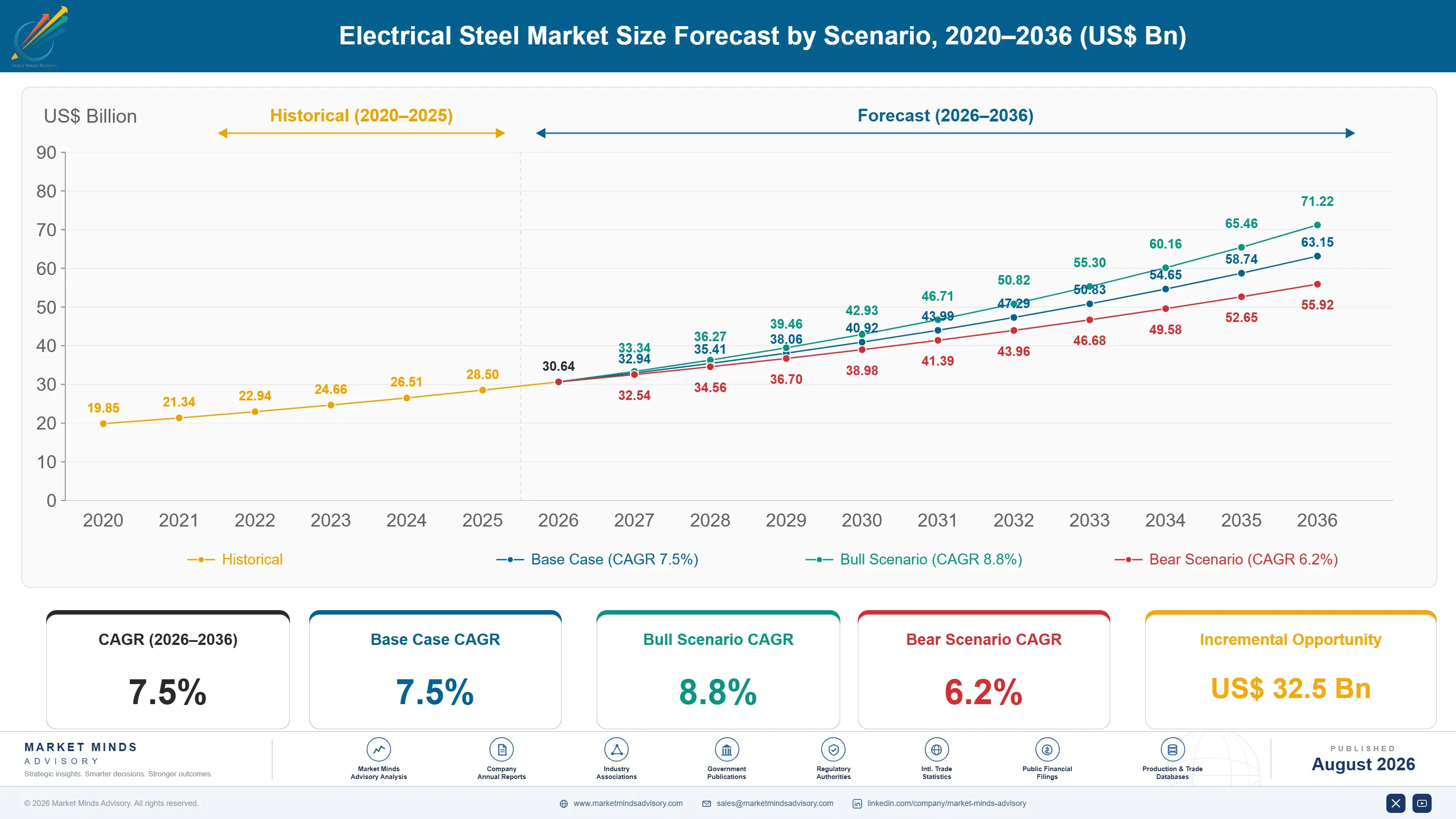
The electrical steel market is poised for robust expansion, driven by the increasing demand for energy-efficient electrical components and the rapid growth of renewable energy infrastructure. The global electrical steel market was valued at USD 36.2 billion in 2026 and is projected to reach USD 54.7 billion by 2033, growing at a CAGR of 6.0% during the forecast period. This growth is underpinned by the rising adoption of electric vehicles, the modernization of power grids, and the proliferation of smart devices, all of which require high-performance electrical steel for optimal efficiency and reduced energy losses.
The market’s trajectory is further influenced by stringent government regulations aimed at improving energy efficiency and reducing carbon emissions. Electrical steel, known for its superior magnetic properties, is a critical material in the manufacturing of transformers, motors, and generators. As industries and utilities worldwide prioritize sustainability and operational efficiency, the demand for advanced electrical steel grades is expected to surge, fostering innovation and investment across the value chain.

Electrical Steel Market Scenario & Strategic Insights
The electrical steel market is experiencing a paradigm shift as manufacturers and end-users increasingly focus on high-efficiency solutions to meet evolving regulatory standards and sustainability goals. The integration of renewable energy sources into national grids, coupled with the electrification of transportation, is amplifying the need for electrical steel with enhanced magnetic and mechanical properties. This scenario is prompting key industry players to invest in research and development, aiming to produce advanced grades such as grain-oriented and non-grain-oriented electrical steel that cater to diverse application requirements.
Strategically, market participants are expanding their production capacities and forming alliances to secure raw material supply chains and enhance technological capabilities. The competitive landscape is characterized by mergers, acquisitions, and joint ventures, as companies strive to strengthen their market presence and address the growing demand from emerging economies. Additionally, the shift towards digitalization and smart grid deployment is creating new avenues for market growth, as electrical steel remains integral to the efficient functioning of modern electrical infrastructure.
The market is also witnessing increased attention to sustainability, with manufacturers adopting eco-friendly production processes and recycling initiatives. These strategic moves are expected to not only drive profitability but also align with global efforts to minimize environmental impact, positioning electrical steel as a cornerstone material in the transition to a low-carbon economy.
| Attribute | 2026 (USD Billion) | 2033 (USD Billion) | CAGR (2026 – 2033) |
| Market Size | 36.2 | 54.7 | 6.0% |
Electrical Steel Market Trends
- Rising Adoption of High-Efficiency Electrical Steel in Renewable Energy Applications
The transition towards renewable energy sources such as wind and solar power is significantly influencing the electrical steel market. Electrical steel is a critical component in the manufacturing of transformers and generators used in renewable energy installations. The demand for high-efficiency, low-loss electrical steel grades is rising as energy producers seek to maximize output and minimize losses. This trend is further supported by government incentives and policies promoting clean energy, leading to increased investments in grid modernization and renewable energy infrastructure.
- Technological Advancements in Electrical Steel Production
Innovations in metallurgical processes and the development of advanced electrical steel grades are reshaping the market landscape. Manufacturers are focusing on producing grain-oriented and non-grain-oriented electrical steel with improved magnetic properties, reduced core losses, and enhanced durability. These advancements are enabling the production of more efficient transformers and motors, which are essential for the growing electric vehicle and industrial automation sectors. The adoption of new production technologies is also helping manufacturers reduce costs and improve product quality, thereby strengthening their competitive position.
- Increasing Focus on Sustainability and Circular Economy Initiatives
Sustainability is becoming a central theme in the electrical steel market, with manufacturers adopting eco-friendly production methods and recycling initiatives. The use of recycled steel in the production of electrical steel is gaining traction, driven by the need to reduce carbon emissions and conserve natural resources. Companies are also investing in energy-efficient manufacturing processes and exploring alternative raw materials to minimize environmental impact. These efforts are not only helping companies meet regulatory requirements but also enhancing their brand reputation and appeal to environmentally conscious customers.
Segment & Category Analysis for Electrical Steel Market
By Product Type
- Grain-Oriented Electrical Steel (GOES)
- Non-Grain-Oriented Electrical Steel (NGOES)
The product type segment is a key determinant of market dynamics, as different applications require specific steel grades. Grain-oriented electrical steel is primarily used in transformer cores due to its superior magnetic properties and low core loss, making it essential for efficient power transmission. Non-grain-oriented electrical steel, on the other hand, is widely used in motors, generators, and other rotating machinery. The increasing demand for energy-efficient appliances and the electrification of transportation are driving the growth of both segments, with manufacturers focusing on enhancing product performance to meet evolving industry standards.

By Application
- Transformers
- Motors Inductors Generators
- Others
Electrical steel finds extensive application across various sectors, with transformers and motors accounting for the largest share. The modernization of power grids and the proliferation of electric vehicles are fueling demand for high-performance electrical steel in these applications. Inductors and generators also represent significant growth areas, particularly in renewable energy and industrial automation. As industries seek to improve energy efficiency and reduce operational costs, the adoption of advanced electrical steel solutions is expected to accelerate across all application segments.
By End-Use Industry
- Energy & Power
- Automotive Industrial Machinery Household Appliances
- Others
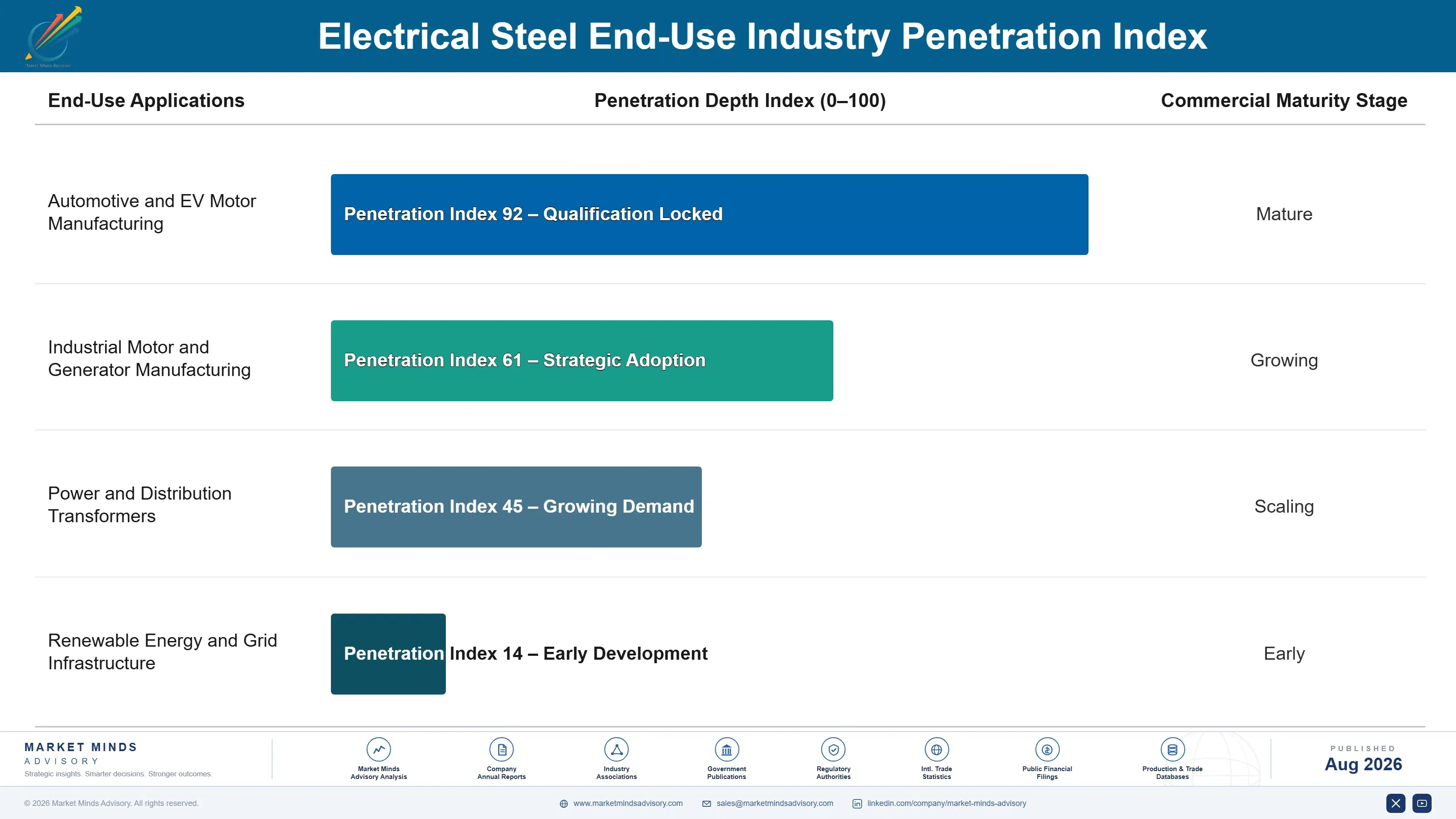
The end-use industry segment highlights the diverse applications of electrical steel, with the energy and power sector leading the market. The automotive industry is emerging as a major growth driver, propelled by the shift towards electric vehicles and hybrid technologies. Industrial machinery and household appliances also contribute significantly to market demand, as manufacturers prioritize energy efficiency and performance. The ongoing digital transformation and the rise of smart technologies are expected to create new opportunities for electrical steel in emerging end-use sectors.
By Thickness
- Below 0.23 mm
- 0.23 mm – 0.27 mm
- Above 0.27 mm
Thickness is a critical parameter influencing the performance of electrical steel in various applications. Thinner grades are preferred in high-frequency applications such as transformers and electric motors, where minimizing core losses is essential. Thicker grades are used in applications where mechanical strength and durability are prioritized. The trend towards miniaturization and high-efficiency devices is driving demand for thinner electrical steel grades, prompting manufacturers to invest in advanced rolling and processing technologies.
By Distribution Channel
- Direct Sales
- Distributors
- Online Platforms
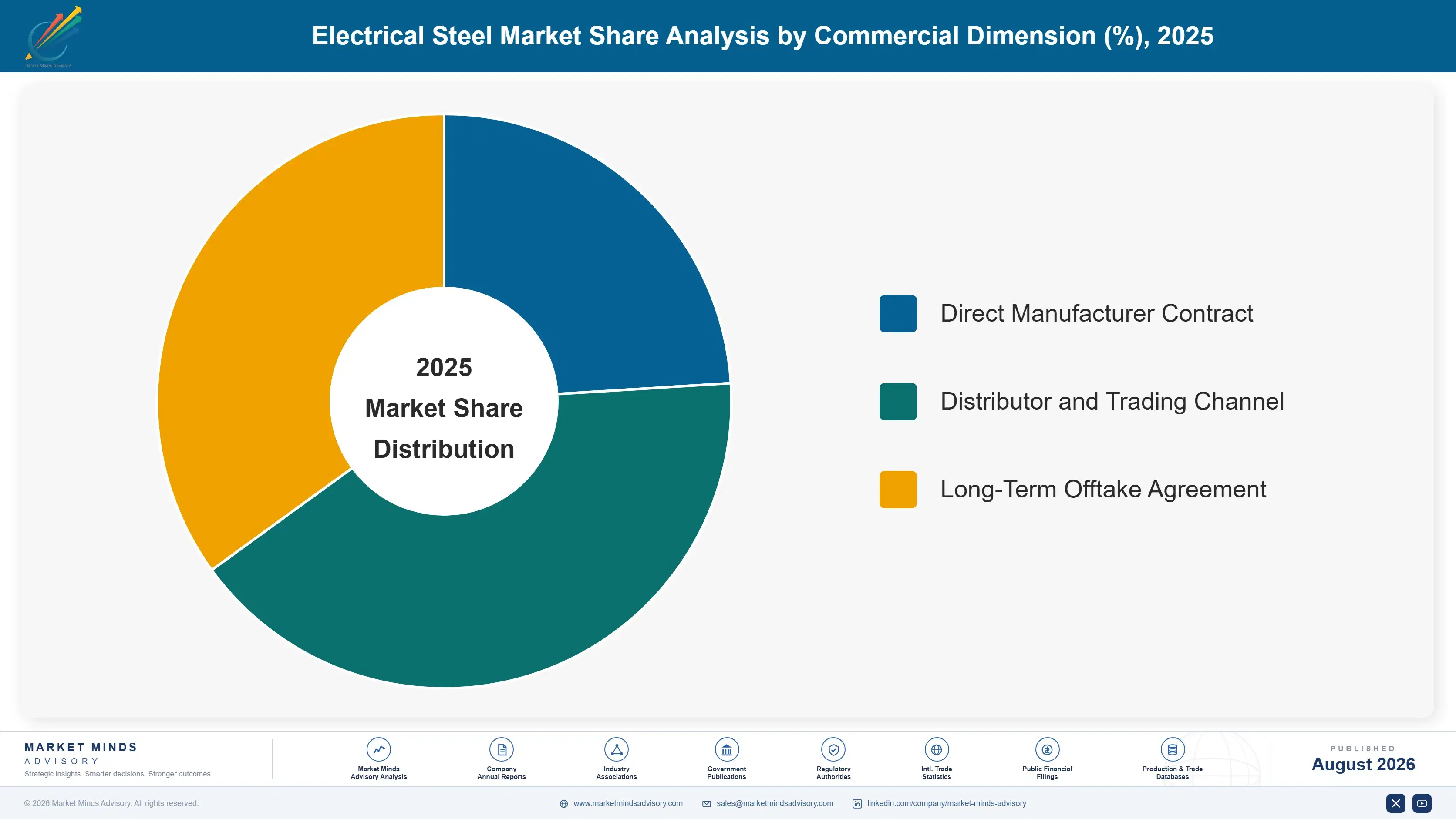
The distribution channel segment reflects the evolving purchasing preferences of end-users. Direct sales remain the dominant channel, particularly for large-scale industrial buyers and OEMs seeking customized solutions. Distributors play a crucial role in reaching small and medium-sized enterprises, while online platforms are gaining popularity for their convenience and accessibility. The increasing digitalization of procurement processes is expected to further boost the adoption of online sales channels, enabling manufacturers to expand their market reach and enhance customer engagement.

Growth Drivers and Opportunities in Electrical Steel Market
- Expansion of Renewable Energy Infrastructure
The global shift towards renewable energy is a primary growth driver for the electrical steel market. As countries invest in wind, solar, and hydroelectric power generation, the demand for transformers, generators, and other electrical equipment utilizing electrical steel is surging. This trend is particularly pronounced in emerging economies, where large-scale renewable energy projects are being implemented to meet rising electricity demand and sustainability targets. The integration of renewables into national grids necessitates advanced electrical steel solutions, creating significant opportunities for market participants.
- Electrification of Transportation and Industrial Automation
The rapid adoption of electric vehicles and the automation of industrial processes are generating substantial demand for high-performance electrical steel. Electric motors, a core component of EVs and automated machinery, require electrical steel with superior magnetic properties to ensure efficiency and reliability. As governments worldwide implement policies to reduce carbon emissions and promote clean transportation, the automotive and industrial sectors are expected to drive sustained growth in the electrical steel market. Manufacturers are responding by developing specialized steel grades tailored to the unique requirements of these applications.
Emerging Opportunities for Electrical Steel Market
- Development of Advanced Electrical Steel Grades
The ongoing research and development of advanced electrical steel grades present significant growth opportunities. Innovations aimed at reducing core losses, enhancing magnetic permeability, and improving mechanical strength are enabling the production of more efficient and durable electrical components. These advancements are particularly relevant for high-performance applications in renewable energy, electric vehicles, and smart grids, where efficiency and reliability are paramount. Companies investing in R&D are well-positioned to capitalize on the growing demand for next-generation electrical steel solutions.
- Expansion into Emerging Markets
Emerging economies in Asia-Pacific, Latin America, and Africa offer untapped potential for electrical steel manufacturers. Rapid urbanization, industrialization, and infrastructure development are driving demand for reliable and efficient electrical equipment. Market participants can leverage these opportunities by establishing local production facilities, forming strategic partnerships, and offering tailored solutions to meet the specific needs of these regions. The expansion into emerging markets is expected to be a key growth strategy for leading players in the electrical steel industry.
Growth Restrain factors and Challenges in Electrical Steel Market
- Volatility in Raw Material Prices and Supply Chain Disruptions
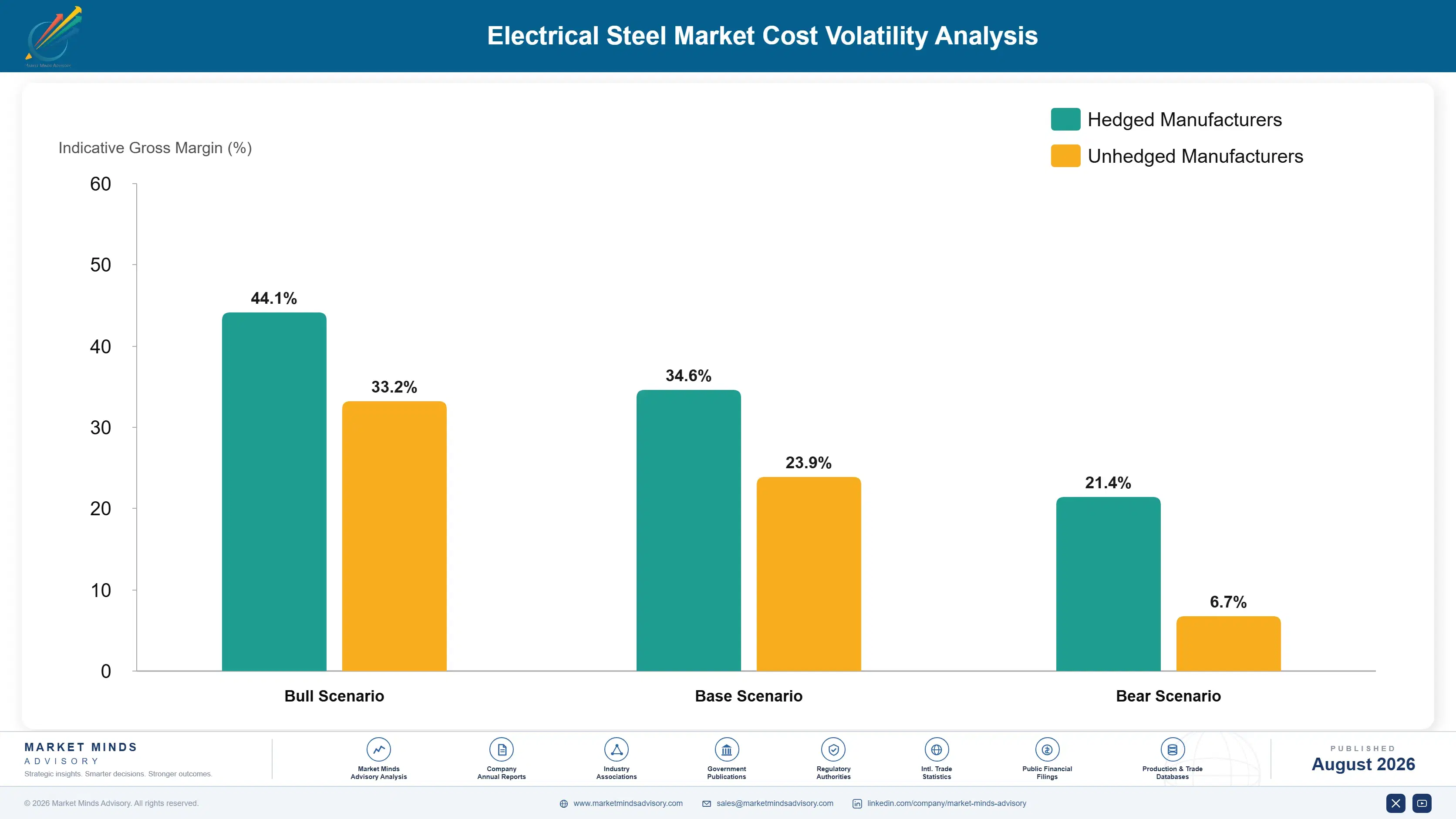
The electrical steel market is highly sensitive to fluctuations in the prices of raw materials such as iron ore, coal, and alloying elements. Price volatility can significantly impact production costs and profit margins, posing a challenge for manufacturers. Additionally, disruptions in the global supply chain, caused by geopolitical tensions, trade restrictions, or natural disasters, can lead to shortages and delays in the delivery of essential materials. These factors necessitate robust risk management strategies and the development of alternative sourcing options to ensure business continuity.
The reliance on a limited number of suppliers for critical raw materials further exacerbates supply chain vulnerabilities. Manufacturers are increasingly exploring vertical integration and long-term supply agreements to mitigate these risks. However, the implementation of such strategies requires substantial investment and may not be feasible for all market participants, particularly small and medium-sized enterprises.
- Stringent Regulatory Standards and Environmental Compliance
Compliance with stringent regulatory standards related to energy efficiency, emissions, and environmental protection is a significant challenge for electrical steel manufacturers. Governments and regulatory bodies worldwide are imposing stricter requirements on the production and use of electrical steel, necessitating continuous investment in process optimization and environmental management systems. Failure to comply with these regulations can result in penalties, reputational damage, and loss of market access.
The transition to eco-friendly production processes and the adoption of circular economy principles require substantial capital investment and technological innovation. Smaller manufacturers may face difficulties in meeting these requirements, potentially leading to market consolidation as larger players with greater resources dominate the industry. Navigating the complex regulatory landscape while maintaining profitability remains a key challenge for the electrical steel market.
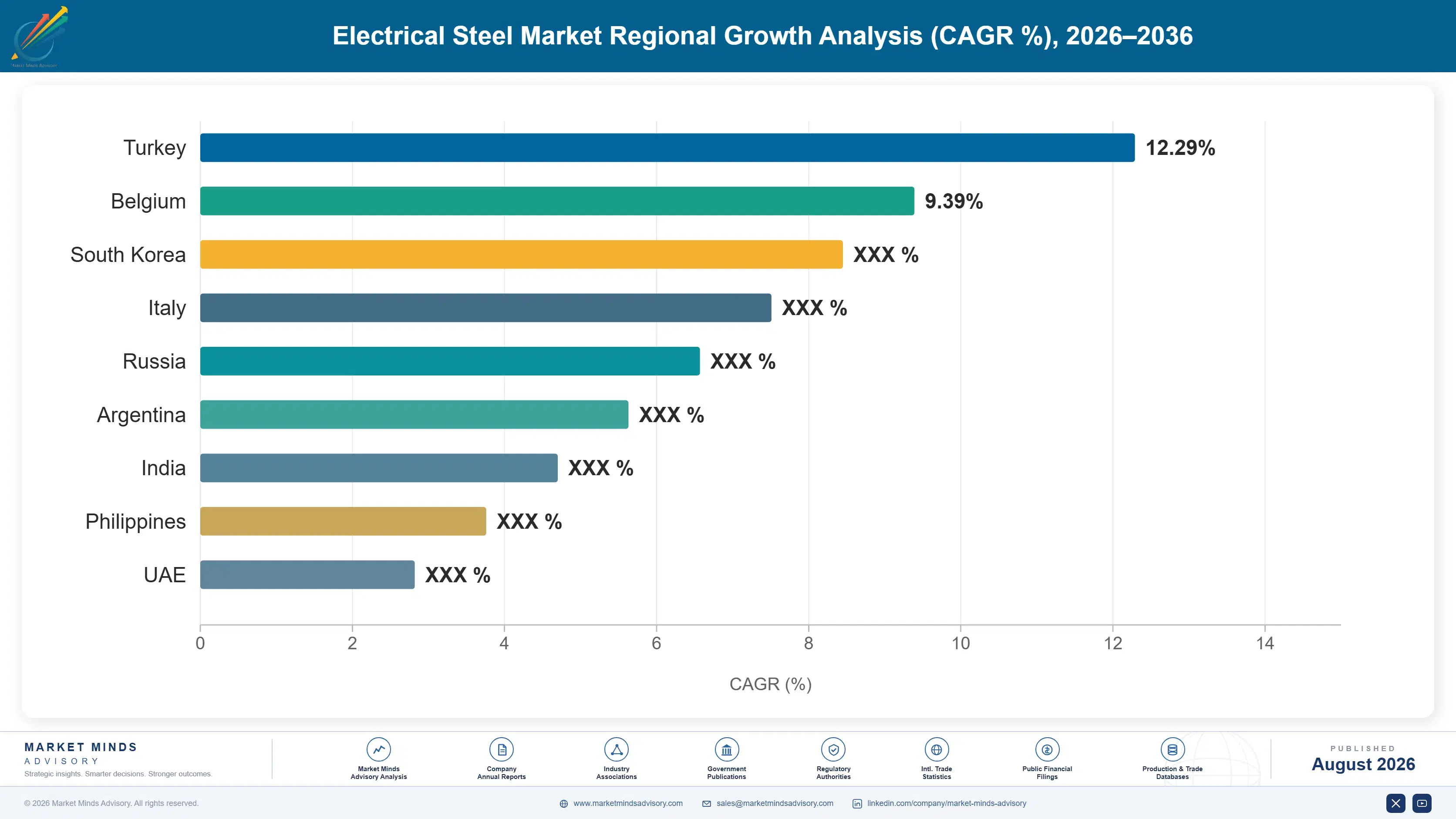
Electrical Steel Market Regional Analysis
| Region | Market Share (2025) | Key Market Highlight |
| Asia-Pacific | 46% | Rapid industrialization, strong demand from China, India, and Japan, and robust EV adoption. |
| North America | 21% | Grid modernization, renewable energy investments, and automotive electrification. |
| Europe | 19% | Stringent energy efficiency regulations and advanced manufacturing capabilities. |
| South America | 8% | Infrastructure development and growing renewable energy projects. |
| Middle East & Africa | 6% | Expanding power sector and investments in industrialization. |
Asia-Pacific
Asia-Pacific dominates the electrical steel market, accounting for the largest share due to rapid industrialization, urbanization, and significant investments in renewable energy and electric vehicle infrastructure. China, India, and Japan are the primary contributors, with government initiatives supporting grid modernization and sustainable development. The region’s robust manufacturing base and growing demand for energy-efficient appliances further bolster market growth.
North America
North America is witnessing steady growth, driven by the modernization of aging power infrastructure, increased adoption of renewable energy, and the electrification of transportation. The United States and Canada are leading the region’s transition towards smart grids and clean energy, creating substantial demand for advanced electrical steel products. The presence of major automotive manufacturers and technology innovators further enhances market prospects.
Europe
Europe’s electrical steel market is characterized by stringent energy efficiency regulations and a strong focus on sustainability. The region’s advanced manufacturing capabilities and commitment to reducing carbon emissions are driving the adoption of high-performance electrical steel in transformers, motors, and renewable energy applications. Germany, France, and the UK are at the forefront of market growth, supported by robust R&D activities and government incentives.
South America
South America is emerging as a promising market for electrical steel, fueled by infrastructure development and increasing investments in renewable energy projects. Brazil and Argentina are leading the region’s efforts to expand power generation capacity and improve grid reliability. The growing demand for energy-efficient equipment in industrial and residential sectors is expected to drive market growth in the coming years.
Middle East & Africa
The Middle East & Africa region is experiencing gradual growth, supported by expanding power sectors and investments in industrialization. Countries such as Saudi Arabia, UAE, and South Africa are focusing on diversifying their energy mix and enhancing grid infrastructure. The adoption of electrical steel in power generation and distribution is expected to increase as the region pursues sustainable development goals.

Competition Landscape in Electrical Steel Market
The electrical steel market is highly competitive, with a mix of global conglomerates and regional players vying for market share. The competitive landscape is shaped by continuous innovation, capacity expansions, and strategic collaborations aimed at meeting the evolving needs of end-users. Leading companies are investing in advanced manufacturing technologies, R&D, and sustainability initiatives to differentiate their offerings and maintain a competitive edge. The market is also witnessing consolidation through mergers and acquisitions, as players seek to enhance their product portfolios and geographic reach. The ability to deliver high-quality, energy-efficient electrical steel solutions is a key differentiator in this dynamic market.
Major Players:
- ArcelorMittal
- Nippon Steel Corporation
- POSCO
- Baosteel Group Corporation
- Tata Steel
- JFE Steel Corporation
- Voestalpine AG
- AK Steel Holding Corporation (Cleveland-Cliffs Inc.)
- Thyssenkrupp AG
- United States Steel Corporation
- NLMK Group
- Shougang Group
- JSW Steel Ltd.
- Ansteel Group Corporation
- Aperam S.A.
- China Steel Corporation
- Essar Steel
- SAIL (Steel Authority of India Limited)
- Cogent Power Limited
- Allegheny Technologies Incorporated (ATI)
Recent Developments in Electrical Steel Market
- In March 2024, Nippon Steel Corporation announced the launch of a new line of high-efficiency grain-oriented electrical steel for next-generation transformers.
- In January 2024, ArcelorMittal completed the expansion of its electrical steel production facility in Europe to meet growing demand from the renewable energy sector.
- In November 2023, POSCO entered into a strategic partnership with a leading electric vehicle manufacturer to supply advanced non-grain-oriented electrical steel.
- In September 2023, Baosteel Group Corporation introduced a new recycling initiative aimed at increasing the use of recycled materials in electrical steel production.
- In July 2023, Tata Steel launched a digital platform to streamline the procurement and distribution of electrical steel products for industrial customers.
- In May 2023, JFE Steel Corporation invested in R&D to develop ultra-thin electrical steel grades for high-frequency applications in electric vehicles.
FAQ for Electrical Steel Market
- What is the projected market size of the electrical steel market by 2033?
The global electrical steel market is expected to reach USD 54.7 billion by 2033, growing at a CAGR of 6.0% from its 2026 value of USD 36.2 billion.
- Which regions are expected to drive the growth of the electrical steel market?
Asia-Pacific is anticipated to lead the market, driven by rapid industrialization, urbanization, and significant investments in renewable energy and electric vehicle infrastructure, followed by North America and Europe.
- What are the key applications of electrical steel?
Electrical steel is primarily used in transformers, motors, generators, and inductors, with significant demand from the energy & power, automotive, industrial machinery, and household appliance sectors.
- What are the major challenges faced by the electrical steel market?
The market faces challenges such as volatility in raw material prices, supply chain disruptions, and stringent regulatory standards related to energy efficiency and environmental compliance.
- How are manufacturers addressing sustainability in the electrical steel market?
Manufacturers are adopting eco-friendly production processes, increasing the use of recycled materials, and investing in energy-efficient technologies to reduce carbon emissions and align with global sustainability goals.
Contact us today to access the full report and propel your business forward.