Market Minds Advisory
Electric Resistance Welded (ERW) Pipes and Tubes Market

Electric Resistance Welded (ERW) Pipes and Tubes Market: Buying Coil, Selling Conversion

Buy the coil, sell the pipe, and live on the difference: an ERW mill is a converting business where a steel price move that arrives faster than the order book can absorb it decides everything.

Lead Analyst

Published

September 2026

Make Smarter Decisions with Customized Research Insights

Request a free sample report and evaluate market opportunities, growth trends, and competitive dynamics relevant to your business needs.

2025 MARKET VALUE$68.4BMarket Size 2025
2036 FORECAST VALUE$109.9BBase Case , 2026 to 2036
CAGR 2026 TO 20364.4 %Bull 5.6% / Bear 3.2%
INCREMENTAL OPPORTUNITY$38.5BNet 10- year value creation
EXPANSION MULTIPLE1.54x2036 value over 2026 base
Strategic Levers
M&A Pipeline
Regional Outlook
Country Rankings
Competitive Intelligence
Segmental Deep-dive
Call-Us : 91 93563 13602

Executive Snapshot and Market Trajectory

The weld is the product. Identical hot-rolled coil becomes a pipe worth 700 dollars a tonne or one worth twice that, depending entirely on whether the seam survives ultrasonic inspection at the customer's specification. Everything commercial in this market follows from that single fact. Nothing else explains the price gap.
East Asia takes 36% of value because Chinese mills convert roughly half the world's hot-rolled coil into tube, and consume most of it domestically. Coated and lined corrosion-resistant tube grows at 6.6%, half again the market rate of 4.4%, as carbon dioxide and hydrogen transport specifications demand weld metallurgy that ordinary line pipe cannot deliver. India grows fastest anywhere on city gas distribution and water pipeline programmes.
Concentration is low at 18%, because a tube mill is cheap to build and expensive to run well, so capacity exists everywhere and quality does not. Antidumping and countervailing orders cover this product more heavily than any other steel good, which shapes trade lanes more than freight cost does. The commercial variable that actually decides a year is the coil-to-pipe spread, and mills that quote fixed prices on long lead times keep learning that.
Market Definition
The market covers steel pipe and tube manufactured by electric resistance welding or high-frequency induction welding of a longitudinal seam from hot-rolled or cold-rolled coil, across standard, hollow section, line pipe, oil country tubular, mechanical, precision and coated corrosion-resistant classes. Pipe made without a longitudinal weld, submerged arc welded and spiral welded pipe, stainless tube and non-ferrous tube are excluded. Fittings, valves, pipeline construction and coil production fall outside scope.
Base Year Value
$68.4B in 2025 (MMA Primary Research Dataset, August 2026)
Forecast Period
2026 to 2036, eleven discrete annual values
CAGR
4.4% base case. Bull 5.6%. Bear 3.2%.
Fastest Growth Segment
Coated and Lined Corrosion-Resistant Tube: 6.6% CAGR
Fastest Growth Country
India: 7.4% CAGR
Fastest Growth Region
South Asia and Pacific: 6.4% CAGR
Largest Region
East Asia: 36% of 2025 global value
Market Leaders
Youfa Steel Pipe Group, Zekelman Industries, APL Apollo Tubes, Nucor Tubular Products, Marcegaglia. Source: MMA Analysis based on nameplate tube production capacity, company disclosures 2025.
Primary Survey
n=3,800 procurement and R&D decision-makers, Q4 2025, six countries
Methodology
Demand-side build-up, cross-validated against public data, 47 expert interviews

Electric Resistance Welded (ERW) Pipes and Tubes Market Forecast Scenarios

electric-resistance-welded-erw-pipes-and-tubes-mar-size-forecast-scenario-1787680688978
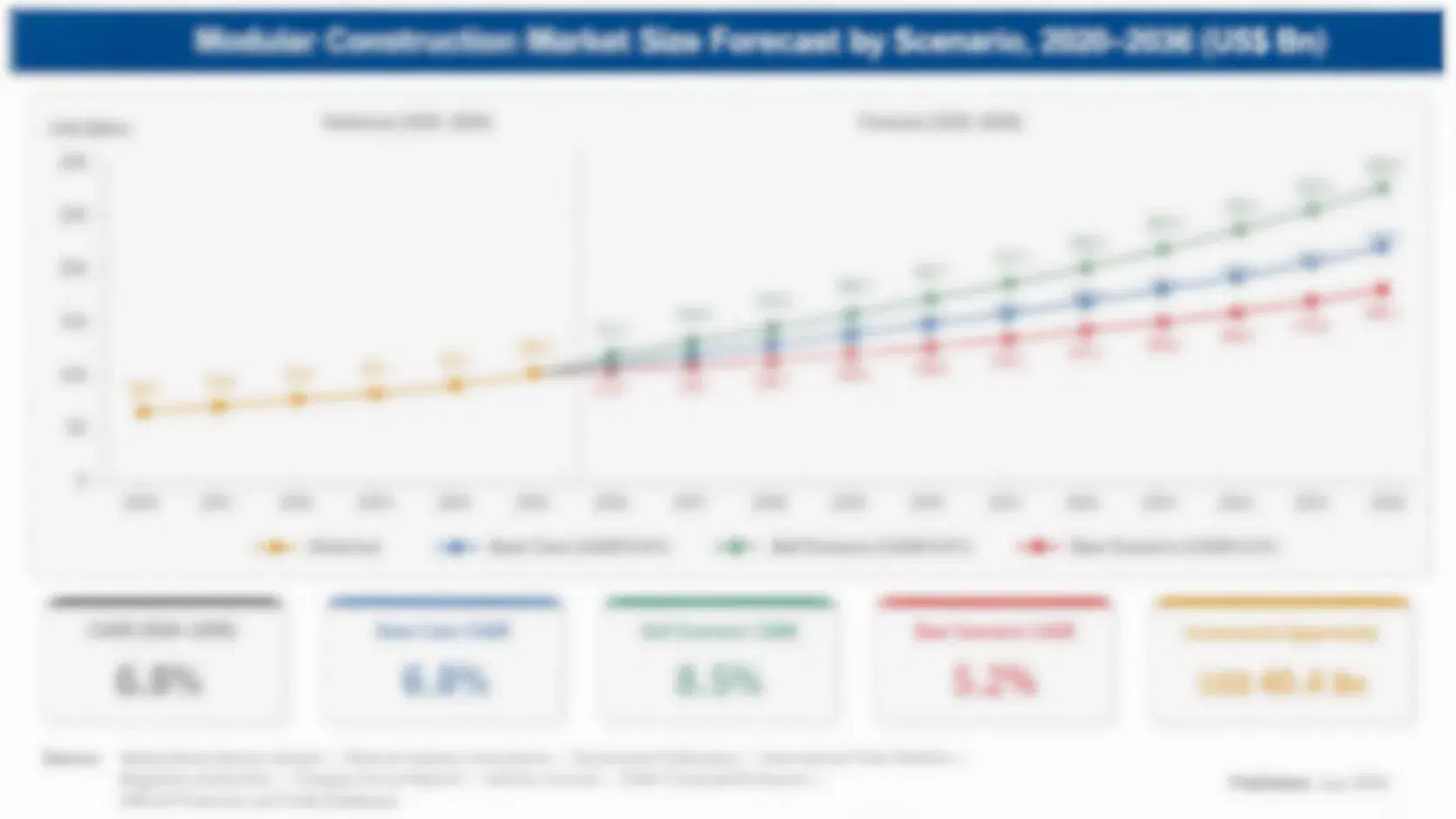
Growth from 2020 to 2025 ran at 3.2% and almost none of it was demand. Hot-rolled coil prices tripled and then collapsed inside 18 months, which moved revenue violently while tonnage barely changed. Mills that had indexed contracts held margin through both directions. Mills quoting fixed prices on six-week lead times lost money going up and lost share coming down.
The 4.4% base case rests on three mechanisms. Indian and Southeast Asian infrastructure programmes keep consuming hollow section and water pipe at rates their domestic mills are still building capacity to serve. Carbon dioxide transport and hydrogen blending projects need pipe specified to weld metallurgy standards that command real premiums over commodity line pipe. And American reshoring construction keeps hollow section demand firm behind trade protection that shows no sign of lifting. None of the three depends on oil and gas capital spending recovering.
The bull case at 5.6% turns on carbon dioxide pipeline networks reaching construction rather than staying in permitting, which would move a large volume of specified pipe in a short window. The bear case at 3.2% is Chinese export volume rising as domestic construction weakens, since that would compress spreads worldwide regardless of local demand.

Where The Coil-To-Pipe Spread Goes

An ERW mill buys hot-rolled coil, slits it, forms it into a cylinder, welds the seam with high-frequency current and cuts it to length. Coil is 78% of the cost. What the mill sells is conversion, and the conversion spread is where every commercial decision in this business lives. Mills that understand this hedge coil. Mills that think they sell steel do not, and their earnings look like a commodity trader's.
FIVE-FIRM CONCENTRATION18%Share of tube capacity held by the largest producers
AVERAGE CONVERSION SPREAD$186 per tonneTypical margin between coil purchase and pipe sale
TOP PRODUCING COUNTRYChina 47%Chinese share of global welded steel tube output
COIL COST SHARE78%Hot-rolled coil portion of finished pipe production cost
CAPACITY UTILISATION64%Average operating rate across the global mill base
ACTIVE TRADE ORDERS142Antidumping and countervailing measures currently in force worldwide
Quality separates almost entirely at the weld. The seam gets heated, upset and then either heat-treated or not, and whether the resulting zone passes ultrasonic inspection at a sour service specification decides whether the pipe sells into a gas pipeline or into a fence. Same coil, same mill, different process control. That gap is worth several hundred dollars a tonne and very few mills hold it consistently.
Trade policy is the third defining feature and it is not incidental. Roughly 142 antidumping and countervailing measures are in force on welded pipe products worldwide, more than on almost any other steel category. Those orders decide which mill can serve which market at what price, and mills plan capital investment around review calendars as much as around demand.
"A tube mill is a machine for turning a steel price into a pipe price. Most of them still think the difficult part is making the pipe."
Director, Steel Products and Tubular Practice · MMA Industrial Equipment Practice · August 2026

Market Trends

Carbon Dioxide Transport Rewrites Line Pipe Specifications

Dense phase carbon dioxide behaves nothing like natural gas in a pipeline, and the difference matters at the weld. Free water plus carbon dioxide makes carbonic acid, which attacks the heat-affected zone preferentially, and running fracture arrest in a dense phase line demands toughness at levels ordinary line pipe never had to prove. Specifications emerging from European and American projects require weld zone testing that most ERW mills cannot currently pass. That narrows the qualified supplier list dramatically, which is exactly why the segment carries premium pricing while the projects are still in permitting.
Market Impact: Protects 186 dollars per tonne

Indian Hollow Section Capacity Reshapes Regional Trade

India has added hollow section and general purpose tube capacity faster than any country outside China, and the demand behind it is domestic construction rather than export. What changes commercially is that Indian mills have moved from importing pipe to exporting it, into Gulf and African markets that European mills used to serve. Freight and duty arrangements favour that trade permanently. European producers have responded by moving upmarket into specified and coated product rather than defending the commodity grades, which is the correct response and a smaller business. Both things are true at once.
Market Impact: Consumes 4.1 million tonnes annually

Market Opportunities and Growth Drivers

Coil Price Volatility Rewards Indexed Contract Terms

Hot-rolled coil at 78% of production cost means a 20% coil move wipes out or doubles a mill's margin before anything else happens. Between 2020 and 2022 coil tripled, then fell by more than half. Mills holding indexed customer contracts passed both directions through and earned a stable conversion spread. Mills quoting fixed prices on six-week lead times took the entire move on inventory they had already committed to. That experience converted most large buyers to indexed pricing, which is a permanent change in how this market transacts. Nobody is going back.
Market Impact: Holds utilisation near 64%

Water Infrastructure Programmes Consume Coated Pipe Volume

India's Jal Jeevan Mission and comparable programmes across Southeast Asia and Africa are laying water distribution networks at a scale that consumes coated ERW pipe by the million tonnes. The specification is undemanding by oil and gas standards and the volume is enormous, which suits mills with cheap conversion cost and coating capacity on site. Ductile iron and plastic compete for the same networks and win on some diameters. Where steel wins is larger transmission mains and anywhere the ground moves, which is more of the network than plastic advocates admit.
Market Impact: Covers 142 measures in force

Market Restraints and Challenges

Overcapacity Keeps Conversion Spreads Persistently Thin

A tube mill costs a fraction of what a steel plant does, which is why capacity exists in almost every country that consumes pipe, and global operating rates run near 64%. Root cause is the low entry barrier at commodity grades: forming and welding equipment is available from several suppliers and payback looks attractive on paper. The commercial effect is that any demand recovery gets absorbed by idle capacity rather than converted into price. Mitigation is moving up the specification ladder, which requires process control most of that capacity was never built to hold.
Market Impact: Qualifies 9% of existing mills

Trade Measures Fragment The Market Into Protected Pockets

Around 142 antidumping and countervailing orders on welded pipe divide the world into markets a given mill may or may not serve profitably. Root cause is the product's commodity character combined with wide cost differences: pipe is easy to define for a petition and easy to prove injury on. The commercial effect is that a mill's addressable market is set by trade lawyers rather than by logistics, and prices differ between neighbouring countries by amounts freight cannot explain. Mitigation is local capacity, which several producers have built specifically to sit inside the orders.
Market Impact: Shifts 2.4 million tonnes yearly
3 additional market trends, 4 additional growth drivers, and 2 additional restraints and challenges are covered in the full report. Contact sales@marketmindsadvisory.com to access the complete intelligence.

Segment CAGR and Growth Architecture

Segmentation follows product specification class: what standard the pipe is made to and what it may be used for, rather than which industry buys it or how it is sold. Six classes cover the market without overlap, from general purpose tube through to coated corrosion-resistant product. End-use industry and distribution route are treated separately, because both cut across every class.
electric-resistance-welded-erw-pipes-and-tubes-mar-market-share-analysis-1787680689294

Coated and Lined Corrosion-Resistant Tube

This class carries external coating, internal lining or both, and it exists because the pipe has to survive something the steel alone would not. Growth at 6.6%, half again the market rate of 4.4%, comes from three directions at once: water transmission networks in South Asia and Africa, sour service gas gathering, and the emerging carbon dioxide and hydrogen transport specifications that demand weld zone performance ordinary line pipe never had to prove. Coating on site is the commercial advantage, since shipping pipe to a coater and back adds handling damage and freight to a product that is mostly air by volume. Mills without a coating line give away that margin permanently.
CAGR 6.6%

Oil Country Tubular Goods

ERW casing and tubing competes against hot-finished tubulars on price and loses on the most demanding wells, which is a settled division nobody expects to change. Growth at 5.2% tracks drilling activity in shale basins where well counts are high and depths are moderate, exactly the conditions ERW was built for. The commercial character is unlike anything else in this market: order books swing with rig counts, inventory cycles are violent, and distributors rather than operators hold most of the stock. Trade protection matters more here than in any other class, since domestic mills in several countries exist almost entirely because imported tubulars are restricted. Remove the orders and several of them close.
CAGR 5.2%
Full segment breakdown across 6 segments available in the complete report.

Regional Architecture and Country Demand Map

Geography follows steel conversion capacity rather than pipe consumption, and the two increasingly coincide because trade measures make shipping pipe far across borders unattractive. East Asia converts most of the world's coil. South Asia grows fastest on infrastructure, while Western Europe contracts on both construction and energy demand.

North America

American demand is unusually well protected and prices reflect it, with Section 232 measures and dozens of specific orders keeping domestic mills running at rates the rest of the world would envy. Hollow section for construction is the largest volume and follows non-residential building starts closely. Oil country tubular demand swings with rig counts in Texas, New Mexico and the Appalachian basins, and distributor inventory cycles amplify every move. Canadian mills serve both domestic energy demand and the American market under quota arrangements. Mexican production has grown on nearshoring construction, and its mills increasingly sit inside North American supply chains rather than alongside them. That integration is recent and looks durable.
Share: 22% | CAGR: 4.8% (2026 to 2036)

Western Europe

Western Europe takes 15%, below the 18 to 26% default band, because European construction has been weak for several years while offshore and onshore pipeline projects have largely finished, and Indian and Turkish mills now serve markets European producers once supplied. The contraction is real rather than cyclical. German and Italian mills hold the strongest positions in precision and automotive tubing, where specification depth still protects them. Spanish and Nordic production serves construction and is exposed directly to Turkish imports. British capacity has narrowed considerably. What European producers do retain is the specified end: coated, sour service and now carbon dioxide transport grades that few competitors can qualify for. It is a good business.
Share: 15% | CAGR: 2.6% (2026 to 2036)
Regional intelligence for 5 additional markets available in the complete report: East Asia, South Asia and Pacific, Latin America, Middle East and Africa, Eastern Europe. Contact sales@marketmindsadvisory.com.
electric-resistance-welded-erw-pipes-and-tubes-mar-country-cagr-analysis-1787680689579

Protecting The Spread, Not The Tonnage

Tonnage is the wrong measure and every mill knows it while still reporting on it. What matters is the conversion spread and how much of it survives a coil price move. Four levers defend that spread, and three of them require giving up volume the sales force has been rewarded for winning since the mill opened.

Index Every Contract To Published Coil Benchmarks

Coil is 78% of cost and moves faster than any order book can absorb. Indexing customer contracts to a published hot-rolled benchmark converts a trading position into a conversion business, which is what the mill actually is. Buyers resisted this for years and stopped resisting after 2021, when fixed-price suppliers failed to deliver at agreed prices and several went under. The discipline is applying the index in both directions: a mill that passes increases through and pockets decreases loses the customer at the next renewal, and deserves to. Symmetry is the whole point.
Market Impact: Protects the 186 dollar per tonne conversion spread

Qualify Weld Metallurgy For Sour And Carbon Dioxide Service

The same mill running the same coil can produce a fence tube or a sour service line pipe, and the difference is weld zone heat treatment and the testing programme behind it. Qualification costs a mill perhaps 2 years of testing, third-party witnessing and process control investment that produces nothing while it happens. What it produces afterward is access to a supplier list with fewer than a dozen names on it, at prices several hundred dollars a tonne above commodity grades. Very few mills have made that investment, which is precisely why it still pays.
Market Impact: Takes 2 years and then commands premium pricing

Put Coating Capacity On The Mill Site

Pipe is mostly air by volume, so shipping it to a coater and back costs more than the coating does on some diameters. Mills with coating lines on site capture that value and control the schedule, which matters when a project needs 4,000 tonnes delivered in a fixed window. The capital requirement is real and the utilisation risk is real too, since a coating line idle half the year earns nothing. Mills that sized the line to their own output rather than to a market forecast have generally made it work.
Market Impact: Captures the coating value on every 4,000 tonne project

Build Capacity Inside Trade Orders Rather Than Fighting Them

Roughly 142 antidumping and countervailing measures decide which mill may serve which market, and litigating against them takes years and usually fails. Building or acquiring capacity inside the protected market removes the question entirely and inherits the price level the orders create. Several producers have done exactly this in North America and the Gulf, paying more for an asset than its earnings justified on their own numbers, because the earnings once inside the order look different. The risk is obvious: orders can lift, and a plant bought on protection is worth less afterward.
Market Impact: Sits inside the 142 measures rather than outside them

Who Controls the Margin Pool

Measured on nameplate tube production capacity, the five largest producers hold a CR5 of 18%, which is genuinely low and accurately describes the market. A tube mill is cheap enough that capacity exists in most countries that use pipe. Youfa and Zekelman lead from opposite positions, one on scale in the largest producing country and the other on price levels that only exist behind trade protection.
Three contests run at once and share almost nothing. Commodity grades compete on conversion cost and freight, a contest Chinese, Indian and Turkish mills win almost everywhere they are permitted to sell. Specified grades compete on weld qualification and testing history, where the field narrows to a dozen names worldwide. Protected markets compete on nothing at all, since the orders decide who bids. A mill's strategy is a choice about which of these three it wants to be in.

Pressure comes from Chinese export volume rather than from any competitor's strategy. Domestic construction weakness pushes tonnage outward, and it lands wherever no order blocks it, compressing spreads in markets with no connection to China at all. Rankings shift whenever a new trade measure closes a lane, which redirects that volume somewhere else overnight.
electric-resistance-welded-erw-pipes-and-tubes-mar-company-positioning-matrix-1787680689877

Competitive Moat and Risk Dimensions

YOUFA STEEL PIPE GROUP

Moat: Scale In The Largest Market

Youfa operates more welded tube capacity than any other producer, concentrated close to Chinese coil supply and Chinese demand, which gives it a conversion cost position nobody outside the country can match on commodity grades. Scale buys coil purchasing terms that smaller mills cannot obtain. Neither advantage helps in markets where trade measures exclude it, and most large ones do.
YOUFA STEEL PIPE GROUP

Risk: Domestic Construction Demand Weakness

A capacity position built around Chinese construction is exposed to a property sector that has been contracting for several years with no floor. Redirecting tonnage into export markets works only where no order blocks it, and the list of open destinations keeps shortening. The scale that is an advantage in a growing market becomes fixed cost in a shrinking one.
ZEKELMAN INDUSTRIES

Moat: Protected Market Distribution Reach

Zekelman operates inside the most heavily protected pipe market in the world and reaches it through distribution and service capability that importers cannot replicate at any price. Delivery reliability into construction schedules matters more than unit cost to a contractor facing liquidated damages. That combination of trade protection and service reach has produced margins no unprotected commodity producer approaches anywhere.
ZEKELMAN INDUSTRIES

Risk: Trade Policy Reversal Exposure

Earnings that depend on measures a government can lift are not the same as earnings from a cost advantage. Section 232 and the specific orders behind American pipe pricing have survived several administrations and cannot be assumed to survive all of them. A single policy change would expose the underlying conversion cost position, which is competitive rather than exceptional.

Players Tracked

Prominent Players

Youfa Steel Pipe Group
Zekelman Industries
APL Apollo Tubes
Nucor Tubular Products
Marcegaglia

Other Key Players

JFE Steel
Nippon Steel
Hyundai Steel
Welspun Corp
Jindal SAW
Tata Steel
ArcelorMittal
Borusan Mannesmann
Salzgitter Mannesmann
Tenaris
Vallourec
Maruichi Steel Tube
TMK
Surya Roshni
Hebei Huayang Steel Pipe

Recent Developments

FEBRUARY 2025

Zekelman Industries commissions additional hollow section capacity in the United States

Zekelman Industries brought additional hollow section capacity online at an American facility, an organic investment rather than an acquisition. The company linked the decision to non-residential construction demand from reshoring projects and to continued trade protection, noting that domestic delivery reliability commands a premium contractors are willing to pay for.
Signal: Capacity is being added on the assumption trade protection persists, which is a large bet on policy continuity.
JUNE 2025

APL Apollo Tubes expands coated pipe capacity for water infrastructure demand

APL Apollo Tubes commissioned additional coated tube capacity in India, an organic expansion funded from operating cash flow rather than any joint venture. The stated driver was water distribution network demand under national connection programmes, alongside growing export orders into Gulf and East African markets that European mills previously supplied.
Signal: Indian mills have moved from importing pipe to exporting it, which changes trade lanes for a decade.
SEPTEMBER 2025

European producer qualifies ERW line pipe for dense phase carbon dioxide service

A European mill completed qualification testing for electric resistance welded line pipe in dense phase carbon dioxide service, following third-party witnessed weld zone toughness and corrosion programmes. This was a technical qualification rather than a commercial transaction, and it places the producer on a supplier list with few names.
Signal: Weld qualification for new service conditions is where European mills are defending position against lower-cost competition.

Coil Is Almost All Of It

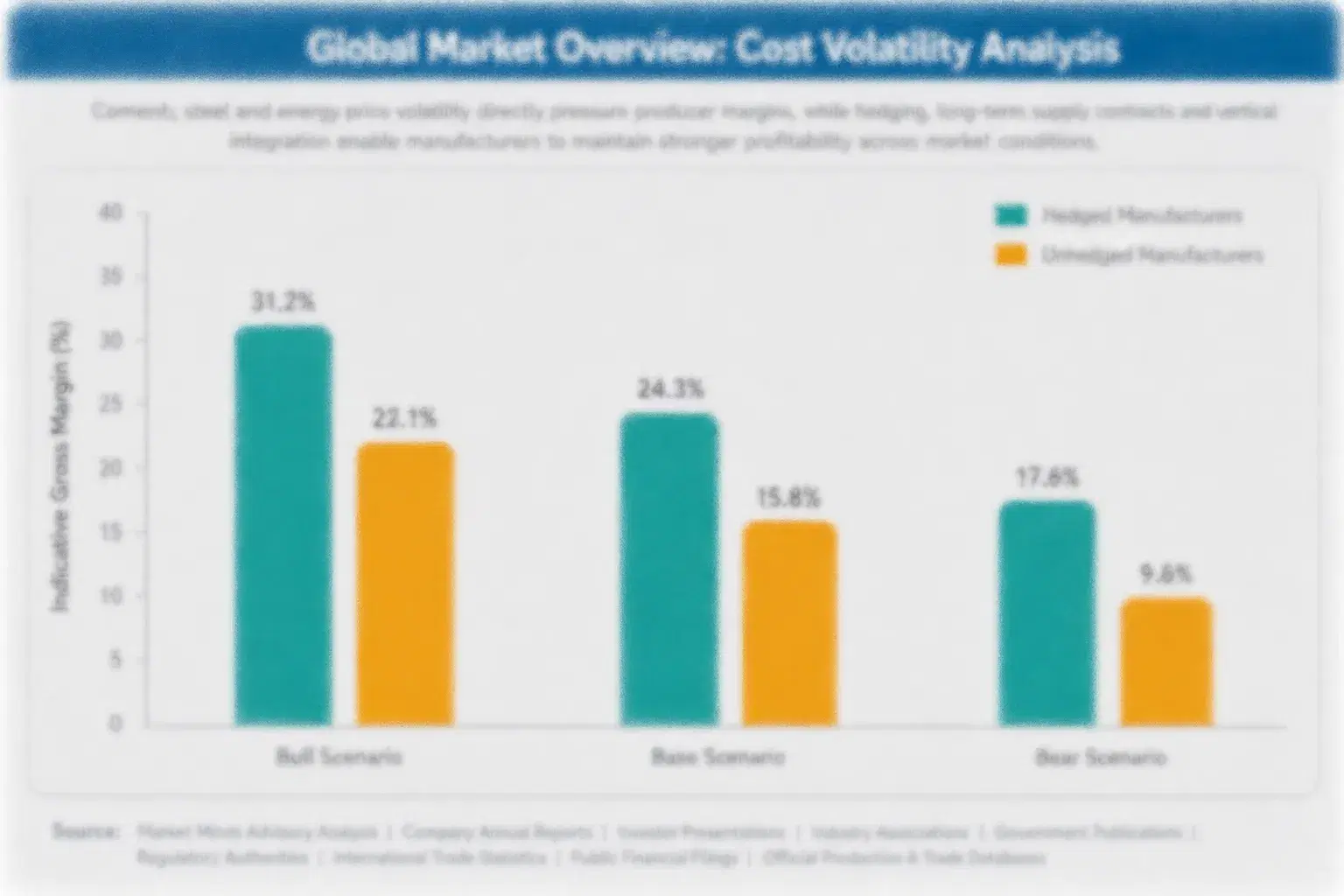
One input dominates completely. Hot-rolled coil runs 76 to 79% of finished pipe production cost, purchased from integrated steel mills whose pricing follows iron ore, scrap and regional capacity rather than anything happening in tube. Electricity for the welding and forming line adds roughly 6%. Labour, consumables and coating materials share what remains, and none of them moves enough to matter.
The 2021 coil spike is the case every mill talks about. American hot-rolled coil rose to levels no forecast contemplated and then fell by more than half within a year, and EIA and IEA energy data document the input cost movements behind part of it. Nucor and ArcelorMittal annual reports for the period describe both the pricing effects. Tube mills holding fixed-price order books at the top absorbed the entire difference, and several never recovered from it.

Exposure divides by contract terms rather than by mill size. Producers with indexed customer contracts and matched coil purchasing carry no price risk and earn a conversion spread. Those quoting fixed prices on long lead times carry all of it. Integrated producers who make their own coil are a different business, exposed to steelmaking economics rather than to conversion.
electric-resistance-welded-erw-pipes-and-tubes-mar-cost-volatility-analysis-1787680690188

Match coil purchasing to the order book, not the forecast

Buying coil against confirmed orders rather than against a demand forecast removes most of the exposure at the cost of some purchasing scale. Mills that did this through 2021 gave up a little on price and kept their margin. Mills that bought ahead on a rising market looked clever for two quarters and then wrote the inventory down.

Shorten quoted lead times on fixed-price work

Where a customer genuinely will not accept indexed pricing, the exposure is the lead time rather than the contract. Quoting fixed prices valid for two weeks instead of eight cuts the coil movement a mill can be caught by to something manageable. Sales teams dislike it because competitors quote longer, and the mills that held the line kept their margins.

Move mix toward grades where coil is a smaller share

Coil is 78% of a commodity tube and considerably less of a coated, tested, sour service pipe, because qualification and processing carry the rest. Every point of mix moved upmarket reduces sensitivity to steel pricing without any change to purchasing. The barrier is weld qualification and process control, which takes years and cannot be bought.

Portfolio Architecture for Margin Defence

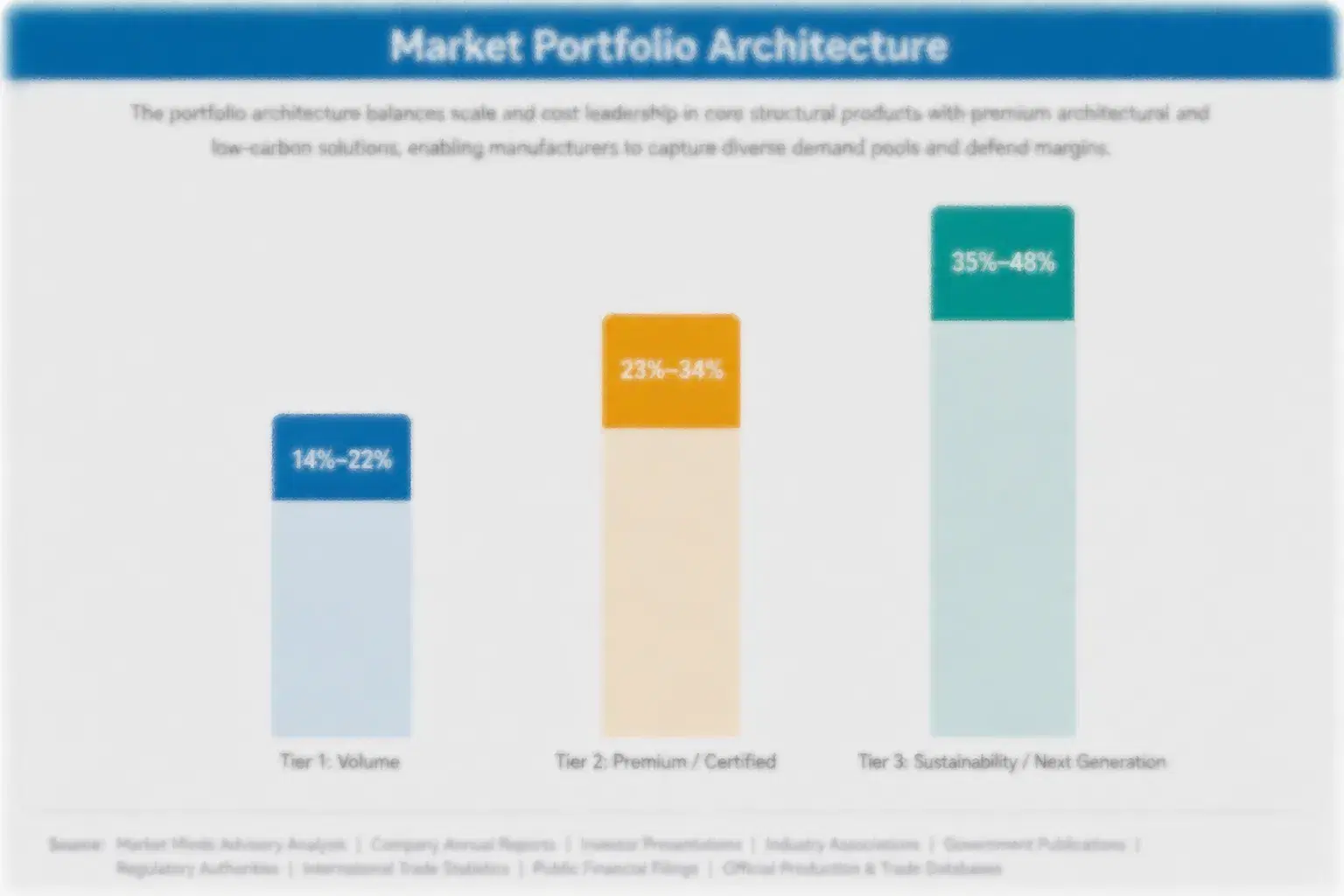
Margin follows qualification, not equipment. A hollow section sold to a steel service centre earns a conversion spread that any mill with a forming line can match, because the specification is public and the product is identical. A sour service line pipe with witnessed weld testing earns three to four times that spread on the same coil, and the difference is entirely process control and documentation.
The tension is that both come off the same mill and the sales force is measured on tonnage. Commodity orders fill the schedule, and a mill running full looks healthy right up until someone calculates margin per hour. Producers who ration mill time to specified work and let commodity tonnage go elsewhere report lower volumes and better returns. Those who kept chasing utilisation are running full schedules at spreads that do not cover replacement capital.

High-value pools sit in three places. Weld-qualified sour service and carbon dioxide grades, where the supplier list has a dozen names on it. On-site coating, which captures value that would otherwise leave with a freight bill. And oil country tubular goods inside protected markets, where the price level exists because of an order rather than a cost position.

Volume / Commodity-Adjacent

Hollow section, standard pipe, conduit and fence tube sold to service centres and distributors on published specifications. The 7-point range separates mills with integrated coil supply from converters buying at market. Conversion cost and freight decide everything at this level.
Gross Margin: 6-13%

Premium / Certified

Line pipe, oil country tubular goods and precision mechanical tubing made to customer-witnessed specifications. The 7-point spread separates mills with full weld qualification histories from those certified for a narrower service range. Testing documentation rather than product appearance holds this pricing.
Gross Margin: 17-24%

Sustainability / Regulatory / Next-Generation

Sour service grades, dense phase carbon dioxide pipe, hydrogen-qualified line pipe and coated water transmission product. The 13-point range is unusually wide because carbon dioxide grades price on a supplier list of a dozen names while coated water pipe competes against ductile iron and plastic.
Gross Margin: 26-39%
electric-resistance-welded-erw-pipes-and-tubes-mar-portfolio-architecture-1787680690481

High-value Sub-segments and Strategic Watch-out

Carbon Dioxide Transport Grades

Highest value and fastest growth, with a qualified supplier list short enough to name. Weld zone toughness and corrosion requirements exclude most mills. The risk is timing: projects sit in permitting, and a mill that qualified early carries the cost while waiting for orders that may arrive late.
Gross Margin: 36-39%

Coated Water Transmission Pipe

High value with strong growth, driven by national water programmes in South Asia and Africa that consume tonnage by the million. On-site coating capacity is the commercial advantage rather than any metallurgy. Ductile iron and plastic compete for the same networks, which caps pricing more than the specification does.
Gross Margin: 24-27%

Hollow Section And Standard Pipe

The volume core, carrying most tonnage shipped and the least margin per tonne anywhere in the market. Conversion cost and freight decide it, and Chinese, Indian and Turkish mills win wherever trade measures permit them to sell. Most producers run this line for mill utilisation rather than for return.
Gross Margin: 7-10%

Protected Market Tubular Volume

The strategic watch-out. Substantial revenue and unusually good margins rest on antidumping orders and Section 232 measures rather than on any cost advantage the mills actually hold. The risk is capital committed to capacity whose earnings would not survive a policy change nobody in the industry controls.
Gross Margin: 19-22%

Why Tonnage Keeps Coming Back

Pipe demand is replacement demand more than it is growth demand, and that gives it a floor most industrial products lack. Water mains corrode, gathering lines wear, and construction tube gets consumed permanently in structures nobody dismantles. The installed base itself generates a baseline nobody markets to, arriving through distributors on schedules that follow maintenance budgets rather than capital cycles.
Stickiness varies enormously by what the pipe carries. A sour service gas gathering line specifies a named mill on the drawing, and changing it means requalification nobody will fund. Oil country tubular buyers switch on price every quarter, since distributors hold the stock and operators buy from whoever has it. Construction hollow section buyers barely know who made the tube. Water utilities sit in between, specifying coating systems and accepting any mill that meets them.

The buyer has moved. Two decades ago a purchasing agent at a fabricator bought pipe on price and availability. Now a service centre buys on indexed formulas negotiated annually, an engineering contractor specifies grade before anyone quotes, and a procurement platform runs the transaction. Mills still fielding relationship-based sales into formula-driven purchasing lose margin without ever losing an account.
electric-resistance-welded-erw-pipes-and-tubes-mar-end-use-penetration-index-1787680690778

Where The Spread Actually Survives

These are among the four positions where our research anticipates prominent divergence between winners and laggards over the coming forecast period. Each is grounded in the demand model, the regulatory perimeter, and the announced capacity pipeline.
01 / CONTRACT INDEXATION DISCIPLINE

Index every contract and apply it both ways

Hot-rolled coil is 78% of production cost and moves faster than any order book can absorb, which means a mill quoting fixed prices on long lead times is running a commodity trading position it never intended to take. Indexing customer contracts to a published benchmark converts that position into a conversion business earning a stable spread of roughly 186 dollars a tonne through any cycle. The discipline that matters is symmetry, because a mill passing increases through while pocketing decreases loses the customer at renewal and has earned that outcome.
02 / WELD QUALIFICATION INVESTMENT

Spend two years qualifying the weld, not the mill

The same coil on the same line becomes a fence tube or a sour service pipe worth several hundred dollars a tonne more, and the difference is weld zone heat treatment plus a testing programme with third-party witnessing behind it. Qualification takes roughly 2 years and produces no revenue while it runs, which is precisely why so few mills have done it and why the supplier list stays short. Carbon dioxide and hydrogen specifications extend that requirement, and mills qualifying now will be on the list when projects leave permitting.
03 / MILL TIME RATIONING

Ration mill hours to margin, not to tonnage

Commodity hollow section fills a schedule and a full mill looks healthy right up to the point where someone calculates margin per operating hour rather than per tonne. Specified and coated work earns three to four times the spread on identical coil, and taking it means declining commodity orders the sales force has been rewarded for winning since the mill opened. Producers who made that change report lower tonnage and better returns, while those who kept chasing utilisation are running full at spreads that will not fund replacement capital.
04 / TRADE POSITION BUILDING

Own capacity inside the orders, not outside them

Roughly 142 antidumping and countervailing measures decide which mill may profitably serve which market, and litigating against them takes years while rarely succeeding. Building or buying capacity inside a protected market removes the question and inherits the price level the orders create, which is why several producers have paid more for assets than standalone earnings justified. The exposure is equally plain: a plant bought on protection is worth considerably less the day the protection lifts, and no producer controls that decision.

Engagement Snapshot From the Field

A live engagement with an industry participant carrying material or product regulatory and market exposure ahead of a defining policy shift, showing how our research translates into a defensible multi-year portfolio strategy.
MARKET MINDS ADVISORY · CLIENT ENGAGEMENT SUMMARY
Electric Resistance Welded (ERW) Pipes and Tubes Producer Strategic Portfolio Review and Transition Roadmap 2026·Investment Scenario on Electric Resistance Welded (ERW) Pipes and Tubes Exposure Evaluation 2025-26
CLIENT PROFILE
A European electric resistance welded tube producer operating three mills and supplying construction, mechanical and general purpose grades across 14 countries, with revenue reported at 420 million euros (client-reported, unverified by MMA). Roughly 84% of tonnage moved as commodity hollow section and standard pipe. Mill utilisation ran above 80% while operating margin had fallen for four consecutive years.
STRATEGIC CHALLENGE
Management read high utilisation as evidence the mills were competitive and attributed the margin decline to Turkish imports. Sales targets were set in tonnes and the commercial team was hitting them. Nobody had calculated margin per operating hour by product, because the costing system allocated overhead per tonne and made every grade look similar.
MMA APPROACH
MMA rebuilt product profitability on mill hours rather than tonnes, which the company had never done because its costing system was not built to. Twelve expert interviews with customers and engineering contractors established what specified grades the region actually needed and could not source locally. The analysis treated mill time, not tonnage, as the scarce resource being allocated.
KEY FINDINGS
  1. Commodity hollow section at 84% of tonnage generated 38% of gross margin and consumed 71% of available mill hours across the three sites.
  2. Two of the three mills held sufficient process control to qualify for sour service grades, which nobody inside the company had assessed.
  3. Every fixed-price contract longer than four weeks had lost money in at least one of the previous four years, and 61% of tonnage sold that way.
  4. Cutting tonnage by 22% while shifting hours to specified grades modelled higher absolute gross profit from the second year onward (client-reported, unverified by MMA).
CLIENT PROFILE
A European electric resistance welded tube producer operating three mills and supplying construction, mechanical and general purpose grades across 14 countries, with revenue reported at 420 million euros (client-reported, unverified by MMA). Roughly 84% of tonnage moved as commodity hollow section and standard pipe. Mill utilisation ran above 80% while operating margin had fallen for four consecutive years.
STRATEGIC CHALLENGE
Management read high utilisation as evidence the mills were competitive and attributed the margin decline to Turkish imports. Sales targets were set in tonnes and the commercial team was hitting them. Nobody had calculated margin per operating hour by product, because the costing system allocated overhead per tonne and made every grade look similar.
MMA APPROACH
MMA rebuilt product profitability on mill hours rather than tonnes, which the company had never done because its costing system was not built to. Twelve expert interviews with customers and engineering contractors established what specified grades the region actually needed and could not source locally. The analysis treated mill time, not tonnage, as the scarce resource being allocated.
KEY FINDINGS
  1. Commodity hollow section at 84% of tonnage generated 38% of gross margin and consumed 71% of available mill hours across the three sites.
  2. Two of the three mills held sufficient process control to qualify for sour service grades, which nobody inside the company had assessed.
  3. Every fixed-price contract longer than four weeks had lost money in at least one of the previous four years, and 61% of tonnage sold that way.
  4. Cutting tonnage by 22% while shifting hours to specified grades modelled higher absolute gross profit from the second year onward (client-reported, unverified by MMA).
RECOMMENDED STRATEGY
Phase 1: Phase one: move all contracts to indexed coil pricing or shorten fixed quotations to two weeks, with no exceptions granted. Phase 2: Phase two: begin sour service weld qualification at the two capable mills, funded by exiting the least profitable commodity accounts. Phase 3: Phase three: change commercial targets from tonnes to gross margin per mill hour before the qualification programme completes, and reset incentives.
OUTCOME
Indexation completed within two quarters and removed the recurring contract losses entirely. Tonnage fell 19% in the first year and gross profit rose, which ended the internal argument about utilisation. Sour service qualification finished at one mill within 22 months and the second is in progress (client-reported, unverified by MMA). Commercial targets now run on margin per mill hour.

Frequently Asked Questions

Foundational context covering the market sizes, CAGR, scope, country, region and competition that inform every finding below. This section is provided to cover basics and most often pre-purchase conversations, answered from the MMA Primary Research Dataset.

What is the current size of the Electric Resistance Welded (ERW) Pipes and Tubes Market?

The market was worth 68.4 billion dollars in 2025, covering electric resistance welded pipe and tube across standard, line pipe, tubular, mechanical and coated classes. It reaches 71.4 billion dollars in 2026.

How large will the Electric Resistance Welded (ERW) Pipes and Tubes Market be by 2036?

MMA forecasts 109.9 billion dollars by 2036, an increase of 38.5 billion dollars over the 2026 base. That represents an expansion multiple of 1.54 times across the forecast period.

What is the CAGR for the Electric Resistance Welded (ERW) Pipes and Tubes Market 2026 to 2036?

The base case compounds at 4.4% annually. MMA's bull case reaches 5.6% if carbon dioxide pipeline networks reach construction, while the bear case sits at 3.2% on rising Chinese export volume.

Which segment is growing fastest?

Coated and lined corrosion-resistant tube, at 6.6%, half again the market rate of 4.4%. Water networks, sour service gathering and carbon dioxide transport all demand it for different reasons.

Who are the major companies in the Electric Resistance Welded (ERW) Pipes and Tubes Market?

Youfa Steel Pipe Group, Zekelman Industries, APL Apollo Tubes, Nucor Tubular Products and Marcegaglia lead on nameplate tube capacity. JFE Steel, Nippon Steel, Welspun Corp, Borusan Mannesmann and Tenaris compete strongly in specific classes.

Which country is growing fastest?

India at 7.4%, driven by water distribution networks, city gas pipelines and construction demand that domestic mills are still building capacity to serve. Vietnam follows on regional construction.

Report Segmentation Architecture

The full report scope spans multiple orthogonal segmentation dimensions, with cross-tabulated demand data provided for each dimension pair. Coverage extends further to regional breakdowns, trend trajectories, and the competitive detail needed to support segment-level decision-making.

By Product Specification Class

  • Standard and Hollow Section Pipe
  • Line Pipe
  • Oil Country Tubular Goods
  • Mechanical and Precision Tubing
  • Conduit, Fence and Water Well Tube
  • Coated and Lined Corrosion-Resistant Tube

By End-Use Industry

  • Building and Construction
  • Oil and Gas Transmission
  • Oil and Gas Drilling
  • Water and Wastewater Networks
  • Automotive and Machinery
  • Agriculture and General Fabrication

By Commercial Dimension

  • Direct Mill Supply
  • Steel Service Centre Channel
  • Distributor and Stockist
  • Project Tender Supply
  • Engineering Contractor Specification
  • Toll Conversion Arrangement

By Region

  • North America
  • Western Europe
  • East Asia
  • South Asia and Pacific
  • Latin America
  • Middle East and Africa
  • Eastern Europe

Scope, Methodology, and Coverage

Every figure in this report is reproducible from documented input assumptions. The scope below maps the historical period, the forecast horizon, the segmentation dimensions, and the countries covered, alongside the underlying primary and qualitative methodology.
Historical Period
2020 to 2025
Forecast Period
2026 to 2036
Base Year
2025 (USD billions; MMA Primary Research Dataset, August 2026)
Market Definition
Scope covers steel pipe and tube produced by electric resistance or high-frequency induction welding of a longitudinal seam from hot-rolled or cold-rolled coil, spanning standard and hollow section, line pipe, oil country tubular goods, mechanical and precision tubing, conduit and water well tube, and coated or lined corrosion-resistant classes. Pipe without a longitudinal weld, submerged arc welded and spiral welded pipe, stainless and non-ferrous tube are excluded. Fittings, valves, pipeline construction services and upstream coil production fall outside the boundary.
Quantitative Units
USD billions (current prices); tonnes shipped; nameplate mill capacity; capacity utilisation rate; conversion spread per tonne
Segmentation Dimensions
By Product Specification Class; By End-Use Industry; By Commercial Dimension; By Region
Regions Covered
North America, Western Europe, East Asia, South Asia and Pacific, Latin America, Middle East and Africa, Eastern Europe
Countries Covered
USA, China, Germany, France, UK, Japan, South Korea, India, Brazil, Mexico, Italy, Spain, Poland, Saudi Arabia, South Africa
Key Companies Profiled
Youfa Steel Pipe Group, Zekelman Industries, APL Apollo Tubes, Nucor Tubular Products, Marcegaglia, JFE Steel, Nippon Steel, Hyundai Steel, Welspun Corp, Jindal SAW, Tata Steel, ArcelorMittal, Borusan Mannesmann, Salzgitter Mannesmann, Tenaris, Vallourec, Maruichi Steel Tube, TMK, Surya Roshni, Hebei Huayang Steel Pipe
Quantitative Methodology
Primary survey, n=3,800 respondents, Q4 2025, six countries; demand-side model with trade association cross-validation
Qualitative Methodology
47 expert interviews, Q4 2025; applied to validate demand model assumptions, identify emerging dynamics, and assess competitive positioning
Report Format
PDF and XLSX data workbook (Word format preview document)
Publisher
Market Minds Advisory
Report Code
MMA-2026-CON-124
Published
August 2026
Contact
sales@marketmindsadvisory.com | www.marketmindsadvisory.com

Purchase the full Electric Resistance Welded (ERW) Pipes and Tubes Market Report (2026 to 2036).

The full report runs to 215 pages and covers all six product specification segments, seven regions and 20 profiled companies in detail. It includes the complete segment CAGR set, regional capacity and consumption data, and conversion spread analysis across the principal producing countries. Company profiles carry evaluation on nameplate tube production capacity, with moat and risk assessment for the top five producers. The competitive section extends to 18 tracked corporate developments across 2024 and 2025, each with commercial interpretation. Primary research inputs include a quantitative survey of 3,800 respondents and 47 expert interviews conducted in Q4 2025.
Six product specification segments with individual CAGR forecasts
Seven regional markets with capacity and consumption data
Twenty company profiles on consistent capacity evaluation basis
Eighteen tracked corporate developments with commercial interpretation notes
Conversion spread analysis across principal producing countries
Trade measure exposure mapping by producer and destination

Built For The People Who Decide

From boardroom strategy to bench-side execution, this report is read cover-to-cover by leaders shaping the next decade of their industry, turning demand scenarios, market dynamics and valuation benchmarks into decisions.
CXOs/ Presidents/ VPs/ Managers
M&A and Corporate Development
Strategy Teams and R&D Heads
Procurement and Product Directors
Regulatory and Compliance Leaders
Investor Relations and Equity Analysts