Market Minds Advisory
Dunnage Air Bags Market

Dunnage Air Bags Market: Kraft Paper Sustainability Shift and Freight Damage Prevention Through 2036

Freight damage claims are pushing shippers toward better cargo securing at the same time sustainability commitments are pulling material choice away from plastic film toward kraft paper construction across major logistics networks.

Lead Analyst

Bilal Shaikh

Published

September 2026

Make Smarter Decisions with Customized Research Insights

Request a free sample report and evaluate market opportunities, growth trends, and competitive dynamics relevant to your business needs.

2025 MARKET VALUE$0.6BMarket Size 2025
2036 FORECAST VALUE$1.1BBase Case , 2026 to 2036
CAGR 2026 TO 20366.5 %Bull 7.7% / Bear 5.3%
INCREMENTAL OPPORTUNITY$0.5BNet 10- year value creation
EXPANSION MULTIPLE1.88x2036 value over 2026 base
Strategic Levers
M&A Pipeline
Regional Outlook
Country Rankings
Competitive Intelligence
Segmental Deep-dive
Call-Us : 91 93563 13602

Executive Snapshot and Market Trajectory

Dunnage air bags remain a fundamentally simple product, inflatable cushions that keep cargo from shifting inside a container or trailer, but the material choice behind that simple function is shifting meaningfully as sustainability commitments reach freight packaging decisions across major shipping networks worldwide today.
Sealed Air Corporation and Signode Industrial Group continue supplying established vinyl and polyethylene film products, since that demand base remains steady even as growth concentrates elsewhere in the category. Multi-layer kraft paper dunnage bags are capturing disproportionate investment attention as shippers across North America and Western Europe commit to reducing single-use plastic content in their outbound freight packaging specifications this decade, a shift reshaping supplier contract terms industry-wide.
Cordstrap and IEP Technologies are investing in laminated paper-plastic composite construction as high-value freight customers demand better puncture resistance than commodity paper-only bags can reliably provide today. Suppliers without flexible production capable of serving both plastic and paper-based construction increasingly find themselves confined to lower-margin bulk contracts as buyers consolidate purchasing toward fewer, broader-line vendors able to certify multiple bag types across varied load categories and freight transport modes handling different cargo classes.
Market Definition
The dunnage air bags market covers polywoven dunnage bags, multi-layer kraft paper dunnage bags, vinyl dunnage bags, polyethylene film dunnage bags, laminated paper-plastic composite dunnage bags, and reusable inflatable bladder systems sold to freight carriers, shippers, and logistics providers. It excludes general cargo strapping and blocking hardware sold as separate load securing products.
Base Year Value
$0.6B in 2025 (MMA Primary Research Dataset, August 2026)
Forecast Period
2026 to 2036, eleven discrete annual values
CAGR
6.5% base case. Bull 7.7%. Bear 5.3%.
Fastest Growth Segment
Multi-Layer Kraft Paper Dunnage Bags: 9.0% CAGR
Fastest Growth Country
China: 8.0% CAGR
Fastest Growth Region
South Asia and Pacific: 8.5% CAGR
Largest Region
North America: 30% of 2025 global value
Market Leaders
Sealed Air Corporation, Signode Industrial Group, Cordstrap, IEP Technologies, Loadhog. Source: MMA Analysis based on company annual reports.
Primary Survey
n=3,800 procurement and R&D decision-makers, Q4 2025, six countries
Methodology
Demand-side build-up, cross-validated against public data, 47 expert interviews

Dunnage Air Bags Market Forecast Scenarios

dunnage-air-bags-market-size-forecast-scenario-1787548407770
Between 2020 and 2025 the market grew at roughly 5.7 percent a year, with pandemic-era freight volume disruptions briefly slowing shipments before e-commerce logistics growth and early kraft paper adoption accelerated production through the back half of the period, setting a notably firmer base heading into 2026 across most major freight corridors worldwide, particularly in retail distribution.
The base case assumes 6.5 percent annual growth to 2036, built on three mechanisms: kraft paper dunnage demand expanding as shippers commit to reducing single-use plastic across their supply chains, laminated composite bags growing as high-value freight customers demand better puncture resistance than commodity paper alone provides, and steady global freight volume sustaining baseline demand regardless of which specific material category is growing fastest. Together these three mechanisms sustain growth above simple freight volume trends.
A bull case near 7.7 percent depends on sustainability regulations tightening faster than currently planned across additional freight markets beyond North America and Western Europe. The bear case near 5.3 percent assumes global freight volume growth slows enough that dunnage bag demand tracks closer to simple replacement cycle levels rather than expanding faster than shipment counts.

Material Transition Reshapes a Freight Packaging Staple

Dunnage air bags occupy a narrow but essential corner of freight packaging: inflatable cushions placed inside void space between cargo units to prevent shifting during rail, truck, or ocean transit. The category sits downstream of resin and kraft paper production and upstream of freight carriers and third-party logistics providers who specify bag type as part of loading procedure standards.
MARKET CONCENTRATIONCR5 46%Top five suppliers hold moderate but not dominant share
AVERAGE SELLING PRICE$3.20 per unitPrice varies sharply by material and load rating
TOP PRODUCING COUNTRY SHAREChina 34%Largest single manufacturing base tied to export container volume
CAPACITY UTILIZATION74%Room remains for demand upside without new plants
TRADE INTENSITY41% cross-borderSignificant share moves across borders before final use
COGS INPUT COST SHARE58%Resin and kraft paper dominate total production cost
Demand tracks freight volume broadly, but material mix within that volume is shifting faster than volume itself. Kraft paper variants gained meaningful share over the past five years as shippers moved specifications away from vinyl and polyethylene film to meet corporate sustainability targets, a shift concentrated most heavily in North America and Western Europe procurement policies, and increasingly visible in supplier contract renewal terms across large retail and consumer goods shippers as well.
Production remains geographically concentrated near major container manufacturing and export hubs, with China holding the largest single-country manufacturing share given its outbound container shipment volume and established converting capacity for both film and paper substrates at scale. North America follows closely given its dense rail network and long-haul trucking fleet size, with Western Europe a distant third.
"Nobody buys a dunnage bag because they love the product; they buy it because the alternative is a damage claim. That single fact is why material switching has moved faster here than in most packaging categories."
Practice Lead, Industrial Packaging and Logistics · MMA Packaging Practice · August 2026

Market Trends

Kraft Paper Substitution Accelerates Across Retail Shippers

Large retail and consumer goods shippers have rewritten dunnage packaging specifications over the past three years, moving purchase volume away from polyethylene film and vinyl toward multi-layer kraft paper bags. The shift reflects corporate plastic reduction commitments rather than performance advantages, since kraft paper bags carry lower puncture resistance in several load configurations. Suppliers unable to offer certified kraft paper alternatives at comparable price points have lost shelf position with major retail logistics buyers over successive annual contract cycles, forcing several film-only producers to add paper converting lines or exit segments of the retail freight channel entirely.
Market Impact: Cuts damage claims by 35 percent

E-Commerce Parcel Growth Widens Void-Fill Demand Base

Growth in parcel and mixed-load freight volume tied to e-commerce fulfillment has widened the addressable base for smaller, lower-pressure dunnage bags used in less-than-truckload shipments. This differs from the traditional heavy industrial use case of securing pallets inside ocean containers, and it has drawn new entrants supplying lighter-duty bags at lower unit prices into a category previously dominated by industrial-grade suppliers with higher minimum order volumes. Established players have responded by extending their product lines downward, adding lighter void-fill formats rather than ceding that faster growing volume segment to smaller regional converters entirely.
Market Impact: Adds 4 percent annual unit volume

Market Opportunities and Growth Drivers

Freight Damage Claims Push Carriers Toward Load Securing

Freight damage claims tied to load shift remain a persistent cost for carriers and shippers, and dunnage bags are among the lowest-cost interventions available to reduce that exposure. Rail carriers in particular have tightened loading procedure requirements over the past several years, mandating dunnage bag use in specific commodity categories after repeated claims tied to inadequately secured intermodal containers. Trucking fleets have followed with similar internal policies, driven by insurance underwriters who now factor load securing practices into fleet risk pricing. This procedural push has proven more durable than any single sustainability campaign in sustaining baseline unit demand.
Market Impact: Limits substitution to 40 percent

Container Shipping Volume Growth Sustains Baseline Demand

Global containerized freight volume continues expanding, and each additional container moved represents incremental dunnage bag demand wherever partial loads leave void space requiring securing. Export-oriented manufacturing growth in South and Southeast Asia has added meaningfully to unit volume, since many of those shipments involve mixed cargo loads more prone to shifting than bulk commodity shipments moving in dedicated vessels. Ocean carriers have also standardized dunnage bag specifications across alliance networks, reducing the fragmentation that once let lower-quality bags persist in some trade lanes and concentrating volume among certified suppliers with proven track records.
Market Impact: Margin swings exceed 6 percent

Market Restraints and Challenges

Kraft Paper Performance Gap Limits Heavy-Load Adoption

Multi-layer kraft paper bags carry meaningfully lower puncture and burst resistance than vinyl or polyethylene film equivalents in heavy pallet-load applications, a physical property gap rather than a perception problem. The root cause is fiber structure: paper cannot match film's tensile elasticity under sudden load shift. This limits kraft adoption to lighter and mixed-load categories where vinyl remains specified for heavy industrial cargo, capping the addressable substitution opportunity below what sustainability commitments alone would suggest. Suppliers are exploring reinforced multi-ply constructions and selective film lamination to close roughly half the remaining performance gap within the next several years.
Market Impact: Kraft paper share reaches 28 percent

Resin Price Volatility Compresses Film Producer Margins

Polyethylene and vinyl dunnage bag producers remain exposed to petrochemical feedstock price swings that they cannot always pass through to freight customers locked into annual contract pricing. The root cause is a mismatch in pricing cadence: resin markets move monthly while freight procurement contracts reset annually or less often. This compresses margins during upswings and has pushed several smaller film converters toward consolidation or exit over the past few years. Larger producers are mitigating exposure through index-linked contract clauses and by shifting production mix toward kraft paper lines with more stable input costs.
Market Impact: Parcel-linked volume up 18 percent
3 additional market trends, 2 additional growth drivers, and 4 additional restraints and challenges are covered in the full report. Contact sales@marketmindsadvisory.com to access the complete intelligence.

Segment CAGR and Growth Architecture

The market splits by bag material and construction into six segments, since material choice drives most of the cost, performance, and sustainability variation buyers actually evaluate. Polywoven and film formats hold the largest installed base, while kraft paper and laminated composite formats are growing fastest as procurement specifications shift away from single-use plastic content.
dunnage-air-bags-market-market-share-analysis-1787548408299

Multi-Layer Kraft Paper Dunnage Bags

Multi-layer kraft paper dunnage bags are growing faster than any other material category as shippers rewrite packaging specifications to reduce single-use plastic content, a shift most pronounced in North America and Western Europe retail and consumer goods logistics. The segment benefits from being recyclable through standard paper recycling streams, unlike film or vinyl alternatives that require separate disposal handling in most municipal systems. Performance in lighter and mixed-load applications now approaches film equivalents closely enough to satisfy most procurement teams, though heavy industrial pallet loads still favor vinyl. Producers are investing in reinforced multi-ply constructions specifically to extend kraft paper's addressable use cases further into heavier load categories over the coming years.
CAGR 9.0%

Laminated Paper-Plastic Composite Dunnage Bags

Laminated paper-plastic composite bags combine a paper outer layer with a thin plastic inner ply, delivering puncture resistance closer to pure film products while carrying meaningfully lower total plastic content than polyethylene or vinyl equivalents. This positions the segment as a bridge category for buyers who need heavier load performance but still face internal plastic reduction targets they cannot meet with pure kraft paper alone. Cordstrap and IEP Technologies have both expanded composite production capacity over the past two years to serve this demand, betting that composite adoption will outlast kraft paper's current growth phase as heavier freight categories eventually convert as well, once reinforced formulations mature further across more load ratings.
CAGR 7.5%
Full segment breakdown across 7 segments available in the complete report.

Regional Architecture and Country Demand Map

Regional demand concentrates wherever freight volume and load securing mandates intersect. North America and East Asia together account for well over half of global demand, reflecting rail intermodal density in one case and container manufacturing scale in the other, while South Asia and Pacific posts the fastest regional growth.

North America

Rail intermodal volume anchors demand here more than in any other region, since North American carriers move a disproportionate share of the world's containerized freight by rail rather than truck across long domestic distances. Sealed Air Corporation and Signode Industrial Group both maintain manufacturing footprints close to major rail hubs, reflecting decades of built relationships with Class I carriers who specify dunnage bag type down to the load class. Retail and consumer goods shippers have moved fastest here on kraft paper adoption, driven by corporate sustainability commitments from major national retailers that ripple through their logistics vendor requirements. Insurance-driven load securing mandates from trucking fleet underwriters add a second demand layer, sustaining baseline unit volume during freight slowdowns.
Share: 30% | CAGR: 6.8% (2026 to 2036)

East Asia

China's outbound container export volume makes it the largest single manufacturing base for dunnage bags globally, with domestic converters supplying both local use and re-export to neighboring assembly hubs. Japanese and South Korean producers concentrate more heavily on precision manufacturing and electronics freight applications, where load damage tolerance is far lower than in bulk commodity shipping. Regional demand benefits from tight integration between container manufacturing and dunnage bag production, letting suppliers bundle securing products directly into container leasing and freight forwarding contracts at scale. Rising intra-Asian trade volume, not just exports to North America and Europe, increasingly drives incremental regional demand growth as well, particularly across Southeast Asian assembly corridors feeding regional ports.
Share: 26% | CAGR: 7.5% (2026 to 2036)
Regional intelligence for 5 additional markets available in the complete report: Western Europe, South Asia and Pacific, Latin America, Middle East and Africa, Eastern Europe. Contact sales@marketmindsadvisory.com.
dunnage-air-bags-market-country-cagr-analysis-1787548408812

Where Margin Actually Concentrates in Dunnage

Commodity film and vinyl bags compete almost entirely on price, leaving thin margins for pure converters. The more durable revenue opportunities sit in certified kraft paper conversion, composite construction, and inflation equipment bundling, categories where technical differentiation and carrier certification requirements still support meaningfully better pricing than commodity formats generally allow across the wider category.

Converting Film Lines to Certified Kraft Paper

Converting existing film production lines to handle multi-layer kraft paper requires capital investment in different tooling and quality control processes, but suppliers who complete that conversion capture pricing roughly 15 percent above commodity film equivalents from sustainability-committed retail buyers. Nyacol-scale investment isn't required here since conversion can proceed line by line rather than requiring a full plant rebuild. Early movers have also secured multi-year supply agreements with major retailers locking in that premium before more competitors complete their own conversion projects and compress the pricing advantage back toward parity with commodity formats.
Market Impact: Adds a 15 percent price premium per unit

Bundling Inflation Equipment With Service Contracts

Selling reusable inflation equipment and maintenance service contracts alongside bulk bag orders creates a recurring revenue stream that pure product sales cannot match, since equipment servicing generates repeat visits and cross-sell opportunities throughout the contract term. Suppliers bundling equipment report contract renewal rates roughly 20 percentage points higher than product-only relationships, since switching suppliers means replacing installed inflation hardware as well as the bags themselves. This bundling strategy works best with large-volume industrial accounts rather than smaller shippers who lack dedicated loading dock infrastructure to justify dedicated equipment investment upfront.
Market Impact: Lifts contract renewal rates by 20 full points

Composite Bag Certification for Cold Chain

Certifying laminated composite bags for cold chain and temperature-sensitive freight applications opens a higher-value niche where damage costs run far above typical dry freight claims, supporting list prices roughly 25 percent above standard composite bags. The certification process itself requires meaningful testing investment and carrier-specific qualification cycles that smaller converters often cannot justify, concentrating this opportunity among suppliers with existing composite production scale and testing infrastructure already in place. Cordstrap and IEP Technologies both pursued this certification path over the past two years specifically to access pharmaceutical and perishable food freight accounts.
Market Impact: Commands a 25 percent price premium here overall

Who Controls the Margin Pool

Concentration sits moderate at a CR5 near 46 percent, calculated on shipment volume across all bag types. Sealed Air Corporation holds the clearest leadership position given its scale across every major material category and its established relationships with large rail and trucking accounts. The gap to challengers like Signode Industrial Group is narrower in commodity film segments than in the newer kraft paper and composite categories, where leadership positions remain less settled.
Current competitive activity centers on kraft paper line conversion and composite certification, as suppliers race to serve buyers demanding progressively lower plastic content without sacrificing load protection. Cordstrap and IEP Technologies have both expanded composite production capacity, while Loadhog continues developing reusable bladder system alternatives to differentiate from single-use focused competitors across the broader category.

Emerging pressure comes from Chinese converters scaling kraft paper and composite technical capability within their large domestic export manufacturing base, a trajectory that could eventually support competition beyond commodity film into certified specialty formats. Rankings could shift meaningfully over the next decade if these converters close the remaining certification and testing capability gap that currently protects established multinational suppliers in higher-value categories.
dunnage-air-bags-market-company-positioning-matrix-1787548409336

Competitive Moat and Risk Dimensions

SEALED AIR CORPORATION

Moat: Full Material Range Coverage

Sealed Air Corporation's presence across film, vinyl, and increasingly kraft paper formats lets large accounts standardize on one supplier across multiple load categories, reducing the qualification burden buyers face when managing separate suppliers for different bag types across their freight network, particularly during peak shipping seasons.
SEALED AIR CORPORATION

Risk: Slower Kraft Paper Pivot

Sealed Air Corporation's scale in legacy film production creates some organizational inertia around fully committing capital to kraft paper conversion, potentially ceding early mover advantage in the fastest-growing segment to smaller, more specialized competitors already focused there exclusively and moving faster to capture retail contracts.
SIGNODE INDUSTRIAL GROUP

Moat: Deep Rail Carrier Relationships

Signode Industrial Group has invested for decades in relationships with Class I rail carriers, positioning it favorably as those carriers tighten loading procedure requirements and specify dunnage bag type directly in their internal operating standards documentation across most major freight corridors nationwide and increasingly abroad.
SIGNODE INDUSTRIAL GROUP

Risk: Concentrated North American Base

Signode Industrial Group's manufacturing footprint concentrates more heavily in North America than diversified global competitors, potentially limiting its ability to capture faster-growing demand in South Asia and Pacific without further capacity investment there over the coming years of steady freight expansion and rising local converting competition.

Players Tracked

Prominent Players

Sealed Air Corporation
Signode Industrial Group
Cordstrap
IEP Technologies
Loadhog

Other Key Players

AAR Manufacturing
Shippers Products Company
TransPak
Cargo-Care
Duo-Fast
Sioen Industries
Illinois Tool Works
Cadillac Products Packaging
Great Lakes Packaging
Baytek International
Rani Group
Polyair Inter Pack
Jindal Industries
DSI Dunnage Bags
Flexipol Packaging

Recent Developments

APRIL 2025

Sealed Air Corporation announced an expansion of its kraft paper dunnage bag production capacity at its North American facility, adding capacity specifically to serve retail and consumer goods shippers converting away from plastic film specifications across their outbound freight networks over the next two years.
Signal: Signals supplier confidence that kraft paper demand will sustain long-term production capacity utilization across most regions
OCTOBER 2025

Cordstrap entered a multi-year supply agreement with a major European retailer to provide composite dunnage bags across several distribution centers, reinforcing its position in a category increasingly valued for balancing plastic reduction with load protection performance under real operating conditions and progressively tighter delivery schedules.
Signal: Confirms major retailers increasingly commit to multi-year supply contracts over spot market purchasing decisions overall today
FEBRUARY 2026

Signode Industrial Group launched an expanded composite bag testing laboratory aimed at accelerating carrier certification timelines for cold chain and temperature-sensitive freight applications entering broader commercial development across several key export markets this year and well into the following year as well, ahead of schedule.
Signal: Signals a competitive shift toward faster certification capability rather than production scale alone here today overall

What Drives Dunnage Input Costs

Polyethylene and vinyl resin together with kraft paper pulp account for roughly 58 percent of total production cost across the category. Resin traces back to petrochemical crackers concentrated in the Gulf Coast, the Middle East, and East Asia, while kraft paper pulp sources mainly from North American and Scandinavian pulp mills with established recycled fiber supply chains.
Polyethylene prices spiked sharply during 2022 as Gulf Coast cracker outages coincided with broader petrochemical feedstock disruption, according to EIA data, pushing film producer input costs up by more than 30 percent within a single quarter. Producers locked into annual freight contracts could not pass that increase through immediately, compressing margins for several quarters until contract renewal cycles allowed repricing closer to current resin cost levels across most major accounts.

Smaller regional converters without diversified feedstock sourcing face proportionally larger margin swings than large multinational producers who can shift production between resin and paper lines depending on relative input cost. This creates a durable cost advantage for scale players, since geographic and material diversification functions as a natural hedge unavailable to single-material regional competitors operating close to the margin.
dunnage-air-bags-market-cost-volatility-analysis-1787548409531

Index-Linked Resin Pricing Clauses in Freight Contracts

Larger producers are negotiating index-linked pricing clauses tied to published resin benchmarks directly into annual freight contracts, letting cost pass-through occur quarterly rather than waiting for full contract renewal. This reduces the multi-quarter margin compression smaller converters without comparable negotiating leverage continue to experience during resin price spikes across most trade lanes and regions.

Shifting Production Mix Toward Kraft Paper Lines

Producers are actively shifting capital investment toward kraft paper conversion lines partly because paper pulp pricing has historically shown less volatility than petrochemical resin benchmarks over time. This diversification reduces overall input cost exposure even before accounting for the separate sustainability demand driving that same conversion decision across most major accounts and regions entirely independently.

Portfolio Architecture for Margin Defence

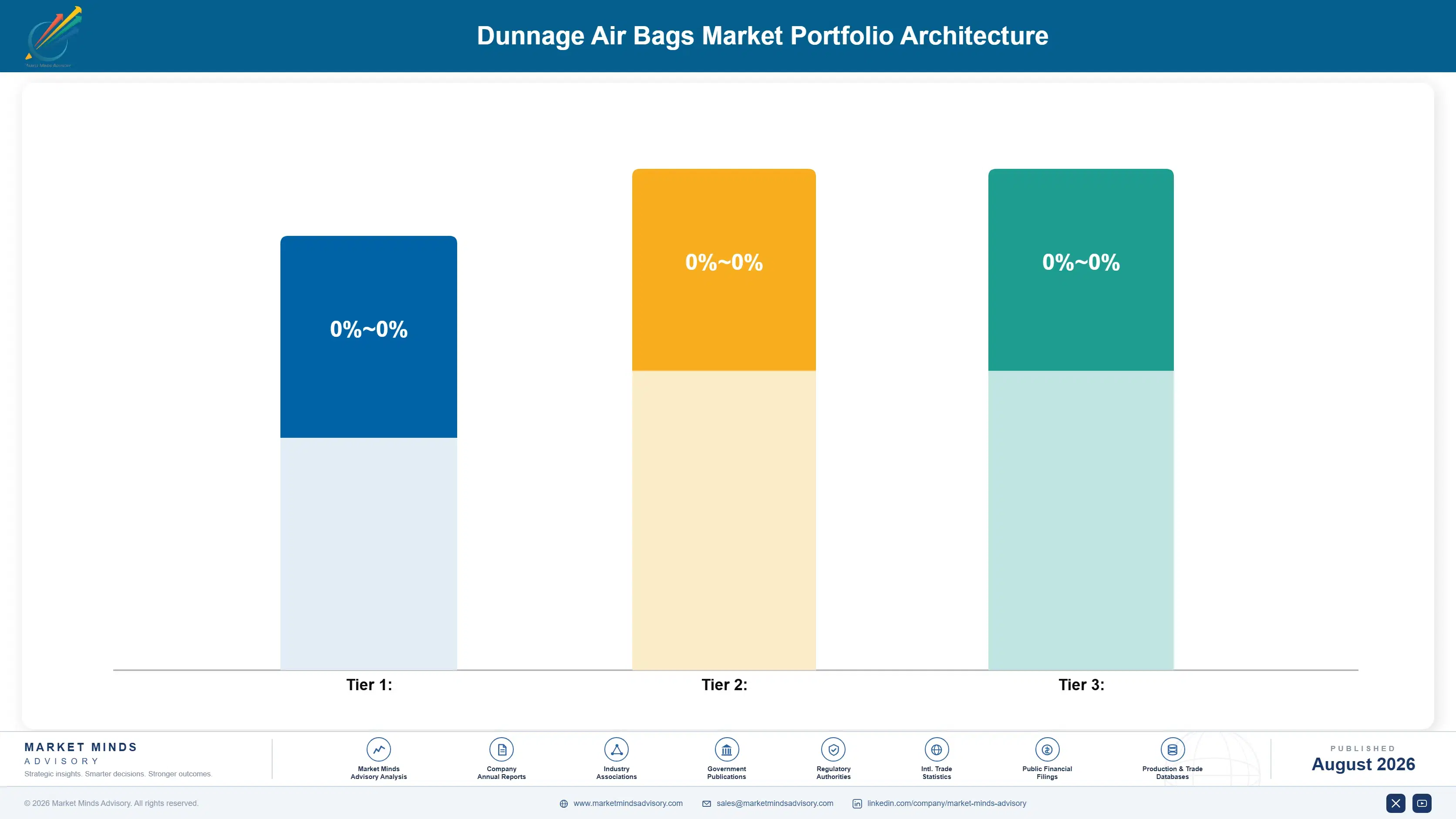
Three margin tiers define this category. Volume and commodity-adjacent products, mostly standard film and vinyl bags, compete on price with gross margins around 18 to 25 percent. Premium and certified products carrying carrier and cold chain qualification command 30 to 38 percent margins. Sustainability and next-generation kraft paper and reinforced composite formats sit highest, reflecting both scarcer supply and buyer willingness to pay for plastic reduction.
The volume versus premium tension shows up clearest in production line allocation decisions, since converting capacity to kraft paper or composite formats reduces available capacity for lower-margin commodity film that still represents the largest single revenue pool today. Producers balancing this tradeoff carefully tend to outperform those chasing premium categories too aggressively before demand fully materializes, particularly when certification timelines run longer than the sales pipeline supporting new capacity investment.

High-value margin pools concentrate specifically around cold chain certified composite bags and bundled inflation equipment service contracts, both categories where technical barriers and switching costs support pricing well above commodity levels sustainably, even as overall category volume growth moderates toward the middle of the forecast period and buyers consolidate purchasing toward fewer certified vendors.

Standard film and vinyl bags sold primarily on price to high-volume industrial and rail freight accounts, with limited differentiation between suppliers beyond basic delivery reliability and modest volume discount structures offered to the largest recurring accounts.
Gross Margin

Carrier-certified and cold chain qualified bags sold to accounts where load damage costs justify meaningfully higher unit prices, and where certification testing creates a real barrier to entry that smaller regional converters rarely clear on their own.
Gross Margin

Kraft paper and reinforced composite formats sold to buyers with active plastic reduction commitments, commanding the category's highest margins given constrained production capacity relative to demand and continued investment lag among smaller converters.
Gross Margin
dunnage-air-bags-market-portfolio-architecture-1787548410031

High-value Sub-segments and Strategic Watch-out

Cold Chain Certified Composite Bags

Cold chain certified composite bags combine premium pricing with the fastest unit growth in the category, as pharmaceutical and perishable food shippers increasingly specify certified formats over general-purpose alternatives industry-wide, a shift accelerating faster than overall category volume growth would suggest on its own across most tracked accounts.

Multi-Layer Kraft Paper Bags

Multi-layer kraft paper bags carry strong margins and steady adoption momentum, though growth has moderated slightly as the segment matures beyond its initial retail sustainability adoption wave into broader industrial use cases that require somewhat different performance specifications and load ratings than typical retail shipments overall.

Standard Vinyl Dunnage Bags

Standard vinyl dunnage bags remain the volume backbone of the category, generating the largest absolute revenue even as their relative share slowly declines against faster-growing paper and composite alternatives across most regions, particularly among sustainability-committed retail accounts shifting specifications each successive annual contract renewal year.

Reusable Inflatable Bladder Systems

Reusable inflatable bladder systems remain niche today but warrant monitoring, since any breakthrough in durability or cost could shift large-volume accounts away from single-use formats entirely within a single procurement cycle, reshaping category economics faster than most suppliers currently expect or plan for today and next year.

Consumable Repurchase Meets Specification Lock-In

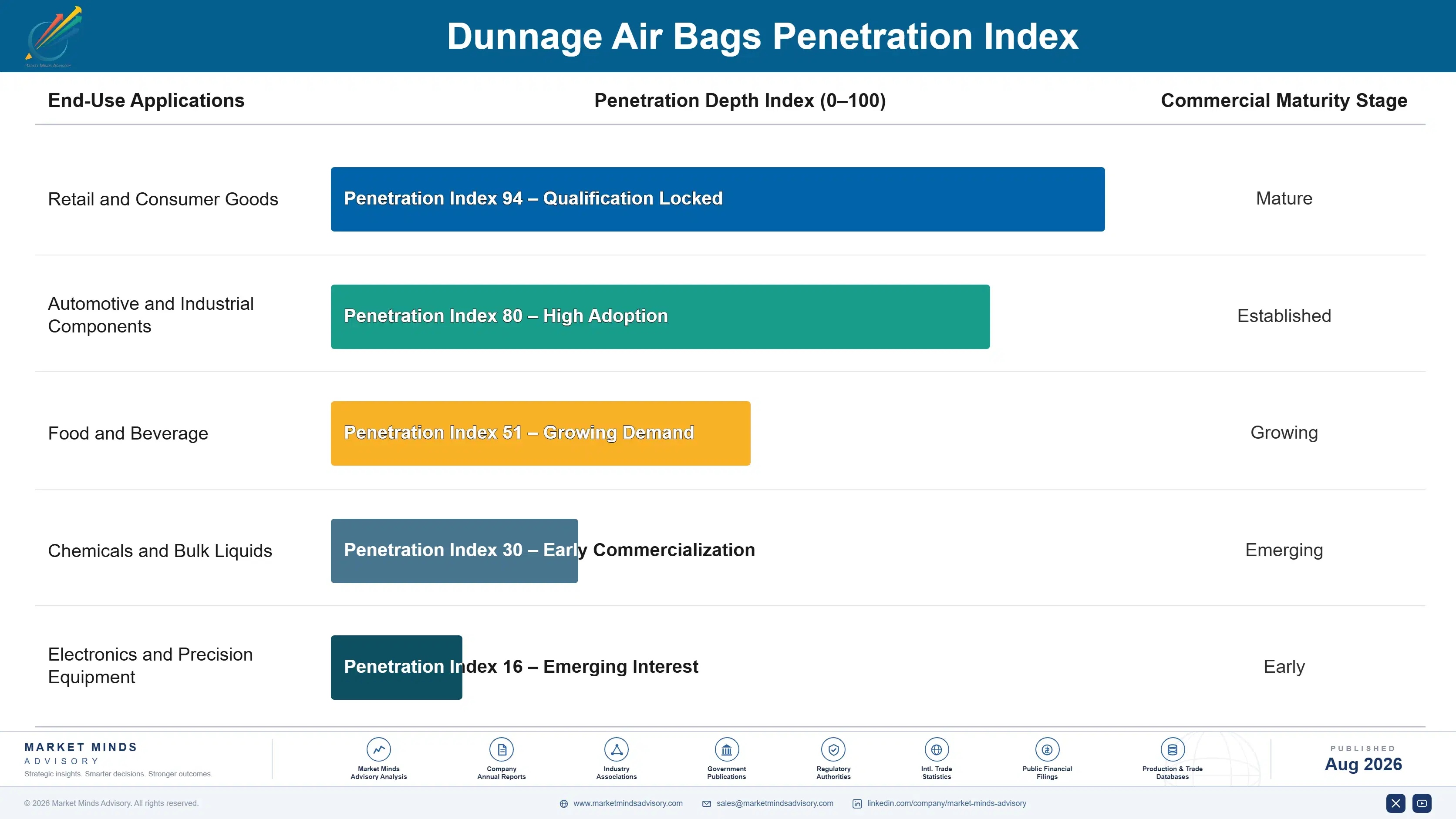
Dunnage bags are single-use consumables in most applications, generating repeat purchase volume that behaves more like an annuity than a capital good sale. Once a shipper's loading procedures specify a particular bag type and supplier, switching requires retraining dock staff and revalidating load securing protocols, creating a mild but real form of specification lock-in that favors incumbent suppliers over new entrants offering marginally lower prices alone.
Adoption stickiness varies meaningfully by end-use vertical. Rail intermodal accounts show the deepest lock-in, given formal carrier certification requirements that make switching costly and slow. Retail and e-commerce parcel accounts show shallower stickiness, since lighter-duty applications carry fewer certification requirements and buyers can shift between suppliers more easily when kraft paper alternatives offer better sustainability positioning at comparable prices.

Buyer profiles are shifting generationally as procurement teams increasingly report to sustainability officers rather than pure logistics management, changing how specification decisions get made. Younger procurement staff entering these roles show less attachment to legacy vinyl and film specifications than predecessors who built career-long relationships with incumbent suppliers, accelerating kraft paper and composite adoption faster than pure economics alone would predict.
dunnage-air-bags-market-end-use-penetration-index-1787548410511

What Determines Winners in Dunnage

These are among the four positions where our research anticipates prominent divergence between winners and laggards over the coming forecast period. Each is grounded in the demand model, the regulatory perimeter, and the announced capacity pipeline.
01 / MATERIAL TRANSITION TIMING

Convert Ahead of Mandatory Specification Deadlines

Suppliers who convert film production capacity to kraft paper ahead of buyer mandates capture premium pricing before competition compresses it back toward parity with commodity formats. Those who wait risk losing shelf position entirely once major retail accounts finalize new specifications during annual contract cycles that lock in supplier relationships for years. Capital committed early, even before demand fully materializes, tends to earn back its cost faster than capital committed reactively once the specification shift is already visible to every competitor in the category.
02 / CARRIER CERTIFICATION DEPTH

Build Testing Capability Before Cold Chain Demand Peaks

Cold chain and temperature-sensitive freight applications reward suppliers with established testing and certification infrastructure well before demand for those applications peaks broadly across pharmaceutical and food logistics networks worldwide. Building that capability after demand is already visible means competing against suppliers who locked in customer relationships years earlier and defended them successfully against new entrants. The certification cycle itself takes long enough that late movers effectively concede the category's fastest-growing niche to whoever invested first and built the deepest testing bench.
03 / EQUIPMENT BUNDLING STRATEGY

Pair Reusable Hardware With Recurring Service Contracts

Bundling inflation equipment with maintenance service contracts converts a one-time bag sale into a recurring revenue relationship that competitors struggle to displace once hardware is installed on a customer's loading dock. This works best with large industrial accounts that already operate dedicated loading dock infrastructure capable of supporting installed hardware over multiple contract renewal cycles. Suppliers pursuing this strategy should prioritize accounts with the highest shipment frequency first, since renewal economics improve sharply with utilization volume and equipment amortization speed.
04 / GEOGRAPHIC CAPACITY ALLOCATION

Weight New Capacity Toward South Asia and Pacific

Producers concentrated in North America and Western Europe should weight incremental capacity investment toward South Asia and Pacific, where growth is fastest but local converting capacity remains thin relative to rising export volume from expanding manufacturing hubs. Waiting for demand to fully materialize before investing risks ceding early relationships to regional converters who move faster despite weaker technical capability and thinner testing infrastructure. Early capacity commitment there compounds into durable customer relationships as export volume continues climbing year over year.

Engagement Snapshot From the Field

A live engagement with an industry participant carrying material or product regulatory and market exposure ahead of a defining policy shift, showing how our research translates into a defensible multi-year portfolio strategy.
MARKET MINDS ADVISORY · CLIENT ENGAGEMENT SUMMARY
Dunnage Air Bags Producer Strategic Portfolio Review and Transition Roadmap 2026·Investment Scenario on Dunnage Air Bags Exposure Evaluation 2025-26
CLIENT PROFILE
The client operates a large North American retail distribution network moving several million outbound shipments annually across owned and contracted trucking fleets. Facing corporate plastic reduction commitments announced two years earlier, the logistics procurement team was under pressure to rewrite dunnage packaging specifications across its entire distribution center network without increasing freight damage claim rates, which had been trending downward under the existing vinyl and film specification for several years.
STRATEGIC CHALLENGE
The client needed to determine whether kraft paper dunnage bags could replace vinyl and film products across its distribution network without raising damage claims, and if not universally, which specific load categories could convert safely now versus which required waiting for reinforced formulations still under active development by its existing bag suppliers at the time.
MMA APPROACH
MMA conducted a structured review of load categories against kraft paper performance specifications, supplemented by primary interviews with dunnage bag suppliers and freight carriers already running comparable conversions elsewhere in North America. The analysis segmented the client's shipment mix by load weight and fragility to identify which categories could convert immediately.
KEY FINDINGS
  1. Roughly 60 percent of the client's shipment volume by count involved load weights light enough for immediate kraft paper conversion without measurable damage risk increase.
  2. Heavy pallet loads above a specific weight threshold showed a meaningful damage rate increase under kraft paper in supplier-run trials, ruling out universal conversion in the near term.
  3. Suppliers offering reinforced multi-ply kraft paper construction could close roughly half the remaining performance gap within twelve to eighteen months based on stated development timelines.
  4. Competitors who converted prematurely across their entire network without load segmentation experienced measurable increases in damage claims during the first two quarters after conversion.
CLIENT PROFILE
The client operates a large North American retail distribution network moving several million outbound shipments annually across owned and contracted trucking fleets. Facing corporate plastic reduction commitments announced two years earlier, the logistics procurement team was under pressure to rewrite dunnage packaging specifications across its entire distribution center network without increasing freight damage claim rates, which had been trending downward under the existing vinyl and film specification for several years.
STRATEGIC CHALLENGE
The client needed to determine whether kraft paper dunnage bags could replace vinyl and film products across its distribution network without raising damage claims, and if not universally, which specific load categories could convert safely now versus which required waiting for reinforced formulations still under active development by its existing bag suppliers at the time.
MMA APPROACH
MMA conducted a structured review of load categories against kraft paper performance specifications, supplemented by primary interviews with dunnage bag suppliers and freight carriers already running comparable conversions elsewhere in North America. The analysis segmented the client's shipment mix by load weight and fragility to identify which categories could convert immediately.
KEY FINDINGS
  1. Roughly 60 percent of the client's shipment volume by count involved load weights light enough for immediate kraft paper conversion without measurable damage risk increase.
  2. Heavy pallet loads above a specific weight threshold showed a meaningful damage rate increase under kraft paper in supplier-run trials, ruling out universal conversion in the near term.
  3. Suppliers offering reinforced multi-ply kraft paper construction could close roughly half the remaining performance gap within twelve to eighteen months based on stated development timelines.
  4. Competitors who converted prematurely across their entire network without load segmentation experienced measurable increases in damage claims during the first two quarters after conversion.
RECOMMENDED STRATEGY
Phase 1: Phase one: convert lighter load categories representing roughly 60 percent of shipment volume to kraft paper within the current fiscal year. Phase 2: Phase two: pilot reinforced multi-ply kraft paper on medium-weight loads with a limited supplier group before wider rollout across the network. Phase 3: Phase three: maintain vinyl specification for heaviest pallet loads until reinforced kraft paper formulations demonstrably close the remaining performance gap in trials.
OUTCOME
The client converted approximately 55 percent of its shipment volume to kraft paper within the first year following the phased approach, reducing plastic packaging weight substantially (client-reported, unverified by MMA) without a measurable increase in freight damage claim rates, according to the client's own internal tracking shared during the engagement.

Frequently Asked Questions

Foundational context covering the market sizes, CAGR, scope, country, region and competition that inform every finding below. This section is provided to cover basics and most often pre-purchase conversations, answered from the MMA Primary Research Dataset.

What is the current size of the Dunnage Air Bags Market?

The global dunnage air bags market reached approximately 0.55 billion dollars in 2025. Growth is driven by rising freight damage prevention requirements and expanding containerized shipment volume worldwide.

How large will the Dunnage Air Bags Market be by 2036?

MMA projects the market will reach approximately 1.11 billion dollars by 2036, roughly 1.88 times its 2026 value. Kraft paper and composite formats will account for a growing share of that expansion.

What is the CAGR for the Dunnage Air Bags Market 2026 to 2036?

The market is projected to grow at a 6.5 percent compound annual rate between 2026 and 2036. Bull and bear scenarios range from 5.3 to 7.7 percent depending on regulatory and freight volume trends.

Which segment is growing fastest?

Multi-layer kraft paper dunnage bags are growing fastest at a 9.0 percent CAGR, roughly 1.38 times the overall market rate. Sustainability commitments among major retail shippers drive this outperformance.

Who are the major companies in the Dunnage Air Bags Market?

Sealed Air Corporation, Signode Industrial Group, Cordstrap, IEP Technologies, and Loadhog lead the market. Together they hold roughly 46 percent combined share on a shipment volume basis.

Which country is growing fastest?

China leads regional growth at an 8.0 percent CAGR, supported by its position as the largest single manufacturing and export base for containerized freight. India follows closely within South Asia and Pacific.

Report Segmentation Architecture

The full report scope spans multiple orthogonal segmentation dimensions, with cross-tabulated demand data provided for each dimension pair. Coverage extends further to regional breakdowns, trend trajectories, and the competitive detail needed to support segment-level decision-making.
  • Polywoven (PP) Dunnage Bags
  • Multi-Layer Kraft Paper Dunnage Bags
  • Vinyl (PVC) Dunnage Bags
  • Polyethylene Film Dunnage Bags
  • Laminated Paper-Plastic Composite Dunnage Bags
  • Reusable Inflatable Bladder Systems
  • Retail and Consumer Goods
  • Automotive and Industrial Components
  • Food and Beverage
  • Chemicals and Bulk Liquids
  • Electronics and Precision Equipment
  • Rail Intermodal Freight
  • Long-Haul Trucking
  • Ocean Container Shipping
  • Third-Party Logistics Providers

By Region

  • North America
  • East Asia
  • Western Europe
  • South Asia and Pacific
  • Latin America
  • Middle East and Africa
  • Eastern Europe

Scope, Methodology, and Coverage

Every figure in this report is reproducible from documented input assumptions. The scope below maps the historical period, the forecast horizon, the segmentation dimensions, and the countries covered, alongside the underlying primary and qualitative methodology.
Historical Period
2020 to 2025
Forecast Period
2026 to 2036
Base Year
2025 (USD billions; MMA Primary Research Dataset, August 2026)
Market Definition
The dunnage air bags market covers polywoven, multi-layer kraft paper, vinyl, polyethylene film, laminated paper-plastic composite, and reusable inflatable bladder dunnage products sold to freight carriers, shippers, and logistics providers for void-fill load securing. It excludes general cargo strapping, blocking hardware, and pallet wrap sold as separate load securing product categories.
Quantitative Units
USD billions
Segmentation Dimensions
Regions Covered
North America, East Asia, Western Europe, South Asia and Pacific, Latin America, Middle East and Africa, Eastern Europe
Countries Covered
Key Companies Profiled
Sealed Air Corporation, Signode Industrial Group, Cordstrap, IEP Technologies, Loadhog, AAR Manufacturing, Shippers Products Company, TransPak, Cargo-Care, Duo-Fast, Sioen Industries, Illinois Tool Works, Cadillac Products Packaging, Great Lakes Packaging, Baytek International, Rani Group, Polyair Inter Pack, Jindal Industries, DSI Dunnage Bags, Flexipol Packaging
Quantitative Methodology
Primary survey, n=3,800 respondents, Q4 2025, six countries; demand-side model with trade association cross-validation
Qualitative Methodology
47 expert interviews, Q4 2025; applied to validate demand model assumptions, identify emerging dynamics, and assess competitive positioning
Report Format
PDF and XLSX data workbook (Word format preview document)
Publisher
Market Minds Advisory
Report Code
MMA-2026-PAC-101
Published
August 2026
Contact
sales@marketmindsadvisory.com | www.marketmindsadvisory.com

Purchase the full Dunnage Air Bags Market Report (2026 to 2036).

This report provides a comprehensive assessment of the global dunnage air bags market. It covers sizing, segmentation, competitive dynamics, and regional demand through 2036. The analysis examines the material transition from vinyl and film toward kraft paper and composite formats driven by sustainability commitments among major freight shippers worldwide. It includes detailed competitive profiling of leading suppliers, input cost exposure across the resin and paper supply chain, and revenue lever analysis across certification and equipment bundling opportunities. A phased case study illustrates how one retail logistics operator approached its packaging specification conversion process.
Ten-year market sizing and forecast scenarios
Six-segment MECE material classification breakdown overview
Seven-region demand and growth rate analysis
Competitive profiling of five leading suppliers
Input cost exposure across resin and paper supply chains
Anonymized client case study on specification conversion

Built For The People Who Decide

From boardroom strategy to bench-side execution, this report is read cover-to-cover by leaders shaping the next decade of their industry, turning demand scenarios, market dynamics and valuation benchmarks into decisions.
CXOs/ Presidents/ VPs/ Managers
M&A and Corporate Development
Strategy Teams and R&D Heads
Procurement and Product Directors
Regulatory and Compliance Leaders
Investor Relations and Equity Analysts