Market Minds Advisory
DNA-Based Skin Care Market

DNA-Based Skin Care Market: Salmon Polynucleotides, Genetic Testing Disappointment, and Regulatory Absence

One half of this category injects purified salmon DNA and is growing very fast, and the other half sequences the customer's own genes and has already almost stopped growing entirely.

Lead Analyst

Alice Ballenger

Published

September 2026

Make Smarter Decisions with Customized Research Insights

Request a free sample report and evaluate market opportunities, growth trends, and competitive dynamics relevant to your business needs.

2025 MARKET VALUE$1.1BMarket Size 2025
2036 FORECAST VALUE$5.0BBase Case , 2026 to 2036
CAGR 2026 TO 203614.2 %Bull 15.5% / Bear 12.9%
INCREMENTAL OPPORTUNITY$3.6BNet 10- year value creation
EXPANSION MULTIPLE3.78x2036 value over 2026 base
Strategic Levers
M&A Pipeline
Regional Outlook
Country Rankings
Competitive Intelligence
Segmental Deep-dive
Call-Us : 91 93563 13602

Executive Snapshot and Market Trajectory

Two quite different businesses share this category's name. One injects purified polynucleotides derived from salmon milt into skin and is growing very rapidly. The other sequences a customer's own genes to recommend creams, and it has effectively stalled. They share a word and almost nothing else.
Injectable polynucleotide skin boosters compound at 21.3%, a full 1.50x the market rate, having moved from Korean dermatology practice into aesthetic clinics across Asia and Europe within a few years. East Asia holds 42% of value, far above the standard band, because South Korea created the category commercially and compounds at 23.4%, while China adopted it faster than any other market. Clinician referral rather than advertising carried it there.
Concentration is low at 47%, and the largest single constraint is regulatory rather than clinical. Exactly 0 polynucleotide injectables hold United States approval, which removes the highest-priced aesthetic market in the world from a category otherwise growing at pace everywhere else. Genetic testing repeat purchase sits near 6% because a genome does not change, and the variants tested carry effect sizes too small to generate advice a dermatologist would not give unprompted anyway.
Market Definition
This market covers skin care and aesthetic products whose active mechanism involves nucleic acids, spanning injectable polynucleotide skin boosters, topical DNA repair enzyme formulations, topical nucleotide and nucleoside actives, genetic test-guided skincare services, and exosome and nucleic acid delivery products, measured at manufacturer or service revenue. Hyaluronic acid dermal fillers without nucleic acid content, botulinum toxin, general cosmetic formulations, energy-based aesthetic devices, and clinic procedure fee revenue are excluded.
Base Year Value
$1.1B in 2025 (MMA Primary Research Dataset, August 2026)
Forecast Period
2026 to 2036, eleven discrete annual values
CAGR
14.2% base case. Bull 15.5%. Bear 12.9%.
Fastest Growth Segment
Injectable Polynucleotide Skin Boosters: 21.3% CAGR
Fastest Growth Country
South Korea: 23.4% CAGR
Fastest Growth Region
South Asia and Pacific: 16.2% CAGR
Largest Region
East Asia: 42% of 2025 global value
Market Leaders
PharmaResearch, Mastelli, ISDIN, Croma-Pharma, and Hugel. Source: MMA Primary Research Dataset, July 2026.
Primary Survey
n=3,800 procurement and R&D decision-makers, Q4 2025, six countries
Methodology
Demand-side build-up, cross-validated against public data, 47 expert interviews

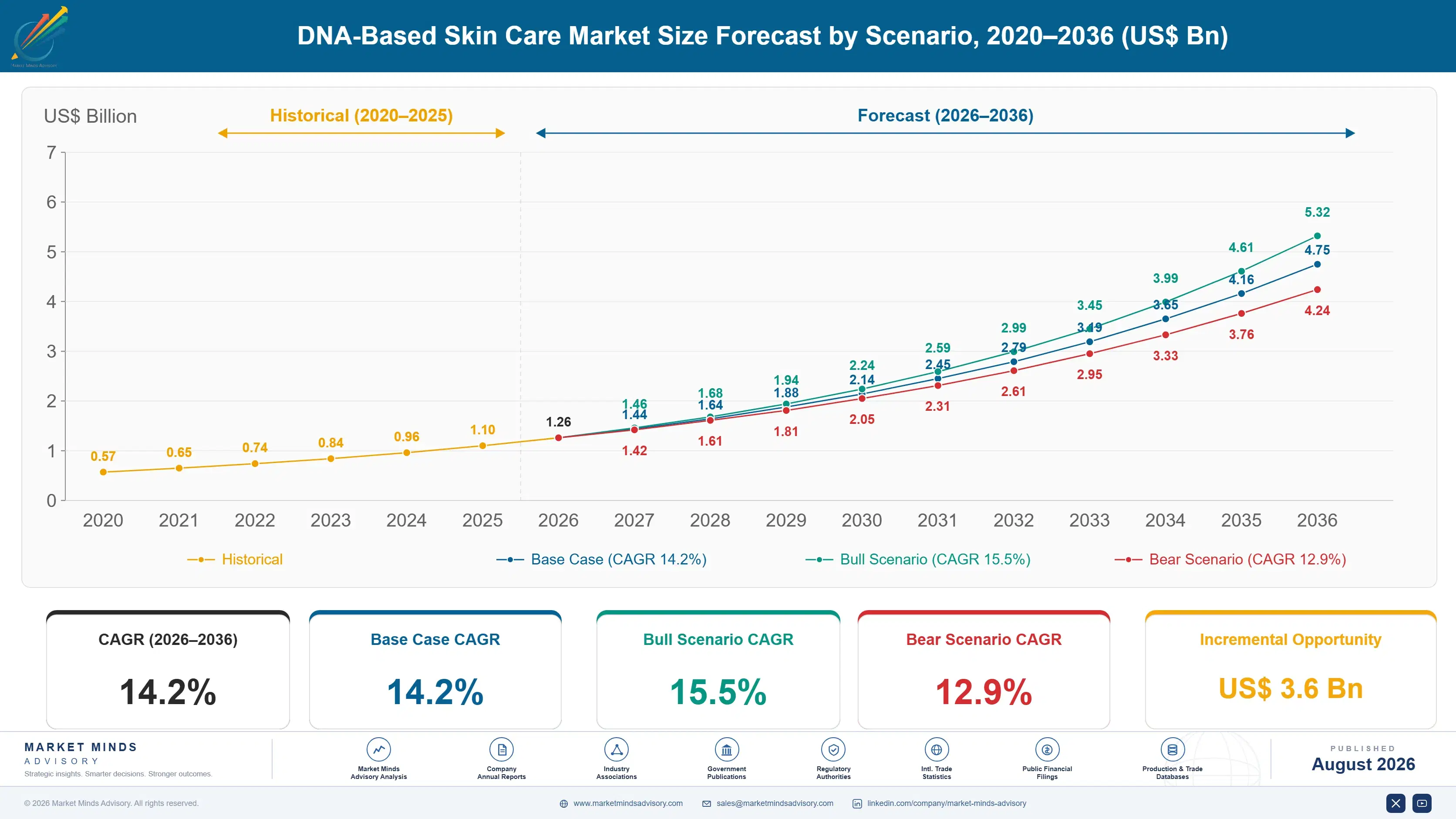
DNA-Based Skin Care Market Forecast Scenarios

dna-based-skin-care-market-size-forecast-scenario-1787305682080
Growth ran near 12.8% from 2020 to 2025 with the two halves of the category moving in opposite directions. Genetic test-guided skincare, which had attracted considerable investment and consumer curiosity, produced recommendations that were essentially generic and repeat purchase rates collapsed. Injectable polynucleotides meanwhile moved out of Korean dermatology into aesthetic clinics across Asia and Europe, carried by clinician experience rather than by marketing.
Base case growth of 14.2% rests on three mechanisms. Polynucleotide injectables keep expanding geographically wherever a medical device pathway permits them, which covers most of Europe and Asia. Exosome and nucleic acid delivery products extend the same biological argument into topical and post-procedure application. And topical DNA repair enzyme formulations gain from photoprotection positioning that carries genuine mechanism rather than a marketing claim. None of the three depends on the others arriving first.
The bull case at 15.5% assumes a United States regulatory pathway opens for polynucleotide injectables, which would add the highest-priced aesthetic market in the world to a category currently excluded from it entirely. The bear case at 12.9% is regulatory tightening the other way: authorities reclassify these products as medicines rather than devices, demanding evidence nobody has assembled.

Nucleic Acid Skin Care: Injection, Evidence, Approval

Almost nothing connects the two halves of this category except a word. Injectable polynucleotides are purified DNA fragments from salmon milt, injected into the dermis where they appear to support fibroblast activity and hydration. Genetic test-guided skincare sequences a customer's own variants and recommends products accordingly. The first contains DNA and involves no genetics; the second involves genetics and contains no DNA. Only one of them is growing.
TOP FIVE CONCENTRATION47%Fragmented across Korean originators, European manufacturers and cosmetic formulators
TREATMENT COURSE PRICEUSD 900Typical patient cost for a full injectable course, entirely self-funded
COURSE SESSIONS REQUIRED3 sessionsInjections in a standard initial course before maintenance treatment begins
UNITED STATES APPROVALS HELD0 approvalsInjectable polynucleotide products cleared for aesthetic use domestically
GENETIC TEST REPEAT RATE6%Customers purchasing a second genetic skincare assessment after their first
SALMON-DERIVED SOURCE SHARE88%Polynucleotide products manufactured from salmon milt rather than other sources
The genetic testing side has been a commercial disappointment, and the reason is uncomfortable. The variants tested carry very small effect sizes, so recommendations converge on advice any dermatologist gives without a sample: use sunscreen, use retinoids, do not smoke. Repeat purchase runs near 6%, because a genome does not change and a customer who has bought the answer once has no reason to buy it again.
The injectable side is genuinely expanding, and it did so through clinicians rather than advertising. Korean dermatologists adopted polynucleotide skin boosters for texture, hydration and post-procedure recovery, results were visible enough to sustain referral, and the practice spread across Asia and into Europe. The obstacle is regulatory geography: exactly 0 products hold United States approval, which excludes the highest-priced aesthetic market entirely.
"The part of this market with DNA in the syringe is growing at twenty per cent and the part reading your genome is not growing at all. That tells you something about which biology actually does anything to skin."
Principal Analyst, Aesthetic Medicine and Dermatological Innovation Practice · M

Market Trends

Polynucleotide injectables spread through clinicians rather than marketing

Korean dermatologists adopted salmon-derived polynucleotide skin boosters for texture, hydration and post-procedure recovery, and the practice spread across Asia and into European aesthetic clinics on visible results and peer referral rather than through consumer campaigns. The segment compounds at 21.3%. Around 88% of product is manufactured from salmon milt, which is an abundant by-product of an existing industry rather than a constrained input, and that supply position supports the pricing structure comfortably. Clinician referral built this category rather than advertising, which is unusual in aesthetics and explains why the growth has proved durable rather than faddish.
Market Impact: Korea compounding at 23.4% annually
Genetic skincare testing fails on effect size rather than technology

Sequencing a customer's variants and recommending products accordingly attracted substantial investment and consumer curiosity, and then ran into the fact that the variants involved carry very small effect sizes for skin outcomes. Recommendations converge on advice any dermatologist would give unprompted. Repeat purchase sits near 6% because a genome does not change, so the customer who bought an answer once has no reason to buy it again at any price. That is a scientific limitation rather than a marketing failure, and no improvement in interpretation, presentation or channel design has altered it anywhere it has been attempted.
Market Impact: Courses running 3 sessions each

Market Opportunities and Growth Drivers

Korean aesthetic practice exports treatment protocols worldwide

South Korea compounds at 23.4% and functions as the reference market for aesthetic injectable innovation, with treatment protocols developed there adopted subsequently across Asia, the Middle East and Europe. Polynucleotide skin boosters followed exactly that route, moving from Korean dermatology into aesthetic clinics elsewhere within a few years. Practitioner training and observation visits to Korean clinics are a genuine channel that manufacturers fund deliberately, and no equivalent flow runs in the opposite direction. Chinese manufacturers have since entered production at prices Korean originators cannot match, which is already reshaping the fastest adopting market outside Korea itself.
Market Impact: Exactly 0 approvals granted domesti

Post-procedure recovery creates a treatment slot nothing else fills

Aesthetic clinics performing laser resurfacing, microneedling and energy-based treatments need something to support recovery afterwards, and polynucleotide injectables occupy that slot with a hydration and repair argument that fits the clinical moment precisely. A standard course runs to 3 sessions before maintenance begins, which builds a repeat relationship around a procedure the patient already came for. That adjacency drives adoption more effectively than standalone positioning ever did. Clinics adopt the treatment principally as recovery support rather than as a standalone offering, so revenue follows existing appointment volume closely rather than requiring separate demand generation at all.
Market Impact: Affects roughly 90% of volume

Market Restraints and Challenges

No United States pathway exists for injectable polynucleotides

Exactly 0 polynucleotide injectables hold United States approval for aesthetic use, which excludes the highest-priced aesthetic market in the world from a category growing rapidly everywhere else. The root cause is classification: European and Asian authorities regulate these as medical devices while the United States framework has no comparable route for an injected biological material with cosmetic intent. Commercial impact is geographic exclusion. Participants are pursuing formal submissions, device classification arguments and clinical evidence packages. Informal supply and treatment tourism fill part of that gap unofficially. Manufacturers cannot address that commercially at all.
Market Impact: Compounding at 21.3% each year

Device classification could be reversed toward medicine regulation

Polynucleotide injectables reach European and Asian markets as medical devices, which requires far less clinical evidence than a medicinal product classification would demand. The root cause is that an injected biological material with a claimed physiological effect sits genuinely close to the boundary. Commercial impact would be severe if authorities reclassified, since evidence packages sufficient for medicinal approval do not exist. Participants are building clinical data proactively and engaging regulators ahead of any formal review. Nobody in the category controls that review or its timing. Proactive evidence is the only available insurance.
Market Impact: Repeat purchase near 6%
3 additional market trends, 4 additional growth drivers, and 2 additional restraints and challenges are covered in the full report. Contact sales@marketmindsadvisory.com to access the complete intelligence.

Segment CAGR and Growth Architecture

Segmentation follows product class, because class determines the biological mechanism claimed, the regulatory route required, the channel through which it reaches a customer and the price it commands. Five product classes cover nucleic acid skin care supply without overlap between them. Treatment indication and customer demographic cut across several classes and are treated as use attributes.
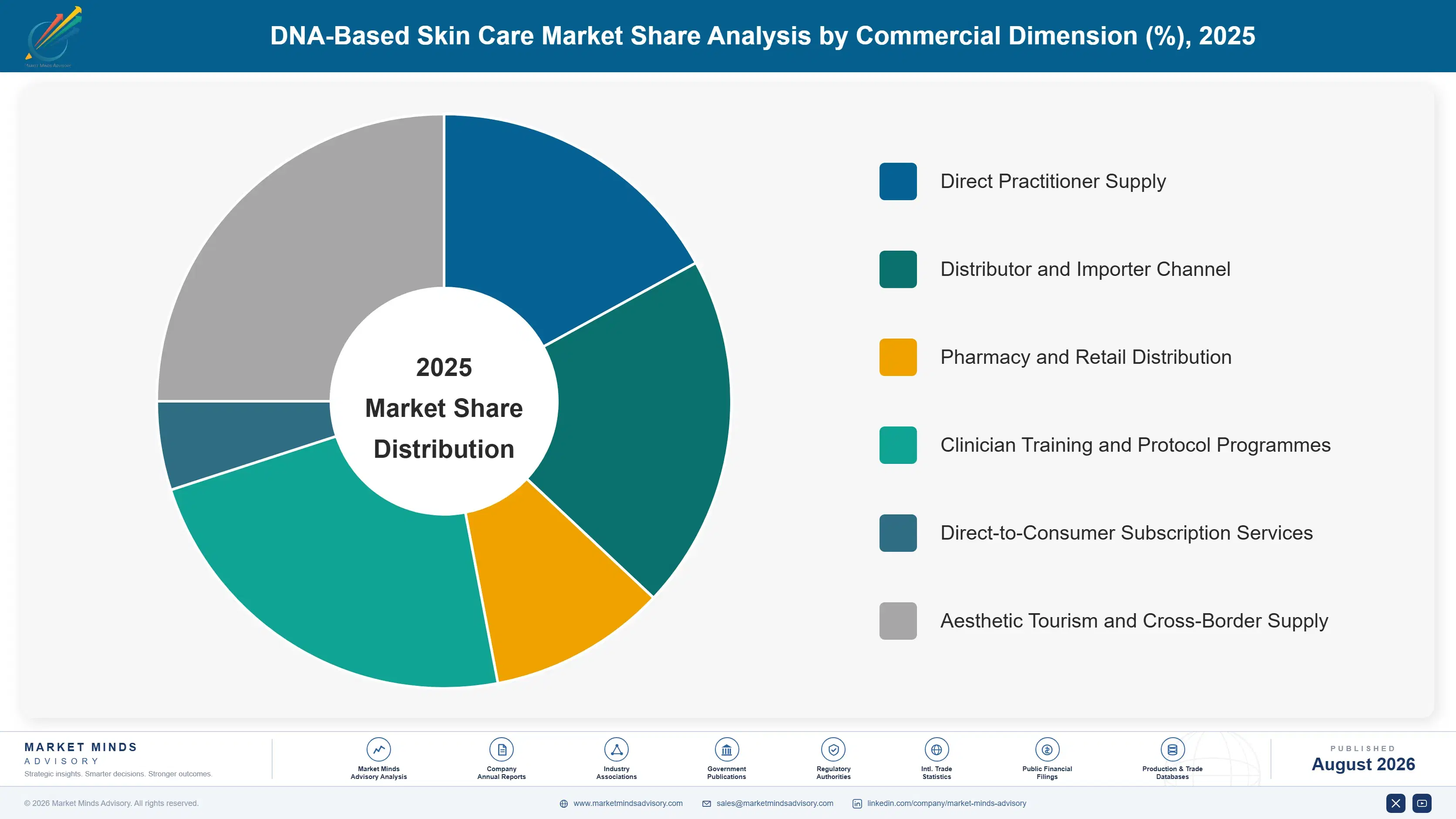
dna-based-skin-care-market-market-share-analysis-1787305682676

Injectable Polynucleotide Skin Boosters

Growing at 21.3%, a full 1.50x the market rate, injectable polynucleotides are purified DNA fragments derived overwhelmingly from salmon milt and injected into the dermis, where they appear to support fibroblast activity, hydration and recovery after procedural treatment. Adoption spread from Korean dermatology through clinician referral rather than consumer marketing, which is unusual in aesthetics and explains the durability of the growth. A standard course runs to three sessions at roughly USD 900 before maintenance. The absence of any United States pathway is the single largest constraint on the segment's ceiling. Chinese entrants have begun competing on manufacturing cost within it. Korean protocols set what clinicians elsewhere adopt, which gives the originators influence that formulation specification alone would never confer.
CAGR 21.3%

Exosome and Nucleic Acid Delivery Products

Exosome and nucleic acid delivery products grow at 17.8%, extending the same biological argument into topical and post-procedure application using extracellular vesicles or carrier systems intended to deliver signalling material into skin. Korean manufacturers again lead development. Regulatory status is considerably more contested than for polynucleotides, since exosome products have attracted explicit warnings in several jurisdictions and the evidence base is thinner. The segment grows on clinician enthusiasm and procedural adjacency, and it carries more regulatory risk than any other part of this category. Manufacturers building evidence proactively are insuring access against a review that authorities rather than companies will decide the timing of, which is the sensible position given the exposure involved.
CAGR 17.8%
Full segment breakdown across 5 segments available in the complete report.

Regional Architecture and Country Demand Map

Regional shares here follow where a regulatory pathway exists and where aesthetic injectable culture is deepest, and neither of those tracks income or population in any recognisable way. Note: three regional positions consequently sit outside the standard bands, and each is explained in the paragraph concerned.

East Asia

East Asia holds 42% of value. Note: this sits far above the standard regional band because South Korea created the polynucleotide skin booster category commercially and remains its reference market, compounding at 23.4% on the highest aesthetic injectable penetration anywhere. Chinese clinics adopted the treatment faster than any other market and domestic manufacturers including Bloomage and Imeik now compete on price. Japanese uptake is more conservative and concentrated in dermatology rather than aesthetic practice. Practitioner training visits to Korean clinics remain a genuine commercial channel. Treatment protocols developed here are adopted across Asia, the Middle East and Europe subsequently, which gives the region influence over the category well beyond its own considerable consumption.
Share: 42% | CAGR: 15.4% (2026 to 2036)

Western Europe

Eighteen per cent of value, growing at 12.6%, the slowest of the seven regions. Medical device classification permits polynucleotide injectables to reach the market with clinical evidence requirements far below medicinal approval, and Italian manufacturing established an independent European origin for the technology. Advertising restrictions push demand generation through practitioner referral rather than consumer campaigns, which suits a product that spread that way regardless. Regulatory review of the device classification represents the largest single risk to the regional position. Italian polydeoxyribonucleotide development gave the region an origin independent of Korean precedent, and a longer clinical publication history than most of the category can claim. Device classification review is the largest regional risk.
Share: 18% | CAGR: 12.6% (2026 to 2036)
Regional intelligence for 5 additional markets available in the complete report: North America, South Asia and Pacific, Latin America, Middle East and Africa, Eastern Europe. Contact sales@marketmindsadvisory.com.
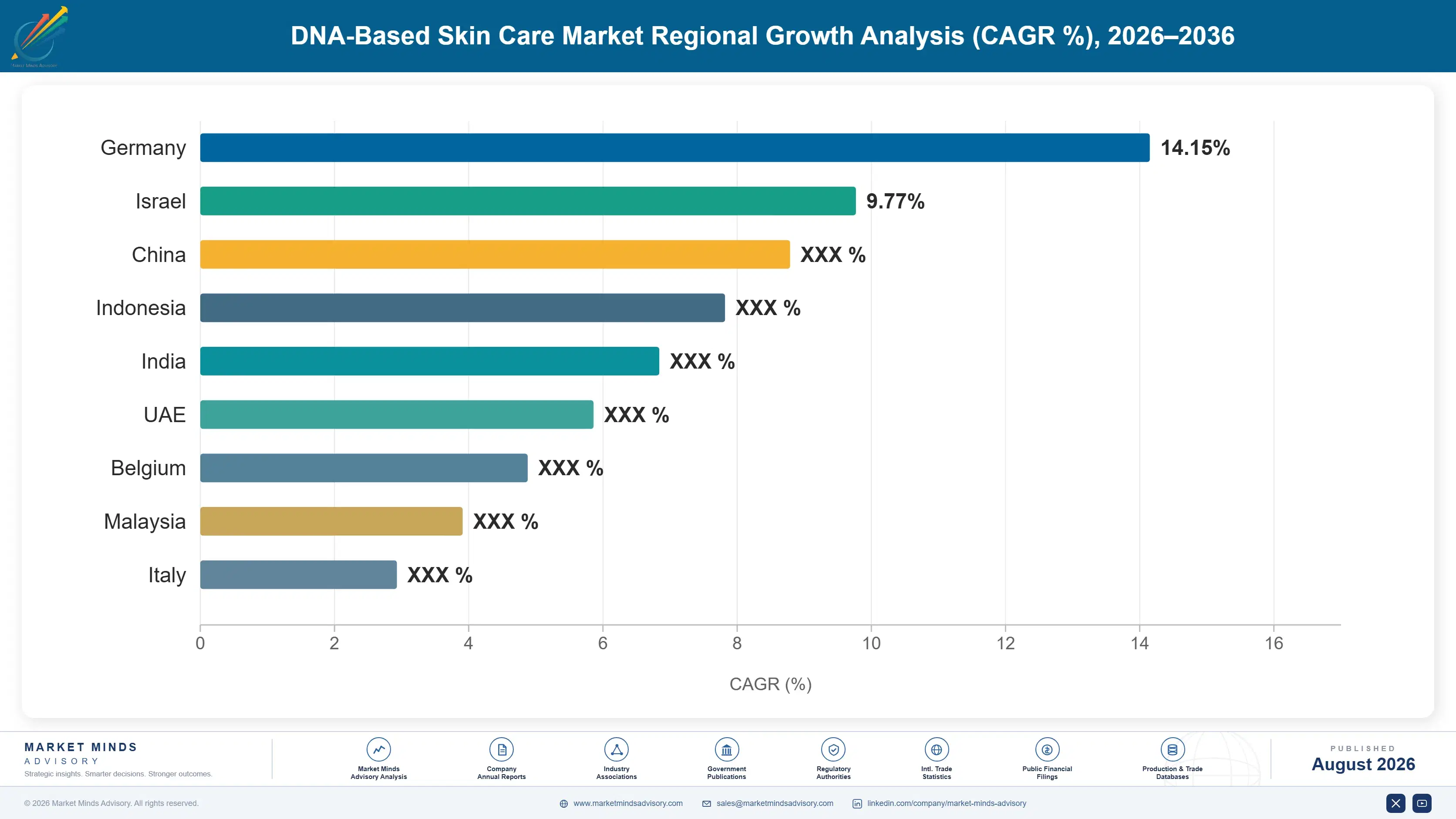
dna-based-skin-care-market-country-cagr-analysis-1787305683197

Where Nucleic Acid Skin Care Value Sits

One half of this category grew through clinicians and one half failed on effect size, and the highest-priced market in the world is closed to the growing part. Value depends on regulatory access, on procedural adjacency, and on not confusing the two halves. The two halves need entirely different strategies. Confusing them has cost investors money.

Pursue the United States pathway that does not yet exist

Exactly 0 injectable polynucleotide products hold United States approval, which excludes the highest-priced aesthetic market in the world from a segment compounding at 21.3% everywhere else. The classification question is genuinely unresolved rather than settled against the category, since these products sit close to a device and medicine boundary that United States regulation draws differently. Manufacturers building clinical evidence and engaging formally now will reach that market years before those waiting for a precedent. No competitor has yet established a blocking precedent in that market. The pathway is slow but genuinely achievable.
Market Impact: Exactly 0 approvals are currently h

Sell into the post-procedure slot rather than standalone

Aesthetic clinics performing laser, microneedling and energy-based treatments need recovery support afterwards, and polynucleotide injectables fit that clinical moment with a hydration and repair argument that standalone positioning never matched. A three session course builds a repeat relationship around a procedure the patient already booked. Adjacency to an existing appointment converts far better than any campaign aimed at generating separate demand, which is how the category actually spread. A standard course runs to 3 sessions at roughly USD 900 before maintenance begins, which builds repeat behaviour around an appointment the clinic had already secured.
Market Impact: Courses building across 3 sessions

Build clinical evidence before classification is reviewed

Polynucleotide injectables reach European and Asian markets as medical devices, which demands far less clinical evidence than medicinal classification would, and roughly 90% of category volume depends on that treatment continuing. An injected biological material with a claimed physiological effect sits genuinely close to the boundary. Manufacturers assembling evidence packages proactively protect market access, while those relying on the current classification are exposed to a review they do not control. Evidence sufficient for medicinal approval does not currently exist anywhere. The exposure is real rather than theoretical. Authorities rather than companies decide when such a review happens.
Market Impact: Protects roughly 90% of the total c

Stop selling genomes and start selling mechanisms

Genetic test-guided skincare repeat purchase sits near 6%, because a genome does not change and the recommendations produced converge on advice any dermatologist gives unprompted, since the variants involved carry very small effect sizes. That is a scientific limitation rather than a marketing failure and no amount of interpretation improves it. Investment redirected toward products whose mechanism does something measurable to skin returns considerably more than better presentation of a weak signal. Customers who bought the answer once have no reason to buy it again. Acquisition cost never amortises across a single transaction.
Market Impact: Repeat purchase stuck near 6% of al

Who Controls the Margin Pool

Concentration is low at 47% across the top five, measured on annual revenue from nucleic acid based skin care products and services, the single basis applied throughout this analysis. PharmaResearch and Mastelli lead through different origins, the first having created the polynucleotide skin booster category commercially in Korea, the second holding the independent European manufacturing and medical device regulatory position.
Competition runs on three dimensions that barely intersect. Injectable polynucleotides compete on clinician familiarity, training programmes and treatment protocol adoption, since patients rarely name a brand. Topical DNA repair formulations compete within dermatological skincare on photoprotection evidence and pharmacy positioning. Genetic testing services competed on consumer marketing and have largely stopped competing at all as the segment contracted. Almost no organisation serves both halves of this category competently, and very few now attempt it.

Pressure builds from two directions. Chinese manufacturers including Bloomage and Imeik have entered polynucleotide production at prices Korean and European originators cannot match, and their domestic position is already substantial. Separately, exosome products advance the same biological argument with thinner evidence and greater regulatory exposure. Rankings shift most if a United States pathway opens, since that market would reorder the category by a considerable margin.
dna-based-skin-care-market-company-positioning-matrix-1787305683721

Competitive Moat and Risk Dimensions

PHARMARESEARCH

Moat: Category originator with clinician base

Creating the polynucleotide skin booster category commercially in Korea gave PharmaResearch the treatment protocols that clinicians elsewhere subsequently adopted, alongside the brand that practitioners name when describing the procedure. Korean training visits and observation programmes function as a genuine commercial channel that competitors entering later cannot replicate through product specification alone.
PHARMARESEARCH

Risk: Chinese production cost entry

Chinese manufacturers have entered polynucleotide production at prices Korean originators cannot match and hold substantial domestic share already, in what is the fastest-adopting market outside Korea. Absence of United States approval caps the addressable market considerably. Device classification review in any major jurisdiction would expose the entire product line simultaneously.
MASTELLI

Moat: European origin and device position

Independent European development of polydeoxyribonucleotide technology and an established medical device regulatory position give Mastelli market access across Europe that does not depend on Korean precedent, along with a longer clinical publication history than most competitors in the category can claim. European manufacturing also supports supply assurance that clinics increasingly weigh between comparable products.
MASTELLI

Risk: Scale against Korean momentum

Korean manufacturers set treatment protocols that clinicians worldwide adopt, which shapes demand in ways a European originator with smaller scale cannot readily influence. Chinese production cost undercuts European manufacturing across price-sensitive markets. Reclassification of these products toward medicinal regulation would demand evidence packages considerably beyond current device requirements.

Players Tracked

Prominent Players

PharmaResearch
Mastelli
ISDIN
Croma-Pharma
Hugel

Other Key Players

LG Chem
Medytox
Vivacy
Bloomage Biotechnology
Imeik Technology
Sinclair Pharma
IBSA Derma
Neauvia
Regen Biotech
ExoCoBio
Benev
Promoitalia
Beiersdorf
LOreal
SkinDNA

Recent Developments

APRIL 2025

Polynucleotide treatment protocols spread through European aesthetic practice

European aesthetic clinics widened adoption of Korean-developed polynucleotide skin booster protocols, an organic clinical diffusion carried by practitioner training visits and peer referral rather than by any consumer marketing campaign at all. Observation visits to Korean clinics functioned as the principal channel throughout. Consumer campaigns played no part.
Signal: This category spread through clinicians al
SEPTEMBER 2025

Genetic skincare testing services contract on repeat purchase failure

Consumer genetic skincare assessment services contracted further as repeat purchase remained minimal, an organic commercial outcome reflecting that a genome does not change and that recommendations converged on generic dermatological advice. Customer acquisition cost went unamortised across a single transaction. Investment in the segment contracted accordingly across every market.
Signal: The failure here is effect size rather tha
FEBRUARY 2026

Chinese manufacturers enter polynucleotide production at scale

Chinese aesthetic manufacturers including established hyaluronic acid producers entered polynucleotide manufacturing, an organic commercial expansion offering comparable products at prices Korean and European originators could not profitably approach. Domestic Chinese share rose quickly across a market that had adopted the treatment faster than any other outside Korea.
Signal: Cost competition arrives in the fastest ad

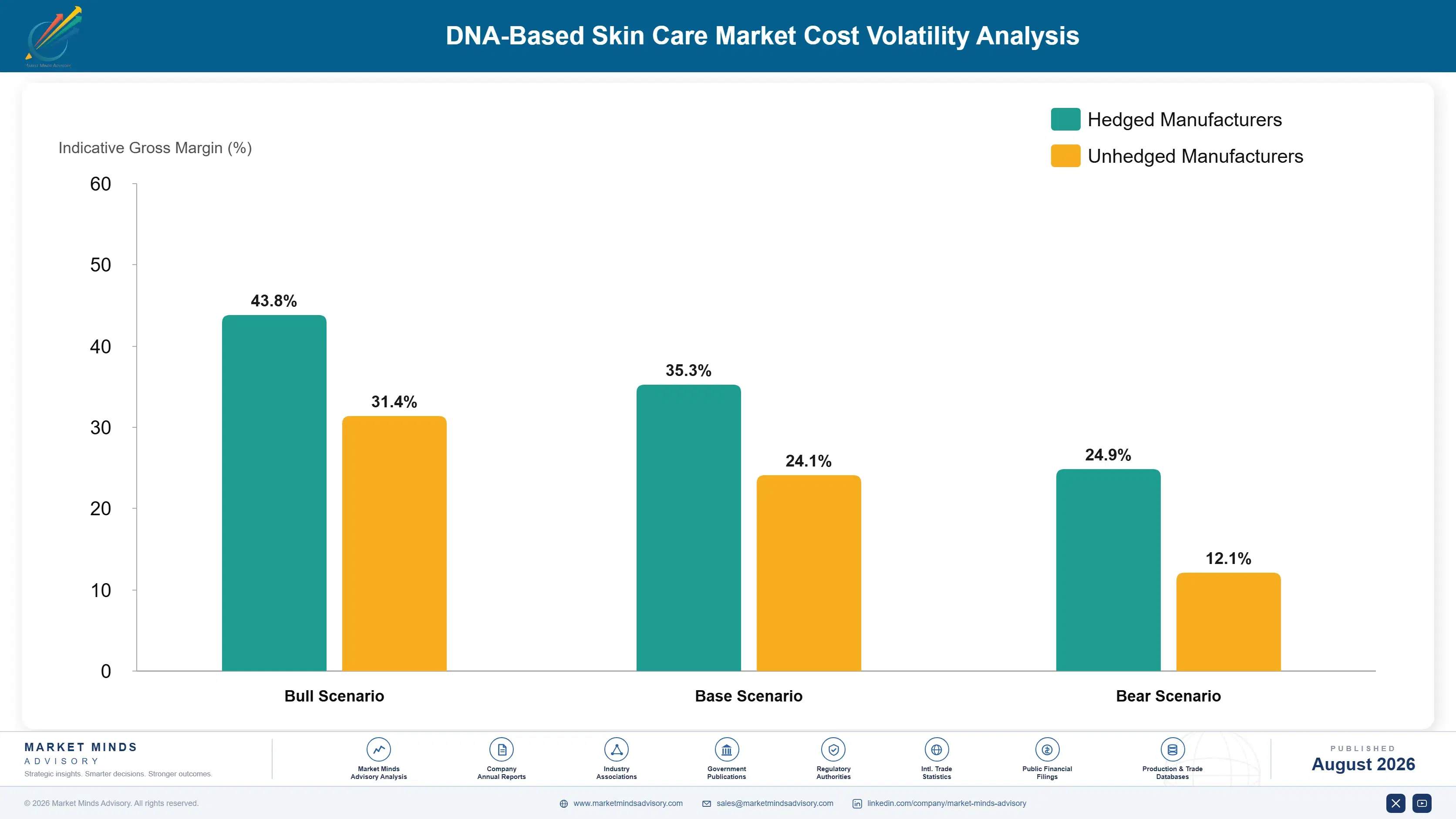
Salmon Milt, Purification and Sterility Costs

Raw material is unusually cheap and everything downstream is not. Salmon milt is an abundant by-product of an existing aquaculture and fishing industry, and the DNA extracted from it accounts for roughly 11% of finished product cost of goods. Purification, fragmentation to defined molecular weight, endotoxin removal and sterility assurance dominate the cost base, since an injectable biological material demands standards that a cosmetic ingredient never would.
Salmon aquaculture supply disruption through recent years affected milt availability regionally rather than globally, and manufacturers holding multiple sourcing regions were largely unaffected. Producer disclosures across the period documented sourcing diversification rather than any cost crisis. Sterile fill-finish capacity proved the more genuine constraint, since injectable manufacturing capacity is scarce and aesthetic products compete for it against pharmaceutical customers with considerably larger volumes. Aesthetic volumes command limited priority in those negotiations.

Exposure varies most by manufacturing integration and by regulatory route. Manufacturers controlling purification and fill-finish carry process cost directly, while those contracting either carry supplier margin and capacity risk together. Geography compounds it: Chinese producers with domestic sourcing, purification and fill capacity operate at cost structures Korean and European originators cannot approach, and that gap is visible already in the fastest-adopting market.
dna-based-skin-care-market-cost-volatility-analysis-1787305683919

Diversify salmon milt sourcing across producing regions

Milt is an abundant by-product rather than a constrained input, but regional aquaculture disruption can interrupt supply from any single source, and qualification of a new sourcing region takes documentation work rather than capital. Manufacturers holding multiple qualified regions were largely unaffected by recent disruption while single-source producers were not. Diversification costs little against the interruption it prevents.

Secure sterile fill-finish capacity ahead of aesthetic demand

Injectable manufacturing capacity is genuinely scarce and aesthetic products compete for it against pharmaceutical customers with far larger volumes and stronger negotiating positions. Owned or committed fill capacity removes that competition and shortens lead times that constrain growth in a segment expanding above twenty per cent annually. Batch contracting exposes a fast-growing line to allocation decisions made elsewhere.

Build endotoxin and molecular weight control capability internally

Fragmentation to defined molecular weight and endotoxin removal are what separate an injectable grade polynucleotide from a cosmetic ingredient, and they carry most of the cost and all of the regulatory risk. Internal capability protects both specification consistency and the device classification that market access depends upon. Contracted purification gives away the knowledge that differentiates the product.

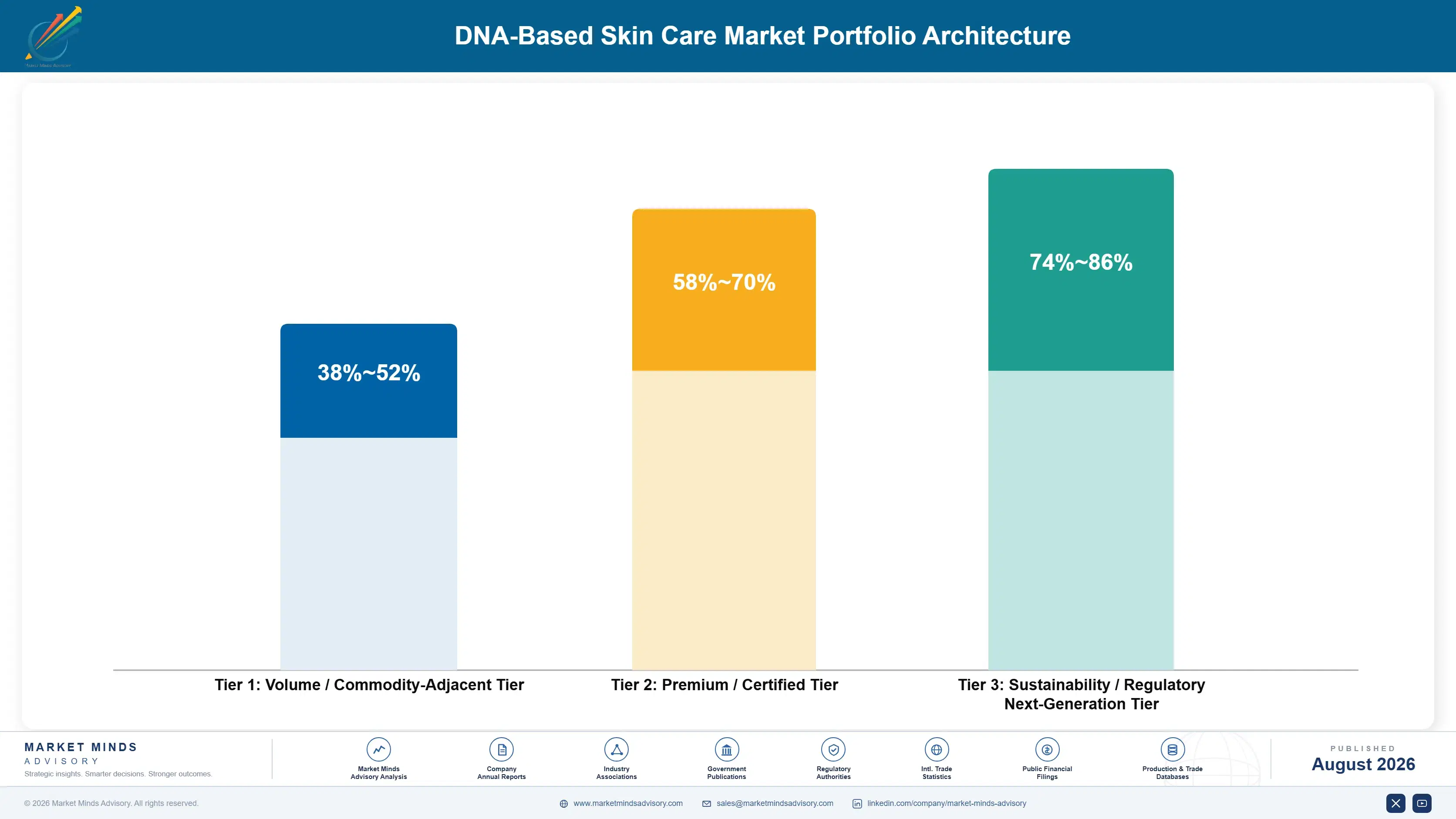
Portfolio Architecture for Margin Defence

Margin architecture separates on regulatory route and on who chooses the product. Genetic testing services earn poorly because repeat purchase near 6% leaves customer acquisition cost unamortised across a single transaction. Topical formulations earn cosmetic margins with retail marketing consuming much of the difference. Injectable polynucleotides earn best, because clinicians select them, patients pay directly at around USD 900 a course, and regulatory clearance restricts the field of supplier
The volume against premium tension runs along regulatory geography rather than product tier. Markets with a device pathway support the injectable segment at premium pricing and growing volume. The United States, which is the highest-priced aesthetic market in the world, is closed to it entirely and contributes only topical and testing revenue. That is an unusual distribution and it means the category's largest opportunity is regulatory rather than commercial.

High-value pools concentrate around injectable clearance and clinician adoption. Polynucleotide products with device classification, established treatment protocols and clinician training programmes behind them all command pricing that topicals cannot. Genetic testing services sell an answer that does not change and nobody needs twice, which no marketing improves.

Volume / Commodity-Adjacent Tier

Genetic test-guided skincare services and general topical nucleotide actives sold through consumer channels, where repeat purchase is minimal and recommendations converge on generic dermatological advice regardless. Acquisition cost never amortises here.
Gross Margin: 38-52%

Premium / Certified Tier

Topical DNA repair enzyme formulations sold through pharmacy and dermatology channels, protected by photoprotection mechanism that carries genuine biological argument rather than a marketing claim. Evidence carries weight in these channels.
Gross Margin: 58-70%

Sustainability / Regulatory / Next-Generation Tier

Injectable polynucleotide skin boosters holding medical device clearance, commanding premium because clinicians select them, patients pay directly and regulatory classification restricts the supplier field. Patients pay directly and rarely name a brand.
Gross Margin: 74-86%
dna-based-skin-care-market-portfolio-architecture-1787305684413

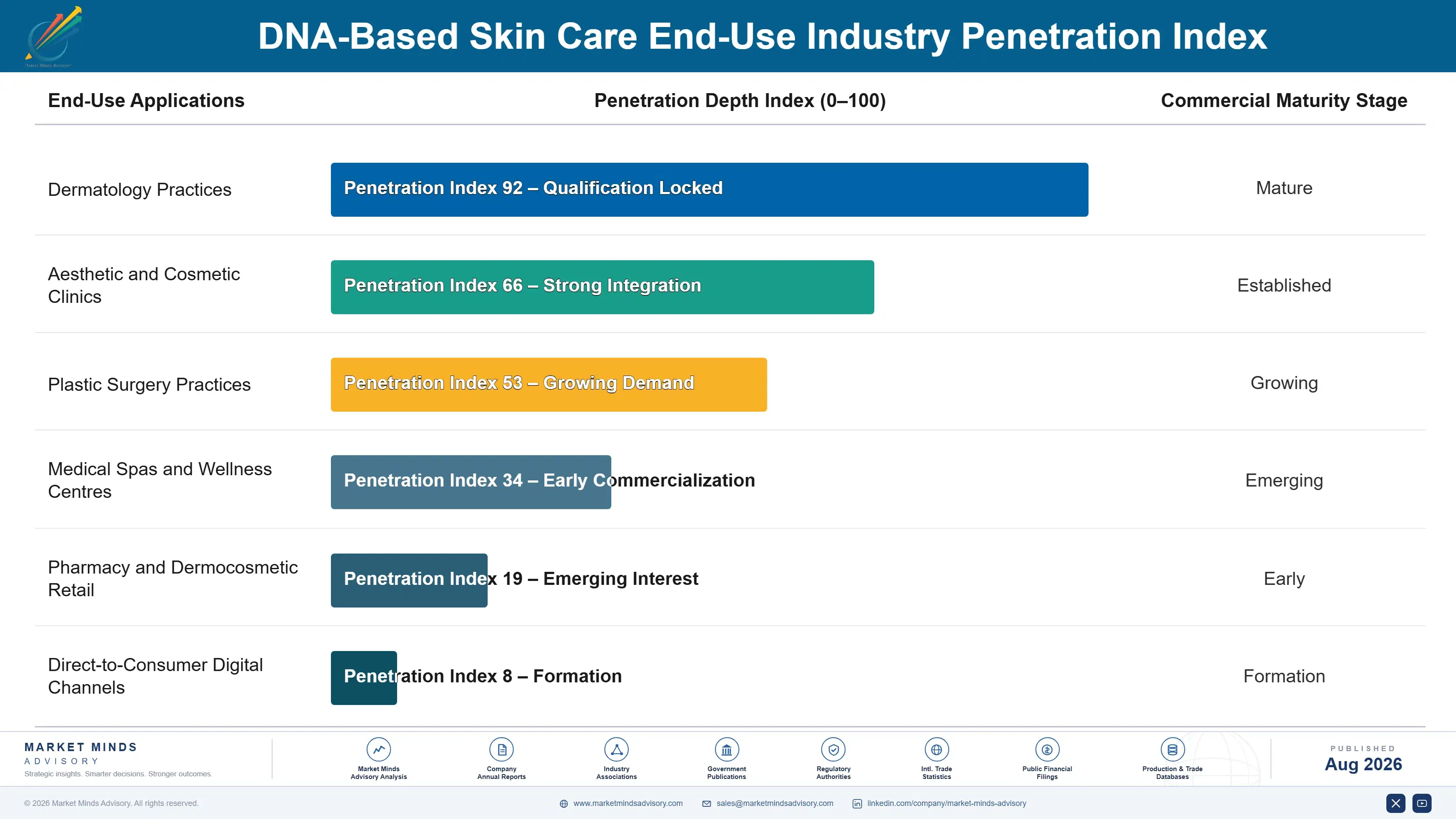
Course Cycles and Procedural Adjacency

Demand arrives as courses rather than single treatments. A standard polynucleotide programme runs to three sessions before maintenance begins, and patients returning for maintenance treat it as periodic upkeep rather than as a fresh decision each time. That produces predictable repeat behaviour at around USD 900 a course, entirely self-funded, and it contrasts sharply with the genetic testing side where a single purchase settles the question permanently.
Adoption depth follows procedural adjacency more than standalone demand. Clinics performing laser resurfacing, microneedling and energy-based treatment adopt polynucleotides as recovery support, which places the product inside an appointment the patient already booked. Dedicated aesthetic clinics with high injectable throughput adopt most deeply. Dermatology practices treating photodamage and scarring use it differently again, and topical formulations reach a far wider population through pharmacy.

Purchasing profiles differ completely between the two halves. Clinicians select injectables on protocol familiarity and training, patients rarely name a brand, and distributors serve clinics rather than consumers. Genetic testing was sold directly to consumers through digital marketing, which is why its acquisition economics collapsed once repeat purchase proved negligible. Almost no organisation serves both halves of this category well, and few now try.
dna-based-skin-care-market-end-use-penetration-index-1787305684902

Where Nucleic Acid Skincare Strategy Lands

These are among the four positions where our research anticipates prominent divergence between winners and laggards over the coming forecast period. Each is grounded in the demand model, the regulatory perimeter, and the announced capacity pipeline.
01 / REGULATORY ACCESS PRIORITY

The biggest aesthetic market is entirely closed

Exactly 0 injectable polynucleotide products currently hold United States approval for aesthetic use, which excludes the single highest-priced aesthetic market in the world from a segment compounding at 21.3% across every other region. The classification question is genuinely unresolved rather than settled against the category, since these products sit close to a boundary that United States regulation draws quite differently. Manufacturers building clinical evidence and engaging formally now will reach that market several years ahead of those simply awaiting a precedent.
02 / PROCEDURAL ADJACENCY DESIGN

Sell into an appointment the patient already booked

Aesthetic clinics performing laser resurfacing, microneedling and energy-based treatments need recovery support afterwards, and polynucleotide injectables fit that specific clinical moment far better than any standalone positioning ever managed to achieve. A three session course then builds a repeat relationship around a procedure that the patient had in any case already decided to have. Adjacency to an appointment already booked converts considerably better than any campaign attempting to generate entirely separate demand from scratch, and it costs nothing to arrange.
03 / CLASSIFICATION EVIDENCE INSURANCE

Device status is borrowed, not owned

Polynucleotide injectables reach European and Asian markets as medical devices, which demands far less clinical evidence than a medicinal classification would, and roughly 90% of this whole category's volume depends entirely on that treatment continuing unchanged. An injected biological material making a claimed physiological effect sits genuinely close to that particular regulatory boundary. Manufacturers assembling evidence packages proactively are insuring their market access, while those relying on the current classification remain exposed to a review that nobody in the industry controls.
04 / EFFECT SIZE HONESTY

A genome nobody needs to buy twice is not a business

Genetic test-guided skincare repeat purchase sits near 6%, because a genome does not change and because the variants tested carry very small effect sizes for skin outcomes, so the recommendations produced converge on advice that any dermatologist would give quite unprompted. That is a scientific limitation rather than a marketing failure, and no improvement in interpretation or presentation alters it. Investment redirected toward mechanisms that actually do something measurable to skin returns considerably more than better packaging of a weak signal ever will.

Engagement Snapshot From the Field

A live engagement with an industry participant carrying material or product regulatory and market exposure ahead of a defining policy shift, showing how our research translates into a defensible multi-year portfolio strategy.
MARKET MINDS ADVISORY · CLIENT ENGAGEMENT SUMMARY
DNA-Based Skin Care Producer Strategic Portfolio Review and Transition Roadmap 2026·Investment Scenario on DNA-Based Skin Care Exposure Evaluation 2025-26
CLIENT PROFILE
A European aesthetic injectable manufacturer with an established hyaluronic acid range, a recently licensed polynucleotide product and no United States presence in either category. Annual polynucleotide revenue was approximately USD 34 million (client-reported, unverified by MMA), concentrated in European and Middle Eastern clinics reached through distributors rather than any direct commercial organisation. Korean protocols governed how clinicians used the product.
STRATEGIC CHALLENGE
Korean manufacturers set the treatment protocols that clinicians followed while Chinese producers had entered manufacturing at prices the client could not match, and the largest aesthetic market in the world remained closed to the product entirely. The board needed to decide whether to pursue United States regulatory entry, compete on European price, or invest in clinical evidence against a possible classification review.
MMA APPROACH
MMA conducted 47 expert interviews spanning dermatologists, aesthetic physicians, clinic owners, regulatory affairs specialists, distributors, injectable manufacturing directors and consumer genetics executives across six countries. A quantitative survey of 3,800 respondents established treatment awareness, purchase behaviour, repeat intent and price sensitivity across both halves of the category. We then modelled revenue outcomes under regulatory entry, price competition and evidence investment strategies.
KEY FINDINGS
  1. Clinicians in five of six markets selected polynucleotide products on protocol familiarity and training received rather than on formulation specification, and patients almost never named a brand.
  2. Regulatory specialists judged a United States pathway genuinely achievable but slow, and none believed a competitor had progressed far enough to establish a blocking precedent.
  3. Clinic owners adopted the treatment principally as post-procedure recovery support rather than as a standalone offering, and revenue followed existing appointment volume closely.
  4. Consumer genetic skincare purchasers reported no intention of repeating the test, and most could not recall any recommendation that differed from general dermatological advice.
CLIENT PROFILE
A European aesthetic injectable manufacturer with an established hyaluronic acid range, a recently licensed polynucleotide product and no United States presence in either category. Annual polynucleotide revenue was approximately USD 34 million (client-reported, unverified by MMA), concentrated in European and Middle Eastern clinics reached through distributors rather than any direct commercial organisation. Korean protocols governed how clinicians used the product.
STRATEGIC CHALLENGE
Korean manufacturers set the treatment protocols that clinicians followed while Chinese producers had entered manufacturing at prices the client could not match, and the largest aesthetic market in the world remained closed to the product entirely. The board needed to decide whether to pursue United States regulatory entry, compete on European price, or invest in clinical evidence against a possible classification review.
MMA APPROACH
MMA conducted 47 expert interviews spanning dermatologists, aesthetic physicians, clinic owners, regulatory affairs specialists, distributors, injectable manufacturing directors and consumer genetics executives across six countries. A quantitative survey of 3,800 respondents established treatment awareness, purchase behaviour, repeat intent and price sensitivity across both halves of the category. We then modelled revenue outcomes under regulatory entry, price competition and evidence investment strategies.
KEY FINDINGS
  1. Clinicians in five of six markets selected polynucleotide products on protocol familiarity and training received rather than on formulation specification, and patients almost never named a brand.
  2. Regulatory specialists judged a United States pathway genuinely achievable but slow, and none believed a competitor had progressed far enough to establish a blocking precedent.
  3. Clinic owners adopted the treatment principally as post-procedure recovery support rather than as a standalone offering, and revenue followed existing appointment volume closely.
  4. Consumer genetic skincare purchasers reported no intention of repeating the test, and most could not recall any recommendation that differed from general dermatological advice.
RECOMMENDED STRATEGY
Phase 1: Phase one: begin formal United States regulatory engagement immediately, since the pathway is slow and no competitor has yet established a blocking precedent. Phase 2: Phase two: invest in clinician training and protocol development rather than price competition, because clinicians select on familiarity and patients do not name brands. Phase 3: Phase three: build clinical evidence sufficient for medicinal classification proactively, insuring market access against any future review of device classification.
OUTCOME
The client opened formal United States regulatory engagement, redirected roughly USD 9 million from price support into clinician training programmes and began a clinical evidence programme (client-reported, unverified by MMA). European clinic accounts grew despite holding price, training programme attendance exceeded plan substantially, and the regulatory submission progressed further than the board had expected within the year.

Frequently Asked Questions

Foundational context covering the market sizes, CAGR, scope, country, region and competition that inform every finding below. This section is provided to cover basics and most often pre-purchase conversations, answered from the MMA Primary Research Dataset.

What is the current size of the DNA-Based Skin Care Market?

The global DNA-based skin care market was valued at USD 1.15 billion in 2025, spanning injectable polynucleotides, topical repair enzymes, nucleotide actives, genetic testing services and exosome products. Roughly 88% of polynucleotide product derives from salmon milt.

How large will the DNA-Based Skin Care Market be by 2036?

MMA forecasts the market at USD 4.95 billion by 2036, expanding 3.78 times from the 2026 base of USD 1.31 billion. That represents roughly USD 3.64 billion of incremental value across the forecast decade.

What is the CAGR for the DNA-Based Skin Care Market 2026 to 2036?

The base case compound annual growth rate is 14.2%, with a bull case of 15.5% and a bear case of 12.9%. The bull case assumes a United States regulatory pathway opens for injectable polynucleotides.

Which segment is growing fastest?

Injectable polynucleotide skin boosters grow at 21.3%, a full 1.50x the overall market rate. They spread from Korean dermatology through clinician referral rather than any consumer marketing campaign.

Who are the major companies in the DNA-Based Skin Care Market?

PharmaResearch, Mastelli, ISDIN, Croma-Pharma and Hugel together hold 47% of revenue. PharmaResearch created the polynucleotide category commercially in Korea while Mastelli holds the independent European origin.

Which country is growing fastest?

South Korea grows fastest at 23.4%, functioning as the reference market whose treatment protocols clinicians elsewhere adopt. East Asia holds 42% of value, far above typical regional patterns for any category.

Report Segmentation Architecture

The full report scope spans multiple orthogonal segmentation dimensions, with cross-tabulated demand data provided for each dimension pair. Coverage extends further to regional breakdowns, trend trajectories, and the competitive detail needed to support segment-level decision-making.

By Product Class

  • Injectable Polynucleotide Skin Boosters
  • Topical DNA Repair Enzyme Formulations
  • Topical Nucleotide and Nucleoside Actives
  • Genetic Test-Guided Skincare Services
  • Exosome and Nucleic Acid Delivery Products

By End-Use Industry

  • Dermatology Practices
  • Aesthetic and Cosmetic Clinics
  • Plastic Surgery Practices
  • Medical Spas and Wellness Centres
  • Pharmacy and Dermocosmetic Retail
  • Direct-to-Consumer Digital Channels

By Commercial Dimension

  • Direct Practitioner Supply
  • Distributor and Importer Channel
  • Pharmacy and Retail Distribution
  • Clinician Training and Protocol Programmes
  • Direct-to-Consumer Subscription Services
  • Aesthetic Tourism and Cross-Border Supply

By Region

  • East Asia
  • Western Europe
  • North America
  • South Asia and Pacific
  • Latin America
  • Middle East and Africa
  • Eastern Europe

Scope, Methodology, and Coverage

Every figure in this report is reproducible from documented input assumptions. The scope below maps the historical period, the forecast horizon, the segmentation dimensions, and the countries covered, alongside the underlying primary and qualitative methodology.
Historical Period
2020 to 2025
Forecast Period
2026 to 2036
Base Year
2025 (USD billions; MMA Primary Research Dataset, August 2026)
Market Definition
This market comprises skin care and aesthetic products whose claimed active mechanism involves nucleic acids, measured at manufacturer or service revenue across direct practitioner supply, distributor and importer channels, pharmacy and retail distribution, clinician training programmes, direct-to-consumer subscription services and cross-border aesthetic tourism supply. Coverage spans injectable polynucleotide and polydeoxyribonucleotide skin boosters derived from salmon milt and other sources, topical formulations containing DNA repair enzymes including photolyase and endonuclease preparations, topical nucleotide and nucleoside cosmetic actives, genetic testing services generating personalised skincare recommendations, and exosome or nucleic acid delivery products applied topically or after procedures. Hyaluronic acid dermal fillers without nucleic acid content, botulinum toxin products, general cosmetic and moisturiser formulations, energy-based aesthetic devices including laser and radiofrequency systems, oral supplements, and clinic procedure or consultation fee revenue fall outside scope.
Quantitative Units
USD millions (current prices); treatment courses supplied; syringes and units shipped; course pricing; sessions per course; genetic tests sold; repeat purchase rate
Segmentation Dimensions
By Product Class; By End-Use Industry; By Commercial Dimension; By Region
Regions Covered
East Asia, Western Europe, North America, South Asia and Pacific, Latin America, Middle East and Africa, Eastern Europe
Countries Covered
South Korea, China, Japan, Taiwan, Thailand, India, Australia, Singapore, Indonesia, Italy, Spain, Germany, France, United Kingdom, Switzerland, Netherlands, United States, Canada, Mexico, Brazil, Colombia, Argentina, Chile, United Arab Emirates, Saudi Arabia, Turkey, Israel, South Africa, Poland, Czechia, Hungary, and additional markets relevant to aesthetic product analysis
Key Companies Profiled
PharmaResearch, Mastelli, ISDIN, Croma-Pharma, Hugel, LG Chem, Medytox, Vivacy, Bloomage Biotechnology, Imeik Technology, Sinclair Pharma, IBSA Derma, Neauvia, Regen Biotech, ExoCoBio, Benev, Promoitalia, Beiersdorf, LOreal, SkinDNA
Quantitative Methodology
Primary survey, n=3,800 respondents, Q4 2025, six countries; demand-side model with trade association cross-validation
Qualitative Methodology
47 expert interviews, Q4 2025; applied to validate demand model assumptions, identify emerging dynamics, and assess competitive positioning
Report Format
PDF and XLSX data workbook (Word format preview document)
Publisher
Market Minds Advisory
Report Code
MMA-2026-HLT-402
Published
August 2026
Contact
sales@marketmindsadvisory.com | www.marketmindsadvisory.com

Purchase the full DNA-Based Skin Care Market Report (2026 to 2036).

The full MMA report separates the two businesses sharing this category's name, quantifying why one compounds above twenty per cent while the other has effectively stalled. It sizes five product classes and seven regions to 2036, modelling treatment courses, units shipped, course pricing, sessions per course and repeat purchase separately so that injectable and consumer economics can be assessed independently. Competitive assessment covers twenty participants on one consistent revenue basis. Cost exposure is traced through sourcing, purification and sterile fill inputs. Four commercial levers and a strategic verdict close the report, grounded in 47 expert interviews and a 3,800-respondent survey.
Five product classes sized separately through 2036
Regulatory pathway availability mapped across every covered market
Injectable clinician adoption separated from consumer testing economics
Twenty participants assessed on one consistent revenue basis
Classification review exposure quantified across category volume
Anonymised client engagement with tested strategic recommendations

Built For The People Who Decide

From boardroom strategy to bench-side execution, this report is read cover-to-cover by leaders shaping the next decade of their industry, turning demand scenarios, market dynamics and valuation benchmarks into decisions.
CXOs/ Presidents/ VPs/ Managers
M&A and Corporate Development
Strategy Teams and R&D Heads
Procurement and Product Directors
Regulatory and Compliance Leaders
Investor Relations and Equity Analysts