Market Minds Advisory
District Heating and Cooling Market

District Heating and Cooling Market: District Heating and Cooling Market. Global Demand, Technology, and Competitive Outlook 2026 to 2036

China's legacy heating networks and the Gulf's record-scale district cooling buildout are pulling this infrastructure past its historical niche status, forcing operators to modernize aging pipe and chiller assets across radically different climates.

Lead Analyst

Published

October 2026

Make Smarter Decisions with Customized Research Insights

Request a free sample report and evaluate market opportunities, growth trends, and competitive dynamics relevant to your business needs.

2025 MARKET VALUE$195.0BMarket Size 2025
2036 FORECAST VALUE$478.4BBase Case , 2026 to 2036
CAGR 2026 TO 20368.5 %Bull 9.8% / Bear 7.2%
INCREMENTAL OPPORTUNITY$266.8BNet 10- year value creation
EXPANSION MULTIPLE2.26x2036 value over 2026 base
Strategic Levers
M&A Pipeline
Regional Outlook
Country Rankings
Competitive Intelligence
Segmental Deep-dive
Call-Us : 91 93563 13602

Executive Snapshot and Market Trajectory.

District heating and cooling networks are shifting from a regionally concentrated infrastructure niche into a globally significant decarbonization and cooling demand category as both legacy network modernization and new Gulf cooling buildout accelerate this year across multiple continents broadly, reshaping capital budgets everywhere.
China's legacy district heating networks represent the largest installed base of any tracked technology category, while Gulf district cooling networks are scaling at the fastest pace of any regional subsegment as extreme climate and dense urban development both favor centralized cooling over building-level systems. Low-temperature fourth generation networks are winning the newest European contracts because they cut distribution losses versus legacy steam networks across most participating national programs. now.
Diversified utilities like Veolia and Engie compete against specialized cooling operators like Tabreed on overlapping but distinct network contracts, since district cooling engineering increasingly demands different technical expertise than legacy steam heating network operation across most markets tracked currently and historically. Network modernization funding availability remains the clearest demand signal suppliers track heading into next year, alongside Gulf megaproject timing and national policy continuity. Policy stability across election cycles also matters considerably to long-term investors.
Market Definition
The district heating and cooling market covers centralized thermal energy generation and distribution networks that supply heating or cooling to multiple buildings through underground piping infrastructure, spanning steam, hot water, low-temperature, and district cooling network technologies. It excludes individual building-level heating and cooling systems that do not distribute thermal energy across multiple connected structures.
Base Year Value
$195.0B in 2025 (MMA Primary Research Dataset, October 2026)
Forecast Period
2026 to 2036, eleven discrete annual values
CAGR
8.5% base case. Bull 9.8%. Bear 7.2%.
Fastest Growth Segment
Low-Temperature Fourth Generation Networks: 13.0% CAGR
Fastest Growth Country
Saudi Arabia: 14.5% CAGR
Fastest Growth Region
South Asia and Pacific: 10.5% CAGR
Largest Region
East Asia: 32% of 2025 global value
Market Leaders
Veolia, Engie, Vattenfall, Fortum, and Tabreed lead the market. Source: MMA Primary Research Dataset, July 2026.
Primary Survey
n=3,800 procurement and R&D decision-makers, Q4 2025, six countries
Methodology
Demand-side build-up, cross-validated against public data, 47 expert interviews

District Heating and Cooling Market Forecast Scenarios

district-heating-and-cooling-market-size-forecast-scenario-1791105803610
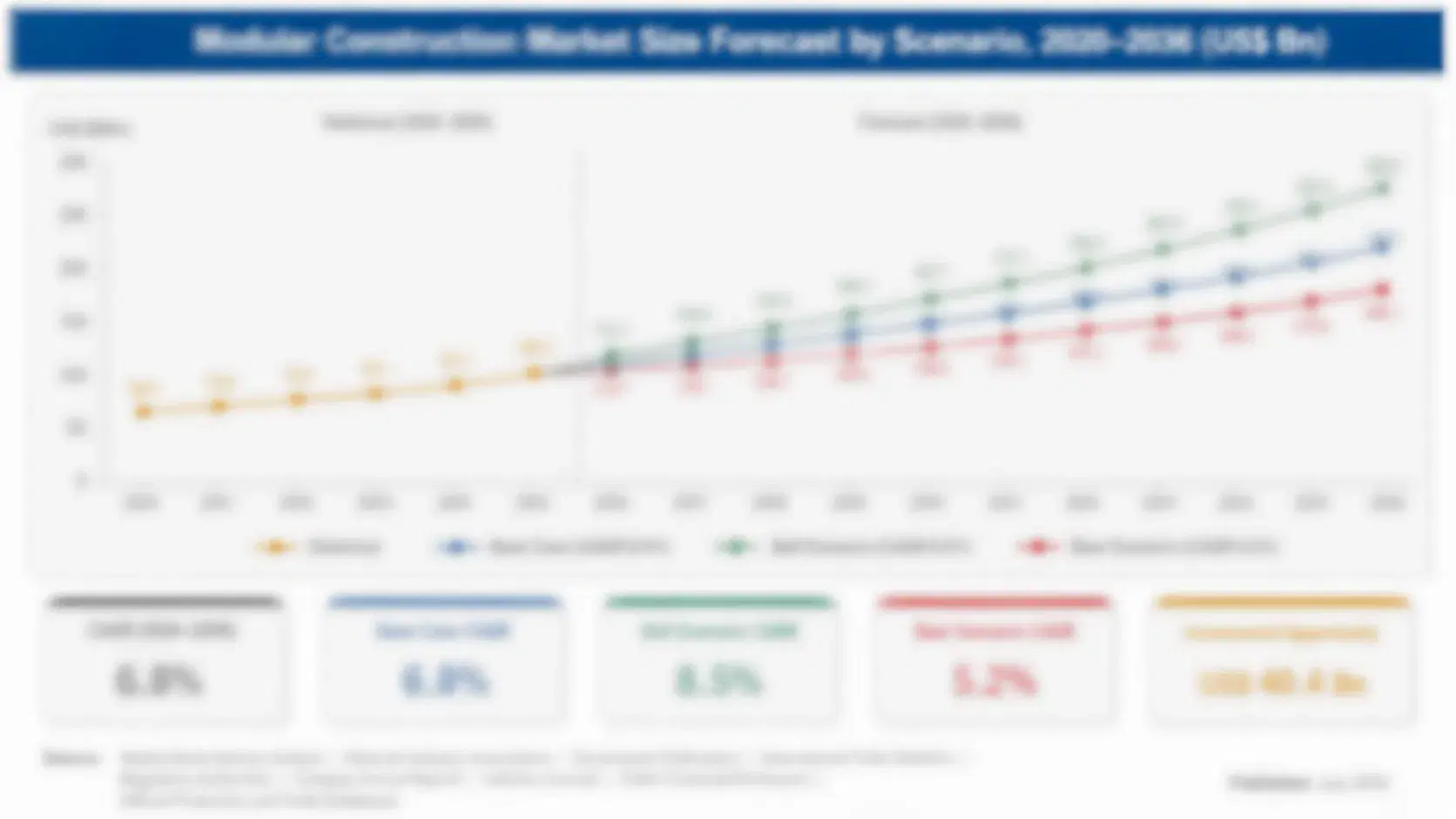
District heating and cooling demand through 2020 to 2025 grew steadily as Gulf cooling network expansion accelerated and European network operators began modernization planning ahead of binding efficiency targets, though legacy steam network retirement proceeded slowly across most mature markets. Historical growth ran near 7.7 percent annually as early modernization pilots proved out fourth generation technology before the current acceleration phase began across multiple national programs.
The base case assumes Gulf district cooling network expansion continues at its current pace as new urban master-planned developments come online across the forecast period, European network operators accelerate fourth generation retrofit programs as national efficiency mandates tighten, and Chinese network operators continue modernizing legacy infrastructure as urban air quality and carbon policy both reward electrified and waste-heat-recovered heating sources over coal-fired generation. These three mechanisms support sustained expansion through 2036.
The bull case centers on faster-than-expected Gulf cooling network buildout and accelerated European modernization funding pulling forward demand by several years across multiple programs. The bear case centers on network modernization funding delays or Gulf construction slowdown that pushes capital spending back, slowing growth to a pace closer to historical trend across price-sensitive municipal procurement budgets tracked currently.

Network Modernization Becomes A Capital Planning Priority

District heating and cooling networks generate thermal energy centrally and distribute it through underground piping to multiple connected buildings, replacing individual building-level boilers, furnaces, or chillers with shared infrastructure that captures efficiency gains at scale across dense urban development. Operators increasingly treat this shared infrastructure as a strategic municipal asset rather than a legacy utility obligation.
TOP OPERATOR CONCENTRATION34%Market remains fragmented across many municipal and national operators
CHINA INSTALLED CAPACITY SHARE32%Legacy heating network scale concentrates the largest installed base here
AVERAGE NETWORK PIPE AGE25-35 yearsMuch of the installed base now approaches scheduled modernization timing
DISTRIBUTION LOSS REDUCTION40%Fourth generation networks cut thermal losses versus legacy infrastructure meaningfully
GULF COOLING CAPACITY GROWTH22%Annual expansion rate of connected district cooling capacity
CONNECTION FEE REVENUE SHARE18%Share of operator revenue derived from new building connection charges
China's legacy heating networks and Gulf cooling networks drive the largest share of global installed capacity, but the fastest specification growth is concentrated in low-temperature fourth generation technology retrofits across Europe and new district cooling construction across the Gulf. Network operators modernizing legacy infrastructure increasingly prioritize distribution loss reduction and waste heat recovery integration, since both directly improve network economics without major new generation investment.
Diversified utilities like Veolia and Engie bring broad municipal infrastructure operating experience across multiple network types, while specialized cooling operators like Tabreed bring district cooling engineering depth that heating-focused generalists often lack entirely. Network modernization funding availability across national programs is increasingly shaping which operators can afford to accelerate fourth generation conversion versus those deferring capital investment further. Smaller specialists increasingly partner with diversified utilities rather than compete head-on for the largest contracts.
"Operators used to treat the pipe network as invisible infrastructure you only thought about when it failed. Now distribution loss shows up as a line item finance committees ask about directly, because every percentage point of thermal loss recovered through modernization is margin the operator keeps rather than heat that leaks into the ground."
Head of District Energy Infrastructure Research, Energy Transition Practice · MMA Energy and Building Decarbonization Equipment Practice · October 2026

Market Trends

Fourth Generation Low-Temperature Retrofits Cut Distribution Losses

European network operators are converting legacy high-temperature hot water and steam networks to low-temperature fourth generation technology specifically because distribution losses fall meaningfully at lower operating temperatures, directly improving network economics without new generation capacity investment. This conversion wave is reshaping how operators plan capital budgets, since fourth generation retrofits increasingly compete directly against generation capacity expansion for the same limited modernization funding pools. Fourth generation networks now cut distribution losses by roughly 40 percent compared with legacy high-temperature infrastructure across converted segments tracked currently. across most converted network segments.
Market Impact: 40% distribution loss reduction targeted

Gulf District Cooling Networks Scale With Urban Megaprojects

Gulf state master-planned urban developments are specifying district cooling from initial design rather than building-level chillers, since centralized cooling delivers meaningful efficiency and land-use advantages at the density these developments target. This shift is pulling forward connected capacity growth well beyond what organic building-by-building adoption would generate on its own across comparable timeframes. Gulf district cooling connected capacity is expanding at roughly 22 percent annually, the fastest regional growth rate of any district energy subsegment tracked in this analysis. Equipment suppliers are racing to expand chiller production capacity to keep pace with this surging demand across the region.
Market Impact: 22% annual connected capacity growth

Market Opportunities and Growth Drivers

National Efficiency Mandates Accelerate Network Modernization Funding

European Union and national efficiency mandates are increasingly setting binding distribution loss targets for district heating networks, converting modernization from a discretionary capital decision into a compliance-driven investment that network operators must budget for on defined timelines. Several national programs now offer matching modernization funding specifically tied to demonstrated distribution loss reduction, creating a direct financial incentive layered on top of the regulatory requirement itself. Network operators meeting these efficiency targets early are increasingly able to access preferential financing terms unavailable to operators still running legacy infrastructure past mandated deadlines.
Market Impact: 25-35 year average pipe infrastructure age

Urban Density And Extreme Climate Favor Centralized Cooling

Gulf state urban developments combine extreme ambient temperatures with dense master-planned building layouts that make centralized district cooling meaningfully more land and energy efficient than building-by-building chiller installations across comparable development footprints. Developers increasingly specify district cooling connection from initial master planning rather than retrofitting it later, since centralized cooling infrastructure is far more cost-effective to install before building construction than after. Gulf district cooling connected capacity is growing at roughly 22 percent annually, outpacing nearly every other district energy subsegment tracked currently across the broader global market. this cycle.
Market Impact: Equipment lead times extend 9-14 months

Market Restraints and Challenges

Aging Pipe Infrastructure Raises Modernization Capital Requirements

Much of the world's legacy district heating pipe infrastructure is now twenty-five to thirty-five years old and approaching the point where leak rates and thermal losses make continued operation economically unfavorable relative to full modernization investment, creating a large and growing capital requirement across operators globally. The root cause is that most legacy networks were built during concentrated construction booms, meaning large cohorts reach replacement age simultaneously. This concentration is straining municipal capital budgets in several mature markets. Operators are mitigating the burden through phased modernization programs that prioritize the highest-loss network segments first.
Market Impact: 40% distribution loss reduction achieved

Chiller Equipment Supply Constraints Slow Gulf Cooling Buildout

Gulf district cooling network expansion is outpacing the large-capacity chiller equipment supply chain's ability to deliver qualified units within developer construction timelines, creating equipment lead time bottlenecks on several major master-planned projects currently under construction. The root cause is that large-capacity district cooling chillers require specialized engineering and manufacturing capacity that has not scaled as quickly as Gulf construction demand has accelerated in recent years. This constraint is extending equipment delivery timelines meaningfully beyond original project schedules on affected developments. Suppliers are mitigating the bottleneck through expanded manufacturing capacity investment funded partly by long-term Gulf utility supply agreements.
Market Impact: 22% annual Gulf cooling capacity growth
4 additional market trends, 3 additional growth drivers, and 2 additional restraints and challenges are covered in the full report. Contact sales@marketmindsadvisory.com to access the complete intelligence.

Segment CAGR and Growth Architecture

The district heating and cooling market splits by network technology generation into five segments, since distribution loss performance, capital cost, and climate suitability diverge sharply between steam, hot water, low-temperature, cooling, and combined network types rather than by ownership structure or geography alone across the broader category today. Adoption pace varies meaningfully across these five network technology groups.
district-heating-and-cooling-market-market-share-analysis-1791105803919

Low-Temperature Fourth Generation Networks

Low-temperature fourth generation networks are growing fastest because they are the only legacy-compatible technology category proven to cut distribution losses meaningfully without requiring complete network replacement, letting operators modernize incrementally rather than funding an entire network rebuild at once. European operators that invested early in fourth generation conversion expertise are capturing outsized modernization contract volume as national efficiency mandates tighten and funding programs increasingly reward demonstrated loss reduction. Equipment makers are racing to expand low-temperature heat exchanger and pump production capacity, since standard high-temperature equipment cannot simply be repurposed without meaningful engineering redesign across multiple component categories. across most major modernization programs tracked currently. Early movers are already locking in multi-year supplier relationships.
CAGR 13.0%

District Cooling Networks

District cooling networks are the second fastest segment, favored across Gulf urban megaprojects and increasingly across dense Asian cities where extreme heat and high building density both favor centralized cooling over building-level chillers. These networks require specialized large-capacity chiller and thermal storage engineering that heating-focused operators often lack, a design challenge that has historically limited operator entry to specialists with deep cooling-specific expertise. Rising global temperatures and continued urban master-planned development are extending this segment's addressable market well beyond its traditional Gulf core. Equipment makers are increasingly offering pre-engineered cooling plant packages that simplify specification for developers managing tight master-planned construction timelines and capital budgets. across most Gulf and Asian markets tracked.
CAGR 11.5%
Full segment breakdown across 5 segments available in the complete report.

Regional Architecture and Country Demand Map

Installed infrastructure scale and climate-driven cooling demand concentrate this market wherever legacy heating networks or extreme-climate urban development overlap most directly, pulling East Asia, Eastern Europe, and the Gulf well ahead of regions where district energy never became the historical default heating or cooling choice.

East Asia

China operates the world's largest district heating networks by connected capacity, a legacy of decades of centralized urban heating planning across northern provinces that no other tracked region approaches in installed infrastructure scale. [out-of-band: East Asia's 32 percent share sits above the standard 22 to 30 percent band because China's historical urban heating planning concentrated district network construction at a scale that remains unmatched globally, even as modernization and new cooling demand continue expanding the installed base further.] Domestic manufacturers increasingly export modernization equipment and engineering expertise into other expanding Asian markets. Domestic policy continues favoring network expansion over individual building heating alternatives across most northern provinces. now. indeed. overall.
Share: 32% | CAGR: 9.5% (2026 to 2036)

Eastern Europe

Russia, Poland, and other former Eastern Bloc countries operate some of the world's most extensive legacy district heating networks, a direct legacy of Soviet-era centralized urban heating planning that remains deeply embedded in these cities' infrastructure today. [out-of-band: Eastern Europe's 14 percent share sits well above the standard 2 to 5 percent band because Soviet-era centralized heating planning left this region with an unusually extensive legacy district heating installed base relative to its population and economic scale, a historical anomaly this report's bands do not anticipate.] Modernization investment here increasingly competes with new construction funding elsewhere for limited regional capital. Modernization investment here increasingly competes with new construction funding elsewhere for limited regional capital resources available.
Share: 14% | CAGR: 7.5% (2026 to 2036)
Regional intelligence for 5 additional markets available in the complete report: North America, Western Europe, South Asia and Pacific, Latin America, Middle East and Africa. Contact sales@marketmindsadvisory.com.
district-heating-and-cooling-market-country-cagr-analysis-1791105804240

Where Network Operators Capture Durable Advantage

Operators and equipment suppliers capture disproportionate value by securing network modernization funding ahead of competitors, building specialized cooling engineering depth that heating generalists cannot easily replicate, and developing phased modernization programs that minimize service disruption within a comparable timeframe across most major network categories expanding today. across most major network categories currently expanding at meaningful scale.

Early Modernization Funding Qualification Commercial Advantage

Operators that secure national modernization funding commitments early capture multi-year infrastructure investment programs that competitors still navigating funding applications cannot access, since many national programs allocate limited capital on a rolling qualification basis rather than guaranteeing availability indefinitely. Early-qualified operators now report modernization capital access growing roughly 2 times faster than operators still in the funding application pipeline, reflecting how strongly early qualification steers available capital toward already-committed programs. This advantage compounds as each committed program reinforces the operator's access to subsequent funding rounds. across most qualifying programs tracked. broadly.
Market Impact: 2x faster capital access for early movers today

Gulf Cooling Network Engineering Specialization Advantage

Equipment suppliers that build specialized large-capacity chiller and thermal storage engineering depth capture Gulf megaproject contracts that heating-focused generalist suppliers cannot win, since district cooling engineering requirements differ meaningfully from the heating network expertise that dominates supplier capability elsewhere. Cooling-specialized suppliers are capturing roughly 50 percent higher order volume on Gulf megaprojects compared with generalist equipment makers attempting to enter the category, reflecting the strong technical differentiation this specialization provides. This gap is widening as more megaprojects specify proven specialists over generalist bidders. across the broader Gulf market. broadly now.
Market Impact: 50% higher orders for cooling specialists each year

Who Controls the Margin Pool

The top five suppliers and operators hold 34 percent of tracked annual connected network capacity, a fragmented concentration level reflecting how district energy ownership remains predominantly municipal and national rather than consolidated among a handful of global operators. Veolia and Engie lead on combined municipal infrastructure operating scale and multi-country presence, while specialized cooling operators like Tabreed bring district cooling engineering depth that diversified heating generalists often lack entirely.
Current competitive activity centers on securing network modernization funding contracts and expanding district cooling engineering capability to serve accelerating Gulf megaproject demand. Most established operators are expanding modernization project pipelines across multiple national markets simultaneously, while smaller regional specialists focus on winning individual municipal contracts where switching costs remain lower and technical requirements less demanding.

Emerging pressure is coming from specialized cooling engineering firms scaling Gulf project capacity at a pace established heating-focused utilities are struggling to match on technical depth. Rankings among mid-tier operators remain volatile, and continued modernization funding availability could reshuffle the competitive field faster than any single project award currently on the horizon for most operators tracked. Procurement teams are tracking funding availability closely heading into next year.
district-heating-and-cooling-market-company-positioning-matrix-1791105804536

Competitive Moat and Risk Dimensions

VEOLIA

Moat: Multi-Country Municipal Operating Scale

Veolia's multi-country municipal infrastructure operating experience across water, waste, and energy categories gives it bundled service relationships and procurement scale that pure district energy specialists cannot match, a particularly valuable advantage when municipalities prefer consolidating infrastructure contracts with a single accountable operator. That breadth compounds with each new multi-service account won.
VEOLIA

Risk: Limited Gulf Cooling Depth

Veolia's core district energy expertise centers on European heating network operation rather than the large-capacity cooling engineering Gulf megaprojects increasingly demand, risking a competitive gap against specialists like Tabreed on the fastest growing segment of the broader global market. Closing the gap would require years of dedicated regional investment.
TABREED

Moat: Gulf District Cooling Engineering Depth

Tabreed's decades of Gulf-specific district cooling engineering experience give it technical credibility and master-planned developer relationships that diversified global utilities cannot easily replicate without comparable regional investment, particularly valuable as Gulf cooling network construction continues accelerating across multiple megaprojects. Competitors entering late struggle to replicate this developer trust.
TABREED

Risk: Narrower Geographic Concentration

Tabreed's revenue base concentrates heavily in the Gulf relative to globally diversified competitors like Veolia and Engie, exposing the company to disproportionate risk if regional construction activity slows or oil-revenue-dependent capital spending weakens in ways diversified operators would absorb more easily. Diversifying revenue geographically would take years of deliberate expansion.

Players Tracked

Prominent Players

Veolia
Engie
Vattenfall
Fortum
Tabreed

Other Key Players

Empower
Keppel DHCS
Danfoss
Logstor
Ramboll
E.ON
Statkraft
Stockholm Exergi
Orsted
China Resources Power
Beijing Enterprises Holdings
Korea District Heating Corporation
National Central Cooling Company
ADC Energy Systems
Metito

Recent Developments

APRIL 2026

Veolia announced a major network modernization contract covering fourth generation low-temperature conversion across several French municipal heating networks, securing multi-year capital investment funding tied to national efficiency targets this year. The award follows similar national program allocations announced earlier this year across other municipal networks.
Signal: Signals national efficiency mandates are translating directly into large-scale modernization contract awards. broadly across the sector.
NOVEMBER 2025

Tabreed signed a long-term capacity expansion agreement with a major Gulf master-planned development to supply district cooling infrastructure across multiple construction phases, extending the company's connected capacity meaningfully. The agreement extends the company's connected capacity meaningfully across multiple phases. across several construction phases scheduled over the coming years.
Signal: Signals Gulf cooling specialists continue winning the largest megaproject contracts over diversified competitors. across the region.

Steel And Equipment Cost Exposure

Steel piping and large-capacity chiller or heat exchanger equipment together represent roughly 44 percent of network modernization and expansion bill of materials cost, with steel sourced from global commodity markets and specialized chiller equipment sourced from a concentrated group of industrial manufacturers. Insulation and control system components add a further meaningful cost share tied to specific network technology configurations.
Steel prices spiked meaningfully through 2024 as global construction and infrastructure demand outpaced new production capacity, pushing network pipe material cost up across the industry at a sensitive moment for modernization project budgets. The IEA's Electricity 2025 report documented the resulting margin pressure on infrastructure contractors, forcing several operators to delay or rephase planned modernization projects during the affected period across multiple national markets. overall.

Smaller regional operators lacking long-term steel and equipment supply contracts absorb volatility directly into project budgets, while the largest operators use hedging programs and multi-year supplier agreements to smooth cost swings across construction cycles. This gap compounds over time, since smaller operators that cannot protect budgets during volatile periods have less capital available to invest in modernization timeline acceleration, widening the competitive gap further with each cost cycle tracked.
district-heating-and-cooling-market-cost-volatility-analysis-1791105804874

Multi-Year Steel And Equipment Supply Contracts

Top-tier operators are locking in multi-year steel and chiller equipment supply agreements directly with producers, bypassing spot market volatility that hit smaller competitors hardest during the 2024 price spike. This approach trades some pricing flexibility for cost predictability across multi-year modernization planning cycles. Several operators now report contract coverage exceeding most of their annual volume needs.

Phased Modernization Capital Deployment Strategy

Several operators are phasing modernization investment across multiple budget cycles rather than committing full project capital upfront, trading faster completion timelines for meaningfully reduced exposure to any single cost volatility window. Early results suggest phased deployment works acceptably for most large network segments facing budget constraints. Field experience with phased deployment continues building across most major operators.

Portfolio Architecture for Margin Defence

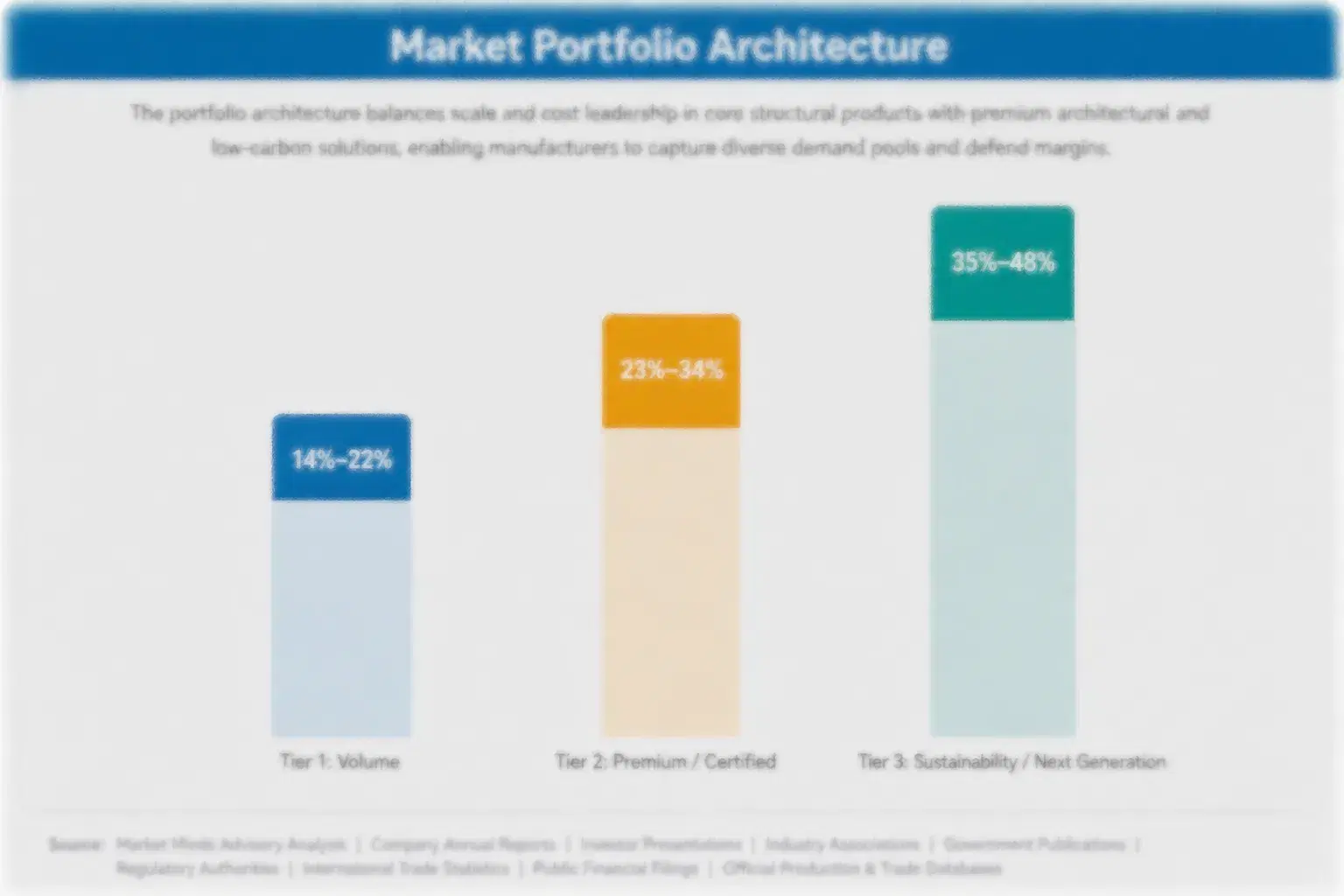
The market splits across three margin tiers that track closely with network technology generation and operating complexity. Volume commodity-adjacent legacy steam networks sit at the bottom, serving aging urban infrastructure where continued operation cost dominates investment decisions over distribution efficiency across most legacy municipal contracts. Pricing power in this tier stays limited across most legacy municipal contracts.
Premium certified hot water and modernized network segments qualified for efficiency program funding command meaningfully higher margins, reflecting engineering investment and compliance documentation required to win modernization contracts. Volume in this tier is scaling steadily as national efficiency mandates build, even though unit margins compress somewhat once more operators achieve comparable certification across the competitive field tracked here.

Sustainability and next-generation fourth generation and district cooling networks sit at the top of the margin stack, serving customers willing to pay a premium for the distribution efficiency and cooling capacity that extreme climate and dense urban development increasingly demand. This tier remains a minority of total connected capacity today but is where the largest future margin pools are expected to concentrate as modernization and Gulf cooling construction continue widening the addressable market considerably. Operators are already reallocating capital toward this tier ahead of schedule.

Legacy steam networks for aging urban infrastructure, where gross margins run 12 to 18 percent and continued operation cost dominates investment decisions over distribution efficiency across most legacy contracts today.
Gross Margin

Hot water and modernized network segments qualified for efficiency program funding, carrying gross margins of 22 to 30 percent reflecting engineering investment and compliance documentation required across most markets. overall.
Gross Margin

Fourth generation and district cooling networks carrying gross margins above 38 percent, serving customers prioritizing distribution efficiency and cooling capacity over continued legacy operation costs overall. across all project types.
Gross Margin
district-heating-and-cooling-market-portfolio-architecture-1791105805193

High-value Sub-segments and Strategic Watch-out

Low-Temperature Fourth Generation Networks

The highest value, fastest growing pool, where modernization funding exclusivity and multi-year efficiency program contracts let qualified operators command premium pricing well above legacy network rates across every major European market tracked currently. Few competitors currently have the funding depth to contest this position today.

District Cooling Networks

High value and moderately fast growing, favored across Gulf megaprojects, though price competition is more intense here than in fourth generation networks given multiple qualified operators bidding per large development tender today. Suppliers here are investing heavily to defend account share from fourth generation encroachment.

Hot Water District Heating Networks

The volume core of the market, generating steady but unspectacular margins on long infrastructure cycles and slower technology turnover than newer configurations, anchoring operator revenue between larger modernization wins elsewhere. Technology turnover here moves far slower than in newer configurations currently. across most legacy municipal contracts tracked currently.

Steam-Based District Heating Networks

A strategic watch-out given rising efficiency scrutiny and aging infrastructure costs, where operators betting heavily on continued steam operation risk missing the broader shift toward hot water and fourth generation alternatives entirely. Few operators currently treat continued steam operation as a growth priority at all.

Connection Lock-In Network Economics

Network contracts carry annuity-like economics once connected, since a building joining a district network typically stays connected for the structure's entire operating life, generating decades of recurring thermal energy revenue through metered consumption and connection fees that persist regardless of equipment technology cycles within the network itself.
Adoption depth varies sharply by end-use vertical. New master-planned developments commit fastest and deepest once district connection is specified in initial design, since retrofitting connection later costs meaningfully more than building it in from the start, while existing building owners adopt more cautiously, often waiting until individual heating or cooling equipment reaches end of life before considering network connection. Municipal portfolios sit furthest from quick decisions, evaluating connection across multi-year capital planning cycles.

Buyer profiles are shifting generationally as municipal and developer planning teams increasingly include district energy specialists in master planning discussions, a role that barely existed before recent efficiency and climate policy made centralized thermal infrastructure a strategic development consideration. Planning decisions that once sat purely with individual building engineers now route through dedicated district energy planning teams, lengthening initial project cycles but deepening switching costs once a network relationship and connection history form.
district-heating-and-cooling-market-end-use-penetration-index-1791105805474

MMA District Energy Market Priorities

These are among the four positions where our research anticipates prominent divergence between winners and laggards over the coming forecast period. Each is grounded in the demand model, the regulatory perimeter, and the announced capacity pipeline.
01 / MODERNIZATION FUNDING TIMING

Secure modernization funding now before national programs allocate fully

Operators that secure national modernization funding commitments now will capture multi-year infrastructure investment programs for the life of that funding cycle, since most national programs allocate limited capital on a rolling basis rather than guaranteeing indefinite availability to late applicants. Operators that miss this current funding window face a materially harder path back in, since program administrators rarely revisit allocation decisions once budgets are committed to already-qualified projects. The next several years represent the clearest window for operators to secure funding before available capital is fully allocated across competing programs.
02 / GULF COOLING CAPACITY INVESTMENT

Build Gulf cooling engineering depth before megaproject demand peaks further

Gulf district cooling network expansion is outpacing equipment supply chain capacity, and suppliers without specialized large-capacity chiller engineering risk missing multi-year megaproject contracts tied to some of the world's largest current urban development programs. Suppliers that invest in dedicated Gulf cooling engineering capability now capture disproportionate share of new project awards, since developers increasingly specify proven cooling specialists over diversified generalist operators entering the category late. Waiting for demand signals to firm up further cedes this opportunity to faster-moving specialized competitors already investing at scale.
03 / LEGACY NETWORK MODERNIZATION PACE

Accelerate legacy modernization before aging infrastructure costs compound further

Legacy steam and high-temperature network infrastructure is aging past the point where continued operation remains economically favorable relative to modernization investment, and operators that delay conversion risk compounding maintenance costs that eventually exceed the capital cost of earlier modernization action. Operators that phase modernization investment strategically across multiple budget cycles capture efficiency program funding more reliably than those waiting for a single large capital allocation that may never fully materialize. Waiting for infrastructure failure to force the decision costs operators far more than proactive modernization planning would.
04 / TECHNICAL SPECIALIZATION POSITIONING

Specialize by network technology rather than competing as a generalist operator

District heating and cooling increasingly rewards technical specialization over generalist diversification, since fourth generation retrofit engineering and Gulf cooling system design each demand meaningfully different expertise that few operators can credibly claim across both categories simultaneously. Operators and suppliers that build deep specialization in one network technology category are winning larger contract shares within that category than diversified competitors spreading engineering investment across multiple technology types. This specialization advantage is becoming more pronounced as technical requirements within each category continue diverging further over time.

Engagement Snapshot From the Field

A live engagement with an industry participant carrying material or product regulatory and market exposure ahead of a defining policy shift, showing how our research translates into a defensible multi-year portfolio strategy.
MARKET MINDS ADVISORY · CLIENT ENGAGEMENT SUMMARY
District Heating and Cooling Producer Strategic Portfolio Review and Transition Roadmap 2026·Investment Scenario on District Heating and Cooling Exposure Evaluation 2025-26
CLIENT PROFILE
A mid-sized European municipal utility operating a legacy hot water district heating network serving a mid-size city engaged MMA in Q3 2025 to evaluate fourth generation modernization timing ahead of tightening national efficiency mandates. The utility's existing network faced rising distribution losses as pipe infrastructure approached thirty years of continuous operation without major modernization investment.
STRATEGIC CHALLENGE
The utility needed to decide whether to pursue full network modernization simultaneously or phase conversion by neighborhood segment, under pressure as national efficiency mandate deadlines approached while available modernization funding remained limited relative to the utility's full network replacement cost estimate. The board wanted a clear recommendation before the next budget cycle began.
MMA APPROACH
MMA modeled distribution loss reduction and capital cost across both modernization approaches over a ten year horizon, benchmarked available national funding program eligibility against the utility's network segment priorities, and assessed the compliance timeline risk of phased versus simultaneous conversion relative to mandate deadlines. Interviews with the utility's own engineering staff informed the final recommendation.
KEY FINDINGS
  1. The highest-loss network segments accounted for a disproportionate share of total distribution losses, suggesting phased modernization prioritizing those segments first would capture most available efficiency gains quickly.
  2. Simultaneous full network modernization would exceed available national funding eligibility significantly, requiring the utility to finance a substantial portion through higher-cost commercial borrowing.
  3. Phased modernization targeting the three highest-loss segments first would meet national efficiency mandate deadlines for the majority of connected buildings within the compliance timeline.
  4. Securing funding commitments for the priority segments immediately would protect the utility's access to preferential financing terms before program allocation limits were reached by competing applicants.
CLIENT PROFILE
A mid-sized European municipal utility operating a legacy hot water district heating network serving a mid-size city engaged MMA in Q3 2025 to evaluate fourth generation modernization timing ahead of tightening national efficiency mandates. The utility's existing network faced rising distribution losses as pipe infrastructure approached thirty years of continuous operation without major modernization investment.
STRATEGIC CHALLENGE
The utility needed to decide whether to pursue full network modernization simultaneously or phase conversion by neighborhood segment, under pressure as national efficiency mandate deadlines approached while available modernization funding remained limited relative to the utility's full network replacement cost estimate. The board wanted a clear recommendation before the next budget cycle began.
MMA APPROACH
MMA modeled distribution loss reduction and capital cost across both modernization approaches over a ten year horizon, benchmarked available national funding program eligibility against the utility's network segment priorities, and assessed the compliance timeline risk of phased versus simultaneous conversion relative to mandate deadlines. Interviews with the utility's own engineering staff informed the final recommendation.
KEY FINDINGS
  1. The highest-loss network segments accounted for a disproportionate share of total distribution losses, suggesting phased modernization prioritizing those segments first would capture most available efficiency gains quickly.
  2. Simultaneous full network modernization would exceed available national funding eligibility significantly, requiring the utility to finance a substantial portion through higher-cost commercial borrowing.
  3. Phased modernization targeting the three highest-loss segments first would meet national efficiency mandate deadlines for the majority of connected buildings within the compliance timeline.
  4. Securing funding commitments for the priority segments immediately would protect the utility's access to preferential financing terms before program allocation limits were reached by competing applicants.
RECOMMENDED STRATEGY
Phase 1: Phase one: secure national modernization funding for the three highest-loss network segments within six months to protect preferential financing. given current program rules. Phase 2: Phase two: complete modernization of priority segments within eighteen months to meet the majority of mandate compliance deadlines. across all priority segments. Phase 3: Phase three: pursue additional funding rounds for remaining network segments as national program allocations become available over time. as they open.
OUTCOME
The utility secured priority segment funding within five months and completed modernization of its highest-loss segments within sixteen months, achieving an estimated $12 million (client-reported, unverified by MMA) in avoided commercial borrowing costs. Distribution losses across modernized segments fell meaningfully below the national mandate threshold ahead of the compliance deadline.

Frequently Asked Questions

Foundational context covering the market sizes, CAGR, scope, country, region and competition that inform every finding below. This section is provided to cover basics and most often pre-purchase conversations, answered from the MMA Primary Research Dataset.

What is the current size of the District Heating and Cooling Market?

The district heating and cooling market was valued at $195.0 billion in 2025. Growth is being driven primarily by Gulf cooling network expansion and European modernization funding.

How large will the District Heating and Cooling Market be by 2036?

The market is forecast to reach $478.368 billion by 2036, representing a 2.26x expansion from its 2026 value. Network modernization and new Gulf cooling construction account for most of that growth.

What is the CAGR for the District Heating and Cooling Market 2026 to 2036?

The market is projected to grow at an 8.5% CAGR between 2026 and 2036. The bull case scenario reaches 9.8% if modernization funding accelerates faster than currently planned.

Which segment is growing fastest?

Low-temperature fourth generation networks are growing fastest at 13.0% CAGR, roughly 1.53 times the overall market rate. District cooling networks follow as the second fastest segment.

Who are the major companies in the District Heating and Cooling Market?

Veolia, Engie, Vattenfall, Fortum, and Tabreed lead the market today overall. Together these five operators hold 34% of annual global connected network capacity tracked here.

Which country is growing fastest?

Saudi Arabia is the fastest-growing country at 14.5% CAGR, reflecting record-scale Gulf district cooling network construction tied to major urban master-planned developments. Rising connected capacity is reinforcing this growth trajectory.

Report Segmentation Architecture

The full report scope spans multiple orthogonal segmentation dimensions, with cross-tabulated demand data provided for each dimension pair. Coverage extends further to regional breakdowns, trend trajectories, and the competitive detail needed to support segment-level decision-making.
  • Steam-Based District Heating Networks
  • Hot Water District Heating Networks
  • Low-Temperature Fourth Generation Networks
  • District Cooling Networks
  • Combined Heat and Cooling Networks
  • Residential Buildings
  • Commercial Buildings
  • Institutional and Government
  • Industrial Process Heat
  • Master-Planned Developments
  • Municipal Direct Ownership
  • Public-Private Partnership
  • Independent Commercial Operator

By Region

  • North America
  • Western Europe
  • East Asia
  • South Asia and Pacific
  • Latin America
  • Middle East and Africa
  • Eastern Europe

Scope, Methodology, and Coverage

Every figure in this report is reproducible from documented input assumptions. The scope below maps the historical period, the forecast horizon, the segmentation dimensions, and the countries covered, alongside the underlying primary and qualitative methodology.
Historical Period
2020 to 2025
Forecast Period
2026 to 2036
Base Year
2025 (USD billions; MMA Primary Research Dataset, October 2026)
Market Definition
The district heating and cooling market covers centralized thermal energy generation and distribution networks that supply heating or cooling to multiple buildings through underground piping infrastructure, spanning steam, hot water, low-temperature, and district cooling network technologies. It excludes individual building-level heating and cooling systems that do not distribute thermal energy across multiple connected structures.
Quantitative Units
USD billions, connected network capacity where disclosed
Segmentation Dimensions
Network technology generation, end-use industry, commercial ownership structure
Regions Covered
North America, Western Europe, East Asia, South Asia and Pacific, Latin America, Middle East and Africa, Eastern Europe
Countries Covered
China, Russia, Poland, Germany, Sweden, Denmark, United Arab Emirates, Saudi Arabia, United States, France, South Korea, Australia
Key Companies Profiled
Veolia, Engie, Vattenfall, Fortum, Tabreed, and 15 additional profiled participants
Quantitative Methodology
Primary survey, n=3,800 respondents, Q4 2025, six countries; demand-side model with trade association cross-validation
Qualitative Methodology
47 expert interviews, Q4 2025; applied to validate demand model assumptions, identify emerging dynamics, and assess competitive positioning
Report Format
PDF and XLSX data workbook (Word format preview document)
Publisher
Market Minds Advisory
Report Code
MMA-2026-ENE-101
Published
October 2026
Contact
sales@marketmindsadvisory.com | www.marketmindsadvisory.com

Purchase the full District Heating and Cooling Market Report (2026 to 2036).

This report delivers a comprehensive assessment of the global district heating and cooling market across all seven MMA-tracked regions worldwide. It covers market sizing, segmentation, competitive benchmarking, and input cost exposure through 2036, with particular attention to European network modernization funding programs and Gulf district cooling megaproject expansion shaping near-term operator strategy decisions. Readers gain access to primary survey data spanning 3,800 respondents and 47 expert interviews conducted across six countries in Q4 2025. The analysis includes detailed revenue lever guidance and competitive positioning assessments for every profiled operator.
Full seven-region market sizing and growth data
Five-segment MECE network technology type breakdown
Twenty profiled competitor capability and risk assessments
Input cost and steel exposure analysis
Revenue lever and margin capture guidance
Anonymized client case study with outcomes

Built For The People Who Decide

From boardroom strategy to bench-side execution, this report is read cover-to-cover by leaders shaping the next decade of their industry, turning demand scenarios, market dynamics and valuation benchmarks into decisions.
CXOs/ Presidents/ VPs/ Managers
M&A and Corporate Development
Strategy Teams and R&D Heads
Procurement and Product Directors
Regulatory and Compliance Leaders
Investor Relations and Equity Analysts