Direct Reduced Iron (DRI) Market
Direct Reduced Iron (DRI) Market Outlook from 2026 to 2033
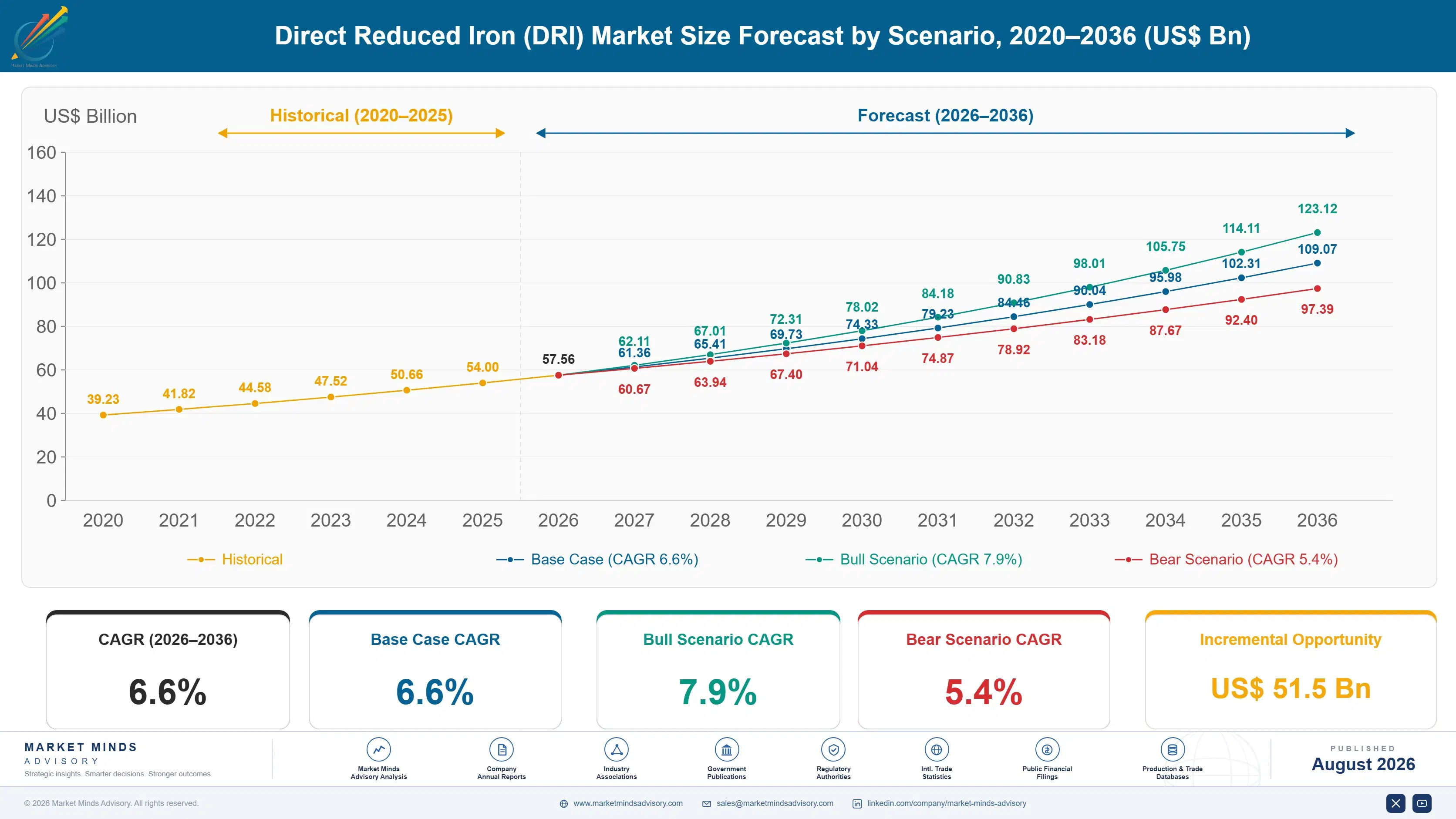
The Direct Reduced Iron (DRI) market is poised for robust expansion, driven by the increasing demand for high-quality steel and the global shift towards environmentally sustainable steelmaking processes. The market is projected to grow from a base value of USD 32.4 billion in 2026 to USD 52.7 billion by 2033, registering a CAGR of 7.2% during the forecast period. This growth is underpinned by the rising adoption of electric arc furnaces (EAFs), which utilize DRI as a primary feedstock, and the steel industry’s commitment to reducing carbon emissions.
The DRI market is further bolstered by technological advancements in direct reduction processes, increased investments in steel infrastructure, and the growing availability of natural gas as a reducing agent. The Asia-Pacific region, particularly India and China, is expected to dominate market share due to rapid industrialization and capacity expansions in steel production. Meanwhile, regulatory pressures and the need for cleaner production methods are accelerating the transition from traditional blast furnaces to DRI-based steelmaking globally.

Direct Reduced Iron (DRI) Market Scenario & Strategic Insights
The Direct Reduced Iron (DRI) market is undergoing a significant transformation as steel producers increasingly prioritize decarbonization and operational efficiency. The adoption of DRI is being propelled by its lower carbon footprint compared to traditional blast furnace methods, aligning with global sustainability goals and regulatory mandates. The market is also witnessing a shift in raw material sourcing, with natural gas and hydrogen emerging as preferred reductants, further enhancing the environmental credentials of DRI-based steelmaking.
Strategically, market participants are investing in capacity expansions, technological upgrades, and vertical integration to secure a stable supply of DRI and maintain competitiveness. The integration of DRI with electric arc furnaces is enabling steelmakers to produce high-quality steel with reduced emissions, meeting the evolving demands of automotive, construction, and infrastructure sectors. Additionally, partnerships and collaborations between technology providers and steel manufacturers are fostering innovation and accelerating the commercialization of advanced DRI technologies.
The DRI market’s growth trajectory is also influenced by regional dynamics, with Asia-Pacific leading in production and consumption, while North America and Europe focus on green steel initiatives. The interplay of supply chain optimization, raw material availability, and regulatory frameworks will continue to shape the strategic direction of the DRI market through 2033.
| Attribute | 2026 (USD Billion) | 2033 (USD Billion) | CAGR (2026 – 2033) |
| Market Size | 32.4 | 52.7 | 7.2% |
Direct Reduced Iron (DRI) Market Trends
- Decarbonization and Green Steel Initiatives
The steel industry’s commitment to reducing greenhouse gas emissions is a major trend driving the adoption of DRI. Steelmakers are increasingly investing in DRI technologies that utilize natural gas and, more recently, hydrogen as reducing agents, significantly lowering the carbon intensity of steel production. This trend is supported by regulatory frameworks in Europe and North America, as well as voluntary commitments by leading steel producers to achieve net-zero emissions by 2050. The transition to green steel is expected to accelerate the deployment of DRI plants, particularly in regions with access to low-cost renewable energy and natural gas.
- Technological Advancements in DRI Production
Innovations in direct reduction technologies are enhancing process efficiency, product quality, and scalability. The development of large-scale, modular DRI plants and the integration of digitalization and automation are enabling steelmakers to optimize operations and reduce costs. Advanced process control systems, real-time monitoring, and predictive maintenance are improving plant reliability and throughput. Furthermore, research into hydrogen-based DRI processes is gaining momentum, with pilot projects and commercial-scale plants being announced across Europe and Asia, signaling a shift towards next-generation DRI technologies.
- Shifting Raw Material Dynamics and Supply Chain Optimization
The DRI market is experiencing changes in raw material sourcing, with a growing preference for high-grade iron ore pellets and lump ores. Supply chain optimization is becoming critical as steelmakers seek to secure consistent and high-quality feedstock for DRI production. Strategic partnerships between mining companies and steel producers are being formed to ensure long-term supply agreements and mitigate price volatility. Additionally, the increasing use of scrap in conjunction with DRI in electric arc furnaces is enhancing resource efficiency and supporting circular economy initiatives within the steel industry.
Segment & Category Analysis for Direct Reduced Iron (DRI) Market
By Technology
- Gas-based DRI
- Coal-based DRI
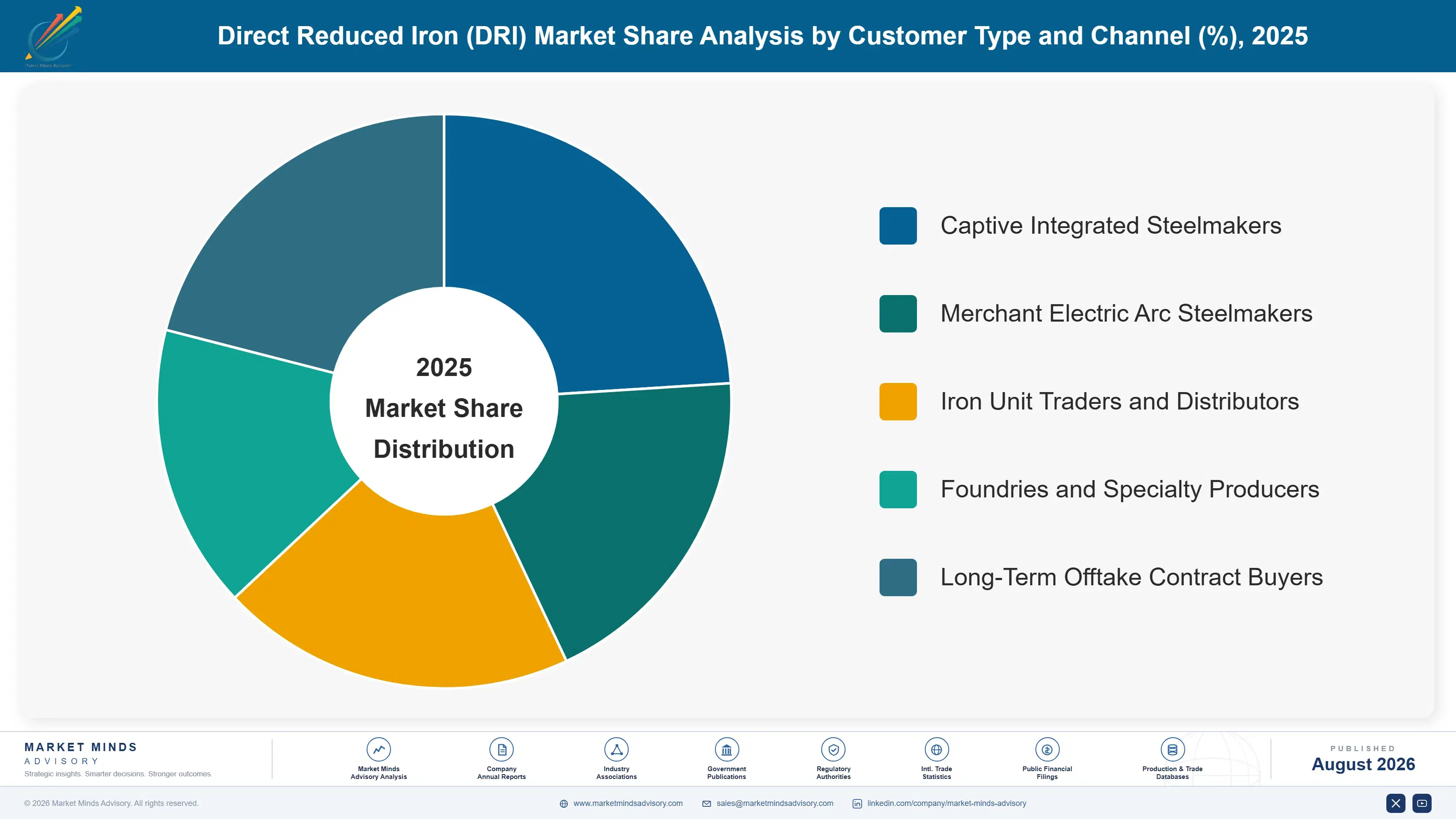
Gas-based DRI dominates the market due to its lower emissions profile and higher efficiency compared to coal-based processes. The availability of natural gas, particularly in regions like the Middle East and North America, has facilitated the widespread adoption of gas-based DRI plants. Coal-based DRI, while prevalent in countries with abundant coal reserves such as India, faces increasing regulatory scrutiny due to its higher carbon footprint. The ongoing shift towards hydrogen-based reduction is expected to further enhance the environmental performance of gas-based DRI technologies, positioning them as the preferred choice for future capacity additions.

By Form
- Lump
- Pellets
- Fines
DRI is produced in various forms, with pellets being the most widely used due to their uniform size, high iron content, and suitability for direct reduction processes. Lump ore is also utilized, particularly in regions where pelletizing facilities are limited. Fines, while less common, are increasingly being processed through advanced agglomeration techniques to improve their suitability for DRI production. The choice of form is influenced by raw material availability, process requirements, and end-use applications, with pellets offering superior metallurgical properties for high-quality steelmaking.
By Application
- Steel Production
- Foundry
- Others
The primary application of DRI is in steel production, where it serves as a key feedstock for electric arc furnaces and induction furnaces. Its high iron content and low impurity levels make it ideal for producing high-grade steel. The foundry sector also utilizes DRI for the production of cast iron and specialty alloys. Other applications include its use in ferroalloy production and as a coolant in steelmaking. The growing demand for high-quality, low-carbon steel is expected to drive the adoption of DRI across these applications.
By End-User Industry
- Construction
- Automotive Machinery & Equipment Energy
- Others
The construction industry is the largest consumer of DRI-based steel, driven by infrastructure development and urbanization in emerging economies. The automotive sector is increasingly adopting DRI-based steel for lightweight, high-strength components to meet fuel efficiency and emission standards. Machinery and equipment manufacturers benefit from the superior mechanical properties of DRI-based steel, while the energy sector utilizes it for pipelines, power plants, and renewable energy infrastructure. The diversification of end-user industries is contributing to the sustained growth of the DRI market.

By Region
- Asia-Pacific
- North America Europe South America
- Middle East & Africa
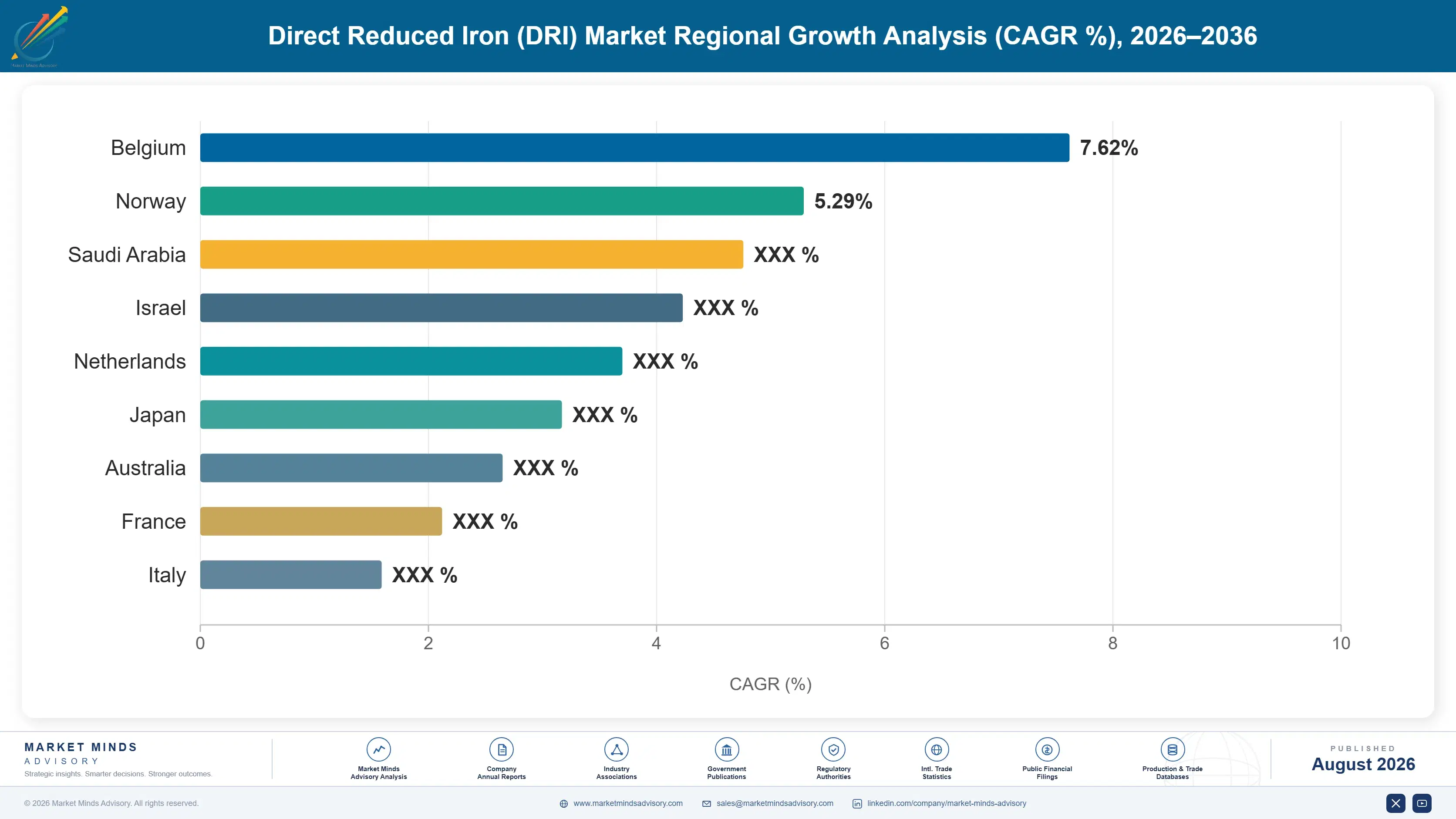
Regional dynamics play a crucial role in shaping the DRI market, with Asia-Pacific leading in production and consumption. North America and Europe are focusing on green steel initiatives, while the Middle East leverages its natural gas resources for large-scale DRI production. South America and Africa are emerging as new growth markets, driven by investments in steel infrastructure and resource availability. The interplay of regional factors, including raw material access, energy costs, and regulatory frameworks, will continue to influence market development.
Growth Drivers and Opportunities in Direct Reduced Iron (DRI) Market
- Rising Demand for Low-Carbon Steel
The global emphasis on reducing carbon emissions in the steel industry is a key growth driver for the DRI market. As governments and industry stakeholders implement stricter environmental regulations, steelmakers are increasingly adopting DRI-based processes to lower their carbon footprint. The ability of DRI to facilitate the production of high-quality steel with significantly reduced emissions compared to traditional blast furnace methods is positioning it as a preferred solution for sustainable steelmaking. This trend is expected to accelerate as more countries commit to net-zero targets and green steel initiatives.
- Expansion of Electric Arc Furnace (EAF) Capacity
The growing adoption of electric arc furnaces, which utilize DRI as a primary feedstock, is creating substantial opportunities for market growth. EAFs offer greater flexibility, lower capital costs, and improved environmental performance compared to conventional steelmaking routes. The integration of DRI with EAFs enables steel producers to achieve higher productivity, lower energy consumption, and enhanced product quality. As the steel industry continues to modernize and expand EAF capacity, the demand for DRI is expected to rise significantly, particularly in regions with access to affordable natural gas and renewable energy.
Emerging Opportunities for Direct Reduced Iron (DRI) Market
- Hydrogen-Based DRI Production
The development and commercialization of hydrogen-based DRI processes represent a transformative opportunity for the market. Hydrogen, when used as a reducing agent, eliminates carbon emissions from the reduction process, enabling the production of truly green steel. Several pilot projects and commercial-scale plants are underway in Europe and Asia, supported by government incentives and industry partnerships. The successful deployment of hydrogen-based DRI technologies could redefine the competitive landscape and unlock new growth avenues for market participants.
- Strategic Partnerships and Vertical Integration
Strategic collaborations between mining companies, steel producers, and technology providers are emerging as a key opportunity in the DRI market. Vertical integration across the value chain, from iron ore mining to DRI production and steelmaking, enables companies to optimize resource utilization, secure raw material supply, and enhance operational efficiency. These partnerships are also facilitating the transfer of technology, knowledge sharing, and the development of innovative solutions to address market challenges and capitalize on emerging trends.
Growth Restrain factors and Challenges in Direct Reduced Iron (DRI) Market
- High Capital and Operational Costs
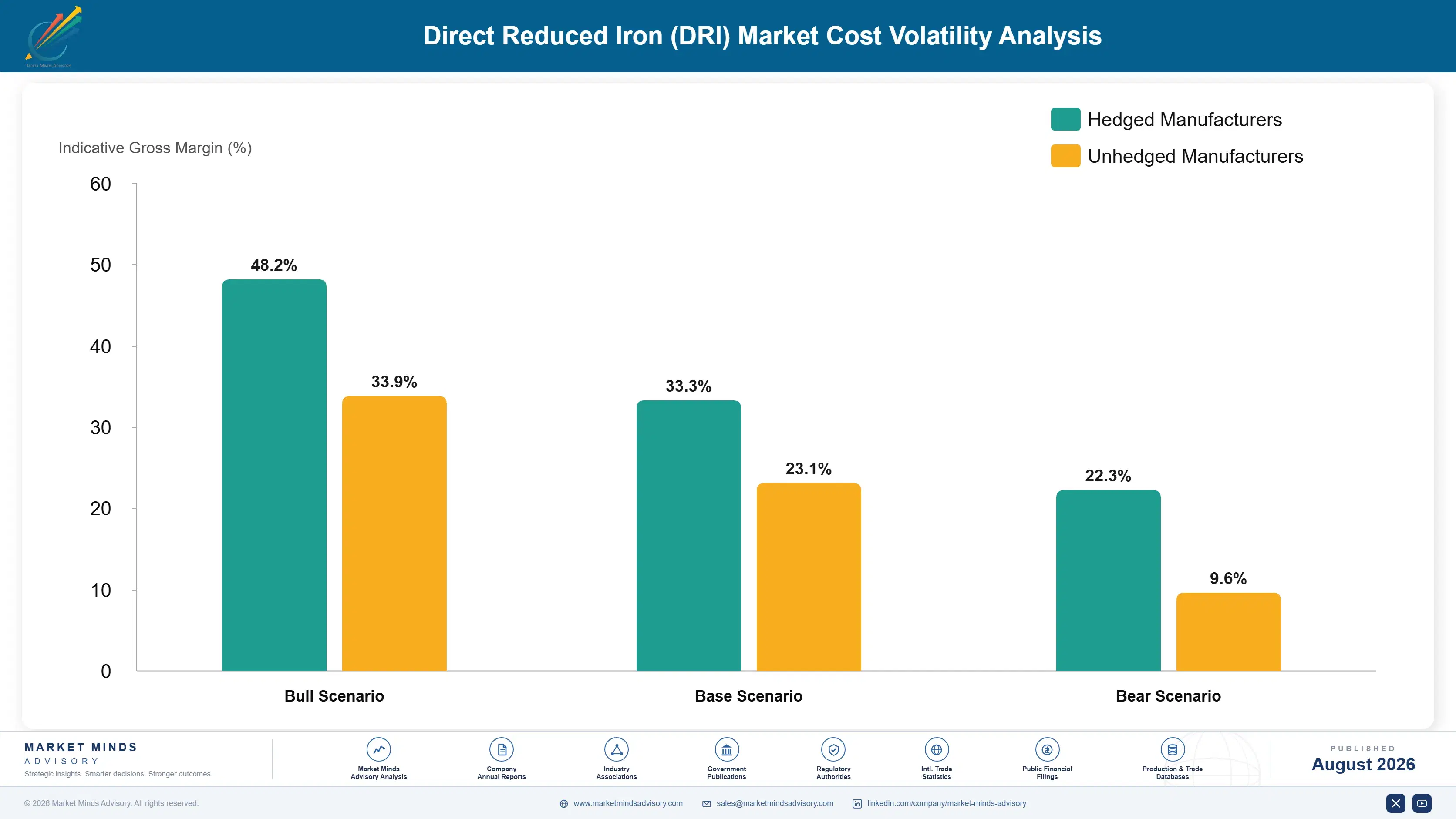
The establishment of DRI plants, particularly those utilizing advanced technologies and hydrogen as a reducing agent, requires significant capital investment. The costs associated with plant construction, equipment procurement, and infrastructure development can be prohibitive, especially for small and medium-sized steel producers. Additionally, operational costs, including energy consumption and raw material procurement, can impact profitability. The volatility of natural gas prices and the limited availability of affordable hydrogen further exacerbate cost challenges. These factors may hinder the widespread adoption of DRI technologies, particularly in regions with constrained financial resources.
Furthermore, the transition from traditional blast furnace operations to DRI-based steelmaking necessitates substantial changes in plant layout, workforce training, and supply chain management. Companies must invest in process optimization, digitalization, and maintenance to ensure the efficient operation of DRI plants. The complexity of integrating new technologies and managing operational risks can pose significant challenges, particularly for organizations with limited technical expertise and experience in direct reduction processes.
- Raw Material Quality and Supply Chain Constraints
The quality and availability of iron ore feedstock are critical determinants of DRI plant performance and product quality. High-grade iron ore pellets and lump ores are essential for efficient reduction and the production of premium DRI. However, the global supply of high-quality iron ore is limited, and competition for these resources is intensifying. Supply chain disruptions, logistical challenges, and geopolitical risks can impact the timely delivery and cost of raw materials, affecting plant operations and market competitiveness.
In addition, the increasing demand for DRI is placing pressure on existing supply chains, necessitating investments in mining, transportation, and storage infrastructure. Companies must develop robust supply chain strategies, establish long-term supply agreements, and diversify sourcing options to mitigate risks. The ability to secure consistent and high-quality raw materials will be a key success factor for market participants, particularly as the market expands and competition intensifies.
Direct Reduced Iron (DRI) Market Regional Analysis
| Region | Market Share (2025) | Key Market Highlight |
| Asia-Pacific | 48% | Rapid industrialization and capacity expansions in India and China |
| North America | 18% | Focus on green steel initiatives and EAF adoption |
| Europe | 15% | Strong regulatory push for decarbonization and hydrogen-based DRI projects |
| South America | 10% | Investments in steel infrastructure and resource availability |
| Middle East & Africa | 9% | Large-scale gas-based DRI plants leveraging abundant natural gas resources |
Asia-Pacific
Asia-Pacific is the largest and fastest-growing market for DRI, accounting for nearly half of global production and consumption. The region’s dominance is driven by rapid industrialization, urbanization, and infrastructure development in countries such as India and China. India, in particular, is a major producer and consumer of DRI, leveraging its abundant coal and iron ore resources. The expansion of steelmaking capacity, coupled with government initiatives to promote sustainable production, is expected to sustain the region’s growth trajectory through 2033.
North America
North America is witnessing increased adoption of DRI, supported by the modernization of steel plants and the shift towards electric arc furnace technology. The United States and Canada are investing in green steel initiatives, with a focus on reducing carbon emissions and enhancing operational efficiency. The availability of low-cost natural gas and the development of hydrogen infrastructure are further supporting the growth of the DRI market in the region. Strategic partnerships and technological innovation are key drivers of market expansion in North America.
Europe
Europe is at the forefront of the transition to low-carbon steelmaking, with a strong regulatory framework promoting the adoption of DRI and hydrogen-based reduction processes. The region is home to several pilot projects and commercial-scale plants focused on green steel production. The European Union’s Green Deal and carbon pricing mechanisms are incentivizing steelmakers to invest in sustainable technologies. Collaboration between industry stakeholders, government support, and access to renewable energy are critical factors driving the growth of the DRI market in Europe.
South America
South America is emerging as a promising market for DRI, driven by investments in steel infrastructure and the availability of iron ore resources. Brazil and Argentina are leading the region’s adoption of DRI technologies, supported by favorable government policies and growing demand for high-quality steel. The region’s proximity to key export markets and access to affordable energy are additional advantages. Continued investment in mining and steelmaking capacity is expected to enhance South America’s position in the global DRI market.
Middle East & Africa
The Middle East & Africa region is characterized by large-scale gas-based DRI plants, leveraging abundant natural gas resources and strategic geographic location. Countries such as Iran, Saudi Arabia, and Egypt are major producers of DRI, supplying both domestic and international markets. The region’s focus on economic diversification, industrialization, and export-oriented growth is driving investments in DRI capacity. The development of hydrogen infrastructure and partnerships with global steelmakers are expected to create new opportunities for market expansion.

Competition Landscape in Direct Reduced Iron (DRI) Market
The Direct Reduced Iron (DRI) market is characterized by intense competition among global and regional players, with a focus on technological innovation, capacity expansion, and strategic partnerships. Leading companies are investing in research and development to enhance process efficiency, reduce emissions, and develop next-generation DRI technologies. Vertical integration, long-term supply agreements, and collaborations with technology providers are key strategies employed by market participants to secure raw material supply and maintain competitiveness. The market is also witnessing consolidation, with mergers and acquisitions aimed at expanding geographic presence and strengthening product portfolios.
Major Players in Direct Reduced Iron (DRI) Market
- Midrex Technologies, Inc.
- Tenova S.p.A.
- Primetals Technologies Limited
- Danieli & C. Officine Meccaniche S.p.A.
- voestalpine AG
- ArcelorMittal S.A.
- Tata Steel Limited
- Jindal Steel & Power Ltd.
- Metalloinvest Management Company LLC
- Kobe Steel, Ltd.
- Nucor Corporation
- Emirates Steel Industries PJSC
- Essar Steel India Ltd.
- Hadeed (SABIC)
- JSW Steel Ltd.
- Cleveland-Cliffs Inc.
- Qatar Steel Company Q.P.S.C.
- Suez Steel Company
- Gulf Sponge Iron Co.
- SLRN (Outotec GmbH)
Recent Developments in Direct Reduced Iron (DRI) Market
- In March 2024, Midrex Technologies announced the successful commissioning of a hydrogen-based DRI pilot plant in Germany, marking a significant milestone in green steel production.
- In January 2024, Tenova S.p.A. secured a contract to supply a large-scale gas-based DRI plant in India, supporting the country’s steel capacity expansion.
- In November 2023, ArcelorMittal and Nippon Steel launched a joint venture to develop hydrogen-based DRI technology for commercial deployment in Europe.
- In September 2023, Tata Steel inaugurated a new DRI facility in Odisha, India, with an annual capacity of 2.5 million tons, aimed at meeting growing domestic demand.
- In July 2023, voestalpine AG announced a partnership with Siemens Energy to develop and implement hydrogen-based DRI processes at its Austrian steel plants.
- In May 2023, Danieli & C. Officine Meccaniche S.p.A. introduced a modular DRI plant design, enabling flexible and scalable production for small and medium-sized steelmakers.
FAQ for Direct Reduced Iron (DRI) Market
- What is the projected market size of the Direct Reduced Iron (DRI) market by 2033?
The Direct Reduced Iron (DRI) market is expected to reach USD 52.7 billion by 2033, growing from USD 32.4 billion in 2026, at a CAGR of 7.2% during the forecast period.
- What are the main drivers of growth in the DRI market?
Key growth drivers include the rising demand for low-carbon steel, expansion of electric arc furnace capacity, technological advancements in DRI production, and increasing regulatory pressure to reduce carbon emissions in the steel industry.
- Which regions are expected to lead the DRI market during the forecast period?
Asia-Pacific is projected to dominate the DRI market, followed by North America and Europe. Rapid industrialization, capacity expansions, and green steel initiatives are key factors supporting regional growth.
- What are the major challenges facing the DRI market?
The DRI market faces challenges such as high capital and operational costs, limited availability of high-quality iron ore feedstock, supply chain constraints, and the need for significant investments in technology and infrastructure.
- How is hydrogen impacting the future of DRI production?
Hydrogen is emerging as a game-changer for DRI production, enabling the development of zero-carbon steelmaking processes. Several pilot projects and commercial-scale plants are underway, and successful deployment of hydrogen-based DRI technologies is expected to drive the next phase of market growth.
Take Action Now! Contact us today to access the full report and propel your business forward. Our advisory team is ready to provide insights into established and emerging players to guide your strategic decisions.