Direct Methanol Fuel Cell Market
Direct Methanol Fuel Cell Market Outlook from 2026 to 2033
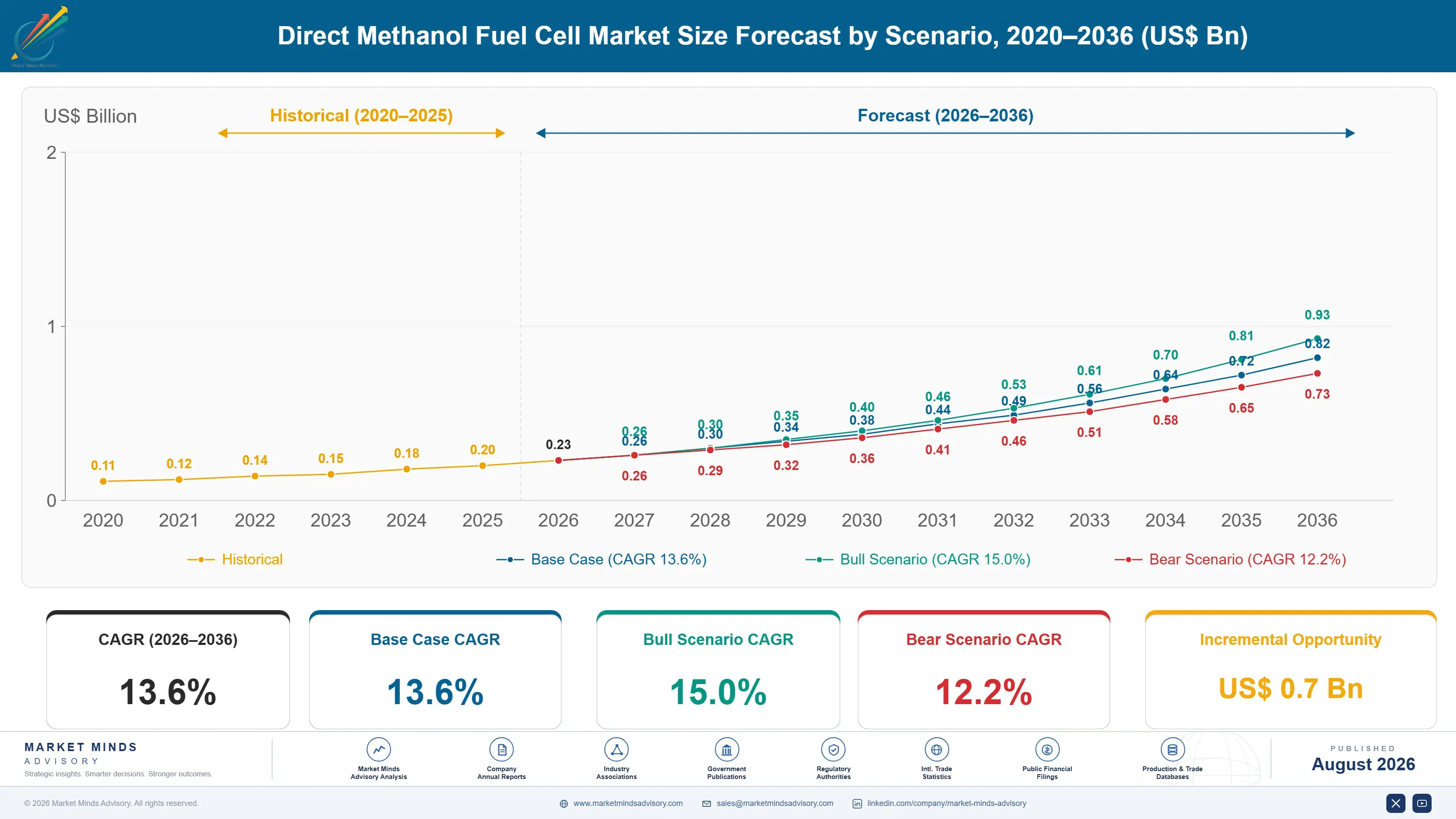
The direct methanol fuel cell (DMFC) market is poised for significant expansion between 2026 and 2033, driven by increasing demand for clean energy solutions and advancements in fuel cell technology. The market is projected to grow from a base value of USD 210 million in 2026 to USD 540 million by 2033, registering a CAGR of 14.5% during the forecast period. DMFCs are gaining traction due to their compact design, high energy density, and suitability for portable and stationary power applications. The growing emphasis on reducing carbon emissions and the adoption of alternative energy sources are further propelling the market forward.
The DMFC market is characterized by ongoing research and development activities aimed at improving efficiency, reducing costs, and enhancing the durability of fuel cells. Key industry participants are focusing on strategic collaborations, product innovations, and expanding their geographical presence to capitalize on emerging opportunities. The market is also witnessing increased investments from both public and private sectors, reflecting the growing confidence in DMFC technology as a viable solution for sustainable energy generation.

Direct Methanol Fuel Cell Market Scenario & Strategic Insights
The direct methanol fuel cell market is experiencing robust growth, underpinned by the rising demand for portable power sources in consumer electronics, military, and transportation sectors. DMFCs offer distinct advantages over traditional batteries, such as longer operational life, rapid refueling, and lower environmental impact. These attributes make them particularly attractive for applications where reliability and mobility are critical. Additionally, the shift towards decentralized power generation and the integration of renewable energy sources are creating new avenues for DMFC deployment in off-grid and backup power systems.
Strategic initiatives by leading market players include investments in research and development to enhance fuel cell performance and reduce the cost of methanol fuel. Partnerships between technology providers, fuel suppliers, and end-users are fostering innovation and accelerating commercialization. Governments across various regions are also supporting the adoption of DMFCs through favorable policies, subsidies, and funding for clean energy projects. However, the market faces challenges related to methanol toxicity, fuel crossover, and the need for improved catalyst materials, which are being addressed through ongoing technological advancements.
| Attribute | 2026 (USD Million) | 2033 (USD Million) | CAGR (2026 – 2033) |
| Market Size | 210 | 540 | 14.5% |
Direct Methanol Fuel Cell Market Trends
- Rising Adoption in Portable and Backup Power Applications
The DMFC market is witnessing increased adoption in portable electronic devices, such as laptops, smartphones, and military communication equipment. The ability of DMFCs to provide continuous power without frequent recharging is a key factor driving their use in these applications. Additionally, the growing need for reliable backup power solutions in critical infrastructure, such as telecommunications and healthcare, is boosting demand for DMFC systems. Manufacturers are focusing on developing lightweight, compact, and high-performance DMFC units to cater to the evolving requirements of end-users.
- Technological Advancements in Catalyst and Membrane Materials
Significant progress is being made in the development of advanced catalyst and membrane materials to enhance the efficiency and durability of DMFCs. Innovations such as the use of platinum-ruthenium alloys, improved proton exchange membranes, and novel methanol oxidation catalysts are addressing key challenges related to fuel crossover and catalyst degradation. These advancements are not only improving the performance of DMFCs but also contributing to cost reduction, making the technology more accessible for commercial and industrial applications.
- Expansion of Methanol Infrastructure and Supply Chain
The expansion of methanol production and distribution infrastructure is playing a crucial role in supporting the growth of the DMFC market. Investments in methanol refueling stations, supply chain optimization, and the development of standardized fuel cartridges are facilitating the widespread adoption of DMFC technology. The increasing availability of renewable methanol, produced from biomass or carbon capture processes, is further enhancing the sustainability profile of DMFCs and aligning with global decarbonization goals.
Segment & Category Analysis for Direct Methanol Fuel Cell Market
By Component
- Membrane Electrode Assembly (MEA)
- Balance of System (BOS) Methanol Tank
- Others
The component segment is critical in determining the overall performance and cost of DMFC systems. The membrane electrode assembly (MEA) is the core component, responsible for the electrochemical reactions that generate electricity. Advances in MEA technology, such as improved catalyst layers and proton exchange membranes, are enhancing the efficiency and lifespan of DMFCs. The balance of system (BOS) includes auxiliary components like pumps, sensors, and control systems, which are essential for optimal operation. Methanol tanks and other supporting components are being designed for safety, portability, and ease of refueling, catering to diverse application requirements.

By Power Output
- Below 1 kW
- 1–5 kW
- Above 5 kW
DMFCs are available in various power output ranges to suit different applications. Systems with power output below 1 kW are primarily used in portable electronics and small backup power units. The 1–5 kW segment caters to larger portable devices, residential backup systems, and light-duty vehicles. DMFCs with power output above 5 kW are being explored for commercial, industrial, and transportation applications, including auxiliary power units (APUs) for trucks and marine vessels. The versatility in power output is enabling DMFCs to address a wide spectrum of energy needs across multiple sectors.
By Application
- Portable Power
- Stationary Power
- Transportation
- Military & Defense
The application landscape for DMFCs is diverse, with portable power being the largest segment due to the growing demand for reliable energy sources in consumer electronics and field equipment. Stationary power applications are gaining traction in remote and off-grid locations, where DMFCs provide a clean and efficient alternative to diesel generators. The transportation sector is exploring DMFCs for use in electric vehicles, buses, and marine vessels, driven by the need to reduce emissions and dependence on fossil fuels. Military and defense applications benefit from the silent operation, high energy density, and rapid refueling capabilities of DMFCs.
By End-User
- Consumer Electronics
- Industrial Commercial
- Government & Defense
End-users of DMFC technology span a wide range of industries. Consumer electronics manufacturers are integrating DMFCs into devices that require extended operational life and quick refueling. Industrial users leverage DMFCs for backup power and remote monitoring systems. Commercial establishments utilize DMFCs for uninterrupted power supply in critical operations. Government and defense agencies are adopting DMFCs for field operations, surveillance, and emergency response, owing to their reliability and low logistical footprint.

By Region
- Asia-Pacific
- North America
- Europe
- South America
- Middle East & Africa
Regional adoption of DMFC technology varies based on factors such as government policies, infrastructure development, and market maturity. Asia-Pacific leads the market, driven by strong demand from consumer electronics and transportation sectors in countries like China, Japan, and South Korea. North America and Europe are witnessing increased investments in clean energy technologies and supportive regulatory frameworks. South America and the Middle East & Africa are emerging markets, with growing interest in decentralized power solutions and renewable energy integration.
Growth Drivers and Opportunities in Direct Methanol Fuel Cell Market
- Increasing Demand for Clean and Portable Energy Solutions
The global shift towards sustainable energy sources is a primary driver for the DMFC market. As concerns over climate change and air pollution intensify, industries and governments are seeking alternatives to conventional fossil fuel-based power generation. DMFCs offer a clean, efficient, and portable energy solution, making them ideal for applications where grid connectivity is limited or unreliable. The growing adoption of electric vehicles, portable electronics, and backup power systems is creating substantial opportunities for DMFC technology to penetrate new markets and expand its application scope.
- Supportive Government Policies and Funding Initiatives
Governments worldwide are implementing policies and providing financial incentives to promote the adoption of fuel cell technologies, including DMFCs. Subsidies, tax credits, and research grants are encouraging manufacturers to invest in product development and commercialization. Public-private partnerships are fostering innovation and accelerating the deployment of DMFC systems in various sectors. These supportive measures are not only driving market growth but also facilitating the transition towards a low-carbon economy.
Emerging Opportunities for Direct Methanol Fuel Cell Market
- Integration with Renewable Methanol Production
The development of renewable methanol, produced from biomass, waste, or captured carbon dioxide, presents a significant opportunity for the DMFC market. By utilizing renewable methanol as a fuel source, DMFC systems can achieve near-zero carbon emissions, aligning with global sustainability goals. This integration enhances the environmental benefits of DMFC technology and opens up new markets in regions with abundant renewable resources. Companies investing in renewable methanol production and supply chains are well-positioned to capitalize on this emerging trend.
- Expansion into Emerging Markets and Off-Grid Applications
Emerging economies in Asia-Pacific, South America, and Africa are witnessing rapid urbanization and industrialization, leading to increased demand for reliable and decentralized power solutions. DMFCs are well-suited for off-grid applications, such as rural electrification, remote monitoring, and disaster response. The expansion of DMFC technology into these markets offers significant growth potential, supported by government initiatives to improve energy access and promote clean energy adoption.
Growth Restrain factors and Challanges in Direct Methanol Fuel Cell Market
- Technical Challenges and Cost Constraints
The DMFC market faces several technical challenges that hinder widespread adoption. Issues such as methanol crossover, catalyst degradation, and limited operational lifespan impact the efficiency and reliability of DMFC systems. Methanol crossover, where methanol permeates through the membrane and reduces fuel cell performance, remains a significant technical barrier. Additionally, the high cost of catalyst materials, particularly platinum-based catalysts, contributes to the overall expense of DMFC systems. These factors limit the competitiveness of DMFCs compared to other fuel cell technologies and conventional power sources.
Addressing these challenges requires sustained investment in research and development to improve membrane and catalyst materials, enhance system durability, and reduce production costs. Industry stakeholders are exploring alternative catalyst compositions, advanced membrane technologies, and innovative system designs to overcome these limitations. Collaboration between academia, industry, and government agencies is essential to accelerate technological advancements and drive down costs, enabling broader market adoption.
- Safety and Regulatory Concerns
The use of methanol as a fuel introduces safety and regulatory challenges that must be addressed to ensure the safe deployment of DMFC systems. Methanol is toxic and flammable, requiring stringent handling, storage, and transportation protocols. Regulatory frameworks governing the use of methanol and fuel cell systems vary across regions, creating complexities for manufacturers and end-users. Compliance with safety standards, environmental regulations, and certification requirements adds to the operational and administrative burden.
To mitigate these concerns, industry participants are investing in the development of safe and user-friendly methanol storage and refueling solutions. Standardization of safety protocols and harmonization of regulatory frameworks across regions are critical to facilitating market growth. Ongoing education and training initiatives for stakeholders involved in the production, distribution, and use of methanol fuel are also essential to ensure safe and responsible adoption of DMFC technology.
Direct Methanol Fuel Cell Market Regional Analysis
| Region | Market Share (2025) | Key Market Highlight |
| Asia-Pacific | 38% | Strong demand from electronics and transportation sectors; robust government support. |
| North America | 27% | High R&D investment; increasing adoption in backup power and military applications. |
| Europe | 22% | Focus on clean energy policies and renewable methanol integration. |
| South America | 7% | Emerging market for off-grid and rural electrification projects. |
| Middle East & Africa | 6% | Growing interest in decentralized power and renewable energy integration. |
Asia-Pacific dominates the direct methanol fuel cell market, accounting for the largest share due to the presence of leading electronics manufacturers, supportive government policies, and significant investments in clean energy infrastructure. China, Japan, and South Korea are at the forefront of DMFC adoption, driven by strong demand in consumer electronics and transportation sectors. North America follows, with a focus on research and development, military applications, and backup power solutions. Europe is characterized by stringent environmental regulations and initiatives to integrate renewable methanol into the energy mix. South America and the Middle East & Africa are emerging markets, with increasing interest in decentralized and off-grid power applications.

Competition Landscape in Direct Methanol Fuel Cell Market
The direct methanol fuel cell market is highly competitive, with a mix of established players and emerging startups vying for market share. Companies are focusing on product innovation, strategic partnerships, and geographical expansion to strengthen their market position. The competitive landscape is shaped by ongoing research and development activities aimed at improving fuel cell efficiency, reducing costs, and enhancing system durability. Mergers, acquisitions, and collaborations are common strategies adopted by key players to access new technologies and expand their customer base. The market is also witnessing increased participation from fuel suppliers, component manufacturers, and system integrators, contributing to a dynamic and evolving competitive environment.
Major Players in Direct Methanol Fuel Cell Market
- SFC Energy AG
- Ballard Power Systems Inc.
- Oorja Fuel Cells
- Horizon Fuel Cell Technologies
- MeOH Power
- Johnson Matthey
- Serenergy A/S
- Fujikura Ltd.
- Samsung SDI Co., Ltd.
- Panasonic Corporation
- Toshiba Corporation
- DuPont Fuel Cells
- Hitachi Zosen Corporation
- Ultracell LLC
- Viaspace Inc.
- Antig Technology Co., Ltd.
- Blue World Technologies
- Neah Power Systems Inc.
- Treadstone Technologies Inc.
- FeyeCon D&I Group
Recent Developments in Direct Methanol Fuel Cell Market
- In March 2024, SFC Energy AG launched a new generation of portable DMFC systems targeting military and emergency response applications.
- In January 2024, Ballard Power Systems announced a strategic partnership with a leading methanol producer to develop renewable methanol supply chains for DMFCs.
- In November 2023, Horizon Fuel Cell Technologies introduced a compact DMFC unit for consumer electronics, featuring enhanced energy density and rapid refueling capabilities.
- In September 2023, Serenergy A/S expanded its manufacturing facility in Denmark to increase production capacity for DMFC stacks.
- In July 2023, Johnson Matthey unveiled a new catalyst technology designed to improve the efficiency and lifespan of DMFC systems.
- In May 2023, Oorja Fuel Cells secured funding from a government clean energy initiative to accelerate the commercialization of DMFC solutions for industrial applications.
FAQ for Direct Methanol Fuel Cell Market
- What is the projected market size of the direct methanol fuel cell market by 2033?
The direct methanol fuel cell market is expected to reach USD 540 million by 2033, growing from USD 210 million in 2026, with a CAGR of 14.5% during the forecast period.
- Which regions are leading the adoption of direct methanol fuel cell technology?
Asia-Pacific is the leading region, driven by strong demand in electronics and transportation sectors, followed by North America and Europe, which are investing heavily in research, development, and clean energy initiatives.
- What are the main applications of direct methanol fuel cells?
DMFCs are primarily used in portable power applications, stationary power systems, transportation, and military & defense sectors, owing to their high energy density, portability, and rapid refueling capabilities.
- What are the key challenges facing the direct methanol fuel cell market?
The market faces challenges such as methanol crossover, catalyst degradation, high system costs, and safety concerns related to methanol handling and storage. Addressing these issues requires ongoing R&D and regulatory harmonization.
- How is the direct methanol fuel cell market expected to evolve in the coming years?
The market is anticipated to witness robust growth, driven by technological advancements, expansion into emerging markets, integration with renewable methanol production, and increasing support from governments and industry stakeholders for clean energy solutions.
Take Action Now! Contact us today to access the full report and propel your business forward. Our advisory team is ready to provide insights into established and emerging players to guide your strategic decisions.