Diketene Market

Diketene Market Outlook from 2026 to 2033

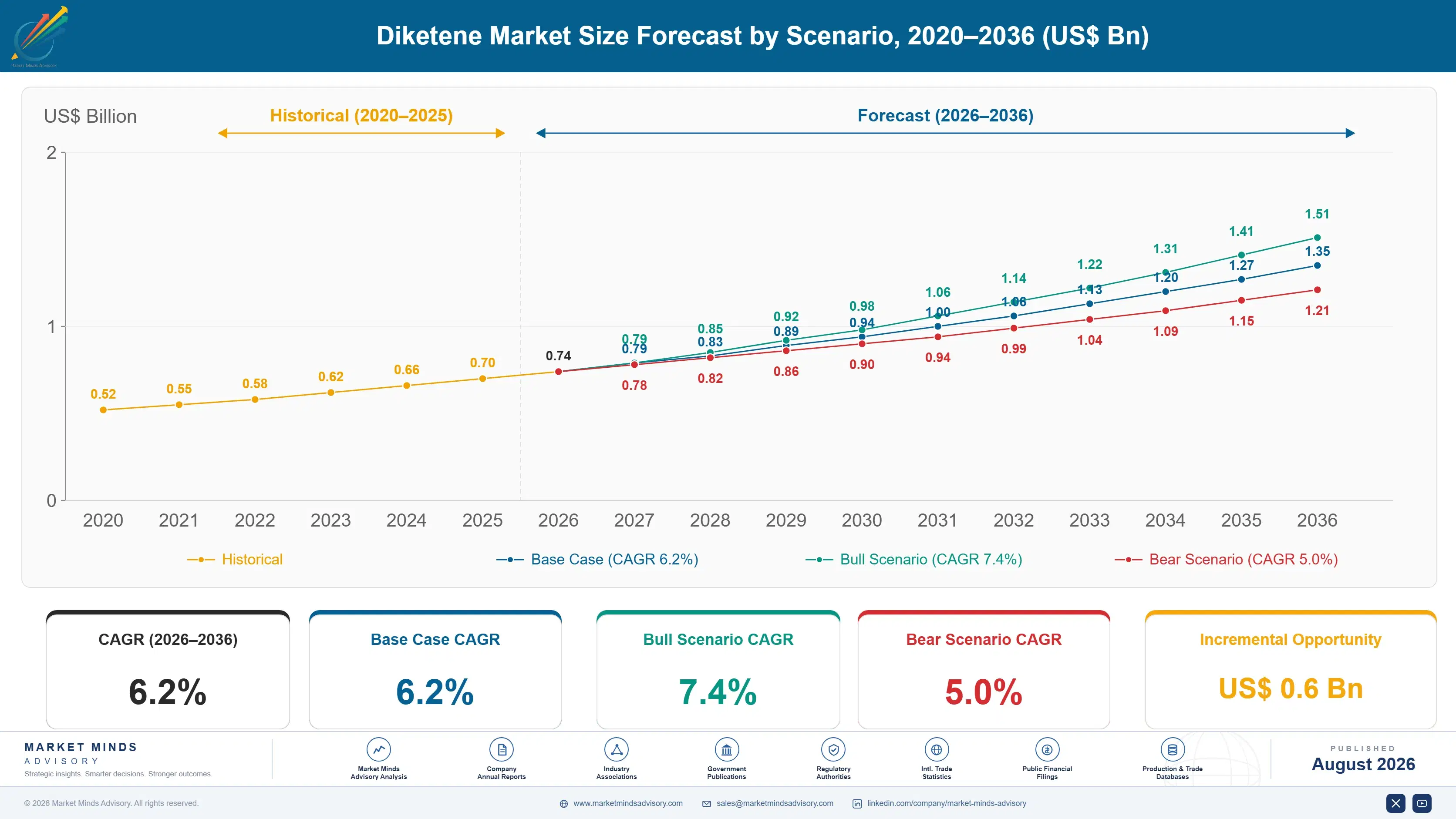
The global diketene market is poised for steady expansion, driven by its versatile applications across pharmaceuticals, agrochemicals, and specialty chemicals. In 2026, the market size is estimated at USD 550 million, with projections indicating a rise to USD 790 million by 2033, reflecting a CAGR of 5.3% during the forecast period. Diketene’s unique reactivity and role as a key intermediate in the synthesis of acetoacetates, arylides, and other derivatives underpin its growing demand. The market is characterized by a balanced supply chain, with leading producers ensuring consistent quality and availability to meet the evolving needs of end-use industries.

The diketene market is further shaped by regulatory trends, sustainability initiatives, and technological advancements in chemical synthesis. The increasing adoption of diketene derivatives in high-value pharmaceutical and crop protection formulations is a notable driver. Meanwhile, the industry faces challenges related to raw material price volatility and environmental compliance. Strategic investments in R&D and capacity expansions are expected to reinforce market growth, as stakeholders seek to capitalize on emerging opportunities in both developed and developing regions.

Diketene Market

Diketene Market Scenario & Strategic Insights

The diketene market is experiencing a phase of transformation, marked by the integration of advanced manufacturing processes and the expansion of application portfolios. Leading chemical manufacturers are leveraging continuous process improvements to enhance yield, reduce waste, and ensure compliance with stringent environmental standards. The market’s competitive landscape is defined by a mix of global players and regional specialists, each focusing on product innovation and supply chain optimization to maintain a competitive edge.

Strategically, the market is witnessing a shift towards high-purity diketene derivatives, particularly for pharmaceutical and agrochemical applications. This trend is supported by collaborations between chemical producers and end-user industries, aiming to develop customized solutions that address specific performance and regulatory requirements. Additionally, the emergence of bio-based diketene production methods is gaining traction, aligning with broader sustainability goals and offering new avenues for differentiation in a mature market.

The outlook for the diketene market remains positive, with robust demand from Asia-Pacific and North America. However, market participants must navigate challenges such as fluctuating raw material costs and evolving regulatory frameworks. Proactive risk management, investment in research and development, and strategic partnerships will be critical for sustained growth and value creation in the coming years.

Attribute2026 (USD Million)2033 (USD Million)CAGR (2026 – 2033)
Market Size5507905.3%

Diketene Market Trends

  • Rising Demand for Diketene Derivatives in Pharmaceuticals

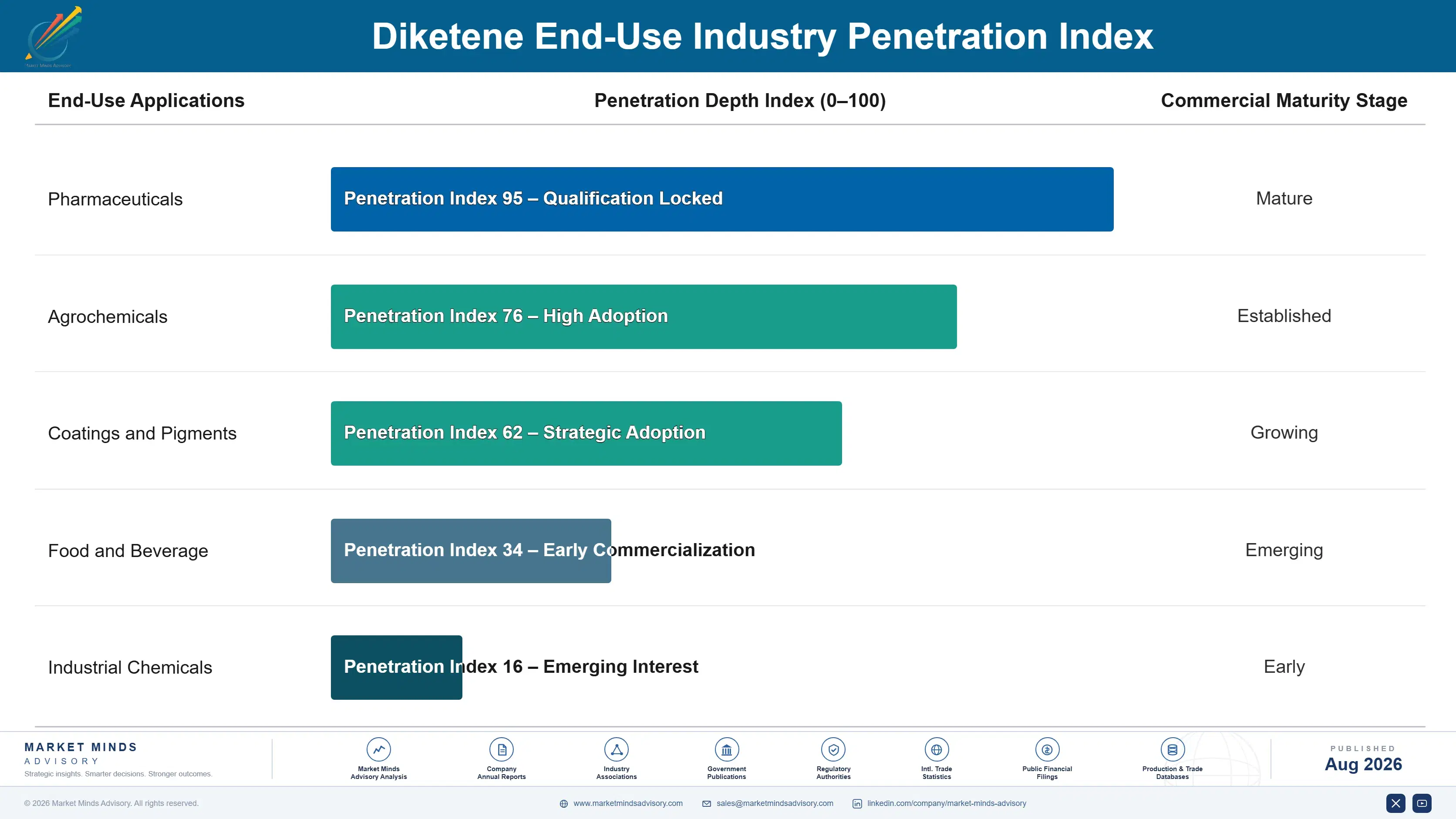
The pharmaceutical sector is increasingly utilizing diketene and its derivatives as intermediates in the synthesis of active pharmaceutical ingredients (APIs) and specialty excipients. The unique chemical properties of diketene, such as its ability to undergo selective acylation and its compatibility with various organic synthesis pathways, make it a preferred choice for producing high-purity compounds. This trend is reinforced by the growing emphasis on drug innovation, the expansion of generic drug manufacturing, and the need for cost-effective synthesis routes. As regulatory scrutiny intensifies, manufacturers are investing in advanced purification and quality assurance processes to meet stringent pharmaceutical standards.

  • Expansion of Agrochemical Applications

Diketene’s role as a precursor in the production of crop protection agents, including herbicides, fungicides, and insecticides, is driving its adoption in the agrochemical industry. The demand for high-performance agrochemicals is rising in response to the need for increased agricultural productivity and sustainable farming practices. Diketene-based intermediates offer enhanced efficacy and environmental compatibility, supporting the development of next-generation crop protection solutions. This trend is particularly pronounced in emerging markets, where agricultural modernization and food security initiatives are accelerating the uptake of advanced agrochemical formulations.

  • Shift Towards Sustainable and Bio-Based Production

Environmental concerns and regulatory pressures are prompting a shift towards sustainable diketene production methods. Chemical manufacturers are exploring bio-based feedstocks and green chemistry approaches to reduce the environmental footprint of diketene synthesis. Innovations in catalyst technology and process optimization are enabling the production of diketene with lower emissions and improved resource efficiency. This trend is expected to gain momentum as end-users increasingly prioritize sustainability in their procurement decisions, creating new opportunities for differentiation and market leadership.

Segment & Category Analysis for Diketene Market

By Derivative Type

  • Acetoacetates
    • Others

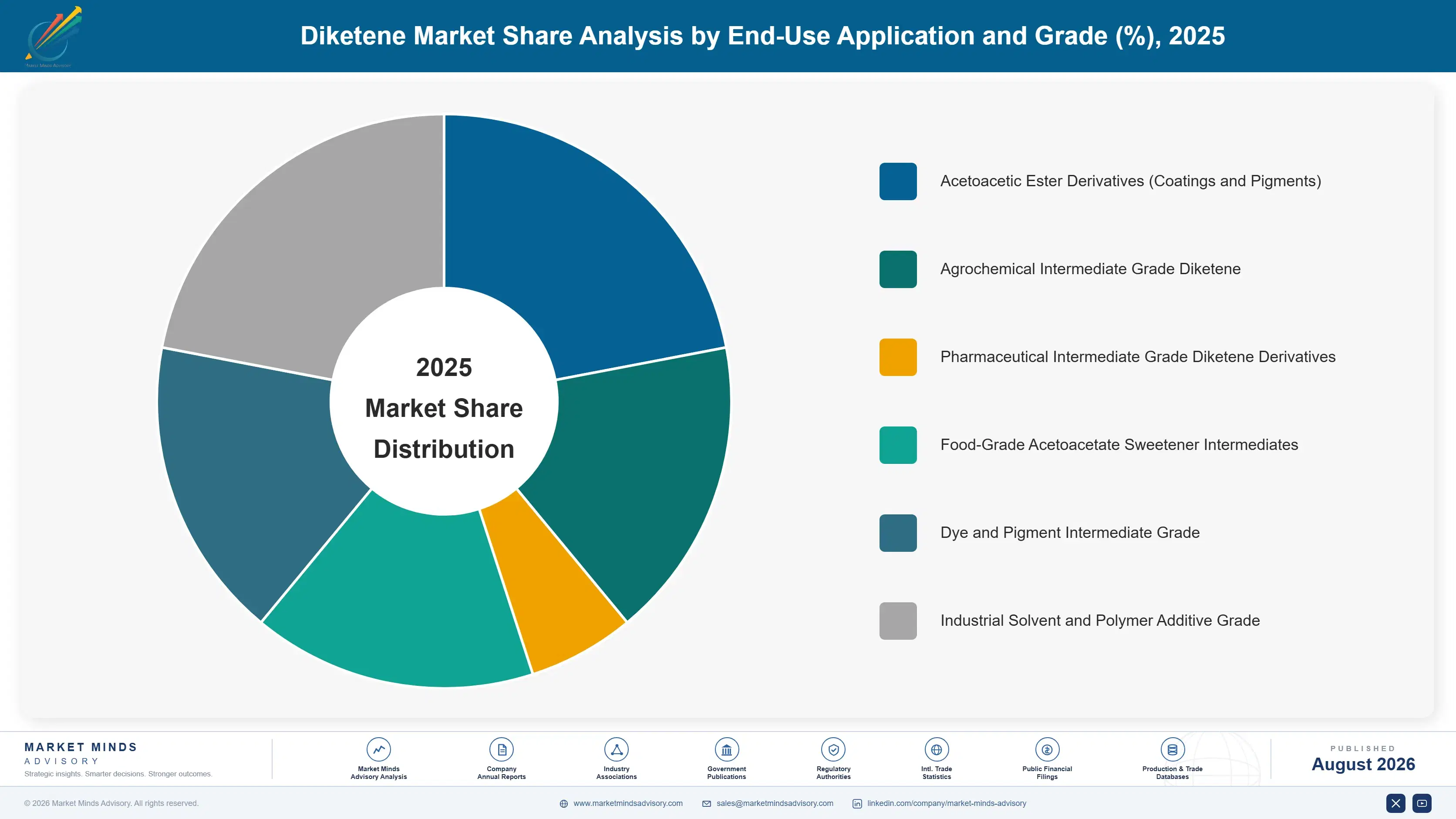
The derivative type segment is central to the diketene market, as the majority of diketene produced is converted into value-added derivatives. Acetoacetates and arylamides are particularly significant, finding widespread use in pharmaceuticals, agrochemicals, and pigments. Diketene esters and ketones are also gaining traction due to their application in specialty chemicals and coatings. The diversity of derivatives underscores the versatility of diketene as a chemical intermediate, enabling manufacturers to cater to a broad spectrum of end-use industries. Continuous innovation in derivative synthesis is expected to drive segment growth, supported by rising demand for high-purity and specialty products.

Diketene Market Derivative Type

By Application

  • Pharmaceuticals
    • Agrochemicals Pigments & Dyes Coatings & Resins
    • Others

Application-wise, pharmaceuticals and agrochemicals represent the largest segments, accounting for a substantial share of global diketene consumption. The use of diketene in pigment and dye manufacturing is also notable, particularly for high-performance organic pigments. Coatings and resins manufacturers utilize diketene derivatives to enhance product durability and performance. The “others” category includes applications in flavors, fragrances, and specialty polymers. The broad application base provides resilience to the market, enabling it to withstand fluctuations in individual end-use sectors.

By End-User Industry

  • Chemical Manufacturing
    • Pharmaceutical Companies Agrochemical Producers Paints & Coatings Manufacturers
    • Others

The end-user industry segmentation highlights the diverse customer base for diketene and its derivatives. Chemical manufacturers are the primary consumers, using diketene as an intermediate for further processing. Pharmaceutical and agrochemical companies are increasingly sourcing high-purity diketene derivatives for formulation and synthesis. Paints and coatings manufacturers leverage diketene-based products to improve product attributes such as adhesion and weather resistance. The presence of multiple end-user industries ensures stable demand and provides opportunities for market expansion through targeted product development.

By Purity Level

  • High Purity (>99%)
    • Technical Grade
    • Standard Grade

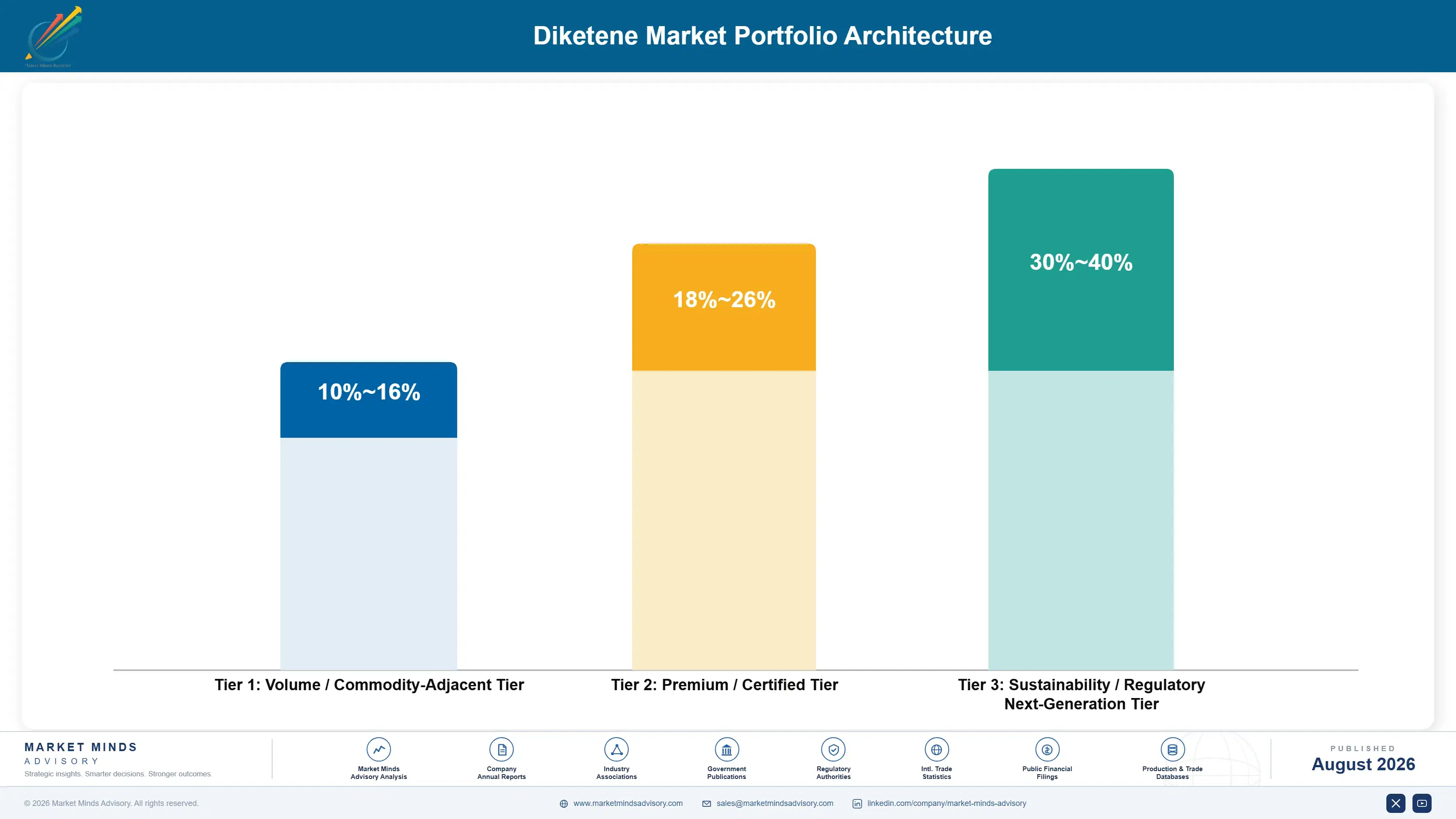
Purity level is a critical consideration in the diketene market, particularly for applications in pharmaceuticals and electronics, where stringent quality standards apply. High-purity diketene commands a premium and is favored for sensitive synthesis processes. Technical and standard grades are widely used in industrial and agricultural applications, where cost-effectiveness is a key consideration. The trend towards higher purity products is expected to continue, driven by regulatory requirements and the need for consistent product performance.

Diketene Market Purity Level

By Region

  • Asia-Pacific
    • North America Europe South America
    • Middle East & Africa

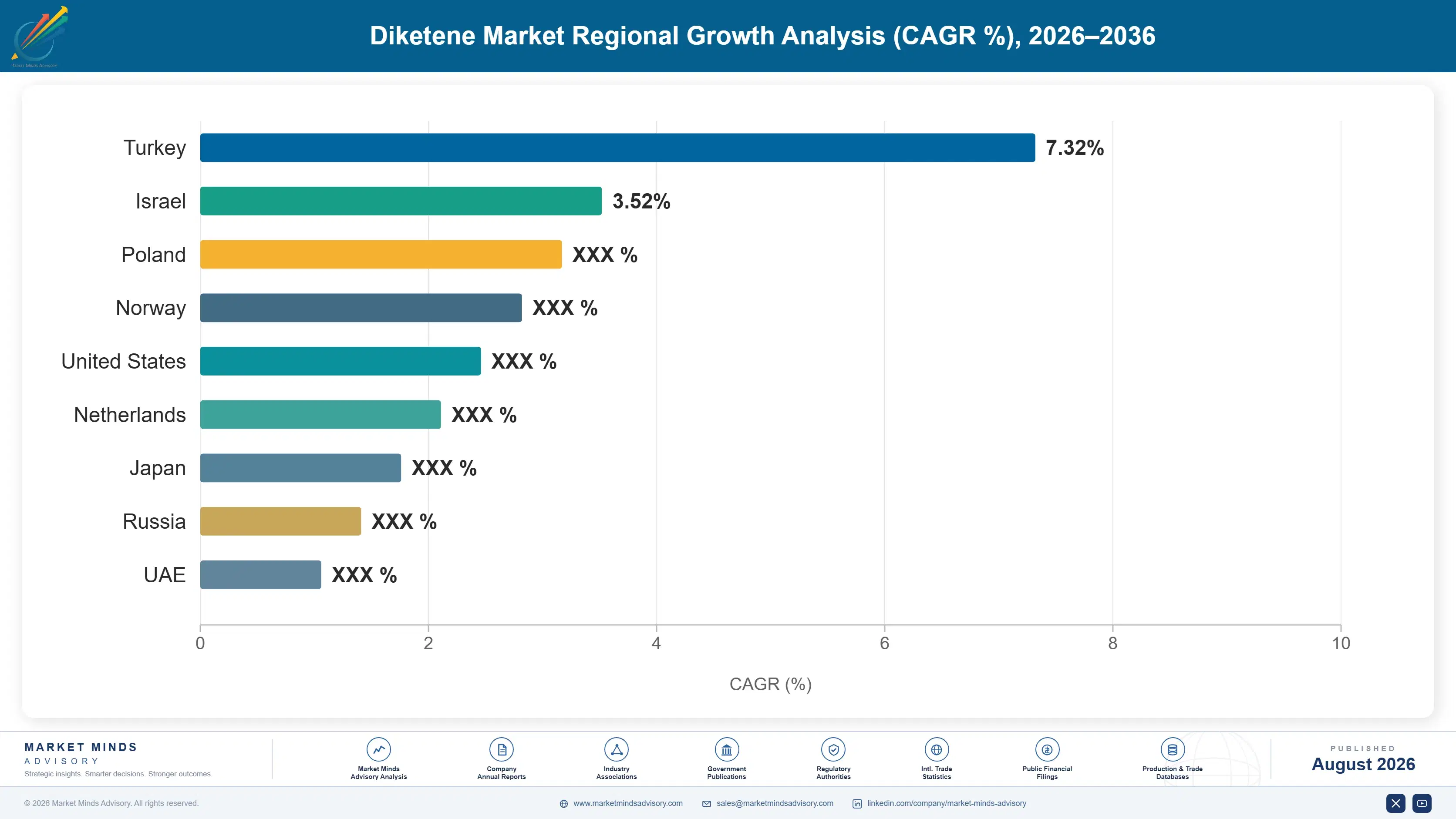
Regional segmentation reflects the global nature of the diketene market, with Asia-Pacific emerging as the dominant region due to its large chemical manufacturing base and growing pharmaceutical and agrochemical sectors. North America and Europe are mature markets, characterized by advanced production technologies and high regulatory standards. South America and the Middle East & Africa are witnessing gradual growth, supported by industrialization and agricultural development initiatives. Regional dynamics play a crucial role in shaping market strategies, with local regulations, feedstock availability, and end-user preferences influencing demand patterns.

Growth Drivers and Opportunities in Diketene Market

  • Expanding Pharmaceutical and Agrochemical Industries

The rapid growth of the pharmaceutical and agrochemical sectors is a primary driver for the diketene market. Pharmaceutical companies are increasingly relying on diketene derivatives for the synthesis of APIs and advanced intermediates, while agrochemical producers utilize diketene-based compounds in the formulation of high-performance crop protection agents. The rising demand for innovative drugs and sustainable agricultural solutions is expected to fuel diketene consumption, particularly in emerging economies with expanding healthcare and agricultural infrastructure.

  • Technological Advancements in Diketene Synthesis

Advances in chemical synthesis and process engineering are creating new opportunities for diketene manufacturers. The adoption of continuous flow reactors, improved catalysts, and automation technologies is enhancing production efficiency, reducing costs, and minimizing environmental impact. These technological innovations are enabling manufacturers to meet the evolving needs of end-users, develop customized derivatives, and comply with increasingly stringent regulatory requirements. The ability to offer high-purity and specialty diketene products is expected to be a key differentiator in the competitive landscape.

Emerging Opportunities for Diketene Market

  • Development of Bio-Based Diketene Production

The shift towards sustainable and renewable chemical production is opening new avenues for bio-based diketene. Research initiatives focused on utilizing bio-derived acetic acid and other renewable feedstocks are gaining momentum, driven by regulatory incentives and consumer demand for green products. The successful commercialization of bio-based diketene could provide a significant competitive advantage, enabling manufacturers to tap into new market segments and enhance their sustainability credentials.

  • Expansion into High-Growth Emerging Markets

Emerging markets in Asia-Pacific, South America, and the Middle East & Africa present significant growth opportunities for diketene producers. Rapid industrialization, urbanization, and the expansion of pharmaceutical and agrochemical manufacturing capacities are driving demand for diketene and its derivatives. Strategic investments in local production facilities, distribution networks, and partnerships with regional players can help manufacturers capitalize on these opportunities and establish a strong foothold in high-growth markets.

Growth Restrain factors and Challenges in Diketene Market

  • Raw Material Price Volatility and Supply Chain Disruptions

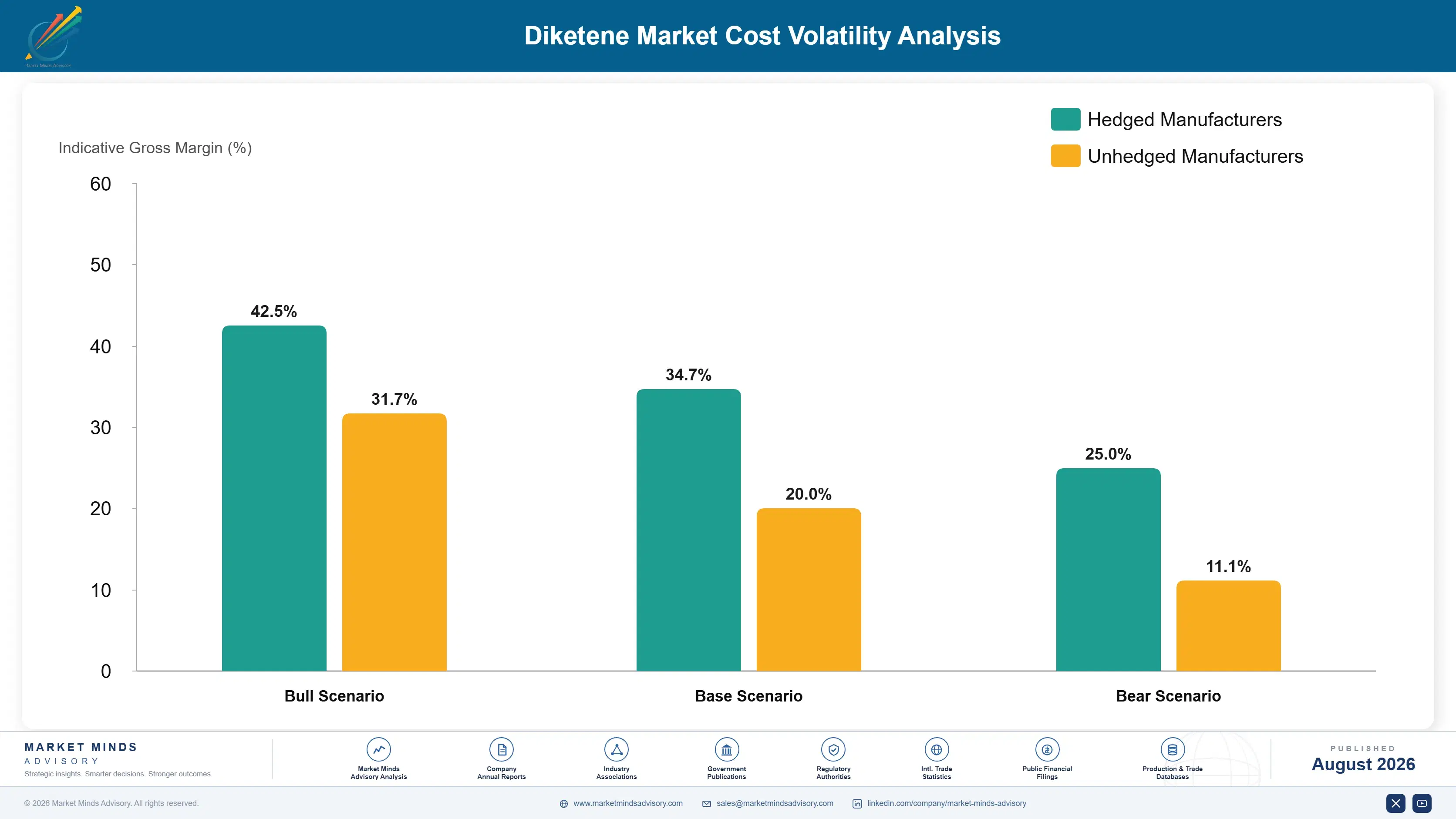
The diketene market is highly sensitive to fluctuations in the prices of key raw materials, such as acetic acid and ketene. Volatility in crude oil prices, geopolitical tensions, and supply chain disruptions can impact the availability and cost of these inputs, leading to margin pressures for manufacturers. In addition, the global supply chain for chemical intermediates is complex and subject to risks such as transportation bottlenecks, trade restrictions, and regulatory changes. Effective risk management strategies, including long-term supply agreements and diversification of sourcing channels, are essential to mitigate these challenges and ensure business continuity.

Furthermore, the COVID-19 pandemic highlighted the vulnerability of global supply chains, with disruptions affecting the timely delivery of raw materials and finished products. Manufacturers are increasingly investing in supply chain resilience, including the adoption of digital technologies for real-time monitoring and the development of contingency plans to address unforeseen events. The ability to adapt to changing market conditions and maintain operational flexibility will be critical for sustained growth in the diketene market.

  • Stringent Environmental and Safety Regulations

The production and handling of diketene involve significant environmental and safety considerations, given its reactive nature and potential health hazards. Regulatory authorities in major markets, including the US, EU, and China, have implemented stringent guidelines governing emissions, waste disposal, and workplace safety. Compliance with these regulations requires substantial investments in pollution control technologies, process automation, and employee training. Non-compliance can result in fines, operational shutdowns, and reputational damage.

The increasing focus on sustainability and corporate social responsibility is also prompting manufacturers to adopt greener production methods and reduce their environmental footprint. While these initiatives offer long-term benefits, they can increase operational costs and complexity in the short term. Balancing regulatory compliance with cost competitiveness remains a key challenge for market participants, particularly for small and medium-sized enterprises with limited resources.

Diketene Market Regional Analysis

RegionMarket Share (2025)Key Market Highlight
Asia-Pacific41%Rapid expansion of pharmaceutical and agrochemical industries; strong manufacturing base.
North America23%Mature market with advanced production technologies and high regulatory standards.
Europe19%Focus on sustainable production and stringent environmental regulations.
South America10%Growing demand from agrochemical and industrial sectors; increasing investments.
Middle East & Africa7%Gradual market development; rising industrialization and agricultural modernization.

Asia-Pacific

Asia-Pacific dominates the global diketene market, accounting for the largest share due to its robust chemical manufacturing infrastructure and expanding end-use industries. China and India are key contributors, driven by strong demand from pharmaceuticals, agrochemicals, and specialty chemicals. The region benefits from favorable government policies, cost-effective production, and access to raw materials. Ongoing investments in capacity expansion and technological upgrades are expected to further strengthen Asia-Pacific’s position in the global market.

North America

North America represents a mature and technologically advanced market for diketene and its derivatives. The region is characterized by high regulatory standards, a strong focus on product quality, and the presence of leading chemical manufacturers. Demand is primarily driven by the pharmaceutical and agrochemical sectors, with ongoing innovation in product development and process optimization. Strategic collaborations and investments in sustainable production methods are key trends shaping the North American market.

Europe

Europe’s diketene market is shaped by stringent environmental regulations and a strong emphasis on sustainability. Manufacturers are investing in green chemistry initiatives and process improvements to comply with regulatory requirements and meet the expectations of environmentally conscious customers. The region’s well-established pharmaceutical and specialty chemicals industries provide a stable demand base, while ongoing R&D activities support the development of high-value diketene derivatives.

South America

South America is emerging as a growth market for diketene, supported by increasing investments in agrochemical and industrial manufacturing. Brazil and Argentina are leading contributors, with rising demand for crop protection agents and specialty chemicals. The region offers opportunities for market expansion, particularly through partnerships with local players and investments in production capacity. However, challenges related to infrastructure and regulatory compliance must be addressed to fully realize the market’s potential.

Middle East & Africa

The Middle East & Africa region is witnessing gradual development in the diketene market, driven by industrialization and agricultural modernization initiatives. While the market is relatively small compared to other regions, increasing investments in chemical manufacturing and the expansion of end-use industries are expected to drive future growth. Strategic partnerships and technology transfer initiatives can help accelerate market development and enhance competitiveness in the region.d

Diketene Market Regional

Competition Landscape in Diketene Market

The diketene market is characterized by intense competition among global and regional players, each striving to enhance their market position through product innovation, capacity expansion, and strategic collaborations. Leading manufacturers are focusing on the development of high-purity and specialty diketene derivatives to cater to the evolving needs of end-user industries. The market also witnesses frequent mergers, acquisitions, and joint ventures aimed at expanding geographic reach and strengthening technological capabilities. Continuous investment in research and development, coupled with a strong emphasis on sustainability and regulatory compliance, is essential for maintaining a competitive edge in this dynamic market environment.

Major Players in Diketene Market

  • Eastman Chemical Company
  • Lonza Group AG
  • Daicel Corporation
  • Nantong Acetic Acid Chemical Co., Ltd.
  • Laxmi Organic Industries Ltd.
  • Mitsuboshi Chemical Co., Ltd.
  • Anhui Wotu Chemical Co., Ltd.
  • Ningbo Wanglong Technology Co., Ltd.
  • Shandong Huihai Pharmaceutical Co., Ltd.
  • Wuhan Youji Industries Co., Ltd.
  • Zhejiang Longsheng Group Co., Ltd.
  • Yixing Zhongxing Chemical Co., Ltd.
  • Hebei Chengxin Co., Ltd.
  • Shandong Yabang Chemical Co., Ltd.
  • Jiangsu Tiancheng Biochemical Products Co., Ltd.
  • Henan Tianfu Chemical Co., Ltd.
  • Shandong Minji Chemical Co., Ltd.
  • Anhui Jinhe Industrial Co., Ltd.
  • Jiangsu Yinyan Specialty Chemicals Co., Ltd.
  • Hubei Xianlin Chemical Co., Ltd.

Recent Developments in Diketene Market

  • In March 2023, Eastman Chemical Company announced the expansion of its diketene derivatives production capacity in the United States to meet rising demand from pharmaceutical and agrochemical sectors.
  • In November 2022, Laxmi Organic Industries Ltd. commissioned a new diketene derivatives plant in India, enhancing its product portfolio and regional market presence.
  • In July 2022, Daicel Corporation introduced a new high-purity diketene product line targeting pharmaceutical applications, leveraging advanced purification technologies.
  • In January 2022, Lonza Group AG entered into a strategic partnership with a leading agrochemical company to develop customized diketene-based intermediates for crop protection products.
  • In September 2021, Nantong Acetic Acid Chemical Co., Ltd. invested in process automation and digitalization to improve production efficiency and ensure regulatory compliance.
  • In May 2021, Mitsuboshi Chemical Co., Ltd. launched a sustainability initiative focused on reducing emissions and adopting bio-based feedstocks for diketene synthesis.

FAQ for Diketene Market

  1. What is the current size and projected growth rate of the diketene market?

The global diketene market is estimated at USD 550 million in 2026 and is projected to reach USD 790 million by 2033, registering a CAGR of 5.3% during the forecast period.

  1. Which regions are expected to drive the growth of the diketene market?

Asia-Pacific is expected to lead the market due to its robust chemical manufacturing base and expanding pharmaceutical and agrochemical sectors. North America and Europe will also contribute significantly, driven by technological advancements and regulatory compliance.

  1. What are the key applications of diketene and its derivatives?

Diketene and its derivatives are primarily used in pharmaceuticals, agrochemicals, pigments and dyes, coatings and resins, and specialty chemicals. Their unique reactivity makes them valuable intermediates in various synthesis processes.

  1. What are the major challenges facing the diketene market?

The market faces challenges such as raw material price volatility, supply chain disruptions, and stringent environmental and safety regulations. Manufacturers must invest in risk management, process optimization, and regulatory compliance to address these challenges.

  1. How are sustainability trends impacting the diketene market?

Sustainability trends are driving the adoption of bio-based feedstocks and green chemistry approaches in diketene production. Manufacturers are focusing on reducing emissions, improving resource efficiency, and developing environmentally friendly products to meet regulatory and customer expectations.

Contact us today to access the full report and propel your business forward.