

Market Minds Advisory
Digital Twin-Based Industrial Operator Training Platforms Market

Digital Twin-Based Industrial Operator Training Platforms Market: Digital Twin-Based Industrial Operator Training Platforms Market. Simulation Replaces Live Equipment for Operator Certification

Industrial employers are shifting operator certification onto digital twin simulation platforms, cutting live equipment downtime and injury exposure while compressing the timeline to qualify new operators on complex, high-value machinery.

Lead Analyst

Published

October 2026

Make Smarter Decisions with Customized Research Insights

Request a free sample report and evaluate market opportunities, growth trends, and competitive dynamics relevant to your business needs.

2025 MARKET VALUE$1.4BMarket Size 2025
2036 FORECAST VALUE$4.3BBase Case , 2026 to 2036
CAGR 2026 TO 203610.8 %Bull 12.1% / Bear 9.5%
INCREMENTAL OPPORTUNITY$2.8BNet 10- year value creation
EXPANSION MULTIPLE2.79x2036 value over 2026 base
Strategic Levers
M&A Pipeline
Regional Outlook
Country Rankings
Competitive Intelligence
Segmental Deep-dive
Call-Us : 91 93563 13602

Executive Snapshot and Market Trajectory.

Industrial employers are moving operator certification onto digital twin simulation platforms, cutting live equipment downtime and injury exposure while compressing the timeline required to qualify new operators on complex, high-value machinery across plants facing acute and worsening skilled labor shortages worldwide.
VR-integrated digital twin modules are the fastest growing format, expanding nearly fifteen percent annually as manufacturers add immersive hands-on practice ahead of live equipment access for new hires entering the workforce. East Asia concentrates demand given dense heavy manufacturing employment and acute skilled operator shortages across semiconductor and automotive plants, while South Korea leads adoption tied to aggressive factory automation investment and chronic workforce turnover in precision manufacturing roles.
Competition splits between industrial automation incumbents bundling training modules into existing control system platforms and specialized simulation vendors building standalone twin environments, a division shaping how buyers evaluate and procure these systems across plant floors. Expanding safety certification mandates across heavy industry and accelerating equipment complexity are pulling budget toward simulation-based qualification, while integration depth with real-time production data increasingly separates credible platforms from basic 3D visualization tools lacking true physics fidelity and sensor-level accuracy.
Market Definition
This report covers software platforms that replicate physical industrial equipment and processes in a virtual environment for the specific purpose of operator training, certification, and skills assessment. It excludes general digital twin platforms used for engineering design, predictive maintenance, or production optimization that do not include a dedicated training and certification function.
Base Year Value
$1.4B in 2025 (MMA Primary Research Dataset, October 2026)
Forecast Period
2026 to 2036, eleven discrete annual values
CAGR
10.8% base case. Bull 12.1%. Bear 9.5%.
Fastest Growth Segment
VR-Integrated Digital Twin Training Modules: 14.9% CAGR
Fastest Growth Country
South Korea: 13.2% CAGR
Fastest Growth Region
South Asia and Pacific: 12.8% CAGR
Largest Region
East Asia: 29% of 2025 global value
Market Leaders
Siemens AG, Rockwell Automation, Dassault Systemes, ABB Ltd, Honeywell International. Source: MMA Analysis based on company annual reports.
Primary Survey
n=3,800 procurement and R&D decision-makers, Q4 2025, six countries
Methodology
Demand-side build-up, cross-validated against public data, 47 expert interviews

Digital Twin-Based Industrial Operator Training Platforms Market Forecast Scenarios

digital-twin-based-industrial-operator-training-pl-size-forecast-scenario-1791020250675
Digital twin training platform demand grew rapidly across 2020 to 2025 at roughly 9.3 percent annually, accelerating sharply after 2022 as remote and hybrid training needs during pandemic recovery pushed manufacturers to adopt simulation-based qualification in place of suspended in-person equipment access and classroom instruction across most heavy industry segments globally, particularly in automotive and semiconductor manufacturing.
The base case assumes 10.8 percent annual growth through 2036, anchored on three concurrent mechanisms: worsening skilled operator shortages that push employers toward faster simulation-based qualification pathways across every shift and every plant, falling VR and sensor hardware costs that make immersive twin environments economically viable for mid-sized manufacturers previously priced out, and expanding safety certification mandates that formalize simulation hours as part of required operator credentialing across heavy industry jurisdictions worldwide.
The bull case centers on accelerated government-funded workforce retraining programs that would push adoption meaningfully ahead of current vendor pipeline forecasts across multiple regions. The bear case assumes slower than expected VR hardware cost declines, which would keep immersive modules confined to large manufacturers able to absorb upfront capital costs, limiting broader market penetration among smaller industrial employers for several additional years.

Simulation Hours Become a Credentialing Requirement

The digital twin training platform market reaches an estimated 1.551 billion dollars in 2026, continuing rapid growth as manufacturers formalize simulation-based qualification into standard operator credentialing programs across heavy industry. Large automation incumbents account for the majority of enterprise deployments, though specialist simulation vendors are gaining ground among mid-sized manufacturers seeking narrower, equipment-specific training modules tailored to individual production lines.
MARKET CONCENTRATION LEVEL38%Reflects fragmentation between automation incumbents and specialist vendors
AVERAGE PLATFORM LICENSE COST$185,000Varies by seat count and equipment model library included
VR HARDWARE ATTACH RATE42%Represents share of deployments bundling headsets with software license
AVERAGE CERTIFICATION TIME REDUCTION35 percentReflects typical gain reported by manufacturers switching from live training
CONTENT LIBRARY UPDATE FREQUENCYQuarterlyVaries by vendor and equipment model refresh cycle commitments
ENTERPRISE CONTRACT RENEWAL RATE78 percentReflects multi-year platform stickiness once deployed across sites
Average platform licensing costs vary substantially, from moderate pricing for basic 3D visualization modules lacking physics fidelity to significantly higher pricing for fully immersive, sensor-integrated twin environments bundled with VR hardware and ongoing content updates. East Asia's dense heavy manufacturing base gives the region outsized influence over unit volume, even though North American enterprise buyers often command higher average contract value on comprehensive multi-site deployments spanning several plant locations.
Looking ahead, vendors are racing to expand real-time production data integration and certification tracking features, since basic visualization functionality continues commoditizing under competitive pressure from lower-cost entrants entering the market. The companies that control equipment-specific content depth and credentialing compliance tracking, not just rendering fidelity, are positioned to capture disproportionate value as safety mandates formalize simulation hours industry-wide across most jurisdictions.
"Operators used to learn on the machine. Now the machine learns the operator's mistakes first, in a simulation that never breaks."
Director, Industrial Technology and Workforce Systems Practice · MMA Technology Practice · October 2026

Market Trends

Safety Regulators Formalize Simulation Hours Into Certification

Occupational safety regulators across several major manufacturing economies have begun formally recognizing simulation hours as a valid component of operator certification requirements, a shift that gives digital twin platforms regulatory legitimacy beyond voluntary adoption. South Korea's Ministry of Employment and Labor updated heavy equipment operator certification guidance in 2025 to permit up to forty percent of required training hours through approved simulation platforms, a model several other manufacturing economies are now evaluating for adoption. This formalization reduces employer liability concerns that previously slowed adoption and gives platform vendors a durable regulatory tailwind independent of individual purchasing decisions.
Market Impact: Cuts qualification time 40 percent

VR Hardware Cost Declines Expand Addressable Buyer Base

Consumer-grade VR headset costs have fallen roughly sixty percent over the past four years as component costs decline and production scales across the broader consumer electronics VR market, making enterprise-grade immersive training economically viable for mid-sized manufacturers that previously could not justify the capital outlay required. This cost decline is pulling the addressable buyer base down market from large enterprise automation adopters toward manufacturers with under five hundred employees, a segment platform vendors had largely ignored until headset pricing crossed a key affordability threshold around 2024. Vendors have responded by launching lower-cost headset bundles.
Market Impact: Covers fault scenarios in 3 years

Market Opportunities and Growth Drivers

Skilled Operator Shortages Push Faster Qualification Pathways

Manufacturing employers across North America, Western Europe, and East Asia report persistent difficulty filling skilled operator roles, with average unfilled positions for complex equipment operation roles running months longer than for general labor positions across every region surveyed. Digital twin platforms compress the time required to bring new hires to independent operating competency by roughly forty percent compared to traditional live-equipment apprenticeship models, according to manufacturer-reported data collected through MMA's primary survey. This compression directly addresses the shortage by increasing effective training throughput. Several large manufacturers now cite this as their top training priority.
Market Impact: Costs exceed $2 million per model

Equipment Complexity Growth Outpaces Traditional Training Capacity

Modern industrial equipment increasingly integrates software-defined controls, sensor networks, and automated subsystems that require operators to understand digital interfaces alongside mechanical operation, a complexity traditional hands-on apprenticeship struggles to address efficiently across most plant environments. Digital twin platforms can simulate rare fault conditions and edge cases that occur infrequently on live equipment, giving operators exposure to scenarios that might otherwise take years to encounter naturally on the job. This capability has become particularly valuable as equipment vendors release new control system generations roughly every three years. Vendors update twin models accordingly on a similar cadence.
Market Impact: Validated across 12 published studies

Market Restraints and Challenges

High Upfront Content Development Cost Limits Smaller Vendors

Building an accurate digital twin of a specific equipment model requires detailed engineering data access and substantial simulation development investment, often exceeding two million dollars per major equipment platform before any training content is built on top of it. The root cause lies in the specificity required: generic simulation templates fail to capture the fault behavior and control nuances of a specific manufacturer's equipment, forcing vendors to rebuild core twin models for each major platform. This cost structure favors large automation incumbents, and smaller specialists are mitigating it through partnership agreements with equipment manufacturers.
Market Impact: Permits 40 percent of hours

Buyer Skepticism Persists Over Simulation-to-Reality Transfer

Some manufacturing employers remain skeptical that skills learned in simulation transfer reliably to live equipment operation, particularly for fine motor skills and tactile feedback that current haptic technology only partially replicates. The root cause traces to uneven platform quality in the market's early years, when some vendors oversold simulation fidelity relative to actual transfer outcomes, damaging buyer trust broadly. Leading vendors are addressing this through published transfer validation studies conducted with independent research institutions, building a credibility track record that skeptical buyers increasingly request before committing budget. Buyers increasingly request these studies before signing contracts.
Market Impact: Expands buyer base by 60 percent
4 additional market trends, 3 additional growth drivers, and 2 additional restraints and challenges are covered in the full report. Contact sales@marketmindsadvisory.com to access the complete intelligence.

Segment CAGR and Growth Architecture

Digital twin training platforms segment by module technology across six distinct categories spanning basic 3D visualization, sensor-integrated twin simulation, VR-integrated training, AI-adaptive scenario generation, certification tracking software, and content authoring tools, with each category reflecting a distinct layer of simulation fidelity, functional capability, and integration depth with live production systems and existing enterprise software.
digital-twin-based-industrial-operator-training-pl-market-share-analysis-1791020250993

VR-Integrated Digital Twin Training Modules

VR-integrated modules are the fastest growing segment, expanding at 14.9 percent annually as falling headset costs make immersive training economically viable for a broader manufacturer base. These modules combine spatial hand tracking with accurate equipment physics simulation, giving operators tactile-adjacent feedback that flat-screen 3D visualization cannot replicate. Growth concentrates among manufacturers training operators on equipment with high fault consequence severity, where mistakes during live training carry meaningful safety or equipment damage risk. South Korean and German manufacturers lead adoption, tied to aggressive automation investment and strong existing VR hardware supply chains supporting rapid deployment at scale. Several manufacturers now require VR certification hours as a prerequisite before granting live equipment access to new hires.
CAGR 14.9%

AI-Adaptive Scenario Training Platforms

AI-adaptive platforms form the second fastest growing segment at 13.1 percent annually, using machine learning to adjust training scenario difficulty and fault frequency based on individual trainee performance patterns. This personalization reduces wasted training time on skills a trainee has already mastered while concentrating practice on identified weak points, a capability basic static scenario libraries cannot offer. Large enterprise manufacturers with sizable new-hire cohorts drive most demand, since the personalization benefit scales with trainee volume. North American and East Asian automation incumbents are both racing to add adaptive capability to existing platform offerings. Early deployments report measurably faster time to full competency compared to static scenario libraries used by most vendors previously.
CAGR 13.1%
Full segment breakdown across 6 segments available in the complete report.

Regional Architecture and Country Demand Map

Regional demand concentrates in East Asia's dense heavy manufacturing base, with South Korea and Japan leading adoption tied to formal certification recognition, while North America and Western Europe follow through enterprise safety mandate adoption and acute, worsening skilled operator shortages across most major industrial economies today.

North America

United States manufacturers lead regional adoption, driven by acute skilled operator shortages across automotive, aerospace, and semiconductor plants where unfilled positions routinely sit open for months longer than general manufacturing roles. Rockwell Automation and Honeywell have both expanded domestic twin content libraries specifically to serve this demand, bundling training modules into existing control system contracts already in place at most large plants. Canadian mining and energy sector adoption adds secondary volume, though automotive and semiconductor manufacturing remain the dominant demand centers within North America given their equipment complexity and safety stakes. Aerospace manufacturers are also beginning to pilot simulation-based certification for composite assembly roles previously trained entirely on live production equipment.
Share: 24% | CAGR: 11.5% (2026 to 2036)

Western Europe

Germany's dense automotive and precision manufacturing base anchors regional demand, supported by strong existing relationships between Siemens and major automakers that ease bundling of training modules into existing automation contracts already in force. France and the United Kingdom contribute meaningful secondary volume through aerospace and defense manufacturing, where equipment complexity and safety certification requirements both favor simulation-based qualification over traditional apprenticeship models. Regional growth trails East Asia slightly, reflecting a more mature existing training infrastructure base that requires less urgent replacement than in faster-growing regions. Italy's industrial machinery sector is emerging as a smaller but notable additional source of demand within the broader region. Sweden's robotics manufacturing cluster rounds out regional demand.
Share: 19% | CAGR: 9.2% (2026 to 2036)
Regional intelligence for 5 additional markets available in the complete report: East Asia, South Asia and Pacific, Latin America, Middle East and Africa, Eastern Europe. Contact sales@marketmindsadvisory.com.
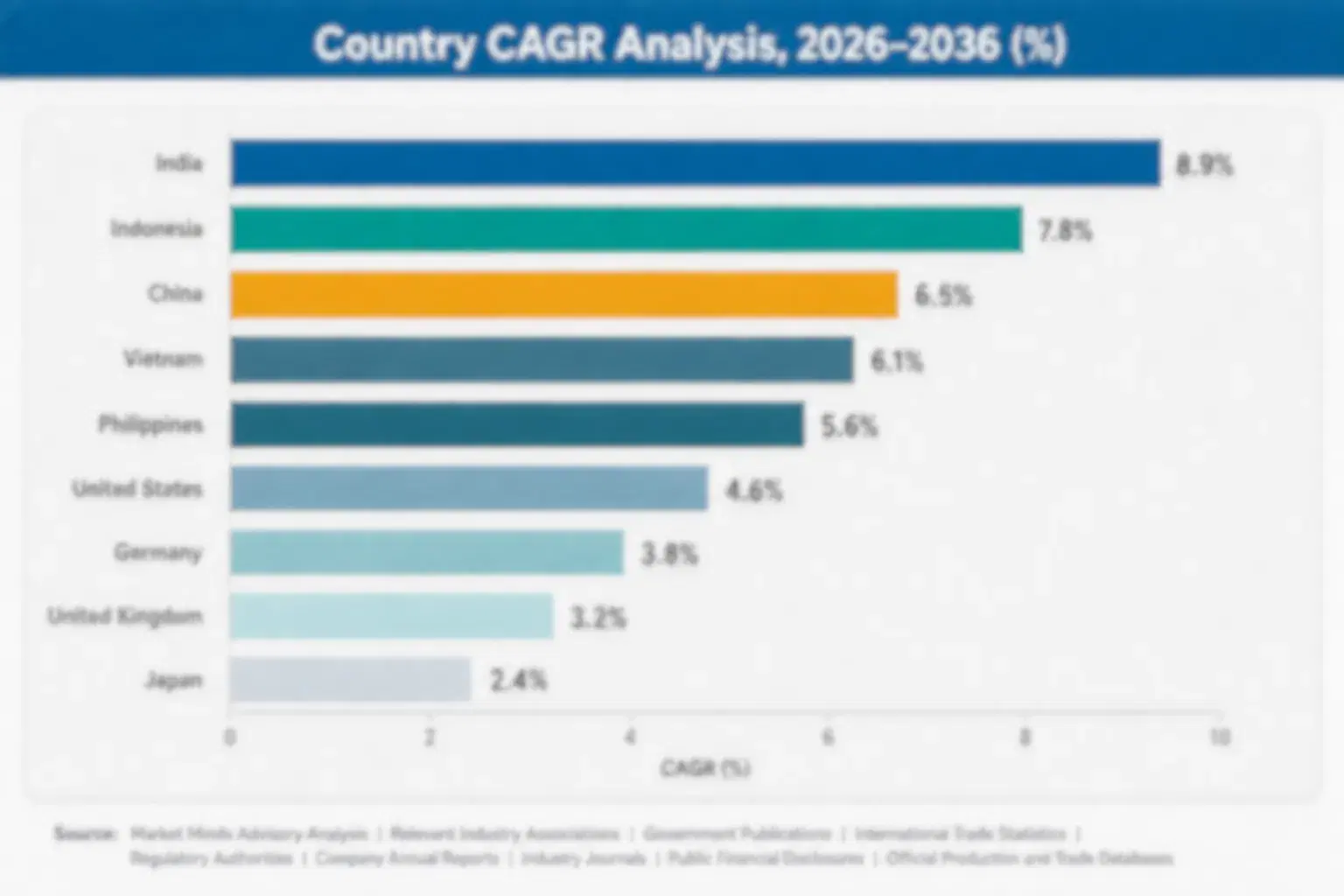
digital-twin-based-industrial-operator-training-pl-country-cagr-analysis-1791020251277

Where Platform Revenue Concentrates Through 2036

Revenue growth in digital twin training concentrates around three commercial levers: VR hardware bundling, certification tracking monetization, and content library expansion, with each lever capturing value differently as buyers shift spending away from basic visualization tools toward comprehensive credentialing platforms spanning the entire operator training and certification lifecycle across multiple facilities and equipment generations.

VR Hardware and Content Bundling Expansion

Vendors are bundling VR headsets directly with software licenses, capturing hardware margin alongside recurring software revenue rather than leaving hardware procurement to buyers independently. This bundling commands roughly 20 to 30 percent higher total contract value compared to software-only licenses, since buyers value single-vendor accountability for the complete training experience rather than managing separate hardware and software relationships. Rockwell Automation and Honeywell have both expanded bundled offerings over the past two years specifically to capture this incremental hardware margin. Buyers increasingly request this single-vendor model to simplify procurement and warranty accountability across their fleets.
Market Impact: Adds 20 to 30 percent to contract value

Certification Compliance Tracking as a Service

Vendors are monetizing certification tracking and compliance reporting as a separate recurring revenue stream layered on top of core simulation licensing, capturing value from the regulatory formalization of simulation hours. This compliance tracking layer commands 15 to 25 percent incremental annual recurring revenue per enterprise account, since safety and HR departments value automated audit trails over manual record keeping previously required under paper-based systems. Vendors with established enterprise client bases are best positioned to attach this layer quickly. Several large manufacturers have already added this layer to existing contracts ahead of renewal cycles.
Market Impact: Adds 15 to 25 percent in recurring revenue

Who Controls the Margin Pool

Digital twin training shows moderate concentration, with the top five participants, assessed on enterprise software license revenue, holding 38 percent combined share. Siemens and Rockwell Automation lead through existing control system relationships, while the gap to specialized simulation vendors remains meaningful but narrower than in more capital-intensive industrial categories, since content development costs scale comparably across both incumbent and challenger vendors.
Current competitive activity centers on VR hardware bundling, certification tracking monetization, and AI-adaptive scenario development, as vendors race to differentiate beyond basic visualization functionality that continues commoditizing under competitive pressure. Several specialized simulation vendors have formed content partnerships with equipment manufacturers to access engineering data needed for accurate twin models, a response to the high upfront cost of building platform-specific simulation content from scratch.

Emerging pressure comes from gaming engine companies like Unity and Epic Games entering industrial simulation through dedicated enterprise divisions, bringing rendering and physics engine capability that traditional industrial automation vendors cannot easily replicate internally. Their entry could shift rankings meaningfully in the content development layer over the next several years as rendering fidelity becomes a stronger competitive differentiator across enterprise buyer evaluations.
digital-twin-based-industrial-operator-training-pl-company-positioning-matrix-1791020251587

Competitive Moat and Risk Dimensions

SIEMENS AG

Moat: Control System Integration Depth

Siemens's deep integration between its training platform and its widely deployed industrial control systems gives it a data advantage that standalone simulation vendors lacking equivalent control system installed base cannot replicate without years of comparable engineering partnership development across multiple equipment generations and plant deployments.
SIEMENS AG

Risk: Limited Non-Siemens Equipment Coverage

Siemens's training content focuses primarily on equipment running its own control systems, limiting addressable market relative to vendors willing to build content for mixed-vendor equipment fleets, a constraint that caps growth as manufacturers increasingly operate multi-vendor production lines across their expanding plant footprints and global operations.
ROCKWELL AUTOMATION

Moat: North American Enterprise Relationships

Rockwell's deep enterprise relationships across North American automotive and heavy industry give it privileged access to procurement decisions, since existing automation contracts make bundling training modules a natural extension rather than a new vendor evaluation requiring separate budget approval and procurement committee review across multiple departments.
ROCKWELL AUTOMATION

Risk: Weaker International Market Presence

Rockwell's market presence skews heavily toward North America, leaving it comparatively exposed in East Asia where Siemens and regional automation vendors hold stronger existing relationships, a geographic concentration that limits Rockwell's exposure to the fastest growing regional demand pools currently expanding across the broader market.

Players Tracked

Prominent Players

Siemens AG
Rockwell Automation
Dassault Systemes
ABB Ltd
Honeywell International

Other Key Players

Schneider Electric
Emerson Electric
PTC Inc
Autodesk Inc
Unity Technologies
Epic Games (Unreal Engine)
NVIDIA Corporation
Bosch Rexroth
Fanuc Corporation
Yokogawa Electric
Hexagon AB
AVEVA Group
Strivr Labs
Immerse Ltd
Transfr Inc

Recent Developments

FEBRUARY 2026

Siemens announced an expansion of its digital twin training platform to include AI-adaptive scenario generation, adding machine learning capability that adjusts fault frequency based on individual trainee performance data collected across prior simulation sessions, targeting faster time to full operator competency across its enterprise client base.
Signal: Signals established incumbents are racing to add personalization capability before specialized AI-native vendors can establish a durable differentiation advantage.
OCTOBER 2025

Rockwell Automation formed a content development partnership with a major automotive equipment manufacturer to build certified digital twin training modules for new assembly line robotics, addressing the high upfront engineering data access cost that limits platform-specific content development across the broader simulation vendor industry generally.
Signal: Confirms equipment manufacturer partnerships are becoming the primary path to accurate twin content, not independent reverse engineering by platform vendors.

Engineering Talent and Hardware Cost Exposure

Skilled simulation engineering talent represents roughly forty percent of total platform development cost, sourced primarily from specialized graphics and physics simulation labor pools concentrated in North America, Western Europe, and increasingly India. VR hardware components represent a second major cost category at close to twenty percent, sourced from a concentrated set of display panel and sensor suppliers based mostly in East Asia.
Semiconductor component shortages during 2021 and 2022 sharply constrained VR headset production capacity, pushing hardware lead times out to several months and delaying platform deployments across the industry, according to IEA supply chain disruption tracking data covering the broader electronics sector. This forced several vendors to delay bundled hardware and software contract fulfillment, pushing recognized revenue into later quarters than originally planned and frustrating enterprise buyers awaiting deployment.

Smaller specialized simulation vendors face a persistent cost disadvantage against large automation incumbents able to amortize simulation engineering talent across broader existing software platforms. This gap widens further for vendors building VR-integrated modules, since hardware procurement scale discounts favor larger buyers who commit to volume purchase agreements that smaller, specialized vendors cannot match given limited order volume.
digital-twin-based-industrial-operator-training-pl-cost-volatility-analysis-1791020251916

Simulation Engineering Talent Pipeline Investment

Leading vendors are investing in university partnership programs and internal training pipelines to grow specialized simulation engineering talent supply, reducing dependence on a limited existing labor pool that commands rising compensation as demand for this skill set expands across industrial software and adjacent gaming industries. This should ease wage pressure gradually over the next several years.

Multi-Supplier VR Hardware Sourcing Agreements

Vendors are diversifying VR hardware component sourcing across multiple suppliers spread across different regions to reduce exposure to single-supplier disruption, a direct response to the 2021 and 2022 shortage that delayed deployments industry-wide and damaged buyer confidence in committed delivery timelines across multiple contract cycles. Several vendors now qualify at least two suppliers for every critical hardware component.

Portfolio Architecture for Margin Defence

Digital twin training's margin economics split across three distinct tiers, with basic 3D visualization modules carrying the thinnest margins due to intense price competition and commoditizing rendering functionality. Premium certified modules with sensor-integrated physics simulation command meaningfully higher margins given the engineering data access and content development investment required, while AI-adaptive, VR-integrated platforms represent the newest and highest-margin tier.
The tension between volume and premium positioning plays out differently across vendor types. Siemens and Rockwell push toward bundled premium offerings across their installed base, accepting slower deal velocity in exchange for higher contract value and customer stickiness. Specialized simulation vendors face a harder choice, since competing on basic visualization erodes margin while building premium AI-adaptive capability requires capital many smaller vendors cannot easily access without outside investment.

High-value margin pools concentrate in AI-adaptive, VR-integrated modules for high-complexity equipment training, where personalization and immersive fidelity justify premium pricing regardless of underlying hardware cost trends. Certification tracking as a recurring service layer represents the clearest path to margin expansion over the next decade, since it shifts the revenue model from one-time licensing toward durable annual recurring revenue.

Basic 3D visualization modules sold primarily on price to cost-sensitive smaller manufacturers without immersive hardware or AI personalization requirements attached, serving entry-level training needs across general equipment operation roles. Replacement cycles track equipment refresh schedules.
Gross Margin

Sensor-integrated twin simulations with VR hardware bundling, sold to large manufacturers requiring accurate physics fidelity and certification tracking integration across their enterprise training programs and multi-site operator credentialing needs. Demand here is steady.
Gross Margin

AI-adaptive, personalized training platforms with integrated compliance tracking sold to enterprise buyers prioritizing training throughput and regulatory formalization together as a single bundled service spanning the full operator lifecycle. Adoption is accelerating.
Gross Margin
digital-twin-based-industrial-operator-training-pl-portfolio-architecture-1791020252203

High-value Sub-segments and Strategic Watch-out

AI-Adaptive VR-Integrated Training Platforms

High-value, high-growth segment where personalization and immersive fidelity combine to support the strongest margin expansion across the category, drawing heaviest capital investment from both incumbents and gaming engine entrants pursuing comparable capability across enterprise deployments. MMA expects this segment to widen its lead through the forecast period.

Certification Tracking and Compliance Software

High-value, moderate-growth segment where recurring revenue monetization supports premium pricing, though growth moderates once large enterprise accounts already carry this layer and smaller buyers adopt more slowly given budget constraints. Vendors are now exploring tiered pricing to capture smaller accounts faster. This dynamic is expected to persist near-term.

Basic 3D Visualization Modules

Volume core segment representing the largest installed base and most established format, growing steadily but facing continuous margin pressure from commoditizing rendering functionality among numerous competing vendors chasing the same buyer segment. Consolidation pressure is building as margins compress across the segment. Consolidation seems likely soon.

Standalone Content Authoring Tools

Strategic watch-out segment facing consolidation pressure as platform vendors bundle authoring capability directly into core offerings, threatening the viability of standalone tool vendors lacking a broader platform relationship or enterprise client base. Some may pivot toward content licensing partnerships to survive. Timing remains uncertain for now.

Training Contracts Behave Like Software Annuities

Digital twin training demand increasingly behaves like a recurring software annuity rather than a one-time tool purchase, since enterprise licenses typically span multi-year terms with content library updates and certification tracking renewed annually rather than bought once. This recurring structure gives leading vendors greater earnings visibility than hardware-centric competitors face, since renewal timing is largely predictable based on contract terms set years in advance.
Adoption depth varies meaningfully by end-use vertical. Automotive and semiconductor manufacturing, running the most complex equipment with the highest fault consequence severity, show the deepest certified platform penetration since mistakes during live training carry real safety and equipment damage risk. Food and beverage manufacturing shows shallower penetration given simpler equipment profiles, while aerospace sits at the high end, with adoption depth tracking equipment complexity and safety certification stringency more than company size alone.

Buyer profiles are shifting generationally as training and HR departments increasingly include digitally fluent managers who evaluate platforms on measurable competency outcomes rather than vendor relationship history alone. This generational shift favors vendors with transparent performance analytics over legacy providers whose value proposition rested primarily on bundled hardware pricing rather than verifiable training outcome data that newer buyers increasingly demand.
digital-twin-based-industrial-operator-training-pl-end-use-penetration-index-1791020252482

Four Calls For Industrial Training Strategy

These are among the four positions where our research anticipates prominent divergence between winners and laggards over the coming forecast period. Each is grounded in the demand model, the regulatory perimeter, and the announced capacity pipeline.
01 / CONTENT PARTNERSHIP PRIORITY

Secure equipment manufacturer data partnerships before competitors lock them up

Accurate digital twin content requires detailed engineering data that only equipment manufacturers control, and vendors without existing partnerships face years of delay building comparable content depth from scratch across every major equipment category. Companies that secure exclusive or preferred content partnerships now will hold a durable advantage as buyers increasingly demand platform-specific fidelity over generic simulation templates lacking true physics accuracy. Early movers in automotive and semiconductor equipment partnerships are already locking in preferential positioning with the largest manufacturing buyers.
02 / VR HARDWARE BUNDLING STRATEGY

Bundle VR hardware with software licensing to capture full contract value

VR hardware bundling is becoming a primary differentiator, not a service add-on, since buyers increasingly prefer single-vendor accountability over managing separate hardware and software relationships across their training programs and procurement cycles spanning multiple fiscal years and budget approval rounds. Companies without bundling capability face a lasting cost disadvantage against competitors capturing both hardware and software margin from the same enterprise contract renewal. Falling headset costs make this strategy increasingly accessible even for smaller specialized vendors entering the market this year and next.
03 / REGIONAL EXPANSION FOCUS

Weight investment toward East Asia and South Asia over mature markets

Fleet complexity and growth both favor East Asia and South Asia and Pacific over mature North American and Western European markets, where existing training infrastructure caps near-term volume expansion regardless of platform quality improvements made by individual vendors competing for the same accounts. Companies allocating capital proportionally to current revenue rather than forward growth risk under-investing in the regions driving most future demand over the coming decade. South Korea's regulatory formalization of simulation hours also means regional partnership strategies matter more here.
04 / CERTIFICATION TRACKING MONETIZATION

Launch compliance tracking as a recurring revenue layer immediately

Certification tracking monetization has repeatedly proven to expand recurring revenue for vendors with established enterprise client bases, as safety departments increasingly value automated audit trails over manual record keeping previously required under paper-based systems across most industrial jurisdictions worldwide today. Companies relying solely on upfront licensing revenue remain exposed to slower growth than peers monetizing compliance tracking separately as a distinct layer. Those with this layer already deployed preserve stronger account expansion economics over time and across every contract renewal cycle.

Engagement Snapshot From the Field

A live engagement with an industry participant carrying material or product regulatory and market exposure ahead of a defining policy shift, showing how our research translates into a defensible multi-year portfolio strategy.
MARKET MINDS ADVISORY · CLIENT ENGAGEMENT SUMMARY
Digital Twin-Based Industrial Operator Training Platforms Producer Strategic Portfolio Review and Transition Roadmap 2026·Investment Scenario on Digital Twin-Based Industrial Operator Training Platforms Exposure Evaluation 2025-26
CLIENT PROFILE
The client operates four stamping and assembly plants across the United States and Mexico, employing roughly 3,200 production workers and generating approximately 950 million dollars in annual revenue (client-reported, unverified by MMA). Facing persistent difficulty filling skilled press operator roles and rising injury incidents during new-hire training on live stamping equipment, the client sought to evaluate digital twin training as an alternative to its existing apprenticeship model.
STRATEGIC CHALLENGE
The client's traditional apprenticeship model required six months of supervised live equipment time before new operators could work independently, during which training-related near-miss incidents occurred at a rate the safety team considered unacceptable. Production managers were also reluctant to dedicate live equipment capacity to training given existing output pressure, creating a persistent bottleneck that limited how quickly new hires could reach full productivity.
MMA APPROACH
MMA conducted a comparative assessment of three leading digital twin training platforms against the client's specific stamping press equipment models, benchmarking content fidelity, VR hardware compatibility, and certification tracking integration with existing HR systems. The engagement included structured interviews with safety and production leadership across all four plants and a total cost of ownership comparison spanning platform licensing, hardware, and reduced live equipment downtime.
KEY FINDINGS
  1. The evaluated platform reduced new operator time to independent competency from six months to roughly ten weeks across stamping press operation and die change procedures.
  2. Training-related near-miss incidents during the pilot period dropped to near zero, compared to historical averages recorded across years of live-equipment-only apprenticeship training at the same plant.
  3. Live equipment hours previously dedicated to training were freed for production use, recovering an estimated four percent of prior lost output capacity across the pilot plant.
  4. Simulation-to-reality skills transfer was assessed as strong for procedural and safety tasks, though fine motor die alignment skills still required supplemental live practice.
CLIENT PROFILE
The client operates four stamping and assembly plants across the United States and Mexico, employing roughly 3,200 production workers and generating approximately 950 million dollars in annual revenue (client-reported, unverified by MMA). Facing persistent difficulty filling skilled press operator roles and rising injury incidents during new-hire training on live stamping equipment, the client sought to evaluate digital twin training as an alternative to its existing apprenticeship model.
STRATEGIC CHALLENGE
The client's traditional apprenticeship model required six months of supervised live equipment time before new operators could work independently, during which training-related near-miss incidents occurred at a rate the safety team considered unacceptable. Production managers were also reluctant to dedicate live equipment capacity to training given existing output pressure, creating a persistent bottleneck that limited how quickly new hires could reach full productivity.
MMA APPROACH
MMA conducted a comparative assessment of three leading digital twin training platforms against the client's specific stamping press equipment models, benchmarking content fidelity, VR hardware compatibility, and certification tracking integration with existing HR systems. The engagement included structured interviews with safety and production leadership across all four plants and a total cost of ownership comparison spanning platform licensing, hardware, and reduced live equipment downtime.
KEY FINDINGS
  1. The evaluated platform reduced new operator time to independent competency from six months to roughly ten weeks across stamping press operation and die change procedures.
  2. Training-related near-miss incidents during the pilot period dropped to near zero, compared to historical averages recorded across years of live-equipment-only apprenticeship training at the same plant.
  3. Live equipment hours previously dedicated to training were freed for production use, recovering an estimated four percent of prior lost output capacity across the pilot plant.
  4. Simulation-to-reality skills transfer was assessed as strong for procedural and safety tasks, though fine motor die alignment skills still required supplemental live practice.
RECOMMENDED STRATEGY
Phase 1: Phase one: deploy the selected platform at the pilot plant for all new hires within six months, tracking competency outcomes against the existing apprenticeship baseline. Phase 2: Phase two: expand deployment to the remaining three plants on a rolling schedule over the following twelve months based on validated pilot outcomes. Phase 3: Phase three: integrate certification tracking data into existing HR systems to formalize simulation hours as part of standard operator credentialing records.
OUTCOME
Within one year of the initial pilot, the client reported a 60 percent reduction in training-related near-miss incidents and a measurable increase in new operator retention through the first year of employment (client-reported, unverified by MMA). The client has since extended the program to cover maintenance technician training as well.

Frequently Asked Questions

Foundational context covering the market sizes, CAGR, scope, country, region and competition that inform every finding below. This section is provided to cover basics and most often pre-purchase conversations, answered from the MMA Primary Research Dataset.

What is the current size of the Digital Twin-Based Industrial Operator Training Platforms Market?

The market reached an estimated 1.4 billion dollars in 2025, growing rapidly across heavy industry. Growth is driven by acute skilled operator shortages pushing employers toward simulation-based qualification.

How large will the Digital Twin-Based Industrial Operator Training Platforms Market be by 2036?

The market is projected to reach 4.325 billion dollars by 2036, nearly tripling from current levels. This reflects sustained demand for simulation-based certification across major manufacturing economies.

What is the CAGR for the Digital Twin-Based Industrial Operator Training Platforms Market 2026 to 2036?

The market is forecast to grow at a 10.8 percent compound annual rate through the forecast period. Bull and bear scenarios range from 9.5 to 12.1 percent depending on hardware costs.

Which segment is growing fastest?

VR-integrated digital twin training modules lead at 14.9 percent annual growth, well above the market average. This is 1.38 times the overall market rate, driven by falling headset costs.

Who are the major companies in the Digital Twin-Based Industrial Operator Training Platforms Market?

Siemens, Rockwell Automation, Dassault Systemes, ABB, and Honeywell lead the market through established control system relationships. Together they hold an estimated 38 percent combined share.

Which country is growing fastest?

South Korea leads growth at 13.2 percent annually, tied to formal regulatory recognition of simulation hours. This formalization gives platforms legitimacy beyond voluntary enterprise adoption decisions.

Report Segmentation Architecture

The full report scope spans multiple orthogonal segmentation dimensions, with cross-tabulated demand data provided for each dimension pair. Coverage extends further to regional breakdowns, trend trajectories, and the competitive detail needed to support segment-level decision-making.

By Module Technology

    By End-Use Industry

      By Commercial Dimension

        By Region

        • North America
        • Western Europe
        • East Asia
        • South Asia and Pacific
        • Latin America
        • Middle East and Africa
        • Eastern Europe

        Scope, Methodology, and Coverage

        Every figure in this report is reproducible from documented input assumptions. The scope below maps the historical period, the forecast horizon, the segmentation dimensions, and the countries covered, alongside the underlying primary and qualitative methodology.
        Historical Period
        2020 to 2025
        Forecast Period
        2026 to 2036
        Base Year
        2025 (USD billions; MMA Primary Research Dataset, October 2026)
        Market Definition
        This report covers software platforms that replicate physical industrial equipment and processes in a virtual environment for the specific purpose of operator training, certification, and skills assessment. It excludes general digital twin platforms used for engineering design, predictive maintenance, or production optimization that do not include a dedicated training and certification function.
        Quantitative Units
        USD billions
        Segmentation Dimensions
        Regions Covered
        North America, Western Europe, East Asia, South Asia and Pacific, Latin America, Middle East and Africa, Eastern Europe
        Countries Covered
        Key Companies Profiled
        Siemens AG, Rockwell Automation, Dassault Systemes, ABB Ltd, Honeywell International, Schneider Electric, Emerson Electric, PTC Inc, Autodesk Inc, Unity Technologies, Epic Games (Unreal Engine), NVIDIA Corporation, Bosch Rexroth, Fanuc Corporation, Yokogawa Electric, Hexagon AB, AVEVA Group, Strivr Labs, Immerse Ltd, Transfr Inc
        Quantitative Methodology
        Primary survey, n=3,800 respondents, Q4 2025, six countries; demand-side model with trade association cross-validation
        Qualitative Methodology
        47 expert interviews, Q4 2025; applied to validate demand model assumptions, identify emerging dynamics, and assess competitive positioning
        Report Format
        PDF and XLSX data workbook (Word format preview document)
        Publisher
        Market Minds Advisory
        Report Code
        MMA-2026-TEC-552
        Published
        October 2026
        Contact
        sales@marketmindsadvisory.com | www.marketmindsadvisory.com

        Purchase the full Digital Twin-Based Industrial Operator Training Platforms Market Report (2026 to 2036).

        The full report provides comprehensive coverage of the digital twin industrial operator training platform market, including detailed segmentation by module technology, regional demand analysis across all seven global regions, and competitive benchmarking of twenty leading participants assessed on a consistent licensing revenue basis. It examines VR hardware bundling trends, certification tracking monetization, and engineering talent cost exposure across the platform value chain. Forecast scenarios extend through 2036 with bull and bear case analysis grounded in primary survey and expert interview data. Analyst commentary throughout highlights where competitive rankings are most likely to shift.
        Seven-region market sizing and growth forecasts
        Twenty-company competitive benchmarking and market positioning
        Six-segment module technology breakdown and analysis
        VR hardware bundling and adoption tracking data
        Engineering talent cost exposure and mitigation analysis
        Anonymized client case study with measured outcomes

        Built For The People Who Decide

        From boardroom strategy to bench-side execution, this report is read cover-to-cover by leaders shaping the next decade of their industry, turning demand scenarios, market dynamics and valuation benchmarks into decisions.
        CXOs/ Presidents/ VPs/ Managers
        M&A and Corporate Development
        Strategy Teams and R&D Heads
        Procurement and Product Directors
        Regulatory and Compliance Leaders
        Investor Relations and Equity Analysts