Market Minds Advisory
Digital Product Passport Software Market

Digital Product Passport Software Market: Digital Product Passport Software Market. EU Battery Regulation Drives Early Adoption

The European Union's Ecodesign regulation is forcing manufacturers toward digital product passport software years ahead of mandatory compliance deadlines, as battery and textile exporters race to build traceability infrastructure most have never needed.

Lead Analyst

Published

September 2026

Make Smarter Decisions with Customized Research Insights

Request a free sample report and evaluate market opportunities, growth trends, and competitive dynamics relevant to your business needs.

2025 MARKET VALUE$0.5BMarket Size 2025
2036 FORECAST VALUE$4.0BBase Case , 2026 to 2036
CAGR 2026 TO 203621.0 %Bull 22.5% / Bear 19.5%
INCREMENTAL OPPORTUNITY$3.4BNet 10- year value creation
EXPANSION MULTIPLE6.73x2036 value over 2026 base
Strategic Levers
M&A Pipeline
Regional Outlook
Country Rankings
Competitive Intelligence
Segmental Deep-dive
Call-Us : 91 93563 13602

Executive Snapshot and Market Trajectory.

Manufacturers exporting to the European Union are building digital product passport infrastructure years before regulatory deadlines, since retrofitting supply chain traceability data under time pressure would cost far more than building it deliberately now across every affected product line and category.
Battery and textile manufacturers face the earliest compliance deadlines under the EU's Ecodesign for Sustainable Products Regulation, making them the primary commercial force behind early software adoption, since non-compliant products risk being barred from the EU market entirely regardless of manufacturing origin or scale. Battery passport compliance software has become the fastest-growing product category as battery makers face the nearest firm deadline, while adoption concentrates heavily among large exporters with dedicated compliance and legal teams.
Competition centers on a small group of established supply chain traceability vendors expanding into passport-specific compliance modules alongside a growing group of specialized digital product passport startups built purpose-first for this regulation. Vietnamese and other Southeast Asian export manufacturers are adopting compliance software fastest as EU-bound production shifts there from China. Extending compliance requirements beyond batteries and textiles into electronics is broadening the addressable market considerably ahead of schedule.
Market Definition
This market covers software platforms that create, manage, and share digital product passport data required under EU sustainable products regulation, including material composition, supply chain origin, and end-of-life recyclability records. It excludes physical product labeling hardware and general enterprise resource planning software not specifically built for passport data compliance.
Base Year Value
$0.5B in 2025 (MMA Primary Research Dataset, September 2026)
Forecast Period
2026 to 2036, eleven discrete annual values
CAGR
21.0% base case. Bull 22.5%. Bear 19.5%.
Fastest Growth Segment
Battery Passport Compliance Software: 28.0% CAGR
Fastest Growth Country
Vietnam: 26.0% CAGR
Fastest Growth Region
South Asia and Pacific: 23.0% CAGR
Largest Region
Western Europe: 26% of 2025 global value
Market Leaders
Circularise, Avery Dennison, SAP, IBM, Systemiq
Primary Survey
n=3,800 procurement and R&D decision-makers, Q4 2025, six countries
Methodology
Demand-side build-up, cross-validated against public data, 47 expert interviews

Digital Product Passport Software Market Forecast Scenarios

digital-product-passport-software-market-size-forecast-scenario-1789980625427
Digital product passport software demand emerged almost entirely after 2022, when the EU formally proposed the Ecodesign for Sustainable Products Regulation, growing from essentially zero as manufacturers began early compliance preparation ahead of firm deadlines set for battery and textile product categories specifically, well before any other affected product categories eventually followed suit as well.
The base case assumes continued regulatory expansion beyond batteries and textiles into electronics, furniture, and construction products, growing manufacturer recognition that early compliance investment reduces last-minute scramble costs, and expanding vendor capability to handle multi-product-category passport requirements simultaneously across a growing customer base worldwide. Vendors combining supply chain data integration with passport-specific compliance reporting capture disproportionate new contract value as manufacturers consolidate their compliance technology vendor relationships into fewer platforms.
A bull scenario assumes the EU accelerates enforcement timelines and additional jurisdictions introduce similar passport requirements, forcing broader global adoption across many more product categories than currently mandated by regulators; a bear scenario assumes regulatory delays or simplified compliance pathways reduce urgency, confining growth mostly to the battery and textile categories facing the nearest firm deadlines already set in place.

Where Regulation Meets Supply Chain Visibility

Digital product passport software has moved from a speculative compliance category into an active procurement priority as EU deadlines approach and manufacturers realize retrofitting traceability data under time pressure costs considerably more than building it deliberately now, well ahead of enforcement dates that regulators have already confirmed will not slip further despite sustained industry lobbying pressure and repeated formal requests for additional transition time and grace periods.
MARKET CONCENTRATION (CR5)32%Fragmented market split between incumbents and specialized startups
AVERAGE IMPLEMENTATION COST$120,000Typical enterprise deployment cost for a single product category
BATTERY CATEGORY COMPLIANCE DEADLINE2027First mandatory compliance milestone under current EU regulation
ENTERPRISE ADOPTION RATE18%Share of large EU exporters with passport software deployed today
AVERAGE IMPLEMENTATION TIMELINE9 monthsTypical time required to deploy a passport compliance platform
SUPPLY CHAIN DATA COVERAGE62%Typical share of supply chain tiers captured in early deployments
Battery and textile manufacturers are adopting fastest since they face the nearest firm compliance deadlines, and vendors that can demonstrate multi-tier supply chain data capture are winning larger contracts as manufacturers realize shallow data coverage will not satisfy regulatory audit requirements later once enforcement begins in earnest across the bloc's many member states, customs checkpoints, and dedicated market surveillance authorities.
Competitive dynamics increasingly favor vendors who combine supply chain data integration with passport-specific compliance reporting under one platform, since manufacturers prefer a single vendor relationship over stitching together separate traceability and compliance documentation tools built for entirely different regulatory purposes, each requiring its own separate implementation, staff training, ongoing maintenance investment, and dedicated internal support resources over time.
"Every manufacturer that waits until 2026 to start on digital product passports will be paying rush pricing for the same software their competitors bought at a discount two years earlier."
Practice Lead, Supply Chain Compliance and Sustainability Technology · MMA Digital Product Passport Compliance and Traceability Software Platforms Practice · September 2026

Market Trends

Battery Passport Deadline Forces Earliest Adoption

The EU Battery Regulation requires digital battery passports for all batteries placed on the EU market starting February 2027, creating the single nearest firm compliance deadline across all product categories currently covered under sustainable products regulation. Battery manufacturers and their upstream cell and material suppliers are racing to implement multi-tier traceability software that can capture carbon footprint, recycled content, and supply chain origin data across an entire battery value chain. This deadline is functioning as an industry-wide pilot program, with lessons learned here shaping how textile and electronics manufacturers approach their own later compliance deadlines still years away.
Market Impact: Risks access to 450 million consumers
Southeast Asian Export Manufacturers Adopt Compliance Software Fastest

Vietnamese, Bangladeshi, and other Southeast Asian export manufacturers serving EU customers are adopting digital product passport software at the fastest pace globally, since losing EU market access would be catastrophic for economies heavily dependent on garment and electronics export revenue streams. Many of these manufacturers previously had minimal digital supply chain infrastructure, making passport software adoption a genuine technology leapfrog rather than an incremental upgrade to existing systems already in place. This regional adoption pattern is reshaping vendor go-to-market strategy, with several vendors opening dedicated regional support operations specifically to serve this demand.
Market Impact: Extends tracking to 3 tiers

Market Opportunities and Growth Drivers

EU Market Access Risk Forces Compliance Investment

Products failing to meet digital product passport requirements face exclusion from the EU single market, representing roughly 450 million consumers and one of the world's largest trading blocs by import value, according to European Commission trade statistics and reporting. This market access risk creates existential commercial pressure that dwarfs the cost of compliance software investment for any manufacturer with meaningful EU revenue exposure. Manufacturers increasingly treat passport compliance as a market access prerequisite rather than a discretionary sustainability initiative, fundamentally changing how procurement teams prioritize the investment internally each year.
Market Impact: Adds 6 to 12 months onboarding

Multi-Tier Supply Chain Data Requirements Expand Software Scope

Digital product passport regulation requires data capture across multiple supply chain tiers, extending well beyond a manufacturer's own direct suppliers into raw material extraction and processing stages that most companies have never tracked digitally before this requirement existed. This multi-tier data requirement expands software scope considerably beyond simple product labeling into genuine supply chain data infrastructure spanning dozens of upstream supplier relationships per product line. Vendors capable of onboarding smaller upstream suppliers who lack existing digital infrastructure are capturing disproportionate market share as this requirement forces broader supply chain digitization.
Market Impact: Adds 6 to 12 months delay

Market Restraints and Challenges

Small Suppliers Lack Digital Infrastructure to Comply

Many upstream raw material and component suppliers, particularly smaller manufacturers in developing economies, lack the basic digital infrastructure needed to capture and report the supply chain data that passport regulation requires from every tier of the value chain. The root cause is that digital product passport compliance was designed around large enterprise capability assumptions that many smaller suppliers simply cannot meet without significant external support and investment. Some vendors now offer simplified data entry tools and subsidized onboarding programs specifically to bring smaller suppliers into compliance without requiring them to bear the full technology cost themselves.
Market Impact: First deadline hits February 2027

Regulatory Uncertainty Delays Full Investment Commitment

Final technical implementation details for several product categories remain unpublished by EU regulators, leaving manufacturers uncertain about exact data format and verification requirements even as compliance deadlines approach steadily closer each passing quarter of the year. The root cause is that the EU's regulatory process for detailed implementing acts moves considerably slower than the overall regulation's ambitious enforcement timeline, creating a genuine planning gap for manufacturers trying to invest wisely and efficiently. Some manufacturers now build flexible, modular compliance systems specifically designed to adapt once final technical specifications are eventually published in full.
Market Impact: Vietnam CAGR reaches 26 percent
3 additional market trends, 4 additional growth drivers, and 2 additional restraints and challenges are covered in the full report. Contact sales@marketmindsadvisory.com to access the complete intelligence.

Segment CAGR and Growth Architecture

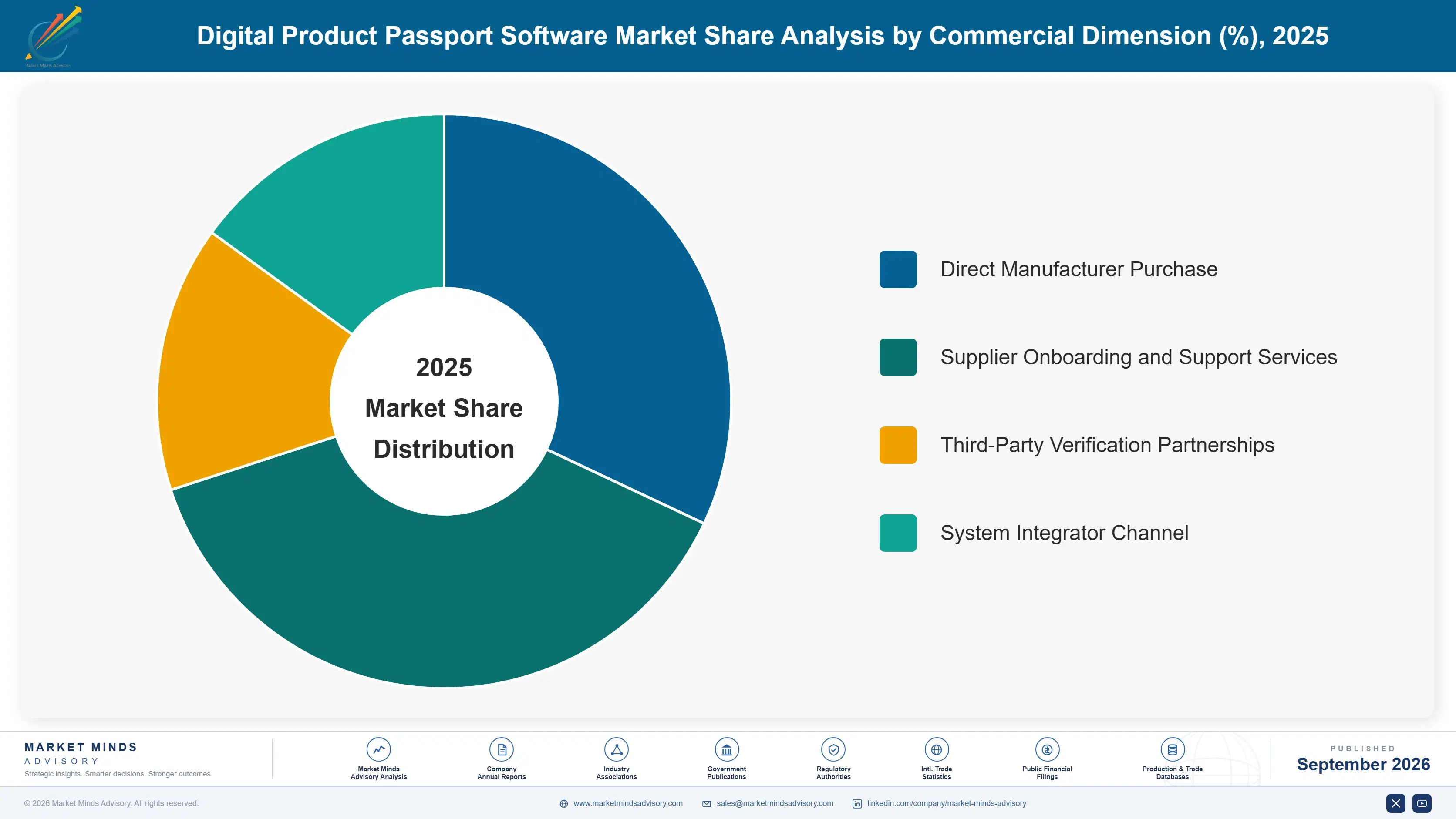
Digital product passport software segments by core product category and function, spanning battery passport compliance software, textile and apparel traceability platforms, electronics passport modules, furniture and construction product tools, general supply chain data infrastructure, and third-party verification and audit services, each addressing genuinely distinct regulatory timelines and underlying data requirements across every category tracked.
digital-product-passport-software-market-market-share-analysis-1789980625989

Battery Passport Compliance Software

Battery passport compliance software captures carbon footprint, recycled content, supply chain origin, and end-of-life recyclability data required under the EU Battery Regulation's February 2027 compliance deadline, the nearest firm deadline across any product category currently covered by sustainable products regulation anywhere today. Growth reflects the urgency battery manufacturers and their upstream cell and material suppliers feel given how little time remains before enforcement begins in earnest across the entire value chain and supplier base. Circularise and Systemiq have both expanded battery-specific compliance modules specifically to capture this urgent near-term demand, positioning themselves ahead of vendors still building generic passport platforms without category-specific customization already built in from the very start.
CAGR 28.0%

Textile and Apparel Traceability Platforms

Textile and apparel traceability platforms track fiber origin, dyeing and finishing processes, and labor conditions across garment supply chains that historically operated with minimal digital documentation beyond basic purchase order tracking and simple shipment records kept manually. Growth reflects both the EU's textile-specific compliance timeline and separate due diligence legislation targeting labor and environmental conditions in garment manufacturing, creating overlapping regulatory pressure that pushes brands toward comprehensive traceability investment sooner than originally planned. Avery Dennison and several textile-focused startups have expanded platform capability specifically to serve apparel brands managing hundreds of supplier relationships across multiple countries simultaneously, a scale challenge unique to this particular product category and its fragmented global sourcing model.
CAGR 24.0%
Full segment breakdown across 6 segments available in the complete report.

Regional Architecture and Country Demand Map

Western Europe leads given the EU's origination of digital product passport regulation itself, while East Asia and South Asia and Pacific post the fastest growth as export manufacturers there race to maintain critical EU market access ahead of deadlines already firmly set well in place.

Western Europe

The European Union authored and enforces the digital product passport requirement itself, making Western Europe the natural center of both regulatory expertise and vendor headquarters concentration, with most established compliance software companies founded or headquartered directly within the bloc itself. German and French manufacturers, given their outsized share of EU industrial output, represent the largest single national compliance software customer base within the region overall. Regulatory consulting and legal advisory firms specializing in EU sustainability compliance have proliferated alongside software vendors, creating a network of complementary services supporting passport implementation efforts. UK manufacturers, despite Brexit, must still comply given the continued primacy of EU market access for their export revenue.
Share: 26% | CAGR: 19.5% (2026 to 2036)

North America

US and Canadian manufacturers exporting to the European Union represent the primary regional demand driver, since domestic North American regulation currently imposes no comparable digital product passport requirement of its own on domestic producers or importers today. Large multinational manufacturers headquartered in North America but selling extensively into EU markets are adopting compliance software proactively, often ahead of smaller domestic-focused competitors who lack meaningful EU revenue exposure requiring compliance investment now. Some US states have begun exploring extended producer responsibility legislation that could eventually create domestic passport-adjacent requirements, though nothing binding currently exists at the federal level. Canadian manufacturers show comparable adoption patterns tied closely to their EU export relationships.
Share: 22% | CAGR: 20.5% (2026 to 2036)
Regional intelligence for 5 additional markets available in the complete report: East Asia, South Asia and Pacific, Latin America, Middle East and Africa, Eastern Europe. Contact sales@marketmindsadvisory.com.
digital-product-passport-software-market-country-cagr-analysis-1789980626516

Compliance Data Depth Margin Expansion Paths

Digital product passport vendors capture disproportionate margin not from basic data hosting alone but from multi-tier supplier onboarding, verification services, and multi-category compliance depth layered directly on top, since manufacturers increasingly need genuine supply chain data infrastructure rather than a simple digital label generator sitting atop existing enterprise systems, daily workflows, and legacy databases.

Offering Multi-Tier Supplier Onboarding and Support Services

Vendors that actively onboard a manufacturer's upstream suppliers, many of whom lack existing digital infrastructure, capture 20 to 30 percent higher total contract value than vendors selling software licenses alone without onboarding support included in the base package. This service requires dedicated implementation staff and simplified data entry tools built specifically for suppliers with minimal technical sophistication, a capability most software-only vendors lack entirely and struggle to build quickly at scale. Circularise has expanded onboarding service capacity specifically to capture this growing higher-margin segment of enterprise compliance demand across multiple product categories.
Market Impact: Adds 20 to 30 percent to contract value

Bundling Third-Party Verification and Audit Services

Vendors that bundle third-party verification and audit-ready documentation alongside data collection software capture budget that would otherwise require a separate compliance consulting engagement entirely, adding 15 to 22 percent to average contract value across the entire account relationship and its lifetime value. Manufacturers facing genuine regulatory audit risk increasingly prefer a single vendor covering both data infrastructure and verification documentation, rather than managing two separate vendor relationships during an actual compliance audit process each time it occurs. Systemiq has expanded this bundled offering specifically to capture verification budget beyond simple data hosting alone.
Market Impact: Adds 15 to 22 percent to contract value

Expanding Into Multi-Category Compliance Platform Coverage

Vendors that extend beyond a single product category into multi-category compliance coverage, serving manufacturers with both battery and textile export exposure simultaneously, capture consolidated contract value rather than competing separately for each category-specific engagement individually and repeatedly over time and budget cycles. This cross-category expansion typically lifts total account revenue by 25 to 35 percent once multi-category coverage is fully established for a diversified manufacturer customer base. SAP has pursued this expansion aggressively, applying its existing enterprise resource planning relationships to cross-sell passport compliance modules across multiple product lines simultaneously.
Market Impact: Lifts total account revenue 25 to 35 percent

Providing Regulatory Update and Adaptation Services

Vendors offering ongoing regulatory update services, where the vendor tracks evolving EU implementing acts and automatically adapts platform data requirements accordingly, capture recurring subscription revenue that manufacturers view as essential risk management given how much technical detail remains unpublished by regulators still today and likely for months. This service typically adds 12 to 18 percent to annual recurring revenue once established as a standard contract component across the customer base. IBM has expanded regulatory monitoring capability specifically to capture this growing recurring revenue opportunity across its enterprise compliance customer base.
Market Impact: Adds 12 to 18 percent recurring revenue yearly

Who Controls the Margin Pool

Digital product passport software remains highly fragmented at a cr5 of just 32 percent, reflecting a genuinely nascent category still forming around specialized startups and larger enterprise software vendors extending into the space. Circularise and Avery Dennison lead on early customer count and category-specific compliance depth, while the gap to challengers like SAP and IBM has narrowed as enterprise platform vendors bring existing customer relationships into this new compliance category.
Current competitive activity centers on rapid product development to keep pace with evolving regulatory technical specifications, since vendors that guess wrong on data format requirements risk costly platform rework later. Several vendors have expanded supplier onboarding capability specifically to address the multi-tier data collection challenge that pure software platforms alone cannot solve. Partnership activity between established traceability vendors and passport-specific startups continues steadily.

Emerging pressure comes from large enterprise software incumbents like SAP and IBM entering the category with existing customer relationships and broader platform capability that pure-play passport startups cannot easily match on breadth. Smaller specialists focused narrowly on textile or battery categories could still defend niche positions where regulatory expertise matters more than platform breadth. Rankings among today's leaders remain genuinely unsettled given how young this category is.
digital-product-passport-software-market-company-positioning-matrix-1789980627049

Competitive Moat and Risk Dimensions

CIRCULARISE

Moat: Purpose-Built Blockchain Traceability

Circularise built its platform specifically for multi-tier supply chain traceability using blockchain-based data verification from inception, giving it technical architecture advantages for passport-specific data integrity requirements that general enterprise software platforms retrofitting existing systems cannot easily replicate at comparable technical depth, reliability, or speed today.
CIRCULARISE

Risk: Limited Enterprise Sales Infrastructure

Circularise's startup origins mean it lacks the extensive enterprise sales and customer support infrastructure that larger competitors like SAP already maintain, potentially limiting its ability to win large multinational manufacturer accounts that prefer established vendor relationships over newer, less proven platform providers with shorter track records.
AVERY DENNISON

Moat: Existing Labeling Infrastructure Relationships

Avery Dennison's existing relationships with manufacturers for physical product labeling and RFID tagging give it a natural entry point into digital product passport software, since many customers already trust the company for adjacent product identification technology and infrastructure across their broader supply chain operations worldwide.
AVERY DENNISON

Risk: Passport Software Remains Secondary Focus

Avery Dennison's core business remains physical labeling and materials rather than software, potentially limiting the depth of investment and product development speed it commits to passport software relative to vendors for whom this category represents their entire core business focus, priority, and organizational identity above all else.

Players Tracked

Prominent Players

Circularise
Avery Dennison
SAP
IBM
Systemiq

Other Key Players

Sourcemap
TrusTrace
Retraced
Faume
Fairly Made
Made2Flow
Worldfavor
Certification Europe
Bureau Veritas
SGS
TUV Rheinland
DNV
Intertek
Assent
EcoVadis

Recent Developments

MARCH 2026

Circularise Launches Battery Passport Compliance Module

Circularise introduced a dedicated battery passport compliance module built specifically to meet the EU Battery Regulation's February 2027 deadline, extending its blockchain-based traceability platform with pre-built data fields for carbon footprint, recycled content, and supply chain origin tracking across the entire battery value chain and supplier network.
Signal: Signals vendor specialization deepening ahead of the industry's nearest firm regulatory compliance deadline set right now.
OCTOBER 2025

SAP Adds Digital Product Passport Module to ERP Suite

SAP announced a new digital product passport module integrated directly into its existing enterprise resource planning suite, allowing manufacturers already using SAP for supply chain management to extend that infrastructure into passport compliance without adopting an entirely separate specialized platform or new vendor relationship altogether.
Signal: Signals large enterprise software incumbents entering the category through existing platform extension strategies pursued right now.
JUNE 2025

Avery Dennison Acquires Supply Chain Data Startup

Avery Dennison acquired a specialized supply chain data verification startup to add multi-tier traceability capability to its existing physical labeling infrastructure business, extending its product identification capability into the digital data layer that passport compliance genuinely requires well beyond physical tagging alone entirely today and going forward.
Signal: Signals incumbent labeling companies acquiring software capability to extend into digital compliance markets directly right now.

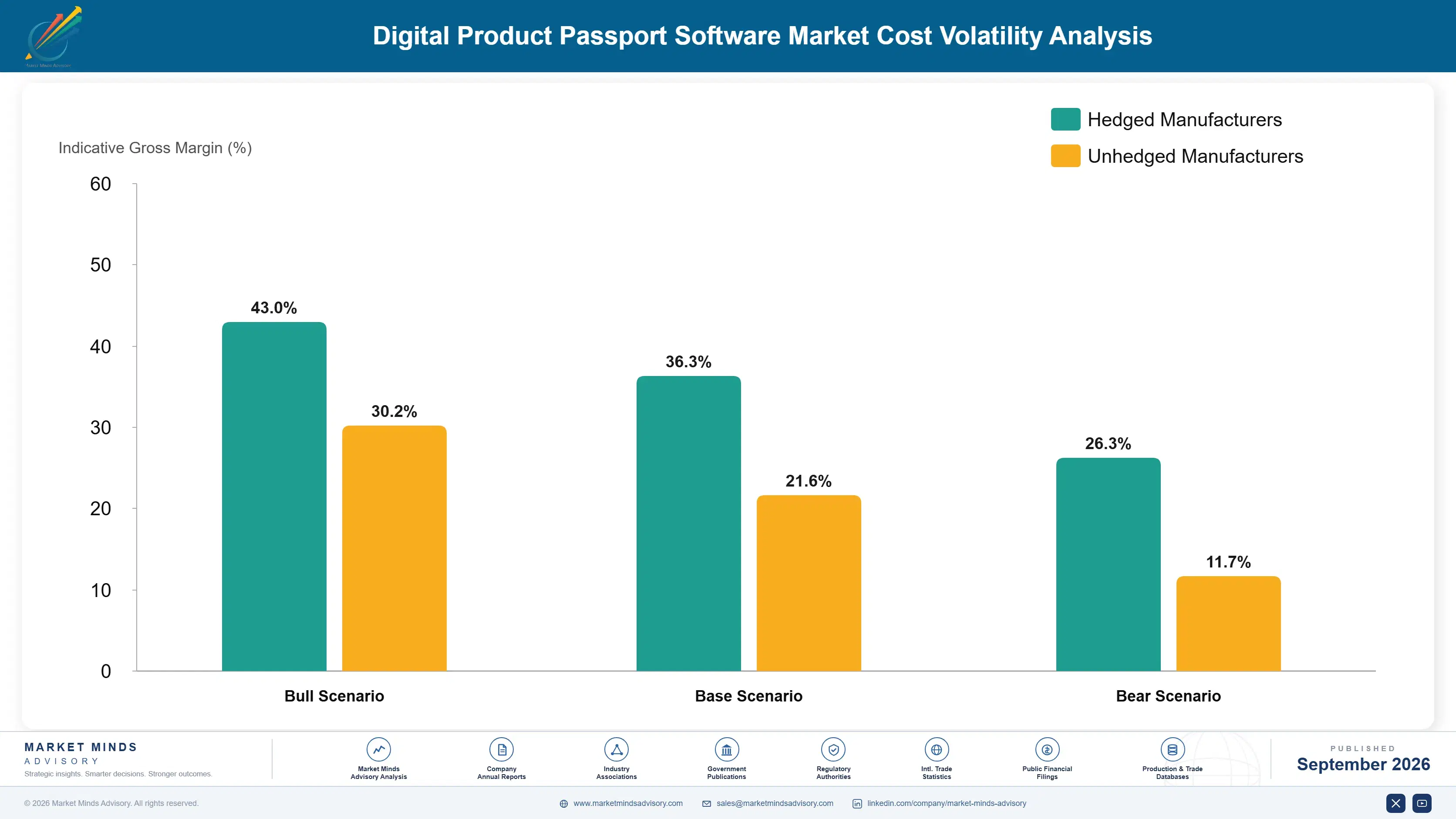
Verification Staffing and Data Integration Costs

Skilled compliance data specialists and supply chain integration engineers together account for roughly 45 to 55 percent of vendor cost of goods sold, reflecting the heavily services-driven nature of onboarding manufacturers and their many upstream suppliers rather than a pure software licensing model built purely around self-service deployment without any dedicated support staff at all.
Demand for compliance and sustainability data specialists spiked sharply during 2023 and 2024 as multiple overlapping EU regulations, including the Ecodesign regulation, Battery Regulation, and Corporate Sustainability Due Diligence Directive, all created simultaneous hiring demand across a talent pool that barely existed five years earlier. This talent shortage forced vendors to pay meaningfully higher compensation to retain specialists capable of navigating rapidly evolving and still partially unpublished technical requirements.

Smaller passport software startups face more acute staffing cost pressure than larger enterprise vendors like SAP, which can redeploy existing compliance and sustainability specialists from adjacent product lines rather than hiring entirely new specialized talent from a thin external market. This gives larger vendors a durable cost and hiring advantage during the current talent shortage, even though smaller specialists often maintain deeper category-specific regulatory expertise.
digital-product-passport-software-market-cost-volatility-analysis-1789980627247

Automating Routine Data Verification Tasks

Vendors increasingly build automated data validation tools that flag inconsistent or incomplete supplier submissions before human review takes place at all, reducing the specialist staff hours required per manufacturer account and lowering the effective cost of maintaining data quality at scale across the entire customer base, supplier network, and every product category served worldwide today.

Building Internal Regulatory Training Programs

Larger vendors are building internal training programs to develop compliance specialists from existing supply chain or software staff members already employed at the company, reducing dependence on hiring scarce external talent directly from a thin market and building institutional regulatory knowledge over time, across every internal team involved in delivery, support, and account management.

Partnering With Certification Bodies for Verification

Vendors increasingly partner with established certification and testing bodies for third-party verification work instead of building it entirely alone from scratch, outsourcing specialized audit capability rather than developing it entirely in-house, trading margin share for reduced staffing risk and considerably faster market entry into several new product categories overall each successive year going forward.

Portfolio Architecture for Margin Defence

Digital product passport vendors operate across three margin tiers, from basic data hosting platforms sold at lower per-unit price to premium verification and multi-tier onboarding services commanding substantially better economics. Tier separation reflects service depth and implementation complexity rather than raw software feature differences alone, since a basic data portal and a fully verified compliance platform can share similar underlying database infrastructure at the technical level.
Volume tension is sharpest in basic data hosting, where price-sensitive smaller manufacturers push toward standardized self-service platforms while vendors would prefer premium onboarding and verification add-ons. Large multinational manufacturers behave oppositely, valuing supplier onboarding depth and audit-ready verification over unit price, which is why the highest-value revenue pools concentrate in services-heavy engagements rather than pure software licensing alone.

Regulatory update and adaptation services sit between these extremes: growing quickly but priced closer to standard tiers than premium verification, since compliance-focused buyers remain cost-conscious even as regulatory uncertainty guarantees steady demand for update tracking. Vendors positioned across all three tiers simultaneously capture the broadest addressable revenue base, though few manage the operational complexity of serving such differently motivated manufacturer segments well.

Volume / Commodity-Adjacent

Standardized self-service data hosting platforms sold to smaller manufacturers with minimal onboarding or verification support included in the base subscription price offered to every customer regardless of manufacturer size or scale.
Gross Margin: 20 to 28%

Premium / Certified

Multi-tier supplier onboarding and third-party verification services requiring dedicated implementation staff justifying substantially higher enterprise pricing than self-service alternatives ever command across the broader market today and for years to come.
Gross Margin: 38 to 48%

Sustainability / Regulatory / Next-Generation

Regulatory update and multi-category compliance expansion services serving evolving demand at margins between commodity hosting and premium verification tiers, growing steadily as regulatory coverage keeps expanding into new product categories.
Gross Margin: 30 to 40%
digital-product-passport-software-market-portfolio-architecture-1789980627746

High-value Sub-segments and Strategic Watch-out

Battery Passport Compliance Software

Battery passport compliance software combines high growth with premium urgency-driven pricing, representing the clearest high-value high-growth opportunity as the nearest firm EU deadline forces rapid manufacturer adoption ahead of enforcement across the entire battery value chain, supplier base, cell production network, and materials sourcing operations.
Gross Margin: high

Multi-Category Compliance Platforms

Multi-category compliance platforms combine strong margins with steady growth tied to cross-selling across expanding regulatory categories, representing a high-value moderate-growth pool anchored by consolidated enterprise account relationships rather than single-category engagements alone across the entire customer base, portfolio, and long-term multi-year account roadmap and plan.
Gross Margin: high

Basic Data Hosting Platforms

Standardized data hosting platforms form the volume core of the market, generating steady revenue at compressed margins as smaller manufacturers seek the lowest-cost compliance path available to them given their limited internal compliance budgets, staff, technical resources, and dedicated regulatory expertise readily available in-house today.
Gross Margin: moderate

Large Enterprise Software Incumbents

Large enterprise software incumbents like SAP and IBM entering the category represent the clearest strategic watch-out, since their existing customer relationships threaten to compress pure-play startup market share considerably over the coming years and entire decade still further ahead than most currently expect or forecast.
Gross Margin: uncertain

Regulatory-Driven Retention Economics

Digital product passport platforms generate durable recurring revenue tied to ongoing regulatory compliance rather than one-time software purchase, since manufacturers must continuously update passport data as products, suppliers, and materials change across every production cycle. Vendors that establish deep supply chain data integration early convert this into multi-year relationships that persist as long as EU export exposure continues, effectively making compliance software a permanent cost of doing business.
Adoption stickiness varies sharply by end-use vertical. Battery manufacturers show the deepest engagement already, given the sheer urgency of their near-term compliance deadline and the complexity of multi-tier cell and material supply chains involved. Textile manufacturers show comparable stickiness once onboarded, though initial adoption often lags given more fragmented supplier bases. Electronics manufacturers, facing later compliance deadlines, show the shallowest current engagement, though this should deepen as deadlines approach.

Buyer profiles are shifting generationally as dedicated sustainability compliance officers, a role that barely existed at most manufacturers five years ago, increasingly drive vendor selection decisions away from general IT or procurement staff who previously handled adjacent purchases. This generational shift favors vendors offering genuine regulatory expertise and proactive update tracking over vendors whose value proposition rests primarily on generic data hosting infrastructure.
digital-product-passport-software-market-end-use-penetration-index-1789980628240

Where MMA Sees the Opportunity

These are among the four positions where our research anticipates prominent divergence between winners and laggards over the coming forecast period. Each is grounded in the demand model, the regulatory perimeter, and the announced capacity pipeline.
01 / BATTERY CATEGORY PRIORITY

Build battery-specific compliance capability before the 2027 deadline

Battery passport compliance software is growing at 28.0 percent versus the market's 21.0 percent overall rate, and the February 2027 deadline is the single nearest firm compliance date across the entire regulation currently in force. Vendors that build battery-specific data fields and cell-level traceability capability now capture disproportionate share of this urgent near-term demand before competitors catch up on category-specific customization already underway. Waiting until closer to the deadline risks losing customers to vendors who moved earlier and built deeper category expertise.
02 / SUPPLIER ONBOARDING INVESTMENT

Invest in supplier onboarding capability, not just software

Manufacturers increasingly refuse to purchase passport software alone without onboarding support for their upstream suppliers, many of whom lack basic digital infrastructure needed to capture required compliance data reliably. Vendors building simplified data entry tools and dedicated onboarding staff capture 20 to 30 percent higher contract value than pure software providers, a gap that will widen further as multi-tier data requirements deepen over the coming years. This capability takes considerable time to build well, favoring vendors who start now over those who wait.
03 / SOUTHEAST ASIAN MARKET ENTRY

Expand into Vietnam and Bangladesh ahead of full-scale competition

Vietnam is growing at 26.0 percent annually as EU-bound export manufacturing shifts there from China, yet most established vendors remain concentrated in Europe and have not yet built meaningful regional presence or local language support there. Vendors that establish regional operations now, before competitors recognize the scale of this shift, secure preferred positioning with manufacturers who have historically had minimal exposure to Western compliance software vendors of any kind. This window will not stay open indefinitely as global vendors expand outward steadily.
04 / ENTERPRISE INCUMBENT RESPONSE

Differentiate on regulatory depth as SAP and IBM enter

Large enterprise software incumbents are entering this category with existing customer relationships and broader platform capability that specialized startups cannot match on breadth or sales infrastructure at comparable scale or reach. Startups should concentrate on demonstrable regulatory expertise and category-specific data depth where large incumbents, built around general enterprise resource planning, genuinely cannot compete on execution speed or specialized regulatory knowledge depth. Waiting to differentiate until incumbents fully establish their offerings will already be too late for most remaining independent specialists.

Engagement Snapshot From the Field

A live engagement with an industry participant carrying material or product regulatory and market exposure ahead of a defining policy shift, showing how our research translates into a defensible multi-year portfolio strategy.
MARKET MINDS ADVISORY · CLIENT ENGAGEMENT SUMMARY
Digital Product Passport Software Producer Strategic Portfolio Review and Transition Roadmap 2026·Investment Scenario on Digital Product Passport Software Exposure Evaluation 2025-26
CLIENT PROFILE
The client is a mid-sized European battery cell manufacturer supplying automotive and industrial customers across multiple European countries, with annual revenue in the range of 400 to 500 million dollars (client-reported, unverified by MMA). The company had no dedicated digital product passport infrastructure and was evaluating vendor options ahead of the February 2027 compliance deadline.
STRATEGIC CHALLENGE
Leadership needed an independent assessment of vendor options and realistic implementation timelines, given internal uncertainty about which upstream material suppliers could actually provide the traceability data required and how long full supply chain onboarding would genuinely take to complete before the compliance deadline finally arrived and enforcement fully began in earnest.
MMA APPROACH
MMA conducted a comparative assessment of four passport compliance vendors, evaluating battery-specific data field coverage, supplier onboarding capability, and realistic implementation timelines against the client's actual upstream supplier base and existing systems. The engagement included interviews with the client's top ten material suppliers and a review of existing data collection practices and gaps.
KEY FINDINGS
  1. Only two of four evaluated vendors offered battery-specific data fields already built for carbon footprint and recycled content tracking (client-reported, unverified by MMA).
  2. Six of the client's top ten material suppliers lacked any digital system capable of providing required traceability data without significant onboarding support.
  3. Full supply chain onboarding was projected to take 14 months, considerably longer than the client's internal estimate of eight months originally planned.
  4. The client's existing quality management system contained roughly 60 percent of the data already required, meaningfully reducing net-new data collection needs and effort.
CLIENT PROFILE
The client is a mid-sized European battery cell manufacturer supplying automotive and industrial customers across multiple European countries, with annual revenue in the range of 400 to 500 million dollars (client-reported, unverified by MMA). The company had no dedicated digital product passport infrastructure and was evaluating vendor options ahead of the February 2027 compliance deadline.
STRATEGIC CHALLENGE
Leadership needed an independent assessment of vendor options and realistic implementation timelines, given internal uncertainty about which upstream material suppliers could actually provide the traceability data required and how long full supply chain onboarding would genuinely take to complete before the compliance deadline finally arrived and enforcement fully began in earnest.
MMA APPROACH
MMA conducted a comparative assessment of four passport compliance vendors, evaluating battery-specific data field coverage, supplier onboarding capability, and realistic implementation timelines against the client's actual upstream supplier base and existing systems. The engagement included interviews with the client's top ten material suppliers and a review of existing data collection practices and gaps.
KEY FINDINGS
  1. Only two of four evaluated vendors offered battery-specific data fields already built for carbon footprint and recycled content tracking (client-reported, unverified by MMA).
  2. Six of the client's top ten material suppliers lacked any digital system capable of providing required traceability data without significant onboarding support.
  3. Full supply chain onboarding was projected to take 14 months, considerably longer than the client's internal estimate of eight months originally planned.
  4. The client's existing quality management system contained roughly 60 percent of the data already required, meaningfully reducing net-new data collection needs and effort.
RECOMMENDED STRATEGY
Phase 1: Phase one: select a vendor with proven battery-specific compliance capability and begin core data integration within the first three months. Phase 2: Phase two: launch supplier onboarding for the six suppliers lacking digital infrastructure, prioritizing the highest-volume material inputs first and foremost. Phase 3: Phase three: complete full supply chain data verification at least six months ahead of the final February 2027 compliance deadline.
OUTCOME
The client selected a vendor and began supplier onboarding within one month of the engagement's conclusion (client-reported, unverified by MMA). Full supply chain verification progress and final compliance readiness status were not yet available for independent verification at the time of this report's original publication.

Frequently Asked Questions

Foundational context covering the market sizes, CAGR, scope, country, region and competition that inform every finding below. This section is provided to cover basics and most often pre-purchase conversations, answered from the MMA Primary Research Dataset.

What is the current size of the Digital Product Passport Software Market?

The global digital product passport software market is valued at 0.5 billion dollars in 2025, the report's base year. This reflects spending on compliance and traceability software combined across battery, textile, and other affected categories.

How large will the Digital Product Passport Software Market be by 2036?

MMA projects the market will reach 4.04 billion dollars by 2036, a 6.73 times expansion from 2026's forecast value. Growth is driven mainly by expanding EU regulatory categories and firm compliance deadlines.

What is the CAGR for the Digital Product Passport Software Market 2026 to 2036?

The market is forecast to grow at a 21.0 percent compound annual rate between 2026 and 2036. Bull and bear scenarios range from 22.5 percent to 19.5 percent depending on regulatory enforcement timelines.

Which segment is growing fastest?

Battery passport compliance software leads at a 28.0 percent CAGR, roughly 1.33 times the overall market rate. Demand is driven by the EU Battery Regulation's near-term February 2027 compliance deadline.

Who are the major companies in the Digital Product Passport Software Market?

Circularise, Avery Dennison, SAP, IBM, and Systemiq lead the market on early customer count and compliance depth. Together they hold a combined cr5 of 32 percent.

Which country is growing fastest?

Vietnam leads at a 26.0 percent forecast CAGR, driven by EU-bound export manufacturing shifting there from China amid ongoing supply chain diversification. This outpaces the broader South Asia and Pacific regional average.

Report Segmentation Architecture

The full report scope spans multiple orthogonal segmentation dimensions, with cross-tabulated demand data provided for each dimension pair. Coverage extends further to regional breakdowns, trend trajectories, and the competitive detail needed to support segment-level decision-making.

By Product Category

  • Battery Passport Compliance Software
  • Textile and Apparel Traceability Platforms
  • Electronics Passport Modules
  • Furniture and Construction Product Tools
  • General Supply Chain Data Infrastructure
  • Third-Party Verification and Audit Services

By End-Use Industry

  • Battery and Energy Storage Manufacturing
  • Textile and Apparel Manufacturing
  • Electronics and Consumer Goods
  • Furniture and Home Goods
  • Construction Materials

By Commercial Dimension

  • Direct Manufacturer Purchase
  • Supplier Onboarding and Support Services
  • Third-Party Verification Partnerships
  • System Integrator Channel

By Region

  • North America
  • Western Europe
  • East Asia
  • South Asia and Pacific
  • Latin America
  • Middle East and Africa
  • Eastern Europe

Scope, Methodology, and Coverage

Every figure in this report is reproducible from documented input assumptions. The scope below maps the historical period, the forecast horizon, the segmentation dimensions, and the countries covered, alongside the underlying primary and qualitative methodology.
Historical Period
2020 to 2025
Forecast Period
2026 to 2036
Base Year
2025 (USD billions; MMA Primary Research Dataset, September 2026)
Market Definition
This market covers software platforms that create, manage, and share digital product passport data required under EU sustainable products regulation, including material composition, supply chain origin, and end-of-life recyclability records. It excludes physical product labeling hardware and general enterprise resource planning software not specifically built for passport data compliance.
Quantitative Units
USD billions (current prices); per-manufacturer implementation cost where applicable
Segmentation Dimensions
By Product Category; By End-Use Industry; By Commercial Dimension; By Region
Regions Covered
North America, Western Europe, East Asia, South Asia and Pacific, Latin America, Middle East and Africa, Eastern Europe
Countries Covered
USA, China, Germany, France, UK, Japan, South Korea, India, Australia, Canada, Brazil, Mexico, Indonesia, Vietnam, Thailand, Malaysia, UAE, Saudi Arabia, South Africa, Nigeria, Turkey, Poland, Netherlands, Italy, Spain, Sweden, Switzerland, Argentina, Colombia, Singapore, and additional markets relevant to this sector
Key Companies Profiled
Circularise, Avery Dennison, SAP, IBM, Systemiq, Sourcemap, TrusTrace, Retraced, Faume, Fairly Made, Made2Flow, Worldfavor, Certification Europe, Bureau Veritas, SGS, TUV Rheinland, DNV, Intertek, Assent, EcoVadis
Quantitative Methodology
Primary survey, n=3,800 respondents, Q4 2025, six countries; demand-side model with trade association cross-validation
Qualitative Methodology
47 expert interviews, Q4 2025; applied to validate demand model assumptions, identify emerging dynamics, and assess competitive positioning
Report Format
PDF and XLSX data workbook (Word format preview document)
Publisher
Market Minds Advisory
Report Code
MMA-2026-TEC-172
Published
September 2026
Contact
sales@marketmindsadvisory.com | www.marketmindsadvisory.com

Purchase the full Digital Product Passport Software Market Report (2026 to 2036).

The full report delivers a comprehensive assessment of the global digital product passport software market across product category, end-use industry, and commercial channel dimensions through 2036. It includes detailed competitive profiles of twenty companies, seven regional demand analyses, and input cost risk modeling tied to compliance staffing and data integration costs. Analysts receive segment-level CAGR forecasts, portfolio margin benchmarking, and a strategic verdict section identifying where near-term investment should concentrate across the industry. The report also includes an anonymized client case study illustrating real-world compliance strategy decisions.
Seven-region demand and CAGR growth forecasts
Twenty-company competitive profiling and moat analysis
Six-dimension segmentation with detailed growth rates
Compliance staffing input cost risk modeling
Portfolio margin tier benchmarking analysis framework
Anonymized client compliance strategy case study

Built For The People Who Decide

From boardroom strategy to bench-side execution, this report is read cover-to-cover by leaders shaping the next decade of their industry, turning demand scenarios, market dynamics and valuation benchmarks into decisions.
CXOs/ Presidents/ VPs/ Managers
M&A and Corporate Development
Strategy Teams and R&D Heads
Procurement and Product Directors
Regulatory and Compliance Leaders
Investor Relations and Equity Analysts