Market Minds Advisory
Diaper Packaging Machines Market

Diaper Packaging Machines Market: Compression Ratio, Changeover Time, and a Shrinking Baby Market

The converter makes eleven hundred diapers a minute and the packaging end has to absorb every one of them, compress the stack, and change format for a different pack count before lunch.

Lead Analyst

Bilal Shaikh

Published

September 2026

Make Smarter Decisions with Customized Research Insights

Request a free sample report and evaluate market opportunities, growth trends, and competitive dynamics relevant to your business needs.

2025 MARKET VALUE$1.4BMarket Size 2025
2036 FORECAST VALUE$2.3BBase Case , 2026 to 2036
CAGR 2026 TO 20364.8 %Bull 6.0% / Bear 3.6%
INCREMENTAL OPPORTUNITY$0.8BNet 10- year value creation
EXPANSION MULTIPLE1.60x2036 value over 2026 base
Strategic Levers
M&A Pipeline
Regional Outlook
Country Rankings
Competitive Intelligence
Segmental Deep-dive
Call-Us : 91 93563 13602

Executive Snapshot and Market Trajectory

A diaper is mostly air until you squeeze it, and everything commercially interesting at this end of the line follows from that. Compression decides bag size, film consumption, pallet density, and freight cost per unit. The machine that compresses hardest wins the argument with procurement, whatever the brochure leads with.
Growth is slow and the mix is shifting underneath it. Compression and bundling systems grow fastest at 7.2%, exactly 1.50 times the market rate, because freight savings are the only argument that reaches a converter's board. Palletising and end-of-line follows at 6.3%. East Asia holds the largest share, and South Asia and Pacific sits well above its framework band because that is where new baby diaper capacity is actually being installed.
Concentration reaches 47% across the top five measured on annual machine deliveries, with European and Japanese builders holding most of the installed base and Chinese builders taking new capacity across Asia and Africa on price. Aftermarket parts and service contribute 38% of builder revenue at far better margin. Falling birth rates in East Asia and Europe are quietly reshaping what these lines are asked to pack.
Market Definition
This market covers machinery installed downstream of hygiene converting lines to stack, count, compress, bag, case pack, palletise, and inspect finished disposable diapers and incontinence products. Scope includes new machine sales, retrofit modules, and aftermarket parts and service. Diaper converting and forming machinery, nonwoven and superabsorbent production equipment, packaging film and materials, warehouse automation beyond the palletiser, and machinery for other hygiene categories are excluded.
Base Year Value
$1.4B in 2025 (MMA Primary Research Dataset, August 2026)
Forecast Period
2026 to 2036, eleven discrete annual values
CAGR
4.8% base case. Bull 6.0%. Bear 3.6%.
Fastest Growth Segment
Compression And Bundling Systems: 7.2% CAGR
Fastest Growth Country
India: 8.6% CAGR
Fastest Growth Region
South Asia and Pacific: 7.0% CAGR
Largest Region
East Asia: 28% of 2025 global value
Market Leaders
Optima Packaging Group. Curt G. Joa. Fameccanica. Zuiko. Quanzhou Peixin Machinery. Source: MMA Analysis based on company annual reports.
Primary Survey
n=3,800 procurement and R&D decision-makers, Q4 2025, six countries
Methodology
Demand-side build-up, cross-validated against public data, 47 expert interviews

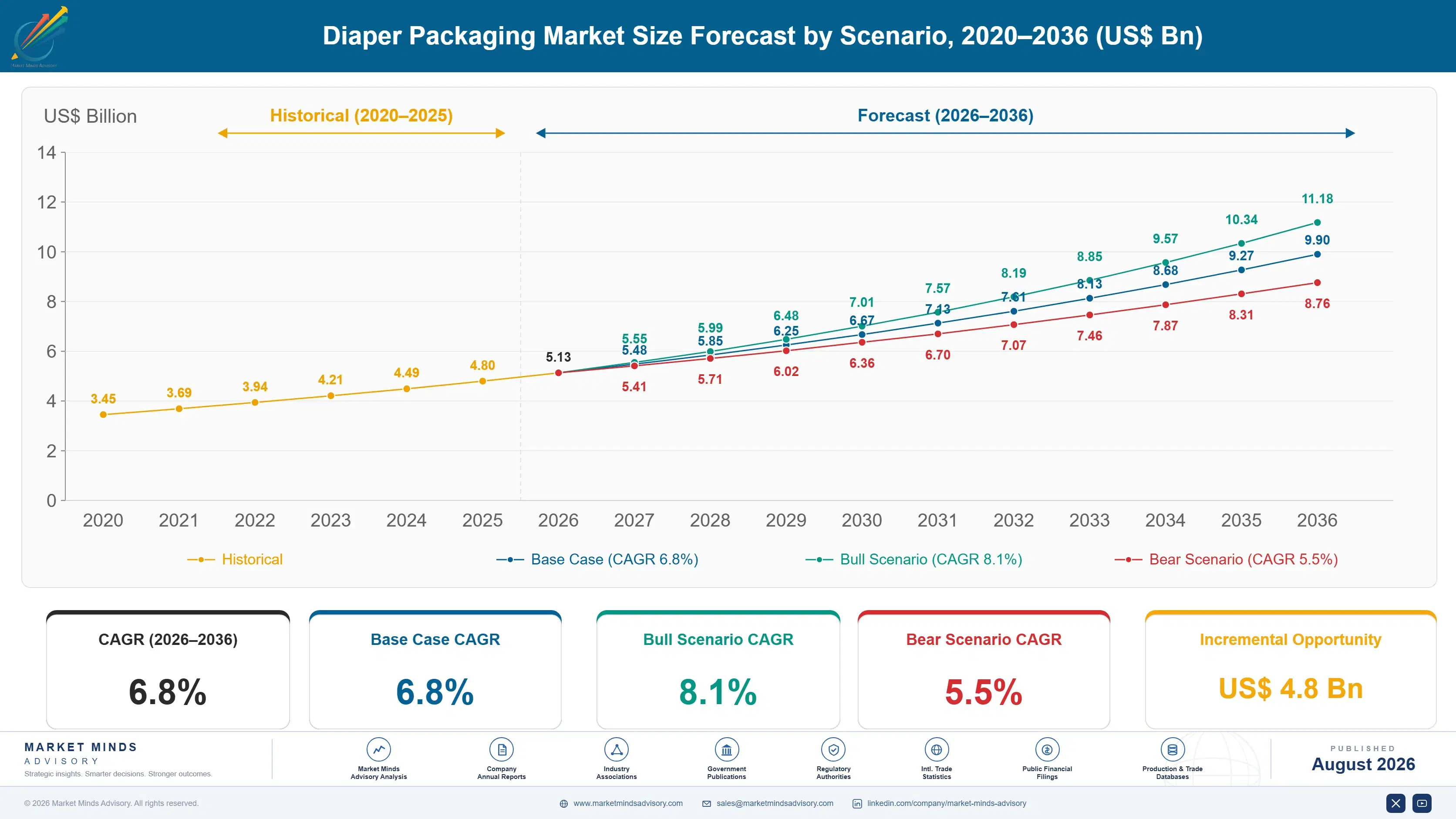
Diaper Packaging Market Forecast Scenarios

diaper-packaging-machines-market-size-forecast-scenario-1787298944769
Growth from 2020 to 2025 compounded near 5.8%, restrained early by pandemic-era diaper production disruption, then recovering steadily as birth rates stabilized in major markets and adult incontinence packaging volume expanded considerably faster than baby diaper volume across most developed regions tracked over the period, particularly across Japan and Western Europe's ageing consumer bases and their expanding retail shelf allocations.
Three mechanisms carry the base case to 6.8%. First, rising adult incontinence product volume driven by ageing populations across developed and increasingly developing markets, which sustains packaging demand independent of birth rate trends. Second, expanding extended producer responsibility regulation pushing major diaper brands toward recyclable mono-material film formats. Third, premiumization in baby diaper packaging design, which raises average packaging value per unit shipped across established retail channels and expanding e-commerce distribution networks.
The bull case at 8.1% assumes adult incontinence adoption accelerates faster than current demographic projections suggest across ageing Asian and European populations. The bear case at 5.5% assumes birth rate decline in major markets outweighs adult incontinence growth, slowing overall packaging volume expansion across the category and forcing converters to idle a portion of installed production capacity.

Squeezing Air Out of the Freight Bill

Compression is the commercial heart of this equipment and almost nobody sells it that way. A diaper stack squeezed to 3.4 times reduction fits a smaller bag, uses less film, and multiplies how many units fit on a pallet and inside a container. For a converter shipping product across a continent, that arithmetic dwarfs anything else the packaging line does. Builders still lead with speed specifications instead.
TOP FIVE CONCENTRATION47%European and Japanese builders hold most of the installed base
STANDARD LINE SPEED1,100 per minuteDiapers leaving the converter that packaging must absorb
COMPRESSION RATIO ACHIEVED3.4xBag volume reduction against uncompressed stack height today
AVERAGE CHANGEOVER TIME34 minutesBetween pack count formats on a modern bagging line
AFTERMARKET REVENUE SHARE38%Parts and service as a proportion of builder revenue
MACHINE WORKING LIFE17 yearsTypical service life before replacement rather than rebuild
The second constraint is rhythm. A converting line producing 1,100 diapers a minute cannot wait for the packaging end, so the bagger sets the pace of the whole asset. Any stoppage downstream backs up immediately, and changeover between pack counts currently takes about 34 minutes on a modern line. With retail SKU counts multiplying, those minutes have become the real productivity question.
Two forces will reshape demand. Birth rates across East Asia and Europe are falling steadily, shrinking the baby category these lines were built for. And adult incontinence is growing quickly, needing different pack formats, different compression profiles, and different handling. Retrofit rather than replacement is how converters are answering that, and it pays builders considerably less.
"Every specification sheet in this industry leads with diapers per minute. Not one converter we have interviewed in five years has told us speed was their constraint. They talk about changeover and they talk about how many bags fit in a container, and the machine builders keep answering a question nobody asked."
Director. Packaging Machinery and Hygiene Systems Practice · MMA Industrial Equi

Market Trends

Compression Ratio Becomes The Specification That Decides Tenders

Converters have worked out that packaging machinery is a freight decision disguised as a capital purchase. A compression ratio of 3.4 times against an older line at 2.6 times changes how many bags fit in a shipping container, and for producers moving product across continents that difference exceeds the machine's purchase price within a few years. Procurement teams now specify compression explicitly in tenders where five years ago they specified throughput. Builders who invested in compression head engineering and film sealing at higher densities are winning work on that basis alone.
Market Impact: India grows at 8.6% annually
Adult Incontinence Formats Displace Baby Capacity In Mature Markets

Birth rates across Japan. South Korea. China, and most of Western Europe continue falling, which shrinks the baby diaper volume that existing packaging lines were configured for. Adult incontinence is growing in the same markets for the opposite demographic reason. Pack formats differ substantially: larger products, lower pack counts, different compression tolerance, and discreet retail presentation requirements. Converters are increasingly retrofitting baby lines rather than buying new, which favours builders offering format conversion modules over those selling complete replacement lines to a shrinking category. Discreet retail presentation also changes bag graphics and dimensions.
Market Impact: Aftermarket is 38% of revenue

Market Opportunities and Growth Drivers

South Asian Diaper Penetration Drives Genuine New Capacity Installation

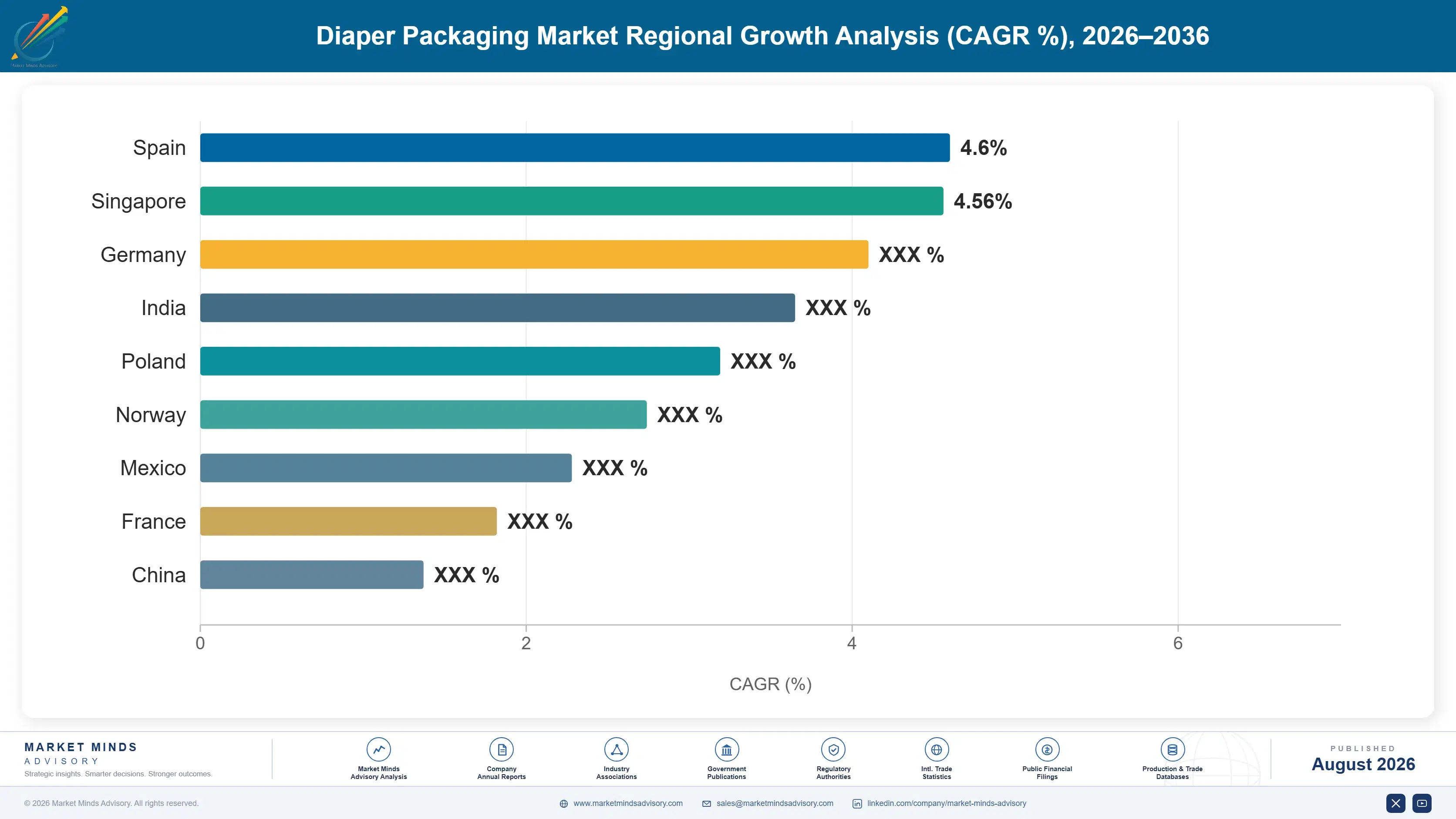
Disposable diaper penetration across India sits far below developed market levels and continues climbing as household incomes rise and organised retail distribution reaches smaller cities. Indonesian. Vietnamese, and Philippine penetration follows a similar trajectory. That means new converting lines, and every converting line needs a packaging end behind it. India contributes the fastest national growth rate in this forecast at 8.6%. This is capacity addition rather than replacement, which makes it the highest-quality demand in the category and the reason Chinese builders have concentrated their commercial effort there. Lead time matters as much as price on these awards.
Market Impact: Changeover costs 34 minutes each

Aftermarket Service Contracts Carry Most Of The Real Margin

A packaging line runs about 17 years, and across that life it consumes wear parts, sealing jaws, belts, control upgrades, and service visits worth a substantial multiple of anything the initial sale contributed to profit. Aftermarket represents roughly 38% of builder revenue and considerably more of builder profit. Converters running continuous operations cannot tolerate unplanned downtime, which makes response time contracts genuinely valuable to them and highly profitable to supply. Builders who structure service agreements at the point of machine sale hold that revenue; those who do not watch third-party service firms take it.
Market Impact: Priced at 40 to 60% below

Market Restraints and Challenges

Changeover Time Destroys Output In A SKU-Proliferated Market

Retail assortments now carry many pack counts, size variants, private label versions, and e-commerce specific formats, and each switch costs about 34 minutes on a modern bagging line. The root cause is mechanical: compression heads, bag formers, and sealing geometry all need physical adjustment that automation has only partly addressed. Commercial impact is severe because a line running eight changeovers a week loses most of a shift. Builders are responding with servo-positioned format parts, recipe-driven setup, quick-release tooling, and in a few designs fully automatic changeover between pre-programmed formats. Private label converters carry the highest SKU counts anywhere.
Market Impact: Compression reaches 3.4 times reduction

Chinese Builders Undercut European Pricing By Wide Margins

Chinese machine builders supply packaging lines at roughly 40 to 60% of European list price with shorter lead times, and they have taken most new installations across Asia. Africa, and increasingly Latin America. The root cause is a domestic supply chain for servo drives, frames, and controls that European builders cannot access at comparable cost. Commercial impact falls on mid-tier European suppliers rather than the technology leaders. Established builders are responding through compression performance, changeover engineering, aftermarket service density, and financing structures that spread capital cost across the machine life.
Market Impact: Retrofit costs 30% of replacement
2 additional market trends, 4 additional growth drivers, and 3 additional restraints and challenges are covered in the full report. Contact sales@marketmindsadvisory.com to access the complete intelligence.

Segment CAGR and Growth Architecture

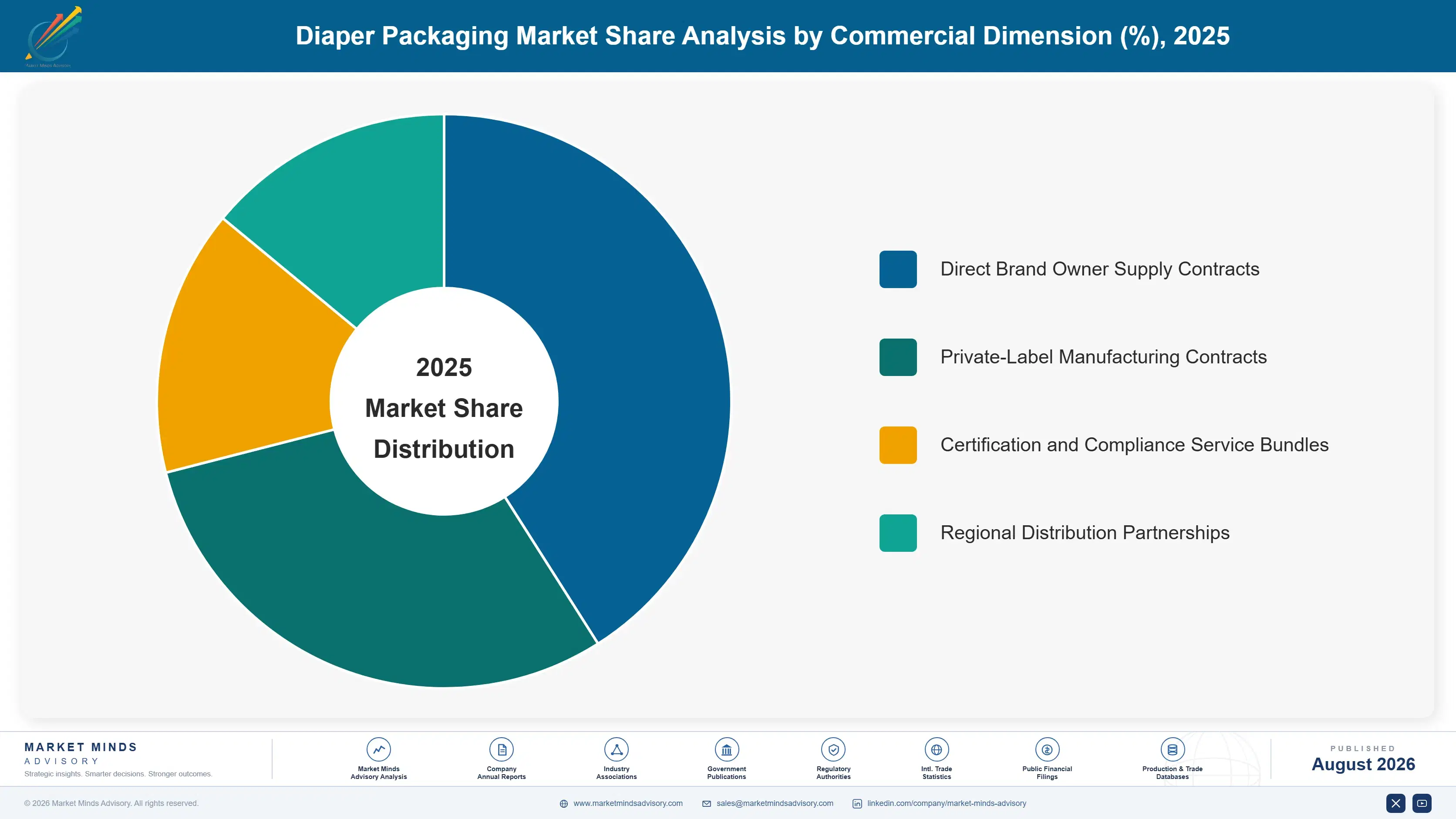
Segmentation here follows machine function within the packaging line, because each function is specified separately, is frequently bought from a different builder, and carries entirely different margin and replacement economics. Product type and converter size both cut across every function rather than separating them out cleanly, so neither works as a primary dimension here.
diaper-packaging-machines-market-market-share-analysis-1787298945303

Compression And Bundling Systems

The fastest function at 7.2%, exactly 1.50 times the market rate, and the only one whose business case reaches a converter's board without translation. Squeezing a diaper stack to 3.4 times reduction shrinks the bag, cuts film consumption, and multiplies pallet and container density, which for a producer shipping across a continent is worth more than the machine costs within a few years. Engineering the compression head to hold that density without damaging product or defeating the seal is genuinely difficult. Retrofit demand is strong because existing lines can often take a new compression module without full replacement, and that retrofit path is where most of the current growth actually sits.
CAGR 7.2%

Palletising And End-Of-Line Systems

Second fastest at 6.3%, growing on labour availability rather than on any change in what gets packed. Manual palletising of bulky diaper cases is physically demanding, hard to staff in developed markets, and increasingly hard to staff in Asian ones too as wages rise. Robotic palletising cells have fallen in price enough that the payback works at modest volumes. Pattern flexibility is the technical demand, since mixed-SKU pallets for retail distribution centres require far more sophistication than uniform stacking ever did. Integration with warehouse systems is where builders differentiate, and it is also where projects most often run late, because the interface belongs to nobody in the contract. Labour availability rather than cost is now the deciding factor.
CAGR 6.3%
Full segment breakdown across 6 segments available in the complete report.

Regional Architecture and Country Demand Map

Machine demand follows where diaper capacity is being installed rather than where diapers are consumed. South Asia and Pacific sits well above its framework band on genuine capacity addition, while North America sits below because its installed base is mature and buying replacement rather than growth.

East Asia

Twenty-eight percent, the largest pool, and the region contains both the biggest machine builders outside Europe and a baby diaper market that is shrinking on demographics. Chinese builders supply most new installations across Asia at roughly half European pricing and have moved steadily up the capability curve. Japanese demand has already pivoted substantially toward adult incontinence formats, and Japanese converters are among the most demanding buyers anywhere on changeover and compression. Chinese export diaper production continues to require capacity even as domestic births fall. Growth at 5.6% runs above the global rate on adult incontinence conversion and on continuing export-oriented capacity investment. Domestic births continue falling across every major market here.
Share: 28% | CAGR: 5.6% (2026 to 2036)

South Asia and Pacific

Sixteen percent against a framework band of seven to twelve, and the breach reflects where converting capacity is genuinely being installed rather than any estimation choice. Indian diaper penetration remains far below developed market levels and climbs steadily as incomes rise and distribution deepens into smaller cities, and India contributes the fastest national growth rate in this forecast at 8.6%. Indonesian. Vietnamese, and Philippine converters are adding lines on identical logic. Chinese builders dominate these installations on price and lead time. Growth at 7.0% is the highest of any region and consists almost entirely of new capacity rather than replacement spend. Service coverage is thinner than European buyers would tolerate, and buyers accept it anyway.
Share: 16% | CAGR: 7.0% (2026 to 2036)
Regional intelligence for 5 additional markets available in the complete report: Western Europe, North America, Latin America, Middle East and Africa, Eastern Europe. Contact sales@marketmindsadvisory.com.
diaper-packaging-machines-market-country-cagr-analysis-1787298945814

Four Ways Machine Builders Make Money

Machine gross margin on a competitive tender is thin and getting thinner as Chinese builders set the price reference. Real money comes from selling compression as freight economics, from locking aftermarket at the point of sale, from engineering changeover down, and from converting shrinking baby capacity into adult incontinence lines. Four levers follow, and only one concerns the machine itself.

Sell Compression As Freight Savings. Not Machine Specification

A converter comparing two machines on price will pick the cheaper one, and a converter comparing container utilisation will not. Moving compression from 2.6 to 3.4 times reduction changes bags per container by roughly 30%, which for a producer shipping nationally is worth several hundred thousand dollars a year in freight alone. Presenting the tender in those terms rather than in throughput terms reframes a capital comparison into a logistics business case. Builders who made this change report materially higher win rates against lower-priced competitors, and it costs nothing beyond rewriting the proposal.
Market Impact: Raises bags per shipping container by roughly 30%

Contract Aftermarket Service At The Point Of Machine Sale

A line runs about 17 years and consumes parts, sealing jaws, control upgrades, and service across all of it, contributing roughly 38% of builder revenue at considerably better margin than new machines. That revenue is only secure if the agreement is signed with the machine, because a converter three years in will happily buy parts from a third party. Bundling a multi-year service and response time agreement into the original contract typically adds 20 to 25% to lifetime account value. Builders treating service as a follow-on sale rather than part of the original deal lose it.
Market Impact: Adds 20 to 25% to lifetime account value

Engineer Changeover Below Fifteen Minutes For SKU-Heavy Converters

Changeover between pack formats costs about 34 minutes on a modern line, and a converter running eight switches a week loses most of a production shift to it. Servo-positioned format parts, recipe-driven setup, and quick-release tooling can bring that under 15 minutes, which returns roughly 3% of annual line capacity. For a converter running near capacity, recovered output is worth far more than any price concession a competitor might offer. This is the specification private label producers care about most, because their SKU counts are the highest in the industry by a wide margin.
Market Impact: Recovers roughly 3% of total annual line capacity

Package Baby-To-Adult Format Conversion As A Retrofit Product

Falling births across East Asia and Europe leave converters with baby capacity they no longer need while adult incontinence demand climbs in the same markets. Converting an existing packaging line to adult formats costs roughly 30% of a new line and takes weeks rather than months, which suits a converter unwilling to fund growth capital in a shrinking category. Builders offering this as a defined retrofit product with fixed scope and price capture work that would otherwise not happen at all. Those selling only complete replacement lines are quoting into a market that has stopped buying them.
Market Impact: Retrofit costs about 30% of a new line

Who Controls the Margin Pool

Concentration reaches 47% across the top five measured on annual machine deliveries, and the composition splits by geography rather than by capability tier. European and Japanese builders hold most of the high-specification installed base across multinational hygiene producers. Chinese builders hold most new installations across Asia. Africa, and increasingly Latin America. The gap has narrowed on basic function and remains wide on compression engineering and service density.
Competition runs on three fronts. Compression performance is the first and it now decides tenders that used to turn on throughput. Changeover engineering is the second, and it matters most to the private label converters with the highest SKU counts. Aftermarket service coverage is the third, and across Africa and Latin America it frequently outranks price. Financing terms increasingly matter as much as any of the three.

Pressure comes from two directions at once. Chinese builders continue moving up the specification curve while holding a wide price advantage. And demographic decline in the baby category means the addressable installed base in mature markets is shrinking rather than growing, which turns replacement into a zero-sum contest. Replacement in a shrinking category is a zero-sum contest, and the incumbents are competing against each other.
diaper-packaging-machines-market-company-positioning-matrix-1787298946334

Competitive Moat and Risk Dimensions

OPTIMA PACKAGING GROUP

Moat: Compression and sealing engineering depth

Holding a diaper stack at high compression while forming and sealing a bag around it without damaging product is genuinely difficult engineering, and the company's compression and sealing systems set the reference others are measured against. That capability took decades of iteration on real production lines. Price competition has barely touched the top compression tier.
OPTIMA PACKAGING GROUP

Risk: Exposed to mature market decline

The installed base and the buying relationships sit heavily in Europe. Japan, and North America, precisely the markets where baby diaper volume is falling on demographics. Growth capacity is being installed in South Asia and Africa where Chinese builders dominate on price. Retrofit work partly offsets this but generates far less revenue per project.
CURT G. JOA

Moat: Integrated converting and packaging supply

Supplying the converting line and the packaging end together removes the interface risk that causes most commissioning delays in this industry, where the handoff between two builders belongs contractually to nobody. Converters who have suffered that once buy integrated afterwards. The converting machinery position pulls packaging work along behind it.
CURT G. JOA

Risk: Integration limits packaging-only tenders

The same integration that wins full-line projects makes the company an awkward bidder when a converter wants only a packaging retrofit onto somebody else's converting line, which is exactly where the current growth in compression modules and format conversion sits. Retrofit buyers often prefer a specialist. Bundled positioning also invites pricing scrutiny that separately tendered scopes avoid entirely.

Players Tracked

Prominent Players

Optima Packaging Group
Curt G. Joa
Fameccanica
Zuiko
Quanzhou Peixin Machinery

Other Key Players

GDM
Bicma Hygiene-Technologie
Anqing Hengchang Machinery
Haina Machinery
Ilsung Machinery
M.D. Viola Macchine
Cellulose Converting Solutions
Andritz Diatec
Syntegon Technology
Cama Group
Gerhard Schubert
KUKA
Delta Engineering
Tesc Machinery
Fuzhou Panda Machinery

Recent Developments

FEBRUARY 2025

European builder launches automatic changeover bagging platform

A German packaging machinery builder introduced a bagging platform with servo-positioned format parts and recipe-driven setup, targeting changeover between pack counts without any manual tooling adjustment. The launch was organic product development, addressing the SKU proliferation that private label converters have complained about for years.
Signal: Changeover rather than throughput is now the specification builders compete on, which took the industry a decade to accept
MAY 2025

Japanese converter retrofits baby lines to adult incontinence formats

A Japanese hygiene producer converted several baby diaper packaging lines to adult incontinence pack formats at existing sites, using retrofit modules rather than replacement machinery. The work was internal capital investment responding to domestic demographics rather than any partnership, and it repurposed capacity that falling births had left underused.
Signal: Mature market converters are repurposing rather than replacing, which shifts builder revenue toward retrofit scopes worth far less
AUGUST 2025

Chinese builder wins multi-line order from Indian hygiene converter

A Chinese packaging machinery manufacturer secured an order for several complete packaging lines from an Indian diaper converter adding capacity in two states. The award was a competitive tender decision rather than any joint venture, and it was won on delivered price and lead time against European alternatives.
Signal: New capacity in the fastest-growing region is going almost entirely to builders that mature market incumbents rarely tender against

What a Packaging Line Costs to Build

Bought-in components dominate. Servo drives, motors, controllers, and industrial control systems run about 34% of machine cost, sourced from a small group of European and Japanese automation suppliers. Fabricated steel frames, guarding, and machined format parts add roughly 26%, mostly regional. Engineering labour, software development, and commissioning make up most of the remainder, and that share rises steeply on highly customised projects.
The disruption that mattered was semiconductor and drive availability. Lead times for servo drives and controllers stretched dramatically, and builders quoting fixed delivery dates against unavailable components either missed them or bought at spot prices well above contract. Company annual reports across the machinery sector describe the effect in consistent terms, and several builders extended quoted lead times by months rather than risk missing a commissioning date.

The competitive disadvantage runs through automation supply chain access rather than manufacturing skill. Chinese builders source servo drives and controls domestically at costs European builders cannot reach, which explains most of their price advantage rather than any labour difference. Smaller builders without volume commitments to drive suppliers pay the worst prices of anyone, and European builders committed to specific automation platforms for support reasons carry that cost permanently.
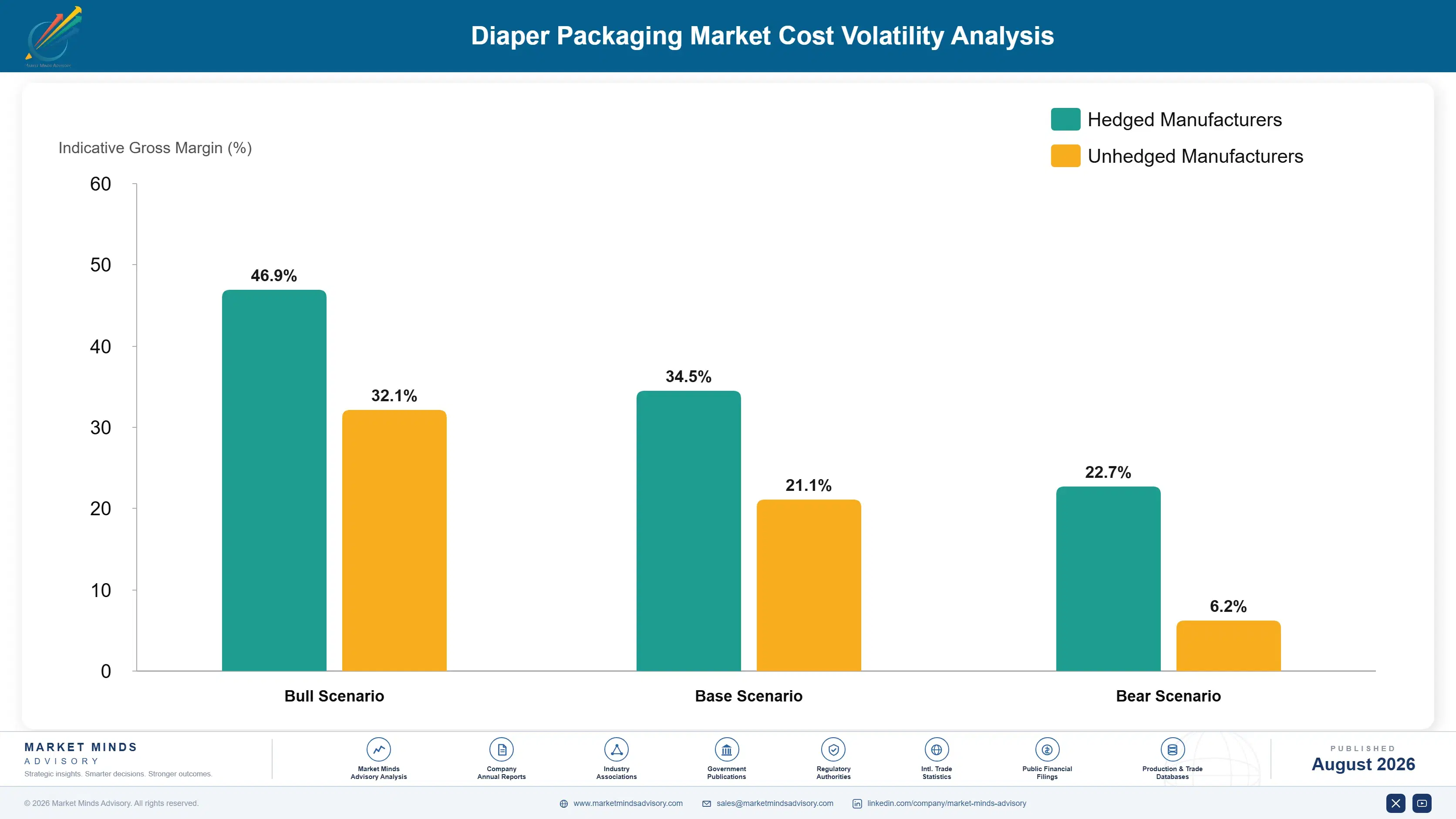
diaper-packaging-machines-market-cost-volatility-analysis-1787298946529

Commit volume to fewer automation platforms for better pricing

Builders offering three or four different control platforms to suit customer preference split their purchasing across several suppliers and then negotiate poorly with all of them. Consolidating onto one or two platforms improves pricing materially and simplifies spare parts holding across the whole service business. The occasional lost tender is a considerably smaller cost.

Hold buffer stock of long-lead servo drives and controllers

Drive lead times stretched dramatically during the recent disruption and builders quoting fixed commissioning dates were caught badly. Holding buffer inventory of the highest-volume drive and controller variants ties up working capital but protects delivery commitments that carry contractual penalties. The calculation favours buffer stock wherever late delivery penalties exceed the carrying cost, which on large projects it usually does.

Standardise format parts across machine platforms to cut machining

Machined format parts are expensive, slow to produce, and frequently redesigned for each project when a common family would serve. Standardising across platforms reduces machining cost, shortens delivery, and makes spare parts holding far simpler for the service business. Engineering resists it because every customer application looks unique, and on examination most of them are not unique at all.

Portfolio Architecture for Margin Defence

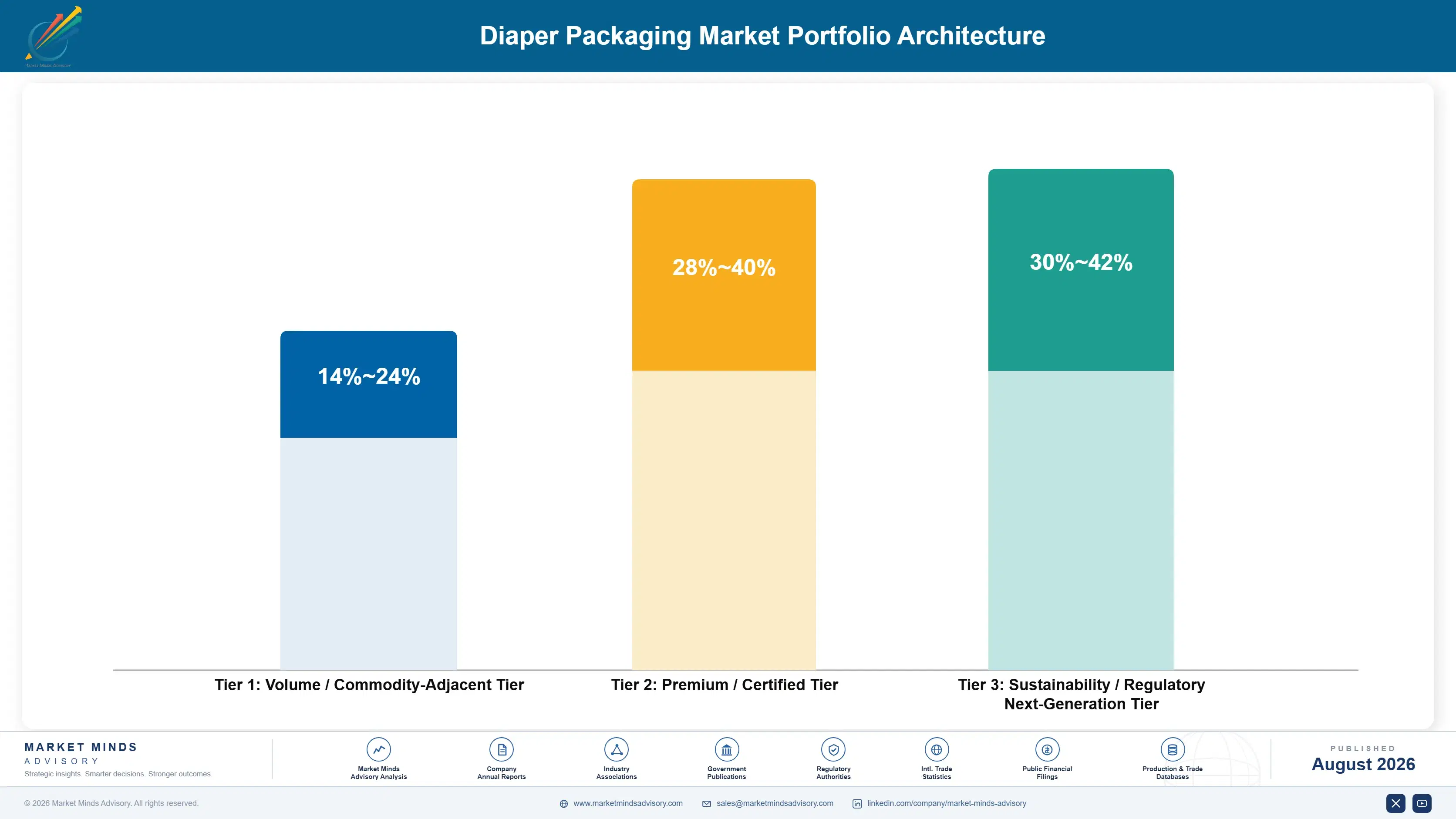
Three tiers describe this business and the margin spread between them is unusually wide for capital equipment. Standard bagging and stacking machines sold into competitive tenders sit at the bottom, where Chinese pricing sets the reference and European builders struggle to justify their cost base. High-specification compression and changeover systems sit considerably higher, protected by engineering that has not been replicated. And aftermarket parts and service occupy a third tier at the best m
The tension is that machine sales create the aftermarket and cannot be abandoned to protect margin. A builder that stops winning new installations watches its service base age out over the following decade with nothing replacing it. Several European builders discovered this after ceding the volume tiers to Chinese competition and then finding their aftermarket revenue declining in step, six or seven years later. The lag between the two effects is what makes it dangerous.

High-value pools concentrate where downtime is expensive and alternatives are scarce. Response time service contracts and compression retrofit both sell against a cost the converter can already quantify precisely. A converter can calculate downtime cost to the hour, which makes the sale considerably easier.

Volume / Commodity-Adjacent Tier

Standard stackers, baggers, and case packers sold into open tenders where Chinese builders set the price reference. Thin margin and shrinking share for European suppliers, but the installations that seed aftermarket revenue for the following seventeen years.
Gross Margin: 17-24%

Premium / Certified Tier

High-compression systems, automatic changeover platforms, and integrated end-of-line automation for demanding converters. Margin reflects engineering depth that lower-cost builders have not matched rather than any difference in bought-in component cost.
Gross Margin: 31-42%

Sustainability / Regulatory / Next-Generation Tier

Aftermarket parts, response time service agreements, control retrofits, and baby-to-adult format conversion modules. Best margin in the business, contributing roughly 38% of revenue and considerably more of profit across the installed base.
Gross Margin: 44-58%
diaper-packaging-machines-market-portfolio-architecture-1787298947026

High-value Sub-segments and Strategic Watch-out

Aftermarket Service And Parts Contracts

Best margin available anywhere in this business and highly predictable across a seventeen-year machine life, contributing roughly 38% of builder revenue. Only secure when contracted at the point of sale, because third-party service firms take it readily three years in. Response time commitments are what converters value most.
Gross Margin: 44-58%

Compression Retrofit Modules

Strong margin and the fastest growth at 7.2%, selling against a freight cost the converter can quantify precisely rather than against a competitor's machine price. Retrofit onto existing lines avoids the capital approval that a full replacement would require. Capital approval thresholds favour retrofit over full replacement.
Gross Margin: 36-47%

Standard Bagging And Stacking Machines

The volume core at thin and narrowing margin, where Chinese builders set the price reference across Asia. Africa, and Latin America. Abandoning it protects margin briefly and destroys the aftermarket base six or seven years later, as several builders learned. Regional assembly and financing beat price matching here.
Gross Margin: 17-24%

Baby-To-Adult Format Conversion

The strategic watch-out and the opportunity together, since falling births shrink the category these lines serve while adult incontinence grows in exactly the same markets. Conversion costs roughly 30% of a new line, and only the builders who offer it will collect any of it.
Gross Margin: 38-51%

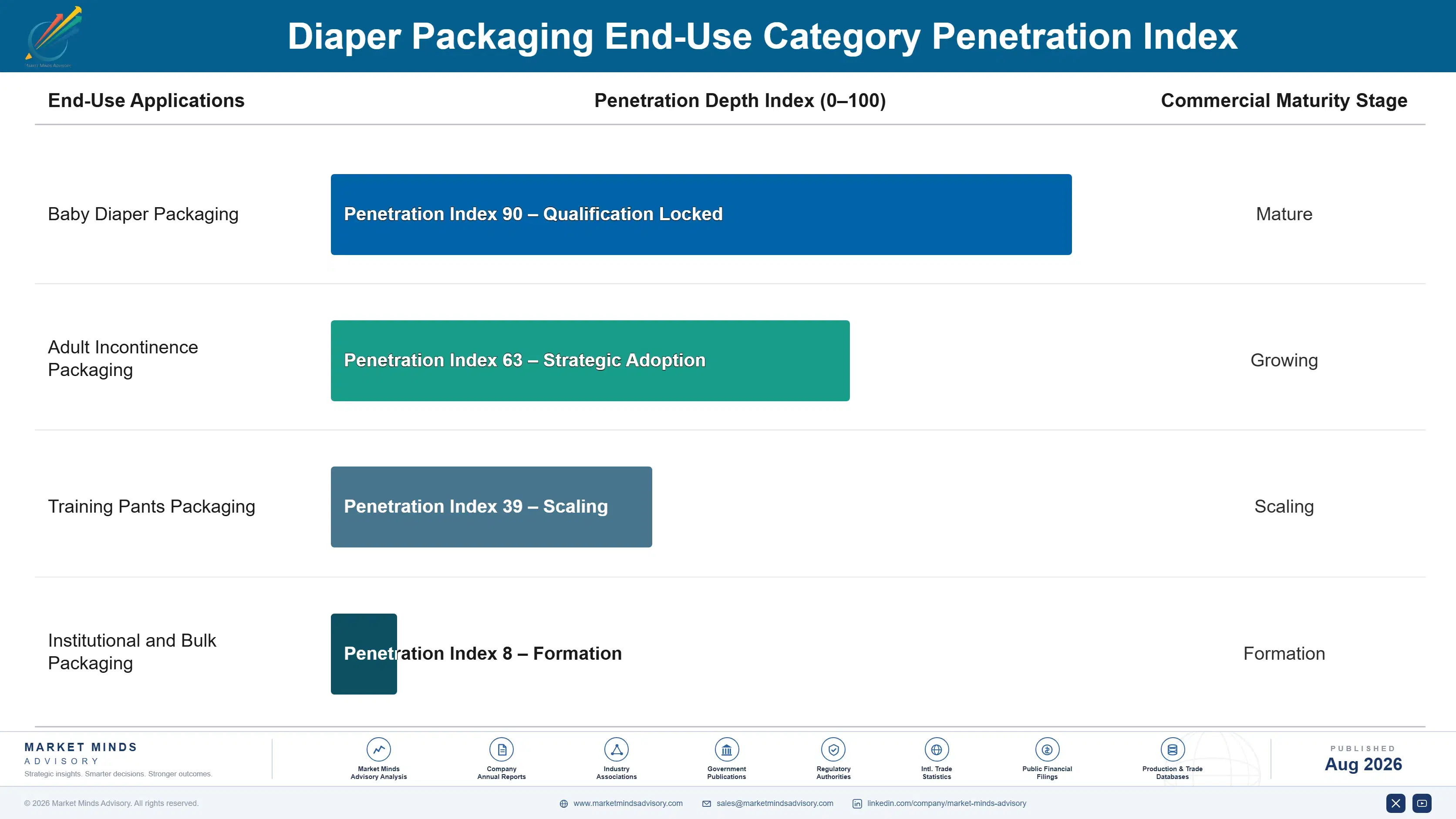
How Machine Demand Actually Recurs

The machine sells once every seventeen years and the aftermarket sells continuously, which is why builders that understand this business measure account value across the full life rather than at the order. Parts, sealing jaws, control upgrades, and service visits accumulate to a multiple of the original margin. The annuity holds only where the service agreement was written into the original contract, since a converter several years in will buy parts wherever they are cheapest.
Depth of relationship varies sharply by converter type. Multinational hygiene producers specify centrally, audit thoroughly, and hold builders across decades and multiple sites. Private label converters run the highest SKU counts and care about changeover above everything else. Regional converters in growth markets buy almost purely on delivered price and payment terms. Contract manufacturers behave differently again, needing format flexibility because their customer mix changes constantly.

Buyer profiles are shifting as logistics functions gain influence over packaging line specification. Compression ratio is increasingly evaluated by the people who pay the freight rather than by the engineers who run the line. Engineering still writes the specification but no longer decides it, and builders are slow to notice.
diaper-packaging-machines-market-end-use-penetration-index-1787298947518

What We Would Tell a Board

These are among the four positions where our research anticipates prominent divergence between winners and laggards over the coming forecast period. Each is grounded in the demand model, the regulatory perimeter, and the announced capacity pipeline.
01 / COMPRESSION VALUE FRAMING

Quote container utilisation, not diapers per minute

Moving compression from 2.6 to 3.4 times reduction raises bags per container by roughly 30%, which for a converter shipping nationally is worth several hundred thousand dollars annually in freight that no throughput specification can match. Presenting the tender as a logistics business case rather than a capital comparison reframes the decision away from purchase price entirely. Builders who rewrote their proposals on this basis report materially higher win rates against considerably cheaper competitors, and the change costs nothing beyond the effort of writing it.
02 / AFTERMARKET CONTRACT TIMING

Sign the service agreement with the machine or lose it

Aftermarket contributes roughly 38% of builder revenue at the best margin in the business, accumulated across a machine life of about seventeen years. That revenue is only defensible when the service and response time agreement forms part of the original contract, because a converter three years into operation will buy wear parts from whoever quotes cheapest. Bundling service at point of sale adds 20 to 25% to lifetime account value, and builders treating it as a follow-on sale simply do not collect it.
03 / VOLUME TIER DEFENCE

Ceding standard machines kills the aftermarket seven years later

Abandoning competitively tendered standard machines to Chinese builders protects reported margin immediately and destroys the installed base that generates aftermarket revenue across the following decade. Several European builders made exactly this choice and watched service revenue decline six or seven years afterwards with nothing replacing the machines that aged out. Holding position in the volume tier through financing structures or regional assembly, rather than through price matching, is a defence of the profitable business rather than of the unprofitable one.
04 / DEMOGRAPHIC RETROFIT RESPONSE

Sell format conversion into markets that stopped buying lines

Falling births across East Asia and Western Europe leave converters holding baby capacity they no longer need while adult incontinence demand rises in exactly those markets. Converting a packaging line to adult formats costs roughly 30% of a new line and takes weeks rather than months, which suits a converter unwilling to fund growth capital in a shrinking category. Builders offering only complete replacement lines are quoting into a market that has already stopped buying them, and they are losing revenue they could easily have collected.

Engagement Snapshot From the Field

A live engagement with an industry participant carrying material or product regulatory and market exposure ahead of a defining policy shift, showing how our research translates into a defensible multi-year portfolio strategy.
MARKET MINDS ADVISORY · CLIENT ENGAGEMENT SUMMARY
Diaper Packaging Machines Producer Strategic Portfolio Review and Transition Roadmap 2026·Investment Scenario on Diaper Packaging Machines Exposure Evaluation 2025-26
CLIENT PROFILE
A European packaging machinery builder with approximately 210 million dollars in annual revenue (client-reported, unverified by MMA), supplying stacking, bagging, and case packing equipment to hygiene converters across three continents. The company had withdrawn from competitively tendered standard machine work two years earlier to protect margin, sold service reactively rather than contractually, and quoted all tenders on throughput specification.
STRATEGIC CHALLENGE
Reported gross margin had improved after the withdrawal from volume tenders while absolute profit had fallen, and service revenue growth had flattened for the first time in a decade. Management wanted approval for further premiumisation. The board asked for an independent assessment of whether the strategy was working before committing to it further.
MMA APPROACH
We modelled aftermarket revenue against installation cohort age across fifteen years of the client's delivery history, benchmarked win rates on tenders quoted by throughput against those quoted on freight economics across comparable builders, and interviewed converter procurement and logistics functions across four countries on how packaging line decisions were actually made internally.
KEY FINDINGS
  1. Service revenue tracked installation cohorts with a lag of roughly six years, meaning the volume tier withdrawal would reduce aftermarket revenue materially from the end of the decade onward.
  2. Logistics rather than engineering functions held decisive influence on packaging line specification at seven of eleven converters interviewed, and none had been shown a freight-based business case.
  3. Reactive service pricing was returning roughly 40% less lifetime value per installation than comparable builders who contracted response time agreements at point of sale.
  4. Two of the client's largest mature-market customers were actively seeking baby-to-adult format conversion and had not been offered it because the client sold only complete lines.
CLIENT PROFILE
A European packaging machinery builder with approximately 210 million dollars in annual revenue (client-reported, unverified by MMA), supplying stacking, bagging, and case packing equipment to hygiene converters across three continents. The company had withdrawn from competitively tendered standard machine work two years earlier to protect margin, sold service reactively rather than contractually, and quoted all tenders on throughput specification.
STRATEGIC CHALLENGE
Reported gross margin had improved after the withdrawal from volume tenders while absolute profit had fallen, and service revenue growth had flattened for the first time in a decade. Management wanted approval for further premiumisation. The board asked for an independent assessment of whether the strategy was working before committing to it further.
MMA APPROACH
We modelled aftermarket revenue against installation cohort age across fifteen years of the client's delivery history, benchmarked win rates on tenders quoted by throughput against those quoted on freight economics across comparable builders, and interviewed converter procurement and logistics functions across four countries on how packaging line decisions were actually made internally.
KEY FINDINGS
  1. Service revenue tracked installation cohorts with a lag of roughly six years, meaning the volume tier withdrawal would reduce aftermarket revenue materially from the end of the decade onward.
  2. Logistics rather than engineering functions held decisive influence on packaging line specification at seven of eleven converters interviewed, and none had been shown a freight-based business case.
  3. Reactive service pricing was returning roughly 40% less lifetime value per installation than comparable builders who contracted response time agreements at point of sale.
  4. Two of the client's largest mature-market customers were actively seeking baby-to-adult format conversion and had not been offered it because the client sold only complete lines.
RECOMMENDED STRATEGY
Phase 1: Phase 1 (months one to six): rewrite all tender documentation around container utilisation and freight economics, and introduce contracted service agreements at point of sale. Phase 2: Phase 2 (months six to eighteen): re-enter volume tenders using financing structures and regional assembly rather than price matching to defend installed base growth. Phase 3: Phase 3 (months eighteen to thirty): package baby-to-adult format conversion as a defined retrofit product with fixed scope and pricing.
OUTCOME
The client re-entered volume tendering and rebuilt its proposal framework around freight economics. Win rate on contested tenders improved substantially within three quarters and contracted service attachment reached most new installations (client-reported, unverified by MMA), with the retrofit product securing orders from both mature-market customers identified.

Frequently Asked Questions

Foundational context covering the market sizes, CAGR, scope, country, region and competition that inform every finding below. This section is provided to cover basics and most often pre-purchase conversations, answered from the MMA Primary Research Dataset.

What is the current size of the Diaper Packaging Machines Market?

The market is valued at USD 1.35 billion in 2025, rising to USD 1.41 billion in 2026. Aftermarket parts and service contribute roughly 38% of builder revenue.

How large will the Diaper Packaging Machines Market be by 2036?

MMA forecasts USD 2.26 billion by 2036, an increase of USD 0.85 billion over the 2026 base. That represents an expansion multiple of 1.60 times.

What is the CAGR for the Diaper Packaging Machines Market 2026 to 2036?

The base case CAGR is 4.8%, with a bull case of 6.0% and a bear case of 3.6%. The historical rate from 2020 to 2025 was 3.9%.

Which segment is growing fastest?

Compression and bundling systems at 7.2%, exactly 1.50 times the market rate. Higher compression shrinks the bag, cuts film, and raises container density by roughly 30%.

Who are the major companies in the Diaper Packaging Machines Market?

Optima Packaging Group, Curt G. Joa, Fameccanica, Zuiko, and Quanzhou Peixin Machinery lead on annual machine deliveries, together holding 47% of the market, with European and Japanese builders dominating the installed base while Chinese builders win most new installations.

Which country is growing fastest?

India at 8.6%, driven by diaper penetration still climbing steeply and by converters adding genuine new capacity rather than replacing existing lines. Chinese builders win most of those installations.

Report Segmentation Architecture

The full report scope spans multiple orthogonal segmentation dimensions, with cross-tabulated demand data provided for each dimension pair. Coverage extends further to regional breakdowns, trend trajectories, and the competitive detail needed to support segment-level decision-making.

By Machine Function

  • Stacking And Counting Units
  • Bagging And Poly-Wrapping Machines
  • Compression And Bundling Systems
  • Case Packing And Cartoning Machines
  • Palletising And End-Of-Line Systems
  • Inspection, Reject And Line Control Systems

By End-Use Industry

  • Multinational Hygiene Producers
  • Private Label And Discount Converters
  • Regional Independent Converters
  • Adult Incontinence Specialist Producers
  • Contract Manufacturing Operations

By Commercial Model

  • New Complete Line Supply
  • Retrofit And Upgrade Modules
  • Aftermarket Parts And Service Contracts
  • Financed And Leased Equipment Supply

By Region

  • East Asia
  • South Asia and Pacific
  • Western Europe
  • North America
  • Latin America
  • Middle East and Africa
  • Eastern Europe

Scope, Methodology, and Coverage

Every figure in this report is reproducible from documented input assumptions. The scope below maps the historical period, the forecast horizon, the segmentation dimensions, and the countries covered, alongside the underlying primary and qualitative methodology.
Historical Period
2020 to 2025
Forecast Period
2026 to 2036
Base Year
2025 (USD billions; MMA Primary Research Dataset, August 2026)
Market Definition
This market comprises machinery installed downstream of hygiene converting lines to stack, count, compress, bag, case pack, palletise, and inspect finished disposable diapers and adult incontinence products, measured at builder realised prices across new machine supply, retrofit modules, and aftermarket parts and service. Function coverage spans stacking and counting, bagging and poly-wrapping, compression and bundling, case packing and cartoning, palletising and end-of-line, and inspection and line control systems. Diaper converting and forming machinery, nonwoven and superabsorbent production equipment, packaging films and materials, warehouse automation beyond the palletiser, and machinery serving feminine hygiene or wipes categories fall outside scope.
Quantitative Units
USD billions (current prices); machines delivered annually; aftermarket revenue per installed line
Segmentation Dimensions
By Machine Function; By End-Use Industry; By Commercial Model; By Region
Regions Covered
East Asia, South Asia and Pacific, Western Europe, North America, Latin America, Middle East and Africa, Eastern Europe
Countries Covered
China, Japan, South Korea, Taiwan, India, Indonesia, Vietnam, Philippines, Thailand, Australia, Germany, Italy, Switzerland, France, Spain, UK, Poland, Turkey, USA, Canada, Mexico, Brazil, Argentina, Colombia, Egypt, Nigeria, South Africa, Kenya, Saudi Arabia, and additional markets relevant to this sector
Key Companies Profiled
Optima Packaging Group, Curt G. Joa, Fameccanica, Zuiko, Quanzhou Peixin Machinery, GDM, Bicma Hygiene-Technologie, Anqing Hengchang Machinery, Haina Machinery, Ilsung Machinery, M.D. Viola Macchine, Cellulose Converting Solutions, Andritz Diatec, Syntegon Technology, Cama Group, Gerhard Schubert, KUKA, Delta Engineering, Tesc Machinery, Fuzhou Panda Machinery
Quantitative Methodology
Primary survey, n=3,800 respondents, Q4 2025, six countries; demand-side model with trade association cross-validation
Qualitative Methodology
47 expert interviews, Q4 2025; applied to validate demand model assumptions, identify emerging dynamics, and assess competitive positioning
Report Format
PDF and XLSX data workbook (Word format preview document)
Publisher
Market Minds Advisory
Report Code
MMA-2026-CON-238
Published
August 2026
Contact
sales@marketmindsadvisory.com | www.marketmindsadvisory.com

Purchase the full Diaper Packaging Machines Market Report (2026 to 2036).

The full report sizes diaper packaging machinery across six machine functions, five converter types, four commercial models, and seven regions, with country detail for the twenty largest national markets. New machine supply, retrofit, and aftermarket revenue are sized separately throughout, since their margins and demand drivers differ completely. Installed base age is modelled by cohort and region to project replacement and aftermarket revenue across the forecast. Competitive profiling covers twenty builders on annual machine deliveries. Compression ratio and changeover time performance are benchmarked across the leading commercial platforms.
New machine, retrofit, and aftermarket revenue sized separately
Installed base age modelled by cohort and region
Compression ratio benchmarking across leading commercial platforms
Changeover time performance compared by builder and platform
Chinese and European delivered price comparison by machine class
Baby to adult incontinence conversion demand modelled by market

Built For The People Who Decide

From boardroom strategy to bench-side execution, this report is read cover-to-cover by leaders shaping the next decade of their industry, turning demand scenarios, market dynamics and valuation benchmarks into decisions.
CXOs/ Presidents/ VPs/ Managers
M&A and Corporate Development
Strategy Teams and R&D Heads
Procurement and Product Directors
Regulatory and Compliance Leaders
Investor Relations and Equity Analysts