Deicing Fluid Market

Deicing Fluid Market

Deicing Fluid Market Outlook from 2026 to 2033

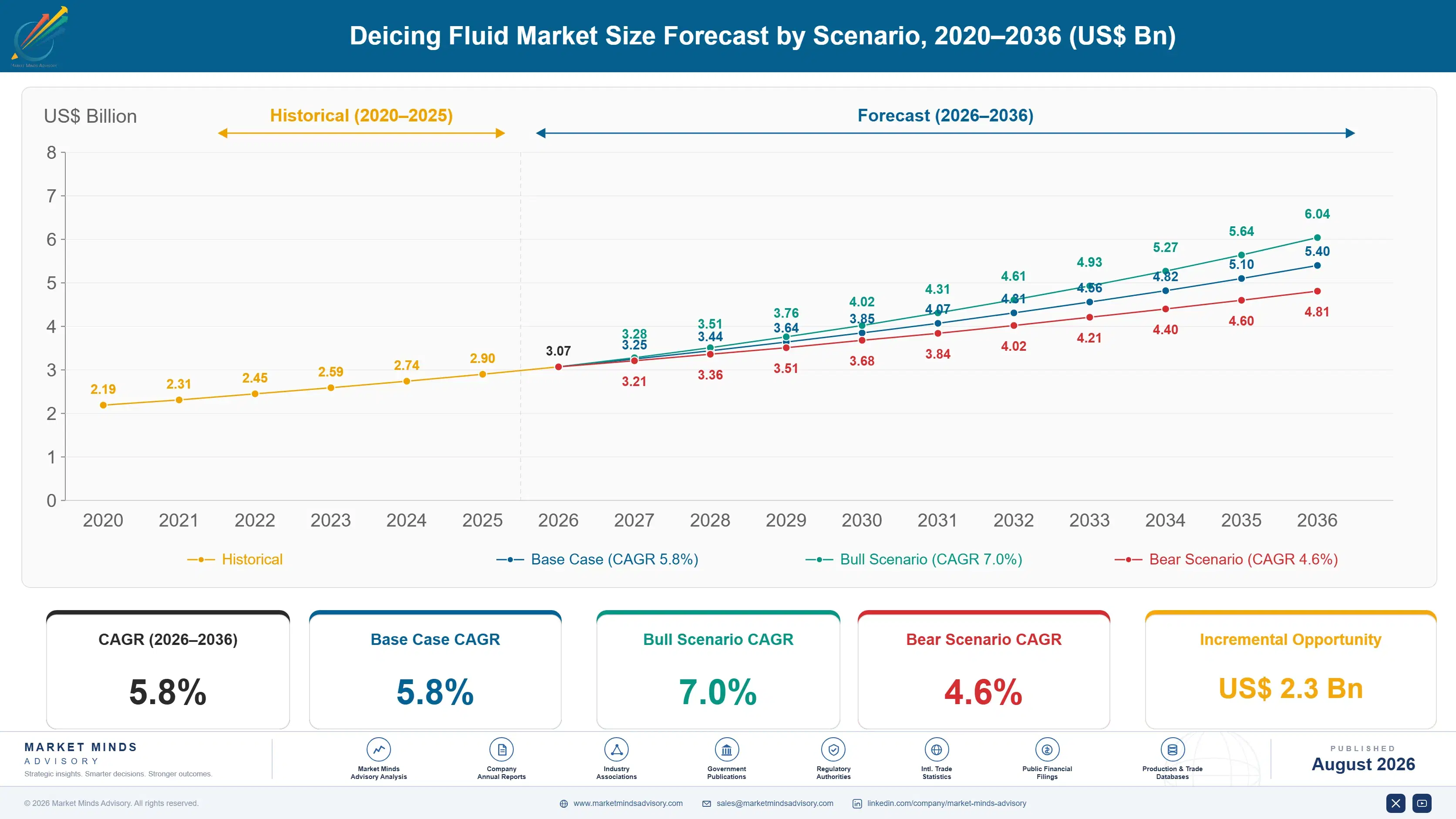
The global deicing fluid market is poised for steady expansion, driven by the increasing demand for safe and efficient operations in aviation, transportation, and infrastructure sectors. In 2026, the market size is estimated at USD 1.45 billion, with a projected value of USD 2.13 billion by 2033, reflecting a CAGR of 5.6% during the forecast period. The market’s growth is underpinned by stringent safety regulations, rising air traffic, and the need for effective winter maintenance solutions across developed and emerging economies.

Technological advancements in fluid formulations, coupled with heightened environmental awareness, are shaping the competitive landscape. The adoption of eco-friendly and biodegradable deicing fluids is gaining traction, particularly in regions with strict environmental mandates. The market is characterized by the presence of established players and new entrants focusing on innovation, cost efficiency, and sustainability. The interplay of regulatory compliance, operational efficiency, and environmental stewardship will continue to define the trajectory of the deicing fluid market through 2033.

Deicing Fluid Market

Deicing Fluid Market Scenario & Strategic Insights

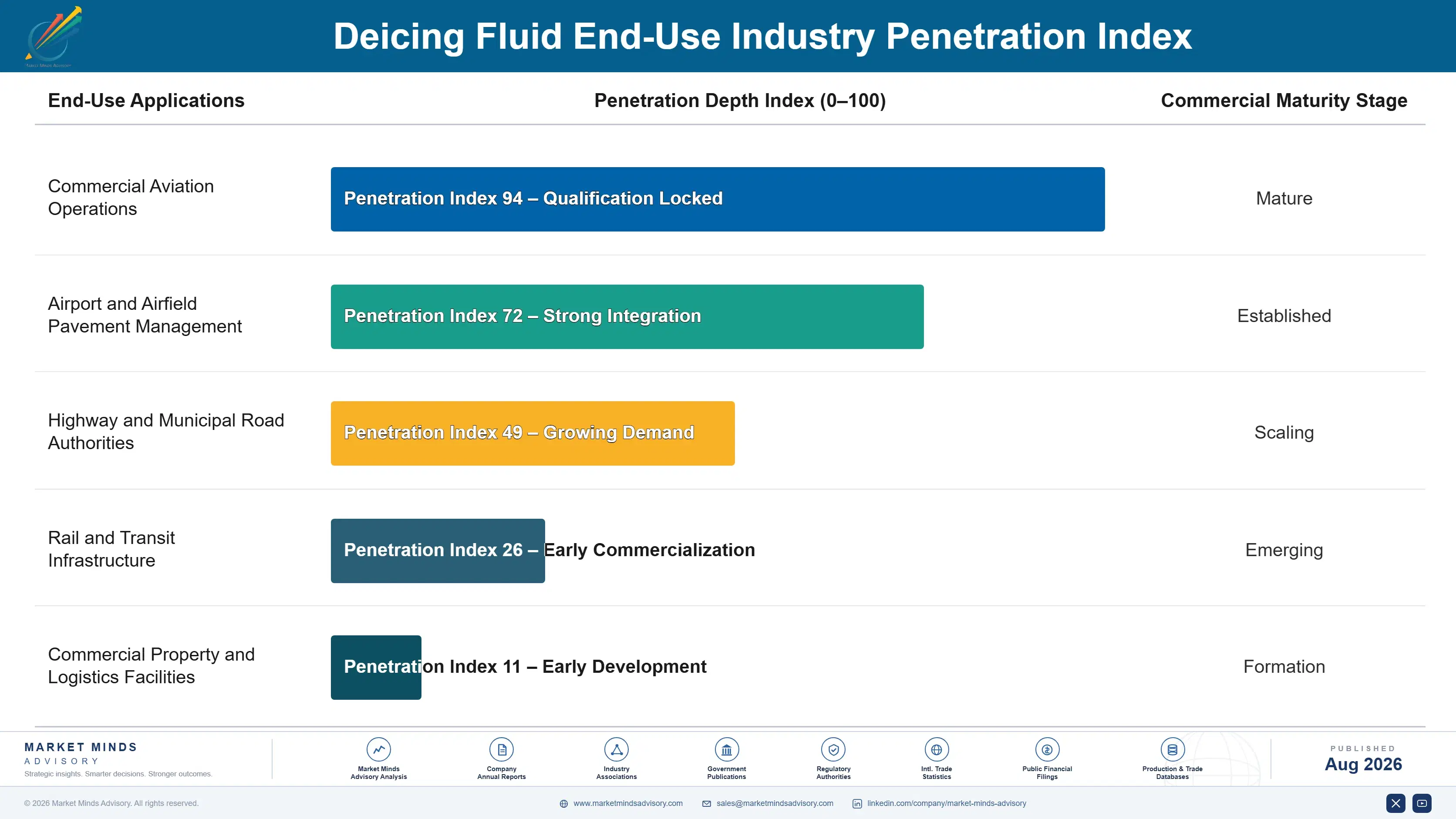
The deicing fluid market is experiencing a paradigm shift as end-users prioritize both performance and environmental impact. The aviation sector remains the largest consumer, accounting for a significant share of global demand. Airports and airlines are increasingly investing in advanced deicing solutions to minimize operational disruptions and comply with international safety standards. The expansion of airport infrastructure, especially in Asia-Pacific and the Middle East, is expected to further stimulate market growth.

In addition to aviation, the transportation and infrastructure sectors are emerging as important end-users. Municipalities and highway authorities are adopting deicing fluids to ensure road safety and maintain uninterrupted logistics during winter months. The market is also witnessing a transition towards glycol-based and acetate-based fluids, which offer improved efficacy and reduced ecological footprint compared to traditional chloride-based products.

Strategically, manufacturers are focusing on product differentiation, cost optimization, and regional expansion. Partnerships with airlines, airport authorities, and government agencies are becoming increasingly vital for market penetration. The integration of real-time weather monitoring and automated deicing systems is further enhancing the operational efficiency and effectiveness of deicing fluid applications.

Attribute2026 (USD Billion)2033 (USD Billion)CAGR (2026 – 2033)
Market Size1.452.135.6%

Deicing Fluid Market Trends

  • Shift Towards Eco-Friendly and Biodegradable Formulations

The deicing fluid market is witnessing a significant shift towards the adoption of eco-friendly and biodegradable products. Regulatory bodies in North America and Europe are imposing stringent restrictions on the use of traditional chloride-based deicers due to their adverse environmental impact, such as soil and water contamination. As a result, manufacturers are investing in research and development to create glycol-based and acetate-based fluids that offer effective deicing performance while minimizing ecological harm. This trend is expected to accelerate as sustainability becomes a core criterion for procurement in both aviation and ground transportation sectors.

  • Integration of Advanced Application Technologies

Technological advancements in deicing fluid application are transforming operational practices, particularly in the aviation industry. The integration of automated deicing systems, real-time weather monitoring, and precision spraying technologies is enhancing the efficiency and effectiveness of deicing operations. These innovations reduce fluid wastage, lower operational costs, and improve turnaround times for aircraft and vehicles. The adoption of such technologies is gaining momentum in major airports and transportation hubs, driving demand for high-performance deicing fluids compatible with automated systems.

  • Expansion in Emerging Markets and Infrastructure Development

Rapid infrastructure development and increasing air traffic in emerging markets, especially in Asia-Pacific and the Middle East, are creating new growth opportunities for the deicing fluid market. Governments are investing in airport modernization and expanding transportation networks to support economic growth and tourism. As a result, the demand for deicing fluids is rising in regions that are experiencing more frequent and severe winter weather events due to climate change. Market participants are strategically expanding their presence in these high-growth regions to capitalize on the burgeoning demand.

Segment & Category Analysis for Deicing Fluid Market

By Product Type

  • Glycol-Based Deicing Fluids
    • Acetate-Based Deicing Fluids
    • Chloride-Based Deicing Fluids
    • Others

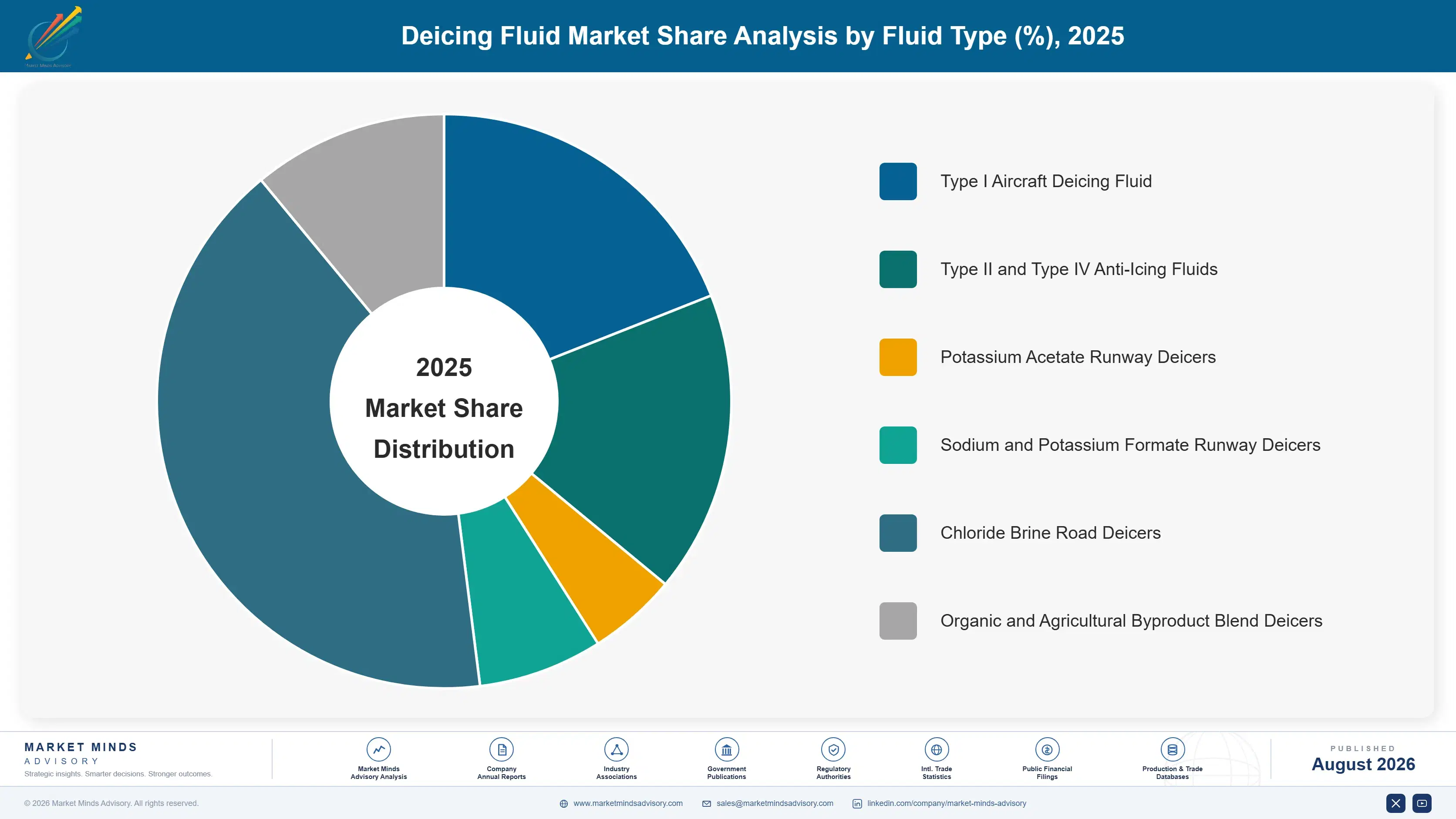
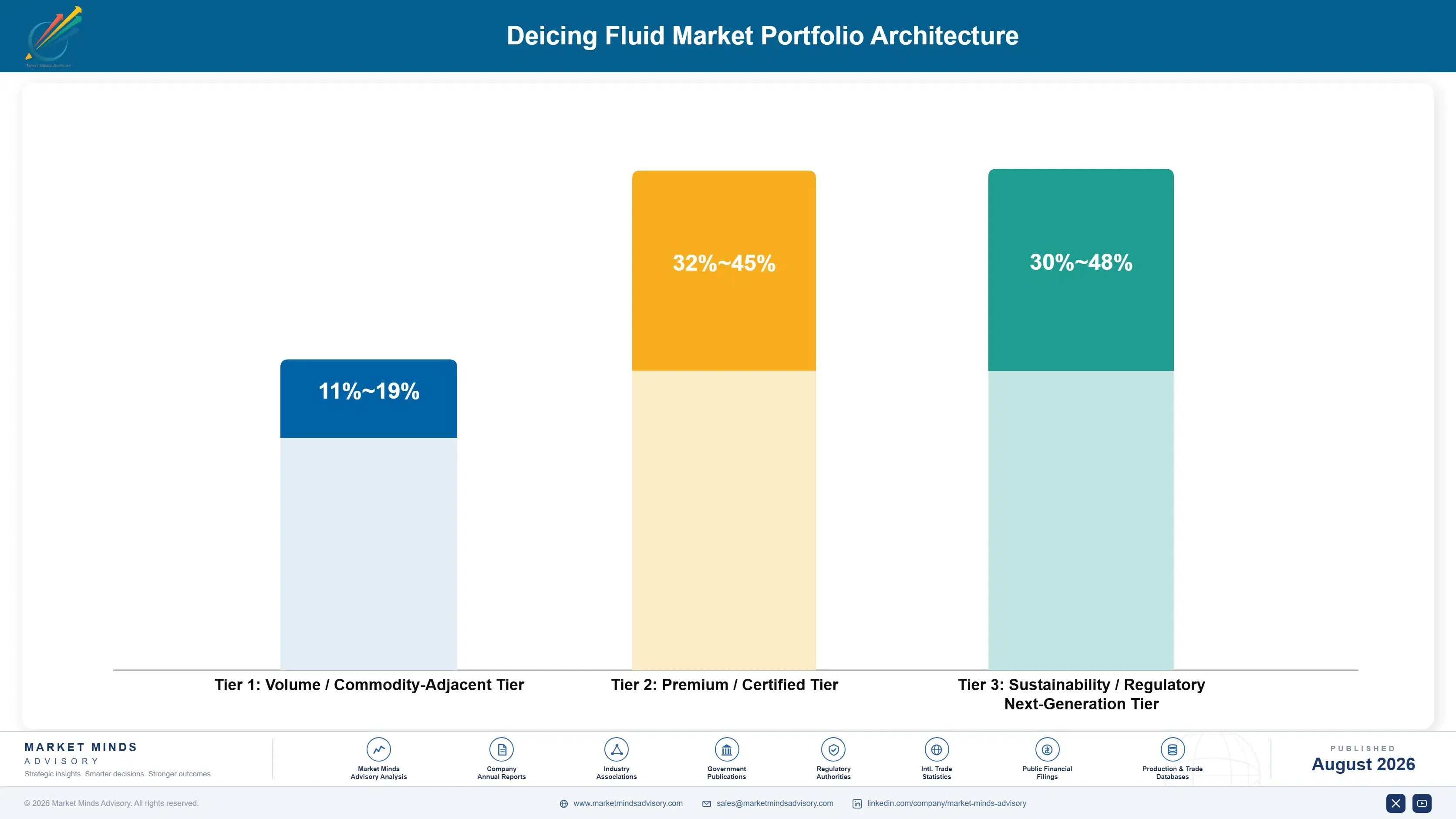
The product type segment is dominated by glycol-based deicing fluids, which are widely used in aviation due to their superior performance and lower corrosiveness. Acetate-based fluids are gaining popularity as environmentally friendly alternatives, particularly in regions with strict environmental regulations. Chloride-based fluids, while cost-effective, are being phased out in many applications due to their negative environmental impact. The “Others” category includes emerging formulations that combine performance with sustainability. The ongoing shift towards eco-friendly products is expected to reshape the competitive dynamics within this segment.

Deicing Fluid Market Product Type

By Application

  • Aircraft Deicing
    • Runway and Taxiway Deicing Road and Highway Deicing Railway Deicing
    • Others

Aircraft deicing remains the largest application segment, driven by the critical need for safety and regulatory compliance in aviation. Runway and taxiway deicing is also a significant market, as airports strive to maintain operational continuity during winter. Road and highway deicing is expanding, particularly in North America and Europe, where municipalities are investing in winter maintenance. Railway deicing, though a smaller segment, is gaining attention in regions with extensive rail networks. The “Others” category includes applications in bridges, tunnels, and industrial facilities.

By End-User

  • Airports and Airlines
    • Highway and Road Authorities Rail Operators Industrial Facilities
    • Others

Airports and airlines constitute the primary end-users, accounting for the majority of deicing fluid consumption. Highway and road authorities are increasingly adopting advanced deicing solutions to ensure public safety and minimize disruptions. Rail operators and industrial facilities represent niche segments with specialized requirements. The “Others” category includes ports, logistics companies, and private operators. The diversification of end-users is broadening the market’s scope and driving innovation in product development.

By Fluid Concentration

  • Type I (Low Viscosity)
    • Type II (Medium Viscosity)
    • Type III (High Viscosity)
    • Type IV (Very High Viscosity)

Fluid concentration is a critical factor in determining the efficacy and application of deicing fluids. Type I fluids, characterized by low viscosity, are primarily used for removing frost and light ice. Type II and III fluids offer medium to high viscosity, providing extended protection against ice accumulation. Type IV fluids, with very high viscosity, are designed for prolonged anti-icing protection, especially in severe weather conditions. The selection of fluid concentration is influenced by operational requirements, climatic conditions, and regulatory standards.

By Distribution Channel

  • Direct Sales
    • Distributors and Dealers Online Platforms
    • Others

Direct sales remain the preferred distribution channel for large-scale end-users such as airports and government agencies, ensuring customized solutions and technical support. Distributors and dealers play a vital role in reaching smaller customers and remote locations. Online platforms are emerging as a convenient channel for procurement, particularly for standardized products. The “Others” category includes specialized service providers and integrated supply chains. The evolution of distribution channels is enhancing market accessibility and customer engagement.

Deicing Fluid Market Distribution Channel

Growth Drivers and Opportunities in Deicing Fluid Market

  • Stringent Safety Regulations and Compliance Requirements

The deicing fluid market is significantly driven by stringent safety regulations imposed by aviation and transportation authorities worldwide. Regulatory bodies such as the Federal Aviation Administration (FAA), European Union Aviation Safety Agency (EASA), and International Civil Aviation Organization (ICAO) mandate the use of certified deicing fluids to ensure operational safety during winter. Compliance with these regulations necessitates continuous investment in high-quality deicing solutions, creating sustained demand. The increasing frequency of extreme weather events further amplifies the need for effective deicing practices, reinforcing the market’s growth trajectory.

  • Technological Advancements and Product Innovation

Technological advancements in deicing fluid formulations and application methods are unlocking new growth opportunities. The development of next-generation fluids with enhanced biodegradability, lower toxicity, and improved performance is addressing environmental concerns and operational challenges. Innovations such as automated deicing systems, precision spraying, and real-time monitoring are optimizing fluid usage and reducing costs. Market participants investing in research and development are well-positioned to capitalize on the evolving needs of end-users and regulatory trends.

Emerging Opportunities for Deicing Fluid Market

  • Expansion into Emerging Economies and Infrastructure Projects

The rapid expansion of airport infrastructure and transportation networks in emerging economies presents significant growth opportunities for the deicing fluid market. Governments in Asia-Pacific, the Middle East, and Latin America are investing in new airports, highways, and railways to support economic development and tourism. As these regions experience more frequent and severe winter weather events, the demand for advanced deicing solutions is expected to surge. Market players can leverage these opportunities by establishing local manufacturing facilities, distribution networks, and strategic partnerships.

  • Adoption of Sustainable and Circular Economy Practices

The growing emphasis on sustainability and circular economy principles is creating new avenues for market growth. End-users are increasingly seeking deicing fluids that minimize environmental impact and support resource efficiency. Manufacturers are responding by developing recyclable packaging, closed-loop recovery systems, and biodegradable formulations. The integration of sustainability into product design, manufacturing, and supply chain management is becoming a key differentiator, enabling companies to meet regulatory requirements and enhance brand reputation.

Growth Restrain factors and Challenges in Deicing Fluid Market

  • Environmental Concerns and Regulatory Constraints

The widespread use of traditional deicing fluids, particularly those based on chlorides and glycols, has raised significant environmental concerns. These fluids can contaminate soil and water bodies, posing risks to aquatic life and ecosystems. Regulatory agencies in North America and Europe are imposing stricter discharge limits and monitoring requirements, increasing compliance costs for end-users. The transition to eco-friendly alternatives, while necessary, involves higher production costs and technical challenges. Manufacturers must balance performance, cost, and environmental impact to remain competitive in a rapidly evolving regulatory landscape.

The implementation of environmental regulations also necessitates investment in wastewater treatment and recovery systems, adding to operational expenses. Smaller airports and municipalities may face financial constraints in adopting advanced deicing solutions, limiting market penetration. The industry’s ability to innovate and scale sustainable products will be critical in overcoming these challenges and ensuring long-term growth.

  • Volatility in Raw Material Prices and Supply Chain Disruptions

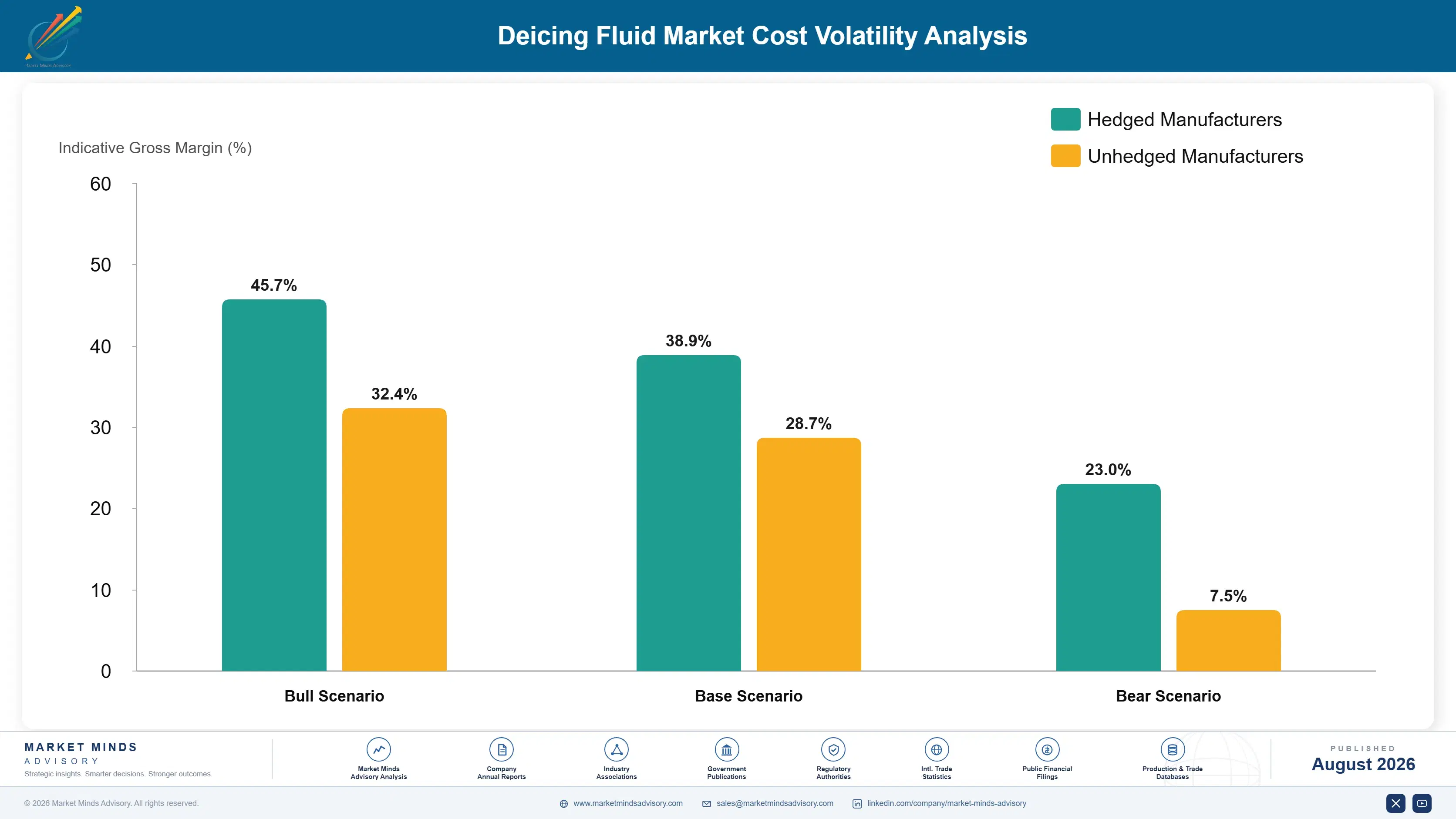
The deicing fluid market is susceptible to fluctuations in raw material prices, particularly for key inputs such as ethylene glycol, propylene glycol, and acetates. Price volatility can erode profit margins and disrupt supply chains, especially during peak demand periods. Geopolitical tensions, trade restrictions, and transportation bottlenecks further exacerbate supply chain risks. Manufacturers must adopt robust procurement strategies, diversify supplier bases, and invest in inventory management to mitigate these challenges.

Supply chain disruptions can also impact the timely delivery of deicing fluids, affecting operational continuity for end-users. The COVID-19 pandemic highlighted the vulnerability of global supply chains, prompting companies to reassess their sourcing and logistics strategies. Building resilient and agile supply chains will be essential for sustaining market growth and meeting customer expectations in an increasingly uncertain environment.

Deicing Fluid Market Regional Analysis

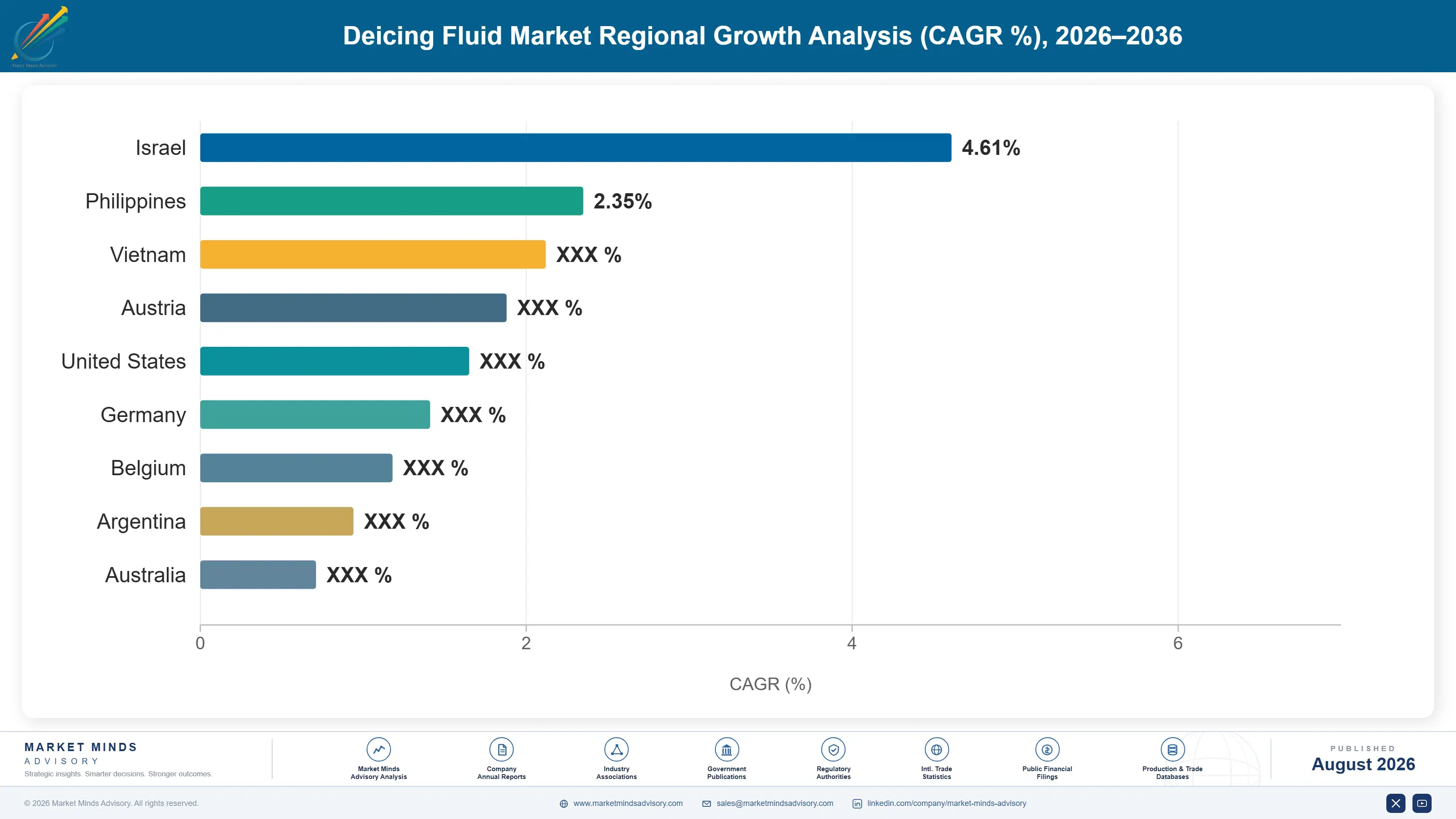
RegionMarket Share (2025)Key Market Highlight
Asia-Pacific24%Rapid airport expansion and infrastructure development driving demand
North America36%Largest market, stringent regulations, and high adoption of advanced deicing fluids
Europe28%Strong focus on environmental sustainability and regulatory compliance
South America7%Growing aviation sector and increasing winter maintenance activities
Middle East & Africa5%Emerging market with investments in airport infrastructure and tourism

Asia-Pacific

Asia-Pacific is emerging as a high-growth region for the deicing fluid market, driven by rapid airport expansion, infrastructure development, and increasing air traffic. Countries such as China, Japan, and South Korea are investing heavily in modernizing their transportation networks to support economic growth and tourism. The region’s diverse climatic conditions, ranging from temperate to severe winters, necessitate the adoption of advanced deicing solutions. Market players are establishing local manufacturing facilities and distribution networks to capitalize on the burgeoning demand.

North America

North America remains the largest and most mature market for deicing fluids, accounting for the highest market share globally. The region’s dominance is attributed to stringent safety regulations, high frequency of winter weather events, and widespread adoption of advanced deicing technologies. The United States and Canada are leading consumers, with airports, municipalities, and transportation authorities investing in state-of-the-art deicing systems. Environmental regulations are driving the shift towards eco-friendly and biodegradable formulations, fostering innovation and competition among market participants.

Europe

Europe is characterized by a strong focus on environmental sustainability and regulatory compliance. The region’s regulatory framework mandates the use of certified deicing fluids and imposes strict discharge limits to protect water bodies and ecosystems. Countries such as Germany, the United Kingdom, and France are at the forefront of adopting sustainable deicing solutions. The market is also witnessing increased investment in research and development, with manufacturers collaborating with regulatory agencies and end-users to develop next-generation products.

South America

South America is an emerging market for deicing fluids, with growth primarily driven by the expansion of the aviation sector and increasing winter maintenance activities. Countries such as Brazil, Argentina, and Chile are investing in airport modernization and transportation infrastructure to support economic development and tourism. The region’s diverse climatic conditions and growing awareness of safety and environmental issues are creating new opportunities for market participants. However, limited regulatory enforcement and financial constraints may pose challenges to market penetration.

Middle East & Africa

The Middle East & Africa region represents a nascent market for deicing fluids, with growth prospects linked to investments in airport infrastructure and tourism. Countries such as the United Arab Emirates, Saudi Arabia, and South Africa are expanding their aviation and transportation networks to attract international travelers and support economic diversification. While the region experiences less frequent winter weather events, the adoption of deicing solutions is expected to increase as infrastructure development accelerates and regulatory frameworks evolve.

Deicing Fluid Market Regional

Competition Landscape in Deicing Fluid Market

The deicing fluid market is characterized by intense competition among global and regional players, each striving to enhance their market position through product innovation, strategic partnerships, and regional expansion. Leading companies are investing in research and development to develop high-performance, eco-friendly formulations that meet evolving regulatory requirements and customer preferences. The market’s competitive dynamics are further shaped by mergers and acquisitions, capacity expansions, and collaborations with end-users and regulatory agencies. Companies are also focusing on cost optimization, supply chain resilience, and customer service to differentiate themselves in a crowded marketplace.

Major Players in Deicing Fluid Market

  • Dow Chemical Company
  • BASF SE
  • Kilfrost Limited
  • LNT Solutions
  • Clariant AG
  • Proviron Functional Chemicals NV
  • Cryotech Deicing Technology
  • Inland Technologies
  • WSI Industries
  • Integrated Deicing Services
  • Cormorant Deicing Solutions
  • Aero Mag 2000
  • Chemtura Corporation
  • Eastman Chemical Company
  • E. I. du Pont de Nemours and Company
  • General Atomics
  • LyondellBasell Industries
  • Reliance Specialty Products, Inc.
  • Abax Industries
  • SMI Companies

Recent Developments in Deicing Fluid Market

  • In January 2024, BASF SE launched a new line of biodegradable deicing fluids targeting European airports, emphasizing compliance with EU environmental regulations.
  • In October 2023, Dow Chemical Company announced a strategic partnership with a major North American airline to supply next-generation glycol-based deicing fluids.
  • In August 2023, Kilfrost Limited expanded its manufacturing facility in Asia-Pacific to meet rising demand from regional airports and transportation authorities.
  • In May 2023, Clariant AG introduced an advanced acetate-based deicing fluid with enhanced performance and reduced environmental impact.
  • In February 2023, Cryotech Deicing Technology collaborated with a leading airport authority in Canada to implement automated deicing systems.
  • In November 2022, LNT Solutions received regulatory approval for its new eco-friendly deicing fluid formulation in the United States.

FAQ for Deicing Fluid Market

  1. What is the projected size of the deicing fluid market by 2033?

The deicing fluid market is projected to reach USD 2.13 billion by 2033, growing from an estimated USD 1.45 billion in 2026, at a CAGR of 5.6% during the forecast period.

  1. Which regions are expected to drive the most growth in the deicing fluid market?

Asia-Pacific and North America are expected to drive the most growth, with Asia-Pacific benefiting from rapid infrastructure development and North America maintaining its lead due to stringent regulations and high adoption of advanced deicing technologies.

  1. What are the main types of deicing fluids used in the market?

The main types of deicing fluids include glycol-based, acetate-based, and chloride-based formulations. Glycol-based fluids are most prevalent in aviation, while acetate-based fluids are gaining popularity due to their environmental benefits.

  1. What are the key challenges facing the deicing fluid market?

Key challenges include environmental concerns related to traditional deicing fluids, regulatory constraints, volatility in raw material prices, and supply chain disruptions. Addressing these challenges requires innovation, investment in sustainable products, and robust supply chain management.

  1. How are companies in the deicing fluid market responding to environmental regulations?

Companies are investing in research and development to create eco-friendly and biodegradable deicing fluids, adopting sustainable manufacturing practices, and collaborating with regulatory agencies to ensure compliance. The shift towards circular economy principles and closed-loop recovery systems is also gaining momentum.

Take Action Now! Contact us today to access the full report and gain a competitive edge in the global deicing fluid market.