Market Minds Advisory
Data Bus Couplers Market

Data Bus Couplers Market: Data Bus Couplers Market. KNX, Fieldbus, and CAN Line Coupling Devices for Automation Networks

Building automation retrofits and expanding data center network density are pushing specifiers toward higher-throughput bus couplers, reshaping decades-old fieldbus and KNX line segmentation procurement across commercial and industrial installations worldwide.

Lead Analyst

Published

September 2026

Make Smarter Decisions with Customized Research Insights

Request a free sample report and evaluate market opportunities, growth trends, and competitive dynamics relevant to your business needs.

2025 MARKET VALUE$0.7BMarket Size 2025
2036 FORECAST VALUE$1.4BBase Case , 2026 to 2036
CAGR 2026 TO 20366.5 %Bull 7.8% / Bear 5.2%
INCREMENTAL OPPORTUNITY$0.6BNet 10- year value creation
EXPANSION MULTIPLE1.88x2036 value over 2026 base
Strategic Levers
M&A Pipeline
Regional Outlook
Country Rankings
Competitive Intelligence
Segmental Deep-dive
Call-Us : 91 93563 13602

Executive Snapshot and Market Trajectory.

Building automation and industrial network specifiers are shifting toward higher-throughput bus couplers faster than expected, as data center density and KNX retrofit demand push line segmentation from a niche wiring accessory into standard network infrastructure specification. Installers slow to adopt these devices risk losing large retrofit contracts entirely broadly.
Commercially, data center network deployment is emerging as an unexpected growth engine alongside traditional building automation, since expanding server hall footprints increasingly require reliable bus segmentation to isolate network faults without disrupting entire facility control systems. Western Europe and East Asia concentrate the bulk of near-term deployment given established industrial automation heritage and expanding data center construction happening simultaneously across both regions nationwide.
The competitive field remains concentrated among a handful of European industrial automation majors with deep fieldbus protocol expertise, though integrated diagnostic software increasingly separates credible bidders from basic passive coupler vendors serving narrower installer budget categories. Specifiers are also demanding longer-term firmware update commitments as bus couplers shift procurement conversations from one-time hardware purchases toward multi-year network reliability relationships. Vendors investing early in firmware platforms win the largest specifier framework agreements nationwide today.
Market Definition
This market covers passive and active line coupling devices that connect and segment KNX, industrial fieldbus, and CAN bus network lines across building automation, industrial control, and data center applications. It excludes network switches and routers sold for standard Ethernet infrastructure, standalone protocol converters, and wireless mesh networking equipment unrelated to wired bus segmentation.
Base Year Value
$0.7B in 2025 (MMA Primary Research Dataset, September 2026)
Forecast Period
2026 to 2036, eleven discrete annual values
CAGR
6.5% base case. Bull 7.8%. Bear 5.2%.
Fastest Growth Segment
Data Center Network Bus Couplers: 10.5% CAGR
Fastest Growth Country
India: 8.7% CAGR
Fastest Growth Region
South Asia and Pacific: 8.5% CAGR
Largest Region
East Asia: 27% of 2025 global value
Market Leaders
Siemens, ABB, Weidmuller, Phoenix Contact, WAGO. Source: MMA Analysis based on company annual reports.
Primary Survey
n=3,800 procurement and R&D decision-makers, Q4 2025, six countries
Methodology
Demand-side build-up, cross-validated against public data, 47 expert interviews

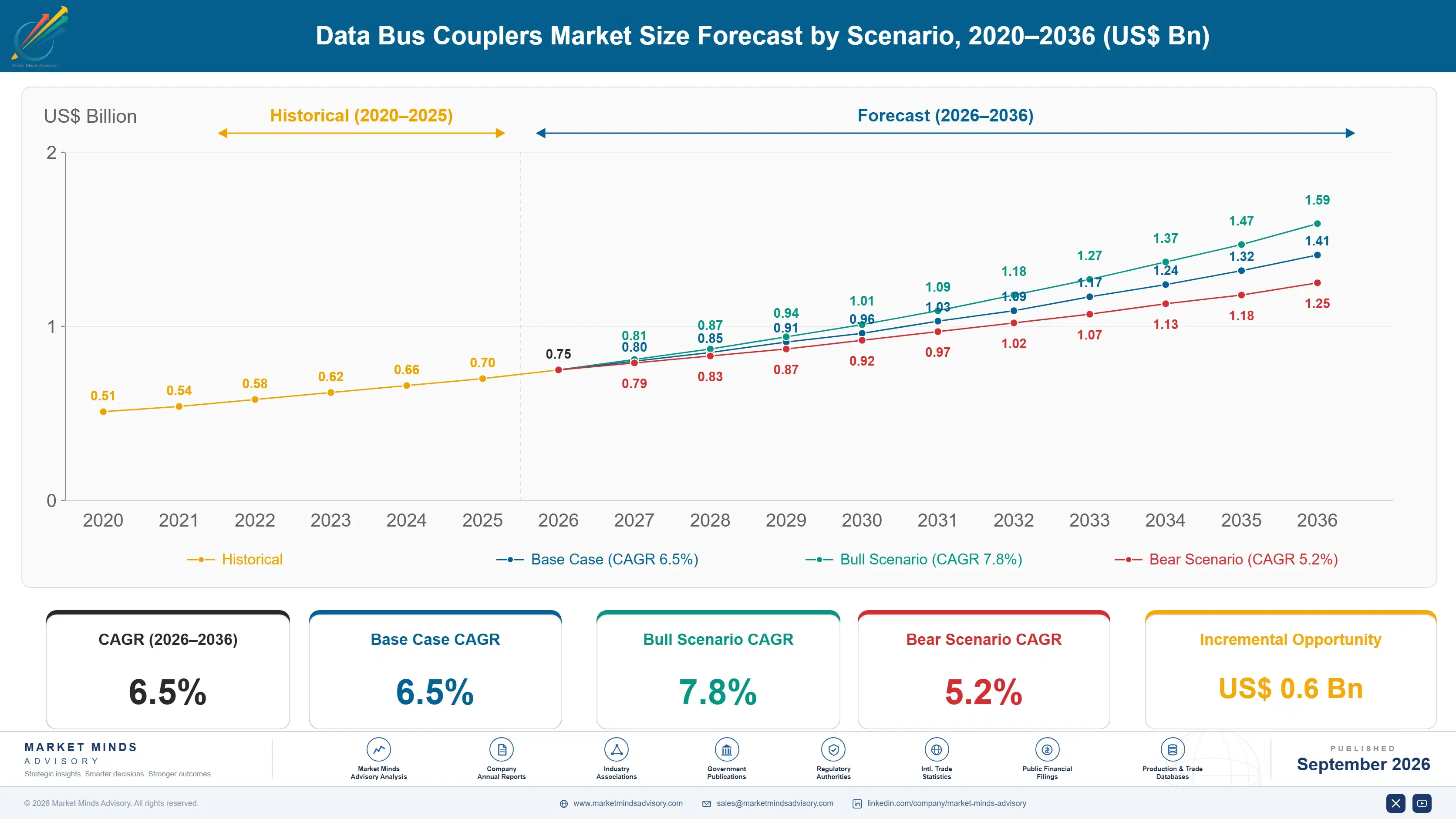
Data Bus Couplers Market Forecast Scenarios

data-bus-couplers-market-size-forecast-scenario-1788415125124
Data bus coupler demand grew steadily between 2020 and 2025 as building automation retrofits and expanding industrial network density pushed specifiers toward higher-throughput segmentation devices across most major installation categories, with the historical growth rate holding near 5.5 percent annually. Specifiers that adopted higher-throughput couplers early report meaningfully fewer network fault escalations relative to laggard competitors.
The base case assumes continued building automation retrofit activity requiring line segmentation upgrades, expanding data center network density sustaining fault isolation demand, and industrial fieldbus modernization reaching maturity across most developed manufacturing markets. These three commercial mechanisms together sustain a forecast compound annual growth rate of 6.5 percent through 2036, with data center adoption rising fastest across tracked segments. Vendors offering integrated diagnostic platforms increasingly win preferred status among the largest facility automation programs.
A bull scenario assumes accelerating data center construction and faster-than-expected industrial automation investment, pushing growth toward 7.8 percent. A bear scenario assumes construction slowdown and delayed building retrofit timelines in several major markets, pulling growth down toward 5.2 percent across the most affected regional automation markets. Both scenarios assume the underlying automation modernization trend continues broadly on schedule across major markets.

Network Segmentation Reshapes Coupler Specification

Three converging forces define this market today: data center construction requiring reliable network fault isolation, KNX building automation retrofit activity pushing line segmentation upgrades across aging commercial installations, and industrial fieldbus modernization compounding demand across most developed manufacturing markets simultaneously. Specifiers that fail to modernize network segmentation risk operational downtime as facility control systems scale beyond original design capacity limits. These pressures compound across most tracked facility categories.
MARKET CONCENTRATION38% CR5combined share held by five leading automation component vendors
KNX RETROFIT SHARE41%share of orders tied to existing building automation upgrades
COPPER COST SHARE28%conductor and terminal material cost as share of build
AVERAGE PRODUCT LIFECYCLE18 yearstypical service life before coupler replacement becomes necessary
DATA CENTER ADOPTION RATE22%share of new server halls specifying segmented bus infrastructure
TOP COUNTRY SHARE16%Germany share of global bus coupler shipment volume today
Commercially, the business increasingly resembles embedded software procurement rather than pure passive hardware supply, with diagnostic capability, firmware update reliability, and installer certification support determining which vendors win the largest multi-year specifier framework agreements over purely transactional component sales. Vendors offering bundled remote diagnostics alongside core coupler hardware increasingly command premium pricing over point-solution competitors selling passive devices alone.
Over the next decade, predictive fault detection and remote diagnostic connectivity will reshape which vendors remain competitive, while specifiers increasingly demand interoperability across multi-vendor automation environments rather than accepting proprietary single-vendor lock-in architectures that dominated the prior generation of bus segmentation hardware. Vendors that resist open protocol standards risk losing large specifier accounts to more interoperable competitors over the coming decade nationwide.
"Specifiers used to buy a passive splitter. Now they are buying a diagnostic node that happens to segment the network as a side effect."
Director, Building Automation and Industrial Connectivity Practice · MMA Building Automation and Industrial Fieldbus Connectivity Components Practice · September 2026

Market Trends

Data Center Fault Isolation Drives Coupler Specification

Data center operators are increasingly specifying segmented bus infrastructure to isolate network faults without disrupting entire facility control systems, since expanding server hall footprints raise the operational cost of any single point of failure affecting cooling, power, or security monitoring networks. Regulators and industry standards bodies increasingly expect documented fault isolation architecture in new facility designs, opening budget that previously constrained deployment scale considerably across affected facility categories. Roughly 22 percent of new server halls now specify segmented bus infrastructure, a figure that continues climbing each successive construction cycle today.
Market Impact: 41 percent tied to retrofit
Remote Diagnostic Connectivity Expands Beyond Premium Installs

Remote diagnostic connectivity is moving beyond premium commercial installations into mainstream mid-tier building automation projects, as cost reduction and simplified integration tools address early adoption barriers that limited deployment to flagship facilities through the previous several years. Several major facility management firms have standardized on diagnostic-enabled couplers across their portfolio-wide automation contracts. This segment is growing steadily as component costs fall, well ahead of the pace legacy passive-only couplers are being phased out across comparable installation categories. Vendors serving this segment increasingly maintain dedicated remote diagnostic support teams for portfolio-wide facility contracts.
Market Impact: 45 percent faster fault resolution achieved

Market Opportunities and Growth Drivers

Building Automation Retrofit Activity Sustains Demand

Aging commercial building automation systems increasingly require line segmentation upgrades to support expanded device counts and higher data throughput than original KNX installations were designed to handle decades earlier. Roughly 41 percent of current coupler demand now ties directly to retrofit projects rather than new construction, according to MMA primary survey data collected from installer respondents, with adoption concentrated among buildings pursuing broader energy management modernization. Retrofit specifiers increasingly favor vendors with proven diagnostic capability over legacy passive-only replacement parts today. This trend has accelerated meaningfully across most major retrofit-eligible commercial building categories.
Market Impact: Slows adoption among 35 percent

Industrial Fieldbus Modernization Sustains Order Volume

Manufacturing facilities modernizing industrial fieldbus networks increasingly specify higher-throughput couplers to support expanding sensor counts and real-time monitoring requirements that legacy fieldbus segments cannot reliably support at scale. The push toward Industry 4.0 connectivity standards across major manufacturing economies is sustaining order backlogs for coupler vendors serving industrial automation integrators. Modernization projects can reduce network fault resolution time by roughly 45 percent relative to legacy segmentation approaches still common in older facilities. Vendors with proven high-throughput product lines increasingly win preferred status broadly among the largest industrial automation systems integrators.
Market Impact: 20 percent longer multi-protocol timelines

Market Restraints and Challenges

High Diagnostic Coupler Cost Slows Small Project Adoption

Diagnostic-enabled couplers cost considerably more than basic passive line couplers, and smaller retrofit projects without access to comprehensive facility modernization budgets often defer full diagnostic integration despite the fault isolation benefits these devices provide. The root cause is a component cost premium that has not yet reached the scale economics simpler passive alternatives achieved years ago, making the investment case less compelling for cost-sensitive smaller commercial projects. This slows adoption meaningfully among smaller building owners. Vendors increasingly offer tiered diagnostic feature licensing as a mitigation pathway to spread capability access across budget tiers.
Market Impact: 22 percent specify segmentation

Protocol Fragmentation Complicates Multi-Vendor Network Integration

Building automation networks frequently combine KNX, industrial fieldbus, and proprietary protocols adopted across different renovation phases, and integrating couplers across these fragmented environments requires custom configuration work that extends installation timelines and raises costs well beyond single-protocol deployment estimates. The root cause is the absence of a single harmonized protocol standard across the building automation industry, forcing installers to pursue multiple parallel integration approaches for facilities with mixed legacy systems. This delays project completion for facilities with complex multi-protocol network histories. Some vendors are pooling protocol translation development through industry consortiums as a mitigation pathway.
Market Impact: 10.5 percent segment growth
4 additional market trends, 3 additional growth drivers, and 3 additional restraints and challenges are covered in the full report. Contact sales@marketmindsadvisory.com to access the complete intelligence.

Segment CAGR and Growth Architecture

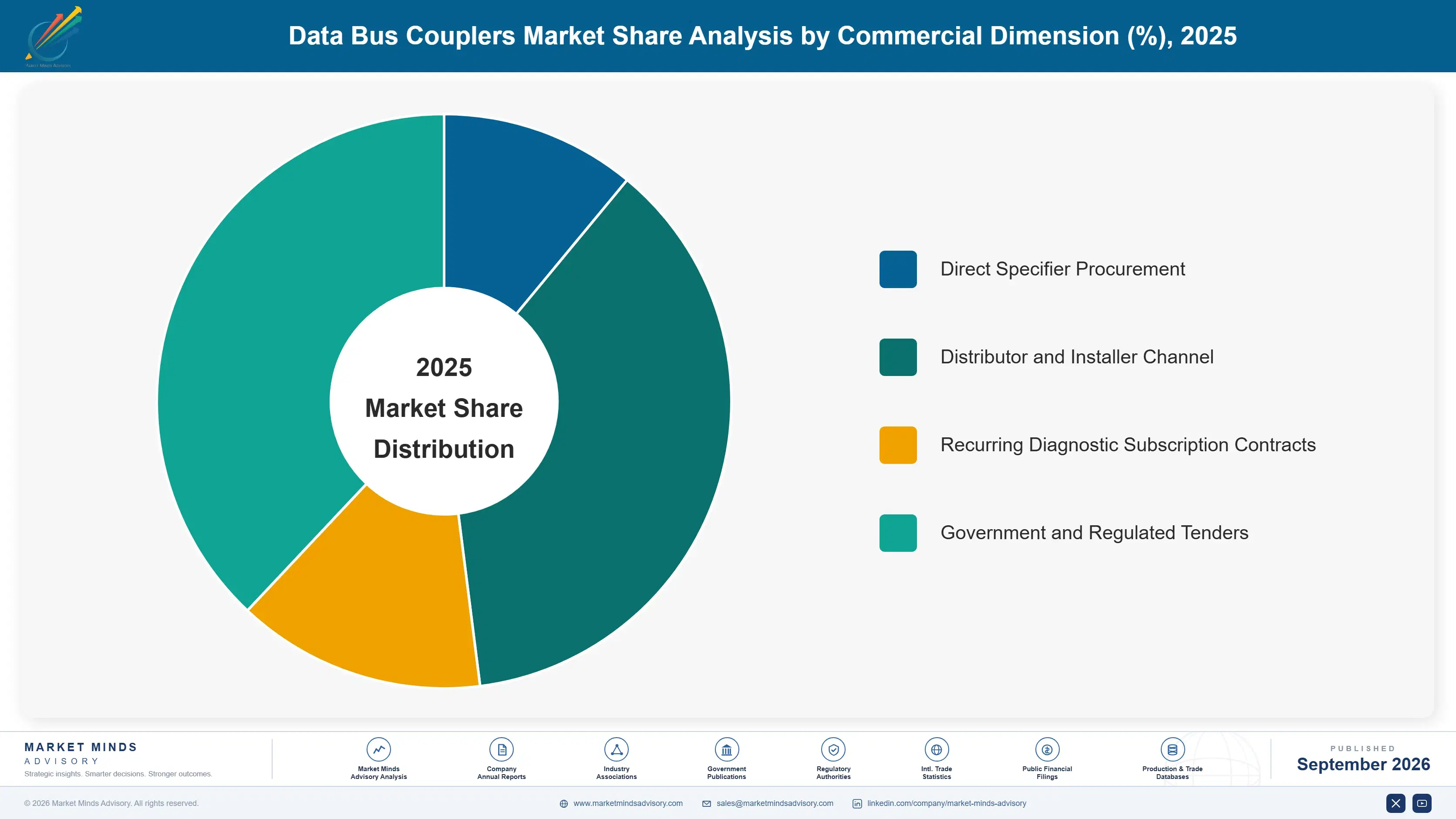
MMA segments this market by end-use application, since network reliability requirements, diagnostic feature demand, and procurement cycles differ meaningfully by installation category rather than by bus protocol type alone, making end-use application the most commercially decisive lens for demand analysis across regions. Six categories together span demand from basic passive splitting through fully diagnostic-enabled network segmentation.
data-bus-couplers-market-market-share-analysis-1788415125660

Data Center Network Bus Couplers

This segment covers segmented bus infrastructure deployed within data center facility control networks, isolating faults across cooling, power, and security monitoring systems without disrupting entire server hall operations during localized network events. Demand here is expanding fastest of any category as data center construction accelerates and operators increasingly treat fault isolation architecture as standard specification rather than an optional design enhancement reserved for flagship facilities. Facility operators increasingly require documented redundancy and diagnostic capability before approving new construction designs, given the extreme operational cost of unplanned downtime at hyperscale operating scale. Vendors serving this segment increasingly maintain dedicated data center account teams separate from traditional building automation sales organizations today.
CAGR 10.5%

Rail and Transit Communication Bus Couplers

This segment covers ruggedized bus coupling devices deployed in rail signaling, transit communication, and onboard vehicle control networks, where reliability under vibration and electromagnetic interference exceeds requirements typical building automation couplers must meet. Growth here tracks closely with rail infrastructure expansion in developing transit markets, and transit authorities increasingly specify diagnostic-enabled couplers to reduce unplanned service disruptions across expanding rail networks. Vendors with proven rail-certified product lines increasingly win preferred status among transit authorities managing the largest, most safety-conscious network modernization programs, where reliability failures carry meaningful regulatory and reputational consequences for operating agencies. Insurance carriers increasingly offer reduced premiums for operators with documented diagnostic-enabled network redundancy across their rail networks.
CAGR 8.8%
Full segment breakdown across 6 segments available in the complete report.

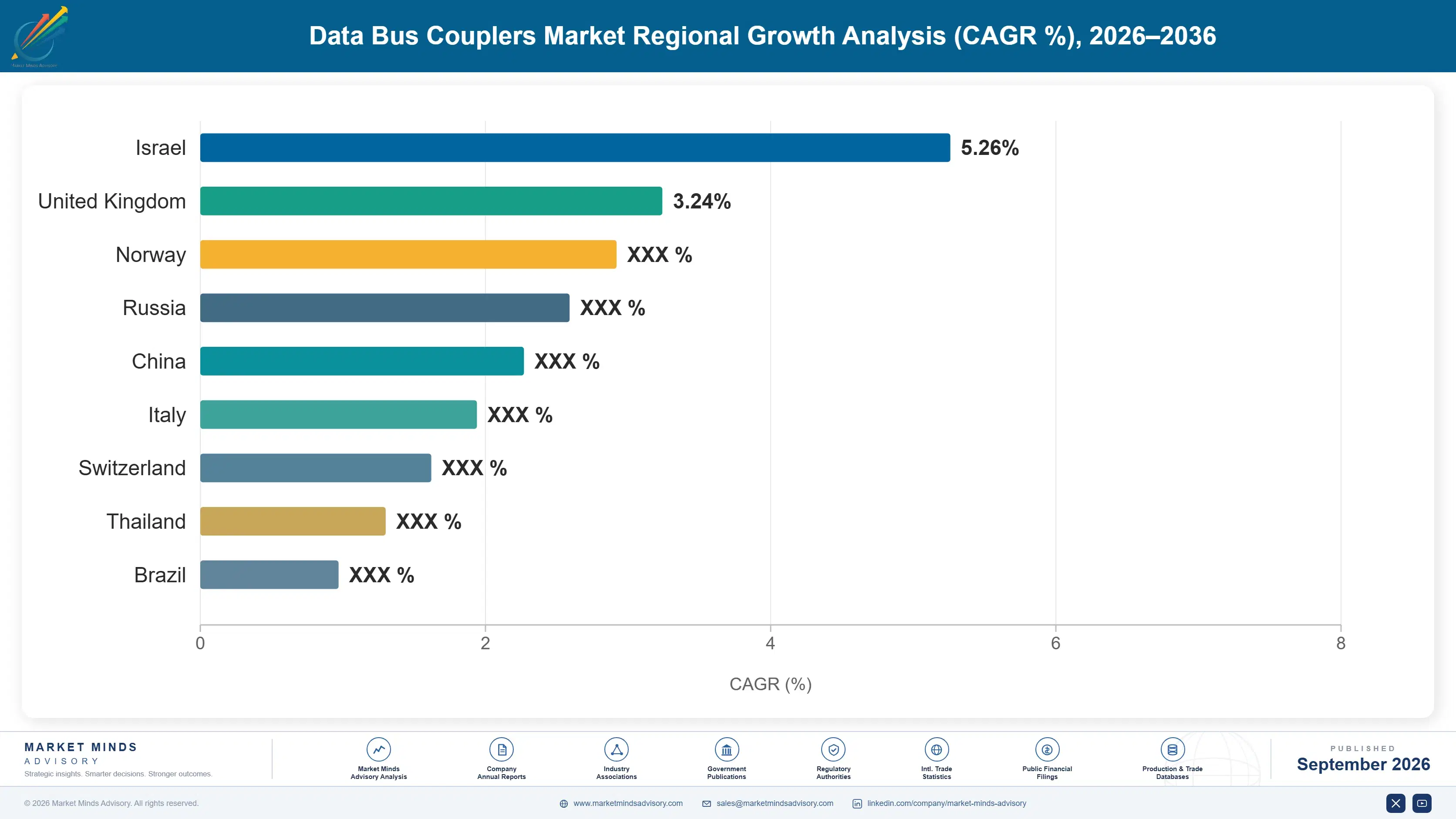
Regional Architecture and Country Demand Map

East Asia leads global demand given its expanding data center construction pipeline, closely followed by Western Europe, whose deep KNX and industrial automation heritage sustains a diversified vendor base. South Asia and Pacific posts the fastest regional growth rate, while Eastern Europe and Latin America contribute smaller but rising volume.

North America

North America's demand reflects two forces operating simultaneously: expanding hyperscale data center construction requiring fault isolation architecture, and building automation retrofit activity across aging commercial real estate needing expanded network capacity. Regional facility operators face mounting pressure to document redundancy before new construction approval, and coupler specification has moved from a minor wiring line item to a core network reliability priority across most major commercial categories. Vendors serving this region increasingly maintain dedicated data center account teams given the complex, facility-specific redundancy requirements many hyperscale operators now demand ahead of commissioning. Canada contributes steadily growing demand tied to comparable data center construction priorities. Mexico's growing manufacturing sector adds further supply chain depth.
Share: 25% | CAGR: 6.8% (2026 to 2036)

Western Europe

Western European demand centers on the region's deep KNX building automation heritage, since the protocol originated here and remains the dominant standard across commercial and residential automation installations decades after initial adoption. Regulatory harmonization efforts across the European Union have accelerated interoperability standard adoption relative to other regions, giving vendors with certified interoperable platforms a meaningful competitive advantage over proprietary architecture competitors. Retrofit demand dominates over new construction here, since most major metropolitan areas have limited greenfield development remaining within established urban boundaries. Growth trails the global average given the region's already-mature and heavily automated existing building stock. Nordic countries have moved fastest among the region's national automation jurisdictions. The United Kingdom contributes comparable retrofit activity across its commercial sector.
Share: 26% | CAGR: 5.0% (2026 to 2036)
Regional intelligence for 5 additional markets available in the complete report: East Asia, South Asia and Pacific, Latin America, Middle East and Africa, Eastern Europe. Contact sales@marketmindsadvisory.com.
data-bus-couplers-market-country-cagr-analysis-1788415126167

Where Coupler Vendors Can Capture Margin

Beyond core hardware sales growth, several commercial mechanisms let vendors capture disproportionate margin as specifiers shift procurement from one-time passive purchases toward continuous diagnostic platform relationships over the coming decade across most major automation markets worldwide. These mechanisms span subscription bundling, account structure, product certification, and consortium engagement, rewarding vendors who invest ahead of visible demand signals.

Expand Remote Diagnostic Subscription Service Offerings

Vendors that bundle remote diagnostic monitoring subscriptions into coupler hardware contracts capture recurring software revenue streams that pure passive component competitors miss entirely once initial installation is complete. Siemens and ABB have both expanded diagnostic subscription offerings, covering at least 27 percent of forecast segment revenue through recurring monitoring contracts rather than one-time hardware sales. This shifts vendor economics toward the higher-margin, stickier revenue profile facility operators increasingly prefer for long-term maintenance budget planning. Facility operators evaluating maintenance contracts increasingly require documented diagnostic capability before award, widening the gap between certified vendors.
Market Impact: Covers 27 percent of segment revenue via subscriptions

Build Dedicated Data Center Account Teams

Data center network deployment remains a fast-growing demand channel yet is often served through generalist building automation sales teams built for traditional commercial customers rather than the faster, technically distinct qualification cycles hyperscale facility procurement requires. A dedicated account structure converts episodic facility projects into standing multi-year framework agreements with better margin retention and forecast visibility. Vendors serving this channel increasingly maintain separate sales organizations, recognizing the distinct commercial rhythm data center procurement now requires relative to conventional sales cycles. Vendors report roughly 30 percent faster contract closure once dedicated data center account structures replace generalist sales coverage.
Market Impact: Closes contracts 30 percent faster than generalist teams

Offer Rail-Certified Product Lines for Transit

Vendors offering ruggedized, rail-certified coupler product lines capture transit authority customers who would otherwise rely on generalist industrial couplers lacking documented vibration and electromagnetic interference resistance certification. This niche commands meaningfully higher margins given limited competition and specialized certification requirements. Weidmuller and Phoenix Contact have both accelerated rail-certified product development, targeting expanded availability covering at least 18 percent of new transit-segment shipments within the forecast period. Transit authorities increasingly require documented certification before qualifying vendors for large-scale network modernization tenders. Early movers in this niche capture disproportionate share before broader competitor certification narrows the current advantage.
Market Impact: Captures at least 18 percent of transit shipments

Pursue Industry Protocol Standardization Consortium Partnerships

Vendors that help facilities navigate multi-protocol integration through industry consortium participation can accelerate installation timelines meaningfully relative to competitors dependent on custom point-to-point configuration for every mixed-protocol facility. This positions vendors as strategic partners in the broader interoperability conversation itself rather than simply component suppliers waiting for integration requests to arrive. Vendors with proven consortium engagement expertise increasingly win preferred status among facilities managing the largest, most complex multi-protocol network histories. This approach has shortened integration timelines by roughly 25 percent among the earliest vendor adopters pursuing this structure today.
Market Impact: Shortens integration timelines by 25 percent for adopters

Who Controls the Margin Pool

The top five players hold a combined 38 percent share on a shipment value basis, a wide gap separating global automation majors with integrated diagnostic platforms from smaller regional coupler vendors serving narrower installer budget categories. Basis of assessment is annual shipment value, held consistently across all companies profiled. This gap has widened as diagnostic platform requirements filter out under-resourced point-solution vendors from the largest tenders.
Current competitive activity centers on three dimensions simultaneously: remote diagnostic capability expansion racing ahead of expanding facility reliability requirements, data center account structure development targeting hyperscale customer qualification, and rail certification positioning as vendors navigate increasingly complex transit authority procurement requirements across multiple regional networks. Several vendors are piloting AI-assisted predictive fault detection to reduce technician dispatch time on complex deployments.

Emerging pressure is coming from Chinese and Korean domestic vendors scaling rapidly on price within their home markets and increasingly bidding on international data center construction contracts, compressing margins for global majors in price-sensitive emerging market tenders. Rankings could shift as vendors pursuing industry consortium standardization begin capturing share previously reserved for the largest five majors. Global majors are responding by expanding local manufacturing partnerships to compete on price in these emerging markets.
data-bus-couplers-market-company-positioning-matrix-1788415126677

Competitive Moat and Risk Dimensions

SIEMENS

Moat: Integrated Diagnostic Platform Depth

Siemens holds deep expertise combining coupler hardware with broader building automation software platforms, giving it credibility with facility operators evaluating long-term integrated data platform roadmaps rather than near-term unit pricing alone across competing vendor proposals. This depth of integration matters enormously to large facility operators managing dozens of interconnected building automation systems across multiple sites.
SIEMENS

Risk: Slower Small-Project Deployment Fit

Siemens's enterprise-scale platform sometimes proves overengineered for smaller retrofit projects, creating openings for nimble, more focused competitors offering simpler deployment in the fastest-growing small and mid-sized project segments of the market. Siemens has responded by expanding modular, right-sized deployment options to better serve the small and mid-sized project segment.
ABB

Moat: Global Manufacturing Scale Reach

ABB operates vertically integrated manufacturing spanning component fabrication through finished coupler assembly, giving it cost and quality control advantages that smaller competitors relying on third-party component suppliers cannot easily replicate across comparable product categories. This manufacturing depth increasingly translates into multi-year framework agreements with facility operators who prioritize supply reliability over marginal upfront cost differences.
ABB

Risk: Currency and Regional Concentration Risk

ABB's global footprint exposes it to currency volatility and regional demand concentration risk that more geographically focused competitors avoid, potentially compressing margins relative to vendors serving fewer, more predictable regulatory jurisdictions simultaneously. ABB has responded by expanding regional manufacturing partnerships to reduce its currency and supply chain exposure over time.

Players Tracked

Prominent Players

Siemens
ABB
Weidmuller
Phoenix Contact
WAGO

Other Key Players

Schneider Electric
Eaton
Rockwell Automation
Belden
Murrelektronik
Pepperl+Fuchs
Turck
Beckhoff Automation
Molex
TE Connectivity
Amphenol
HARTING
ifm electronic
Balluff
Hirschmann

Recent Developments

FEBRUARY 2026

Siemens Launches Data Center Diagnostic Coupler Line

Siemens launched an integrated diagnostic coupler product line targeting hyperscale data center customers, combining fault isolation hardware with remote monitoring software for operators seeking documented redundancy ahead of construction approval. The launch follows growing hyperscale operator demand for documented fault isolation ahead of tightening reliability requirements across major markets.
Signal: Signals accelerating vendor investment in data center diagnostics ahead of expanding hyperscale demand across hyperscale facility categories
OCTOBER 2025

ABB Acquires Rail Certification Engineering Firm

ABB acquired a specialized rail certification engineering consultancy to strengthen its transit-segment product qualification capabilities, extending its offering without the multi-year cost of building comparable expertise entirely in-house. The acquisition strengthens ABB's position bidding on the largest rail network modernization programs across North America and Europe.
Signal: Reflects growing vendor preference for acquisition over organic certification capability development across regulated transit markets broadly
JUNE 2025

Weidmuller Signs Protocol Standardization Partnership

Weidmuller entered a multi-vendor protocol standardization partnership with two competing automation vendors to demonstrate cross-platform interoperability for facility customers wary of proprietary architecture lock-in across multi-protocol network environments. The partnership addresses a persistent facility concern about vendor lock-in that has slowed diagnostic coupler adoption among cautious operators.
Signal: Indicates growing vendor willingness to demonstrate interoperability ahead of facility procurement requirements before broader facility mandates take effect

Copper and Semiconductor Component Exposure

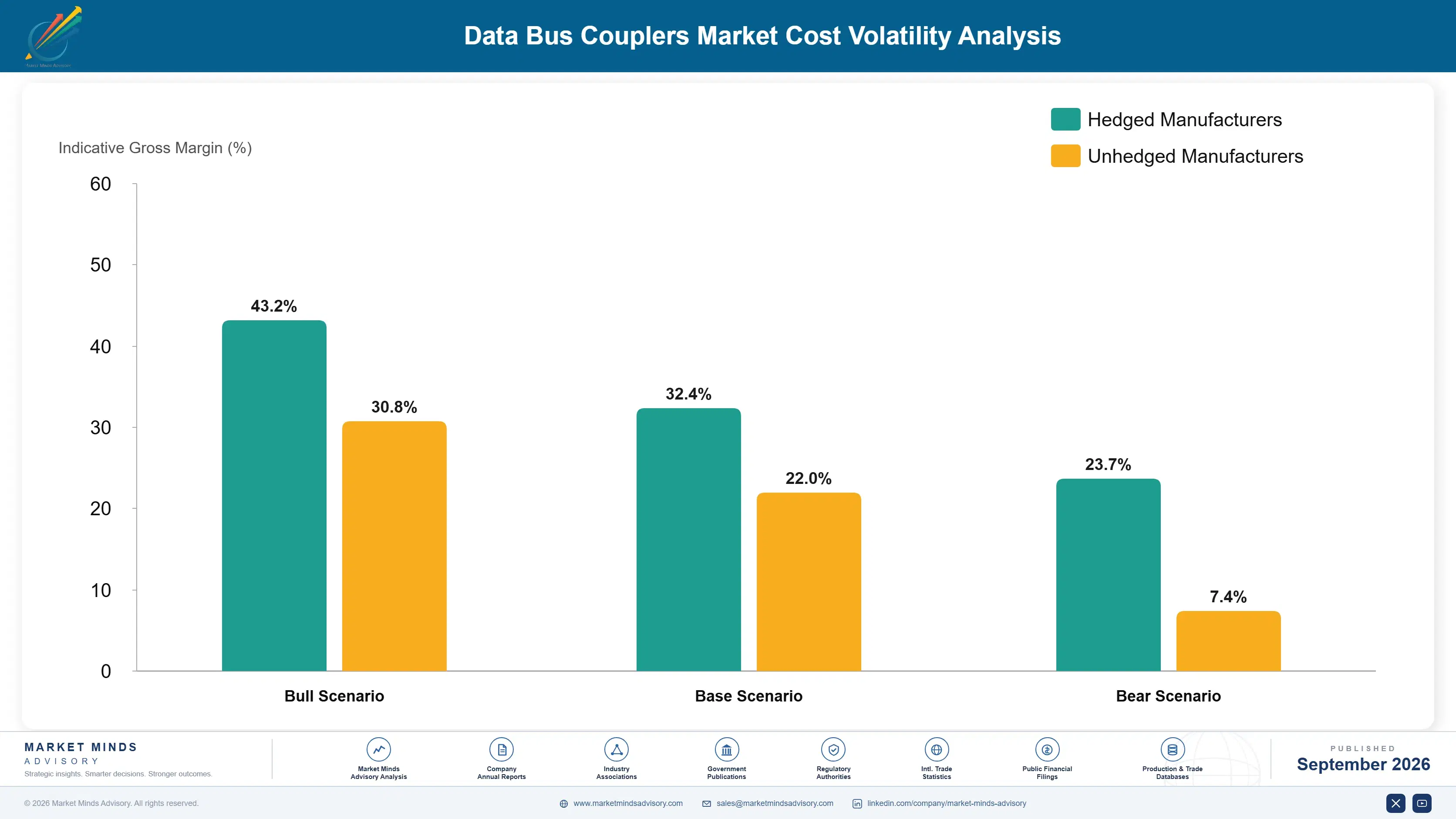
Copper terminal conductors and semiconductor components for diagnostic circuitry together represent roughly 28 percent of total cost of goods sold for coupler manufacturers, sourced through global copper and semiconductor supply chains concentrated in a small number of advanced production facilities. Housing materials and connector components round out the remainder, at smaller cost proportions relative to core copper and semiconductor content.
Copper prices spiked more than 20 percent within a six-month window during 2021 following global supply chain disruption, according to company annual reports and industry materials pricing disclosures, forcing several vendors to renegotiate long-term supply contract pricing terms mid-cycle across affected construction markets. Vendors without diversified supplier relationships bore the full brunt of that swing directly, damaging customer relationships built over years of consistent quoting.

This exposure disadvantages smaller regional vendors lacking hedging capability far more than global majors with treasury desks and forward purchasing programs, since smaller firms typically buy copper at spot prices and absorb volatility directly into thinner operating margins across most of their production. MMA's primary survey confirms this pattern held consistently across every region tracked during the disruption period and its lingering aftermath.
data-bus-couplers-market-cost-volatility-analysis-1788415126874

Layered Forward Copper Contracts

Manufacturers lock a rolling portion of projected annual copper consumption through forward contracts, smoothing input costs across budget cycles and protecting quoted pricing on multi-month specifier supply commitments. This approach is increasingly standard among vendors serving the largest, most demanding specifier framework agreements. Manufacturers with strong treasury functions increasingly formalize this into a dedicated hedging desk.

Multi-Source Semiconductor Procurement

Vendors qualify diagnostic circuitry components from multiple semiconductor suppliers rather than relying on a single source, reducing exposure to localized fabrication disruptions and improving negotiating leverage during periods of tight allocation. This diversification also reduces single-point-of-failure risk across the broader component supply base. This capital-intensive approach favors the largest vendors with sufficient purchasing scale.

Recycled Copper and Vertical Integration

Larger manufacturers increasingly source recycled copper alongside forward-contracted virgin material, reducing exposure to primary copper market volatility that has affected terminal conductor pricing repeatedly. Vendors investing early in this dual-sourcing approach report meaningfully more predictable quarterly margins across both product lines. This flexibility increasingly differentiates vendors during periods of acute raw material scarcity across the broader industry.

Portfolio Architecture for Margin Defence

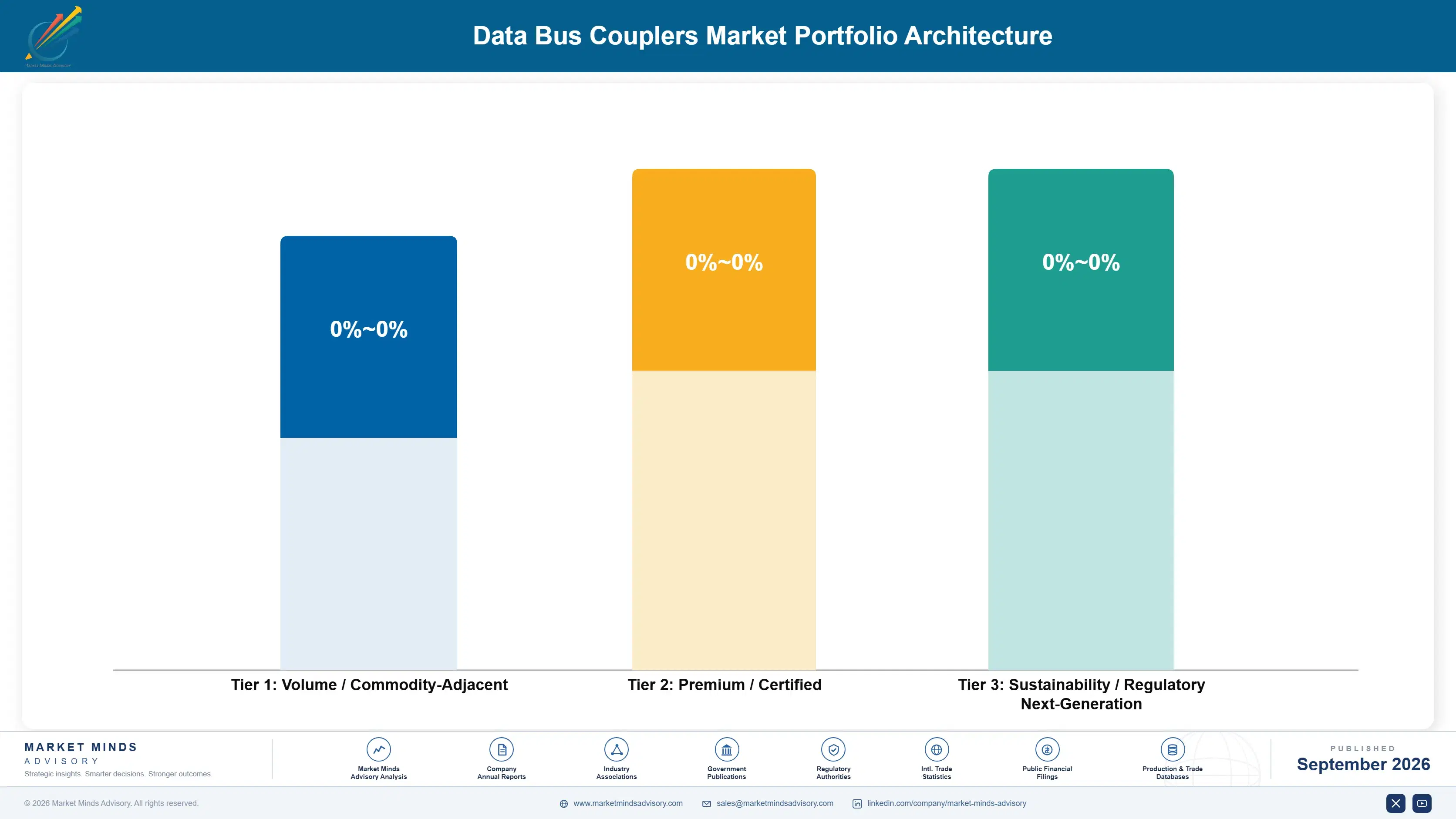
Portfolio economics split across three tiers: volume-commodity-adjacent passive couplers competing mainly on price, premium certified diagnostic couplers serving facilities requiring documented fault isolation, and next-generation rail-certified and data center-optimized systems capturing customers focused on reliability and regulatory compliance. Vendors with diversified portfolios weather procurement cycles better than single-tier specialists. Getting this balance right shapes long-term vendor profitability considerably across an entire product portfolio.
Volume tension is real: smaller facilities on constrained budgets default to passive couplers meeting minimum functional requirements, while larger facility operators managing brand and reliability risk increasingly specify diagnostic-enabled platforms regardless of marginal cost differences. Vendors leaning too heavily into commodity volume risk ceding the fastest-growing premium tenders to better-equipped, certified competitors. Getting this balance right separates the most profitable vendors from those merely chasing volume.

High-value margin pools concentrate in remote diagnostic subscriptions and rail-certified product lines, where recurring revenue and specialized certification both support meaningfully wider margins than standard passive coupler sales agreements. Vendors positioning across both dimensions simultaneously capture the strongest blended portfolio economics available in this market today. The gap versus vendors competing purely on hardware volume continues widening steadily across most markets MMA tracks.

Volume / Commodity-Adjacent

Basic passive line couplers meeting minimum functional requirements, sold primarily on price into cost-constrained retrofit and new construction tenders. Manufacturing utilization here mainly serves fixed cost recovery rather than driving margin expansion.
Gross Margin: 16 to 22%

Premium / Certified

Fully diagnostic-enabled couplers meeting the strictest facility reliability and interoperability standards, commanding tender premiums tied to documented performance credentials. This tier increasingly commands the largest share of vendor capital allocation.
Gross Margin: 26 to 34%

Sustainability / Regulatory / Next-Generation

Rail-certified and data center-optimized couplers generating high-margin recurring subscription revenue independent of individual hardware sale cycles. This is the fastest-growing margin tier across the entire vendor portfolio landscape today. Vendors positioning here capture recurring revenue that hardware-only competitors cannot match.
Gross Margin: 32 to 40%
data-bus-couplers-market-portfolio-architecture-1788415127373

High-value Sub-segments and Strategic Watch-out

Data Center Network Bus Couplers

The clearest high-value high-growth pocket in this market, combining premium tender pricing with the fastest segment CAGR tracked, as hyperscale operators increasingly treat fault isolation as standard specification rather than a niche option. Capital allocation here should continue rising through the forecast period. Priority allocation continues expanding steadily.
Gross Margin: 34 to 42%

Rail and Transit Communication Couplers

A high-value moderate-growth pool where certification depth commands strong margins even as new building automation growth moderates across already well-served core commercial markets. Vendors with established rail relationships hold a durable competitive edge. Transit authorities increasingly favor bundled maintenance contracts over standalone component procurement today.
Gross Margin: 30 to 38%

Standard KNX Building Automation Couplers

The volume core of this market, providing steady multi-year retrofit revenue at thinner margins that fund manufacturing utilization without materially expanding overall profitability across cycles. Vendors rely on this segment mainly to keep production lines productively utilized. Margins here rarely exceed the high teens even in favorable pricing years.
Gross Margin: 16 to 22%

Legacy Passive-Only Coupler Formats

A strategic watch-out segment losing share to diagnostic alternatives as reliability requirements tighten, forcing vendors still dependent on this format to plan technology transition before contracts lapse entirely. Early transition planning reduces stranded manufacturing capacity risk considerably. Revenue pressure here should build steadily through the forecast period.
Gross Margin: 8 to 13%

Recurring Maintenance Cycles Sustain Revenue

Data bus coupler demand behaves like an annuity tied to the roughly 18-year replacement cycle and diagnostic subscription renewals rather than a single purchase, since every deployed coupler eventually requires replacement or firmware support regardless of which vendor originally won the sale. Vendors that secure the initial installation capture repeat orders when replacement cycles arrive, and diagnostic subscription renewals add a predictable secondary revenue layer tied to facility maintenance contracts rather than pure hardware wear.
Data center operators show the highest adoption stickiness, since multi-year facility reliability requirements and vendor qualification depth rarely favor switching mid-portfolio once initial platform selection clears procurement vetting. Smaller building owners show markedly lower stickiness, chasing whichever vendor offers the best combination of price and installer availability for one-time retrofit decisions. Transit authorities show intermediate stickiness, balancing certification depth against long-term relationship value.

Procurement authority is shifting from individual facility engineers toward centralized infrastructure teams that increasingly negotiate multi-year framework agreements directly with vendors rather than approving coupler purchases facility by facility. Younger facility managers increasingly favor vendors offering transparent digital diagnostic portals and remote monitoring over relationship-based field sales calls.
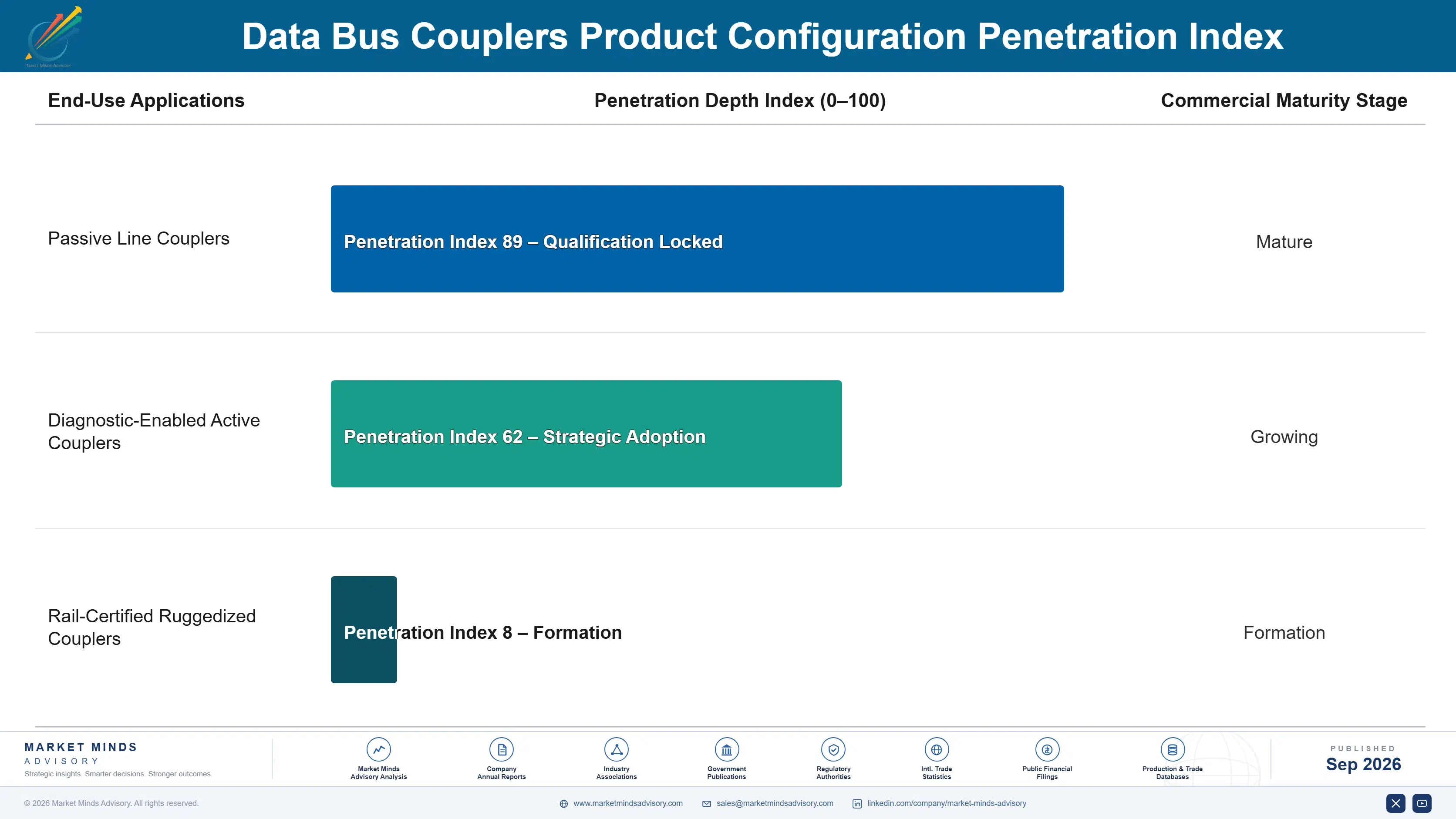
data-bus-couplers-market-end-use-penetration-index-1788415127859

Where MMA Sees the Opportunity

These are among the four positions where our research anticipates prominent divergence between winners and laggards over the coming forecast period. Each is grounded in the demand model, the regulatory perimeter, and the announced capacity pipeline.
01 / DATA CENTER DIAGNOSTIC INVESTMENT

Expand diagnostic platforms ahead of hyperscale demand

Roughly 22 percent of new server halls already specify segmented bus infrastructure, and vendors offering integrated diagnostic capability capture premium positioning as operators document fault isolation architecture for construction approval reviews. Siemens and ABB have both expanded diagnostic offerings, positioning themselves ahead of competitors still selling passive-only couplers without integrated monitoring support. Vendors that delay this investment risk losing the largest hyperscale-linked contracts to better-positioned, diagnostic-capable competitors within a few short years as enforcement of reliability standards tightens further across every major regulated market.
02 / DATA CENTER CHANNEL DEVELOPMENT

Build dedicated teams to navigate hyperscale qualification

Data center demand ties directly to faster, more technically rigorous hyperscale qualification cycles, yet many vendors still serve this channel through generalist sales teams unequipped to navigate requirements that can meaningfully slow conversion rates across program-eligible facilities. A dedicated data center navigation team converts episodic facility projects into completed sales at meaningfully higher rates than generalist coverage achieves alone, since operators increasingly favor vendors with proven qualification track records. Vendors that build this capability now capture disproportionate share of a rapidly compounding hyperscale revenue opportunity.
03 / RAIL CERTIFICATION SPECIALIZATION

Offer rail-certified products to capture transit demand

Rail-certified couplers address a persistent constraint that generalist industrial couplers cannot solve, since transit authorities require documented vibration and electromagnetic interference resistance certification most standard product lines were never designed to meet. Weidmuller and Phoenix Contact have both accelerated rail-certified development, targeting this underserved niche directly ahead of broader competitor entry into the specialized transit segment. Vendors that build proven rail certification expertise now capture premium pricing where competition remains meaningfully limited by specialized manufacturing requirements few competitors can easily replicate.
04 / INDUSTRY STANDARDIZATION PARTNERSHIP

Pursue consortium engagement to accelerate multi-vendor integration

Facilities with complex multi-protocol network histories spanning multiple coupler generations face integration timelines meaningfully longer than single-protocol deployments, since bridging disparate legacy formats requires custom engineering work that individual vendors cannot easily standardize alone. Vendors that help facilities navigate multi-vendor protocol standardization through industry consortium participation position themselves as strategic partners in the broader interoperability conversation rather than simply component suppliers. This approach has shortened integration timelines by roughly 25 percent among the earliest vendor adopters pursuing this structure today.

Engagement Snapshot From the Field

A live engagement with an industry participant carrying material or product regulatory and market exposure ahead of a defining policy shift, showing how our research translates into a defensible multi-year portfolio strategy.
MARKET MINDS ADVISORY · CLIENT ENGAGEMENT SUMMARY
Data Bus Couplers Producer Strategic Portfolio Review and Transition Roadmap 2026·Investment Scenario on Data Bus Couplers Exposure Evaluation 2025-26
CLIENT PROFILE
The client is a regional data center developer operating four hyperscale facilities across two states, facing mounting pressure from prospective enterprise tenants to document fault isolation architecture ahead of upcoming lease negotiations for its next construction phase. Leadership was evaluating whether to expand into adjacent markets or first strengthen its existing regional facility base overall.
STRATEGIC CHALLENGE
Rising construction costs and inconsistent vendor lead times were compressing project margins and delaying tenant commissioning timelines, while the developer's existing procurement process lacked a clear framework for prioritizing which network segments to harden first. Board leadership needed a defensible multi-year investment plan before committing further capital toward broader network infrastructure upgrades.
MMA APPROACH
MMA conducted a vendor landscape assessment benchmarking five coupler providers on diagnostic capability and hyperscale qualification depth, modeled a phased network segmentation roadmap prioritizing the highest-risk facility zones, and evaluated subscription pricing against comparable developer precedents. Findings were validated against two years of historical fault incident and commissioning delay data across its facilities.
KEY FINDINGS
  1. Prioritizing segmentation at zones tied to the highest fault risk could reduce unplanned downtime exposure by roughly 40 percent within one construction phase.
  2. Two of five benchmarked vendors already held diagnostic credentials sufficient for the developer's largest prospective tenant requirements, meaningfully narrowing the shortlist. for future procurement decisions.
  3. Subscription-based diagnostic pricing used by comparable developers reduced total cost of ownership considerably relative to one-time hardware purchases alone. across comparable facility deployments.
  4. Facility zones with the highest fault risk represented a disproportionately small share of total network footprint, concentrating the priority case. within the total network.
CLIENT PROFILE
The client is a regional data center developer operating four hyperscale facilities across two states, facing mounting pressure from prospective enterprise tenants to document fault isolation architecture ahead of upcoming lease negotiations for its next construction phase. Leadership was evaluating whether to expand into adjacent markets or first strengthen its existing regional facility base overall.
STRATEGIC CHALLENGE
Rising construction costs and inconsistent vendor lead times were compressing project margins and delaying tenant commissioning timelines, while the developer's existing procurement process lacked a clear framework for prioritizing which network segments to harden first. Board leadership needed a defensible multi-year investment plan before committing further capital toward broader network infrastructure upgrades.
MMA APPROACH
MMA conducted a vendor landscape assessment benchmarking five coupler providers on diagnostic capability and hyperscale qualification depth, modeled a phased network segmentation roadmap prioritizing the highest-risk facility zones, and evaluated subscription pricing against comparable developer precedents. Findings were validated against two years of historical fault incident and commissioning delay data across its facilities.
KEY FINDINGS
  1. Prioritizing segmentation at zones tied to the highest fault risk could reduce unplanned downtime exposure by roughly 40 percent within one construction phase.
  2. Two of five benchmarked vendors already held diagnostic credentials sufficient for the developer's largest prospective tenant requirements, meaningfully narrowing the shortlist. for future procurement decisions.
  3. Subscription-based diagnostic pricing used by comparable developers reduced total cost of ownership considerably relative to one-time hardware purchases alone. across comparable facility deployments.
  4. Facility zones with the highest fault risk represented a disproportionately small share of total network footprint, concentrating the priority case. within the total network.
RECOMMENDED STRATEGY
Phase 1: Phase 1 (near-term): segment network zones tied to the highest fault risk first, within twelve months. with dedicated engineering support throughout. Phase 2: Phase 2 (medium-term): negotiate a subscription diagnostic agreement with the selected vendor across all facilities. with quarterly cost reviews scheduled. Phase 3: Phase 3 (longer-term): expand segmentation to remaining zones as construction phases and budgets allow. with annual progress reviews scheduled throughout.
OUTCOME
Within the first construction phase, the developer reported (client-reported, unverified by MMA) meaningfully stronger tenant lease conversion rates and reduced unplanned downtime exposure, attributing the gains directly to the phased segmentation roadmap and vendor selection framework MMA developed for its infrastructure team. Developer leadership has since expanded the roadmap to additional facilities under consideration for future phases.

Frequently Asked Questions

Foundational context covering the market sizes, CAGR, scope, country, region and competition that inform every finding below. This section is provided to cover basics and most often pre-purchase conversations, answered from the MMA Primary Research Dataset.

What is the current size of the Data Bus Couplers Market?

The data bus couplers market reached an estimated $0.68 billion in global value in 2025, driven by data center construction and building automation retrofit activity worldwide.

How large will the Data Bus Couplers Market be by 2036?

MMA projects the market will reach approximately $1.35 billion by 2036, nearly doubling in value as data center fault isolation and industrial fieldbus modernization continue expanding.

What is the CAGR for the Data Bus Couplers Market 2026 to 2036?

The market is forecast to grow at a 6.5 percent compound annual growth rate between 2026 and 2036, with bull and bear scenarios ranging from 5.2 to 7.8 percent.

Which segment is growing fastest?

Data center network bus couplers lead segment growth at a 10.5 percent CAGR, roughly 1.6 times the overall market rate, as fault isolation becomes standard specification.

Who are the major companies in the Data Bus Couplers Market?

Siemens, ABB, Weidmuller, Phoenix Contact, and WAGO lead the market, together holding an estimated 38 percent combined share on a shipment value basis. Basis of assessment held consistently across profiled companies.

Which country is growing fastest?

India is growing fastest at an 8.7 percent CAGR, driven by its expanding data center construction pipeline and sustained rail infrastructure modernization across the subcontinent.

Report Segmentation Architecture

The full report scope spans multiple orthogonal segmentation dimensions, with cross-tabulated demand data provided for each dimension pair. Coverage extends further to regional breakdowns, trend trajectories, and the competitive detail needed to support segment-level decision-making.

By End-Use Application

  • KNX Building Automation Couplers
  • Industrial Fieldbus Line Couplers
  • CAN Bus Automotive and Industrial Couplers
  • Data Center Network Bus Couplers
  • Rail and Transit Communication Bus Couplers
  • Marine and Offshore Bus Coupling Systems

By Product Configuration

  • Passive Line Couplers
  • Diagnostic-Enabled Active Couplers
  • Rail-Certified Ruggedized Couplers

By Commercial Dimension

  • Direct Specifier Procurement
  • Distributor and Installer Channel
  • Recurring Diagnostic Subscription Contracts
  • Government and Regulated Tenders

By Region

  • North America
  • Western Europe
  • East Asia
  • South Asia and Pacific
  • Latin America
  • Middle East and Africa
  • Eastern Europe

Scope, Methodology, and Coverage

Every figure in this report is reproducible from documented input assumptions. The scope below maps the historical period, the forecast horizon, the segmentation dimensions, and the countries covered, alongside the underlying primary and qualitative methodology.
Historical Period
2020 to 2025
Forecast Period
2026 to 2036
Base Year
2025 (USD billions; MMA Primary Research Dataset, September 2026)
Market Definition
This market covers passive and active line coupling devices that connect and segment KNX, industrial fieldbus, and CAN bus network lines across building automation, industrial control, and data center applications. It excludes network switches and routers sold for standard Ethernet infrastructure, standalone protocol converters, and wireless mesh networking equipment unrelated to wired bus segmentation.
Quantitative Units
USD billions (current prices); unit shipment volume where applicable
Segmentation Dimensions
By End-Use Application; By Product Configuration; By Commercial Dimension; By Region
Regions Covered
North America, Western Europe, East Asia, South Asia and Pacific, Latin America, Middle East and Africa, Eastern Europe
Countries Covered
USA, China, Germany, France, UK, Japan, South Korea, India, Australia, Canada, Brazil, Mexico, Indonesia, Vietnam, Thailand, Malaysia, UAE, Saudi Arabia, South Africa, Nigeria, Turkey, Poland, Netherlands, Italy, Spain, Sweden, Switzerland, Argentina, Colombia, Singapore, and additional markets relevant to this sector
Key Companies Profiled
Siemens, ABB, Weidmuller, Phoenix Contact, WAGO, Schneider Electric, Eaton, Rockwell Automation, Belden, Murrelektronik, Pepperl+Fuchs, Turck, Beckhoff Automation, Molex, TE Connectivity, Amphenol, HARTING, ifm electronic, Balluff, Hirschmann
Quantitative Methodology
Primary survey, n=3,800 respondents, Q4 2025, six countries; demand-side model with trade association cross-validation
Qualitative Methodology
47 expert interviews, Q4 2025; applied to validate demand model assumptions, identify emerging dynamics, and assess competitive positioning
Report Format
PDF and XLSX data workbook (Word format preview document)
Publisher
Market Minds Advisory
Report Code
MMA-2026-CON-812
Published
September 2026
Contact
sales@marketmindsadvisory.com | www.marketmindsadvisory.com

Purchase the full Data Bus Couplers Market Report (2026 to 2036).

This report provides a comprehensive assessment of the data bus couplers market, covering demand drivers across data center, building automation, and industrial fieldbus segments through 2036. It includes detailed competitive benchmarking of twenty leading automation vendors evaluated on a shipment value basis. Regional demand architecture is mapped across all seven global regions, with particular depth on East Asian and Western European dynamics. Copper input cost exposure and diagnostic strategy are analyzed alongside revenue lever prioritization for vendors navigating this transition. The report is designed for building automation executives, data center infrastructure leaders, and industrial procurement teams evaluating vendor positioning.
Ten-year global market sizing and forecast
Seven-region global regional demand architecture breakdown
Twenty-company detailed competitive benchmarking and profiling
Copper input cost exposure and hedging modeling
Revenue lever prioritization and margin framework
Anonymized regional data center developer case study

Built For The People Who Decide

From boardroom strategy to bench-side execution, this report is read cover-to-cover by leaders shaping the next decade of their industry, turning demand scenarios, market dynamics and valuation benchmarks into decisions.
CXOs/ Presidents/ VPs/ Managers
M&A and Corporate Development
Strategy Teams and R&D Heads
Procurement and Product Directors
Regulatory and Compliance Leaders
Investor Relations and Equity Analysts