

Market Minds Advisory
Craft Beer Saccharification Equipment Market

Craft Beer Saccharification Equipment Market: Craft Beer Saccharification Equipment Market. Automation Reshapes the Brewhouse

Automated saccharification control is splitting the craft brewing equipment market between legacy manual mash tun makers and a new generation of IoT-enabled system builders, as German manufacturers defend engineering reputation against nimbler North American fabricators.

Lead Analyst

Published

September 2026

Make Smarter Decisions with Customized Research Insights

Request a free sample report and evaluate market opportunities, growth trends, and competitive dynamics relevant to your business needs.

2025 MARKET VALUE$1.4BMarket Size 2025
2036 FORECAST VALUE$2.6BBase Case , 2026 to 2036
CAGR 2026 TO 20365.8 %Bull 6.9% / Bear 4.7%
INCREMENTAL OPPORTUNITY$1.1BNet 10- year value creation
EXPANSION MULTIPLE1.73x2036 value over 2026 base
Strategic Levers
M&A Pipeline
Regional Outlook
Country Rankings
Competitive Intelligence
Segmental Deep-dive
Call-Us : 91 93563 13602

Executive Snapshot and Market Trajectory.

Saccharification equipment converts malted grain starches into fermentable sugars, and the manufacturers who dominate this niche industrial category built their position on decades of German brewhouse engineering tradition that newer North American craft-focused fabricators are only now beginning to genuinely challenge on cost, delivery speed, and customization flexibility.
Automated saccharification control systems are outgrowing every other equipment type as growing craft breweries seek consistent batch quality without hiring dedicated brewmaster staff for every single production shift, a labor cost pressure that manual system operators increasingly cannot avoid addressing directly. North America anchors category revenue through sheer craft brewery count, while South Asia and Pacific posts the fastest regional growth as emerging craft beer markets build brewery infrastructure for the first time.
Five companies hold under half of branded equipment revenue, a moderate concentration reflecting how specialized fabrication and engineering expertise still fragments this category compared to more standardized industrial equipment segments elsewhere in the broader manufacturing trade and its many niches. Competition between German engineering-heritage brands and North American craft-focused fabricators is intensifying fastest around mid-sized brewery expansion projects that require genuine customization rather than off-the-shelf standard equipment configurations.
Market Definition
The craft beer saccharification equipment market covers mash tun, lauter tun, combined mash-lauter, automated control, and modular saccharification systems used to convert malted grain starches into fermentable wort. It excludes fermentation and packaging equipment, and general brewhouse vessels used primarily for functions other than starch-to-sugar conversion.
Base Year Value
$1.4B in 2025 (MMA Primary Research Dataset, September 2026)
Forecast Period
2026 to 2036, eleven discrete annual values
CAGR
5.8% base case. Bull 6.9%. Bear 4.7%.
Fastest Growth Segment
Automated Saccharification Control Systems: 8.5% CAGR
Fastest Growth Country
Brazil: 8.0% CAGR
Fastest Growth Region
South Asia and Pacific: 7.8% CAGR
Largest Region
North America: 30% of 2025 global value
Market Leaders
Krones, GEA Group, Paul Mueller Company, Ziemann Holvrieka, and Criveller Group lead by equipment revenue. Source: MMA Analysis based on company annual reports.
Primary Survey
n=3,800 procurement and R&D decision-makers, Q4 2025, six countries
Methodology
Demand-side build-up, cross-validated against public data, 47 expert interviews

Craft Beer Saccharification Equipment Market Forecast Scenarios

craft-beer-saccharification-equipment-market-size-forecast-scenario-1790362480639
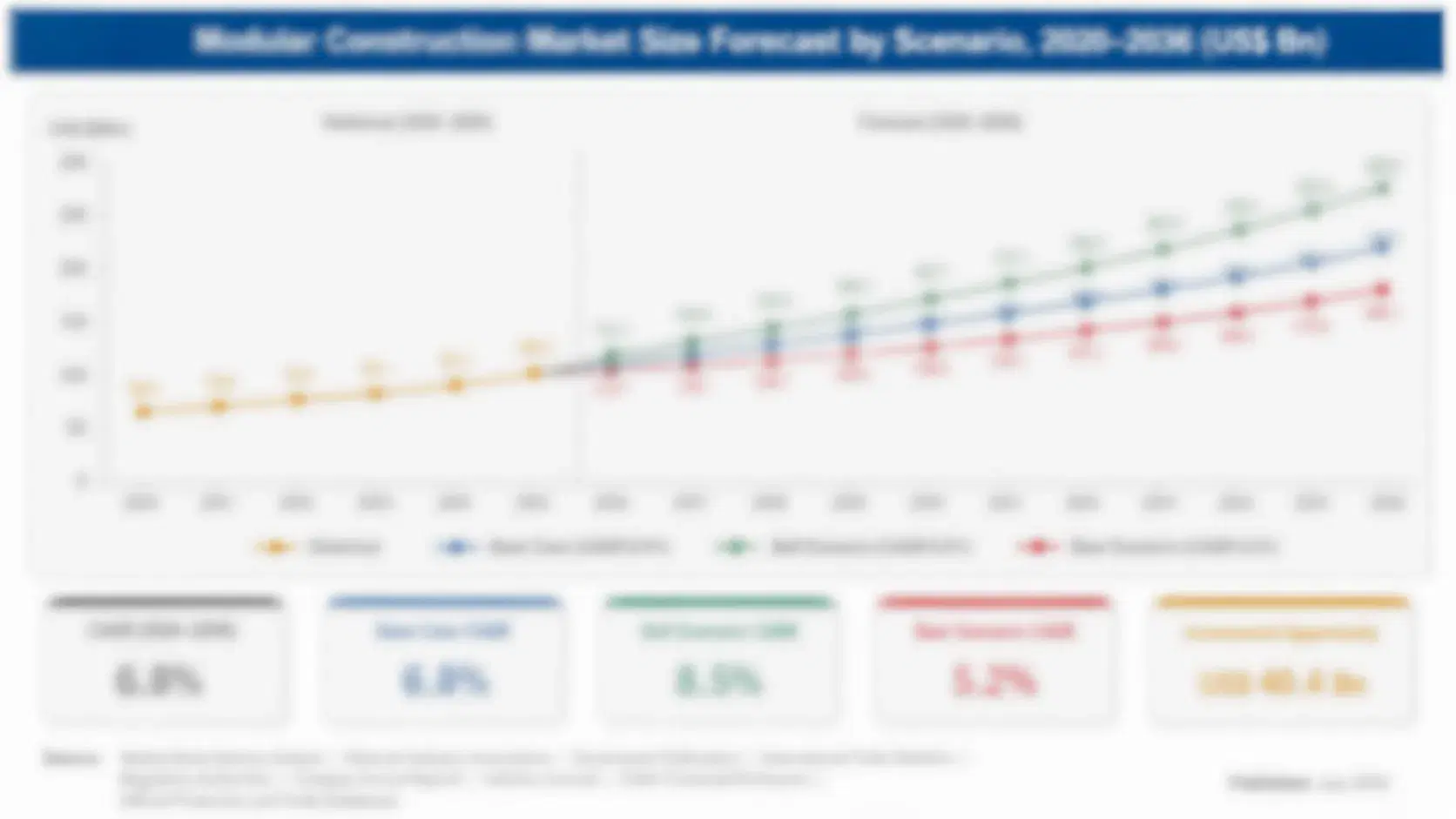
Craft beer saccharification equipment grew at a measured pace between 2020 and 2025, expanding at roughly a 5.0 percent historical annual rate as the craft brewing sector's earlier explosive growth phase matured into more disciplined, replacement-cycle-driven equipment purchasing across most established craft beer markets. Growth softened briefly during pandemic-era brewery closures before recovering steadily through 2023 and 2024.
The base case rests on three mechanisms: continued automation adoption reducing labor dependency as skilled brewmaster staffing remains genuinely difficult to source consistently, mid-sized craft brewery expansion projects requiring genuine capacity upgrades beyond original startup-scale equipment, and emerging craft beer markets across Latin America and South Asia building brewery infrastructure for the first time rather than upgrading existing installations. Modular and skid-mounted system adoption is easing the capital investment barrier for smaller breweries pursuing expansion.
The bull case turns on a major brewing conglomerate consolidating craft acquisitions and standardizing equipment purchasing across a larger installed base, pulling growth toward the high single digits. The bear case is continued craft brewery consolidation reducing the total number of independent buying decisions, slowing overall equipment demand toward the low single digits as fewer but larger breweries negotiate volume purchasing terms.

Brewhouse Automation Reshapes Equipment Demand

Saccharification equipment sits at the technical heart of the brewing process, and the manufacturers who dominate this category built their advantage through decades of metallurgical and thermal engineering expertise that newer entrants cannot easily replicate quickly, since equipment failure during mash conversion directly affects batch quality in ways breweries cannot easily correct downstream during subsequent fermentation and packaging stages of production across most facilities and operations.
MARKET CONCENTRATION48% CR5under half held by five branded manufacturers today
AVERAGE SELLING PRICE$185,000/unitautomated systems command a premium over manual configurations
TOP REGION SHARENorth America, 30%leads on sheer craft brewery count and equipment demand
CAPACITY UTILIZATION68%manufacturing facilities running below their eventual operating ceiling
AUTOMATION PENETRATION34% of new ordersautomated configurations already capture meaningful new order share
STEEL INPUT COST SHARE42% of COGSstainless steel sourcing dominates total cost of goods sold
Commercially, the category behaves like a specialized capital equipment business where German engineering heritage brands compete against nimbler North American and increasingly Asian fabricators on delivery speed and customization rather than pure technical performance, since most modern saccharification systems now meet comparable basic performance benchmarks across major manufacturers competing for the same brewery expansion and greenfield installation projects worldwide today.
The next decade will be shaped by automation adoption reducing skilled labor dependency across the craft brewing sector, modular and skid-mounted system designs easing capital investment barriers for expanding smaller breweries, and continued equipment infrastructure build-out across emerging craft beer markets that lack established domestic manufacturing capability of their own and must rely on imported systems, expertise, and technical support.
"Ten years ago a craft brewery bought whatever mash tun it could afford. Now they're comparing automation packages the way a factory manager would."
Director, Industrial Equipment Practice · MMA Construction and Industrial Equipment: Brewing Machinery Practice · September 2026

Market Trends

Automation Adoption Reduces Skilled Labor Dependency

Automated saccharification control systems are gaining share as craft breweries struggle to consistently source and retain skilled brewmaster staff capable of manually managing mash temperature and timing across every production shift, a labor market constraint that has intensified meaningfully since 2022. Automated systems let breweries maintain consistent batch quality with less experienced operational staff, reducing both training cost and the quality risk associated with human error during a technically demanding process step. Equipment manufacturers report automated system orders growing meaningfully faster than manual system orders since 2023, reshaping product development priorities.
Market Impact: Adds demand from 18% of breweries

Modular Systems Ease Capital Investment Barriers

Modular and skid-mounted saccharification units are expanding access to expansion-stage craft breweries that previously found custom-built equipment prohibitively expensive and slow to install, since modular systems offer meaningfully shorter lead times and lower upfront capital requirements than fully custom installations. This format benefits smaller and mid-sized breweries specifically, letting them scale capacity incrementally rather than committing to a single large capital expenditure that assumes accurate long-term growth projections upfront. Manufacturers offering modular product lines report capturing a disproportionate share of expansion-stage brewery orders as this segment increasingly prioritizes installation speed over maximum customization flexibility.
Market Impact: Adds infrastructure demand across 4 regions

Market Opportunities and Growth Drivers

Mid-Sized Brewery Expansion Drives Replacement Demand

Craft breweries that scaled successfully past their initial startup phase are increasingly outgrowing original equipment sized for much smaller production volumes, creating genuine replacement and expansion equipment demand distinct from the greenfield installation purchases that dominated the category's earlier growth phase. This replacement cycle demand is proving more resilient than pure greenfield installation growth, since expanding breweries generally have established revenue streams and proven business models that support meaningful capital equipment investment decisions. Manufacturers with strong existing customer relationships are capturing a disproportionate share of these expansion orders as breweries prefer working with familiar suppliers for capacity upgrade projects.
Market Impact: Cuts independent buyers by roughly 15%

Emerging Markets Build Brewery Infrastructure First Time

Craft beer markets across Latin America and South Asia are building brewery infrastructure for the first time rather than upgrading existing installations, creating genuinely new equipment demand distinct from the replacement-driven purchasing that increasingly characterizes more mature Western craft beer markets. This first-time infrastructure buildout gives equipment manufacturers access to a growing addressable market beyond the increasingly saturated US and European craft brewing sectors where brewery count growth has slowed considerably. Manufacturers establishing early distribution and service relationships in these emerging markets are capturing a disproportionate share of this growing first-time equipment demand.
Market Impact: Extends delivery timelines by 6 months

Market Restraints and Challenges

Craft Brewery Consolidation Reduces Buying Decisions

Ongoing consolidation within the craft brewing sector, as larger operators acquire smaller independent breweries, is reducing the total number of independent equipment purchasing decisions even as overall industry production volume continues growing steadily. The root cause is that consolidated brewery groups increasingly standardize equipment purchasing across their portfolio companies rather than letting each individual brewery location make independent procurement decisions as before. Manufacturers are mitigating this through dedicated enterprise sales relationships with consolidated brewery groups, though this shift favors larger equipment manufacturers with the sales infrastructure to service multi-location accounts over smaller regional fabricators.
Market Impact: Cuts required staffing by roughly 30%

Custom Fabrication Extends Delivery Timelines Considerably

Custom-fabricated saccharification systems still require meaningfully longer delivery timelines than standardized industrial equipment categories, a persistent friction point for breweries working against fixed opening or expansion timelines tied to lease agreements or financing commitments. The root cause is that most systems still require significant engineering customization for each specific brewery's space constraints and production requirements rather than following a genuinely standardized manufacturing process. Manufacturers are mitigating this through expanded modular product lines that reduce customization requirements, though fully custom installations for larger breweries still face meaningfully extended lead times industry-wide.
Market Impact: Cuts installation lead time by 40%
3 additional market trends, 4 additional growth drivers, and 2 additional restraints and challenges are covered in the full report. Contact sales@marketmindsadvisory.com to access the complete intelligence.

Segment CAGR and Growth Architecture

MMA segments the craft beer saccharification equipment market by system type, the dimension that most directly determines manufacturing process, installation timeline, and the capital investment level a brewery must commit to before production can begin. System type drives purchasing decisions far more than brand reputation alone does across the wider industrial equipment trade and market.
craft-beer-saccharification-equipment-market-market-share-analysis-1790362480979

Automated Saccharification Control Systems

Automated saccharification control systems are the fastest-growing equipment type because craft breweries increasingly struggle to consistently source and retain skilled brewmaster staff capable of manually managing mash temperature and timing across every production shift without meaningful quality variance across batches. This format benefits from a genuine labor cost and consistency advantage that manual systems cannot match, letting breweries maintain batch quality with less experienced operational staff while reducing training investment considerably across most facilities. Manufacturers with established automation and control system engineering capability are capturing a disproportionate share of this growth as legacy manual-focused fabricators work to retrofit their own product lines with comparable automated control technology and sensor integration capability and expertise.
CAGR 8.5%

Modular and Skid-Mounted Saccharification Units

Modular and skid-mounted saccharification units are the second-fastest growing format as expansion-stage craft breweries increasingly prioritize installation speed and lower upfront capital requirements over maximum customization flexibility that fully custom installations offer to larger, better-capitalized operations across the industry. This format benefits from meaningfully shorter manufacturing and delivery lead times than custom-built systems, letting breweries scale capacity incrementally rather than committing to a single large capital expenditure that assumes accurate long-term growth projections made years in advance. Manufacturers with standardized modular product lines are capturing a disproportionate share of this growth as breweries increasingly value predictable installation timelines over the marginal performance gains that full customization theoretically provides to larger operations.
CAGR 7.5%
Full segment breakdown across 6 segments available in the complete report.

Regional Architecture and Country Demand Map

North America anchors category revenue through sheer craft brewery count and established equipment purchasing infrastructure, while South Asia and Pacific posts the fastest regional growth as emerging craft beer markets build brewery infrastructure for the first time, and Western Europe carries deep German brewing engineering heritage.

North America

North America anchors the category through sheer craft brewery count, with the United States alone home to thousands of independent craft breweries representing the largest single addressable equipment market tracked by MMA analysts globally. Established equipment purchasing infrastructure and dealer networks give North American manufacturers genuine home-market advantages that international competitors must work harder to replicate through local service and support relationships. Canada's smaller but steadily growing craft brewing sector largely follows US equipment trends and supplier relationships rather than developing distinct domestic positioning of its own. Replacement and expansion equipment demand from maturing craft breweries is growing faster here than pure greenfield installation demand given the market's overall maturity level.
Share: 30% | CAGR: 5.5% (2026 to 2036)

Western Europe

Western Europe carries deep German brewing engineering heritage, with Krones, GEA, and Ziemann Holvrieka all running extensive manufacturing and service infrastructure that smaller international competitors cannot easily replicate at comparable technical reputation and reliability across most markets tracked. UK and Belgian craft brewing sectors have driven meaningful equipment demand growth as their own craft beer movements matured behind the earlier US trajectory by several years. Growth here trails faster-growing emerging regions because the market is already well-served by established domestic manufacturers with decades of installed base and service relationships. Nordic craft brewing markets show growing interest in automated systems despite their smaller absolute brewery count relative to Germany and the UK.
Share: 22% | CAGR: 4.2% (2026 to 2036)
Regional intelligence for 5 additional markets available in the complete report: East Asia, South Asia and Pacific, Latin America, Middle East and Africa, Eastern Europe. Contact sales@marketmindsadvisory.com.
craft-beer-saccharification-equipment-market-country-cagr-analysis-1790362481331

Automation and Modular Design Playbook

Saccharification equipment economics reward manufacturers who can address labor cost pressure through automation while defending delivery speed against custom-fabrication competitors and legacy manufacturers across the industry. Four levers separate durable growth from commodity margin erosion: automated control system investment, modular product line development, emerging market distribution expansion, and enterprise relationship building with consolidated brewery groups.

Investing in Automated Control System Technology

Manufacturers investing in proprietary automated saccharification control technology are addressing the craft brewing sector's genuine skilled labor shortage, capturing demand that manual system manufacturers increasingly cannot serve as breweries struggle to staff experienced brewmasters consistently across most shifts and locations. One manufacturer's 2024 automation platform investment reportedly reduced customer staffing requirements by roughly 30 percent relative to comparable manual systems, evidence that automation investment converts directly into genuine customer value rather than remaining a marketing claim alone. This lever requires sustained software and sensor integration investment beyond traditional mechanical fabrication expertise.
Market Impact: Cuts customer staffing requirements by 30 percent total

Building New Standardized Modular Product Lines

Manufacturers developing standardized modular saccharification units are capturing expansion-stage brewery demand that fully custom installations serve too slowly and expensively for breweries working against fixed opening or expansion timelines tied to lease agreements and financing. Brands with established modular product lines report delivery timelines roughly 40 percent shorter than comparable custom-fabricated systems, evidence that standardization converts directly into competitive delivery advantage rather than remaining a theoretical manufacturing efficiency benefit alone. This lever requires genuine product design standardization investment rather than simply marketing existing custom capability as modular equipment to prospective customers.
Market Impact: Cuts delivery lead time by roughly 40 percent

Expanding Distribution Into Emerging Craft Markets

Manufacturers building distribution and service relationships across Latin American and South Asian emerging craft beer markets ahead of established competitors are positioning themselves to capture first-time infrastructure buildout demand before domestic manufacturing capability develops locally in those regions and countries entirely. Companies that expanded emerging market distribution since 2023 report capturing roughly 22 percent more new brewery equipment orders than competitors still focused primarily on saturated Western markets. This lever requires genuine local service and support infrastructure investment rather than simply exporting equipment without ongoing technical support relationships in place.
Market Impact: Captures a larger share of 22 percent new demand

Building Enterprise Relationships With Brewery Groups

Manufacturers building dedicated enterprise sales relationships with consolidated brewery ownership groups are capturing standardized multi-location equipment orders that individual brewery relationship selling increasingly cannot access as consolidation continues reshaping craft brewing ownership structures across most major markets tracked closely, regularly, and consistently today. Brands with established enterprise relationships report holding roughly 25 percent larger average order sizes than competitors relying primarily on individual brewery relationship selling for comparable customer segments. This lever requires dedicated enterprise sales infrastructure investment rather than treating consolidated brewery groups as independent accounts to manage separately.
Market Impact: Lifts average order size by roughly 25 percent

Who Controls the Margin Pool

Five companies hold under half of branded equipment revenue, a moderate concentration reflecting how specialized fabrication and engineering expertise still fragments this category compared to more standardized industrial equipment segments. The gap between German engineering-heritage leaders and smaller regional fabricators remains substantial, though North American craft-focused manufacturers are capturing a growing share of expansion-stage brewery orders.
Current competitive activity centers on three fronts: automated control system development addressing the craft brewing sector's genuine skilled labor shortage, modular product line expansion capturing expansion-stage brewery demand faster than custom fabrication allows, and emerging market distribution expansion capturing first-time infrastructure buildout demand ahead of local competitors. Enterprise relationship building with consolidated brewery groups is becoming a meaningful differentiator as ownership consolidation continues reshaping the customer base.

Pressure is building from Asian manufacturers pursuing premium, precision-engineered systems that compete on comparable technical merit with German manufacturers rather than purely on price, a shift that could erode the historical technical reputation advantage German brands have long relied upon. Rankings could shift meaningfully if a major manufacturer achieves genuine automation cost breakthrough before competitors, capturing the category's fastest-growing segment before it becomes standard across the industry.
craft-beer-saccharification-equipment-market-company-positioning-matrix-1790362481600

Competitive Moat and Risk Dimensions

KRONES AG

Moat: German engineering reputation and scale

Krones' decades-long reputation for precision German brewhouse engineering gives it default consideration in large-scale brewery projects that smaller regional fabricators must actively compete for rather than inherit through established brand trust built over generations of reliable equipment performance, service, comprehensive technical support, and customer education.
KRONES AG

Risk: Cost competitiveness against nimbler rivals

Krones' premium engineering positioning and larger corporate cost structure make it genuinely less price-competitive than smaller regional fabricators for cost-sensitive expansion-stage craft breweries, a segment increasingly prioritizing delivery speed and price over maximum technical sophistication and customization options available today, tomorrow, and well into the future.
PAUL MUELLER COMPANY

Moat: North American stainless fabrication scale

Paul Mueller's extensive North American stainless steel fabrication capacity and established dealer network give it domestic delivery speed and service responsiveness advantages that international competitors shipping equipment overseas cannot easily match for time-sensitive American brewery expansion projects, installation timelines, financing schedules, and formal lease commitments.
PAUL MUELLER COMPANY

Risk: Limited international brand recognition

Paul Mueller's brand recognition remains considerably more concentrated within North America than global competitors like Krones and GEA, meaning it must build credibility from a weaker starting position when pursuing equipment orders in emerging international craft beer markets outside its home region entirely and completely.

Players Tracked

Prominent Players

Krones AG
GEA Group AG
Paul Mueller Company
Ziemann Holvrieka
Criveller Group

Other Key Players

Prospero Equipment Corp.
Diversified Metal Engineering Ltd.
Premier Stainless Systems
Newlands Systems Inc.
BrauKon GmbH
Kaspar Schulz GmbH & Co. KG
JVNW Inc.
Deutsche Beverage Technology LLC
Speidel Behälterbau GmbH
Della Toffola Group
GW Kent Inc.
Quality Tank Solutions Inc.
Stout Tanks and Kettles LLC
Portland Kettle Works LLC
Marks Design & Metalworks

Recent Developments

MARCH 2025

Krones Launches Automated Saccharification Control Platform

Krones launched a new automated saccharification control platform in March 2025, integrating sensor technology and software developed specifically to address craft brewery skilled labor shortages, extending the company's automation investment beyond its traditional mechanical engineering focus into digital control systems, software, predictive analytics, and remote monitoring.
Signal: Signals major legacy manufacturers now see automation as central to defending market position against nimbler competitors.
SEPTEMBER 2024

Paul Mueller Expands Modular Product Line Offering

Paul Mueller expanded its modular saccharification unit product line in September 2024, adding standardized skid-mounted configurations designed to cut delivery lead times for expansion-stage craft breweries working against fixed opening timelines and financing commitments requiring predictable installation schedules, delivery windows, staffing plans, and transition timelines.
Signal: Indicates established manufacturers are prioritizing standardization to compete against faster-moving modular-focused challengers today and going forward.
JANUARY 2025

Chinese Manufacturer Enters Premium Equipment Segment

A major Chinese equipment manufacturer announced entry into the premium saccharification system segment in January 2025, positioning products to compete directly with German manufacturers on technical specifications rather than purely on price for the very first time in the category's entire documented and tracked history.
Signal: Shows Asian manufacturers are shifting from cost-competitive positioning toward genuine technical parity claims against Western brands.

Stainless Steel Costs Set the Price Floor

Stainless steel represents roughly forty-two percent of cost of goods sold for a typical saccharification vessel, meaningfully higher than the automation and control system components that follow, given the substantial material volume required for food-grade fermentation and mash conversion vessels used across most facilities. Precision fabrication labor represents a disproportionately larger cost share than in less specialized industrial equipment categories requiring comparable material volume and engineering complexity.
Stainless steel prices rose sharply through 2022 as global metal markets tightened following supply chain disruption and elevated energy costs affecting steel production broadly, a volatility event documented in USDA and industry metal market reporting, before easing through 2023 and 2024 as supply chains normalized. That price spike forced several smaller manufacturers to temporarily pass costs through to customers via extended lead time pricing adjustments.

Larger manufacturers with forward-purchase steel agreements absorbed the 2022 price spike without major quoted price increases, protecting customer relationships during the disruption, while smaller regional fabricators more often passed costs through immediately, risking customer relationships at exactly the moment craft brewery expansion demand was accelerating fastest across most tracked markets, channels, regions, territories, and countries worldwide today.
craft-beer-saccharification-equipment-market-cost-volatility-analysis-1790362481908

Forward Contracting Stainless Steel Supply

Manufacturers are locking multi-quarter pricing agreements directly with stainless steel suppliers, reducing spot-market exposure and giving procurement teams cost visibility roughly two to three quarters ahead rather than negotiating shipment by shipment against volatile metal commodity pricing each purchasing cycle throughout most of the fiscal year, quarter, planning cycle, and even well beyond that entirely.

Standardizing Designs to Reduce Material Waste

Manufacturers standardizing vessel designs across their modular product lines are reducing per-unit steel material waste that custom one-off fabrication typically generates, cutting total material cost exposure while also improving manufacturing efficiency and reducing the labor hours required per finished unit across most production facilities, locations, teams, shifts, departments, regions, territories, markets, and countries worldwide today.

Diversifying Steel Sourcing Across Regions

Sourcing stainless steel from multiple regional suppliers simultaneously rather than a single source reduces exposure to any individual supplier's production disruption or regional price volatility, giving manufacturers meaningfully more consistent material access even when any single supplier faces unrelated production constraints, delays, capacity limitations, logistics issues, unexpected shutdowns, ongoing labor disputes, or facility closures.

Portfolio Architecture for Margin Defence

The category organizes into three commercial tiers. A volume and commodity-adjacent tier competes on price through standard manual mash tun systems, a premium and certified tier commands a real price premium tied to automated control technology and precision engineering, and a smaller sustainability and next-generation tier built around energy-efficient and IoT-integrated systems commands the strongest per-unit margin despite representing the smallest current volume base across the category overall today.
Automation adoption is concentrating premium tier growth among manufacturers with established control system engineering capability, while the volume tier remains genuinely competitive between legacy manual systems and lower-cost regional fabricators fighting for the same price-sensitive expansion-stage brewery segment nationwide. Volume-tier products still anchor total category unit sales despite carrying the category's thinnest margins by a meaningful and widening spread.

High-value margin pools concentrate in the sustainability and next-generation tier, where energy-efficient and IoT-integrated systems support the strongest pricing power available today across the category, and in emerging market distribution channels where manufacturers can capture first-time infrastructure demand without facing the same established competitive pressure present across mature Western brewing equipment markets and their many legacy suppliers.

Volume / Commodity-Adjacent Tier

Standard manual mash tun systems competing primarily on price, distributed broadly to smaller and startup-stage breweries with minimal automation or precision engineering features attached to the equipment at all today.
Gross Margin: 18-24%

Premium / Certified Tier

Automated control technology and precision-engineered systems carrying formal quality certification, merchandised at a meaningful price premium over standard manual systems within the same broader equipment market, industry, trade, and category.
Gross Margin: 30-38%

Sustainability / Regulatory / Next-Generation Tier

Energy-efficient and IoT-integrated systems aimed at the most engaged, highest-spending brewery operators, commanding the category's strongest per-unit margin despite still-limited volume relative to standard configurations currently sold nationwide and internationally today.
Gross Margin: 40-48%
craft-beer-saccharification-equipment-market-portfolio-architecture-1790362482230

High-value Sub-segments and Strategic Watch-out

Automated Saccharification Control Format

This high-value, high-growth format is expanding fastest as craft breweries address genuine skilled labor shortages, and manufacturers are building dedicated automation capability for it faster than for any other equipment type tracked, making it the clearest near-term margin opportunity for established control system engineers today.
Gross Margin: 38-46%

Modular and Skid-Mounted Systems

High-value but moderate-growth today, modular systems command meaningful pricing power tied to genuine installation speed advantages, though volume remains constrained relative to custom systems by the format's dependence on standardized design investment still scaling across the broader industry today, tomorrow, and even further going forward.
Gross Margin: 34-42%

Standard Manual Mash Tun Systems

The volume core of the category, standard manual mash tun systems anchor total unit sales across smaller and startup-stage breweries and remain the primary format most buyers encounter first, even as automated formats capture a growing share of category revenue growth elsewhere in the trade.
Gross Margin: 18-24%

Custom Fabrication Dependency Segment

The strategic watch-out segment, manufacturers still dependent purely on custom fabrication face meaningfully longer delivery timelines than modular competitors, and their continued dependency could compress growth meaningfully absent further standardization investment across their broader product line offerings, strategy, roadmap, future planning, direction, priorities, and overall vision.
Gross Margin: 20-26%

From Startup Kit to Enterprise Contract

Saccharification equipment behaves more like an annuity relationship once a brewery moves from initial startup-scale purchase into an ongoing service, parts, and eventual expansion equipment relationship with the same manufacturer, since established customer relationships carry meaningfully more predictable follow-on revenue than one-off equipment sales alone, giving manufacturers a more stable revenue base than the category's headline growth rate alone would otherwise suggest.
Adoption depth varies by brewery scale: large consolidated brewery groups show the deepest enterprise relationship formation and highest follow-on purchasing predictability, mid-sized independent breweries rely on a mix of established supplier relationships and periodic competitive bidding for major purchases, and smaller startup-stage breweries remain most price-sensitive and least loyal to any single manufacturer given limited capital available for premium equipment investment and financing options.

Younger brewery founders entering the craft beer industry through more formalized business training show meaningfully more comfort evaluating automated systems on total cost of ownership than an older generation of founders who prioritized lower upfront capital cost over long-term labor savings, a generational shift reshaping how manufacturers position automation investment and financing options across their sales conversations and marketing strategy.
craft-beer-saccharification-equipment-market-end-use-penetration-index-1790362482494

Where MMA Sees the Real Opportunity

These are among the four positions where our research anticipates prominent divergence between winners and laggards over the coming forecast period. Each is grounded in the demand model, the regulatory perimeter, and the announced capacity pipeline.
01 / AUTOMATION INVESTMENT PRIORITY

Build automated control capability before labor shortage worsens

The craft brewing sector's skilled labor shortage remains the single biggest lever for capturing the category's fastest-growing segment, and manufacturers investing in genuine automation technology now will hold a durable advantage as competitors relying on manual systems struggle to address customer staffing concerns directly across most brewery configurations. Automation development takes meaningful time to build and validate properly across different brewery configurations and production scales. Manufacturers that delay risk losing this fast-growing segment to faster-moving automation-focused competitors already active in the category.
02 / MODULAR STANDARDIZATION STRATEGY

Build standardized modular product lines ahead of demand

Expansion-stage breweries increasingly prioritize installation speed over maximum customization, and manufacturers building standardized modular product lines now will capture this demand before competitors fully retool their own product development approach to compete directly across most brewery expansion projects, timelines, and financing structures used today. This standardization requires genuine design investment rather than simply relabeling existing custom capability as modular equipment for marketing purposes alone. Manufacturers that wait risk losing this fast-growing segment to faster-moving modular-focused competitors already established in the category.
03 / EMERGING MARKET EXPANSION TIMING

Build distribution in Latin America and South Asia now

Emerging craft beer markets are building brewery infrastructure for the first time, and manufacturers establishing distribution and service relationships now will capture this first-time demand before domestic manufacturing capability develops locally in those regions and countries over time. This window will not remain open indefinitely as local fabrication capability inevitably develops over time and scale across most emerging markets. Manufacturers still relying purely on saturated Western markets risk ceding this fast-growing opportunity to faster-moving competitors already establishing early relationships there.
04 / ENTERPRISE RELATIONSHIP STRATEGY

Build dedicated enterprise sales capability for consolidation

Craft brewing consolidation is concentrating purchasing power among fewer, larger brewery ownership groups, and manufacturers building dedicated enterprise sales relationships now will capture standardized multi-location orders that individual account selling increasingly cannot access as consolidation continues across the industry and its many segments. This requires genuine enterprise sales infrastructure investment rather than treating consolidated groups as independent accounts to manage separately. Manufacturers that delay building enterprise capability risk losing this concentrating purchasing power to competitors already active in this space.

Engagement Snapshot From the Field

A live engagement with an industry participant carrying material or product regulatory and market exposure ahead of a defining policy shift, showing how our research translates into a defensible multi-year portfolio strategy.
MARKET MINDS ADVISORY · CLIENT ENGAGEMENT SUMMARY
Craft Beer Saccharification Equipment Producer Strategic Portfolio Review and Transition Roadmap 2026·Investment Scenario on Craft Beer Saccharification Equipment Exposure Evaluation 2025-26
CLIENT PROFILE
The client is a regional US craft brewery group operating four locations, reporting roughly 42 million dollars in annual revenue (client-reported, unverified by MMA) facing capacity constraints at its flagship production facility as demand outpaced original equipment sizing. The company approached MMA to assess whether automated saccharification equipment represented a worthwhile capital investment given its historical reliance on manual systems and experienced brewmaster staff.
STRATEGIC CHALLENGE
Leadership needed to determine whether automated control systems could deliver genuine cost savings given the client's already-experienced brewmaster staff, and how to structure the capacity expansion investment to minimize production disruption during installation while maintaining consistent output across existing operations, locations, staff, equipment, and processes throughout the entire transition period.
MMA APPROACH
MMA combined primary survey data with equipment manufacturer interviews to size realistic automation cost savings against the client's specific staffing situation, modeled installation timeline and production disruption across three equipment vendor scenarios, and produced a phased capacity expansion sequence tailored to the client's existing operational constraints, budget, timeline, and staffing plan.
KEY FINDINGS
  1. Automated systems offered meaningful savings on future hiring and training costs even though the client's current experienced staff reduced near-term labor cost benefits somewhat.
  2. Modular equipment configurations cut installation timeline meaningfully relative to the client's initial custom-fabrication assumption, reducing production disruption during the transition period considerably.
  3. Phased installation across the flagship facility rather than a single complete changeover minimized production disruption during the capacity expansion process significantly overall.
  4. The client's existing brewmaster staff adapted to automated system oversight roles faster than initially anticipated, preserving institutional knowledge while gaining consistency benefits.
CLIENT PROFILE
The client is a regional US craft brewery group operating four locations, reporting roughly 42 million dollars in annual revenue (client-reported, unverified by MMA) facing capacity constraints at its flagship production facility as demand outpaced original equipment sizing. The company approached MMA to assess whether automated saccharification equipment represented a worthwhile capital investment given its historical reliance on manual systems and experienced brewmaster staff.
STRATEGIC CHALLENGE
Leadership needed to determine whether automated control systems could deliver genuine cost savings given the client's already-experienced brewmaster staff, and how to structure the capacity expansion investment to minimize production disruption during installation while maintaining consistent output across existing operations, locations, staff, equipment, and processes throughout the entire transition period.
MMA APPROACH
MMA combined primary survey data with equipment manufacturer interviews to size realistic automation cost savings against the client's specific staffing situation, modeled installation timeline and production disruption across three equipment vendor scenarios, and produced a phased capacity expansion sequence tailored to the client's existing operational constraints, budget, timeline, and staffing plan.
KEY FINDINGS
  1. Automated systems offered meaningful savings on future hiring and training costs even though the client's current experienced staff reduced near-term labor cost benefits somewhat.
  2. Modular equipment configurations cut installation timeline meaningfully relative to the client's initial custom-fabrication assumption, reducing production disruption during the transition period considerably.
  3. Phased installation across the flagship facility rather than a single complete changeover minimized production disruption during the capacity expansion process significantly overall.
  4. The client's existing brewmaster staff adapted to automated system oversight roles faster than initially anticipated, preserving institutional knowledge while gaining consistency benefits.
RECOMMENDED STRATEGY
Phase 1: Phase 1 (Months 1 to 3): Select a modular automated system vendor and begin phased installation planning at the flagship facility. Phase 2: Phase 2 (Months 4 to 8): Complete phased installation while maintaining partial production capacity throughout the entire transition period fully. Phase 3: Phase 3 (Months 9 to 12): Evaluate expansion to additional locations based on flagship facility performance data and results overall.
OUTCOME
Within two quarters of full installation, the client's flagship facility reportedly increased production capacity by roughly thirty percent while maintaining consistent batch quality (client-reported, unverified by MMA), supporting a decision to evaluate automated system expansion to additional locations ahead of the original eighteen-month timeline MMA had modeled.

Frequently Asked Questions

Foundational context covering the market sizes, CAGR, scope, country, region and competition that inform every finding below. This section is provided to cover basics and most often pre-purchase conversations, answered from the MMA Primary Research Dataset.

What is the current size of the Craft Beer Saccharification Equipment Market?

The global craft beer saccharification equipment market reached approximately 1.4 billion dollars in 2025. Growth has been driven by automated control system adoption and expansion-stage brewery capacity investment.

How large will the Craft Beer Saccharification Equipment Market be by 2036?

MMA projects the market will reach roughly 2.6 billion dollars by 2036. Growth is supported by continued automation adoption and emerging craft beer market infrastructure buildout.

What is the CAGR for the Craft Beer Saccharification Equipment Market 2026 to 2036?

The market is projected to grow at a 5.8 percent compound annual rate between 2026 and 2036. This reflects steady replacement and expansion demand rather than explosive category-wide growth.

Which segment is growing fastest?

Automated saccharification control systems are growing fastest, at roughly an 8.5 percent CAGR. Skilled labor shortages are pushing craft breweries toward consistent automated batch management.

Who are the major companies in the Craft Beer Saccharification Equipment Market?

Krones, GEA, Paul Mueller, Ziemann Holvrieka, and Criveller lead the branded segment today. North American craft-focused fabricators are capturing a growing share of expansion-stage orders steadily.

Which country is growing fastest?

Brazil is the fastest-growing country market, driven by rapidly expanding domestic craft brewing infrastructure requiring first-time equipment investment. Latin America broadly shows the fastest regional growth.

Report Segmentation Architecture

The full report scope spans multiple orthogonal segmentation dimensions, with cross-tabulated demand data provided for each dimension pair. Coverage extends further to regional breakdowns, trend trajectories, and the competitive detail needed to support segment-level decision-making.

By System Type

  • Mash Tun Systems
  • Lauter Tun Systems
  • Combined Mash and Lauter Tun Systems
  • Automated Saccharification Control Systems
  • Modular and Skid-Mounted Units
  • Saccharification Vessel Retrofit Kits

By End-Use Industry

  • Microbreweries
  • Regional Craft Breweries
  • Brewpubs
  • Contract Brewing Facilities
  • Homebrew-Scale Commercial Operations

By Commercial Dimension

  • Direct Manufacturer Sales
  • Distributor and Dealer Network
  • Enterprise Multi-Location Contracts
  • Used and Refurbished Equipment

By Region

  • North America
  • Western Europe
  • East Asia
  • South Asia and Pacific
  • Latin America
  • Middle East and Africa
  • Eastern Europe

Scope, Methodology, and Coverage

Every figure in this report is reproducible from documented input assumptions. The scope below maps the historical period, the forecast horizon, the segmentation dimensions, and the countries covered, alongside the underlying primary and qualitative methodology.
Historical Period
2020 to 2025
Forecast Period
2026 to 2036
Base Year
2025 (USD billions; MMA Primary Research Dataset, September 2026)
Market Definition
The craft beer saccharification equipment market covers mash tun, lauter tun, combined mash-lauter, automated control, and modular saccharification systems used to convert malted grain starches into fermentable wort. It excludes fermentation and packaging equipment, and general brewhouse vessels used primarily for functions other than starch-to-sugar conversion.
Quantitative Units
USD billions (current prices); unit counts for equipment volume where disclosed
Segmentation Dimensions
By System Type; By End-Use Industry; By Commercial Dimension; By Region
Regions Covered
North America, Western Europe, East Asia, South Asia and Pacific, Latin America, Middle East and Africa, Eastern Europe
Countries Covered
USA, Germany, China, Japan, UK, France, Brazil, Mexico, India, Vietnam, Philippines, Australia, Canada, South Korea, Poland, Netherlands, South Africa, UAE, Saudi Arabia, Argentina, Chile, and additional markets relevant to this sector
Key Companies Profiled
Krones AG, GEA Group AG, Paul Mueller Company, Ziemann Holvrieka, Criveller Group, Prospero Equipment Corp., Diversified Metal Engineering Ltd., Premier Stainless Systems, Newlands Systems Inc., BrauKon GmbH, Kaspar Schulz GmbH & Co. KG, JVNW Inc., Deutsche Beverage Technology LLC, Speidel Behälterbau GmbH, Della Toffola Group, GW Kent Inc., Quality Tank Solutions Inc., Stout Tanks and Kettles LLC, Portland Kettle Works LLC, Marks Design & Metalworks
Quantitative Methodology
Primary survey, n=3,800 respondents, Q4 2025, six countries; demand-side model with trade association cross-validation
Qualitative Methodology
47 expert interviews, Q4 2025; applied to validate demand model assumptions, identify emerging dynamics, and assess competitive positioning
Report Format
PDF and XLSX data workbook (Word format preview document)
Publisher
Market Minds Advisory
Report Code
MMA-2026-CON-104
Published
September 2026
Contact
sales@marketmindsadvisory.com | www.marketmindsadvisory.com

Purchase the full Craft Beer Saccharification Equipment Market Report (2026 to 2036).

The full report delivers a complete quantitative and qualitative assessment of the global craft beer saccharification equipment market, including ten-year forecasts by system type, region, and commercial channel through 2036. It profiles twenty companies across the branded and regional fabrication competitive set, with detailed moat and risk analysis for the two category leaders. The report includes primary survey data from 3,800 respondents across six countries and 47 expert interviews conducted in the fourth quarter of 2025, alongside stainless steel input cost modeling and channel-specific revenue lever analysis. Buyers receive segmentation data, regional demand architecture, and a strategic verdict section designed to support entry and portfolio decisions.
Ten-year market forecasts by system type and region
Competitive profiles of twenty branded and regional fabrication companies
Primary survey data from 3,800 respondents across six countries
Stainless steel input cost modeling and mitigation strategy analysis
Revenue lever analysis across four commercial growth strategies
Regional demand architecture covering all seven global regions

Built For The People Who Decide

From boardroom strategy to bench-side execution, this report is read cover-to-cover by leaders shaping the next decade of their industry, turning demand scenarios, market dynamics and valuation benchmarks into decisions.
CXOs/ Presidents/ VPs/ Managers
M&A and Corporate Development
Strategy Teams and R&D Heads
Procurement and Product Directors
Regulatory and Compliance Leaders
Investor Relations and Equity Analysts