Market Minds Advisory
Cosmetic Dropper Market

Cosmetic Dropper Market: A Chemical Compatibility Problem Wearing a Packaging Label

Serums signal clinical precision by arriving with a pipette, and then the acid inside quietly attacks the rubber bulb holding it. Compatibility testing, not tooling, is what decides who supplies this component.

Lead Analyst

Bilal Shaikh

Published

September 2026

Make Smarter Decisions with Customized Research Insights

Request a free sample report and evaluate market opportunities, growth trends, and competitive dynamics relevant to your business needs.

2025 MARKET VALUE$0.9BMarket Size 2025
2036 FORECAST VALUE$2.1BBase Case , 2026 to 2036
CAGR 2026 TO 20367.6 %Bull 8.8% / Bear 6.4%
INCREMENTAL OPPORTUNITY$1.1BNet 10- year value creation
EXPANSION MULTIPLE2.08x2036 value over 2026 base
Strategic Levers
M&A Pipeline
Regional Outlook
Country Rankings
Competitive Intelligence
Segmental Deep-dive
Call-Us : 91 93563 13602

Executive Snapshot and Market Trajectory

A dropper is a dosing device that tells the buyer the contents are potent. That signal is exactly why serums adopted it, and it is also the problem, because potent formulations attack the rubber bulb sitting directly above them for two years on a bathroom shelf.
Growth follows the serum category rather than skincare generally. Press-button airless dropper systems grow fastest at 11.4%, exactly 1.50 times the market rate, because they keep the formulation away from the bulb entirely and remove the compatibility problem instead of managing it. Graduated dosing pipettes follow at 9.6%. East Asia holds the largest share by some distance, on both consumption and component manufacture. Component manufacture concentrates in the same place as demand.
Concentration reaches only 31% across the top five measured on annual dropper unit capacity, split between European specialists and Asian component manufacturers. Compatibility testing running about 26 weeks is the real barrier to entry here, not tooling or capital. Brands rarely change dropper supplier mid-life because requalification means repeating that testing against every active in the formulation. Requalification cost rather than loyalty is what actually holds these accounts.
Market Definition
This market covers dropper and pipette dispensing assemblies supplied for cosmetic and personal care products, including glass and plastic pipettes, elastomeric bulbs, press-button airless mechanisms, closures, collars, and child-resistant dropper systems. Scope is measured at component supplier realised prices including applied decoration. Primary bottles and jars, pumps and airless pumps without pipettes, formulation, contract filling services, and droppers supplied to pharmaceutical or diagnostic applications are excluded.
Base Year Value
$0.9B in 2025 (MMA Primary Research Dataset, August 2026)
Forecast Period
2026 to 2036, eleven discrete annual values
CAGR
7.6% base case. Bull 8.8%. Bear 6.4%.
Fastest Growth Segment
Press-Button Airless Dropper Systems: 11.4% CAGR
Fastest Growth Country
China: 12.4% CAGR
Fastest Growth Region
South Asia and Pacific: 9.7% CAGR
Largest Region
East Asia: 33% of 2025 global value
Market Leaders
Virospack. Yonwoo. Quadpack. Baralan. Lumson. Source: MMA Analysis based on company annual reports.
Primary Survey
n=3,800 procurement and R&D decision-makers, Q4 2025, six countries
Methodology
Demand-side build-up, cross-validated against public data, 47 expert interviews

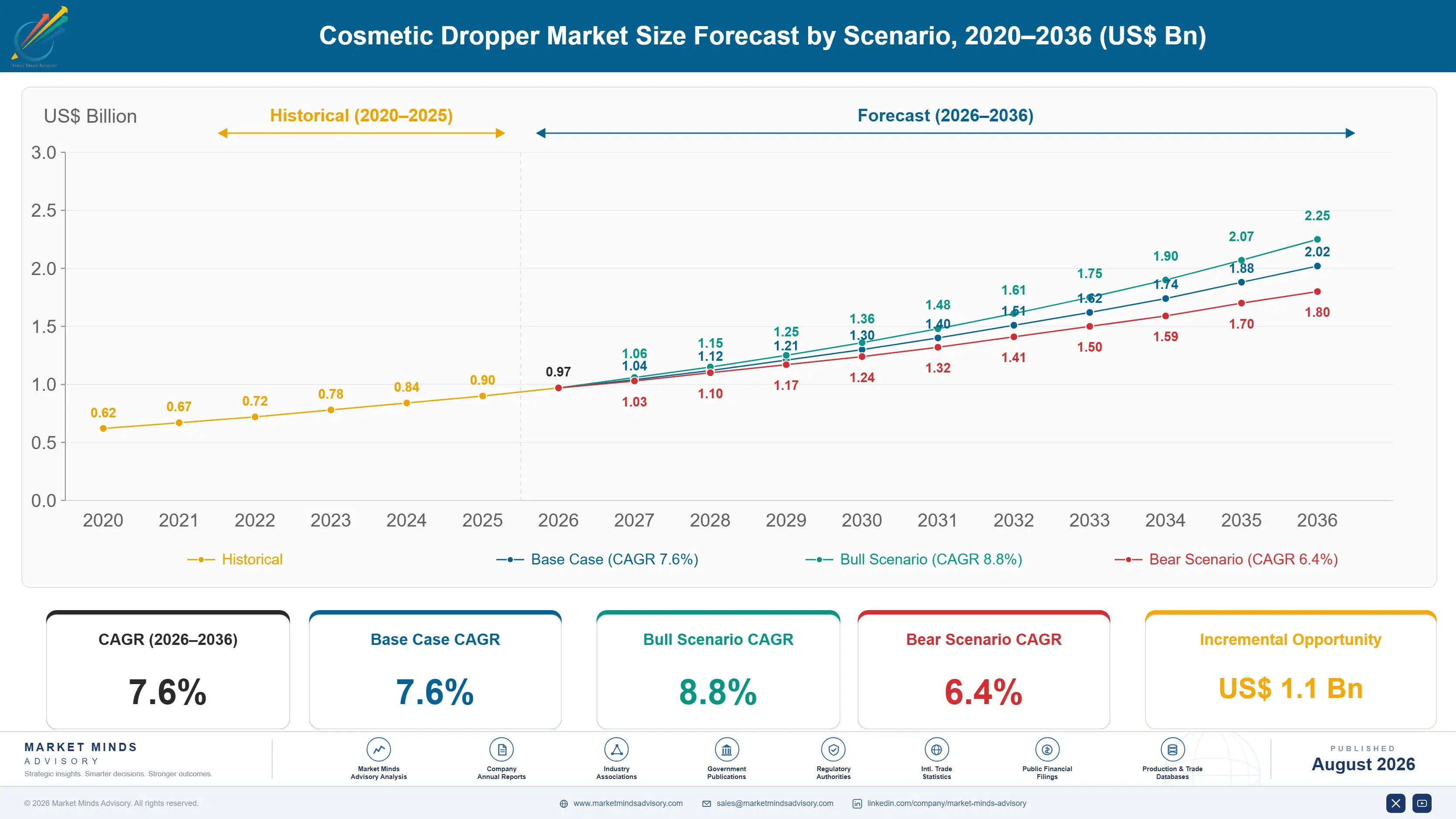
Cosmetic Dropper Market Forecast Scenarios

cosmetic-dropper-market-size-forecast-scenario-1787298932951
The 2020 to 2025 period was carried almost entirely by one product format. Serums moved from a specialist step into the centre of skincare routines worldwide, and almost every one arrived with a pipette because that is how the category signals potency. Active concentrations rose at the same time, making compatibility failures more frequent and more visible. A 6.3% historical rate reflects category expansion offset by Asian component pricing pressure.
Three mechanisms carry the 7.6% base case. Serum penetration into mass and masstige skincare is the largest, moving droppers out of prestige and into price points where they never used to appear. Active concentration escalation is the second, pushing brands toward more expensive compatible bulb systems and airless mechanisms. And e-commerce shipping is the third, forcing either glass pipette redesign or outright plastic substitution to survive automated parcel networks intact.
The 8.8% bull case rests on airless press-button mechanisms reaching cost parity with conventional bulb droppers, which would remove the last commercial reason brands accept a compatibility risk they know about. The 6.4% bear case is regulatory attention to extractables and leachables in cosmetic dispensing components, which would raise qualification burden enough to slow launches across the whole category.

The Bulb Is the Part That Fails

Ascorbic acid at low pH, retinol, alpha hydroxy acids, and neat essential oils all attack elastomers. They swell natural rubber, harden it, discolour it, and pull extractables out of it into the product the customer is about to put on their face. That is the central technical fact of this component category, and it explains why compatibility testing at around 26 weeks gates every launch.
TOP FIVE CONCENTRATION31%Fragmented across European specialists and Asian component manufacturers
BULB FAILURE COMPLAINTS3.8%Returns attributed to bulb degradation across high-acid formulations
COMPATIBILITY TEST DURATION26 weeksAccelerated stability testing before a dropper reaches commercial launch
AVERAGE ASSEMBLY COSTUSD 0.21Per complete dropper across glass and plastic pipette variants
SERUM SHARE OF SKINCARE24%Category value carried by products using dropper dosing
AIRLESS DROPPER PENETRATION9%Units using press-button mechanisms rather than conventional squeeze bulbs
It also explains the supplier relationship. A brand that has run 26 weeks of accelerated stability against its own formulation will not casually change dropper supplier, because requalification means repeating that work against every active in the formula. Development is slow, switching is slower, and the component that looks like a commodity behaves like a qualified pharmaceutical part in practice.
Two forces shape the next decade. Press-button airless mechanisms keep the formulation off the bulb entirely, solving the problem rather than managing it, and penetration sits at just 9% of units. And e-commerce parcel networks are steadily forcing glass pipettes toward plastic or toward reinforced designs. Neither force has anything to do with how the pipette looks, which is what brand teams still specify first.
"Brand teams choose the dropper in about a week and then spend six months finding out their vitamin C serum turned the bulb yellow. The suppliers who win here are not the ones with the best tooling, they are the ones who already know what happens when that formula meets that elastomer, because they tested it two years ago."
Director. Cosmetic Packaging and Dispensing Practice · MMA Packaging and Cosmeti

Market Trends

Press-Button Airless Mechanisms Remove Formula Bulb Contact

A conventional dropper works by squeezing an elastomer bulb that sits in the vapour path of the product and frequently in contact with it. Press-button airless mechanisms draw a measured dose through a sealed piston arrangement instead, so the formulation never touches the bulb material at all. That eliminates the compatibility problem rather than managing it, and it also delivers consistent dose volume that a squeeze bulb never can. Penetration is currently around 9% of units and growing at 11.4%. Cost is the constraint, since the mechanism runs several times a simple bulb assembly.
Market Impact: Degradation drives 3.8% of complaints
Serums Push Droppers Into Mass And Masstige Price Points

The dropper used to signal prestige and appeared almost exclusively above a certain price. Serum formats have since spread across mass skincare, pharmacy brands, and private label, and each of those launches carries a pipette because the category convention now demands it. Serums account for roughly 24% of skincare category value. At mass price points a dropper assembly at around 21 cents is a material share of total pack cost, which pushes brands toward plastic pipettes, simpler collars, and Asian component sourcing rather than European specialists. Compatibility testing budgets rarely follow the format downmarket.
Market Impact: China grows at 12.4% annually

Market Opportunities and Growth Drivers

Rising Active Concentrations Force Better Bulb Chemistry

Brands compete on active percentage, and consumer-facing claims have escalated steadily across vitamin C, retinol, and acid exfoliants. Higher concentration means lower pH and more aggressive solvent behaviour, which natural rubber bulbs handle poorly. Bulb degradation now accounts for around 3.8% of consumer complaints across high-acid formulations, which is enough to reach brand quality functions and change specifications. That pushes buyers from commodity rubber toward butyl, thermoplastic elastomer, and silicone systems at materially higher cost, and toward suppliers who can document compatibility properly. Quality functions rather than packaging teams now drive that change.
Market Impact: Testing adds 26 weeks per launch

East Asian Serum Consumption Sets Global Format Convention

Korean and Chinese skincare routines adopted layered serum application earlier and more thoroughly than Western ones, and format conventions established there have propagated outward through the whole category. Chinese domestic brands now launch at a pace that Western houses cannot match, and each launch specifies dropper components locally. China contributes the fastest national growth rate in this forecast at 12.4%. The regional component manufacturing base has grown alongside that demand, which is why East Asia leads on both consumption and supply simultaneously. Korean airless engineering leads the field by a clear margin.
Market Impact: Breakage exceeds 4% in parcels

Market Restraints and Challenges

Twenty-Six Week Testing Slows Every Launch Considerably

Accelerated stability testing of a dropper against a specific formulation runs roughly 26 weeks before a brand can commit to commercial launch. The root cause is that elastomer degradation, extractables migration, and pipette dimensional change all take time to manifest, and no accelerated protocol shortens them reliably. Commercial impact is that dropper selection sits on the critical path of every serum launch and frequently delays it. Suppliers are responding with pre-tested compatibility libraries covering common active systems, which lets a brand skip straight to confirmatory work. Confirmatory work still takes several weeks even then.
Market Impact: Airless reaches 9% of units

Glass Pipettes Break Across E-Commerce Parcel Networks

A glass pipette inside a glass bottle inside a light mailer is a poor combination, and breakage rates through parcel networks run far above traditional retail distribution. The root cause is that the format was designed for a shelf and a handbag, not for automated sortation and unprotected transit. Commercial impact includes replacement cost, review damage, and in some cases platform penalties for damage rates. Participants are moving toward polypropylene and glass-look plastic pipettes, thicker glass walls, and shock-absorbing collar designs that hold the pipette away from the bottle neck.
Market Impact: Serums reach 24% of skincare value
3 additional market trends, 2 additional growth drivers, and 4 additional restraints and challenges are covered in the full report. Contact sales@marketmindsadvisory.com to access the complete intelligence.

Segment CAGR and Growth Architecture

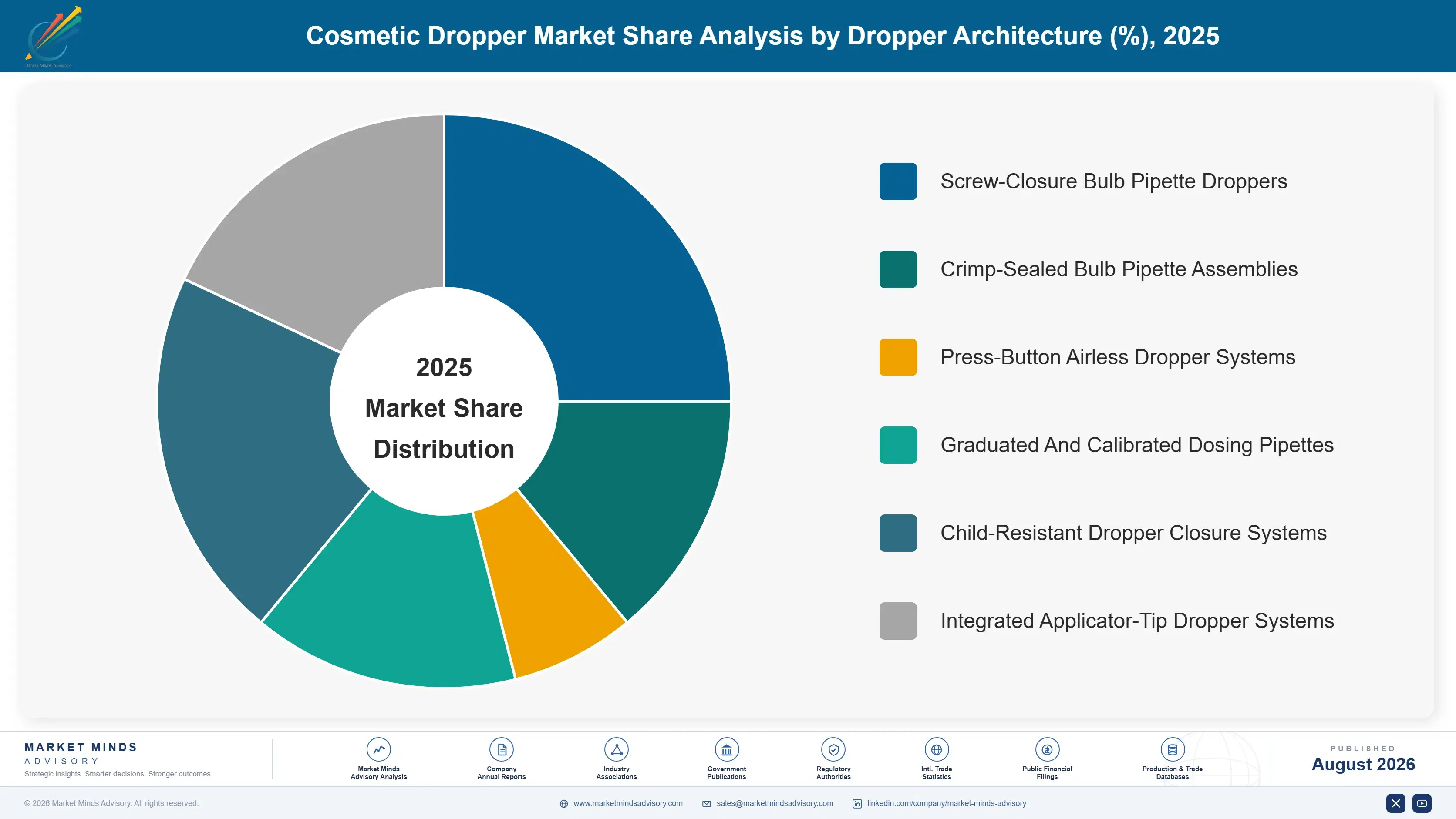
Segmentation follows dropper architecture, because architecture determines the dosing mechanism, the compatibility risk profile, the closure system, and the price point a brand can support. Formulation type and brand tier both cut across every architecture rather than separating them cleanly, so neither functions as a workable primary dimension here. Six architectures result, and they price very differently indeed.
cosmetic-dropper-market-market-share-analysis-1787298933480

Press-Button Airless Dropper Systems

The fastest architecture at 11.4%, exactly 1.50 times the market rate, and the only one that solves the category's central problem rather than working around it. A sealed piston mechanism draws a measured dose without the formulation ever contacting an elastomer bulb, which removes compatibility risk entirely and delivers consistent dose volume that squeezing never achieves. Penetration sits at around 9% of units. Cost is the brake, since the mechanism runs several times a simple bulb assembly and mass price points cannot absorb it. Brands using aggressive actives adopt it regardless, because the alternative is a bulb that discolours before the product is finished. Chinese suppliers are already building assembly capacity for these mechanisms.
CAGR 11.4%

Graduated And Calibrated Dosing Pipettes

Second fastest at 9.6%, growing on a claim rather than on any function the consumer strictly needs. Printed or moulded graduation marks let a brand instruct precise dosing, which reinforces the clinical positioning that made serums adopt droppers in the first place. Dermatologist-led and professional brands specify it almost universally now. The technical demands are modest, involving marking durability against formulation contact and consistent pipette bore, but the marking must survive two years of use without fading. Margin holds better than plain pipettes because the graduation is visible differentiation at negligible incremental cost, which is a rare combination in cosmetic components. Dermatologist-led brands specify graduation almost without exception now, and consumers have learned to expect it.
CAGR 9.6%
Full segment breakdown across 6 segments available in the complete report.

Regional Architecture and Country Demand Map

This category concentrates unusually tightly, with East Asia leading on consumption and component manufacture at the same time and sitting above its framework band as a result. Every other region falls inside band, and Western supply is specialist rather than volume. Consumption and manufacture rarely coincide this tightly.

East Asia

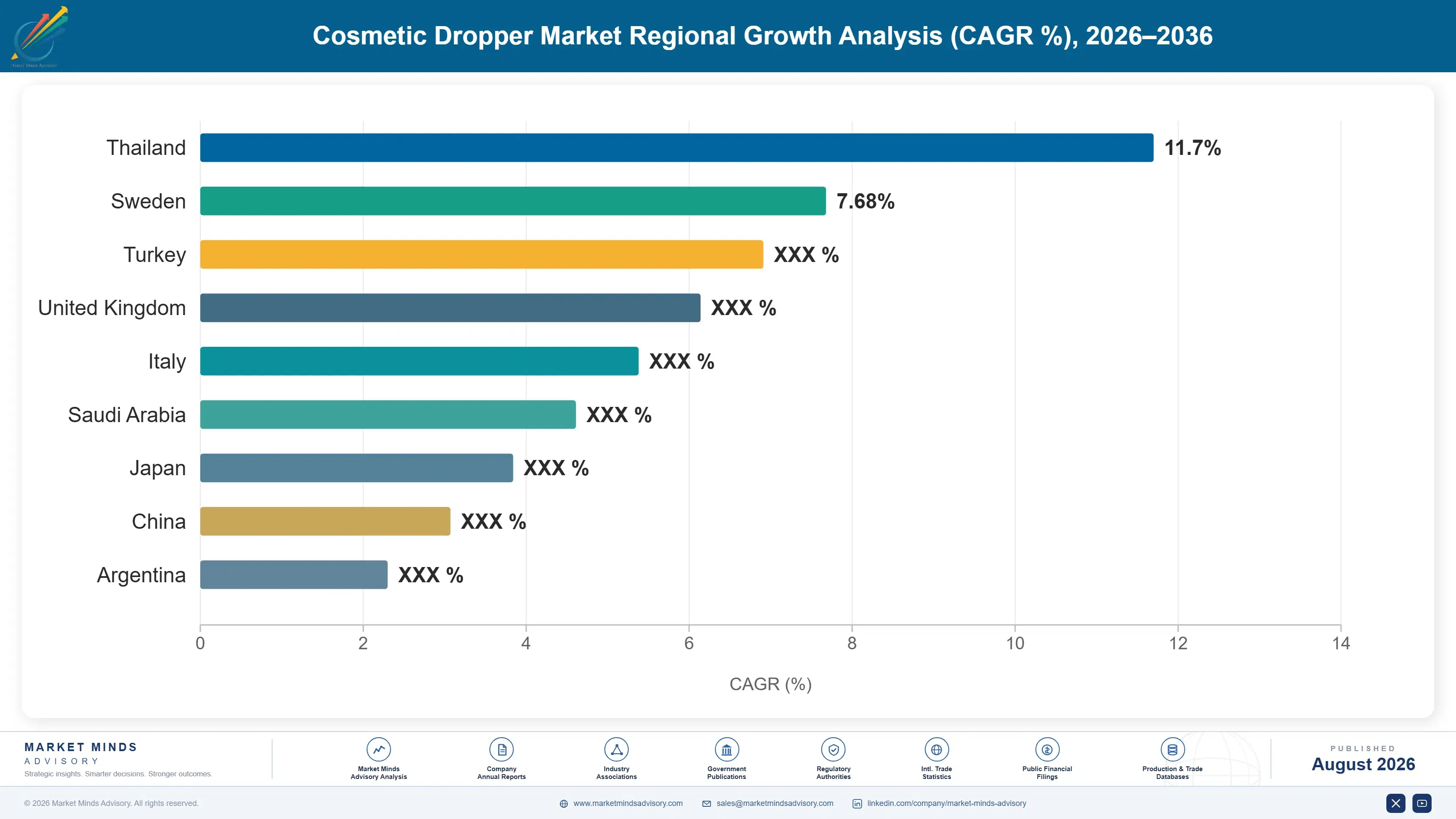
Thirty-three percent, above the framework band, and the justification is that consumption and manufacture concentrate in the same place. Korean skincare established layered serum routines that the rest of the world subsequently copied, and Chinese domestic brands now launch at a pace Western houses cannot approach, each launch specifying components locally. The regional component base spans Korean specialists with genuine airless mechanism capability and Chinese manufacturers supplying the volume tier globally. China contributes the fastest national growth rate here at 12.4%. Growth at 8.7% runs above the global rate on domestic brand proliferation and on serum penetration still climbing across second-tier Chinese cities. Format conventions established here propagate outward globally.
Share: 33% | CAGR: 8.7% (2026 to 2036)

South Asia and Pacific

Eleven percent, and India carries most of it as a formalising beauty market where serums are the fastest-growing skincare format by a clear margin. Domestic brands and Ayurvedic houses have adopted the dropper convention wholesale because it signals efficacy in a market where efficacy claims sell. Price sensitivity pushes almost all sourcing toward Chinese plastic pipette assemblies rather than European glass. Australian and Southeast Asian demand adds at higher price points with more exacting compatibility requirements. Growth at 9.7% is the highest of any region, driven by category penetration rather than by any change in what existing serum users buy. Efficacy signalling matters more here than material quality does, which shapes the specification.
Share: 11% | CAGR: 9.7% (2026 to 2036)
Regional intelligence for 5 additional markets available in the complete report: North America, Western Europe, Latin America, Middle East and Africa, Eastern Europe. Contact sales@marketmindsadvisory.com.
cosmetic-dropper-market-country-cagr-analysis-1787298934005

Four Ways to Win Dropper Business

Tooling is cheap, moulds are widely available, and Chinese suppliers price the volume tier. What separates suppliers is holding compatibility data before a brand asks for it, compounding your own elastomers, selling airless on stability rather than dosing, and taking assembly work off the brand's filling line. Four levers follow, and none of them concerns the pipette.

Build A Compatibility Library Across Common Active Systems

Every serum launch waits about 26 weeks for stability testing, and a supplier holding pre-tested data across vitamin C at low pH, retinol, glycolic acid, and common oil systems lets a brand skip straight to confirmatory work. That can remove 12 to 16 weeks from a launch timeline, which product marketing values enormously and procurement cannot price. Building the library costs perhaps 700,000 dollars across a meaningful active range and takes two years. It is the single most defensible asset available in this category, and almost nobody has invested in it properly.
Market Impact: Removes 12 to 16 weeks from a launch

Compound Your Own Bulb Elastomer Rather Than Buying It

The bulb is where the failures happen and most assemblers buy it as a finished part, which means they cannot adjust formulation when a customer's active attacks it. Compounding in-house allows tuning of filler loading, cure system, and surface treatment against specific chemistries rather than offering a catalogue choice. Capital runs around 3 million dollars for compounding and moulding capability. It also protects margin on the component that carries the highest failure risk and therefore the highest willingness to pay, which is exactly backwards from how most suppliers price it.
Market Impact: Compounding capability costs roughly 3 million dollars total

Position Airless Mechanisms On Stability. Not Dose Control

Suppliers sell press-button droppers on precise dosing, which brands find mildly interesting. What brands genuinely worry about is a bulb discolouring or leaching into a product carrying a high-concentration active claim, and airless removes that risk completely because the formulation never touches an elastomer. Reframing the proposition around stability rather than dosing shortens the sales conversation considerably and justifies a mechanism costing several times a simple bulb. Penetration sits at only 9% of units, so the headroom is substantial for whichever supplier makes this argument first and clearly. Brands using aggressive actives adopt it regardless of cost.
Market Impact: Headroom sits well above the 9% current penetration

Supply Pre-Assembled Droppers Ready For The Filling Line

Brands and their contract fillers assemble pipette, bulb, collar, and closure themselves on lines that were never designed for it, which is slow, error-prone, and generates quality issues nobody attributes to the component supplier. Supplying complete pre-assembled and cleaned droppers removes that work and typically adds 14 to 19% to component price while costing the supplier considerably less than that to deliver. It also increases switching cost, because the filling line gets reconfigured around the supplied format and reverting means changing it back. Filling lines get reconfigured around the supplied format, and reverting means changing them back.
Market Impact: Adds 14 to 19% to the component price

Who Controls the Margin Pool

Concentration reaches only 31% across the top five measured on annual dropper unit capacity, and the field splits by capability rather than by scale. European specialists hold prestige work on decorated glass pipettes and documented compatibility. Korean suppliers lead on airless mechanism engineering, and Chinese manufacturers supply the volume tier globally at prices the others cannot approach. The gap between them is widest on compatibility documentation.
Competition runs on three fronts. Compatibility data depth is the first and it decides prestige work outright. Airless mechanism engineering is the second, where Korean suppliers hold a clear lead. Decoration and assembly capability is the third, and it separates component makers from genuine packaging partners in the eyes of brand development teams. Very few suppliers hold all three capabilities together.

Pressure comes from two directions. Chinese suppliers have closed most of the quality gap on conventional bulb droppers and are now attacking airless mechanisms. And rising active concentrations keep raising the compatibility bar, which advantages suppliers holding test data and punishes those selling from a catalogue. Both pressures reward technical depth over tooling investment, which is a reversal for this industry.
cosmetic-dropper-market-company-positioning-matrix-1787298934523

Competitive Moat and Risk Dimensions

VIROSPACK

Moat: Dropper specialisation and compatibility depth

Focusing almost entirely on droppers rather than treating them as one line inside a broad packaging catalogue produces accumulated compatibility knowledge that generalist competitors have never assembled. Prestige brands developing high-active formulations come here first for exactly that reason. Specialisation also means tooling, decoration, and assembly are all configured around this one component rather than shared with unrelated products.
VIROSPACK

Risk: Narrow product concentration exposure

Depending on one component category leaves no cushion if airless mechanisms displace bulb droppers faster than expected or if a formulation trend moves away from pipette dosing altogether. Brands consolidating packaging suppliers also favour partners who can supply bottles, pumps, and closures together. A specialist wins on capability and loses on breadth whenever procurement decides to reduce its vendor count.
YONWOO

Moat: Airless mechanism engineering leadership

Korean dispensing engineering on press-button and airless mechanisms is genuinely ahead of the field, built on serving a domestic skincare industry that adopted these formats years before Western brands did. Mechanism reliability at small dose volumes is difficult, and the tolerances involved are not easily reverse engineered. That lead sits in exactly the fastest-growing architecture in the category.
YONWOO

Risk: Chinese suppliers closing mechanism gap

Chinese component manufacturers have systematically closed capability gaps in adjacent dispensing categories and are now investing in airless mechanisms specifically. The engineering lead is real but it is a lead in time rather than a protected position, since no patent covers the general architecture. Price pressure will arrive here as it already has elsewhere.

Players Tracked

Prominent Players

Virospack
Yonwoo
Quadpack
Baralan
Lumson

Other Key Players

AptarGroup
Silgan Dispensing Systems
HCP Packaging
Albea Group
Berry Global
Bormioli Luigi
Heinz-Glas
Stoelzle Glass Group
Gerresheimer
Jiangyin Baoyi Packaging
Zhejiang Hangdong Packaging
Cosmopak
Fusion Packaging
Raepak
Samhwa

Recent Developments

JANUARY 2025

Spanish specialist publishes compatibility dataset across common actives

A European dropper specialist released stability and extractables data covering its bulb elastomer range against vitamin C, retinol, and acid exfoliant systems at typical commercial concentrations. The publication was a commercial marketing decision rather than any regulatory requirement, and it is intended to shorten brand qualification timelines.
Signal: Compatibility data is being treated as a competitive asset rather than as internal quality documentation, which is overdue
APRIL 2025

Korean supplier extends airless dropper range to smaller dose volumes

A Korean dispensing manufacturer widened its press-button airless dropper range to cover smaller measured dose volumes suited to high-concentration serums used sparingly. The extension was organic product development on existing mechanism architecture rather than any licensing arrangement with another dispensing specialist. Dose volumes were not disclosed in detail.
Signal: Airless is moving into the exact formulations where bulb compatibility fails worst, which is where it should have started
AUGUST 2025

Chinese manufacturer commissions airless mechanism assembly capacity

A Chinese cosmetic component manufacturer commissioned dedicated assembly capacity for press-button airless dropper mechanisms, targeting the mid-tier brands currently priced out of Korean and European supply. The investment was organic capital expenditure funded internally rather than any joint venture with an established dispensing engineering firm.
Signal: Price compression is arriving in the fastest-growing architecture several years earlier than the incumbents were planning for

What a Twenty-One Cent Dropper Contains

Four inputs make up the assembly. Elastomer bulb material runs about 24% of component cost, with butyl, thermoplastic elastomer, and silicone all far dearer than the natural rubber they are replacing. Glass or polypropylene pipettes add roughly 22%, closures and collars a further 19%, and decoration including metallisation and lacquer accounts for most of the remainder on premium assemblies.
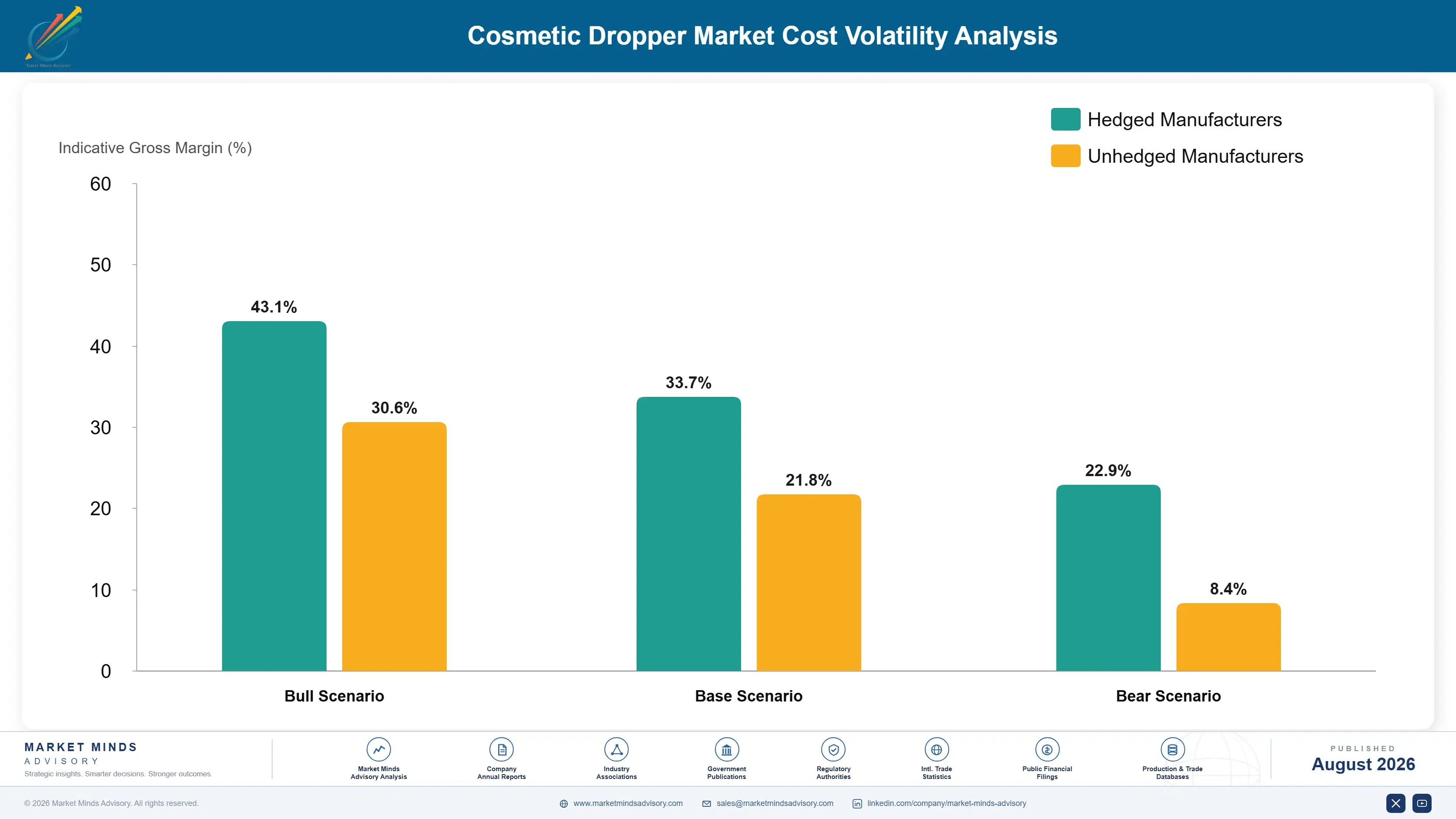
Elastomer pricing was the exposure that bit hardest. Silicone and specialty synthetic rubber grades moved sharply through the recent period on upstream siloxane and butyl availability, and suppliers who had switched customers onto premium elastomers for compatibility reasons found themselves absorbing increases inside fixed annual pricing. Company annual reports across the cosmetic components sector describe the squeeze consistently, and several suppliers renegotiated mid-contract rather than continue.

The competitive disadvantage mechanism runs through compounding rather than purchasing. A supplier compounding its own elastomer can reformulate toward cheaper filler systems while holding compatibility performance, while an assembler buying finished bulbs must accept whatever its supplier offers at whatever price. Chinese manufacturers with integrated compounding hold the strongest cost position. Small assemblers buying pipettes, bulbs, and closures separately from three suppliers carry every exposure and control none of them.
cosmetic-dropper-market-cost-volatility-analysis-1787298934717

Compound elastomer in-house to control cost and compatibility together

Buying finished bulbs means paying a supplier's margin on the single component most likely to fail, with no ability to reformulate when a customer's active attacks it. In-house compounding costs around 3 million dollars in capability and returns both cost control and technical flexibility at once, which is the clearest separation in this category.

Qualify two elastomer systems per compatibility class

Running a single approved bulb material per active class leaves a supplier badly exposed whenever that grade tightens on price or on availability, which specialty elastomers do with some regularity. Qualifying an alternative within the same compatibility class costs testing time but it removes the exposure entirely. That work has to precede any shortage.

Index elastomer content separately within annual pricing agreements

Cosmetic component pricing is conventionally agreed on annual terms, which worked perfectly well while elastomer prices were stable and then stopped working the moment that they were not. Indexing the elastomer content separately against a published reference index, while holding the rest of the assembly price fixed, protects margin without renegotiating the entire agreement.

Portfolio Architecture for Margin Defence

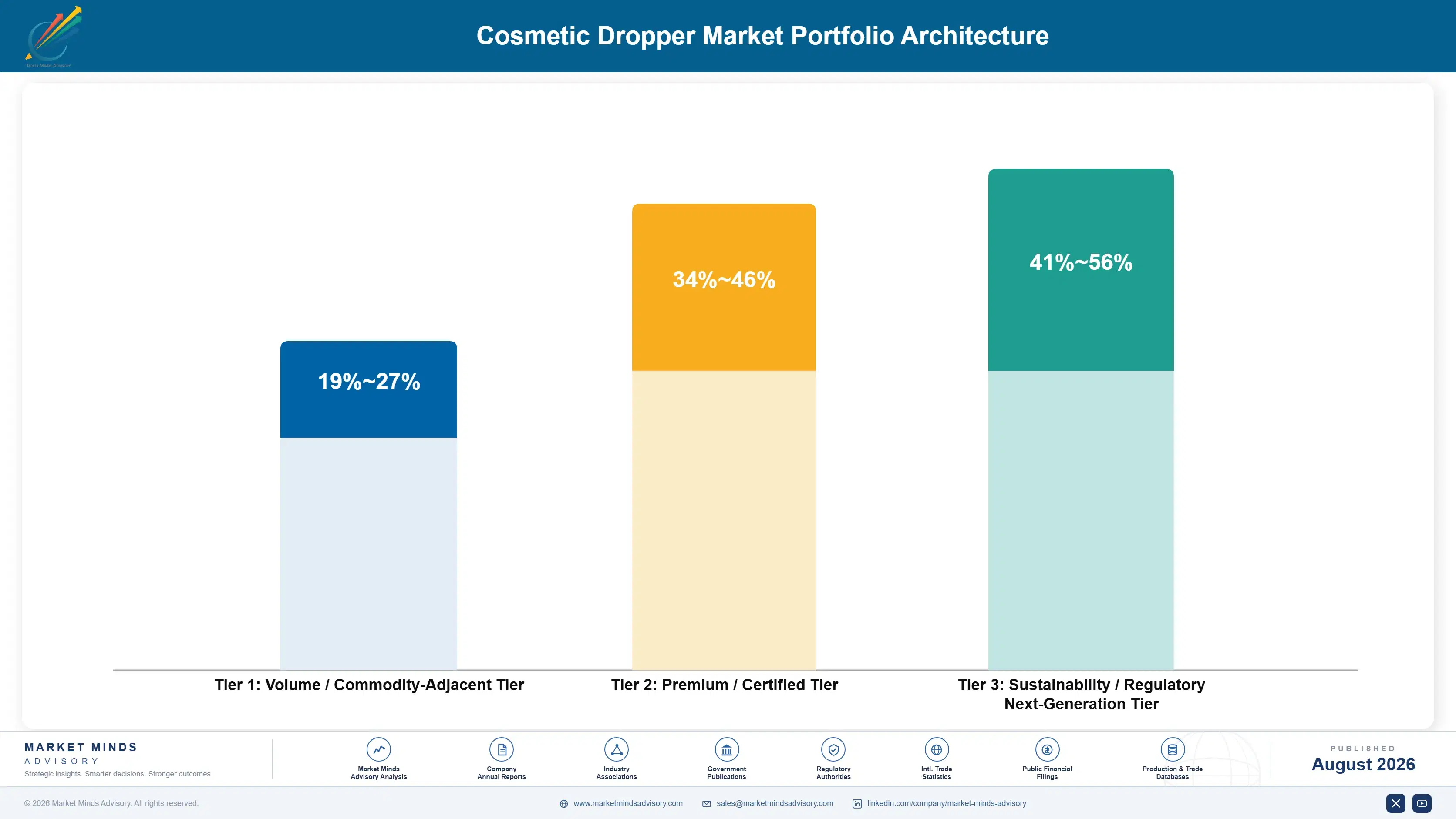
Three tiers describe this component category and the margin spread reflects qualification burden rather than material content. Standard rubber bulb assemblies with plastic pipettes serve mass and private label at commodity margins set by Chinese supply. Certified assemblies with documented compatibility, decorated glass pipettes, and premium elastomers sit considerably higher. And airless mechanisms with full stability documentation occupy a third tier where the supplier is selling risk removal
The tension is that mass volume funds the compatibility testing that premium work depends on. A supplier abandoning the volume tier loses the production scale that makes compounding and testing investment viable, and several European specialists have found their unit costs rising after retreating upmarket. Testing capability is a fixed cost that needs volume underneath it. Scale is what makes technical capability affordable at all.

High-value pools concentrate wherever a supplier removes work or risk from the brand rather than supplying a part. Compatibility libraries and pre-assembled droppers both do that measurably. Both are sold to functions that packaging procurement does not control, which changes the entire conversation, and both are bought by people who never see a component price list.

Volume / Commodity-Adjacent Tier

Standard rubber or thermoplastic bulb assemblies with plastic pipettes and simple closures, supplied to mass, pharmacy, and private label brands. Thin margin set by Chinese component pricing, and the volume that makes testing and compounding investment viable at all.
Gross Margin: 19-27%

Premium / Certified Tier

Decorated glass pipettes with premium elastomer bulbs, metallised collars, and documented compatibility against the brand's specific actives. Margin reflects testing depth and decoration capability rather than any meaningful difference in raw material content.
Gross Margin: 34-46%

Sustainability / Regulatory / Next-Generation Tier

Press-button airless mechanisms, pre-assembled cleaned droppers, and full extractables and leachables documentation packages. Best margin in the category because the supplier is removing formulation risk and filling line work rather than supplying a part.
Gross Margin: 41-56%
cosmetic-dropper-market-portfolio-architecture-1787298935213

High-value Sub-segments and Strategic Watch-out

Press-Button Airless Dropper Systems

Best margin and fastest growth in the category at 11.4%, removing the compatibility problem entirely rather than managing it around increasingly aggressive actives. Chinese suppliers are already building mechanism assembly capacity, so pricing protection here is a lead in time rather than a defended position.
Gross Margin: 41-56%

Documented Compatibility Assemblies

Strong margin earned by removing 12 to 16 weeks from a brand launch timeline, which product marketing values far more highly than procurement can price. Building the underlying test library takes about two years, which is why so few suppliers have one. Formulation teams rather than procurement value that timeline.
Gross Margin: 34-46%

Standard Bulb And Plastic Pipette Assemblies

The volume core at commodity margin under Chinese pricing, and the scale that makes compounding and compatibility testing investment economic. European specialists retreating upmarket found their unit costs rising once this volume disappeared beneath them. Fixed testing overhead needs volume underneath it, and this tier supplies that volume.
Gross Margin: 19-27%

Decorated Glass Pipette Assemblies

The strategic watch-out, carrying good margin from metallisation and lacquer while facing direct substitution as parcel network breakage pushes brands toward glass-look plastic. Prestige retail distribution protects it, and direct-to-consumer channels progressively do not. Channel-specific packaging doubles qualification work per product, which nobody has budgeted for.
Gross Margin: 31-43%

Why Brands Rarely Switch Supplier

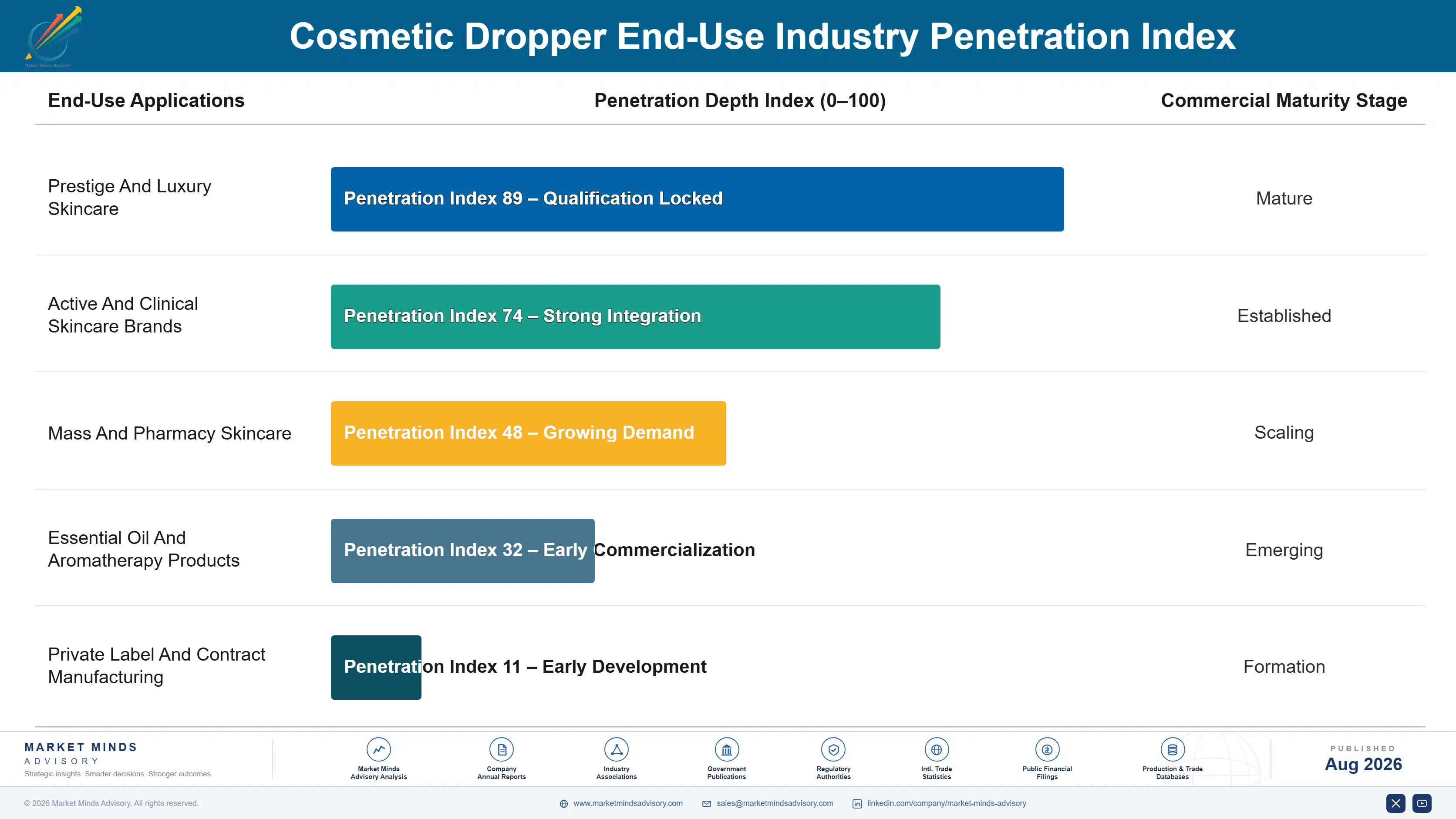
A dropper programme runs for the commercial life of the product, which for a successful serum means many years on the same specification with the same supplier. What locks that in is not loyalty but the 26 weeks of accelerated stability testing already completed against that exact formulation. Requalifying a different bulb elastomer means repeating the work and accepting launch risk on a product already selling. Suppliers who understand this price accordingly at renewal.
Adoption depth varies sharply by brand type. Prestige houses specify bespoke decoration, demand full extractables documentation, and hold suppliers across product generations. Active-led clinical brands care about compatibility above everything and will pay for airless outright. Mass and private label buy on component price with short commitments and switch readily. Direct-to-consumer brands behave differently again, prioritising parcel survivability over shelf appearance entirely, which makes them the least loyal buyers in the category.

Buyer profiles are shifting as formulation and regulatory functions gain influence over a decision packaging teams previously owned. Extractables questions now arrive at concept stage rather than after the design is locked. Extractables questions now arrive from regulatory affairs directly, and packaging teams cannot answer them.
cosmetic-dropper-market-end-use-penetration-index-1787298935701

What We Would Tell a Board

These are among the four positions where our research anticipates prominent divergence between winners and laggards over the coming forecast period. Each is grounded in the demand model, the regulatory perimeter, and the announced capacity pipeline.
01 / COMPATIBILITY DATA INVESTMENT

Own the test library before the brief arrives

Every serum launch waits roughly 26 weeks for stability testing against the chosen dropper, and a supplier holding pre-tested data across common active systems removes 12 to 16 weeks from that timeline. Product marketing values recovered launch weeks enormously and procurement has no mechanism to price them, which is exactly the position a supplier wants to occupy. Building that library costs perhaps 700,000 dollars and takes two years, and it remains comfortably the most defensible commercial asset available anywhere in this component category.
02 / ELASTOMER VERTICAL INTEGRATION

Compound the bulb; it is where failure lives

Bulb degradation accounts for around 3.8% of consumer complaints on high-acid formulations, and assemblers buying finished bulbs simply cannot reformulate when a customer's active attacks the material. In-house compounding costs roughly 3 million dollars in capability and it delivers both cost control and the technical flexibility to solve a customer's problem rather than merely explain it. Every genuinely strong position in this category belongs to a supplier who controls its own elastomer chemistry rather than buying the part in finished form.
03 / AIRLESS SALES REPOSITIONING

Sell stability protection, not precise dosing

Suppliers pitch press-button droppers on measured dose accuracy, which brand teams find mildly interesting and very rarely pay any premium for. What actually worries a brand launching a high-concentration active is a bulb that discolours or leaches, and airless removes that risk completely because the formulation never touches an elastomer. Reframing the proposition around formulation stability justifies a mechanism costing several times a simple bulb assembly, and penetration at only 9% of units leaves substantial headroom for whoever makes that argument clearly first.
04 / VOLUME TIER RETENTION

Retreating upmarket raises your own unit costs

Compatibility testing and elastomer compounding are fixed costs that need production volume underneath them to make economic sense at all. Several European specialists abandoned mass and private label work to protect reported margin percentage, and then found unit costs rising across their remaining premium output as production scale disappeared beneath them. Holding the volume tier through Asian assembly partnerships or through simplified specifications defends the fixed cost base that the premium business genuinely depends upon, however unglamorous that work looks.

Engagement Snapshot From the Field

A live engagement with an industry participant carrying material or product regulatory and market exposure ahead of a defining policy shift, showing how our research translates into a defensible multi-year portfolio strategy.
MARKET MINDS ADVISORY · CLIENT ENGAGEMENT SUMMARY
Cosmetic Dropper Producer Strategic Portfolio Review and Transition Roadmap 2026·Investment Scenario on Cosmetic Dropper Exposure Evaluation 2025-26
CLIENT PROFILE
A European dropper and dispensing component supplier with approximately 120 million dollars in annual revenue (client-reported, unverified by MMA), serving prestige and masstige skincare brands across Europe and North America. The company bought all bulb elastomer as finished parts, had exited mass and private label work two years earlier to protect margin, and sold its limited airless range on dose accuracy.
STRATEGIC CHALLENGE
Gross margin percentage had improved after the mass tier exit while absolute profit declined, and the company had lost three prestige tenders in twelve months to suppliers offering shorter qualification timelines. Management proposed further premiumisation. The board wanted independent assessment of whether the strategy was actually working before approving it.
MMA APPROACH
We rebuilt unit cost against production volume across three years to isolate scale effects from mix effects, reviewed all three lost tenders against the winning propositions, and benchmarked compatibility documentation depth across nine competing suppliers. Brand development and formulation teams across six customers were interviewed on how dropper suppliers are actually selected and by whom.
KEY FINDINGS
  1. Unit conversion cost had risen roughly 17% since the mass tier exit as fixed testing and tooling overhead spread across substantially lower volume, consuming most of the margin percentage gain.
  2. All three lost tenders turned on qualification timeline rather than price, with winners holding pre-tested compatibility data the client would have needed six months to generate.
  3. Formulation rather than packaging teams held decisive influence at five of six customers interviewed, and none had been shown extractables data by the client at proposal stage.
  4. Bought-in bulb supply had prevented the client from solving two customer compatibility failures, both of which were subsequently resolved by a competitor compounding its own elastomer.
CLIENT PROFILE
A European dropper and dispensing component supplier with approximately 120 million dollars in annual revenue (client-reported, unverified by MMA), serving prestige and masstige skincare brands across Europe and North America. The company bought all bulb elastomer as finished parts, had exited mass and private label work two years earlier to protect margin, and sold its limited airless range on dose accuracy.
STRATEGIC CHALLENGE
Gross margin percentage had improved after the mass tier exit while absolute profit declined, and the company had lost three prestige tenders in twelve months to suppliers offering shorter qualification timelines. Management proposed further premiumisation. The board wanted independent assessment of whether the strategy was actually working before approving it.
MMA APPROACH
We rebuilt unit cost against production volume across three years to isolate scale effects from mix effects, reviewed all three lost tenders against the winning propositions, and benchmarked compatibility documentation depth across nine competing suppliers. Brand development and formulation teams across six customers were interviewed on how dropper suppliers are actually selected and by whom.
KEY FINDINGS
  1. Unit conversion cost had risen roughly 17% since the mass tier exit as fixed testing and tooling overhead spread across substantially lower volume, consuming most of the margin percentage gain.
  2. All three lost tenders turned on qualification timeline rather than price, with winners holding pre-tested compatibility data the client would have needed six months to generate.
  3. Formulation rather than packaging teams held decisive influence at five of six customers interviewed, and none had been shown extractables data by the client at proposal stage.
  4. Bought-in bulb supply had prevented the client from solving two customer compatibility failures, both of which were subsequently resolved by a competitor compounding its own elastomer.
RECOMMENDED STRATEGY
Phase 1: Phase 1 (months one to nine): commission a compatibility test library across the six most common active systems and publish the results commercially. Phase 2: Phase 2 (months nine to twenty-four): establish in-house elastomer compounding capability and re-enter masstige volume work through simplified component specifications. Phase 3: Phase 3 (months twenty-four to thirty-six): reposition the airless range on formulation stability and extend it toward smaller dose volumes.
OUTCOME
The client commissioned the compatibility library and reversed its volume tier exit. Qualification timelines quoted to brands shortened by roughly a quarter and unit conversion cost fell back toward prior levels within four quarters (client-reported, unverified by MMA), with compounding capability approved for commissioning the following year.

Frequently Asked Questions

Foundational context covering the market sizes, CAGR, scope, country, region and competition that inform every finding below. This section is provided to cover basics and most often pre-purchase conversations, answered from the MMA Primary Research Dataset.

What is the current size of the Cosmetic Dropper Market?

The market is valued at USD 0.94 billion in 2025, rising to USD 1.01 billion in 2026. Serums now account for roughly 24% of skincare category value.

How large will the Cosmetic Dropper Market be by 2036?

MMA forecasts USD 2.10 billion by 2036, an increase of USD 1.09 billion over the 2026 base. That represents an expansion multiple of 2.08 times.

What is the CAGR for the Cosmetic Dropper Market 2026 to 2036?

The base case CAGR is 7.6%, with a bull case of 8.8% and a bear case of 6.4%. The historical rate from 2020 to 2025 was 6.3%.

Which segment is growing fastest?

Press-button airless dropper systems at 11.4%, exactly 1.50 times the market rate. They keep the formulation away from the elastomer bulb, removing the compatibility problem rather than managing it.

Who are the major companies in the Cosmetic Dropper Market?

Virospack, Yonwoo, Quadpack, Baralan, and Lumson lead on annual dropper unit capacity. The top five together hold only 31% of a highly fragmented market split between European specialists and Asian manufacturers.

Which country is growing fastest?

China at 12.4%, driven by domestic skincare brands launching at a pace Western houses cannot match and by serum penetration climbing across second-tier cities. Component supply is largely local.

Report Segmentation Architecture

The full report scope spans multiple orthogonal segmentation dimensions, with cross-tabulated demand data provided for each dimension pair. Coverage extends further to regional breakdowns, trend trajectories, and the competitive detail needed to support segment-level decision-making.

By Dropper Architecture

  • Screw-Closure Bulb Pipette Droppers
  • Crimp-Sealed Bulb Pipette Assemblies
  • Press-Button Airless Dropper Systems
  • Graduated And Calibrated Dosing Pipettes
  • Child-Resistant Dropper Closure Systems
  • Integrated Applicator-Tip Dropper Systems

By End-Use Industry

  • Prestige And Luxury Skincare
  • Active And Clinical Skincare Brands
  • Mass And Pharmacy Skincare
  • Essential Oil And Aromatherapy Products
  • Private Label And Contract Manufacturing

By Commercial Model

  • Component Supply For Brand Assembly
  • Pre-Assembled And Cleaned Dropper Supply
  • Bespoke Tooled Development Programmes
  • Stock Catalogue Component Supply

By Region

  • East Asia
  • South Asia and Pacific
  • North America
  • Western Europe
  • Latin America
  • Middle East and Africa
  • Eastern Europe

Scope, Methodology, and Coverage

Every figure in this report is reproducible from documented input assumptions. The scope below maps the historical period, the forecast horizon, the segmentation dimensions, and the countries covered, alongside the underlying primary and qualitative methodology.
Historical Period
2020 to 2025
Forecast Period
2026 to 2036
Base Year
2025 (USD billions; MMA Primary Research Dataset, August 2026)
Market Definition
This market comprises dropper and pipette dispensing assemblies supplied to cosmetic and personal care products, measured at component supplier realised prices inclusive of applied decoration and assembly. Architecture coverage spans screw-closure bulb droppers, crimp-sealed pipette assemblies, press-button airless systems, graduated dosing pipettes, child-resistant dropper closures, and integrated applicator-tip designs across glass and plastic pipette materials. Primary bottles and jars, pumps and airless pumps supplied without pipettes, formulation and contract filling services, retail display components, and dropper assemblies supplied into pharmaceutical or in vitro diagnostic applications fall outside scope.
Quantitative Units
USD billions (current prices); million dropper units shipped; average assembly cost per unit
Segmentation Dimensions
By Dropper Architecture; By End-Use Industry; By Commercial Model; By Region
Regions Covered
East Asia, South Asia and Pacific, North America, Western Europe, Latin America, Middle East and Africa, Eastern Europe
Countries Covered
China, South Korea, Japan, Taiwan, India, Indonesia, Thailand, Vietnam, Australia, USA, Canada, Mexico, Brazil, Colombia, Argentina, Spain, Italy, France, Germany, UK, Netherlands, Poland, Turkey, UAE, Saudi Arabia, Egypt, South Africa, Nigeria, Switzerland, and additional markets relevant to this sector
Key Companies Profiled
Virospack, Yonwoo, Quadpack, Baralan, Lumson, AptarGroup, Silgan Dispensing Systems, HCP Packaging, Albea Group, Berry Global, Bormioli Luigi, Heinz-Glas, Stoelzle Glass Group, Gerresheimer, Jiangyin Baoyi Packaging, Zhejiang Hangdong Packaging, Cosmopak, Fusion Packaging, Raepak, Samhwa
Quantitative Methodology
Primary survey, n=3,800 respondents, Q4 2025, six countries; demand-side model with trade association cross-validation
Qualitative Methodology
47 expert interviews, Q4 2025; applied to validate demand model assumptions, identify emerging dynamics, and assess competitive positioning
Report Format
PDF and XLSX data workbook (Word format preview document)
Publisher
Market Minds Advisory
Report Code
MMA-2026-PAC-252
Published
August 2026
Contact
sales@marketmindsadvisory.com | www.marketmindsadvisory.com

Purchase the full Cosmetic Dropper Market Report (2026 to 2036).

The full report sizes cosmetic droppers across six architectures, five end-use brand types, four commercial models, and seven regions, with country detail for the twenty largest national markets. Compatibility performance is documented by elastomer class against the most common active systems, including vitamin C at commercial pH, retinol, acid exfoliants, and neat essential oils. Qualification timelines are benchmarked by supplier, since launch weeks recovered are what brands actually buy. Competitive profiling covers twenty companies on annual dropper unit capacity. Airless mechanism penetration and pricing are tracked by region and brand tier.
Compatibility performance by elastomer class against common actives
Qualification timeline benchmarking across twelve leading suppliers
Airless mechanism penetration and pricing by region
Parcel network breakage rates for glass and plastic pipettes
Pre-assembled supply pricing against component-only equivalents
Extractables documentation depth compared across supplier tiers

Built For The People Who Decide

From boardroom strategy to bench-side execution, this report is read cover-to-cover by leaders shaping the next decade of their industry, turning demand scenarios, market dynamics and valuation benchmarks into decisions.
CXOs/ Presidents/ VPs/ Managers
M&A and Corporate Development
Strategy Teams and R&D Heads
Procurement and Product Directors
Regulatory and Compliance Leaders
Investor Relations and Equity Analysts