

Market Minds Advisory
Corn Silage Market

Corn Silage Market: Corn Silage Market. Hybrid Genetics and Inoculant Innovation Reshape Livestock Forage Production.

Rising dairy herd productivity targets and hybrid genetics innovation are reshaping how livestock operations source forage, pushing corn silage production toward higher-digestibility hybrids and inoculant treatment programs across major feeding regions worldwide.

Lead Analyst

Published

September 2026

Make Smarter Decisions with Customized Research Insights

Request a free sample report and evaluate market opportunities, growth trends, and competitive dynamics relevant to your business needs.

2025 MARKET VALUE$38.5BMarket Size 2025
2036 FORECAST VALUE$60.5BBase Case , 2026 to 2036
CAGR 2026 TO 20364.2 %Bull 5.3% / Bear 3.0%
INCREMENTAL OPPORTUNITY$20.4BNet 10- year value creation
EXPANSION MULTIPLE1.51x2036 value over 2026 base
Strategic Levers
M&A Pipeline
Regional Outlook
Country Rankings
Competitive Intelligence
Segmental Deep-dive
Call-Us : 91 93563 13602

Executive Snapshot and Market Trajectory.

Dairy and beef operations worldwide are shifting toward higher-digestibility corn silage hybrids and inoculant treatment programs as herd productivity targets tighten feed conversion economics across major producing regions on nearly every populated continent today, from North America to East Asia and beyond.
Brown midrib hybrid adoption is accelerating fastest among large dairy operations chasing energy density gains, while inoculant treatment has become close to standard practice on commercial-scale farms seeking fermentation consistency and reduced storage loss across the harvest season. North America's corn belt dairy and feedlot density anchors global production and remains the reference point for hybrid genetics innovation, while East Asian dairy expansion is scaling demand rapidly from a comparatively small existing production base.
Competitive dynamics center on custom harvesting service quality, seed genetics partnerships, and inoculant formulation science rather than commodity grain trading patterns, since most silage never leaves the farm or regional feed shed where it was originally grown and stored for the season. Weather volatility and drought exposure remain the dominant swing factor in annual tonnage and quality, forcing feed planners toward more conservative inventory buffers and multi-year storage contingency planning.
Market Definition
Corn silage comprises whole-plant corn harvested and fermented as livestock forage, including conventional, brown midrib, and inoculant-treated production. The scope excludes grain corn sold for food, ethanol, or export, and excludes non-corn forage crops such as grass or alfalfa silage.
Base Year Value
$38.5B in 2025 (MMA Primary Research Dataset, September 2026)
Forecast Period
2026 to 2036, eleven discrete annual values
CAGR
4.2% base case. Bull 5.3%. Bear 3.0%.
Fastest Growth Segment
Brown Midrib Hybrid Silage: 7.0% CAGR
Fastest Growth Country
China: 6.8% CAGR
Fastest Growth Region
South Asia and Pacific: 6.2% CAGR
Largest Region
North America: 38% of 2025 global value
Market Leaders
Pioneer (Corteva Agriscience), Bayer Crop Science, Syngenta Group, Lallemand Inc., Chr. Hansen Holding A/S. Source: MMA Analysis, company annual reports.
Primary Survey
n=3,800 procurement and R&D decision-makers, Q4 2025, six countries
Methodology
Demand-side build-up, cross-validated against public data, 47 expert interviews

Corn Silage Market Forecast Scenarios

corn-silage-market-size-forecast-scenario-1789747439301
Between 2020 and 2025, corn silage production grew steadily as dairy herd consolidation favored larger operations with the scale to invest in dedicated silage storage and harvesting equipment across major producing regions. Growth ran at roughly a 3.6% historical rate, tempered by periodic drought years that cut yields sharply across major producing states and provinces during the period.
The base case assumes 4.2% annual growth through 2036, anchored on three mechanisms: continued brown midrib hybrid conversion among large dairy operations chasing energy density gains, expanding inoculant treatment adoption that reduces storage loss and improves fermentation consistency across the harvest season, and rising East Asian dairy herd expansion creating entirely new silage demand from a small existing base. Custom harvesting service penetration continues rising as smaller operations outsource equipment-intensive harvest logistics.
The bull case, reaching 5.3%, depends on East Asian dairy expansion accelerating faster than currently expected alongside continued brown midrib penetration gains across most major producing regions. The bear case, falling to 3.0%, reflects sustained drought conditions across major producing regions forcing operations toward alternative forage sources during extended water-scarce growing seasons and harvest windows.

Hybrid Genetics Reshape Forage Production Economics

Corn silage occupies an unusual position among agricultural commodities, since the overwhelming majority never enters a conventional trading market at all. Most tonnage is grown, harvested, and fed on the same farm or within a short trucking radius of where it was originally produced, meaning market value derives almost entirely from feed substitution economics rather than commodity exchange pricing seen in grain markets.
MARKET CONCENTRATION18% CR5Top five seed and inoculant suppliers hold modest share
AVERAGE SELLING PRICE$48 per tonStanding silage commands steady, regionally consistent per-ton pricing
TOP PRODUCING COUNTRY31% shareLeading producer concentrates a substantial portion of global tonnage
INOCULANT TREATMENT RATE42%Nearly half of commercial acreage now receives fermentation treatment
BROWN MIDRIB ADOPTION14%Specialty hybrid acreage remains a modest but expanding minority
STORAGE DRY MATTER LOSS8%Typical bunker storage still loses meaningful feed value annually
Genetics innovation is the primary lever suppliers use to differentiate, since brown midrib hybrids deliver meaningfully higher digestibility and energy density than conventional varieties at a modest yield tradeoff most operations accept willingly given the milk production gain. Seed companies bundle genetics with agronomic support and inoculant recommendations, effectively competing on total feed value delivered per acre rather than seed price alone.
Weather remains the dominant swing factor determining both tonnage and quality in any given season, with drought years forcing operations to supplement with purchased forage or reduce herd stocking rates accordingly across affected regions. Storage technology, particularly bunker silo management and inoculant treatment, has become a meaningful margin lever as operations work to minimize dry matter loss between harvest and feed-out throughout the winter months.
"Silage genetics decisions get made a full year before anyone sees the feed value show up in milk tank receipts. That lag is exactly why the best dairy operations treat seed selection as a financial decision, not an agronomic afterthought."
Practice Lead, Agricultural Commodities and Livestock Feed Practice · MMA Agricultural Commodities and Livestock Feed Practice · September 2026

Market Trends

Brown Midrib Hybrid Adoption Accelerates Among Large Dairies

Large-scale dairy operations are converting acreage to brown midrib corn hybrids at an accelerating pace, drawn by meaningfully higher fiber digestibility that translates directly into greater milk production per ton of silage fed to the herd each and every day. Seed companies have responded by expanding brown midrib breeding programs and offering agronomic support specifically tailored to the hybrid's distinct standability and yield characteristics. Adoption remains concentrated among the largest dairy operations able to absorb the modest yield penalty in exchange for superior feed conversion economics across their entire herd.
Market Impact: China dairy herd growing 6.8% annually

Precision Moisture Sensing Optimizes Harvest Timing Decisions

Farm operations are adopting handheld and drone-based moisture sensing technology to pinpoint optimal harvest timing within the narrow window that maximizes both dry matter yield and fermentation quality across the entire field being harvested that season. Harvesting even a few days outside the ideal moisture range meaningfully reduces feed value, making precision timing an increasingly important lever for operations managing large acreage across dispersed fields and multiple farm sites. Custom harvesting service providers are building sensing capability directly into their offering to differentiate from competitors still relying on visual estimation alone.
Market Impact: feedlot silage use up 5.5% yearly

Market Opportunities and Growth Drivers

Rising Dairy Consumption Drives Herd Expansion in Asia

Dairy consumption is climbing steadily across China, India, and Southeast Asia as rising incomes shift diets toward higher protein and dairy intake, prompting governments and private investors to fund large-scale intensive dairy operations rather than relying on traditional smallholder grazing systems. These new operations require consistent, high-quality forage that pasture grazing alone cannot reliably supply, creating fresh corn silage demand in regions where the crop was historically grown mainly for grain rather than whole-plant forage. Seed and inoculant suppliers are expanding regional sales and agronomic support teams to capture this emerging demand.
Market Impact: yields can swing over 25% annually

Beef Feedlot Intensification Increases Silage Utilization Rates

Beef production is shifting toward concentrated feeding operations that finish cattle faster and more predictably on formulated rations including corn silage, replacing extended pasture grazing periods that once dominated beef production in many regions and countries worldwide today and previously. This intensification improves feed conversion efficiency and shortens time to market weight considerably, but requires consistent, high-quality silage supply that smaller feedlots often source through custom harvesting arrangements rather than growing entirely on their own land. Feedlot operators increasingly specify hybrid genetics and inoculant treatment in their silage purchasing contracts.
Market Impact: acreage can shift 10% between seasons

Market Restraints and Challenges

Drought Volatility Undermines Annual Tonnage Predictability

Corn silage yield and quality swing sharply with growing-season rainfall, a root cause rooted in the crop's shallow harvest window and inability to recover from moisture stress the way grain corn sometimes can through delayed maturity and later harvest timing decisions made locally. Drought years force livestock operations into costly purchased forage or reduced herd stocking, directly compressing margins at exactly the moment feed costs are rising fastest across affected regions and countries. Operations are mitigating exposure through drought-tolerant hybrid selection and expanded on-farm storage capacity that buffers against single-season shortfalls.
Market Impact: 14% of acreage now brown midrib

Grain Price Competition Limits Silage Acreage Expansion

Farmers weighing whether to dedicate acreage to silage versus grain corn or soybeans base the decision largely on relative crop pricing, and periods of strong grain prices pull land away from silage production toward higher-margin alternatives each and every planting season. This root cause creates acreage volatility that silage buyers cannot easily plan around, since farmer planting decisions happen months before livestock operations know their actual feed needs. Long-term supply contracts and forward acreage agreements are becoming more common as operations seek to secure planting commitments ahead of each season.
Market Impact: cuts spoilage losses up to 5%
3 additional market trends, 4 additional growth drivers, and 3 additional restraints and challenges are covered in the full report. Contact sales@marketmindsadvisory.com to access the complete intelligence.

Segment CAGR and Growth Architecture

Corn silage segments by genetics and treatment type, since hybrid selection and fermentation treatment determine feed value more directly than any other classification available to buyers sourcing forage today. Brown midrib and inoculant-treated silage are absorbing disproportionate adoption investment as large dairy and feedlot operations chase measurable gains in feed conversion efficiency across their herds.
corn-silage-market-market-share-analysis-1789747439571

Brown Midrib Hybrid Silage

Brown midrib hybrid silage has become the fastest-growing segment as large dairy operations chase the meaningfully higher fiber digestibility that translates directly into greater milk production per ton of feed consumed each and every day of the feeding cycle. The hybrid's genetic trait reduces lignin content in the plant, making the fiber more accessible to rumen microbes and improving overall energy extraction from every acre harvested across the growing season. Seed companies have expanded breeding programs specifically targeting this trait, and adoption is spreading beyond the largest dairies into mid-sized operations willing to accept a modest yield penalty in exchange for superior feed conversion economics across their entire milking herd.
CAGR 7.0%

Inoculant-Treated Silage

Inoculant-treated silage is expanding steadily as operations of nearly every size recognize the fermentation consistency and reduced dry matter loss that bacterial inoculants deliver compared to untreated silage left to ferment naturally without any intervention at all during the entire storage period and season. Treatment has become close to standard practice on commercial-scale farms nationwide, since the cost per ton is modest relative to the feed value preserved through reduced spoilage and more predictable fermentation outcomes across storage seasons and varying weather conditions each year. Inoculant suppliers are increasingly bundling strain selection with agronomic consulting, positioning treatment as a total feed value service rather than a simple additive purchase decision.
CAGR 6.0%
Full segment breakdown across 6 segments available in the complete report.

Regional Architecture and Country Demand Map

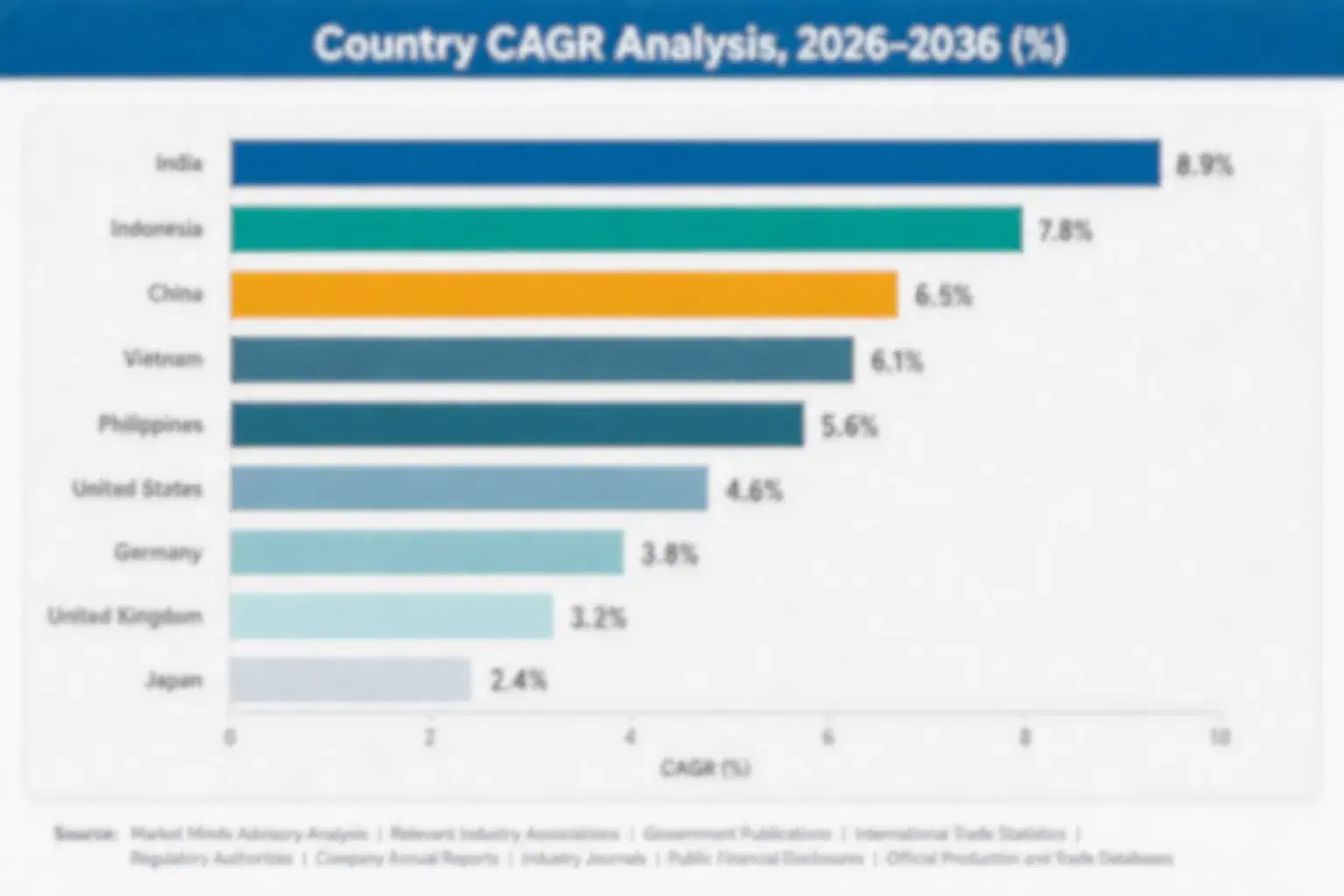
Corn silage value concentrates where dairy and beef feeding density is highest rather than where corn acreage alone happens to be largest. North America's feedlot and dairy density anchors global tonnage, while East Asian silage remains comparatively underdeveloped despite the region's rapidly growing dairy sector.

North America

North America holds 38% share, well above its typical band, because the region's corn belt combines the world's densest concentration of large-scale dairy operations and cattle feedlots with the corn acreage needed to feed them locally, making this a manufacturing-adjacent, feeding-density market rather than one sized on population or land area alone. Wisconsin, Iowa, and California anchor dairy demand, while Texas and Nebraska feedlots drive beef sector consumption at enormous scale. Brown midrib and inoculant adoption both run highest here, reflecting the scale and sophistication of the region's largest operations relative to smaller farms elsewhere in the world. Custom harvesting services and seed genetics partnerships are also most developed across this region's dense feeding corridors.
Share: 38% | CAGR: 4.0% (2026 to 2036)

Western Europe

Western Europe holds 22% share, positioned mid-band, anchored by Germany, France, and the Netherlands, where dense dairy herds and limited pastureland push operations toward intensive silage-based feeding systems rather than extended grazing across the countryside and rural hillsides throughout the year and across seasons. Regulatory pressure on nitrogen and methane emissions is pushing some operations toward feed efficiency improvements that favor higher-digestibility hybrids and inoculant treatment programs across most commercial dairy farms. Land constraints relative to herd size mean European operations generally extract more milk value per ton of silage than less land-constrained producers elsewhere, supporting continued investment in genetics and fermentation quality across the region's dairy heartlands and export-oriented farms.
Share: 22% | CAGR: 2.8% (2026 to 2036)
Regional intelligence for 5 additional markets available in the complete report: East Asia, South Asia and Pacific, Latin America, Middle East and Africa, Eastern Europe. Contact sales@marketmindsadvisory.com.
corn-silage-market-country-cagr-analysis-1789747439856

Four Margin Levers Reshaping Silage Economics

Margin growth in corn silage increasingly comes from genetics differentiation and service bundling rather than raw tonnage alone, since undifferentiated conventional silage commands thin, commoditized regional pricing across most producing areas and growing seasons. Suppliers that pair premium hybrid genetics with fermentation and harvesting services are capturing disproportionate share of large operation feed budgets.

Upselling Brown Midrib Premium Hybrid Genetics

Seed companies that convert dairy customers from conventional to brown midrib hybrids capture price premiums of 15% to 25% per bag over standard genetics, since the digestibility gain translates directly into measurable milk production value that operations are willing to pay for well upfront each planting season. This upsell requires agronomic support to manage the hybrid's distinct standability characteristics, but the margin gain typically exceeds the incremental breeding and support cost by a wide margin. Companies with established brown midrib breeding programs move faster on these conversions than competitors still building comparable genetics.
Market Impact: premiums of 15% to 25% per bag sold

Bundling Inoculant Treatment With Genetics Sales

Suppliers that bundle inoculant treatment recommendations directly with seed sales capture additional per-acre revenue while improving customer feed value outcomes, creating a stickier overall relationship than genetics alone would support on its own across the entire customer lifecycle. This bundled approach lets suppliers position themselves as total feed value advisors rather than simple seed vendors, deepening the technical relationship with large operations that value integrated recommendations across their entire acreage. Inoculant attach rates on bundled genetics sales run 20 points higher than standalone inoculant sales through separate distribution channels and retailers.
Market Impact: inoculant attach rates up 20 percentage points typically

Expanding Custom Harvesting Service Offerings Further

Custom harvesting providers that add precision moisture sensing and quality consulting to their core equipment service are winning contracts worth 10% to 20% more than basic harvesting alone, since operations increasingly value the expertise alongside the equipment access itself across every field harvested. This service expansion requires capital investment in sensing technology and staff training, but positions providers as strategic partners rather than commodity equipment operators competing purely on hourly rate. Larger custom harvesting operations are consolidating smaller regional providers to build this expanded service capability faster and more consistently.
Market Impact: harvesting contracts worth 10% to 20% more value

Securing Multi-Year Forward Supply Agreements Early

Silage suppliers and custom growers that lock in multi-year forward supply agreements with dairy and feedlot customers secure pricing stability worth an estimated 8% to 12% more than season-by-season spot arrangements, since both parties value predictability over pure price optimization across every planting cycle and harvest season throughout the entire multi-year contract term. These agreements typically bundle acreage commitments with genetics and treatment specifications, giving suppliers better production planning visibility while protecting customers from acreage volatility driven by competing grain crop economics each planting season nationwide and across export markets.
Market Impact: pricing stability worth an estimated 8% to 12% more

Who Controls the Margin Pool

Corn silage inputs remain fragmented relative to the broader seed industry, with the top five genetics and inoculant suppliers controlling roughly 18% of global revenue on a consistent revenue basis used throughout this section. Pioneer and Lallemand lead their respective categories, genetics and fermentation treatment, without either commanding dominant share across the full value chain from seed to feed-out.
Current competitive activity centers on brown midrib breeding programs, inoculant strain innovation, and bundled agronomic advisory services rather than price competition on undifferentiated seed alone across most major markets. Companies are investing in expanded field trial networks to demonstrate feed value gains directly to large dairy and feedlot customers, while several are building custom harvesting partnerships to offer integrated genetics-to-storage service packages that command premium pricing.

Emerging pressure comes from regional seed companies in East Asia and South Asia building localized brown midrib and drought-tolerant genetics tailored to domestic growing conditions, a category historically dominated by Western breeding programs and their established distribution networks. These regional entrants compete on localized agronomic fit and lower pricing, a dynamic that could meaningfully reorder mid-tier rankings as Asian dairy sectors continue expanding rapidly.
corn-silage-market-company-positioning-matrix-1789747440146

Competitive Moat and Risk Dimensions

PIONEER (CORTEVA AGRISCIENCE)

Moat: Deep Brown Midrib Breeding Pipeline

Pioneer has invested decades in brown midrib and high-digestibility hybrid breeding, giving it a genetics library and field trial dataset that competitors entering the category cannot quickly replicate. This depth supports faster new hybrid introduction and stronger agronomic support claims backed by extensive proprietary performance data across diverse growing conditions.
PIONEER (CORTEVA AGRISCIENCE)

Risk: Genetics Alone Miss Fermentation Value

As primarily a seed genetics company, Pioneer captures less of the total feed value chain than integrated players who also supply inoculants and storage advisory services. This can leave revenue capture concentrated at the point of seed sale, missing downstream value that fermentation quality and storage management contribute to overall feed economics.
LALLEMAND INC.

Moat: Fermentation Science Specialization

Lallemand built its business specifically around microbial fermentation science, giving it inoculant strain depth and application expertise that seed-focused competitors treating inoculants as a secondary product line cannot easily match. This specialization supports premium positioning and stronger technical credibility with large-scale commercial dairy and feedlot customers.
LALLEMAND INC.

Risk: Limited Genetics Portfolio Breadth

As an inoculant specialist, Lallemand lacks the seed genetics breeding pipeline and distribution scale that integrated seed companies bring to customer relationships. This can leave Lallemand more dependent on partnership arrangements with seed companies to reach customers directly, rather than owning the full genetics-to-fermentation relationship independently.

Players Tracked

Prominent Players

Pioneer (Corteva Agriscience)
Bayer Crop Science
Syngenta Group
Lallemand Inc.
Chr. Hansen Holding A/S

Other Key Players

BASF Agricultural Solutions
KWS SAAT SE
Limagrain
Beck's Hybrids
AgReliant Genetics
Kemin Industries
Biomin Holding GmbH
DSM-Firmenich
Alltech Inc.
ADM Animal Nutrition
Cargill Animal Nutrition
S&W Seed Company
Origin Agritech Limited
Land O'Lakes (Winfield United)
Genus plc

Recent Developments

MARCH 2026

Pioneer Launches Three New Brown Midrib Hybrid Varieties

Pioneer launched three new brown midrib hybrid varieties targeted at large-scale dairy operations, expanding its high-digestibility genetics portfolio following multi-year field trials across major dairy production regions in North America and Western Europe. The launch represents organic product development, not an acquisition or licensing transaction.
Signal: Signals continued genetics innovation investment among leading seed companies serving large-scale dairy operations worldwide and their competitors.
AUGUST 2025

Lallemand Signs North American Seed Retailer Distribution Deal

Lallemand signed a multi-year distribution agreement with a major North American seed retailer network to bundle inoculant recommendations directly with seed sales at point of purchase across thousands of retail locations nationwide and beyond. The agreement is a distribution partnership, not an equity transaction or acquisition.
Signal: Confirms bundled genetics and inoculant distribution is becoming standard competitive practice among leading suppliers nationwide and abroad.
JANUARY 2026

Chr. Hansen Acquires Regional Inoculant Strain Research Firm

Chr. Hansen completed an acquisition of a regional inoculant strain research company, expanding its proprietary fermentation culture library for silage applications across multiple crop types and geographies worldwide. The acquisition strengthens Chr. Hansen's technical differentiation in a category increasingly competing on documented strain effectiveness data.
Signal: Reflects continued consolidation among specialized inoculant strain developers as the broader silage category matures further worldwide.

What Drives Silage Production Cost

Nitrogen fertilizer represents 25% to 35% of per-acre corn silage production cost, sourced primarily from natural gas-based ammonia production facilities concentrated in a handful of exporting countries. Seed genetics, fuel for planting and harvest equipment, and land rent make up most of the remainder, with land rent varying sharply by region and proximity to dairy or feedlot demand.
Nitrogen fertilizer prices more than tripled between 2021 and 2022 according to USDA Economic Research Service reports, driven by natural gas price spikes following supply disruption in major exporting regions. Corteva's fiscal 2022 annual report cited elevated input costs as a direct pressure on grower planting decisions, prompting some operations to reduce fertilizer application rates and accept modest yield reductions rather than absorb the full cost increase.

Smaller operations without forward fertilizer purchasing contracts absorb price spikes more directly than large operations able to buy in bulk or lock in pricing months ahead of application, compressing margins fastest among family-scale farms operating on thinner capital reserves. Operations in regions with domestic fertilizer production, rather than import dependence, hold a meaningful cost advantage during periods of global supply disruption and price volatility.
corn-silage-market-cost-volatility-analysis-1789747440454

Locking In Forward Fertilizer Purchase Contracts

Larger operations increasingly negotiate forward-priced fertilizer purchasing agreements months ahead of application to smooth input cost volatility rather than buying entirely on the spot market at planting time each season. This approach requires meaningful working capital commitment but protects planting budget predictability, an increasingly important advantage when competing for silage acreage against grain crop alternatives.

Adopting Precision Nitrogen Application Technology

Operations are adopting variable-rate nitrogen application technology that applies fertilizer based on soil testing and yield mapping rather than uniform field-wide rates, reducing total fertilizer volume needed without sacrificing yield. This approach requires upfront equipment and data investment, but the ongoing fertilizer savings typically justify the cost within a few growing seasons for larger operations.

Diversifying Toward Domestic Fertilizer Sourcing

Farm cooperatives and larger operations are increasingly sourcing fertilizer from domestic production facilities rather than imported supply, reducing exposure to global shipping disruption and currency volatility that periodically compounds price spikes each season. This shift requires building relationships with domestic suppliers earlier in the season, but improves supply reliability during periods of global market stress.

Portfolio Architecture for Margin Defence

Corn silage input margin structure runs from thin volume-tier spreads on conventional genetics to substantially richer premium and next-generation pools, with gross margin roughly doubling between the volume tier and the sustainability tier across most supplier portfolios. Genetics differentiation, fermentation treatment, and precision agronomic support all function as margin multipliers layered on top of the same underlying seed and acreage base.
Volume tension persists: most acreage still runs on conventional genetics sold largely on price to smaller and mid-sized operations, leaving thin spreads for suppliers without differentiation in a crowded field. Premium brown midrib and inoculant-treated volume remains a minority of total acreage but captures a disproportionate share of supplier profit, pulling breeding and formulation investment steadily toward high-digestibility genetics that customers increasingly demand.

High-value pools concentrate where genetics sophistication, fermentation science, and bundled agronomic advisory intersect, since large dairy and feedlot operations pay the steepest premiums for suppliers who can demonstrate measurable feed value gains at scale nationwide. Large commercial dairy accounts anchor this demand, and suppliers serving them consistently are capturing margin growth well ahead of the broader market's underlying acreage expansion rate.

Volume / Commodity-Adjacent Tier

Conventional whole-plant silage genetics sold primarily on price to smaller and mid-sized operations, with limited fermentation treatment adoption and thin competitive spreads across most producing regions and growing seasons nationwide.
Gross Margin: 8%-14%

Premium / Certified Tier

Brown midrib and inoculant-treated silage meeting large operation feed conversion targets, commanding consistent premiums from dairy and feedlot customers pursuing measurable productivity gains across their operations each and every season.
Gross Margin: 18%-26%

Sustainability / Regulatory / Next-Generation Tier

Drought-tolerant, precision-managed genetics paired with bundled agronomic advisory and data services, positioned well ahead of anticipated water scarcity and climate volatility pressures facing producers across coming decades and growing seasons.
Gross Margin: 22%-32%
corn-silage-market-portfolio-architecture-1789747440798

High-value Sub-segments and Strategic Watch-out

Brown Midrib Hybrid Silage

Brown midrib hybrid silage combines the fastest acreage growth in the market with strong pricing power, drawing accelerating manufacturer investment as large dairy operations chase energy density gains across their entire herd and multiple feeding seasons ahead, from calving through lactation and beyond into the dry period.
Gross Margin: 20%-28%

Inoculant-Treated Silage

Inoculant-treated silage sustains strong growth and durable premiums among operations of nearly every size, though the modest cost per ton relative to feed value preserved limits how much pricing power suppliers can command relative to genetics-based differentiation across the broader market and competing product categories.
Gross Margin: 14%-20%

Conventional Whole-Plant Silage

Conventional whole-plant silage remains the volume core of the market, moving the largest absolute acreage even as its share of total value steadily shrinks relative to genetics-differentiated segments steadily gaining share across most producing regions and countries worldwide today and in the coming years ahead.
Gross Margin: 8%-12%

Grain Corn and Soybean Price Competition

Grain corn and soybean price competition represents a genuine strategic watch-out, since strong grain pricing periodically pulls acreage away from silage production entirely, creating meaningful supply volatility that buyers cannot easily plan around from one season to the next across most producing regions and countries.
Gross Margin: n/a (acreage risk)

Why Silage Genetics Relationships Renew

Corn silage genetics demand behaves like an annuity once a farmer adopts a hybrid that performs well on their specific soil and climate conditions, since switching carries real agronomic risk that most operations avoid absent a clear performance problem. Seed companies reinforce this pattern through annual agronomic support visits and yield data reviews that deepen the relationship each planting season.
Stickiness varies by end-use vertical. Large commercial dairies show the deepest relationship depth, since genetics decisions directly affect milk production economics tracked closely at the herd level. Beef feedlots show somewhat shallower loyalty, since feed conversion targets differ from dairy energy density priorities, while smaller mixed-crop operations often follow whatever genetics their local retailer or cooperative recommends rather than independently evaluating alternatives.

Buyer profiles are shifting generationally as younger farm operators increasingly rely on yield mapping data and digital agronomic tools rather than purely relationship-based purchasing decisions inherited from their parents and grandparents. This generational shift is accelerating brown midrib and inoculant adoption among mid-sized operations previously resistant to premium genetics pricing, even as some legacy relationships persist unchanged across older operator generations still farming today.
corn-silage-market-end-use-penetration-index-1789747441084

MMA Verdict on Silage Strategy

These are among the four positions where our research anticipates prominent divergence between winners and laggards over the coming forecast period. Each is grounded in the demand model, the regulatory perimeter, and the announced capacity pipeline.
01 / BROWN MIDRIB GENETICS INVESTMENT

Invest Now in Brown Midrib Breeding Capability

Seed companies that delay brown midrib breeding investment risk ceding qualification slots as large dairy operations continue converting acreage toward higher-digestibility hybrids that deliver measurable milk production gains. Brown midrib silage already commands growth roughly 1.7 times the overall market rate, and early movers are securing multi-year genetics relationships well ahead of competitors still expanding their breeding pipelines. MMA views the next two to three growing seasons as the critical window before brown midrib capability becomes standard rather than a genuine differentiator.
02 / INOCULANT BUNDLING STRATEGY

Bundle Inoculant Treatment With Seed Sales

Suppliers that bundle inoculant treatment recommendations directly with seed sales capture additional per-acre revenue while deepening customer relationships beyond what genetics alone would support across a farming operation and its entire acreage base each planting season. This bundled approach positions suppliers as total feed value advisors rather than simple seed vendors, a distinction that increasingly matters as operations consolidate and demand integrated agronomic recommendations. MMA recommends treating inoculant bundling as core commercial infrastructure rather than a secondary product line addition.
03 / CUSTOM HARVEST SERVICE DEPTH

Deepen Custom Harvesting Service Capability

Custom harvesting providers that add precision moisture sensing and quality consulting to their core equipment service are winning meaningfully larger contracts than competitors still relying purely on equipment access and hourly billing rates across most regions. This service depth requires capital investment in sensing technology and staff training, but positions providers as strategic partners rather than commodity equipment operators facing constant price pressure. MMA expects service depth to become an increasingly important differentiator among custom harvesting providers within the current forecast period.
04 / FORWARD CONTRACT RISK MANAGEMENT

Lock In Forward Supply Agreements Early

Operations and suppliers that secure multi-year forward supply agreements are insulating themselves from the acreage volatility that grain price competition creates each planting season, protecting both production planning and customer relationships across the entire supply chain. These agreements typically bundle genetics and treatment specifications with acreage commitments, giving both parties better visibility than season-by-season spot arrangements can provide. MMA sees forward contracting as an increasingly durable source of stability as weather volatility and grain price swings continue affecting silage acreage decisions.

Engagement Snapshot From the Field

A live engagement with an industry participant carrying material or product regulatory and market exposure ahead of a defining policy shift, showing how our research translates into a defensible multi-year portfolio strategy.
MARKET MINDS ADVISORY · CLIENT ENGAGEMENT SUMMARY
Corn Silage Producer Strategic Portfolio Review and Transition Roadmap 2026·Investment Scenario on Corn Silage Exposure Evaluation 2025-26
CLIENT PROFILE
The client is a mid-sized North American dairy cooperative representing approximately 45 member farms with combined annual milk revenue of roughly $180 million (client-reported, unverified by MMA), spread across three neighboring states and rural counties. Member farms had historically purchased conventional silage genetics through independent local retailers without coordinated procurement or shared agronomic strategy across the cooperative.
STRATEGIC CHALLENGE
The cooperative faced rising feed costs and stagnant per-cow milk production even as neighboring operations adopted brown midrib genetics and inoculant treatment programs at an accelerating pace. Leadership needed a coordinated silage strategy that member farms could adopt without requiring every individual farmer to independently evaluate unfamiliar genetics options on their own.
MMA APPROACH
MMA conducted a benchmarking study comparing member farm feed conversion metrics against regional peers using comparable genetics, then modeled the economics of coordinated brown midrib and inoculant adoption across the cooperative's collective acreage. The engagement combined primary interviews with member farmers, seed supplier capability assessment, and phased conversion timeline modeling.
KEY FINDINGS
  1. Benchmarking showed member farms averaged 8% lower milk production per ton of silage fed compared to regional peers using brown midrib genetics.
  2. Coordinated cooperative-level purchasing could secure genetics pricing discounts of 10% to 15% compared to individual farm procurement negotiated separately by each member.
  3. Only 12% of member farms currently used any form of inoculant treatment, well below the regional average adoption rate for similarly sized operations.
  4. A phased three-year conversion timeline meaningfully reduced individual farm financial risk compared to requiring immediate full acreage conversion by every farm at once.
CLIENT PROFILE
The client is a mid-sized North American dairy cooperative representing approximately 45 member farms with combined annual milk revenue of roughly $180 million (client-reported, unverified by MMA), spread across three neighboring states and rural counties. Member farms had historically purchased conventional silage genetics through independent local retailers without coordinated procurement or shared agronomic strategy across the cooperative.
STRATEGIC CHALLENGE
The cooperative faced rising feed costs and stagnant per-cow milk production even as neighboring operations adopted brown midrib genetics and inoculant treatment programs at an accelerating pace. Leadership needed a coordinated silage strategy that member farms could adopt without requiring every individual farmer to independently evaluate unfamiliar genetics options on their own.
MMA APPROACH
MMA conducted a benchmarking study comparing member farm feed conversion metrics against regional peers using comparable genetics, then modeled the economics of coordinated brown midrib and inoculant adoption across the cooperative's collective acreage. The engagement combined primary interviews with member farmers, seed supplier capability assessment, and phased conversion timeline modeling.
KEY FINDINGS
  1. Benchmarking showed member farms averaged 8% lower milk production per ton of silage fed compared to regional peers using brown midrib genetics.
  2. Coordinated cooperative-level purchasing could secure genetics pricing discounts of 10% to 15% compared to individual farm procurement negotiated separately by each member.
  3. Only 12% of member farms currently used any form of inoculant treatment, well below the regional average adoption rate for similarly sized operations.
  4. A phased three-year conversion timeline meaningfully reduced individual farm financial risk compared to requiring immediate full acreage conversion by every farm at once.
RECOMMENDED STRATEGY
Phase 1: Phase 1 (Year 1): Pilot brown midrib conversion on 20% of member acreage with coordinated cooperative-wide genetics purchasing and support. Phase 2: Phase 2 (Year 2): Expand inoculant treatment adoption cooperative-wide alongside continued brown midrib genetics conversion across every remaining member farm. Phase 3: Phase 3 (Year 3): Scale brown midrib acreage to 60% of total cooperative acreage based on validated pilot program results.
OUTCOME
Within three years, the cooperative converted 58% of member acreage to brown midrib genetics with inoculant treatment (client-reported, unverified by MMA), recovering an estimated 6% average milk production gain per ton of silage fed. Coordinated purchasing saved member farms an estimated 12% on genetics costs collectively.

Frequently Asked Questions

Foundational context covering the market sizes, CAGR, scope, country, region and competition that inform every finding below. This section is provided to cover basics and most often pre-purchase conversations, answered from the MMA Primary Research Dataset.

What is the current size of the Corn Silage Market?

The global corn silage market was valued at $38.5 billion in 2025. This figure covers whole-plant corn harvested and fermented as livestock forage across major producing regions.

How large will the Corn Silage Market be by 2036?

MMA projects the market will reach approximately $60.5 billion by 2036. This represents cumulative growth of roughly $20.4 billion over the full ten-year forecast window.

What is the CAGR for the Corn Silage Market 2026 to 2036?

The market is forecast to grow at a 4.2% compound annual rate between 2026 and 2036. The bull case reaches 5.3% while the bear case falls to 3.0%.

Which segment is growing fastest?

Brown Midrib Hybrid Silage is the fastest-growing segment, expanding at 7.0% CAGR, roughly 1.7 times the overall market rate. Inoculant-Treated Silage follows as the second-fastest segment at 6.0%.

Who are the major companies in the Corn Silage Market?

Leading companies include Pioneer (Corteva Agriscience), Bayer Crop Science, Syngenta Group, Lallemand Inc, and Chr Hansen Holding A/S. These five players together control an estimated 18% of global revenue.

Which country is growing fastest?

China is the fastest-growing major market, expanding at approximately 6.8% CAGR annually. Rapid dairy herd expansion and government modernization programs are driving this above-market growth.

Report Segmentation Architecture

The full report scope spans multiple orthogonal segmentation dimensions, with cross-tabulated demand data provided for each dimension pair. Coverage extends further to regional breakdowns, trend trajectories, and the competitive detail needed to support segment-level decision-making.

By Primary Market Dimension

  • Brown Midrib Hybrid Silage
  • Inoculant-Treated Silage
  • Conventional Whole-Plant Silage
  • Organic Corn Silage
  • Earlage and High-Moisture Corn
  • Drought-Tolerant Hybrid Silage

By End-Use Industry

  • Dairy Cattle Operations
  • Beef Cattle Feedlots
  • Mixed Crop-Livestock Farms
  • Custom Heifer Raising Operations
  • Export and Feed Trading

By Commercial Dimension

  • Direct Farm-to-Farm Sales
  • Custom Harvesting Service Contracts
  • Cooperative Bulk Purchasing
  • Forward Supply Agreements

By Region

  • North America
  • Western Europe
  • East Asia
  • South Asia and Pacific
  • Latin America
  • Middle East and Africa
  • Eastern Europe

Scope, Methodology, and Coverage

Every figure in this report is reproducible from documented input assumptions. The scope below maps the historical period, the forecast horizon, the segmentation dimensions, and the countries covered, alongside the underlying primary and qualitative methodology.
Historical Period
2020 to 2025
Forecast Period
2026 to 2036
Base Year
2025 (USD billions; MMA Primary Research Dataset, September 2026)
Market Definition
Corn silage comprises whole-plant corn harvested and fermented as livestock forage, including conventional, brown midrib, and inoculant-treated production. The scope excludes grain corn sold for food, ethanol, or export, and excludes non-corn forage crops such as grass or alfalfa silage.
Quantitative Units
USD billions (current prices); metric tons for volume references
Segmentation Dimensions
By Genetics and Treatment Type; By End-Use Industry; By Commercial Dimension; By Region
Regions Covered
North America, Western Europe, East Asia, South Asia and Pacific, Latin America, Middle East and Africa, Eastern Europe
Countries Covered
USA, China, Germany, France, UK, Japan, South Korea, India, Australia, Canada, Brazil, Mexico, Argentina, Poland, Russia, Ukraine, Netherlands, Italy, Spain, Turkey, South Africa, Nigeria, Saudi Arabia, UAE, Vietnam, Thailand, Indonesia, New Zealand, Switzerland, Sweden, and additional markets relevant to this sector
Key Companies Profiled
Pioneer (Corteva Agriscience), Bayer Crop Science, Syngenta Group, Lallemand Inc., Chr. Hansen Holding A/S, BASF Agricultural Solutions, KWS SAAT SE, Limagrain, Beck's Hybrids, AgReliant Genetics, Kemin Industries, Biomin Holding GmbH, DSM-Firmenich, Alltech Inc., ADM Animal Nutrition, Cargill Animal Nutrition, S&W Seed Company, Origin Agritech Limited, Land O'Lakes (Winfield United), Genus plc
Quantitative Methodology
Primary survey, n=3,800 respondents, Q4 2025, six countries; demand-side model with trade association cross-validation
Qualitative Methodology
47 expert interviews, Q4 2025; applied to validate demand model assumptions, identify emerging dynamics, and assess competitive positioning
Report Format
PDF and XLSX data workbook (Word format preview document)
Publisher
Market Minds Advisory
Report Code
MMA-2026-AGR-228
Published
September 2026
Contact
sales@marketmindsadvisory.com | www.marketmindsadvisory.com

Purchase the full Corn Silage Market Report (2026 to 2036).

The full report delivers a comprehensive assessment of global corn silage genetics, treatment technology, and supplier competitive positioning through 2036. It includes detailed segment-level forecasts across genetics and treatment categories, country-level demand data for all seven world regions, and profiles of the twenty companies most relevant to silage genetics and fermentation treatment. Analysts also receive input cost modeling and portfolio margin benchmarking built from MMA's primary research dataset. A dedicated scenario planning module lets subscribers stress-test bull and bear case assumptions against their own acreage and feeding plans.
Ten-year segment and regional demand forecasts
Genetics adoption and breeding pipeline tracking
Competitive benchmarking of top twenty suppliers
Input cost and margin sensitivity modeling tools
Regional demand mechanism comparative analysis included
Quarterly primary survey data update access

Built For The People Who Decide

From boardroom strategy to bench-side execution, this report is read cover-to-cover by leaders shaping the next decade of their industry, turning demand scenarios, market dynamics and valuation benchmarks into decisions.
CXOs/ Presidents/ VPs/ Managers
M&A and Corporate Development
Strategy Teams and R&D Heads
Procurement and Product Directors
Regulatory and Compliance Leaders
Investor Relations and Equity Analysts