Market Minds Advisory
Continuous Renal Replacement Therapy (CRRT) Market

Continuous Renal Replacement Therapy (CRRT) Market: Critical Care Dialysis for Acute Kidney Injury

ICU-anchored acute kidney injury therapy is shifting from bulky consoles toward citrate anticoagulation protocols and early portable platforms, as intensivists push for shorter filter downtime while device makers defend recurring consumable revenue against capital-light challengers.

Lead Analyst

Alice Ballenger

Published

August 2026

Make Smarter Decisions with Customized Research Insights

Request a free sample report and evaluate market opportunities, growth trends, and competitive dynamics relevant to your business needs.

2025 MARKET VALUE$2.6BMarket Size 2025
2036 FORECAST VALUE$6.6BBase Case , 2026 to 2036
CAGR 2026 TO 20368.8 %Bull 10.1% / Bear 7.5%
INCREMENTAL OPPORTUNITY$3.8BNet 10- year value creation
EXPANSION MULTIPLE2.32x2036 value over 2026 base
Strategic Levers
M&A Pipeline
Regional Outlook
Country Rankings
Competitive Intelligence
Segmental Deep-dive
Call-Us : 91 93563 13602

Executive Snapshot and Market Trajectory

CRRT is a razor-and-blade device business hiding inside critical care medicine. Consoles sell once and last a decade, but hemofilter sets, tubing, and anticoagulation solutions get replaced every one to three days per patient, and that recurring consumable stream actually decides who wins the ICU contract, not the console alone.
Citrate-based anticoagulation is displacing heparin fastest of any segment, expanding close to twelve percent annually as intensivists cite fewer bleeding complications and longer filter circuit life, a clinical advantage driving rapid protocol conversion across major hospital systems. North America dominates value on ICU bed density and reimbursement depth, while India's rapidly expanding critical care capacity is now growing consumable volume faster than any other single country in this report, reshaping where suppliers concentrate go-to-market investment.
Baxter and Fresenius Medical Care together anchor roughly six in ten dollars spent globally, evaluated here on estimated global unit shipment volume, leaving smaller portable-platform entrants to compete on niche clinical advantages rather than console footprint. Regulatory scrutiny of filter-related bloodstream infections and a slow but real shift toward home and step-down CRRT are both reshaping how hospitals evaluate new purchases.
Market Definition
The CRRT market comprises consoles, extracorporeal blood circuit disposables, hemofilters, anticoagulation solutions, and vascular access devices used to provide slow, continuous blood purification for critically ill patients with acute kidney injury, typically in an intensive care setting. It excludes chronic in-center hemodialysis equipment, peritoneal dialysis systems, and home maintenance dialysis devices intended for stable, non-critical patients.
Base Year Value
$2.6B in 2025 (MMA Primary Research Dataset, August 2026)
Forecast Period
2026 to 2036, eleven discrete annual values
CAGR
8.8% base case. Bull 10.1%. Bear 7.5%.
Fastest Growth Segment
Anticoagulation Solutions (Citrate-Based): 11.9% CAGR
Fastest Growth Country
India: 11.4% CAGR
Fastest Growth Region
South Asia and Pacific: 10.8% CAGR
Largest Region
North America: 32% of 2025 global value
Market Leaders
Baxter International Inc., Fresenius Medical Care AG & Co. KGaA, B. Braun Melsungen AG, Nikkiso Co., Ltd., and Medtronic plc lead the category. Source: MMA Analysis based on company annual reports and investor filings.
Primary Survey
n=3,800 procurement and R&D decision-makers, Q4 2025, six countries
Methodology
Demand-side build-up, cross-validated against public data, 47 expert interviews

Continuous Renal Replacement Therapy (CRRT) Market Forecast Scenarios

continuous-renal-replacement-therapy-crrt-market-size-forecast-scenario-1787306949518
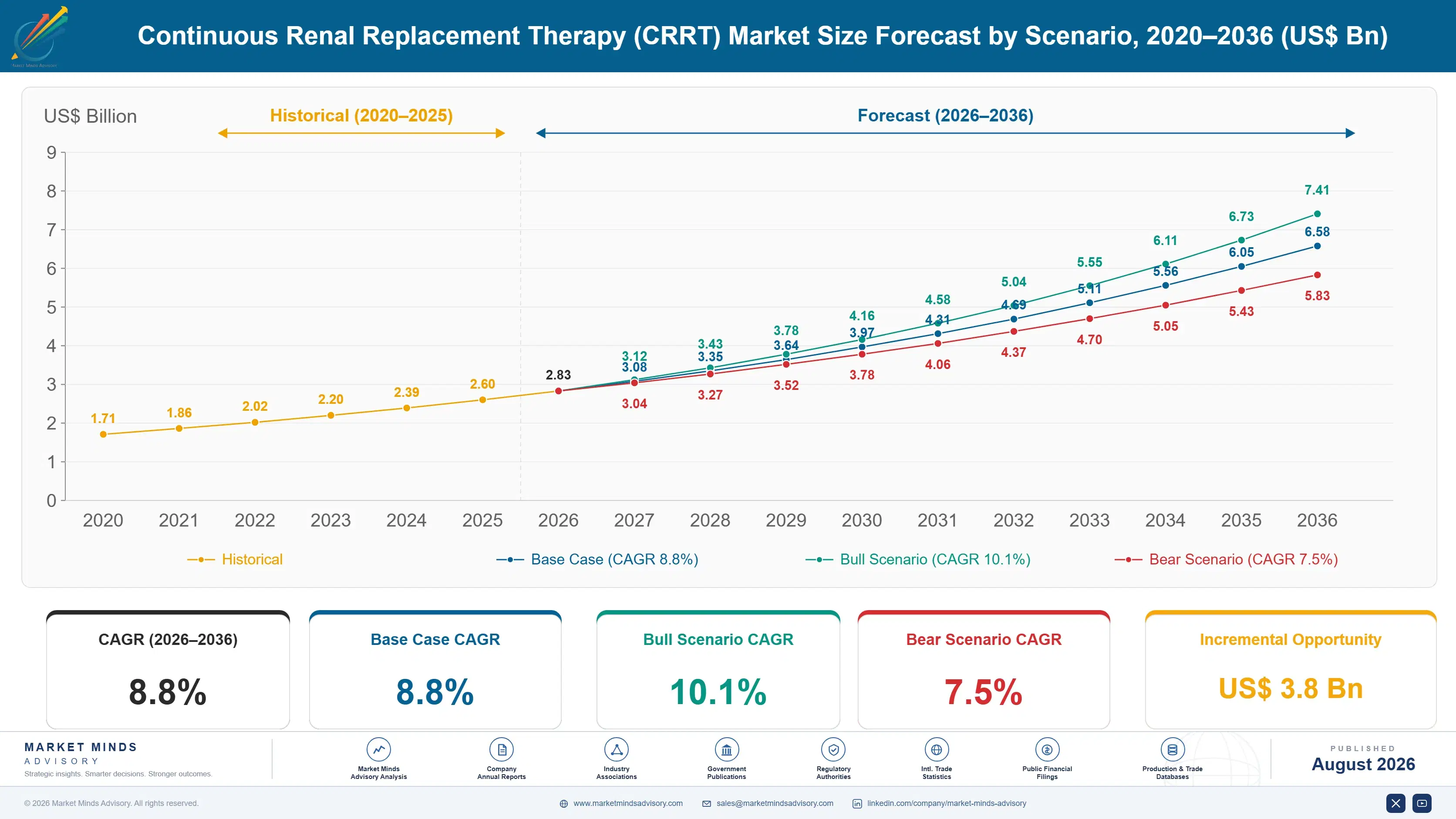
Between 2020 and 2025 the category grew at roughly 7.8 percent annually as pandemic-era critical care surges pulled forward ICU capacity investment worldwide, then settled into steadier growth once hospitals absorbed that initial equipment wave. Consumable revenue proved more resilient than console sales through the period, since installed machines kept generating filter and solution demand regardless of new capital budgets.
The base case assumes 8.8 percent annual growth through 2036, anchored in three mechanisms: broader adoption of citrate anticoagulation protocols that lengthen filter life and expand solution consumption per patient, rising acute kidney injury incidence tied to aging ICU populations and sepsis survival rates, and continued critical care bed expansion across South Asia and East Asia. Consumable mix shifts upward as a share of total revenue as the installed console base matures and stabilizes across developed markets.
A bull case builds around regulatory approval of portable, lower-cost CRRT platforms expanding access into smaller regional hospitals that currently transfer patients elsewhere, pushing growth toward 10.1 percent. The bear case centers on group purchasing organizations forcing aggressive console and consumable price concessions from incumbents, pulling growth down toward 7.5 percent if reimbursement per treatment day fails to keep pace with cost.

Where Console Economics Meet Consumable Loyalty

CRRT sits at an unusual intersection of capital equipment sales and pharmaceutical-style recurring revenue, which means the console purchase decision and the consumable supply contract get negotiated together even though hospital procurement teams often treat them as separate line items. Vendors that win the console tend to win years of downstream filter and solution volume by default, since switching costs for ICU nursing staff trained on one platform are genuinely high.
MARKET CONCENTRATION (CR5)61%Top five suppliers hold roughly six in ten dollars
AVERAGE CONSOLE SELLING PRICE$38,500 per unitCapital equipment price before any service contract attachment
TOP PRODUCING COUNTRY SHAREUnited States, 29% of unitsConcentrated device assembly and consumable manufacturing base overall
CAPACITY UTILISATION71%Consumable manufacturing lines run below full nameplate capacity
CONSUMABLE REVENUE SHARE68% of total salesShare of revenue from filters, tubing, and solutions
FILTER SET REPLACEMENT CYCLE1 to 3 daysHemofilter circuits require frequent clinical replacement during active treatment
Competitive character today centers on clinical differentiation rather than raw pricing, since group purchasing organizations already compress console margins toward a narrow band across major suppliers. Filter membrane biocompatibility, citrate protocol software integration, and alarm-fatigue reduction features increasingly decide which vendor wins a renewal, particularly in academic medical centers where intensivists carry real purchasing influence.
Over the next decade, portable and lower-acuity CRRT platforms will likely determine whether the category's growth stays concentrated in large academic ICUs or spreads into community hospitals that currently transfer acute kidney injury patients elsewhere. Reimbursement policy tied to treatment-day billing will shape how aggressively hospitals expand CRRT capacity relative to cheaper intermittent dialysis alternatives, particularly at the smaller community facilities suppliers are only beginning to court.
"Everyone benchmarks CRRT consoles against each other, but the real competition happens in the consumable catalog. A hospital that standardizes on one filter chemistry is not switching vendors over a console refresh."
Director, Critical Care and Renal Devices Practice · MMA Medical Devices Practic

Market Trends

Citrate Anticoagulation Protocols Displace Heparin as Clinical Standard

Regional citrate anticoagulation, once considered technically demanding for ICU nursing staff, has become the preferred protocol at most academic medical centers because it extends filter circuit life meaningfully compared with heparin and carries a substantially lower systemic bleeding risk for critically ill patients prone to coagulation complications. Updated Society of Critical Care Medicine guidance during 2025 now recommends citrate as first-line anticoagulation for most CRRT patients absent specific contraindications, accelerating protocol conversion at hospitals that had been slow to retrain nursing staff on citrate dosing calculations, a shift consumable suppliers are actively supporting through simplified formulation kits.
Market Impact: Affects 20-25% of all ICU admission
Portable CRRT Platforms Target Community Hospital Access Gap

Several smaller device makers are developing compact, simplified CRRT platforms designed for community hospitals and step-down units that currently lack the trained staff or capital budget for traditional console systems, targeting a patient population historically transferred to larger academic centers for treatment. Quanta Dialysis Technologies and Diality have both advanced portable platforms through regulatory review during 2025, positioning against incumbent consoles on simplified operation and lower upfront capital cost rather than matching every clinical feature. A modest share of transferred patients treated locally would meaningfully expand the addressable console base.
Market Impact: Adds 6,000 new ICU beds

Market Opportunities and Growth Drivers

Rising Acute Kidney Injury Incidence Among Aging ICU Populations

Acute kidney injury now affects an estimated 20 to 25 percent of all intensive care unit admissions globally, driven by an aging patient population with more baseline chronic kidney disease entering critical care, alongside rising sepsis survival rates that leave more patients alive but requiring renal support during recovery. Hospitals report that CRRT initiation rates per ICU bed have climbed steadily over the past five years as clinicians intervene earlier rather than waiting for more severe renal failure to develop. This incidence growth directly expands the addressable patient population for both console utilization and consumable volume.
Market Impact: Wastes roughly 15% of filter sets

Critical Care Bed Expansion Across South Asia and East Asia

Government-funded critical care infrastructure investment across India, China, and Southeast Asia is adding intensive care beds at a pace well above the historical global average, with several national health ministries explicitly citing renal replacement therapy capacity as a priority within broader ICU modernization programs. India's Ayushman Bharat health infrastructure initiative has directed funding toward tertiary hospital ICU expansion that includes dedicated CRRT console procurement in several major states. As these newly built ICUs come online, they represent genuinely new console placements rather than replacement cycles, giving regional device distributors first-mover pricing leverage that established markets no longer offer.
Market Impact: Compresses gross margins by 4-6 poi

Market Restraints and Challenges

Filter Clotting and Circuit Downtime Erode Treatment Efficiency

Hemofilter circuits still clot prematurely in a meaningful share of treatments even with citrate anticoagulation, forcing nursing staff to interrupt therapy, discard the disposable set, and restart the circuit, which wastes consumable inventory and reduces effective treatment hours delivered per patient. The root cause is that blood contact with any extracorporeal circuit triggers clotting cascades that current anticoagulation protocols manage rather than eliminate, and individual patient coagulation variability makes dosing genuinely difficult to standardize across an ICU population. Manufacturers are responding with improved membrane coatings and automated citrate dosing software, reducing but not eliminating premature circuit loss.
Market Impact: Extends filter life by 30%

Group Purchasing Consolidation Compresses Console and Consumable Pricing

Large hospital systems and group purchasing organizations increasingly negotiate system-wide CRRT contracts covering dozens of facilities simultaneously, using that combined volume as leverage to extract meaningful price concessions on both console pricing and per-unit consumable costs from incumbent suppliers. The root cause is hospital consolidation, which has concentrated purchasing power among a shrinking number of large health systems wielding bargaining power individual hospitals never had. This pressure compresses gross margins for suppliers by an estimated four to six percentage points. Manufacturers are responding by bundling service contracts and clinical training into pricing to differentiate beyond unit cost alone.
Market Impact: Targets 4,000 untapped community ho
3 additional market trends, 3 additional growth drivers, and 2 additional restraints and challenges are covered in the full report. Contact sales@marketmindsadvisory.com to access the complete intelligence.

Segment CAGR and Growth Architecture

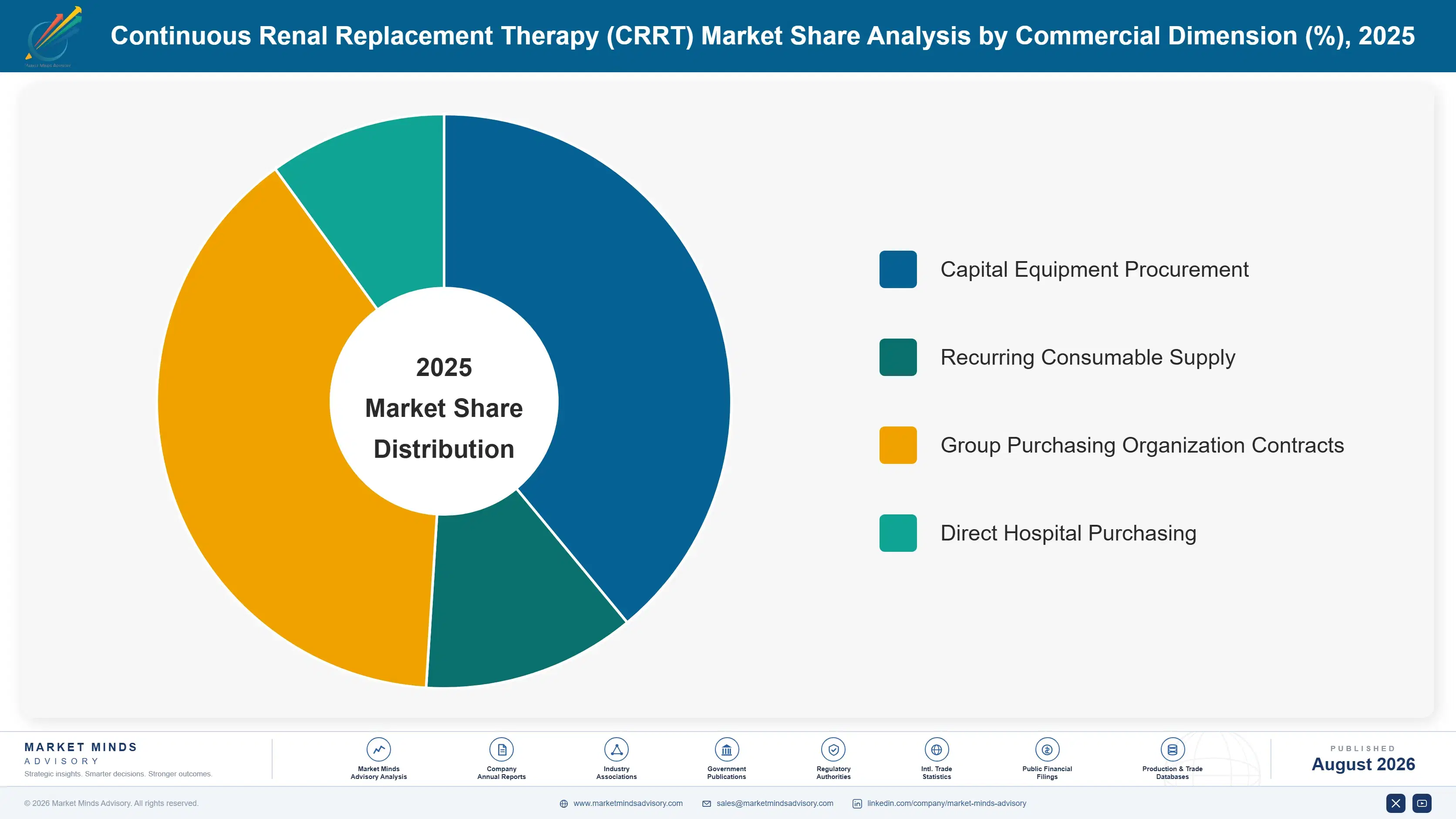
MMA segments the CRRT market by product type, distinguishing consoles, disposable circuit sets, anticoagulation solutions, vascular access devices, and monitoring software because each carries a distinct purchasing cycle, from one-time capital acquisition to daily per-patient consumable replenishment within the same clinical workflow, keeping capital budgeting and daily supply procurement analytically distinct despite serving the same patient episode.
continuous-renal-replacement-therapy-crrt-market-market-share-analysis-1787306950057

Anticoagulation Solutions (Citrate-Based)

Citrate anticoagulation solutions are growing fastest as protocol conversion from heparin accelerates across academic and community hospital ICUs, driven by updated clinical society guidance and mounting evidence of lower bleeding complication rates for critically ill patients. Every converted hospital immediately increases its citrate solution consumption per treatment day, since citrate requires more frequent dosing and monitoring than heparin protocols did, consistently raising per-patient solution revenue independent of overall patient volume growth. Manufacturers are racing to develop pre-mixed, ready-to-use citrate formulations that reduce nursing preparation time and dosing error risk, a convenience factor increasingly cited in purchasing decisions. Solution suppliers with strong existing hospital pharmacy relationships hold a meaningful advantage, since citrate requires pharmacy-level regulatory handling that filter sets do not.
CAGR 11.9%

Integrated Monitoring and Dose-Tracking Software

Software platforms that track filter life, citrate dosing accuracy, and treatment delivery against physician-ordered targets represent the second-fastest-growing segment, as hospitals increasingly demand documentation for quality reporting and reimbursement audits rather than treating CRRT as a purely bedside activity. Integration with hospital electronic health record systems has become close to mandatory for new console sales at larger academic centers, turning what was once a bundled convenience feature into a competitive requirement smaller platform vendors must now match. Nursing staff shortages are accelerating adoption further, since automated dose-tracking and alarm prioritization reduce cognitive burden on ICU nurses managing multiple critically ill patients. Vendors bundling software subscriptions alongside console sales are capturing recurring revenue that did not meaningfully exist in this category.
CAGR 10.4%
Full segment breakdown across 6 segments available in the complete report.

Regional Architecture and Country Demand Map

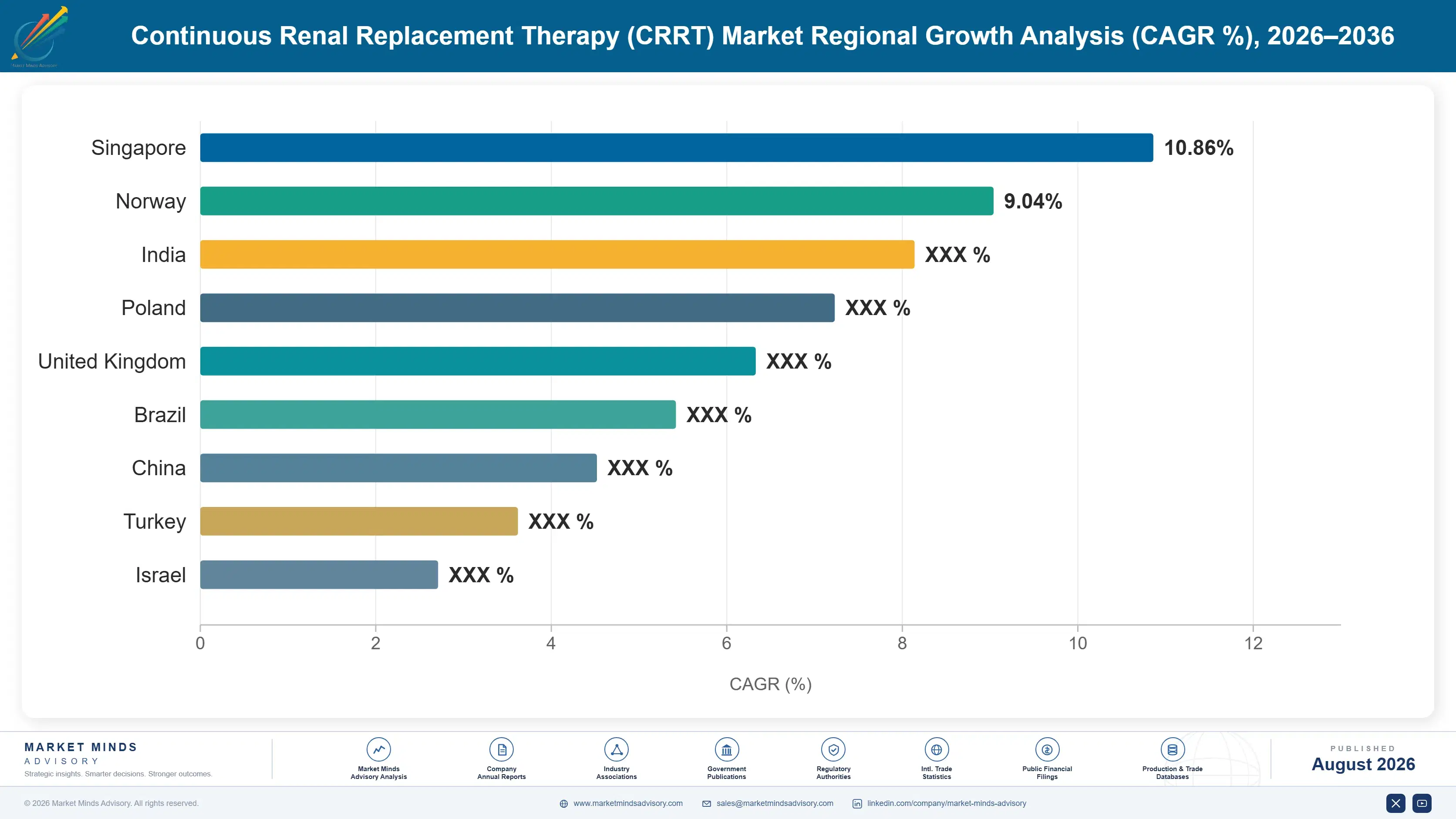
North America and Western Europe together account for the majority of global CRRT spending on ICU bed density and reimbursement depth, while South Asia and East Asia are adding critical care capacity fast enough to pull unit volume growth well above the category average across the forecast period.

North America

Intensive care unit density in the United States runs well above the global average, and Medicare's treatment-day reimbursement structure covers a meaningful share of console utilization costs at most academic and large community hospitals, giving North America the largest share of any region in this report. Group purchasing organizations representing large hospital systems dominate procurement negotiations here more than anywhere else, compressing console pricing even as consumable volume keeps climbing with rising acute kidney injury incidence. Canada's smaller but well-funded critical care system follows similar reimbursement logic, though at a slower pace. The region's growth rate sits above the category average because aging ICU populations and rising sepsis survival rates are expanding the treated patient pool.
Share: 32% | CAGR: 9.9% (2026 to 2036)

Western Europe

Germany, France, and the United Kingdom operate national health systems that reimburse CRRT as a standard critical care intervention, but centralized hospital budgeting means console purchasing decisions move through slower, multi-year capital planning cycles than in the more decentralized American system. B. Braun and Fresenius Medical Care, both headquartered in Germany, maintain particularly deep distribution and service relationships across the region that newer entrants find genuinely difficult to displace. Nordic countries show the highest per-capita CRRT utilization in the region, reflecting high ICU bed density and clinical practice patterns favoring earlier intervention. Growth here trails the global average because the region's ICU infrastructure is already mature and console replacement drives most remaining capital spending.
Share: 23% | CAGR: 7.1% (2026 to 2036)
Regional intelligence for 5 additional markets available in the complete report: East Asia, South Asia and Pacific, Latin America, Middle East and Africa, Eastern Europe. Contact sales@marketmindsadvisory.com.
continuous-renal-replacement-therapy-crrt-market-country-cagr-analysis-1787306950572

Where CRRT Suppliers Can Defend Margin

Margin defense in CRRT depends heavily on capturing recurring consumable revenue, expanding software and service attachment rates, and defending console placements against lower-cost portable entrants before switching costs erode further across the installed base. The four levers below target distinct points in the value chain where established suppliers can capture value capital-light challengers cannot easily replicate.

Bundled Software Subscription Attachment on Console Sales

Monitoring and dose-tracking software, once a bundled convenience feature, is becoming a genuine purchasing requirement at larger academic hospitals demanding documentation for reimbursement audits and quality reporting. Suppliers that convert software from a free bundled feature into a paid subscription attached to every console sale capture recurring revenue that persists for the full life of the console, independent of consumable volume swings tied to patient census. Early adopters report software subscription attachment rates approaching 55 percent among renewed console contracts at academic medical centers, a revenue stream that carries meaningfully higher margin than either console hardware or physical consumables.
Market Impact: Adds roughly 55% software attachmen

Pre-Mixed Citrate Formulation Development for Pharmacy Efficiency

Hospital pharmacies currently spend meaningful nursing and pharmacy staff time preparing citrate anticoagulation solutions from base components, a process prone to dosing error that also limits how quickly new hospitals can convert from heparin protocols. Manufacturers developing pre-mixed, ready-to-use citrate formulations that eliminate hospital-side compounding capture pharmacy-level purchasing relationships that generic filter and disposable suppliers cannot easily access, since pharmacy procurement runs through entirely different hospital approval channels than device procurement. Early pre-mixed formulation adopters report per-hospital citrate revenue climbing roughly 30 percent as convenience accelerates full protocol conversion across additional ICU beds.
Market Impact: Lifts per-hospital citrate revenue

Community Hospital Placement Programs for Portable Platforms

Community hospitals and step-down units currently transfer most acute kidney injury patients to larger academic centers rather than treating them locally, representing a genuinely untapped console placement opportunity for suppliers willing to offer simplified training and lower upfront capital requirements suited to smaller facilities. Manufacturers building dedicated community hospital placement programs, including extended payment terms and remote clinical support, can capture console share in the roughly 4,000 mid-size hospital beds MMA estimates currently lack any CRRT capability at all. This segment carries lower per-unit console pricing but meaningfully less competitive intensity than the crowded academic hospital tier.
Market Impact: Targets roughly 4,000 currently unt

Extended Service Contract Attachment Beyond Warranty Period

Console maintenance and preventive service contracts generate stable, high-margin recurring revenue that persists independent of consumable pricing pressure from group purchasing organizations, yet many hospitals still let service contracts lapse after the initial warranty period expires rather than renewing automatically. Suppliers that proactively renew service contracts before expiration, bundling remote diagnostic monitoring and guaranteed response-time commitments, report contract renewal rates roughly 20 percentage points higher than suppliers relying on hospitals to initiate renewal themselves. This lever requires dedicated field service investment but produces revenue meaningfully insulated from the console and consumable pricing pressure that dominates competitive negotiations.
Market Impact: Raises service contract renewal rat

Who Controls the Margin Pool

Five suppliers, evaluated here on estimated global unit shipment volume, hold roughly sixty-one percent of the CRRT category between them, a concentration level reflecting genuinely high switching costs once a hospital standardizes nursing training and consumable ordering on one platform. The gap between the top two players and the next tier remains wide, since both maintain manufacturing scale and hospital service networks that smaller challengers have not yet replicated.
Current competitive activity centers on three fronts: software and dose-tracking integration to defend renewal contracts, citrate formulation development to capture pharmacy-level purchasing relationships, and selective acquisition of portable-platform startups to hedge against community hospital disruption risk. Established suppliers are also expanding remote clinical support and training programs to differentiate service quality beyond the console specification sheet alone.

Pressure is building from smaller, capital-light portable CRRT platform makers targeting the community hospital access gap that incumbent suppliers have largely ignored, a segment where today's dominant academic-hospital-focused suppliers hold no particular built-in advantage. Ranking shifts are most likely if group purchasing organizations begin bundling console and consumable contracts across even larger multi-hospital systems, a trend that favors suppliers with the broadest existing installed base over smaller regional specialists.
continuous-renal-replacement-therapy-crrt-market-company-positioning-matrix-1787306951110

Competitive Moat and Risk Dimensions

BAXTER INTERNATIONAL INC.

Moat: Console-Consumable Platform Lock-In

Baxter's installed console base across thousands of hospitals worldwide generates durable, recurring consumable demand from nursing staff already trained on its specific circuit setup and citrate dosing workflow, a switching cost that persists for years after the original console purchase decision and insulates the company from purely price-based competition.
BAXTER INTERNATIONAL INC.

Risk: Post-Recall Trust Rebuilding

Baxter has faced device quality and recall scrutiny in adjacent renal therapy lines in recent years, and rebuilding clinician trust after any quality incident takes considerably longer in critical care medicine than in less acute clinical settings, leaving the company more exposed to competitive displacement during contract renewal cycles than its market position alone would suggest.
FRESENIUS MEDICAL CARE AG & CO. KGAA

Moat: Global Dialysis Service Network

Fresenius operates one of the largest dialysis service and clinical support networks worldwide, giving it distribution reach and hospital relationships across both acute CRRT and chronic dialysis that few competitors can match, and allowing it to bundle service quality and training resources that smaller suppliers simply cannot offer at comparable scale.
FRESENIUS MEDICAL CARE AG & CO. KGAA

Risk: Portable Platform Disruption Exposure

Fresenius's core business model depends heavily on traditional console placement and consumable attachment within large academic hospitals, leaving it comparatively exposed to portable, lower-cost platform entrants targeting the community hospital segment where its existing service network advantage carries less weight with first-time buyers evaluating simplified operation over full clinical feature depth.

Players Tracked

Prominent Players

Baxter International Inc.
Fresenius Medical Care AG & Co. KGaA
B. Braun Melsungen AG
Nikkiso Co., Ltd.
Medtronic plc

Other Key Players

Nipro Corporation
Asahi Kasei Medical Co., Ltd.
Toray Medical Co., Ltd.
Terumo Corporation
Diality Inc.
Quanta Dialysis Technologies Ltd.
Medica S.p.A.
SeaStar Medical Holding Corporation
ExThera Medical Corporation
Infomed SA
Weigao Group
JMS Co., Ltd.
CytoSorbents Corporation
Spectral Medical Inc.
Allmed Medical Co., Ltd.

Recent Developments

APRIL 2025

Fresenius Medical Care Acquires Stake in Portable CRRT Startup

Fresenius Medical Care acquired a minority equity stake in a portable CRRT platform developer targeting community hospitals, gaining early access to simplified-operation console technology designed for facilities lacking dedicated dialysis nursing staff and positioning the company against the community hospital access gap competitors are increasingly targeting.
Signal: Shows an established supplier hedging agai
JULY 2025

Baxter Expands Hemofilter Manufacturing Capacity in Ireland

Baxter completed an organic capacity expansion at its existing Irish manufacturing facility, adding new hemofilter production lines to serve growing North American and European consumable demand while reducing lead times previously tied to its Southeast Asian supply chain for finished filter sets across both regions.
Signal: Reflects a deliberate nearshoring strategy
NOVEMBER 2025

B. Braun Forms Joint Venture for Indian Consumable Localization

B. Braun Melsungen AG formed a joint venture with a regional Indian medical device distributor to establish local hemofilter and solution manufacturing, targeting the country's rapidly expanding critical care bed capacity while reducing import duties and currency exposure tied to previously imported consumable supply lines.
Signal: Signals suppliers localizing manufacturing

Polysulfone Membrane and Resin Exposure

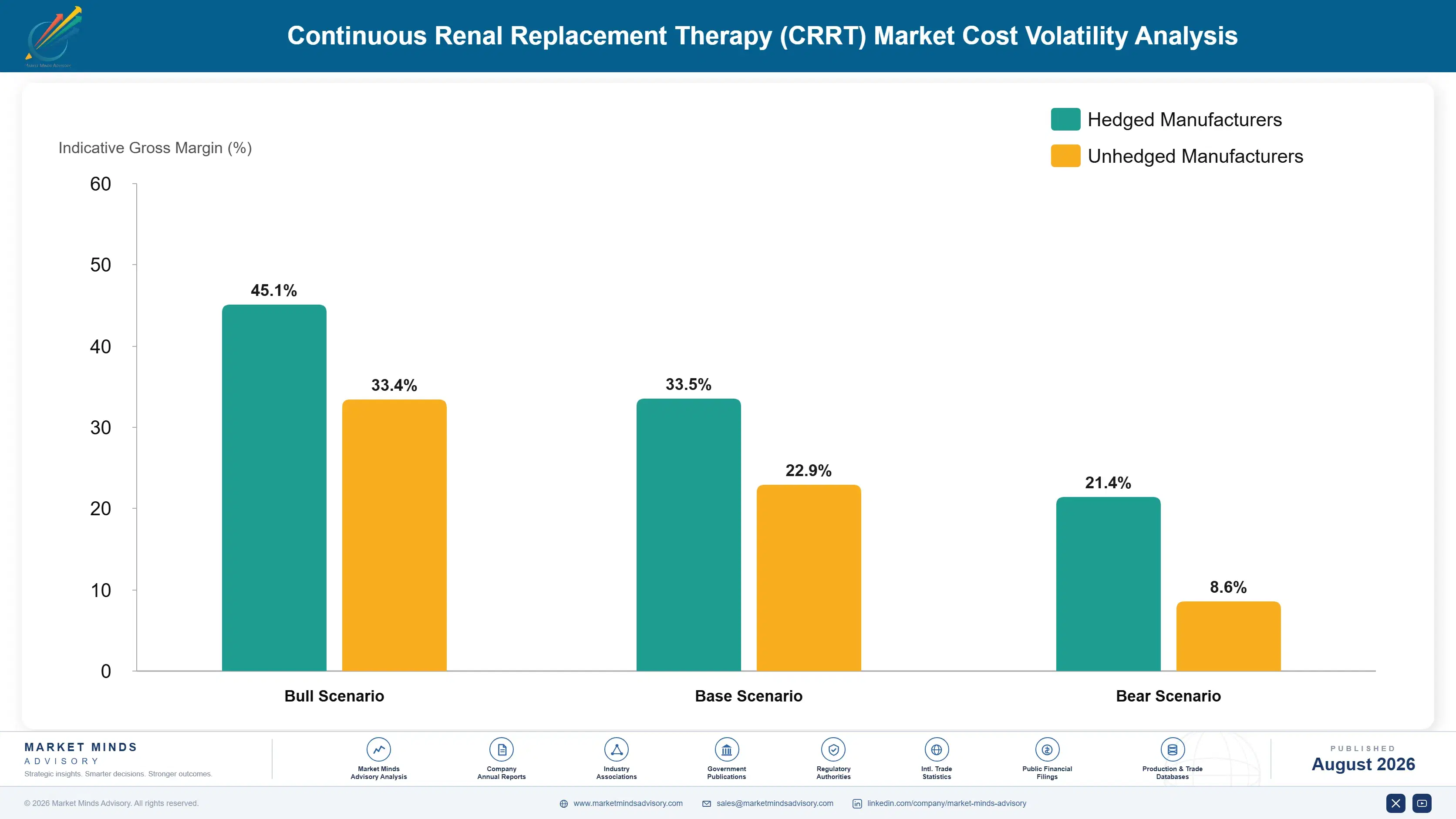
Polysulfone and polyethersulfone membrane resin, used in hemofilter manufacturing, together with medical-grade tubing plastics, represent an estimated 32 to 38 percent of cost of goods sold for consumable products, with membrane resin sourced from a small number of specialty chemical producers concentrated in Germany, Japan, and the United States. This concentration leaves consumable manufacturers with limited substitution options when any single resin producer faces a supply disruption.
Membrane resin prices rose meaningfully during 2024 after a major German chemical producer experienced an extended unplanned outage, tightening global supply just as hospital consumable demand was recovering, according to figures the German BMWK tracks for specialty polymer feedstocks. Smaller consumable manufacturers without long-term resin contracts reported cost increases exceeding 18 percent within two quarters, a shock larger integrated suppliers with hedged agreements absorbed comfortably.

Smaller regional consumable manufacturers without the purchasing scale to negotiate multi-year fixed-price resin contracts absorb raw material volatility directly into thin margins, while the largest suppliers use long-term supply agreements and, in some cases, backward integration into resin production itself. This gap compounds over renewal cycles: undercapitalized competitors either raise prices, risking pushback, or hold pricing and erode margin, a choice larger integrated suppliers rarely face.
continuous-renal-replacement-therapy-crrt-market-cost-volatility-analysis-1787306951316

Multi-Year Fixed-Price Resin Supply Agreements

Locking membrane resin procurement into two to four year fixed-price agreements with primary chemical suppliers protects consumable margin predictability during spot market volatility, though it requires accepting somewhat higher baseline pricing during calm periods, a trade-off larger manufacturers with stronger balance sheets absorb more comfortably than smaller regional consumable specialists operating on thinner margins.

Backward Integration into Membrane Resin Production

The largest suppliers are selectively backward-integrating into resin production or securing dedicated capacity reservations at chemical producer facilities, reducing dependence on open-market resin purchasing even though the substantial capital investment required puts this option genuinely out of reach for smaller regional consumable manufacturers still competing primarily on unit price and delivery reliability terms alone.

Regional Consumable Manufacturing Diversification

Shifting a portion of hemofilter and tubing assembly toward Mexico, Eastern Europe, and India reduces exposure to any single country's resin supply chain and currency risk simultaneously, while shortening logistics lead times to major hospital consumption regions, though this diversification requires meaningful capital investment that smaller manufacturers often cannot justify without guaranteed volume commitments first.

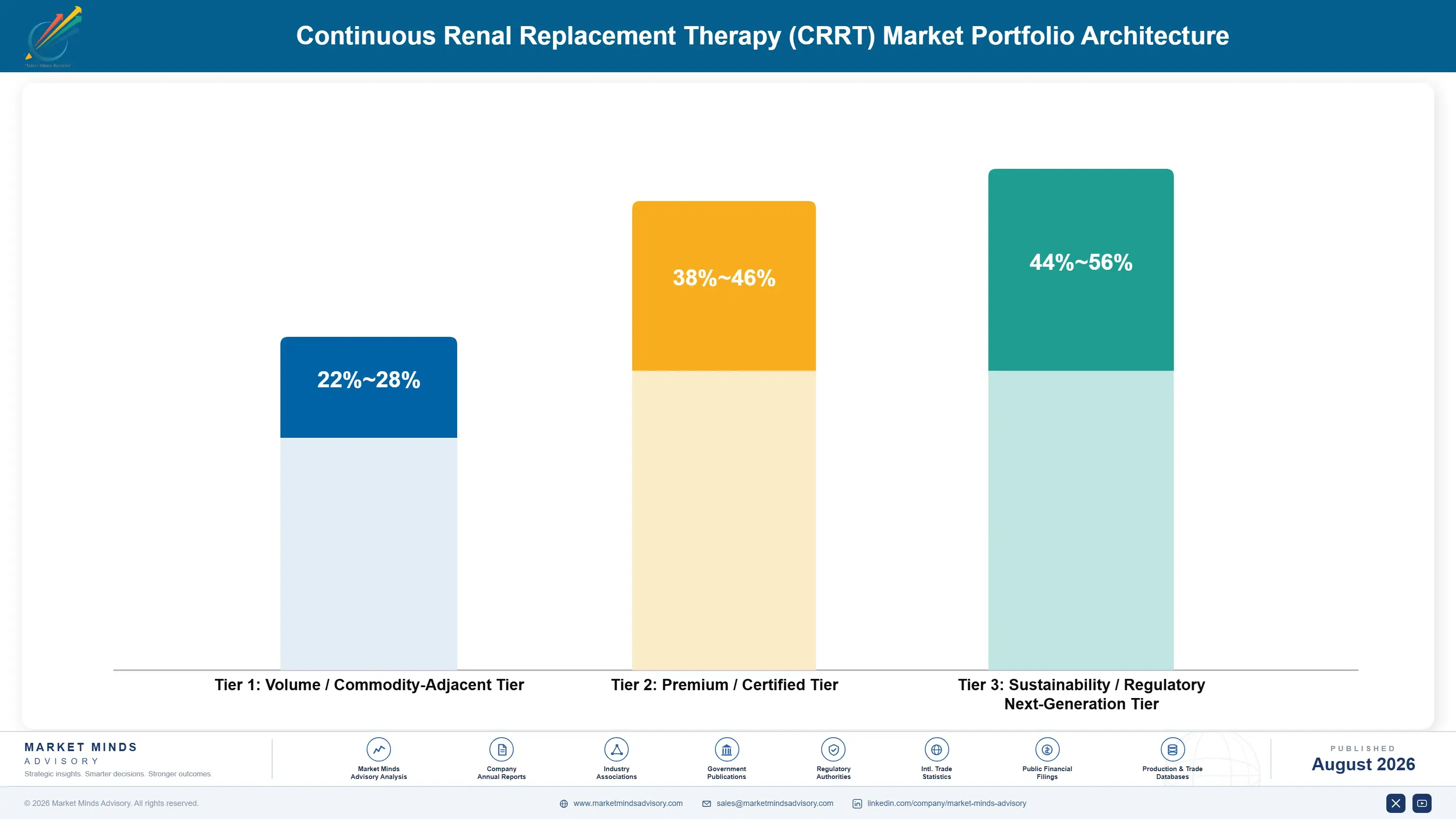
Portfolio Architecture for Margin Defence

CRRT portfolios split cleanly into three margin tiers. Volume commodity-adjacent console hardware and standard filter sets sold through competitive group purchasing bids carry the thinnest margins but anchor the installed base that everything else depends on, competing primarily on price and reliability rather than clinical differentiation. Premium certified consumables, including citrate formulations and biocompatible membrane technology backed by clinical outcomes data, command meaningfully hi
The tension between console volume placement and premium consumable attachment shapes nearly every strategic decision suppliers make, from pricing console hardware near cost to secure the installed base, to defending consumable margin once that placement is won. Chasing console volume through aggressive group purchasing bids generates installed base share but pressures blended margin, while over-indexing on premium consumable positioning without sufficient console placement limits addressable revenue considerably given how tightly consumable purchasing follows console ownership.

High-value margin pools concentrate specifically in citrate anticoagulation solutions and integrated dose-tracking software, both still expanding adoption but growing faster than the broader category and commanding premium pricing that neither commodity filter sets nor standard console hardware currently achieve at comparable scale.

Volume / Commodity-Adjacent Tier

Standard console hardware and basic filter sets sold through competitive group purchasing organization bids, competing primarily on price, reliability, and service response time rather than clinical differentiation or advanced feature sets.
Gross Margin: 22-28%

Premium / Certified Tier

Citrate anticoagulation formulations and biocompatible membrane hemofilters backed by clinical outcomes data, sold primarily to academic medical centers and large hospital systems with intensivist-driven purchasing influence and protocol standardization requirements.
Gross Margin: 38-46%

Sustainability / Regulatory / Next-Generation Tier

Integrated dose-tracking software, portable low-footprint platforms, and next-generation membrane technology targeting quality reporting requirements and community hospital access expansion ahead of anticipated reimbursement and regulatory shifts across major healthcare markets.
Gross Margin: 44-56%
continuous-renal-replacement-therapy-crrt-market-portfolio-architecture-1787306951812

High-value Sub-segments and Strategic Watch-out

Integrated Dose-Tracking Software

Software platforms tracking filter life and citrate dosing accuracy against physician-ordered targets represent the fastest-growing, highest-margin pocket of the category, moving from bundled convenience feature into a genuine purchasing requirement as hospitals demand documentation for reimbursement audits and quality reporting across major academic medical centers nationwide.
Gross Margin: 50-60%

Pre-Mixed Citrate Formulations

Ready-to-use citrate anticoagulation solutions that eliminate hospital-side compounding are growing steadily as protocol conversion accelerates, commanding a meaningful price premium over base-component solutions that hospital pharmacies increasingly accept in exchange for reduced staff preparation time and dosing error risk during busy overnight ICU shifts nationwide.
Gross Margin: 42-50%

Standard Hemofilter Sets

The largest volume segment by unit count, standard hemofilter sets sold through group purchasing organization contracts anchor category revenue even as growth moderates, remaining the essential consumable through which nearly every CRRT treatment day generates recurring supplier revenue regardless of anticoagulation protocol chosen at the bedside.
Gross Margin: 24-30%

Portable Platform Console Entrants

Compact, simplified CRRT consoles targeting community hospitals represent a genuine strategic threat to incumbent suppliers, potentially capturing console placement in facilities that historically transferred patients elsewhere entirely, a segment where established academic-hospital-focused suppliers hold limited existing relationship advantage over new entrants competing on simplified operation and lower upfront cost.
Gross Margin: 18-26%

Recurring Revenue Behind Every Treatment Day

CRRT generates genuine annuity economics once a console is placed, since every treatment day consumes filter sets, tubing, and anticoagulation solution regardless of how the original console purchase was negotiated or priced. A single ICU bed running continuous therapy can consume a new filter circuit every one to three days, meaning consumable revenue per console compounds steadily over the equipment's multi-year service life in a way console pricing alone never captures.
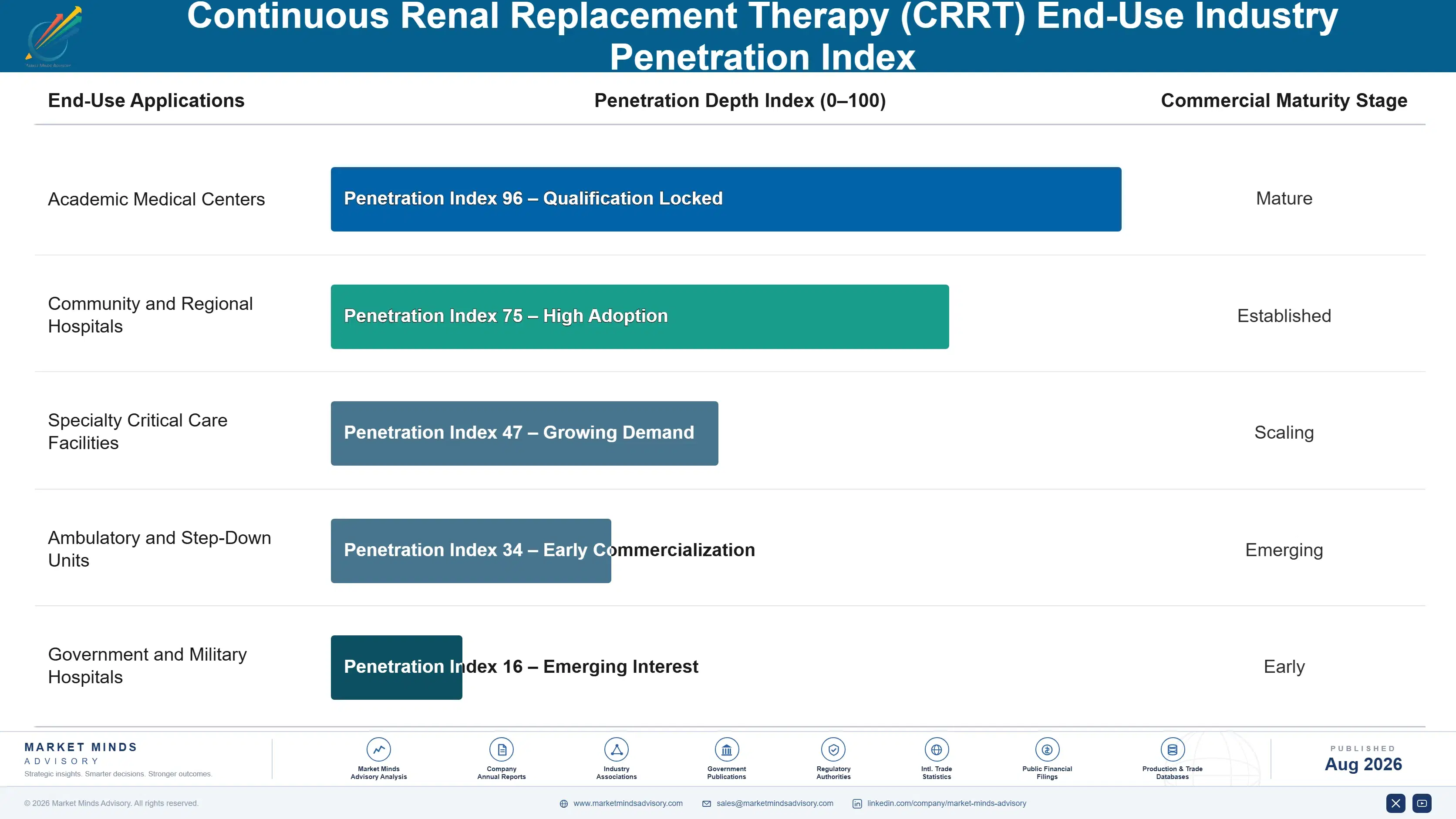
Adoption depth varies considerably by end-use vertical. Academic medical centers with dedicated critical care nephrology staff show the deepest protocol standardization and highest consumable attachment rates, since specialized staff drive consistent citrate and filter usage across every eligible patient. Community and regional hospitals, where CRRT competes against patient transfer to larger centers, show shallower adoption depth and lower consumable volume per bed, representing the untapped growth pool portable platform entrants are targeting.

A generational shift in ICU staffing is reshaping buyer behavior as newer physicians, trained on integrated digital dosing software rather than manual calculation, increasingly expect decision support as a baseline feature rather than a premium add-on, reshaping how suppliers structure console and software bundling.
continuous-renal-replacement-therapy-crrt-market-end-use-penetration-index-1787306952303

Where CRRT Suppliers Should Focus

These are among the four positions where our research anticipates prominent divergence between winners and laggards over the coming forecast period. Each is grounded in the demand model, the regulatory perimeter, and the announced capacity pipeline.
01 / SOFTWARE SUBSCRIPTION ATTACHMENT

Convert bundled monitoring software into a paid renewal-driving subscription

Dose-tracking and monitoring software has moved from a bundled convenience feature to a genuine purchasing requirement at academic medical centers demanding audit-ready documentation for reimbursement and quality reporting. Suppliers that convert software into a paid subscription attached to every console sale capture recurring revenue independent of consumable volume swings tied to patient census fluctuations across the hospital's ICU beds. Companies that continue bundling software for free risk leaving meaningful recurring revenue on the table while competitors normalize subscription pricing across the category.
02 / COMMUNITY HOSPITAL EXPANSION

Build simplified placement programs targeting untapped community hospitals

Community hospitals and step-down units currently transfer most acute kidney injury patients elsewhere rather than treating them locally, representing a genuinely untapped console placement opportunity that incumbent suppliers focused on academic centers have largely ignored to date. Suppliers building dedicated placement programs with simplified training and extended payment terms can capture console share across thousands of currently unserved mid-size hospital beds well before portable-platform startups build comparable distribution reach. Waiting risks ceding this entire segment to capital-light entrants who face no incumbent relationship advantage to overcome there.
03 / CITRATE FORMULATION INVESTMENT

Develop pre-mixed citrate formulations to capture pharmacy relationships

Hospital pharmacies currently spend meaningful staff time compounding citrate solutions from base components, a process that also slows how quickly hospitals can convert from heparin to citrate anticoagulation protocols across their ICU beds. Manufacturers developing pre-mixed, ready-to-use formulations capture pharmacy-level purchasing relationships that generic filter and disposable suppliers cannot easily access, since pharmacy procurement runs through entirely separate hospital approval channels than device procurement. This investment compounds over time as faster protocol conversion accelerates the broader citrate segment's already rapid growth trajectory.
04 / RESIN SUPPLY HEDGING

Lock multi-year resin contracts to protect consumable margin stability

Membrane resin costs have proven volatile enough in recent years to meaningfully compress consumable margins for manufacturers without long-term supply agreements, particularly smaller regional players lacking the purchasing scale to negotiate favorable multi-year terms. Locking resin procurement into fixed-price agreements spanning two to four years trades modestly higher baseline pricing during calm periods for meaningful insulation against sudden spikes that can otherwise erase a full quarter of margin. Manufacturers that skip this hedging discipline remain exposed every time a major resin producer faces disruption.

Engagement Snapshot From the Field

A live engagement with an industry participant carrying material or product regulatory and market exposure ahead of a defining policy shift, showing how our research translates into a defensible multi-year portfolio strategy.
MARKET MINDS ADVISORY · CLIENT ENGAGEMENT SUMMARY
Continuous Renal Replacement Therapy (CRRT) Producer Strategic Portfolio Review and Transition Roadmap 2026·Investment Scenario on Continuous Renal Replacement Therapy (CRRT) Exposure Evaluation 2025-26
CLIENT PROFILE
The client is a regional academic hospital system operating six tertiary care facilities generating approximately 210 million dollars in annual critical care device and consumable spend (client-reported, unverified by MMA), with roughly 340 combined ICU beds across its network. The system had standardized on heparin-based CRRT protocols for over a decade and faced growing pressure from its clinical staff to evaluate citrate conversion and newer console platforms across its network.
STRATEGIC CHALLENGE
Hospital leadership needed to decide whether to convert its entire six-facility network to citrate anticoagulation protocols simultaneously or phase the transition, while also evaluating whether to consolidate console purchasing with a single supplier to strengthen group purchasing leverage or maintain its existing multi-vendor arrangement that preserved some competitive pricing tension between suppliers.
MMA APPROACH
MMA conducted primary interviews with intensivists, ICU nursing leadership, and hospital pharmacy directors across all six facilities, benchmarked citrate conversion outcomes at comparable academic systems, and modeled total cost of ownership under both single-vendor consolidation and continued multi-vendor procurement scenarios, quantifying expected savings and risk under each before presenting a phased recommendation to hospital leadership.
KEY FINDINGS
  1. Filter circuit life extended by roughly 32 percent following pilot citrate conversion at one facility, meaningfully reducing per-patient consumable waste and nursing interruption time compared with the existing heparin protocol.
  2. Full network citrate conversion required an estimated eight months of staggered nursing staff training across all six facilities to avoid dosing errors during the transition period.
  3. Single-vendor console consolidation would reduce blended unit pricing by an estimated 11 percent but eliminated competitive tension that had previously constrained consumable price increases at contract renewal.
  4. Software-based dose-tracking integration reduced documentation time for quality reporting audits by roughly 40 percent among facilities that had already adopted it ahead of the broader network.
CLIENT PROFILE
The client is a regional academic hospital system operating six tertiary care facilities generating approximately 210 million dollars in annual critical care device and consumable spend (client-reported, unverified by MMA), with roughly 340 combined ICU beds across its network. The system had standardized on heparin-based CRRT protocols for over a decade and faced growing pressure from its clinical staff to evaluate citrate conversion and newer console platforms across its network.
STRATEGIC CHALLENGE
Hospital leadership needed to decide whether to convert its entire six-facility network to citrate anticoagulation protocols simultaneously or phase the transition, while also evaluating whether to consolidate console purchasing with a single supplier to strengthen group purchasing leverage or maintain its existing multi-vendor arrangement that preserved some competitive pricing tension between suppliers.
MMA APPROACH
MMA conducted primary interviews with intensivists, ICU nursing leadership, and hospital pharmacy directors across all six facilities, benchmarked citrate conversion outcomes at comparable academic systems, and modeled total cost of ownership under both single-vendor consolidation and continued multi-vendor procurement scenarios, quantifying expected savings and risk under each before presenting a phased recommendation to hospital leadership.
KEY FINDINGS
  1. Filter circuit life extended by roughly 32 percent following pilot citrate conversion at one facility, meaningfully reducing per-patient consumable waste and nursing interruption time compared with the existing heparin protocol.
  2. Full network citrate conversion required an estimated eight months of staggered nursing staff training across all six facilities to avoid dosing errors during the transition period.
  3. Single-vendor console consolidation would reduce blended unit pricing by an estimated 11 percent but eliminated competitive tension that had previously constrained consumable price increases at contract renewal.
  4. Software-based dose-tracking integration reduced documentation time for quality reporting audits by roughly 40 percent among facilities that had already adopted it ahead of the broader network.
RECOMMENDED STRATEGY
Phase 1: Phase 1 (Months 1 to 8): Complete staggered citrate protocol conversion and nursing staff training across all six facilities, starting with the two highest-volume ICUs first. Phase 2: Phase 2 (Months 8 to 16): Negotiate a hybrid procurement structure retaining two qualified console vendors to preserve competitive pricing tension while still capturing meaningful volume discounts. Phase 3: Phase 3 (Months 16 to 24): Deploy integrated dose-tracking software network-wide to standardize quality reporting documentation ahead of an upcoming reimbursement audit cycle.
OUTCOME
Within eighteen months, the network completed full citrate conversion and reported filter circuit costs declining by an estimated 14 percent (client-reported, unverified by MMA) despite higher per-treatment citrate solution consumption, driven by meaningfully reduced premature circuit replacement. Hospital leadership credited the hybrid procurement structure with preserving pricing discipline that full single-vendor consolidation would likely have eroded over subsequent renewal cycles.

Frequently Asked Questions

Foundational context covering the market sizes, CAGR, scope, country, region and competition that inform every finding below. This section is provided to cover basics and most often pre-purchase conversations, answered from the MMA Primary Research Dataset.

What is the current size of the Continuous Renal Replacement Therapy (CRRT) Market?

The CRRT market reached an estimated 2.6 billion dollars in 2025. Growth is being driven by rising acute kidney injury incidence and expanding critical care infrastructure worldwide.

How large will the Continuous Renal Replacement Therapy (CRRT) Market be by 2036?

MMA projects the market will reach approximately 6.58 billion dollars by 2036 under the base case scenario, more than double the 2026 starting value over the ten-year forecast window.

What is the CAGR for the Continuous Renal Replacement Therapy (CRRT) Market 2026 to 2036?

The base case CAGR is 8.8 percent annually through 2036, with a bull case of 10.1 percent and a bear case of 7.5 percent depending on reimbursement and adoption dynamics.

Which segment is growing fastest?

Citrate-based anticoagulation solutions are growing fastest, at roughly 11.9 percent annually, nearly 1.35 times the category average, as protocol conversion from heparin accelerates across major hospital systems.

Who are the major companies in the Continuous Renal Replacement Therapy (CRRT) Market?

Baxter International, Fresenius Medical Care, B. Braun Melsungen, Nikkiso, and Medtronic lead the category based on estimated global unit shipment volume across consoles and consumables.

Which country is growing fastest?

India is the fastest-growing major market, expanding at an estimated 11.4 percent annually as government-funded critical care bed expansion adds new CRRT console placements nationwide.

Report Segmentation Architecture

The full report scope spans multiple orthogonal segmentation dimensions, with cross-tabulated demand data provided for each dimension pair. Coverage extends further to regional breakdowns, trend trajectories, and the competitive detail needed to support segment-level decision-making.

By Product Type

  • CRRT Consoles and Machines
  • Disposable Circuit Sets and Hemofilters
  • Anticoagulation Solutions
  • Vascular Access Catheters
  • Monitoring and Dose-Tracking Software
  • Service and Maintenance Contracts

By End-Use Industry

  • Academic Medical Centers
  • Community and Regional Hospitals
  • Specialty Critical Care Facilities
  • Ambulatory and Step-Down Units
  • Government and Military Hospitals

By Commercial Dimension

  • Capital Equipment Procurement
  • Recurring Consumable Supply
  • Group Purchasing Organization Contracts
  • Direct Hospital Purchasing

By Region

  • North America
  • Western Europe
  • East Asia
  • South Asia and Pacific
  • Latin America
  • Middle East and Africa
  • Eastern Europe

Scope, Methodology, and Coverage

Every figure in this report is reproducible from documented input assumptions. The scope below maps the historical period, the forecast horizon, the segmentation dimensions, and the countries covered, alongside the underlying primary and qualitative methodology.
Historical Period
2020 to 2025
Forecast Period
2026 to 2036
Base Year
2025 (USD billions; MMA Primary Research Dataset, August 2026)
Market Definition
The CRRT market comprises consoles, extracorporeal blood circuit disposables, hemofilters, anticoagulation solutions, and vascular access devices used to provide slow, continuous blood purification for critically ill patients with acute kidney injury, typically in an intensive care setting. It excludes chronic in-center hemodialysis equipment, peritoneal dialysis systems, and home maintenance dialysis devices intended for stable, non-critical patients.
Quantitative Units
USD billions (current prices); unit volume in consoles and consumable sets where applicable
Segmentation Dimensions
Product Type; End-Use Industry; Commercial Dimension; By Region
Regions Covered
North America, Western Europe, East Asia, South Asia and Pacific, Latin America, Middle East and Africa, Eastern Europe
Countries Covered
USA, China, Germany, France, UK, Japan, South Korea, India, Australia, Canada, Brazil, Mexico, Indonesia, Vietnam, Thailand, Malaysia, UAE, Saudi Arabia, South Africa, Nigeria, Turkey, Poland, Netherlands, Italy, Spain, Sweden, Switzerland, Argentina, Colombia, Singapore, and additional markets relevant to this sector
Key Companies Profiled
Baxter International Inc., Fresenius Medical Care AG & Co. KGaA, B. Braun Melsungen AG, Nikkiso Co., Ltd., Medtronic plc, Nipro Corporation, Asahi Kasei Medical Co., Ltd., Toray Medical Co., Ltd., Terumo Corporation, Diality Inc., Quanta Dialysis Technologies Ltd., Medica S.p.A., SeaStar Medical Holding Corporation, ExThera Medical Corporation, Infomed SA, Weigao Group, JMS Co., Ltd., CytoSorbents Corporation, Spectral Medical Inc., Allmed Medical Co., Ltd.
Quantitative Methodology
Primary survey, n=3,800 respondents, Q4 2025, six countries; demand-side model with trade association cross-validation
Qualitative Methodology
47 expert interviews, Q4 2025; applied to validate demand model assumptions, identify emerging dynamics, and assess competitive positioning
Report Format
PDF and XLSX data workbook (Word format preview document)
Publisher
Market Minds Advisory
Report Code
MMA-2026-MED-352
Published
August 2026
Contact
sales@marketmindsadvisory.com | www.marketmindsadvisory.com

Purchase the full Continuous Renal Replacement Therapy (CRRT) Market Report (2026 to 2036).

This report provides a comprehensive analysis of the global CRRT market, covering market sizing, segmentation, and regional dynamics across the 2026 to 2036 forecast period. It profiles twenty leading device and consumable manufacturers, with detailed competitive positioning, moat and risk analysis for the two category leaders, and recent corporate developments across console, consumable, and software segments. The report examines revenue-generation levers, membrane resin input cost exposure, and portfolio margin economics across three product tiers. It draws on primary survey data from 3,800 respondents and 47 expert interviews conducted across six countries in the fourth quarter of 2025.
Ten-year market sizing and growth forecast
Six-segment product type breakdown with CAGR
Seven-region demand and pricing trend analysis
Twenty-company competitive profiling and moat assessment
Membrane resin input cost exposure review
Revenue lever and portfolio margin economics

Built For The People Who Decide

From boardroom strategy to bench-side execution, this report is read cover-to-cover by leaders shaping the next decade of their industry, turning demand scenarios, market dynamics and valuation benchmarks into decisions.
CXOs/ Presidents/ VPs/ Managers
M&A and Corporate Development
Strategy Teams and R&D Heads
Procurement and Product Directors
Regulatory and Compliance Leaders
Investor Relations and Equity Analysts