Market Minds Advisory
Congenital Hyperinsulinism Treatment Market

Congenital Hyperinsulinism Treatment Market: Where Half the Patients Still Have No Approved Second Line

Half of all diagnosed infants fail the only first-line drug, and the therapies that follow are decades-old off-label agents used against a disease that damages the brain within hours of onset.

Lead Analyst

Alice Ballenger

Published

September 2026

Make Smarter Decisions with Customized Research Insights

Request a free sample report and evaluate market opportunities, growth trends, and competitive dynamics relevant to your business needs.

2025 MARKET VALUE$0.3BMarket Size 2025
2036 FORECAST VALUE$1.2BBase Case , 2026 to 2036
CAGR 2026 TO 203613.2 %Bull 14.5% / Bear 11.9%
INCREMENTAL OPPORTUNITY$0.9BNet 10- year value creation
EXPANSION MULTIPLE3.47x2036 value over 2026 base
Strategic Levers
M&A Pipeline
Regional Outlook
Country Rankings
Competitive Intelligence
Segmental Deep-dive
Call-Us : 91 93563 13602

Executive Snapshot and Market Trajectory

Around half of infants diagnosed with congenital hyperinsulinism do not respond to diazoxide, the only first-line agent, and for them the path runs through off-label somatostatin analogues, continuous feeding, or removal of most of the pancreas. That gap has stood unchanged for decades. Nothing approved sits between them and surgery.
Value growth comes from new pharmacology rather than from more patients, since birth incidence is fixed and diagnosis rates in developed markets are already high. Receptor-targeted biologic therapy grows fastest at 19.8%, precisely 1.50 times the market rate, launching into a population that currently has nothing approved beyond first line. Glucagon analogue therapy follows at 15.4%, displacing continuous feeding. North America holds the largest value pool on orphan pricing rather than on patient numbers.
Concentration reaches 76% across the top five measured on treated patient reach, which sounds commanding until you notice the leader sells a 1970s generic suspension with a supply interruption history. Two late-stage assets target the unresponsive population. Neither incumbent position was built on a product developed for this disease. Paediatric regulatory incentives are unusually generous, and orphan designations are already in place across both major jurisdictions.
Market Definition
This market covers pharmacological and surgical treatment of congenital hyperinsulinism, an inherited disorder of unregulated insulin secretion causing persistent neonatal and infant hypoglycaemia. Scope includes potassium channel agonists, somatostatin analogues, glucagon and glucagon analogues, receptor-targeted biologics, pancreatectomy, and specialist nutritional support therapy. Genetic testing services, continuous glucose monitoring hardware, imaging equipment, and acquired or transient hyperinsulinism are excluded.
Base Year Value
$0.3B in 2025 (MMA Primary Research Dataset, August 2026)
Forecast Period
2026 to 2036, eleven discrete annual values
CAGR
13.2% base case. Bull 14.5%. Bear 11.9%.
Fastest Growth Segment
Receptor-Targeted Biologic Therapy: 19.8% CAGR
Fastest Growth Country
China: 18.6% CAGR
Fastest Growth Region
South Asia and Pacific: 15.2% CAGR
Largest Region
North America: 32% of 2025 global value
Market Leaders
Teva Pharmaceutical Industries. Novartis. Ipsen. Zealand Pharma. Rezolute. Source: MMA Analysis based on company annual reports.
Primary Survey
n=3,800 procurement and R&D decision-makers, Q4 2025, six countries
Methodology
Demand-side build-up, cross-validated against public data, 47 expert interviews

Congenital Hyperinsulinism Treatment Market Forecast Scenarios

congenital-hyperinsulinism-treatment-market-size-forecast-scenario-1787298710091
The 2020 to 2025 period saw very little therapeutic change and a good deal of supply anxiety. Diazoxide oral suspension went through repeated availability interruptions in several markets, which pushed clinicians toward octreotide earlier than guidelines suggest and, in some centres, toward surgery. An 11.9% historical rate mostly reflects orphan pricing on somatostatin analogues rather than any expansion in the number of children treated.
Three mechanisms carry the 13.2% base case. Late-stage biologic approval is the largest, since an agent that works in diazoxide-unresponsive disease addresses roughly half the diagnosed population at orphan pricing. Rare disease reimbursement expansion across East Asia is the second, with China adding conditions to its national list steadily. And earlier genetic subtyping is the third, which routes focal cases to curative surgery and diffuse cases to sustained drug therapy.
The 14.5% bull case rests on a receptor-targeted biologic reaching approval in both the United States and Europe within the forecast window and securing paediatric labelling down to the neonatal period. The 11.9% bear case is payer resistance to ultra-orphan pricing in a condition where a cheap generic already holds first line, which would compress the achievable price rather than the patient count.

The Disease That Outruns Its Own Diagnosis

Hypoglycaemia in a newborn damages the brain quickly and permanently, which makes this a condition where the clock rather than the drug is the adversary. Median time from first episode to confirmed genetic subtype runs about three weeks, and many children reach the correct treatment with neurological injury already established. Nothing in the current therapeutic set changes that timeline, and no participant is currently funding work that would.
TOP FIVE CONCENTRATION76%Concentrated among suppliers of two off-patent therapeutic classes
DIAZOXIDE NON-RESPONSE RATE50%Patients with no approved second-line pharmacological option available
ANNUAL TREATED PATIENTS9,400Diagnosed and actively managed across covered national health systems
FOCAL DISEASE PROPORTION40%Potentially curable by targeted lesionectomy when imaging identifies it
MEDIAN DIAGNOSTIC DELAY21 daysFrom first hypoglycaemic episode to confirmed genetic subtype classification
GULF INCIDENCE MULTIPLE4.1xConsanguinity raises birth incidence well above the global average
The commercial structure is unusual because first line is cheap and second line barely exists. Diazoxide costs very little and works in about half of patients. The other half move to off-label octreotide or lanreotide, to continuous dextrose feeding through a gastrostomy, or to near-total pancreatectomy that trades hypoglycaemia for lifelong diabetes. Payers currently spend more on hospitalisation and feeding support than on drugs. Drug spend is the smaller line by a wide margin.
Two forces shape the next decade. Late-stage biologics aimed at the insulin receptor address the unresponsive population directly for the first time. And genetic subtyping combined with fluorine-labelled DOPA imaging is finally routing focal cases toward curative surgery instead of lifelong medical management they never needed. Both move value toward therapies that do not yet exist commercially.
"Every commercial model we see for this condition assumes the constraint is efficacy. It is not. The constraint is that a neonatologist in a district hospital at two in the morning does not know which disease they are looking at, and by the time anyone does, the damage that matters has already happened."
Director. Rare Disease and Orphan Therapeutics Practice · MMA Rare Disease and O

Market Trends

Insulin Receptor Antagonism Enters Late-Stage Clinical Development

The approach that is furthest along does not try to suppress insulin secretion at all. It blocks the receptor downstream, which works regardless of which channel mutation caused the disease and therefore covers the diazoxide-unresponsive population that has no approved option today. Late-stage trials are running in both congenital and tumour-associated hyperinsulinism, and orphan and rare paediatric designations are in place across the United States and Europe. Roughly 50% of diagnosed patients fall into the addressable group, and none of them currently receive an approved second-line therapy of any kind.
Market Impact: Deficit rate reaches 25 to 50%

Rapid Genetic Panels Compress Subtype Classification Timelines Sharply

Targeted sequencing panels covering ABCC8. KCNJ11. GLUD1. GCK, and HADH now return results in days rather than the weeks that whole-exome workflows required. This matters commercially because subtype determines everything downstream: focal disease heads toward curative lesionectomy while diffuse disease commits to lifelong drug therapy. Centres running rapid panels report median classification inside seven days against roughly 21 days for standard referral pathways. Faster routing shrinks the surgical population that receives unnecessary medical management and grows the drug-treated population that genuinely needs it. Panel cost has fallen far enough that testing is no longer the rationing point.
Market Impact: China grows at 18.6% annually

Market Opportunities and Growth Drivers

Neurological Injury Risk Forces Aggressive Early Treatment Escalation

Persistent neonatal hypoglycaemia produces permanent developmental impairment, and published cohort follow-up puts the rate of measurable neurodevelopmental deficit somewhere between a quarter and a half of children depending on time to control. That evidence has changed clinical behaviour. Specialist centres now escalate within days rather than trialling first-line therapy for weeks, which pulls patients into second-line and surgical pathways faster and earlier than a decade ago. It also gives health economic arguments real weight, since the lifetime cost of a brain-injured child dwarfs any orphan drug price a manufacturer might set.
Market Impact: Affects roughly 50% of first-line patients

East Asian Rare Disease Reimbursement Lists Expand Steadily

China has been adding conditions to its national rare disease catalogue and negotiating orphan agents into the reimbursement list on an annual cycle, and Japan and South Korea already operate designated intractable disease funding that covers this condition. The practical effect is that diagnosed patients who previously received feeding support and nothing else become treatable at reimbursed prices. Diagnosis rates across the region remain well below Western levels, so the addressable pool grows from both directions at once. China alone contributes the fastest national growth rate in the forecast at 18.6%.
Market Impact: Compresses achievable price by 30%

Market Restraints and Challenges

Diazoxide Supply Interruptions Distort The Entire Treatment Pathway

The first-line agent is a low-margin generic oral suspension made by very few manufacturers, and it has gone out of stock repeatedly across multiple markets. The root cause is straightforward economics: an off-patent paediatric suspension for an ultra-rare condition cannot support redundant production capacity. Commercial impact runs in both directions, pushing patients prematurely onto expensive second-line agents while destroying clinician confidence in the treatment sequence itself. Participants are exploring dedicated paediatric formulation contracts, regional stockholding arrangements, and in a few cases hospital compounding permissions as a bridge. None of those fixes the underlying manufacturing economics.
Market Impact: Addresses 50% of diagnosed patients

Ultra-Orphan Pricing Faces Payers Holding A Cheap Alternative

Setting price in a condition where first line costs almost nothing is genuinely difficult. Payers anchor on the diazoxide price even though the populations differ completely, and health technology assessment bodies in Europe have pushed back hard on comparable paediatric orphan submissions. The root cause is that avoided neurological injury accrues over decades while the budget impact lands immediately. Manufacturers are responding with outcomes-linked agreements tied to glycaemic control, long-term neurodevelopmental registries built to supply evidence after launch, and staged pricing that rises only once real-world benefit is demonstrated. Early engagement with assessment bodies helps more than most sponsors expect.
Market Impact: Cuts 21 days to seven
2 additional market trends, 3 additional growth drivers, and 4 additional restraints and challenges are covered in the full report. Contact sales@marketmindsadvisory.com to access the complete intelligence.

Segment CAGR and Growth Architecture

Segmentation follows therapeutic modality, because that is what determines pricing, reimbursement treatment, and which clinical decision point the product sits at. Patient genotype cuts across every modality rather than separating them, and care setting does the same, so neither serves as a workable primary dimension for a market this concentrated. Six modalities result, and they price nothing like each other.
congenital-hyperinsulinism-treatment-market-market-share-analysis-1787298710623

Receptor-Targeted Biologic Therapy

The fastest modality at 19.8%, exactly 1.50 times the market rate, growing from essentially nothing toward what could become the largest value pool in the condition. Blocking the insulin receptor downstream works independently of the causative mutation, which is precisely why it reaches the diazoxide-unresponsive half that currently has no approved option. Orphan and rare paediatric designations shorten the regulatory path and carry voucher value that improves the commercial case considerably. Pricing will sit at ultra-orphan levels and payers will resist, but the comparator is not diazoxide: it is gastrostomy feeding, repeated admissions, and near-total pancreatectomy. The binding constraint is neonatal labelling, since the patients who need this most are days old.
CAGR 19.8%

Glucagon Analogue Therapy

Second fastest at 15.4%, and the modality with the clearest short-term clinical logic. Native glucagon degrades quickly in solution, which has always limited continuous infusion despite the mechanism being exactly right for this disease. Stable analogues remove that constraint and make sustained subcutaneous delivery practical outside intensive care. That matters commercially because it substitutes for continuous dextrose feeding, which is expensive, miserable for families, and requires surgical gastrostomy in most sustained cases. Adoption depends on pump and device pairing as much as on the molecule itself, and delivery hardware sits outside this market definition. Reimbursement conversations here are easier than for biologics because the displaced cost is visible on a hospital budget already.
CAGR 15.4%
Full segment breakdown across 6 segments available in the complete report.

Regional Architecture and Country Demand Map

Value distribution here follows orphan pricing and diagnostic capability rather than actual disease incidence, and the two diverge sharply. Middle East and Africa sits far above its framework band on genuine epidemiology, while East Asia sits below its band because reimbursement is only arriving now.

North America

Thirty-two percent of value on well under a fifth of global diagnosed patients, and the explanation is orphan pricing rather than epidemiology. United States rare paediatric disease designation, priority review vouchers, and commercial payer willingness to fund ultra-orphan agents combine to make this the market that determines whether a development programme is viable at all. A small number of specialist centres handle most confirmed cases and they set practice nationally. Fluorine-labelled DOPA imaging access is better here than anywhere, which routes focal disease to surgery efficiently. Growth at 14.2% runs above the global rate because the late-stage biologics will launch here first and at the highest achievable price point. Parent advocacy groups are unusually well organised here.
Share: 32% | CAGR: 14.2% (2026 to 2036)

Middle East and Africa

Eleven percent against a framework band of three to six, and the breach is genuine epidemiology rather than an estimation artefact. Consanguineous marriage rates across Gulf states and parts of the Levant raise birth incidence of recessive channel mutations to roughly four times the global average, which makes this the region with the heaviest true disease burden per birth. Saudi Arabian and Emirati tertiary centres run established paediatric endocrinology programmes and fund orphan therapy directly through state health systems. Sub-Saharan diagnosis remains minimal and most cases never reach classification. Growth at 13.7% tracks the global rate, held by Gulf reimbursement rather than by any broader regional access improvement. Screening programmes in some Gulf states now include the relevant genes.
Share: 11% | CAGR: 13.7% (2026 to 2036)
Regional intelligence for 5 additional markets available in the complete report: Western Europe, East Asia, South Asia and Pacific, Latin America, Eastern Europe. Contact sales@marketmindsadvisory.com.
congenital-hyperinsulinism-treatment-market-country-cagr-analysis-1787298711139

Where Value Is Won in Ultra-Orphan Paediatrics

In a condition with 9,400 treated patients worldwide, commercial success is not a volume question. It is about reaching the child before injury occurs, holding a defensible price against a cheap first-line comparator, and building the evidence a payer needs years before they ask for it. Four levers follow. None of them concerns the molecule at all.

Fund Rapid Genetic Panels at Referral Centre Level

A manufacturer whose product only makes sense in diazoxide-unresponsive disease has a direct interest in shortening subtype classification from roughly 21 days to under seven. Funding rapid panel capability at referral centres identifies the addressable patient faster and identifies them at all in centres that currently do not test. The cost is modest against orphan revenue per patient, running perhaps 400,000 dollars annually across a national centre network. It also builds the clinical relationship that determines prescribing long before launch. Competitors treating diagnostics as somebody else's problem arrive at a market already routed elsewhere.
Market Impact: Costs roughly 400,000 dollars per national centre network

Secure Neonatal Labelling Rather Than Paediatric Labelling Alone

The patients who benefit most are days old, and a label starting at one month or three months excludes precisely the window where irreversible neurological injury occurs. Neonatal studies are difficult, slow, and expensive, and most sponsors defer them. That deferral is a commercial error here. Neonatal indication expands the addressable population by roughly 30% and, more importantly, makes the health economic argument on avoided brain injury actually available. Regulators offer rare paediatric designation incentives and voucher value specifically to offset this cost, and the sponsors who take the harder path arrive with a defensible label.
Market Impact: Expands the addressable patient population by roughly 30%

Build Neurodevelopmental Registries Ahead of Pricing Negotiations

Payers discount avoided brain injury because nobody hands them the data. A registry following treated children on standardised developmental assessment for five years turns an argument into evidence, and it must be running at launch rather than commissioned afterwards. Setup costs across a multi-country registry run around two million dollars with modest annual maintenance, which is trivial against a pricing outcome that can move 30% either way. It also supplies the outcomes-linked contracting structure that European assessment bodies increasingly demand. This is the single highest-return preparatory investment available in the category.
Market Impact: Protects roughly 30% of the achievable launch price

Contract Dedicated Diazoxide Supply as a Relationship Asset

First-line supply interruption damages every participant in this condition, and no generic manufacturer has the economics to fix it alone. A second-line specialist funding guaranteed diazoxide suspension capacity buys something no marketing budget can: clinician goodwill at the exact centres that will decide second-line prescribing. Contracting dedicated capacity costs perhaps 1.5 million dollars annually and stabilises a pathway the whole market depends on. It looks like altruism and functions as access. Centres that have watched a manufacturer solve their supply problem tend to take that manufacturer's clinical calls. Nobody else in the category is currently willing to fund it.
Market Impact: Dedicated supply capacity costs 1.5 million dollars annually

Who Controls the Margin Pool

Concentration reaches 76% across the top five measured on treated patient reach, and the composition is odd for an orphan category. The leader supplies a 1970s generic oral suspension at minimal margin. Second and third position rest on somatostatin analogues used almost entirely off-label. The gap between these incumbents and the late-stage challengers is not commercial scale at all, since neither challenger has revenue in this condition yet.
Competition today runs on supply reliability, on off-label clinical familiarity built through decades of specialist use, and on relationships with the small number of referral centres that handle most confirmed cases. None of those is a durable position against an approved therapy. Formulation work on paediatric suspensions is the only genuine product development the incumbents are funding. Neither incumbent has a development programme running in this condition.

Pressure arrives from a direction the incumbents cannot answer. Two late-stage assets target the diazoxide-unresponsive population specifically, and approval would convert an off-label second line into a labelled one overnight. Rankings shift the moment either reaches market, and the somatostatin position looks most exposed. The somatostatin position looks most exposed of the three, since it was never defended by anything but habit.
congenital-hyperinsulinism-treatment-market-company-positioning-matrix-1787298711666

Competitive Moat and Risk Dimensions

TEVA PHARMACEUTICAL INDUSTRIES

Moat: Sole reliable first-line supply

Diazoxide oral suspension reaches more congenital hyperinsulinism patients than any other product, and very few manufacturers are willing to make it. That scarcity of willing suppliers is the moat, however unglamorous it looks. Every specialist centre worldwide depends on continuity of this one presentation, which gives the supplier a relationship position that its margin on the product would never justify.
TEVA PHARMACEUTICAL INDUSTRIES

Risk: No position beyond first line

The company holds the largest patient reach in a condition where half of patients fail the product it supplies, and it has nothing to offer them. An approved second-line biologic does not displace diazoxide but it reframes the category, moving value and clinical attention to a therapy this participant has no stake in.
NOVARTIS

Moat: Decades of off-label familiarity

Octreotide has been the practical second line here for over twenty years despite having no approval for it, and that accumulated clinical experience is genuinely hard to displace. Specialist paediatric endocrinologists know its dosing, its tachyphylaxis behaviour, and its adverse effect profile in infants intimately. Familiarity of that depth substitutes for labelling.
NOVARTIS

Risk: Off-label position lacks defence

An off-label standard of care collapses quickly once a labelled alternative exists, because prescribers, payers, and hospital pharmacy committees all prefer the approved route. There is no patent, no paediatric indication, and no development programme in this condition to defend the position. Neonatal tolerability concerns compound the exposure.

Players Tracked

Prominent Players

Teva Pharmaceutical Industries
Novartis
Ipsen
Zealand Pharma
Rezolute

Other Key Players

Hanmi Pharmaceutical
Xeris Biopharma
Chiesi Farmaceutici
Recordati
Pfizer
Eli Lilly
Novo Nordisk
Sun Pharmaceutical Industries
Cipla
Hikma Pharmaceuticals
Amneal Pharmaceuticals
Fresenius Kabi
Emcure Pharmaceuticals
Crinetics Pharmaceuticals
Ascendis Pharma

Recent Developments

FEBRUARY 2025

Receptor-targeted biologic completes late-stage enrolment in congenital disease

A clinical-stage company finished enrolment of its pivotal study in congenital hyperinsulinism for an antibody targeting the insulin receptor. The programme carries orphan and rare paediatric disease designations in the United States, and a parallel study in tumour-associated hyperinsulinism is running on a separate timeline.
Signal: The first genuinely approved second line in this condition is now a question of timing rather than of scientific feasibility
JUNE 2025

European referral centres publish shared subtype classification protocol

A consortium of designated European congenital hyperinsulinism services agreed a common rapid genetic panel and imaging protocol for distinguishing focal from diffuse disease. The agreement was a clinical collaboration between public referral centres rather than any commercial arrangement, and it standardises referral timing across participating countries.
Signal: Standardised classification decides which patients reach drug therapy and which reach surgery, so it reshapes both addressable pools directly
SEPTEMBER 2025

Diazoxide suspension supply interruption reported across several markets

Availability of diazoxide oral suspension was disrupted in multiple national markets, prompting paediatric endocrinology societies to issue interim management guidance. The interruption was a manufacturing and allocation issue at the supplier level rather than any regulatory action, and it forced earlier escalation to second-line agents in affected centres.
Signal: First-line fragility pushes patients up the treatment ladder prematurely, which flatters second-line demand while destroying clinician confidence

Cost Structure in a Tiny Patient Population

Cost of goods is close to irrelevant here and that itself is the commercial fact worth understanding. For the generic first line, active ingredient and suspension excipients run perhaps 40% of a very small cost base, with active supply concentrated in Indian and Chinese manufacturing. For biologics, cell culture and fill-finish costs are real but tiny against orphan pricing, rarely exceeding four percent of revenue.
The genuine cost exposure sits in clinical development against a population of 9,400 treated patients worldwide. Recruiting a pivotal paediatric study in an ultra-rare neonatal condition takes years, requires a dozen or more countries, and per-patient trial costs run several multiples of adult equivalents. Company annual reports across the sector show development spend per approved asset climbing steadily, and neonatal studies sit at the expensive end.

Exposure diverges sharply by player type. Generic suppliers face pure input economics on a product whose price cannot absorb any increase, which is exactly why supply keeps failing. Biologic developers face development cost concentration risk instead, where a single trial delay in a population this small can add years. Regional generic manufacturers in India carry the input exposure with the least pricing latitude of anyone.
congenital-hyperinsulinism-treatment-market-cost-volatility-analysis-1787298711860

Use rare paediatric disease vouchers to offset development cost

Priority review vouchers awarded on rare paediatric approval have historically traded at substantial value, and that transfer directly offsets the neonatal study cost that sponsors most often defer. Building the voucher into the development business case rather than treating it as upside changes which studies look affordable. Several rare disease developers now finance paediatric programmes explicitly on this basis.

Share registry and natural history infrastructure across sponsors

Natural history data in a condition with fewer than ten thousand treated patients is scarce and expensive for any single sponsor to generate. Consortium registries run through referral centre networks spread that cost and produce better data than any participant could alone. Competitive sensitivity is lower than sponsors assume, since the constraint is patient identification rather than proprietary insight.

Contract dedicated generic suspension capacity to stabilise first line

First-line supply failure raises costs across the whole pathway through premature escalation and avoidable admissions. Dedicated capacity contracting costs around 1.5 million dollars annually, which is trivial against the second-line revenue that a functioning treatment pathway supports. It also removes the clinical disruption that makes specialist centres reluctant to change anything about how they currently manage these patients.

Portfolio Architecture for Margin Defence

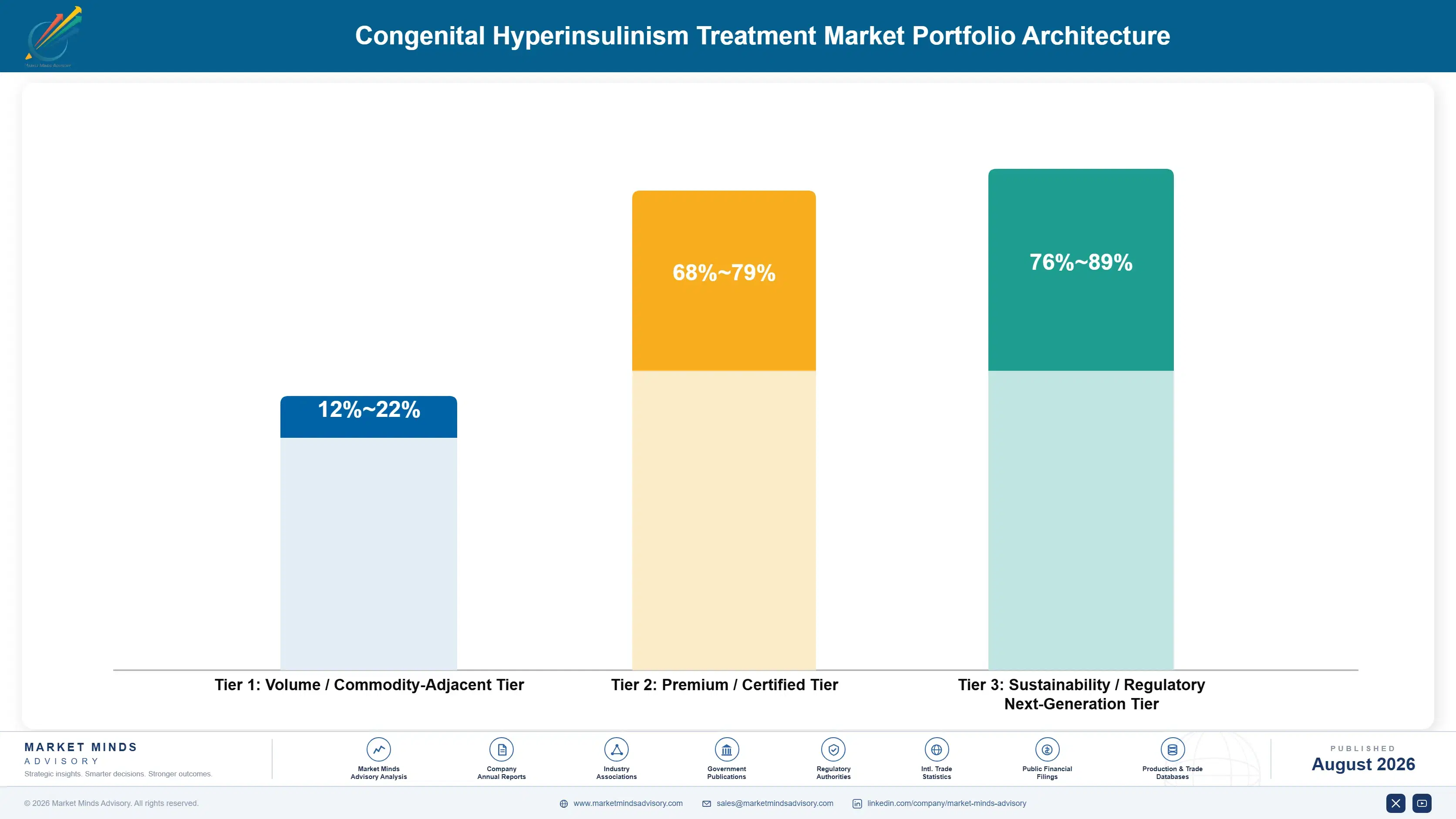
Three tiers describe this market, and the margin spread between them is wider than in almost any category MMA covers. Generic first-line supply operates at commodity paediatric economics, barely above cost. Off-label specialist agents sit far higher because orphan pricing was set for their original indications. And the approved orphan biologics arriving now will occupy a third tier priced against avoided lifetime disability rather than against any comparator drug
The tension is that the cheap tier is the one the entire pathway depends on. Every child starts on diazoxide and roughly half stay there, so a supply failure at the bottom tier disrupts clinical confidence in everything above it. No participant currently has an economic reason to fix that, which is precisely why it keeps breaking and why a second-line specialist funding it would buy disproportionate goodwill

High-value pools concentrate where the payer comparator is a hospital cost rather than another drug. Continuous feeding, repeated admissions, and pancreatectomy all carry visible budget lines that a therapy can displace. Those are budget lines a hospital finance director can already see, which changes the conversation entirely, and a displaced admission is far easier to fund than an abstract benefit.

Volume / Commodity-Adjacent Tier

Generic diazoxide oral suspension and supporting dextrose and nutritional products. Minimal margin, few willing suppliers, and recurrent availability problems. This tier treats about half of all diagnosed patients and underwrites clinical confidence in the entire treatment sequence above it.
Gross Margin: 12-22%

Premium / Certified Tier

Somatostatin analogues used off-label as practical second line, priced on their approved acromegaly and neuroendocrine indications. Margin reflects that original pricing rather than anything about this condition. Position rests on decades of specialist familiarity rather than on labelling or evidence.
Gross Margin: 68-79%

Sustainability / Regulatory / Next-Generation Tier

Approved orphan biologics and stable glucagon analogues developed specifically for this condition. Ultra-orphan pricing set against avoided neurological injury and displaced hospital cost. The wide margin range reflects genuine uncertainty over where European assessment bodies will settle on price.
Gross Margin: 76-89%
congenital-hyperinsulinism-treatment-market-portfolio-architecture-1787298712364

High-value Sub-segments and Strategic Watch-out

Receptor-Targeted Biologic Therapy

Best margin and fastest growth, addressing the diazoxide-unresponsive half of patients who currently have no approved option at all. The wide range reflects unresolved European pricing risk, since assessment bodies anchor on a cheap first-line comparator that treats a genuinely different population. Neonatal labelling would widen the pool further still.
Gross Margin: 76-89%

Somatostatin Analogue Therapy

Strong margin inherited from other indications, with steady volume built on twenty years of specialist habit. Growth is moderate and the position is undefended, since an approved labelled alternative would move prescribers, payers, and hospital pharmacy committees away from off-label use quickly. Nothing currently defends the position beyond prescriber habit.
Gross Margin: 68-79%

Potassium Channel Agonist Therapy

The volume core at commodity margin, reaching roughly half of all diagnosed patients as mandatory first line in every treatment guideline worldwide. Thin economics mean that no supplier maintains redundant capacity, which is why interruptions recur and why the base of the pathway stays fragile.
Gross Margin: 12-22%

Surgical Pancreatectomy And Peri-Operative Care

The strategic watch-out, since better subtype classification should shrink the diffuse-disease surgical population while growing curative focal lesionectomy. Near-total pancreatectomy trades hypoglycaemia for lifelong diabetes, and every effective new drug makes that trade harder for clinicians to justify to families. Focal lesionectomy volume should rise as imaging access improves.
Gross Margin: 34-48%

How Lifelong Rare Disease Demand Behaves

Once a child with diffuse disease is stabilised on a therapy that works, they stay on it for years and frequently for life, which makes this among the most durable annuity structures in paediatric medicine. Discontinuation happens for tolerability or for spontaneous remission in a minority of genotypes, not for competitive switching. Patient acquisition therefore happens once, in the neonatal period, and the commercial value of that single decision compounds across two decades.
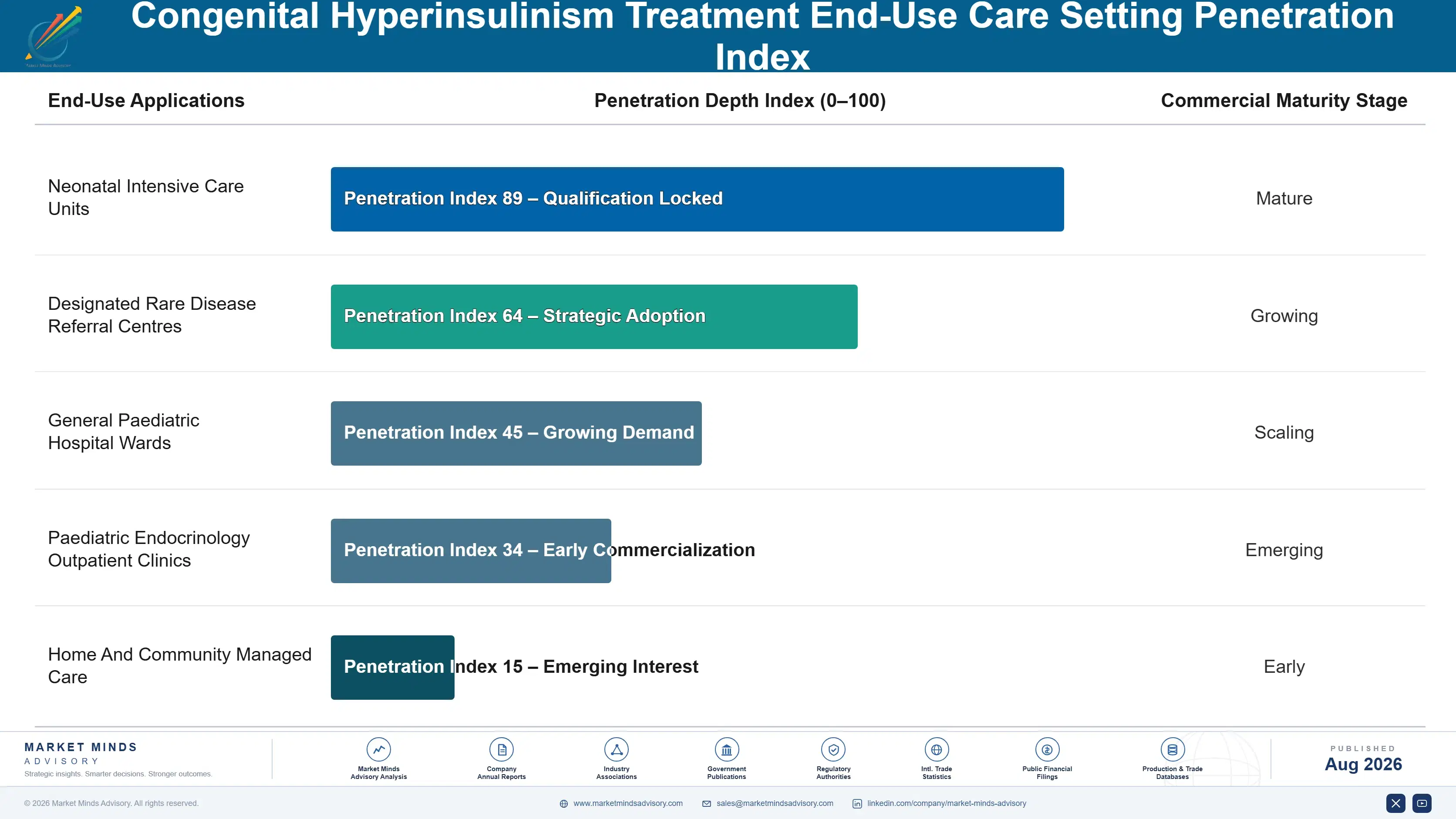
Depth of adoption varies enormously by care setting. Designated referral centres in North America and Western Europe treat aggressively, subtype reliably, and escalate within days. General paediatric units, which see perhaps one case a decade, manage empirically and refer late. Gulf state tertiary hospitals sit closer to the referral centre pattern because case volume there is genuinely higher. That distribution means commercial effort concentrates on maybe 200 centres worldwide.

Buyer profiles are changing as families arrive better informed. Parent advocacy groups now circulate trial information and genetic testing guidance faster than many general paediatricians provide it, and they increasingly drive the referral request themselves. Manufacturers who treat advocacy groups as a communications task rather than a channel are missing the point.
congenital-hyperinsulinism-treatment-market-end-use-penetration-index-1787298712863

What We Would Tell a Board

These are among the four positions where our research anticipates prominent divergence between winners and laggards over the coming forecast period. Each is grounded in the demand model, the regulatory perimeter, and the announced capacity pipeline.
01 / NEONATAL LABEL STRATEGY

Take the harder label; the deferred one is worth less

Irreversible neurological injury occurs in the first days of life, so a label starting at one or three months of age misses the window that matters clinically and misses the health economic argument entirely. Neonatal studies are slow and expensive, which is exactly why rare paediatric designation and voucher value exist to offset them. Expanding the addressable population by roughly 30% is the smaller benefit here; the larger one is a pricing conversation that avoided brain injury can actually support.
02 / DIAGNOSTIC PATHWAY INVESTMENT

Fund the genetic panel you do not sell

A therapy for diazoxide-unresponsive disease is commercially worthless if the treating clinician cannot identify diazoxide-unresponsive disease inside the first week of life. Funding rapid panel capability across referral centres costs perhaps 400,000 dollars per national network, which is negligible against orphan revenue per patient, and it compresses classification from about 21 days to under seven. It also places the manufacturer inside the diagnostic conversation years before launch, which is where second-line prescribing preference is actually formed, held, and very rarely revisited afterwards.
03 / ULTRA-ORPHAN PRICING DEFENCE

Build the registry before the payer asks for it

European assessment bodies will anchor their evaluation on a cheap generic comparator that in practice treats a completely different patient population, and no argument wins that framing without long-term outcome data in hand. A multi-country neurodevelopmental registry costs around two million dollars to establish and must be running at launch rather than commissioned in response to a rejection. Roughly 30% of the achievable price turns on whether avoided disability arrives as evidence or as mere assertion at the negotiating table.
04 / FIRST-LINE SUPPLY STEWARDSHIP

Pay to stabilise a product you do not own

Diazoxide suspension interruptions push patients up the treatment ladder prematurely and destroy specialist confidence in exactly the treatment sequence that second-line agents depend upon. Contracting dedicated capacity costs roughly 1.5 million dollars annually, which is trivial against the second-line revenue that a functioning treatment pathway supports, and no generic supplier anywhere has the economics to fund it alone. Referral centres that have watched a manufacturer solve their supply problem tend to take that manufacturer's clinical calls for a decade afterwards.

Engagement Snapshot From the Field

A live engagement with an industry participant carrying material or product regulatory and market exposure ahead of a defining policy shift, showing how our research translates into a defensible multi-year portfolio strategy.
MARKET MINDS ADVISORY · CLIENT ENGAGEMENT SUMMARY
Congenital Hyperinsulinism Treatment Producer Strategic Portfolio Review and Transition Roadmap 2026·Investment Scenario on Congenital Hyperinsulinism Treatment Exposure Evaluation 2025-26
CLIENT PROFILE
A clinical-stage biopharmaceutical company with a late-stage asset in congenital hyperinsulinism and approximately 240 million dollars in cash runway (client-reported, unverified by MMA), holding orphan and rare paediatric designations in two major jurisdictions. The company had no commercial infrastructure, no registry programme, and a development plan that deferred neonatal studies to a post-approval commitment in order to reach filing sooner.
STRATEGIC CHALLENGE
The board needed to decide whether to accelerate to filing on a paediatric label or invest in neonatal studies first, and management was split. The commercial team argued for speed to market while the medical team argued that the deferred label would be rejected on price. Neither position had supporting evidence.
MMA APPROACH
We modelled achievable price under both labels across seven national payer systems, interviewed assessment body advisers and paediatric endocrinologists across the designated referral centre network, and mapped subtype classification timelines at each centre. Registry cost and timeline options were benchmarked against comparable ultra-orphan paediatric programmes that had already been through European assessment.
KEY FINDINGS
  1. Achievable price under a three-month paediatric label came in roughly 30% below the neonatal label case across the four European systems modelled, driven entirely by comparator selection.
  2. Median subtype classification ran 21 days across the referral network, meaning most addressable patients would be identified well after the treatment window the client's own trial data supported.
  3. Priority review voucher value alone covered a substantial majority of the incremental neonatal study cost, which management had not incorporated into the development business case.
  4. No competitor programme in the condition had a neurodevelopmental registry running, leaving the first mover with an evidence position that would be difficult to match later.
CLIENT PROFILE
A clinical-stage biopharmaceutical company with a late-stage asset in congenital hyperinsulinism and approximately 240 million dollars in cash runway (client-reported, unverified by MMA), holding orphan and rare paediatric designations in two major jurisdictions. The company had no commercial infrastructure, no registry programme, and a development plan that deferred neonatal studies to a post-approval commitment in order to reach filing sooner.
STRATEGIC CHALLENGE
The board needed to decide whether to accelerate to filing on a paediatric label or invest in neonatal studies first, and management was split. The commercial team argued for speed to market while the medical team argued that the deferred label would be rejected on price. Neither position had supporting evidence.
MMA APPROACH
We modelled achievable price under both labels across seven national payer systems, interviewed assessment body advisers and paediatric endocrinologists across the designated referral centre network, and mapped subtype classification timelines at each centre. Registry cost and timeline options were benchmarked against comparable ultra-orphan paediatric programmes that had already been through European assessment.
KEY FINDINGS
  1. Achievable price under a three-month paediatric label came in roughly 30% below the neonatal label case across the four European systems modelled, driven entirely by comparator selection.
  2. Median subtype classification ran 21 days across the referral network, meaning most addressable patients would be identified well after the treatment window the client's own trial data supported.
  3. Priority review voucher value alone covered a substantial majority of the incremental neonatal study cost, which management had not incorporated into the development business case.
  4. No competitor programme in the condition had a neurodevelopmental registry running, leaving the first mover with an evidence position that would be difficult to match later.
RECOMMENDED STRATEGY
Phase 1: Phase 1 (months one to nine): commission the multi-country neurodevelopmental registry and begin neonatal study design in parallel with ongoing pivotal work. Phase 2: Phase 2 (months nine to twenty-four): fund rapid genetic panel capability across the designated referral network and build medical affairs presence at those centres. Phase 3: Phase 3 (months twenty-four to thirty-six): file on the neonatal label with registry data in hand and open outcomes-linked pricing discussions early.
OUTCOME
The board approved the neonatal pathway and the registry investment, accepting a filing delay of roughly nine months. Internal valuation of the programme rose materially on the revised pricing assumptions (client-reported, unverified by MMA), and the registry has since enrolled across four countries with referral centre participation ahead of the original plan.

Frequently Asked Questions

Foundational context covering the market sizes, CAGR, scope, country, region and competition that inform every finding below. This section is provided to cover basics and most often pre-purchase conversations, answered from the MMA Primary Research Dataset.

What is the current size of the Congenital Hyperinsulinism Treatment Market?

The market is valued at USD 0.32 billion in 2025, rising to USD 0.36 billion in 2026. Roughly 9,400 patients are diagnosed and actively managed worldwide.

How large will the Congenital Hyperinsulinism Treatment Market be by 2036?

MMA forecasts USD 1.25 billion by 2036, an increase of USD 0.89 billion over the 2026 base. That represents an expansion multiple of 3.47 times.

What is the CAGR for the Congenital Hyperinsulinism Treatment Market 2026 to 2036?

The base case CAGR is 13.2%, with a bull case of 14.5% and a bear case of 11.9%. The historical rate from 2020 to 2025 was also 11.9%.

Which segment is growing fastest?

Receptor-targeted biologic therapy at 19.8%, exactly 1.50 times the market rate. It addresses the roughly half of patients who do not respond to first-line diazoxide.

Who are the major companies in the Congenital Hyperinsulinism Treatment Market?

Teva Pharmaceutical Industries, Novartis, Ipsen, Zealand Pharma, and Rezolute lead the market on treated patient reach. The top five together account for 76% of the market, though two of those positions rest on pipeline assets.

Which country is growing fastest?

China at 18.6%, driven by rare disease catalogue expansion and by rapidly improving genetic testing capacity across tertiary paediatric centres. Diagnosis rates there remain well below Western levels.

Report Segmentation Architecture

The full report scope spans multiple orthogonal segmentation dimensions, with cross-tabulated demand data provided for each dimension pair. Coverage extends further to regional breakdowns, trend trajectories, and the competitive detail needed to support segment-level decision-making.

By Therapeutic Modality

  • Potassium Channel Agonist Therapy
  • Somatostatin Analogue Therapy
  • Glucagon Analogue Therapy
  • Receptor-Targeted Biologic Therapy
  • Surgical Pancreatectomy And Peri-Operative Care
  • Nutritional Support Therapy

By End-Use Care Setting

  • Neonatal Intensive Care Units
  • Designated Rare Disease Referral Centres
  • General Paediatric Hospital Wards
  • Paediatric Endocrinology Outpatient Clinics
  • Home And Community Managed Care

By Payer And Access Route

  • Public Health System Reimbursement
  • Commercial And Private Insurance
  • Named-Patient And Compassionate Supply
  • Out-Of-Pocket And Charitable Funding

By Region

  • North America
  • Middle East and Africa
  • Western Europe
  • East Asia
  • South Asia and Pacific
  • Latin America
  • Eastern Europe

Scope, Methodology, and Coverage

Every figure in this report is reproducible from documented input assumptions. The scope below maps the historical period, the forecast horizon, the segmentation dimensions, and the countries covered, alongside the underlying primary and qualitative methodology.
Historical Period
2020 to 2025
Forecast Period
2026 to 2036
Base Year
2025 (USD billions; MMA Primary Research Dataset, August 2026)
Market Definition
This market comprises therapies and interventions used to treat congenital hyperinsulinism, a genetically determined disorder of dysregulated pancreatic insulin secretion producing persistent hypoglycaemia from the neonatal period. Measurement covers potassium channel agonists, somatostatin analogues, glucagon and glucagon analogues, receptor-targeted biologics, pancreatectomy procedures, and specialist nutritional support therapy, valued at manufacturer and provider realised prices. Genetic testing services, imaging equipment, continuous glucose monitoring hardware, insulin pumps, and transient or acquired hyperinsulinism of any origin fall outside scope.
Quantitative Units
USD billions (current prices); diagnosed and treated patient counts; annual cost per treated patient
Segmentation Dimensions
By Therapeutic Modality; By End-Use Care Setting; By Payer And Access Route; By Region
Regions Covered
North America, Middle East and Africa, Western Europe, East Asia, South Asia and Pacific, Latin America, Eastern Europe
Countries Covered
USA, Canada, UK, Germany, France, Netherlands, Italy, Spain, Sweden, Switzerland, Poland, Turkey, Japan, South Korea, China, India, Australia, Saudi Arabia, UAE, Kuwait, Qatar, Oman, Israel, Brazil, Mexico, Argentina, South Africa, Egypt, Pakistan, and additional markets relevant to this sector
Key Companies Profiled
Teva Pharmaceutical Industries, Novartis, Ipsen, Zealand Pharma, Rezolute, Hanmi Pharmaceutical, Xeris Biopharma, Chiesi Farmaceutici, Recordati, Pfizer, Eli Lilly, Novo Nordisk, Sun Pharmaceutical Industries, Cipla, Hikma Pharmaceuticals, Amneal Pharmaceuticals, Fresenius Kabi, Emcure Pharmaceuticals, Crinetics Pharmaceuticals, Ascendis Pharma
Quantitative Methodology
Primary survey, n=3,800 respondents, Q4 2025, six countries; demand-side model with trade association cross-validation
Qualitative Methodology
47 expert interviews, Q4 2025; applied to validate demand model assumptions, identify emerging dynamics, and assess competitive positioning
Report Format
PDF and XLSX data workbook (Word format preview document)
Publisher
Market Minds Advisory
Report Code
MMA-2026-HLT-946
Published
August 2026
Contact
sales@marketmindsadvisory.com | www.marketmindsadvisory.com

Purchase the full Congenital Hyperinsulinism Treatment Market Report (2026 to 2036).

The full report sizes congenital hyperinsulinism treatment across six therapeutic modalities, five care settings, four payer routes, and seven regions, with diagnosed patient counts for the twenty largest national pools. It includes a referral centre map covering designated services worldwide with subtype classification timelines at each, and achievable price modelling under neonatal and paediatric label scenarios across seven payer systems. Competitive profiling covers twenty companies on a treated patient reach basis, including late-stage pipeline assets. Consanguinity-adjusted incidence modelling is provided for Gulf and South Asian populations. Diazoxide supply continuity risk is tracked by market.
Designated referral centre map with classification timelines
Achievable price modelling under neonatal label scenarios
Consanguinity-adjusted birth incidence by national population
Late-stage pipeline tracker with designation and timeline detail
Diazoxide supply continuity risk assessment by market
Payer comparator analysis across seven assessment systems

Built For The People Who Decide

From boardroom strategy to bench-side execution, this report is read cover-to-cover by leaders shaping the next decade of their industry, turning demand scenarios, market dynamics and valuation benchmarks into decisions.
CXOs/ Presidents/ VPs/ Managers
M&A and Corporate Development
Strategy Teams and R&D Heads
Procurement and Product Directors
Regulatory and Compliance Leaders
Investor Relations and Equity Analysts