Market Minds Advisory
Commercial Medium Voltage Distribution Panel Market

Commercial Medium Voltage Distribution Panel Market: Commercial Medium Voltage Distribution Panel Market: Delivery Date Beats Specification

Sixty two weeks from order to delivery decides more contracts than price does, and the gas inside half of these panels becomes illegal to install across Europe from January next year.

Lead Analyst

Published

September 2026

Make Smarter Decisions with Customized Research Insights

Request a free sample report and evaluate market opportunities, growth trends, and competitive dynamics relevant to your business needs.

2025 MARKET VALUE$18.0BMarket Size 2025
2036 FORECAST VALUE$51.4BBase Case , 2026 to 2036
CAGR 2026 TO 203610.0 %Bull 11.2% / Bear 8.8%
INCREMENTAL OPPORTUNITY$31.6BNet 10- year value creation
EXPANSION MULTIPLE2.59x2036 value over 2026 base
Strategic Levers
M&A Pipeline
Regional Outlook
Country Rankings
Competitive Intelligence
Segmental Deep-dive
Call-Us : 91 93563 13602

Executive Snapshot and Market Trajectory.

Two things are happening at once and neither is about price. Lead times run 62 weeks against backlogs nobody can clear, and European rules prohibit sulphur hexafluoride in new panels below 24 kilovolts from the start of 2026, which obsoletes a large part of the existing range.
Alternative gas insulated panels grow at 15.0%, half again the market rate of 10.0%, because a regulation rather than a customer preference created the segment and the deadline does not move. East Asia holds 31% of demand, above its usual band, on construction volume and on a manufacturing base that supplies the world, while data centres now take 27% of commercial demand everywhere. That buyer did not exist in this market a decade ago.
Concentration is high at 54% of panel units, because switchgear carries type testing and safety certification that takes years to obtain per design and per market. The commercially decisive capability now is delivery date rather than specification, since a panel arriving in thirty weeks beats one arriving in eighty regardless of what it costs or how well it performs. Nobody in this industry was organised to compete on schedule.
Market Definition
The commercial medium voltage distribution panel market covers switchgear assemblies distributing electricity between one and thirty six kilovolts in commercial, institutional and light industrial facilities, spanning air-insulated switchgear panels, sulphur hexafluoride gas-insulated panels, alternative gas insulated panels, solid and shielded solid insulated panels, ring main units, and digital and monitored panel assemblies. Scope is measured as panel units shipped into building and facility applications. Excluded are low voltage distribution boards and panelboards, high voltage transmission switchgear above thirty six kilovolts, power and distribution transformers, protection relays sold separately, and utility substation equipment.
Base Year Value
$18.0B in 2025 (MMA Primary Research Dataset, September 2026)
Forecast Period
2026 to 2036, eleven discrete annual values
CAGR
10.0% base case. Bull 11.2%. Bear 8.8%.
Fastest Growth Segment
Alternative Gas Insulated Panels: 15.0% CAGR
Fastest Growth Country
India: 12.4% CAGR
Fastest Growth Region
South Asia and Pacific: 12.4% CAGR
Largest Region
East Asia: 31% of 2025 global value
Market Leaders
Schneider Electric, ABB, Siemens Energy, Eaton and Hitachi Energy. Source: MMA Analysis, July 2026.
Primary Survey
n=3,800 procurement and R&D decision-makers, Q4 2025, six countries
Methodology
Demand-side build-up, cross-validated against public data, 47 expert interviews

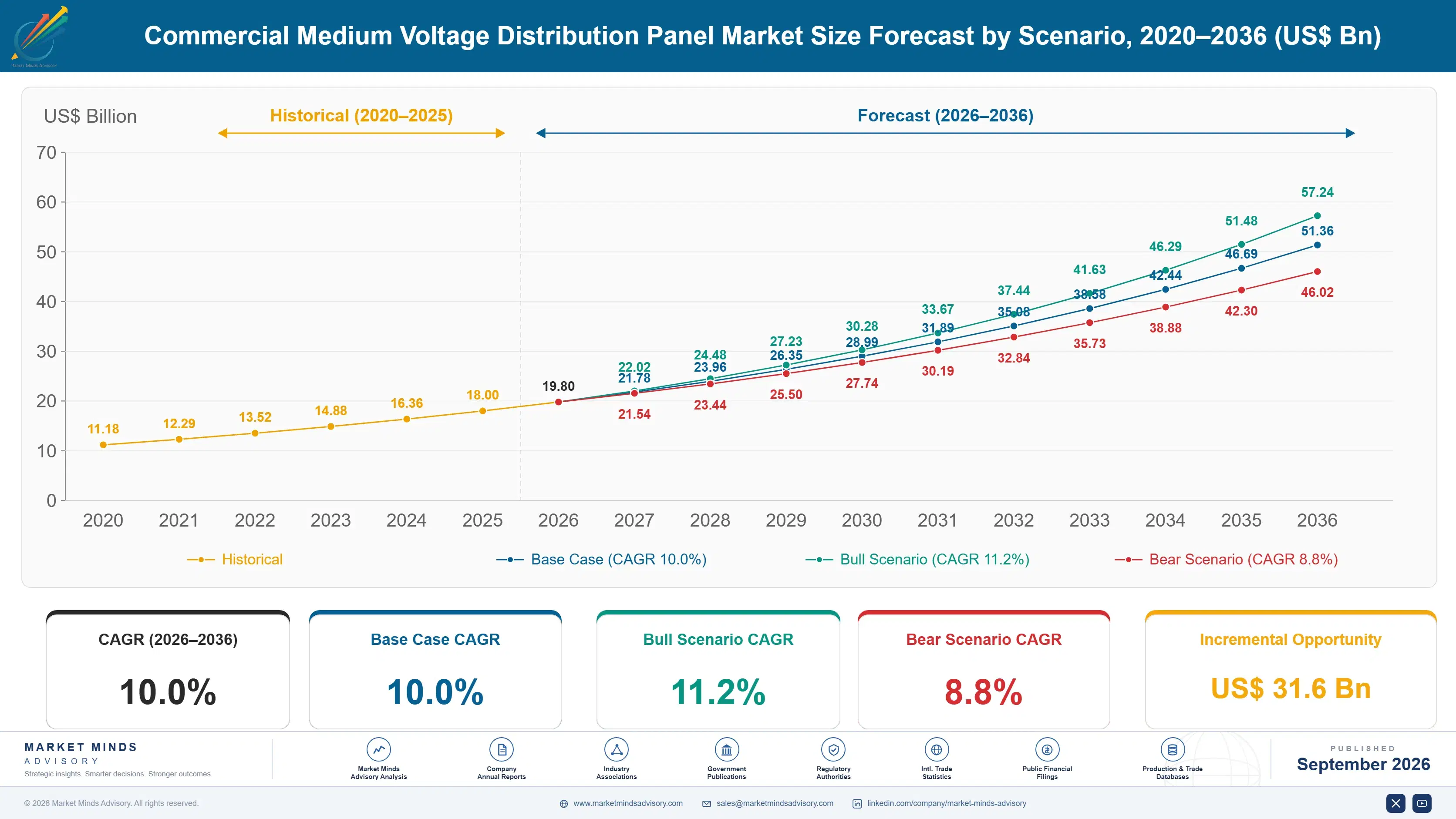
Commercial Medium Voltage Distribution Panel Market Forecast Scenarios

commercial-medium-voltage-distribution-panel-marke-size-forecast-scenario-1788255402225
Between 2020 and 2025 the sector compounded at 8.6% and supply rather than demand set the pace throughout. Order books filled faster than factories could deliver, lead times extended from months to well over a year, and manufacturers allocated capacity rather than competing for orders. Pricing rose in a market where customers were grateful to receive equipment, which is not a normal condition here.
The 10.0% base case rests on three mechanisms. The European sulphur hexafluoride prohibition obliges replacement of a large product range on a published timetable that applies to new equipment regardless of what anybody would prefer. Data centre construction consumes medium voltage distribution at 27% of commercial demand and rising. And electrification of heating and transport is adding capacity requirements to buildings that were never designed for it. None of the three depends on general construction growing.
The bull case at 11.2% turns on manufacturing capacity expansion finally reducing lead times, which would release projects currently deferred because equipment cannot be obtained. The bear case at 8.8% is the same constraint persisting: buildings that cannot get switchgear do not get built, and a backlog that never clears eventually suppresses the demand it appears to represent.

Sixty Two Weeks To Deliver

Lead time has replaced price as the variable that decides orders, which is not how this industry has ever worked. Delivery runs around 62 weeks on current backlogs, and a building that cannot obtain switchgear does not open however well the rest was procured. Manufacturers allocate capacity rather than compete for work, and customers pay to move up a queue rather than negotiating a price down.
TOP FIVE CONCENTRATION54%Share of panel units shipped held by five manufacturers
AVERAGE LEAD TIME62 weeksTime from order placement to delivery on current backlogs
GAS BAN THRESHOLD24 kVVoltage below which the gas is prohibited in equipment
DATA CENTRE SHARE27%Portion of commercial demand originating in computing facility construction
COPPER CONTENT SHARE23%Portion of panel cost accounted for by conductor metal
DESIGN FREEZE TIMING78%Portion of programme elapsed before electrical layout is fixed
A regulation is obsoleting a substantial part of the product range on a fixed date. European rules prohibit sulphur hexafluoride in new medium voltage switchgear below 24 kilovolts from the beginning of 2026, extending to higher voltages later, which forces alternative gas mixtures, vacuum with dry air or solid insulation into designs that used the same gas for decades. The deadline does not move and everybody is redesigning at once.
The scheduling problem underneath all of this is genuinely awkward. Electrical design typically freezes when a building programme is around 78% elapsed, because layouts and loads keep changing, while switchgear carries the longest lead time in the entire electrical package. Ordering early means ordering against a design that will change and ordering late means missing the opening date, and no procurement process resolves it.
"I have sat in meetings where nobody discussed the price of the switchgear at all and everybody discussed the delivery date for ninety minutes. That is a market in a very unusual condition, and the manufacturers who understood it first are earning accordingly."
Director, Electrical Distribution Equipment Practice · MMA Energy Practice · September 2026

Market Trends

A gas prohibition is rewriting the product range

European rules prohibit sulphur hexafluoride in new medium voltage switchgear below 24 kilovolts from the start of 2026 and extend to higher voltages within the decade, which obsoletes designs that have used the same insulating gas since the technology was introduced. Manufacturers are moving to fluorinated alternative mixtures, to vacuum interruption combined with dry air, and to solid insulation, all of which change dimensions, testing and installation practice. Alternative gas panels grow at 15.0% against a market rate of 10.0% entirely on that timetable rather than on any customer preference.
Market Impact: Upgrades buildings beyond 1 original design
Data centres became a distinct and demanding buyer

Computing facilities now take around 27% of commercial medium voltage demand, buying at densities and on schedules that no conventional building programme approaches, with electrical capacity per square metre several times an office and deployment timetables driven by server delivery rather than by construction. That buyer specifies redundancy, monitoring and maintainability to standards borrowed from utility practice, orders in repeated identical blocks and cares about delivery date above almost everything else. Manufacturers organised around building services contractors have found that an unfamiliar customer to serve properly. Repeat identical blocks suit both sides.
Market Impact: Runs 62 weeks behind demand

Market Opportunities and Growth Drivers

Building electrification adds capacity nobody planned

Replacing gas heating with heat pumps, adding vehicle charging and increasing cooling load together raise the electrical capacity a commercial building requires well beyond what its original distribution was designed to carry, which forces medium voltage upgrades in buildings that would otherwise never have touched their switchgear. That demand is retrofit rather than new build, arrives building by building rather than in projects, and is largely invisible in construction statistics. It is a substantial and poorly measured part of what is driving this market at present. Nobody counts it properly.
Market Impact: Freezes design at 78% elapsed

Lead times let manufacturers price rather than bid

Delivery running around 62 weeks against backlogs that keep extending has moved this from a competitive tender market into an allocation market, where manufacturers choose which orders to accept and customers pay to move up a queue. Pricing has risen accordingly across a product category that spent decades being commoditised by procurement departments. That condition persists as long as capacity trails demand, and capacity expansion in switchgear requires type testing and factory qualification measured in years rather than months. Capacity expansion requires type testing and factory qualification measured in years.
Market Impact: Requalifies designs before 2026

Market Restraints and Challenges

Design freezes late and switchgear orders early

Electrical layouts and load schedules typically settle when a building programme is around 78% elapsed, because tenant requirements and equipment selections keep changing, while switchgear carries the longest lead time in the electrical package at around 62 weeks. The root cause is a genuine conflict between design certainty and procurement timing that no scheduling method resolves. Commercial impact is orders placed against designs that then change, producing variations, delays and disputes. Participants are responding with configurable platforms, late-configuration manufacturing, capacity reservation arrangements and standard designs agreed before layouts are final.
Market Impact: Prohibits gas below 24 kilovolts

Alternative gas designs are not simple substitutions

Replacing sulphur hexafluoride requires either fluorinated alternative mixtures with different dielectric properties, vacuum interruption combined with dry air at larger dimensions, or solid insulation with different thermal behaviour, and each route changes panel size, type testing and installation practice rather than swapping a fill gas. The root cause is that the prohibited gas was genuinely excellent at its job. Commercial impact is a full redesign and requalification programme across every manufacturer at once. Mitigation runs through platform redesign, early type testing, retrofit-compatible dimensions and customer education well ahead of the deadline.
Market Impact: Takes 27% of commercial demand
3 additional market trends, 4 additional growth drivers, and 2 additional restraints and challenges are covered in the full report. Contact sales@marketmindsadvisory.com to access the complete intelligence.

Segment CAGR and Growth Architecture

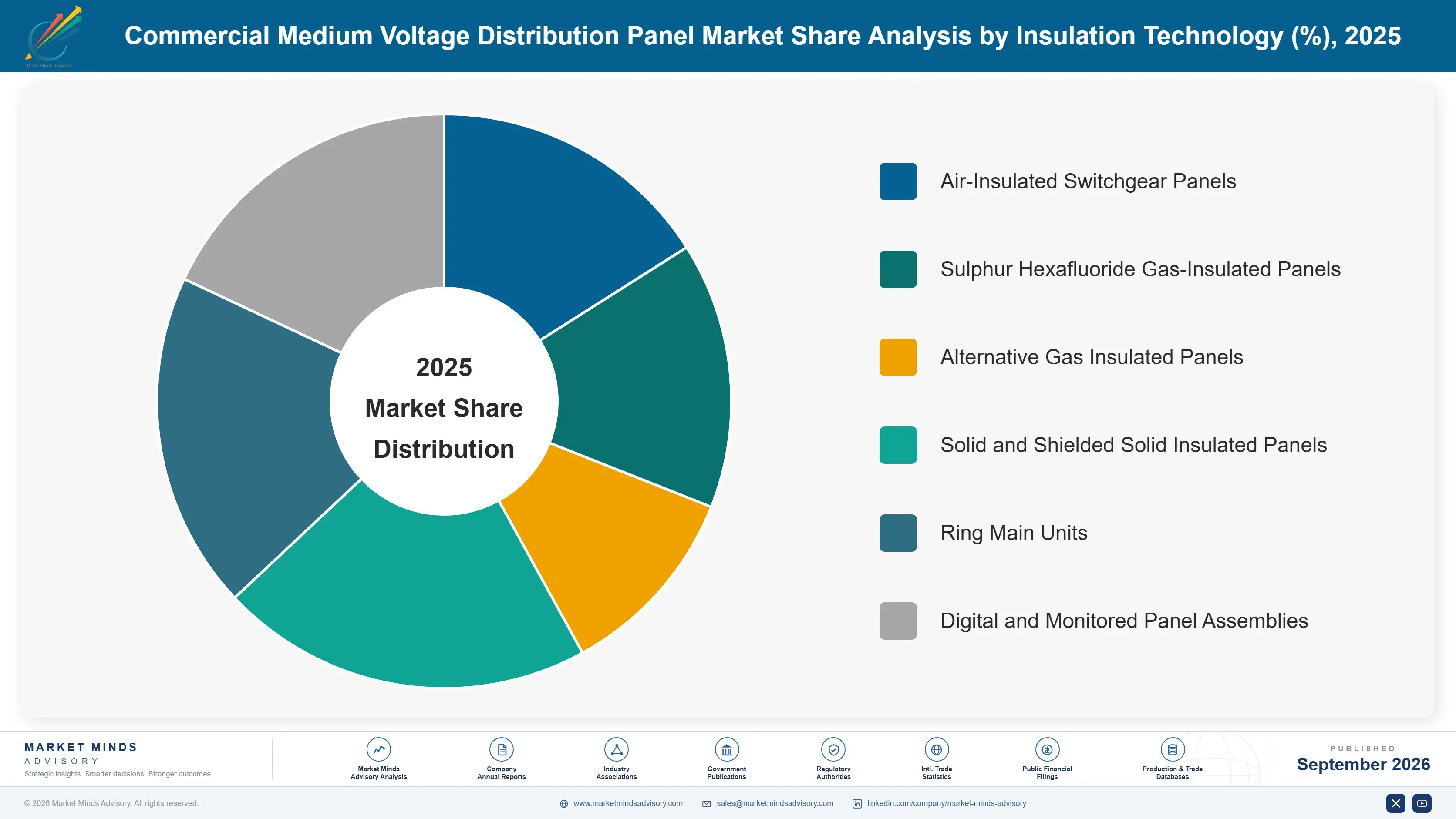
Segmentation follows insulation technology, the dimension on which regulatory exposure, panel dimensions and cost all move together. Air-insulated and sulphur hexafluoride panels carry the installed base and one of them is being prohibited. Alternative gas and solid insulated designs carry the growth, because a deadline rather than any customer preference is creating the demand.
commercial-medium-voltage-distribution-panel-marke-market-share-analysis-1788255402794

Alternative Gas Insulated Panels

Alternative gas insulated panels grow at 15.0%, half again the market rate of 10.0%, and a European regulation with a fixed date created the entire segment rather than any customer asking for it. Fluorinated alternative mixtures deliver dielectric performance approaching sulphur hexafluoride within panel dimensions that fit existing switchrooms, which matters enormously for retrofit where space is already committed. Type testing and requalification are substantial and every manufacturer is doing it simultaneously against the same deadline. Pricing sits above the equipment being replaced and customers accept that, because the alternative is equipment they are not permitted to install at all after the date passes. Nobody is able to defer that date at all.
CAGR 15.0%

Digital and Monitored Panel Assemblies

Digital and monitored panel assemblies at 12.6% embed current, temperature, partial discharge and switch position sensing with communications into the panel itself, which converts a passive distribution asset into something a facilities team can assess without opening it. Data centre operators drove the initial demand because unplanned electrical outages are the failure they most fear, and commercial building operators have followed as maintenance costs and skilled labour availability both worsened. The monitoring hardware costs relatively little against the panel and the software and integration behind it is where the value and the margin actually sit, which most manufacturers have not priced accordingly. Software and integration are where the value sits and most manufacturers have not priced any of it accordingly.
CAGR 12.6%
Full segment breakdown across 6 segments available in the complete report.

Regional Architecture and Country Demand Map

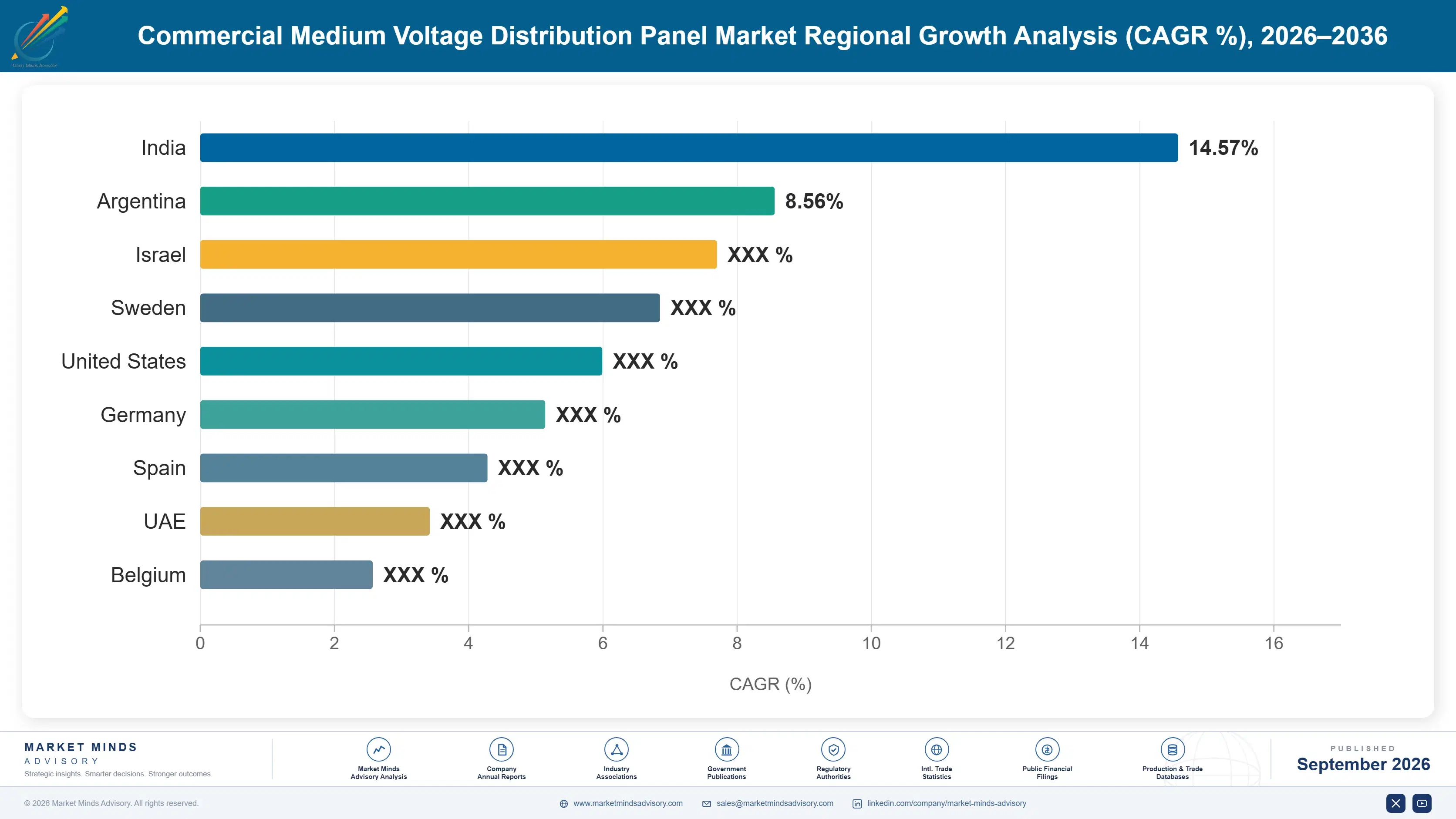
East Asia takes 31%, above its usual band, on construction volume and a manufacturing base supplying the world. South Asia sits above band on Indian electrification and construction together. Supply capacity rather than demand decides most of these positions at present, which is a genuinely unusual condition for this equipment.

East Asia

Manufacturing and construction sit together here and the 31% share reflects both. Chinese commercial construction consumes medium voltage distribution at a volume no other market approaches, and Chinese, Japanese and Korean manufacturers supply not only that demand but a substantial share of what the rest of the world installs. Domestic manufacturers compete hard on price and increasingly on delivery, which is where the global shortage has made them attractive to customers who would previously have specified European or American equipment. Japanese and Korean production holds strong positions in higher specification applications. Growth at 10.8% reflects volume rather than any regulatory driver. Delivery capability rather than price is winning these manufacturers work they would not previously have been considered for.
Share: 31% | CAGR: 10.8% (2026 to 2036)

North America

Data centres define this region more than conventional construction does, and the 24% share understates how concentrated the demand has become. Hyperscale campus development consumes medium voltage distribution in repeated identical blocks on schedules driven by computing deployment rather than building programmes, and those customers pay for delivery date above almost everything else. Lead times here are among the longest anywhere, with domestic manufacturing capacity fully committed and imports facing their own constraints. Building electrification retrofit is adding demand that construction statistics do not capture. Growth at 11.0% is among the strongest of the seven regions. One customer type now dominates and it buys the production queue itself. Schedule beats everything.
Share: 24% | CAGR: 11.0% (2026 to 2036)
Regional intelligence for 5 additional markets available in the complete report: Western Europe, South Asia and Pacific, Latin America, Middle East and Africa, Eastern Europe. Contact sales@marketmindsadvisory.com.
commercial-medium-voltage-distribution-panel-marke-country-cagr-analysis-1788255403333

Four Moves While Capacity Is Short

None of these four is about panel performance, because switchgear that passes type testing works and every qualified manufacturer's does. Each works on the two conditions actually shaping this market: a delivery queue nobody can jump, and a regulation obsoleting product on a date that will not move. Both are operational rather than commercial problems.

Sell the delivery slot, not the panel

Lead times running 62 weeks have turned this into an allocation market where customers pay to move up a queue rather than negotiating a price down, and a building that cannot obtain switchgear does not open on schedule at any cost. Selling reserved capacity, guaranteed delivery windows and slot commitments ahead of final design converts a scarce resource into a priced product. It requires production planning discipline rather than any manufacturing change. Most manufacturers still quote a lead time and let the customer worry about it. Most just quote a lead time.
Market Impact: Prices a 62 week delivery queue properly now

Design for late configuration in manufacture

Electrical layouts freeze at around 78% of programme elapsed while switchgear needs ordering far earlier, which is a conflict that produces variations, disputes and delayed openings on almost every project. A platform allowing configuration to be finalised late in manufacture, rather than fixed at order, lets a customer commit to a slot before committing to a layout. That removes the customer's worst procurement problem entirely. It is a design and production decision rather than a commercial one, and very few manufacturers have made it. Very few have made that decision.
Market Impact: Resolves the 78% design freeze conflict for customers

Get alternative gas designs qualified early

European rules prohibit sulphur hexafluoride below 24 kilovolts from 2026 and extend upward later, which obsoletes existing ranges on a date nobody can negotiate, and every manufacturer is running type testing and requalification simultaneously against the same deadline. Being qualified first means selling into a window where customers have very few compliant options and pricing reflects that. Alternative gas panels grow at 15.0% against a market rate of 10.0%. Late qualification means watching that window from outside it. Every manufacturer is testing against one deadline and laboratory capacity is itself now the constraint. Late qualification means watching from outside.
Market Impact: Qualifies well ahead of the fixed 2026 deadline

Build for the data centre buyer specifically

Computing facilities take around 27% of commercial demand, order in repeated identical blocks, specify to standards borrowed from utility practice and value delivery date above nearly everything else, which makes them an entirely different customer from a building services contractor. Standard configurations produced repeatedly suit that buyer and suit manufacturing efficiency simultaneously. Monitoring and diagnostics matter to them more than to anybody else. Manufacturers organised around one-off building projects are serving that customer badly and losing repeat volume as a result. Repeat volume is being lost to competitors who build for that customer specifically.
Market Impact: Serves the 27% holding all commercial demand growth

Who Controls the Margin Pool

CR5 stands at 54% of panel units shipped, which is the only comparable basis given that switchgear revenue sits inside far larger electrical equipment reporting for every manufacturer. Concentration is high because type testing and safety certification take years per design and per market, which excludes entrants and protects incumbents far more reliably than any technical advantage would. Certification protects incumbents more reliably than any technology would.
Competition runs on delivery capacity, regulatory qualification and configuration flexibility. Delivery decides orders in an allocation market where customers cannot obtain equipment. Qualification decides who can sell into Europe after the gas prohibition takes effect. Configuration flexibility decides who can accept an order before a customer's design is finished. Panel performance differentiates almost nothing between type-tested manufacturers. Every qualified manufacturer's product works.

Rankings will move on who expands manufacturing capacity and who qualifies alternative gas designs first, because both are constraints rather than preferences. Chinese and Indian manufacturers are gaining share in markets that would previously have specified Western equipment, on delivery rather than on price. The pressure comes from a shortage and a regulation together, which is an unusual combination to face at the same time.
commercial-medium-voltage-distribution-panel-marke-company-positioning-matrix-1788255403861

Competitive Moat and Risk Dimensions

SCHNEIDER ELECTRIC

Moat: Alternative gas qualification and breadth

Early commitment to alternative insulation technologies gives the group type-tested compliant designs while competitors are still qualifying theirs against a deadline that does not move, and range breadth lets it serve retrofit dimensions that constrain what a switchroom can accept. Being qualified first in a mandated transition is a genuinely temporary advantage worth a great deal while it lasts.
SCHNEIDER ELECTRIC

Risk: Capacity limits what it accepts

Manufacturing capacity fully committed against a backlog means turning away orders regardless of margin, and expanding switchgear production requires factory qualification and type testing measured in years rather than months. Competitors adding capacity faster take volume the group cannot serve. Being unable to accept profitable work is an unfamiliar and genuinely uncomfortable competitive position.
ABB

Moat: Certification depth across many markets

Type-tested and certified designs across a very large number of national markets and standards give the group the ability to serve international projects from a common platform, which matters enormously when engineering contractors specify to one standard and build in several countries. Accumulating those certifications takes years per market. A regional competitor cannot follow a project across borders.
ABB

Risk: Regional manufacturers gaining on delivery

Chinese and Indian manufacturers with available capacity are winning work in markets that would previously have specified European equipment, on delivery date rather than on price or specification. Certification breadth is worth less when the customer cannot obtain equipment at all. That erosion is happening on projects the group would ordinarily expect to win comfortably.

Players Tracked

Prominent Players

Schneider Electric
ABB
Siemens Energy
Eaton
Hitachi Energy

Other Key Players

General Electric
Mitsubishi Electric
Toshiba
Fuji Electric
Hyundai Electric
LS Electric
TGOOD
CHINT Electric
Ormazabal
Lucy Electric
Powell Industries
Legrand
Nidec
Efacec
Larsen and Toubro

Recent Developments

JANUARY 2025

Manufacturers accelerated alternative gas type testing programmes

Switchgear manufacturers accelerated type testing of alternative insulation designs ahead of the European prohibition on sulphur hexafluoride in new medium voltage equipment, with laboratory capacity for the required testing becoming a constraint in itself. Those qualified earliest gained access to a window with very few compliant competing products.
Signal: Testing laboratory capacity turned out to be the bottleneck that nobody had planned around at all.
JUNE 2025

Data centre operators contracted switchgear capacity years ahead

Hyperscale computing operators began contracting manufacturing capacity for medium voltage switchgear several years ahead of specific project requirements, reserving production slots rather than ordering any specific equipment at all. Manufacturers accepting those commitments filled production capacity that conventional building projects could then no longer obtain at all.
Signal: One customer type is now buying the queue itself, which changes what everybody else can get.
OCTOBER 2025

Lead times extended further as capacity expansion lagged

Delivery times for medium voltage distribution equipment extended further across most markets as demand growth continued to outpace manufacturing capacity additions, which require factory qualification and type testing measured in years rather than months. Several commercial building projects reported delayed openings attributed directly to switchgear availability alone.
Signal: Buildings are now being delayed by a panel, which is not a sentence anybody wrote a decade ago.

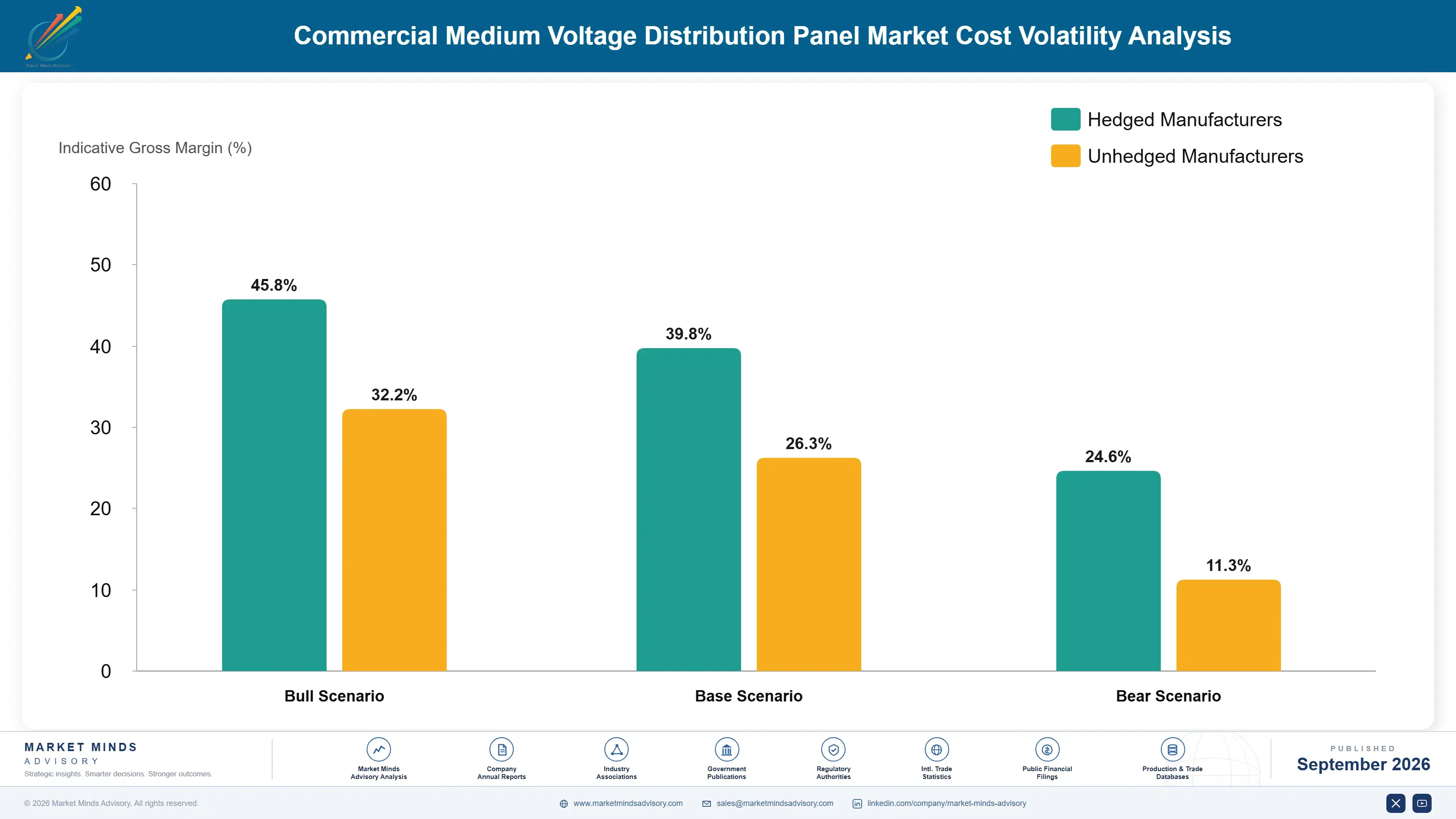
Copper, Steel And Testing

Copper busbar and conductor account for roughly 23% of panel cost, fabricated steel enclosure around 18%, and circuit breakers with switching devices a further 26%. Type testing and certification are capital rather than unit costs and they are substantial, which is precisely why this industry has so few participants and why capacity expansion takes years rather than months to complete.
Copper pricing through recent years moved on electrification demand across every sector at once, which the US Geological Survey documented in its mineral commodity reporting. Manufacturers holding forward copper positions and escalation clauses protected margins through the movement. Those quoting firm prices on multi-year projects against a 62 week lead time absorbed increases arriving between order and delivery, which is a genuinely difficult exposure to manage on any long backlog.

The disadvantage falls on backlog duration rather than on purchasing skill, which is unusual. A manufacturer holding a year of orders priced at yesterday's copper is exposed in a way one turning inventory quickly is not, and the longer the backlog the worse it gets. That exposure grew precisely as lead times extended, which means the strongest commercial condition created the hardest cost position simultaneously.
commercial-medium-voltage-distribution-panel-marke-cost-volatility-analysis-1788255404056

Write copper escalation into every long order

Copper is 23% of panel cost and moves on electrification demand across every sector at once, while lead times running 62 weeks mean an order is priced more than a year before it is delivered. Escalation clauses cost a negotiation and remove the exposure a long backlog creates. Manufacturers quoting firm prices absorbed the last movement entirely.

Reserve testing laboratory capacity well ahead

Type testing capacity became a genuine bottleneck as every manufacturer requalified designs against the same regulatory deadline simultaneously, and laboratory slots are finite and booked far ahead. Reserving capacity before it is needed costs a commitment and determines whether a compliant product exists on the date the prohibition takes effect. Manufacturers who booked late are qualifying behind competitors already selling.

Standardise enclosures across the configuration range

Fabricated steel is 18% of cost and most manufacturers carry more enclosure variants than the applications genuinely require, which forfeits fabrication batch economics and complicates late configuration. A standard enclosure range with internal variation raises batch sizes and enables the late configuration that customers freezing design at 78% of programme actually need. It is a design decision taken once.

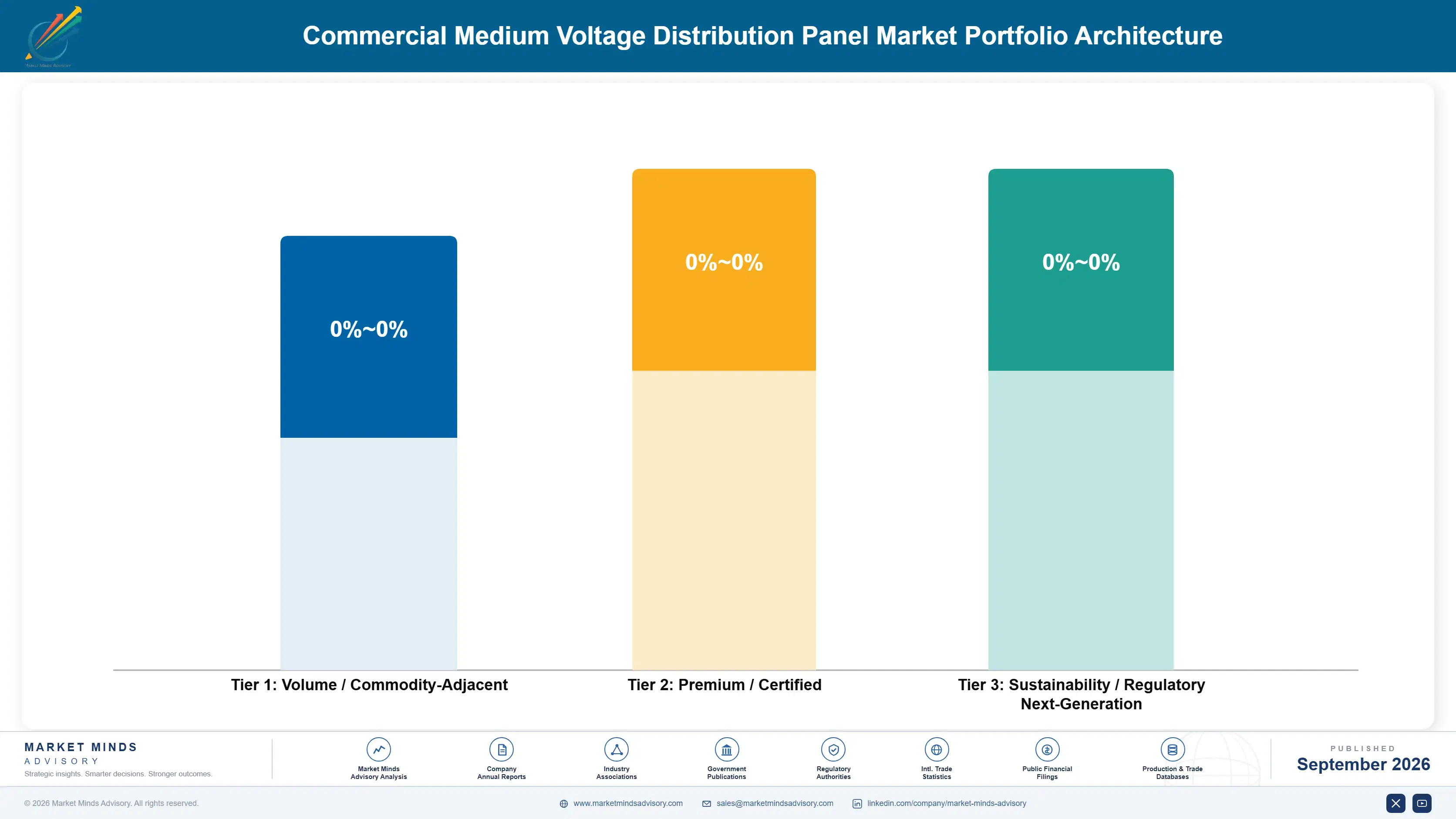
Portfolio Architecture for Margin Defence

Margin here follows scarcity rather than specification, which is a recent and probably temporary condition. A standard panel that a customer cannot obtain elsewhere prices on availability, and the same panel in a market with spare capacity prices against three competing quotations. Participants managing by delivery slot rather than by product line are earning considerably more from identical equipment than those still quoting against a specification.
Volume and premium pull against each other through factory capacity rather than through pricing. Standard configurations produced repeatedly keep production lines efficient and lead times manageable, and that efficiency is what creates the delivery capability customers are currently paying premiums for. Accepting heavily customised orders consumes capacity disproportionately and lengthens the queue for everybody, including the customers paying most.

High-value pools sit in alternative gas designs, in monitoring and diagnostics and in reserved capacity agreements nobody has productised. The third is the most immediately available: customers want certainty of delivery date more than they want anything else, and selling a guaranteed production slot ahead of final design is a product this industry has never offered despite the customer asking for it repeatedly.

Volume / Commodity-Adjacent

Standard air-insulated panels and ring main units sold into conventional building projects against competing type-tested equipment. Products are broadly equivalent between qualified manufacturers. The 8 point spread reflects production efficiency and enclosure standardisation rather than any design difference.
Gross Margin: 14 to 22%

Premium / Certified

Alternative gas and solid insulated panels qualified against the regulatory prohibition, and configurations certified across multiple national standards. Qualification rather than performance supports the price. The 8 point spread reflects how early the design was type tested and certified.
Gross Margin: 26 to 34%

Sustainability / Regulatory / Next-Generation

Digital and monitored assemblies, reserved capacity agreements and late-configuration platforms sold on delivery certainty and lifecycle service. Margins are high because these solve the customer's actual problem. The 18 point spread separates monitoring hardware from software, service and capacity commitments.
Gross Margin: 34 to 52%
commercial-medium-voltage-distribution-panel-marke-portfolio-architecture-1788255404556

High-value Sub-segments and Strategic Watch-out

Alternative Gas Insulated Panels

High value and high growth at 15.0%. A regulation with a fixed date created the demand, and customers accept pricing above the equipment being replaced because the alternative is prohibited. The 8 point spread reflects how early that manufacturer completed its type testing and certification.
Gross Margin: 30 to 38%

Digital and Monitored Panel Assemblies

High value with strong growth at 12.6%. Data centre operators drove it and commercial operators followed as maintenance cost and skilled labour availability both worsened considerably. The 8 point spread reflects whether monitoring software and service are sold alongside the hardware. Software carries the margin.
Gross Margin: 28 to 36%

Air-Insulated Switchgear Panels

The volume core. It earns modestly and it carries the production volume that keeps factories efficient and lead times manageable for everything else. The 8 point spread reflects enclosure standardisation and production efficiency, which decide these economics more than design does. Efficiency is everything. Batch size decides.
Gross Margin: 16 to 24%

Sulphur Hexafluoride Gas-Insulated Panels

The strategic watch-out. European prohibition below 24 kilovolts takes effect from 2026 and extends upward, obsoleting the range on a fixed date nobody can negotiate. The 24 point spread separates markets where the prohibition applies from those where installation remains permitted. The date will not move.
Gross Margin: 6 to 30%

Thirty Years In A Switchroom

The annuity here is an installed asset with a very long life and a modest service tail, which makes the original specification decision unusually consequential. A panel installed today remains in a switchroom for thirty years or more, generating maintenance, spares and eventual retrofit revenue for whoever built it, because interchanging manufacturers within a switchboard is frequently impossible. The sale is a decision the building lives with.
Stickiness varies enormously by extension possibility rather than by relationship. A switchboard designed for extension locks the customer to one manufacturer for every future addition, since panels must match dimensionally and electrically. A standalone installation carries no such commitment. That difference is created at the original design and most customers do not price it, which means manufacturers frequently give away a position worth far more than the initial order.

Buyer profiles have shifted from consulting engineers toward project managers and data centre operations teams, and the sales approach has not entirely followed. A consulting engineer compared specifications and short circuit ratings. A project manager asks when it arrives and what happens if the design changes, and a data centre operator asks how it is monitored without an outage. No technical submittal answers either.
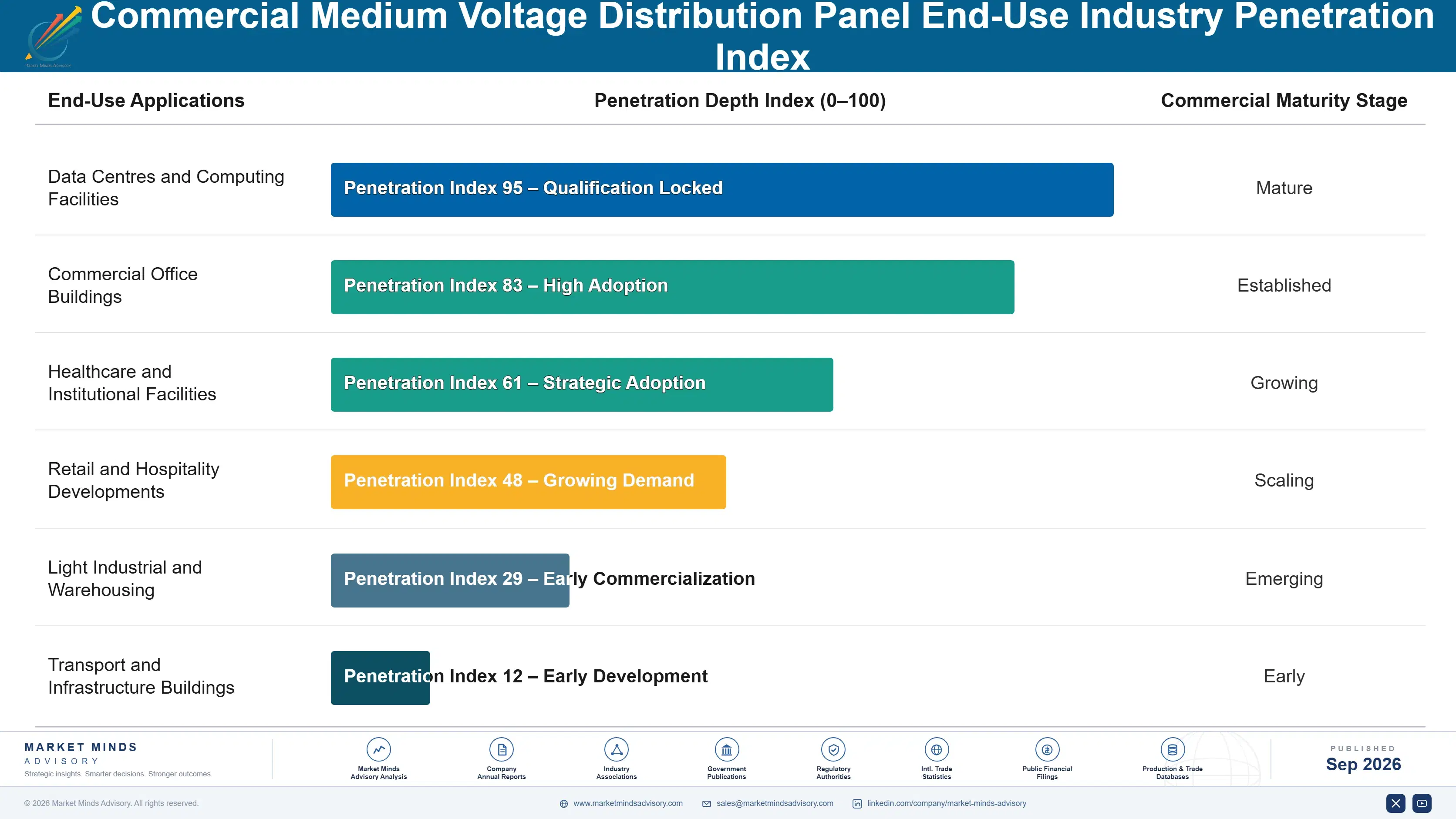
commercial-medium-voltage-distribution-panel-marke-end-use-penetration-index-1788255405046

What The Shortage Is Worth

These are among the four positions where our research anticipates prominent divergence between winners and laggards over the coming forecast period. Each is grounded in the demand model, the regulatory perimeter, and the announced capacity pipeline.
01 / DELIVERY SLOT PRODUCTISATION

Sell the queue position as a product

Lead times running 62 weeks have turned this into an allocation market where customers pay to move up a queue rather than negotiating any price downward, and a building that cannot obtain switchgear simply does not open on schedule at any cost whatsoever. Selling reserved capacity, guaranteed delivery windows and production slot commitments ahead of final design converts a genuinely scarce resource into a priced product. It requires production planning discipline rather than any manufacturing change, and most still just quote a lead time.
02 / LATE CONFIGURATION DESIGN

Let them order before the design is finished

Electrical layouts and load schedules typically freeze when a building programme is around 78% elapsed, while switchgear needs ordering far earlier than that, which produces variations, disputes and delayed openings on very nearly every commercial project anybody runs. A platform allowing configuration to be finalised late in manufacture rather than fixed at order lets a customer commit to a production slot before committing to any layout at all. That removes their worst procurement problem entirely and almost nobody offers it.
03 / EARLY REGULATORY QUALIFICATION

Type test before the deadline, not after

European rules prohibit sulphur hexafluoride in new medium voltage switchgear below 24 kilovolts from 2026 and extend upward later in the decade, obsoleting existing ranges on a date that nobody is able to negotiate or defer. Every manufacturer is running type testing simultaneously against that same deadline, and testing laboratory capacity has itself become a bottleneck. Being qualified first means selling into a window with very few compliant competing products, and alternative gas panels grow at 15.0% against a market rate of 10.0%.
04 / DATA CENTRE PRODUCT DESIGN

Build repeated blocks, not bespoke projects

Computing facilities take around 27% of commercial demand, order in repeated identical blocks, specify to standards borrowed directly from utility practice and value delivery date above very nearly everything else in the evaluation. Standard configurations produced repeatedly suit that buyer and suit manufacturing efficiency at exactly the same time, which is an unusually comfortable commercial alignment to find anywhere. Monitoring and diagnostics matter more to them than to anybody else, and manufacturers organised entirely around one-off building projects are serving them rather badly.

Engagement Snapshot From the Field

A live engagement with an industry participant carrying material or product regulatory and market exposure ahead of a defining policy shift, showing how our research translates into a defensible multi-year portfolio strategy.
MARKET MINDS ADVISORY · CLIENT ENGAGEMENT SUMMARY
Commercial Medium Voltage Distribution Panel Producer Strategic Portfolio Review and Transition Roadmap 2026·Investment Scenario on Commercial Medium Voltage Distribution Panel Exposure Evaluation 2025-26
CLIENT PROFILE
A European manufacturer of medium voltage distribution panels supplying commercial and light industrial projects across nine countries, with annual revenue in the mid hundreds of millions of euros and an order book extending well beyond a year (client-reported, unverified by MMA). The factory had been at full capacity for three consecutive years. Prices had not moved.
STRATEGIC CHALLENGE
The client was turning away orders it could not manufacture while still quoting prices set when capacity had been available, and it faced a regulatory deadline requiring its entire gas-insulated range to be requalified. Management needed to decide what to price, what to build and what to stop making altogether.
MMA APPROACH
MMA analysed the order book by margin, configuration complexity and capacity consumed, identifying which orders were worth accepting at what price. Forty-seven expert interviews with contractors, consulting engineers, data centre operators, testing laboratories and competing manufacturers established what customers would actually pay for delivery certainty and what they valued least.
KEY FINDINGS
  1. Heavily customised orders consumed 2.4 times the factory hours of standard configurations at broadly comparable margins, and nobody had measured that before.
  2. Customers interviewed would pay a premium above 12% for a guaranteed delivery date, which the client had never offered or priced in any form.
  3. Testing laboratory slots for alternative gas qualification were booked far ahead, and the client's own booking placed it behind at least two direct competitors.
  4. Data centre customers accounted for a small share of orders and the largest repeat volume potential, and were being served through the general project channel.
CLIENT PROFILE
A European manufacturer of medium voltage distribution panels supplying commercial and light industrial projects across nine countries, with annual revenue in the mid hundreds of millions of euros and an order book extending well beyond a year (client-reported, unverified by MMA). The factory had been at full capacity for three consecutive years. Prices had not moved.
STRATEGIC CHALLENGE
The client was turning away orders it could not manufacture while still quoting prices set when capacity had been available, and it faced a regulatory deadline requiring its entire gas-insulated range to be requalified. Management needed to decide what to price, what to build and what to stop making altogether.
MMA APPROACH
MMA analysed the order book by margin, configuration complexity and capacity consumed, identifying which orders were worth accepting at what price. Forty-seven expert interviews with contractors, consulting engineers, data centre operators, testing laboratories and competing manufacturers established what customers would actually pay for delivery certainty and what they valued least.
KEY FINDINGS
  1. Heavily customised orders consumed 2.4 times the factory hours of standard configurations at broadly comparable margins, and nobody had measured that before.
  2. Customers interviewed would pay a premium above 12% for a guaranteed delivery date, which the client had never offered or priced in any form.
  3. Testing laboratory slots for alternative gas qualification were booked far ahead, and the client's own booking placed it behind at least two direct competitors.
  4. Data centre customers accounted for a small share of orders and the largest repeat volume potential, and were being served through the general project channel.
RECOMMENDED STRATEGY
Phase 1: Phase one: price and sell guaranteed delivery slots explicitly, since customers value certainty above the price reductions they had been requesting instead. Phase 2: Phase two: bring forward alternative gas type testing at whatever laboratory capacity can be obtained, since qualification timing decides the window. Phase 3: Phase three: build a standard configuration range for data centre customers and decline the most customised orders consuming disproportionate capacity.
OUTCOME
Within five quarters the client sold guaranteed delivery at a premium on a meaningful share of the order book and margin rose without any volume increase (client-reported, unverified by MMA). Alternative gas qualification completed ahead of the deadline. The most customised orders are being declined.

Frequently Asked Questions

Foundational context covering the market sizes, CAGR, scope, country, region and competition that inform every finding below. This section is provided to cover basics and most often pre-purchase conversations, answered from the MMA Primary Research Dataset.

What is the current size of the Commercial Medium Voltage Distribution Panel Market?

The global commercial medium voltage distribution panel market was valued at USD 18.0 billion in 2025, covering switchgear assemblies between one and thirty six kilovolts. The 2026 figure reaches USD 19.80 billion.

How large will the Commercial Medium Voltage Distribution Panel Market be by 2036?

MMA forecasts USD 51.36 billion by 2036, an increase of USD 31.56 billion over the 2026 base. That represents an expansion multiple of 2.59 times across the forecast period.

What is the CAGR for the Commercial Medium Voltage Distribution Panel Market 2026 to 2036?

The base case compound annual growth rate is 10.0%, with a bull case at 11.2% and a bear case at 8.8%. Historical growth between 2020 and 2025 ran at 8.6%.

Which segment is growing fastest?

Alternative gas insulated panels grow at 15.0%, half again the market rate of 10.0%, because European rules prohibit sulphur hexafluoride from 2026. Digital assemblies follow at 12.6%.

Who are the major companies in the Commercial Medium Voltage Distribution Panel Market?

Schneider Electric, ABB, Siemens Energy, Eaton and Hitachi Energy lead on panel units shipped, with combined CR5 of 54%. Concentration reflects type testing and certification barriers.

Which country is growing fastest?

India grows fastest at 12.4%, on commercial construction, data centre development and grid connection capacity expanding together. South Asia and Pacific leads regionally at 12.4%.

Report Segmentation Architecture

The full report scope spans multiple orthogonal segmentation dimensions, with cross-tabulated demand data provided for each dimension pair. Coverage extends further to regional breakdowns, trend trajectories, and the competitive detail needed to support segment-level decision-making.

By Insulation Technology

  • Air-Insulated Switchgear Panels
  • Sulphur Hexafluoride Gas-Insulated Panels
  • Alternative Gas Insulated Panels
  • Solid and Shielded Solid Insulated Panels
  • Ring Main Units
  • Digital and Monitored Panel Assemblies

By End-Use Industry

  • Data Centres and Computing Facilities
  • Commercial Office Buildings
  • Healthcare and Institutional Facilities
  • Retail and Hospitality Developments
  • Light Industrial and Warehousing
  • Transport and Infrastructure Buildings

By Commercial Dimension

  • Electrical Contractor Supply
  • Direct End User Procurement
  • Engineering Contractor Packages
  • Reserved Capacity Agreements
  • Retrofit and Replacement Programmes
  • Service and Monitoring Contracts

By Region

  • North America
  • Western Europe
  • East Asia
  • South Asia and Pacific
  • Latin America
  • Middle East and Africa
  • Eastern Europe

Scope, Methodology, and Coverage

Every figure in this report is reproducible from documented input assumptions. The scope below maps the historical period, the forecast horizon, the segmentation dimensions, and the countries covered, alongside the underlying primary and qualitative methodology.
Historical Period
2020 to 2025
Forecast Period
2026 to 2036
Base Year
2025 (USD billions; MMA Primary Research Dataset, September 2026)
Market Definition
The commercial medium voltage distribution panel market covers switchgear assemblies distributing electricity between one and thirty six kilovolts in commercial, institutional and light industrial facilities, spanning air-insulated switchgear panels, sulphur hexafluoride gas-insulated panels, alternative gas insulated panels, solid and shielded solid insulated panels, ring main units, and digital and monitored panel assemblies. Scope is measured as panel units shipped into building and facility applications. Excluded are low voltage distribution boards and panelboards, high voltage transmission switchgear above thirty six kilovolts, power and distribution transformers, protection relays sold separately, and utility substation equipment.
Quantitative Units
USD billion, 2025 base year, 2026 to 2036 forecast period
Segmentation Dimensions
Insulation technology, building application, commercial channel, region
Regions Covered
North America, Western Europe, East Asia, South Asia and Pacific, Latin America, Middle East and Africa, Eastern Europe
Countries Covered
United States, Canada, Germany, United Kingdom, France, Spain, Poland, Czechia, China, Japan, South Korea, India, Australia, Brazil, Mexico, Saudi Arabia, United Arab Emirates, South Africa
Key Companies Profiled
20 companies across electrical equipment groups, regional manufacturers and specialist assemblers
Quantitative Methodology
Primary survey, n=3,800 respondents, Q4 2025, six countries; demand-side model with trade association cross-validation
Qualitative Methodology
47 expert interviews, Q4 2025; applied to validate demand model assumptions, identify emerging dynamics, and assess competitive positioning
Report Format
PDF and XLSX data workbook (Word format preview document)
Publisher
Market Minds Advisory
Report Code
MMA-2026-ENE-421
Published
September 2026
Contact
sales@marketmindsadvisory.com | www.marketmindsadvisory.com

Purchase the full Commercial Medium Voltage Distribution Panel Market Report (2026 to 2036).

The full MMA report on the commercial medium voltage distribution panel market runs to detailed technology and regional models across the 2026 to 2036 forecast period, with cost benchmarks separated by insulation type and enclosure configuration. It profiles 20 companies on a consistent panel units shipped basis, covering electrical equipment groups, regional manufacturers and specialist assemblers. Lead times and capacity constraints are analysed by market alongside alternative gas qualification status by manufacturer. Regional chapters cover the seven MMA regions with country-level detail on the eighteen markets surveyed. Primary research draws on a quantitative survey of 3,800 respondents across six countries and 47 expert interviews conducted in Q4 2025.
Cost benchmarks by insulation type and enclosure configuration
Lead times and capacity constraints analysed across every surveyed market
Alternative gas qualification status tracked by manufacturer and voltage class
Twenty company profiles on consistent panel units shipped basis
Data centre demand sized separately from conventional building construction
Seven regional chapters with eighteen country detail tables

Built For The People Who Decide

From boardroom strategy to bench-side execution, this report is read cover-to-cover by leaders shaping the next decade of their industry, turning demand scenarios, market dynamics and valuation benchmarks into decisions.
CXOs/ Presidents/ VPs/ Managers
M&A and Corporate Development
Strategy Teams and R&D Heads
Procurement and Product Directors
Regulatory and Compliance Leaders
Investor Relations and Equity Analysts