Market Minds Advisory
Combi Cooler Market

Combi Cooler Market: Four Circuits, One Frame, And Nowhere To Put A Hose

Emissions hardware added cooling circuits to machines whose engine bays never grew. Stacking them into one module solved the packaging problem and created a serviceability problem nobody has solved since.

Lead Analyst

Published

September 2026

Make Smarter Decisions with Customized Research Insights

Request a free sample report and evaluate market opportunities, growth trends, and competitive dynamics relevant to your business needs.

2025 MARKET VALUE$1.6BMarket Size 2025
2036 FORECAST VALUE$2.9BBase Case , 2026 to 2036
CAGR 2026 TO 20365.4 %Bull 6.6% / Bear 4.2%
INCREMENTAL OPPORTUNITY$1.2BNet 10- year value creation
EXPANSION MULTIPLE1.69x2036 value over 2026 base
Strategic Levers
M&A Pipeline
Regional Outlook
Country Rankings
Competitive Intelligence
Segmental Deep-dive
Call-Us : 91 93563 13602

Executive Snapshot and Market Trajectory

Emissions regulation added charge air cooling, exhaust gas recirculation cooling, and considerably more hydraulic oil cooling to machines whose engine bays never got any larger at all. Stacking those circuits into one module was the only answer available. The market reaches USD 1.6 billion in 2025.
Bar-and-plate aluminium cores grow fastest at 7.4%, about 1.37 times the market rate, because they survive the pressure cycling and vibration that off-highway duty imposes and they can be cleaned without collapsing the fins. East Asia holds 33% of value, above the band this framework applies, because China builds more construction machinery than any other region by a very wide margin. South Asia and Pacific takes 12%.
Concentration is moderate at 38% across the top five, with global module builders competing against regional radiator makers who tend to understand the local machine platforms considerably better than they do. Competition turns on packaging, on core cleanability, and on whether a given supplier will take responsibility for thermal validation itself. Blocked cores cause derates that operators routinely blame on the engine instead, and that misattribution costs somebody real money in every single harvest season.
Market Definition
The combi cooler market covers multi-circuit heat exchanger modules that combine two or more of engine coolant, charge air, hydraulic oil, transmission oil, fuel, and exhaust gas recirculation cooling within a single frame or stacked core assembly, supplied to off-highway machinery, commercial vehicle, and stationary equipment builders. Single-circuit radiators, standalone oil coolers, condensers and cabin air conditioning, cooling fans and drives sold separately, and complete thermal management systems including pumps and controls are excluded.
Base Year Value
$1.6B in 2025 (MMA Primary Research Dataset, August 2026)
Forecast Period
2026 to 2036, eleven discrete annual values
CAGR
5.4% base case. Bull 6.6%. Bear 4.2%.
Fastest Growth Segment
Bar-and-Plate Aluminium Cores: 7.4% CAGR
Fastest Growth Country
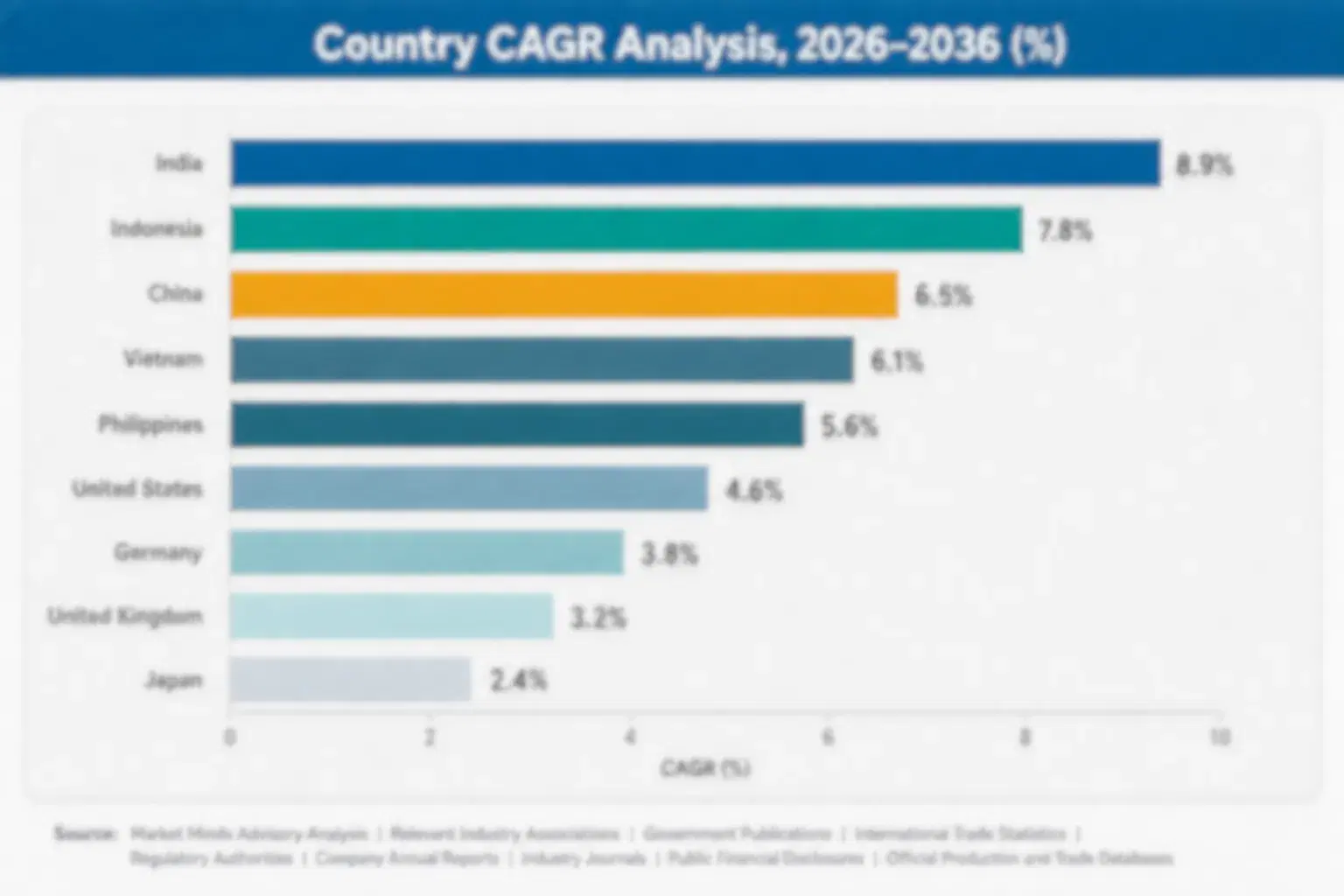
India: 8.2% CAGR
Fastest Growth Region
South Asia and Pacific: 7.4% CAGR
Largest Region
East Asia: 33% of 2025 global value
Market Leaders
AKG Group, Modine Manufacturing, Dana Incorporated, MAHLE, Emmegi. Source: MMA Primary Research Dataset, July 2026.
Primary Survey
n=3,800 procurement and R&D decision-makers, Q4 2025, six countries
Methodology
Demand-side build-up, cross-validated against public data, 47 expert interviews

Combi Cooler Market Forecast Scenarios

combi-cooler-market-size-forecast-scenario-1786463155952
Between 2020 and 2025 the market followed off-highway machine production, which was volatile. Construction equipment output fell in 2020, recovered strongly through 2021 and 2022 on infrastructure spending, then softened as Chinese domestic demand contracted sharply. Stage V and Tier 4 Final compliance raised cooling content per machine throughout, which cushioned the volume swings. A 4.3% historical CAGR reflects content growth partially offsetting unit decline.
Three mechanisms carry the 5.4% base case. Cooling content per machine is the largest, since every emissions strategy adds a circuit and none of them removes one. Indian and Southeast Asian machine production is the second, growing from a base where cooling specification is rising toward European and North American levels. And aftermarket replacement is the third, because stacked modules fail as a unit and cannot be repaired core by core in the field.
The 6.6% bull case rests on hydraulic hybrid and electrified machine architectures reaching volume, which would require entirely new low-temperature module designs rather than adaptations of existing ones. The 4.2% bear case is Chinese construction machinery output continuing to contract, since that market alone represents a large enough share of global production to move the global figure on its own.

Four Circuits Into A Space Built For One

A combi cooler exists because of a packaging failure. Stage V and Tier 4 Final compliance brought charge air cooling, exhaust gas recirculation cooling, and after-treatment thermal demands into machines whose engine compartments stayed exactly the same size, while hydraulic systems grew more powerful and generated more heat of their own. Four circuits now compete for a space that once held a radiator and a fan.
TOP FIVE CONCENTRATION38%Regional module builders divide the field with global suppliers
CORES PER MODULE4Separate cooling circuits typically stacked into a single assembly
ALUMINIUM COST SHARE34%Metal content as a portion of finished module cost
FIELD CLEANING INTERVAL500 hoursOperating hours between debris cleaning on dusty machine duty
AVERAGE MODULE PRICEUSD 1,150Delivered price for a mid-size off-highway cooling module
AFTERMARKET REVENUE SHARE29%Supplier turnover from replacement modules rather than machine build
Stacking them into one frame solves the geometry and creates a different problem. Air passing through the first core arrives at the second already heated, so each circuit behind the front one works against a rising inlet temperature, and the designer trades performance between circuits rather than optimising any of them. Layout order becomes a commercial argument between the machine builder and the cooler supplier.
The harder issue is dirt. A machine working in dust, chaff, or demolition debris blocks the front core within a few hundred hours, and there is no way to reach the surfaces behind it with a pressure washer. Operators see a derate and blame the engine. Suppliers who design for cleaning access win specifications that thermal calculations alone never would.
"Every thermal problem I have investigated on a modern machine turned out to be a cleaning problem. The module was fine when it left the factory and blocked solid eight hundred hours later, and nobody had designed a way to get at it."
Director, Off-Highway Thermal Systems Practice · MMA Construction and Industrial

Market Trends

Emissions Hardware Keeps Adding Circuits To Cool

Every tightening of off-highway emissions standards has added thermal load rather than removed it. Charge air cooling arrived with turbocharging, exhaust gas recirculation cooling with nitrogen oxide control, and after-treatment regeneration brought its own demands on the cooling package. None of those circuits went away when the next requirement appeared, so a machine that once needed a radiator now needs four coolers arranged in the same aperture. Cooling content per machine has risen steadily as a direct result, and no proposed emissions pathway reverses it. The direction has been one way for twenty years.
Market Impact: India builds 900,000 tractors annua

Cleanability Has Become A Purchasing Criterion

Machine builders have started specifying core spacing, swing-out frames, and hinged arrangements that let an operator reach every surface with a lance, because the warranty claims arriving from dusty applications were traced to blocked cores rather than to component failure. That changes the design brief considerably: a module optimised purely for thermal performance packs cores tightly, and a module designed for cleaning does the opposite. Suppliers able to hold thermal targets while opening access are winning specifications on machines destined for agriculture, quarrying, and demolition work. Bench thermal numbers no longer settle these arguments.
Market Impact: Aftermarket carries 29% of revenue

Market Opportunities and Growth Drivers

Indian And Southeast Asian Machine Output Expands

India builds more agricultural tractors than any other country and its construction equipment output has grown steadily under national infrastructure programmes, while Indonesian, Thai, and Vietnamese assembly is expanding on mining and plantation demand. Cooling specification in those markets is rising toward European and North American levels as emissions rules tighten and as export-oriented builders standardise platforms globally. Local module suppliers are qualifying against international competition on the same machines. This is genuinely new content on new units rather than replacement of anything already fitted. Local suppliers are qualifying against global competition on the same lines.
Market Impact: Rear circuits lose 15% capacity

Stacked Modules Fail As A Unit And Get Replaced

A combi cooler cannot usually be repaired circuit by circuit in the field, because the cores share a frame and separating them means dismantling the assembly on a machine that is already down. Operators replace the whole module instead, which turns a single core leak into a full unit sale. Aftermarket now carries roughly 29% of supplier revenue, and it is considerably less cyclical than original equipment volume. Suppliers who built parts distribution rather than relying on machine builder channels capture most of that value. A single leaking circuit condemns the whole assembly.
Market Impact: Aluminium moved 60% in two years

Market Restraints and Challenges

Thermal Interaction Between Circuits Limits Performance

Air leaving the front core is hotter than ambient by the time it reaches the second, so every circuit behind the first works against a degraded inlet condition and none performs as it would standing alone. The root cause is simply that there is one airflow path and several demands on it. Commercially this forces trade-offs between circuits that neither the machine builder nor the supplier wants to own, and it produces disputes when a machine derates in hot conditions. Participants are mitigating with side-by-side layouts, split airflow paths, and variable-speed fan control tied to the most constrained circuit.
Market Impact: Content per machine rose 40%

Aluminium Price Volatility Passes Straight Through

Aluminium accounts for roughly 34% of module cost and prices have moved violently since 2021, which matters because supply agreements with machine builders are typically annual while metal repricing is not. The root cause is that a heat exchanger is mostly metal by value and there is no design route that removes much of it without losing performance. Commercially it compresses margin on fixed-price contracts and makes quoting long programmes genuinely risky. Mitigation runs toward metal index clauses, forward purchasing against confirmed order books, and thinner fin and tube gauges that cut content without cutting duty.
Market Impact: Blockage causes 25% of derates
3 additional market trends, 2 additional growth drivers, and 4 additional restraints and challenges are covered in the full report. Contact sales@marketmindsadvisory.com to access the complete intelligence.

Segment CAGR and Growth Architecture

Segmentation follows core construction, meaning how the heat transfer surface itself is actually built, because that single choice determines burst pressure, vibration tolerance, how aggressively the module can be cleaned, whether it can be repaired at all, and the cost per kilowatt rejected. Machine class and circuit combination are handled in the framework instead.
combi-cooler-market-market-share-analysis-1786463156114

Bar-and-Plate Aluminium Cores

Bar-and-plate cores grow fastest at 7.4%, about 1.37 times the market rate, because they tolerate the pressure cycling and vibration that off-highway duty imposes and they survive being cleaned. The construction places the fin between solid bars rather than relying on a thin tube wall, which means a pressure lance does not flatten it and a stone strike does not open a leak path. Hydraulic oil circuits in particular need burst ratings that tube-and-fin construction struggles to reach economically. Cost per kilowatt is higher than tube-and-fin, and machine builders accept it on duty cycles where warranty claims have already taught them what the alternative costs. Warranty experience rather than any specification argument is what usually converts a builder.
CAGR 7.4%

Stacked Plate Cores

Stacked plate cores grow at 6.6%, built from formed plates brazed into a block rather than from tubes threaded through fins. The geometry suits oil circuits well because it handles high pressure in a compact envelope and tolerates the viscosity swing between cold start and full working temperature. Packaging flexibility is the commercial argument: a stacked plate block can sit alongside or behind other cores in shapes that a tube bundle cannot occupy. Cleanability is poorer than bar-and-plate, which limits it on the front face of dusty applications, so it usually appears as the oil circuit inside a module whose front core is something else entirely. Position within the stack decides where it can be used.
CAGR 6.6%
Full segment breakdown across 5 segments available in the complete report.

Regional Architecture and Country Demand Map

Regional shares here follow machine assembly rather than machine operation, because a combi cooler is bought by whoever actually builds the vehicle it goes into. Aftermarket demand follows the operating fleet instead, which is why the two halves of this market look quite different geographically.

East Asia

East Asia takes 33% of value against a 30% ceiling in this framework, and Chinese machine assembly explains the breach on its own. Sany, XCMG, Zoomlion, and LiuGong between them build more excavators and loaders than any other region produces in total, and each machine carries a module fitted at the line. Domestic cooler manufacturers supply most of that volume at costs European suppliers cannot match on standard specification. Japanese and Korean builders buy to considerably tighter thermal and durability requirements for export machines. Growth at 6.0% exceeds the global rate, though Chinese domestic demand has been the most volatile variable anywhere in this market. Export machines carry considerably higher specification than domestic ones.
Share: 33% | CAGR: 6.0% (2026 to 2036)

South Asia and Pacific

Fastest growth sits in South Asia and Pacific at 7.4%, on 12% of global value. India builds more agricultural tractors than any other country, and its construction equipment output has risen steadily under national infrastructure programmes, with cooling specification climbing toward European levels as emissions rules tighten. Indonesian and Thai assembly serves mining and plantation demand with machines that work in genuinely punishing debris conditions. Australian demand is aftermarket-weighted against a large operating fleet. Almost all of the growth here is new content on new units rather than replacement, which is what separates this rate from the mature regions. Dust loading in these applications is severe enough to shape design. Cleaning access matters more here than raw capacity.
Share: 12% | CAGR: 7.4% (2026 to 2036)
Regional intelligence for 5 additional markets available in the complete report: Western Europe, North America, Latin America, Eastern Europe, Middle East and Africa. Contact sales@marketmindsadvisory.com.
combi-cooler-market-country-cagr-analysis-1786463156282

Where Module Suppliers Actually Earn Margin

Selling a cooling module against a machine builder's cost target is a losing position, and regional radiator makers will always quote below a global supplier on standard specification. What earns money is owning thermal validation, capturing the replacement module when the assembly fails as a unit, and designing for cleaning access that competitors treat as an afterthought.

Own Thermal Validation Rather Than Component Supply

A machine builder without in-house thermal capability has to validate the whole cooling package somehow, and buying that responsibility from the module supplier removes both cost and risk from its engineering budget. Suppliers offering duty cycle simulation, instrumented prototype testing, and guaranteed performance against defined ambient conditions price 18% to 28% above component-only quotes. It also fixes the specification around their architecture years before production, which is a position no competitor can bid against on the eventual purchase order. Very few machine builders retain that capability in house now. The work has to go somewhere.
Market Impact: Validation adds 18 to 28 percent in

Build Aftermarket Distribution Away From The Builder

A stacked module cannot be repaired core by core in the field, so every leak becomes a full unit sale, and aftermarket already carries around 29% of supplier revenue at margins well above original equipment. Most of that flows through machine builder parts channels at their pricing rather than the supplier's. Building independent distribution and publishing cross-reference data captures replacement volume worth 35% to 50% of the original module price directly, and it is far less cyclical than machine production ever is. Cross-reference data is what actually captures the sale. Relationships count for very little here.
Market Impact: Replacement recovers 35 to 50 perce

Design Cleaning Access Into The Module Frame

Blocked cores cause roughly a quarter of thermal derates on dusty applications, and machine builders now trace those warranty claims properly rather than blaming the engine. Swing-out frames, hinged core arrangements, and wider fin spacing on the front face cost a few percent in thermal performance and remove the failure mode entirely. Suppliers who hold thermal targets while opening access win specifications on agricultural, quarrying, and demolition machines outright, because the alternative costs the builder USD 900 to USD 2,400 per warranty event. Access design costs almost nothing to engineer in.
Market Impact: Warranty events cost 900 to 2,400 d

Who Controls the Margin Pool

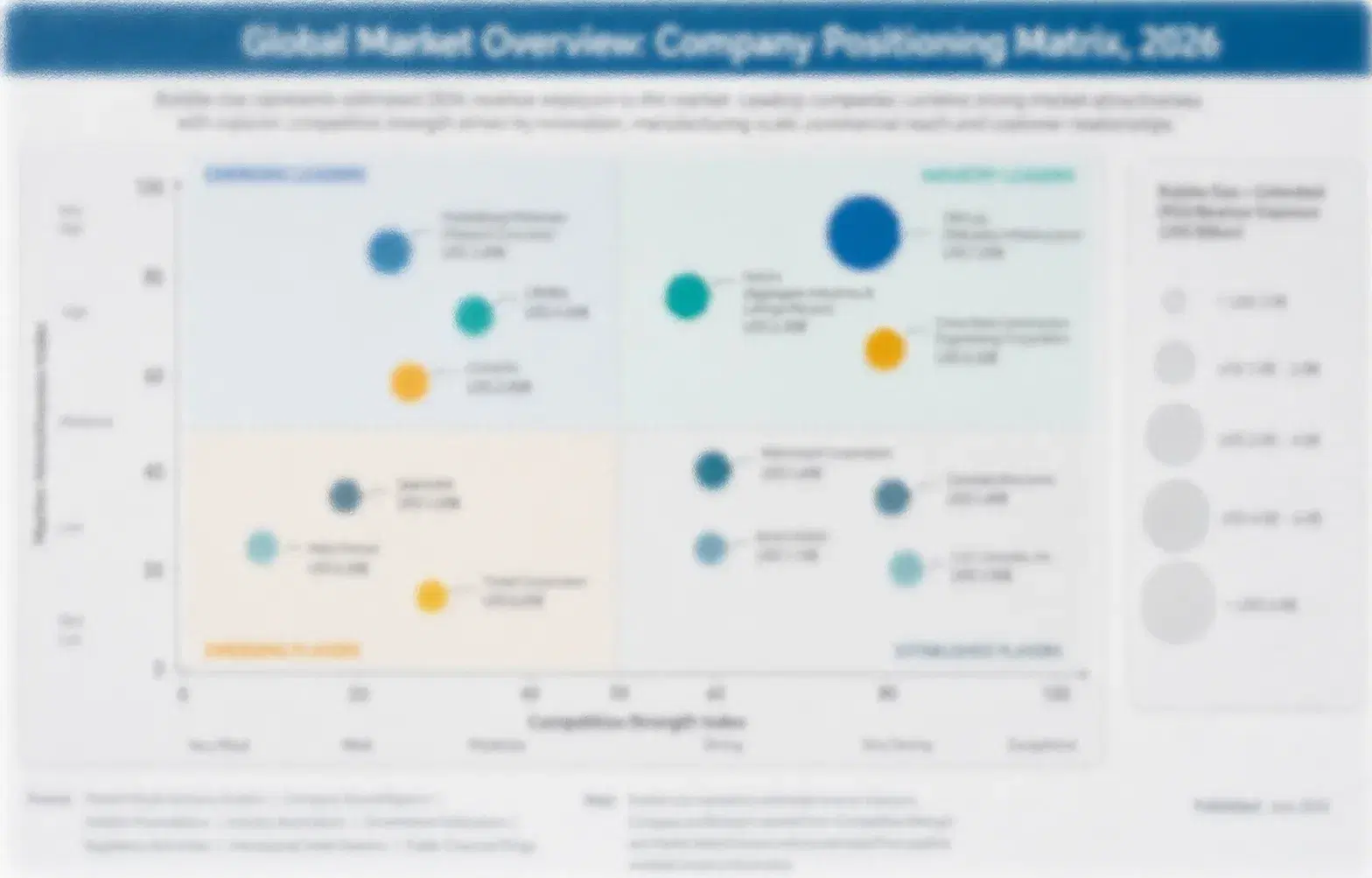
Concentration is moderate at 38% across the top five, measured on combi cooler module revenue, and it reflects a market split between global suppliers and capable regional builders. AKG holds the strongest position in off-highway multi-circuit modules with deep bar-and-plate capability, while Modine brings scale across both off-highway and commercial vehicle programmes. Dana, MAHLE, and Emmegi follow. The gap to regional competitors is thermal validation capability rather than manufacturing.
Competition currently turns on three things. Packaging, meaning whether a supplier can fit the required duty into the aperture the machine designer has left. Cleanability, which machine builders now specify explicitly after tracing warranty claims to blocked cores. And whether the supplier will take responsibility for validated thermal performance rather than shipping a component against a drawing.

Pressure is building from Chinese and Indian module makers who have closed much of the manufacturing gap and are qualifying on export machine platforms. Electrified and hybrid architectures are the larger disruption, since battery and power electronics cooling runs at temperatures that invalidate current module design entirely. Rankings will shift toward suppliers who treat that as a new product rather than an adaptation of an existing one.
combi-cooler-market-company-positioning-matrix-1786463156450

Competitive Moat and Risk Dimensions

AKG GROUP

Moat: Bar-and-plate and thermal validation

AKG built its position on bar-and-plate construction and on validating complete cooling packages against real duty cycles rather than quoting component ratings. Off-highway machine builders without in-house thermal capability rely on that work, and once a supplier has fixed the architecture during development it holds the programme for its full production life without meaningful competitive exposure.
AKG GROUP

Risk: Cost base against regional builders

Bar-and-plate construction and European manufacturing both cost more than tube-and-fin modules built regionally, and on standard specification machines the thermal argument does not justify the difference. As Chinese and Indian suppliers improve validation capability, the ground on which AKG differentiates narrows toward the most demanding duty cycles rather than the broader volume market.
MODINE MANUFACTURING

Moat: Scale across vehicle segments

Modine spreads engineering and purchasing across off-highway, commercial vehicle, and stationary programmes, which gives it aluminium buying power and manufacturing utilisation that a pure off-highway specialist cannot reach. That scale shows directly in quoted price on standard modules, and it funds development that any single segment would struggle to justify on its own.
MODINE MANUFACTURING

Risk: Portfolio breadth dilutes attention

Off-highway combi coolers sit inside a much larger thermal management business now weighted toward data centre and heat pump opportunities that grow considerably faster. That shapes where development budget and engineering attention go, and a competitor concentrating entirely on off-highway can out-invest Modine in this specific application without matching its overall scale.

Players Tracked

Prominent Players

AKG Group
Modine Manufacturing
Dana Incorporated
MAHLE
Emmegi

Other Key Players

HYDAC
API Heat Transfer
Kelvion
Valeo
Denso
T.RAD
TitanX
Banco Products
Yinlun Machinery
Tokyo Radiator Manufacturing
Nissens
Adams Thermal Systems
Young Touchstone
L and M Radiator
Thermex

Recent Developments

APRIL 2025

Supplier launched swing-out module frame for agricultural machines

A cooling module supplier introduced a swing-out frame arrangement giving operators direct lance access to every core face on agricultural machines. The design followed warranty analysis attributing a substantial share of thermal derate claims to chaff and dust blockage rather than to any component failure at all.
Signal: Cleaning access is now specified explicitl
SEPTEMBER 2024

Indian manufacturer qualified on export tractor platform

An Indian cooling module manufacturer qualified as a supplier on a tractor platform built for export markets, meeting European thermal and durability requirements at pricing that established suppliers simply could not approach. The builder had previously imported modules for all of its export specification machines.
Signal: Regional suppliers are now crossing the va
JANUARY 2025

Machine builder specified low-temperature module for electric loader

An equipment manufacturer specified a low-temperature cooling module for a battery electric loader, rejecting adapted diesel architecture entirely because the battery and inverter circuits operate far below engine coolant temperatures. The airflow, core sizing, and fan control assumptions all had to be rebuilt from scratch.
Signal: Electrification is a genuinely new product

Aluminium, Brazing Flux, And Energy

Aluminium strip, fin stock, and extruded tube carry roughly 34% of cost of goods, bought from European, Chinese, and Gulf rolling mills depending on where the module is assembled. Brazing flux, filler alloy, and controlled atmosphere furnace operation add 14% to 20%, and furnace energy alone is a substantial line. Steel frames, tanks, seals, and fan shrouds account for most of the remainder.
Aluminium moved violently through 2021 and 2022, with London Metal Exchange prices roughly doubling from the 2020 trough before falling back, while European Commission energy statistics record industrial electricity costs approximately doubling at the 2022 peak. Brazing furnaces run continuously and consume heavily, so both inputs hit at once. Modine and Kelvion each disclosed input cost pressure across that period, and suppliers holding annual price agreements with machine builders absorbed most of the difference.

Exposure divides by contract structure and by where brazing happens. Suppliers with metal index clauses pass movement through within a quarter and carry very little of it. Those on fixed annual agreements with large machine builders carry all of it until renegotiation. Small regional brazers sit worst, since furnace energy is a fixed overhead that does not fall when volumes do.
combi-cooler-market-cost-volatility-analysis-1786463156627

Attach aluminium index clauses to builder agreements

Annual price agreements written against a metal that reprices daily leave the supplier carrying a risk it has no way to manage. Index clauses tied to published exchange benchmarks are standard practice across the wider aluminium supply chain and translate directly here, though machine builders resist them and they have to be agreed at nomination rather than introduced mid-programme.

Cut fin and tube gauge without losing duty

Thinner fin stock and reduced tube wall remove metal content directly, and modern alloys hold burst pressure at gauges that would have been unacceptable a decade ago. Every gram removed repeats across the full production run. The constraint is validation, since a thinner core has to survive the same vibration and pressure cycling as the one it replaces.

Load brazing furnaces to their designed utilisation

Controlled atmosphere brazing consumes energy whether the furnace is full or half empty, which makes utilisation the single largest lever on conversion cost. Consolidating production across fewer, better-loaded lines cuts energy per module substantially. The trade-off is freight and lead time, which sales teams resist until somebody costs the energy properly. Very few plants run their furnaces full.

Portfolio Architecture for Margin Defence

Margin here tracks how much responsibility the supplier is prepared to carry. A module built to a machine builder's drawing is a fabrication job priced against regional competition, and it earns fabrication margins accordingly. A module whose thermal performance the supplier has validated and guaranteed against a defined duty cycle is a completely different product commercially, even when the hardware looks identical sitting on a bench.
The volume tension runs between original equipment and aftermarket. Machine builder programmes deliver the volume that keeps brazing furnaces loaded, which is what makes conversion cost competitive at all, and they are priced accordingly. Replacement modules earn far better margins but arrive unpredictably, and they only exist at all because the original equipment position was won years earlier. Neither half of the business stands up on its own.

High-value pools sit in three places. Validated thermal packages sold with performance guarantees, replacement modules sold through independent distribution rather than builder parts channels, and low-temperature architectures for electrified machines where no incumbent design applies. The third of those is small today and is the only one where the existing competitive order does not yet hold.

Volume / Commodity-Adjacent Tier

Standard tube-and-fin modules built to a machine builder's drawing on annual price agreements. Regional fabricators compete directly, and the range reflects how differently European and Asian conversion costs carry the same specification.
Gross Margin: 12-20%

Premium / Certified Tier

Bar-and-plate and mixed-construction modules validated against defined duty cycles with guaranteed thermal performance. Validation capability rather than fabrication skill sustains the margin, since the builder is buying responsibility rather than hardware.
Gross Margin: 24-33%

Sustainability / Regulatory / Next-Generation Tier

Low-temperature modules for electrified machines, independent aftermarket replacement supply, and cleanability-engineered frames. The wide range reflects genuinely different economics between an unsettled new product category and well-established replacement parts sold through distribution.
Gross Margin: 30-46%
combi-cooler-market-portfolio-architecture-1786463156807

High-value Sub-segments and Strategic Watch-out

Validated Thermal Packages

Growing as machine builders shed in-house thermal engineering and buy validated performance instead of components. It fixes the architecture years before production, which is a position no competitor can bid against once the programme reaches purchase order stage. Nomination effectively decides the whole programme life.
Gross Margin: 28-38%

Independent Aftermarket Supply

Stacked modules fail as a unit and get replaced whole, which turns every single core leak into a full module sale. Margin flows to whoever owns the distribution channel rather than to whoever originally built the part for the machine. Publishing cross-reference data is what actually captures it.
Gross Margin: 34-50%

Standard Original Equipment Modules

The volume base of this market and the part regional fabricators contest hardest on price alone. It keeps brazing furnaces loaded, which is what makes conversion cost competitive on everything else the supplier builds. Furnace loading is what makes everything else competitive. Exiting it raises cost across the board.
Gross Margin: 12-20%

Electrified Machine Cooling Modules

Battery and inverter circuits run far below engine coolant temperatures, so adapted diesel architecture does not work at all here. The watch-out is that machine electrification timelines in off-highway have slipped repeatedly and the volumes remain very small. Nobody has an incumbent advantage in this yet.
Gross Margin: 30-46%

What The Module Earns After Nomination

A combi cooler programme is a long annuity that most suppliers under-collect. Nomination on a machine platform delivers production volume for eight to twelve years, and the replacement stream continues for a decade beyond that across an operating fleet nobody retires quickly. Aftermarket already carries around 29% of supplier revenue, and most of it flows through machine builder parts channels at their pricing rather than the supplier's own.
Stickiness is unusually high on the original equipment side and unusually low afterwards. A validated module cannot be swapped mid-programme without revalidating the whole cooling package, so nomination effectively decides the platform's full production life. Replacement is the opposite: an independent distributor will fit whatever fits, and cross-reference data rather than any relationship decides which module goes on the machine.

Buyer profiles have shifted toward warranty and reliability functions. The decision used to sit with a packaging engineer solving a geometry problem in the engine bay. It increasingly involves whoever owns warranty cost, because thermal derates traced to blocked cores turned out to be expensive and attributable. That change favours suppliers who can show field data on cleanability, and it disadvantages those quoting bench thermal performance alone.
combi-cooler-market-end-use-penetration-index-1786463156978

Where To Compete Here

These are among the four positions where our research anticipates prominent divergence between winners and laggards over the coming forecast period. Each is grounded in the demand model, the regulatory perimeter, and the announced capacity pipeline.
01 / THERMAL RESPONSIBILITY CAPTURE

Sell validated performance, not a fabricated part

Machine builders have been shedding in-house thermal engineering for years now, which leaves somebody having to validate the whole cooling package against real duty cycles rather than against catalogue ratings. A supplier willing to guarantee that performance prices roughly a fifth to a quarter above component-only quotes and fixes the architecture years before any purchase order exists. Competitors are then left bidding against a specification written around somebody else's product, which is not a contest that any of them can win.
02 / AFTERMARKET CHANNEL OWNERSHIP

Take the replacement sale away from the builder

Stacked modules cannot be repaired circuit by circuit out in the field, so every single core leak becomes a full unit replacement, at margins comfortably above original equipment supply. Most of that volume currently flows through the machine builder's own parts channels at their pricing rather than the supplier's. Building out independent distribution and publishing proper cross-reference data captures that whole volume directly, and the revenue it generates is considerably less cyclical than machine production has ever managed to be.
03 / CLEANABILITY DESIGN DISCIPLINE

Design for the lance, not the test bench

Roughly a quarter of all thermal derates on dusty applications trace back to blocked cores rather than to any component failure at all, and machine builders now investigate those warranty claims properly instead of blaming the engine. Swing-out frames and wider front-face core spacing cost a few percent of bench performance and remove that failure mode almost completely. Suppliers who hold their thermal targets while opening up access are winning agricultural, quarrying, and demolition specifications outright against better numbers on paper.
04 / ELECTRIFIED ARCHITECTURE ENTRY

Treat electric cooling as a new product

Battery and power electronics circuits operate far below engine coolant temperatures, which invalidates the core sizing, the airflow assumptions, and the fan control logic developed across four decades of diesel work. Suppliers adapting their existing modules are producing designs that machine builders have already begun rejecting on test. The volumes are small and the timelines have already slipped repeatedly, but this is the one place in the whole market where the current competitive order does not yet apply to anybody.

Engagement Snapshot From the Field

A live engagement with an industry participant carrying material or product regulatory and market exposure ahead of a defining policy shift, showing how our research translates into a defensible multi-year portfolio strategy.
MARKET MINDS ADVISORY · CLIENT ENGAGEMENT SUMMARY
Combi Cooler Producer Strategic Portfolio Review and Transition Roadmap 2026·Investment Scenario on Combi Cooler Exposure Evaluation 2025-26
CLIENT PROFILE
A mid-sized agricultural equipment manufacturer building harvesters and high-horsepower tractors across two European plants, with annual revenue near USD 1.4 billion (client-reported, unverified by MMA). Thermal derate warranty claims had risen steadily across three seasons and were concentrated in machines working cereal harvest and dusty row crop conditions rather than distributed evenly across the fleet.
STRATEGIC CHALLENGE
Engineering had specified cooling modules with substantial thermal margin and could not explain the claims, since bench testing showed every module comfortably meeting duty. The commercial team suspected the supplier, the supplier blamed operating conditions, and warranty cost was rising fast enough that the board wanted an answer before the next model year specification froze.
MMA APPROACH
MMA instrumented a sample of machines across the affected applications, logging coolant, charge air, and hydraulic oil temperatures alongside core face pressure drop through a full harvest season. Blockage progression was measured rather than inferred. Module architectures from three suppliers were then compared on cleaning access and on how quickly performance recovered after a wash.
KEY FINDINGS
  1. Thermal performance met specification at delivery and fell below the derate threshold after roughly 380 operating hours in cereal harvest conditions (client-reported, unverified by MMA).
  2. Front core face blockage accounted for almost all of the loss, and rear circuits were never reachable with a lance on the current module frame.
  3. Machines washed on the manufacturer's recommended interval still derated, because the recommended procedure could not physically reach the surfaces that were blocking.
  4. One supplier's swing-out frame architecture recovered full performance after cleaning while the fitted design recovered only part of it, on otherwise comparable thermal specification.
CLIENT PROFILE
A mid-sized agricultural equipment manufacturer building harvesters and high-horsepower tractors across two European plants, with annual revenue near USD 1.4 billion (client-reported, unverified by MMA). Thermal derate warranty claims had risen steadily across three seasons and were concentrated in machines working cereal harvest and dusty row crop conditions rather than distributed evenly across the fleet.
STRATEGIC CHALLENGE
Engineering had specified cooling modules with substantial thermal margin and could not explain the claims, since bench testing showed every module comfortably meeting duty. The commercial team suspected the supplier, the supplier blamed operating conditions, and warranty cost was rising fast enough that the board wanted an answer before the next model year specification froze.
MMA APPROACH
MMA instrumented a sample of machines across the affected applications, logging coolant, charge air, and hydraulic oil temperatures alongside core face pressure drop through a full harvest season. Blockage progression was measured rather than inferred. Module architectures from three suppliers were then compared on cleaning access and on how quickly performance recovered after a wash.
KEY FINDINGS
  1. Thermal performance met specification at delivery and fell below the derate threshold after roughly 380 operating hours in cereal harvest conditions (client-reported, unverified by MMA).
  2. Front core face blockage accounted for almost all of the loss, and rear circuits were never reachable with a lance on the current module frame.
  3. Machines washed on the manufacturer's recommended interval still derated, because the recommended procedure could not physically reach the surfaces that were blocking.
  4. One supplier's swing-out frame architecture recovered full performance after cleaning while the fitted design recovered only part of it, on otherwise comparable thermal specification.
RECOMMENDED STRATEGY
Phase 1: Phase one: revise the cleaning procedure and interval for machines already in the field, and communicate it through dealers rather than the operator manual alone. Phase 2: Phase two: specify swing-out or hinged frame access on the next model year rather than adding further thermal margin to a module nobody can clean. Phase 3: Phase three: make measured post-cleaning recovery a formal nomination criterion, tested on the machine itself rather than on the supplier's bench.
OUTCOME
The manufacturer specified an access-engineered module for the following model year and reported thermal derate warranty claims falling roughly 55% across the first full season (client-reported, unverified by MMA). Post-cleaning recovery testing was added to the nomination process, and the revised field cleaning procedure reduced claims on the existing fleet as well.

Frequently Asked Questions

Foundational context covering the market sizes, CAGR, scope, country, region and competition that inform every finding below. This section is provided to cover basics and most often pre-purchase conversations, answered from the MMA Primary Research Dataset.

What is the current size of the Combi Cooler Market?

The market reached USD 1.6 billion in 2025 and is forecast at USD 1.69 billion for 2026. Demand follows off-highway machine assembly plus a substantial and less cyclical replacement stream.

How large will the Combi Cooler Market be by 2036?

MMA forecasts USD 2.85 billion by 2036, an increase of USD 1.17 billion over 2026. That represents an expansion multiple of 1.69 times across the forecast period.

What is the CAGR for the Combi Cooler Market 2026 to 2036?

The base case CAGR is 5.4%, with a bull case at 6.6% and a bear case at 4.2%. The bear case turns on Chinese construction machinery output continuing to contract.

Which segment is growing fastest?

Bar-and-plate aluminium cores grow fastest at 7.4%, about 1.37 times the market rate. They survive off-highway pressure cycling and, unlike tube-and-fin, they survive being cleaned with a pressure lance.

Who are the major companies in the Combi Cooler Market?

AKG Group, Modine Manufacturing, Dana Incorporated, MAHLE, and Emmegi lead the market. The top five hold roughly 38% of combi cooler module revenue, with capable regional builders taking most of the remainder.

Which country is growing fastest?

India grows fastest at 8.2%, driven by tractor and construction equipment output alongside cooling specification rising toward European levels. Very little of that demand is replacement of anything already fitted.

Report Segmentation Architecture

The full report scope spans multiple orthogonal segmentation dimensions, with cross-tabulated demand data provided for each dimension pair. Coverage extends further to regional breakdowns, trend trajectories, and the competitive detail needed to support segment-level decision-making.

By Core Construction

  • Bar-and-Plate Aluminium Cores
  • Stacked Plate Cores
  • Brazed Aluminium Tube-and-Fin Cores
  • Mechanically Assembled Tube-and-Fin Cores
  • Copper-Brass Cores

By End-Use Industry

  • Construction and Earthmoving Machinery
  • Agricultural Machinery
  • Mining and Quarrying Equipment
  • Commercial Vehicles and Trucks
  • Stationary Power and Compressors

By Commercial Dimension

  • Machine Builder Nomination Programmes
  • Independent Aftermarket Distribution
  • Machine Builder Parts Channel
  • Engine Manufacturer Bundled Supply
  • Custom and Low Volume Build

By Region

  • East Asia
  • South Asia and Pacific
  • Western Europe
  • North America
  • Latin America
  • Eastern Europe
  • Middle East and Africa

Scope, Methodology, and Coverage

Every figure in this report is reproducible from documented input assumptions. The scope below maps the historical period, the forecast horizon, the segmentation dimensions, and the countries covered, alongside the underlying primary and qualitative methodology.
Historical Period
2020 to 2025
Forecast Period
2026 to 2036
Base Year
2025 (USD billions; MMA Primary Research Dataset, August 2026)
Market Definition
The combi cooler market comprises multi-circuit heat exchanger modules combining two or more of engine coolant, charge air, hydraulic oil, transmission oil, fuel, and exhaust gas recirculation cooling within a single frame or stacked core assembly, valued at supplier selling prices to machine builders, engine manufacturers, parts distributors, and fleet operators. It spans bar-and-plate aluminium, stacked plate, brazed aluminium tube-and-fin, mechanically assembled tube-and-fin, and copper-brass core construction, together with the frames, tanks, shrouds, and mounting hardware supplied as part of the module. Single-circuit radiators and standalone oil coolers, air conditioning condensers and cabin thermal equipment, cooling fans, fan drives and controls sold separately, coolant pumps and thermostats, and complete thermal management systems sold as an integrated subsystem are excluded.
Quantitative Units
USD billions (current prices); volume in modules shipped
Segmentation Dimensions
By Core Construction; By End-Use Industry; By Commercial Dimension; By Region
Regions Covered
East Asia, South Asia and Pacific, Western Europe, North America, Latin America, Eastern Europe, Middle East and Africa
Countries Covered
China, Japan, South Korea, India, Indonesia, Thailand, Vietnam, Australia, Germany, Italy, France, UK, Netherlands, Sweden, Finland, Austria, Spain, USA, Canada, Mexico, Brazil, Argentina, Chile, Peru, Poland, Czechia, Turkey, Romania, Hungary, Saudi Arabia, United Arab Emirates, South Africa, Egypt, and additional markets relevant to this sector
Key Companies Profiled
AKG Group, Modine Manufacturing, Dana Incorporated, MAHLE, Emmegi, HYDAC, API Heat Transfer, Kelvion, Valeo, Denso, T.RAD, TitanX, Banco Products, Yinlun Machinery, Tokyo Radiator Manufacturing, Nissens, Adams Thermal Systems, Young Touchstone, L and M Radiator, Thermex
Quantitative Methodology
Primary survey, n=3,800 respondents, Q4 2025, six countries; demand-side model with trade association cross-validation
Qualitative Methodology
47 expert interviews, Q4 2025; applied to validate demand model assumptions, identify emerging dynamics, and assess competitive positioning
Report Format
PDF and XLSX data workbook (Word format preview document)
Publisher
Market Minds Advisory
Report Code
MMA-2026-CON-624
Published
August 2026
Contact
sales@marketmindsadvisory.com | www.marketmindsadvisory.com

Purchase the full Combi Cooler Market Report (2026 to 2036).

The full report examines combi cooler demand across seven regions and five core constructions, with particular attention to why cleanability rather than bench thermal performance now decides specifications on dusty applications. It quantifies cooling content growth per machine under successive emissions standards and sizes the replacement stream that stacked construction creates. Competitive analysis covers twenty participants assessed on module revenue, including how quickly Indian and Chinese suppliers are crossing the thermal validation barrier. Regional chapters map machine assembly against operating fleet to separate original equipment from aftermarket demand.
Seven-region assembly and operating fleet demand analysis
Five core construction segmentation with growth rates
Twenty participant competitive assessment and validation positioning
Cooling content growth modelling under emissions standards
Aftermarket replacement stream sizing by machine class
Electrified architecture requirements against diesel module designs

Built For The People Who Decide

From boardroom strategy to bench-side execution, this report is read cover-to-cover by leaders shaping the next decade of their industry, turning demand scenarios, market dynamics and valuation benchmarks into decisions.
CXOs/ Presidents/ VPs/ Managers
M&A and Corporate Development
Strategy Teams and R&D Heads
Procurement and Product Directors
Regulatory and Compliance Leaders
Investor Relations and Equity Analysts