Market Minds Advisory
Coil-Assisted Flow Diverters Market

Coil-Assisted Flow Diverters Market: Bioactive Coatings Redefine Antiplatelet Protocol Standards

Bioactive surface coatings now reduce dual antiplatelet therapy duration after flow diverter implantation, low-profile designs expand treatment to smaller distal vessels, and manufacturers without surface-modification technology lose neurointerventionalist purchasing consideration entirely.

Lead Analyst

Alice Ballenger

Published

September 2026

Make Smarter Decisions with Customized Research Insights

Request a free sample report and evaluate market opportunities, growth trends, and competitive dynamics relevant to your business needs.

2025 MARKET VALUE$0.7BMarket Size 2025
2036 FORECAST VALUE$2.0BBase Case , 2026 to 2036
CAGR 2026 TO 203610.2 %Bull 11.5% / Bear 8.8%
INCREMENTAL OPPORTUNITY$1.2BNet 10- year value creation
EXPANSION MULTIPLE2.64x2036 value over 2026 base
Strategic Levers
M&A Pipeline
Regional Outlook
Country Rankings
Competitive Intelligence
Segmental Deep-dive
Call-Us : 91 93563 13602

Executive Snapshot and Market Trajectory

Bioactive surface coatings now shorten dual antiplatelet therapy protocols after flow diverter implantation, and neurointerventionalists increasingly treat reduced thrombogenicity as the deciding device selection factor over deployment familiarity alone across most complex aneurysm cases treated today and going forward each coming year and well beyond.
Surface-modified bioactive-coated flow diverters lead growth at 13.5%, roughly 1.32 times the overall rate, as neurointerventionalists shift toward devices requiring shorter antiplatelet regimens for patients with contraindications to extended dual therapy protocols following implantation procedures each time performed. North America now holds the largest regional share, driven by concentrated neurointerventional infrastructure and the earliest regulatory clearances for surface-modification technology among all tracked markets worldwide today.
Competitive intensity concentrates around meaningful levels held by five manufacturers, since regulatory clearance timelines and specialized deployment training requirements limit new entrant credibility relative to more commoditized interventional device categories elsewhere in medical technology overall and quite broadly today. Low-profile designs enabling distal vessel treatment are becoming a meaningful secondary differentiator distinct from core flow diversion performance metrics alone, reshaping how manufacturers position competing product lines across most major markets currently and going forward steadily.
Market Definition
This report covers the global market for coil-assisted flow diverter devices used in the endovascular treatment of intracranial aneurysms, spanning braided mesh flow diverters, surface-modified bioactive-coated devices, low-profile distal designs, and their adjunctive coiling and delivery accessories. It excludes standalone coiling systems not used in conjunction with flow diversion and open surgical aneurysm clipping procedures.
Base Year Value
$0.7B in 2025 (MMA Primary Research Dataset, August 2026)
Forecast Period
2026 to 2036, eleven discrete annual values
CAGR
10.2% base case. Bull 11.5%. Bear 8.8%.
Fastest Growth Segment
Surface-Modified Bioactive-Coated Flow Diverters: 13.5% CAGR
Fastest Growth Country
China: 12.5% CAGR
Fastest Growth Region
South Asia and Pacific: 12.2% CAGR
Largest Region
North America: 32% of 2025 global value
Market Leaders
Medtronic, Stryker, MicroVention (Terumo), Balt, phenox GmbH. Source: MMA Analysis, July 2026.
Primary Survey
n=3,800 procurement and R&D decision-makers, Q4 2025, six countries
Methodology
Demand-side build-up, cross-validated against public data, 47 expert interviews

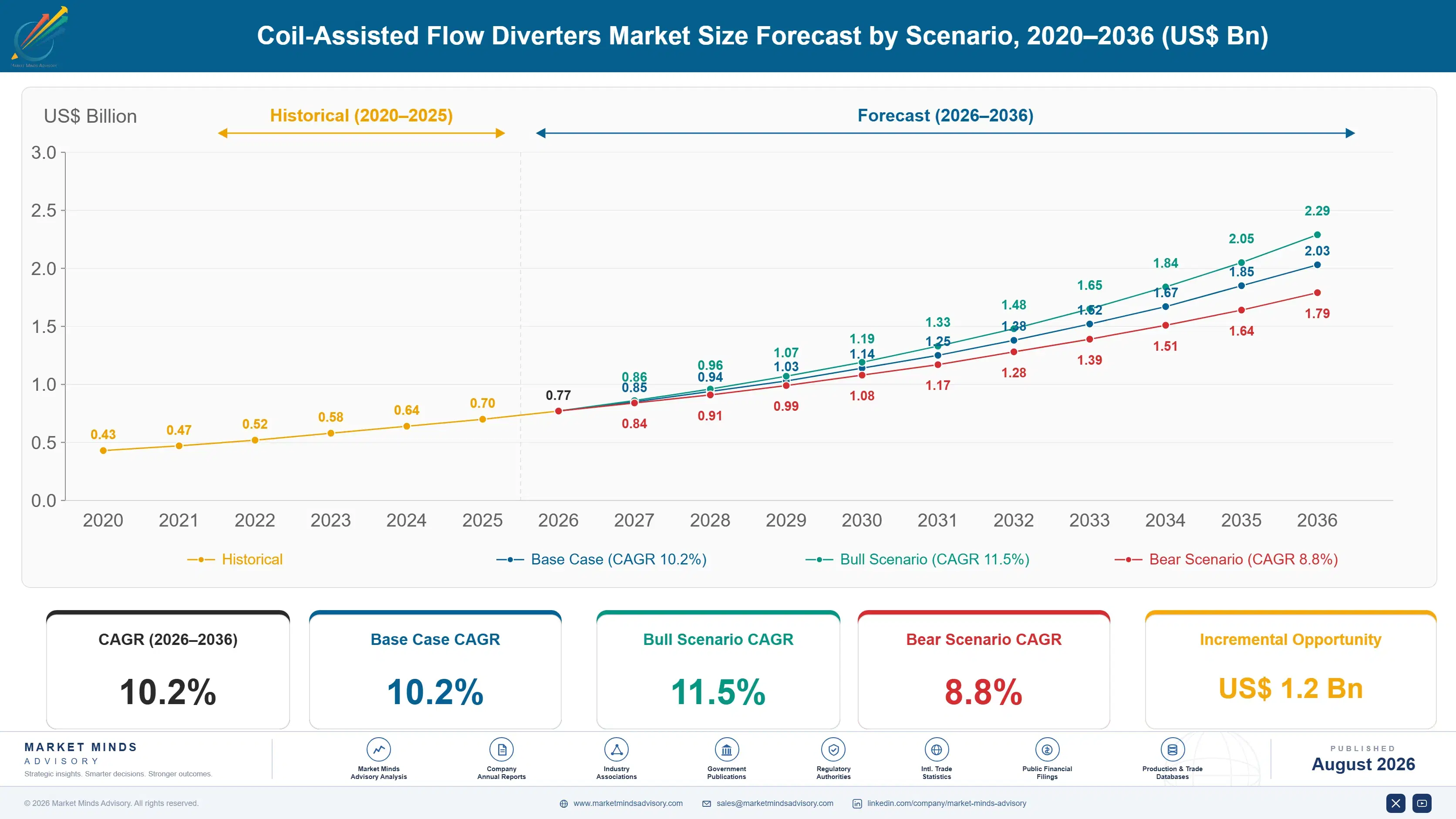
Coil-Assisted Flow Diverters Market Forecast Scenarios

coil-assisted-flow-diverters-market-size-forecast-scenario-1787304269658
Coil-assisted flow diverter demand grew steadily between 2020 and 2025 as neurointerventional adoption expanded beyond leading academic stroke centers into broader regional hospital networks and community neurovascular programs nationwide, with the historical growth rate running somewhat below the coming decade's pace as surface-modification technology matures further across most established and emerging healthcare markets worldwide today.
The base case assumes continued surface-modification technology adoption, low-profile design expansion into distal vessel treatment, and steady replacement demand from established neurointerventional device formularies across major markets worldwide today. Growing aneurysm screening rates and expanding stroke center infrastructure in East Asia and South Asia sustain unit volume even as average selling prices compress modestly through the forecast period as competition among established manufacturers intensifies across most commoditized product categories tracked in this segment.
The bull case centers on bioactive coating technology reaching broader adoption sooner than expected, pulling forward premium device replacement demand across leading stroke centers worldwide today. The bear case centers on reimbursement tightening for premium flow diverter devices in cost-constrained health systems, which would slow adoption significantly across public hospital procurement channels and delay planned formulary transitions.

Bioactive Coatings Redefine Neurointerventional Purchasing Criteria

Coil-assisted flow diverters sit at the intersection of mechanical engineering precision and biocompatibility science, since deployment performance alone no longer justifies premium pricing without accompanying antiplatelet protocol advantages that reduce bleeding complication risk substantially. Manufacturers converging both capabilities into a single device platform are winning tender evaluations that mechanically strong but biologically conventional competitors increasingly lose despite compa
MARKET CONCENTRATION (CR5)74%Top five manufacturers hold combined global market revenue share
AVERAGE SELLING PRICE$9,500Typical premium bioactive-coated flow diverter price per unit
TOP PRODUCING COUNTRY SHARE36%United States leads global flow diverter device manufacturing output
PROCEDURAL VOLUME GROWTH8.2%Annual growth rate in flow diverter implantation procedures performed
TRADE INTENSITY52%Share of total units sold across export markets globally
BIOACTIVE COATING ATTACH RATE24%New flow diverter implants now using bioactive surface coatings
Commercial character favors manufacturers with direct academic stroke center relationships over those relying solely on general hospital distributors, since complex aneurysm cases increasingly concentrate at designated comprehensive stroke centers rather than general neurosurgery departments nationwide. Physician training and proctoring programs have become a meaningful commercial investment distinct from traditional device sales alone, since deployment technique directly affects clinical outcomes and complication rates.
The next decade will be shaped by regulatory pathways for bioactive coating approval, reimbursement policy for premium device categories, and the pace at which low-profile designs expand treatable vessel anatomy nationwide. Manufacturers positioned across all three forces simultaneously will capture disproportionate share as flow diversion technology matures beyond its current complex-case-only positioning toward broader standard use across most major markets.
"Radial force used to be the entire sales pitch. Now the coating chemistry matters just as much, and manufacturers still leading with mechanical specs alone are losing cases to devices that also shorten a patient's time on blood thinners."
Director, Neurovascular and Interventional Devices Practice · MMA Medical Device

Market Trends

Bioactive Surface Coatings Shorten Antiplatelet Therapy Duration

Manufacturers are increasingly bringing bioactive and hydrophilic surface coatings to market that reduce device thrombogenicity, allowing neurointerventionalists to prescribe shorter dual antiplatelet therapy regimens for patients with bleeding risk contraindications. Roughly 24% of new flow diverter implants in 2025 used bioactive-coated devices, up sharply from a negligible share five years earlier, as clinical trial data demonstrated reduced thromboembolic complication rates without compromising aneurysm occlusion efficacy. Neurointerventionalists increasingly specify coating technology explicitly for patients unable to tolerate extended antiplatelet regimens, accelerating adoption across most major comprehensive stroke centers currently treating complex aneurysm cases.
Market Impact: Incidental detection grows 6% annua
Low-Profile Designs Expand Treatment to Distal Vessel Anatomy

Low-profile flow diverter designs increasingly enable treatment of smaller distal cerebral vessels that earlier generation devices could not safely navigate or deploy within, expanding the addressable aneurysm population meaningfully. Manufacturers report low-profile device adoption now covers roughly 31% of flow diverter procedures in leading markets, up from a much smaller share five years ago, as microcatheter compatibility and deployment mechanics improved enough to support smaller vessel treatment reliably. This expansion is pulling previously untreatable distal aneurysm cases into standard flow diversion treatment protocols across most major comprehensive stroke centers currently.
Market Impact: New centers add 200 annual placemen

Market Opportunities and Growth Drivers

Rising Aneurysm Screening Detection Rates Sustain Baseline Demand

Improved cerebral imaging resolution and expanding routine screening protocols continue to identify unruptured aneurysms earlier and more frequently, sustaining consistent baseline treatment demand independent of surface-modification technology adoption trends. Incidental aneurysm detection through routine imaging has grown steadily across major markets over the past several years, according to company annual report disclosures citing expanding diagnostic imaging utilization, driving sustained demand for both conventional and advanced flow diverter treatment as detection outpaces prior screening protocols. This baseline demand provides manufacturers a stable revenue floor even as premium bioactive adoption drives incremental growth on top of it.
Market Impact: Premium devices cost 4x conventiona

Expanding Comprehensive Stroke Center Infrastructure Drives Adoption

Governments and private health systems across multiple regions continue investing in dedicated comprehensive stroke center designation and neurointerventional training infrastructure, directly expanding the addressable customer base for flow diverter manufacturers beyond existing established centers nationwide. New comprehensive stroke center designations have grown steadily across East Asia and South Asia over recent years, each requiring neurointerventional device formulary stocking and specialist training investment upon designation. This infrastructure expansion sustains unit volume growth even in regions where per-procedure spending remains below North American and Western European levels, broadening the addressable market meaningfully.
Market Impact: Training gaps limit 40% of centers

Market Restraints and Challenges

High Device Cost Limits Adoption in Smaller Hospitals

Premium bioactive-coated and low-profile flow diverters carry per-unit costs well beyond what smaller regional hospitals and public health systems in lower-income markets can justify against constrained neurointerventional procedure budgets available today and going forward. The root cause is manufacturing complexity: precision braided mesh construction and specialized surface treatment processes keep production costs high relative to conventional coiling systems used elsewhere. Manufacturers are expanding tiered pricing programs and physician training partnerships to bridge this gap, gradually extending flow diverter access into markets previously priced out of premium treatment entirely and completely.
Market Impact: Bioactive coating adoption reaches

Specialized Deployment Training Constrains Physician Adoption

Flow diverter deployment requires specialized neurointerventional training and proctoring that many general interventional radiologists and neurosurgeons have not completed, limiting device adoption to designated comprehensive stroke centers with dedicated specialists available today and well going forward. The root cause traces to the technique's procedural complexity, which differs meaningfully from conventional coiling and carries a steeper learning curve requiring supervised case experience over time. Manufacturers are expanding proctoring programs and simulation-based training partnerships to reduce this adoption barrier, gradually extending qualified physician access into markets previously excluded by training availability alone.
Market Impact: Low-profile devices cover 31% of pr
2 additional market trends, 4 additional growth drivers, and 3 additional restraints and challenges are covered in the full report. Contact sales@marketmindsadvisory.com to access the complete intelligence.

Segment CAGR and Growth Architecture

Coil-assisted flow diverter segmentation follows device construction and surface technology rather than aneurysm location alone, since the same manufacturer base develops distinct mesh, coating, and profile innovations across product lines. Six segments span braided mesh flow diverters, coil-assisted adjunctive embolization systems, surface-modified bioactive-coated devices, low-profile distal designs, delivery microcatheters, and dual-layer systems, each requiring distinct regulatory pathways.
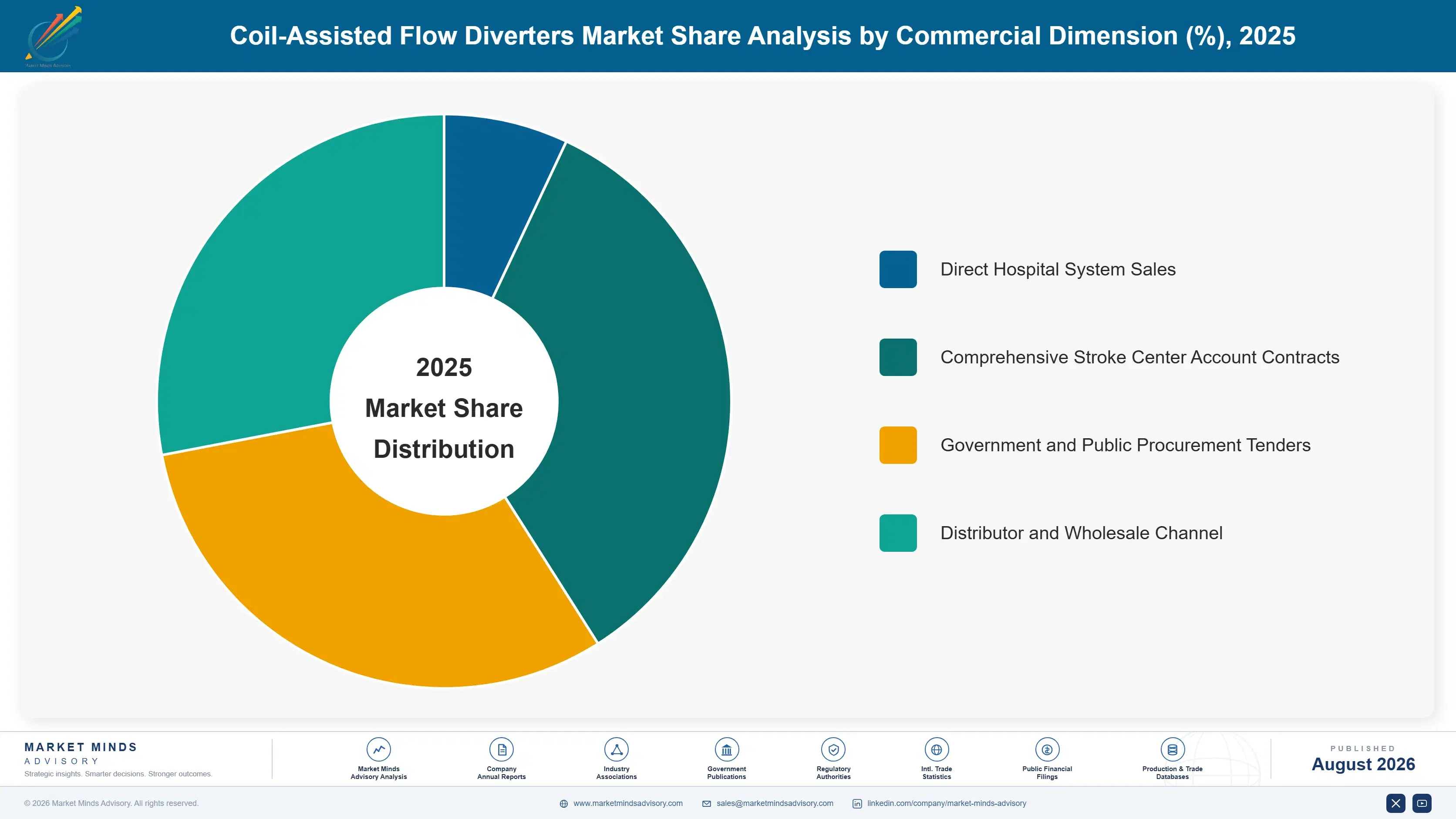
coil-assisted-flow-diverters-market-market-share-analysis-1787304270190

Surface-Modified Bioactive-Coated Flow Diverters

Surface-modified bioactive-coated flow diverters are growing fastest as neurointerventionalists increasingly prescribe this modality for patients with bleeding risk contraindications who cannot tolerate extended dual antiplatelet therapy following implantation procedures performed today across most major treatment centers worldwide and well beyond currently. Comprehensive stroke centers and academic neurointerventional programs are driving early adoption, since bioactive coating technology currently justifies its premium pricing primarily through documented reduced thromboembolic complication rates relative to conventional uncoated devices across most complex case categories. Manufacturers with proven long-term coating durability data are capturing disproportionate share of new device selection discussions as physicians increasingly specify this technology explicitly for complication-sensitive cases across leading comprehensive stroke centers nationwide.
CAGR 13.5%

Low-Profile Flow Diverters for Distal Vessels

Low-profile flow diverters grow second-fastest, driven by their ability to navigate and treat smaller distal cerebral vessels that earlier generation devices could not safely reach or deploy within reliably or consistently across most anatomical variations encountered by leading treating specialists today. Neurointerventionalists increasingly favor low-profile designs for distal aneurysm cases where conventional device profiles would risk vessel injury during deployment or fail to achieve adequate wall apposition against the vessel wall. Manufacturers with validated distal vessel outcomes data are capturing disproportionate share of this demand, since physicians increasingly evaluate device selection based on treatable vessel diameter range rather than core flow diversion performance alone, reshaping purchasing criteria across leading centers.
CAGR 12.0%
Full segment breakdown across 6 segments available in the complete report.

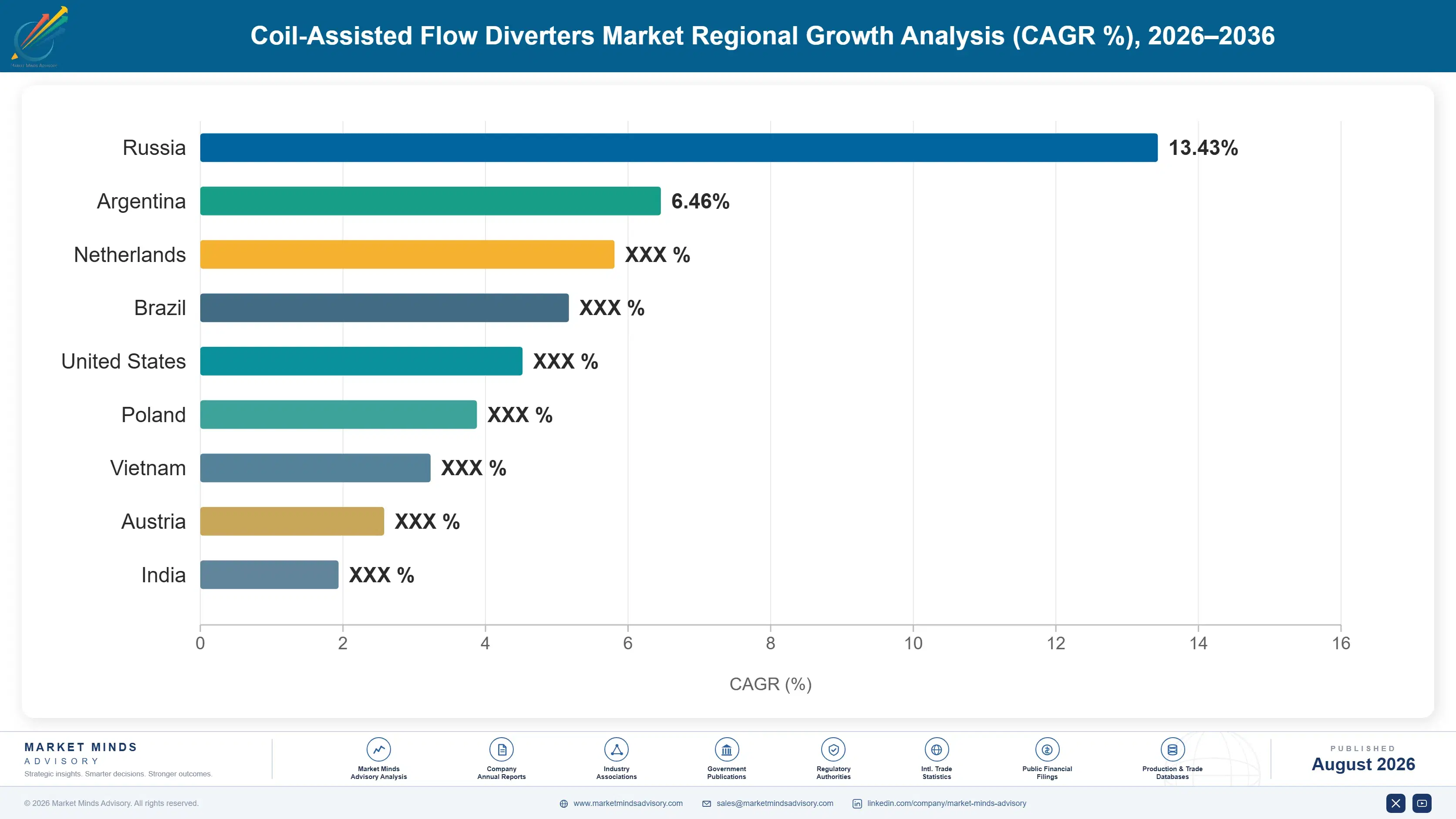
Regional Architecture and Country Demand Map

Revenue concentrates where neurointerventional infrastructure and reimbursement pathways for premium devices intersect, with North America and East Asia together capturing more than half of global revenue. Regional growth rates skew fastest toward South Asia and Pacific as comprehensive stroke center infrastructure expands rapidly there and elsewhere.

North America

North America holds the largest share among all tracked markets, driven by the world's densest concentration of comprehensive stroke centers and the earliest regulatory clearances for surface-modification technology across the industry today and consistently. The United States accounts for most of this share, supported by established payer coverage for premium flow diverter devices, extensive neurointerventional training infrastructure, and academic medical centers driving early adoption of bioactive-coated products across most specialist departments. Physician training and proctoring programs concentrate disproportionately in this region ahead of most other markets nationwide and internationally. Manufacturers without validated surface-modification technology increasingly lose device selection conversations to competitors holding strong clinical outcomes data and established payer relationships.
Share: 32% | CAGR: 10.8% (2026 to 2036)

Western Europe

Western Europe combines centralized national health system procurement with steady but measured surface-modification technology adoption across its largest member states and established neurointerventional networks nationwide and internationally today and gradually over time. Germany, France, and the United Kingdom drive most regional revenue, since national health technology assessment bodies there move deliberately on new device category reimbursement decisions relative to faster-moving markets elsewhere in the world. Conventional mesh flow diverter penetration remains higher here than in the United States, reflecting national health system emphasis on cost containment across device categories broadly and consistently. Bioactive coating uptake trails the United States by a meaningful margin per launch, as reimbursement approval requires additional evidence.
Share: 22% | CAGR: 8.8% (2026 to 2036)
Regional intelligence for 5 additional markets available in the complete report: East Asia, South Asia and Pacific, Latin America, Middle East and Africa, Eastern Europe. Contact sales@marketmindsadvisory.com.
coil-assisted-flow-diverters-market-country-cagr-analysis-1787304270703

Coating Innovation Drives Premium Device Pricing

Revenue growth concentrates around four commercial mechanisms rewarding manufacturers who move fastest on coating technology, physician training investment, and distal vessel design expansion across most major markets today and going forward. Mechanical differentiation alone is losing pricing power as radial force performance plateaus, pushing manufacturers toward bioactive innovation, proctoring programs, and stroke center relationships.

Advance Bioactive Coating Clinical Trial Investment

Manufacturers advancing bioactive coating clinical trials fastest capture disproportionate share of complication-sensitive device selection conversations before competitors can match comparable outcomes data available today. Coated devices now command a 19% price premium over comparable uncoated platforms, according to recent tender data across major markets, since neurointerventionalists increasingly value reduced antiplatelet duration as a quantifiable patient safety benefit. Manufacturers without validated coating data face mounting pressure to either license third-party surface technology or develop internal capability quickly, since the coating trend is accelerating faster than most uncoated-only competitors can independently respond.
Market Impact: Coated devices command a 19% pricin

Expand Physician Proctoring and Training Programs

Manufacturers expanding physician proctoring and simulation-based training programs capture predictable adoption growth by directly addressing the specialized deployment skill gap that limits device adoption to designated comprehensive stroke centers with trained specialists. Proctored physicians adopt a given manufacturer's device for roughly 65% of subsequent complex cases, according to recent training outcomes data, reflecting the loyalty that hands-on training relationships build relative to unsupported device launches without comparable clinical support. Building proctoring infrastructure requires sustained clinical education investment, but the resulting physician loyalty tends to persist across multiple product generations once established.
Market Impact: Proctored physicians adopt devices

Reduce Low-Profile Manufacturing Costs Toward Broader Access

Manufacturers investing in low-profile device manufacturing cost reduction are positioned to capture the category's next growth wave as pricing approaches levels accessible to mid-tier regional stroke centers rather than only leading academic institutions today. Component costs for low-profile flow diverters have declined an estimated 13% over the past three years as production scale expands and deployment mechanics simplify, narrowing the price gap with conventional mesh alternatives. Manufacturers achieving further cost reduction fastest will capture disproportionate share of the anticipated transition toward broader distal vessel treatment adoption over the coming years.
Market Impact: Manufacturing costs have declined 1

Build Direct Comprehensive Stroke Center Account Relationships

Manufacturers building direct account relationships with comprehensive stroke centers rather than relying solely on general hospital distributors capture higher realized pricing and stronger formulary retention against competitors without comparable specialist relationships. Direct account management now covers approximately 58% of comprehensive stroke center purchasing among leading manufacturers, up from a much lower share five years ago, as these centers increasingly value dedicated clinical support over general distributor relationships. Manufacturers with the strongest direct account networks are converting this relationship advantage into durable formulary retention that smooths competitive pressure from lower-cost entrants.
Market Impact: Direct accounts now cover 58% of al

Who Controls the Margin Pool

Five manufacturers hold 74% combined share on a global revenue basis, a high concentration level reflecting regulatory clearance barriers and specialized deployment training requirements that keep new entrants scarce relative to more fragmented device categories. Medtronic leads the field by a meaningful margin, its established Pipeline platform and extensive physician training network giving it broader stroke center relationships than Stryker, the nearest challenger, whose Surpass platform comp
Current competitive activity centers on bioactive coating development, low-profile design expansion, and physician proctoring program investment rather than price competition on conventional mesh devices alone. Manufacturers are racing to secure clinical evidence supporting shorter antiplatelet regimens, since neurointerventionalists increasingly condition device selection on documented complication reduction data. Distribution partnerships with regional stroke networks now shape access economics across many mid-tier markets.

Emerging pressure comes from specialized neurovascular startups pursuing next-generation intrasaccular and low-profile designs, and from established manufacturers scaling bioactive coating technology across broader product lines. Rankings shift most where proctoring program scale and coating clinical evidence combine, since a single manufacturer's outcomes publication can meaningfully reorder near-term device selection preference among otherwise comparable competitors.
coil-assisted-flow-diverters-market-company-positioning-matrix-1787304271225

Competitive Moat and Risk Dimensions

MEDTRONIC PLC

Moat: Established Physician Training Network

Medtronic maintains the most extensive physician proctoring and training network in flow diversion, built over more than a decade of continuous investment in neurointerventional education programs. This training depth gives Medtronic disproportionate influence over which device newly trained physicians default to throughout their careers, reinforcing its lead in device selection among the next generation of neurointerventionalists entering comprehensive stroke centers.
MEDTRONIC PLC

Risk: Coating Technology Development Lag

Medtronic has moved more cautiously into bioactive surface coating technology than several smaller specialized competitors, leaving a capability gap in the fastest-growing premium segment of the broader market. If coating adoption accelerates faster than Medtronic's internal development timeline allows, the company risks ceding disproportionate share of complication-sensitive device selection conversations to coating-focused competitors already commercializing comparable technology.
STRYKER CORPORATION

Moat: Mechanical Performance and Deliverability

Stryker's Surpass platform maintains a strong reputation for deployment predictability and wall apposition performance among neurointerventionalists managing anatomically complex aneurysm cases. This mechanical performance advantage gives Stryker disproportionate consideration in cases where deployment precision matters most, reinforcing its position as the clearest challenger to Medtronic despite trailing in overall training network scale and physician relationship depth.
STRYKER CORPORATION

Risk: Narrower Training Network Reach

Stryker's physician training and proctoring network remains narrower than Medtronic's, limiting its influence over newly trained physicians who default to whichever manufacturer proctored their early complex case experience. If training network reach continues determining long-term device loyalty more than mechanical performance alone, Stryker risks losing share among the next generation of neurointerventionalists entering comprehensive stroke center practice.

Players Tracked

Prominent Players

Medtronic plc
Stryker Corporation
MicroVention, Inc. (Terumo Corporation)
Balt SAS
phenox GmbH

Other Key Players

Johnson & Johnson (Cerenovus)
Penumbra, Inc.
Rapid Medical Ltd.
InspireMD, Inc.
Cerus Endovascular Ltd.
Route 92 Medical, Inc.
Q'Apel Medical, Inc.
Perflow Medical Ltd.
NeuroVasc Technologies, Inc.
Shape Memory Medical, Inc.
Endostream Medical Ltd.
MIVI Neuroscience, Inc.
Galaxy Therapeutics, Inc.
Codman Neuro (Integra LifeSciences)
Kaneka Corporation

Recent Developments

FEBRUARY 2026

Medtronic Expands Bioactive Coating Trial Enrollment

Medtronic announced expanded clinical trial enrollment for a bioactive-coated version of its flagship flow diverter platform, targeting regulatory clearance across multiple jurisdictions within the coming years. The trial aims to generate outcomes data supporting shortened antiplatelet therapy protocols for patients with bleeding risk contraindications following implantation.
Signal: Signals the market leader is prioritizing
SEPTEMBER 2025

Stryker Signs Regional Stroke Network Proctoring Agreement

Stryker signed a multi-year proctoring partnership agreement with a network of comprehensive stroke centers to expand physician training capacity for its Surpass platform across newly designated neurointerventional programs nationwide. The agreement covers simulation-based training, case proctoring, and ongoing clinical support across dozens of participating centers.
Signal: Signals training network investment is bec
APRIL 2025

MicroVention Licenses Bioactive Coating Technology

MicroVention and a specialized surface coating technology firm announced a licensing agreement covering bioactive coating intellectual property, aimed at accelerating commercial coated device development across the company's broader product portfolio. The partnership combines MicroVention's existing manufacturing scale with the partner's specialized surface chemistry expertise and patent portfolio.
Signal: Signals established manufacturers increasi

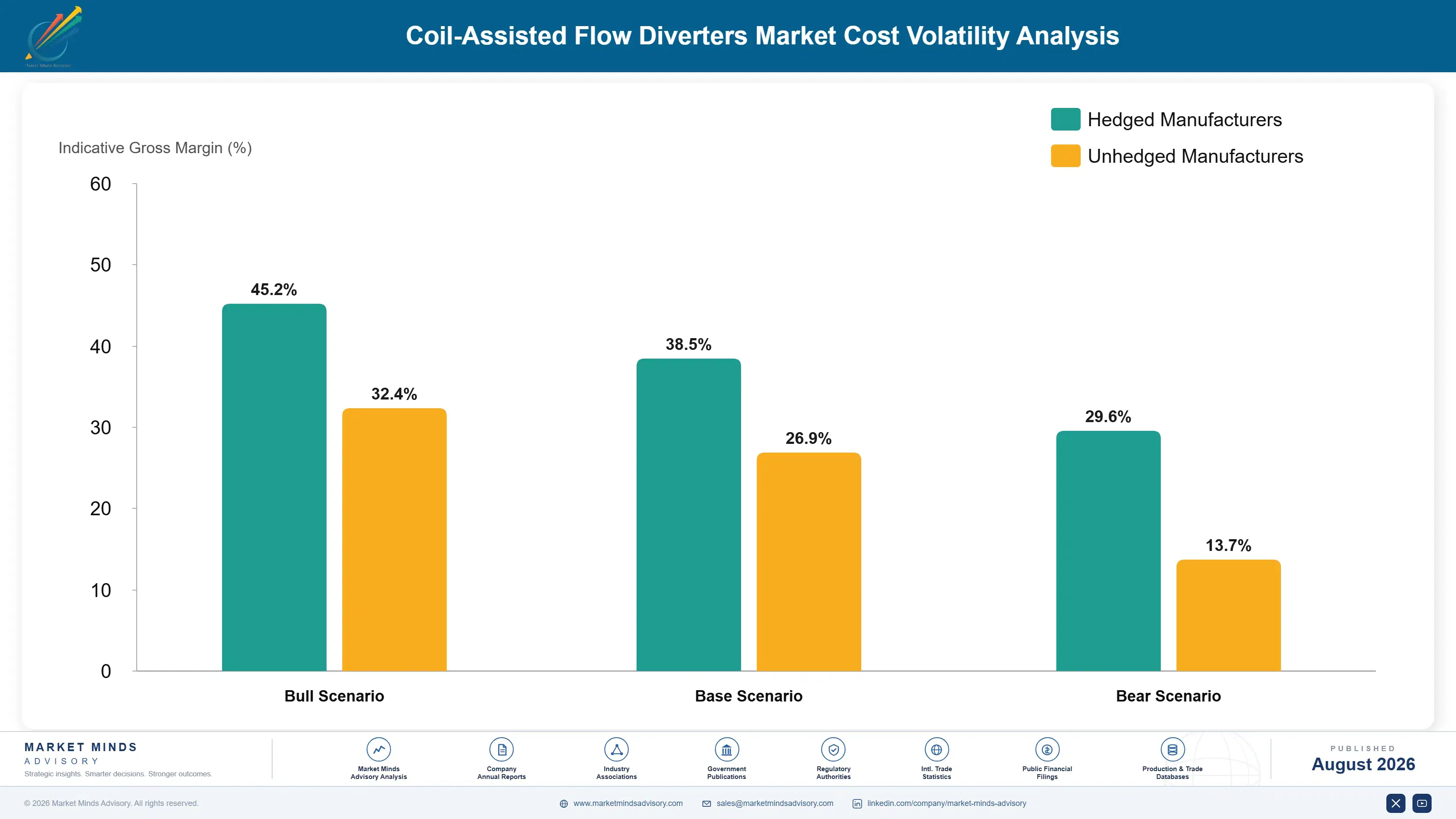
Precision Alloy Sourcing Shapes Device Cost

Nitinol and cobalt-chromium alloy wire, precision braiding, and surface treatment processes account for roughly 42% of cost of goods sold across flow diverter production, with a further 16% attributable to sterile packaging and quality validation steps. Most precision alloy sourcing concentrates among a small number of specialized suppliers in the United States and Western Europe.
Nitinol wire pricing rose an estimated 11% during 2023, according to company annual report disclosures citing global specialty metals supply pressure affecting the broader medical device manufacturing sector, before stabilizing through 2024 as alternative suppliers scaled qualified capacity. Bioactive coating raw materials also saw measurable cost volatility over the same period, according to EIA-adjacent specialty chemical trade data covering surface treatment inputs relevant to medical device manufacturing.

Larger manufacturers with vertically integrated alloy sourcing and precision braiding capacity absorb input cost volatility more easily than smaller specialized competitors dependent on third-party suppliers for critical device components. Manufacturers serving public procurement programs in lower-income markets face the sharpest exposure, since multi-year fixed-price government contracts leave little room to pass through input cost increases once agreements are signed and locked in place.
coil-assisted-flow-diverters-market-cost-volatility-analysis-1787304271422

Qualify Secondary Nitinol Wire Suppliers

Manufacturers increasingly qualify secondary nitinol wire suppliers across multiple specialty metals fabricators, reducing exposure to any single supplier's capacity constraints or pricing volatility entirely. This dual-sourcing approach adds modest qualification cost upfront but has measurably reduced supply interruption incidents for manufacturers who adopted it early, ahead of recent specialty metals supply pressure affecting the sector.

Vertically Integrate Precision Braiding Capacity

Larger manufacturers are investing directly in in-house precision braiding and alloy processing capacity rather than relying entirely on external specialized suppliers, reducing exposure to third-party pricing and lead time constraints. This vertical integration requires substantial upfront capital investment but has already shortened lead times for manufacturers pursuing it ahead of broader industry adoption of comparable capability.

Structure Multi-Year Alloy Pricing Agreements

Manufacturers serving public procurement programs increasingly negotiate multi-year alloy pricing agreements with key suppliers that mirror the multi-year government contracts they themselves sign, aligning cost and revenue timing more closely and predictably. This reduces margin compression risk from mismatched contract cycles, though it requires suppliers willing to accept longer-term price certainty over spot-market flexibility.

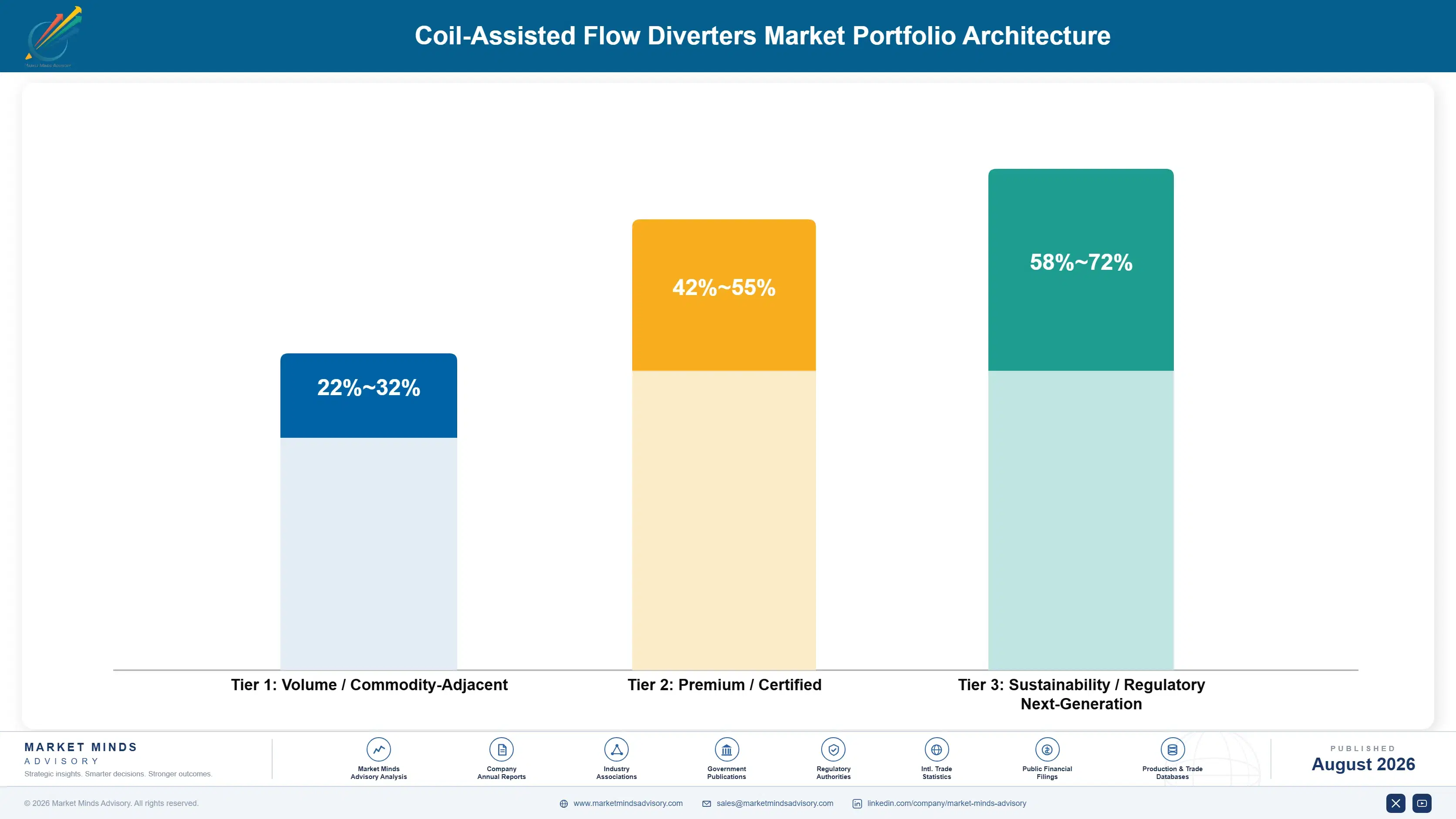
Portfolio Architecture for Margin Defence

Portfolio economics split across three tiers defined by surface technology and vessel profile capability rather than mesh construction alone. Volume conventional uncoated mesh devices carry moderate margins driven by steady multi-manufacturer competition, while premium bioactive-coated and low-profile devices command materially wider margins, reflecting clinical validation investment and specialist positioning that conventional competitors cannot easily replicate across most treatment markets tr
Volume and premium tiers pull manufacturer strategy in different directions, since public procurement programs reward manufacturers who can supply reliable conventional devices at competitive per-unit cost, while comprehensive stroke centers reward manufacturers who can demonstrate coating and profile differentiation through validated clinical outcomes. Few manufacturers compete credibly across both tiers, since the manufacturing scale, clinical investment, and training infrastructure required for each differ substantially.

High-value margin pools concentrate almost entirely in bioactive-coated and low-profile device categories serving leading comprehensive stroke centers in North America, Western Europe, and East Asia's premium private healthcare segments. Volume tiers generate the overwhelming majority of unit count but a comparatively modest share of total industry profit pool, a divergence widening as coating validation accelerates faster than mesh pricing pressure eases.

Volume / Commodity-Adjacent

Conventional braided mesh flow diverters and coil-assisted embolization systems sold predominantly through public procurement and general hospital distribution, competing largely on unit price and mechanical reliability across most global regions.
Gross Margin: 22-32%

Premium / Certified

Low-profile distal designs and premium mesh configurations sold through specialist neurointerventional and hospital channels, commanding meaningfully wider margins through anatomical differentiation and dedicated physician support capability offered broadly and consistently.
Gross Margin: 42-55%

Sustainability / Regulatory / Next-Generation

Bioactive-coated and next-generation surface-modified flow diverters still expanding into mainstream stroke center formularies, priced at the category's highest premium levels given limited near-term competitive alternatives available currently and quite broadly.
Gross Margin: 58-72%
coil-assisted-flow-diverters-market-portfolio-architecture-1787304271923

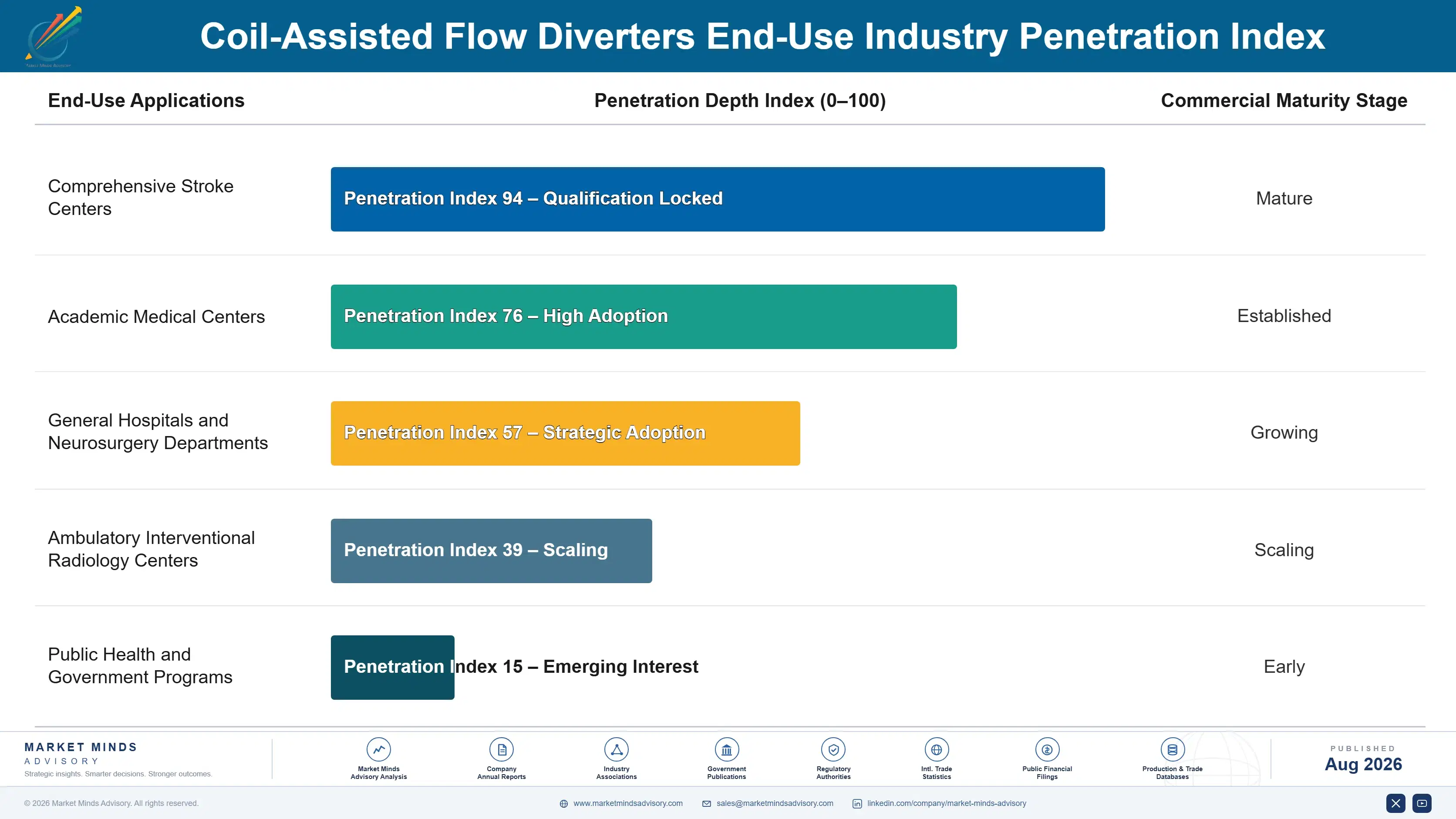
Physician Loyalty Anchors Device Selection

Flow diverter revenue functions on a physician relationship model rather than a purely transactional device sale, since deployment technique proficiency and training investment create durable device preference that persists across a physician's career. This recurring dynamic underpins manufacturer willingness to invest heavily in proctoring and simulation training, since physicians trained on a given platform generate predictable multi-year device selection regardless of which competitor eventua
Adoption depth varies meaningfully by end-use vertical, running deepest in comprehensive stroke centers and academic neurointerventional programs that standardize device selection across their full specialist team, and shallowest in general hospitals still referring complex cases elsewhere. Coating technology stickiness proves particularly strong once physicians experience reduced complication rates firsthand, with switch-back rates to uncoated devices remaining low across most centers tracked.

Buyer profiles are shifting generationally as younger neurointerventionalists trained on bioactive-coated devices increasingly expect coating technology as a baseline device requirement rather than a premium option reserved for complex cases. Procurement committees report this generational preference is accelerating purchasing decisions toward coated-inclusive formularies faster than reimbursement policy has formally adjusted, pulling premium device adoption earlier into typical hospital procurement cycles.
coil-assisted-flow-diverters-market-end-use-penetration-index-1787304272411

Where MMA Sees the Advantage

These are among the four positions where our research anticipates prominent divergence between winners and laggards over the coming forecast period. Each is grounded in the demand model, the regulatory perimeter, and the announced capacity pipeline.
01 / COATING TECHNOLOGY INVESTMENT

Accelerate Bioactive Coating Development Before Standard Consolidates

Manufacturers without validated bioactive coating data are losing device selection conversations to competitors who invested early in surface chemistry development instead of relying on mechanical performance alone across most complex case categories tracked in leading comprehensive stroke centers. Selection data now shows neurointerventionalists default to whichever manufacturer demonstrates reduced thromboembolic complication rates, not whichever offers the strongest radial force specification available today. MMA sees coating capability, not mechanical performance alone, as the clearer near-term differentiator through the current ten-year forecast window.
02 / PHYSICIAN TRAINING INFRASTRUCTURE

Build Proctoring Networks Before Competitors Establish Physician Loyalty

Physician training relationships built early tend to persist across a neurointerventionalist's entire career, giving first movers durable device selection advantages that later entrants find genuinely costly to displace once training loyalty forms and fully solidifies across most practice settings. Manufacturers waiting for training infrastructure to develop organically are ceding this advantage to faster-moving competitors already embedded in proctoring relationships across comprehensive stroke centers nationwide and internationally. MMA views training infrastructure as a multi-year strategic asset worth pursuing immediately and consistently.
03 / LOW-PROFILE COST REDUCTION

Invest in Low-Profile Manufacturing Scale to Expand Access

Manufacturers that reduce low-profile device manufacturing costs fastest will capture the category's next growth wave as pricing approaches levels accessible to mid-tier regional stroke centers rather than remaining confined to leading academic institutions indefinitely across most current markets. Competitors delaying manufacturing scale investment risk ceding this transition entirely to whichever manufacturer reaches broader affordability first, a timing advantage that compounds meaningfully once achieved across expanding regional markets. MMA sees this cost curve as the clearest strategic inflection point ahead for the category.
04 / DIRECT STROKE CENTER RELATIONSHIPS

Build Direct Comprehensive Stroke Center Account Depth

Manufacturers concentrating exclusively on general hospital distributors risk missing the growing purchasing influence of designated comprehensive stroke centers, which increasingly value dedicated clinical support over standard distributor relationships across most major treatment markets tracked in this evolving industry. Stryker's regional proctoring partnership illustrates how this direct account investment compounds as stroke centers gain reliable specialist support over time across multiple regions and program types. MMA recommends building comparable account depth rather than relying solely on established distribution networks going forward.

Engagement Snapshot From the Field

A live engagement with an industry participant carrying material or product regulatory and market exposure ahead of a defining policy shift, showing how our research translates into a defensible multi-year portfolio strategy.
MARKET MINDS ADVISORY · CLIENT ENGAGEMENT SUMMARY
Coil-Assisted Flow Diverters Producer Strategic Portfolio Review and Transition Roadmap 2026·Investment Scenario on Coil-Assisted Flow Diverters Exposure Evaluation 2025-26
CLIENT PROFILE
The client operates a four-hospital comprehensive stroke center network in East Asia with reported annual neurointerventional device procurement spend of approximately 6 million US dollars (client-reported, unverified by MMA) split across flow diverters, coiling systems, and delivery accessories. The network sought to standardize its flow diverter formulary around a single primary vendor but lacked comparative outcomes data across its current multi-vendor purchasing arrangement.
STRATEGIC CHALLENGE
Leadership needed to determine whether consolidating to a single flow diverter vendor would improve pricing and training efficiency enough to justify reduced device selection flexibility for physicians accustomed to choosing between multiple platforms based on individual case anatomy, complexity, and their own personal training background across the network's specialist team.
MMA APPROACH
MMA combined its primary survey dataset with expert interviews across regional neurointerventionalists and procurement officers to benchmark vendor pricing, training support quality, and case-mix suitability across the network's four hospitals and their respective physician teams and case volumes. The engagement produced a tiered vendor recommendation rather than a single-vendor consolidation mandate.
KEY FINDINGS
  1. Full vendor consolidation would have reduced device pricing by 22% but excluded roughly 15% of complex distal cases better suited to a competitor's low-profile platform.
  2. Physicians reported meaningfully higher confidence deploying devices from vendors whose proctoring programs they had personally completed, regardless of mechanical performance differences observed.
  3. Two of four network hospitals had case volume low enough that dedicated single-vendor training investment would not achieve reasonable utilization within three years.
  4. The network's existing multi-vendor arrangement already captured most available volume discounts, limiting the incremental pricing benefit of further vendor consolidation efforts considerably.
CLIENT PROFILE
The client operates a four-hospital comprehensive stroke center network in East Asia with reported annual neurointerventional device procurement spend of approximately 6 million US dollars (client-reported, unverified by MMA) split across flow diverters, coiling systems, and delivery accessories. The network sought to standardize its flow diverter formulary around a single primary vendor but lacked comparative outcomes data across its current multi-vendor purchasing arrangement.
STRATEGIC CHALLENGE
Leadership needed to determine whether consolidating to a single flow diverter vendor would improve pricing and training efficiency enough to justify reduced device selection flexibility for physicians accustomed to choosing between multiple platforms based on individual case anatomy, complexity, and their own personal training background across the network's specialist team.
MMA APPROACH
MMA combined its primary survey dataset with expert interviews across regional neurointerventionalists and procurement officers to benchmark vendor pricing, training support quality, and case-mix suitability across the network's four hospitals and their respective physician teams and case volumes. The engagement produced a tiered vendor recommendation rather than a single-vendor consolidation mandate.
KEY FINDINGS
  1. Full vendor consolidation would have reduced device pricing by 22% but excluded roughly 15% of complex distal cases better suited to a competitor's low-profile platform.
  2. Physicians reported meaningfully higher confidence deploying devices from vendors whose proctoring programs they had personally completed, regardless of mechanical performance differences observed.
  3. Two of four network hospitals had case volume low enough that dedicated single-vendor training investment would not achieve reasonable utilization within three years.
  4. The network's existing multi-vendor arrangement already captured most available volume discounts, limiting the incremental pricing benefit of further vendor consolidation efforts considerably.
RECOMMENDED STRATEGY
Phase 1: Phase 1 (Months 1-2): Consolidate to two primary vendors covering standard and distal vessel cases rather than a single vendor. Phase 2: Phase 2 (Months 3-6): Negotiate volume-based pricing with the two selected vendors across all four network hospitals collectively and formally. Phase 3: Phase 3 (Months 7-12): Standardize proctoring and training investment around the two vendors to maximize physician deployment confidence across the network fully.
OUTCOME
The network adopted the two-vendor consolidation approach, reporting a 16% reduction in device procurement cost while maintaining physician access to distal vessel treatment capability across all facilities (client-reported, unverified by MMA). Physician satisfaction with device selection flexibility remained largely unchanged from the prior multi-vendor arrangement.

Frequently Asked Questions

Foundational context covering the market sizes, CAGR, scope, country, region and competition that inform every finding below. This section is provided to cover basics and most often pre-purchase conversations, answered from the MMA Primary Research Dataset.

What is the current size of the Coil-Assisted Flow Diverters Market?

The global coil-assisted flow diverters market was valued at approximately 0.68 billion US dollars in 2025. This figure spans braided mesh, bioactive-coated, low-profile, and adjunctive embolization device categories across all tracked regions.

How large will the Coil-Assisted Flow Diverters Market be by 2036?

The market is projected to reach approximately 1.98 billion US dollars by 2036, up from 0.75 billion in 2026. This represents a 2.64 times expansion over the ten-year forecast period.

What is the CAGR for the Coil-Assisted Flow Diverters Market 2026 to 2036?

The market is forecast to grow at a 10.2% compound annual growth rate between 2026 and 2036. Bull and bear scenarios range from 11.5% to 8.8%, reflecting coating adoption pace uncertainty.

Which segment is growing fastest?

Surface-modified bioactive-coated flow diverters are the fastest-growing segment, expanding at 13.5% annually, roughly 1.32 times the overall market rate. Reduced thromboembolic complication rates are driving neurointerventionalist adoption ahead of conventional devices.

Who are the major companies in the Coil-Assisted Flow Diverters Market?

Leading companies include Medtronic, Stryker, MicroVention, Balt, and phenox GmbH. These five manufacturers collectively hold 74% combined share on a global revenue basis today and consistently.

Which country is growing fastest?

China is the fastest-growing country market, expanding at 12.5% annually as comprehensive stroke center infrastructure scales rapidly across major provinces. This growth reflects volume expansion under national health infrastructure investment.

Report Segmentation Architecture

The full report scope spans multiple orthogonal segmentation dimensions, with cross-tabulated demand data provided for each dimension pair. Coverage extends further to regional breakdowns, trend trajectories, and the competitive detail needed to support segment-level decision-making.

By Primary Market Dimension

  • Braided Mesh Flow Diverter Stents
  • Coil-Assisted Adjunctive Embolization Systems
  • Surface-Modified Bioactive-Coated Devices
  • Low-Profile Distal Flow Diverters
  • Delivery Microcatheters and Accessories
  • Dual-Layer Flow Diverter Systems

By End-Use Industry

  • Comprehensive Stroke Centers
  • Academic Medical Centers
  • General Hospitals and Neurosurgery Departments
  • Ambulatory Interventional Radiology Centers
  • Public Health and Government Programs

By Commercial Dimension

  • Direct Hospital System Sales
  • Comprehensive Stroke Center Account Contracts
  • Government and Public Procurement Tenders
  • Distributor and Wholesale Channel

By Region

  • North America
  • Western Europe
  • East Asia
  • South Asia and Pacific
  • Latin America
  • Middle East and Africa
  • Eastern Europe

Scope, Methodology, and Coverage

Every figure in this report is reproducible from documented input assumptions. The scope below maps the historical period, the forecast horizon, the segmentation dimensions, and the countries covered, alongside the underlying primary and qualitative methodology.
Historical Period
2020 to 2025
Forecast Period
2026 to 2036
Base Year
2025 (USD billions; MMA Primary Research Dataset, August 2026)
Market Definition
This report covers the global market for coil-assisted flow diverter devices used in the endovascular treatment of intracranial aneurysms, spanning braided mesh flow diverters, surface-modified bioactive-coated devices, low-profile distal designs, and their adjunctive coiling and delivery accessories. It excludes standalone coiling systems not used in conjunction with flow diversion and open surgical aneurysm clipping procedures.
Quantitative Units
USD billions (current prices); procedural volume and market concentration percentages where applicable
Segmentation Dimensions
By Primary Market Dimension; By End-Use Industry; By Commercial Dimension; By Region
Regions Covered
North America, Western Europe, East Asia, South Asia and Pacific, Latin America, Middle East and Africa, Eastern Europe
Countries Covered
USA, China, Germany, France, UK, Japan, South Korea, India, Australia, Canada, Brazil, Mexico, Indonesia, Vietnam, Thailand, Malaysia, UAE, Saudi Arabia, South Africa, Nigeria, Turkey, Poland, Netherlands, Italy, Spain, Sweden, Switzerland, Argentina, Colombia, Singapore, and additional markets relevant to this sector
Key Companies Profiled
Medtronic plc; Stryker Corporation; MicroVention, Inc. (Terumo Corporation); Balt SAS; phenox GmbH; Johnson & Johnson (Cerenovus); Penumbra, Inc.; Rapid Medical Ltd.; InspireMD, Inc.; Cerus Endovascular Ltd.; Route 92 Medical, Inc.; Q'Apel Medical, Inc.; Perflow Medical Ltd.; NeuroVasc Technologies, Inc.; Shape Memory Medical, Inc.; Endostream Medical Ltd.; MIVI Neuroscience, Inc.; Galaxy Therapeutics, Inc.; Codman Neuro (Integra LifeSciences); Kaneka Corporation
Quantitative Methodology
Primary survey, n=3,800 respondents, Q4 2025, six countries; demand-side model with trade association cross-validation
Qualitative Methodology
47 expert interviews, Q4 2025; applied to validate demand model assumptions, identify emerging dynamics, and assess competitive positioning
Report Format
PDF and XLSX data workbook (Word format preview document)
Publisher
Market Minds Advisory
Report Code
MMA-2026-MED-511
Published
August 2026
Contact
sales@marketmindsadvisory.com | www.marketmindsadvisory.com

Purchase the full Coil-Assisted Flow Diverters Market Report (2026 to 2036).

This report delivers a complete assessment of the global coil-assisted flow diverters market, covering braided mesh devices, bioactive-coated platforms, low-profile designs, adjunctive embolization systems, and delivery accessories across all seven MMA-tracked regions through 2036. It combines primary survey data from 3,800 respondents with 47 expert interviews across neurointerventionalists, procurement officers, and manufacturers to quantify segment, regional, and competitive dynamics. Readers receive detailed sizing, forecast scenarios, and margin analysis across three commercial tiers. The report also profiles twenty companies and includes a full competitive assessment of moat and risk positioning across the five leading manufacturers.
Ten-Year Forecast Across Three Growth Scenarios
Seven-Region Market Sizing With Country-Level Detail
Twenty Company Competitive Profiles and Benchmarking
Segment-Level Growth Analysis Across Six Categories
Input Cost and Supply Chain Risk Assessment
Portfolio Margin Architecture Across Three Tiers

Built For The People Who Decide

From boardroom strategy to bench-side execution, this report is read cover-to-cover by leaders shaping the next decade of their industry, turning demand scenarios, market dynamics and valuation benchmarks into decisions.
CXOs/ Presidents/ VPs/ Managers
M&A and Corporate Development
Strategy Teams and R&D Heads
Procurement and Product Directors
Regulatory and Compliance Leaders
Investor Relations and Equity Analysts