

Market Minds Advisory
Cobot Palletizing End-Effector Market

Cobot Palletizing End-Effector Market: Cobot Palletizing End-Effector Market. Grippers Become the Differentiator as Arms Commoditize

Warehouse and manufacturing operators are adopting collaborative robot palletizing grippers as labor shortages persist, pushing end-effector design toward multi-SKU flexibility as the underlying cobot arm hardware commoditizes rapidly across most industrial segments.

Lead Analyst

Published

October 2026

Make Smarter Decisions with Customized Research Insights

Request a free sample report and evaluate market opportunities, growth trends, and competitive dynamics relevant to your business needs.

2025 MARKET VALUE$0.5BMarket Size 2025
2036 FORECAST VALUE$2.0BBase Case , 2026 to 2036
CAGR 2026 TO 203613.2 %Bull 14.5% / Bear 11.9%
INCREMENTAL OPPORTUNITY$1.4BNet 10- year value creation
EXPANSION MULTIPLE3.46x2036 value over 2026 base
Strategic Levers
M&A Pipeline
Regional Outlook
Country Rankings
Competitive Intelligence
Segmental Deep-dive
Call-Us : 91 93563 13602

Executive Snapshot and Market Trajectory.

Warehouse and manufacturing operators are adopting collaborative robot palletizing grippers as labor shortages persist, pushing end-effector design toward multi-SKU flexibility as the underlying cobot arm hardware commoditizes rapidly across most industrial and logistics facility segments worldwide, from e-commerce fulfillment to automotive parts warehousing.
Vacuum-hybrid multi-SKU grippers are the fastest growing format, expanding more than seventeen percent annually as operators seek single end-effectors capable of handling varied box sizes and weights without manual tooling changeovers between product runs. South Korea concentrates demand given dense electronics and automotive component manufacturing alongside aggressive factory automation investment, while domestic end-effector manufacturers benefit from close proximity to established cobot arm suppliers and warehouse automation systems integrators nationwide.
Competition splits between cobot arm manufacturers bundling proprietary end-effectors into complete palletizing systems and specialized gripper vendors selling hardware compatible across multiple arm brands, a division shaping how integrators source components across diverse facility types. Expanding warehouse automation budgets and tightening labor availability in logistics are pulling spend toward flexible gripper systems, while SKU changeover speed increasingly separates credible platforms from single-purpose tooling still common in older installations across the industry in recent years.
Market Definition
This report covers end-effector tooling, specifically grippers and vacuum systems, designed for collaborative robot palletizing and depalletizing applications in warehouse and manufacturing environments. It excludes the cobot arm hardware itself, traditional industrial robot end-effectors used outside collaborative applications, and conveyor or AGV-based material handling systems.
Base Year Value
$0.5B in 2025 (MMA Primary Research Dataset, October 2026)
Forecast Period
2026 to 2036, eleven discrete annual values
CAGR
13.2% base case. Bull 14.5%. Bear 11.9%.
Fastest Growth Segment
Vacuum-Hybrid Multi-SKU Grippers: 17.4% CAGR
Fastest Growth Country
South Korea: 15.6% CAGR
Fastest Growth Region
South Asia and Pacific: 15.3% CAGR
Largest Region
East Asia: 31% of 2025 global value
Market Leaders
Schmalz, Piab, OnRobot, Soft Robotics, Universal Robots. Source: MMA Analysis based on company annual reports.
Primary Survey
n=3,800 procurement and R&D decision-makers, Q4 2025, six countries
Methodology
Demand-side build-up, cross-validated against public data, 47 expert interviews

Cobot Palletizing End-Effector Market Forecast Scenarios

cobot-palletizing-end-effector-market-size-forecast-scenario-1791020247165
Cobot palletizing end-effector demand grew steadily across 2020 to 2025 at roughly 11.0 percent annually, accelerating sharply after 2022 as warehouse labor shortages intensified and cobot arm prices fell enough to make small and mid-sized operator deployments economically viable across more facility types, particularly in e-commerce fulfillment and food distribution warehousing. even earlier than initially forecast.
The base case assumes 13.2 percent annual growth through 2036, anchored on three concurrent mechanisms: falling cobot arm hardware costs that shift competitive differentiation toward end-effector capability and away from the robotic arm itself, persistent warehouse labor shortages that push operators toward automation regardless of near-term capital cost, and expanding multi-SKU gripper capability that broadens addressable use cases beyond uniform box handling into varied product categories. Several large integrators have already shifted marketing emphasis toward gripper capability specifically.
The bull case centers on accelerated e-commerce order volume growth that would push warehouse automation investment meaningfully ahead of current vendor pipeline forecasts across most major logistics markets. The bear case assumes slower than expected cobot arm price declines, which would keep flexible gripper systems confined to larger operators able to absorb upfront capital costs, limiting broader market penetration among smaller warehouses for several additional years.

Gripper Flexibility Becomes the Procurement Battleground

The cobot palletizing end-effector market reaches an estimated 0.566 billion dollars in 2026, continuing steady growth as warehouse and manufacturing operators expand automated palletizing deployments across more facility types. E-commerce fulfillment centers account for the majority of current deployment volume, though food and beverage manufacturers are gaining ground as multi-SKU gripper capability improves handling flexibility across varied product lines and seasonal demand.
MARKET CONCENTRATION LEVEL41%Reflects fragmentation among specialized gripper vendors and arm manufacturers
AVERAGE END-EFFECTOR COST$8,500Varies by vacuum capacity and multi-SKU handling range included
MULTI-SKU CAPABILITY PENETRATION47%Represents share of deployments handling varied box dimensions without retooling
AVERAGE CHANGEOVER TIME90 secondsVaries by gripper design and SKU profile count
COBOT ARM ATTACH RATE73 percentReflects share of grippers sold bundled with a collaborative arm
OPERATOR CONTRACT RENEWAL RATE81 percentReflects platform stickiness once integrators standardize gripper selection
Average end-effector costs vary substantially, from moderate pricing for basic single-SKU vacuum grippers to significantly higher pricing for vacuum-hybrid multi-SKU systems capable of handling varied box sizes without manual retooling between product runs. South Korea's dense electronics and automotive manufacturing base gives the region outsized influence over unit volume, even though North American operators often command higher average contract value on comprehensive multi-site deployments.
Looking ahead, vendors are racing to expand multi-SKU handling range and reduce changeover time, since basic single-SKU functionality continues commoditizing under competitive pressure from lower-cost regional entrants entering the market. The companies that control gripper versatility and integration simplicity, not just cobot arm hardware, are positioned to capture disproportionate value as deployments scale into more varied product categories and facility types.
"The arm got cheap and boring years ago. The interesting engineering, and the margin, moved entirely into the fingers."
Director, Warehouse Automation and Robotics Practice · MMA Construction and Industrial Equipment Practice · October 2026

Market Trends

Vacuum-Hybrid Grippers Replace Dedicated Single-SKU Tooling

Gripper manufacturers have introduced vacuum-hybrid designs that combine suction cups with mechanical fingers, allowing a single end-effector to handle box, bag, and irregular-shaped items that previously required swapping between dedicated tooling for each product type. Piab and Schmalz both expanded vacuum-hybrid product lines in 2025 to cover handling ranges exceeding twenty distinct package geometries within a single gripper design, a scope previously requiring separate tooling investments for each product category handled. This formalization reduces the tooling changeover downtime that previously limited mixed-SKU palletizing throughput and gives integrators a clearer path toward flexible cell design.
Market Impact: Cuts injury cost 60 percent

Vision-Guided Grippers Enable Reliable Mixed-Pallet Depalletizing

Integration of machine vision directly into gripper control systems allows robots to identify and correctly handle mixed products on a single pallet without pre-sorting, addressing a use case that previously required dedicated single-product pallet feeds. This vision integration cuts mixed-pallet depalletizing error rates by roughly forty-five percent compared to non-vision gripper systems, according to integrator-reported field data collected across multiple warehouse deployments. This capability is pulling previously hesitant grocery and retail distribution operators into broader mixed-SKU automation investment. Several grocery chains have expanded mixed-SKU automation specifically citing this reliability improvement.
Market Impact: Shifts 30 percent of spend

Market Opportunities and Growth Drivers

Warehouse Labor Shortages Push Palletizing Automation Investment

Persistent warehouse labor shortages across major logistics hubs have pushed operators toward palletizing automation as a direct response to difficulty filling physically demanding, repetitive manual roles that carry elevated injury risk. Cobot palletizing cells can handle repetitive lifting tasks at roughly sixty percent lower injury-related cost than equivalent manual operations, according to operator-reported data collected through MMA's primary survey. This cost advantage directly addresses both labor availability and workplace safety compliance pressure simultaneously across most facility types. Several large distribution operators have publicly cited this gap as justification for continued investment.
Market Impact: Limits automation on 15 percent

Falling Cobot Arm Prices Shift Budget Toward End-Effectors

Cobot arm hardware prices have fallen roughly thirty percent over the past four years as component costs decline and production scales across the broader collaborative robotics market, freeing operator budget to invest in more capable end-effector tooling rather than basic arm hardware alone. This price decline is pulling buyer attention toward gripper capability as the primary differentiator in purchasing decisions, since arm hardware increasingly performs similarly across competing vendor platforms at comparable price points. Several integrators now market gripper capability as the primary selling point to prospective buyers. Buyers report this shift reshaping how they evaluate competing vendor proposals.
Market Impact: Doubles cost on 40 percent

Market Restraints and Challenges

Irregular and Deformable Package Handling Remains Unreliable

Soft, irregularly shaped, or deformable packaging such as bagged products and loosely wrapped items continues to challenge even advanced vacuum-hybrid gripper designs, limiting full automation in facilities handling significant volumes of non-rigid packaging. The root cause lies in the physical difficulty of achieving reliable grip force on surfaces that deform or shift during lifting, a challenge rigid box handling does not present. Vendors are mitigating this through soft robotics finger designs and adaptive grip force sensing that adjusts in real time to package deformation during handling. early. Field data confirms this limitation persists even on newer gripper generations.
Market Impact: Handles 20+ package geometries

Integration Complexity Raises Total Deployment Cost

Deploying a gripper system across varied SKU profiles requires significant integration engineering work beyond the gripper hardware purchase price itself, often doubling total deployment cost once software configuration and facility-specific tuning are included. The root cause traces to the wide variation in product dimensions, weights, and packaging across customer facilities, which prevents a truly one-size-fits-all configuration from working reliably out of the box. Vendors are addressing this through pre-configured software templates for common product categories that reduce custom engineering time. early. Field data confirms this gap persists even on newer gripper generations.
Market Impact: Cuts error rates 45 percent
4 additional market trends, 3 additional growth drivers, and 2 additional restraints and challenges are covered in the full report. Contact sales@marketmindsadvisory.com to access the complete intelligence.

Segment CAGR and Growth Architecture

Cobot palletizing end-effectors segment by gripper type and function across six distinct categories spanning single-SKU vacuum grippers, vacuum-hybrid multi-SKU grippers, vision-guided adaptive grippers, mechanical finger grippers, software and integration services, and sensing and force-control add-ons, each addressing a distinct handling complexity tier and a distinct buyer budget level across different facility sizes and industries.
cobot-palletizing-end-effector-market-market-share-analysis-1791020247446

Vacuum-Hybrid Multi-SKU Grippers

Vacuum-hybrid multi-SKU grippers are the fastest growing segment, expanding at 17.4 percent annually as operators seek single end-effectors capable of handling varied box sizes and weights without manual tooling changeovers between product runs. These grippers combine suction cups with mechanical fingers, allowing a single tool to adapt grip strategy based on package shape and surface rather than requiring dedicated tooling per product category handled. Growth concentrates among e-commerce fulfillment operators handling highly varied product catalogs, where single-SKU gripper investment would require impractically large tooling libraries. South Korean and German manufacturers lead production, tied to established component supply chains. Early adopters report this approach materially reduces total tooling inventory compared to maintaining separate grippers per product line.
CAGR 17.4%

Vision-Guided Adaptive Grippers

Vision-guided adaptive grippers form the second fastest growing segment at 15.8 percent annually, integrating machine vision directly into gripper control systems to identify and correctly handle mixed products without pre-sorting or manual configuration between pallets. This capability becomes increasingly valuable as operators handle mixed-pallet depalletizing use cases that single-product feed systems cannot address efficiently without extensive upstream sorting infrastructure. Large grocery and retail distribution operators drive most demand, since the flexibility benefit scales directly with product catalog diversity and order complexity handled daily. Vendors report this capability increasingly determines which gripper platform grocery chains select for new distribution center builds. This dynamic is reshaping vendor competitive positioning across the broader market.
CAGR 15.8%
Full segment breakdown across 6 segments available in the complete report.

Regional Architecture and Country Demand Map

Regional demand concentrates in East Asia, led by South Korea's electronics manufacturing base and China's scaling e-commerce fulfillment infrastructure, while North America follows closely through large-scale e-commerce warehouse automation investment across major logistics hubs nationwide, and smaller regions scale steadily from a lower base. These regions still carry opportunity.

North America

United States e-commerce fulfillment operators drive most regional demand, supported by persistent warehouse labor shortages and rising minimum wage requirements across major logistics hubs that make automation increasingly cost competitive. OnRobot and Soft Robotics have both expanded domestic gripper production specifically to serve this demand, bundling end-effector tooling into existing warehouse automation integrator contracts. Canadian manufacturing contributes modest secondary volume, though the region's growth trails East Asia slightly given East Asia's larger manufacturing base and earlier automation investment cycle across its factories. Several additional logistics parks are expected to adopt comparable automation standards over the coming year. Industry observers expect this gap to narrow gradually as more fulfillment centers adopt standardized tooling.
Share: 26% | CAGR: 14.1% (2026 to 2036)

Western Europe

Germany's dense automotive and machine building base anchors regional demand, supported by strong existing relationships between cobot arm manufacturers and major automakers that ease bundling of gripper tooling into existing automation contracts already in place. France and the Netherlands contribute meaningful secondary volume through food and beverage distribution centers, where multi-SKU handling flexibility addresses varied product packaging across their facilities. Regional growth trails East Asia and North America modestly, reflecting a more mature existing automation base that requires less urgent new deployment investment relative to faster growing regions. Operators report steady, incremental fleet expansion rather than the rapid scaling seen in East Asia. Vendors continue building integration partnerships in anticipation of broader multi-SKU adoption across the bloc.
Share: 19% | CAGR: 11.5% (2026 to 2036)
Regional intelligence for 5 additional markets available in the complete report: East Asia, South Asia and Pacific, Latin America, Middle East and Africa, Eastern Europe. Contact sales@marketmindsadvisory.com.
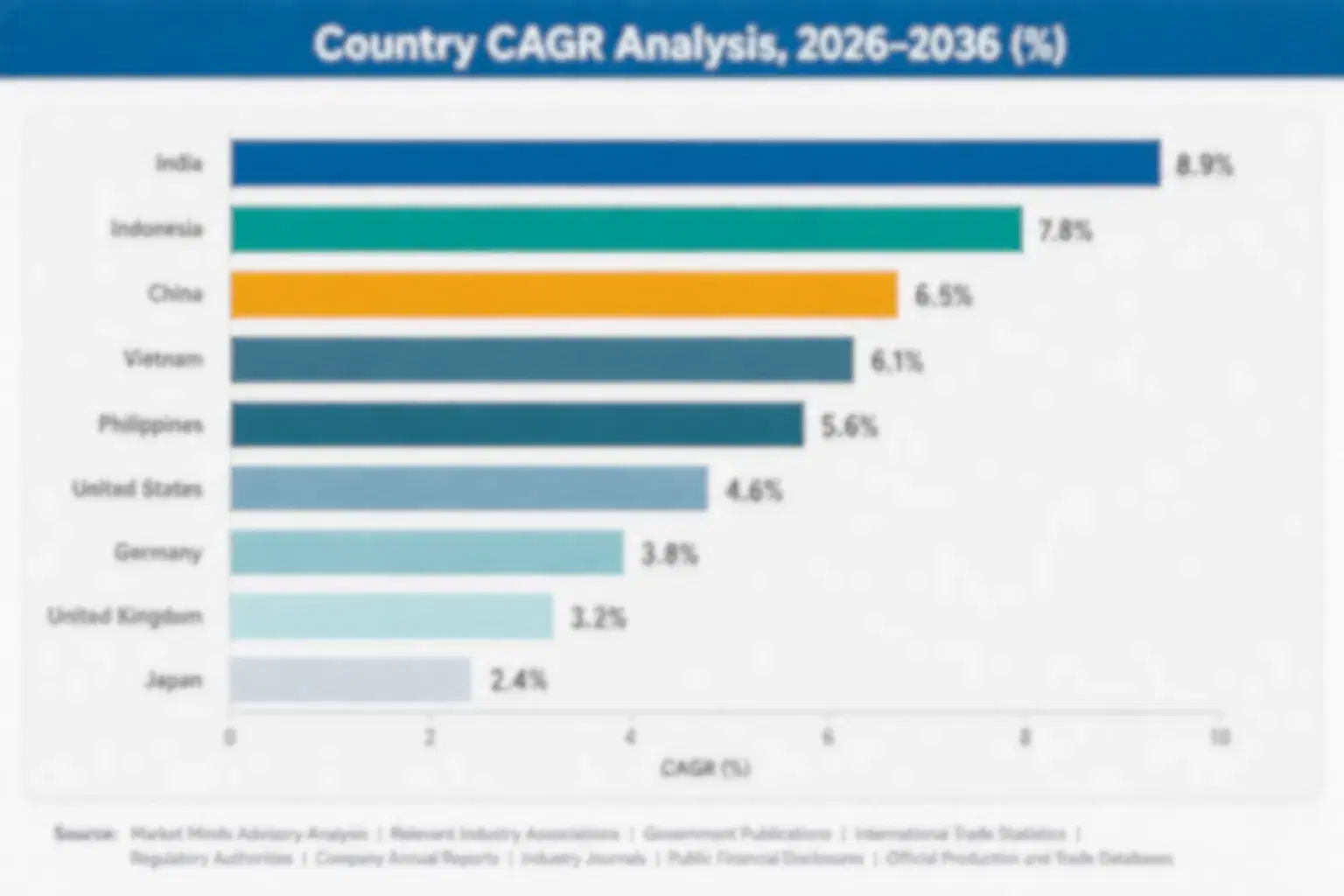
cobot-palletizing-end-effector-market-country-cagr-analysis-1791020247757

Where Gripper Revenue Concentrates Through 2036

Revenue growth in cobot palletizing end-effectors concentrates around three commercial levers: multi-SKU gripper upgrades, vision integration monetization, and software and integration service bundling, with each lever capturing value differently as buyers shift spending away from basic single-SKU tooling toward flexible, higher-margin systems across most facility types, industries, geographies, and buyer budget tiers over time.

Multi-SKU Gripper Conversion From Single-SKU Tooling

Vendors are converting single-SKU vacuum gripper customers to vacuum-hybrid multi-SKU designs, capturing higher per-unit revenue without proportionally increasing manufacturing cost. This conversion commands roughly 25 to 35 percent higher revenue per gripper unit compared to single-SKU equivalents, since flexible handling capability eliminates the need for multiple dedicated tooling purchases per facility. Piab and Schmalz have both expanded multi-SKU offerings specifically to capture this incremental per-unit revenue opportunity. Buyers increasingly request this conversion path to reduce total tooling inventory across their facilities. This metric is now standard in vendor sales presentations.
Market Impact: Adds 25 to 35 percent in gripper revenue

Vision Integration as a Premium Hardware Attachment

Vendors are attaching machine vision modules directly to gripper hardware sales, capturing premium pricing layered on top of core end-effector revenue rather than relying solely on basic tooling transactions. This vision attachment commands 18 to 28 percent incremental revenue per unit sold, since operators handling mixed pallets value integrated identification capability over separate upstream sorting infrastructure investment. Vendors with established integrator relationships are best positioned to attach this layer quickly. Several large distribution operators have already added this capability ahead of their next fleet refresh. This adjacent revenue stream is becoming meaningful to total vendor contract value.
Market Impact: Adds 18 to 28 percent in attach revenue

Who Controls the Margin Pool

Cobot palletizing end-effectors show moderate concentration, with the top five participants, assessed on gripper unit sales and attached cobot arm integration revenue, holding 41 percent combined share. Schmalz and Piab lead through decades of vacuum technology expertise, while the gap to specialized challengers remains wide given the engineering depth required for reliable multi-SKU handling across varied facility conditions. This gap has widened over the past two years.
Current competitive activity centers on vacuum-hybrid design development, vision integration partnerships, and software and integration service expansion, as vendors race to differentiate beyond basic single-SKU vacuum cups that continue commoditizing under price pressure. Several specialized vendors have formed partnerships with cobot arm manufacturers to access distribution channels rather than building standalone sales infrastructure from scratch themselves.

Emerging pressure comes from cobot arm manufacturers building proprietary end-effectors directly, bringing existing distribution scale and customer relationships that independent gripper specialists cannot easily replicate on their own without significant investment. Their entry could shift rankings meaningfully in the bundled hardware layer over the next several years as integrated arm-gripper packages become a stronger competitive differentiator than standalone gripper quality alone. Several standalone vendors are responding with their own arm partnerships.
cobot-palletizing-end-effector-market-company-positioning-matrix-1791020248056

Competitive Moat and Risk Dimensions

SCHMALZ

Moat: Vacuum Technology Depth

Schmalz's decades of vacuum technology expertise and extensive patent portfolio give it engineering credibility advantages that newer entrants lacking comparable vacuum system design history cannot replicate quickly, particularly for high-reliability industrial applications demanding proven field performance across many years. Buyers in regulated sectors weight this heavily.
SCHMALZ

Risk: Limited Vision Integration Capability

Schmalz's core expertise centers on vacuum technology rather than machine vision, leaving it comparatively exposed to competitors offering integrated vision capability that captures the growing mixed-pallet depalletizing use case more directly and with less reliance on external vision partnerships. This gap is reportedly shaping its next product roadmap.
UNIVERSAL ROBOTS

Moat: Cobot Arm Distribution Scale

Universal Robots's extensive global distribution network and large installed base of cobot arms give it privileged access to end-effector attachment sales that standalone gripper vendors lacking comparable distribution reach cannot match as easily across comparable global markets and customer segments. Few rivals match this distribution reach.
UNIVERSAL ROBOTS

Risk: Limited Specialized Gripper Depth

Universal Robots's end-effector offerings trail specialized gripper vendors on handling versatility for complex multi-SKU use cases, limiting its ability to compete directly with dedicated vacuum and vision specialists on technical depth and field-proven reliability. This gap limits its appeal for the most demanding use cases.

Players Tracked

Prominent Players

Schmalz
Piab
OnRobot
Soft Robotics
Universal Robots

Other Key Players

Robotiq
SMC Corporation
FIPA GmbH
J. Schmalz Gruppe
Zimmer Group
Weiss Robotics
Festo AG
SAS Automation
Destaco (Dover Corporation)
Bastian Solutions
Honeywell Intelligrated
Fanuc Corporation
ABB Ltd
Yaskawa Electric
Mujin Inc

Recent Developments

MAY 2026

Schmalz announced an expansion of its vacuum-hybrid product line to include integrated vision guidance, adding machine vision modules that enable mixed-pallet depalletizing without pre-sorting, targeting grocery and retail distribution customers expanding automated warehouse capacity across multiple regions this year. Industry observers see this as a capability signal.
Signal: Signals established vacuum vendors are racing to add vision capability before specialized vision-native entrants can establish a durable advantage.
DECEMBER 2025

OnRobot formed a distribution partnership with a major warehouse automation systems integrator to expand gripper sales into new e-commerce fulfillment accounts, addressing the distribution channel access that remains a key barrier for independent gripper vendors lacking comparable integrator relationships. Analysts view this as a template for expansion.
Signal: Confirms integrator partnerships are becoming the primary distribution channel for independent gripper vendors, not direct sales to end customers.

Vacuum Component and Vision Sensor Cost Exposure

Vacuum generation components and suction cup materials represent roughly thirty-five percent of total gripper cost of goods sold, sourced primarily from pneumatic component manufacturers in Germany, Japan, and China that supply valves and seals across the broader industrial automation sector. Machine vision sensors and processing hardware represent a second major cost category at close to twenty-five percent, given the specialized imaging components required.
Semiconductor component shortages during 2021 and 2022 sharply constrained vision sensor production capacity, pushing lead times out to several months and delaying vision-guided gripper deployments across the industry, according to IEA electronics supply chain tracking data. This forced several gripper manufacturers to delay planned vision integration launches until sensor availability stabilized, pushing commercial deployment timelines back by several months. These delays frustrated several retail partners awaiting pilot results.

Smaller specialized gripper manufacturers face a persistent cost disadvantage against larger players able to negotiate volume discounts on pneumatic components and vision sensors directly with major suppliers. This gap widens further for manufacturers lacking existing supplier relationships, who pay higher per-unit component pricing than scale players securing preferential terms through committed annual purchase agreements. These cost disadvantages have accelerated consolidation among smaller regional gripper manufacturers.
cobot-palletizing-end-effector-market-cost-volatility-analysis-1791020248347

Multi-Supplier Pneumatic Component Agreements

Leading manufacturers are negotiating multi-supplier pneumatic component sourcing agreements across multiple regions, reducing exposure to any single supplier's pricing or availability disruption and giving procurement teams greater leverage when negotiating volume pricing for growing production needs. Several manufacturers now qualify at least two component suppliers for every production line. This practice has become standard across most larger manufacturers.

Vision Sensor Standardization Across Product Lines

Manufacturers are standardizing vision sensor components across multiple gripper models to increase purchase volume per component and secure better pricing, reducing the proliferation of custom sensor configurations that previously fragmented procurement volume across too many distinct variants. This standardization effort is expected to continue as production volumes grow substantially. Retailers increasingly favor vendors demonstrating this discipline.

Portfolio Architecture for Margin Defence

Cobot palletizing end-effectors' margin economics split across three distinct tiers, with basic single-SKU vacuum gripper sales carrying the thinnest margins due to intense price competition and commoditizing component costs. Premium certified multi-SKU grippers with vision integration command meaningfully higher margins given the engineering investment required, while AI-optimized, software-bundled gripper platforms represent the newest and highest-margin tier.
The tension between volume and premium positioning plays out differently across vendor types. Schmalz and Piab push toward bundled vision and software offerings across their installed base, accepting slower deal velocity in exchange for higher contract value and customer stickiness. Smaller specialized vendors face a harder choice, since competing on basic vacuum hardware erodes margin while building premium vision capability requires capital many smaller players cannot easily access without outside investment.

High-value margin pools concentrate in vision-guided, multi-SKU grippers for mixed-pallet handling, where flexibility and reliability justify premium pricing regardless of underlying component cost trends. Software and integration services represent the clearest path to margin expansion over the next decade, since they shift the revenue model from one-time hardware sales toward durable annual recurring revenue. Vendors with both capabilities together are best positioned.

Basic single-SKU vacuum grippers sold primarily on price to cost-sensitive operators without integrated vision or software bundling requirements attached to the purchase. Replacement cycles follow standard component refresh schedules. Margins stay thin here.
Gross Margin

Vacuum-hybrid multi-SKU grippers with vision integration bundled in, sold to large distribution operators requiring documented handling reliability across varied product lines. Demand here continues growing steadily. Renewal rates run high.
Gross Margin

AI-optimized gripper platforms with integrated software and force-control sensing sold to enterprise operators prioritizing throughput and handling flexibility together as one bundled offering. Adoption is accelerating quickly. Early movers hold the clearest lead.
Gross Margin
cobot-palletizing-end-effector-market-portfolio-architecture-1791020248643

High-value Sub-segments and Strategic Watch-out

Vision-Guided Multi-SKU Grippers for Mixed Pallets

High-value, high-growth segment where vision integration and multi-SKU flexibility combine to support the strongest margin expansion across the category, drawing heaviest capital investment from both incumbents and cobot arm entrants pursuing comparable capability. MMA expects this segment to widen its lead through the forecast. now.

Software and Integration Services

High-value, moderate-growth segment where recurring revenue monetization supports premium pricing, though growth moderates once large multi-site operators already carry this layer and smaller operators adopt more slowly. Vendors are exploring tiered pricing to capture smaller accounts faster. This shift is already underway at several vendors today.

Basic Single-SKU Vacuum Grippers

Volume core segment representing the largest installed base and most established format, growing steadily but facing continuous margin pressure from commoditizing component costs among numerous competing manufacturers. Consolidation pressure is building as margins compress industry-wide. Scale advantages compound over the next several years here. now.

Standalone Mechanical Finger Grippers

Strategic watch-out segment facing consolidation pressure as vacuum-hybrid designs absorb mechanical gripping functions directly, threatening the viability of standalone mechanical gripper vendors lacking a broader platform relationship or client base. Some may pivot toward hybrid product lines to survive. Timing of such moves will likely shape competitive rankings.

Gripper Contracts Behave Like Tooling Annuities

Cobot palletizing end-effector demand increasingly behaves like a recurring tooling annuity rather than a one-time hardware purchase, since enterprise gripper contracts typically span multi-year terms with software updates and maintenance support renewed alongside hardware ownership. This recurring structure gives leading vendors greater earnings visibility than pure hardware sellers face, since renewal timing is largely predictable based on contract terms set years in advance.
Adoption depth varies meaningfully by end-use vertical. E-commerce fulfillment operations, running the highest SKU diversity and order volume, show the deepest multi-SKU gripper penetration since flexible handling delivers clear operational benefit there. Automotive component manufacturing shows growing but shallower penetration given more uniform part geometries, while food and beverage distribution sits in between, with adoption depth tracking product catalog diversity more than facility size alone.

Buyer profiles are shifting generationally as warehouse engineering teams increasingly include automation engineers who evaluate gripper platforms on measurable changeover time and handling reliability data rather than vendor relationship history alone. This generational shift favors vendors with transparent performance analytics over legacy providers whose value proposition rested primarily on established vacuum technology brand recognition rather than verifiable handling data newer buyers increasingly demand.
cobot-palletizing-end-effector-market-end-use-penetration-index-1791020248958

Four Calls For Gripper Vendor Strategy

These are among the four positions where our research anticipates prominent divergence between winners and laggards over the coming forecast period. Each is grounded in the demand model, the regulatory perimeter, and the announced capacity pipeline.
01 / MULTI-SKU INVESTMENT PRIORITY

Build multi-SKU vacuum-hybrid capability before arm makers close the gap

Multi-SKU capability is becoming the primary purchase criterion as cobot arm hardware commoditizes, and vendors without comparable flexibility risk losing ground to competitors offering single end-effectors that handle varied box geometries without manual retooling between product runs and shifts. Companies that invest in vacuum-hybrid design depth now will hold a durable advantage as e-commerce fulfillment buyers increasingly demand this flexibility as a baseline requirement. Piab's expanded handling range signals where the competitive frontier is heading for the broader category over the coming decade.
02 / VISION INTEGRATION FOCUS

Add machine vision capability ahead of mixed-pallet demand growth

Vision integration is becoming a primary differentiator, not a premium add-on, since grocery and retail distribution buyers increasingly require mixed-pallet handling capability before committing budget to gripper fleet expansion across their distribution centers, warehouse networks, and seasonal demand peaks. Companies without vision capability face a lasting disadvantage against competitors capturing higher-value mixed-SKU contracts from the same customer base and sales pipeline. Falling sensor costs make this integration increasingly accessible even for smaller specialized vendors entering the category this coming year.
03 / REGIONAL MANUFACTURING WEIGHTING

Weight investment toward East Asia and South Asia over mature markets

Manufacturing scale and growth both favor East Asia and South Asia and Pacific over mature North American and Western European markets, where existing automation infrastructure caps near-term volume expansion regardless of platform quality improvements made by individual vendors competing for the same accounts. Companies allocating capital proportionally to current revenue rather than forward growth risk under-investing in the regions driving most future demand over the coming decade. South Korea's manufacturing concentration also means regional partnership strategies matter more here than in most other regions studied.
04 / SOFTWARE SERVICE EXPANSION

Launch integration software as a recurring revenue layer now

Software and integration service monetization has repeatedly proven to expand recurring revenue for vendors with established multi-site operator relationships, as pre-configured templates reduce custom engineering time that previously consumed deployment budget entirely across every new facility rollout. Companies relying solely on hardware sales revenue remain exposed to slower growth than peers monetizing software separately as a distinct layer. Those with this layer already deployed preserve stronger account expansion economics over time and across every renewal cycle and account expansion opportunity.

Engagement Snapshot From the Field

A live engagement with an industry participant carrying material or product regulatory and market exposure ahead of a defining policy shift, showing how our research translates into a defensible multi-year portfolio strategy.
MARKET MINDS ADVISORY · CLIENT ENGAGEMENT SUMMARY
Cobot Palletizing End-Effector Producer Strategic Portfolio Review and Transition Roadmap 2026·Investment Scenario on Cobot Palletizing End-Effector Exposure Evaluation 2025-26
CLIENT PROFILE
The client operates three regional distribution centers across the Midwest United States, employing roughly 1,400 warehouse staff and generating approximately 540 million dollars in annual revenue (client-reported, unverified by MMA). Facing rising palletizing labor costs and growing SKU diversity as it added private-label product lines, the client sought to evaluate cobot gripper options as part of a planned warehouse automation expansion.
STRATEGIC CHALLENGE
The client's existing single-SKU gripper tooling required manual changeovers between product runs, creating production bottlenecks as its SKU count grew beyond what the original automation design anticipated. Warehouse managers were also uncertain whether multi-SKU gripper systems could reliably handle the client's mix of boxed goods, bagged products, and irregularly shaped items without excessive error rates.
MMA APPROACH
MMA conducted a facility-wide handling audit across all three distribution centers, benchmarking existing single-SKU tooling performance against vacuum-hybrid and vision-guided alternatives from three leading vendors. The engagement included structured interviews with warehouse operations leadership and a comparative total cost of ownership model spanning gripper hardware, integration, and reduced manual changeover labor.
KEY FINDINGS
  1. The evaluated vacuum-hybrid platform reduced manual changeover incidents by roughly seventy percent across the client's mixed boxed and bagged product lines during the pilot period.
  2. Vision-guided capability enabled reliable handling of irregularly shaped items that the client's prior single-SKU tooling could not process without frequent manual intervention.
  3. Consolidating to one multi-SKU gripper platform across all three centers reduced total tooling inventory and associated maintenance contracts meaningfully across the organization.
  4. Integration engineering took longer than initially budgeted at the first facility, though subsequent sites benefited from the reused configuration templates developed there.
CLIENT PROFILE
The client operates three regional distribution centers across the Midwest United States, employing roughly 1,400 warehouse staff and generating approximately 540 million dollars in annual revenue (client-reported, unverified by MMA). Facing rising palletizing labor costs and growing SKU diversity as it added private-label product lines, the client sought to evaluate cobot gripper options as part of a planned warehouse automation expansion.
STRATEGIC CHALLENGE
The client's existing single-SKU gripper tooling required manual changeovers between product runs, creating production bottlenecks as its SKU count grew beyond what the original automation design anticipated. Warehouse managers were also uncertain whether multi-SKU gripper systems could reliably handle the client's mix of boxed goods, bagged products, and irregularly shaped items without excessive error rates.
MMA APPROACH
MMA conducted a facility-wide handling audit across all three distribution centers, benchmarking existing single-SKU tooling performance against vacuum-hybrid and vision-guided alternatives from three leading vendors. The engagement included structured interviews with warehouse operations leadership and a comparative total cost of ownership model spanning gripper hardware, integration, and reduced manual changeover labor.
KEY FINDINGS
  1. The evaluated vacuum-hybrid platform reduced manual changeover incidents by roughly seventy percent across the client's mixed boxed and bagged product lines during the pilot period.
  2. Vision-guided capability enabled reliable handling of irregularly shaped items that the client's prior single-SKU tooling could not process without frequent manual intervention.
  3. Consolidating to one multi-SKU gripper platform across all three centers reduced total tooling inventory and associated maintenance contracts meaningfully across the organization.
  4. Integration engineering took longer than initially budgeted at the first facility, though subsequent sites benefited from the reused configuration templates developed there.
RECOMMENDED STRATEGY
Phase 1: Phase one: deploy the selected multi-SKU platform at the highest-volume distribution center within six months, validating cost and performance assumptions. Phase 2: Phase two: expand deployment to the remaining two centers on a rolling schedule over the following year using reused configuration templates. Phase 3: Phase three: establish a centralized gripper maintenance and configuration management program spanning all three facilities going forward into next year.
OUTCOME
Within one year of the initial deployment, the client reported a 22 percent reduction in palletizing labor cost and a measurable decline in changeover-related production delays (client-reported, unverified by MMA). The client has since extended the multi-SKU gripper standard to its newest distribution center currently under construction.

Frequently Asked Questions

Foundational context covering the market sizes, CAGR, scope, country, region and competition that inform every finding below. This section is provided to cover basics and most often pre-purchase conversations, answered from the MMA Primary Research Dataset.

What is the current size of the Cobot Palletizing End-Effector Market?

The market reached an estimated 0.5 billion dollars in 2025, growing steadily across warehouse operations. Growth is driven by persistent labor shortages and falling cobot arm hardware costs.

How large will the Cobot Palletizing End-Effector Market be by 2036?

The market is projected to reach 1.956 billion dollars by 2036, nearly four times current levels. This reflects sustained demand for flexible, multi-SKU palletizing automation industry-wide.

What is the CAGR for the Cobot Palletizing End-Effector Market 2026 to 2036?

The market is forecast to grow at a 13.2 percent compound annual rate through the forecast period. Bull and bear scenarios range from 11.9 to 14.5 percent depending on arm pricing.

Which segment is growing fastest?

Vacuum-hybrid multi-SKU grippers lead at 17.4 percent annual growth, well above the market average. This is 1.32 times the overall market rate, driven by flexible handling demand.

Who are the major companies in the Cobot Palletizing End-Effector Market?

Schmalz, Piab, OnRobot, Soft Robotics, and Universal Robots lead the market. Together they hold an estimated 41 percent combined share through established vacuum technology expertise.

Which country is growing fastest?

South Korea leads growth at 15.6 percent annually, tied to dense electronics manufacturing and aggressive automation investment. This proximity to suppliers gives domestic vendors an advantage.

Report Segmentation Architecture

The full report scope spans multiple orthogonal segmentation dimensions, with cross-tabulated demand data provided for each dimension pair. Coverage extends further to regional breakdowns, trend trajectories, and the competitive detail needed to support segment-level decision-making.

By Gripper Type and Function

    By End-Use Industry

      By Commercial Dimension

        By Region

        • North America
        • Western Europe
        • East Asia
        • South Asia and Pacific
        • Latin America
        • Middle East and Africa
        • Eastern Europe

        Scope, Methodology, and Coverage

        Every figure in this report is reproducible from documented input assumptions. The scope below maps the historical period, the forecast horizon, the segmentation dimensions, and the countries covered, alongside the underlying primary and qualitative methodology.
        Historical Period
        2020 to 2025
        Forecast Period
        2026 to 2036
        Base Year
        2025 (USD billions; MMA Primary Research Dataset, October 2026)
        Market Definition
        This report covers end-effector tooling, specifically grippers and vacuum systems, designed for collaborative robot palletizing and depalletizing applications in warehouse and manufacturing environments. It excludes the cobot arm hardware itself, traditional industrial robot end-effectors used outside collaborative applications, and conveyor or AGV-based material handling systems.
        Quantitative Units
        USD billions
        Segmentation Dimensions
        Regions Covered
        North America, Western Europe, East Asia, South Asia and Pacific, Latin America, Middle East and Africa, Eastern Europe
        Countries Covered
        Key Companies Profiled
        Schmalz, Piab, OnRobot, Soft Robotics, Universal Robots, Robotiq, SMC Corporation, FIPA GmbH, J. Schmalz Gruppe, Zimmer Group, Weiss Robotics, Festo AG, SAS Automation, Destaco (Dover Corporation), Bastian Solutions, Honeywell Intelligrated, Fanuc Corporation, ABB Ltd, Yaskawa Electric, Mujin Inc
        Quantitative Methodology
        Primary survey, n=3,800 respondents, Q4 2025, six countries; demand-side model with trade association cross-validation
        Qualitative Methodology
        47 expert interviews, Q4 2025; applied to validate demand model assumptions, identify emerging dynamics, and assess competitive positioning
        Report Format
        PDF and XLSX data workbook (Word format preview document)
        Publisher
        Market Minds Advisory
        Report Code
        MMA-2026-CON-742
        Published
        October 2026
        Contact
        sales@marketmindsadvisory.com | www.marketmindsadvisory.com

        Purchase the full Cobot Palletizing End-Effector Market Report (2026 to 2036).

        The full report provides comprehensive coverage of the cobot palletizing end-effector market, including detailed segmentation by gripper type and function, regional demand analysis across all seven global regions, and competitive benchmarking of twenty leading participants assessed on a consistent gripper unit sales basis. It examines multi-SKU conversion trends, vision integration monetization, and vacuum component and sensor cost exposure across the hardware value chain. Forecast scenarios extend through 2036 with bull and bear case analysis grounded in primary survey and expert interview data. Analyst commentary throughout highlights where competitive rankings are most likely to shift.
        Seven-region market sizing and growth forecasts
        Twenty-company competitive benchmarking and market positioning
        Six-segment gripper type and function breakdown
        Multi-SKU conversion and adoption tracking data
        Vacuum and vision sensor cost exposure analysis
        Anonymized client case study with measured outcomes

        Built For The People Who Decide

        From boardroom strategy to bench-side execution, this report is read cover-to-cover by leaders shaping the next decade of their industry, turning demand scenarios, market dynamics and valuation benchmarks into decisions.
        CXOs/ Presidents/ VPs/ Managers
        M&A and Corporate Development
        Strategy Teams and R&D Heads
        Procurement and Product Directors
        Regulatory and Compliance Leaders
        Investor Relations and Equity Analysts